After Three Months Without Daughter’s Salary in Qatar, a Family’s Home Collapses Back Home





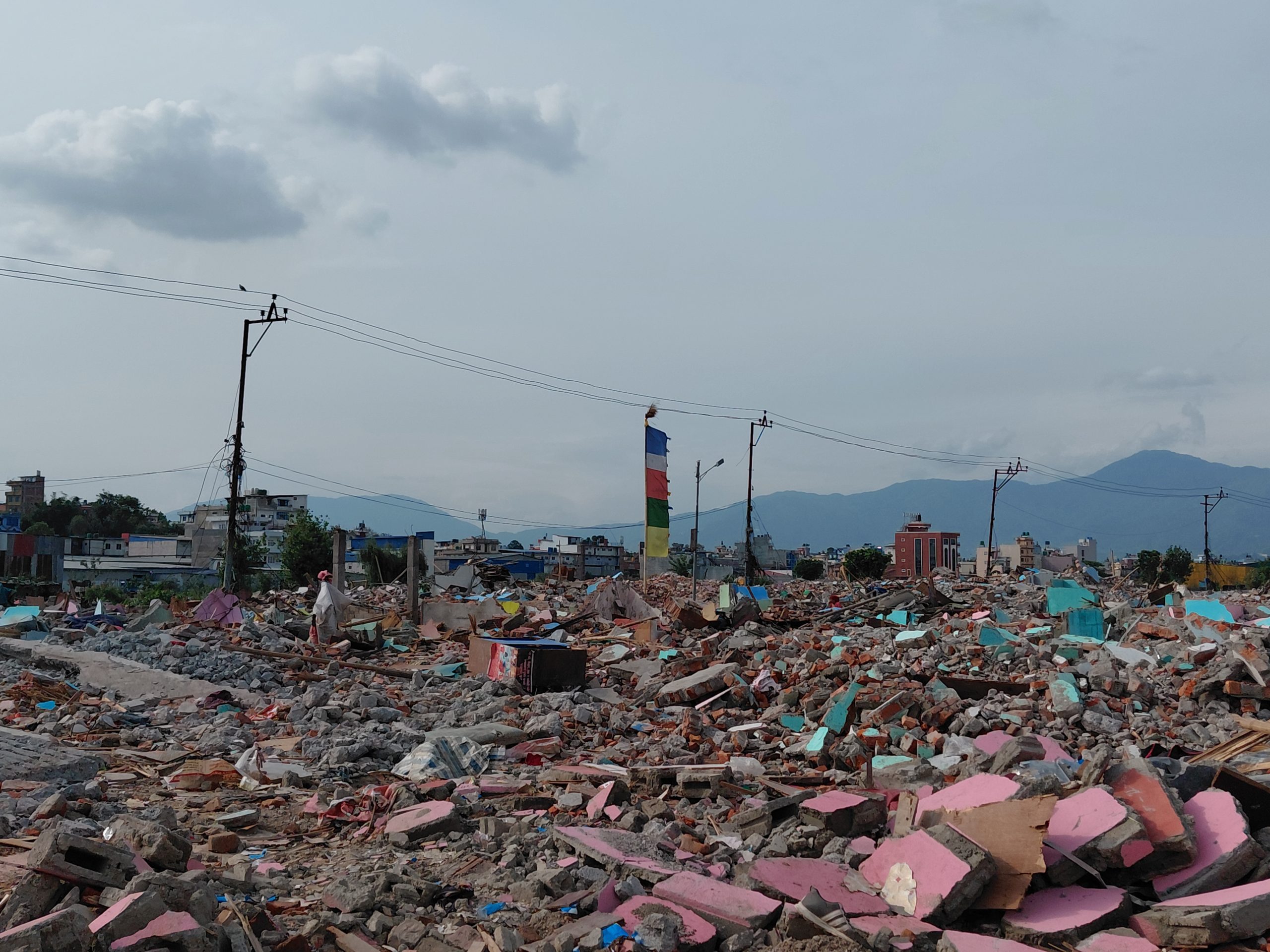
April 6, Kathmandu — The entire Sukumbasi settlement in Manohara has been completely vacated. There are no sturdy buildings, houses, or huts left. Everything that once stood has turned into rubble. Former residents occasionally come back hoping to salvage some of their belongings, sifting through the debris.
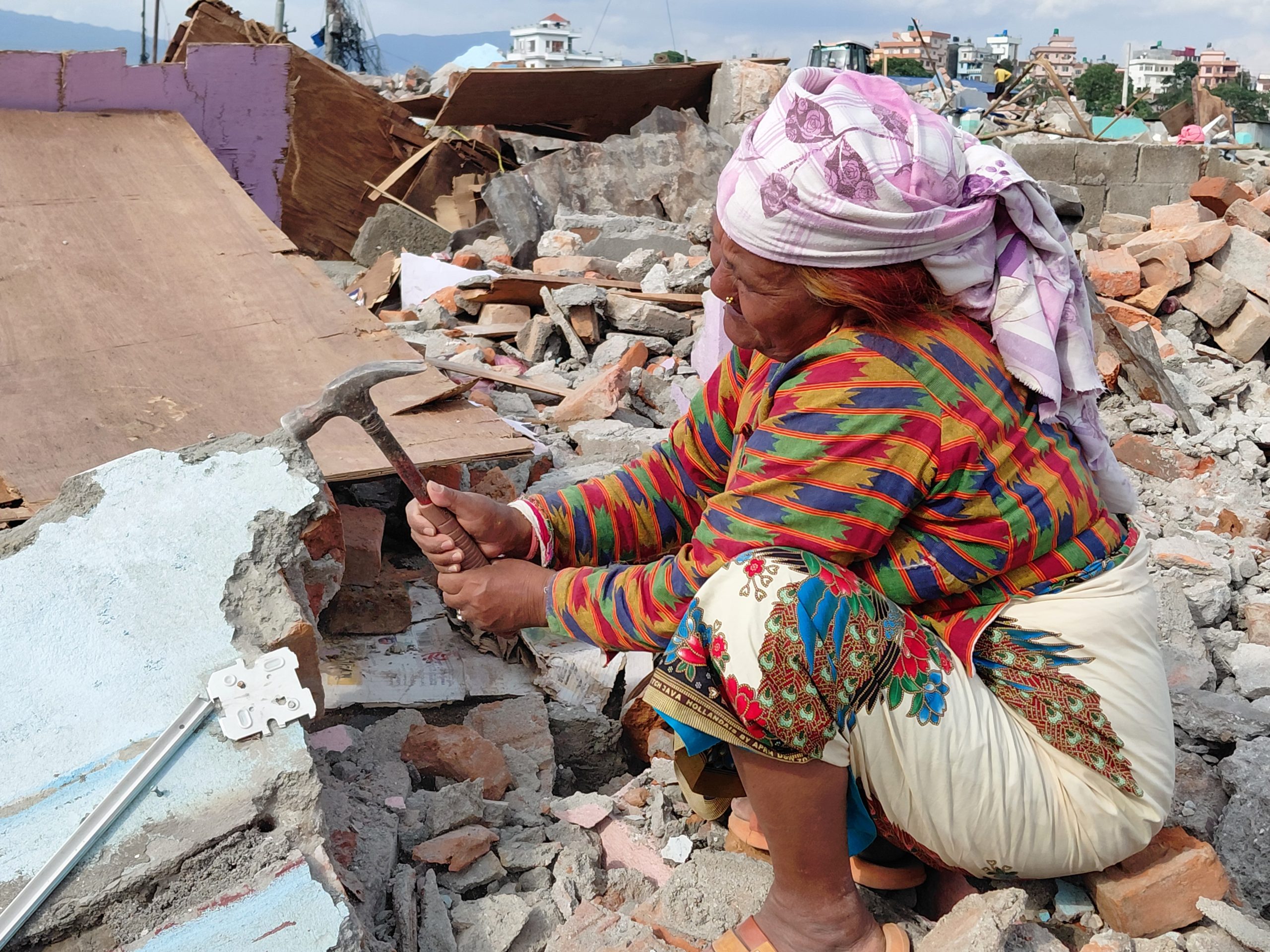
At the time of our visit, we found Chandrakumari Magar near the eastern bank of Manohara, in the central part of the settlement. She was pounding small wall fragments left behind after a bulldozer demolished her former house. Her husband, Ram Bahadur Gurung, was nearby, sorting through other materials.
Their goal was to extract as many intact bricks as possible to fulfill two purposes: one, to reuse those bricks to build a new shelter on a different plot of land,
and two, if the relocation plan fails, to sell the bricks and raise some money.
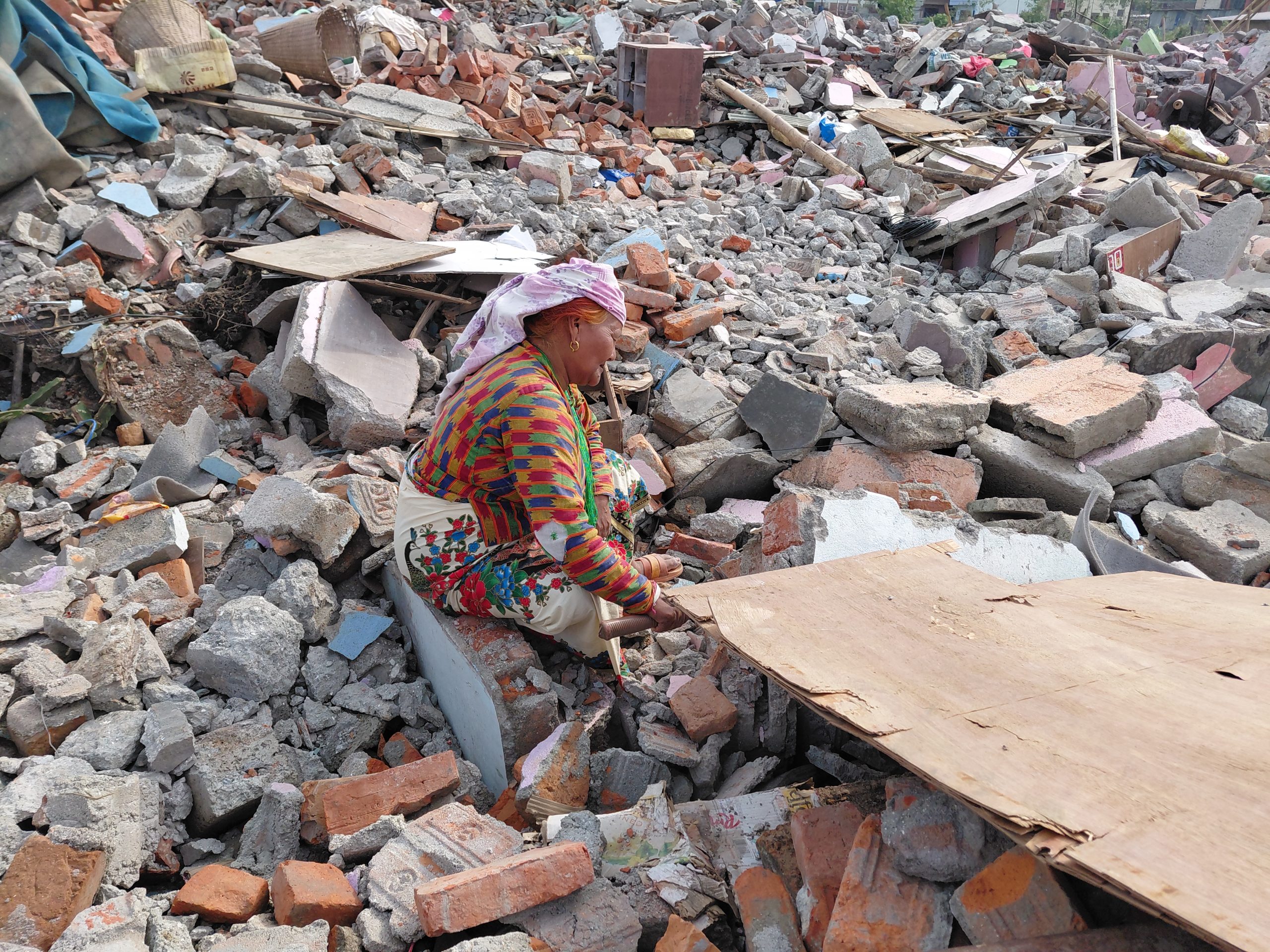
They had already gathered some intact bricks and stacked them nearby. Despite their advancing years, with hands over 60 years old, they were still hard at work. While speaking with us, Chandrakumari struck the hammer repeatedly and moved forward.
000
Chandrakumari hails from Okhaldhunga but doesn’t recall much about her early life in her native village. Her father passed away during her childhood, and she is unaware of her mother’s whereabouts. She had a brother who tragically died after being crushed by a tree while working in Solukhumbu. She estimates her age to be around 60 but does not know the exact number. She also has no record of her husband’s age.
With no support in the village, she moved to the city to earn a livelihood, hopeful of finding work in Kathmandu. Chandrakumari arrived when she was about 24 or 25 years old.
In Kathmandu, she first worked at a carpet-weaving factory, where she met Ram Bahadur Gurung.
Ram Bahadur is also originally from the east but moved to Kathmandu as a child around 6 or 7 years old and doesn’t remember his past. To make ends meet, he worked as a day laborer in Kathmandu. Their shared work brought them close, and they eventually married.
Following the wedding, they started living in a rented room in Kaushaltar, where their eldest daughter, Sapana Gurung, was born. Their financial condition began worsening to the point they could no longer pay rent. There was very little left in the village.
At that time, through connections, Chandrakumari learned about the possibility of obtaining land in the Manohara area. The idea that they could receive land and build a house there was very appealing, especially since there would be no hassles like paying rent. Finding everything favorable, the family moved to the Sukumbasi settlement.
It was there their two other daughters, Bipana and Kalpana, were born. Both attended Saraswati Basic School up to grade 8 and passed the School Leaving Certificate (SLC) from there.
Even after settling near the Manohara bank, Chandrakumari and Ram Bahadur never stopped working as day laborers. They knew no other way to earn a decent income. With their earnings, they gradually improved their shelter.
When their eldest daughter went abroad to work, the money she sent back helped them build a permanent shelter.
The settlement was rapidly growing. New residents were building houses; grocery, snack, and meat shops were opening; and many houses added additional floors. During this expansion, neither local authorities nor the federal government responded, leaving many unaware of the circumstances.
They never knew that their settlement was on public land. Despite the growth, they believed it was like any other settlement in Kathmandu. They thought, as squatters, they had a rightful claim to reside there.
000
When Balen Shah was elected mayor of Kathmandu Metropolitan City, the issue of squatters surfaced prominently. There were several attempts during Balen’s tenure to run bulldozers through the squatter settlements. However, these efforts remained incomplete, yet the residents began fearing eviction.
Following strong opposition from hundreds of residents and public support from political leaders defending squatters, Balen’s endeavors failed, giving Chandrakumari’s family hope that they would not face displacement.
Recently, in the past elections, Chandrakumari’s family voted for Balen Shah’s party. Meanwhile, Ravi Lamichhane, president of Rastriya Swabhiman Party (RSP), had pledged to defend squatters forcefully, and Balen had promised land ownership certificates in Jhapa. The family trusted these assurances.
Chandrakumari remembers lining up at Lokanthali School on election day to cast a vote marked with a bell symbol.
But now she does not regret casting her vote, though she openly criticizes the leaders she supported. “Ravi Lamichhane had promised to stand up for squatters even if bulldozers come. I voted for the bell sign,” she said, “but now that my house has been torn down, who is left to stand up?”
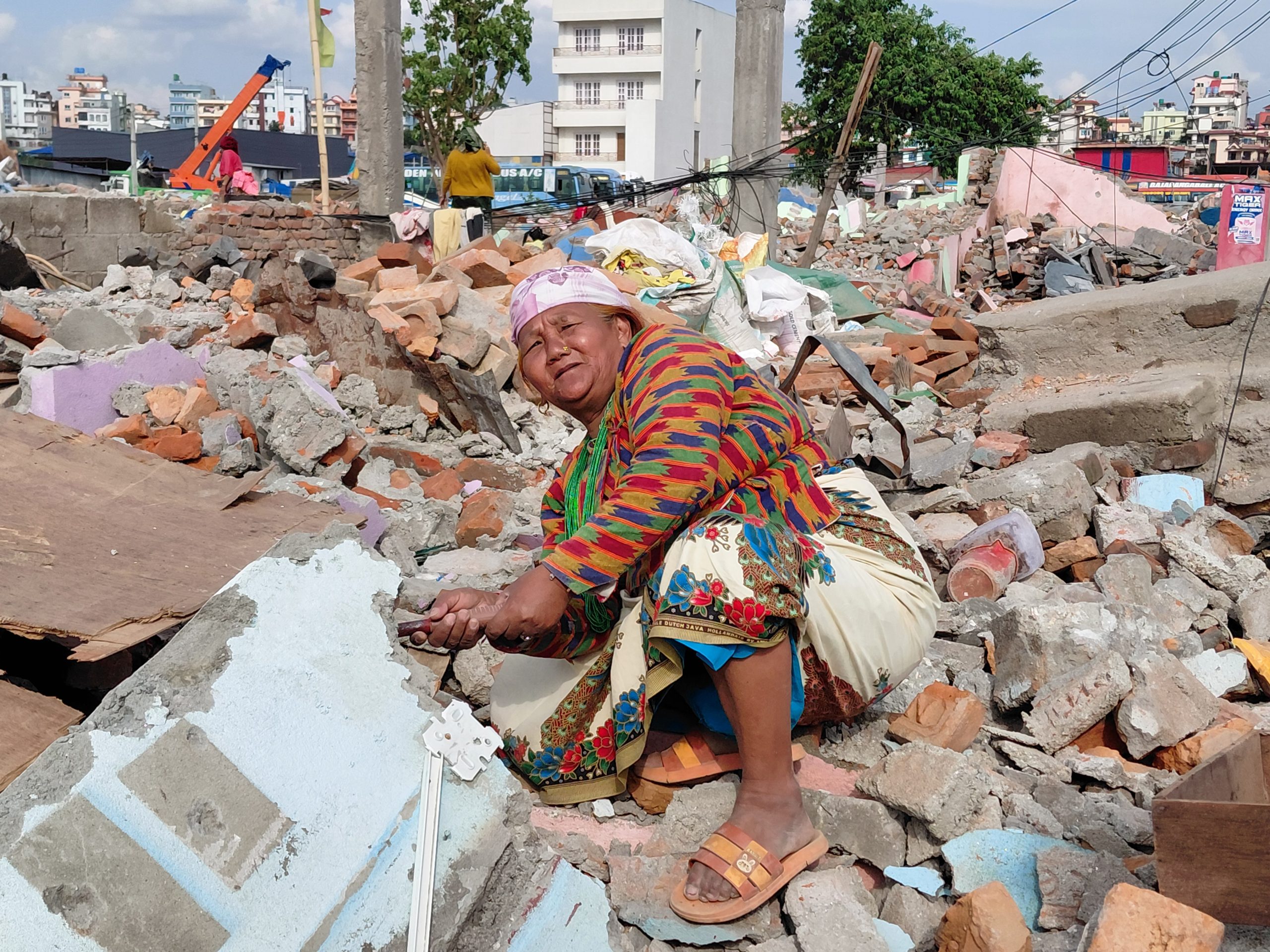
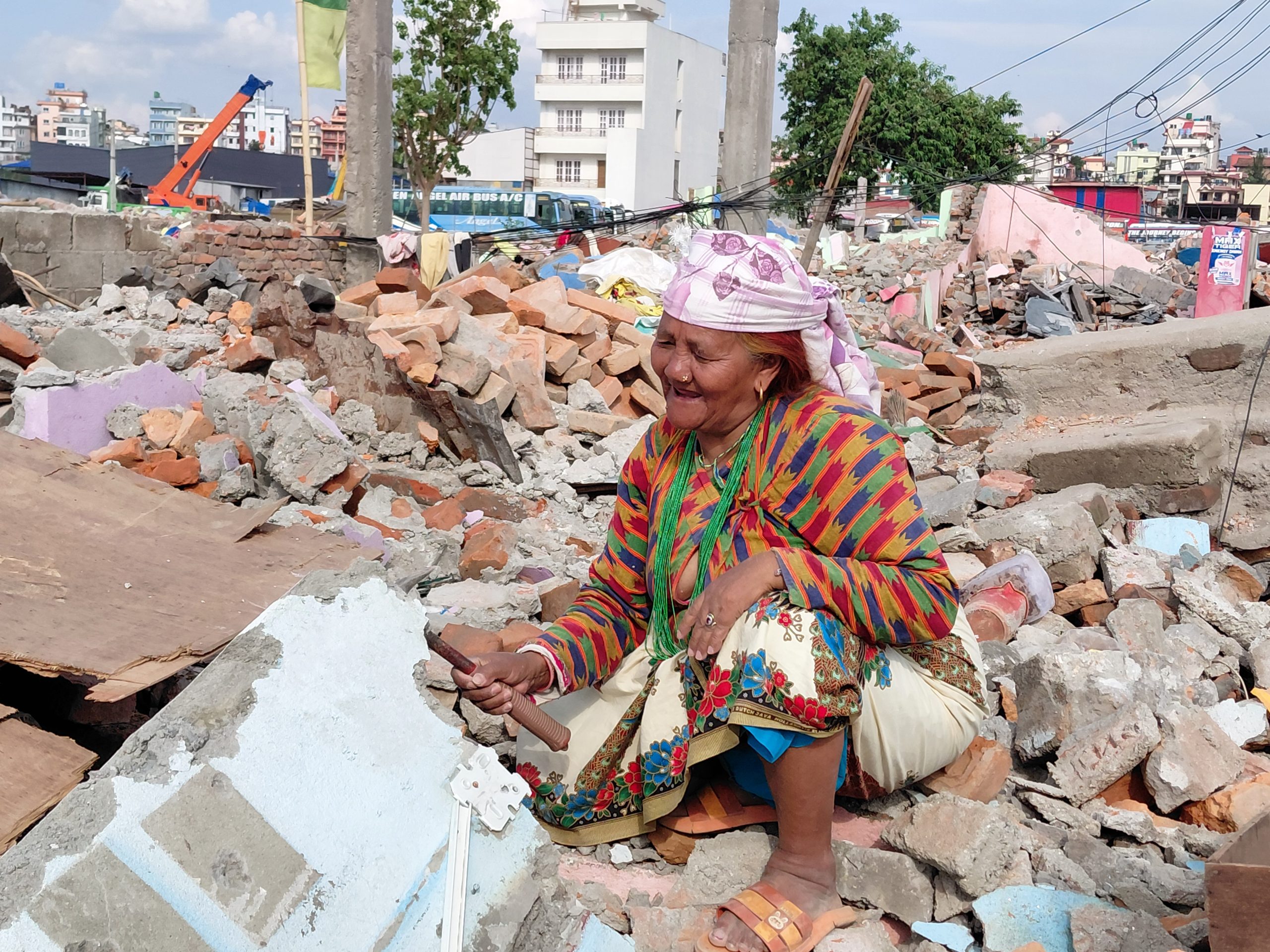
“If bulldozers were sent during the metropolitan era, how could we trust anyone now?” she said. “We are not fools. We clearly saw Balen’s actions when he was mayor. We forgot the bell symbol while casting our votes.”
She never imagined their eviction would happen in this way. The destruction of a settlement they had lived in for 25 years and the house they built by painstakingly saving money has deeply wounded her. But even more painful is the government’s treatment and the betrayal of their expectations.
If the government had given them at least three to four days to remove their belongings before demolition, the pain would have been less.
Although rumors were widespread, the family learned about the eviction only on Friday, April 21, with the government providing no sufficient prior notice. Initially, they heard about the eviction as mere hearsay.
At the same time, there were still conflicting messages within the settlement—some people believed eviction wouldn’t happen, while others began removing belongings. Chandrakumari said it was difficult to confirm which information was accurate, and accused the government of providing unclear and insincere communication.
On Friday evening, Chandrakumari went to her youngest daughter’s rented room located slightly outside the settlement. She said she had gone out during the day and, feeling tired, decided to rest at her daughter’s place.
She trusted the eviction wouldn’t happen immediately and that even if it did, they would be given time to remove their things.
However, early Sunday morning the bulldozer came and immediately destroyed the settlement. While her husband could salvage some items during the demolition, much was buried under the rubble.
Among the destroyed belongings were essential medicines. Both Chandrakumari and Ram Bahadur suffer from hypertension and diabetes and require regular medication. Due to heavy rain in the evening, they were unable to retrieve their medicines.
Recalling the lost items, Chandrakumari mentioned that the bulldozer destroyed seven charas plates, 10 pieces of clothes sent from their daughter working in Qatar, and daily garments such as lungis, blouses, and blankets.
Now, they only have a few clothes left. The police promised to help remove belongings, but no one came to assist. Ram Kumar depends solely on what they manage to salvage.
By Monday afternoon, hope of recovering belongings from the debris had vanished as scavengers had taken away many items.
000
The hard-earned life they had built has once again fallen into hardship. Previously they were strong and healthy, but now their health is failing. Without medication, their conditions will worsen.
Their deepest pain is from the destruction of their home. More than that, they worry about the future. They still need to arrange marriages for their two daughters. Their primary concern now is where they will live and go next.
“My daughters will leave once married. The daughter working in Qatar hasn’t received her salary for three months due to the war,” Chandrakumari said. “After all this, who can we trust? Balen has brought misery to our old age.”
Despite everything, they have no intention of going to government-run holding centers. They are determined to preserve their dignity despite poverty and mistreatment. They plan to survive through their own hard work for as long as possible. If they find land, they are considering renting and building a new shelter; otherwise, they might rent a room.
“Our daughters can fend for themselves. We will endure as long as we live. But how can we squeeze into a room that isn’t even as decent as a rich person’s toilet?” she said. “Maybe they looked down on us because we had nothing.”


