




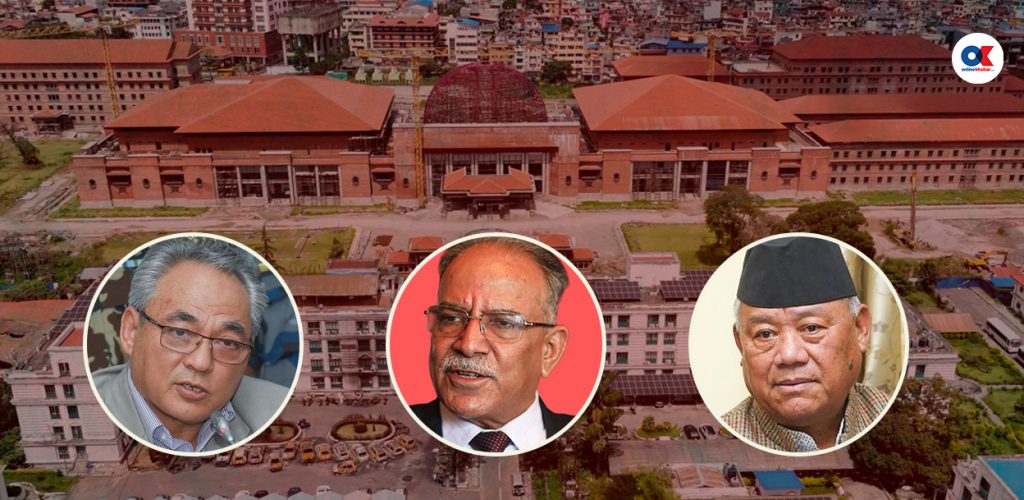
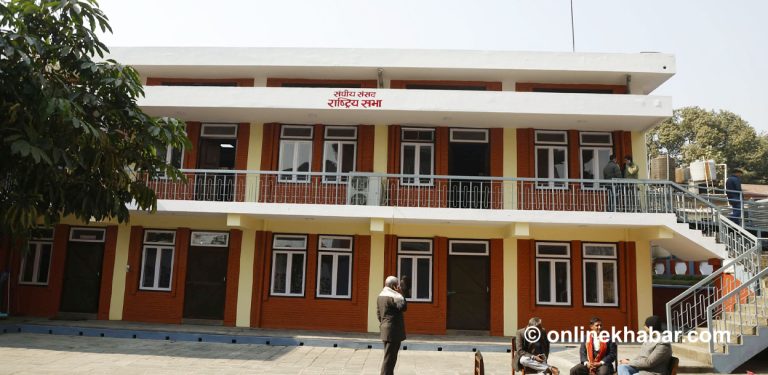
April 13, Kathmandu – The Federal Parliament Secretariat has received notices rejecting several ordinances. These notices have been submitted by opposition parties.
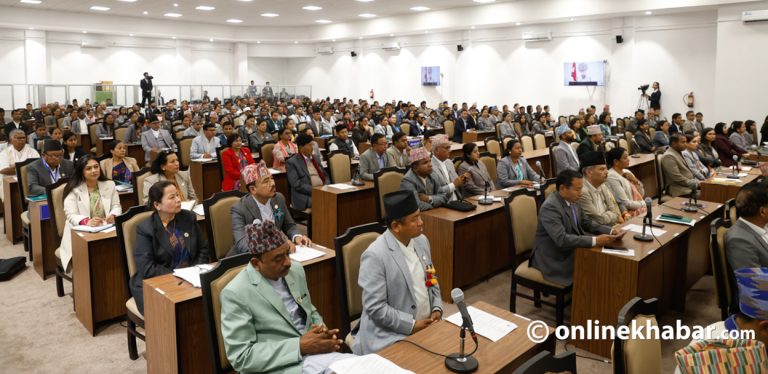
During the parliamentary recess, the government introduced eight ordinances. These ordinances have since been presented to both houses of the Federal Parliament—the House of Representatives and the National Assembly.
The ordinances presented include: the Public Procurement (Second Amendment) Ordinance, Special Provisions on Removal of Public Officials Ordinance, and the Constitutional Council (Functions, Duties, Powers, and Procedures) (First Amendment) Ordinance.
Additionally, the government submitted the following ordinances to the houses: Prevention of Money Laundering (Third Amendment) Ordinance, Cooperative (First Amendment) Ordinance, amendments to certain Nepal Acts related to the Health Science Academy, and amendments to certain Nepal Acts concerning universities.
According to Article 114 of the Constitution, the government may issue ordinances when Parliament is not in session. Such ordinances must be presented by the concerned minister at the first meeting after Parliament reconvenes. Accordingly, on April 12, these ordinances were introduced in both houses.
Following this, members of Parliament were given an opportunity to submit notices to reject the ordinances within a prescribed timeframe.
This procedure is outlined under Rule 95 of the House of Representatives’ Rules of Procedure and Rule 89 of the National Assembly’s Rules of Procedure.
Specifically, sub-rule 1 of Rule 95 of the House of Representatives mandates: ‘A member wishing to reject an ordinance must submit a notice to the Secretary-General or, in their absence, to the Secretary within two days.’
Following this provision, opposition parties have filed notices requesting the rejection of the ordinances.
In the House of Representatives, the ruling party, Rastriya Swatantra Party (RSP), holds a two-thirds majority minus two seats, which reduces the likelihood of any rejection notice passing unless the ruling party allows it.
However, the RSP is not represented in the National Assembly. Major parties in the National Assembly—Nepali Congress, the Communist Party of Nepal (NCP), and CPN-UML—oppose the ordinances, and it is these parties that have submitted the rejection notices.
CPN-UML has submitted rejection notices for all eight ordinances, demanding their nullification.
The Nepali Congress has filed rejection notices for the Constitutional Council Ordinance and some amendments to Nepal Acts.
The NCP submitted notices calling for rejection of certain Nepal Acts, the Constitutional Council Ordinance, university-related ordinances, and the ordinance related to the removal of public officials.
If an ordinance is rejected by even one house, it becomes inactive.
Article 114, clause 2 of the Constitution states: ‘Each ordinance, having been presented in both houses of the Federal Parliament, shall automatically cease to have effect if not accepted by both houses.’
Hence, if the major parties in the National Assembly reach consensus, the ordinances might be rejected.
The National Assembly is composed of 59 members, including 24 from Nepali Congress, 17 from NCP, 10 from CPN-UML, 2 from Janata Samajwadi Party Nepal, 1 each from Loktantrik Samajwadi Party and Rastriya Janamorcha, 2 nominated members, and one vacant nominated seat appointed by the President.
If the ordinances are approved by both houses, the government must introduce replacement bills within 60 days to convert the ordinances into law through presidential ratification.










.jpg "Land for Sale in Lubhu")


%20-%20Copy.jpg "4 BHK House for Rent at Bhaisepati")

.jpg "Residential Land for Sale at Imadol")




Comments 4