Government Urged to Provide Services for Safe Domestic and Overseas Employment to Workers





News Summary
- Stakeholders have emphasized that the government should prioritize solving problems faced by Nepali workers abroad and employment sectors in the budget for the upcoming fiscal year.
- Due to a reduced budget for the Ministry of Labor compared to the previous year, experts have urged an increase to focus on protecting undocumented workers, voting rights, and reintegration.
- Labor Minister Ramji Yadav stated that the government has adopted a ‘zero tolerance’ policy to combat fraud in foreign employment and is advancing plans to resolve complaints quickly via a software system.
May 22, Kathmandu – Stakeholders have called for a budget for the upcoming fiscal year that can effectively address the issues faced by Nepali workers overseas.
The government, led by senior leader Balendra Shah of the Rastriya Swatantra Party (RSP), is preparing its first budget, which is being closely watched by citizens both inside and outside the country.
Nearly 4 million Nepalis are working abroad, and given the insufficient employment opportunities at home, there is significant interest in how the government will allocate its budget for youth, labor, and employment sectors.
The government has announced a new national employment policy integrating skills, education, labor market information, social security, and employment services.
Under its policy and programs, the government plans to implement a national apprenticeship program based on the ‘learn and earn’ concept.
Additionally, legal frameworks will be introduced for a ‘remote work policy’ allowing Nepalis residing in Nepal to work for foreign employers. Skills of returnee workers will be documented through a digital ‘skill passport’ to provide international professional certification.
The policy also outlines providing legal aid for workers, digital labor inspections, guaranteeing workplace occupational safety and health, strict enforcement against child labor, and making foreign employment secure, organized, and beneficial.
While preparing the budget, stakeholders have called for an increase and emphasis on effective implementation. The Ministry of Labor’s budget for the current fiscal year is 428 million NPR, a significant decrease from the 810 million NPR allocated in 2024/25.
This reflects a 47 percent reduction compared to the previous year, and it remains to be seen if the new government will prioritize this sector in the upcoming budget.
Experts Stress the Need for Budget Increase and Effective Implementation
After consultation with Labor, Employment, and Social Security Minister Ramji Yadav, labor and migration specialist Rameshwar Nepal emphasized prioritizing issues such as protection of undocumented workers abroad and voting rights for Nepalis overseas in the budget.
He noted that the government neglects undocumented Nepali workers stranded abroad and stressed the necessity of a support mechanism that includes budgeting for food, shelter, and return tickets.
‘Like other citizens, they are the responsibility of the state and must be included in budgets and laws,’ he pointed out.
Though voting rights for Nepalis abroad have been repeatedly mentioned in policies, budget shortages have hindered implementation. He urged that plans and necessary funding should be allocated this year to ensure voting in upcoming elections.
He also emphasized strengthening the Foreign Employment Department and Nepali embassies with resources, equipment, and human capital.
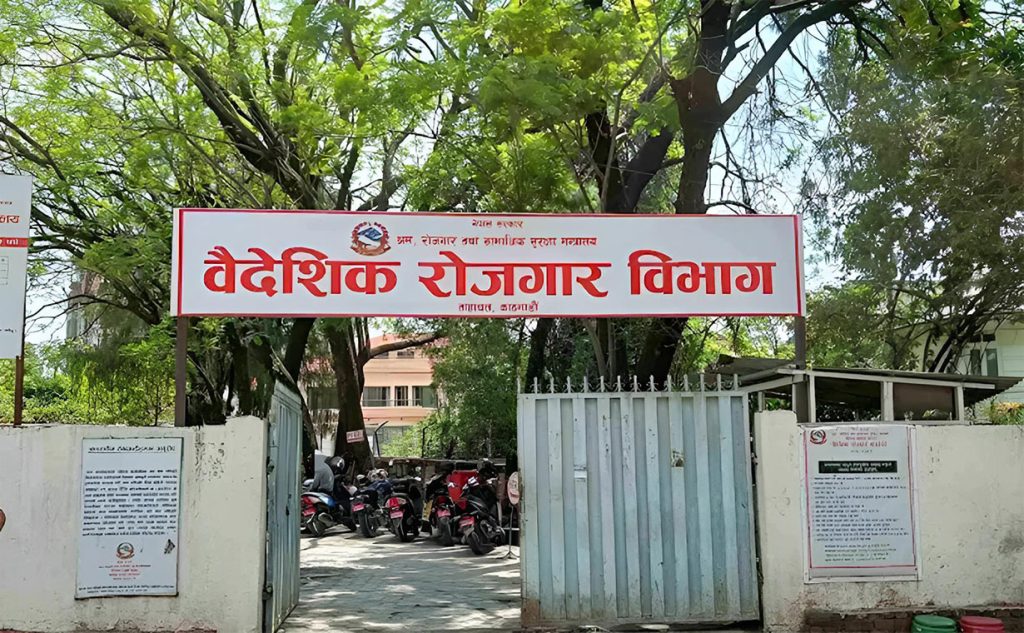
He added, ‘Research personnel and budgets should be increased in embassies and the department. Existing staff members should be trained to understand and resolve workers’ issues, and budgets must reflect such arrangements.’
Nepal highlighted the necessity of concrete plans and budgets for reintegrating returnee workers to utilize their skills and experience domestically. He emphasized that promoting entrepreneurship requires not only slogans but also facilitating favorable investment environments and incentives.
He stressed that complaints related to foreign employment and services should be accessible not only in Kathmandu but also up to district levels (Chief District Officer offices).
He called for transforming manpower companies’ monitoring from sporadic raids to systematic, institutionalized practices backed by proper procedures and budgetary provisions.
Nepal said the minister prioritizes ‘digitization’ and ‘reforms,’ and inclusion of these subjects in the budget would bring significant improvements in foreign employment.
Another labor and migration expert, Dr. Jeevan Baniya, recommended substantial changes in the Ministry of Labor’s budget and priorities.
Recognizing the economy’s dependence on remittances yet the ministry’s historically low budget allocation, he urged an increase in spending particularly for productive sectors.
Need for Change in Budget Scope and Approach
In recent years, the ministry’s budget largely focused on administrative costs, but Dr. Baniya contends it must now emphasize productivity and workers’ welfare.
‘While remittances sustain the country, the ministry responsible for workers is often marginalized. The focus should shift not only in budget size but also in objective,’ he stated.
He argued that realizing government’s digitization goals requires huge investment in information management systems. He suggested simplifying the labor approval process online and integrating workers’ families into the system.
Baniya advocated decentralizing Kathmandu-focused services to local levels and prioritizing budgets accordingly.
He stressed the importance of major investments in skill development to send competent Nepalese workers abroad and to generate employment domestically.
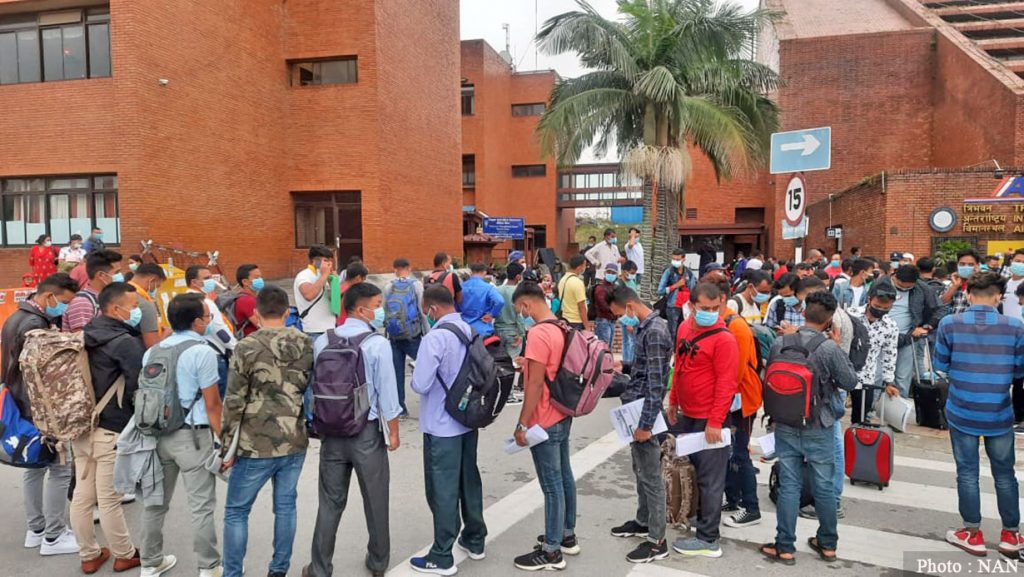
He suggested expanding the limited training centers in Bhaisepati to provinces and local levels and investing in research to revise curriculums according to market demand.
To reduce child labor, improve workplace safety, and manage grievances, Baniya recommended increasing labor inspectors and strengthening labor offices at provincial levels with sufficient resources.
He advised that the Foreign Employment Board focus solely on welfare activities and that the ministry establish a separate unit for research and skill programs, as the current board structure is ineffective.
He also proposed expanding the foreign employment adjudication benches to provincial levels for faster case resolution and making departmental investigations more efficient.
Acknowledging the ministry alone cannot create employment, he urged a facilitating role with other ministries and expressed confidence that addressing these issues in the coming budget will bring qualitative improvements in the labor sector.
Government Priority: Zero Tolerance for Fraud in Foreign Employment
Labor Minister Ramji Yadav stated that the government has adopted a ‘zero tolerance’ policy against fraud, exploitation, and irregularities in foreign employment.
Responding to parliamentary questions on Wednesday, he clarified that ensuring safe and dignified foreign employment along with generating domestic jobs is the government’s top priority.
Fraud Control and Software System
Minister Yadav shared that about 40,000 past complaints have been categorized and a plan is underway to resolve them within stipulated deadlines.
‘Starting from mid-July, foreign employment cases and investigations will be fully managed through a software system as technological developments progress,’ he said.
The ministry prioritizes skill development and employment programs aimed at curbing youth migration abroad and providing sufficient opportunities within Nepal, Yadav added.
He further noted that the ministry is working to decentralize services and extend them to citizens’ doorsteps, aligning with the Prime Minister’s vision.


