




News Summary
Reviewed content.
- Youth in India have launched a new movement by announcing the ‘Cockroach Janata Party’, protesting unemployment and systemic injustice.
- The current government in Nepal has been accused of avoiding addressing public concerns by bypassing parliament and spreading fear.
- Due to weak foreign policy, relations with neighboring countries are deteriorating, and over a dozen ambassadorial positions remain vacant.
A political earthquake is intensifying in India—the earthquake triggered by the announcement of the Cockroach Janata Party! This new party was formed by youth in response to remarks by India’s Chief Justice of the Supreme Court, who described young people as “lazy, spending excessive time on mobile phones, and becoming like cockroaches in society due to unemployment.”
Initially, Indian youth were expected to undergo a ‘metamorphosis’ and merely mock the government like Gregor Samsa from Kafka’s story, but instead, they have adopted this symbol to protest India’s democracy, which they see as influenced by the RSS. Thousands of young people have begun to voice their desire to be free from this system, declaring, “I am a cockroach, and I want to be free from this system.”
In other words, the Indian youth are attacking systemic issues. Although the outcome remains uncertain, this is the most significant and influential movement since the Naxalite uprising of the 1970s.
The Modi-led Bharatiya Janata Party (BJP), in power since 2014, has not faced opposition of this magnitude before. Despite efforts by Rahul Gandhi to rally millions, success has eluded him. Leaders like Mamata Banerjee have lost elections, and leftist parties are weakening.
Although Arvind Kejriwal offers an alternative political approach, his movement has weakened under Modi’s pressure. For the first time, politically aware young people are challenging the BJP from the streets.
This movement is not just opposition to the BJP but also an expression of frustration and anger against neoliberal economic policies, crony capitalism, and authoritarian governance rooted in Hindu extremism. Yet, the question remains: how sustainable will this new movement be?
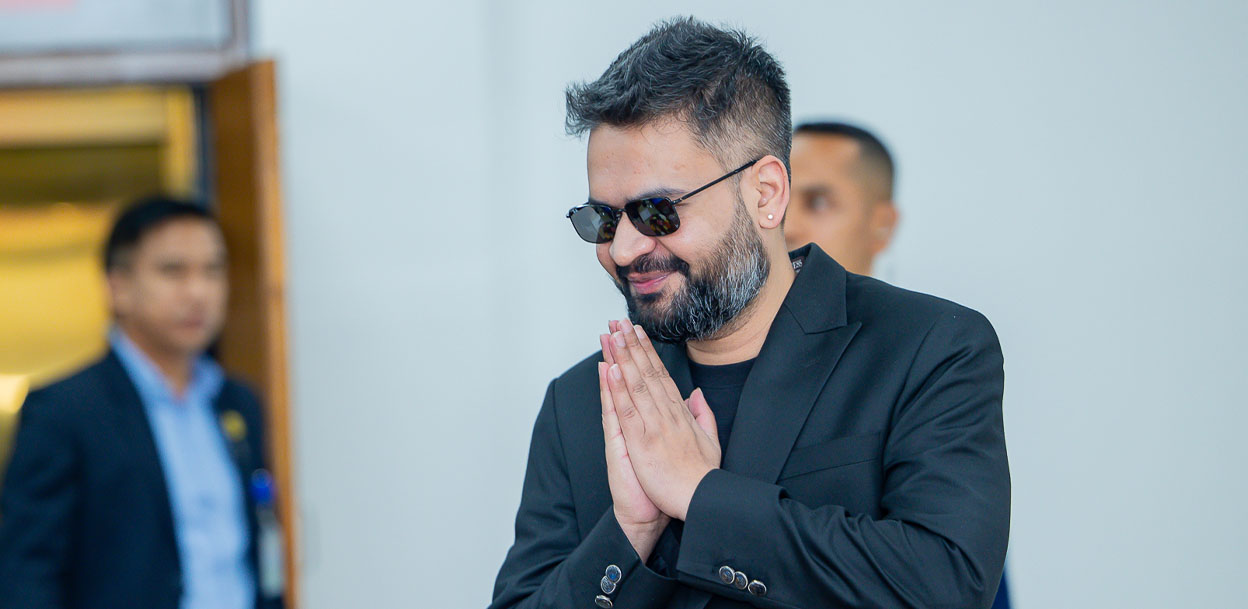
Politically premised on socialism, secularism, anti-corruption, and employment, this movement exposes national internal conflicts. However, it is unclear when it will reach the streets or confront state repression. It is also uncertain whether it will merely redecorate the system or rebuild it.
Ironically, Indian youth have taken Nepal’s JNU (Jawaharlal Nehru University) movement as an ideal, which the Shah-led government has ‘hijacked’ from Kathmandu. Caution is necessary to prevent this image from reflecting on themselves.
Where Is the Prime Minister?
There is no doubt that the current Shah government is being run by an opaque group led by Balendra Shah. On the past Tuesday in parliament, when efforts were made to find the prime minister, assurances were given by Speaker D.P. Aryal and RJPN General Secretary Kavindra Burlakoti, but opposition came from the prime minister’s secretariat.
The prime minister neither attends parliament, does not appear in the National Assembly, avoids dialogue with journalists, nor gives public speeches. He does not meet his security or other officials and issues orders only through junior staff in his office.
Government institutions and leaders see him as an adversary. He governs by exerting pressure and instilling fear.
Most strikingly, RJPN MPs and ministers have been rendered powerless, holding fewer rights than regular citizens. Even the Speaker has been humiliated.
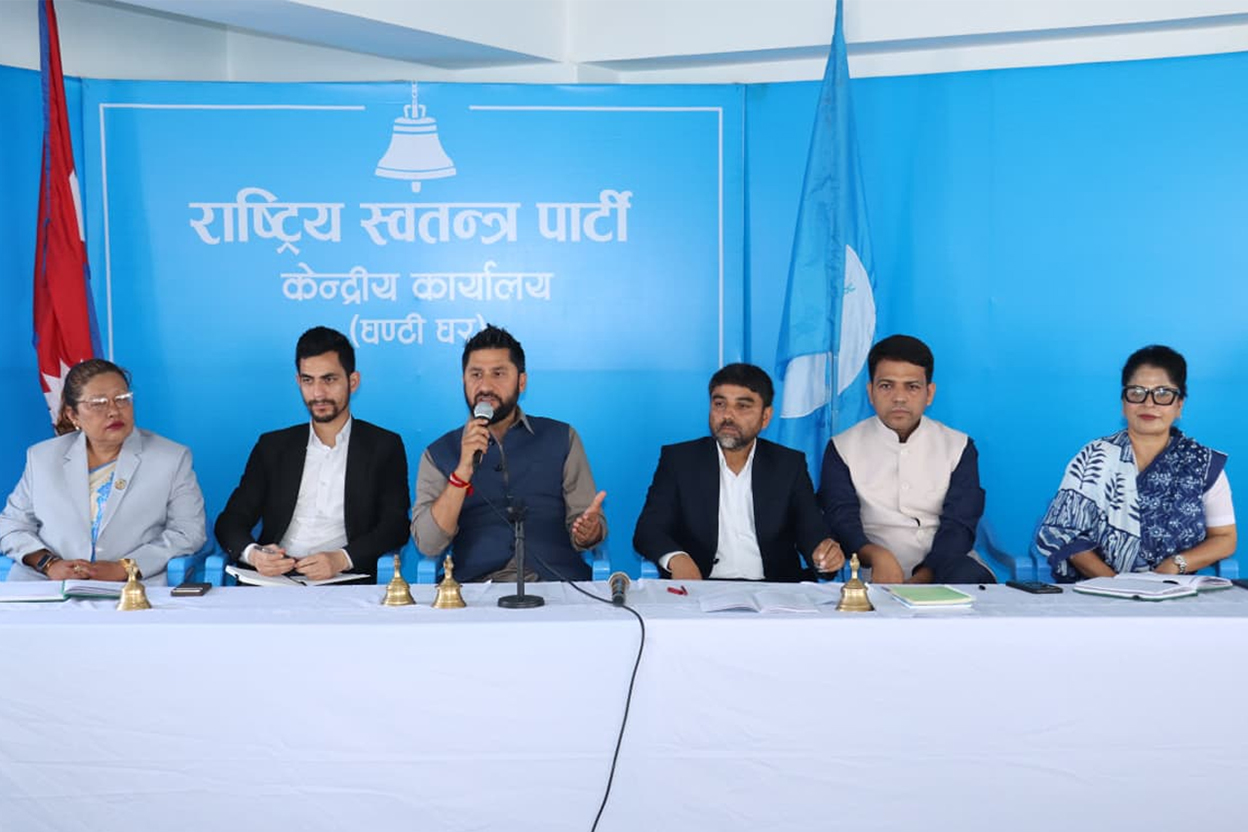
RJPN MPs behave as if they were sent to dismantle the parliamentary system. Leaders like Ravi Lamichhane, D.P. Aryal, and Kavindra Burlakoti are all questioning their very existence. On the surface, only their bodies are visible.
The Shah government’s greatest weakness lies in the Rastriya Swatantra Party (RSP). Though the prime minister is a leader of the RSP faction, he doesn’t represent the party. The government resembles an underground faction from the Panchayat era, where the real governance occurs outside the official seat of power, and the cabinet functions as a façade.
An Imminent Tragic Situation
A story goes that a brother in the village lamented not owning a radio. One day, sitting in a brother’s home that had a radio, he said, “If father dies, I will sell the buffalo and buy a radio too.”
The current government operates with a similar mindset, recklessly spending the resources it holds. Repeated reports emerge of public humiliation and oppression following the eviction of riverside settlements.
While Rana ruler Chandra Shamsher had granted freedom to serfs with dignity, this government seems to be following Ranbahadur Shah’s path.
Policies to intimidate contractors into working have been implemented, and construction entrepreneurs have been humiliated.
Global increases in petroleum prices have hindered material supply. Scaring business owners will not accelerate work.
Arrests of bankers and pressure on industrialists have increased dissatisfaction in the commercial sector. Investment and capital flight continue.
The prime minister’s faction members have threatened government officials, declaring, “The courts and the Commission for Investigation of Abuse of Authority are under our control; we will manipulate laws and procedures.”
Civil society, which opposed extreme partisanship in previous leaderships, is surprised that the current government is pursuing politicization across all sectors.
Despite rising inflation, no relief measures have been taken. Smuggling through border checkpoints continues unchecked, while the daily lives of ordinary citizens become increasingly difficult. The prime minister remains publicly silent on these matters.
Various measures are being deployed to reduce democratic space. Government advertisements in newspapers have stopped, and loyalty is demanded for survival.
According to RJPN MP Amaresh Kumar Singh, relations with both India and China are at their worst. Many ambassadorial positions remain vacant, and no high-level visits have taken place.
Within less than two months, the government’s systemic problems have worsened, maladministration has increased, and fear and discontent have grown among civil society. This is a departure started in reverse gear that risks driving society toward disaster.
Rather than harshly criticizing the government before it completes a hundred days, it may be better to wait. We should hope for positive change.


