




Summary
Prepared after review.
- Climate change and excessive use of chemical pesticides are causing a decline in soil quality in Nepal.
- More than 30 invasive plant species introduced into Nepal are estimated to cause annual losses exceeding 300 million NPR in the agricultural sector.
- In Salyan’s community forest, 14 hectares of land cleared of invasive species now supports herbal cultivation across more than 5 hectares.
World Environment Day, observed annually on June 5, offers a platform to raise global awareness about environmental protection, sustainable use of natural resources, and the future of our planet.
Among the environmental challenges the world currently faces, climate change, increased chemical pesticide use, soil degradation, and the spread of invasive plant species are prominent concerns.
While these problems may appear distinct, they are deeply interconnected. Each year, the World Environment Day theme changes, yet the complexities of these challenges continue to grow.
Nepal, being an agrarian country, has experienced significant changes in agriculture over recent decades. To boost production, there has been an increased reliance on chemical fertilizers and pesticides. Influenced either by commercial aspirations or multinational corporations, Nepal has undergone diverse agricultural experiences.
On another front, climate change has disrupted seasonal cycles. These factors combined negatively impact soil health. Degraded soil and shifting environmental conditions encourage the proliferation of invasive plant species. Consequently, agricultural productivity, biodiversity, and human health are increasingly compromised.
Climate Change and Agricultural Systems
Climate change represents one of the gravest environmental crises today. Rising temperatures, irregular rainfall patterns, prolonged droughts, sudden floods, and intense heatwaves are clear manifestations. Nepal is experiencing increasing unpredictability in rainfall; excessive rains in some areas have led to soil erosion and landslides, whereas droughts adversely affect cultivation. Compared to more developed nations, countries like Nepal bear disproportionate impacts, which is a great irony.
Climate change has also altered pest and disease dynamics. Insects that were previously localized have now spread to new regions. In some instances, pest outbreaks surpass current research capacity. This escalation has led farmers to rely heavily on pesticides. The cycle of climate change and pesticide dependency deepens environmental problems further.
Rising Pesticide Use: A Necessity or Dependence?
Since the Green Revolution, global pesticide use has escalated rapidly. In Nepal, various pesticides are applied to vegetables, fruits, and cash crops. While appropriate use helps protect crops, overuse results in serious long-term impacts on the environment and human health.
Climate change has exacerbated the spread of invasive shrubs such as black and white broom, water hyacinth, and Parthenium. How can we conserve dying soils and manage invasive species amid these challenges?
Many farmers may not fully understand pesticide dosages or application methods, leading to overuse. Frequent pesticide spraying on the same crop increases the risk of chemical residues accumulating in soil, water, and food.
Chronic illnesses are rising, with local governments grappling to provide support. Livestock increasingly require veterinary attention through mobile services. Fertilizer production in fields has declined. Although pesticides and fertilizers might seem like immediate remedies, they contribute to long-term problems.
Impact of Pesticides on Soil Quality
Soil is not merely mineral dust but a living system teeming with millions of microorganisms, organic matter, and nutrients. Healthy soil is fundamental to good crop yields. However, excessive pesticide use adversely affects soil health by:
1. Destroying beneficial microbes: Soil bacteria, fungi, and actinomycetes are crucial for organic matter decomposition and nitrogen fixation. Overuse of pesticides reduces their populations and soil biological activity.
2. Reducing organic matter: Organic matter is the cornerstone of soil fertility. Pesticides disrupt both the production and breakdown of organic matter, lowering soil carbon content and weakening its structure.
3. Altering chemical balance: Prolonged pesticide application changes soil pH and nutrient levels. Residual pesticides contaminate the soil.
4. Decreasing earthworms and other organisms: Earthworms act as natural soil engineers by loosening soil and improving nutrients. Pesticide overuse is diminishing these vital soil inhabitants.
Declining soil quality and agricultural output compel farmers to use more chemical inputs, increasing costs while production potential decreases. Healthy soil can yield better crops at lower costs, whereas degraded soil fails to meet expectations even with higher inputs.
Studies indicate organic matter depletion across many agricultural lands in Nepal, which impairs food security, farmer incomes, and rural economies.
Climate Change and Invasive Plant Threats
Invasive species are plants spreading beyond their native ranges and disrupting local ecosystems. More than 30 invasive plants have entered Nepal, including black and white broom, Parthenium, Mikania, Lantana (wild sea-buckthorn), and water hyacinth. These species negatively impact native flora, grazing areas, farmland, and wildlife habitats.
Climate change facilitates the spread of invasive plants by increasing temperatures, modifying rainfall, and weakening ecosystems. Heavy rains and floods carry seeds far away, while droughts and other stresses weaken native plants, enabling invasive species to dominate.
Relationship Between Pesticides and Invasive Species
Herbicides used to control weeds cannot eliminate all species simultaneously. Some resistant species survive and eventually become dominant. Globally, herbicide-resistant weeds pose significant challenges.
Moreover, pesticides weaken native plants and soil microorganisms, which indirectly encourages invasive plant expansion. Excessive pesticide use can therefore exacerbate invasive species problems.
Impact on Biodiversity and Human Health
Invasive plants and pesticide use substantially affect biodiversity. For example, black broom infestation has led to the disappearance of the aromatic Sugandhawal (Samayo) plant in Salyan. As native plant species decline, associated birds, insects, and wildlife suffer. Pollinating bees and beneficial insects also decrease, reducing agricultural productivity. Although precise studies are limited, annual losses due to invasive plants are estimated to exceed 300 million NPR.
From a public health perspective, intensive pesticide use is alarming. Direct exposure, contaminated food consumption, and environmental pollution contribute to various health issues. Parthenium, for instance, can cause skin allergies, respiratory problems, and other ailments.
If soil conservation, responsible pesticide use, organic farming, and invasive plant management are not prioritized now, future generations will face severe environmental crises.
Potential solutions are multifaceted:
1. Adopt Integrated Pest Management (IPM): Prioritize biological and mechanical methods, use pesticides only as a last resort and in safe quantities.
2. Improve soil health: Increase use of compost, farmyard manure, and organic fertilizers; adopt green manures and cover crops; maintain soil fertility through crop rotation.
3. Control invasive plants: Early identification and management, enhance community participation, and apply biological control techniques.
4. Promote climate-resilient agriculture: Expand agroforestry systems, capture and conserve rainwater, protect local and adapted crop varieties.
5. Raise awareness and strengthen research: Train farmers on safe pesticide use, encourage soil health testing, and conduct research on invasive species management.
Conclusion
World Environment Day is more than a celebration; it is a reminder of our responsibility to Earth. If acknowledged as a day to cherish the soil, it emphasizes the urgent need to address climate change, pesticide misuse, soil degradation, and invasive species. These factors negatively impact agricultural output, food security, biodiversity, and human health.
Starting today, collective action in soil conservation, responsible pesticide use, organic farming, and invasive species management is essential to secure our future. Healthy soil, clean environment, and rich biodiversity are the foundation of sustainable development. Instead of workshops, direct outreach to farmers is imperative now.
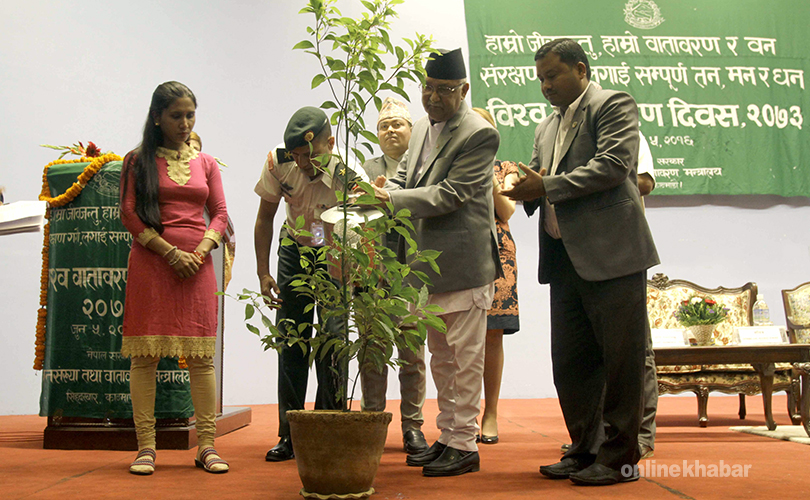
Completely eliminating chemical pesticides may not be feasible immediately, but their significant reduction is possible through integrating organic pesticides, plant-based controls, biological management, IPM, and healthy soil practices. This will support production while safeguarding soil health, environmental balance, and human wellbeing.
Relevant authorities and farmers must commit to finding alternatives to chemical pesticides and protecting soil. In Salyan’s community forest, clearing invasive species across 14 hectares has allowed more than 5 hectares to be cultivated with medicinal herbs. Efforts like these, aimed at conserving biodiversity and local crops, bring the message of World Environment Day into practice. May World Environment Day inspire such initiatives worldwide.
Best wishes to all!


