Recommendation to Expand Royalty Scope on Natural Resources; Potential Areas Identified




Summary
Prepared after review.
- The National Natural Resources and Finance Commission has recommended that the government expand the scope of royalties collected from natural resources and establish an integrated law concerning natural resource operations.
- The commission suggested that royalties collected by the Nepal Mountaineering Association should be deposited into the state treasury, with the association receiving an annual budget allocation to manage expenses.
- It also recommended deducting unpaid royalties directly from payments made by the Nepal Electricity Authority to hydropower companies, depositing these into the federal divisible fund.
July 21, Kathmandu – The National Natural Resources and Finance Commission has advised the government to broaden the scope of royalties earned from water and other natural sources.
This recommendation was presented in response to provincial and local governments’ proposals regarding royalty distribution for the upcoming fiscal year 2083/84 (Nepali calendar).
According to Schedule 4 of the Intergovernmental Fiscal Management Act, 2074, royalties from mountaineering, forestry, electricity, mining, and water and other natural resources are collected and shared among the three levels of government.
The federal government receives 50%, the relevant provinces 25%, and local bodies 25% of these royalties. The commission has recommended expanding this scope with suggestions on natural resource operations and proper utilization of the royalties collected.
The commission also proposed expanding royalty sharing to include revenue from forestry, mining, and radio frequency operations in telecommunications services.
It recommended enacting legislation to collect royalties from potential sources such as inter-basin drinking water projects, water transportation, water-based recreation, fish farming, and hydrogen energy.
Additionally, the commission identified potential royalty collection from solar, wind, geothermal, thermal, fossil fuel, nuclear energy, petroleum, and telecommunications sectors.
A law to regulate, protect, and systematically manage royalties from these sources has been advised by the commission to ensure conservation, promotion, and sustainable development.
Suggestion to Formulate an Integrated Law
The commission recommended drafting and implementing an integrated law to address issues regarding investment, benefit sharing, dispute resolution over royalty distribution, and environmental assessments across the three government levels involved in natural resource operations.
Deposit Royalty Collected by Mountaineering Association into State Treasury
It urged the government to deposit royalties collected by the Nepal Mountaineering Association into the state treasury, while allocating an annual budget to the association for expenditure.
Though provided for under the Intergovernmental Fiscal Management Act, this provision has not been effectively implemented, prompting the commission’s focus on enforcement. Presently, the government has entrusted the management and promotion of 27 mountain peaks to the association.
In order to make royalty distribution from mountaineering more organized and coordinated, the commission recommended including indicators related to trekking routes.
The commission suggested that the Ministry of Culture, Tourism, and Civil Aviation prepare detailed information on the length of trekking routes to base camps and data about the local governments located there.
Royalties should be utilized by local governments where peaks are situated, neighboring local governments, base camp locations, trekking routes, as well as regions impacted by mountaineering for the purposes of conservation and promotion.
Strict Measures Against Hydropower Companies Not Paying Royalties
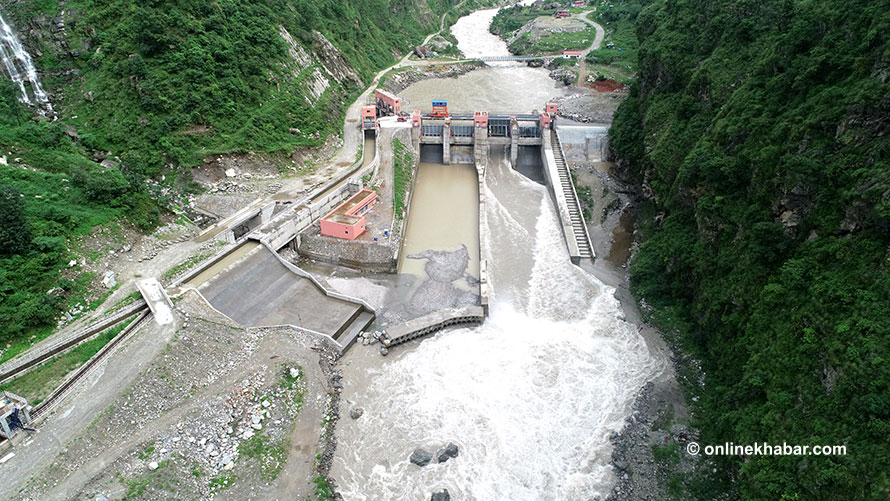
The commission recommended stricter action against hydropower companies that do not pay royalties regularly. It has been found that many private hydropower projects fail to deposit annual royalties into the federal divisible fund, creating challenges in budgeting for all three government levels.
To address this, the commission suggested an effective system where the Nepal Electricity Authority deducts outstanding royalties directly from payments to these companies and deposits the amounts into the federal divisible fund.
Royalties from the power sector are advised to be used for enhancing the sustainability of hydropower projects, benefiting local communities around the main project areas, affected upper and lower riparian regions.
When the three levels of government upgrade or construct roads near hydropower projects, the commission advises implementing measures such as proper drainage management and constructing retaining walls to prevent soil erosion and protect riverbanks.
They also recommend safe management of excavated soil and bioengineering works for landslide control.
Budget Support for Local Governments Not Receiving Royalties
The commission recommended that the federal government allocate funds to local governments that do not receive royalties. According to the law, royalties are distributed based on the nearest affected area, leaving some local bodies without any royalties.
To address environmental impacts, the commission proposed that the federal government provide budgetary support to such local governments.
Expand Environmental Impact Study Areas
The commission advised including clear information on affected areas surrounding project sites in environmental study reports prepared before resource utilization.
They also recommended assessing whether environmental conservation programs have been conducted in the affected resource utilization areas as outlined in environmental studies.
Recommendations for Tax System Improvements
The commission suggested implementing a single-window system for collecting royalties and other fees to ensure they are deposited only in the legally authorized bodies.
It also recommended that the three levels of government develop annual work plans prior to spending the revenues generated from royalties.
Recommended Usage of Royalties
The commission provided the government with a list of potential royalty usage areas. Royalties from mountaineering are advised to be used for constructing and improving trekking routes and access to base camps.
These funds should also support infrastructure construction and maintenance at base camps, camping and resting sites for climbers, waste management, communication and information centers, tourist police, health service improvements, human resource training, enhancement of rescue capabilities, establishment of museums, promotion of codes of conduct, and disaster management.
Royalties from the electricity sector should be used for watershed conservation, retaining walls and reservoir protection, river control, sustainable use of water resources, and awareness programs for local communities to preserve hydropower infrastructure.
In lower riparian dry areas, royalties can be used for irrigation, drinking water system construction, rural electrification, fish farming, livelihood restoration of displaced communities, and eco-tourism.
According to the commission’s recommendations for the coming fiscal year, Koshi province will receive the highest share of royalties from Mount Everest, followed by Bagmati province.
Koshi province will also receive the highest royalties from Cho Oyu mountain, with Bagmati ranked second. Dhawalagiri’s royalties will mainly go to Gandaki province, with some shared by Karnali. Lhotse’s royalties will be divided between Koshi and Bagmati provinces, while Makalu will belong to Koshi and Manaslu royalties to Gandaki province entirely.
Approximately two dozen local governments will receive Mount Everest royalties, with Khumbu Pasanglhamu rural municipality receiving about 50% of the share.


