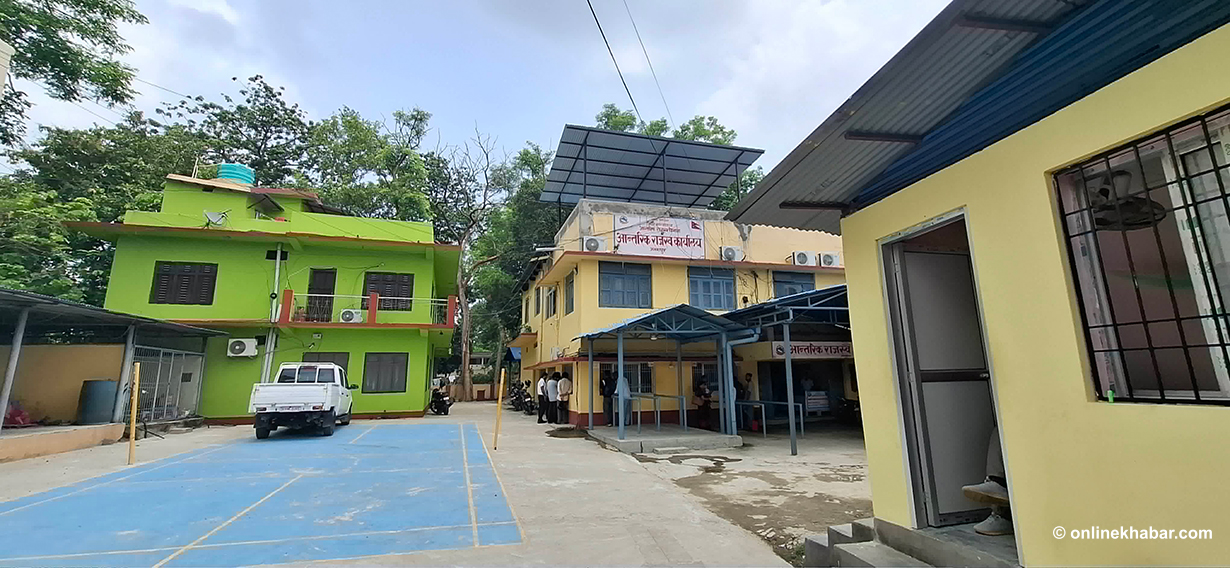
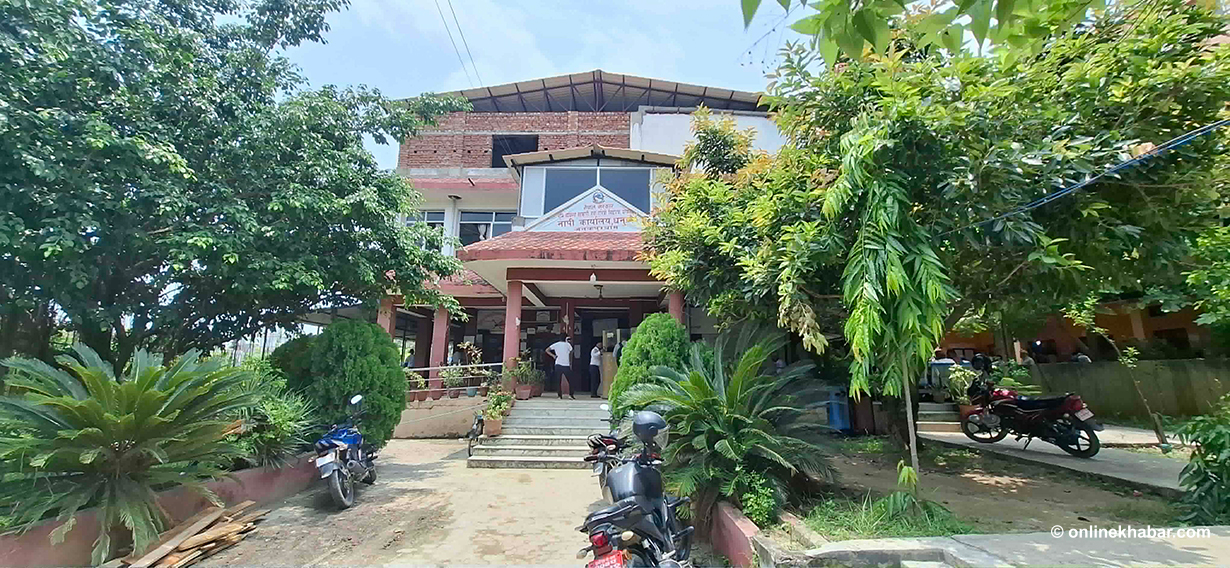
18 Ashad, Janakpur — Sajan Mukhiya, 19, from Dhanauji Rural Municipality–5 in Dhanusha, was seen around noon on Wednesday at the passport counter window of the District Administration Office in Dhanusha.
In a hurry to travel abroad, he asked the counter staff while showing his documents, ‘Has my passport been issued yet? I haven’t received any SMS in 20 days.’ A female staff member checked and replied, ‘Please come back after 15 days. It should be ready by then.’
Mukhiya had completed the online application at the office around Jestha 25. He was informed that once the passport is ready within 20 days, an SMS notification will be sent to his mobile for collection. But when no message came after 20 days, he visited the office on Wednesday.
‘I struggled initially. They say passports are issued in seven days, but even after 20 days it hasn’t arrived. Now they are asking me to wait another 15 days,’ he expressed his disappointment. It currently takes at least 20 days from completing the process at the District Administration office to receiving the passport.
After senior leader Balendra Shah (Balen) of the Rastriya Swatantra Party (Raswapa) was elected Prime Minister with a two-thirds majority, his government adopted a policy focusing on making public service delivery easier, simpler, and free of hassle.
In its first cabinet meeting, the government released a list of 100 governance reform tasks aiming to improve service delivery within 100 days. Point 21 of these reforms states: ‘To provide citizens fast, simple, and intermediary-free services, citizenship, passport, national identity card, and all services provided by District Administration Offices will be operated through a digital and integrated system. Citizens will be able to obtain citizenship copies and passport services from any district administration office. A digital recommendation system at ward level will be implemented. The national identity card will be used as a mandatory single identification system, and all service processes will become faceless, time-bound, and trackable.’
Point 26 further mentions ensuring passport, citizenship, driver’s license, and similar services are delivered to citizens quickly, easily, and without intermediaries within predictable timelines, transforming all service processes into faceless, time-bound, and digital systems.
Despite the reforms, public opinions are mixed on their effectiveness. Citizens visiting the office in Janakpurdham, the capital of Madhesh Province, report seeing no significant improvement, while others express satisfaction with the changes.
Shankarpasad Singh from Mithila Municipality–5, Shripur, found the improvements satisfactory. He arrived at the District Administration Office on Wednesday at 9 a.m. to apply for his daughter Manisha’s citizenship. By 10:30 a.m., he was seated in the waiting area at the back of the office, awaiting his turn until 1 p.m. Staff assured him his citizenship would be ready by then. The promise of receiving the service within a few hours gave him the impression of smooth delivery.
‘I had all the documents. The staff processed them swiftly. They told me citizenship would be issued by 1 p.m., so I am waiting,’ he said. ‘Service quality has improved compared to before. I believe it will continue to get better.’
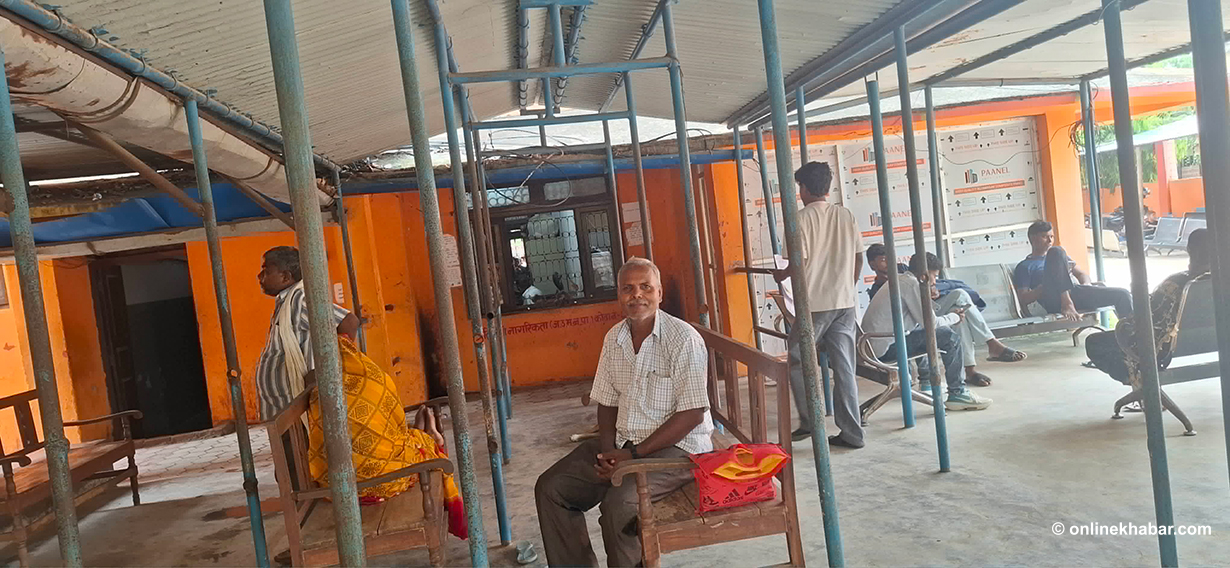
In contrast, Dhanikalal Mahtol from Kshireswor Nath Municipality–8, who went to collect a citizenship copy, finds no improvement over time. On Wednesday at 10:40 a.m., he and his wife, Anarkumari, waited behind the office after being requested to provide additional documents, including land ownership certificates and parental citizenship copies, since a previous file was missing. They had returned with the recommended documents from the ward office, but were still waiting.
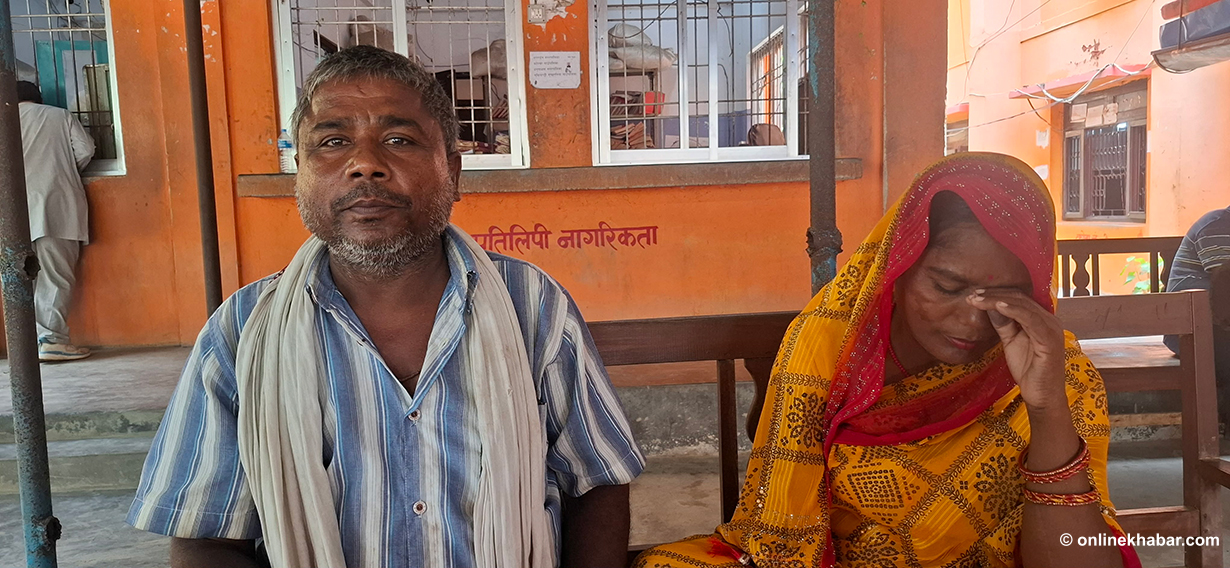
‘I received citizenship in 1999. The records were originally here, but the staff now claim they are lost. How can I believe services have improved under the Balen government when there is so much hassle even just to get a copy?’ he complained.
He shared that a married daughter from Gausala had to pay 4,000 rupees to get her citizenship processed after encountering difficulties due to partially damaged documents. Only after obtaining online citizenship for her parents could she proceed.
There is no fan under the makeshift tent where they waited. Citizens endure the heat while waiting their turn.
One employee in the records section explained that citizenship records between 1992 and 2002 are worn and torn due to repeated searches, necessitating the creation of new files to issue copies.
Chief District Officer Premprasad Luitel stated a single-window system has been implemented to ease citizenship services.
‘Currently, the citizenship counters are less crowded because all citizenship recommendations are being processed online from the wards. This has accelerated the work,’ he said.
He added that passport and citizenship documents can be delivered via post, though people still mostly prefer to collect them in person.
At 10:30 a.m., 70-year-old Ramsagar Devi from Kshireswor Nath Municipality–5 was standing in a long queue seeking a national identity card as it is now mandatory for elderly allowance. After arriving at 9 a.m., it still took her an hour and a half to reach the counter. Frustrated, she reported no visible improvement in service delivery.
‘Elderly like me have to wait in line. It should be made available more easily. I can see no improvement. People like us still face many difficulties,’ she said.
Separate queues were arranged for men and women. Some men fanned themselves using their scarves to cope with the heat. The photography counter, essential for the national ID card process, had a single entry point and insufficient counters, causing slow progress.
People in line expressed frustration. Sobha Devi from Sabaila Municipality–10, standing behind Ramsagar Devi, lamented the lack of separate counters for women and said, ‘There should have been a dedicated counter for women, but it hasn’t been arranged. What difference does the current government make? The hardships remain the same.’
Inside the offices, employees work under fans, but the outdoor shaded waiting areas lack them. Citizens endure the heat while waiting to be served. The shade from two large trees around the complex provides some relief.
Parmeshwar Safi of Bateshwar Rural Municipality–4 in Dhanusha commented that although several improvements have been made since the Balen government came to power, service delivery remains unsatisfactory. He complained about the lack of fans in the waiting tent despite the intense summer heat.
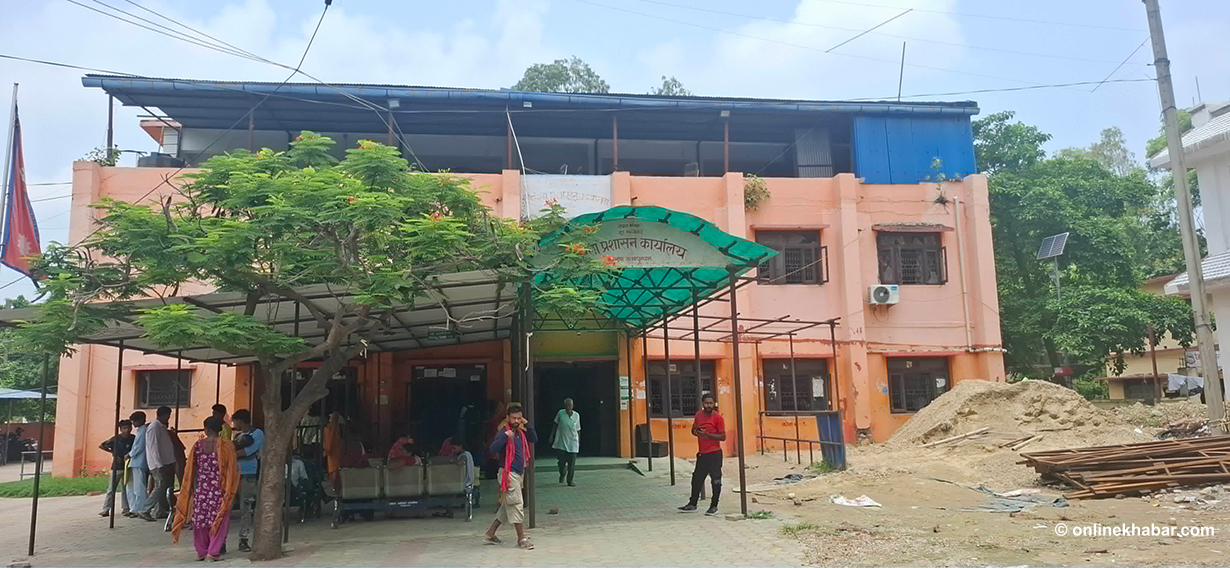
‘Other districts may have easier procedures. Here it’s still inconvenient. Staff use fans but the waiting tents have none,’ he said. ‘Since Balen government formed, some ease has come, but progress must quicken further.’
CDO Luitel said efforts have accelerated issuing national identity cards. Despite only two queues, there are four tables inside where pictures are taken. Senior citizens, differently-abled individuals, and new mothers receive rapid service from a separate dome area.
Point 27 of the reform includes modernizing postal services to deliver passports, citizenship copies, licenses, and other government documents directly to citizens’ homes within 100 days. However, citizens still line up outdoors in scorching heat at district offices to receive services.
Public response towards Balen government’s governance reforms is mixed. Citizens expect improved, smoother service delivery. Some employees themselves express dissatisfaction with the service system.
The district administration building is old and dilapidated, with a new building under final construction. Despite having the highest population in Madhesh Province, Dhanusha has only one Area Administration Office located at Yadukoha. While other districts have three to four area offices, Dhanusha struggles to handle the service demand.
Though plans to establish a Dhanushadham Area Administration Office exist, progress is stalled at the Ministry of Finance level.
‘The existing building is old and deteriorating, unusable in its current state. This prevents installing fans outdoors. We expect service improvements once we move into the new building by Dashain festival,’ said CDO Luitel.
Similar Difficulties in Land Revenue Office; Less Crowds Elsewhere
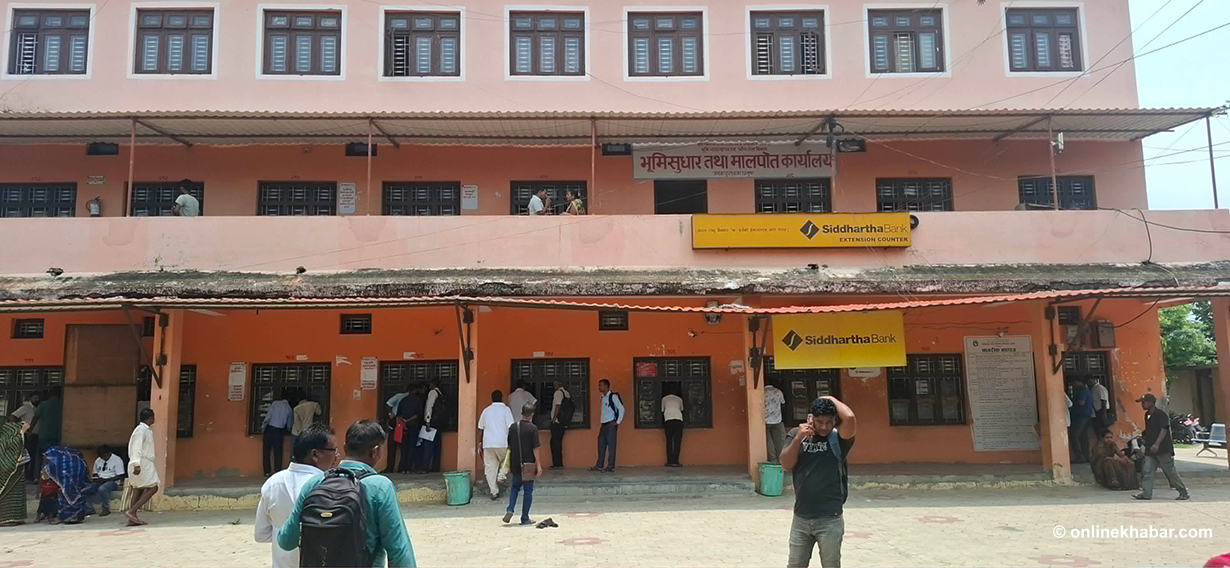
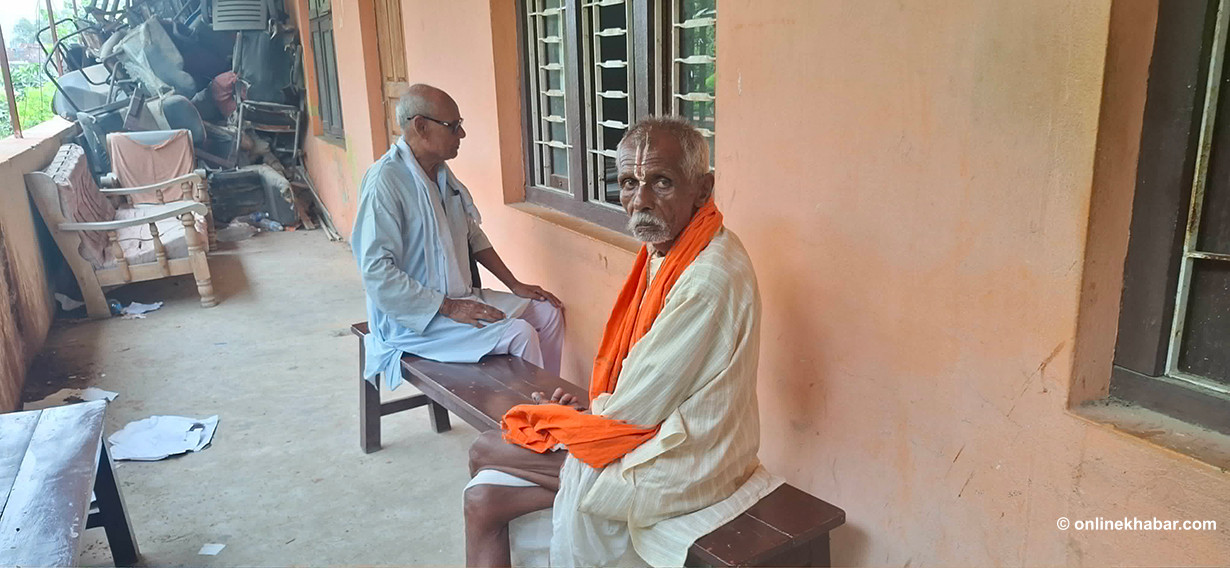
At the Land Reform and Revenue Office in Dhanusha, 85-year-old Jugal Thakur sat on a bench near window 220 at 12:30 p.m. From Ramdaiyabhawadi in Kshireswor Nath Municipality–1, he sought updates on his pending land clearance application for the past year. Despite repeated visits, staff delays continued to frustrate him.
‘I have been coming for a year to get clearance for a three-and-a-half kattha piece of land. They keep telling me that some documents haven’t arrived, but I still come hoping for progress. I have been visiting continuously for five days now,’ he said. ‘The process still requires face-to-face interaction. Despite Balen government, the pace hasn’t improved here.’
Staff confirmed his repeated visits but admitted delays due to pending documents. ‘We just received some documents a few days ago. Work should proceed now,’ they said.
Nearby, Suresh Thakur from Pipra Rural Municipality–6 in Mahottari expressed similar frustration. Coming monthly to register village block land, he complained despite providing all documents, work is delayed due to staff procrastination. ‘Even under the Balen government, the situation is the same,’ he asserted.
Work in the land revenue office still often relies on intermediaries, with individuals facing delays when submitting documents personally.
The Survey Office shows better organization than before, using token systems. The online process has reduced public queues at the Internal Revenue Office in Janakpur. The Transport Management Office also sees fewer clients compared to before, with visits mainly for driver’s licenses and vehicle transfers. However, concerns over intermediary involvement persist in transport services.
CDO Luitel claims that all government offices in Dhanusha have reduced intermediary interference, accelerating service delivery with timely processing.
The Provincial Hospital in Janakpur faces high patient volume but lacks adequate staff, causing patient hardship. Citizens insist on improved quality healthcare services.
Janakpur hosts many private hospitals, clinics, and labs operating below standards, charging exorbitant fees with negligence that sometimes risks lives. Yet, government oversight and regulation remain insufficient to address these violations. This systemic failure is widely acknowledged.
Although employees now fear openly soliciting bribes, collusion with intermediaries to collect illicit fees continues unchecked. Illegal river resource exploitation persists without effective control, while local governments and police administrations are often implicated in such corrupt practices.