




News Summary
- The devastating floods in the Bhote Koshi and Trishuli rivers have damaged the Nagdhunga-Muglin and Nagdhunga-Naubise road sections, disrupting Kathmandu’s supply network.
- With supply chains blocked, traders have reported increased prices for rice, sugar, cooking oil, vegetables, and fruits in Kathmandu.
- The road closures have also caused a shortage of cooking gas in the Kathmandu Valley; the Ministry has deployed 10 out of 16 monitoring teams to oversee the market.
September 3, Kathmandu — The catastrophic floods that hit the Bhote Koshi and Trishuli rivers on August 26 have started to directly impact household kitchens.
Major roadways entering the Kathmandu Valley have been washed away due to floods and landslides, halting cargo vehicles from entering and exiting the capital, thereby disrupting the supply system of daily essentials.
This disruption has led to a rise in prices for staples such as grains, cooking oil, fresh vegetables, fruits, and other essential commodities in the market.
The crucial Nagdhunga-Muglin road segment, considered the lifeline of the Kathmandu Valley, has been washed away near Krishnabhir due to the Trishuli floods.
Additionally, the Nagdhunga-Naubise road section suffered severe damage near the Patle forest area on Wednesday morning, completely affecting transportation from Krishnabhir.
Since Sunday, cargo vehicles have been unable to enter or leave Kathmandu, severely impacting the flow of goods. Consumers, fearful of impending shortages, have begun stockpiling food supplies.
Rice, cooking oil, and sugar prices sharply increase
Consumers report that wholesale traders have been hoarding goods, causing retail prices to spike. Retail traders blame the rise on increased transportation costs.
According to grocery businessmen in New Baneshwor, sugar prices have risen from NPR 120 per kilogram a few days ago to NPR 140 now.
“Wholesale sugar is unavailable and in short supply,” said one trader. “Due to high prices, buyers have stopped purchasing, so I have also halted sales.”
Prices of rice and cooking oils have also risen significantly, with various types of rice increasing by NPR 200 to 300 per kilogram.
For example, cumin-flavored fine rice which previously cost NPR 2,400 for 20 kg now ranges from NPR 2,600 to NPR 2,700.
Sunflower oil prices vary between NPR 300 to 350 per liter depending on the brand, and mustard oil is close to NPR 400 per liter according to traders. Prices of pulses and lentils have remained relatively stable so far, although delays in road reopening may affect them soon.
Retailers face difficulty selling sugar without proper invoices: Retail Traders Association
The Nepal Retail Traders Association states that prices for sugar, cooking oil, and rice were already high before the disaster, and the recent crisis has further impacted the market.
According to the association, there is no immediate shortage of food in Kathmandu Valley, but effects may be seen in the coming days. Particularly, wholesalers’ failure to issue proper bills has caused difficulties for sugar traders.
Amulakaji Tuladhar, the association’s General Secretary, said retailers currently have stock sufficient for 15 days to one month, so shortages are not yet critical. Only when fresh stock arrives will the true market situation become clear.
“The situation will become clearer next week,” Tuladhar said. “At present, only existing stocks are being sold, so there is no shortage.”
However, he admitted complaints about rising prices. He highlighted that large wholesale traders not providing proper invoices has caused problems for retailers.
“Many complain about sugar price hikes, but wholesalers don’t issue proper bills,” he explained. “This makes it difficult for retailers to issue bills, and they risk having to suspend their businesses.”
He also claimed that cooking oil is still available at previous prices, and only with the arrival of fresh supplies will it be confirmed whether prices have risen post-floods.
Rise in transportation costs starting to impact market prices
Complaints about rice prices reaching as high as NPR 300 per kilogram have surfaced, but industry representatives deny any increase in wholesale prices.
Vibhor Agrawal, a member of the Nepal Rice, Oil, and Pulses Industry Association, explained that the industry continues to send products at previous prices, though transportation costs have risen due to roadblocks.
He justified no price hike on the grounds that the raw paddy price remains unchanged.
“We have not increased rice prices; we are supplying at old rates,” Agrawal said. “However, due to poor transport access from Biratnagar to Kathmandu, additional freight charges have accrued.”
Price increases passed on to consumers due to higher freight
Agrawal stated that truck freight from Biratnagar to Kathmandu used to cost NPR 150 but has now risen to NPR 200. Use of smaller vehicles caused by lack of large trucks has contributed to the freight hike.
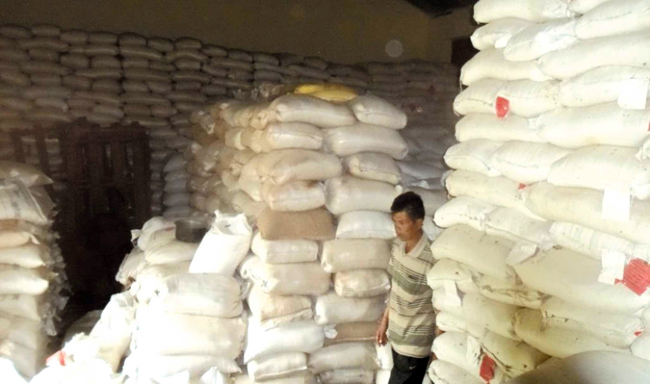
“Previously, freight was NPR 150 from Biratnagar to Kathmandu; it is now NPR 200,” he explained. “This freight cost is ultimately borne by dealers and, in turn, by consumers.”
He said the industry price for 25 kg of cumin-flavored fine rice remains NPR 2,550.
Due to discrepancies in freight billing, companies have started issuing ‘ex-factory’ bills and are asking dealers to arrange their own transportation.
Price hikes on existing stock deemed unjustified
Agrawal also condemned dealers and shops who are exploiting the crisis to sell old stock at elevated prices.
“If dealers or shops have old stock, they must sell at old prices. Raising prices on old stock is inappropriate,” he said. “The government must inspect and verify these practices.”
Prices of apples and garlic also high
Price increases are not limited to food grains; vegetables and fruits have also become expensive. Import disruptions have forced retailers in the Kalimati fruit and vegetable market to raise prices.
Dev Rana, a vegetable merchant in Budhanilkantha, revealed that landslides have halted roads, resulting in lower vegetable supply and only limited quantities reaching from nearby districts, causing sharp price increases.
“Okra prices have climbed to NPR 70 per kilogram,” he said. “Vegetable shortages in Kalimati and other markets have driven prices up.”
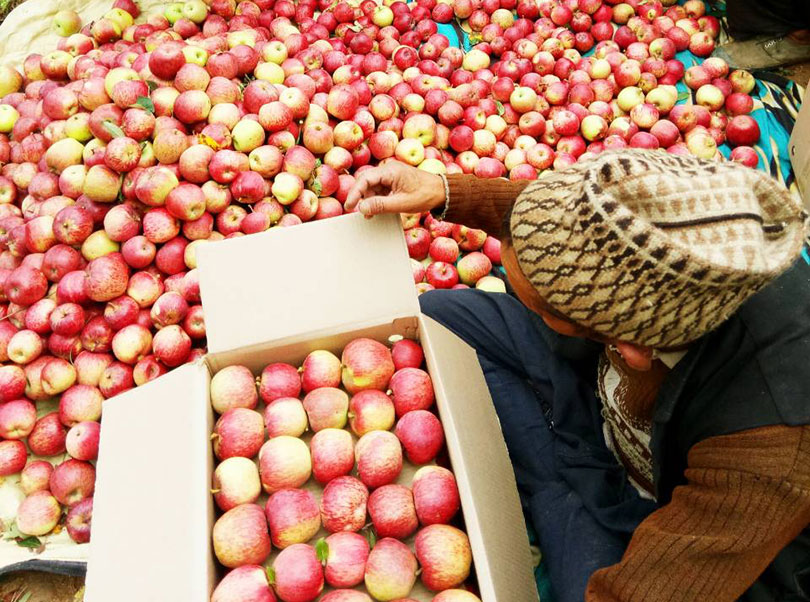
Fruit and vegetable traders in New Baneshwor said that imported onions are priced at NPR 120 per kilogram, while Chinese garlic has reached NPR 350 due to border closures with China caused by the floods, which have also disrupted transportation routes from India, resulting in rising potato prices.
“Wholesale prices from China, from garlic to apples, have risen,” said a trader. “Some wholesalers have also started selling stock at elevated prices.”
The prices of apples and pomegranates have surged as well; an apple carton (20 kg) now costs between NPR 2,000 and NPR 2,200. Previously, the same carton sold for NPR 4,500, but now retails between NPR 7,200 and NPR 7,500.
“Apples that used to be affordable now cost around NPR 450 per kilogram,” said a trader. “It’s difficult to get goods wholesale in carton quantities now.”
Pomegranate prices have also increased to NPR 350–400 per kilogram, while bananas sell for NPR 200–250 per dozen.
Cooking gas shortages intensify
With road blockades, a shortage of cooking gas has begun in the Kathmandu Valley. Already scarce, the blockade has exacerbated the gas crisis, forcing consumers to wander with empty cylinders in search of supply.
All depot dealers in the Valley have long queues for gas. The Nepal Oil Corporation is preparing alternative routes to bring in gas.
Executive Director Nagendra Sah of the corporation said arrangements are underway to import gas from the Terai region, and distribution will be prioritized accordingly.
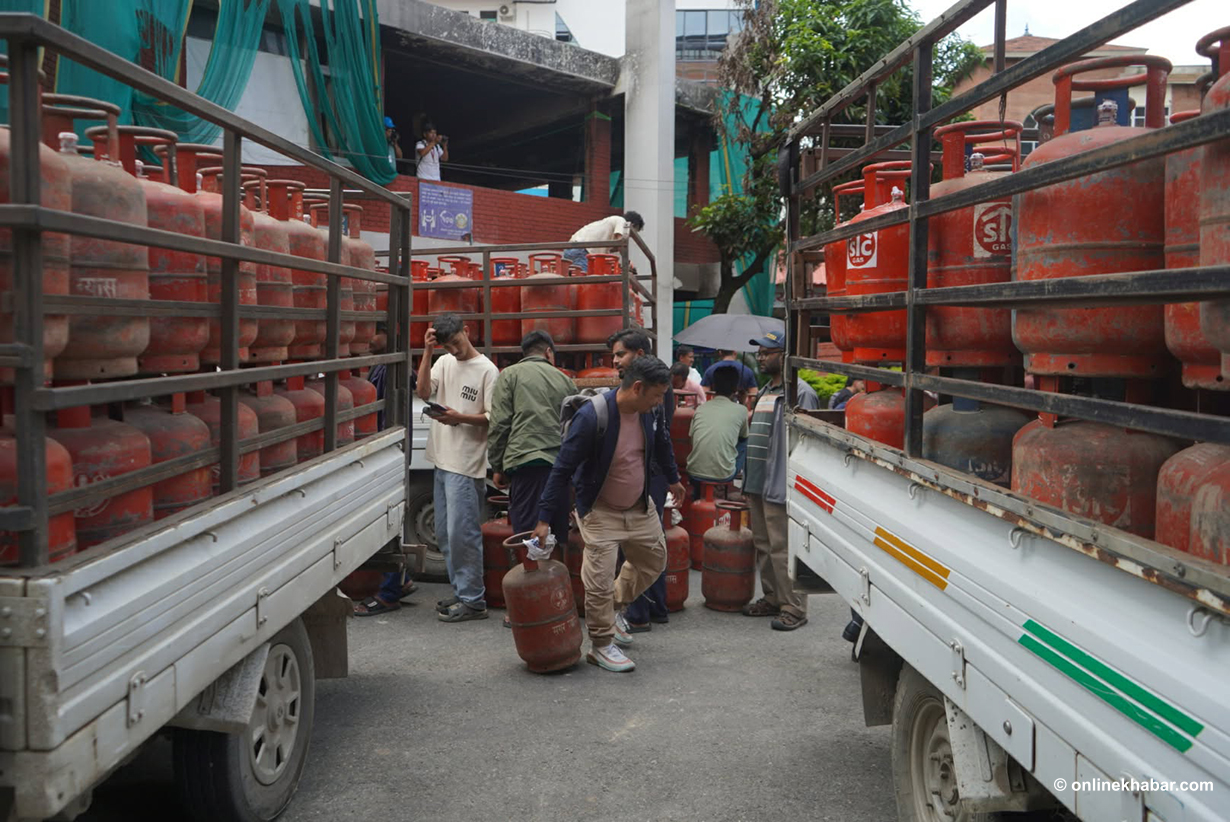
Currently, the corporation has halted gas sales for commercial use to prevent shortages.
Priority gas distribution is planned for students, the vulnerable, patients, senior citizens, ashrams, persons with disabilities, and flood victims via open centers, although consumer confidence remains low.
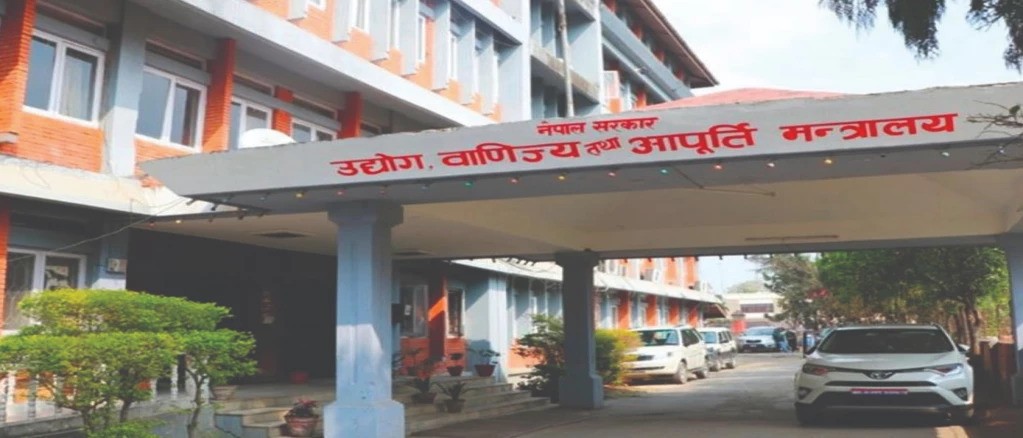
The Ministry of Industry, Commerce, and Supplies has ordered strict action against traders who arbitrarily increase prices during the disaster and festive seasons, along with conducting warehouse inspections.
During discussions with officials from the Department of Commerce, Supplies, and Consumer Protection on Monday, Minister Gaurikumar Yadav instructed to make market monitoring more effective.
The ministry formed 16 teams, of which 10 have already been deployed to markets.
Ten market monitoring teams deployed: Ministry
Ministry spokesperson Netra Prasad Suvedi confirmed ongoing monitoring and said preliminary reports have begun to arrive. The remaining teams will be sent out soon.
The monitoring teams are also acting on consumer complaints, particularly focusing on areas reporting cooking gas shortages, the spokesperson added.
“Monitoring is ongoing, and some actions have already been taken,” he said. “Teams are also checking markets for sugar, rice, cooking oil, and vegetables.”


