24 Baishakh, Kathmandu – News of a new provision in the House of Representatives regulations, which would differentiate members of parliament from other citizens, has sparked significant uproar in the political arena. The ruling party Raswap’s proposed amendment to the regulations, specifically Rule 259, has drawn varied reactions from opposition parties.
Rule 259 of the House of Representatives regulations states, ‘Regardless of what is written in existing laws, the assembly, committees…’ This clause is causing unease among opposition ranks, who have voiced concerns about its implications for parliamentary procedures and democratic norms.
April 7, Kathmandu – According to the exchange rates set by Nepal Rastra Bank for today, the value of the US Dollar, British Pound Sterling, and Swiss Franc has decreased, while the Euro and Australian Dollar have appreciated.
Today, the buying rate for the US Dollar is set at NPR 151.08, and the selling rate at NPR 151.68. Yesterday, the buying rate was NPR 152.16 and the selling rate was NPR 152.76.
The Euro, on the other hand, has seen a rise in value. Today, its buying rate is NPR 178.05 and the selling rate NPR 178.75, compared to yesterday’s buying rate of NPR 177.92 and selling rate of NPR 178.62.
The British Pound Sterling’s value has declined today, with a buying rate of NPR 206.04 and a selling rate of NPR 206.86. This is down from yesterday’s buying rate of NPR 206.11 and selling rate of NPR 206.92.
The Swiss Franc also decreased slightly in value today. Its buying rate is set at NPR 194.20 and the selling rate at NPR 194.97, compared to yesterday’s buying rate of NPR 194.22 and selling rate of NPR 194.98.
Conversely, the Australian Dollar’s value increased today. It is being bought at NPR 109.70 and sold at NPR 110.13, up from yesterday’s buying rate of NPR 109.15 and selling rate of NPR 109.58.
Nepal Rastra Bank has stated that these exchange rates may be adjusted as necessary at any time. Exchange rates offered by commercial banks may vary slightly, and the updated rates are available on the central bank’s official website.
The Cricket Association of Nepal has announced the Nepali women’s national cricket team for the Asian Games qualifying tournament and the ACC Women’s Premier Cup. Indu Barma has been appointed as the team captain, with Pooja Mahto named as vice-captain. Soni Pakhrin and Sita Ranamgar have returned to the national squad after a long absence. Kathmandu, 23 Baishakh.
The Asian Games qualifying will take place in Malaysia from May 23 to 31, while the Premier Cup will be held from June 1 to 13. The team includes Ruby Poddar, Kavita Joshi, Sita Ranamgar, Anu Kathayat, Soni Pakhrin, Simana KC, Bindu Rawal, Samjhana Khadka, Kavita Kunwar, Riya Sharma, Manisha Upadhyay, and Rubina Chhetri.
Soni Pakhrin has rejoined the senior national team after a considerable time away. Similarly, Sita Ranamgar, who did not participate in the Rising Stars Women Asia Cup or the series held in Rwanda, has also been reinstated in the squad. Savitri Dhami, Somu Bisht, Sana Pravin, and Lakshmi Saud have been designated as reserve players.
Paris Saint-Germain secured their spot in the UEFA Champions League final after drawing 1–1 with Bayern Munich, winning 6–5 on aggregate. The final will be held on May 30 in Budapest, where Paris Saint-Germain will face Arsenal for the title.
Although Harry Kane scored during injury time, his goal was not enough to send Bayern through to the final. On April 24, in Kathmandu, former champions French club Paris Saint-Germain (PSG) advanced to the UEFA Champions League final. After their 1–1 draw in the second leg of the semifinals last night, PSG continued their title defense journey with a 6–5 aggregate victory over Bayern Munich.
The match, played at Munich’s Allianz Arena, saw PSG’s Ousmane Dembélé score early in the 3rd minute. Assisted by Vicha Bhratskheliya’s excellent run and pass, Dembélé struck powerfully to give his team the lead. The home side Bayern Munich continuously tried to get back into the game thereafter.
Paris’ defense largely contained Bayern’s Harry Kane throughout the match. Bayern pressed for a penalty in the first half, but the referee denied the appeal. In the second half, PSG created several promising opportunities. Desiree Dué fired towards the net, but Bayern goalkeeper Manuel Neuer produced an outstanding save. During injury time, Harry Kane capitalized on a pass from Alphonso Davies to equalize at 1–1. However, that goal was insufficient for Bayern to reach the final. Consequently, Paris Saint-Germain will now contend against Arsenal for the championship title.
April 24, Kathmandu – In Madhyamgram, located in the North 24 Parganas district of West Bengal, the personal assistant of newly elected BJP Member of Parliament Suvendu Adhikari, Chandranath Rath, was fatally shot. The assailants arrived on motorcycles in the Doharia area late Tuesday night and opened fire on Adhikari’s personal assistant.
Suvendu Adhikari, who was a close aide of Trinamool Congress leader Mamata Banerjee for a long time, had recently switched allegiance to the Bharatiya Janata Party and defeated Mamata in the recent assembly elections. In the West Bengal Assembly elections, BJP secured a two-thirds majority by winning 206 seats, preparing to form the state government for the first time. It was during this politically sensitive period that the shooting incident occurred.
Chandranath Rath was targeted with indiscriminate gunfire while traveling in a car. Despite being rushed to the hospital in critical condition, doctors declared him dead, according to Indian media reports. The driver, Buddhadev Berasam, was also injured and is reported to be in serious condition. He has been admitted to a hospital in Kolkata. Initial reports suggest that approximately eight assailants on four motorcycles executed a premeditated attack. Following the incident, BJP leaders and workers have expressed intense outrage. The police have increased security measures and an investigation into the incident is underway.
Following the government’s announcement to initiate the refund process for savers affected by cooperatives starting from the upcoming Jestha, small savers have expressed hope for relief. However, some large savers remain skeptical about the assurance of their funds being returned. On Tuesday, Minister for Land Management, Cooperatives, and Poverty Alleviation, Pratibha Rawal, stated that repayments to savers will commence from the first week of Jestha.
According to the Problematic Cooperative Management Committee, approximately 76,000 savers are owed about NPR 4.6 billion. While the committee has prioritized refunds for small savers in its plan, some large savers have criticized the government’s proposed strategy, stating that it does not appear to provide relief to all affected parties. Kushalbh KC, president of the National Campaign for Cooperative Saver Protection, argued, “The government should not differentiate between small and large savers.”
Dilliraj Acharya, chairman of the Problematic Cooperative Management Committee, explained that any confusion might stem from misunderstanding, not from the government’s plan being unclear. He confirmed that the government will prioritize small savers in the refund process. KC emphasized that “the government must ensure justice and a sense of fairness for all cooperative victims, including large savers.”
Large savers trapped in cooperatives declared problematic by the government have expressed concerns that the plan appears to complicate the issue further, potentially delaying the process. Chairman Acharya acknowledged challenges in loan recovery and noted that legally, it is not feasible to refund savings without first recovering loans.
Kohlpur Racing Sahara Club has secured a place in the final of the Fourth Kohlpur Gold Cup Football tournament. In the first half, Nirajan Khatri and Om Prakash Chaudhary scored goals for Racing. In the second half, Roshan Chhantyal found the net, but Laligurans Association Club Pokhara could not overturn the result. April 6, Kathmandu.
Held in Kohalpur, Banke, the 2083 Fourth Kohlpur Gold Cup saw the host club, Kohlpur Racing Sahara Club, advance to the final. In the first semifinal played on Wednesday, the club defeated Laligurans Association Club Pokhara by a 2-1 margin to secure their spot. The opening goal was scored in the 16th minute of the first half by Nirajan Khatri, followed by an excellent header goal by Om Prakash Chaudhary in the 38th minute, making the score 2-0.
In the second half, Laligurans Association Club Pokhara attempted a competitive comeback. Roshan Chhantyal scored in the 68th minute, but it was not enough to claim victory. Due to finishing errors, Laligurans Association Club Pokhara was eliminated from the tournament. Having won two consecutive matches in this fourth edition, Kohlpur Racing Sahara Club became the first team to reach the final. Om Prakash Chaudhary of Kohlpur Racing Sahara Club was named Man of the Match. The competition will continue until April 9.
April 7, Kathmandu – The Constitutional Council is scheduled to meet today to recommend the appointment of the Chief Justice. The meeting will commence at 5 PM this evening. According to a statement released by the Secretariat of the Council Chairperson and Prime Minister Balendra Shah, the main agenda is the “Recommendation for the Appointment of the Chief Justice.” Following the retirement of Prakash Man Singh Raut on Chaitra 18, after reaching the age of 65, Senior Justice Sapana Pradhan Malla has been serving as the Acting Chief Justice in her capacity as the senior-most judge.
The meeting to recommend a candidate for the vacant Chief Justice position will include Chairperson Dol Prasad Aryal, National Assembly Chair Narayan Prasad Dahal, Minister of Law, Justice, and Parliamentary Affairs Sobita Gautam, Leader of the Opposition in the House of Representatives Bhishma Raj Angdembe, and Deputy Speaker Ruby Kumari. As per constitutional provisions, Acting Chief Justice Sapana Pradhan Malla is also required to attend the meeting as a member.
Following the government’s second recommendation, President Ram Chandra Paudel issued an ordinance related to the Constitutional Council on Tuesday, paving the way for appointments to constitutional posts. Currently, key constitutional offices including the Chief Justice and Chief Election Commissioner remain vacant. The chair of the National Natural Resources and Fiscal Commission is also vacant, and apart from one member, other positions remain unfilled.
Even before the vacancy arose last month, the Judicial Council submitted names of six qualified judges for the Chief Justice position to the Constitutional Council Secretariat. The Judicial Council recommended senior Supreme Court Justice Sapana Pradhan Malla along with Justices Kumar Regmi, Hari Phuyal, Dr. Manoj Kumar Sharma, Dr. Nahakul Subedi, and Til Prasad Shrestha. According to sources, Justice Til Prasad Shrestha had prepared an action plan aimed at immediate reforms upon his judicial leadership, which had been shared with some political leaders weeks ago.
Amidst various rumors regarding the Chief Justice recommendation, judges appear uncertain. Well-wishers of Acting Chief Justice Sapana Pradhan Malla and candidates Dr. Manoj Sharma, Dr. Nahakul Subedi, and Til Prasad Shrestha have reportedly made repeated efforts to gauge Prime Minister Balendra Shah’s perspective. However, sources connected with the Prime Minister and Council Office say that PM Shah has directed his team to refrain from any meetings or contacts with judiciary stakeholders or related parties.
April 5, Kathmandu – Rastriya Swatantra Party (RSP) lawmaker Sagar Dhakal emphasized the need to implement a special policy to effectively resolve the problems caused by monkeys and baboons. Speaking at the Agriculture Committee meeting held at Singha Durbar on Wednesday, he urged for the prioritization of scientific research and long-term planning in agricultural policy implementation.
“There should be a dedicated policy for addressing the issues caused by monkeys and baboons. It is not appropriate to react impulsively by simply calling for their culling,” Dhakal clarified.
He also advocated for collaboration with universities to identify challenges in the agricultural sector and propose viable solutions. “Let us request universities to identify the problems within agriculture and recommend solutions accordingly. Similarly, we must emphasize agricultural industrialization as well,” he added.
Photo Credit: SAUL LOEB / AFP via Getty Images
Shivon Zilis and Elon Musk news summary has been editorially reviewed. Former OpenAI board member Shivon Zilis disclosed that Elon Musk proposed to donate sperm to her in 2020. Zilis acknowledged a one-time romantic relationship with Musk and confirmed that Musk is the father of the twins born in 2021. Court documents revealed that Musk sought to reverse OpenAI’s decision to remain a non-profit and aimed to gain further control over the company.
April 24, Kathmandu – Former OpenAI board member Shivon Zilis publicly disclosed that American billionaire Elon Musk had offered to donate sperm to her. In a statement delivered Wednesday at the federal court in Oakland, California, she openly discussed her personal relationship with Musk and the four children they share. Zilis’s statement also addressed issues related to the lawsuit challenging OpenAI’s transition to a for-profit model. She said that in 2020, when she was hoping to become a mother, Musk proposed sperm donation which she accepted. “I really wanted to become a mother. At that time, Elon made the offer and I accepted,” she said.
According to her, Musk encouraged those around him to have children. “Seeing that I had not given birth, he offered to donate,” Zilis said. With over 15 years as a venture capitalist in Silicon Valley, Zilis has held executive roles at Musk’s companies, including Tesla and Neuralink. She became involved with OpenAI as an advisor shortly after its founding in 2016. Owing to her roles spanning Musk’s companies and OpenAI, she is now seen as a key witness in ongoing litigation.
OpenAI’s lawyers suspect that even after Musk left the company in 2018, information about its internal affairs continued to reach him through Zilis. She admitted to a “one-time” romantic relationship with Musk nearly a decade ago but clarified that they were not in such a relationship when Musk proposed paternity in 2020. She also revealed that due to some health issues, her traditional plans to marry and have children had to change.
Initially, Zilis and Musk agreed to keep his parentage “completely confidential.” For that reason, she did not inform OpenAI CEO Sam Altman that Musk was the father of the twins born in 2021. She only disclosed this to Altman after learning Business Insider was preparing to publish the information. Despite this, Altman and OpenAI Chairman Greg Brockman wished for her to continue on the board. According to Zilis, they maintained a friendly relationship at least through 2023.
Meanwhile, emails and messages submitted to the court indicate prolonged disagreements between Musk and OpenAI leadership regarding transitioning the organization from non-profit to for-profit. Court documents suggest Musk sought additional control over OpenAI, even proposing to bring the company under Tesla’s ownership. However, OpenAI’s leadership was reportedly unwilling to cede such control to Musk.
The Rastriya Swatantra Party (Raswapa) has initiated interactions between ministers and MPs starting Wednesday regarding the upcoming fiscal year’s budget. Finance Minister Dr. Swarnim Wagley has conveyed that the government aims to increase revenue collection from NPR 1.2 trillion to NPR 1.4 trillion. Ministers have informed MPs that a results-oriented budget is being prepared, and outdated, ineffective practices will be eliminated. (April 23, Kathmandu)
The Rastriya Swatantra Party has started discussions between ministers and parliamentarians about the budget for the upcoming fiscal year. On the first day, Finance Minister Dr. Swarnim Wagley and Minister for Physical Infrastructure Sunil Lamsal held talks with the MPs. MP Khagendra Karn provided details about the budget preparation and process.
Finance Minister Wagley stated that the government is targeting an increase in revenue. He emphasized the goal of raising revenue collection from NPR 1.2 trillion to NPR 1.4 trillion. MPs were also informed about plans to complete 3,000 bridges, which were initiated in the past, within three years. MP Deepakkumar Sah (Sunsari) shared that the government plans to make major cities dust-free and improve border management.
The MPs were also briefed on plans to secure loans as grants from India and China for infrastructure development. Ministers Wagley and Lamsal assured that there will be no shortage of chemical fertilizers this time. Finance Minister Wagley urged MPs to avoid unnecessary visits to ministers’ offices for budget requests, as budget allocations will be prioritized appropriately. The ministers clarified that the outdated practice of frequently approaching ministers to plead for budget allocations will not continue.
One MP participating in the discussion shared this information. Finance Minister Wagley highlighted the new government’s plan to introduce a performance-based budget. He informed MPs that ineffective old procedures would be abolished to implement a results-driven budget. The budget will be constructed while addressing liabilities left by the previous government. Ministers presented data indicating increased costs resulting from uncompleted development projects within the scheduled timeframe, as shared by MP Sah. On Thursday, MPs are scheduled for discussions with ministers of Tourism, Communications, and Law.
The election results in the Indian states of West Bengal and Kerala have dealt a severe blow to leftist parties, while Nepal’s left-wing factions continue to grapple with their own electoral setbacks. In Nepal’s recent House of Representatives election, communist parties secured only 42 seats, indicating they are unlikely to return to power for the next five years. Nepali Communist Party (NCP) Chairman Pushpa Kamal Dahal ‘Prachanda’ has decided to initiate party restructuring and pursue leftist unity, though divisions among leaders persist.
On April 6, Kathmandu: Political circles in Nepal are closely analyzing the outcomes of recent elections held in India’s southern states. The electoral defeat of leftist parties in traditionally left-leaning states like West Bengal and Kerala has captured the attention of both political leaders and the general public in Nepal. Notably, this marks the first time in five decades that no left party has won government in any Indian state.
West Bengal, which had been under communist influence for 34 years and non-leftist governance since 2011, witnessed a major shift when the Bharatiya Janata Party (BJP) defeated the Trinamool Congress to secure a majority. Of the 294 assembly seats contested, leftist parties managed to win only two seats. Similarly, in Kerala—another state historically governed by left parties—the Congress-led coalition won decisively. Out of 140 seats, Congress won 63, Indian Union Muslim League secured 22, with their allies taking another 17, while leftist parties secured just 35 seats. The joint Congress-left government in Kerala is generally viewed as having brought limited change.
The fall of leftist power in West Bengal has also had repercussions in Tripura, where non-left governance was recently established after 20 years of leftist rule, starting from 2018. Left-wing analyst Hari Roka attributes these defeats partly to the growing influence of right-wing populist movements globally, including in Nepal and India. However, he emphasizes that these populist forces expanded chiefly due to the left’s own weaknesses. “Left parties in West Bengal and Tripura abandoned their agendas, which distanced them from the people,” says Roka. “Nepal is experiencing a similar trend, and its consequences are now becoming evident.”
The defeat of Indian leftists is being watched with concern by Nepal’s left-wing factions. The recent federal election in Nepal also revealed the weakening of leftist parties, with a non-left government coming to power for the first time in 20 years. The Communist Party of Nepal (Unified Marxist–Leninist), established in 1991 (2048 BS), won just 25 seats—9 through direct elections and 16 through proportional representation. The Nepal Communist Party (including Maoists), in power since 2006 (2063 BS), won 17 seats, totaling 42 seats nationwide. In contrast, in the 2017 election (2074 BS), communist parties held power nationally, enjoying approximately two-thirds majority in six out of the seven provinces. However, in the recent election, the ruling coalition Nepali Congress won 182 seats, indicating that leftist leadership is unlikely for the next five years.
Leftist parties showed significant weaknesses in proportional votes as well. UML received 1,455,885 votes (13.43%), and NCP garnered 811,577 votes (7.49%). Other smaller left parties failed to cross the electoral threshold. Except for the 1958 election (2015 BS), such poor results have never been recorded by leftist factions. This outcome has caused considerable distress among Nepal’s leftists. NCP spokesperson Prakash Jwala noted, “Except for Sri Lanka, leftist parties have suffered historic defeats in South Asia. India’s recent loss adds further concern.”
In the aftermath of this defeat, Nepal’s left-wing leaders have yet to conduct a comprehensive review or heal the wounds exposed by India’s electoral results. The UML in particular is facing a severe crisis, and the process of evaluation has not yet commenced. Still, leaders acknowledge the necessity of introspection and reform. Vice Chairman Gokarna Bista stated, “We must seriously review what was lacking between our rhetoric and actions to safeguard the party, and to understand the changing desires of the people.”
Analyst Hari Roka remarks that the Nepali left’s failure stems from ignoring the public’s demands and supporting only select corporate interests, which alienated ordinary citizens and fueled populism. Reflecting on the massive victory during the first Constituent Assembly election held after the decade-long armed insurgency in 2008 (2064 BS), Prachanda is preparing to restructure his party. A Central Committee meeting running from March 31 (Chaitra 19) to April 27 (Baisakh 14) plans to announce a major unification congress slated for next December. This conclave is expected to initiate leadership restructuring.
Prachanda has publicly expressed his commitment to left unity, issuing statements that have sometimes unsettled other leaders. Following the Coordinating Committee’s decisions, spokesperson Prakash Jwala acknowledged on April 6 the intention to work toward uniting communist parties. The statement reads, “Along with party restructuring, special initiatives will be undertaken for the overall restructuring of the communist movement and the formation of a unified party.” On the occasion of Communist Party Foundation Day, Prachanda also emphasized the necessity of left unity, stating on April 22, “Unity among all leftists carrying the goals of socialism and communism is essential for today’s requirements.”
Meanwhile, certain leaders supporting UML Chairman KP Sharma Oli have also begun efforts to forge communist unity, further complicating internal dynamics. One UML leader said, “We tried to unite under the leadership of KP Oli and Prachanda, but that effort failed beforehand.” Former Finance Minister and NCP leader Barshaman Pun has expressed skepticism about immediate unification, stating, “Problems cannot be resolved by just bringing everyone together; parties must first be restructured individually before discussions can proceed.”
Despite this humiliating defeat, Nepal’s leftists remain indecisive about whether to retain Oli and Prachanda or select new leadership for the restructuring process. The absence of a UML review meeting reflects these divisions. Many leftist leaders and analysts argue that restructuring leadership is crucial for the revival of Nepal’s leftist forces. Analyst Roka explains, “Populism cannot resolve the country’s problems; therefore, the left can rise again, but only with leadership renewal.”
Deputy Chairman of the Communist Party of Nepal (United) Ghanshyam Bhusal attributes the left’s defeat to weak leadership. “Communists made possible Nepal’s democracy and national identity, but the lack of effective leadership led to our defeat,” Bhusal said. According to him, Oli and Prachanda turned the movement into a mere power play, which prevented the public from understanding the true spirit of the leftist movement.
From left to right: Basant Basnet, Vishnu Prasad Bhusal, and Bhimalal Adhikari. Various municipalities have voiced opposition against the federal government for demolishing homes built on public land, thereby rendering citizens homeless. Municipalities in Kawasoti, Nawalpur, and Triyuga, Udayapur, have issued statements highlighting the distress caused to residents living on such public lands.
April 23, Kathmandu – Several municipalities have protested the federal government’s actions of demolishing physical structures and leaving citizens homeless within their own country. Through separate statements, they pointed out that the government’s eviction of residents from public land has caused widespread fear and homelessness among the affected citizens.
Kawasoti and Triyuga municipalities are among those raising their voices in protest. In a statement released Wednesday, Kawasoti Mayor Vishnu Prasad Bhusal expressed deep concern, stating, “The federal government, under the pretext of protecting government and public land, has demolished houses and other physical structures built over many years on public land by residents trying to make a living, thereby stirring fear and rendering our citizens homeless within their own country.”
Mayor Bhusal also mentioned that the municipality has already distributed land ownership certificates (Nissas) to facilitate legal documentation for residents.
Similarly, Triyuga Mayor Basant Basnet issued a statement on Monday condemning the fear caused among residents living on public land due to governmental actions. The municipality has also distributed land-use rights certificates (white cards) to aid residents in securing legal ownership.
Both municipalities affirmed their commitment to protecting government and public lands in accordance with existing laws.
Bhimalal Adhikari, Mayor of Madhyabindu Municipality in Nawalpur district, highlighted that, due to systemic weaknesses in the state apparatus, issues of landlessness among Dalits, marginalized communities, and impoverished citizens have remained unresolved for decades. Writing on Facebook, he stated, “Instead of providing policy and procedural solutions to these problems, applying pressure and instilling fear among the affected citizens is even more distressing. My heart aches witnessing the heart-wrenching scenes of children, elderly, sick, disabled, and pregnant women left homeless and helpless.”
Previously, eight municipalities in Bardiya district had jointly opposed the federal government’s decision to evacuate settlements within forest areas. The Rural Municipalities National Federation of Nepal and the Nepal Municipal Association also released a joint statement emphasizing that eviction not only creates fear and anxiety among landless citizens but also increases the risk to their overall security of life.
Nepal is forecasted to experience less than average rainfall and higher temperatures during this year’s monsoon season.
The El Niño phenomenon in the Pacific Ocean and the Indian Ocean Dipole (IOD) in the Indian Ocean are identified as key factors weakening the monsoon.
A weaker monsoon is expected to impact agriculture and hydropower sectors, raising concerns about increased food insecurity risks.
April 6, Kathmandu – Nepal is expected to receive below-average rainfall and experience higher temperatures during the monsoon season this year.
The weakening of the monsoon is attributed to the development of the ‘El Niño’ phenomenon in the Pacific Ocean and the neutral state of the ‘Indian Ocean Dipole’ (IOD) in the Indian Ocean. However, some areas of Nepal may still receive rainfall above normal levels.
The monsoon season in Nepal lasts from June to September, typically accounting for about 80 percent of the total annual rainfall. This seasonal rain is crucial for crops and the national economy, and also causes flood and landslide risks, which often harm lives and property. As a result, public attention remains focused on the monsoon performance.
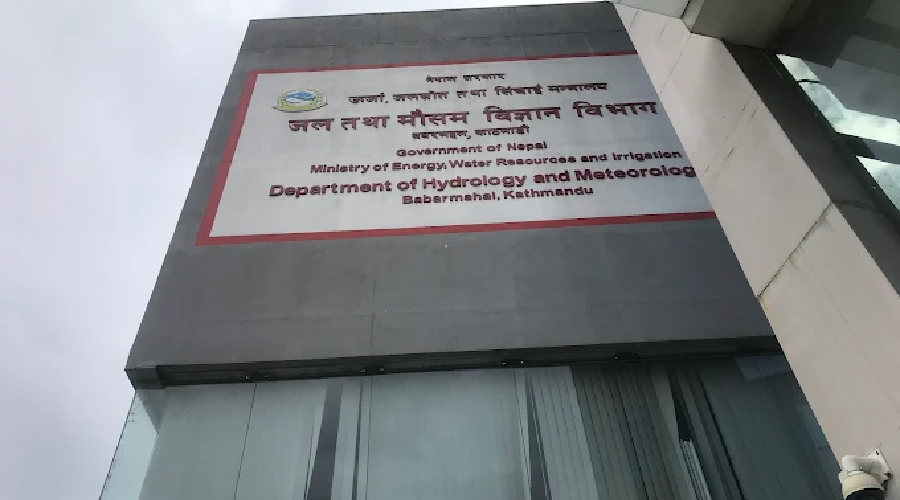
Therefore, the South Asian Climate Outlook Forum (SASCOF), a regional institution for seasonal weather prediction for South Asian countries, issues annual monsoon forecasts. Based on SASCOF’s findings, Nepal’s Department of Hydrology and Meteorology (DHM) also releases information about the expected monsoon conditions each year. This year, the department has scheduled a briefing session on Friday to update all stakeholders about the monsoon outlook.
What does the SASCOF report say?
Recently, the SASCOF meeting was held in Malé, Maldives. Meteorological experts from nine South Asian countries including Afghanistan, Bangladesh, Bhutan, India, Maldives, Myanmar, Nepal, Pakistan, and Sri Lanka participated in the meeting.
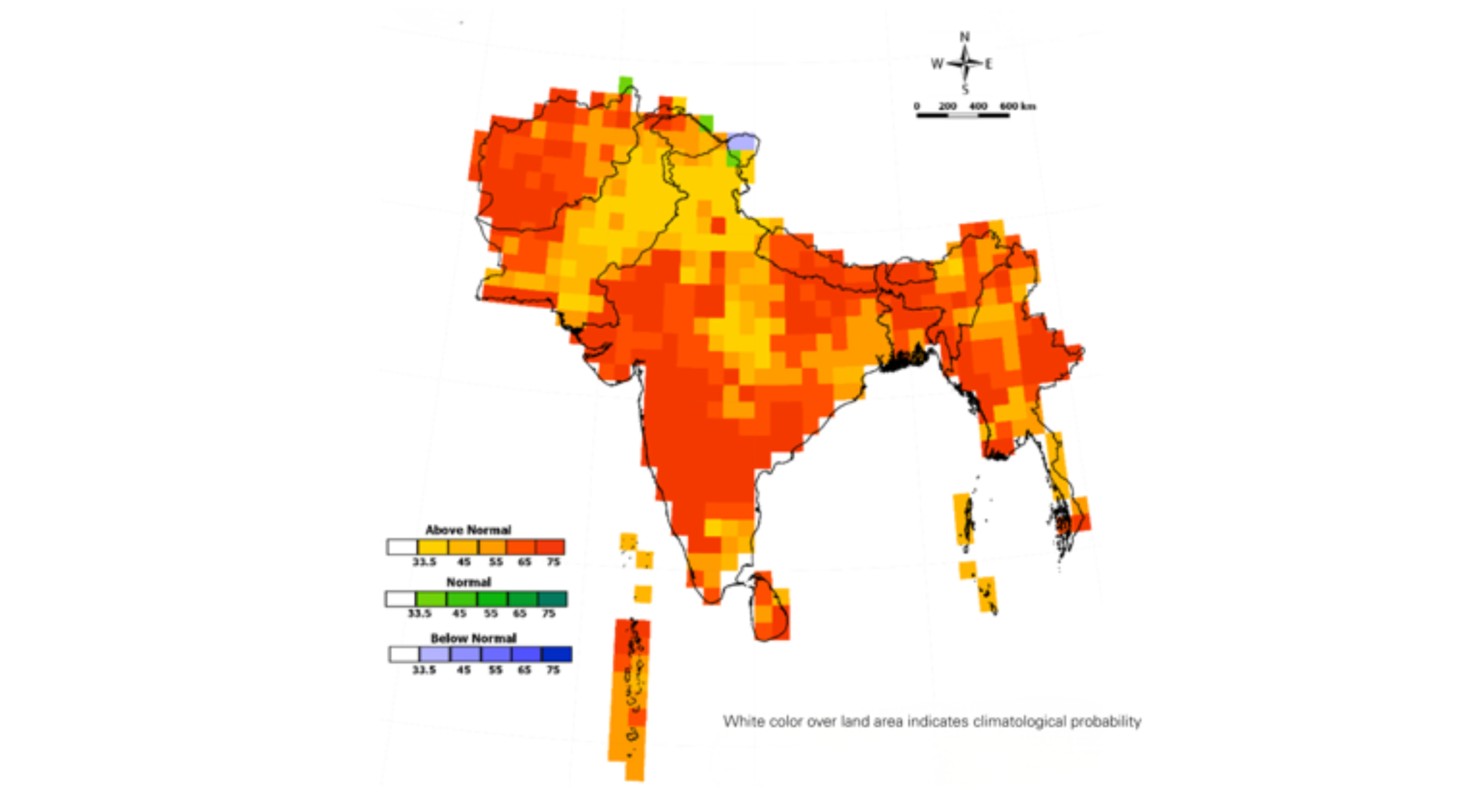
The report released during the meeting projects that from May to September, parts of northwestern, northeastern, and southern South Asia will receive normal or above-normal rainfall. However, the central regions are expected to experience below-normal rainfall.
Temperature projections
Nepal’s eastern region, being close to the northeastern area, falls within the zone expected to receive normal or above-normal rainfall. However, much of Nepal’s central region is projected to have below-normal rainfall. Therefore, despite the likelihood of localized heavy rainfall, overall precipitation is expected to be below average.
Dr. Vinod Pokharel, Associate Professor at Tribhuvan University’s Department of Hydrology and Meteorology, stated that the monsoon is likely to be weak in its initial phase, with most parts of the country receiving below-average rainfall. He highlighted that the period from May 29 to August 1 (roughly the months of June and July) might be particularly dry.
This uncertainty in the monsoon forecast is likely to directly impact agriculture and hydropower sectors. Dr. Pokharel explained that due to a weak monsoon, only about 30 to 40 percent of the rice planting could be completed in the first half of the monsoon season.
Reasons for a weak monsoon
Experts attribute the weak monsoon primarily to two climatic phenomena – the influence of El Niño and the status of the Indian Ocean Dipole (IOD).
El Niño is characterized by higher-than-average sea surface temperatures in the Pacific Ocean and affects the South Asian monsoon. Although the current El Niño is moving toward a neutral phase, residual atmospheric changes may slow cloud formation during June and July.
Similarly, the IOD plays a significant role in Nepal’s monsoon. International models indicate that the Indian Ocean will remain in a neutral state during June and July, which could hinder moisture-bearing winds from reaching Nepal.
Climate and disaster expert Dr. Dharma Raj Upreti suggested that rainfall may be good until mid-June but could turn dry towards the end of June, with low rainfall expected in July, and a possible reactivation of the monsoon by late September.
Dr. Upreti explained, “Currently, the IOD is neutral, and there is a super El Niño condition in the Pacific Ocean. Super El Niño often results in severe dry conditions. If this persists from April to June, a different pattern is likely from July to September.”
Accordingly, while rainfall might occur until mid-June, dry conditions could develop by late June and continue into July. By late September, the IOD is expected to shift to a positive phase, possibly causing monsoon resurgence during the Dashain-Tihar festival period.
Agriculture, a cornerstone of Nepal’s economy, depends on 75 to 90 percent of its annual rainfall during the monsoon. Reduced rainfall risks affecting rice and other seasonal crops, increasing food insecurity concerns. Additionally, since most of Nepal’s hydropower plants rely on river flows, diminished rainfall could cause power shortages or load shedding during winter months.
What does the Department of Hydrology and Meteorology say?
The department forecasts that in addition to less rainfall this monsoon, daytime and nighttime temperatures (maximum and minimum) are expected to rise above average. Experts warn this could adversely affect public health, particularly impacting agriculture and daily life in the Terai region.
However, department spokesperson Bibhuti Pokharel cautioned that since many factors influence the monsoon in Nepal, a definitive conclusion cannot be drawn at this stage.
“El Niño is indeed present, but various factors affect the monsoon here, so it’s premature to say the monsoon will definitely behave in a certain way,” she said. “Updates on the monsoon will be provided periodically, requiring close monitoring.”
In recent years, climate change has caused substantial variations in weather patterns, with some regions experiencing excessive rain while others face drought conditions.
Experts recommend adopting suitable alternative crops for low rainfall conditions, conserving drinking and irrigation water, managing temperatures, and implementing other adaptive measures to cope with these changes.
The government has requested members of the Administrative and Labor Courts to resign through the Legal Secretary. Legal Secretary Parshwar Dhungana stated that the government’s policy is to remove politically appointed members on leave and appoint qualified candidates through a competitive process. Currently, Navalkishor Yadav and Alokchandra Shrestha serve as members of the Administrative Court, while Shailendra Kumar Chaurasiya and Kumari Kharel serve in the Labor Court. April 6, Kathmandu.
In an interview with OnlineKhabar, Secretary Dhungana said, “It is a public policy of the government to replace politically appointed individuals with qualified and competitive ones.” He added, “The government appoints these members; I have conveyed the government’s message to those appointed politically without competition.”
During a phone conversation with the Legal Secretary, it was revealed that two tribunal members contacted several Supreme Court justices, reporting that they had been directed to resign. Navalkishor Yadav and Alokchandra Shrestha are members of the Administrative Court, while Shailendra Kumar Chaurasiya and Kumari Kharel serve in the Labor Court. Both courts’ current members were appointed by the previous government.
Secretary Dhungana further clarified, “The chairpersons are appointed upon the recommendation of the Judicial Council, so the government has not made any statement regarding them.” The Administrative Court primarily adjudicates decisions and disputes related to civil servants, whereas the Labor Court resolves disputes between employees and industrial establishments. Both are tribunals in nature.