The government has requested members of the Administrative and Labor Courts to resign through the Legal Secretary. Legal Secretary Parshwar Dhungana stated that the government’s policy is to remove politically appointed members on leave and appoint qualified candidates through a competitive process. Currently, Navalkishor Yadav and Alokchandra Shrestha serve as members of the Administrative Court, while Shailendra Kumar Chaurasiya and Kumari Kharel serve in the Labor Court. April 6, Kathmandu.
In an interview with OnlineKhabar, Secretary Dhungana said, “It is a public policy of the government to replace politically appointed individuals with qualified and competitive ones.” He added, “The government appoints these members; I have conveyed the government’s message to those appointed politically without competition.”
During a phone conversation with the Legal Secretary, it was revealed that two tribunal members contacted several Supreme Court justices, reporting that they had been directed to resign. Navalkishor Yadav and Alokchandra Shrestha are members of the Administrative Court, while Shailendra Kumar Chaurasiya and Kumari Kharel serve in the Labor Court. Both courts’ current members were appointed by the previous government.
Secretary Dhungana further clarified, “The chairpersons are appointed upon the recommendation of the Judicial Council, so the government has not made any statement regarding them.” The Administrative Court primarily adjudicates decisions and disputes related to civil servants, whereas the Labor Court resolves disputes between employees and industrial establishments. Both are tribunals in nature.
The government has requested members of the Administrative and Labour Courts to resign, facilitating the appointment process through the Law Secretary.
Law Secretary Parashwar Dhungana stated the government’s policy to replace politically appointed individuals with qualified and competitive candidates.
Nawal Kishor Yadav and Alokchandra Shrestha serve on the Administrative Court, while Shailendra Kumar Chaurasiya and Kumari Kharel are members of the Labour Court.
April 6, Kathmandu – The government, through the Law Secretary, has requested that two members from the Administrative and Labour Courts resign to facilitate appointments. Law Secretary Parashwar Dhungana has urged these court members to step down, easing the path for new appointments.
In an interview, Secretary Dhungana informed that he conveyed the government’s message to these individuals, requesting cooperation to smooth the process.
“The government’s policy, which is publicly known, is to replace those appointed through political means with qualified and competitive individuals,” Dhungana said. “These appointments are made by the government without any competitive process, which is why I have communicated the government’s request to them.”
During a phone conversation with the Law Secretary, the two adjudication members reportedly contacted some Supreme Court judges, stating they had been directed to resign. This information subsequently reached the Attorney General’s office.
Currently, the Administrative Court has members Nawal Kishor Yadav and Alokchandra Shrestha. The Labour Court members include Shailendra Kumar Chaurasiya and Kumari Kharel.
All four members were appointed by the previous government. However, Secretary Dhungana clarified that no such requests have been made to the chairpersons of both courts, who were appointed on the recommendation of the Judicial Council.
“Chairpersons are appointed based on the Judicial Council’s advice, so the government has not communicated any request to them,” Dhungana explained. “The message to members concerns only those politically appointed.”
The Administrative Court handles rulings and disputes concerning civil service employees, whereas the Labour Court, established under the Labour Act, adjudicates disputes between employees and industrial establishments. Both courts function as tribunals.
Harka Sampang criticized the government’s approach of demolishing informal settlements without proper planning and emphasized the need for an organized strategy.
He accused the government of shutting parliamentary doors and working through ordinances without listening to dissenting voices under majority pressure.
He questioned why opposition parties, like Congress and UML, are inactive in addressing the issue of informal settlements.
The justification of Harkaism can be discussed separately at another time. However, the relevance of Harka Sampang in current national politics has become clear. Everyone knows he is highly determined. The labor culture he initiated has yet to establish a permanent identity within his party. Wherever he goes, the party follows. Decisions made by him essentially become the party’s decisions. This approach is known as “labor culture.”
On 6 May (23 Baisakh), a team visited Nakhhipot, Lalitpur, where Harka was welcoming veteran film personality Rajkumar Rai to the party. Rajkumar, known for the film The Commando, had spent considerable time behind the scenes. Accompanying him were young individuals such as Aren Rai, Sudip Rai, and Pritam Sanwa. Although the area was crowded, there was significant attraction toward the new party.
At present, the main opposition in parliament is the Nepali Congress, alongside the UML and other parties like the CPN and Rastriya Prajatantra Party, each with their own stature and influence. Amidst all this, why are Harka Sampang and his party’s MPs receiving more attention? There is a reason.
The government, holding a large majority, is making swift decisions. Bulldozers have been used to clear informal settlements. The government claims excellent facilities at holding centers. During planned visits organized by the Prime Minister’s office with security provided by Nepal Police and Metropolitan Police, inhabitants of the informal settlements reportedly said, ‘We have facilities here now. Previously, we needed to labor for food, but now the government provides free services.’
However, journalists report that those living in informal settlements contradict this narrative. They stress that demolitions should be managed with a proper plan. National Socialist Party Chair Ravi Lamichhane has also advised the government internally along these lines. While the policy of removing settlements might be correct, the method has been problematic, and even members within the ruling party are voicing concerns. Harka Sampang is among those raising his voice against the government’s approach.
Harka Sampang at a demolished informal settlement
When met in Nakhhipot, Lalitpur, Harka spoke passionately about why citizens deserve respect and dignity to live and move freely in a democracy. Much of the conversation was in Nepali, occasionally in English. He said, ‘Working people have rights. The poor have dignity. Books and notebooks piled inside makes children’s eyes fill with tears. In the informal settlements, there were couples preparing to marry whose dignity is being assaulted. The government is doing such things.’
Harka sometimes exaggerates or modifies his statements. All politicians are adept at playing on sensitivities.
Nonetheless, he is one of the few who has witnessed the government using bulldozers to clear informal settlements with unregulated living conditions and encroached public land, acting only after prior preparation.
Many leaders have not been able to visit detention centers like the so-called holding centers. Several have halted their political trajectories prematurely. Few have found humor in the suffering of the poor. Yet, Harka has reached these places, listened to conditions, and shared them with the people.
So what are the Congress and UML doing? These parties have leaders with greater stature than Harka. I present here a telephone conversation between two senior leaders. A high UML leader remarked, ‘So many people were displaced at once. What are you doing?’ I replied, ‘We are reporting and debating. What are you doing?’ He was speechless and requested material to be shared with the party’s top leadership.
‘The government has shut the doors of parliament, smashed glass, and is working through ordinances. No one’s voice is heard under majority pressure.’
On the other hand, when I told a senior Congress leader, ‘You have failed to run the government and risk being equally incapable of running the opposition,’ their response is beyond suitable quotation here.
As for the CPN, Chair Pushpa Kamal Dahal (Prachanda) remains focused on left unity. Serious national issues on roads and settlements are orphaned as he prioritizes leftist unity over these pressing matters.
During such a time, whether or not as he wishes, Harka Sampang is communicating the people’s problems to the government. In Nakhhipot, he said, ‘The government has shut parliamentary doors, smashed the glass, and is working through ordinances. No one’s voice is heard under majority pressure.’
Not all concerns raised by Harka may be accurate. A popular government might have formed organizations to listen to people’s voices. But considering ministers’ arrogance and performances in parliamentary committees, strict criticism is necessary.
In some parliamentary committees, government representatives do not even attend. This government faces tough questioning from various quarters and nature. These questions must not be suppressed but raised repeatedly.
In this respect, Harka Sampang’s questions are relevant. When he was Mayor of Dharan, he sometimes disregarded or arbitrarily handled questions, which is an important part of his background.
However, the opposition parties should now act as actively as Harka has. Displaying images on Facebook is not enough; we all must begin discussions on the real problems of citizens. Videos posted by ministers and MPs of clothes, jewelry, and bags at the settlement are inappropriate and insensitive mockery. Raising sensible and factual questions would benefit the government more.
Is that not so, leaders of the National Socialist Party? The opposition should reflect seriously.
City Hotel has issued a press release categorically denying rumors regarding the sale of the founding group’s shares, calling them completely false and misleading. The company confirmed, based on official records from CDSC, that 90.40 percent of the shares held by the founders and employees remained locked-in until Jestha 4, 2083. On this basis, City Hotel has decided to pursue legal action against those spreading misleading news.
Kathmandu, 23 Baishakh – The company declared that rumors about the sale of shares held in ‘lock-in’ by the founding group of City Hotel are entirely incorrect, deceptive, and baseless. The statement released on Wednesday emphasized, “The company has fully complied with all lock-in regulations since inception. We urge the public not to believe such unfounded and misleading news and to rely only on the company’s official information as a trustworthy source.”
In a press release issued by Company Secretary Sundar Bahadur Sen, correspondence with CDS and Clearing Limited was mentioned, requesting updated details on the foundational group’s shares. According to the company, all 27,219,328 shares held by the founders and employees remained under lock-in until Jestha 4, 2083, as per the latest information received.
City Hotel stated that it issued rights shares to existing shareholders with the approval of the Nepal Securities Board. Some shares remained unsold and, following Directive No. 15 of the Securities Issuance and Distribution Directive, 2074, the company informed the board and sold these shares through bidding. The company has resolved to take necessary legal measures against all parties involved in publishing misleading news.
April 5, Kathmandu – Former Attorney Generals have recommended that the government-appointed task force clearly understand the objectives of the constitutional amendment. In a discussion held on Wednesday with the task force tasked with preparing a white paper for the constitutional amendment, the former Attorney Generals and legal experts provided these insights. The government formed this task force under the leadership of Asim Shah, political advisor to Prime Minister Balendra Shah (Balen), to draft the white paper on constitutional amendments.
The task force organized a consultation session on Wednesday at the Prime Minister and Council of Ministers’ Office, gathering input from former Attorney Generals and legal scholars. According to the Prime Minister’s Secretariat, the discussion extensively covered topics such as government structure, electoral systems, federal framework, judiciary restructuring, the number of constitutional bodies, and inclusiveness.
Experts participating in the discussion emphasized the need for a clear purpose behind the constitutional amendments and highlighted the necessity for implementation improvements. Suggestions were also made to review the number of provinces and ministries and to reform the structure of the judiciary and constitutional bodies. A member of the task force shared that these recommendations were part of the consultation. Task force coordinator Asim Shah underscored the importance of reviewing the constitution a decade after its promulgation.
Participants in the discussions included former Attorney Generals Dr. Yubaraj Sangroula, Savita Bhandari, Ramankumar Shrestha, Mahadevprasad Yadav, Muktinarayan Pradhan, Agniprasad Kharel, Constituent Assembly member Suresh Ale Magar, House of Representatives member Parshuram Tamang, and former Law Secretary Rajiv Gautam, according to the Prime Minister’s Secretariat.
Since 2015 (2072 BS), Nepal has sent diplomatic notes more than eight times to India and China asserting its sovereignty and territorial integrity over the areas of Lipulekh, Kalapani, and Limpiyadhura.
India has largely ignored these notes, responding late or rejecting them, while China has maintained public silence.
Recently, India claimed that the Lipulekh route has been in use since 1954, keeping the door for dialogue open, and Nepal emphasized the need to keep diplomatic talks alive.
Kathmandu, May 5 – In 2015, during Indian Prime Minister Narendra Modi’s visit to China, an agreement was made to open a trade route through the Lipulekh Pass. Nepal considered this an unauthorized agreement over its territory.
The then government led by Prime Minister Sushil Koirala sent diplomatic notes to both India and China, but India did not provide any written response and China remained silent.
Four years later, in 2019, India included the Kalapani area in its new political map; Nepal again sent a diplomatic note. India took over three weeks to respond.
Experts interpreted India’s silence as a lack of seriousness about Nepal’s claims and an unwillingness to engage in border talks. India rejected Nepal’s claims calling them ‘unjustified’ and ‘inconsistent with historical facts.’
In 2020, when India inaugurated a 79 km road in Lipulekh, Nepal strongly protested and not only sent diplomatic notes but also formally included Limpiyadhura, Lipulekh, and Kalapani in its new political map.
Nepal’s move was assertive, yet India dismissed it as ‘artificial’ and ‘unilateral.’ India’s responses have ranged from ignoring, delayed replies, to outright rejection.
In July 2025, during Chinese Foreign Minister Wang Yi’s visit to India, an agreement was reached to resume border trade via the Lipulekh route without consulting Nepal.
Nepal subsequently sent separate diplomatic notes to India and China. India responded briefly, framing it as trade that had been ongoing for decades, thereby downplaying Nepal’s concerns. Meanwhile, China remained publicly silent.
On April 2, 2026, Nepal added to the series of diplomatic communications by issuing a six-point note to India and China after India announced Kailash Mansarovar pilgrimages via Lipulekh in June-August 2026.
This time, the Nepali government sent the note after wide consultation with opposition parties, signaling national consensus. India responded promptly with a ‘comprehensive’ reply.
Indian Foreign Ministry spokesperson Randhir Jaiswal claimed that the Lipulekh route has been in use since 1954 and rejected Nepal’s territorial claims as ‘unjustified’ and ‘lacking historical evidence.’ However, he indicated willingness to keep bilateral talks open. China again maintained its public silence.
000
These developments show Nepal’s repeated diplomatic efforts to assert sovereignty and territorial integrity, but most notes have been ignored, delayed, or rejected. India repeats its long-standing position, while China uses silence as a strategic tool.
Dinesh Bhattarai, a foreign affairs expert during Sushil Koirala’s premiership, recalls India’s silence on Nepal’s diplomatic notes then and appreciates the current government’s positive steps: ‘We received no reply to letters sent previously; now sending another note and maintaining the stance is positive.’
Former Ambassador Deepkumar Upadhyay emphasizes that neighbors have repeatedly neglected Nepal’s requests for dialogue. ‘The current government’s efforts are commendable; peaceful diplomatic initiatives should be the primary agenda.’
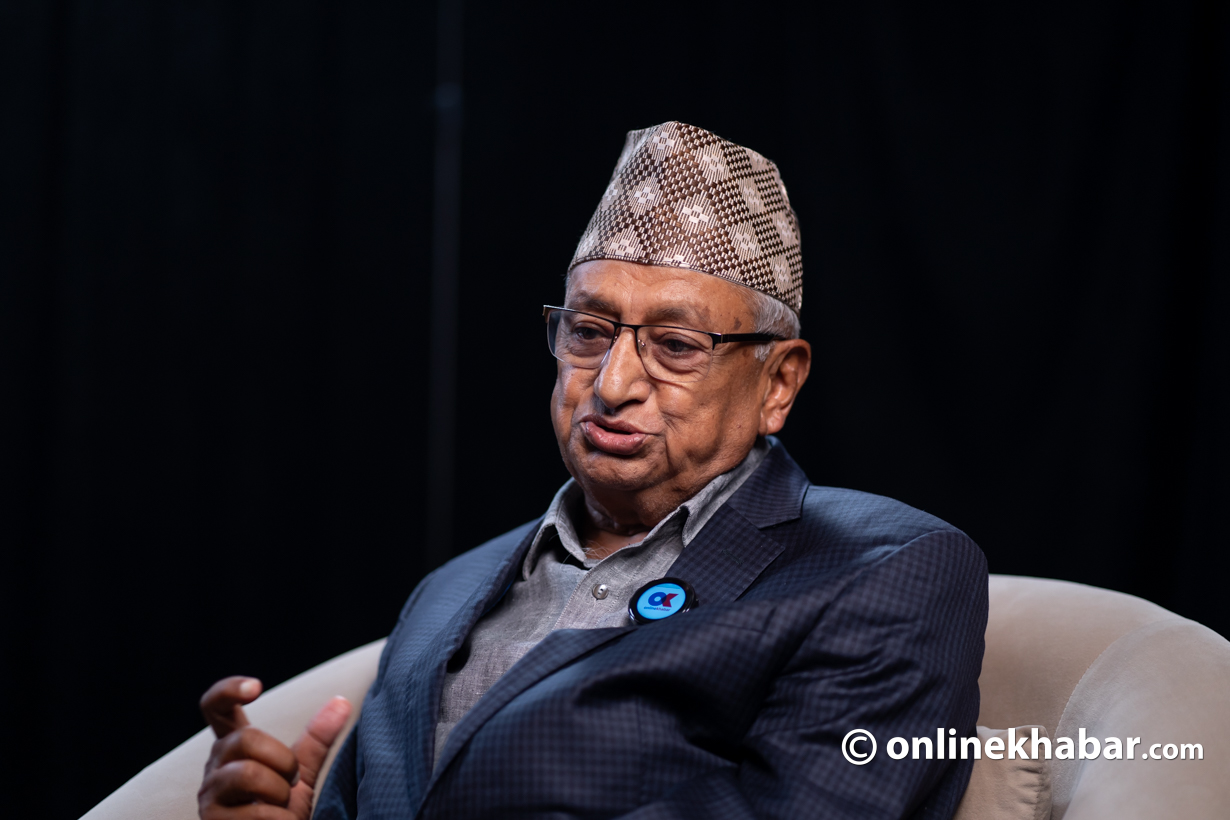
Deepkumar Upadhyay, Former Ambassador.
The immediate response from India to the latest note and keeping talks open is viewed positively. It indicates India’s reluctance to let the dispute freeze relations and an attempt to keep diplomatic communication alive.
Following India’s announcement about reopening Kailash Mansarovar pilgrimages via Lipulekh and Nathu La Pass, Nepal strongly asserted its geographical integrity.
On April 30, after India announced sending 20 groups for pilgrimage this year, the Nepalese Ministry of Foreign Affairs issued an official statement on Sunday to express serious concerns to both India and China.
While the previous election government remained silent, the current government has firmly reasserted its stance through diplomatic channels. When news surfaced in the last Chaitra (March-April) about India’s preparations to resume trade with China via Lipulekh, the previous administration did not respond.
After it became public that Indian Foreign Secretary Vikram Misri instructed the Uttarakhand Chief Secretary to prepare for trade, Nepal recalled its long-standing position on pilgrimage and trade issues.
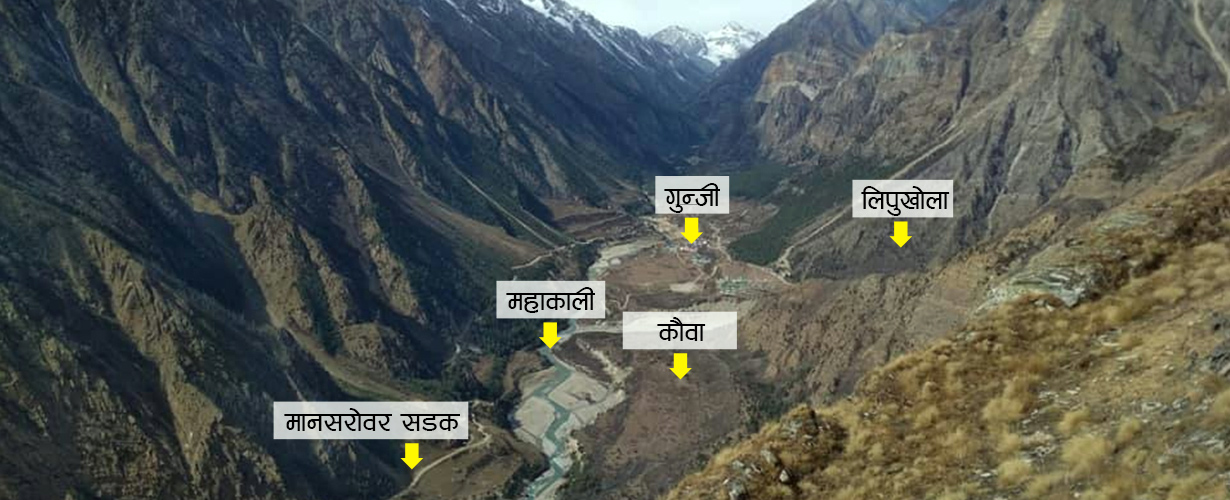
Based on the 1816 Treaty of Sugauli between Nepal and British India, the Mahakali River’s eastern areas of Limpiyadhura, Lipulekh, and Kalapani are integral parts of Nepal. Nepal has already published official maps, but neighbors’ attempts to use the territory favorably have complicated the dispute.
Nepal’s sending of over eight diplomatic notes annually confirms its continuous diplomatic efforts. Although these notes have not brought immediate changes, they have documented Nepal’s position in the international community.
000
Though diplomatic notes have no immediate effect, they carry symbolic importance. Each note conveys a message of national unity and lays groundwork for future talks, though implementation remains uncertain due to weak follow-up.
Despite neighbors’ silence, diplomatic notes serve as a means for Nepal to maintain its stance. Former Ambassador and diplomat Nilamber Acharya notes that diplomatic notes open channels for negotiation, but so far no substantial talks have occurred. He urges continued diplomatic efforts and bilateral talks for resolution in the national interest.
Former Foreign Minister Pradeep Gyawali stresses that diplomatic notes should be seen not as damaging relations but as reflecting continuity and stability in foreign policy.
“National interests cannot be sacrificed in the name of improving relations. Not sending notes might raise suspicions of changing positions. Therefore, these should be viewed as a consistent policy,” he said.
Border expert Buddhi Narayan Shrestha welcomed the current government’s diplomatic note, saying, “This government appears better prepared and proactive.”
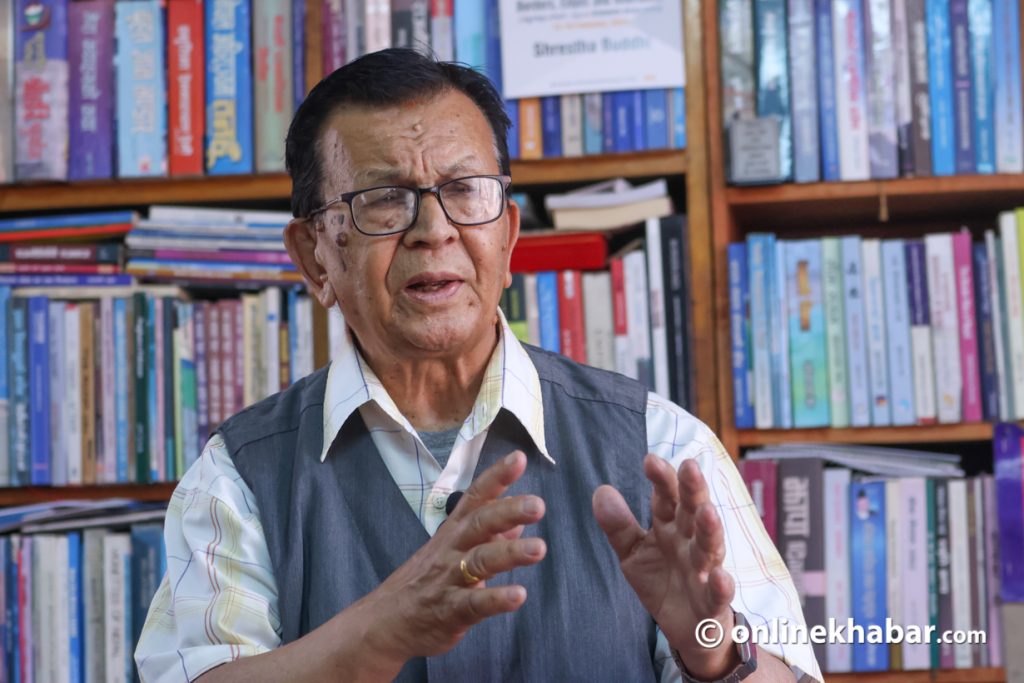
Buddhi Narayan Shrestha, Border Expert.
An Indian foreign ministry spokesperson asserts that the Lipulekh Pass has been in use since 1954, including for pedestrian travel.
Shrestha emphasized the importance of dialogue and diplomatic effort for resolving remaining border issues. He is optimistic about the government led by Mayor Balen Shah, stating, “This diplomatic note does not appear merely procedural as before.”
He added, “With a stronger government, there is evidence of groundwork and readiness. Diplomatic notes can have impact via public demonstrations and also through ‘silent channels.’ They can also help generate international pressure.”
Diplomat Jayaraj Acharya suggested using India’s response to Nepal’s diplomatic notes as an opportunity to advance diplomatic dialogue. “Since India had not been ready for talks since the release of the new map, its positive response this time is significant.”
He emphasized, “We should take this positively and seek opportunities for solutions through dialogue. Although India has maintained its stance, keeping the possibility of talks alive may be a key step toward resolving this border issue.”
000
The highest-level forum for discussing all issues between Nepal and India is the Nepal-India Joint Commission, established in 1987, co-chaired by the foreign ministers of both countries.
For border disputes, there exist specialized bodies like the Boundary Working Group and the Foreign Secretary-level mechanism for disputes such as Kalapani-Susta, but the Joint Commission provides policy guidance and acts as the main platform for seeking political consensus on contentious issues.
Former Foreign Minister Gyawali said India has somewhat neglected Nepal, urging that beyond correspondence, meetings of the Joint Commission should be convened to raise the border dispute issue.
He also stressed the importance of treating relations with China with equal significance: “China is equally important and should not be sidelined.”
Students at Premier International IB Continuum School organized an entrepreneurship exhibition showcasing their business concepts and plans. The panel of judges provided practical advice to help students develop sustainable and scalable businesses. A business based on traditional Dhaka fabric was awarded the certificate for the best business proposal. Kathmandu, 23 Baisakh.
The entrepreneurship exhibition brought together young innovators, industry experts, and parents, offering inspiring presentations of student-run business ideas. Held as part of the school’s annual program, the exhibition featured Grade 11 NEB management students and first-year IBDP students who developed full-fledged business concepts based on local Nepali resources.
Each group presented their business plan to the respected judging panel, seeking feedback and potential investment. This experience provided a realistic startup ecosystem environment, encouraging practical learning beyond the classroom. The judging panel included Bright Linhart (Founder, Karma Coffee), Vini Bajracharya (Founder, Abir), and Jitendra Ranjit (Founder, Abhani Advertising).
A total of six innovative business concepts were showcased during the event. These included a mosquito repellent mist made from natural ingredients, healthy snacks based on furan dana, a vegan dairy alternative product line, a business built on traditional Dhaka fabric, a venture encompassing pickles from all seven provinces of Nepal, and a sustainable wood-based product enterprise. Among these, the business based on Dhaka fabric received the highest honor, earning the certificate for the best business proposal.
April 6, Kathmandu – From tomorrow, members of parliament will be required to log their attendance using an electronic attendance system. The process of collecting biometric data from parliamentarians will commence tomorrow. The Federal Parliament Secretariat issued a notice on Wednesday urging all members to provide their biometric information for the electronic attendance process. Various parliamentary committees have scheduled different times and locations for the collection of biometric data. Since formal photographs will also be taken during this process, members are instructed to attend wearing formal attire featuring the Federal Parliament logo.
Members of the International Relations and Tourism Committee and the Development, Economic Affairs, and Good Governance Committee are required to be present tomorrow from 10:00 AM to 12:00 PM at the Public Accounts Committee Hall. Members of the Finance Committee and Legislative Management Committee must also attend tomorrow at the Finance Committee Hall. Members of the Industry and Commerce and Labor and Consumer Interests Committees will be required to visit the Public Accounts Committee Hall from 2:00 PM to 4:00 PM tomorrow. Members of the Law, Justice, and Human Rights Committee should attend at the Finance Committee Hall during the same afternoon hours.
Members of the Agriculture, Cooperatives, and Natural Resources Committee and the Federalization Strengthening and National Concern Committee are scheduled to appear on Friday from 10:00 AM to 12:00 PM at the Public Accounts Committee Hall. Members of the Infrastructure Development Committee and Public Policy and Delegated Legislation Committee will also gather between 10:00 AM and 12:00 PM at the Finance Committee Hall on Friday. Members of the Women and Social Affairs Committee are expected at the Public Accounts Committee Hall from 2:00 PM to 4:00 PM on Friday, while the State Structure and Good Governance Committee members will attend the Finance Committee Hall during the same afternoon slot. The biometric data of members of the Public Accounts Committee will be collected on April 11 from 10:00 AM to 12:00 PM at the committee’s hall. Additionally, members of the Education, Health, and Information Technology Committee will provide their biometric data at the Finance Committee Hall during the same time and date.
Interpol has requested additional documents to issue a red notice against former Prime Minister Sher Bahadur Deuba and his wife Arju Rana Deuba.
On 7 April, Kathmandu District Court issued an arrest warrant against the Deuba couple.
The couple left Nepal on 26 February for medical treatment abroad and have not yet returned.
7 May, Kathmandu – Interpol has requested additional documentation to proceed with issuing a red notice against former Prime Minister and Nepali Congress ex-chairperson Sher Bahadur Deuba and his wife, former Foreign Minister Dr. Arju Rana Deuba.
According to sources at the Police Headquarters, Interpol has sought further details from the National Central Bureau (NCB) in Kathmandu.
“The red notice is currently in process. Interpol has requested additional necessary documents,” stated a senior police official.
On 20 March, the Kathmandu District Court issued an arrest warrant against the Deuba couple based on a letter from the Department of Money Laundering Investigation. Following the warrant, the process to bring them back to Nepal was initiated.
The NCB had formally communicated with Interpol to request the red notice, but Interpol has not issued it due to insufficient documentation.
When the arrest warrant was issued, the Deuba couple was abroad. They left Nepal on 26 February for medical treatment in Singapore and reportedly went to Hong Kong on 20 March.
Previously, the couple had traveled to Singapore for treatment following the Janajati Movement and had returned after completing their medical care.
Despite leaving on 26 February, they have yet to return to Nepal. Sources indicate that they are currently still in Hong Kong.
If the red notice is issued, the 196 Interpol member countries can detain the Deuba couple and, after completing legal procedures, arrange their return to Nepal.
After the arrest warrant was issued, Deuba released a statement claiming transparency, describing allegations concerning his assets as misleading and false, and noting that he disclosed his asset details to government authorities during his tenure in public office.
While acknowledging travel abroad for medical treatment, Deuba did not disclose his current whereabouts.
An investigation is also ongoing into business dealings involving Sher Bahadur Deuba’s relatives Pradeep Shamsher Jabara, Bhushan Rana, and Jayvir Deuba.
Previously, Arju Rana Deuba was also implicated in allegations related to the fake Bhutanese refugee case.
During the Janajati Movement, Sher Bahadur Deuba built two houses at his compound in Budhanilkantha, where they stayed. At that time, the couple was attacked and their houses were set on fire.
Notes burned during the Janajati Movement on 8 and 9 September were found at Deuba’s residence, and a video related to it was made public.
The Department of Money Laundering Investigation has registered a case and is conducting an ongoing inquiry regarding this matter.
The Department of Commerce, Supply and Consumer Protection has imposed a fine of NPR 205,000 on ‘Hamro Khaja Ghar’ for selling expired yogurt inside Singha Durbar. The inspection team discovered the sale of expired yogurt at the canteen located in the National Disaster Risk Reduction and Management Authority premises.
23 Baisakh, Kathmandu – Expired yogurt was found being sold within the country’s main administrative center, Singha Durbar. During an unannounced market inspection conducted on Wednesday by the Department of Commerce, Supply and Consumer Protection, the canteen named ‘Hamro Khaja Ghar’ was immediately fined NPR 205,000 for endangering consumer health by selling expired yogurt.
The department reported that during the monitoring, it was confirmed that the yogurt offered for sale had passed its expiration date, leading to swift legal action. Under Section 38 (घ) of the Consumer Protection Act 2018, upon verifying the offense, the department enforced a penalty under Section 39 (1) (ख) of the same Act. Investigation has been extended not only to the retailer but also to Shri Krishna Dairy Farm, the manufacturer responsible for producing the expired yogurt.
Prime Minister and Chancellor of Kathmandu University, Balen Shah, has entrusted Professor Rishikesh Wagle with the responsibility of Acting Vice Chancellor of Kathmandu University. Following the dismissal of the deans by ordinance, the Examination Controller Wagle has been assigned the vice chancellor duties. April 5, Kathmandu.
After the ordinance led to the removal of Dr. Achyut Wagle from the Vice Chancellor post, Rishikesh Wagle was appointed to this position. The responsibility was delegated by the Chancellor, who is also the Prime Minister, Balen Shah. With the deans also dismissed, the Examination Controller Wagle has taken on the role of Acting Vice Chancellor. Wagle confirmed he had been informed about his new responsibility, stating, “I have received news that I have been given this responsibility.”
Since the permanent appointment process for the Vice Chancellor position is expected to take some time, Rishikesh Wagle has been given the acting role for the interim period. Today, a committee led by Education Minister Shasmit Pokharel has been established to recommend names for the positions of Vice Chancellors at various universities.
Sunrisers Hyderabad secured a commanding 33-run victory over Punjab Kings in IPL 2026, climbing to the top of the standings. Chasing a target of 236 runs set by Hyderabad, Punjab managed only 202 runs for the loss of 7 wickets in 20 overs. Hyderabad captain Pat Cummins and Shivang Kumar each took 2 wickets, helping Hyderabad maintain first place with 14 points from 11 matches. Kathmandu, April 23.
Punjab suffered their third consecutive defeat in Wednesday’s game, dropping to second place on the points table. Cooper Cronin was the standout performer for Punjab, scoring an unbeaten century. He amassed 107 runs off 59 balls, including 7 fours and 8 sixes, but he received little support from the rest of the batting lineup. Marcus Stoinis added 28 runs while Suryansh Shedge contributed 25.
Batting first, Hyderabad posted a total of 235 runs for 4 wickets in their 20 overs. Heinrich Klaasen and Ishan Kishan both registered half-centuries. Klaasen scored 69 runs off 43 balls with 3 fours and 4 sixes, while Kishan added 55 runs from 32 balls, hitting 2 fours and 4 sixes. Travis Head scored 38 and Abhishek Sharma 35. For Punjab, Arshdeep Singh, Lucky Ferguson, Yuzvendra Chahal, and Vijaykumar Vaishak each took a wicket. With this win, Hyderabad tops the table with 14 points from 11 games, while Punjab sits second with 13 points from 10 matches.
April 6, Kathmandu – The issue of farmers not receiving fertilizer on time and in easily accessible ways has been a persistent topic in the Parliament. For the past four decades, the political agenda has included the plan to establish fertilizer factories within the country to address this problem. However, no such factory has been built so far, and farmers continue to struggle to obtain fertilizer conveniently. During the first meeting of the Agriculture, Cooperative, and Natural Resources Committee of the House of Representatives elected on February 3, this topic resurfaced. In a meeting held on Wednesday at the committee hall in Singha Durbar, MPs discussed whether to prioritize establishing chemical fertilizer factories or to focus more on organic fertilizer production.
CPN-UML MP Laxmi Prasad Pokharel noted that the issue of fertilizer scarcity has been raised in Parliament since 1958. He stated, “Recently, this issue has also come up in budget discussions. There is political commitment, and now it is necessary to reach a conclusion. The government must resolve to establish a fertilizer factory within Nepal.” His predecessor, National Independent Party MP Rajeev Khatri, stressed the importance of focusing not only on the purchase of chemical fertilizer but also on the production of organic fertilizer. He argued that if a sufficient amount of organic fertilizer were available, farmers would not have to remain vigilant day and night to obtain chemical fertilizers, avoiding situations where they even face police lathi charge.
Rastriya Swatantra Party (Raswapaki) MP Samina Miya expressed concerns about the health hazards caused by agricultural products grown using chemical fertilizers. She urged the government to formulate agricultural production policies that do not harm citizens’ health. She remarked, “There have been revolutions of all kinds, but no agriculture revolution.” She further added, “If organic fertilizers gain emphasis, they will help preserve the soil’s fertility.” Fellow Raswapaki MP Punam Kumari Agrawal called for the government to focus not only on increasing production but also on protecting soil health.
Another Raswapaki MP, Ashika Tamang, advocated for improving the immediate distribution of chemical fertilizers while emphasizing the long-term importance of promoting organic fertilizers. “It is astonishing that Nepal does not yet have a fertilizer factory,” she said. “Even if chemical fertilizers are not available, every municipality should have cold storage facilities for organic fertilizers.” She also brought attention to discriminatory practices in fertilizer distribution, pointing out, “Not a single bag of fertilizer reaches genuine farmers, while some well-connected individuals have up to five bags.”
During the debate between establishing chemical fertilizer factories and seeking alternatives, Raswapaki MP Sujata Tamang called for clear policies on the matter in the upcoming fiscal budget. She urged, “Let us discuss what can be done regarding fertilizers in the next budget.”
According to CPN-UML MP Laxmi Prasad Pokharel, the dream of setting up a chemical fertilizer factory within Nepal has existed for decades but has yet to be realized. The Ministry of Agriculture and Livestock Development notes that chemical fertilizer use began in Nepal in 1950. Before that, agriculture was entirely based on organic methods. Initially, ammonium sulfate was imported from India, and later, chemical fertilizers were imported from Russia via National Trading Limited. The government promoted various programs to increase chemical fertilizer consumption at the time. To facilitate fertilizer imports, the Agriculture Materials Company Limited was established under the Ministry of Agriculture in 1965 and remains operational today. Since 1973, the Nepal government has provided subsidies to farmers for chemical fertilizers. Currently, the main imported fertilizers include urea, DAP, potash, ammonium sulfate, single super phosphate, and ammonium phosphate sulfate.
As fertilizer consumption increased, a feasibility study to establish a domestic fertilizer factory was conducted in 1983 with assistance from Japan International Cooperation Agency (JICA), but the study remained limited. In the fiscal year 2016/17, the government included this subject in its policy and program. Then Finance Minister Bishnu Paudel announced a policy to establish a chemical fertilizer factory in Nepal. Subsequent studies were also undertaken, and the then Ministry of Agriculture assigned the Investment Board to study the factory. A feasibility report carried out by the Development Corporation of Karnataka, India, concluded that operating a fertilizer factory in Nepal using energies other than natural gas was currently impossible.
In May 2023, during then Prime Minister Pushpa Kamal Dahal ‘Prachanda’s’ visit to India, the issue was raised at a high-level meeting. On May 31, 2023, at a joint press conference, Indian Prime Minister Narendra Modi expressed India’s readiness to provide necessary support to establish a chemical fertilizer factory in Nepal. However, the project has not advanced substantially since then. Political parties have continued to raise this issue consistently.
Before the February 3, 2024 election, Raswapaki released a 100-point commitment plan that included fertilizer factory establishment as item 43. The pledge states, “We will prioritize increased investment in chemical fertilizer and agricultural mechanization to achieve significant agricultural production growth and cost reduction. The Nepal government will manage arrangements to increase agricultural production.” Raswapaki has promised to attract energy-intensive industries such as steel, cement, herbal processing, data server stations, and chemical fertilizer industries.
With these electoral promises, Raswapaki won a clear two-thirds majority in the election and formed a powerful single-party government. The issue of a fertilizer factory has once again been raised in parliamentary committees under their leadership; nevertheless, no concrete response has been provided by the government to date.
Due to excess liquidity in the financial system, the monetary value of deposits held in banks and financial institutions is declining.
According to Nepal Rastra Bank, inflation in the month of Falgun was 3.62 percent, while the maximum interest rate on savings stood at 2.75 percent.
Total deposits in banks and financial institutions have reached NPR 7.945 trillion, while loan investments are at NPR 5.878 trillion.
April 6, Kathmandu – The value of money in deposits kept with banks and financial institutions is steadily falling. This decline in value is attributed to decreased interest rates driven by excess liquidity in the financial system.
Generally, to prevent depreciation in money value, interest rates in the market must at least align with inflation rates. Nepal Rastra Bank has reported a 3.62 percent inflation rate for the month of Falgun, whereas the maximum interest rate on savings stands at 2.75 percent.
This situation arises partly because the central bank has set the lower limit of the interest rate corridor. Without such control, the abundant liquidity might push interest rates even lower.
Economist Dr. Ramesh Paudel explains that since inflation outpaces the interest rates offered on deposits by banks and financial institutions, the real value of money is declining.
“Fluctuations in inflation and interest rates determine whether the value of money rises or falls,” Paudel elaborated. “According to economic principles, the interest rate on savings should at least equal inflation; if it is lower, the money’s value diminishes.”
He further noted that while money supply in the financial system has increased, demand remains steady, creating excess liquidity.
To date, approximately NPR 1.1 trillion has been deposited in the financial system. Paudel suggests that to improve the situation and enhance money value, efforts must focus on expanding investment. Additionally, he emphasized the government’s role in developing solutions to effectively utilize the excess liquidity present in the financial sector.
Former Central Bank Executive Director Narbahadur Thapa considers the increase in deposits a positive development but warns that the lack of corresponding growth in investments is a negative issue.
He stressed the importance of channeling financial resources into capital formation and business expansion.
“It is regrettable if the available financial resources are not invested properly,” Thapa stated. “The government must implement policy measures to manage the surplus liquidity and direct those funds towards development and job creation.”
Thapa also expressed that along with ongoing administrative reforms, the government needs to take effective actions for economic reform.
“Only by introducing solid economic plans in tandem with governance reforms will the financial system improve, facilitating resource mobilisation and employment generation,” he added.
He reiterated that investments from the financial sector should focus on business growth and capital building.
Thapa lamented that savers are not receiving adequate returns amid high liquidity. “While inflation is rising, the interest rates on savings are unable to keep pace with inflation,” he said. “Without serious reforms and direction in the economy, the current situation may worsen without meaningful change.”
He expressed hope that the upcoming fiscal budget would bring positive economic improvements. “If issues are overlooked in the budget, the economic situation could become complicated,” he cautioned. “Economic reforms must accompany administrative reforms to steer the economy in a new direction.”
According to Nepal Rastra Bank data up to Wednesday, total deposits in banks and financial institutions amounted to NPR 7.941 trillion, exceeding Nepal’s GDP by 20 percent.
The National Statistics Office estimates the current fiscal year’s GDP at NPR 6.6 trillion. The slower economic momentum alongside rising remittances and exports has contributed to growing deposits in the financial system, which in turn reduces the real value of money.
The income generated from deposits held at banks and financial institutions appears low due to excess liquidity. Consequently, the central bank has utilized instruments ranging from long-term bonds to short-term fixed deposit schemes to absorb NPR 1.09 trillion.
The status of total deposits and loan investments in the financial sector indicates that demand for credit has not risen sufficiently. Currently, banks and financial institutions maintain an average loan-to-deposit ratio of 73.23 percent.
The central bank has had to allocate significant annual expenditure for managing liquidity; in the previous fiscal year alone, NPR 1 billion was spent on liquidity management.
Despite an increase in default rates on old loans, banks are cautious with new lending, which keeps investments below expected levels. Slow investment results in money accumulating within the financial system. However, continuous growth in deposits without economic activity improvements signals a negative outlook for the economy.
As of April 5, total deposits in banks and financial institutions reached NPR 7.945 trillion, while total loan investments were NPR 5.878 trillion. According to central bank statistics, commercial banks hold NPR 7.165 trillion in deposits, with development banks and finance companies holding NPR 0.781 trillion.
This data reflects a slowdown in loan demand growth. The average loan-to-deposit ratio for banks and financial institutions is 73.23 percent but has the potential to reach up to 90 percent. Up to Falgun, loans disbursed to the private sector increased by 4.4 percent, equivalent to NPR 243.54 billion.
The Troubled Cooperative Management Committee today announced the names of major defaulters from 10 troubled cooperatives. The committee has instructed these borrowers to urgently contact the office to clear their loans, warning that if they fail to do so, recovery actions will be initiated according to the law. The committee also stated that the names of major defaulters from other troubled cooperatives will be released in due course, urging all borrowers to repay their outstanding loans. Kathmandu, 23 Baishakh.
The committee has begun publicly disclosing the names of significant borrowers from troubled cooperatives. According to the committee, names from 10 cooperatives declared troubled have been released today. More names from other troubled cooperatives will be disclosed in stages, the committee added.
In a formal notice, the committee urged the related borrowers to get in touch with the committee’s office immediately to settle their dues. Failure to comply will result in legal recovery proceedings. Additionally, as more names of defaulters will be published in sequence, those borrowers are also requested to promptly contact the office and clear their loans.
Today, the committee released the names of major borrowers from the following cooperatives: Ghedung Multipurpose Cooperative, Hamro Sagarmatha Multipurpose Cooperative, Tapai Hamro Multipurpose Cooperative, Nagrik Kalyan Multipurpose Cooperative, Ideal Yamuna Multipurpose Cooperative, Tulsi Multipurpose Cooperative, Nepal Financial Cooperative, Oriental Cooperative, Gautam Shri Cooperative, and Nepal Cooperative Financial.