
Author: space4knews

Rupani Rural Municipality Establishes Citizen Assistance Center

From 17th Baishakh, Rupani Rural Municipality in Saptari has established a Citizen Assistance Center aimed at providing easier services to beneficiaries. The center will offer free services including application drafting, printing, photocopying, scanning, typing, and email support. Kaliprasad Yadav has been designated as the point of contact, and internet access will also be provided.

The Rupani Rural Municipality has launched this citizen assistance center to simplify various service procedures in line with its goal of delivering efficient services to citizens. Located at the municipality office in Rupani, the center will assist beneficiaries by providing necessary consultation and facilitation.

Through the assistance center, applicants can have their requests written free of charge, along with access to printing, photocopying, scanning, typing, and email services, according to organizers. Chief Administrative Officer Harimohan Sutihar has confirmed that internet facilities will be made available to support the completion of paperwork efficiently.

1,044 Individuals Involved in Drug Trafficking Arrested Across Nepal in 8 Days

Between April 22 and April 29, the Nepal Police arrested 1,044 individuals involved in drug trafficking across the country. Arrests were made in the Kathmandu Valley, Koshi, Madhesh, Bagmati, Gandaki, Lumbini, Karnali, and Sudurpashchim provinces. During this period, various narcotics including cannabis, charas, heroin, pollen, diazepam, phenargan, buprenorphine, and tramadol were seized.

As part of a police sweep operation from April 22 to April 29, these arrests were executed nationwide. Breakdown of arrests by region includes: 41 in the Kathmandu Valley, 593 in Koshi Province, 30 in Madhesh Province, 51 in Bagmati Province, 140 in Gandaki Province, 42 in Lumbini Province, 87 in Karnali Province, and 60 in Sudurpashchim Province.

During this timeframe, the police confiscated 176 kilograms 51 grams 180 milligrams of illegal cannabis, 16 kilograms 809 grams 400 milligrams of charas, 1 kilogram 372 grams 866 milligrams of heroin, 1 kilogram 142 grams of pollen, 1,224 ampoules of controlled substance diazepam, 1,417 ampoules of phenargan, 1,076 ampoules of buprenorphine, 41 ampoules of Lupijesic, 62,095 tablets of tramadol, 242 tablets of Nitrobate, and 130 tablets of Spasmo.

The Police Headquarters has stated that all police departments are prioritizing special sweep operations to apprehend individuals involved in such illegal activities.

Nepal Eliminated from ICC Women’s Challenge Trophy Title Race

The Nepalese women’s cricket team has been eliminated from contention for the ICC Women’s Challenge Trophy title. On Thursday, the United States secured the championship by defeating Italy in the opening match. Nepal managed to earn only 6 points from 6 matches after suffering defeats against Vanuatu and the United States.

The United States successfully chased down the target of 100 runs set by Italy in the 17th over, sealing their championship win. Currently, Nepal is competing against Vanuatu and has one more match remaining against Italy. However, even winning both games will not be enough to secure the title for Nepal. With 6 points from 6 matches, Nepal’s maximum tally would reach only 10 points if they win both remaining games.

The United States has accumulated 12 points from 7 matches in the tournament. Nepal faced defeats in both head-to-head matches against the United States as well as the match against Vanuatu. Conversely, Nepal secured wins in both matches against Rwanda and also won the match against Italy.

Nepal Rastra Bank Decides to Withdraw NPR 12 Billion from Financial System

Nepal Rastra Bank has decided to withdraw NPR 12 billion from the financial system through a 97-day deposit collection instrument. On Wednesday, it withdrew NPR 4 billion for 49 days, and on Thursday, it plans to issue deposit collection instruments for a larger amount and for a longer duration. The central bank uses deposit collection and standing deposit facilities to manage liquidity, with the current bank rate at 6% and the standing deposit facility rate at 2.75%.

According to the bank, there was approximately NPR 5.5 billion liquidity in the financial system as of Thursday. However, as deposits previously placed by banks and financial institutions under the standing deposit and deposit collection schemes mature, the central bank issues these deposit collection instruments again to withdraw that liquidity. Banks and financial institutions normally place funds with the central bank via the standing deposit facility for short terms when they have excess liquidity.

In the deposit collection instrument, the central bank prioritizes distributing funds to banks and financial institutions willing to accept a lower interest rate. The central bank manages liquidity and interbank interest rates through tools such as deposit collection instruments and standing deposit facilities, withdrawing money from the market as needed. Conversely, when liquidity is tight, it injects funds using standing liquidity facilities and repurchase agreements (repo). When the central bank injects liquidity, it charges interest at the upper limit of the interest rate corridor called the bank rate; when it withdraws liquidity, it pays interest equal to the lower limit of the corridor, the standing deposit facility rate. Currently, the bank rate stands at 6%, while the standing deposit facility rate is 2.75%.

The Road to Tyranny Starts with a Single Step

Article Summary

Prepared with analysis.

  • The rise of new leadership after the last election was mainly driven by negative rejection of older parties.
  • Prime Minister Balen Shah’s style raises questions about prioritizing parliament and consulting on sensitive matters.
  • For long-term democratic stability, institutional legitimacy must be strengthened beyond individual personalities.

The people want change, and perhaps the leaders want it too. But do the people’s desired form and style of change match those of the leaders? If this were the period from the election announcement day until February 21, we might have said yes.

Regardless of the pace at which parties and leaders progress, their promises were mostly in favor of those at the lowest levels of society. In this election, those who managed to convince the public became their leaders. The political power dynamic reversed; those on the streets took power, and those in power for three decades moved to the streets.

From a governance perspective, the change was just as significant, but the aim was not merely to replace one power with another. The main expectation was to bring politics back on track after it had gone astray.

Years of accumulated dissatisfaction, disgust over corruption, weak service delivery, and declining trust in political leadership pushed the public toward accepting new faces as an alternative. However, this acceptance was more a result of rejection than of trust.

Before the last election, voters were saying, ‘The old hasn’t delivered, so let’s look to the new.’ But they did not imply that what the old failed to do the new would definitely accomplish. The leaders who rose to power must work diligently to transform this skeptical expectation into genuine trust. Failure to grasp this psychology repeatedly puts democracy at risk, and the consequences are beginning to manifest.

This political change was not simply a sequence of events; the underlying causes were the public’s mindset, leadership style, and the deteriorated condition of democratic institutions. Therefore, the demand for change was strong, and that agenda won out.

Many signs indicate the emergence of new powers was chiefly due to deep-seated dissatisfaction with the old parties. In such scenarios, the mandate tends to be a ‘negative rejection’ rather than positive reaffirmation. This is where democracy’s true test begins because anger may open the door, but only institutional wisdom can build a home.

The rise of the Rastriya Swatantra Party and Prime Minister Balen Shah is riding this wave of anger. Although the public supports them as new alternatives, questions remain about how much of that support is grounded in policy debates and institutional trust. Time will provide clarity on this matter.

Questioning, critiquing, and demanding accountability are the cornerstones of democracy. If the people lose their critical perspective, they become the foundation for tyranny and subsequently its victims.

Currently, much of the support is driven by a desire to punish old powers. Politically, this is known as ‘negative consent,’ where votes are cast more to defeat someone than to advance someone. Such mandates may inject immediate energy but do not guarantee long-term stability.

French political thinker Alexis de Tocqueville provided a profound analysis of democracy’s strengths and limits in his seminal work Democracy in America (1835–1840), reflections that resonate with Nepal’s current political character.

Tocqueville particularly warned against ‘tyranny of the majority,’ cautioning that if majority power operates without institutional checks, legal balances, and critical public debate, it could undermine liberty.

According to him, democracy grants power to the majority, but without robust institutions, rules, and civic awareness to control it, that majority itself can become tyrannical, suppressing freedoms. When anger-born majorities place individuals above institutions, small and large warning signs of danger begin to appear.

Though many claim the rise of the Rastriya Swatantra Party and Prime Minister Balen Shah marks a ‘new era,’ in reality, their support stems more from public anger toward old parties than from firm institutional or policy foundations. The public chose alternatives, but their rejection of the old was stronger than their trust in the new. This too is a red flag for democracy.

The gravest threat in democracy arises when people prioritize immediate gratification over long-term freedom. The public embraced new leadership quickly because they sought rapid change, but that acceptance was not critically examined. This has created vulnerabilities for Prime Minister Balen Shah and the Rastriya Swatantra Party, explaining why today’s political support is unstable and may shift soon.

This support can be stabilized and made sustainable—but only by first winning the people’s trust and restoring their affection, which has long been overshadowed by traditional state structures.

Governance depends on personalities, the people’s trust, and legal and institutional legitimacy. Nepal’s new leadership is currently personality-based, drawing public support for individual courage, rhetoric, and style. However, political science research shows that legitimacy based on personality does not endure unless it transforms into institutional legitimacy. Strengthening institutions—rather than individuals alone—is vital for democratic stability. Power lasts only when citizens freely accept it. When power is confined to an individual’s control, it turns into repression or violence, offering no political solutions, a phenomenon well-documented in Nepal’s political history.

Consider the example of KP Sharma Oli’s tenure following the 2017 election when he held an outright majority. Initially, public favored every move he made; his words and actions gained popularity and support.

Gradually, however, he began sidelining parliament, governing by ordinance, and pushing personal control over institutional processes. At first, public support strengthened this tendency, but eventually, that support reversed into opposition. The vote counts in the latest elections mirror this shift clearly. Political analysts refer to this as ‘majority tyranny’—where excess majority power weakens democratic foundations.

Another pressing question arises: will we repeatedly cycle through this pattern? Anger at old parties, hope in new leadership, followed by disappointment and a search for yet another alternative?

Prime Minister Balen Shah’s style within just one month of office similarly signals this cycle. His popularity, decisive leadership, and anti-corruption image have attracted public attention. Yet recent actions raise questions. His deprioritization of parliament and limited consultation on sensitive subjects create ambiguity as to whether he views himself as ‘superior’ or if his approach is simply ill-suited.

Specifically, the unilateral stance on complex social issues such as the squatters’ problem has challenged democratic processes. Legal strictness alone was insufficient; compassion, social justice, and participatory decision-making were essential. Ignoring these fundamental aspects elevates this issue beyond mere administrative governance, as it diminishes democratic values.

The path to despotism begins with small signs. When people stop questioning their leaders, reject criticism, shortcut legal processes, and perceive institutions as obstacles—this is where the seeds of tyranny are sown. Freedom remains protected only as long as citizens remain vigilant. If people develop the attitude that ‘whatever the leader does is right,’ democracy faces its greatest peril. History has shown that tyranny invariably begins with popular support and initially harms the very people who endorse it. A thousand-mile journey toward despotism starts with a single step.

On the other hand, democracy possesses the ability for self-correction. The reason despotism has not endured long in Nepal is the strong political consciousness of its people. The public has experienced the end of monarchy, the establishment of a republic, and numerous movements since.

Media, social networks, and public debate swiftly scrutinize any decision, thereby reinforcing legal-institutional frameworks. When these structures are strong, personality-centered power is curtailed. Although Nepal’s institutions have weakened, they have not vanished. Thus, any tyrannical tendencies ultimately face resistance.

However, another critical question remains: will we keep repeating this cycle? Anger toward old parties, hope in new leadership, subsequent disappointment, and then the quest for alternatives. If politics continues to repeat this loop, democracy will never mature.

Democracy is not merely a process for changing governments, but a process for cultivating a political culture. Without prioritizing institutions over personality worship, any new leadership will fall into the old problems. Freedom is safeguarded by institutions, not individuals.

At present, both leaders and citizens must accept responsibility. Leaders should view popularity not as a personal right but as a public duty. Attempts to weaken institutions will ultimately lead to their own downfall. Likewise, the public must prevent their support from turning into blind allegiance.

The culture of questioning, critique, and demanding accountability is democracy’s foundation. If the people lose their critical outlook, they become the very basis of tyranny and suffer its consequences.

Currently, we face two paths: one that leads to personality-centered rule or one that strengthens institutional democracy. If the new leadership prioritizes institutional processes, transparency, and participatory decision-making, it could mark a historic achievement. However, if governance continues to rely on personal decisions, short-term popularity, and temporary support, it will take a dangerous turn for democracy, as the greatest safeguard lies in civic awareness. Preserving this awareness will secure the nation’s democratic journey.

Kathmandu Ring Road Expansion: Preparations to Avoid Past Mistakes in China-Supported Road Upgrade

Following the agreement between Nepal and China to commence the second phase of the Kathmandu Valley Ring Road expansion, Nepali officials have disclosed that they are preparing thoroughly to ensure that the past mistakes in this critical road expansion project are not repeated. On Wednesday, Physical Infrastructure, Transport and Urban Development Minister Sunil Lamsal and Chinese Ambassador to Nepal Zhang Maoming signed a deal to implement the plan for the second phase of the Ring Road expansion.

The project involves expanding an 8.2-kilometer stretch of road from Kalanki to Basundhara with more than NPR 12 billion in grants from the Chinese government. During the first phase, which was undertaken with Chinese assistance, work from Kalanki to Koteshwor progressed slowly, and concerns were raised regarding the road and related infrastructure. This time, officials say they intend to address those previous issues as the work moves forward.

Ram Hari Pokharel, spokesperson for the Ministry of Physical Infrastructure and Transport, confirmed that an understanding had been reached between Nepal and China for the Ring Road expansion and that a formal agreement was now in place. “The financial agreement was made earlier, but due to reasons including the COVID-19 pandemic, the project was delayed. In the first phase, delays happened because temples occupied space where poles needed to be removed. This time, the Chinese side indicated that their team will not begin work until everything is ready.”

He added that the Chinese side has completed their survey for the road expansion and will provide a detailed report soon. Once the Roads Department gives suggestions, the contractor will be selected to proceed. “We are not receiving direct funds; the Chinese side will manage all the work,” he said. The Ring Road’s first phase expansion, built with Chinese assistance in 1977, has been advanced since 2013 by the Shanghai Construction Group Co., Ltd.

The first phase included a 10.4-kilometer section from Koteshwor to Kalanki, featuring Nepal’s first eight-lane road with an underpass. The Chinese grant was USD 33.15 million (over NPR 5 billion). For the current 8.2-kilometer expansion, China is providing over 5.66 billion Chinese Yuan, equivalent to more than NPR 12.55 billion in aid. The Chinese Ambassador shared on social media that the project agreement signing marked a new milestone in bilateral cooperation.

Ashika Pokharel, Chief of the Kathmandu Ring Road Expansion Plan under the Roads Department, reported that the Nepalese side is constructing service lanes along the 8.2-kilometer stretch from Kalanki to Basundhara using their own resources, with over 75 percent progress made. She noted, “Once the asphalt work is completed, we will be ready, after which the Chinese side will build the expressway segment in between the 8.2 kilometers.” Following Wednesday’s agreement, the Chinese side is expected to provide designs, and so far previously submitted suggestions have been acknowledged.

Pokharel said, “In the first phase, there were no pedestrian bridges, but this time agreement has been reached to include them. Lighting was also absent before, but it will now be installed. Requests for bridges at various locations have been accepted. Some of the shortcomings from the past will be improved to some extent.” The expansion plan includes constructing three overhead bridges. Since only initial surveys are complete, final decisions will be taken once the designs arrive. The service lane construction is scheduled to be completed within this fiscal year.

“There should now be fewer problems related to clearing the site. The speed of work completion will be roughly decided after the agreement,” she added. Regarding who will rebuild the remaining portions of the Ring Road not covered by the Chinese construction, officials stated that beyond the sections assigned to the Chinese, the rest will be developed with Nepalese resources. Subodh Kumar Devkota, Chief of the Kathmandu Road Division Office, said a 680-meter road section from Maharajgunj to Sukedhara has already been built, and a request for NPR 510 million funding for multi-year contracts up to Gopikrishna Hall in Chabahil has been submitted to the Ministry of Finance.

Devkota explained that road widening and improvements in the Chabahil section will be proposed in the upcoming budget. However, construction up to Koteshwor will be challenging because of the presence of stupas and temples along the roadside in Chabahil and the World Heritage site at Pashupatinath, which complicates widening efforts. Some experts in the area have suggested flyovers. Roads from Gausala leading to the Golf Course, Tribhuvan International Airport, and the Nepal Oil Corporation fuel depot are connected within this region, which will also affect road expansion plans.

Atlético Madrid and Arsenal Draw 1-1 in First Leg of Champions League Semifinal

The first leg of the UEFA Champions League semifinal between Spanish club Atlético Madrid and English club Arsenal ended in a 1-1 draw. The match, held on Wednesday night at Atlético’s home stadium, saw Arsenal take the lead late in the first half through a penalty by Víctor Gyökeres. In the 56th minute of the second half, Atlético’s Julián Álvarez scored a penalty to equalize for the hosts. Both teams created numerous chances throughout the game, but no further goals were scored. Towards the end of the match, Arsenal was awarded another penalty, which was subsequently overturned following a VAR review. The second leg is scheduled to take place next week in London. Earlier, in the first semifinals leg, Paris Saint-Germain defeated Bayern Munich 5–4.

२१ तस्वीरमा हेरौं त्रिभुवन अन्तर्राष्ट्रिय विमानस्थलमा आपत्‌कालीन उद्धार अभ्यास

Emergency Rescue Drill at Tribhuvan International Airport Captured in 21 Photos for the Second Time

April 30, Kathmandu – An emergency rescue drill was successfully conducted at Tribhuvan International Airport. The exercise took place on Thursday afternoon to prepare for the necessary emergency response procedures following an aircraft accident. Participants included the Nepali Army, Nepal Police, Armed Police Force Nepal, airport officials, Civil Aviation Authority staff, fire department, ambulance services, and other relevant agencies. Such rescue drills have been routinely carried out at Tribhuvan International Airport. See the event captured in the following photos:

66-Year-Old Umesh Singh Missing from Kathmandu for Three Days

Umesh Singh, 66, from Gokarneshwar Municipality–7, has been missing since April 26. He is an Indian citizen residing in Kathmandu. At the time of his disappearance, Umesh Singh was wearing a T-shirt and trousers. His family has requested that anyone who sees him contact the nearest police station or call 9818103974.

Although a missing person report has been filed with the Bauddha Police Post, according to his son, Sujan Singh, the search efforts have not yet been successful. The family states that Umesh Singh left home on April 26 and has been out of contact since then. With fair skin, Umesh Singh is literate and speaks Nepali. The family reports that he weighs approximately 50 kg. Anyone who spots or meets him is urged to immediately inform the nearest police station or contact the number 9818103974 provided by the family.

Jeep Carrying Pilgrims Crashes in Jaljala, Rolpa

File photo: 17th Baisakh, Rukum East. A jeep carrying pilgrims met with an accident in the Jaljala area of Rolpa. The jeep, which was transporting pilgrims from Rukum East to perform rituals on the upcoming full moon day of Baisakh, crashed in the Jaljala area of Thawang Rural Municipality in Rolpa. According to Ramchandra Bagale, police inspector at the Thawang Area Police Office, 18 individuals were onboard the jeep.
He further stated that heavy rainfall in the accident zone has complicated rescue operations. According to DSP Birendraveer Bishwakarma, chief of the District Police Office, a police team has already reached the site. The jeep fell far down a cliff, and rescue and police teams have yet to reach the exact location of the crash.

16 Dead and 30 Injured in Vehicle Collision in Madhya Pradesh, India

News Summary

Including Editorial Review.

  • A collision between a pickup van carrying laborers and a Scorpio vehicle in Dhar district of Madhya Pradesh resulted in 16 deaths and 30 injuries.
  • Prime Minister Narendra Modi announced compensation of 200,000 rupees to each deceased’s family and 50,000 rupees to the injured.
  • Chief Minister Dr. Mohan Yadav directed authorities to provide 400,000 rupees to each victim family and free medical treatment to the injured.

Sixteen people lost their lives and an additional thirty were injured in a road accident in Dhar district, Madhya Pradesh.

On Wednesday night, the tire of a pickup van carrying laborers burst and the vehicle overturned on the Indore-Ahmedabad National Highway. At that moment, a Scorpio vehicle coming from the opposite direction collided with the overturned van.

Reports indicate that the pickup van was traveling at a very high speed. Among those who died were eight women, three teenage girls, and five children.

The impact of the collision between the two vehicles was severe, causing many victims to die at the scene.

Upon receiving news of the accident, police and local residents promptly arrived to initiate rescue operations.

The injured were admitted to nearby hospitals where treatment is ongoing. Some of the injured are reported to be in critical condition.

Authorities have launched an investigation into the accident, with overload and excessive speed cited as the main contributing factors.

Both Prime Minister Narendra Modi and Chief Minister Dr. Mohan Yadav expressed their condolences regarding the tragedy.

Prime Minister Modi announced that the Prime Minister’s National Relief Fund would provide 200,000 rupees in assistance to each family of the deceased and 50,000 rupees to the injured individuals.

Chief Minister Yadav ordered compensation of 400,000 rupees for each bereaved family, 100,000 rupees for seriously injured victims, and 50,000 rupees for other injured persons.

The government has assured the provision of free medical treatment for all injured individuals.

Captain Riyan Parag Penalized for Using Vape in Dressing Room During IPL Match

Riyan Parag, captain of IPL team Rajasthan Royals, has been penalized for violating the code of conduct by using a vape in the dressing room during the match against Punjab Kings. Parag was fined 25 percent of his match fee and given one demerit point, and he has accepted the code of conduct violation. The BCCI is considering stricter disciplinary measures against the team, players, and officials involved.

Kathmandu, April 30 – Riyan Parag, captain of Rajasthan Royals in the IPL, was sanctioned for code of conduct violations following the match against Punjab Kings held on Tuesday. He was found to have used a vape inside the dressing room during the game. As per the IPL code of conduct, Parag’s actions were deemed to have brought the game’s reputation into disrepute. Match referee Amit Sharma imposed the penalty, which Parag accepted. Following this incident, the BCCI is examining the possibility of taking more stringent action against the team, players, and relevant officials.

लगातार तेस्रो दिन घट्यो सेयर बजार, नेप्से ३७३८ अंकमा

Share Market Declines for Third Consecutive Day, NEPSE Falls to 2738 Points

The share market declined by 5.73 points for the third consecutive day, bringing the NEPSE index down to 2738. Trading volume reached NPR 491 crore, with 98 companies seeing their share prices increase while 161 companies experienced a decline. Only the banking and manufacturing & processing sectors recorded gains, whereas all other sectors saw their indices fall. Kathmandu, 17 Baisakh.

On Thursday, the market dropped 5.73 points on its third trading day in a row of losses, resulting in a NEPSE index level of 2738 points. The previous day saw a 25-point decline and Tuesday a 26-point decrease. Within the first 22 minutes of trading, NEPSE dipped further to 2708 points but subsequently stabilized. The total turnover also decreased slightly; from NPR 498 crore on the previous day to NPR 491 crore today.

Out of the listed companies, 98 recorded price appreciation, 161 registered declines, and 10 remained unchanged. Only two sectoral indices posted gains: the banking sector rose by 0.02%, and the manufacturing & processing sector increased by 0.84%. All other sectors fell by less than 1%. Specifically, development banks fell by 0.48%, finance by 0.20%, hotel & tourism by 0.04%, hydropower by 0.40%, investment by 0.42%, life insurance by 0.26%, microfinance by 0.34%, non-life insurance by 0.02%, others by 0.97%, and trade by 0.63%.

Srinagar Agritech saw the highest price gain of 12.57%, followed by Shikhar Power at 7.91%, Asian Hydropower at 7.88%, River Falls Power at 4.95%, and SY Panel at 3.81%. Major companies that experienced substantial trading volumes today included Reliance Spinning Mills, Ankhu Khola Hydroelectric Company, National Hydropower, Shivam Cement, and NRN Infrastructure.

‘There Is No Room for Mistakes in the Swift Management of Landless People’

Summary

  • We are not an opposition; regardless of government changes, we are the implementing body of policies and regulations.
  • The rule of law must not be subject to anyone’s mood.
  • The certification process is ongoing. Using force without completing the cost collection and certification of squatter settlements is unlawful.

The government has set a goal to complete the digital certification of landless people within 60 days and to provide land to genuine squatter settlers within 1000 days. Within one month of the government led by Balendra Shah being formed, evictions began in the squatter settlements of Thapathali, Gairigaun, and Manohara to initiate the cost collection and certification process.

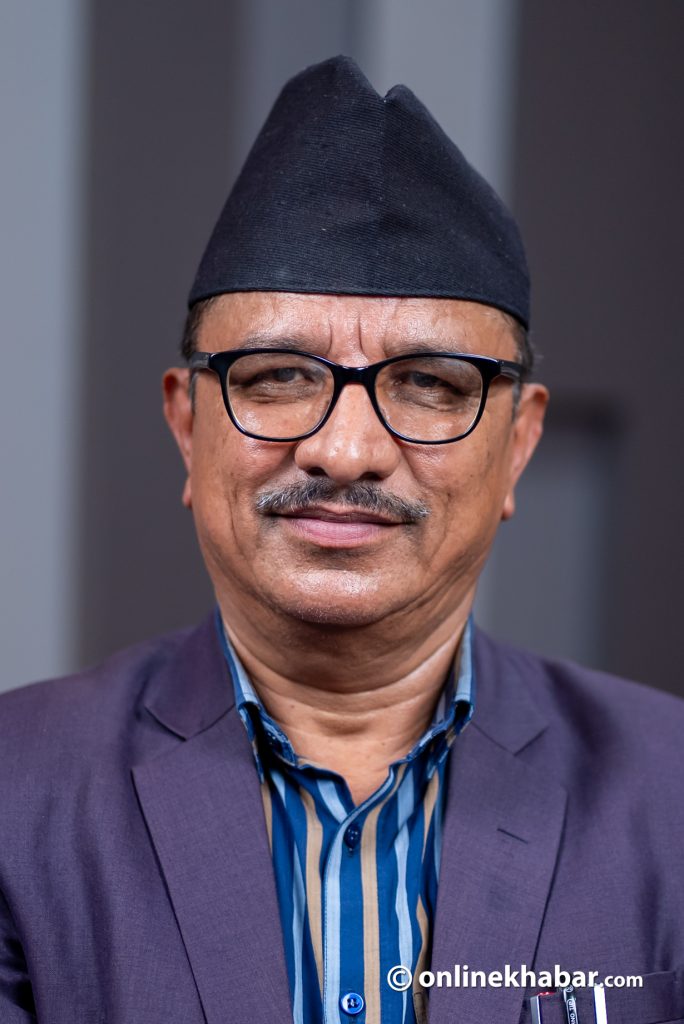
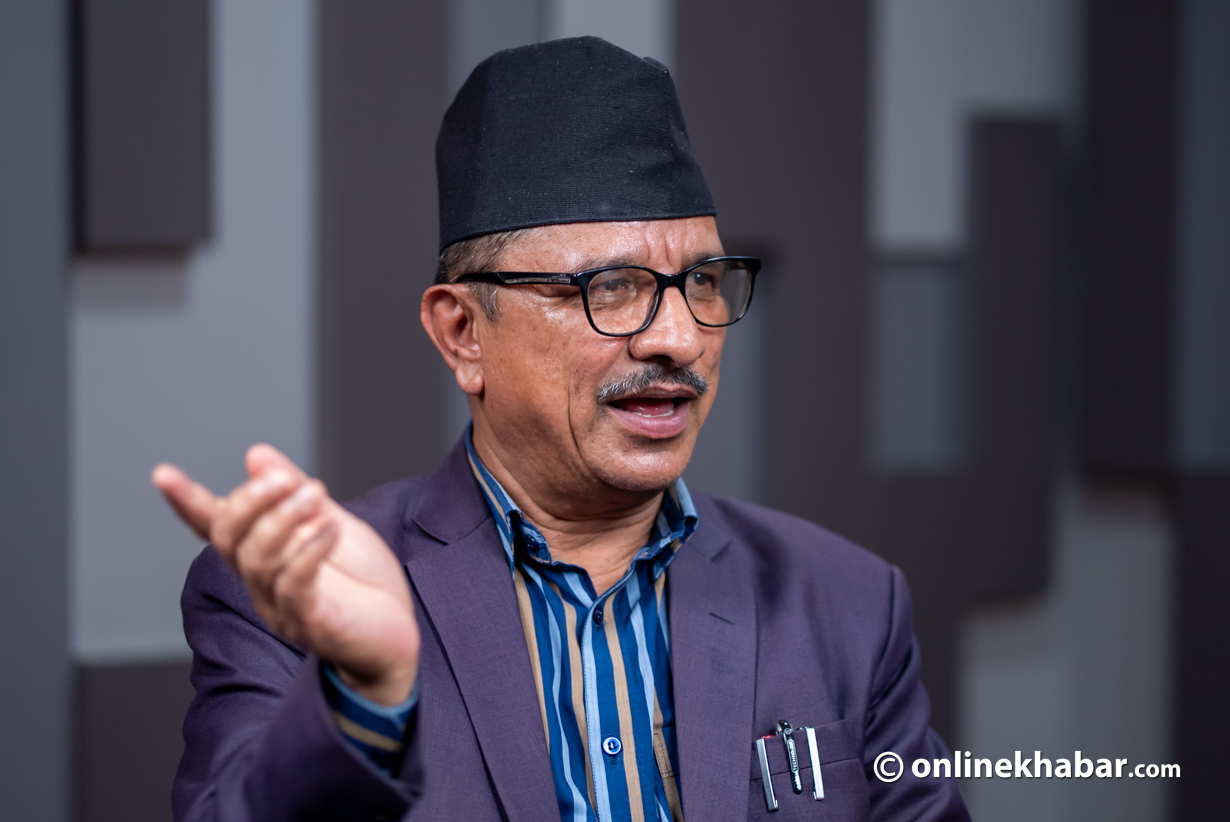
The Land Problem Resolution Commission, established to provide land to landless Dalits and squatter settlers as well as to manage unplanned settlements, appears to be at odds with the federal government. Both sides seem to prioritize their own interests over the problems of over 1.2 million landless people. OnlineKhabar journalist Sant Gaha Magar interviewed the chairman of the Land Problem Resolution Commission, Hariprasad Rizal, about the government’s recent actions and land issues.

Why did you issue a statement right after the government began evicting some settlements?

There is a legal framework for operating the Government of Nepal or any state structure. That framework is the Constitution and the law. We must operate according to that. It is necessary to inform the public about such legal procedures of the government.

Currently, we are at the Land Problem Resolution Commission. As its chairperson, I have noticed that government activities have raised public concern, and it is our responsibility to provide factual information. We should have issued a statement earlier, but the government did not officially notify us. Although the legal responsibility to resolve land problems was entrusted to us by the government, the lack of formal communication prevented us from issuing an earlier statement.

However, when the government used force to displace squatter and unplanned settlements along the Bagmati riverbank and in various parts of Kathmandu, Lalitpur, Bhaktapur, and other places, public concern intensified. Particularly, the affected parties—landless Dalits, squatters, and unplanned settlers—approached us with questions. To clarify those, we decided to issue a statement.

Another important point is that no action should contradict the law — this is a matter of legal respect and recognition. The government’s current actions are not aligned with the law. Therefore, we issued the statement to inform the public that such actions are inappropriate.

The statement reflects some apparent lack of coordination between the commission and the federal, provincial, and local governments—what is your take on that?

The Government of Nepal has assigned us a three-year term to carry out this mandate. This commission was formed by the government’s decision and is established under the Constitution and the law.

However, after the protest on Bhadra 23-24, we faced obstacles. The then government of Sushila Karki dissolved the commission. We filed a writ and went to the Supreme Court, which issued an interim order declaring the dissolution unconstitutional and illegal. The commission was reinstated, and we resumed work.

Despite this, coordination with the government has not been smooth. After the election, a new government came into power, but we have been unable to meet ministers to discuss progress and problem-solving.

The government is obstructing our work. It is improper for one government to remove or pressure an appointed commission to resign. If there are issues, why not provide a path to collaborate with the government?

This country is democratic and governed by Constitution and laws. The Supreme Court has already decided that a functioning commission cannot be dissolved. The government must allow it to work.

Therefore, it is impossible to demand resignation without consultation with us. Even on social media, calls for Balendra Shah’s resignation are not appropriate. Dialogue is necessary to resolve the issues.

You previously said that evacuating the Bagmati, Manohara, and Gairigaun settlements was unconstitutional and illegal. Can you elaborate?

The Constitution guarantees citizens’ rights and the right to resolve problems. Article 16 ensures the right to live with dignity; Article 18, equality; Article 25, property rights; Article 36, food rights; Article 37, housing rights; Article 40, rights of Dalits; Article 42, social justice; and Article 43, social security.
Additionally, under Article 51, there is a guarantee to provide agricultural land or employment to squatters and the landless. Given these rights, using force to evict squatters and landless people without notice is wrong and illegal.

There are over 98,000 landless Dalits and more than 180,000 landless squatters in Nepal. Proper management of all of them is the government’s responsibility.

The government claims, ‘We are working on these issues.’ What is your response?

I say the rule of law cannot be swayed by anyone’s mood. The certification process is ongoing. Using force without completing the cost collection and certification of squatter settlements is unlawful.

The Prime Minister leads a government with a two-thirds majority. If new laws or amendments are needed, they can be made legally. But that has not happened yet.

What does the certification process entail?

Our country has three tiers of government, each with powers defined by the Constitution. To resolve landlessness and squatter issues, the central government formed the commission and passed land-related acts. The local governments are responsible for certification and identification. Data on land-related problems of over 1.2 million individuals has already been collected.

The process begins at the rural municipality’s land office, where applications start. Next, applications are submitted at the ward level, and facilitation committees are formed. Then, at the municipal level, public notices are issued and disputes resolved. Afterward, the type of land is identified, and decisions are made. Cross-checking occurs at the land revenue and surveying offices.

Finally, survey teams visit villages, public notice is posted, and after an advertisement, any opposing claims are addressed. Then the land revenue office subdivides parcels and prepares ownership certificates.

What about unplanned settlers aside from landless Dalits and squatters?

Unplanned settlers are individuals who have land or ownership elsewhere but reside on public land. They must have lived continuously since before Magh 28, 2066 BS. They are entitled to up to four annas (1/16) of land, or up to 29 ropani if agricultural land, for which they must pay specified revenue.

What revenue must they pay?

They must pay 10 percent of the land’s assessed government value as revenue, or 5 percent for up to five ropani.

So far, we have collected approximately 116 million rupees in revenue. This benefits the national treasury and enables unplanned settlers to receive ownership certificates.

Is there a risk that powerful individuals might seize squatter land?

This concern is prevalent. Initially, I also suspected it. But departmental investigations revealed this is rare. Most occupants have possessed their land for decades.

However, the Kathmandu Metropolitan City used force without permission, which is illegal.

The former mayor of Kathmandu Metropolitan, now the Prime Minister, should ensure local governments conduct certification and work properly.

How many ownership certificates has the commission issued so far? When can the problem be fully resolved?

Only 9,012 ownership certificates have been distributed because staffing and regulation formulation were delayed initially.

We assumed office in Kartik 2081 BS and formulated plans after elections. Some bills have failed, and protests have impeded progress.

There are disputes between national park regulations and residential areas that require amendment.
We are prepared to proceed once all policies and regulations are in place. If the government provides an enabling environment, our goal was to distribute 500,000 ownership certificates by the end of Ashar.

I reiterate that no work should proceed without legal compliance.

How old is this commission and how does it differ from others?

This is the first commission established with authority under the Constitution and law. Previous commissions were temporary, formed by ministries or governments.

There are 86,400 incomplete ownership certificates issued by earlier commissions.

We aim to complete the work on an interim basis. If undisturbed by the government, we can finish 80-90 percent of the task.

Why has this issue taken so long to resolve?

The 30-year Panchayat system and the manner in which commissions were formed and operated worsened the problem.

Now, the constitutional framework will help solve this issue.

The municipalities have 86,400 incomplete ownership certificates.

This is a sensitive matter; people must never be evicted without prior notice.

The state should not create fear among citizens.

You mentioned that noticeable impact will be seen in 6-7 months—is that a threat?

This is not a threat but a reality. Sudden displacement causes distress.

The government should manage evictions with proper notice and consent.

Evictions or management should only occur after local governments complete certification.

The government is evicting settlements outside the province. What solutions do you suggest?

The government’s vision aims for quick solutions. However, haste is not good either.

The 103-day certification process is designed to prevent land misuse. There is strictness to block false claimants.

Cooperation among the government, commission, and all political parties is necessary to change policies and regulations for a faster resolution.

Only with peaceful efforts can the country’s problems be conclusively addressed.

Photo/Video: Shankar Giri