Author: space4knews

Gagan Thapa Awaits Decisive Initiative on Alternatives for Congress Unity

Thapa and Deuba

Image source: NurPhoto via Getty Images

Reading time: 5 minutes

Following the special congress convention, leaders’ statements reflect intensified efforts toward broad unity within the deeply divided Nepali Congress party.

Leaders from both the establishment and non-establishment factions agree that unity is imperative.

Party President Gagan Thapa is reportedly considering proposing a respectful formula acceptable to all, as expressed by leaders outside the establishment.

Thapa’s faction has also conveyed readiness to discuss various alternatives.

Are Congress leaders moving towards renewed unity?

रोल्पाली कोदो काठमाडौंमा – Online Khabar

Rolpa’s Millet Exported to Kathmandu for the First Time

Chait 25, Rolpa – Millet produced in Lungri Rural Municipality of Rolpa has been shipped to Kathmandu for sale for the first time. The Social Entrepreneur Women’s Cooperative operating in Lungri Rural Municipality collected millet produced from seven wards within the municipality and sent it out of the district on Tuesday. The cooperative had gathered around 80 quintals of millet. Of this, approximately 10 quintals, equal to 1,000 kg, were sold in the local market, while the remaining 70 quintals, or 7,000 kg, were dispatched to Kathmandu, informed Bhumi Bishw, Chairperson of Lungri Social Entrepreneur Women’s Cooperative.

“Nepali Mato Company purchased the millet from the cooperative at a rate of 70 Nepali Rupees per kg and transported it to Kathmandu,” said Bishw. “We have exported millet worth NPR 490,000 outside the district for the first time.” The cooperative and Nepali Mato Company had signed an agreement for the purchase and sale of millet in Mangsir 2082 (November-December 2025).

The good price received for this indigenous millet has encouraged local farmers. Yamkumari Bishw, a local farmer, expressed that the guarantee of selling their produce locally has motivated them to increase production. She also noted that the weekly agricultural market held every Tuesday in the municipality makes it easier for farmers to sell their agricultural products.

“Earlier, we were worried about where to take our produce for sale, but now it has become much easier,” she said. Bharat Kumar Thapa, Chairperson of Lungri Rural Municipality, stated that they aim to brand the millet and expand it to international markets. He considers the growing demand for Rolpa millet in Kathmandu as a positive sign, especially at a time when the production of indigenous crops is declining. He also shared the municipality’s vision to create a brand for Lungri’s millet and reach global markets.

In addition to increasing millet production, the municipality plans to run programs focusing on the promotion and production of other indigenous crops, as outlined in their strategic points. Bhupendra Pandey, Chief of the Agriculture Section in Lungri Rural Municipality, informed that millet produced by around 100 farmers has been sent to Kathmandu. He added that the municipality will emphasize providing necessary tools, orientation training, seeds, and technical support to farmers to increase millet production.

According to data from the Agriculture Knowledge Center Rolpa, the district produces about 1,700 metric tons of millet annually. The highest production occurs in the rural municipalities of Sunchahari, Lungri, Gangadev, Paribartan, and Sunilsmriti.

Mahaveer Pun Says Oli Must Acknowledge Mistakes Made During JNU Movement

March 8, Kathmandu – Independent Member of Parliament Mahaveer Pun has stated that former Prime Minister KP Sharma Oli should admit that mistakes were made during the JNU movement. Responding to questions from journalists on Tuesday at the Federal Parliament building, MP Pun emphasized that although the then Prime Minister Oli and Home Minister Ramesh Lekhak did not give orders to fire bullets, as the head of the government, Oli must accept responsibility and apologize without hesitation.

He stressed that subordinates’ mistakes are issues that the leading figure must acknowledge. “Today, they say they did not give the order to shoot. However, they are the leaders. How can someone be comforted by the excuse that they did not know? When you are the leader and a subordinate commits a mistake, you must accept it. You have to say sorry,” Pun said. “Apologizing does not diminish a person’s worth; it elevates it. If you do not take responsibility for mistakes as the accountable person, how can you be considered a leader? This is my personal view.”

Iran and US Agree on Two-Week Ceasefire and Reopening of Strait of Hormuz Port

The United States and Iran have announced a two-week ceasefire. This agreement was reached shortly before the deadline set by US President Donald Trump, who had warned that “all civilization would be destroyed.”

Iranian Foreign Minister Abbas Araghchi stated that, in coordination with the Iranian armed forces, safe passage through the Strait of Hormuz will be ensured. Israel, involved in the conflict, has also indicated that it will comply with this ceasefire agreement.

Iran confirmed that it presented a 10-point plan for the ceasefire to the US through Pakistan, which served as a mediator in the negotiations. Following the ceasefire agreement, fuel prices have begun to decline. The price of crude oil, which was trading at $100 per barrel as of Tuesday, has dropped to $94.5 per barrel. Asian stock markets have also reached higher levels following the agreement.

प्रतिनिधिसभा र राष्ट्रिय सभा बैठक बस्दै  – Online Khabar

Meetings of the House of Representatives and National Assembly Scheduled for Today

25 Chaitra, Kathmandu – Both houses of the Federal Parliament are convening today. According to the schedule, the House of Representatives will meet at 1 PM this afternoon at Singha Durbar. During the session, Prime Minister Balendra Shah (Balen) is expected to present the ‘7th Annual Report of the National Natural Resources and Fiscal Commission, 2082.’ Additionally, Finance Minister Dr. Swarnim Wagle will introduce the ‘Alternative Development Finance Mobilization Bill, 2082.’ Prior to the bill presentation, there is a scheduled proposal to seek permission to table the bill. The Speaker will also read a letter received from the President’s Office regarding the reordering of the Council of Ministers.

Similarly, the National Assembly meeting is set for 1:15 PM today. At this session, Prime Minister Balendra Shah will present the ‘Annual Report of the Commission for the Investigation of Abuse of Authority for Fiscal Year 2081/82’ to the assembly.

Both Governments Must Actively Address Chinese Films’ Lack of Focus on Nepalese Market, Says Expert

News Summary

Edited and Completed.

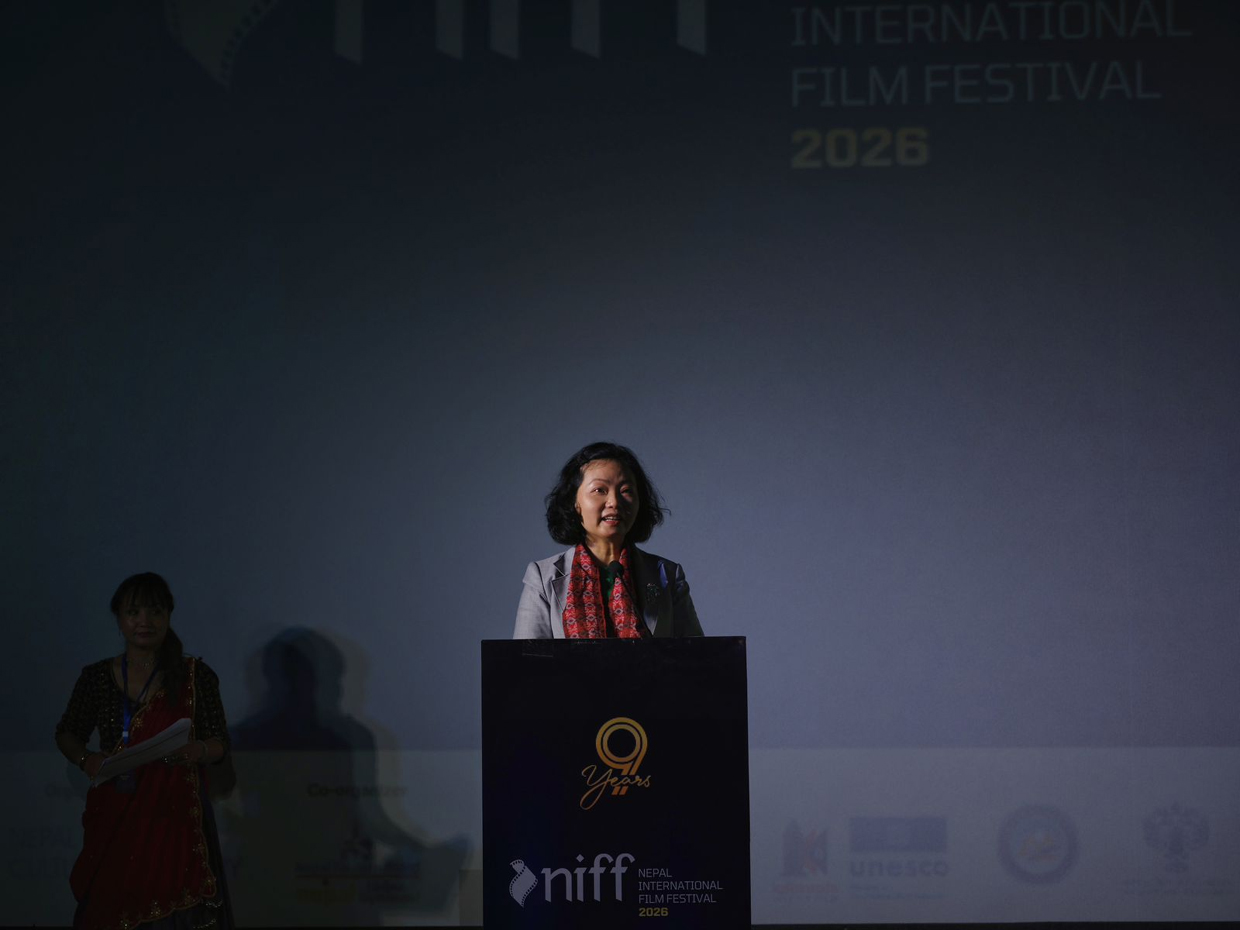
  • Professor Zun Zhan from China’s University of Electronic Science and Technology is currently in Kathmandu serving as a jury member for the Nepal International Film Festival.
  • Zhan observed that Nepali films feature abundant dance and music along with vividness, emphasizing the need for joint research and co-writing for Nepal-China film collaboration.
  • She encouraged Nepali filmmakers to explore stories related to Tibet and stated that while language is a challenge, government initiatives could facilitate easier access to the Chinese market.

Chinese Professor Zun Zhan is currently in Kathmandu as a jury member for the Nepal International Film Festival (NIF). She is the head of the Department of Journalism and Communication at China’s University of Electronic Science and Technology, a professor, and media expert with extensive experience in new media, international communication, and intercultural studies. Zhan is also affiliated with various think tanks in China and has academic and research experience at the University of California, San Diego, and the College of William & Mary. Well-versed in media ecology and visual storytelling from an analytical perspective, she spoke with Vishnu Sharma about the current state of Nepali cinema, her festival experience, and opportunities for Nepal-China film and media cooperation. Edited excerpts of the conversation follow:

You are in Kathmandu as a jury member for the Nepal International Film Festival (NIF). What is your overall impression of the eighth edition of the festival?

NIF seems like a highly professional institution. The organizers are very friendly and cooperative. I have noticed the festival improving in quality every year. Foreign directors, producers, and filmmakers are also treated with respect, which is very important. The screening program was well planned and held in excellent venues, which impressed me.

Today’s youth prefer watching videos on mobile devices; however, the cinematic experience on a big screen remains invaluable. The emotional impact delivered through large screens, sound systems, and audiovisual effects cannot be equated with mobiles. Festivals like this bring films from around the world onto a single platform, allowing audiences to appreciate cinematic art and new works.

From media and storytelling perspectives, how do you evaluate the current state of Nepali cinema?

Honestly, I have not fully studied Nepali films yet. I haven’t seen many Nepali movies in the past, so extensive evaluation is difficult. But my first impression is that Nepali films tend to feature a lot of dance and music, which is somewhat similar to Indian filmmaking. This element is less pronounced in Chinese cinema.

This might also be my preconceived notion. Nepali films show joy and vibrancy, which I appreciate. Filmmakers here are learning and progressing, which suggests positive prospects for the future.

As a cross-cultural communication expert, how do you see culture being represented in current Nepali films?

Culture is clearly conveyed through visuals, language, and sound systems in films. Nepali pronunciation, music, and narrative style differ from Chinese or English. These distinctions form the core of its identity. Emotionally, all countries share similarities—such as attachment, love, and death—which audiences universally understand. Nepali films showcase clear depictions of customs, attire, and music.

How can Nepali cinema maintain its originality while connecting internationally, especially with China?

The story is the most crucial factor. If the narrative is strong, audiences will understand it even if they don’t speak the language. We share common signs, emotions, and images. How the story is presented is even more important. For example, films like “The Lion King” have delivered universal messages worldwide. With good storytelling and presentation, films can connect with audiences from any country.

How can stories emotionally resonate with audiences from both Nepal and China despite cultural differences?

Joint research is essential for this. Writers should study the cultures, histories, and backgrounds of both countries before writing stories. Nepal and China are both Himalayan nations with many cultural similarities.

For instance, stories based on topics like prayer flags, Buddhist culture, and historical ties are easily understood by audiences in both countries. I encourage Nepali filmmakers to also explore subjects such as Tibet for storytelling.

What are the most promising areas for Nepal-China film collaboration at present?

Co-writing can be the starting point. Then we can jointly produce films together, incorporating actors, locations, and experiences from both countries. We need to understand each other well—some may prefer Nepal’s terraced hills, others may be fascinated by pandas in China. Perspectives differ, so increasing dialogue is important.

Practically, how can collaboration be strengthened?

Small programs can be initiated through universities or research institutions in both countries. Bringing together writers, directors, and professors to offer training and exchange experiences is possible. Sharing knowledge on wildlife, the Himalayan region, documentary filmmaking, and AI technology can lay a strong foundation for future large-scale partnerships.

How can Nepali filmmakers access the Chinese market?

Language can be a challenge but not impossible to overcome. Both governments must take initiatives to deepen cooperation. With policy support, market entry becomes much easier.

How can Chinese films expand their market presence in Nepal?

Chinese films have not yet paid sufficient attention to smaller markets like Nepal. Their focus tends to be on Western markets. If governments and experts from both countries become active, there is significant potential for growth in this sector.

How can films be effectively used as cultural diplomacy?

Films play a major role in cultural exchange. When filmmakers visit each other’s countries, they gain real understanding of the cultures. These experiences help foster deep relationships.

What can Nepal learn from China’s film industry?

It is necessary to tell diverse stories rather than just focusing on love or family themes. Both countries face investment challenges, so linking films with business aspects is important. Using AI technology is also crucial as it simplifies production processes.

How can stories from countries with small film industries reach the international level?

Social media is the most effective medium. English subtitles or AI translation remove language barriers. Nepal has numerous tales related to the Himalayas, tourism, and nature. Producing documentaries and films on such themes can attract global audiences.

What is your outlook on future Nepal-China media cooperation?

I am very optimistic. If we collaborate actively, cooperation will become stronger. Initial challenges may arise but will gradually improve.

As a jury member, what do you focus on when evaluating films?

The story and emotional impact are paramount. Technical aspects are important but alone don’t make a good film. If the narrative and emotions are weak, I do not select the film.

What do you like most about Nepal?

Everything—the people, their warmth, the culture. I have made many new friends here who invited me to their villages for meals, which was a deeply moving experience. I love the smiles, the blue skies, hills, and the natural beauty. Nepal is truly beautiful.

सधैँ ‘अम्पायरिङ एरर’, खेलाडीलाई कारबाहीको डर – Online Khabar

Nepal Cricket Association Plans to Implement Grading System to Enhance Umpiring Standards

The Nepal Cricket Association is preparing to implement a grading system for umpires for the first time in order to improve their performance standards. The technical committee is monitoring umpire performances and providing suggestions for improvements in discussions with the match referees. Kathmandu, 24 Chaitra.

During a Prime Minister Cup one-day cricket match against Madhesh Province, Lumbini captain Dev Khanal faced a one-match suspension after expressing dissatisfaction with an umpire’s decision. In the final ball of the eighth over, Dev was given out caught behind while attempting an uppercut off a ball bowled by Rupesh Singh. Although the umpire’s decision was out, Dev showed displeasure and remained on the field for some time. Following this, the match referee imposed a one-match ban on him.

In the second edition of the Nepal Premier League, Chitwan Rhinos player Rijan Dhakal was penalized after expressing dissatisfaction over an umpire not giving him out on an LBW appeal during the match against Lumbini Lions. This edition of the LPL has faced intense criticism due to numerous questionable umpiring decisions. Last year, during the Jay Trophy, cricketer Sandeep Lamichhane also pointed out the urgent need for significant improvements in umpiring standards in Nepal through social media.

A senior umpire commented, “Players are punished when they make mistakes, but umpires repeatedly make incorrect decisions without any consequences. If the Cricket Association of Nepal does not take disciplinary action against them, how can umpiring standards improve?” Lumbini Province’s head coach Basant Shahi also expressed dissatisfaction with umpiring standards, stating, “Not only our team but all teams are unhappy with the umpiring decisions. The umpiring standard in the Prime Minister Cup has not been satisfactory and needs improvement.”

CAN spokesperson Chumbi Lama stated, “The issue of umpiring was discussed during the board meeting. Based on the technical committee’s report, a grading system for umpires will be implemented. We believe this will help enhance the quality of umpiring.”

Couple on the Run for 29 Years Arrested in Polygamy Case

Chaitra 24, Syangja – A couple who had been absconding for 29 years after being convicted in a polygamy case has finally been arrested. Umakant Pokharel (also known as Humbahadur Thapa), 52, and Sharadadevi Pokharel, 46, residents of Biruwa Rural Municipality-4, were taken into custody recently. Prashannraj Chaudhary, Deputy Superintendent of Police (DSP) and spokesperson for the Syangja District Police Office, confirmed the arrest on Tuesday.

A case against the couple was registered on Vaisakh 19, 2053 BS, accusing them of polygamy. The Syangja District Court found both guilty and sentenced them to two months in prison each. However, they went into hiding before the verdict could be enforced. According to police sources, they evaded punishment by concealing their true identities and living in India. During the investigation, authorities tracked their whereabouts and arrested them, DSP Chaudhary said.

After their arrest, the couple was presented before the court. The court directed their transfer to Syangja District Jail to serve the prison sentence. Police have recently intensified efforts to locate fugitives in order to enforce court orders promptly.

संसद्को रोस्ट्रममा हुँदैछ प्रधानमन्त्रीको खोजी – Online Khabar

The Search for the Prime Minister at the Parliamentary Rostrum Continues

News Summary

Editorial review completed.

  • Prime Minister Balendra Shah has yet to address the House of Representatives, while Parliament seeks to learn about his vision and policies.
  • Parliamentary rules allow direct question-and-answer sessions with the Prime Minister, but he has not spoken so far.
  • Members of Parliament are questioning the Prime Minister on loan approvals and the release of the investigation commission’s report, awaiting his response.

April 6, Kathmandu – After the National Independent Party achieved a near two-thirds victory in the House of Representatives election following the Janajati uprising, senior party leader Balendra Shah was appointed Prime Minister nearly two weeks ago. In the four subsequent House sessions, leaders from all parties have presented their formal views, yet Prime Minister Shah has remained silent.

With the support of almost two-thirds of his party, questions are emerging within Parliament about the Prime Minister’s plans to steer the country in a new direction. What is Nepal’s future course under his leadership?

In previous parliamentary sessions, it was customary for the Prime Minister and top party leaders to address the house on the first day, but this practice has not been followed this time. On the session held on March 31, ruling party leader Ravi Lamichhane noted that the Prime Minister had yet to speak.

Former Secretary of Parliament, Suryakiran Gurung, emphasized that it is a citizens’ right to know where and how such a powerful government intends to take the country.

“What is the overall vision of the Prime Minister? How does he aim to advance the nation? This is something the members of the House must hear. With a two-thirds majority, how is the government driving the country forward? What kind of relief is being planned for the people? These points need to be clarified,” said Gurung.

According to Gurung, not just the Nepali people but the international community is eager to understand Nepal’s new foreign and economic policies under this government.

Gurung advises that the Prime Minister should provide clarity on all issues raised or likely to arise in Parliament, ranging from foreign relations and economic policy to citizen relief measures.

“The Prime Minister needs to stand at the parliamentary rostrum and present his stance,” he said. “All issues brought up in Parliament should be discussed openly so that ordinary citizens understand the government’s policies and the country’s progress.”

Prime Minister’s Chief Personal Secretary Subash Sharma stated, “There are no immediate plans for the Prime Minister to address Parliament.”

On the first day of Parliament, constitutional expert Dr. Bipin Adhikari remarked that the Prime Minister’s absence caused some uncertainty. “He will likely address the House after the Speaker’s election,” he suggested.

Previously, when the party chairman and Prime Minister were the same person, the Prime Minister routinely presented views from the rostrum. This time, since the party leader and Prime Minister are different individuals, experts say it is appropriate for the Prime Minister to express his own views personally.

What Are the Prime Minister’s Plans?

Since March 31, meetings of the Federal Parliament’s House of Representatives and National Assembly have been ongoing. Officials from the Prime Minister’s Secretariat say he will address Parliament when the time is right.

When asked, “When will the Prime Minister address Parliament?” Chief Personal Secretary Subash Sharma replied, “There is no immediate preparation.”

According to the Federal Parliament Secretariat, the Prime Minister can speak in Parliament at any time and does not require special permission or a strict schedule.

House rules mandate that on one day each month, a direct question-and-answer session must be held with the Prime Minister.

Rule 56 of the House of Representatives procedural regulations states, “The Speaker shall allocate the first hour of the first week’s meeting each month to questions directed to the Prime Minister or related portfolios.”

A similar rule applies in the National Assembly where the Chairperson can allocate time during the third week’s session for direct Q&A with the Prime Minister.

The Prime Minister may use these question-and-answer sessions to articulate his policies and vision.

“The Prime Minister Is Being Sought in Parliament”

At the House session last Monday, Rastriya Swatantra Party MP Khushbu Oli questioned the government’s acceptance of loans from the Asian Development Bank and the World Bank.

She asked, “Which parliamentary committee or policy debate validated this loan approval, and on what basis?”

On the previous Sunday, the Cabinet decided to accept a concessional loan of 90 million USD for the Digital Nepal Transformation Project, alongside an additional concessional loan of up to 95 million USD from the World Bank.

MPs have raised questions about whether the separation of powers principle is upheld, whether the government listens to Parliament, if budget discussions happen in time, whether ministers keep their doors open to MPs, and if vested interest groups dominate legislation processes.

The government has previously accepted concessional loans, but following this decision, Parliament must seek answers.

MP Oli noted, “Our Parliament is still in its infancy. Parliamentary committees and subcommittees have not even been formed. In such circumstances, decision-making cannot be fully transparent.”

She also questioned the loan procurement process: “Did we request this loan, or was it imposed? Is it an offered loan or a requested one?”

The government will have to respond to these inquiries in Parliament. The Prime Minister is also expected to answer these questions.

At the March 31 House session, Nepali Congress MP Bhishmaraj Angdambe asked whether the government intends to publicly release the investigation commission’s report.

The Janajati uprising on March 6 and 7 resulted in 76 fatalities nationwide, along with widespread arson and destruction.

Led by former Justice Gauribahadur Karki, the investigation commission has submitted its report to the government, but it has yet to be officially published. Despite the government’s silence, media outlets have reported some details.

MP Angdambe demanded answers from the Prime Minister about releasing the report and emphasized the need to clarify the events of March 6 and 7.

Though it remains unclear when the Prime Minister will respond to these parliamentary questions, MPs continue to express their concerns and reminders.

In the National Assembly on Monday, Nepali Congress MP Ranjit Karn proposed cooperation with the government, saying, “I request the Prime Minister to come forward for national unity, to prepare agendas through collaboration.”

Despite potential differences during elections, once completed the goal is a prosperous Nepal and a respected Nepali citizenry. It remains to be seen whether the Prime Minister will accept this offer of collaboration from the opposition.

Commitment to improving relations between Parliament and the government has also been demanded.

Rastriya Swatantra Party MP Manish Jha has called for a guarantee that the Parliament Palace will never be held hostage from within Parliament. He said in the previous session, “In the past, the Parliament was confined to Khumaltar, Baluwatar, and Balkot, counting numbers only while weakening principles.”

These remarks notably referenced former Prime Ministers Pushpa Kamal Dahal ‘Prachanda’, KP Sharma Oli, and Sher Bahadur Deuba—Prachanda was in Khumaltar, Oli in Balkot, and Baluwatar was the then-Prime Minister’s residence.

MP Jha further demanded that Parliament remain free from interference by Baluwatar, the Prime Minister’s office.

Rastriya Swatantra Party MP Ganesh Parajuli also raised issues including respect for the separation of powers, government responsiveness to MPs, punctual pre-budget discussions, MPs’ access to ministers, and the influence of vested interest groups in lawmaking.

He urged against repeating past political mistakes and stressed the importance of timely resolution of issues raised in Parliament.

“The government must advance the issues raised in Parliament into constitution, legislation, and policy. Once raised in Parliament, they can be resolved,” Parajuli stated.

All these questions and concerns require the Prime Minister’s direct response from the parliamentary rostrum so he can clearly communicate his vision to both Parliament and the public.

Education Minister Announces Review of Law Designating Prime Minister as University Chancellor

March 24, Mahendranagar – Education, Science and Technology Minister Sasmita Pokharel stated that the legal provision assigning the Prime Minister as the Chancellor and the Education Minister as the Vice-Chancellor of Nepalese universities will be reviewed. Minister Pokharel made these remarks during a visit to Sudurpaschim University in Mahendranagar, Kanchanpur, on Tuesday while speaking with journalists.
“It is essential to end the increasing politicization within universities. To achieve this, the current system that designates the Prime Minister as Chancellor and the Education Minister as Vice-Chancellor will be revisited,” she said.
During the visit, she also mentioned that the current government is firmly implementing the previous government’s decision to dissolve student organizations within universities. Minister Pokharel expressed the government’s commitment to supporting academic development and instructed university officials and staff to work in alignment with the government’s pace and the hundred-day action plan.

अमेरिका/इजरायल-इरान युद्ध : टर्कीको सबैभन्दा ठूलो टाउको दुखाइ

Turkey’s Main Concerns Amid US-Israel-Iran Conflict

Since the commencement of hostilities between the United States and Israel against Iran, Turkey has consistently maintained a cautious stance. Turkish officials have refrained from directly blaming either America or Tehran, instead emphasizing the need to remain alert to the risks associated with the conflict. Following the US and Israeli strike on February 28, Turkey’s Ministry of Foreign Affairs issued its first statement urging all parties to immediately cease attacks and to seek mediation proposals.

Winter Session of Koshi Provincial Assembly Concludes with Passage of Three Bills

March 8, Biratnagar – The winter and eighth session of the Koshi Provincial Assembly concluded with the passage of three bills. The session was adjourned by Provincial Chief Parsuram Khapung on Monday night, effective from midnight. This decision followed the Provincial Cabinet’s recommendation made earlier on Monday to terminate the session.

The session faced disruptions after the provincial assembly building and secretariat were set on fire during the Janajati Aandolan protests, creating uncertainty. Subsequently, the assembly meetings were relocated to the Virendra Sabha Hall in Biratnagar, where the session was convened from January 8. According to Niroj Dhakal, the Information Officer at the Koshi Provincial Assembly Secretariat, the two-month-long session successfully passed three bills.

The bills enacted include amendments to the “Provincial Research and Training Institute Act, 2069,” legislation regarding “Provincial Legislative Procedures,” and provisions for the “Management of Public Communication in Koshi Province.” Due to the destruction of the assembly building and secretariat during the protests, the session was held in the rented Virendra Sabha Hall, comprising a total of 15 meetings. During the zero hour of the session, 83 members spoke, while 19 members presented remarks under special time.

मन्त्रालयको संख्या घटाइँदै, सचिवहरूको व्यवस्थापन कसरी होला ?

Reduction in Number of Ministries Raises Questions on Management of Secretaries

Summary: Prime Minister Balen Shah plans to reduce the number of ministries from 22 to 17. Alongside this, the government is preparing to cut the number of secretary posts. A Restructuring Management Secretariat will be established to oversee staff management and ensure uninterrupted service through a transition roadmap. 23 Chaitra, Kathmandu.

Shortly after his appointment as Prime Minister, Balen Shah formed a 15-member cabinet about one and a half weeks ago. Currently, there are 22 ministries, but the government plans to assign some ministers responsibility for two ministries whose functions overlap, effectively consolidating ministries. Soon after the government was formed, the cabinet prepared a 100-point action plan that included a target to reduce ministries to 17 under the theme of ‘Administrative Reform, Restructuring, and Economy’.

With the Ministry of Industry, Commerce and Supplies and the Office of the Prime Minister and Council of Ministers holding ministry-like roles, the government is proposing to merge such ministries and assign ministers accordingly. A plan to reduce the number of ministries within a month also includes managing secretary posts. To facilitate this, the government will establish a Restructuring Management Secretariat within the Office of the Prime Minister and Council of Ministers. This secretariat will have two primary functions: first, to manage staff promotions to avoid any disruption in service; and second, to prepare a transition roadmap to ensure service continuity. As the number of ministries decreases, a significant reduction in secretaries is expected. Currently, besides the Chief Secretary, four secretaries serve in the Prime Minister and Council of Ministers’ office.

Secretarial posts have also been designated in smaller agencies under the Prime Minister’s Office, including Nepal Trust, Public Procurement Monitoring Office, and Vigilance Center. Even these small entities have secretary-level positions. The Ministry of Finance has two secretaries overseeing economic and revenue matters, while the Office of the Auditor General also has a dedicated secretary. The Ministry of Health allocates secretaries according to health and administrative responsibilities. Beyond ministries, multiple commissions, agencies, and constitutional bodies have more than one secretary. Secretarial slots exist in bodies such as the Water and Energy Commission, the Commission for Investigation of Abuse of Authority, the Election Commission, and the Public Service Commission. The offices of the Auditor General, Attorney General, and Federal Parliament Secretariat each have four secretaries. According to an Under-Secretary from the Prime Minister’s office, secretarial posts in executive agencies will be prioritized for review. With upcoming cuts, ministries that are merged will retain only one secretary out of the previous two. Secretarial numbers will definitely decrease in ministries with two or more secretaries. Positions in bodies where secretaries are deemed unnecessary will also be reviewed.

Sudip Dhakal, Policy, Administration and Good Governance Advisor to Prime Minister Balen Shah, confirms that a committee has already been formed to reduce the number of ministries. He said, “The committee has been formed and is likely working. No further information is available at this time.”

Background on Ministry Reduction: On 7 Mangsir 2078 (November 2021), the government amended the Work Division Regulations to establish 22 ministries, all with secretarial posts. After reducing five ministries, at least five secretary positions will be automatically removed. However, sources in the Prime Minister and Council of Ministers’ office indicate no immediate cuts in secretary numbers. According to the source, four secretaries are expected to retire by the end of Ashad (mid-July). The strategy for reducing secretaries relies on not replacing vacant posts. Some under-secretaries awaiting promotion may experience delays, and some will retire at age 58 without becoming secretaries.

Structural Changes to Come: At the federal level there are currently 63 secretarial posts, plus 7 chief secretaries at the provincial level, totaling 70 secretaries. Chief secretaries stationed in provinces are part of the federal civil service. In the health sector, at the 12th level (equivalent to secretary), there are four officers. The number of under-secretaries is approximately 650. The government has yet to finalize the allocation of posts from chief secretary to secretary. According to the 100-point plan, the Restructuring Management Secretariat will determine the remaining organizational framework. In a few months, a regulatory bill will be presented to the federal parliament that will establish various standards and forms for staff management.

Previous Report May Prove Useful: Questions have repeatedly arisen about the federal civil service having surplus staff. Complaints have surfaced alleging selfish interests have influenced the increase in secretary posts. Three years ago, a similar question about secretary numbers led the government to form a review committee. Chaired by then-Secretary Laxman Aryal, the committee recommended reducing the number of secretaries in 2079 (2023) and broadening management for secretaries and under-secretaries in several areas. The report advised reducing secretaries from ministries with two secretaries, such as Industry, Agriculture and Livestock, Health, Education, Science and Technology, and Energy ministries. It recommended limiting secretaries to 50, creating 80 additional secretary-level posts, and capping under-secretaries at 628. The committee suggested cutting secretarial posts in some commissions deemed unnecessary and reallocating them as additional secretaries. They also recommended appointing additional secretaries to constitutional bodies and agencies with more than two under-secretaries. For promotion to secretary, the report stressed prioritizing candidates under 50 years old, with a clean record and good reputation, backed by legal and policy provisions. It also proposed cluster-based staff deployments for the highest-ranking gazetted officers and setting the number of provincial ministries accordingly.

Resignation of Prakashchandra Lohani as Rastriya Prajatantra Party Chairperson Accepted by Rajendra Lingden

Dr. Prakashchandra Lohani’s resignation from the position of Chairperson of the Rastriya Prajatantra Party’s Directorate Committee, submitted on Chaitra 8, has been accepted by the party chairman, Rajendra Lingden. Lohani expressed shock at the results of the recent House of Representatives election and emphasized the need to hold the party general convention before continuing in his position. In his resignation letter, he urged the party leadership to immediately clear the path for necessary processes. (Chaitra 24, Kathmandu)

The resignation submitted by Dr. Lohani, Chairperson of the Rastriya Prajatantra Party (RPP) Directorate Committee, has been officially accepted. Party sources confirmed that Rajendra Lingden approved the resignation on Tuesday, twelve days after Lohani tendered it on Chaitra 8.

Following the election outcome of the House of Representatives, Lohani expressed his astonishment and insisted on convening a party general convention through a temporary committee. He clarified that he would only continue in his role after the convention has been held. Additionally, he specified in his resignation letter that the party leadership must immediately proceed with the necessary formalities.

आईपीएलमा राजस्थान रोयल्सको लगातार तेस्रो जित – Online Khabar

Rajasthan Royals Secure Third Consecutive Win in IPL by Defeating Mumbai by 27 Runs

Rajasthan Royals achieved their third consecutive victory in IPL cricket by defeating Mumbai by 27 runs. Due to rain, the match was shortened to 11 overs, with Rajasthan setting a target of 151 runs. Rajasthan climbed to the top of the points table with 6 points from 3 matches, while Mumbai remains in seventh place with 2 points. Kathmandu, 25 Chaitra.

In the Indian Premier League (IPL) cricket, Rajasthan Royals secured their third straight win by beating Mumbai by 27 runs in a match that started late on Tuesday night and concluded after midnight. Rain delayed the toss, and the game was reduced to 11 overs per side. Chasing the target of 151 set by Rajasthan, Mumbai managed 123 runs for nine wickets. Naman Dhir and Sherfane Rutherford scored the highest for Mumbai with 25 runs each. Tilak Varma contributed 14 runs, while other batsmen failed to reach double figures.

For Rajasthan, Nandre Burger, Ravi Bishnoi, and Sandeep Sharma took 2 wickets each, while Jofra Archer and Tushar Deshpande claimed one wicket apiece. After losing the toss, Rajasthan batted first and scored 150 runs for the loss of 3 wickets in the allotted 11 overs. Openers Yashasvi Jaiswal and Vaibhav Surevanshi provided an excellent start. Jaiswal remained unbeaten on 79 runs off 32 balls, including 10 fours and 4 sixes. Vaibhav scored 39 runs off 14 balls before being dismissed. Captain Riyan Parag added 20 runs. For Mumbai, Allah Gaffar took 2 wickets, while Shardul Thakur took one. With this third consecutive win, Rajasthan Royals have collected 6 points from 3 matches, occupying the top position, while Mumbai, with 2 points from 3 matches, sits in seventh place.