Author: space4knews

US Dollar Steady, Euro, Pound Sterling, and Australian Dollar Weaken


Chaitra 9, Kathmandu: According to the foreign exchange rates set by Nepal Rastra Bank for today, the US dollar remains stable while the Euro, Pound Sterling, and Australian dollar have depreciated slightly.

Similar to Sunday, the US dollar’s buying rate is NPR 149.64 and selling rate is NPR 150.24.

The Euro has seen a minor decline compared to yesterday. Today, the European Euro’s buying rate is NPR 173.12 and selling rate NPR 173.81, down from yesterday’s NPR 173.15 and NPR 173.84 respectively.

Likewise, the UK Pound Sterling’s buying rate today is NPR 199.66 and selling rate NPR 200.46, decreasing from yesterday’s NPR 200.38 and NPR 201.19 respectively.

Today’s rates also show a decline for the Swiss Franc and Australian Dollar.

The Swiss Franc’s buying rate is NPR 189.90 and selling rate NPR 190.66, slightly down from yesterday’s NPR 190.01 and NPR 190.77.

For the Australian Dollar, the buying rate is NPR 105.10 with the selling rate at NPR 105.52, both lower than yesterday’s NPR 105.89 and NPR 106.31.

Canadian Dollar Stable, Singapore Dollar Declines

The Canadian Dollar remains stable today with a buying rate of NPR 109.04 and selling rate of NPR 109.48, unchanged from yesterday.

The Singapore Dollar has decreased, with today’s buying rate at NPR 116.70 and selling rate NPR 117.16, down from yesterday’s NPR 117.01 and NPR 117.48.

Other rates are as follows: Japanese Yen (10 units) buying rate NPR 9.40 and selling rate NPR 9.44, Chinese Yuan buying rate NPR 21.73 and selling rate NPR 21.82, Saudi Arabian Riyal buying rate NPR 39.85 and selling rate NPR 40.01, and Qatari Riyal buying rate NPR 40.94 and selling rate NPR 41.11.

According to the central bank, rates for Thai Baht are NPR 4.55 (buying) and NPR 4.57 (selling), UAE Dirham NPR 40.74 and NPR 40.90, Malaysian Ringgit NPR 37.98 and NPR 38.14, South Korean Won (100 units) NPR 9.94 and NPR 9.98, Swedish Krona NPR 16.02 and NPR 16.08, and Danish Krona NPR 23.17 and NPR 23.27 respectively.

Additionally, the rates set by the Rastra Bank include Hong Kong Dollar buying rate NPR 19.10 and selling rate NPR 19.18, Kuwaiti Dinar buying NPR 488.06 and selling NPR 490.02, Bahraini Dinar buying NPR 396.34 and selling NPR 397.93, and Omani Riyal buying NPR 388.68 and selling NPR 390.23. Indian Rupees at 100 units have a buying rate of NPR 160 and selling rate NPR 160.15.

The Rastra Bank has noted that these exchange rates can be revised at any time if necessary. Commercial banks may offer different rates, and updated exchange rates are available on the central bank’s official website.

Bahrain, UAE, and Kuwait Issue Alerts Over New Missile and Drone Attacks


March 22, Kathmandu – Amid ongoing conflicts in the Middle East, several Gulf countries have issued warnings about missile and drone attacks.

According to reports, Bahrain, the United Arab Emirates (UAE), and Kuwait have all issued alerts concerning missile and drone threats originating from Iran.

Bahrain’s Ministry of Interior announced on social media, “Alarm sirens have been activated. We urge citizens to remain calm and proceed to the nearest safe location.”

The Ministry also requested that the public follow information provided by official sources.

Similarly, the UAE’s Ministry of Defense recently stated that the country’s air defense systems have been intercepting missiles and drones coming from Iran.

The Ministry claimed that the sounds reported could have been caused by efforts to intercept these missile and drone threats.

Kuwait’s military also confirmed that its air defense systems have recently engaged hostile missile and drone attacks.

The General Staff clarified that the explosion noises were a result of air defense actions to prevent enemy attacks.

Kuwait’s military has urged citizens to adhere to safety instructions issued by relevant authorities.

Strait of Hormuz: What Are the Alternatives to This War-Affected Maritime Route?

Is there an alternative to the Strait of Hormuz?

Amid the ongoing war in the Middle East, what are the alternatives to the Strait of Hormuz, which has been blocked?

To watch news updates and subscribe to our YouTube channel, please click here. You can also follow our content on Facebook, Instagram, and Twitter. Additionally, you can listen to the Nepali service program on the radio from Monday to Friday at 8:45 PM.

नेपाली युवाले ल्याए ‘ल बसम’ राइड सेयरिङ एप – Online Khabar

Nepali Youth Launch ‘L Basam’ Ride-Sharing App Now Operating in Kathmandu Valley

News Summary

Editorially Reviewed

  • The ride-sharing app ‘L Basam’, developed by Nepali youth, has officially started service in Kathmandu Valley.
  • The company plans to expand services soon to Pokhara, Butwal, Biratnagar, and Chitwan and intends to launch food delivery services in the near future.
  • ‘L Basam’ features a ‘Pink Mode’ allowing female passengers to select women drivers, along with accident insurance coverage.

March 22, Kathmandu – A new ride-sharing application, ‘L Basam’, developed through the initiative, skills, and domestic investment of Nepali youth, has officially commenced operations. Launched with the slogan “Let’s all ride together,” this platform utilizes technology developed domestically, marking a new identity of self-reliance for Nepal.

The company publicly unveiled the ride-sharing app during a press conference held on Sunday.

Operating from its office in Tarkeshwor-8, Sheshmati, Kathmandu, ‘L Basam’ currently provides services exclusively within the Kathmandu Valley. The company aims to expand its services soon to major cities such as Pokhara, Butwal, Biratnagar, and Chitwan. Additionally, it plans to introduce food delivery services in the near future.

In the initial phase, the company has waived all service fees for drivers using the app.

The Rise of a Domestic Alternative

While acknowledging the initial demand for foreign ride-sharing apps, the company’s management emphasized that the launch of a homegrown platform is a significant achievement. Vishnu Raj Giri, one of the directors, noted that since the Nepali app includes localized features, there is no need to remain dependent on foreign apps. He highlighted the economic impact of large sums of money flowing out of the country through foreign app transactions and expressed confidence that ‘L Basam’ will help reduce this outflow.

According to the management, ‘L Basam’ is not only a service, but an initiative combining Nepali technology, skills, and hard work to create economic value within the country.

The company stated that the platform’s primary goal is to make Nepal’s transportation system safe, respectful, and technologically friendly. It has adopted a strategy focused on transparency and accountability to build trust among users.

Currently operating only in Kathmandu Valley, ‘L Basam’ plans to expand to other major cities nationwide. Director Sitaram Adhikari shared, “We have started service in Kathmandu Valley and plan to extend to key cities including Pokhara, Butwal, Biratnagar, and Chitwan soon.” He also confirmed preparations underway to launch food delivery services in the near term.

More than 250 drivers are currently connected with the app, which is available on both the Google Play Store and Apple App Store.

‘Pink Mode’ for Women Passengers

‘L Basam’ promotes a concept where drivers are regarded not just as drivers but as partners. The company ensures respect and fair opportunities for drivers while valuing passengers as members of the community, not just customers. Drivers and passengers are defined on the platform as ‘guardians’ or ‘family.’

To ensure female passengers’ safety, a ‘Pink Mode’ feature has been introduced allowing women riders to select only female drivers. The company believes this feature will contribute to women’s empowerment and employment opportunities.

Accident insurance is provided for both passengers and drivers. Passengers can view estimated fares before booking a ride and propose fares according to their budget, which drivers can accept or decline.

After each trip, both passengers and drivers receive digital coupons that give them a chance to win cash prizes, smartphones, and various gadgets through a lucky draw.

For security, drivers must upload verified documents including a driver’s license, vehicle blue book, and a photo of the vehicle. Real-time live tracking and an emergency SOS button are also integrated into the app.

Two Indian Men Missing After Drowning in Tinau River, Palpa

News Summary

Generated by AI, editorially reviewed.

  • Two Indian male tourists are missing after drowning in the Tinau River in Palpa.
  • The two were part of a group of five, with local police teams engaged in search efforts.
  • The names and addresses of the missing individuals have not yet been disclosed.

March 21, Palpa – Two Indian male tourists have gone missing after drowning in the Tinau River in Palpa. According to police, the incident occurred near the headbox of the hydropower project located at Dovan Damside, Tinau Rural Municipality-3.

Police further report that the missing men were part of a group of five individuals. Following the discovery of the drowning, local residents, Armed Police Force personnel, and staff from the Dovan Police Post have launched search operations. The identities and addresses of the missing men remain undisclosed at this time.

Human Rights Commission to Release Investigation Report on Gen Z Movement; Expectations from New Government

Burning Singha Durbar

Image Source, Reuters

The investigation report on the Gen Z Movement, prepared by the high-level inquiry commission led by Gauribahadur Karki, has not yet been made public, stirring public interest. In response, the National Human Rights Commission (NHRC) has announced that it will soon release its own investigation report regarding the incidents.

Indications are that the government, formed after the Gen Z Movement with a new mandate, is preparing to make this report public.

The report, which took nearly six months to finalize, was compiled by a team under the leadership of NHRC member Lily Thapa and submitted to the Commission’s Chairperson last Friday.

“The report will only be made public after the Commission’s full assembly approves it, which won’t take much time—I believe this will happen within seven to ten days,” stated NHRC spokesperson Tikaram Pokharel.

Some participants of the Gen Z Movement are currently protesting on the streets, demanding the release of the Karki Commission report. The planned release of the NHRC report has also drawn their attention.

एमाले सुदूरपश्चिमको विवाद दलको नेता हटाउने तहमा – Online Khabar

Conflict within UML Sudurpaschim: Crisis Reaches Point of Removing Parliamentary Party Leader

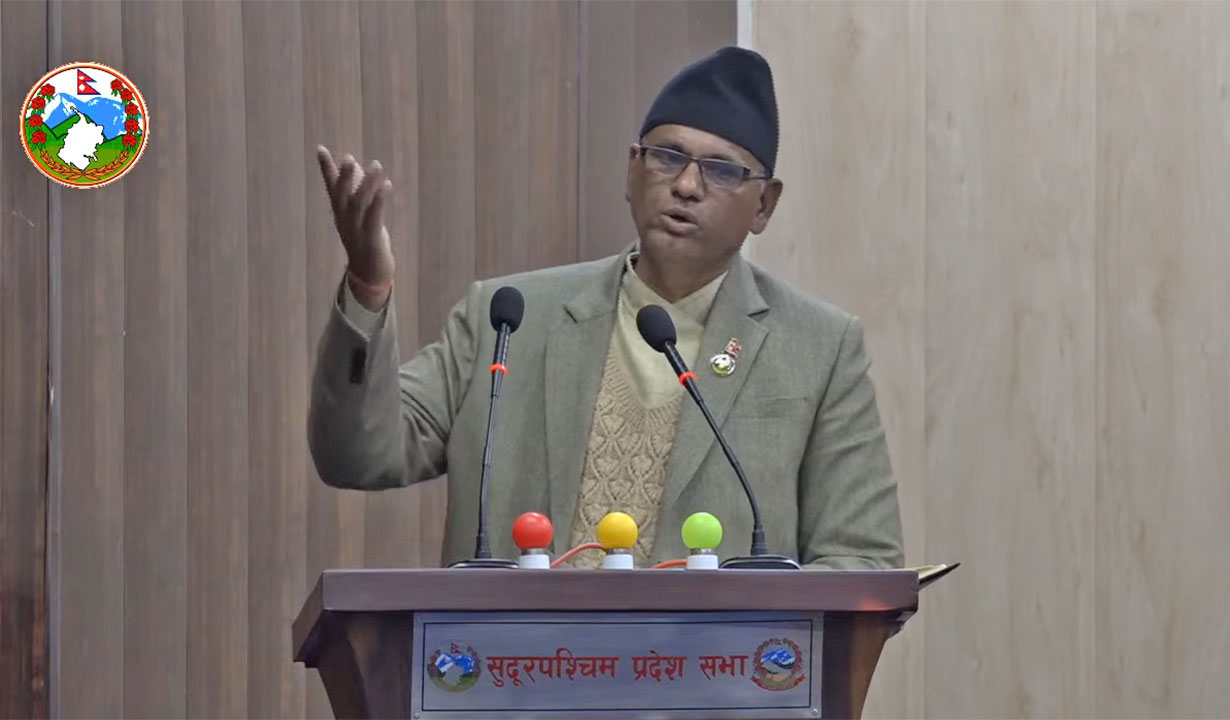
March 22, Dhangadhi – Disputes over political appointments in the Communist Party of Nepal (UML) in the Sudurpaschim Province have escalated to the point where the parliamentary party leader may be replaced.

Rajendra Singh Rawal, leader of the parliamentary party, has been criticized by the UML Sudurpaschim Province Committee for making appointments, including to the hospital management committee, unilaterally and without consultation. The committee has communicated these concerns to the party’s central leadership.

“He has made political appointments within various government bodies without consulting the party committee. He has been recommending candidates on his own accord,” said UML provincial chair Krishna Prasad Jaishi. “We have sent a report on this matter to the party headquarters.”

Former Chief Minister Rawal has been accused of losing contact with the party. In response, the Krishna Pur Municipality Committee of the National Youth Union of Nepal in Kanchanpur organized a lockout at the parliamentary party office on Sunday, protesting his absence.

Participants in the lockout accused Rawal of acting unilaterally in political appointments, favoring individuals who obstructed candidates during the House of Representatives election, and ignoring repeated attempts to contact him.

Rawal’s Response

Rawal denied all allegations against him, stating there was no truth to the accusations. He clarified that so far, all appointments, such as those to the Mahakali Provincial Hospital’s management committee, were made based on party advice.

He emphasized that all recommendations were made after consultations with the provincial party chair and other leaders. “All appointments were recommended only after discussions, including with the provincial chairperson,” Rawal said. “It is unclear to me why they are spreading misleading claims now.”

He also noted that due to some health issues, he had not been able to maintain regular contact with party leaders.

Rawal added that attempts were being made to stir controversy when he recommended Jamuna Chand from Bajhang as chair of the Khaptad Tourism Development Committee. “Is it a mistake to recommend a woman for an executive role? These were suggestions made by them. The decision of the parliamentary party leader should also be respected,” he said, “It’s not my duty to merely follow whatever the provincial chair says.”

According to one party leader, questions over Rawal’s leadership style have prompted provincial leaders and lawmakers to actively consider replacing the parliamentary party leader. However, those aspiring to the position await guidance from the central party leadership.

“The party is facing problems due to his leadership style. Everyone agrees that it is necessary to seek alternatives and move forward,” said a lawmaker. “The province has already sent a formal note to the party headquarters. We are waiting to see what kind of directives come from the center.”

Three Leaders Aspiring for Leadership

The UML has 11 members in the Sudurpaschim Provincial Assembly. Among them, Rawal is the parliamentary party leader and Santosh Sharma Thapa serves as deputy leader.

Koilidevi Chaudhary holds the post of deputy speaker. Chakrabhadur Malla, elected from Doti, is the chief secretary, while Janaki Kunwar from Baitadi is the assistant secretary.

There are three ministers from UML: Surendra Bahadur Pal, Minister for Physical Infrastructure Development; Birbahadur Thapa, Minister for Land Management, Agriculture and Cooperatives; and Hira Parki, Minister for Internal Affairs and Law. Nirmala Saud serves as State Minister for Physical Infrastructure Development. Dharma Raj Pathak is chair of the Social Development Committee.

According to sources, three key leaders aspiring for the parliamentary party leader position are deputy leader Santosh Sharma Thapa, chief secretary Chakrabhadur Malla, and Social Development Committee chair Dharma Raj Pathak.

“All three are contesting the leadership position and discussing it in their own ways. However, personal ambition alone is not enough,” said one lawmaker. “The opinions, advice, and directives from the central party and provincial committee are also essential.”

Thapa considers it natural to vie for the leadership role since he is currently the deputy leader. Central member Malla is actively working to build support for his candidacy.

Dharma Raj Pathak claims that as a younger leader, he has the capacity to lead the parliamentary party effectively.

Gandaki Provincial Assembly Issues Warning to New Government: Acknowledge Public Verdict, Resist Actions Undermining Provincial Authority

News Summary

  • In the February 21 elections, the Rastriya Swatantra Party (Raswapa) won 15 seats in Gandaki Province, initiating the ninth session of the Provincial Assembly.
  • Leaders from the Nepali Congress, UML, and Maoist parties described the election results as unexpected and committed to thorough internal reflection.
  • UML leader Haribahadur Chuman acknowledged shortcomings in practicing democracy properly and highlighted issues such as corruption and weaknesses in administrative restructuring.

March 21, Pokhara – Following the extraordinary public mandate in the February 21 elections, the ninth session of Gandaki Province’s Provincial Assembly commenced on Sunday as the Rastriya Swatantra Party (Raswapa) prepares to form the federal government.

While discussions continue around the federal government formation under Balendra Shah, established parties in Gandaki are conducting their own internal reviews and analyzing the election outcomes.

The Nepali Congress and the Communist Party of Nepal (UML), both formed after the Jana Andolan movement, are set to be in the incoming government, as are the Maoist party (formerly CPN-Maoist) and the Rastriya Prajatantra Party (RPP), both with legislative representation in the provincial assembly.

In the elections, Congress secured two seats from Mustang and Manang districts, while UML, Maoist, RPP and other parties won no seats there. An independent candidate, Mahavir Pun, won in Myagdi with support from Raswapa, which won 15 seats by a wide margin.

There has been keen interest in how these parties will assess the current situation in the Provincial Assembly, their views on the new federal government, and their interpretation of the election results.

On the first day of the ninth session held Sunday, leaders from the three major parties shared their perspectives. Leaders of Congress, UML, and Maoist parties accepted the clear message from the electorate and pledged serious self-reflection, though some still find it difficult to fully accept the election outcomes.

They described the results as unexpected and raised various concerns, also warning of strong resistance against any attempts to undermine provincial rights.

Former Chief Minister and UML General Secretary Khagaraj Adhikari expressed objections to the federal government’s criticism of lawmakers’ support for lawmaking in the assembly.

Adhikari stated that the election demonstrated that mere development projects are insufficient, and a more profound review is necessary to understand how such results occurred.

He accused the Supreme Court under former Chief Justice Sushila Karki of initiating disrespect toward the province, a practice purportedly continued by the current government.

“We do not accept a situation where the province is compelled to follow orders and directives blindly. Should such pressure recur, we will strongly protest,” Adhikari remarked.

He also highlighted pride in the achievements of provincial and local governments, emphasizing their significant role during the COVID-19 pandemic challenges.

Adhikari stressed the need to respect the people’s verdict but underscored that attacks on the province will not be tolerated, while also voicing concerns about the nation’s survival.

Congress leader Mahendra Dhwaj Jisi stated that the party is ready to correct its mistakes and that programs from the Jana Andolan movement through the elections were implemented as planned.

“When a nation itself is fragile, where is the scope for reform? We are neither despondent nor overly enthusiastic. It seems we must look back and resolve to amend our errors,” Jisi asserted.

He compared the events to the September 24 incident, calling it a prelude to the February 21 election, which in turn is a repeat of that prelude, adding, “Now it is time to watch the full movie unfold.”

CPN (UML) leader Haribahadur Chuman conducted a serious review of the weaknesses within the old parties and his own. He acknowledged that all parties faced tests from the people’s demands, with the older parties being rejected.

Chuman said, “We cannot blame others; the problem lies within us. We have failed to practice democracy properly.”

He noted that populism is a product of democracy itself and called for acknowledging each party’s role in its rise. He admitted that work at the federal, provincial, and local levels has been weak and has failed to meet public expectations.

He pointed out the increase in corruption and inefficiency in administrative restructuring. He warned that problems in administration may intensify due to issues with the personnel system.

अख्तियारको दाबी- प्राधिकरणकै रकम खर्चेर परामर्शदाता नियुक्त गर्नु गलत भयो

Commission Alleges Misuse of Authority Funds in Hiring Consultants for Pokhara Airport Project

News Summary

Editorially reviewed.

  • The Commission for the Investigation of Abuse of Authority (CIAA) has filed charges against 23 individuals, including former Secretary Kedar Bahadur Adhikari, for alleged corruption in the Pokhara Airport construction project.
  • The case includes former directors of the Nepal Civil Aviation Authority and executives of contractor companies.
  • CIAA alleges a loss of NPR 461.5 million and irregularities in the project’s budget.

March 21, Kathmandu – The Commission for the Investigation of Abuse of Authority (CIAA) has filed a case against 23 individuals, including former Secretary Kedar Bahadur Adhikari, on charges of corruption in the construction of the Pokhara Airport.

The charges have been brought against former directors of the Nepal Civil Aviation Authority (NCAA) Sanjiv Gautam, Rajan Pokhrel, Pradeep Adhikari, Deputy Director Mahendra Singh Rawal, Director Baburam Paudel, former Deputy Director Dhruv Das Bochhibhoya (and his wife Yamuna Devi Shrestha), and Deputy Director Praveen Neupane.

Additionally, the case includes former managers of the authority and key figures in the national pride project: Chandmaya Shrestha, Binesh Munkarmi, Himjyoti Thapa, Deputy Manager Pramod Nepal, Senior Accounts Officer Narendra Raj Sainju, Deputy Manager Sabin Phuyal, and Officer Rajaram Chaudhary.

The CIAA has also filed charges against consultant team leader Yambahadur Adhikari, ERMC chief Uddhavraj Chaulagain, architect Shobendraraj Joshi, Slate Consultants’ Pramod Dawadi, consulting company ARMC, and the contractor China’s CAMC company, including Project Manager Yang Zhigang, key representative Wang Bo, and the company itself.

In total, the CIAA has filed the case against 23 individuals, accusing them of causing a financial loss of NPR 461.5 million.

According to the CIAA, the contract agreement allocated USD 280,000 for the design review and construction supervision consultant services.

However, the commission claims that without utilizing this allocated amount, an additional NPR 503.4 million was improperly spent from a separate budget of the Civil Aviation Authority.

The CIAA further argues that issuing a letter of intent on September 7, 2016 (Bhadra 22, 2073), under these circumstances was itself improper. The commission stated, ‘The decision to appoint the consultants and the initiation of the procurement process were found to be conducted in bad faith.’

Instead of using the contract-allocated budget, the commission asserts that the costs were artificially inflated, resulting in duplicate expenditures from the authority’s assets.

Subsequently, the project signed an agreement worth NPR 428.9 million with ERMC Slate JV Company, with payments totaling NPR 406.8 million made.

Although the contractor was supposed to appoint the consultant as per the agreement, appointing the consultant using the authority’s budget was deemed inappropriate by the CIAA.

The commission has demanded full accountability from Secretary Adhikari while assigning varying degrees of responsibility to others involved.

Their investigation revealed that the cost estimates were inflated and that consultant fees should have been covered from the contract amount rather than direct payments from the authority.

It is also claimed that cost estimates prepared for using internal budget funds included an excess of NPR 195.2 million, with active involvement from then-director Pradeep Adhikari.

Despite funds for consultancy services, machines and equipment were reportedly purchased in bad faith, and disbursements began before loan agreements were finalized, according to the CIAA.

Five Arrested for Fraudulent Promises of Foreign Employment

News Summary

  • Police have arrested five individuals from the Kathmandu Valley on charges of defrauding people by enticing them with lucrative foreign employment opportunities.
  • The accused are Arjun Bahadur Paudel, Dilli Ram Bhujel, Uma Gurung, Ashish Mahat, and Sangita Shrestha.
  • They allegedly took millions of rupees from victims by promising to send them abroad but then went out of contact.

March 21, Kathmandu – Police have arrested five individuals on charges of defrauding victims by promising high-paying foreign employment but failing to deliver.

The accused include 36-year-old Arjun Bahadur Paudel from Bardiya residing in Kirtipur Municipality–7, Kathmandu; 46-year-old Dilli Ram Bhujel from Sarlahi currently living in Mahalaxmi Municipality–7, Lalitpur; 43-year-old Uma Gurung from Kathmandu Metropolitan City–16; 33-year-old Ashish Mahat from Kaski residing in Lalitpur Metropolitan City–7; and 35-year-old Sangita Shrestha from Ramechhap living in Madhyapur Thimi Municipality–4, Bhaktapur.

Specifically, Arjun was accused of taking NPR 330,000 from one victim under the pretense of sending them to Croatia; Dilli defrauded one victim of NPR 299,000 with a promise to send them to the Maldives; Uma took NPR 200,000 from one victim for a job in the United Kingdom; Ashish accepted NPR 2.3 million from a victim for employment in the UK; and Sangita collected NPR 368,000 from a victim promising to send them to Portugal. All subsequently went out of contact, according to the complaints lodged.

Based on these complaints, police teams from the Kathmandu Valley Crime Investigation Office in Teku arrested Uma and Sangita from Kathmandu Metropolitan City–12, Ashish from Kathmandu Metropolitan City–10 on Sunday. Arjun was arrested from Kathmandu Metropolitan City–4 and Dilli from Kathmandu Metropolitan City–9 on Friday. The central police news office provided this information.

The suspects have been handed over to the Department of Foreign Employment in Tahachal, Kathmandu for further investigation and legal proceedings.

Nepal Election 2082: Two Paths to Prime Minister Appointment and the Process for Forming a New Government

Balen Shah

Image source, Reuters

Even after proportional vote counting has concluded, it appears that forming the new government will take more than a week.

The President’s Office has stated that the call to form a government will only be made after receiving the final election result report from the Election Commission. An assistant spokesperson of the commission estimates that preparing this report may take another week.

“Once the commission submits the report, there are two possible approaches: either convene parliament and proceed with the parliamentary process, or appoint the Prime Minister directly,” said Election Commission Assistant Spokesperson Kul Bahadur GC. “How to proceed is a matter for the President to decide. Once the report is submitted, the commission’s role concludes.”

Patriva Rawal, co-spokesperson of the Rastriya Swatantra Party (Raswapa), has affirmed that the party is clear about senior leader Balendra Shah (Balen) becoming Prime Minister; however, the procedural aspects regarding this are still pending internal party decisions.

According to the current vote count, Raswapa has secured a clear majority, winning 125 seats through the direct electoral system and also leading in proportional vote counting.

‘रविमाथि संगठित अपराध र सम्पत्ति शुद्धीकरणको अभियोगले न्यायको ढोका बन्द हुन्छ’

‘Charges of Organized Crime and Money Laundering Against Ravi Close Doors to Justice’

March 21, Kathmandu – Attorney General Sabita Bhandari Baral has concluded that the addition of charges related to organized crime and money laundering against National Independent Party Chairman Ravi Lamichhane, apart from cooperative fraud, has made it increasingly difficult for victims to obtain justice.

This finding was detailed in a file submitted as a response to a writ petition filed at the Supreme Court against the decision to amend the case involving Rastriya Swatantra Party Chairman Ravi Lamichhane.

Attorney General Bhandari emphasized that the inclusion of the organized crime and money laundering charges obstructs victims’ ability to recover their funds, and therefore recommended amending the charges to facilitate restitution.

The full text of the Attorney General’s decision states: ‘In order to preserve the possibility of settlements for those desiring to recover the depositors’ (victims’) funds, it appears necessary to file a petition for charge amendment in accordance with Section 36 of the Criminal Procedure Code, 2074.’

‘Issue Raised by Parliamentary Committee’

Documents and comments submitted from District Government Attorney Offices in Kathmandu, Rupandehi, Kaski, and others concerning cases for disposal indicate involvement of the Attorney General and Deputy Attorney General in the review process. Below are the key details presented:

1. Ravi Lamichhane filed petitions related to ongoing court cases against cooperative directors in various courts concerning embezzlement and misappropriation of cooperative funds.

Requests were made to this office on the dates of Mangsir 23, Poush 20, and Poush 23, 2082 BS, to register cases against him on charges of cooperative fraud, organized crime, and money laundering motivated by political retaliation.

Reviewing the comments and associated documents related to the petitions, the following facts emerge—

a) There have been complaints lodged at various times regarding the misappropriation of savings held in cooperative institutions.

Subsequently, a Special Parliamentary Investigation Committee was formed in 2081 BS, under the Federal Parliament, to identify cooperative problems, suggest remedies, and recommend action against individuals involved in embezzlement.

The committee conducted a detailed study concerning the transfer of funds from various cooperatives to companies and submitted an investigation report in 2081 BS.

The report states, ‘Although no documents confirm Ravi Lamichhane’s involvement in the process of funds moving from cooperatives to Gorkha Media Pvt. Ltd., his participation in the operational expenditure process of this media company is evident’ (Parliamentary Special Investigation Committee Report, page 449).

The Federal Parliament Secretariat forwarded the report to the Government of Nepal, which in turn submitted recommendations concerning the Home Ministry’s authority to implement the parliamentary committee’s suggestions based on Cabinet decisions.

b) Consistent with these decisions, the Home Ministry directed the Nepal Police Headquarters to take necessary action.

This letter includes instructions to implement the recommendations of the parliamentary committee’s report.

The Police Headquarters corresponded with relevant districts to enforce the suggestions, and investigations have proceeded accordingly.

c) Based on the parliamentary and local investigation reports, the Kaski District Court filed a case on Ashoj 18, 2081 BS, accusing misuse of savers’ funds.

Additional Name Added Through Fraudulent Complaint

Following the initial charges, as early investigations failed to yield evidence, a subsequent complaint was filed adding complainant Ravi Lamichhane’s name. Based on both the parliamentary report and the new complaint, additional illegal charges were added without further investigation.

On Poush 7, 2081 BS, supplementary charges of cooperative fraud, organized crime, and money laundering were included, leading to a supplementary indictment.

d) On Poush 21, 2081 BS, a charge was filed in Kathmandu District Court related to the misuse of funds of depositors from Swarnalaxmi Multipurpose Cooperative Institution.

e) On Baishakh 3, 2081 BS, Rupandehi District Court filed charges related to the embezzlement of savers’ funds from Supreme Savings and Credit Cooperative Institution.

In the above-mentioned cooperative fraud cases, additional charges of organized crime and money laundering were also filed through supplementary indictments.

f) On Magh 22, 2081 BS, a case was registered in Chitwan District Court for fraud involving misuse of depositor funds of Sahara Chitwan Multipurpose Cooperative Ltd., with the complainant also named as a defendant.

g) On Ashoj 23, 2080 BS, a case was filed in Parsa District Court accusing misuse of funds from Sano Paila Savings and Credit Cooperative Ltd.

Subsequently, on Falgun 2, 2080 BS, an organized crime charge was added.

On Jestha 29, 2082 BS, individuals who were neither committee members nor cooperative affiliates were also named as defendants, with added charges of cooperative fraud and organized crime, resulting in a supplementary indictment.

Complaint from Narayan Bahadur Pahrai

Overall, cases center on misappropriation of savers’ funds in these cooperatives.

2) On Poush 3, 2082 BS, Narayan Bahadur Pahrai, a depositor from Supreme Cooperative in Rupandehi, submitted a notarized self-declaration with a petition stating that his original complaint was filed differently and challenged the manner in which his case was registered, but the court refused to register it, sending the documents via mail.

His letter states –

‘I have not filed any complaint outside the cooperative. Ravi Lamichhane did not mislead me to save money in the cooperative. It is inappropriate to file a complaint against those not responsible for the misuse of my savings. The complaint registered against me is entirely fabricated. My original complaint dates to Ashoj 4, 2081 BS.’

This self-declaration was notarized and submitted to the investigating officer and suggests conditions that differ from the prosecution’s narrative. The complainant’s self-declaration merits serious consideration.

Priority on Recovery of Savings

3) The initial cases all originated from the Special Parliamentary Investigation Committee, which clarified that Ravi Lamichhane had no involvement.

The committee recommended holding all concerned parties legally accountable for illegally taking or spending cooperative funds.

Upon the proper transfer of cooperative funds to companies, it was advised that these companies be regulated under the Company Act.

Cooperative victims and depositors have met with the Attorney General’s office delegations, appealing, ‘Regardless of who is implicated, our savings must be recovered.’

The key issue is that savers have been unable to recover their funds, which have been misused. It is the state’s paramount duty to protect the interests and funds of these depositors.

Depositors hoping to recover their money now file cases and complaints as their last resort.

Justice Barriers Evident

a) Except in Chitwan District Court, other courts have initially filed charges only for cooperative fraud but later added charges of organized crime and money laundering.

Section 131(a) of the Cooperative Act, 2074 (amended 2081), allows settlement for cooperative fraud but not for organized crime or money laundering offenses.

Savers, deprived of their funds, are compelled to resort to complaints as a final measure.

It is the state’s critical responsibility to ensure the swift return of savings earned through the labor of low-income earners.

‘Based on available information, when prosecution adds charges beyond cooperative fraud, such as organized crime and money laundering, it increasingly closes the door to justice for victims.’

If convicted for organized crime and money laundering, penalties including fines and asset confiscations are possible, which conflicts with the victims’ interests.

If deposited funds become indirectly associated with money laundering, they risk confiscation and loss.

b) Cooperative directors or involved parties can recover savers’ funds by claiming fake loans or opening fraudulent accounts.

Similarly, funds transferred from cooperatives to companies can be recovered by liquidating company assets.

However, if charges of organized crime and money laundering remain, even this legal recourse is blocked, contrary to victims’ expectations.

There is a legal justification to keep open pathways for settlements to resolve these issues.

c) The conclusions and recommendations of the Special Parliamentary Investigation Committee serve as the basis of these cases.

They highlight the need for medical and legal measures to restore savers’ funds.

‘Settlement Path Must Remain Open’

Maintaining charges of organized crime and money laundering likely closes off settlement avenues for cooperative savers.

The parliamentary committee stresses that savings must be refunded as swiftly as possible.

Therefore, although legal proceedings continue, arrangements should be made under the amended law to enable deposit refunds.

d) To achieve this objective, it is necessary to amend charges following Section 36 of the Criminal Procedure Code, 2074, ensuring justice for victims.

It is recommended that in initial, additional, and supplementary indictments, charges of organized crime and money laundering be removed, preserving the possibility of deposit refunds by amending accusations accordingly.

Decision to Withdraw Organized Crime and Money Laundering Charges

4) Based on the aforementioned factual and legal grounds, the following decision has been made:

a) Petitioner Ravi Lamichhane claims political retaliation via charges of cooperative fraud, organized crime, and money laundering and has requested case dismissal.

Under Section 36 of the Criminal Procedure Code, amendment of charges is warranted to prioritize the interests of victim savers.

In courts of Kaski, Kathmandu, Rupandehi, Parsa, and Chitwan districts, cooperative fraud charges will remain, but organized crime and money laundering charges will be removed through amendments.

Accordingly, notices will be sent to the respective District Government Attorney Offices to proceed further.

Poush 30, 2082 BS

Sabita Bhandari

Attorney General

……………………

Similarly, on Magh 2, 2082 BS, the phrase ‘claimed under the right of the individual’ was removed from the charge of money laundering in case number 4(K) item 11.

Magh 2, 2082 BS

Sabita Bhandari

Attorney General

(Edited excerpt of the Attorney General’s Office submission to the Supreme Court)

84-Year-Old Woman Dies from Electric Shock in Rautahat

News Summary

Prepared after editorial review.

  • An 84-year-old woman, Kanchi Devi Chaudhary, died of electric shock in Basantpur, Chandrapur Municipality-8, Rautahat.
  • She passed away while undergoing treatment at Chapur Hospital, according to Nepal Police.
  • Authorities are conducting necessary investigations into the incident, the police stated.

March 21, Rautahat – An electric shock claimed the life of an 84-year-old woman in Basantpur, Chandrapur Municipality-8, Rautahat.

Kanchi Devi Chaudhary, originally from Manharwa, Gujara Municipality-1, suffered a fatal electric shock on Sunday afternoon, according to the Central News Desk of Nepal Police.

She was seriously injured after coming into contact with an electric motor connected to a water pump and died while receiving treatment at Chapur Hospital in Chapur.

The police have confirmed that a necessary investigation into the incident is underway.

Nepal Election 2082: Who Will Select Ministers in Balen’s Government and What Will the Cabinet Look Like?

Ravi Lamichhane and Balen Shah

Image source, Reuters

Caption, During the election, Rastriya Swatantra Party presented Balendra Shah as the future prime ministerial candidate

With the proportional representation vote count now completed, public interest is focusing on when the new government will be formed.

Leaders of the Rastriya Swatantra Party (RSP) have announced, based on results from both the direct and proportional electoral systems, that a new government will be led by senior leader Balendra Shah (Balen). During the election, the party had unveiled him as their prospective prime minister candidate.

An RSP leader has revealed that after selecting proportional representation members of parliament (MPs), discussions on forming the government will advance further.

The Election Commission is preparing to promptly notify parties about their proportional representation MPs. Commissioner Sagun Shamsher Jabara stated, “We are aiming to send letters as early as today, if possible.”

Jabara also mentioned that parties will likely be given two days to select their proportional MPs, with the final election report planned to be submitted to the President by Chaitra 5 (March 18, 2026).

Times International Secures Fifth Consecutive Win in HJNBL 2026

Times International Club achieved their fifth consecutive victory by defeating Royal in the Himalayan Java National Basketball League 2026. The league features 8 teams, with the top four qualifying for the playoffs. The champion team will receive a cash prize of NPR 400,000. The Nepal Basketball Association (NEBA) also announced that an award will be given to the Most Valuable Player (MVP) of the tournament. Kathmandu, 7 Chaitra.

In the Himalayan Java National Basketball League (HJNBL) 2026, Times International claimed their fifth win. In the Saturday match held at the Dashrath Rangashala Covered Hall in Tripureshwor, Times defeated Royals 95-61. This marks Times’ fifth consecutive victory after an initial loss to Golden Gate in the opening game. With six games played, Times has accumulated 11 points. Royals suffered their fifth defeat and hold 7 points from six games.

Times led in all four quarters, posting scores of 29-17, 17-14, 25-18, and 24-12 respectively. Times captain Sudih Pradhan was the top scorer with 24 points. In Friday night’s match, Army defeated Playbox Arena 102-86. Organized by NEBA, this is the second edition of HJNBL featuring 8 teams. The league operates on a double round-robin format, with a total of 56 games scheduled.

After the league phase, the top four teams will progress to the playoffs. The playoffs begin with the first qualifier between the teams finishing first and second in the league, while the third and fourth-placed teams contest the eliminator. The loser of the first qualifier will face the winner of the eliminator in the second qualifier. The winners of the two qualifiers will then compete in the final. The champion will receive NPR 400,000, the runner-up NPR 200,000, and the third-place team NPR 100,000. Additionally, NEBA announced that the Most Valuable Player (MVP) will be awarded a special prize for outstanding performance.