Author: space4knews

New Standards to Screen Suspicious Details in IPO Issuance Process to Be Developed

News Summary

Prepared after review.

  • The Nepal Securities Board is set to develop a mechanism to verify the authenticity of financial statements to control weak financial conditions in the IPO process.
  • An investigation was conducted by the Commission for the Investigation of Abuse of Authority (CIAA) into allegations involving approval of IPOs for companies with weak financial conditions.
  • The Board has begun implementing standards to hold merchant bankers more accountable and review financial statements during IPO issuance.

March 21, Kathmandu – The Nepal Securities Board is planning to regulate tendencies among companies to present weak financial conditions in a stronger light during the initial public offering (IPO) process.

The Board has advanced plans to develop a new mechanism to verify the authenticity of the financial statements submitted by companies seeking to issue IPOs.

Criticism has been growing against the Board for allowing companies with weak financial conditions to proceed with IPO issuance.

There have been complaints filed with the Commission for the Investigation of Abuse of Authority (CIAA) against senior officials of the Securities Board for permitting IPOs for financially weak companies.

Following this, the Commission conducted inquiries with some Board officials based on these complaints. Previously, the Parliamentary Public Accounts Committee also raised concerns and directed the CIAA to investigate further.

In response to the criticism surrounding the IPO issuance process, the Board has initiated reforms in this area, an official from the Securities Board stated. Recently, companies with poor financial conditions seeking approval by manipulating their financial statements have increased, highlighting the need to verify the authenticity of information, the official added.

“Even organizations without regulatory bodies have applied to the Board for IPOs,” the official said. “We find it necessary to be confident about the actual condition of companies, which will help protect investors. To that end, we have deemed screening of companies necessary.”

The official noted that granting direct IPO approvals to companies without regulatory oversight has complicated coordination in addressing share-related issues.

“The Board is seeking to hold merchant bankers more accountable regarding the financial statements and documents prepared for the IPO process,” the official said. “We have started developing standards to review financial statements submitted for public issuance.”

Beyond just granting merchant bankers the business rights, the Board intends to make them responsible for investigating the companies’ conditions and future prospects, the official added.

In recent years, capital-raising through public issuance has notably increased in Nepal’s capital market. Banks, financial institutions, insurance companies, and hydropower companies are active in primary and secondary markets.

There is also a significant number of companies from other sectors that have registered securities and approached the Board to issue shares via IPOs.

The Board has pointed out that when companies without direct regulatory bodies request IPO approval, risks arise related to their business continuity, corporate governance, financial transparency, and compliance with laws and regulations.

As the securities law lacks clear provisions for withdrawing or rejecting IPO applications, the Board has begun developing transparency and investor protection standards on this matter, the official said.

The Board concluded that since issues not covered in audits must be considered before granting IPO permissions, there is a need to establish standards addressing these points.

If any discrepancies are found in audit reports, the financial impact caused by these must also be addressed, the official stated. Standards should be introduced to regulate and control the financial statements of institutions under the Board to avoid complaints from constitutional bodies, regulators, or the public.

Standards are also necessary to analyze project operational capacity and associated risks mentioned in audited financial statements.

Officials assert that the Securities Board must establish a specific mechanism to analyze the financial status of companies without direct regulatory oversight.

ANFA Issues Firm Response to RAKHEP’s Attempt to Postpone Election

News Summary

Editorial overview.

  • The All Nepal Football Association (ANFA) has rejected the directive from the National Sports Council (RAKHEP) to postpone its election, issuing a firm reply to hold elections on Chaitra 13 (March 26).
  • ANFA affirmed that it has secured necessary coordination and approval from RAKHEP and maintains full authority to conduct elections in accordance with its statutes.
  • ANFA has also requested RAKHEP’s cooperation to facilitate a smooth election process on Chaitra 13, after consulting with FIFA and the Asian Football Confederation (AFC).

March 23, Kathmandu – The All Nepal Football Association (ANFA) has firmly rejected the National Sports Council’s (RAKHEP) order to postpone the upcoming election, clearly stating its intention to hold the election on Chaitra 13 (March 26) through an official response.

After RAKHEP instructed the postponement citing lack of approval for the election, ANFA issued its official reply asserting a clear stance against the directive.

ANFA refuted allegations that it announced the election schedule without proper coordination with RAKHEP, declaring such accusations baseless.

The association explained that it provided full prior information to RAKHEP and has obtained the necessary approvals. Earlier, general assembly and election approvals had already been secured from RAKHEP, with suggestions duly noted.

ANFA underscored that as an autonomous body affiliated with FIFA and the Asian Football Confederation (AFC), it holds full rights to conduct elections as per its constitution. It also highlighted the risk of international sanctions if there is undue interference from third parties.

Maintaining a firm position to hold elections on the scheduled date, March 26, ANFA appealed for cooperation from RAKHEP to facilitate the process. The association further noted that the Patan High Court has not issued any order to halt ANFA’s election, negating any legal grounds to delay the polls.

ANFA also disclosed that it is consulting again with FIFA and AFC to resolve the ongoing controversy. The relevant international bodies have been informed about RAKHEP’s directive and ANFA expects to provide further updates once the directive letter is officially received by Monday.

Previously, last Thursday, RAKHEP had directed ANFA to postpone the election, citing lack of approval.

However, ANFA disregarded the directive and has formally called for its Ordinary Congress (general assembly).

RAKHEP has warned ANFA of suspension if the directive is ignored, but ANFA is proceeding with elections regardless. This situation threatens to worsen the state of Nepalese football.

If ANFA conducts the election and RAKHEP responds by suspending the current committee and forming an ad hoc committee, Nepalese football risks facing suspension from FIFA.

Balen Shah: What Are the Senior Leaders of Rastriya Swatantra Party, Prime Ministerial Contenders, Currently Doing?

Balen Shah

Photo credit, Reuters

Balen Shah, a senior leader of the Rastriya Swatantra Party (RSP) and prime ministerial candidate, has been widely sought after following his absence from an introductory and orientation program organized for newly elected party lawmakers. A senior leader of the party disclosed that Shah is currently “consulting with experts.”

The RSP, which recently secured a landslide victory in the House of Representatives election, is preparing to form the government under Shah’s leadership.

“He has been engaging extensively with experts and simultaneously discussing matters with party leaders,” said Kavindra Burlakoti, the party’s general secretary.

Shah was absent from the two-day orientation arranged for new lawmakers on Tuesday and Wednesday.

“The key point is that he is currently recuperating. His health condition is quite fragile. Alongside this, he appears to be deeply discussing how to work, which are the critical issues, and the main points to consider in terms of operations,” Burlakoti added.

KVIC Hounds Secure Fourth Consecutive Win in HJNBL 2026

KVIC Hounds defeated Playbox Arena 83-76 in HJNBL 2026, securing their fourth consecutive victory. Saurabh Shrestha was named Player of the Match after scoring 22 points. The Hounds climbed to third place with 11 points from 7 games.

In the Himalayan Java National Basketball League (HJNBL) 2026, KVIC Hounds achieved their fourth straight win. After losing their first three games, the Hounds bounced back strongly, beating Playbox Arena by a margin of 83-76. The thrilling match saw the Hounds take the lead in the first two quarters, while Playbox Arena fought back in the final two quarters.

The Hounds led by a wide margin of 49-33 at halftime, following a first quarter score of 31-19 and a second quarter of 18-14. Although Playbox Arena outscored them 22-18 in the third quarter and 21-16 in the fourth, it was not enough to stop the Hounds from clinching the victory. Saurabh Shrestha was the top scorer with 22 points and was awarded Player of the Match.

In another game held on Saturday night, Golden Gate defeated Kirtipur 87-72. Golden Gate has now collected 11 points from 6 games, placing them fourth in the standings. The second edition of HJNBL, organized by the Nepal Basketball Association (NEBA), features 8 competing teams. The top four teams at the end of the league phase will advance to the playoffs. The tournament winner will receive a cash prize of NPR 400,000, the runner-up will earn NPR 200,000, and the third-place team will get NPR 100,000.

नटिङहमसँग टोटनहमको हार, बढ्यो रेलिगेसनको खतरा

Tottenham Faces Increased Relegation Threat After Home Defeat to Nottingham Forest

March 22, Kathmandu – Tottenham Hotspur’s relegation risk has intensified following a home defeat to Nottingham Forest. On Sunday evening, Nottingham Forest secured a convincing 3-0 victory against Tottenham at their home ground. This loss left Tottenham with only 30 points from 31 games, dropping them to 17th place in the league standings. Currently, Tottenham is just one point above the relegation zone, putting their situation in a precarious position. Additionally, West Ham…

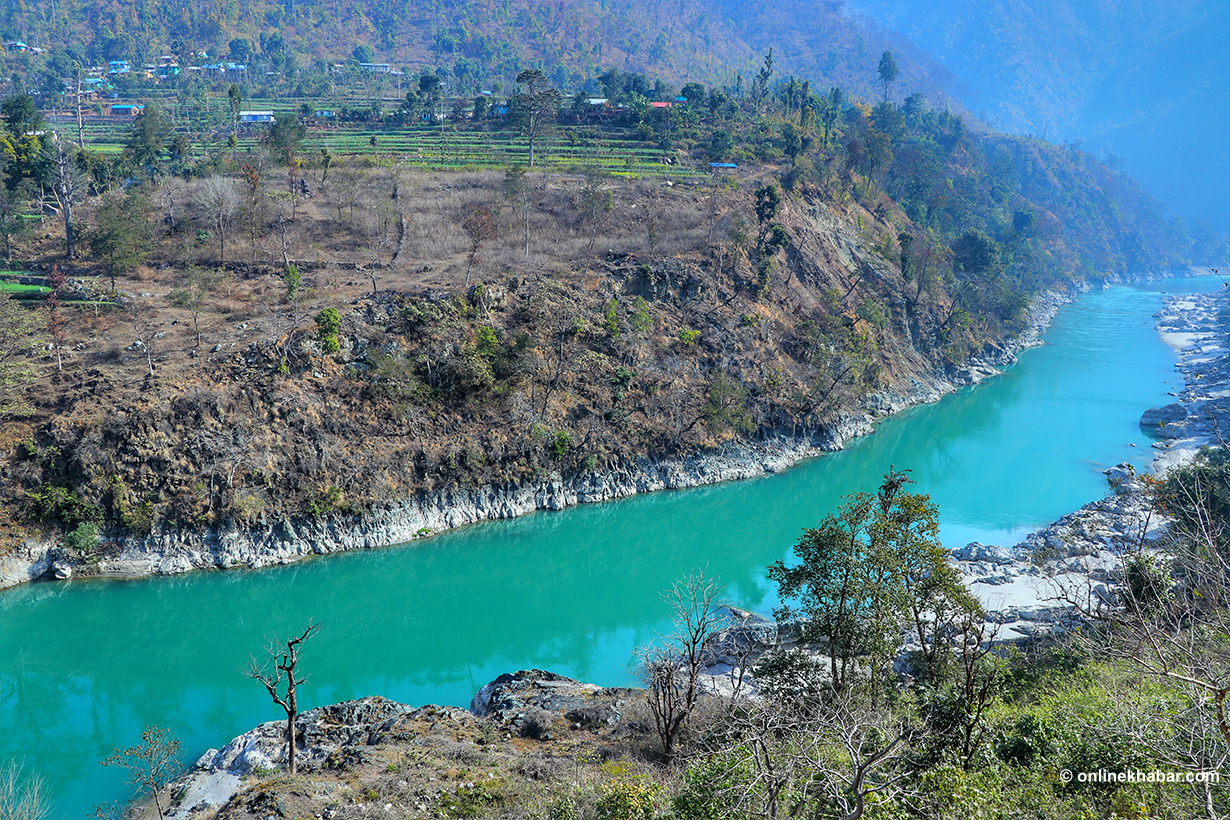
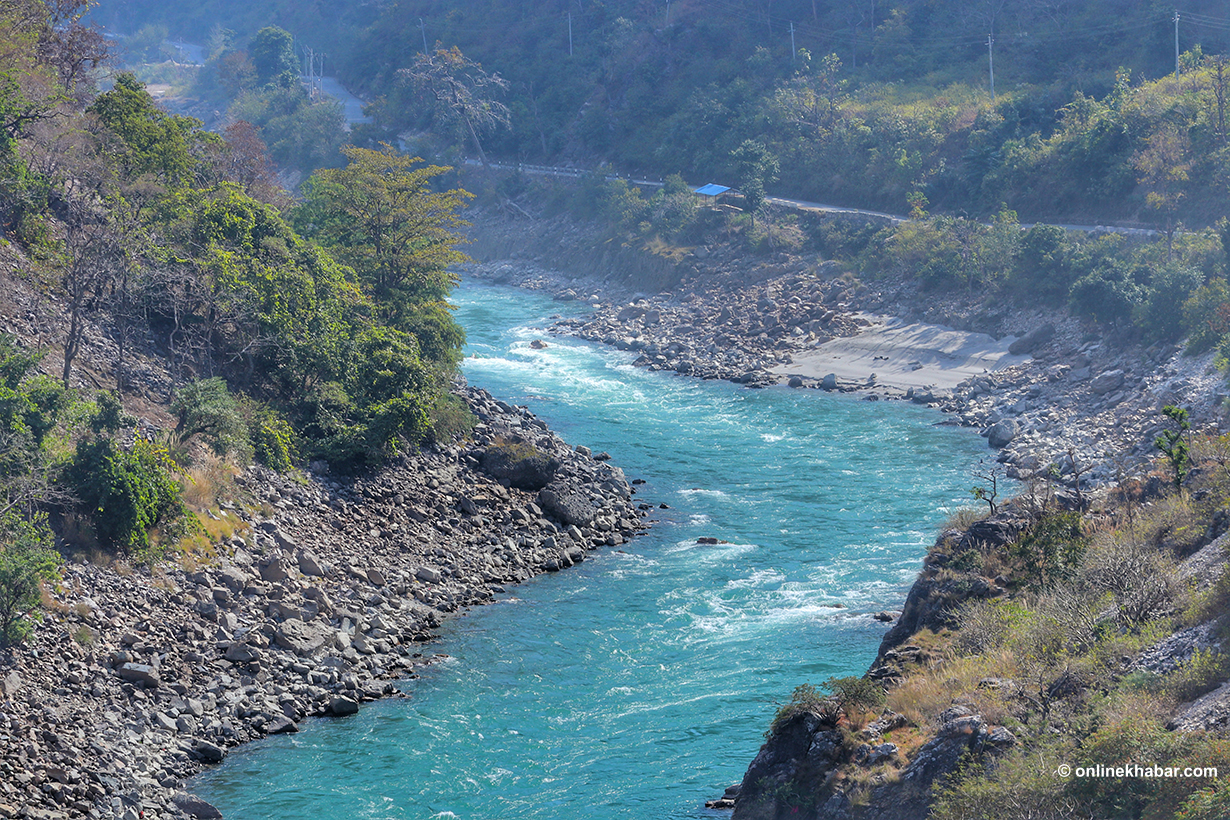
Bheri River and the Green Life (Photographs)


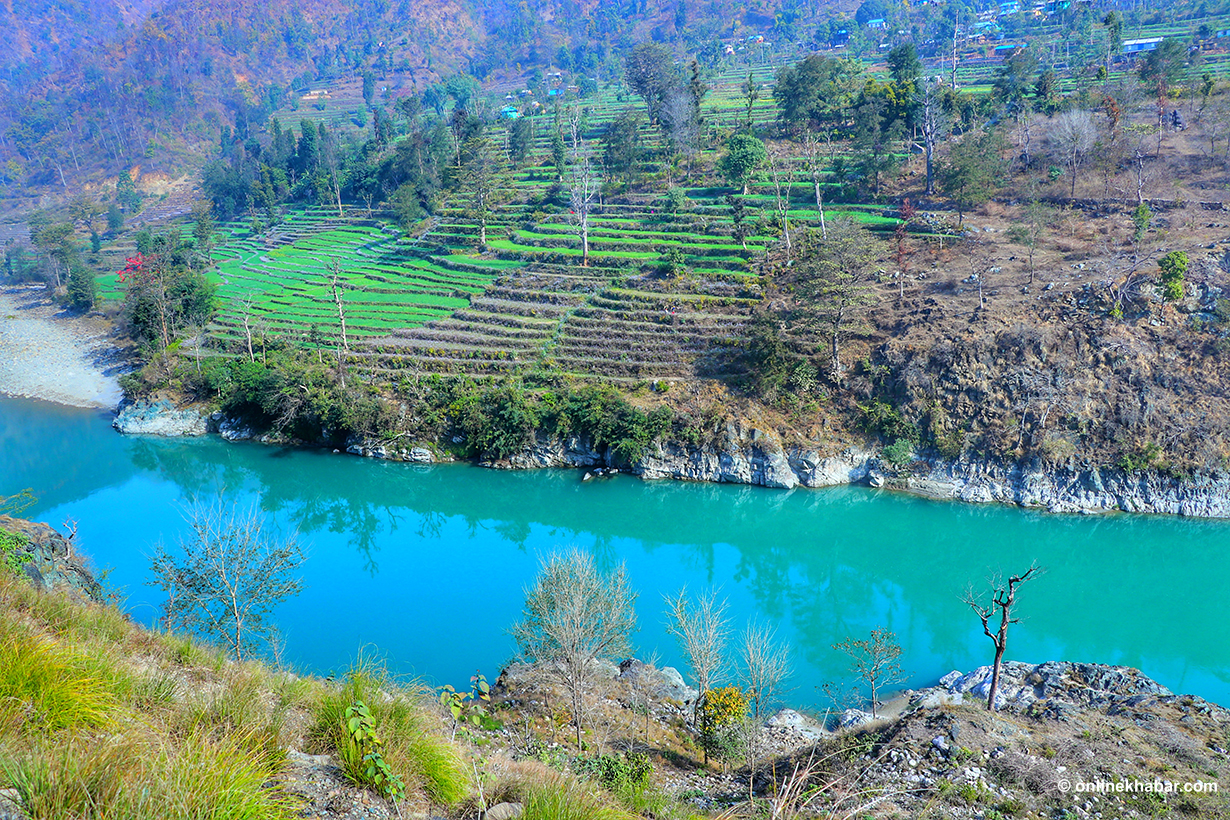
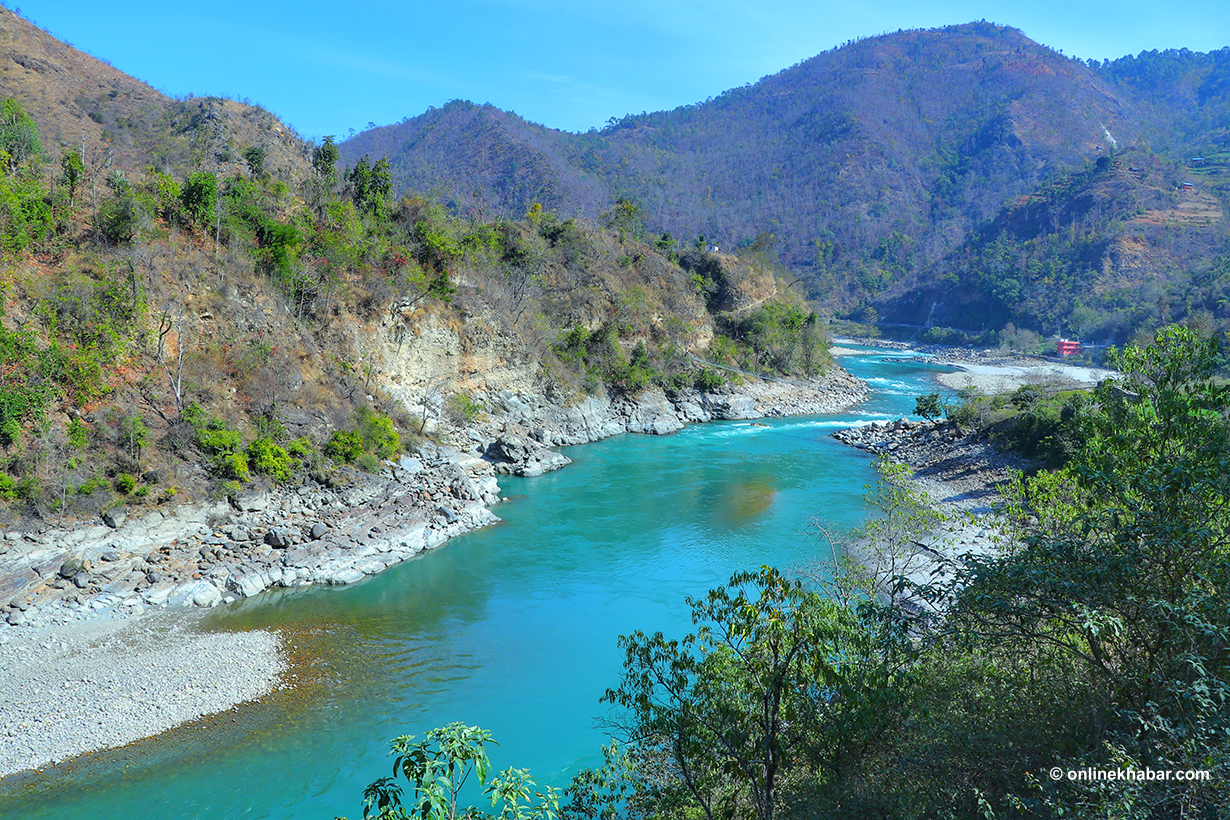
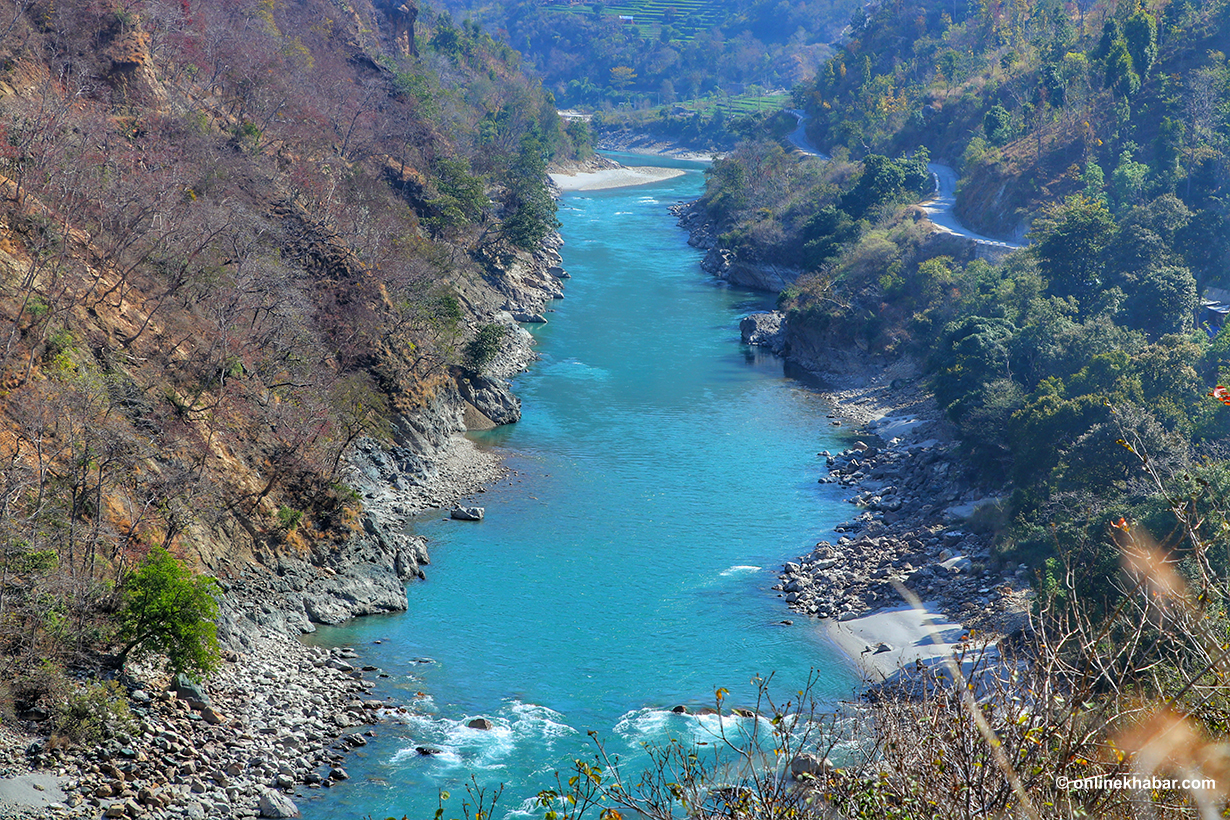
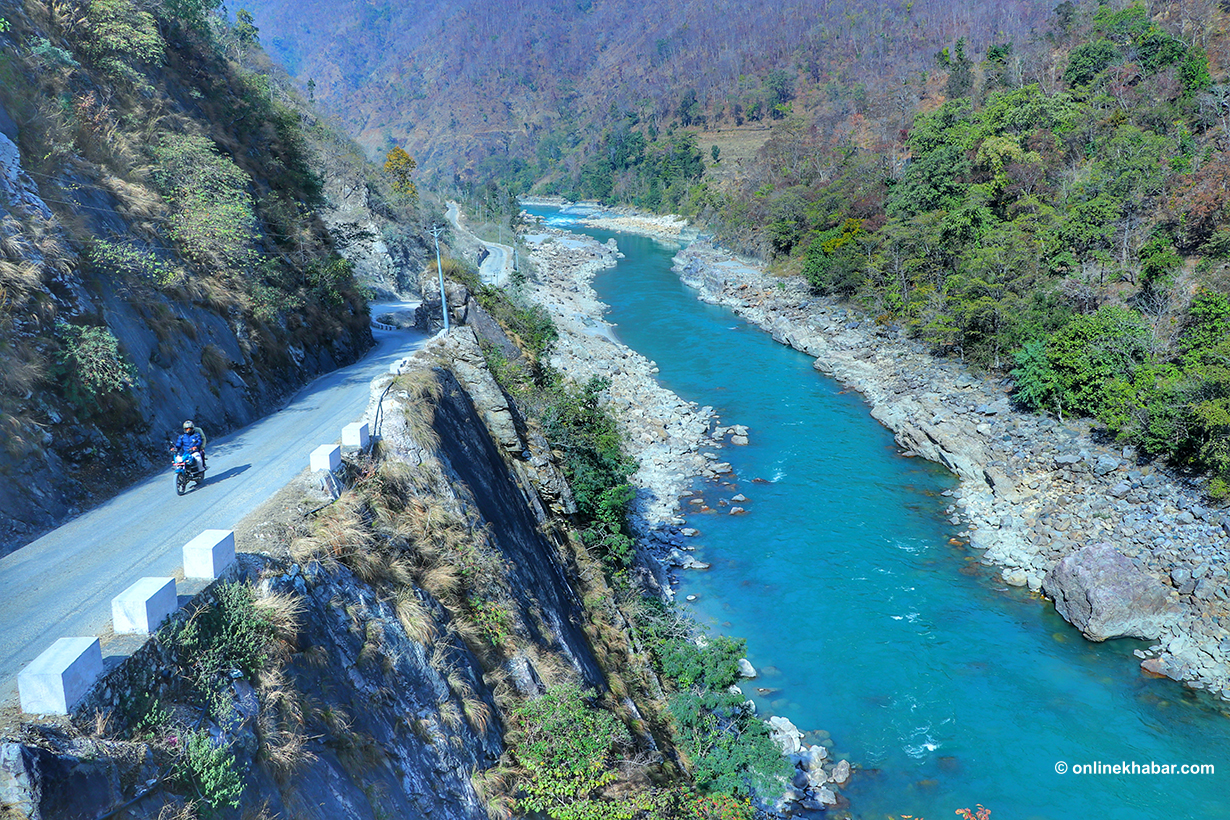
March 14, Salyan. The Bheri River, flowing through the picturesque landscapes of western Nepal, is a remarkable gift of nature. Its winding blue waters, sandy banks, and the lush green fields surrounding it are deeply intertwined with local life. Together, they portray a beautiful picture of rural livelihood and natural beauty.

A road along the riverbank connects remote mountain settlements, signaling development, while the fertile land reflects the daily lives of local farmers. The fields irrigated by the waters of the Bheri thrive with seasonal crops, turning green and abundant.

This combination of hills, river, and arable land forms the foundation of both natural splendor and livelihoods in the Bheri valley. Amidst the changing rural lives, the Bheri River continues to flow steadily in its own rhythm.

Originating in the Himalayan region of Karnali Province, the river traverses multiple districts before merging into the Karnali River.

On its journey, it touches diverse terrains in Dolpa, Jajarkot, Rukum West, Salyan, and Surkhet districts. The bond between the Bheri River and the settlements, farmlands, and natural surroundings in these areas is profoundly close.

The river’s water irrigates thousands of hectares of land, and it holds considerable potential for hydropower generation. Projects such as the Bheri Babai Diversion scheme aim to harness the river’s water for agriculture and energy production.

Naturally, the Bheri River is also known for its aesthetic appeal. The green mountain forests, flowing river, and nearby villages create stunning scenery. It offers promising opportunities for adventure tourism activities such as rafting.

Photographs captured along the border area of Banagad, Kupinde Municipality of Salyan and Gurbhakot Municipality of Surkhet:

We Came Second in the Election, but Our Policies and Principles Are Victorious: General Secretary Paudel

Summary

  • Nepali Congress General Secretary Pradeep Paudel stated that although the party came second in terms of seats, its policies and principles have won in the election.
  • Paudel emphasized that Chairman Gagan Thapa’s resignation should be rejected and viewed as an opportunity for organizational restructuring.
  • He highlighted that Nepali voters have chosen democratic liberalism, sending a clear message that the country must advance on the Congress path of social justice, rule of law, and a liberal economy.

March 21, Kathmandu – Nepali Congress General Secretary Pradeep Paudel acknowledged that while his party placed second in the number of seats in the election, it secured victory through its policies and principles.

Addressing the Central Working Committee meeting today, he made this comment.

“Though we may have come second in seat count, our policies and principles have emerged victorious,” Paudel said at the meeting. “I believe there has been a kind of ‘dimensional change’ in Nepal that will open a broad path to prosperity.”

He added, “The most positive aspect of this election is that Nepali voters have chosen ‘democratic liberalism.'”

Paudel further stated, “Our communist friends previously cooperated with us to preserve the system, but the public’s mandate now clearly signals the need for the country to move forward on the ‘Congress path’—social justice, rule of law, and a liberal economy.”

Regarding Chairman Gagan Thapa’s resignation, Paudel noted that it is not an appropriate option and called for a proposal to reject the resignation to be passed at the meeting.

“Rejecting this resignation is not merely a procedural decision but reflects our shared commitment to ‘collective leadership’ and ‘unity.’ Despite adverse conditions, the energy of the new leadership has kept the party in this honorable position,” Paudel said. “Otherwise, the party could have descended into the abyss of history. Therefore, this should be seen not as a disappointment but as an opportunity for organizational restructuring.”

United States Begins Oil Release from Strategic Petroleum Reserve

The United States has initiated the release of 42.5 million barrels of oil from its Strategic Petroleum Reserve (SPR) in the first phase, allocated for various companies. The U.S. Department of Energy began the process of distributing this initial 42.5 million barrels last Friday. The department expects the recipient companies to return a total of 55 million barrels later to replenish the reserve.

According to a statement published on the U.S. Department of Energy’s website, this initial release is part of a planned total withdrawal of 172 million barrels of crude oil. The statement confirms that the first phase of releasing 42.5 million barrels from the SPR has commenced. Previously, on March 12, the department announced a plan by the U.S. administration to release 172 million barrels of oil from the national strategic reserve over a period of 120 days.

Nepal Football: National League Suspended Following Immigration Department Notice

Foreign players participating in Nepal's men's national league football

Image source, ANFA

Image caption, Officials report that most foreign players currently active in Nepalese football lack work permits

The Department of Immigration issued a directive forbidding foreign players on tourist visas from participating in the men’s and women’s National League football competitions, leading the All Nepal Football Association (ANFA) to suspend both leagues currently ongoing in Kathmandu.

ANFA released a statement announcing the suspension of the leagues due to technical reasons until further notice.

Among the 17 clubs participating in the men’s National League, Chitlang Football Club reportedly has obtained the necessary work permits for their foreign players.

The men’s league had three matches scheduled for Thursday. Two matches — between Chitlang FC and Laligurans FC, and Tribhuvan Army Club versus Satdobato Youth Club — were played with foreign players participating. However, the evening fixture between Machhindra Club and APF was suspended.

Both women’s league matches scheduled for the day took place as planned.

Notice from the Immigration Department

Foreign players participating in Nepal's women's national league football

Image source, ANFA

Prior complaints were filed with the National Sports Council and the Immigration Department alleging that foreign players were fielded without proper work permits.

Following this, on March 14, the National Sports Council sent a letter to ANFA requesting a list of foreign players participating without work permits.

In a letter sent today to ANFA, Immigration Department Director Tikaram Dhakal stated that monitoring has begun immediately, and any foreign player found participating in sport contrary to visa terms without work permits will face immediate action, prompting ANFA to reconsider its position.

When contacted, ANFA spokesperson Suresh Shah cited technical issues as the reason for suspending the league.

However, he mentioned that ANFA has requested the National Sports Council to grant work permits for foreign players participating in both league competitions.

ANFA had previously corresponded with the Department of Immigration on January 12 regarding the National League and on February 11 concerning the ANFA Women’s League.

Challenging Work Permit Procedure

Foreign players of Chitlang Football Club

Image source, ANFA

Image caption, Chitlang Football Club, competing in the National League, has acquired work permits for their foreign players

Ram Joshi, a member of Bhagwati Club, participating in the National League, said the club has repeatedly sent correspondence to the Department of Immigration and the Ministry for work permit approvals, but the process has been delayed.

He told the news outlet, “We have repeatedly sent letters, but they have not granted the permits. When concerns arose about the lack of football matches and player unemployment, we invested millions to run the league. If the league stops, how will we recover those funds? Who will understand the club’s difficulties?”

An ANFA official stated that foreign players only participated following government agreement.

According to him, former Youth and Sports Minister Bablu Gupta, the Secretary of the Department of Immigration, and the Ministry of Foreign Affairs had agreed to initiate efforts to streamline the cumbersome work permit process to a more straightforward single-window system while allowing foreign players on three-month visas to compete in the meantime.

He said, “Under this arrangement, foreign players participated in the Nepal Premier League (NPL) without any obstacles.”

The complex work permit process has been repeatedly cited as a challenge by club officials, who mention it can take up to one and a half months to obtain approval.

Ram Joshi of Bhagwati Club added, “It takes one and a half months just moving the file from one desk to another. By then, matches might already be concluded.”

Severe Penalty Issued Previously

Previously, in 2022, during the Shahid Smarak A Division League, Thirstar Club was penalized by ANFA for fielding foreign players without work permits in a match against Jawalakhel Club; the result of the match was overturned.

Consequently, Thirstar Club was relegated.

However, ANFA has not applied such penalties this time.

Our news service is also available on YouTube. To subscribe and view published videos, please click here. You can also follow our content on Facebook, Instagram, and Twitter. Additionally, you can listen to our Nepali service program live at 8:45 PM from Monday to Friday on radio.

Army Defeats Police by 22 Runs in PM Cup Cricket Match

Match Summary

Created by AI. Editorial review completed.

  • In the PM Cup Men’s National Cricket Tournament, Tribhuvan Army Club defeated Nepal Police Club by 22 runs.
  • Chasing a target of 244 runs set by Army, Police were bowled out for 221 runs in 45.3 overs.
  • Basir Ahmad played a pivotal role, scoring 100 runs off 86 balls in Army’s victory.

March 21, Kathmandu – In the PM Cup Men’s National Cricket Tournament match held at the Lower Mulpani Cricket Ground, Tribhuvan Army Club emerged victorious over Nepal Police Club.

Due to a wet outfield, the match was reduced to 47 overs, and Army secured a 22-run win against Police. Army set a target of 244 runs, and Police were all out for 221 in 45.3 overs.

For Police, Rashid Khan was the highest scorer with 60 runs. Shankar Rana contributed 46, Arif Sheikh scored 38, and Karan KC added 23 runs.

From the Army side, Naren Saud took 3 wickets, Akash Chand claimed 2, while Kushal Malla, Shahab Alam, Basir Ahmad, and Pawan Karki each took 1 wicket.

Batting first after winning the toss, Army posted 243 runs for 8 wickets in 47 overs, helped significantly by Basir Ahmad’s century and Bhim Sarki’s half-century.

Basir scored 100 runs off 86 balls, including 8 fours and 2 sixes. Bhim scored 62 runs off 65 balls. Naren Saud remained unbeaten with 21 runs.

For Police, Sarvan Yadav bowled 6 overs for 24 runs and took 3 wickets. Rashid Khan and Sagar Dhakal took 2 wickets each, while Lalit Rajwanshi took 1 wicket.

Meanwhile, in a match held the same day at the Upper Mulpani Cricket Ground, APF Club started their campaign with a victory over Bagmati Province.

इन्टरनेट कम्पनीले काटेको बिल र तिरेको कर ठीक छ – Online Khabar

Attorney General’s Office Affirms Validity of Internet Company Bills and Taxes Paid


March 21, Kathmandu – The Attorney General’s Office has clarified that the varying broadband internet service fees charged by internet service providers are legitimate, and accordingly, the telecommunications service charges also vary.

This follows the Revenue Investigation Department’s claim that Worldlink Communications had not paid the telecommunications service charges owed. The department submitted an investigative report to the District Government Attorney’s Office in Lalitpur. However, the office found the department’s legal interpretation unsubstantiated and decided not to proceed with the case.

The High Government Attorney’s Office endorsed the district office’s decision. Attorney General Savita Bhandari Baral upheld the decisions of both offices on Sunday, affirming that the decision not to initiate legal proceedings against Worldlink Communications was appropriate.

Previously, the Revenue Investigation Department had conducted similar investigations into other internet service providers but had not forwarded reports to the government attorney’s offices. In this instance, as the report on Worldlink was submitted, both district and high government attorneys concluded the evidence was insufficient.

Under Section 42(1)(ka) of the Telecommunications Act, 1997 (2053 BS), telecommunications service charges must be approved by the Nepal Telecommunications Authority (NTA). Consistent with this, the authority sets the rates for telecommunications service providers. The Financial Act also permits up to 50 percent of the fixed broadband internet bill to be allocated for maintenance fees on which telecommunications service charges (TSC) are not applied.

The regulatory body for internet services, Nepal Telecommunications Authority, has reiterated this interpretation. Regarding Worldlink, the authority informed the Revenue Investigation Department that for the fiscal years 2020/21 to 2024/25, monthly rates had been set at NPR 950 for 50 Mbps, NPR 1,050 for 75 Mbps, NPR 1,150 for up to 100 Mbps, and NPR 1,200 for 150 Mbps.

However, the Revenue Investigation Department argued that Worldlink should charge telecommunications service fees based on the rates set for Nepal Telecom and corresponding billing, claiming that Nepal Telecom had neither billed accordingly nor collected the revenue, implying tax evasion.

When the investigative report was submitted to the District Government Attorney’s Office in Lalitpur, officials from that office, the High Government Attorney’s Office, and the Attorney General concluded that the department’s legal interpretation was incorrect and inconsistent with decisions made by the regulatory authority.

According to Rule 15(1)(ja) of the Telecommunications Regulations, 1997 (2054 BS), up to 50 percent of fixed broadband fees can be charged as maintenance fees. The Financial Act also exempts telecommunications service charges on maintenance fees.

The Council of Ministers decreed on June 6, 2019 (Jestha 23, 2076 BS) that internet service providers could levy up to 50 percent of the total bill as support and maintenance fees, exempt from telecommunications service charges. In alignment with this, providers have not been charging TSC on 50 percent of the fixed broadband fees approved by the authority. However, Nepal Telecom had not collected support and maintenance fees until fiscal year 2020/21 and from FY 2021/22 onward has only charged customers 33 percent of the total billing amount as maintenance fees along with the applicable tax. This discrepancy in billing prompted the Revenue Investigation Department to argue that other companies should bill similarly, and initiated investigations into alleged tax evasion. Similar investigations have been reported previously on various companies.

The Attorney General pointed out that it is questionable to claim tax evasion solely based on differences in billing methods compared to Nepal Telecom.

The Attorney General’s opinion states, “Internet service providers’ total charges – including fees for internet service and maintenance – fall within the total rates set by the Nepal Telecommunications Authority. Overall, the amount comprises 50 percent maintenance fees and 50 percent internet service fees.” It further explained that with the legal provision exempting telecommunications service charges on maintenance fees, no evidence or grounds exist to substantiate claims of revenue leakage.

The Attorney General’s decision emphasizes that internet service providers’ offer of telecommunications service charge exemptions on maintenance fees aligns with existing government policy and the Financial Act.

Stakeholders believe this ruling will contribute to further regulation and accessibility in Nepal’s rapidly advancing internet sector in South Asia, especially in fixed broadband (FTTH) and high-speed internet services.

“By resolving ambiguities around internet revenue and telecommunications service charges, the office has offered a legal interpretation that protects consumers from additional financial burdens and safeguards the internet industry’s viability,” said a telecommunications expert.

‘We Will Pursue Evidence-Based Diplomacy with Neighboring and Powerful Nations’

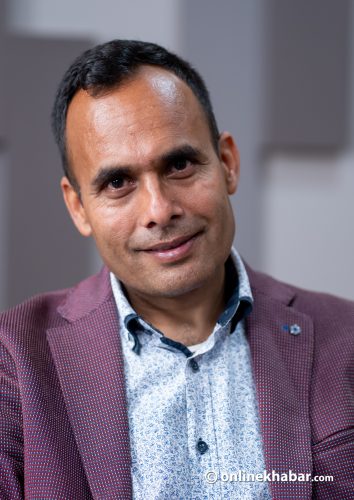
Dr. Bikram Timilsina emerged victorious from Nuwakot Constituency No. 1, defeating influential candidates from the Congress and CPN parties, and was elected as a Member of Parliament for the first time representing the Rashtriya Swatantra Party (RSP). Timilsina described the campaign as enthusiastic, noting that the public was hopeful for a new alternative. He said that disenchantment with traditional parties and a desire for change formed the foundation of their victory. He emphasized that the RSP would prioritize national interest, uphold Nepal’s sovereignty and independence, adopt clear policies, and focus on internal unity and responsible political conduct.

This election saw many representatives from a new generation winning parliamentary seats. Among them is Dr. Bikram Timilsina, who contested in Nuwakot-1, traditionally a stronghold of the Congress Party. In this election, he faced competition from Dr. Prakash Sharan Mahat, brother of Dr. Ramsharan Mahat, as well as former minister Hit Bahadur Tamang of the CPN. Defeating these prominent candidates, Timilsina secured a win for the Rashtriya Swatantra Party, which he had joined nearly two years ago.

Timilsina holds a PhD in International Relations and Political Science from Griffith University, Australia. Upon returning to Nepal, he engaged in academia. During this period, he became active within the Rashtriya Swatantra Party and achieved success in his first electoral attempt. Prior to going to Australia, he worked for nearly ten years as a journalist at Radio Sagarmatha. Now, with profound knowledge in international relations and political science, he is also actively involved in the party’s international relations department.

In an interview with Durga Khanal, Dr. Timilsina shared his thoughts: The Nuwakot-1 constituency is considered quite challenging. You managed to defeat veteran party candidates and win from the Rashtriya Swatantra Party. How was your election experience? The election experience was extremely encouraging. I found the election very enjoyable. We were fighting not just a routine election, but aiming to end an abnormal situation. We moved forward with the goal of establishing positive political culture and running a strong campaign. At no point during the campaign did we have to return home disappointed. When the public’s aspirations aligned with our plans, the experience became extraordinary.

‘We Will Adopt Evidence-Based Diplomacy with Neighbors and Major Powers,’ Says Dr. Bikram Timilsina

News Summary

Editorial Revised.

  • Dr. Bikram Timilsina defeated influential candidates from Congress and CPN in Nuwakot Constituency No. 1 to become the National Independent Party’s first-ever Member of Parliament.
  • Timilsina stated that the election campaign was enthusiastic, with people hopeful for a new alternative; this, coupled with disappointment in old parties and a desire for change, was the foundation for the victory.
  • He emphasized that the National Independent Party prioritizes national interest, will pursue clear policies to protect Nepal’s sovereignty and independence, and focus on internal unity and responsible political conduct.

In the recent parliamentary elections, many representatives from a new generation were elected as Members of Parliament. Among them is Dr. Bikram Timilsina.

Nuwakot-1 constituency, traditionally a stronghold of the Congress Party, saw competition this time from Dr. Ram Sharan Mahat’s brother, Dr. Prakash Sharan Mahat, while CPN fielded former minister Hit Bahadur Tamang as a candidate.

Defeating these prominent candidates, Bikram Timilsina from the National Independent Party secured a victory. He had joined the party about two years ago.

Having completed his PhD in International Relations and Political Science from Griffith University, Australia, Timilsina returned to Nepal engaging in academia. During this period, he affiliated with the National Independent Party and won on his first attempt.

Before moving to Australia, Timilsina worked for approximately ten years as a journalist at Radio Sagarmatha. He now possesses in-depth knowledge of international relations and politics and is active in the National Independent Party’s International Relations Department. The following are excerpts from his conversation with Durga Khanal:

Nuwakot-1 is considered a tough constituency. You defeated established parties’ candidates to win as a National Independent Party candidate. How was your election experience?

The election experience was highly enthusiastic. I found it very enjoyable. We were fighting not just for an ordinary election but to end abnormal circumstances. Our aim was to promote a positive political culture and conduct a well-organized campaign. Not a single day during the campaign did we return home disappointed. The alignment of public desire with our plan made the experience remarkable.

The National Independent Party’s historic win of 182 seats is a significant event. Did you anticipate this level of public trust initially?

Honestly, electoral assessments varied over time. Situations during the party formation, campaign initiation, and final voting day all differed. Institutionally, there was an estimate, but personally, I was excited from the start.

The area is considered ‘tough’ because Dr. Ram Sharan Mahat had fought elections here for years and this time his brother was contesting. Did you feel pressured competing against such contenders?

From outside, it might have seemed tough, but during door-to-door visits, I didn’t feel any pressure. The public was disillusioned with old leaders and political styles and were seeking new alternatives. That sentiment formed the basis of my victory. I had often stated in TV interviews that all candidates were equal, and the voters’ discretion would decide. The election result affirmed this.

Though connected to Kathmandu, Nuwakot-1 has many remote rural municipalities. Areas where social media influence is minimal and access is difficult in winter. This posed a real challenge. Yet, upon reaching villages, we were astonished by the enthusiasm among residents. The excitement was greater in these remote settlements than in accessible plains.

Wherever we went, people from elders to youth wore the ‘bell’ symbol. Some activists from other parties also said they belonged to their parties but would vote for the ‘bell.’ We had not expected 182 seats but were pleasantly surprised.

How do you interpret this historic public mandate for the National Independent Party? Is it only dissatisfaction with old parties or also hope for a new alternative?

I think both elements are present. Election outcomes rarely hinge on a single cause. Certainly, the public voted for the National Independent Party and the ‘bell’ symbol with high hopes—not just out of frustration but a search for new options and prosperity. There is a growing hunger for change, and we must respond to that message.

Is this not just disenchantment with old parties but a national psychological shift?

Certainly. Votes aren’t cast out of anger alone. Other options were available. This time, there was a full ‘setup’ of hope. Many citizens were unsure if the ‘bell’ would win but were willing to vote for it. Such a mindset is necessary for change.

Reaching the summit of Everest is tough, but staying there is more difficult. How will you manage the upcoming challenges?

I prefer to call this stage the ‘base camp’ rather than the summit. We have just begun and deserve best wishes for this phase. Reaching the base camp was arduous; the journey ahead will be even harder.

The public’s hopes are pinned on ‘bell.’ The National Independent Party seems more responsible than others now?

The greater the opportunity, the greater the challenge. We must begin working according to public expectations. It’s time to proceed responsibly.

Do you see changes in voters’ mindset?

Many say: They don’t want jobs but demand legal enforcement. Corruption must be controlled. This civic awareness is a strong force. Our decisions must be evidence-based, elevating merit over nepotism. Today’s voters believe if a mistake is made, waiting five years is not necessary.

We must reform the culture of politicians seeking to profit and serving self-interests. We cannot betray the public’s trust. Ministers must work with integrity to instill confidence; if we show selfishness again, public hope will be shattered.

Recalling electoral experiences in 2008 and 2017, past governments haven’t lasted. Are you concerned about internal conflicts within the National Independent Party due to diverse backgrounds?

Yes, past experiences have caused public skepticism. However, we emphasize ‘building’ and responsible conduct. Our approach is unified. The weaknesses of old powers made the situation critical. We are prepared to learn from history.

Is it challenging to unify people from diverse backgrounds?

Differences in opinions are normal, but the National Independent Party focuses on a common agenda. Our identity is singular. Previously, gaining large votes sometimes translated into power struggles; we are not inclined to repeat such mistakes.
There are no leaders in our party motivated by personal interests, and the system does not permit it.

Will the National Independent Party now focus more on work than power?

Absolutely. Challenges and problems are well-understood. We know what people want and the consequences of mistakes. The main focus is not on dividing power but on fulfilling national interests and public promises.

Many say foreign powers influence Nepal’s politics. How will you preserve Nepal’s independence and dignity once in government?

My perspectives as a student of international relations and as a parliamentarian differ, but the fundamental principle is that blaming foreign countries and distancing ourselves is not a solution. The turning point of the nation is internal. We must be strong and articulate national interests clearly. The old political culture of exploiting foreign powers and then blaming them when dissatisfied is weak. We must ascend to a higher level; with internal unity and clarity, we can even direct great powers to work in our interests. The solution lies with us.

You are active in the National Independent Party’s International Relations Department. What is Nepal’s national interest? How should Nepal engage with neighbors India, China, and major power the US? Is the government neutral or aligned with any of them?

That’s a misconception. Sovereign nations can be considered small or large, but it is political parties and leaders who have diminished Nepal. National interest should be based on the constitution and foreign policy. India, our neighbor, must behave with dignity and responsibility. We need to strengthen the Ministry of Foreign Affairs to prevent policy changes. Given our geography and circumstances, balanced relations with neighbors and major powers are beneficial. We will adopt policies based on homework, clarity, and will not become pawns.

What is your party’s strategy to maintain balance with neighbors and major powers?

Our primary responsibility is to build trust within the international community. India, China, the US, and Europe must all trust Nepal. This is only possible through transparency and clarity. We will not act against national interests under foreign influence.

But what about political parties being linked to foreign powers?

In the past, groups driven by selfish interests connected the country to foreign powers, but the new government will change that. No country is too distant or too close for us; we act as a nation. We will send a clear message to neighbors and allies: trust us, we are true to national interests and respect your security concerns.

What are the key priorities of national interest?

National interest is not limited to politics; it also involves imports-exports, medicine, and border disputes. Strengthening relevant institutions is essential. It may take time, but we are committed to building a strong foundation.

Lack of adequate preparation has eroded credibility in the past. How will you ensure improvement?

This is exactly the issue. The votes received by the National Independent Party send a message: “Define national interests, strengthen institutions, and engage with the international community respectfully.” We are fully committed to this.

New government and parliament face serious diplomatic challenges, such as the India-China trade agreement at the Lipulekh pass. What is your view?

Some years ago, I wrote an article for international media regarding this. That territory belongs to Nepal. India must behave respectfully. Misinterpretations damage India’s international image too.

Now that you are an MP, what role will you play in policy making?

I see the country as a worker, not just a political entity. Our party has a clear stance on national issues. We are firmly committed to the nation’s integrity and sovereignty without compromise.

What is the National Independent Party’s stance on Lipulekh? How do you respond to the two neighbors using Nepal’s territory for trade without permission?

The National Independent Party is clear: it is wrong for India and China to use Nepal’s land for trade without consent. It is a trilateral mistake. Based on historical proofs and the Sugauli Treaty, this land belongs to Nepal. We support a non-aligned foreign policy and Panchsheel principles. Dialogue is essential to prevent conflict. If India desired clarity, it could negotiate, but sovereignty must remain intact. The incoming government will uphold this position.

Tensions among Iran, Israel, and the US in West Asia affect Nepali workers and the economy. Your thoughts?

This should not escalate further. The damage is already significant. The security of Nepali workers, remittances, and the economy are linked to this. It is a sensitive matter. Peace is the only option. Responsible global leaders must take it seriously.

What role should Nepal play?

We support a non-aligned Panchsheel policy. Stopping war immediately and prioritizing peace talks is crucial. Conflict solutions are not lasting. Sovereignty must be respected. We approach this from a humanitarian perspective and advocate for peace.

Millions of Nepali workers are affected by war. What preparations exist for their protection?

The government must plan for security and rescue. Caution is needed before sending new workers to risky areas. We will activate diplomatic missions and develop mechanisms that respect workers.

The government formation may take days, but the crisis has begun. How prepared is civil security?

“Safety First” is our mantra—life is precious. Alongside government readiness, we urge citizens to remain vigilant and avoid conflict zones.
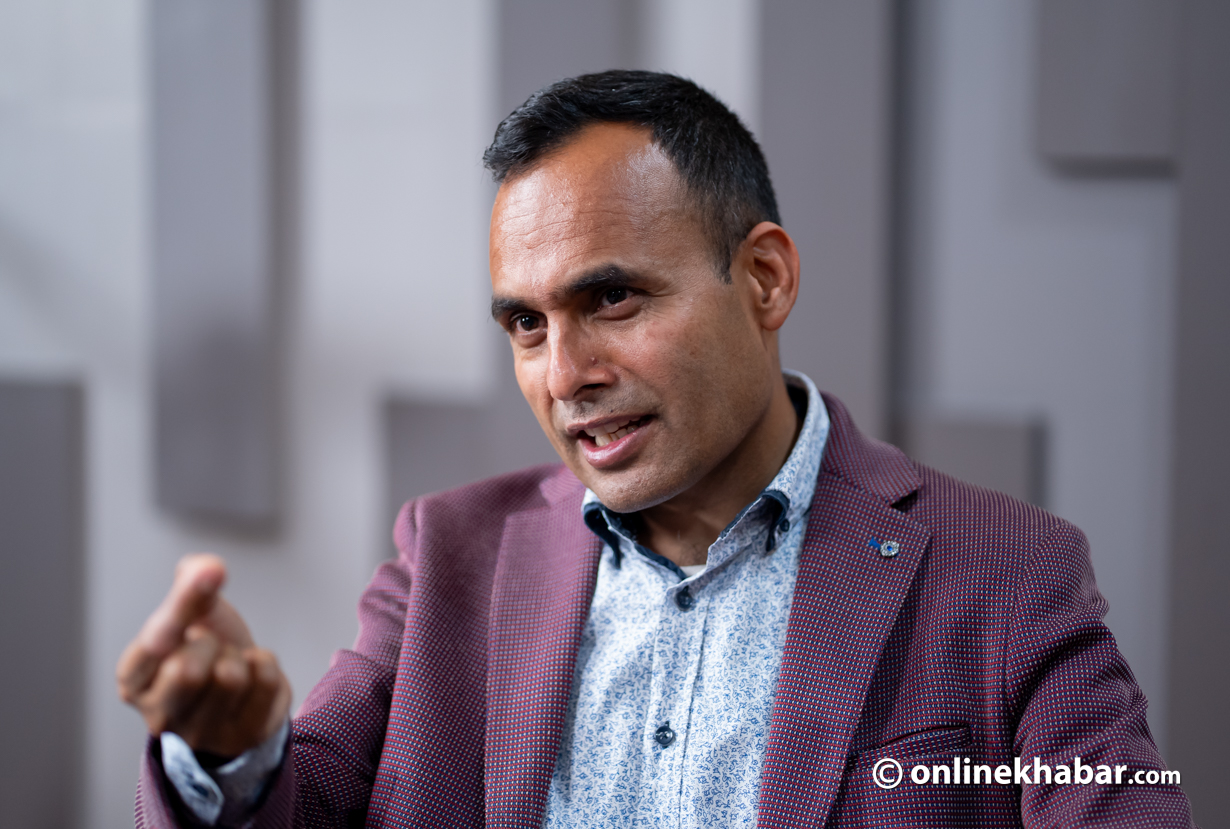
Neighbors and major powers are active in rescuing their citizens. We must also keep our people alert.

What is the status of the war in international affairs? The 48-hour ultimatum complicates issues further.

It’s hard to predict. All parties involved must exercise restraint and responsibility. We should recall the UN’s stance and raise voices advocating peace.

What role can Nepal play in this global crisis?

While we cannot mediate large states, taking a moral stance and providing small assistance still matters. Calling for peace is significant. Wars have long-term impacts. I urge all to move towards peace.

You are entering parliament, where practices are new. What are your plans for the next five years?

Changing the negative perception of politics is my main goal. I want to assure that I will work for the party and country’s benefit over five years and strive to establish a positive culture. I intend to apply my academic knowledge in policymaking.

Parliament is for lawmaking but is less active in practice. Many MPs dream of becoming ministers. I am committed to contributing constructively to legislation.
Voters often complain that candidates who appear good during elections don’t return to their villages after winning. I want to change this mindset. A parliamentarian is a public representative. I will raise people’s voices in the house and remain accessible always.

How challenging is it to balance voter expectations and parliamentary duties?

I want to be a bridge so people feel, ‘My representative listens to my concerns.’

I will apply my expertise especially in international relations, geopolitics, and internal security in parliament. After five years, people should see Nepal on the right path.

If the party or government makes decisions against public interest, what will you do? Defend the party or stand with public sentiment?

This is a critical question. Many have undermined public trust by blindly following party lines in the past. I am cautious. There is discipline, but I won’t stay silent if my conscience tells me a decision is wrong. Our party holds a strong position in parliament; holding the government accountable is our responsibility. I trust every decision of the National Independent Party will be for the country and people’s benefit. I hope the day never comes when I must question party or government decisions.

Deputy Chairperson Dr. Dila Sangroula Pant’s Statement: Chairperson Thapa’s Resignation Is Not the Solution to the Problems


March 21, Kathmandu – Dr. Dila Sangroula Pant, Deputy Chairperson of the Nepali Congress, has made it clear that the resignation tendered by party Chairperson Gagan Kumar Thapa does not resolve the party’s issues. Regarding the recently concluded House of Representatives election, in which the Nepali Congress failed to achieve the expected results, she opined that it would be unfair to place the entire blame on Chairperson Thapa alone.

Speaking at the Nepali Congress Central Working Committee meeting on Sunday, Deputy Chairperson Sangroula emphasized the need for a thorough review of the reasons behind the decline of a party that has led the country and the democratic movement for 35 years.

She stressed the importance of addressing current problems and reuniting the party through regular general conventions. She stated, “We brought Thapa to the chairmanship through a special general convention, but that message has not reached the people. Now, we need to make another effort to establish the party as the leading force in the upcoming provincial and local elections.”

Referring to the impossibility of evaluating anyone’s competence within just five months, Sangroula highlighted that the dissatisfaction accumulated over 35 years was revealed in this election.

She explained that voters changed their support because the Nepali Congress repeatedly failed to deliver while leading the government. Warning that without reforms, both votes and public sentiment will change further in future elections, she underlined the need for the party to fulfill a strong opposition role in parliament to regain public trust.

She added, “Since the Congress has been out of power for five years, it is crucial to act as a robust opposition in parliament on issues like inflation, unemployment, and good governance. If necessary, street protests must also be organized.”

Deputy Chairperson Sangroula advocated for opening avenues for experts and influential figures from society to directly enter the party’s policy-making level through the upcoming regular general convention, emphasizing the need to maintain checks and balances.

“We no longer have the luxury to make distractions left or right. It is inappropriate for the chairperson to flee by resigning now. Our leadership must address the new challenges facing the country. Power comes and goes, but we must regain public trust and recommit to rising anew in a fresh way. We may have shortcomings, but reviewing and resolving them to move forward is what is required today. Therefore, Chairperson Gagan Thapa’s resignation must be rejected,” she firmly stated.

Death of Ali Larijani, Central Figure in Islamic Leadership and Scholar of Kant’s Philosophy

Iranian state media have confirmed the death of Ali Larijani, who emerged as the most powerful figure following the assassination of Supreme Leader Ayatollah Ali Khamenei. Israeli Defense Minister claimed that Larijani was killed during a conflict with the United States, a claim that Iran has also acknowledged. Larijani, who held a graduate degree in Western philosophy and authored books on Immanuel Kant, played a significant role in both Iran’s political and philosophical spheres. Kathmandu, March 20. According to Iranian state media, Ali Larijani, the most influential figure after the assassination of Supreme Leader Ayatollah Ali Khamenei, has died. The Iranian government confirmed this on Tuesday after Israeli Defense Minister Israel Katz alleged that the 67-year-old Larijani was killed overnight during a strike amid hostilities with the United States. Iranian state media also reported on Tuesday that Brigadier General Gholamreza Soleimani, head of Iran’s Basij paramilitary forces, was killed in the attack.

Larijani, who served as secretary of Iran’s Supreme National Security Council, was last seen publicly during the Al-Quds Day parade held in Tehran. He was among the top Iranian officials reportedly killed by Israel following the assassination of Khamenei on February 28, the first day of the war. For decades, Larijani was known as a calm and pragmatic face of Iranian leadership. He was recognized for writing books on the 18th-century German philosopher Immanuel Kant and acted as a negotiator during nuclear talks with Western countries. However, on March 1, a dramatic transformation was evident in his public stance. After U.S. and Israeli air strikes reportedly killed Khamenei and Revolutionary Guard Commander Mohammad Pakpour, Larijani appeared frequently on television within 24 hours offering aggressive rhetoric. On social media, he stated, “The United States and the Zionist regime (Israel) have set fire to the heart of the Iranian nation. We will burn their hearts. We will make those Zionist criminals and the treacherous Americans regret their crimes.” He added, “Brave soldiers and the great Iranian nation will teach those international oppressors from hell a lesson they will never forget.”