Author: space4knews

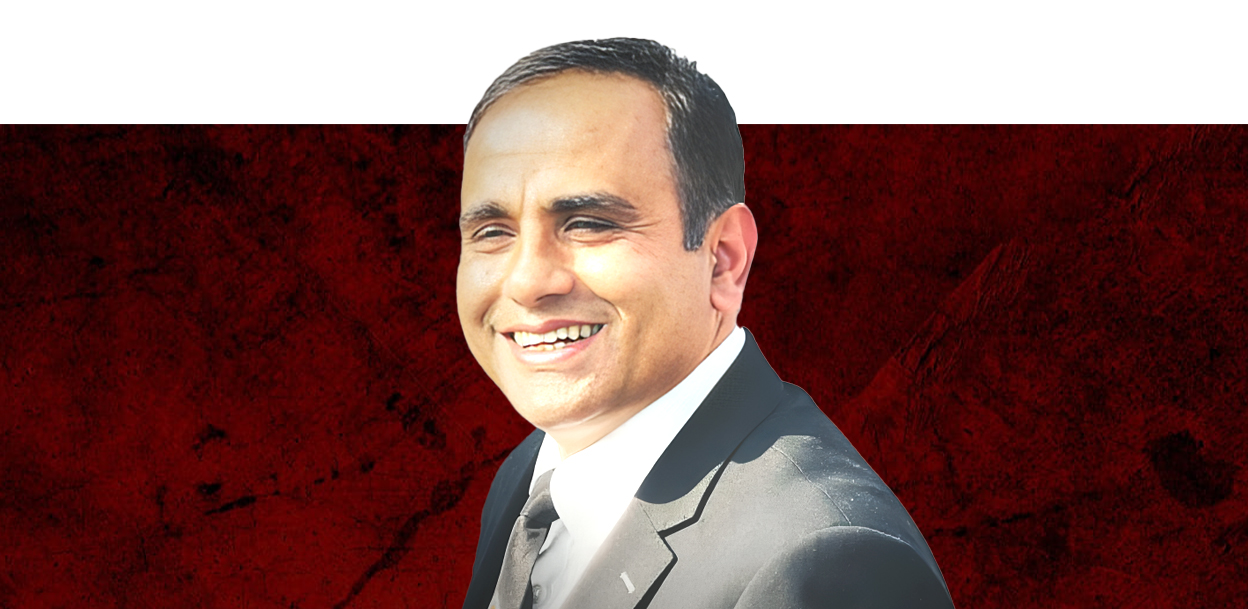
Attorney General Narayan Datt Kandel Takes Oath of Office and Confidentiality

22 Chaitra, Kathmandu – Newly appointed Attorney General Dr. Narayan Datt Kandel has taken the oath of office and confidentiality. Kandel was sworn in before Prime Minister Saptarshi Malla at 4:30 PM on Sunday.

The cabinet is reported to have appointed Kandel to the position of Attorney General earlier today.

Also Read

Attorney General Kandel: Foundation of Journalism, Scholarly Eminence in Law

Custody Extended for 76 Individuals Arrested for Hooliganism in Kathmandu

March 22, Kathmandu – The custody period has been extended for 76 individuals arrested during a two-day period on March 19 and 20 in Kathmandu for hooliganism and disorderly conduct. According to the District Police Office Kathmandu, the extension was granted by the District Court and the District Administration Office on Sunday.

SP Pawan Kumar Bhattarai, spokesperson for the Kathmandu Police Office, stated that among the 76 detainees, 70 are under investigation for disorderly behavior, three for organizing gambling, and three for robbery-related incidents. The police reported these individuals were arrested for engaging in acts that endangered public safety, including hooliganism, gambling, harassing passengers in the parking area of Tribhuvan International Airport, and soliciting obscene activities in public places targeting both locals and foreign nationals.

संविधान संशोधन बहसपत्र तयार पार्न असिम शाह नेतृत्वको कार्यदल सक्रिय

Working Group Led by Asim Shah Actively Drafts Constitution Amendment Discussion Paper

22 Chaitra, Kathmandu – The task force formed by the Prime Minister and Council of Ministers Office to prepare the ‘Constitution Amendment Discussion Paper’ is actively working. This task force was established under point number 4 of the ‘100-Point Governance Reform Agenda’ announced by the government led by Prime Minister Balendra Shah (Balen) on Chaitra 13. The agenda outlined that, to build a national consensus on long-term political and institutional reforms as well as the electoral system, the Prime Minister and Council of Ministers Office would form a task force within seven days.

Furthermore, the process aims to be participatory, transparent, and fact-based.

Accordingly, a cabinet meeting on Chaitra 16 decided to form the task force under the coordination of Prime Minister’s Political Advisor Asim Shah. The task force includes one representative appointed by each political party represented in the Federal Parliament, the Secretary for Law and Human Rights from the Prime Minister’s Office, the Secretary of the Nepal Law Commission, and the Joint Secretary-Secretary overseeing law and enforcement from the Prime Minister and Council of Ministers Office.

According to Prime Minister’s Press and Research Officer Deepa Dahal, letters have been sent to political parties to nominate members, and the process of receiving names is ongoing. Once members are finalized, a task force meeting is planned for this week to gather members’ views and suggestions.

Subsequently, the task force will hold extensive phased consultations with former presidents, constitutional experts, legal professionals, former chief justices, media, religious institutions, the private sector, leaders of the younger generation, and local government representatives before finalizing the constitution amendment discussion paper.

Rajendra Lingden Proposes Reducing Petroleum Taxes to Curb Price Hikes

March 5, Kathmandu — Rajendra Lingden, chairman of the Rastriya Prajatantra Party (RPP), has suggested that the government reduce taxes on petroleum products to help control rising prices. On Sunday, he shared his proposal on social media, emphasizing that it is a recommendation rather than a protest. “This is not a protest but a suggestion — the government should lower the taxes imposed on petroleum products to provide some relief to the public,” he stated. “It is essential for the government to focus on curbing irregular price increases in sectors like air travel fares and others, which have surged under the pretext of rising petroleum product costs.”

Proposal on Distribution of Vehicle Tax Approved

March 5, Butwal – The Council of Ministers of Lumbini Province has made several decisions in its meeting held on Sunday. The meeting approved proposals regarding the limit of grants provided to local levels and the distribution of vehicle tax.

According to government spokesperson and Minister for Agriculture, Land Management, and Cooperatives Dinesh Panthi, the council has approved the proposals to determine the limits for financial equalization grants, supplementary grants, special grants, and conditional grants to be provided to local levels for the upcoming fiscal year 2083–84.

The meeting also approved the proposal on the distribution of vehicle tax collected within the province. Accordingly, the estimated amount of vehicle tax to be allocated to local levels in the fiscal year 2083/84 has been set at 145 million Nepalese rupees. Additionally, the provincial government has decided on further public and festival holidays for the year 2083 BS. Public holidays will be observed province-wide on the occasions of Haritalika Teej, Maghe Sankranti, Province Establishment Day, and Basant Panchami, while festivals such as Bhumya Puja, Badka Attwari, Bhagwati Jatra, and Magar Day will result in holidays for the respective communities.

Furthermore, the meeting delineated the jurisdiction areas of life-saving pesticide inspectors. Senior Crop Protection Officer Milan Gaire has been assigned pesticide inspector responsibilities for Rupandehi, Kapilvastu, Nawalparasi (B.S.P.), Arghakhanchi, Palpa, and Gulmi districts. Officer Eliza Shrestha has been assigned pesticide inspection duties in Pyuthan, Rolpa, Rukum East, Banke, Bardiya, and Dang districts.

A New Generation’s Politically Charged Protest Songs Flourish on TikTok


March 6, Kathmandu – At the end of February, when the United States and Israel launched attacks on Iran, songwriter and musician Joseph Terrell found himself unable to shake the conflict from his mind. Soon, his thoughts began to take shape as lyrics.

Terrell, a resident of North Carolina, said, ‘I began reflecting on the mythology we Americans create around ourselves, imagining we’re some kind of violent explorers riding proudly toward a setting sun.’

‘So I titled the song I wrote “Cowboy Movie,” in which I explore how these myths originated and how we are not the “good guys.”’

Terrell emphasized that the song does not target any particular politician, as many politicians are implicated, and limiting it would be unjust.

However, it does reference specific events, such as the bombing of a school in Iran on the first day of conflict, which killed at least 165 people, the majority of whom were children.

This new wave of protest songs is marked by directly naming political figures and government actions using ‘hyper-specific’ language.

Responsibility for the bombing remains unclaimed, but according to a New York Times report, preliminary investigations indicate possible American involvement.

Terrell has shared the first verses and chorus of many of his songs on TikTok. His most popular political song early this year addressed the killing of Reny Good by ICE agents in Minneapolis, garnering over 735,000 views.

Many of his contemporaries online see younger artists reviving the ‘folk protest song’ genre for digital audiences, infusing politically deep-rooted songs with fresh energy.

The New Era of ‘Folk Protest Songs’

Noriko Manabe, professor and chair of music theory at Indiana University and a scholar of performance music, explains that until the 1900s, folk was the primary medium of protest music. However, by the late 1960s, commercialization and declining popularity led to political songs being associated with rock and roll.

Only recently has the singer-songwriter style of folk music reemerged as a political genre. Manabe notes, ‘The rising popularity of country music has strengthened this trend. The simplicity of this form in today’s tech-enabled era also adds to its appeal.’

She adds, ‘In the age of AI, there’s originality, personal touch, and artistry when someone picks up a guitar and sings with their own voice. It provides a certain authenticity and vitality.’

Songs like ‘Tylenol’ respond directly to false claims from former President Donald Trump, who falsely linked Tylenol use with autism.

This new era of protest songs boldly calls out politicians and administrations by name, often released online within days of a major news event. Manabe points out that their timeliness and concise wording help these songs rapidly spread on social media.

Terrell’s ‘Cowboy Movie’ is part of this effort, but perhaps the best-known name in sharp, direct protest music is Jesse Wells.

Wells, a musician from Arkansas, has amassed 1.5 million followers on TikTok by writing songs about issues such as the Gaza war, the renamed Department of Defense (formerly the War Department), and immigration enforcement. He recently appeared on popular late-night shows like Jimmy Kimmel and Stephen Colbert.

His songs are released quickly and with focus. For example, ‘Tylenol’ answers false assertions by former President Trump, while ‘Charlie’ is a swiftly released song expressing sympathy following the killing of Charlie Kirk.

In 2025, Wells released six albums based on contemporary topics.

A More Responsive Generation than Before

The use of such pointed lyrics differentiates this new era of folk music from the past. Historically, folk music with messages has existed since the Civil War, with songs like ‘John Brown’s Body’ serving as important anthems for soldiers.

However, artists often wrote new lyrics over familiar tunes. In the 1930s and ’40s, artists like Joe Hill and Woody Guthrie tackled labor rights this way, though some original melodies were created.

In the 1960s, artists such as Joan Baez, Phil Ochs, and Bob Dylan wrote many original songs about the Vietnam War and civil rights, reviving some traditional folk tunes in performances.

According to Holly Swartzendruber, co-chair of music at Bethel College in Kansas, direct naming of politicians or administrations was rare in older folk songs.
‘Few songs did this, like Crosby, Stills, Nash & Young’s “Ohio,” which named President Richard Nixon regarding the Kent State shootings. Other songs focused on issues such as racism with “Strange Fruit” and anti-lynching themes,’ she explains.

Swartzendruber notes, ‘Words like “Ku Klux Klan” or “white supremacy” were seldom directly heard in those songs, but the themes were undoubtedly present.’

From TikTok to the Real World

However, this new age of protest music largely remains online rather than at concerts or political rallies. Swartzendruber cautions that the internet’s rapid trend cycles could make this movement short-lived.

‘Will this just become a small voice after some time? Will people seek something different rather than another new song?’ she asks.

Swartzendruber says that if this wave of political folk songs is to endure, it must have tangible impacts in the real world.

Manabe agrees, explaining that the purpose of protest music is not just personal dissent or organizing, but becoming a powerful medium within political movements.

Terrell acknowledges that his songs alone may not bring change but hopes they still play a role, however small.

Manabe adds, ‘I want many people to step out from Instagram and onto the streets to connect with their audiences in real life.’

She recently attended a Jesse Wells concert and noted the venue was packed with an audience singing along to complex songs, demonstrating Wells’ dedicated fan base.

A Medium That Connects to the People’s Hearts

Massachusetts folk artist Olive Klug recently toured with a ‘call and response’ style, engaging audiences directly in performances.

Klug left her job to pursue music full-time and often sings about AI’s negative impacts and conspiracy theories.

At each show, Klug teaches audiences a song called ‘I Don’t Want Your Millions Mister’ by The Almanac Singers, written during government shutdowns affecting the unemployed.

‘After concerts, many people told me, “That song gave me hope in these painful times,”’ Klug says. ‘Everyone singing so loudly was truly inspiring.’

American musicians like Karsy Blanton also set up ‘sign-up’ tables at concerts to inform fans about local issues and mobilize campaign participation. Both Klug and Terrell donate portions of their merchandise or song proceeds to charity.

Terrell emphasizes that although his songs alone cannot effect change, he believes they contribute meaningfully.

‘We need more than music; we need real, concrete change. But as long as music can guide people toward that, it will remain an important part of the conversation.’

(Translated from material originally published by CBC)

A New Generation Embodies Political Awareness in Protest Songs on TikTok


March 6, Kathmandu – Toward the end of February, when the United States and Israel launched attacks on Iran, songwriter and musician Joseph Terrell found himself unable to shake the conflict from his mind. Soon, those thoughts began to take the form of song lyrics.

Terrell, a resident of North Carolina, said, “I started reflecting on the myth America has constructed about itself, where we see ourselves as violent explorers proudly riding our horses toward a setting sun.”

“That’s why I named the song ‘Cowboy Movie,’ and in it, I address how these myths began and question the idea that we are the ‘good guys.’”

Terrell explains that the song does not target any single politician, as most politicians are implicated in these narratives, so limiting the critique would be unfair.

However, the song does reference specific events, such as the bombing of a school in Iran on the first day of the conflict, which resulted in at least 165 deaths, most of whom were children.

In this new wave of protest songs, artists are directly naming politicians and administrations using hyper-specific language to challenge them.

Responsibility for the bombing remains unclaimed by any nation so far, but initial investigations cited by The New York Times indicate possible U.S. involvement.

Terrell has shared the opening verses and choruses of many of his songs on TikTok. His most popular political song early this year, about the killing of Renée Good by ICE officers in Minneapolis, has surpassed 735,000 views.

Many of his contemporaries note that this new generation of artists online is revitalizing the ‘folk protest song’ genre, imbuing songs with deeply political roots with new energy for digital audiences.

The New Era of ‘Folk Protest Songs’

Noriko Manabe, a professor and chair of music theory at Indiana University and a scholar of protest music, explains that until the 1900s, folk was the primary medium for protest songs. However, by the late 1960s, as commercialization increased and popularity declined, politically charged songs were often labeled as ‘rock and roll.’

It is only recently that this singer-songwriter style of folk music has reemerged as a political genre. Manabe says, “The growing popularity of country music has strengthened this trend. In this tech-enabled era, the simplicity of this genre also adds to its appeal.”

Manabe adds, “In the age of AI, there is originality, personal touch, and artistry in individuals grabbing a guitar and singing in their own voice. This provides a sense of authenticity and vitality.”

Songs like ‘Tylanol’ respond directly to unfounded claims by former U.S. President Donald Trump, who alleged a connection between the drug Tylanol and autism.

This new era of protest music challenges politicians and administrations by name with hyper-specific language. These songs typically appear online within days of major news events. Manabe notes that this immediacy and concise phrasing help them spread quickly across social media.

Terrell has sought this approach in ‘Cowboy Movie,’ but among such sharp and direct protest singers, Jesse Wells stands out as the most prominent.

The Arkansas-based musician has garnered 1.5 million followers on TikTok by addressing topics like the Gaza war, the renamed Department of Defense (formerly the Department of War), and immigration enforcement in his songs. He recently performed on the popular late-night shows of Jimmy Kimmel and Stephen Colbert.

His songs are released swiftly. ‘Tylanol,’ which counters Donald Trump’s disputed claims, and ‘Charlie,’ a song expressing sympathy after the killing of Charlie Kirk, are among those quickly shared online.

In 2025 alone, Wells released six albums tackling contemporary issues.

A More Responsive New Generation

The use of such direct language distinguishes this new era of folk music from the past. Message-driven folk music has existed since the Civil War, with songs like ‘John Brown’s Body’ serving as significant anthems for soldiers.

However, artists typically added new lyrics to well-known tunes. During the 1930s and ’40s, artists like Joe Hill and Woody Guthrie followed this method for labor rights songs, though some original melodies were also created.

In the 1960s, artists such as Joan Baez, Phil Ochs, and Bob Dylan wrote many original songs on the Vietnam War and civil rights issues, while also reviving older folk tunes for performances.

Holly Swartzendruber, associate professor of music at Bethel College in Kansas and an expert in folk music, notes that earlier folk songs rarely mentioned politicians or administrations by name.
“Only a few did, such as Crosby, Stills, Nash & Young’s ‘Ohio’ about the Kent State shootings, which names then-president Richard Nixon. Other songs focused on themes like racism, with songs such as ‘Strange Fruit’ and those opposing lynching,” she explains.

Swartzendruber adds, “Words like ‘Ku Klux Klan’ or ‘white supremacy’ were seldom heard explicitly in such songs, but their themes were implicit.”

From TikTok to the Real World

However, this new era of protest music mainly appears online and less frequently in concerts or political rallies. According to Swartzendruber, the internet’s fast-moving trend cycles may make this movement short-lived.

“Will this become just a small voice heard for a time? Will people soon seek something different rather than another new song?” she questions.

Swartzendruber believes that if this wave of political folk songs is to endure, it must eventually have a tangible impact in the real world.

Manabe agrees, explaining that protest music’s purpose is not only private dissent or building organizations, but to become a powerful tool within political movements; she says this genre exemplifies that.

Terrell acknowledges that his songs alone won’t bring change but hopes they will play a small part.

Manabe adds, “I want more people to step off Instagram and onto the streets to connect genuinely with their audience.”

Manabe recently attended a Jesse Wells concert, noting the packed venue and audience participation in singing complex songs, a testament to Wells’ dedicated fan base.

A Medium that Connects with the Public’s Heart

Massachusetts folk artist Olive Klug recently completed a music tour where she actively engages audiences in a ‘call and response’ style during performances.

Klug had previously left her job to pursue music full-time and often sings about the negative impacts of AI and conspiracy theories.

In each concert of her tour, Klug teaches the audience to sing a part of “I Don’t Want Your Millions, Mister,” a well-known song by The Almanac Singers, originally created to support unemployed workers during government shutdowns.

“Many people approached me after concerts saying, ‘This song gave me hope during a difficult time,’” Klug said. “Everyone singing so loudly made for an inspiring experience.”

Musicians like Karsy Blanton also include sign-up tables at their U.S. shows to inform fans about local issues and invite them to campaigns. Both Klug and Terrell donate some proceeds from merchandise or song sales to causes.

Terrell reiterates that while his songs alone cannot drive change, he believes they contribute meaningfully.

“We need more than music; we need real and concrete change. But as long as music can inspire people toward that, it remains an essential part of the conversation.”

(Translated from material originally published by CBC)

जर्मनीमा रोमन ‘कल्ट’ क्षेत्र भेटियो, मानिसकै बलि दिइने गरिएका संकेत

Roman ‘Cult’ Site Discovered in Germany with Evidence of Human Sacrifice


An extremely significant and mysterious Roman religious site has been uncovered beneath the city of Frankfurt, Germany (ancient name: Nida). This discovery is expected by scientists to reveal new insights into the religious practices and the terrifying human sacrifice traditions prevalent in Roman-era Germany.

The German Research Foundation and the Swiss National Science Foundation have recently approved over one million euros in funding for extensive studies of the site.

The archaeological site was found between 2016 and 2022 during the construction of the ‘Römer Stadtschule’ school building in Frankfurt. Spanning more than 4,500 square meters, the site has been preserved since the Roman period.

During excavations, a human skeleton was uncovered inside a well. Additionally, a bronze statue of the goddess Diana and an inscription dated September 9, 246 AD were discovered. The presence of skeletal remains alongside religious artifacts inside the well suggests the possibility of human sacrifice, a rare occurrence for this region.

The complex contains 11 stone buildings and more than 70 deep pits. Evidence indicates worship of several deities, including Jupiter, Mercury, Diana, and Apollo.

Fish, bird, and other animal bones, as well as plant remains, were found in the pits in large quantities. This supports the notion that collective ritual feasts followed sacrificial offerings to the gods.

Fragments of colorful wall paintings and metal materials used in windows and doors indicate the temple was highly ornate and richly decorated.

The city of Nida in Frankfurt was established as a military base in the 70s AD and was abandoned around 280 AD. Experts from the University of Basel and Goethe University will conduct in-depth studies of the site over the next three years.

According to Dr. Ina Hartwig, Frankfurt’s Cultural Commissioner, this discovery represents an unparalleled archaeological achievement for Europe. It will shed new light on the balance between religion and power in the northwestern provinces of the Roman Empire.

Order Placement Allowed Even When Share Market Is Closed; Circuit Breaker Limit Raised to 8 Percent

The Nepal Securities Board is planning to allow the placement of buy and sell orders for shares even after the regular trading hours. The NEPSE has proposed accepting orders from 6 PM until 6 AM the following day, after the trading session ends at 3 PM. Additionally, the Securities Board has proposed an amendment to increase the circuit breaker limit of the share market to 8 percent. Kathmandu, 22 Chaitra.

This new provision will enable investors to place buy and sell orders outside the usual trading hours. The initiative aims to facilitate overseas Nepalis and investors who are unable to trade during office hours. According to Santosh Narayan Shrestha, Chairperson of the Nepal Securities Board, complaints from Nepalis abroad who have been unable to invest in the secondary market due to trading time constraints prompted the Board to enable order placement beyond the regular hours.

He noted that this measure will help maintain adequate liquidity in the secondary securities market and boost trading volume. “NEPSE’s regular trading ends at 3 PM, but with the new provision, orders will be accepted even after market closure,” he said. During this order placement, investors can specify prices up to 2 percent higher or lower than the final share price, he added.

Furthermore, the Securities Board has proposed raising the circuit breaker threshold to 8 percent to better control fluctuations in the NEPSE index. The Board is amending the NEPSE trading regulations to increase the circuit breaker’s limit by 2 percentage points from its current level.

Additional 7-Day Extension Granted for Investigation Against Deepak Khadka

An additional seven-day extension has been granted for the investigation into the money laundering case against Nepali Congress leader and former Minister of Energy, Deepak Khadka. Kathmandu, 22 Chaitra – This extension has been provided to continue the ongoing investigation. Khadka was initially arrested on Chaitra 15, and this marks the second extension of his custody period. Previously, the Kathmandu District Court had permitted his detention for seven days to facilitate the investigation.

Former Minister of Energy, Water Resources, and Irrigation, Khadka, was taken into custody to investigate the cash seized from his residence during the Janajeevan Movement on Bhadra 24. This information was disclosed by the Ministry of Home Affairs official, Sudhan Gurung. The Money Laundering Investigation Department is probing the cash found burnt at Khadka’s house.

The department had earlier collected some burnt pieces of notes and surrounding ashes from Khadka’s residence. During the Janajeevan Movement, protesters vandalized and set fire to Khadka’s home. After the arson, videos showing both Nepali and foreign currency notes burnt inside his house circulated widely on social media. There were also images and videos shared online showing some intact notes apparently carried away by protesters.

रेशम चौधरी पक्राउको पत्र बनाउने सर्वोच्चका शाखा अधिकृत विष्ट दोषी ठहर

Supreme Court Branch Officer Visht Found Guilty of Issuing Fake Letter; Action Taken After Resham Chaudhary’s Arrest

The Kathmandu District Court has found Supreme Court branch officer Mahiman Singh Visht guilty of document forgery. Resham Chaudhary, leader of the Citizen Liberation Party, was arrested based on a fake letter issued by Visht. Judge Khimanand Bhusal’s bench has ordered a separate hearing to determine Visht’s sentencing, including imprisonment and fines. Kathmandu, 22 Chaitra.

Resham Chaudhary, the former founding leader of the Citizen Liberation Party, was arrested on the basis of the fake letter issued by Supreme Court branch officer Visht. Following the incident, Visht himself was arrested. Judge Khimanand Bhusal’s bench declared Visht guilty and has ordered a separate hearing to decide on the imprisonment and fines, as the case involves more than three years of possible incarceration.

On 17th Baishakh, Resham Chaudhary was detained based on a letter issued by Mahiman Singh Visht of the Supreme Court branch concerning the party’s unification manifesto. However, as the matter under consideration in the court had not yet been decided, the letter instructing Chaudhary’s imprisonment was found to be unauthorized and illegal. Chaudhary was released within hours. Subsequently, the Supreme Court branch officer Visht who prepared the letter was arrested. The Supreme Court itself sent another letter to the prison and police, facilitating Chaudhary’s release.

‘Support from Prime Minister Balendra Opens Path to Resolve Fewa Lake Dispute’

Summary: Pokhara Metropolitan City has begun operating bulldozers since Saturday to remove encroached structures, enforcing the 65-meter regulation around Fewa Lake. In 2018, the Supreme Court directed the cancellation of lands registered after 1974 along the lake shore, along with beautification and removal of encroachments. Coordination between the federal government and Pokhara Metropolitan is underway to arrange compensation and expedite implementation of the Fewa Lake regulations. Since Saturday morning, bulldozers have been active at Fewa Lake in Kaski’s Pokhara, as the metropolitan city initiates action to clear structures on encroached land. This issue was also included in the new government’s administrative reform agenda.

The Supreme Court’s 2018 order mandated cancellation of lakeside lands registered after 1974, enforcement of the 65-meter boundary, beautification, and removal of encroachments. After receiving directives from the federal government this year, removal of encroached structures commenced on Saturday. Mayor of Pokhara Metropolitan City, Dhanraj Acharya, stated that working has become considerably easier following support from Prime Minister Balendra Shah (Balen).

In an afternoon interview on Saturday with reporter Amrit Subedi, Mayor Acharya said, “Today’s bulldozer operation is not just a single event but part of an ongoing process. Actions to remove encroached structures have been progressing even before this.” A facilitation committee led by Chief Minister Surendra Raj Pandey advised releasing lands beyond the 65-meter boundary. Efforts to identify lands eligible for compensation are advancing.

Fewa Lake-related matters are included in Prime Minister Balendra Shah’s list of 100 priority programs, which has led to special pressure and even telephone discussions to accelerate the work. After the deadline for voluntarily removing structures, public notices will be issued, and removal will be enforced against those who fail to comply. Implementation of the standards requires significant financial resources.

Is resolving the Fewa Lake dispute feasible? Will the implementation of standards be effective? We are seeking a long-term resolution to this conflict. We have already identified the highest water flow points and established the 65-meter regulation accordingly. Coordination is ongoing between the province, metropolitan city, and district administration. Compensation processes are underway in collaboration with the federal government.

Dr. Baburam Bhattarai Supports Government’s Decision to Make Saturdays and Sundays Holidays, Calls for Permanent Implementation

March 22, Kathmandu – Former Prime Minister Dr. Baburam Bhattarai has expressed support for the government’s decision to designate Saturday and Sunday as weekly holidays. Considering the shortage of petroleum products, today’s cabinet meeting decided to declare these two days as public holidays per week. Reacting to this decision on Facebook, Bhattarai described it as scientific and suitable for permanent adoption.

“The current government decision to set office hours from 9 AM to 5 PM with Saturdays and Sundays off is scientific and appropriate,” Bhattarai wrote. “This should not only be a temporary measure due to the petroleum shortage but also adopted permanently through appropriate revisions in public holidays and the calendar, as it will be beneficial and practical in many ways.”

He noted that his cabinet had previously made a similar decision but was unable to implement it due to various reasons. “Although recent governments have neglected this, the current government must make the necessary amendments and enforce it,” he said. Bhattarai emphasized that extending daily work hours while giving two weekly holidays will not reduce total working hours but may actually increase them.

“This will enhance the productivity of employees and laborers, improve family well-being, save fuel, and contribute to a cleaner environment,” he explained. “Domestic tourism will also increase.” He further argued that having Sunday off will facilitate coordination with the international workweek. Dr. Bhattarai concluded that this decision will be advantageous to the country and society from every perspective.

The Story of Chapal Bhaduri, India’s Renowned ‘Stage Queen’

According to the author’s research, during the mid-20th century in Eastern India’s Bengal region, many of the celebrated female stars of the theater were, in fact, male performers. Among them, Chapal Bhaduri was the most famous, known as the ‘Chapal Rani’ (Chapal Queen). He was hailed as the queen of ‘Jatra,’ a traveling folk theater that once drew large audiences. The tradition of male actors playing female roles was common worldwide—from Europe to Japan and China—in various theatrical forms, and this practice flourished in Bengal as Jatra. Although the income was modest, the musical and mythological folk dramas performed in rural open-air venues had popularity comparable to cinema at the time. These plays, based on poetry and devotional narratives, were presented on open stages characterized by exaggerated voices, expressive gestures, and distinctive costumes. In his new book, “Chapal Rani: The Last Queen of Bengal,” author Sandeep Roy traces Bhaduri’s journey from stardom to obscurity, revealing a fading world where gender identity itself was a form of performance. In such Jatras, men played female roles and were called “purush rani” or male queens. Despite its popularity, this genre was sometimes viewed as socially stigmatized. During colonial times, the European-influenced elite of Kolkata often regarded Jatra as rustic or uncultured. In the 19th century, an Anglo-Indian magazine disparagingly compared the unnatural voices of men playing female parts to the howls of jackals.

By the time Bhaduri entered the theater in the 1950s, this world was changing. Women had begun acting, gradually reducing space for male performers of female roles. Nevertheless, Bhaduri carved out a unique identity. Born in 1939 in North Kolkata to the family of actress Prabha Devi, he grew up in a theatrical community and began acting at age 16. “My gestures and voice were like a girl’s,” he later said. On stage, he would completely transform himself. He adeptly portrayed queens, goddesses, and even women engaged in prostitution. His costumes were meticulously crafted and sometimes made on the spot. Initially, he used fabric scraps to shape his chest, later turning to sponges. He applied various creams and paid close attention to small details to embody femininity. “Womanhood was always a part of me,” Bhaduri stated.

His performances transcended mere comedy or parody; they were deeply immersive. In an environment where queer-coded characters were often mocked, Bhaduri’s work stood out for its sincerity and courage. Roy writes, “In an Indian theatrical tradition where queer or LGBTQ+ characters are often treated with ridicule, Chapal Bhaduri embraced his role as a woman with honesty and bravery.” Outside the theater, Bhaduri’s life was more complicated. Bengali middle-class society was conservative, so he was not openly identified as homosexual, though he was much admired. Adoring fans and lovers sent affectionate letters and proposals, which Bhaduri carefully selected and took pride in. Yet he was clear: “I do not apologize for love.” Some of his partners married and had children. His community always remained marginalized—they were visible but never fully accepted, often relegated to domestic helper roles. Many contemporaries ended up in poverty, some turning to sewing, selling tea and nuts from carts, or doing manual labor. One person even committed suicide. These stories were rarely recorded. Bhaduri himself took on cleaning and dusting jobs in libraries to make ends meet. At one point, he performed the role of the goddess Sheetala Devi on the street.

In the following decade, Bhaduri re-emerged briefly. Bengali film director Kaushik Ganguly cast him in several films. In 1999, publisher and theater director Nabin Kishore documented Bhaduri’s life through a film and exhibition, inspiring new generations to view him from a different perspective. Roy notes, “During a time when LGBTQ+ movements were nascent in India and queer histories scarce, Bhaduri was chosen as a guide.” Still, Bhaduri distanced himself from labels and did not relate to terminology like “third gender.” Outside of the stage, he dressed in typical Bengali male attire such as kurta-pajama, complicating interpretations of his identity further. “He existed as a queer individual,” Roy comments.

As global discussions around gender and identity continue to expand, Bhaduri’s story provides a unique lens. It reveals a theatrical history where gender was fluid, even if not always named as such. Now living in a nursing home near his birthplace, Bhaduri is not warmly welcomed there. He battles health issues while carrying memories of a past life. Why are some artists remembered while others are forgotten? Why are some arts preserved while others vanish with their practitioners? By documenting Bhaduri’s life, Roy attempts to answer and confront these questions. Over more than six decades in theater, Bhaduri was, by any measure, a star. Yet for many years, he lived on the margins of the very culture he helped shape.

शंकर ग्रुपका सञ्चालक सुलभ अग्रवालविरुद्ध ५ दिन म्याद थप

5-Day Extension Granted for Further Investigation Against Shankar Group Director Sulabh Agrawal

March 5, Kathmandu – The Kathmandu District Court has extended the investigation period by five days for Sulabh Agrawal, director of Shankar Group. Agrawal was arrested on Sunday on charges related to money laundering. Following the court hearing, spokesperson Deepak Kumar Shrestha confirmed that due to the necessity for further inquiry, the investigation period against him has been extended by five days.

The Department of Money Laundering Investigation is actively progressing with inquiries into Agrawal. He was previously arrested in 2019 on allegations of attempting to sell thermal guns used to measure body temperature at inflated prices, after which he was released on bail. Earlier this week on Friday, Shankar Group’s chairman, Shankarlal Agrawal, was also arrested but was released after completing his statement.

Shankar Group is one of Nepal’s leading business families, with its principal company being Jagadamba Steel. The group has diversified investments across steel production, cement, hydroelectric power, and consumer goods sectors in Nepal.