Author: space4knews

Investors Seek Security Amid New Government Formation

News Summary: With the formation of the new government, industrialists and businesspersons in Nepal are anticipating policy stability and a more conducive business environment. Industry leaders demand the government remove procedural complexities and implement a one-door system to streamline operations. As the Nepal Chamber of Commerce and Industry (FNCCI) elections approach, Raghunandan Maru has filed his candidacy for a leadership position. The establishment of the new government has sparked optimism within the business community. Entrepreneurs believe that political stability will bring policy consistency, paving the way for economic advancement. Meanwhile, the Ministry of Finance is preparing the new budget, and election activities within FNCCI are gaining momentum. Below is an exclusive interview with Raghunandan Maru, President of the Cement Producers’ Association and Managing Director of Shivam Cement.

How do industrialists and businesspeople feel following the formation of the new government?
We now have a strong two-thirds majority government, which the industrial and business sectors warmly welcome. Not only them, but even ordinary citizens are excited because we expect the ‘habitable’ environment that had existed merely in theory until recently to be implemented practically. We anticipate the removal of the longstanding issues that have plagued us.

What specific expectations do industrialists have from a stable government?
Policy stability is a primary expectation. Long-term policies are essential. Investors seek assurance that their investments will be secure. Our group is actively working to attract foreign investors. However, they have noticed inconsistency in policies as budgets and governments change. Therefore, stable policies are the foremost demand. Additionally, procedural complexities must be eradicated. Issues persist at all stages—from company registration to operations. Unnecessary hassles in licensing must be eliminated entirely. Such obstacles continuously disrupt industries during this critical phase of nation-building. While no applications should be accepted without completing international legal procedures, the practice of circulating files even after fulfilling all requirements must end. The impractical forest user rights procedures are adversely affecting the hydropower and mining sectors. Although we unanimously agree on forest conservation, procedural delays must be removed. There should be regulations such as requiring 50 trees to be planted for every tree cut. We especially stress addressing the impact of user rights on hydropower and mining industries. The issue of limits and caps also presents challenges. To achieve a $100 billion economy, it is essential to ease conditions for establishing large industries. The government should demonstrate generosity and formulate investor-friendly policies to boost employment and strengthen the economy. Processes must be simplified with a one-door system. For instance, if a mining industry requests 1,200 ropanis of land, the state should allocate the boundary accordingly. If the industry fails, the land could be sold but not repurposed, enforcing clear regulations while maintaining ease of process. The Ministry of Land Reform’s complex procedures must be reformed and the practice of file circulation halted.

What are your thoughts on the one-door system making all procedures smoother?
Absolutely. Even in today’s digital era, the practice of passing files from one table to another only hampers progress. A system where file status can be monitored easily via computer is necessary. We must adopt faster technology in government work and transition to a paperless system. Achieving this will allow the current government to transform the country’s economic structure.

The Rastriya Swatantra Party Nepal (RSWP) has promised to repeal outdated laws, and Finance Minister Dr. Swarnim Wagle has set up a dedicated team. How do industries and businesses react to this?

This is a significant achievement, and we are optimistic. The Economic Reform Commission, led by former Finance Minister Rameshwar Khanal, had also emphasized repealing redundant acts and regulations six years ago. This must now be implemented. It will accelerate reforms across the country.

The current government aims to double per capita income from $1,500 to $3,000 within five years. How feasible do you find this target?
Youth migration must be halted, and despair dispelled—things the government can accomplish. The environment should promote youth entrepreneurship through flexible policies. We must support startups and small businesses with all kinds of incentives. Once young people start businesses, the economy will respond positively. Therefore, the $1,500 to $3,000 per capita income goal is achievable. Currently, many youths seek foreign employment, which negatively impacts societal structures. Relying heavily on remittances weakens the economy; a production-based approach is essential.

So you advocate increasing the number of young entrepreneurs?
Yes. If we want a $3,000 per capita income and a $100 billion economy, nurturing youth entrepreneurship is vital. With the right vision and mindset, our nation can develop rapidly and become a donor country.

What do entrepreneurs expect from the upcoming budget?
Tax policy requires revision. Value Added Tax (VAT) slabs should be differentiated, similar to India. Essential sectors should have lower taxes, while luxury goods should be taxed more. Tax policy must be pragmatic and balanced.

What tax rates would be appropriate?
Lower taxes on essential items like food are needed to alleviate consumer costs. Higher rates can be applied on luxury goods.

How is the current status of the cement industry?
The cement sector is increasingly export-oriented. While production capacity is sufficient, exports remain limited. The government used to provide export subsidies but has since halted them, causing difficulties for manufacturers. Continuation of such subsidies is necessary because they do not result in revenue loss. Nepal’s production capacity is about 20 million tons, but consumption is just over 8 million tons. Therefore, surplus production should be encouraged for export.

Why have cement prices increased?
Increases in transportation costs, diesel prices, packaging expenses, and raw material prices are the main factors. Although the Iran-US conflict’s impact isn’t directly visible, its multifaceted effects are beginning to emerge. We hope for a swift resolution.

What are your expectations from the new government regarding the cement industry?
Limits and forest user rights remain major challenges. The user rights system should be abolished. Why require dual permits for cutting trees? Legal amendments are necessary. The mining industry needs procedural reforms; with improvements, it could contribute significantly to GDP, similar to China. The government should remove the environmental tax imposed on coal imports; taxing non-domestically produced goods is unjustified. Eliminating procedural complexities could make the cement sector highly profitable. Increasing government expenditures and focusing on capital investments will also boost cement consumption. Currently, provincial budgets consume a significant share, which requires reassessment.

How is cement export performing?
Exports are nearly stalled, limited to border areas only. Competition with India has become challenging after subsidy cuts; state support is needed to maintain competitiveness.

What potential do you see for rapid national development?
Infrastructure development will drive rapid progress. In a small country like Nepal, reducing distances is vital—for example, making it possible to travel from Taplejung to Biratnagar in two hours. This will strengthen the economy.

What is necessary to ensure an investment-friendly atmosphere in the current budget?
Implementing a one-door system in government services is mandatory. Though this demand has been raised before, it has not been practically enforced. Improvements in licensing procedures, faster implementation, and guarantees for investment security are essential.

What role will you play in the upcoming FNCCI elections?
With elections approaching, I am contesting for a committee member position on the dedicated panel led by Anjan Shrestha and Shiv Ghimire. Our goal is to run FNCCI responsibly and efficiently, contributing significantly to economic prosperity.

What are your priorities?
Reducing the gap between the government and FNCCI is a key priority. The chamber should lead the government toward digitization, an area where we currently lag. I aim to remove the pessimism among industrialists and businessmen. I intend to promote new approaches to advance FNCCI and break distrust between the private sector and government. If successful, it will foster a more favorable investment environment.

Any final remarks?
According to RSWP’s manifesto, legal and administrative reforms will alter the nation’s character. The Nepalese people should place full trust in the government, and industrialists should commit to developing the country domestically. This commitment will empower us to build a prosperous Nepal.
Investors Seek Security Alongside Their Investments

News Summary

  • With the formation of a new government, industrialists and entrepreneurs are hopeful for policy stability and a conducive business environment.
  • Industries demand the government remove procedural complexities and implement a one-stop service system.
  • As the Nepal Chamber of Commerce election approaches, Raghunandan Maru has filed his candidacy for a new leadership position.

With the formation of a new government, optimism has spread throughout the business sector. The business community believes that political stability will bring policy consistency, opening pathways for economic progress. Meanwhile, the Ministry of Finance is preparing to draft the new budget. Additionally, election activities are intensifying at the Nepal Chamber of Commerce. In this context, we present an interview with Raghunandan Maru, Chairman of the Cement Producers’ Association and Managing Director of Shivam Cement:

How do industrialists and entrepreneurs perceive the formation of the new government?

The country now has a strong two-thirds majority government, which the industrial and business communities wholeheartedly welcome. Not only them, but ordinary citizens are also enthusiastic because the environment, which so far existed only in principle as ‘governable,’ is now expected to manifest in practice. The problems that have troubled us in the past are expected to be eliminated.

What are the concrete expectations of industrialists and entrepreneurs from a permanent government?

Policy stability is the primary expectation. Long-term policies are essential. Investors seek assurance that their investments are secure. Our group is trying to attract foreign investors who have realized that Nepal’s policies lack uniformity and change with budgets and government transitions. Therefore, stable policies are the biggest demand.

Another key issue is removing procedural complexities. Similar problems arise at every stage from company registration to operations. Unnecessary hassles in licensing must be eliminated or even completely eradicated. Such obstacles continuously disrupt industry growth during this critical time of nation-building.

Applications that have not completed international legal procedures should not be accepted, but the practice of unnecessary file processing even after completing all procedures must end.

The impractical procedures concerning forest user rights are impacting the hydropower and mining sectors. While there is no disagreement about forest protection, procedural hurdles must be reduced. Laws should require one tree to be planted for every tree cut. We expect special attention to be paid to the impacts caused by user rights in hydropower and mining industries.

Boundaries are also a challenging issue. If we aim to create an economy of 100 billion USD, establishing large industries requires a favorable environment. The government should show flexibility and introduce policies that facilitate large-scale investments. This will create employment and strengthen the economy.

A one-stop system should be implemented to simplify processes. For example, if a mining industry requests 1,200 ropanis of land, the state should define the boundaries and grant it. Rules can allow the industry to sell the land if it fails but prohibit its use for other purposes. However, the process itself must be easier. The Ministry of Land Reform’s complex procedures need reform, and the practice of unnecessary file circulation must be stopped.

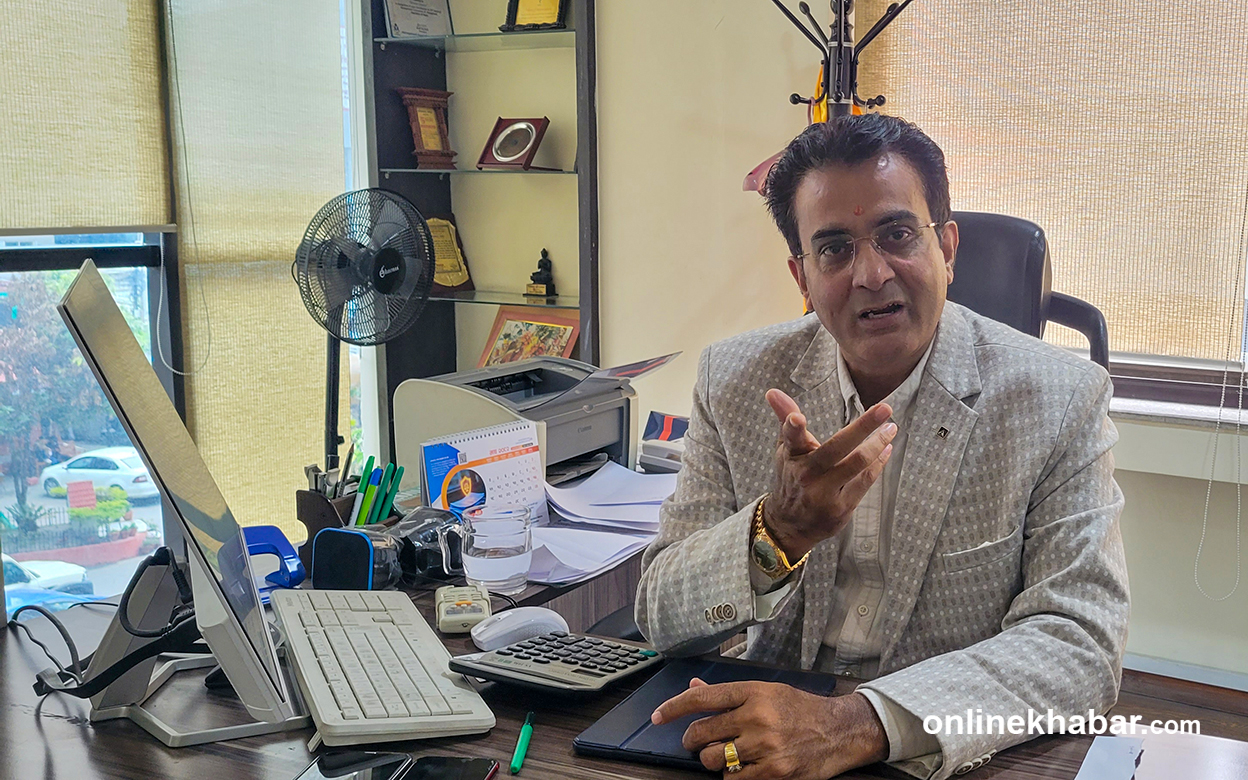
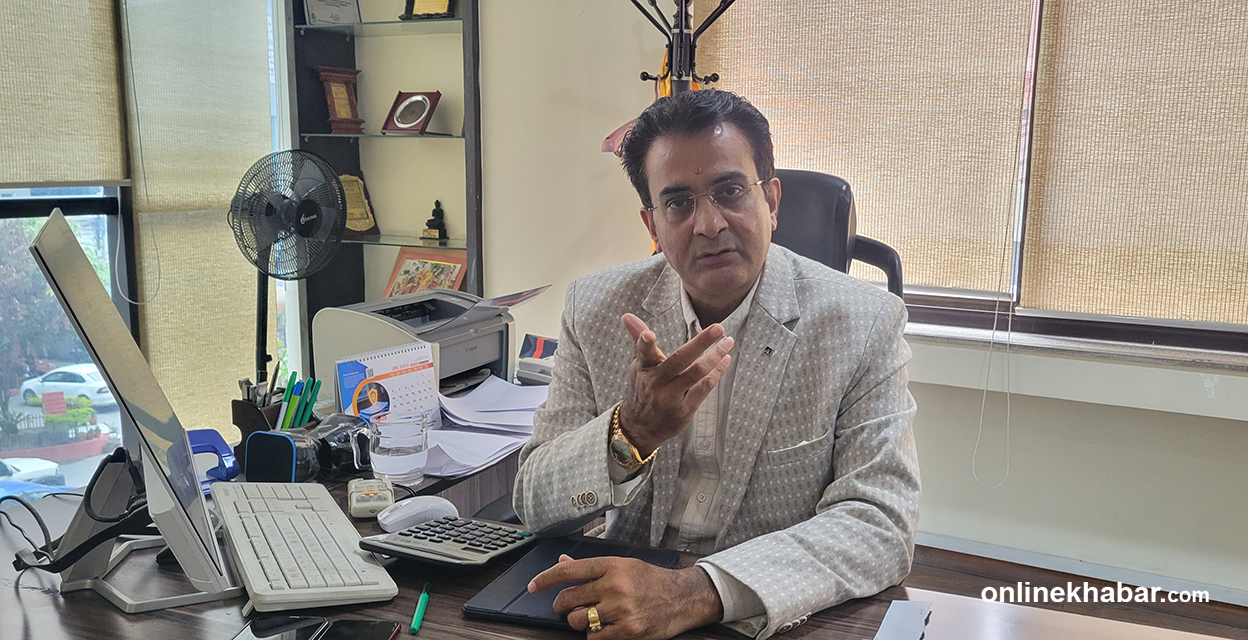
Raghunandan Maru, Managing Director, Shivam Cement

What is your perspective on all tasks becoming easier through the one-stop system?

Certainly. Even in today’s IT era, the practice of passing files from one table to another only hinders progress. A system should be developed to track the status of files easily via computers. Government work should adopt faster technologies and transition to a paperless system. If achieved, the present government can bring a structural economic transformation in the country.

The Rastriya Swatantra Party has promised to scrap outdated laws, and Finance Minister Dr. Swarnim Wagle set up a committee. How has the industry reacted?

This is a significant achievement for which we remain optimistic. The Economic Reform Commission, led by former Finance Minister Rameshwar Khanal, had also recommended scrapping outdated and unnecessary acts and rules six years ago. This must now be implemented as it would accelerate reforms in the country.

The current government aims to raise per capita income from $1,500 to $3,000 within five years. How do you assess this target?

Youth migration must be halted, and despair removed—something the government can achieve. An environment conducive to entrepreneurship with flexible policies for youth is essential. All types of encouragement should be given to startups and small businesses. Once young people start businesses, the economy will benefit positively. Therefore, the goal of increasing income from $1,500 to $3,000 is achievable. Currently, youths go abroad for employment, negatively impacting social structures. An economy reliant on remittances is harmful; it must be production-based.

You are emphasizing the growth of young entrepreneurs?

Yes, if we want to create a $3,000 per capita income and a $100 billion economy, youth must be made entrepreneurial. With good thinking and vision, Nepal can rapidly develop and become a donor country.

What do entrepreneurs expect from the upcoming budget?

A review of the tax policy is necessary. Value-added tax (VAT) should have different slabs, similar to India’s system. Lower taxes should apply in essential sectors, and higher taxes should apply to luxury goods. Tax policy must be practical and balanced.

What tax rates do you find suitable?

Essential commodities like food should have low taxes to reduce the burden of expensive consumables. Luxury items can be taxed at higher rates.

What is the current state of the cement industry?

The cement industry is becoming export-oriented. While production capacity is abundant, exports remain limited. The government used to provide export subsidies but has stopped recently, causing difficulties for producers. Such subsidies must continue, as there is no revenue loss. Nepal has a production capacity of about 20 million tons, but consumption is only around 8 million tons. Hence, surplus production should be encouraged for export.

Why have cement prices increased?

Increased transportation costs, rising diesel prices, higher packaging expenses, and raw material price inflation are the main reasons.

Has the Iran–US conflict had any impact?

Though the impact is not immediately visible, multidimensional effects have begun. We hope for a swift resolution.

What are your expectations from the new government for the cement industry?

Boundaries and forest user rights are principal challenges. The user rights system itself should be abolished. Why should dual approval be required for cutting trees? Such laws need amendment. Regulations hindering mining industry growth must be simplifed so that the mining sector, like in China, can significantly contribute to GDP.

The government should remove the green tax imposed on coal imports; it is inappropriate to tax non-produced goods. Removing procedural complexities will enable the cement industry to yield great benefits.

Government spending should increase, especially focusing on capital expenditure, which will also drive cement consumption. Currently, provincial budgets are large and need reassessment.

What is the status of cement exports?

Exports are almost halted; only border regions see cement exports. After subsidy cuts, it has become difficult to compete with India. The state must provide concessions.

What do you see as possibilities for rapid national development?

Infrastructure development will trigger rapid growth. For a small country like Nepal, connectivity must be made easy—for example, traveling from Taplejung to Biratnagar should take two hours. This will strengthen the economy.

What is needed in the current budget to ensure an investment-friendly environment?

Implementing a one-stop government service system is mandatory. Although this demand was made before, it was not realized. Licensing processes should be improved, execution accelerated, and investment security guaranteed.

What role will you play in the upcoming Nepal Chamber of Commerce election?

With elections approaching, I have filed my candidacy for the executive committee on the dedicated panel of Shiv Ghimire under Anjan Shrestha. Our aim is to run the Chamber responsibly and systematically, which will considerably contribute to economic prosperity.

What are your primary agendas?

Reducing the distance between the government and the Chamber is my main priority. The Chamber must lead the government towards digitalization, where we currently lag. I will work to eliminate the disappointment among industrialists and entrepreneurs.

I want to advance the Chamber in a new direction and break the distrust between the private sector and the government. If we succeed, it will foster a more stimulating investment environment for business owners.

Anything else you would like to add?

According to the Rastriya Swatantra Party’s manifesto, legal and administrative changes will transform the nation’s framework. The Nepali people should fully trust the government, and industrialists should commit to developing the country. Such resolve will empower us to build a prosperous Nepal.

Deputy Attorney General Transferred Amid Allegations of Weakening Fake Rescue Case

The Attorney General’s Office has transferred Deputy Attorney General Ramhari Kafle following allegations that he played a role in undermining the fake rescue case. The Prime Minister’s Office expressed concern after receiving a complaint regarding the matter. Kathmandu, 19th Chaitra.

Deputy Attorney General Somkant Bhandari has been appointed to replace Ramhari Kafle, who has been transferred to the Attorney General’s Office. This move comes as a result of the Prime Minister’s Office’s interest and intervention.

बादलको विवादित अभिव्यक्तिले एमालेमा तरंग – Online Khabar

Thapa Badal’s Controversial Remarks Cause Major Stir Within UML

March 31, Kathmandu – Controversial statements made by parliamentary party leader Ram Bahadur Thapa Badal during the first meeting of the House of Representatives have caused significant upheaval within the Communist Party of Nepal (Unified Marxist-Leninist), UML. Contrary to the party’s official stance, Badal leveled accusations ranging from the Nepal Army and bureaucracy to foreign organizations. He devalued the assembly itself by alleging that the election results were the outcome of a conspiracy involving these entities. Senior UML leaders have expressed objections to Badal’s remarks. As a result, the UML convened an urgent secretariat meeting on Friday afternoon at the party office in Chyasal to hold a serious discussion regarding his statements.

Badal was appointed leader of the UML parliamentary party only on Wednesday. Although there were internal questions about his leadership, he was confirmed as the leader. In the first House meeting today, Thapa spoke for 6 minutes and 17 seconds, casting deep doubts on the election outcomes on behalf of UML. Vice-chairman Bishnu Prasad Paudel announced via social media that the secretariat meeting would seriously discuss these remarks and arrive at an appropriate conclusion. Paudel also shared the notice for the secretariat meeting online.

“The views expressed today by UML parliamentary party leader Ram Bahadur Thapa in the House do not align with the party’s established policies and beliefs. A thorough discussion will take place at the upcoming central secretariat meeting, and appropriate decisions are expected,” Paudel wrote on Facebook. Prior to Paudel’s statement, UML General Secretary Yogesh Bhattarai expressed opposition to Thapa’s address. He refuted Thapa’s comments and reaffirmed UML’s respect and trust in state mechanisms including the Nepal Army, judiciary, and bureaucracy. “Our party holds no hostility toward security forces like the Nepal Army, constitutional bodies such as the judiciary, or the bureaucratic system; our respect and confidence for them remain unwavering,” Bhattarai emphasized.

Addressing parliament, acting chairman Thapa attributed the success of the Rashtriya Swatantra Party (Raswapa) to the roles of the army, bureaucracy, the government led by Sushila Karki, the investigation commission led by Gauribahadur Karki, the Barbara Foundation, and other institutions. “On September 7 and 8 (Bhadra 23 and 24 in the Nepali calendar), an illegal color revolution succeeded under Raswapa’s undisclosed leadership. The general election held on February 3 (Fagun 21) legitimized this blue revolution,” Thapa asserted.

According to Badal, invisible foreign powers also played a crucial role in securing the magically engineered victory for Raswapa. “For what purpose did the armed TOBs (temporarily organized battalions) mysteriously surface on September 7 and 8? Why were former prime ministers and home ministers unlawfully arrested?” he questioned. Reading from a prepared speech, Thapa mainly argued that the rise of Raswapa did not come from genuine public will. Although leaders have accepted defeat on social media, a formal review within the party is pending. “Until now, UML believes the elections were peaceful and fair,” said an official.

“However, our Member of Parliament raised questions about the election process today in parliament. A serious internal discussion will follow,” he added. According to him, the statements made by Thapa are refutable, which prompted the urgent meeting. “UML is a party that trusts state mechanisms. No evidence of electoral fraud has surfaced so far. Under such circumstances, his remarks are clearly disputable,” he asserted.

Thapa’s parliamentary address stated: Honorable Speaker, I first pay homage to all known and unknown martyrs of Bhadra 23 and 24 who sacrificed their invaluable lives for national sovereignty, democracy, republic, federalism, peace, and prosperity. On these dates, an illegal color revolution succeeded under Raswapa’s undisclosed leadership. The general election on Falgun 21 granted legitimacy to the blue revolution. On Chaitra 13, a grand religious ritual led to the swearing-in of Shri Balendra Shah as Prime Minister. I extend heartfelt congratulations to Raswapa and the honorable Prime Minister Balendra Shah on behalf of UML for this historic victory. The decisive actors behind this unprecedented triumph included the Nepal Army, bureaucracy, the Sushila government, the Karki commission, the Barbara Foundation, and other institutions and individuals. I sincerely congratulate them on behalf of UML. External powers, TOBs, AI, and algorithms that labeled the heroes of nationalism, democracy, republic, federalism, peace and prosperity as enemies played an instrumental role in this victory. This scientific victory raises serious questions: Why were the Singha Durbar, Sheetal Niwas, Baluwatar, Supreme Court, political leadership’s private residences, police stations, and commercial establishments burned? Who incited naive students to breach restricted zones? Why did armed TOBs appear on September 7 and 8? Why were former prime ministers and home ministers unlawfully detained? What is the meaning behind plans to arrest political leaders? Why did nationwide repression and terror increase? Why was media trial and cyber terror fabricated? The answers to these questions will be revealed in time. We will continuously question the state about these issues and raise our voices in this House. I congratulate and wish well to the opposition including Nepali Congress, UML, CPN, Labour Culture Party, Rastriya Prajatantra Party, and independent honorable members. Finally, this unprecedented victory has taught a serious lesson to the defeated camp and given them a chance to rectify their shortcomings. This defeat is temporary and will soon turn into victory through learning. Thank you.

Gulmi Begins Answer Sheet Evaluation from First Day of SEE Exams


March 19, Gulmi – The Secondary Education Examination (SEE) commenced on Thursday with the English subject exam on its first day.

Shortly after the exam concluded, four local levels in Gulmi started the evaluation of answer sheets from day one itself.

According to Thaneswar Ghimire, Chief of the Education Development and Coordination Unit in Gulmi, Chandrakot, Dhurkot, Madane, and Rurukshetra rural municipalities began the answer sheet evaluation today.

He also reported that examinations were conducted peacefully across all exam centers today. The remaining local units will begin evaluating answer sheets starting Friday.

This year, 4,452 students from 151 schools in Gulmi are participating in the SEE exams, which is a decrease compared to last year.

In the SEE exams of 2081 BS (2024 AD), 4,857 candidates from 138 schools appeared.

This year, 405 fewer candidates are taking part compared to last year. Currently, 3,342 students are appearing from the regular general category, 258 from the technical stream, and 851 candidates from the grade improvement stream.

Home Minister Gurung Conducts Surprise Inspection at Tribhuvan International Airport

Kathmandu, 19 Chaitra – Home Minister Sudhan Gurung made an unannounced inspection at Tribhuvan International Airport. Arriving at the airport shortly before the inspection, he began his review by visiting the VIP lounge, immigration department, and the arrival and departure halls for passengers.

According to sources close to him, Home Minister Gurung conducted this inspection with the purpose of addressing common problems frequently experienced by ordinary travelers at the airport, along with the demands for their resolution. During the inspection, he issued strict instructions to the relevant staff, emphasizing that no inconvenience should be caused to service users.

He requested an end to the difficulties faced by distressed citizens returning from abroad, urging officials to ensure such complaints do not recur. Furthermore, he directed that unnecessary checks of casual clothing and personal items should be avoided to prevent causing discomfort to passengers.

Golden Gate Secures 11th Win, Hounds Suffer Fourth Defeat

News Summary

AI Generated and Editorially Reviewed.

  • Golden Gate Basketball Club defeated KVC Hounds 91-78 in the HJNBL, marking their 11th win.
  • Golden Gate holds the top spot with 23 points from 12 games, while Hounds sit fourth with 20 points.
  • The league’s top four teams will advance to the playoffs, with the champion receiving a cash prize of 400,000 NPR.

March 31, Kathmandu – In the Himalayan Java National Basketball League (HJNBL) 2026, Golden Gate Basketball Club secured their 11th win on Thursday in the opening match held at the Dashrath Rangashala Covered Hall in Tripureshwor.

Golden Gate defeated KVC Hounds 91-78 in the game.

Golden Gate led 26-22 in the first quarter, both teams scored an equal 20 points in the second quarter. In the third quarter, Golden Gate extended their lead with a 27-19 score, and outscored the opposition 18-17 in the fourth quarter to seal the victory.

This marks Golden Gate’s 11th win in 12 games, maintaining their position at the top with 23 points. They have established a 2-point lead at the summit.

Tribhuvan Army Club and Times Basketball Club, who have played one game less, are tied with 21 points and face each other today.

This was Hounds’ fourth defeat, having previously lost to Golden Gate 91-87 as well, giving Golden Gate a double victory over Hounds.

Following this loss, Hounds’ eight-game winning streak came to an end. After losing their first three games, they had won eight consecutive matches. Hounds currently hold fourth place with 20 points from 12 games.

Nikesh Magar of Golden Gate was named Player of the Match.

The second edition of the HJNBL, organized by the Nepal Basketball Association (NEBA), features competition among eight teams.

The league follows a double round-robin format with a total of 56 games. The top four teams after the league phase will qualify for the playoffs. The first qualifier match is played between the teams finishing first and second in the league, while the eliminator match is between the third and fourth placed teams.

The loser of the first qualifier and the winner of the eliminator then face off in the second qualifier. The winners of the first and second qualifiers will compete in the final.

The champion team will receive a cash prize of 400,000 NPR, the runner-up 200,000 NPR, and the third-place team 100,000 NPR.

Additionally, the Best Player of the tournament will be awarded the Most Valuable Player (MVP) prize, as announced by NEBA.

एमालेले बोलायो आकस्मिक सचिवालय बैठक – Online Khabar

CPN-UML Calls Emergency Secretariat Meeting


Chaitra 18, Kathmandu – The Communist Party of Nepal (Unified Marxist–Leninist), CPN-UML, has convened an emergency Secretariat meeting. Vice President Vishnu Prasad Paudel announced the meeting via Facebook.

Paudel stated that the Secretariat will discuss concerns raised regarding the address by the acting chairman, Ram Bahadur Thapa, during today’s meeting of the House of Representatives.

According to office sources, the Secretariat meeting is scheduled for tomorrow at 1 PM.

Virtual Emergency Meeting of 30 Nations Scheduled; United States to Abstain

Information Summary

Presented after editorial review.

  • Today, the UK will host a virtual conference of 30 nations to discuss the reopening of the strategic Hormuz Strait.
  • The Strait has been completely disrupted due to ongoing attacks by Iranian forces on commercial ships.
  • The United States will not participate in the conference, although President Trump has challenged other nations to reopen the Strait independently.

The United Kingdom will hold a virtual conference on Thursday involving 30 nations to discuss reopening the strategically vital Strait of Hormuz, which accounts for 20 percent of the world’s oil and gas supply.

Tensions have escalated following conflict between the United States, Israel, and Iran, with Iranian forces continuously attacking commercial vessels, causing significant disruption to this crucial maritime passage.

Chaired by British Foreign Secretary Harriet Baldwin, the meeting aims to explore diplomatic and political strategies to secure the Strait. However, the United States will not be taking part in this significant gathering.

On Wednesday, U.S. President Donald Trump issued a controversial statement, challenging other countries to take the initiative and courageously reopen the Strait themselves, despite delays.

France, Germany, Japan, Australia, and other nations attending the conference are expected to make a joint appeal urging Iranian forces to cease attacks on commercial shipping.

‘Relay Around the World’ Event Successfully Held in Collaboration with NOC and French Embassy

A table tennis program under the global relay event was successfully held at the Nepal Olympic Committee (NOC) Earthquake Memorial Multipurpose Covered Hall in Dallu, Kathmandu. Organized by the French Embassy in Nepal and coordinated by the Nepal Olympic Committee and the All Nepal Table Tennis Association, the event brought together players of various abilities and age groups on a single platform to promote mutual cooperation and unity. Kathmandu, 19 Chaitra.

On Thursday morning at the NOC multipurpose covered hall in Dallu, a special friendly table tennis event under the “Relay Around the World” initiative took place. Hosted by the French Embassy and coordinated with the Nepal Olympic Committee and the All Nepal Table Tennis Association, the program aimed to strengthen diplomatic and community relations through sports.

The event embodied the spirit of the Global Embassy Sports Initiative by uniting professional athletes, local students, and diverse stakeholders on one stage. Focusing on inclusive participation, the program broke traditional competitive boundaries by enabling participants of different skill levels and age groups to compete together at the same table. The organizers deliberately formed mixed groups combining experienced players and novice learners to conduct both practice and matches.

This approach helped reduce generational and skill differences among players, fostering greater cooperation and a spirit of unity. The relay, conducted sequentially by French embassies worldwide, has evolved into a global campaign aimed at bridging social and generational divides. Virginie Corteval, the French Ambassador to Nepal, described sports as a powerful medium not only for competition but also for promoting world peace, harmony, and the development of a healthy civil society.

Jeevan Ram Shrestha, President of the Nepal Olympic Committee, stated that the event was conducted with foundational values of excellence, respect, and friendship, strengthening bilateral relations between Nepal and France at the citizen level. The program saw wide participation from NOC General Secretary Rajiv Shrestha, other officials, French Embassy staff, athletes, and media personnel.

कांग्रेस संसदीय दलको नेता को ? – Online Khabar

Nepali Congress Prepares to Advance Parliamentary Party Leader Selection Process

Nepali Congress is preparing to proceed with the selection process for the parliamentary party leader only after the Speaker of the House of Representatives is elected. Following the Speaker’s election, the Congress will convene a Central Working Committee meeting to form an election committee responsible for selecting the parliamentary party leader. It is highly likely that the Congress will adopt a voting process for choosing the leader after the House of Representatives election. Kathmandu, 19 Chaitra. The newly formed House of Representatives has completed the election of the Speaker, and only then will the main opposition party, Nepali Congress, finalize its parliamentary party leader. Since senior member Arjun Narasingh KC, elected from the proportional representation list, currently holds the senior member’s role, Congress intends to delay selecting the party leader.

Because KC has expressed interest in the position, Congress plans to advance the process for selecting the parliamentary party leader only after the Speaker is chosen. A senior Congress leader revealed that discussions on choosing the parliamentary party leader will commence only after the Speaker’s election. “Arjun Narasingh Dai has shown interest. Currently, he is functioning in the role of presiding over the House,” the leader said. “Once the Speaker is elected, he will no longer have to operate as the senior member of parliament. Only then will our discussions proceed.”

The election for the Speaker of the House of Representatives is scheduled for 22 Chaitra, with nominations closing on 20 Chaitra. On the same day as the election and handover of the Speaker’s office, Congress MP KC’s duties as senior member will conclude. According to Congress sources, the party appears likely to select the parliamentary party leader only after 23 Chaitra. Congress General Secretary Gururaj Ghimire has announced that a Central Working Committee meeting has been called to form the election committee for leader selection. He stated that the Central Working Committee meeting, set for the upcoming Saturday, will form the election committee. “The Working Committee will convene and establish the election committee. That committee will carry the process forward,” General Secretary Ghimire said. “We have convened the Working Committee meeting for Saturday.”

Google Wallet Introduces Colorful New Interface for Passes and Cards

Google has begun testing a new colorful interface for its digital wallet app, Google Wallet. The latest version (v26.12.88) features a significant redesign of passes, movie tickets, and loyalty cards. The updated interface displays the pass name, number, date, and shortcut settings prominently on the first page, allowing users to pin their favorite cards for quick access.

This update aims to make Google Wallet more attractive and user-friendly. According to Android Authority, Google is adopting the ‘Material 3 Expressive’ design style for individual passes. A key aspect of the redesign is the use of vibrant backgrounds, giving the app a more modern appearance than before. When a pass is opened, its name, number, addition date, and shortcut settings will all be visible upfront on the primary screen.

Users will also be able to mark frequently used passes as favorites using a star icon, simplifying the selection process. Additionally, the photo of each pass or ticket will now occupy the upper half of the screen, enhancing clarity for scanning or viewing details. Currently, this new design is in limited testing with select users and may take some time before it becomes widely available. Google is implementing these changes to transform Wallet from a mere payment app into a comprehensive digital lifestyle platform.

Dr. Govinda KC Warns Government Against Illegal MBBS Admission Decisions

Dr. Govinda KC has urged the government to ensure that decisions regarding MBBS admissions remain within the legal framework. The Medical Education Commission meeting, chaired by Prime Minister Balendra Shah, expressed serious concern over the recent decisions on MBBS admissions. Dr. KC warned that if decisions contrary to the rule of law are not withdrawn and demands addressed, he will launch a protest movement. Kathmandu, 2 April.

Medical education reform activist Dr. Govinda KC has appealed to the government to adhere to legal boundaries when making decisions about MBBS admissions. The 24th meeting of the Medical Education Commission, held under Prime Minister Balendra Shah’s chairmanship, drew attention to the decisions on MBBS admissions and noted that these raise questions about the established laws and systems governing medical education, Dr. KC said.

In a press release issued Thursday, Dr. KC recalled that there is a clear legal provision requiring eligibility for admission in all subjects, including MBBS, to be based on a merit list. He cautioned that making decisions contrary to regulations when students have already been admitted and classes begun this year is against the principles of the rule of law.

Respecting the sentiments of the new generation striving for the rule of law, he urged the Prime Minister to ensure that laws are not broken or undermined. The release stated, “One can seek legal and alternative measures, but it is unacceptable to violate the law to fulfill anyone’s personal aspirations.”

On 15 March, the Cabinet proposed admitting Ekta Shah, who was injured during the Gen-Z Movement, to MBBS under an additional scholarship quota. The commission meeting scheduled for Wednesday was called to implement this proposal, which has been described as illegal.

Dr. KC also warned the Medical Education Commission officials to pave the way for qualified individuals. He reiterated the government’s obligation to implement various past agreements and requested again that the commission withdraw the decision that violates the Medical Education Act and related regulations. Currently receiving treatment at Tribhuvan University Teaching Hospital, Dr. KC, who has long been advocating for reforms, good governance, and social justice in education and healthcare sectors, warned that if demands remain unaddressed, he will escalate his protest with a satyagraha movement.

Discovery of an Ancient Temple Lost Beneath Syria’s Great Mosque

March 19, Kathmandu – During the reconstruction of the historic Great Mosque in Homs, Syria, an ancient Greek inscription has been uncovered. This discovery brings a new perspective to a longstanding archaeological debate. Experts state that the inscription provides compelling evidence that the famous ‘Temple of the Sun’ from the Roman Empire era lies beneath the mosque. Professor Mamoun Saleh Abdulkarim, an archaeologist from the University of Sharjah, described this find as an excellent example of the gradual religious transformation of the site.

According to him, the location originally housed a pagan temple, which was later converted into a church dedicated to Saint John the Baptist, and ultimately transformed into a mosque following Islamic conquest. Although the inscription was first uncovered during excavations in 2016 on the top of a granite pillar of the mosque, detailed study was delayed due to conflict and instability in the region. This historic material narrates a heroic saga of a ‘warrior king,’ praising his royal power and victories by likening them to the wind, storms, and leopards.

Written in Greek, the inscription clearly reflects the grammatical influence of the local Aramaic language commonly used in Syria at the time. Its style is highly formal and respectful, reflecting a traditional approach to the construction of temples or monuments in ancient times. The temple is associated with the cult of the sun god named Elagabalus. Roman Emperor Elagabalus, who ruled during this period, attempted to elevate this sun deity as the supreme god of the Roman Empire.

Professor Abdulkarim noted that this recent discovery at the city of Emesa (modern-day Homs) demonstrates that religious change there was not abrupt but a very slow and progressive process. Rather than completely demolishing the old structure, new faiths were layered on top of the existing foundations. The transformation began with the grand sun temple of Elagabalus during Roman times, transitioned into a church as Christian influence grew in the fourth century, and continued until the twelfth century under the rule of Nur ad-Din, when the structure was built as the Great Mosque. This research was published in the archaeological journal ‘Sedet’. It confirms that beyond its role as a commercial hub, Homs has been a center of religious tolerance and cultural adaptation for over two millennia. Scholars believe that the full analysis of this inscription will greatly enhance understanding of the ancient religious history of the Middle East.

कानुन मिच्दै जेनजी आन्दोलनकी घाइतेलाई एमबीबीएस सिट

Violation of Law as Injured Janajati Movement Activist Granted MBBS Seat

News Summary

  • In the Medical Education Commission meeting, a proposal was presented to grant additional scholarships to Ekta Shah in line with a Cabinet decision.
  • Commission members pointed out that the proposal violated existing law as MBBS seat allocation and admission processes had already been completed.
  • Despite objections citing legal violations, the proposal was pushed forward under ministerial direction, revealing disagreements within the commission.

On March 19, Kathmandu – The 24th meeting of the Medical Education Commission was convened at 4:00 pm at the Prime Minister’s Office. Education Minister Sasmit Pokharel, who also serves as co-chair of the commission, Health Minister Nisha Mehta, and other commission members attended the meeting.

The meeting was called to implement a Cabinet decision. Although arrangements were made for Prime Minister Balen Shah to chair the meeting, he did not attend.

As Vice-Chair Dr. Anjanikumar Jha began reading the agenda, all present objected since the proposal raised by him was deemed to contravene existing laws.

On March 15, the Cabinet had resolved to grant an additional scholarship to Ekta Shah, who was injured during the Janajati movement, for MBBS studies.

The meeting was called to implement this decision, but the proposal itself conflicts with the law. The MBBS seat allocation, entrance exam, result publication, and student selection processes have already been completed for this year.

Since these procedures have been finalized and students selected, granting Ekta Shah an additional scholarship seat violates the law.

According to one member present, the proposal was forcibly approved under the pretext of implementing the Cabinet decision, despite it contravening legal provisions. The proposal was brought in based on the March 15 Cabinet decision to award the additional scholarship.

“This decision gives the impression that rules and laws do not matter. The number of scholarships, merit, and admission processes are all determined by law, but giving an additional seat on the basis of being ‘injured’ violates legal procedures,” said the member.

Members indicated that the agenda was not clearly conveyed at the meeting’s start.

They were initially only informed that the meeting would implement the Cabinet decision, but the issue of granting an additional scholarship was introduced only after attendance.

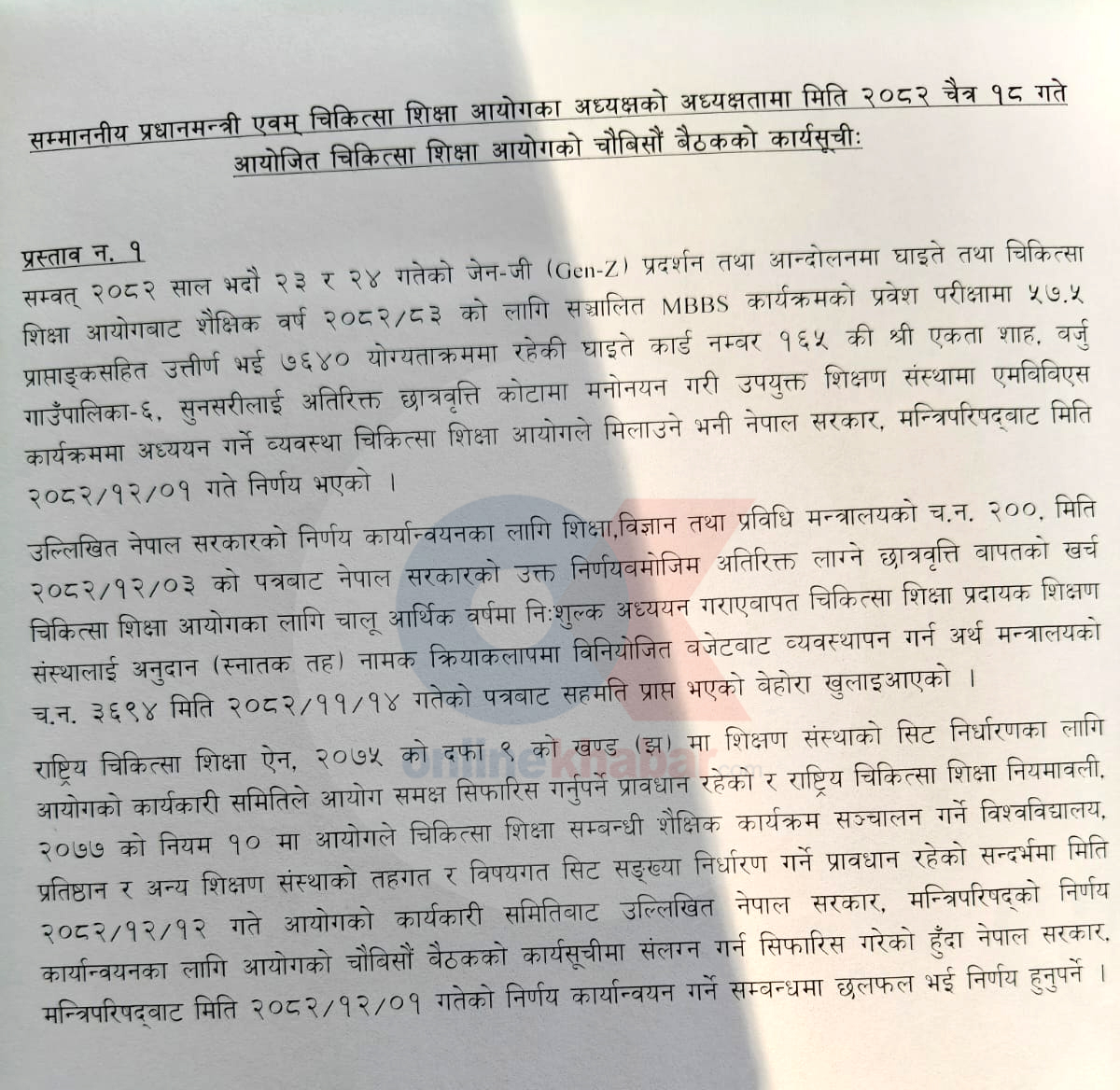
Ekta Shah.

Members recalled that after the proposal was introduced, several raised doubts about the legal framework and scholarship limits. Some objected saying decisions could not disregard the law, but the proposal was advanced under ministerial direction.

One member described the proposal as being imposed under the guise of implementing the Cabinet’s decision.

“We were not fully informed about the agenda. Later we found out that an additional seat was to be granted. The decision seemed to be forced forward,” the member stated.

Under current arrangements, scholarships are distributed according to merit and legal criteria. Granting an additional seat to a single individual on the basis of injury during the Janajati movement calls into question the merit-based admission system, they argued.

“This is a policy issue. If rules are broken for one person today, it risks opening the door for others in the future,” the member added.

How the Law Was Overridden

Ekta Shah scored 57.5 marks on the MBBS entrance exam and ranked 7,640th in eligibility order.

She is from Barju Gaupalika-6, Sunsari. The Cabinet had instructed the Medical Education Commission on March 15 to provide an additional scholarship seat for her, citing her status as an injured activist, with ‘injury card’ number 165.

The commission’s agenda notes that the Ministry of Education, Science and Technology, following the Cabinet’s decision, received budget approval from the Ministry of Finance on February 28 to cover the additional scholarship costs from the current fiscal year’s grant to medical education providers.

However, this decision conflicts with existing law.

According to the National Medical Education Act, 2075 (2018), only the commission has the authority to determine the number of seats at educational institutions. Section 17 states that the commission shall annually set seat numbers for universities, institutes, and other teaching institutions based on established criteria.

Furthermore, subsection (3) of Section 17 requires admissions of students selected through entrance exams to follow a matching system.

For the academic year 2082/83, as of August 15, the commission has already allocated 2,635 seats across various institutions.

The MBBS entrance exam was conducted from November 1 to 5, with results published and admissions through a matching system reaching the final stages.

If the Cabinet’s decision is implemented as is, it directly conflicts with Section 17 provisions regarding student admission and the academic calendar.

Since the seats have been finalized and students selected, creating an additional scholarship seat violates the intent of the law, another member stated.

“The seats have already been determined. The entrance exam has been conducted. The merit list has been finalized. Granting extra seats or scholarships under the Cabinet’s directive bypasses the law,” the member said.

Members also said the rule requiring agendas to be provided at least 24 hours before meetings was violated.

“We were informed about the meeting at 4 pm on Wednesday, but the agenda was shared only the previous night, and it only mentioned ‘implementation of Cabinet decision’ without details,” the member explained.

Critics claim the decision was pushed forward with a lack of transparency.

“Bringing such an agenda without notifying commission members suggests an attempt to pass the decision covertly,” the member said. “A Cabinet decision can never override the law.”

Some commission members are reportedly preparing to formally register dissent motions in upcoming meetings.

Vice-Chair Dr. Jha Remains Neutral

Vice-Chair Dr. Anjanikumar Jha confirmed that the topic of granting an additional scholarship to Ekta Shah was discussed during Wednesday’s meeting.

He said the Cabinet’s decision was brought forward for discussion but declined to comment on why the commission proposed an action that contradicts the law, stating, “I have no comment on this matter.”

He added that the issue remains under discussion and no approval has been granted. He also mentioned that other co-chairs have not contacted him for further clarification on this matter.