

Advertisement1200×100-inside-1

Author: space4knews

Both pilots killed in plane crash after collision with truck at New York’s LaGuardia Airport

Both pilots of an Air Canada plane that crashed after colliding with a truck at New York’s LaGuardia Airport have died. The aircraft was carrying 72 passengers and four crew members, with 41 people injured and taken to the hospital. Thirty-two passengers have been discharged, though some are reported to have sustained serious injuries.

Kathmandu – The tragic incident at LaGuardia Airport resulted in the deaths of both pilots and numerous injuries among passengers and crew. Four crew members and 72 passengers were on board the aircraft when it collided with a truck. Katherine Garcia, Executive Director of the Port Authority overseeing New York and New Jersey airports, provided details at a press conference. She stated, “There were 72 passengers and four crew members on the Air Canada plane. Forty-one passengers and crew members have been hospitalized. So far, 32 have been discharged, but some have sustained serious injuries.”

According to a CBS News report, the plane, a Bombardier CRJ900 model, had arrived from Montreal, Canada. After landing at LaGuardia Airport, the small aircraft was taxiing on the runway when it collided with a truck operated by the Port Authority of New York and New Jersey.

Iran Conflict: Rising Middle East Tensions Deepen Nepal’s Energy Crisis, Is Cooking with Electricity Viable?

Following attacks by the United States and Israel on Iran, escalating tensions in the Middle East have heightened global concerns over energy security. In this context, officials in Nepal have urged the public to adopt ‘prudent consumption’ measures. The Strait of Hormuz, which handles about 20 percent of the world’s oil and gas transit, faces potential disruptions, intensifying worries worldwide. However, so far, Nepal’s electricity sector has not experienced significant pressure, and petroleum supplies remain unaffected according to government assessments.

Energy Secretary Chiranjeevi Chatout stated, “If there were shortages in gas and petroleum supply, pressure on electricity might increase, but currently our system does not show such strain.” He added, “Our electricity infrastructure relies on hydropower and some solar energy, with no thermal plants in operation.” A spokesperson for the Nepal Electricity Authority reported a roughly 5 percent rise in consumption of cooking gas, diesel, and petrol. According to spokesperson Manoj Kumar Thakur, price adjustments have become necessary due to increased prices on international markets. He said, “We advise consumers to use bioenergy sparingly and to increase the use of electrical appliances wherever possible.”

The Ministry of Energy, Water Resources, and Irrigation reports that Nepal’s total installed hydropower capacity has surpassed 4,000 megawatts. Secretary Chatout explained that current consumption is around 2,000 megawatts and is expected to reach approximately 2,500 megawatts within a few years. “There may be a need to import some electricity for about two months before the monsoon begins, which is a challenging period, but hydropower generation will stabilize supply through the Dashain festival period.” Presently, solar power contributes about 150 megawatts to electricity production. Chatout added, “During the rainy season, even with an installed capacity of 4,000 megawatts, consumption near 2,700 megawatts does not cause issues, and we can even export electricity at that time.” Nepal reportedly imports approximately 500 megawatts of electricity from India during peak hours.

According to Nepal’s petroleum regulations, daily consumption of petrol ranges between 20 to 25 million liters, while diesel consumption is about 40 to 45 million liters per day. The monthly demand for cooking gas stands at roughly 45,000 metric tons. The Nepal Living Standards Survey (Fourth) 2022/23 indicates that nearly 50 percent of households use traditional fuels (wood, gasohol, etc.) for cooking. Compared to the previous (third) survey, there has been a 14 percent decline in households using traditional fuels and an 18 percent increase in LPG usage, reaching 46.6 percent.

Oil Corporation spokesperson Thakur noted, “Only 5 percent of people cook using electricity. Should more LPG users transition to electricity for cooking, substantial energy savings could be achieved.” However, he also highlighted that those who use electricity for cooking do not depend exclusively on it and stated, “Energy savings will occur if gas use is limited and managed prudently.”

Energy Secretary Chatout added, “Though a comprehensive international assessment is lacking, new strategies related to electricity consumption will be developed if the crisis deepens. We are continuously discussing potential scenarios. Even if demand increases, we can manage the situation promptly.” According to data from the International Energy Agency (IEA) in 2023, Nepal’s net energy imports account for 27.3 percent of its total energy system.

उपराष्ट्रपति यादवसँग बङ्गलादेशका राजदूत रहमानको शिष्टाचार भेट

Bangladeshi Ambassador Rahman Holds Courteous Meeting with Vice President Yadav

Bangladesh’s Ambassador Md. Shafiqul Rahman held a courtesy meeting with Vice President Ram Sahaya Prasad Yadav. Vice President Yadav stated that the Nepal-Bangladesh relationship is based on universal equality, mutual respect, and trust. Ambassador Rahman emphasized the need to expand cooperation in trade, education, and energy sectors, and requested an increase in electricity supply from 40 megawatts to 60 megawatts. The meeting took place on Chaitra 9 in Kathmandu.

At the Vice President’s office in Lainchaur today, the Secretariat reported that Vice President Yadav and Ambassador Rahman exchanged greetings and discussed various multidimensional aspects of bilateral relations. Vice President Yadav highlighted that since the establishment of diplomatic relations in 1972, Nepal and Bangladesh have maintained a friendly and cordial relationship, grounded in universal equality, mutual respect, and trust.

Vice President Yadav reiterated that Nepal places high priority on its relationship with Bangladesh. He congratulated Bangladesh on the successful completion of its recent elections and extended best wishes for the success of the new government’s work. He also mentioned that Nepal recently completed elections for the House of Representatives and is in the process of forming a new government, expressing confidence that bilateral cooperation will strengthen further. During the meeting, Ambassador Rahman noted that Nepal-Bangladesh relations are based on people-to-people trust and stated that this relationship can be deepened. He suggested prioritizing cooperation in commerce, education, and energy, and requested increasing Nepal’s current electricity supply from 40 megawatts to 60 megawatts.

Economic Census Begins in Baglung with Deployment of 36 Personnel from April 14

News Summary

Editorial reviewed.

  • Economic census in Baglung will be conducted from April 14 to June 21, with 36 personnel deployed for the task.
  • For the census, 31 enumerators and 5 supervisors have been assigned and will receive one week of training.
  • Data on 18 types of establishments including agriculture, industry, trade, service, hotel, and self-employment will be collected.

March 23, Baglung – Preparations are underway in Baglung to deploy 36 personnel for the economic census, scheduled to run from April 14 to June 21. An office has been established to coordinate the census activities.

The office is located in the Statistics Coordination Office building in Baglung Municipality–2. A total of 31 enumerators and 5 supervisors have been appointed across the district for the census.

Office Chief Chandrakant Suvedi stated, “After a one-week training program, these personnel will be deployed for the enumeration. By the end of Chaitra, preparations are being made to appoint enumerators, conduct training, and coordinate with local levels to assign personnel ward-wise.”

This economic census, the second of its kind nationwide, will collect data from 18 types of establishments including the agriculture sector. Details on registration, renewal, and transactions related to commercial agriculture, trade, service, industry, hotels, and self-employment enterprises will be gathered.

Following the formation of the District Coordination Committee led by the Chief District Officer, separate monitoring committees will be set up at the municipality and ward levels. The previous economic census was conducted in 2018 (2075 BS). The current census was delayed by two years due to the Covid-19 pandemic.

The economic census is conducted every five years to measure the country’s economic development indicators and assist in policy formulation.

Bagmati Province Government Collects NPR 2.449 Billion in Revenue

March 22, Kathmandu – The Bagmati Province government has collected NPR 2.449 billion in revenue during the first eight months of the current fiscal year 2082/83, which accounts for 36.29 percent of the annual target.

Land registration (land revenue) and vehicle taxes are considered the primary sources of revenue for the provincial government. The revenue collection target was set at NPR 3.089 billion from Shrawan to Falgun of fiscal year 2082/83.

According to Suraj Paudel, an official from the Ministry of Internal Affairs and Planning Development of Bagmati Province, NPR 1.393 billion has been collected so far, meeting 45.13 percent of the target.

He further noted that in the current fiscal year, the target for revenue collection from land registration was NPR 770 million, while NPR 256.2 million has been collected in the first eight months.

Similarly, the province had estimated NPR 825 million in revenue from vehicle-related taxes such as vehicle inspection passes, route permits, driver’s licenses issuance, and renewals, of which NPR 444.93 million has been collected.

The province also expected to collect NPR 879.87 million from value-added tax related to distribution, and has gathered NPR 504.65 million during this period.

Likewise, from internal excise duties, the government projected NPR 403.79 million, but collected NPR 175.34 million so far, the ministry reported.

Under the equalization grant received from the federal government, a total of NPR 1.481 billion was anticipated, out of which NPR 794.27 million, or 53.60 percent, was received within the eight months, according to official Paudel.

Furthermore, the ministry stated that NPR 477.74 million was expected from the province’s internally generated revenue sources for the current fiscal year, with NPR 250.12 million, representing 52.35 percent of the target, collected so far.

Paudel attributed the shortfall in revenue collection to decreased transactions in land and new vehicle purchases due to economic liquidity issues, as well as damages incurred by revenue collection agencies during the Genji protests on Bhadra 23 and 24.

Elon Musk Announces Plans to Build a ‘Self-Sustaining City’ on the Moon

Elon Musk recently announced plans to establish a ‘self-sustaining city’ on the Moon within the next 10 years. The owner of X, Tesla, and SpaceX shared this vision in a post on X, stating that his company, SpaceX, intends to build a city on the Moon rather than Mars. The post has been viewed over 40 million times.

But why has Musk changed his focus? And what do we know about this proposed lunar city? Currently, no formal, detailed, or roadmap-based plan has been released for a settlement on the Moon. Musk has shared only his perspective via social media. He highlighted the goal of establishing a permanent human settlement, with numerous future missions planned to the Moon. The city’s expansion would depend on utilizing the Moon’s available resources incrementally.

In his post, Musk estimated that this project could be completed in “less than 10 years on the Moon, whereas it would take over 20 years on Mars.” He added, “The goal of SpaceX’s missions remains the same: to expand the life and consciousness we know to the stars.” Musk explained that traveling to Mars requires waiting for optimal planetary alignment, which occurs roughly every 26 months, with the journey taking approximately six months. In contrast, “we can travel to the Moon every 10 days, with the trip lasting just two days.”

“Therefore, building a city on the Moon will be much faster than establishing one on Mars,” Musk stated. Developing a city on Mars has long been SpaceX’s ambition and continues to be a priority. Writing on X, Musk said, “We plan to initiate Mars development within the next five to seven years. However, the primary priority is ensuring the future of human civilization, and working on the Moon allows us to move faster toward that goal.”

अन्तिम समयमा बढ्यो सेयर बजार, घट्यो कारोबार – Online Khabar

Share Market Rises in Final Hours Despite Lower Trading Volume

News Summary

Reviewed and editorially assessed.

  • On Monday, the NEPSE index rose by 5.01 points to reach 2936.
  • Trading volume declined, limited to NPR 1.578 billion.
  • Six companies including Reliance Spinning Mills and Salpa Development Bank saw their share prices surge by 10%.

March 23, Kathmandu – The share market fluctuated throughout Monday but closed on an uptrend. The NEPSE index increased by 5.01 points compared to the previous day, closing at 2936 points. After dipping to 2911 points at 2:34 pm, the market recovered in the final hours.

However, the trading volume declined. While the previous day’s volume was NPR 2.359 billion, Monday’s trading was limited to NPR 1.578 billion. Share prices increased for 102 companies, decreased for 154, and remained unchanged for 8 companies.

The production and processing sector led the gains, rising by 1.53%. Other sectors, such as finance (+0.20%), hydropower (+0.96%), investment (+0.72%), and microfinance (+0.43%) also saw growth. Conversely, banking (-0.27%), development banks (-0.50%), hotel and tourism (-0.86%), life insurance (-0.48%), non-life insurance (-0.04%), and trade (-0.59%) sectors experienced declines.

Six companies recorded a 10% increase in share price. These include Reliance Spinning Mills, Salpa Development Bank, Solu Hydropower, Bhujung Hydropower, Manakamana Engineering Hydropower, and Hotel Forest Inn. Additionally, First Microfinance’s shares increased by 8.96%, Asha Laghubitta by 8.82%, and Mero Microfinance by 8.18%.

Sindhu Development Bank’s shares experienced the largest drop, falling 3.23%. The five most actively traded companies of the day were Kumari Bank, Shivam Cement, National Hydropower, NRN Infrastructure, and Ngadi Group.

Home Minister Honors Officials and Security Forces for Their Role in Successful Election

News Summary

Reviewed editorially.

  • Home Minister Om Prakash Aryal honored officials and security forces who played a role in successfully conducting the House of Representatives election.
  • Aryal stated the election was historically successful with no bloodshed, emphasizing the importance of maintaining collective leadership and coordination going forward.
  • Defense Ministry Secretary Kedarnath Sharma and Home Ministry Spokesperson Anand Kafle credited strong coordination and wise leadership for the election’s success.

March 22, Kathmandu – Home Minister Om Prakash Aryal honored Home Ministry officials and security personnel who contributed to the successful completion of the House of Representatives election. On Monday, at an event held at the ministry, Minister Aryal presented certificates of appreciation to the officials and security forces.

Minister Aryal presented certificates of appreciation to Rajkumar Shrestha, Secretary of the Home Ministry; Kedarnath Sharma, Secretary of the Defense Ministry; Brigade Commander Pradip Jung KC from the Nepal Army; Inspector General of Police Dan Bahadur Karki; Armed Police Force Inspector General Raju Aryal; Head of the National Investigation Department Tekendra Karki; district security committee officials from Kathmandu, Lalitpur, and Bhaktapur; and senior officials of the Home Ministry. Additionally, all employees and security personnel deployed in the election, including district security committee members, were congratulated and honored.

At the occasion, Home Minister Aryal praised the crucial role played by employees, security forces, and all stakeholders in successfully executing the House of Representatives election on Falgun 21 (March 5). He noted that a new benchmark was set by completing the election peacefully in a single phase.

“We have set a new standard by successfully conducting the election historically; this time there was no bloodshed, and no need for re-election,” he said. “The positive outcome is due to collective leadership and strong coordination among all stakeholders. It is essential to maintain this in the future.”

Minister Aryal highlighted the pivotal and responsible role played by security committees from the central to district levels, the construction command force, security cells, and responsible government officials in contributing enthusiastically to the election’s success.

“The creativity and capability of officials deployed in the election are commendable,” Minister Aryal remarked. “In past incidents, leadership often struggled to fully understand the events; instructions might have been issued based on incomplete information or unverified statements. However, this time thorough investigations and careful coordination preceded decisions. Actions were based on coordinated decisions, and all levels of security agencies played a remarkable role.”

Defense Ministry Secretary Kedarnath Sharma and Home Ministry spokesperson Anand Kafle credited the election’s success to strong coordination and prudent leadership. Home Ministry Security and Coordination Division Chief and spokesperson Anand Kafle mentioned that positive results were achieved in maintaining election security and peaceful order.

Plane Collides with Truck at New York LaGuardia Airport, Many Injured

News Summary

  • A CRJ900 model aircraft collided with a truck at New York’s LaGuardia Airport.
  • The flight had between 70 to 90 passengers on board, with many reported injured.
  • The U.S. Federal Aviation Administration issued a ‘ground stop’ order, closing the airport temporarily.

At New York’s LaGuardia Airport, a plane crashed after colliding with a truck, resulting in multiple injuries.

The accident involved a small CRJ900 model aircraft carrying between 70 and 90 passengers. Local media reports indicate numerous individuals were hurt.

According to CBS News, the airplane came from Montreal, Canada, and was preparing to land at LaGuardia Airport.

After landing, while the aircraft was taxiing on the runway, it collided with a truck operated by the Port Authority of New York and New Jersey, which manages the airport.

The airport has been completely closed until further information is received following the accident.

On Sunday night, the U.S. Federal Aviation Administration issued a ‘ground stop’ order to halt all flights at LaGuardia Airport, with the duration of this order potentially being extended.

Nepal Election 2082: A Mixed Feeling of Curiosity, Fear, and Citizenship

Elisha Maharjan, a resident of Kathmandu’s Basantapur, used to think until a few months ago, “What difference does it make whether I vote or not?” However, her perspective changed after the ‘Gen Z Movement’ in Bhadra (August-September) this year. On Thursday, she went to her local polling center and voted for the first time. She said, “Inspired by the Gen Z movement, I felt we should also participate in voting, so I cast my ballot.” Earlier in Bhadra, young members of the new generation protested in the capital against widespread corruption and poor governance. Following these protests, which resulted in the deaths of at least 77 people, the interim government dissolved the House of Representatives and announced general elections. After expressing her opinion in this general election, Maharjan stated, “Voting for the first time, I hope for some positive changes in our lives. I also voted thinking that the country will develop further.”

According to the national census, nearly 46% of Nepal’s total population is youth. The latest census revealed that about 19.7% of the total population falls between the ages of 15 and 24. Among the approximately 19 million eligible voters in this election, nearly one million voters were first-time participants. Among those casting their first votes in Basantapur, Kathmandu, was 19-year-old student Srijal Shrestha. Explaining his reasons for voting, he said, “Many of my peers lost their lives. My feeling is that good leaders should come to politics and work. Corruption is widespread, and I came to vote hoping it would be reduced and that Nepal would develop.”

After voting at the Gyaneshwor polling center, 19-year-old Sarvashree Gartola said she was ‘nervous’ but confident she voted well the first time. She added, “This time, young people like us had to vote. We fulfilled our duty. I hope that people’s problems will be solved. I wish opportunities remain within the country and that employment is found here.”

The Election Commission has stated that those listed in the voter registry who will turn 18 by the 20th of Falgun (early March) are eligible to vote in the House of Representatives election. For some young voters, navigating quiet streets, standing in lines, passing security personnel, various symbols, and officials to reach the ballot box was a source of curiosity. 23-year-old Ronish Karmacharya from Chitwan shared, “I used to just see my parents vote. When I went for the first time, it was a bit difficult at first because I didn’t know what to do. But after watching others, it became easier.”

Pushpa Rimal from Nuwakot Constituency No. 2, Myagang, voted early in the morning. She shared her feelings of happiness and pride upon exercising her voting rights for the first time. She stated, “At first, I wondered how to vote, but once there, it felt easy. I felt like a true citizen of Nepal, and I am very happy.”

The electoral government led by Prime Minister Sushila Karki reached an agreement in Mangsir (November-December) with the Gen Z protesters, pledging to investigate human rights violations and violence occurring during the Gen Z movement and hold the perpetrators accountable.

विघटनपछि निष्क्रिय विधेयक आगामी संसद्का लागि ‘खुराक’

Bills Inactive After Dissolution Set to Fuel the Upcoming Parliament

News Summary

Editorially Reviewed.

  • With the dissolution of parliament, 31 bills under consideration in the House of Representatives have become inactive, while five bills remain active in the National Assembly.
  • The Rastriya Swatantra Party secured 182 seats in the election held on Falgun 21, obtaining sole decision-making power in parliamentary committees.
  • A study conducted by the National Assembly’s Legislation Committee shows that over 320 laws are required to implement federalism.

Chaitra 9, Kathmandu – Several important bills including those related to federal civil service, Nepal Police, and school education, which had advanced amid intense debates in various committees of the previous House of Representatives, have become inactive following the dissolution of parliament.

These crucial bills, directly linked to federalism implementation concerning personnel management, security, and education, now appear more feasible to finalize given the current parliamentary dynamics.

Following the adverse situation arising from the Genji movement and the dissolution of parliament on Bhadra 27, these bills have effectively returned to a ‘zero’ state but may serve as significant legislative groundwork for the upcoming parliament.

Typically, a simple majority in parliament is required to enact new laws. However, in the election held on Falgun 21, the Rastriya Swatantra Party alone won a total of 182 seats.

This majority indicates that the party will have sole decision-making authority in each parliamentary committee, suggesting that the upcoming session will see swift deliberation and passage of such impactful and long-term bills.

An analysis by the National Assembly’s Legislation Committee revealed that implementing federalism necessitates over 320 laws. Some amendments such as the Nepal Act have already been passed, addressing certain issues. Previous governments had prioritized these laws into first, second, and third categories and forwarded the details to the Federal Parliament Secretariat.

According to Ekram Giri, spokesperson for the Secretariat, 31 bills under consideration in the House of Representatives became inactive after dissolution. Legally, bills that originated in the House and those introduced in the National Assembly but pending in the House automatically become inactive after dissolution.

“Five bills that originated in the National Assembly and are under consideration in the upper house remain active,” Giri said. “The National Assembly has sent three bills back to the House with messages after completing their procedures.”

A bill related to alternative financial management was registered with the Secretariat by the caretaker government. In the last session of the National Assembly, three ordinances were introduced in the house. These will enter the House of Representatives as formal business.

Bills that became inactive after parliament’s dissolution can be updated and reintroduced as new bills, he added. “The government can decide how many bills to take as ‘reference’ and subsequently register new ones. Even if the same bills are to be advanced, they must undergo the new legislative process.”

A bill is a proposal presented in parliament on behalf of the government for lawmaking. Based on origin, content, and presentation, bills are categorized as government or private member bills. Apart from finance and security, members of parliament can also register private member bills.

Historically, in Nepal’s parliamentary history, the Nepal Health Professional Council Bill 2053, Human Rights Commission Bill 2053, and Legal Aid Bill 2054 were passed as private member bills.

Based on content, bills are divided into types including finance, general, principal, dependent or supplementary, amendment, ordinance replacement, constitutional amendment, and supplementary expenditure bills.

Parshuram Meghi Gurung, former chairperson of the National Assembly’s Legislation Management Committee, explains that legislative procedures in Nepal generally follow two stages: pre-legislative and legislative.

In the pre-legislative stage, a bill receives theoretical consensus, is drafted, and then introduced to the cabinet and the parliament. The legislative stage involves issuing notices to seek permission to present the bill, debating permission motions, detailed general and clause-by-clause discussions, deliberations in subject committees, committee report discussions, and finally, passing the bill.

Moreover, bills originated in the National Assembly are sent to the House of Representatives and vice versa. After passage in both houses, they are certified and forwarded to the President for assent.

Parliamentary rules stipulate that after passage by the House of Representatives, the National Assembly must complete the legislative process within 60 days—or 15 days in the case of financial bills—and return them with messages.

There is a general understanding that laws enacted by parliament should be subject to thorough debate and discussion to ensure quality, taking adequate time. However, occasionally when laws need to be enacted swiftly, relevant sessions suspend rules to expedite the process.

“After the promulgation of the new constitution, laws related to fundamental rights should have been enacted within three years. Some laws were passed by suspending rules at the last moment,” noted spokesperson Giri. RSS

Demand to Expand Specialized Health Services at Dolpa District Hospital

News Summary

  • Civil society in Dolpa has drawn the attention of the Karnali Provincial Government to the need to expand specialized health services at Dolpa District Hospital.
  • The Nick Simons Institute had prioritized Dolpa Hospital for its specialist health services program in remote areas, but the provincial government’s recent hospital selection excluded Dolpa, leading to grievances.
  • The Ministry of Social Development selected five hospitals excluding Dolpa and has been petitioned for immediate revision to include Dolpa District Hospital.

Chaitra 9, Dolpa – A demand has been raised for the expansion of specialist health services in Dolpa district, drawing the attention of the Karnali Provincial Government.

On Monday, Dolpa’s civil society submitted a memorandum to the District Administration Office seeking the provincial government’s urgent attention to this issue.

The Nick Simons Institute’s program, aimed at providing specialist health services in remote areas, includes a call for Dolpa District Hospital to be prioritized.

However, civil society expressed objection to the provincial government’s hospital selection list for health service expansion that did not include Dolpa District Hospital.

According to Sher Bahadur Budha, Chairman of Dolpa Civil Society, the memorandum was submitted through the District Administration Office to the Chief Minister and Cabinet Office in Birendranagar, Surkhet, highlighting concerns about the exclusion.

The memorandum emphasizes that Dolpa is geographically extremely remote and ranks low on human development indices, reasons that warrant prioritizing its district hospital.

The Nick Simons Institute had conducted detailed studies and moved forward with prioritizing Dolpa District Hospital, but the provincial government’s decision is seen as disregarding the district.

The Ministry of Social Development selected hospitals in Salkot (Surkhet), Dullu (Dailekh), Raskot (Kalikot), Atbisekot (Rukum West), and Humla for the program.

Despite Dolpa’s priority status based on needs and remoteness, the district was omitted, causing dissatisfaction among local civil society.

Social activist Babi Kishor Gurung criticized the ministry’s decision as unscientific and biased, alleging that districts in remote areas were sidelined on the basis of position and influence.

The memorandum calls for the immediate revision of this decision to include Dolpa District Hospital among the five hospitals where the Nick Simons Institute program will be implemented.

Four Arrested in Dolpa with 35 Quintals of Illegal Medicinal Herbs

News Summary

Prepared by AI and editorially reviewed.

  • Four individuals were arrested in Tripurasundari Municipality area with approximately 35 quintals of illegal Padmachal medicinal herbs.
  • A joint patrol team of the Nepal Army conducted a raid in Tripurakot area, seizing two tractors and the herbs.
  • The detainees have been handed over to the Shey-Phoksundo National Park administration for necessary investigation.

March 23, Dolpa – Four individuals have been arrested in the Himalayan district of Dolpa for illegally collecting 35 quintals of medicinal herbs.

According to the Shey-Phoksundo National Park office, at around 3 a.m. on Monday, four people were detained at Bagar Bazaar in Tripurakot, Ward No. 1 of Tripurasundari Municipality, along with a large quantity of illegally collected herbs.

The park authorities stated that a joint team comprising the Nepal Army’s Sangram Shardul Gulma unit and senior game scouts from the park conducted a raid in Tripurakot’s Bagar Bazaar area, seizing 35 quintals of illegal Padmachal herbs packed in 101 sacks and confiscating two tractors.

The arrested individuals include 36-year-old Naresh Budha from Tripurasundari-5, 25-year-old Elish Budha (driver) from Kumakh Rural Municipality-4 in Salyan, 48-year-old Krishna Bik (driver) from Aathbiskot Municipality-7 in Rukum West, and 33-year-old Bikas Rokaya from Tripurasundari-5.

Army personnel Harish Shahi reported that the suspects have been handed over to the national park administration office with proper documentation for necessary investigation and legal action.

The detainees were taken to Dunae District Hospital for health check-ups, and the confiscated herbs are currently under the custody of the national park.

Assistant Conservation Officer Bijan Sen of the Shey-Phoksundo National Park informed that the joint patrol was launched based on intelligence that herbs were being collected without permission and were about to be smuggled out of the district overnight.

He added that the collection of Jatamansi (Nardostachys jatamansi) has recently been banned in Dolpa, and collection of Padmachal herbs will only be permitted after studying the implementation plans and identifying appropriate areas.

Iran Generates Significant Revenue from Oil and Gas Amidst War, Challenging Gulf Countries

Summary of the News

  • Iran continues to export 1.7 to 2 million barrels of oil daily through the Kharg Terminal, capitalizing on the US-Israel conflict.
  • Oil production in Gulf countries has dropped by up to 70 percent, with Iranian attacks in the Strait of Hormuz significantly impacting exports.
  • From March 20 to April 19, the US has granted a 30-day exemption on Iranian oil purchases, likely increasing global oil supply.

March 22, Kathmandu – Iran has turned the ongoing conflict between the United States and Israel to its advantage, maintaining nearly 90 percent of its oil exports via the Kharg Terminal.

Despite US military strikes near Kharg Island, direct attacks on the oil terminal have been avoided due to fears of a global oil crisis. Iran has leveraged this situation to continue exports through the Kharg Terminal. Iranian “ghost fleet” tankers are reportedly supplying oil to China.

According to the International Energy Agency (IEA) and S&P Global, Iran is exporting between 1.7 and 2 million barrels of oil daily, with approximately 90 percent of the country’s oil exports moving through the Kharg Terminal.

Although exports were affected by attacks on the South Pars gas field, gas supplies have not been completely halted. Reports indicate that Iran has been collecting a war tax of about NPR 165 million per vessel from foreign ships passing through the Strait of Hormuz.

Up to 70% Decline in Gulf Countries’ Oil Production

Iranian control and ongoing attacks in the Strait of Hormuz have severely disrupted oil supplies from Gulf countries such as Saudi Arabia, Qatar, Iraq, Kuwait, and the UAE. The lack of safe maritime routes, increasing assaults, and transportation difficulties have reduced these countries’ total oil production by as much as 70 percent.

The ongoing war in the Middle East has directly affected crude oil prices. On Friday, Brent crude oil surged by 3.26 percent to $112.19 per barrel, marking the highest level since July 2022.

Sustained prices above $100 could exacerbate inflation in India, negatively impacting its market.

Five Gulf Countries Most Affected
File photo.

Saudi Arabia: The world’s largest oil exporter is struggling to maintain production levels. Daily output has dropped from 10 million barrels to 8 million barrels. Oil is being transported to Yanbu via the East-West pipeline, but this is insufficient. With the closure of the Strait of Hormuz, storage tanks are full, forcing Aramco to temporarily shut many wells.

Qatar: Qatar supplies 20 percent of global LNG (liquefied natural gas). After attacks at the Ras Laffan gas facility, a force majeure has been declared, indicating uncertainty in LNG supplies. Qatar’s LNG export capacity has decreased by 17 percent, and tankers are held at ports, driving up global prices.

Iraq: Foreign companies such as BP, ENI, and Total have recalled their staff amid the conflict. Oil production fell from 4.3 million to 1.3 million barrels per day, a nearly 70 percent decline, due to the closure of the Hormuz route and no alternate pipeline options. Storage facilities are full, halting operations in major oil fields like West Qurna and Majnoon.

Kuwait: Kuwait is fully dependent on the Strait of Hormuz. Due to blockades and war taxes, exports have nearly ceased. With war taxes of approximately NPR 165 million per ship and an insurance crisis, exports have fallen to almost zero.

Kuwait has had to shut down 50 percent of its production. Tankers are stranded at ports without the ability to proceed.

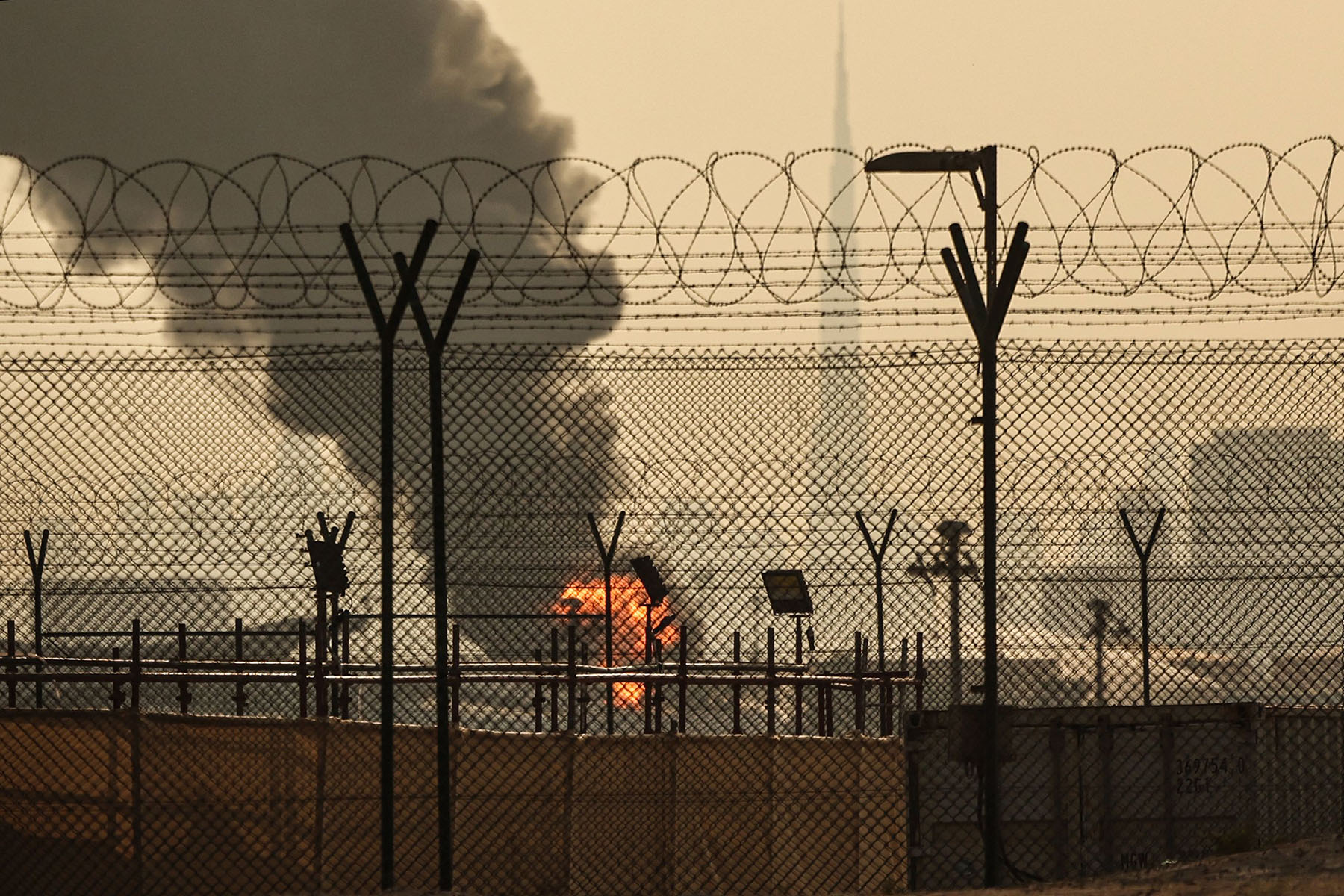
UAE: The Abu Dhabi-Fujairah pipeline is operating at full capacity; however, overall demand is high. Remaining oil supplies are stuck in the Strait of Hormuz. Iranian attacks have led to insurance premiums for vessels rising by up to 400 percent, increasing trade costs and reducing activity at Fujairah port.

US Grants 30-Day Exemption on Iranian Oil Purchases

The United States is also under pressure as rising prices hit global oil and energy markets. To help control inflation, the US has issued a 30-day temporary exemption on Iranian oil purchase sanctions, effective from March 20 to April 19. This exemption applies only to Iranian oil tankers currently at sea.

US Treasury Secretary Scott Bessen announced the exemption. According to the Treasury Department website, it will be valid between March 20 and April 19.

Bessen stated, “This will temporarily open current supplies to the world, allowing approximately 140 million barrels of oil to become available more rapidly on the global market. This will increase energy availability worldwide and reduce temporary supply pressures.”

(With additional agency inputs)

Musician Mahdi Saheli Plays Cello Amid Rubble of Destroyed Buildings in Beirut

Lebanese musician Mahdi Saheli is playing the cello while seated on the ruins of buildings destroyed by bombings in Beirut, Lebanon’s capital. Through his music, he aims to convey the message that war-torn Beirut can be restored to its former state.

Following heightened tensions with Iran, the United States and Israel launched a war, prompting the Israeli military to carry out operations targeting the Lebanese militant group Hezbollah. Lebanese officials have reported that Israeli airstrikes have claimed the lives of more than 1,000 people in Lebanon.

Saheli has studied the Western classical instrument, the cello. He enjoys creating music for the general public. Speaking to the BBC, he said, “By playing the cello on the streets during Beirut’s difficult times, hope and unity can be instilled among the people, and the spirit of our shared humanity can be revived.”