
Advertisement1200×100-inside-1

Tag: special

Improvement in Loan Demand Signals Increased Economic Activity

News Summary

  • Since mid-July of this fiscal year until September 4, commercial banks have increased loans by over NPR 4.3 billion.
  • According to the Bankers’ Association, festive seasons, relaxed loan policies, and new projects in the hotel and hydropower sectors have driven loan demand growth.
  • By September 4, the average loan-to-deposit ratio of banks reached 70.65 percent.

September 13, Kathmandu — Demand for loans at banks appears to be rising. As the festive season approaches this year, there has been an improvement in loan demand.

Since the start of the current fiscal year, commercial banks have disbursed NPR 41 billion in loans. Of the 20 operating commercial banks, there was a negative loan investment of NPR 200 million in July, but by September 4, loan investments increased by NPR 4.3 billion.

Banks had anticipated an increase in loan investment compared to last year from the beginning of this fiscal year. According to the Nepal Bankers’ Association, loan disbursement has been expanding. In the previous fiscal year, loan investments fell by NPR 1.1 billion in July but rose by NPR 4.3 billion in August.

From mid-2021 to early 2024, foreign exchange reserves continuously declined. During that period, the government even restricted imports of luxury goods. The COVID-19 pandemic and dwindling foreign reserves led the economy into recession. Reduced overall demand caused economic activities to drop, creating excess liquidity in the financial sector and reducing loan demand.

However, recently, Nepal Rastra Bank has relaxed lending policies and new projects have begun in the hotel and hydropower sectors, leading banks to forecast increased loan disbursements this fiscal year. Sudesh Khaling, CEO of Everest Bank, noted that loan growth in the first two months of this fiscal year has exceeded last year’s levels.

In the previous fiscal year, private sector loans from banks and financial institutions increased by NPR 359.36 billion, a 6.5 percent growth rate. The central bank had anticipated a 12 percent increase.

The central bank attributed the lower-than-target growth to a sluggish economy and reduced demand, completing only half of the loan investment targets. For this fiscal year, it has set an 11 percent expansion target for private sector lending. Nonetheless, loan investments are expected to rise compared to the previous year.

“Loan demand has particularly increased in the under-construction hydropower and hotel sectors,” Khaling said. “September and October are peak loan expansion seasons, coinciding with the festive period when imports also rise.”

Loans are also expected to increase due to the September 26 flood in Rasuwa. If the government increases capital expenditure for reconstruction in that area, loan disbursement should rise as per central bank targets.

With the government increasing capital spending, cement and steel production will also grow, necessitating expansion of production capacity and thus increasing loan demand. Khaling analyzed that rising imports will further stimulate loan disbursement. He added, “Loan growth tends to spike in the last month of each quarter, while the first month usually sees a downward trend.”

The Rasuwa flood has also helped boost both deposits and loans within the financial system. Foreign aid inflows will increase deposits further, he noted. “This time, government spending will drive higher loan demand, stimulate economic activity, and boost consumption.”

Most loans being disbursed are previously approved. Given the massive reconstruction needs after the Rasuwa flood, the central bank’s relaxed lending policies, excess liquidity, and reduced interest rates, the potential for increased loan disbursement is high.

By September 4 this fiscal year, deposits of commercial banks increased by NPR 6.4 billion, while loans rose by NPR 4.3 billion.

By that date, banks’ average loan-to-deposit ratio stood at 70.65 percent. Banks have the capacity to raise this ratio to 90 percent. To date, total bank deposits have reached NPR 7.54 trillion.

Meanwhile, loan investments have reached NPR 5.33 trillion, according to the Bankers’ Association. However, Nepal Rastra Bank reported that by September 8, total deposits of banks and financial institutions reached NPR 8.33 trillion, while loans had increased to NPR 5.998 trillion.

During this period, the average loan-to-deposit ratio of banking and financial institutions was 71.35 percent, the central bank said.

Nearly 500 Permits Issued for Mountain Climbing This Autumn Season

As of Friday, 498 individuals have obtained climbing permits for the upcoming autumn season. For Manaslu mountain climbing, 451 climbers from 38 teams have secured permits, including 120 women. This season, the government has collected 2.11 billion Nepalese Rupees in royalty fees from climbers as of Friday. (September 13, Kathmandu)

Despite the significant impact of the Rasuwa-Bhotekoshi flood on the tourism sector, adventure tourism has not experienced a major decline. The number of permits issued for mountain climbing this autumn is approaching 500. According to the Department of Tourism, 451 climbers, including 120 women, have obtained permits for Manaslu. Members of a total of 38 teams have been authorized.

Additionally, three climbers have received permits for Makalu mountain. For Dangga mountain, two groups comprising 16 climbers have permits, while for Dhaulagiri, two groups totaling 19 climbers have been authorized, according to the Department of Tourism. Furthermore, two climbers have obtained permits for Gangapurna mountain and seven for Thorong Peak. This season’s permits have been granted to climbers from 63 countries.

The largest group of climbers is from China, including 100 individuals and 29 women. Following that, 53 climbers are from Russia, 37 from the United States, and 28 from the United Kingdom. Additionally, France has issued permits to 27 climbers, while Germany and Japan each have 16 authorized climbers.

Anilkumar Sah Elected Unopposed as President of Morang Industry and Trade Association

September 14, Biratnagar – Anilkumar Sah has been unanimously elected as the president of Morang Industry and Trade Association, one of Nepal’s oldest and most prestigious business organizations. Alongside Sah’s unopposed selection as the president of the association’s 35th executive committee, Anil Sarda was chosen as senior vice president, Vikas Kumar Begwani as vice president for commerce, Sanjay Kumar Shrestha as vice president for industry, and Amit Kumar Sarada as general secretary.

The new executive committee also includes Amit Rathi and Dipesh Subedi as secretaries, Vinit Sanghaniya as treasurer, and Manish Maru as deputy treasurer. The spokesperson duties were assigned to Sushil Surana.

Committee members selected are Rajesh Kumar Agrawal, Vivek Agrawal, Anveet Ghimire, Pawan Rathi, Devashish Golcha, Bedant Jaju, Dr. Bandana Jain, Lokesh Tiwdewal, Dhiraj Mohta, and Omprakash Sharma. Invited members include Dr. Deependra Naulakha, Amit Agrawal, Shruti Sharma, Pankaj Dagad, and Vikas Agrawal. From the women entrepreneur committee, Sadhana Jha was appointed coordinator and Gina Shrestha deputy coordinator. The tenure of the new executive committee is set for two years.

Discussion on Post-Disaster Recovery, Investment Promotion, and Employment Generation

Bagmati Province Chief Minister Kiran Thapa Magar and Federation of Nepalese Chambers of Commerce and Industry (FNCCI) President Anjan Shrestha held talks in Teku focusing on post-disaster industrial and business recovery, investment environment, and employment opportunities. Shrestha expressed FNCCI’s readiness to support the establishment of a “Disaster Employment Bank,” skill-based training, and the development of new markets in affected areas. Chief Minister Thapa proposed working with the private sector under a public-private partnership (PPP) model for reconstruction, children’s education, and infrastructure development in the impacted districts. The meeting took place on 28 Bhadra in Kathmandu.

On Sunday, Chief Minister Kiran Thapa Magar and FNCCI President Anjan Shrestha met at the FNCCI Secretariat in Teku. The discussion covered damages caused by floods and landslides in Rasuwa and other districts, restoration of affected industries and businesses, enhancing the investment climate, job creation, and revitalizing economic activities in the province. Both parties committed to strengthening coordination and collaboration to identify concrete areas for advancing the province’s economic development, expanding private sector investments, and promoting entrepreneurship effectively in the coming days.

During the meeting, President Shrestha highlighted FNCCI’s active role in relief, rescue, and recovery efforts following the disaster and assured the federation’s cooperation with the provincial government to create a conducive environment for resuming operations of affected industries and businesses. He stated, “To make collaboration with the province more impactful, FNCCI is positive about expanding investment and entrepreneurship in Bagmati Province. We are also willing to work on establishing new local markets, hospitals, and rebuilding schools.”

Chief Minister Thapa acknowledged the private sector’s commendable contribution to the restoration and reconstruction of affected areas. He emphasized the need for partnership with FNCCI to support education for children affected by the disaster, job creation, and the revival of the local economy. Additionally, he proposed implementing public-private partnership (PPP) models for road and other infrastructure development projects across Bagmati Province.

Karnali Province Allocates NPR 213.5 Million for Five Major Tourist Destinations, Sets Foundation for Tourism Decade

News Summary

Reviewed.

  • The Karnali Province government has allocated NPR 213.5 million for the conservation and development of Rara, Kankrebihar, Bulbule, Kupinde, and Syarpu.
  • The province has earmarked NPR 538.6 million for tourism promotion and infrastructure development including parks, gardens, trails, and viewpoints.
  • Minister Kalyani Khadka stated that the Karnali Tourism Decade aims to create employment through conservation, infrastructure improvement, accessibility expansion, and skill development.

September 13, Surkhet – The Karnali Province government has initiated work this fiscal year with a substantial budget for the conservation, infrastructure development, and promotion of the region’s major tourist destinations.

The province plans to invest significantly in master plan implementation and in constructing tourism infrastructure such as buildings and roads at five key tourist spots.

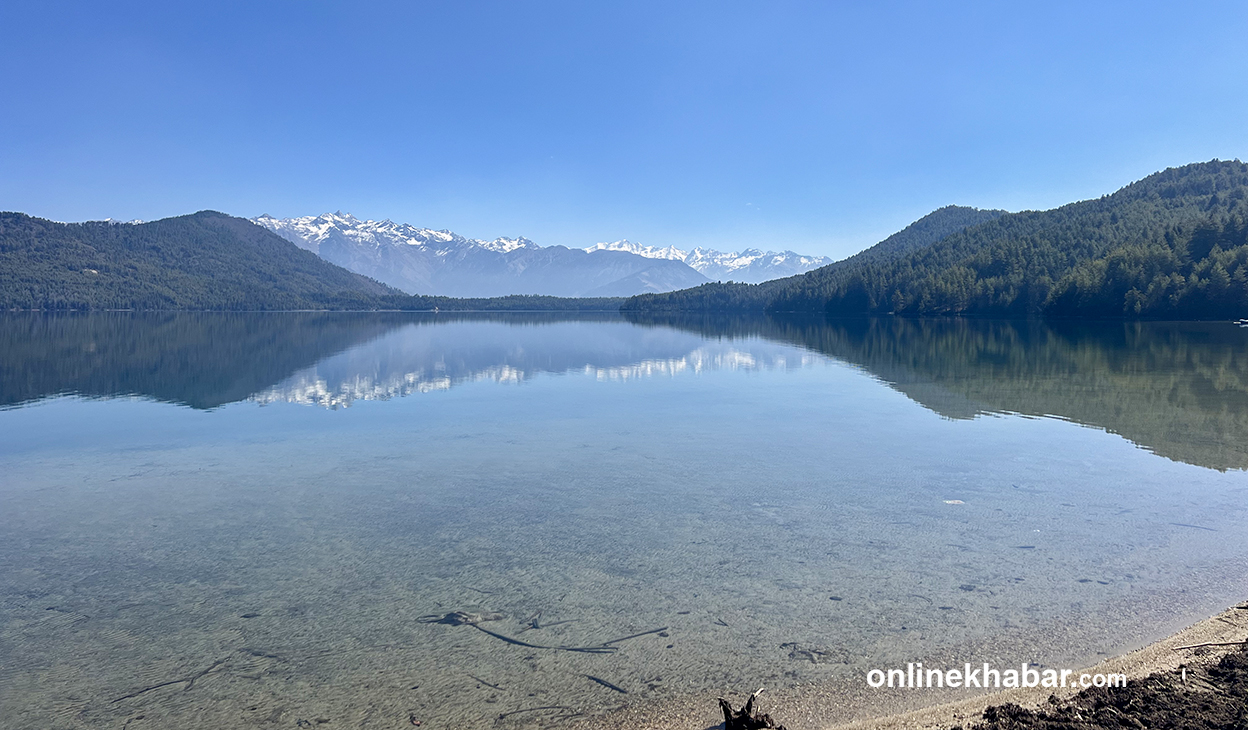
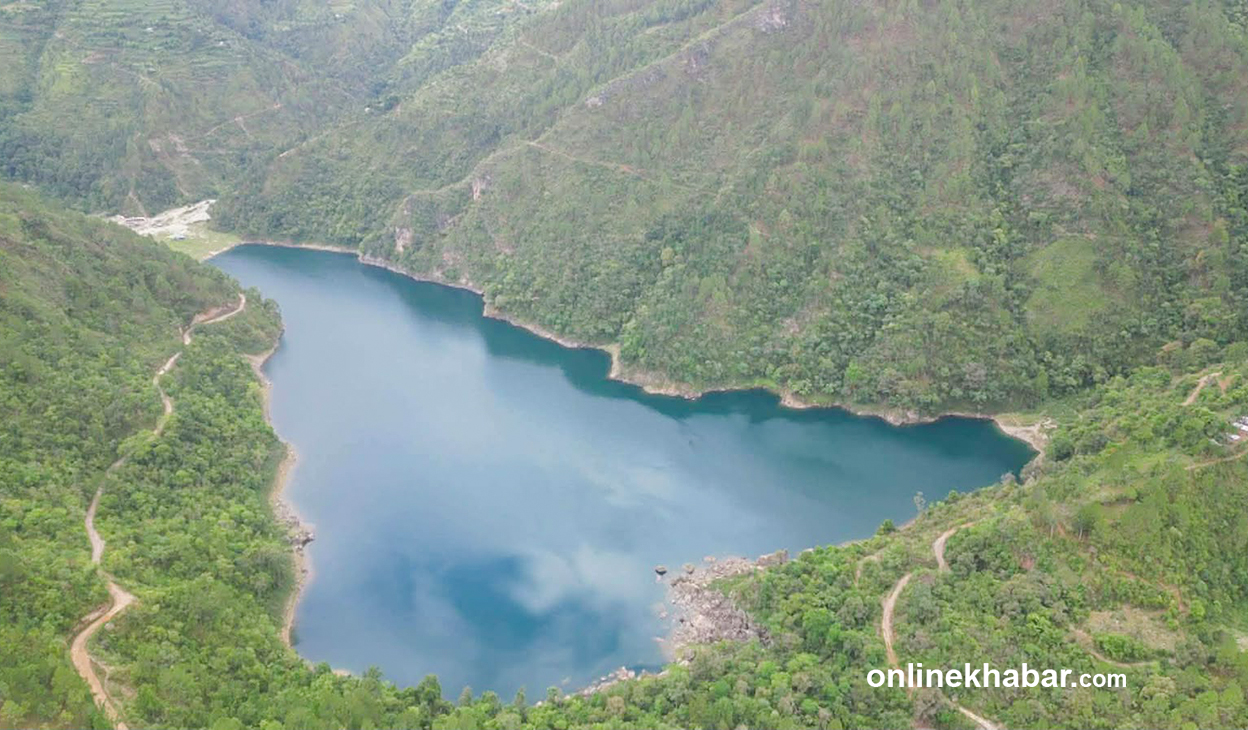
The government has allocated NPR 213.5 million for the conservation and development of Rara Lake in Mugu, Kankrebihar in Surkhet, Bulbule Garden and Chauhan Park, Kupinde Pond in Salyan, and Syarpu Lake in Western Rukum.

Budget statement point 50 for fiscal year 2083/84 emphasizes effective implementation of the master plans for these destinations.

Focus on Master Plan Implementation

Along with destination development, the government has allocated NPR 538.6 million for overall tourism infrastructure, including parks, gardens, open spaces, foot trails, and viewpoints, as well as improvements to natural, religious, and cultural infrastructure.

According to Industry, Tourism, Forest and Environment Minister Kalyani Khadka, the policy is to advance Karnali’s tourism by improving infrastructure, services, and destination management.

“The government has allocated a substantial budget for the development of auxiliary infrastructure linked to tourism,” she said. “Efforts will be made to enhance urban aesthetics through parks, gardens, trails, viewpoints, and tourism infrastructure related to natural, religious, and cultural sites.”

Prioritizing Destinations from Rara to Syarpu

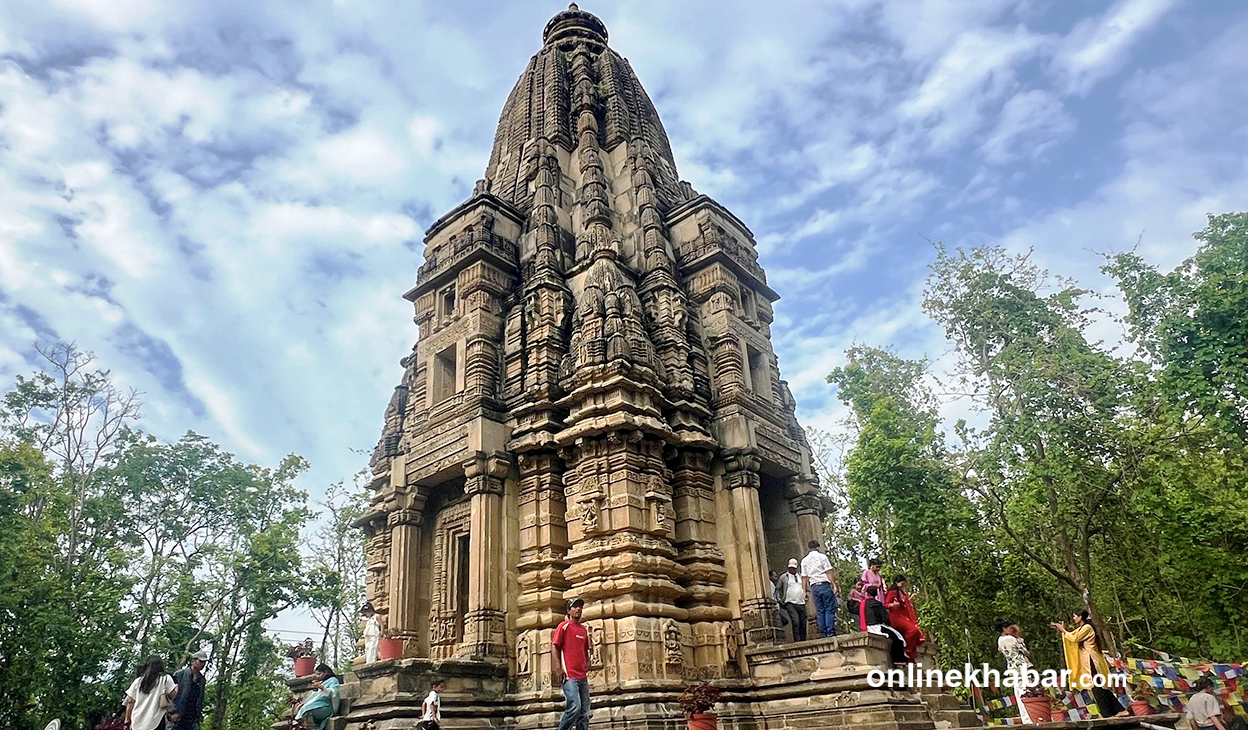
The five prioritized tourist areas hold unique cultural and natural significance for Karnali. Rara Lake in Mugu is renowned for its natural beauty and is considered a premier tourist spot in the region, while Kankrebihar in Surkhet carries archaeological and historical importance.

The government has plans to integrate Bulbule Garden and Chauhan Park with urban tourism.

Kupinde Pond in Salyan and Syarpu Lake in Western Rukum are targeted for development as natural tourism destinations.

The Ministry of Industry, Tourism, Forest and Environment of the province has listed these sites as Karnali’s key tourist destinations, Minister Khadka shared.

Tourism Decade Aims to Create Employment

The provincial government is not limiting tourism to destination development but has adopted policies linking it to employment and local economic growth. In this regard, the ‘Karnali Tourism Decade’ will be launched.

This initiative will prioritize conservation, infrastructure development, improved accessibility, promotion, and service quality enhancement of major tourist destinations.

The government aims to use tourism as a foundation for economic transformation and job creation in the province.

Training programs will be implemented to develop skills related to hospitality, trekking guiding, indigenous architecture preservation, and promotion of local products. These efforts are expected to increase local participation and employment.

Challenges in Accessibility and Service Improvements

Although substantial investments have been announced for Karnali’s tourist spots, effective implementation remains a challenge. In the past, due to inadequate infrastructure, poor road access, hotel and water shortages, and lack of promotion, tourism development at Rara, Kankrebihar, Bulbule, Kupinde, and Syarpu struggled to progress as expected.

Previously, the province adopted a policy to develop tourism circuits linking Rara, She-Foksundo, Kupinde, Syarpu, Kankrebihar, Panchkoshi, and other natural, religious, and cultural heritage sites.

Now, the government is focusing not only on bringing tourists to destinations but also on creating an environment conducive to lengthening their stay. Initiatives include establishing a tourism information and archival center, informational materials, guidebooks, and safety and emergency support systems, Minister Khadka noted. Attention to other religious and tourist areas is also needed.

NPR 538.6 Million for Tourism Infrastructure

The government has allocated NPR 538.6 million for comprehensive tourism development, management, and promotion. The NPR 213.5 million earmarked for master plan implementation at the five key destinations forms a crucial part of this broader tourism strategy.

Karnali Province’s tourism policy emphasizes connecting tourism not only to natural beauty but also to agriculture, culture, adventure tourism, homestays, and local products. The goal is to generate income and employment at the village level by linking tourism with local cuisine, traditional architecture, culture, and lifestyle.

Expectations for Results from Investment

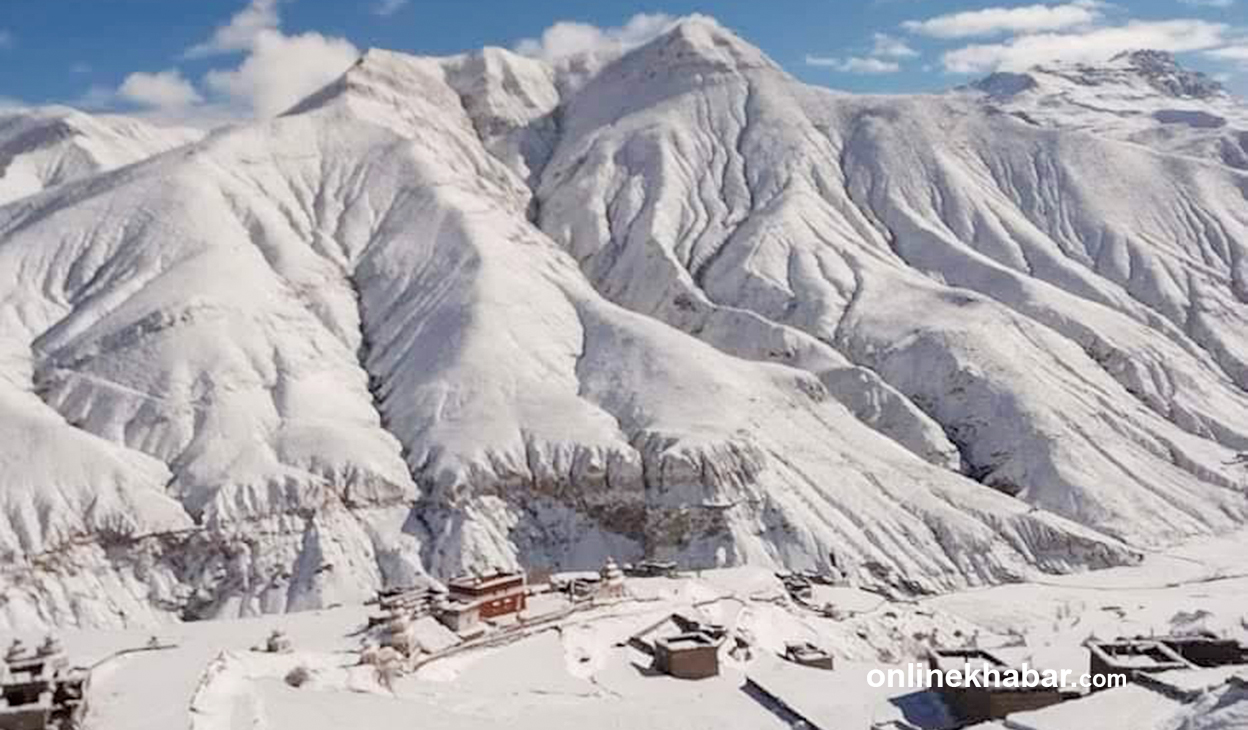
Tourism entrepreneurs and stakeholders have welcomed the budget allocation positively but emphasized the importance of effective implementation. Jitendra Jhakri, a tourism entrepreneur from Dolpa with over two decades of experience, highlighted the need for greater state investment in conserving and promoting Dolpa’s historical and religious heritage.

“Work remains to be done on preserving and promoting sites such as She Monastery and Crystal Mountain,” he said.

Karnali has numerous natural, historical, and cultural heritage sites including Rara, She-Foksundo, Syarpu, Kupinde, Kankrebihar, Panchkoshi, Sinja, and Limigau. However, business operators stress that weak road connectivity, irregular transport, accommodation shortages, inadequate water supply, communication, and information systems hinder tourist attraction growth.

Therefore, they suggest that future investment focus on destination development, accessibility, promotion, service quality, and linkages to local community income streams alongside physical infrastructure development.

If effectively implemented, the announced ‘Karnali Tourism Decade’ is expected not only to increase visitor arrivals but also to expand markets for hotels, homestays, transportation, handicrafts, agriculture, and local products. This will support using tourism as a basis for Karnali’s economic transformation.

Karnali Province is home to important natural, religious, historical, and adventure tourism areas. The prominent tourist destinations by district are as follows:

1. Surkhet

– Kankrebihar: A heritage site of historical and archaeological importance with Buddhist-Hindu significance

– Deuti Bajai Temple

– Bulbule Garden

– Siddhaila

– Tourist areas around Ganesh Chowk and Birendranagar

– Barahatal

– Chingad and Bheri River areas

2. Dailekh

– Prakash area including Shristhan, Navisthan, Paduka, and Dhuleshwor – famous Panchkoshi region

– Kotila

– Bhairavi Temple

– Historical and archaeological heritage of Dullu

– Jwala area

– Petroleum prospects and historical sites in Dailekh

3. Jajarkot

– Khalanga Palace area

– Jajarkot Palace

– Kushe area

– Bheri River and nearby natural areas

– Nalgad-Taksugad area, Barekot

– Chedagad and hilly natural landscapes

4. Western Rukum

– Syarpu Lake

– Banfikot area

– Around Chaurjahari

– Athbis Kot and Gotamkot areas

– Bheri River and hill trails

5. Salyan

– Kupinde Pond – a major tourist destination

– Khairabang Bhagwati Temple

– Chayanath and other religious and historical sites

– Natural areas around Kalimati and former Karnali-Rapti regions

6. Kalikot

– Pachal Jharna: one of Nepal’s tallest waterfalls

– Raskot region

– Mahavai area

– Tilagufa region

– Karnali River and surrounding natural landscapes

7. Jumla

– Sinja Valley: Historical origin site for Nepali language and Khas civilization

– Chandanath Temple

– Chandanath-Bhairavnath area

– Patarasi Himal

– Tila River area

– Historic and archaeological sites at Sinja

8. Mugu

– Rara Lake: Karnali’s most famous tourist destination

– Rara National Park

– Chayanath Dham

– Murmatap

– Trails and villages around Rara

9. Humla

– Limi Valley

– Ancient villages and monasteries in Limi

– Namkha area

– Simkot

– Hilsa

– Region linked to Kailash-Manasarovar pilgrimage route

– Karnali River and Himalayan trails

10. Dolpa

– Phoksundo Lake

– She-Phoksundo National Park

– Phoksundo Waterfall

– She Monastery, Bala Tripurasundari

– Ancient settlements and monasteries in Dolpa

– Phoksundo-She-Dolpa trail

– Kagmara and other Himalayan trails

How Terai Industries are Supplying Gas to Kathmandu Amid Road Disruptions

News Summary

With editorial review.

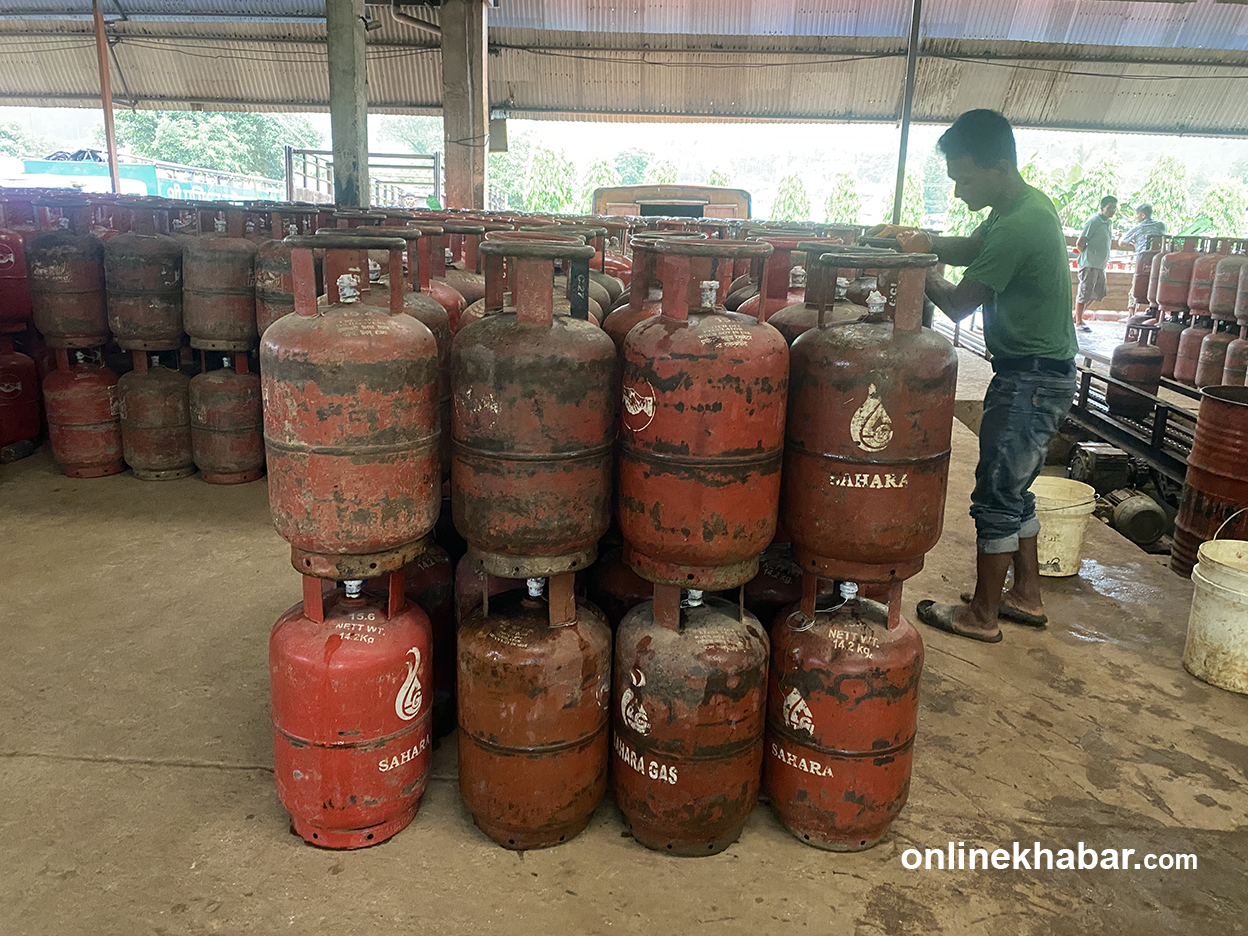
  • Following a flood in the Trishuli River that caused a landslide at Krishnabhir, blocking the Prithvi Highway, 14 industries in the Terai region have been filling gas cylinders around the clock and sending them to Kathmandu.
  • Sahara Gas Industry supplies over 8,000 cylinders daily to Kathmandu, while Manoj, Ambar, Leo, and Super Gas have also increased their deliveries.
  • Although the government has arranged alternative routes and transportation via small and large trucks, shortages persist within Kathmandu Valley.

September 13 (Bhadra 28), Bara – To ensure smooth cooking gas (LPG) supply in the Kathmandu Valley, gas industries in the Terai region have been operating 24/7 to refill cylinders.

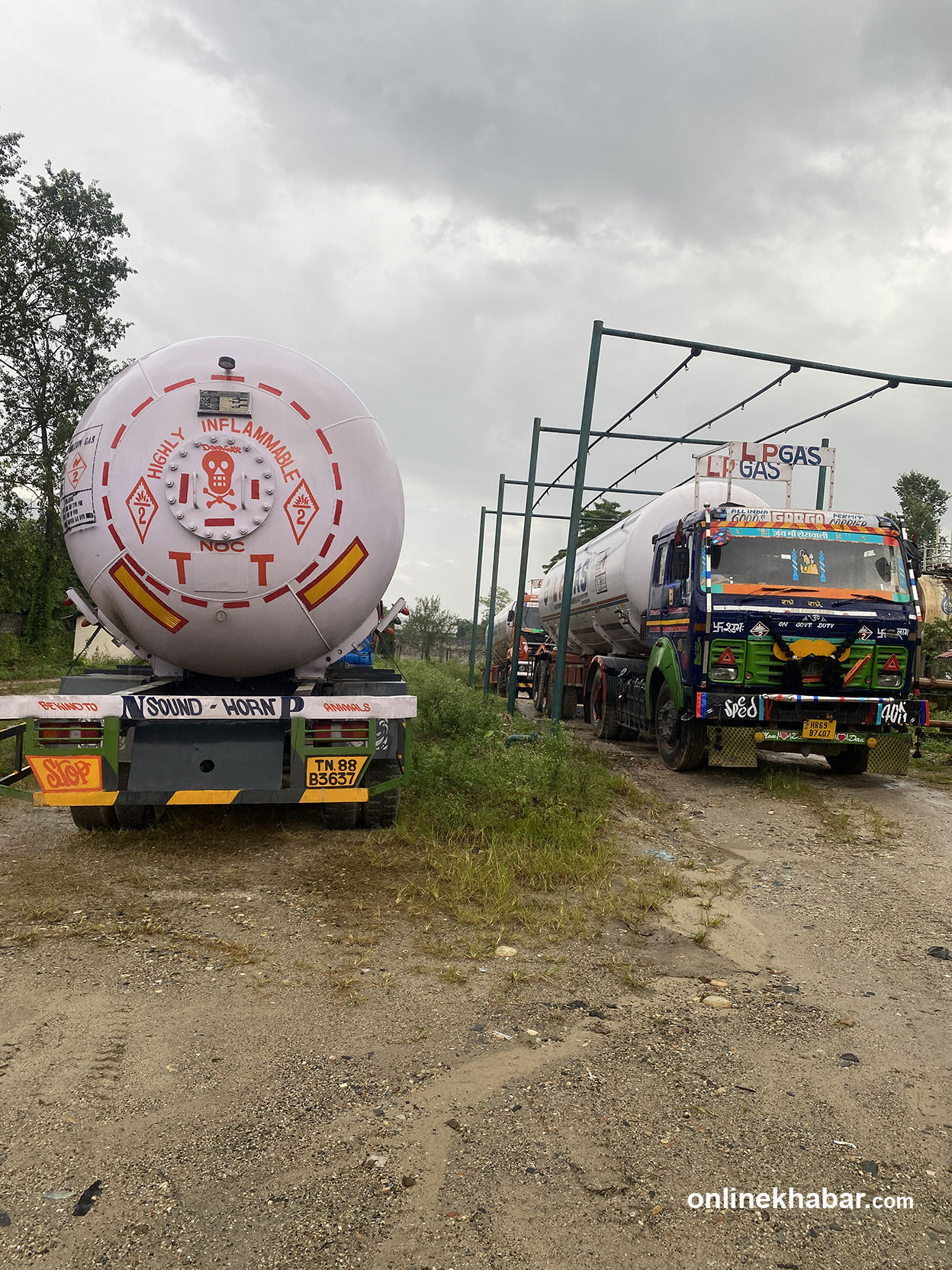
On September 1 (Bhadra 14), flooding in the Trishuli River caused a landslide at Krishnabhir on the Prithvi Highway, blocking the route. With no alternative road for gas-laden bullet trucks, LPG shipments from India to Kathmandu Valley have been delayed at its outskirts.

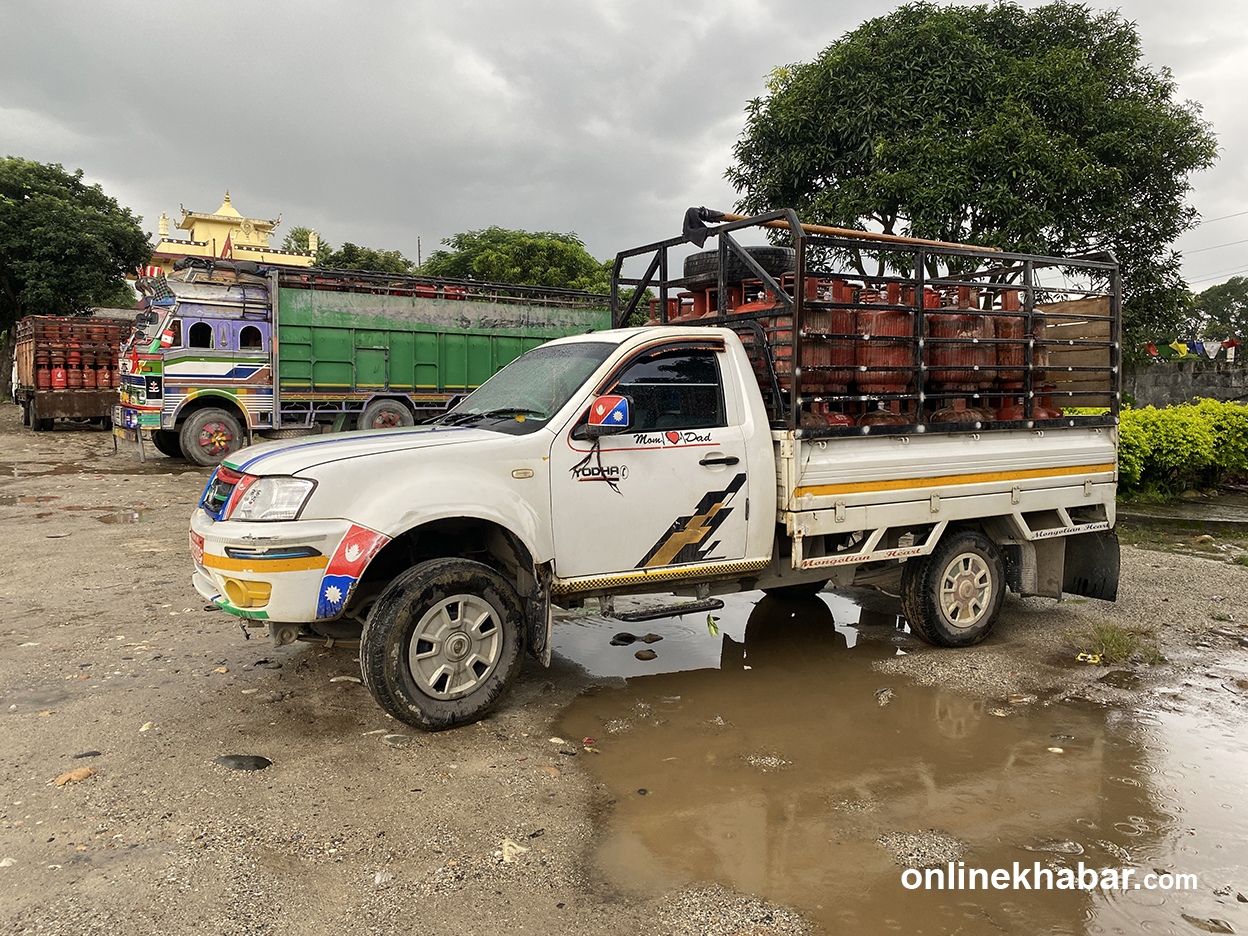
Due to blocked access, the government has initiated transportation of gas cylinders via small and large trucks on alternative routes.

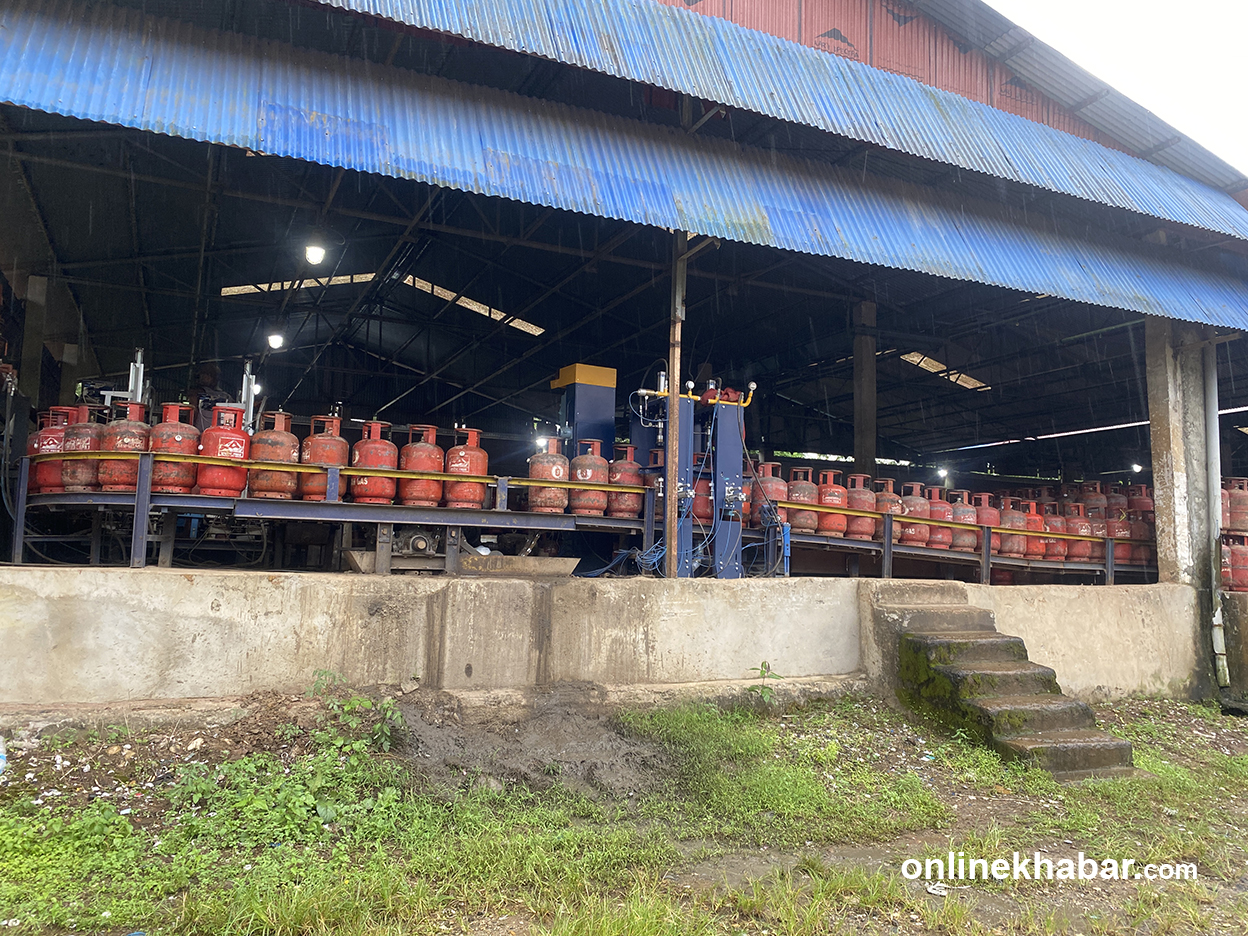
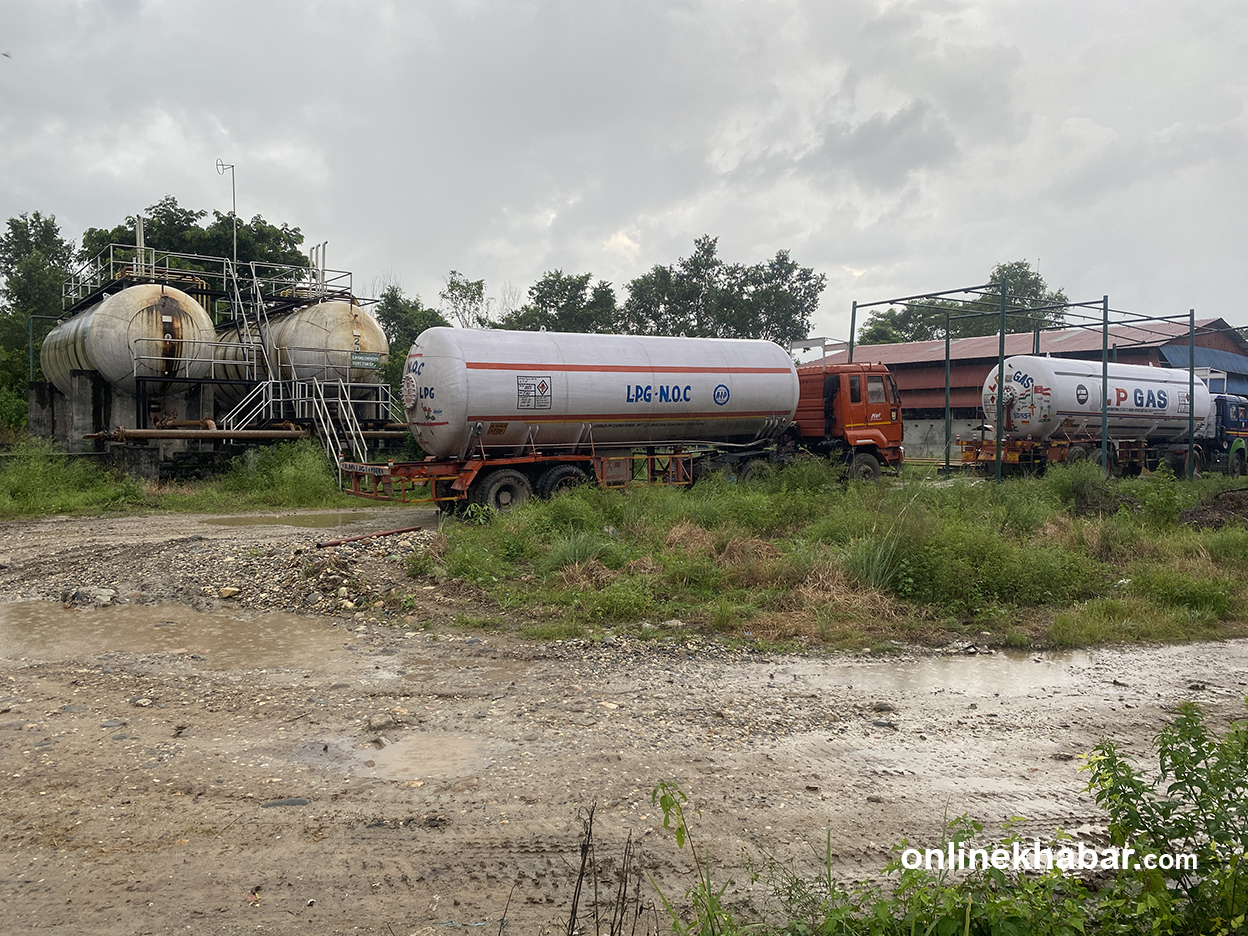
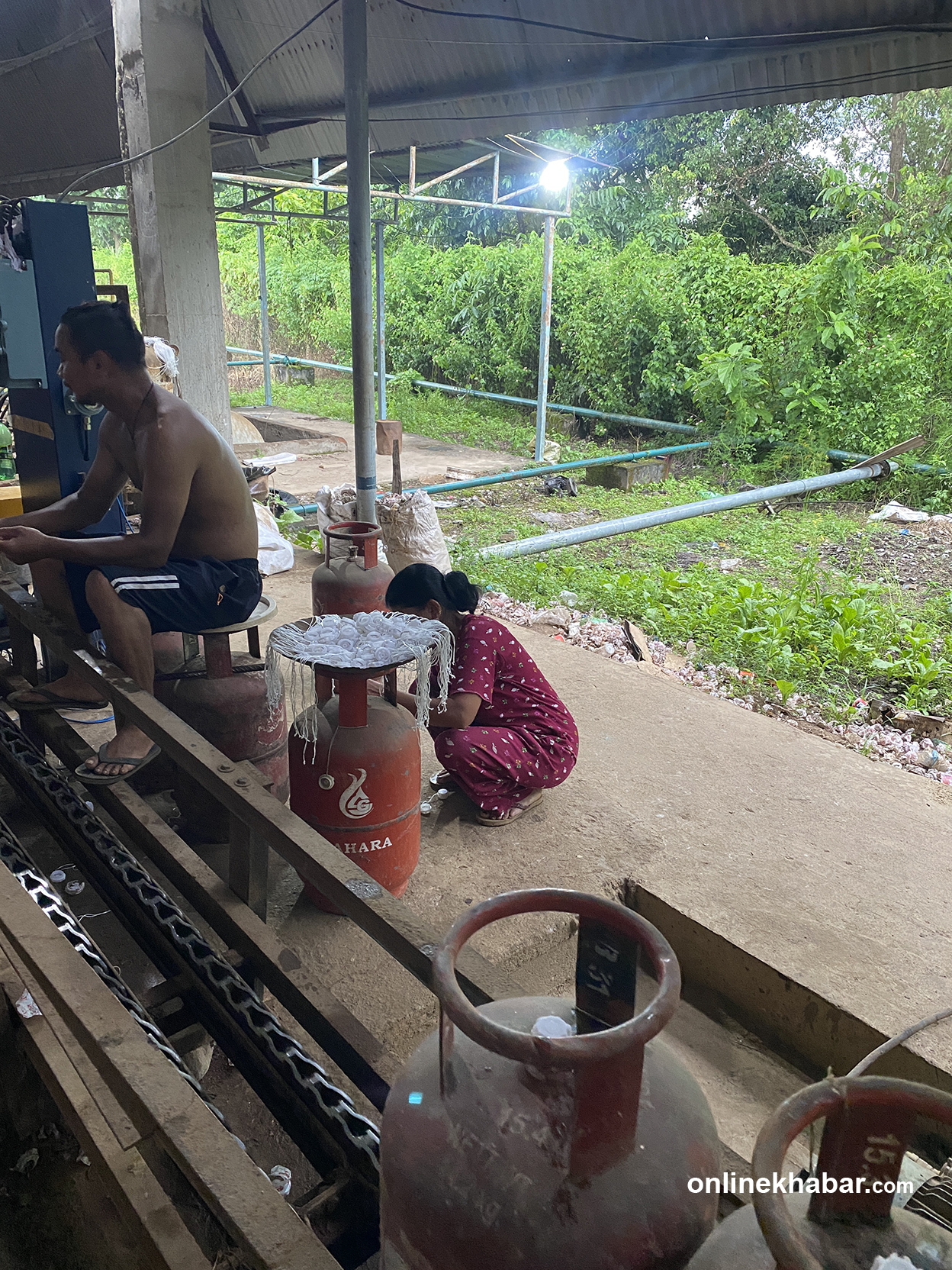
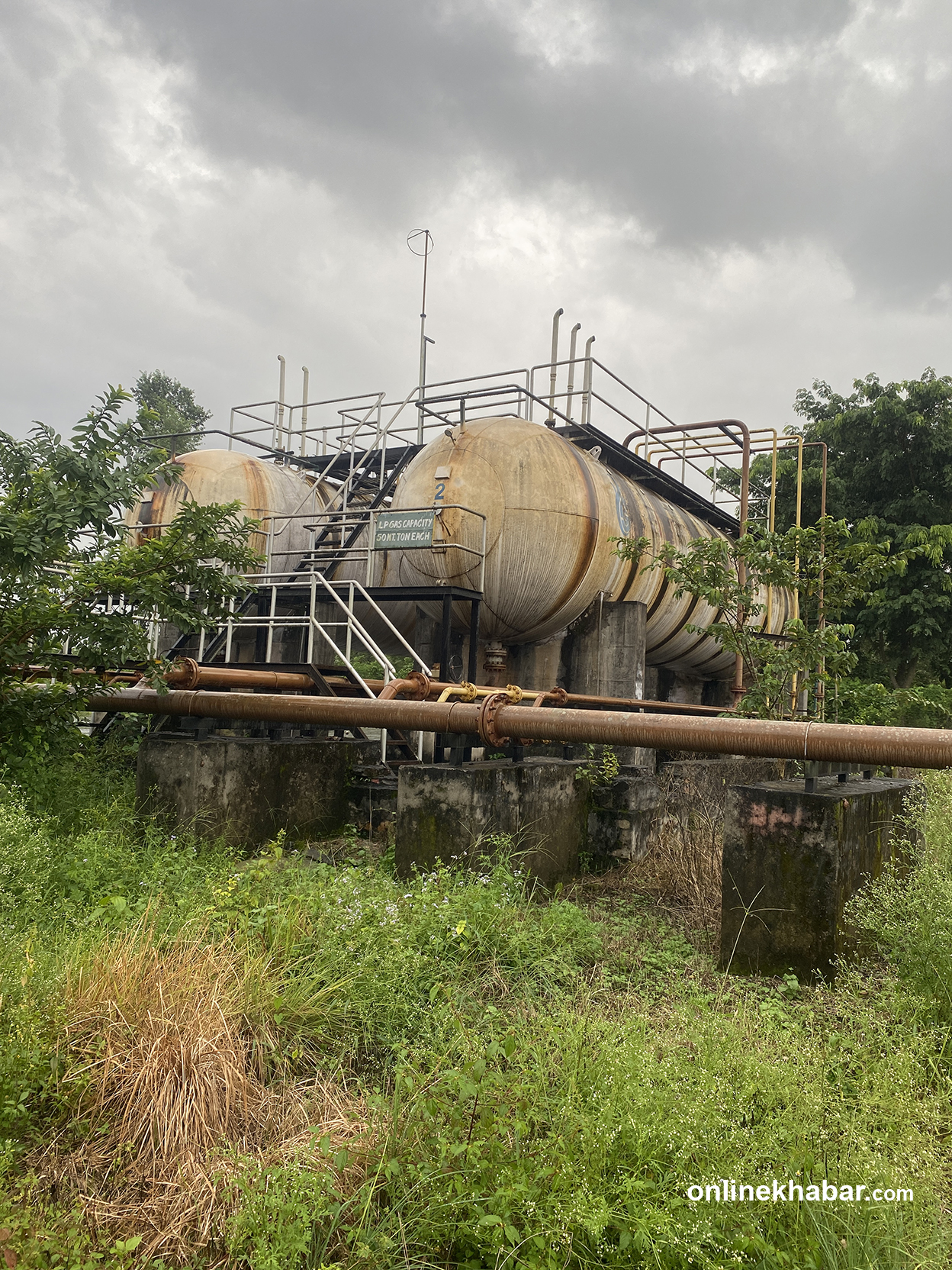
Despite these efforts, supply remains insufficient in Kathmandu Valley. Fourteen industries based in Makwanpur, Bara, Parsa, Chitwan, Mahottari, Dhanusha, and Nawalparasi continue refilling cylinders for Kathmandu.

Among 26 industries commercializing gas in Kathmandu, cylinders are being refilled at Terai-based factories and transported by trucks along Tribhuvan Rajpath to the capital.

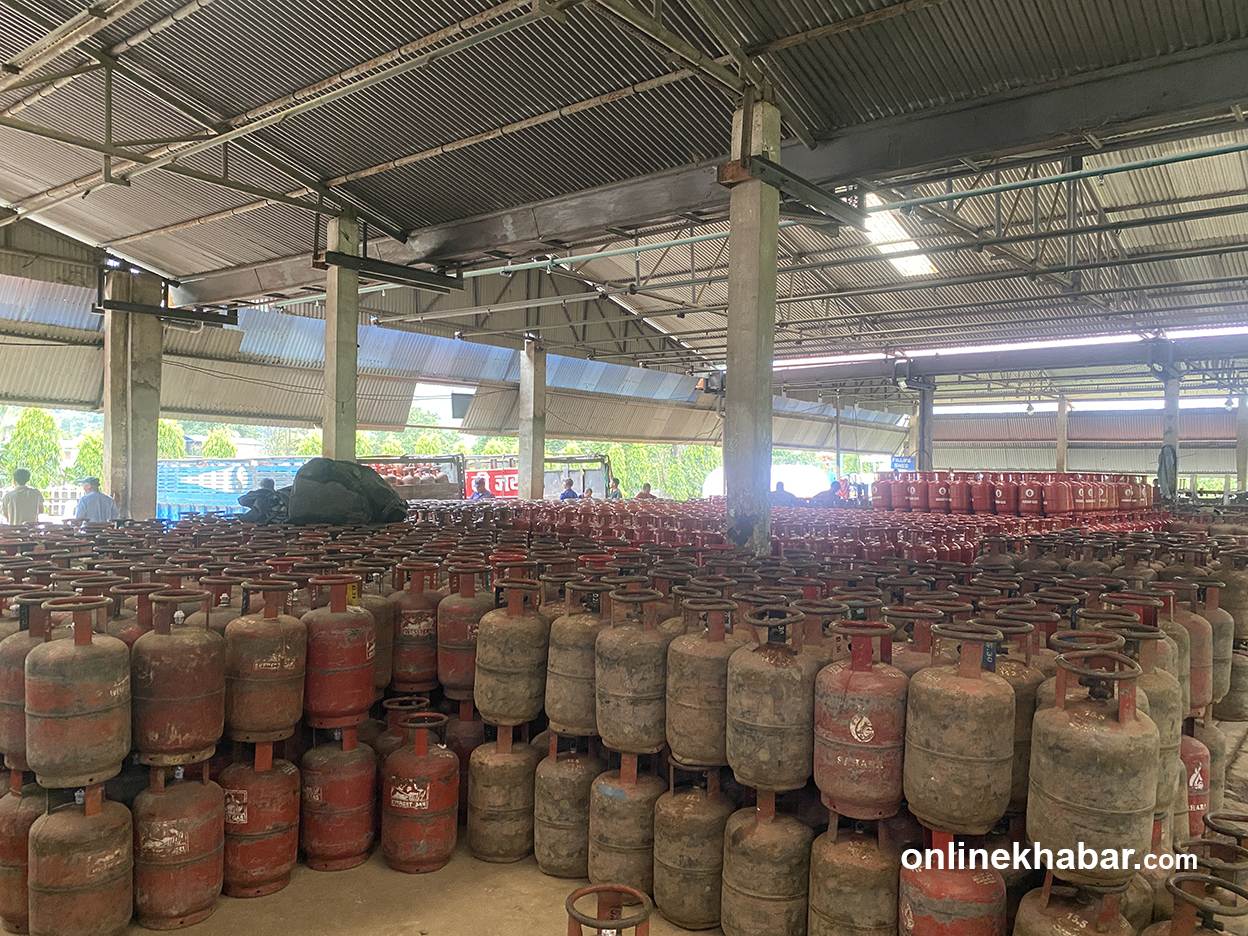
These Terai industries are filling from 1,000 to up to 8,000 cylinders daily per brand destined for Kathmandu.

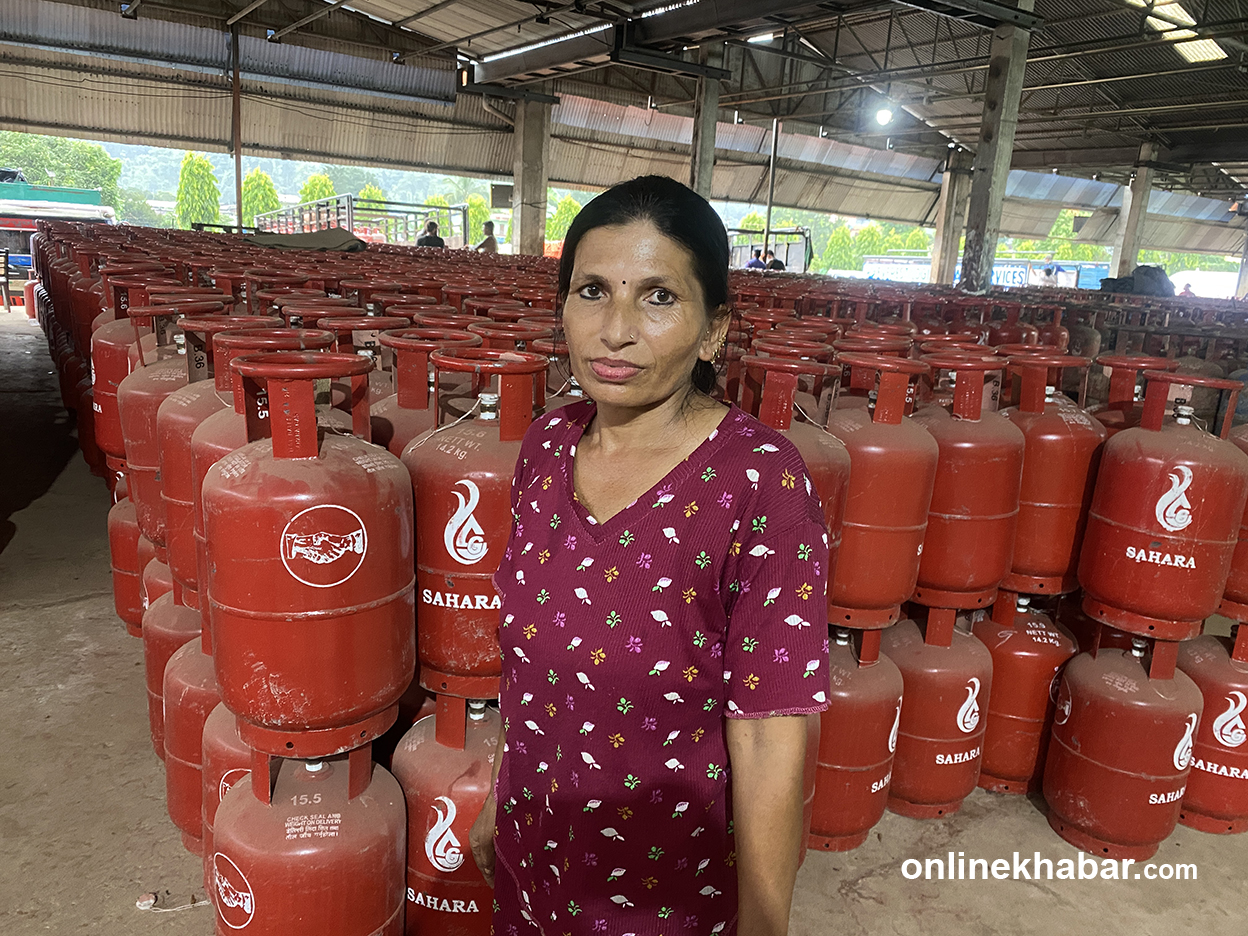
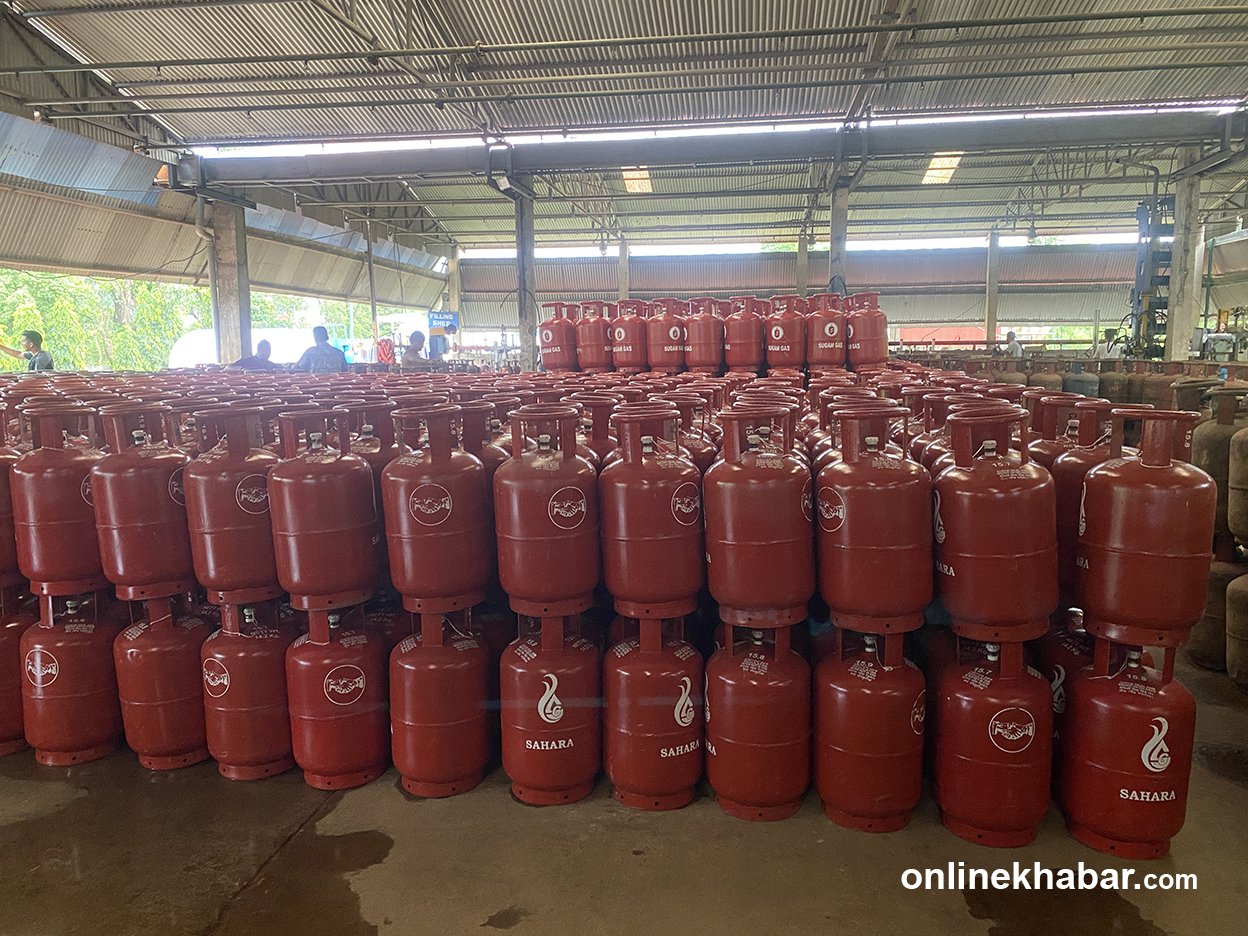
Sahara Gas Industry in Hetauda reports supplying gas to Kathmandu. It refills 4,000 cylinders for Everest Gas and 4,000 for Sugam Gas daily, operating around the clock in three shifts.

Khaga Thapa, manager of Sahara Gas, indicated that despite challenges during this crisis, the factory has increased production to meet Kathmandu’s demand.

“We refill between 8,000 to 12,000 cylinders daily; about 2,500 are sold locally under Sahara’s brand, while over 8,000 cylinders are sent to Kathmandu,” Thapa said.

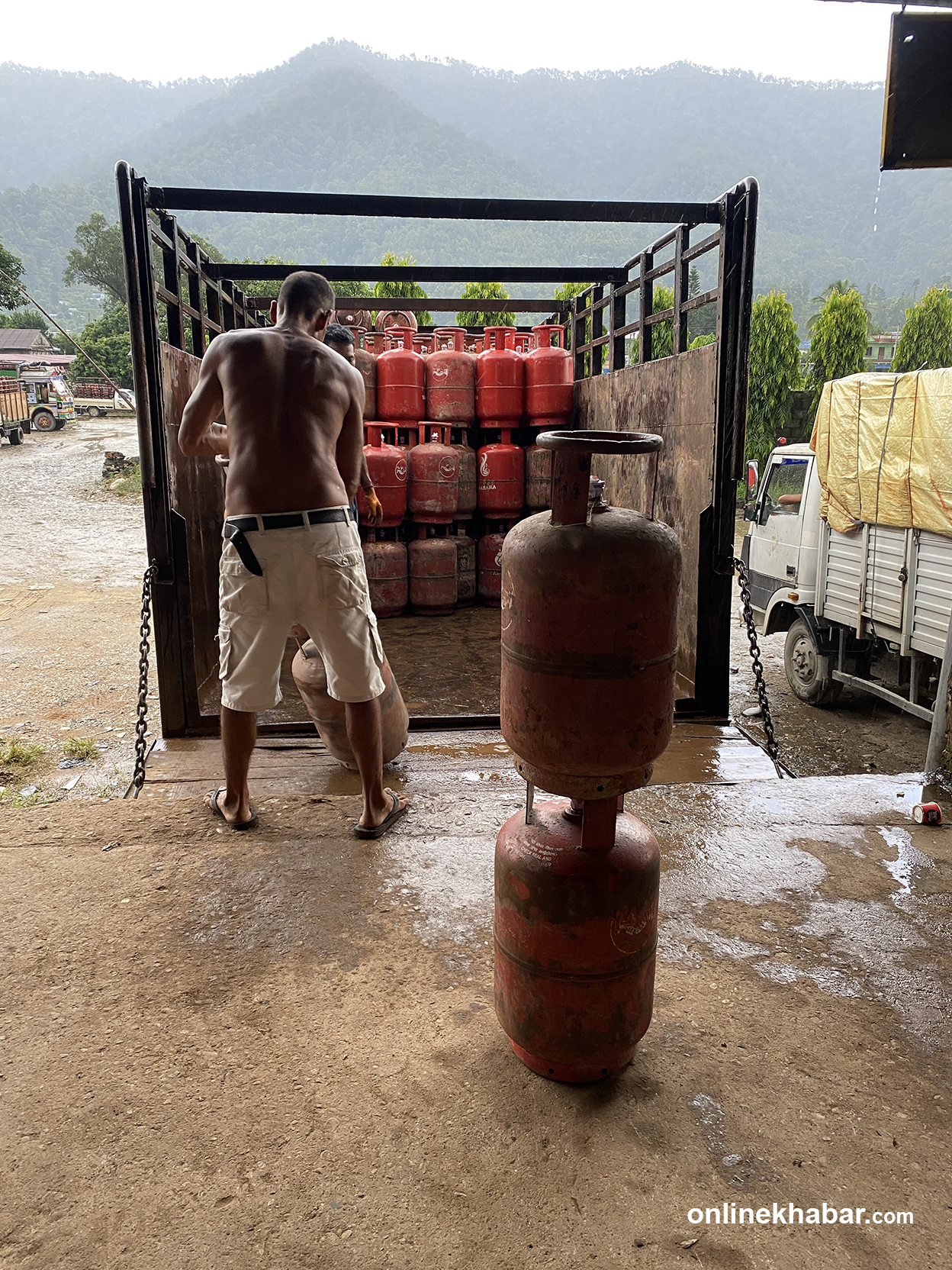
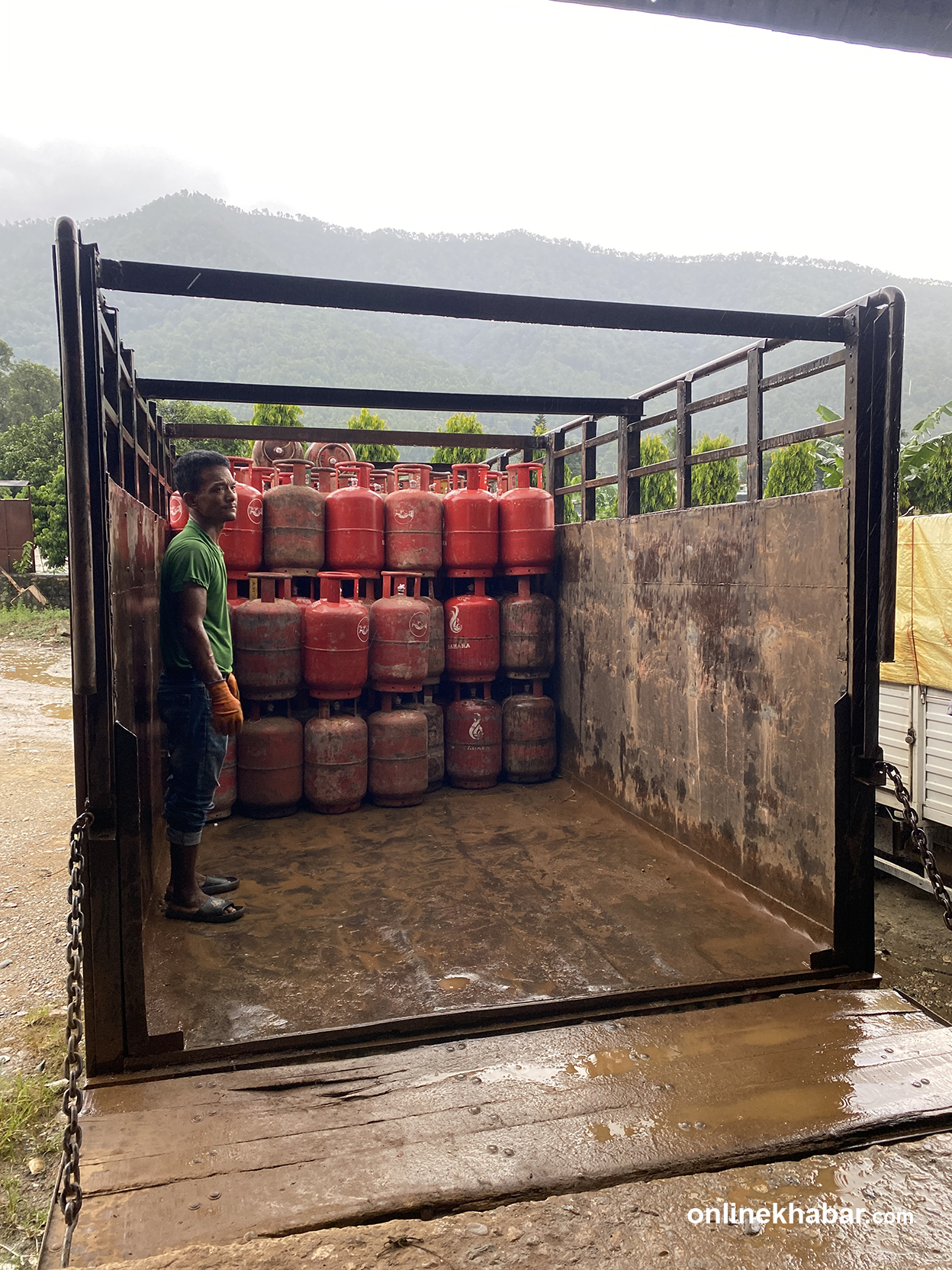
He added that trucks use the Palung route to send gas to Kathmandu. Around five to seven small trucks and vehicles from Kathmandu’s parties and dealers supply approximately 8,500 cylinders daily.

Due to the volume, employees work long hours. “It’s very challenging; we work shifts of 18 to 20 hours. Loading trucks takes time as many wait in line,” Thapa explained.

When the highway opens or closes, managing the rush of vehicles coming to the factory is difficult, the manager added.

Manoj Gas fills 1,800 cylinders daily

Manoj Gas Industry Pvt. Ltd., based in Parwanipur, Parsa, refills cylinders for Kathmandu. It refills its own brand and two other gas brands for the capital.

Employee Sanjay Kumar Mishra stated that the industry currently fills ‘STC’ cylinders of Salt Trading Corporation and ‘Lokpriyaa’ cylinders from another company.

“We fill about 1,600 to 1,800 cylinders daily for these brands, sending them to Kathmandu,” Mishra said.

The factory manages time by filling its own gas cylinders from morning till evening and switching to filling Kathmandu’s cylinders during night hours.

“We fill Manoj Gas cylinders from 9 AM to 5 PM, and then refill STC and Lokpriyaa cylinders till midnight or 1 AM based on demand,” he explained.

Ambar Gas Industry in Bara has also been filling cylinders for Siddhartha and STC gas. Company staff Pannalal Sah reported filling about 1,200 cylinders daily for both companies.

Leo Gas Industry Pvt. Ltd., also in Bara, refills cylinders for Lokpriyaa and Shrimaya brands, according to businessman Nirmal Khatri.

Leo Gas Industry treasurer and LPG Industry Association official Khatri said the increased supply is driven by a sense of responsibility to citizens during this crisis.

He noted that there have been no restrictions on gas availability from India, with half a dozen gas bullet trucks arriving daily at their plant.

“During this critical time, we feel a responsibility as citizens more than industrialists. Our workers and team have been very cooperative,” Khatri said. “We operate in two shifts, from 7 AM to 3 PM and 3 PM to 11 PM.”

Leo Gas supplies about 5,000 cylinders daily, roughly 2,000 to 2,500 are for local markets and the rest are sent to Kathmandu.

Khatri stated that thanks to workers’ cooperation and industry efforts, they have been able to avoid gas shortages for Kathmandu consumers.

Similarly, Super Gas Industry in Parsa fills cylinders for Kathmandu’s Himal brand.

Until the Prithvi Highway reopens fully, Terai industries will continue transporting LPG to Kathmandu via alternative routes coordinated by Nepal Oil Corporation.

Although some shortages remain in Kathmandu Valley and other districts, Nepal Oil Corporation releases data showing LPG supply from India exceeds market demands.

Photos: Ritu Kafle


‘The Bhote Koshi Flood Continues the Pattern of Floods in Chamoli, Melamchi, and Tista; We Must Strategize Accordingly’

Environmental scientist Uttambabu Shrestha has stated that the Bhote Koshi flood has caused more damage than any of the Himalayan floods in the past six years. He identified the main causes of the flood as cascading events where glaciers melt to form glacial lakes, which then breach and pour into rivers. Shrestha pointed to climate change as the primary culprit behind the Bhote Koshi flood and emphasized the need for multidimensional preparedness to confront such disasters.

In the first episode of the dialogue series titled ‘Life After Bhote Koshi,’ a conversation was held with former CEO of the Disaster Risk Reduction Authority, Anil Pokharel. In the follow-up interview conducted as part of the second series, environmental scientist Uttambabu Shrestha analyzed the Himalayan floods of the past six years in comparison with Bhote Koshi. “The extent of damage caused by Bhote Koshi has outpaced that of any other flood,” Shrestha explained.

According to him, trends have been observed where rivers are blocked or dammed, landslides, debris, and ice fall into the rivers, and massive destruction occurs in downstream floodplains. Although multiple factors contributed to the Bhote Koshi flood, he asserts that climate change is the primary blame. “Nowadays, disasters occur in a cascading sequence. That means a landslide or soil erosion happens, forming lakes that block rivers, which then trigger more devastating events. These cascading disasters compel us to prepare in a comprehensive, multi-faceted way,” Shrestha added.

Uttambabu Shrestha, head of the Global Institute for Interdisciplinary Studies, discussed Nepal’s future course of action in an interview conducted by Basanta Basnet. Video: Shankar Giri

A Single Handful of Life

Father, you offered a handful of water to the flowing river. The river seemed enraged, wounded by pain and shame, cascading over me. Stunned and silent, I pondered—was this the river’s rebellion fueled by thirst against the forests emitting hot gases that the earth cannot absorb? Or was it a desire within the river’s womb to embrace me? When I was in my mother’s womb, submerged in water, how warm and safe that water felt! How beautiful and soothing was my splash within it. Yet, the river’s womb is far more harsh than a mother’s; it thrashes me wildly, hurtling me toward distant destinies, crashing against cruel stones and towering riverbanks.

I endure the punishment for a fault I never committed—in this river of life, hope, and joy. But now, mixing with muddy water, I struggle and gasp, flowing farther away from you—how far must I come at such times? Thoughts and rebellions should not surge violently within the mind. The flood of questions should not overwhelm the heart, nor should I ever have to ask the river, “What fault did I have that you take revenge on me?” But how can I not ask? Why do you thrust a dagger into my innocent father’s heart, piercing his very life? A tempest rages within me.

From eyes blurred by tears amidst this muddy water, sparks of anger ignite. The greedy minds that emit heat enough to make mountains crumble, the ruthless hands that silence the river’s voice, the proud chests that drag nations into war—I pray endlessly, “Give me another birth, oh Mother!” In that life, may there be no heat to melt the mountains, no hands to poison the rivers, no smoke to shroud the skies, and no hunger for power that surpasses the value of human life.

Child Dies After Auto Rickshaw Hits Motorcycle in Dhangadhi

September 13, Kailali – In Dhangadhi Sub-Metropolitan City–2, Milan Chowk, a child lost his life and a motorcycle rider was injured when an auto rickshaw collided with the motorcycle. The auto rickshaw bearing registration number Sup.01–002 C 611, driven by 18-year-old Ankit Gupta from Adarsha Tol, Dhangadhi Sub-Metropolitan City–2, struck a motorcycle (registration number Sup.01–008 Pa 5959) that was traveling from the intersection towards the customs area.

According to Yogendra Timilsina, Information Officer at the District Police Office, the accident resulted in the death of 14-year-old boy Kris Gotame from Ward 8 ‘K’, Punarbas Municipality, Kanchanpur, who was riding as a passenger on the motorcycle. Additionally, the motorcycle rider, 22-year-old Dinesh Thapa from Ward 8, Ghodaghodi Municipality, Kailali, sustained injuries in the crash. Police have stated that a further investigation into the incident is underway.

Sam Altman Backs Proposal to Temporarily Halt Advanced AI Development

OpenAI CEO Sam Altman has expressed support for the proposal to slow down the development of the most advanced artificial intelligence systems for a period of time. He stated that, if necessary for humanity’s safety, OpenAI is prepared to shut down all its GPUs. However, he noted that the likelihood of such a scenario happening is only a reasonable estimate.

Altman endorsed the proposal made by Anthropic CEO Dario Amodei, which called for a temporary reduction in the pace of advanced AI development to ensure security and responsibility. He shared these views during an interview with Fortune.

Regarding independent safety testing, Altman revealed that OpenAI will have its AI systems evaluated by independent organizations. He committed to providing these testers with the same level of access and information as OpenAI employees. The independent evaluators will assess whether OpenAI’s AI systems pose risks to humans and whether the company is making sufficient efforts to mitigate those risks.

The phrase “shutting down GPUs” refers to turning off the graphics processing units required to build and operate AI systems. GPUs play a crucial role in processing large amounts of data. Therefore, when Altman says OpenAI is “ready to shut down all GPUs,” it means that if risks become excessive, OpenAI is prepared to pause rapid AI development and deactivate its computing infrastructure. He further emphasized that to ensure AI safety and protect humanity’s interests, it may be necessary at times to slow development repeatedly through such agreements, not just occasionally.

Partial Road Reopening at Krishna Bhir for Gas Bullets and Heavy Vehicles Underway

News Summary

Editorial review completed.

  • Grading work is ongoing to partially reopen the obstructed section of the Prithvi Highway at Krishna Bhir in Dhading.
  • Empty gas bullets will be driven through to test the road’s load-bearing capacity and traffic conditions.
  • If weather permits, gas bullets and vehicles carrying heavy equipment are planned to be allowed on the road today.

September 13 (Bhadra 28), Kathmandu – Preparations are underway to partially reopen the blocked road segment at Krishna Bhir in Dhading district along the Prithvi Highway.

With grading work currently in progress, plans are in place to run empty gas bullets soon to assess the condition of the road.

A team including the Chief District Officer of Dhading has inspected Krishna Bhir after conducting a preliminary survey. Various agencies and mechanisms are engaged to facilitate the reopening of the highway.

Grading at Krishna Bhir has been intensified, utilizing two bulldozers to smooth the road surface and prepare the platform required for vehicle passage. However, graveling and compaction tasks still remain.

For the immediate term, efforts focus on making the road suitable for passage only by stalled gas bullet vehicles and those carrying heavy equipment.

According to officials, if weather conditions are favorable, gas bullets and vehicles transporting heavy equipment will be allowed to operate partially on the road today.

Prior to this, an empty gas bullet will be driven through to test the road’s capacity to bear weight and determine traffic flow conditions.

Although the road at Krishna Bhir appears smooth and repaired, completion of graveling and compaction is essential to make it fully operational.

Two bulldozers are continuously working to clear and maintain the road. The road was obstructed due to erosion caused by the Trishuli River flood that occurred on September 24 (Bhadra 10).

Chinese President Xi Jinping Urges Against Arbitrary Use of Power at BRICS Summit

September 14, Kathmandu – Chinese President Xi Jinping emphasized that the era of imposing arbitrary will through force should end in today’s world. He made these remarks during the 18th BRICS Summit held in New Delhi, India. Addressing the second session of the summit, President Xi stated that countries worldwide should have long abandoned the mindset that “might is right.” He stressed that every nation, whether large or small, rich or poor, deserves respect.

“Developing countries must strengthen multilateralism and bolster the role of the United Nations to ensure equal participation of all nations in international affairs,” he said. President Xi expressed concern over the current global situation, describing it as highly unstable. “In such circumstances, BRICS nations should take a leading role in uniting developing countries and act as a positive force to maintain global peace and stability,” he added.

Furthermore, Xi warned of the risks posed by a rules-free world, likening it to “an intersection without traffic lights,” where chaos and disorder are almost inevitable. “Fairness and justice are universal aspirations, and international rules must be crafted collectively by all countries,” he affirmed. The Chinese leader urged Global South countries to jointly uphold the rule of law in international matters. “Fundamental principles of international relations such as sovereign equality, non-interference in internal affairs, and peaceful resolution of disputes must be protected,” he asserted.

CIA Report Reveals Osama bin Laden Planned Possible Attacks Targeting India

New Delhi – Former Al-Qaeda leader Osama bin Laden had at one point planned to include India as a potential target for terrorist attacks. This fact has been revealed through documents released by the U.S. intelligence agency CIA. These documents were made public on the 25th anniversary of the September 11, 2001, terrorist attacks carried out by Al-Qaeda on New York’s World Trade Center.

According to The Hindu, the CIA disclosed on Friday (September 11, 2026) sixty-nine intelligence briefings and over 100 pages of material that were shared with then U.S. Presidents Bill Clinton and George W. Bush. Included among these is a memorandum dated August 28, 1998, which noted that bin Laden and other Al-Qaeda terrorists had successfully evaded U.S. attacks in Afghanistan.

The memorandum indicated that bin Laden intended to conduct attacks in Egypt and the Arabian Peninsula. Additionally, Kuwait, Saudi Arabia, Yemen, India, Pakistan, Uganda, and possibly Nigeria were identified as potential targets. Repeated warning documents suggest that from September 1998 through September 2001, the CIA continuously alerted the American presidents about possible attacks originating from bin Laden.

While it is not the first time reports have confirmed Al-Qaeda’s plans to attack the United States, this information has not been previously released in such detail. The 2004 9/11 Commission report had also confirmed Al-Qaeda’s intent to target America. The CIA documents now provide evidence that the U.S. administration was forewarned about the potential attacks. According to the 9/11 Commission investigation, the failure to act effectively on these warnings stemmed from multiple factors, including limited intelligence capabilities, inability to fully anticipate the threat, and administrative and policy priorities.

Simple Exercises to Build Attractive Biceps at Home

You can strengthen your biceps at home without going to the gym by performing exercises such as close-grip push-ups, using water bottles as weights, plank-to-push-ups, and concentration curls. Regular exercise is essential for maintaining good health and a fit body. Many people living in urban areas lead sedentary lifestyles and visit gyms to stay fit. However, the number of individuals wanting to develop an attractive and well-toned physique without gym visits is increasing. While gyms offer machines to build abs and biceps, many cannot afford gym fees or find the time to go. But don’t worry, you can build strong biceps at home with some simple exercises.

Close-grip push-ups are a variation and advancement over regular push-ups that effectively strengthen the biceps. To perform this exercise, place your hands closer than shoulder-width apart and get into a high plank position. Keep your body straight, tighten your core muscles, and keep your elbows close to your body. Lower your chest toward the floor without touching it, then push back up. Repeat this regularly for best results.

If you don’t have heavy dumbbells, you can use water bottles filled with water as weights. This is an excellent alternative for biceps curls. Hold one water bottle in each hand with your palms facing forward. While lifting and lowering your forearms, keep your elbows fixed beside your body. This exercise helps effectively build stronger biceps.

To do the plank to push-up exercise, begin in a plank position and then transition one arm at a time into a push-up position. This exercise is important for strengthening biceps, triceps, and shoulders together.

Concentration curls also help develop stronger biceps. Sit on a chair, hold a water bottle or a brick in one hand, rest your elbow against your thigh, and slowly raise and lower your forearm. This motion aids in rapid and effective biceps growth and strengthening.

YCL Advances Plan to Build 150 Temporary Shelters in Flood-Affected Areas

September 13, Kathmandu – The youth wing of the Nepal Communist Party (NCP), the Young Communist League (YCL), has initiated a plan to construct 150 temporary shelters in flood-affected areas. In the first phase, 150 temporary houses will be built for families affected in Belkotgadhi-7 of Nuwakot, specifically in Thulo Khola, Lamoswati, Ratmate, and Mahadevphanta, confirmed YCL President Pushpa Oli.

According to Oli, YCL has been regularly deploying 600 volunteers in rescue and relief operations within the flood-affected regions. The organization has been actively involved in searching for missing individuals, rescuing them, providing medical treatment to the injured, and distributing food and necessary relief materials.

The organization has delivered gas cylinders, petrol, solar lights, rice, salt, oil, lentils, power banks, mobile phones, sanitary pads, mattresses, and other essential items as part of the relief efforts. Due to the disruption of the Trishuli riverside road network, relief supplies were transported through Dhadhing to Wards 7, 8, and 9 of Bidur Municipality, Oli added.

“So far, affected families have not been able to clean their homes and belongings, nor have safe places to reside been identified,” Oli stated. “To address these challenges, construction of temporary shelters will commence soon.”