




News Summary
- In 1976, a surprising incident took place in Mexico City where Mario Vargas Llosa punched Gabriel García Márquez, causing a sensation in the Latin American literary community.
In 1976, an unusual event unfolded in Mexico.
Latin America’s renowned writer Gabriel García Márquez extended his hand in a friendly pugilistic challenge toward fellow author Mario Vargas Llosa. However, Vargas Llosa responded by punching Márquez in the face, saying, “You deserved this.” The punch left Márquez’s face bruised.
Márquez was unprepared for this unexpected reaction. The incident occurred at a movie theater in Mexico City.
This surprising event gained widespread attention not only in the Latin American literary world but also globally.
While disputes or quarrels among authors worldwide are common, this particular incident received extensive media coverage because Márquez’s facial injury was highly visible.
However, no one could uncover the exact reason why Vargas Llosa struck Márquez, as neither party disclosed clear motives.
Following this incident, their friendship broke down and communication ceased.
000
Mario Vargas Llosa was born in 1936 in Arequipa, Peru. In 1971, he published a book titled García Márquez: Story of a Decider, which originated from his thesis at the University of Madrid. The two writers were friends at the time.
This work provided a serious critical analysis of Márquez’s One Hundred Years of Solitude. Mario discussed how authors create alternative realities, assuming the role of ‘gods’ by ‘killing’ the real world to sustain the existence of their creations.
Interpreting the narrative as a rebellious act, he wrote that writers destroy reality to present a new, structured, and imaginary world.
The book, produced as a doctoral thesis, became symbolic of Latin American literature and the friendship and admiration between the two authors.
It offered a profound examination of Márquez’s magical realism style and his mythical, existential themes.
This surprising episode, where a distinguished fellow author was punched, remained a mystery to readers and literary critics alike.
000
Mario and Márquez first met in 1967, the year One Hundred Years of Solitude was published.
Mario was highly impressed by the novel, leading to the growth of their friendship. They became neighbors in Barcelona between 1970 and 1974, which brought them closer.
Both came from similarly divided family backgrounds and were raised by grandmothers. They shared a common admiration for American author William Faulkner’s works.
Mario described One Hundred Years of Solitude saying, “I was amazed reading it. It was a fresh novel about Latin American nights that presented fictional facts without diminishing reality’s essence.”
He praised it as a masterpiece that expanded linguistic boundaries and captivated narrative enthusiasts.
In the late 1960s, Mario taught Márquez’s works in universities across Spain, Puerto Rico, and the United Kingdom, which aided him in publishing his doctoral thesis.
000
Márquez was nine years older than Mario, though both were born in March. Márquez was born on March 6, 1927; Mario on March 28, 1936.
Both were involved in journalism. While Mario engaged in politics, Márquez was less involved politically, though he maintained a friendship with Cuban leader Fidel Castro.
Castro was a reader of Márquez, and U.S. President Bill Clinton once hosted Márquez for dinner at the White House. Clinton’s daughter Chelsea once cited Márquez as her favorite author.
000
Márquez had earlier published novels such as In Evil Hour, Leaf Storm, and No One Writes to the Colonel, but it was the 1967 release of One Hundred Years of Solitude that catapulted him to global fame.
This magical realist novel has been translated into over 50 languages and sold more than 50 million copies worldwide.
Márquez never allowed this novel to be adapted into a film during his lifetime, though many of his other stories were made into movies.
To preserve readers’ imaginative engagement, he withheld permission for its cinematic adaptation, though his sons authorized it after his death.
Conversely, Mario Vargas Llosa gained recognition with his first novel The Time of the Hero published in 1963, a story about the Peruvian military establishment.
He wrote this while a teenager at the Leoncio Prado Military Academy and later published it after refining it in France.
The novel sparked major controversy, with military officials publicly burning a thousand copies in protest. Peruvian director Francisco Lombardi later adapted it into a film.
Mario considered One Hundred Years of Solitude his opposite in style and regarded Márquez’s weakest book as the 1975 The Autumn of the Patriarch.
000
What led Mario to punch Márquez? A 2019 report by Silvana Paternostro for the Paris Review included interviews with key witnesses such as Márquez’s photographer friend Rodrigo Moya, Guillermo Angulo, Gregory Rabassa, Plinio Apuleyo Mendoza, and Jaime Abello Banfi.
000
Inspired by this incident, Peruvian author Jaime Bayly wrote the novel The Genius.
Mario dismissed the novel at its release as “a bundle of lies!”
Bayly responded, “Yes, it is full of lies, but those lies are credible, as novels often are.” He emphasized that the novel was a fictional work blending invented events with historical facts.
At its opening, Bayly quoted from Mario’s own book The Real Life of Alejandro Mayta, noting: ‘The main lesson when reconstructing events is that all stories combine truth and falsehood.’
Bayly interviewed authors Jorge Edwards, Plinio Apuleyo Mendoza, Tomás Elva Martínez, and Álvaro Mutis to bring the novel closer to reality.
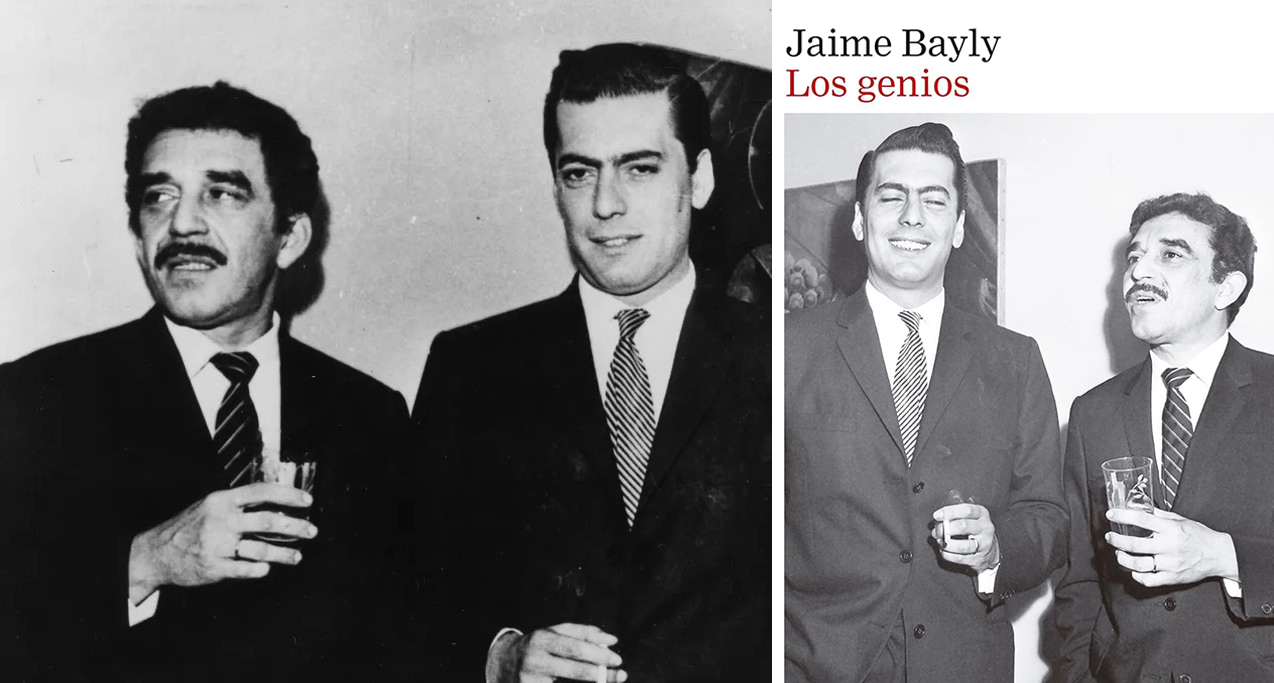
Bayly said, “When two talented individuals refuse to discuss a topic, it sparks literary curiosity. I view literature as a process of digging into the skeleton to study the object inside.”
This novel should be seen as a narrative process or more poignantly, the tragic end of a broken friendship between two literary giants. The literary world has largely interpreted it this way.
000
During their close friendship, Mario and Márquez planned to collaborate on a novel about the war in the Amazon jungle between Peru and Colombia.
However, Mario felt Márquez’s knowledge on this subject was partial and insufficient for a realistic novel.
Thereafter, they kept in touch through letters, many of which are now preserved at Princeton University in the United States.
000
In a 1990 interview with the Paris Review, Mario discussed the incident, mentioning that although he rarely spoke about it, he might consider writing a memoir later—but never did.
000
In 2021, journalist Walker Kaplan published an in-depth report revealing the incident’s story. The report stated that Mario was traveling from Barcelona to El Callao, where he had begun a romantic relationship with an attractive woman, even though his wife Patricia was on the same ship.
According to Mario’s friend Guillermo, “Mario was charming in a way that captivated women.”
After the ship stopped in Chile, Patricia returned to Barcelona to collect her belongings, helped by Márquez and his wife Mercedes, who acted like genuine friends.
Márquez even accompanied Patricia to the airport and advised her about communicating with Mario. However, Patricia misunderstood this advice, which angered Mario.
Though Mario was involved with other women, he had not separated from Patricia. At one point, Patricia said to Mario in a taunting manner, ‘Was I insulted because I’m not beautiful? Those who look back at me are like Márquez.’
This statement reportedly pushed Mario to strike Márquez in Nepal, shouting, “This is the consequence of what you said to my wife!”
The punch was forceful enough to stagger Márquez, breaking his glasses and causing some bleeding.
The next day, Márquez and his wife visited photographer Rodrigo Moya to document the injury with photographs.
Rodrigo likened the experience to looking at a criminal arrested by the Mexican police. These photos were only made public after 2007.
000
Despite these events, Mario wrote a special foreword for the 40th anniversary edition of Márquez’s One Hundred Years of Solitude.
000
In Márquez’s final decade, he attempted to meet Mario twice—once in Barcelona, once in Cartagena—but Mario never appeared, and they never reconciled.
Márquez faded from public view and passed away on April 17, 2014.
Afterward, Mario expressed, “The world lost a great writer whose works elevated and expanded the literature of our language. His novels will live on and continue to win the hearts of readers everywhere. I offer my condolences to his family.”
In 2025, on April 13, Mario Vargas Llosa died in Lima, Peru’s capital. The Gabo Foundation, named after Márquez, expressed sorrow and issued a condolence statement.
Although the punch incident gradually faded from headlines after their deaths, the episode persists as a notable topic within literary circles.


