Dhankuta Municipality Launches Innovative Initiatives to Achieve Sustainable Development Goals





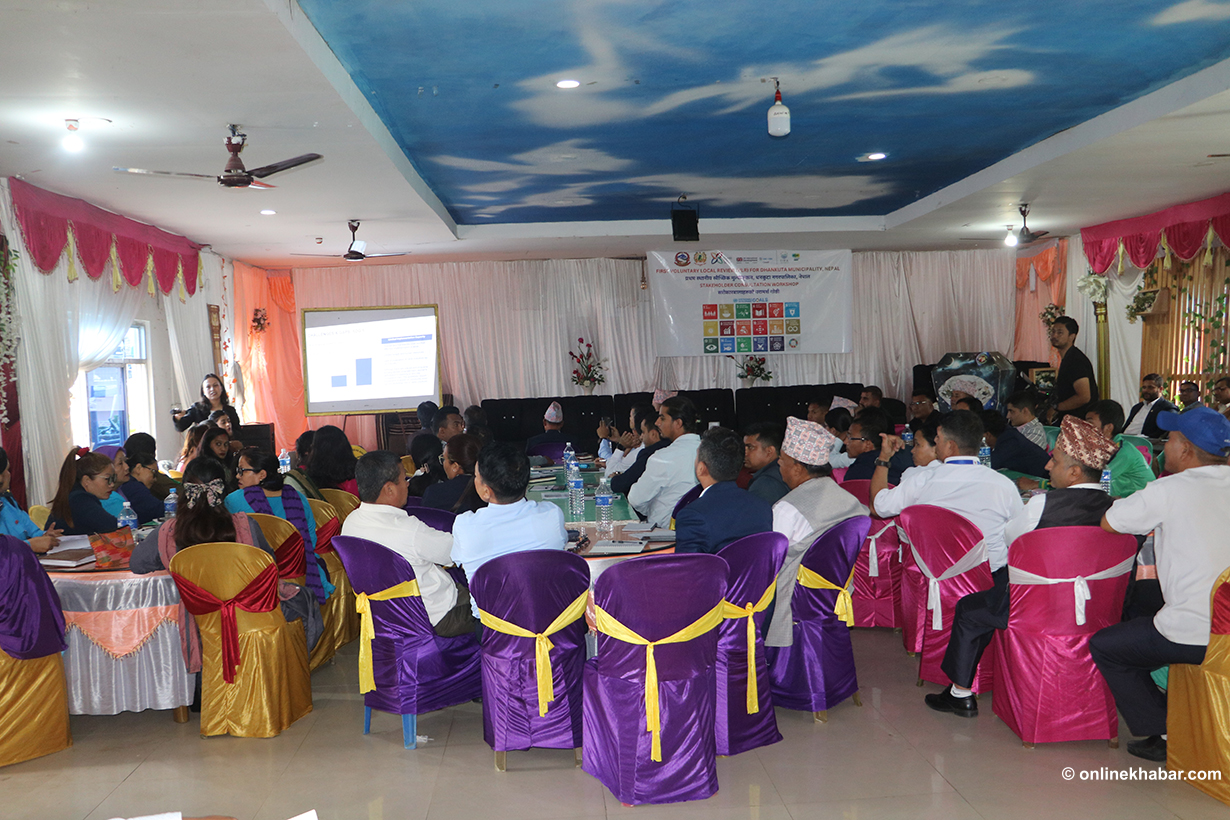
May 27, Dhankuta – Dhankuta Municipality has initiated discussions with stakeholders to advance the achievement of Sustainable Development Goals (SDGs). Following the United Nations’ declaration of the SDGs in 2015, the municipality is focused on implementing these globally recognized goals effectively at the local level by formulating data-driven plans and enhancing community participation.
As local governments become pivotal drivers of development, the municipality is prioritizing key objectives among the 17 SDGs, especially poverty alleviation, quality education, healthcare services, and gender equality. To support this, comprehensive data has been gathered to deliberate on policies, plans, opportunities, and challenges for future implementation, said Development Officer Dinesh Adhikari, the municipality’s public information officer.
According to the figures released by the municipality, significant improvements have been recorded in the health sector. The municipality claims that the mortality rates among pregnant women, infants, and children under five years have reached zero.
Immunization coverage has reached 100 percent, and 99.74 percent of women have delivered in institutional settings, outcomes attributed to strengthened local health services and increased public awareness.
Progress has also been made in water supply and sanitation. The municipality reports that 92 percent of households have access to tap water, while 84 percent of residents enjoy access to safe toilets.
These statistics demonstrate the local government’s commitment to establishing health, sanitation, and safe water as fundamental rights for its citizens, the municipality stated.
However, alongside these achievements, significant challenges remain. The data reveals that 11.3 percent of the municipal population still lives below the poverty line, confirming persistent economic inequality.
According to the municipal information officer, key obstacles to achieving the SDGs include insufficient job creation, limited economic resources, increasing migration, climate change, restricted access to technology, and disparities in awareness levels.
Stakeholders have noted that ongoing youth migration abroad is impacting local production and labor availability. The lack of integration of modern technology into agriculture and small enterprises has hindered expected economic growth. Moreover, climatic changes causing instability in agricultural yields are increasingly affecting rural communities.
Participants in the discussion emphasized that realizing the SDGs is not solely the government’s responsibility but requires a shared commitment from communities, the private sector, and civil society. They stressed the need to develop plans based on local needs and realities, ensure effective budget management, and boost public participation.
The United Nations has outlined 17 Sustainable Development Goals, aiming to eradicate poverty, provide quality education and healthcare, promote gender equality, ensure clean water, protect the environment, and build prosperous societies worldwide.
The Government of Nepal is also implementing programs aligned with these goals across federal, provincial, and local levels. Given Nepal’s international commitment to achieve these goals by 2030, the role of local governments has become increasingly crucial.
The municipality has committed to preparing reports based on the inputs received from these consultative meetings, which will inform future plans and programs. Mayor Chintan Tamang of Dhankuta Municipality expressed confidence that evidence-based policies, transparent implementation, and active community engagement at the local level will be key to successfully achieving the Sustainable Development Goals.


