Nepal Oil Corporation and Industrialists Misled Prime Minister by Denying Gas Shortage





News Summary
Automatically generated. Editorially reviewed.
- Nepal Oil Corporation denied any gas shortage in the market and blamed consumer behavior of stockpiling gas cylinders and issues in the distribution system.
- Executive Director Dipak Baral accused artificial market pressure and the tendency of people lining up for media coverage as reasons for the problem.
- However, ordinary consumers face difficulties obtaining gas from local dealers, and consumer rights activists allege the corporation is shifting blame to the public to cover its managerial failures.
August 5, Kathmandu – On Tuesday, during the meeting of the House of Representatives’ Industry, Commerce, Labor and Consumer Welfare Committee, Nepal Oil Corporation’s Executive Director Dipak Baral denied circulating rumors of a shortage of cooking LPG gas in the market.
Baral stated there is no shortfall in gas imports and shifted the blame for shortages onto consumer behavior of hoarding and flaws in the distribution system.
“Previously, when half cylinders of 7.1 kg were distributed, consumers would keep empty cylinders at home. But now that full 14.2 kg cylinders are being supplied, attempts to fill all empty cylinders at once have artificially increased market pressure,” he explained to the parliamentarians.
Baral also accused individuals in Teku area of making multiple trips by bicycle to purchase gas cylinders.
He sarcastically commented on common people queuing for media attention, calling reports of acute gas shortages misleading.
He presented data showing that only 2,100 cylinders were sold in the last three days from the corporation’s Teku office.
“There is talk of many problems in the market, but selling just 2,100 cylinders in three days is not excessive,” he accepted.
Although the corporation claims responsibility for the supply chain, the reality of the zero-level crisis indicates the problem lies within their management despite blaming consumers and media.
Consumers Continue to Suffer
Despite claims from the Nepal Oil Corporation that there is no gas shortage and that imports exceed demand, Bharat Magar, a resident of Khusibu, Kathmandu, has been struggling with a dysfunctional kitchen for about 18-19 days.
After his ‘Rajdhani’ brand gas ran out, he repeatedly requested local dealers, but was sent back with promises like ‘it will come next week’ or ‘on Monday.’
Without gas, he had to manage by heating water and cooking lentils, rice, and vegetables minimally for his family.
“I cooked using an electric pot as a temporary solution, but gas never arrived at the dealer,” he recounted.
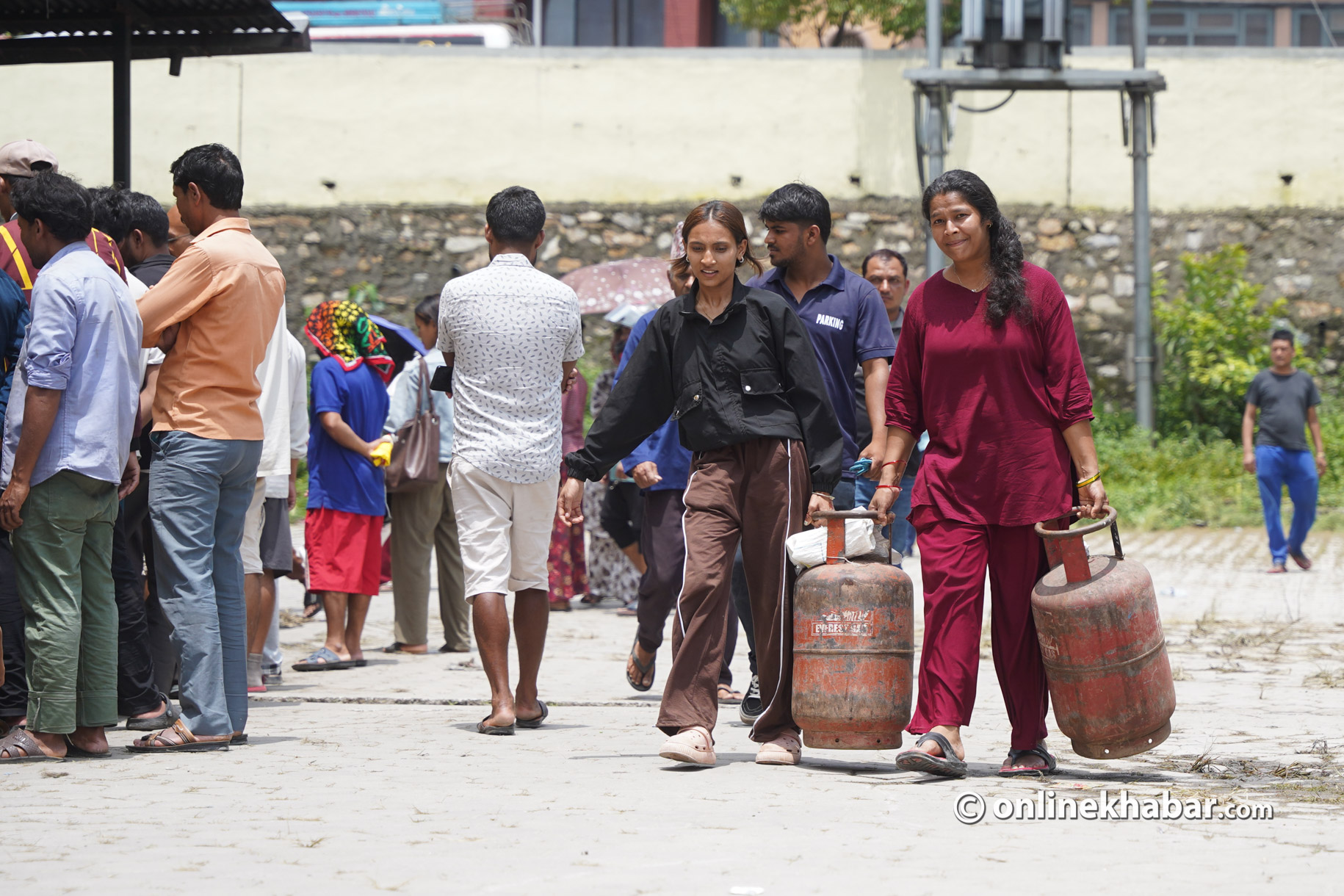
Upon hearing about gas distribution from the temporary center at Nepal Oil Corporation’s Teku office, Bharat stood in line at the scheduled time carrying an empty cylinder.
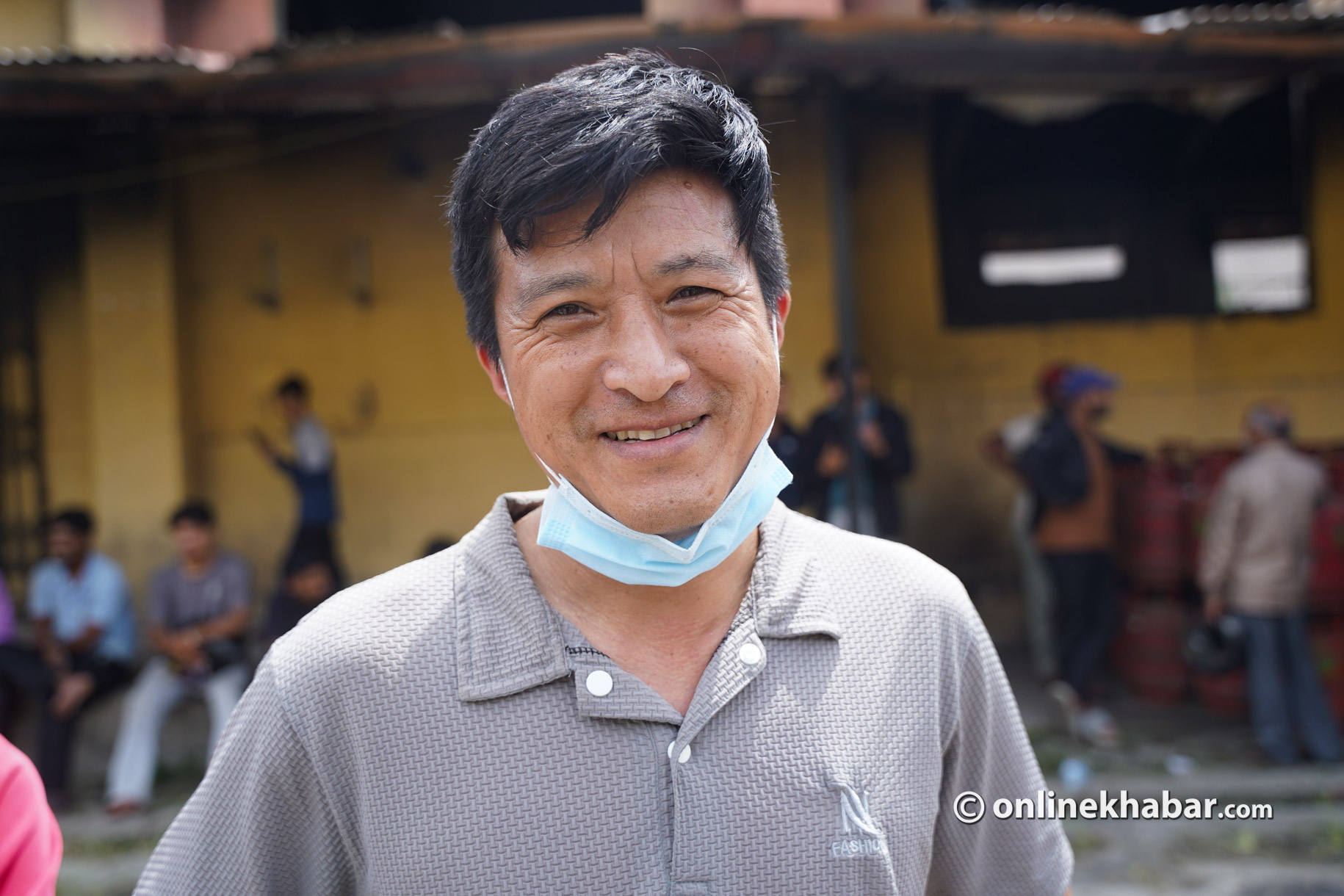
“I came yesterday hoping to get gas here; they said it was finished last time, but hopefully it will come again,” Bharath said.
Those queuing at Teku share a common question: “If the corporation can arrange distribution at Teku, why can’t they supply gas to the dealers?”
The fact that ordinary consumers cannot get gas from dealers but see it available at the corporation’s center has led to suspicions of black-market trading among dealers.
“Dealers say they have no gas, but since it’s available in Teku, black marketing might be happening,” the consumers suggest.
Vishwamaya Parajuli from Shankhamul stood in line from 7 a.m. carrying an empty cylinder. The ‘Triveni’ brand gas she used at home ran out yesterday.
Unable to get gas from dealers, she came to Teku by vehicle and waited in line, adding that the shortage has increased her financial burden.
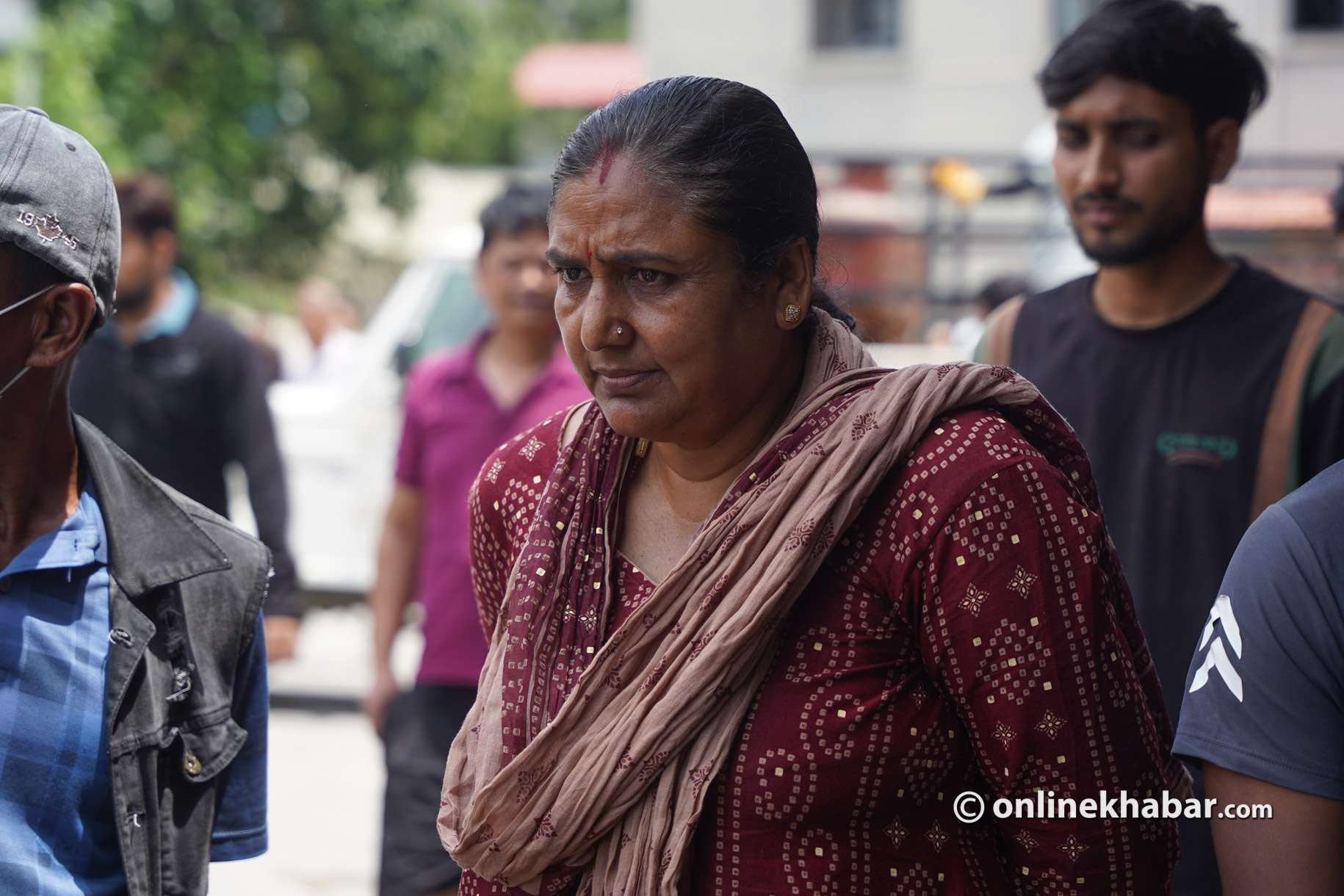
“Just the taxi fare to come here was 300 rupees; going back and forth cost me 600,” she said. The total expense for the gas cylinder reached 2,660 rupees.
She complains that dealers are not providing gas to the general public and accuses them of black marketing.
The hunger and long waiting for gas have also affected her health.
“I have health issues and have not been able to take medicine,” she revealed.
Vishwamaya and Bharat’s stories reflect just a fraction of the hardships that ordinary people endure due to the gas shortage.
About 500–600 consumers queued from 6 a.m. at Teku today, hoping to receive gas.
Nirajan Kunwar, a student from Bagbazar, also ran out of gas and is facing a long struggle to find some.
“Dealers didn’t give us gas, but only to people they know, which is unfair,” he said.
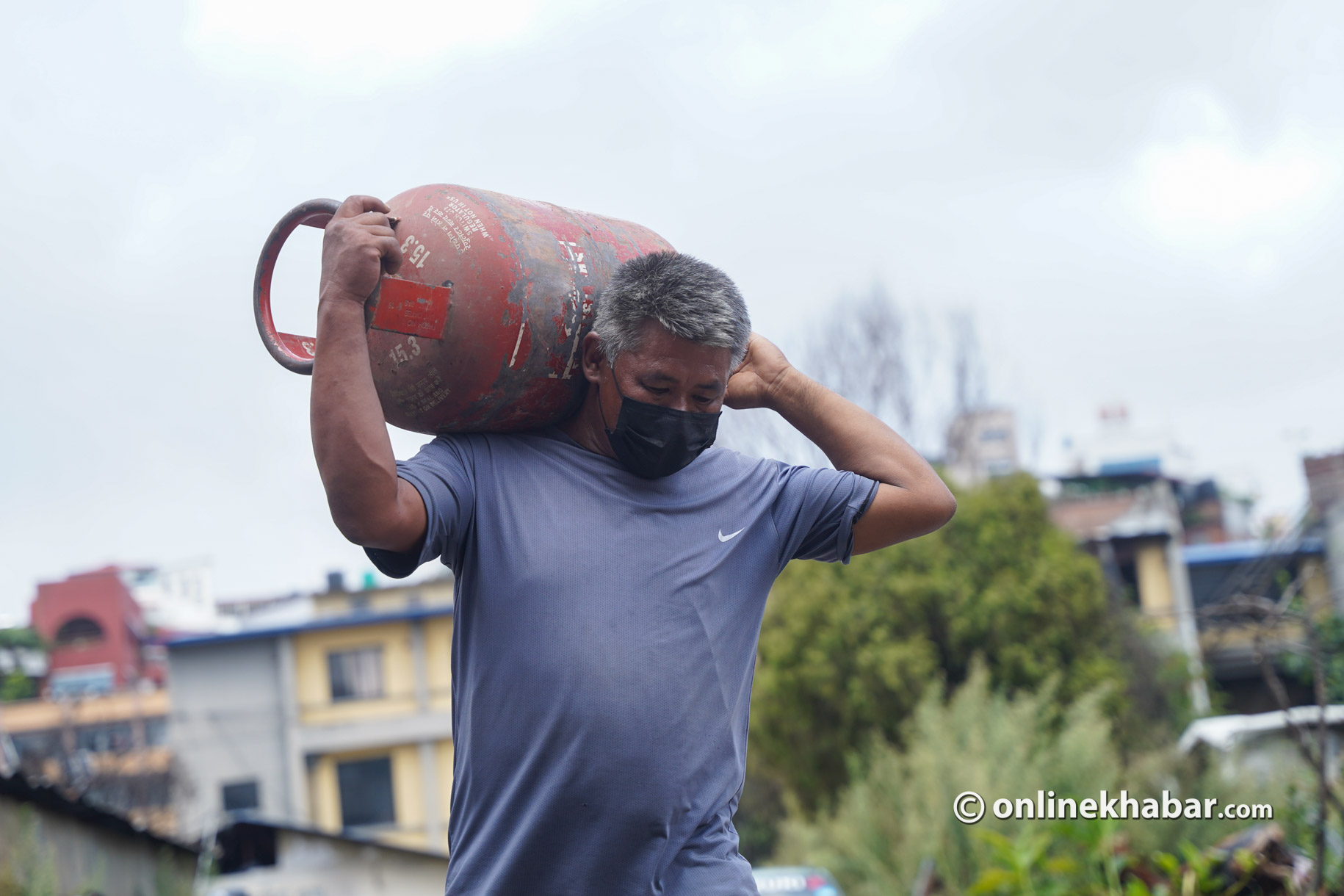
He pointed out dealers’ biased behavior and lawmakers’ failure to understand their true predicament as primary reasons for the shortage.
Student Challenges: Missing Classes and Going Hungry
Pradeep Bhatt from Kirtipur queued early morning at the Teku distribution center carrying a gas cylinder. Due to the gas shortage, he missed his classes.
He and his friends worry about how to return home carrying gas, as no vehicle or taxi is willing to transport cylinders.
Despite assurances from the new government, Pradeep is frustrated by the need to wander in search of gas.
Manoj Achhami also reported repeatedly asking various dealers at Teku but getting no gas, witnessing severe black marketing at some locations.
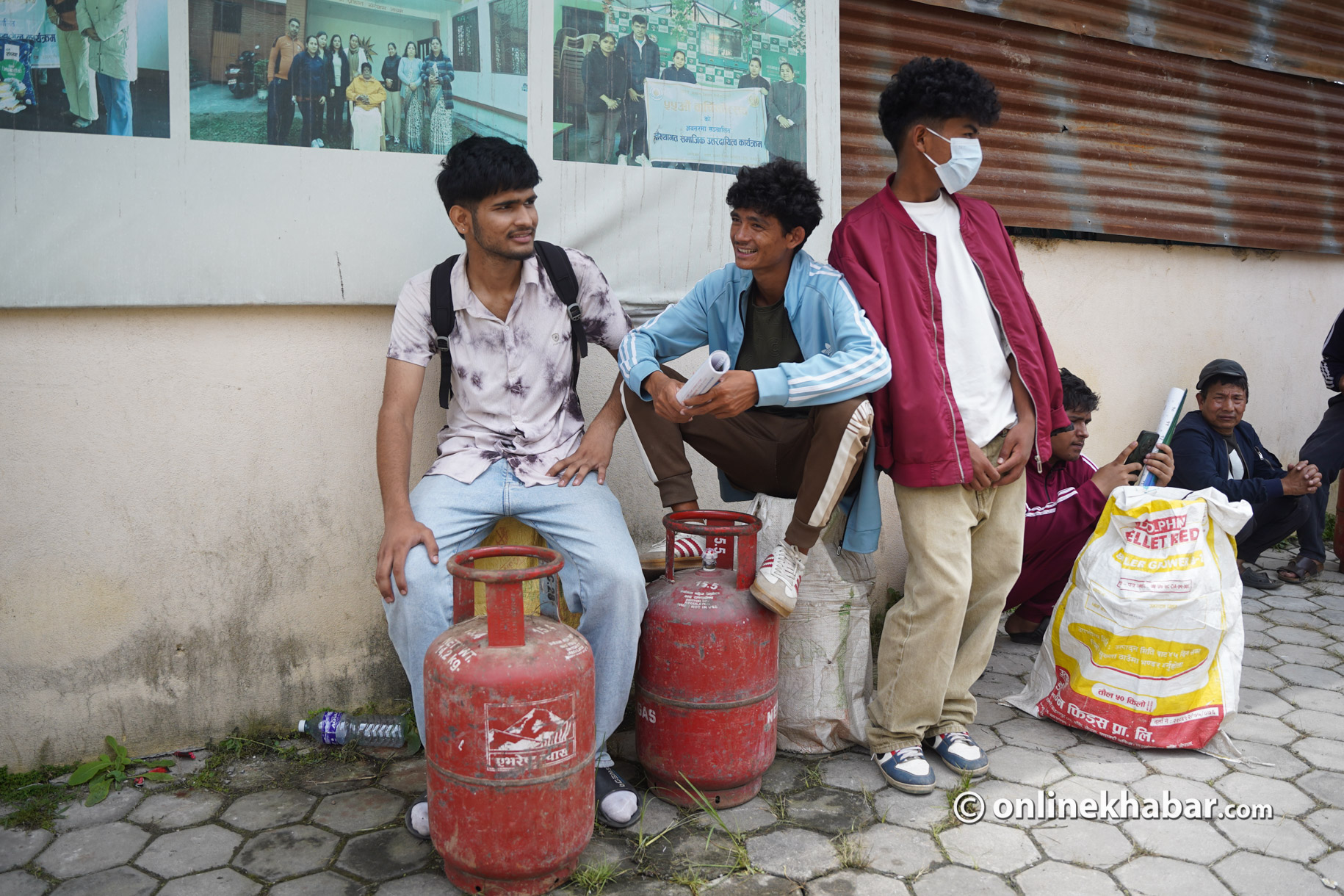
“While the government remains silent, consumers are forced to endure deception,” he stated.
The gas shortage compels consumers across Kathmandu Valley and other cities nationally to stand in long lines.
Most consumers have to queue at various industries and dealers to obtain gas.
Nepal Oil Corporation’s Ineffective Decisions Deepen the Crisis
Nepal Oil Corporation’s failure to analyze the market led to widespread gas shortages across the country. Supply capacity is sufficient but distribution is problematic.
Last January, when gas demand suddenly increased, the corporation implemented a policy selling only half cylinders from Magh 29, 2079 (mid-February 2023).
Using half-filled cylinders doubled the number of cylinders in circulation, making it easier to manage shortages.
However, from Ashar 31 (mid-July 2023), the corporation abruptly switched to supplying only full cylinders, doubling demand and triggering a crisis.
After the shortage emerged, since Shrawan 16 (early August), direct gas distribution has started from the Teku office.
At this center, industrial suppliers distribute Nepal, HP, Everest, Sugam, and Shriram brand gas.
Not a Supply Issue, But Distribution: Nepal Oil Corporation
Company spokesman Manoj Thakur reported distributing about 3,000 cylinders in four days, from Saturday to Tuesday, a total of 2,996 cylinders.
On Saturday, only 175 cylinders were distributed; the figure rose to 1,100 on Sunday and 950 on Monday.
According to Thakur, the number decreased to 861 on Tuesday. He stated, “Gas supply from India is continuous; the main problem is the distribution system.”
The Nepal LPG Industry Association accused government policies of causing the gas shortage.
Association President Diwan Chand said the half-cylinder sales policy was supposed to last only 15 days but was extended, worsening the shortage.
He explained that limitations on gas transportation controlled by India and restricted quotas have prevented immediate supply increases but predicted relief within 10-15 days.
Consumer Rights Activists Alleged Attempts to Shift Blame for Gas Shortage
Consumer rights activist Madhav Timalsina criticized Nepal Oil Corporation for blaming consumers to hide managerial shortcomings.
Timalsina said consumers queuing outside during the shortage are being insulted by the corporation.
“It is unacceptable that the corporation attempts to blame consumers to conceal its own incompetence,” he stated.
False Information Presented to the Prime Minister’s Office
The Ministry of Industry, various departments, industrialists, and gas traders reportedly briefed the Prime Minister’s office falsely, claiming the shortage to be mere rumor.
Timalsina exposed that the corporation presented inaccurate facts to the Prime Minister’s office in this unexpected situation.
Though the corporation insists there is no shortage, Timalsina said it ignored consumer complaints.
He described the shift to direct distribution from the Teku office, bypassing dealers, as impractical and a last resort.
“Having to take time off work and pay taxi fare to come to Teku and line up for a 2,000-rupee gas cylinder reflects state failure,” Timalsina questioned.
He called for a parliamentary inquiry committee to investigate the corporation’s managerial capacity.
After parliament members acknowledged the gas shortage, Timalsina accused the corporation of misleading the public with false information.
Photos and videos: Chandrabahadur Ale


