Most Individuals Recommended for Investigation and Action Are Currently in Government, Says NHRC Member Lili Thapa





Summary
Reviewed content.
- The National Human Rights Commission (NHRC) has found that excessive force was used during the Gen Z protests and has recommended further investigation and action against 34 individuals, including the then Prime Minister and Home Minister.
- Member Lili Thapa stated that despite announcing these recommendations four months ago, the government has shown no urgency to discuss or implement them.
- Thapa insists on the publication of the comprehensive 600-page main report and warns that if the government fails to release it, the issue could be taken to international human rights bodies.
Four months after the National Human Rights Commission recommended action regarding human rights violations during last year’s Gen Z protests, the government has yet to take steps to discuss or implement these recommendations. Lili Thapa, coordinator of the NHRC’s investigation committee, supports the public release of the original 600-page report. She noted that the report covers both the excessive use of state power and vandalism by protestors, and expressed disappointment that the government has not acted on these findings.
Key excerpts from a conversation with Thapa address the report, its recommendations, the roles of political and administrative leadership, the silence of martyr families and activists, and the international implications.
The Gen Z protests reached their one-year mark. You also conducted a human rights investigation on the protests held on Bhadra 23 and 24 (September 8 and 9). How did the Commission evaluate the event?
Thank you for revisiting this topic after a year; it felt like the matter had faded and was being forgotten. I offer my respects and condolences to the martyrs and the injured. The National Human Rights Commission conducted an extensive investigation over six months and produced a detailed report, including necessary recommendations to prevent such destruction in the future. The main report consists of 600 pages, with the full documentation totaling roughly 10,000 pages. The government received the recommendations over four months ago, but we understand there has been no discussion or implementation. There is no official confirmation that the Prime Minister’s Office has received the recommendations.
We also submitted a 29-page summary report. As per the law, the government should inform the Commission of any actions taken within three months; however, more than a month has passed with no response. The current situation appears serious, prompting the Commission to consider further inquiry.
What were the Commission’s main recommendations regarding the protests?
There were three or four key areas. First, whether there was excessive use of force by the state, which resulted in fatalities. The investigation focused on why security forces used firearms, whether there was an attack justifying such force, and who issued the orders.
Second, findings on damage to government and private cultural properties and identifying those responsible, since cultural destruction is a form of human rights violation.
Third, the criminal aspect, which falls outside NHRC’s jurisdiction but was recommended for further investigation by relevant authorities. Our findings indicate excessive use of force and call for action against the commanders involved at the time.
Additionally, the then Prime Minister, Home Minister, and Communications Minister were held accountable for policy failures. The Prime Minister’s failure to convene or address security council meetings in time was a notable weakness contributing to the events. The Home Minister’s inability to maintain peace and security was also highlighted.
Relevant bodies should have been fully prepared and regulated to prevent the incident, but the report notes failures such as authorities not issuing early warnings, the District Administration Office allowing over 500 people to gather despite restrictions, and sensitive events being permitted in certain locations.
The report centered on three main points: excessive force, delayed policymaking, and incitement related to youth involvement and cultural damage. Since criminal matters are beyond the Commission’s powers, we recommended further probe to appropriate agencies; unfortunately, the government has not even engaged in discussion on these recommendations.
Why was there a long delay before decisions were made after submitting the investigation report to the Commission?
The Commission faced a clear lack of cooperation from the Nepalese Army during witness statements. Commanders responsible for the events did not appear for testimony despite summons, and written questions sent via the Ministry of Defense also went unanswered. Although the NHRC Act allows the Commission to summon even the Prime Minister, the Army’s non-cooperation led to those commanders being listed as alleged human rights violators.
After the investigative committee was disbanded, witness statements reached the Commission President, reversing prior decisions and thereby contributing to delays.
You mentioned the original 600-page report should be made public. Why has it not been released yet?
There was considerable delay initially, and fearing it might never be released, I insisted that if the government didn’t publish it, I would. Eventually, the government only released the summary recommendations. The full 10,000-page document contains sensitive statements that cannot be made public but can be provided to government or courts if requested. I believe the main 600-page report should be made public; though there’s internal disagreement within the Commission, I firmly advocate for its release. If it remains unpublished now, it will likely come out eventually.
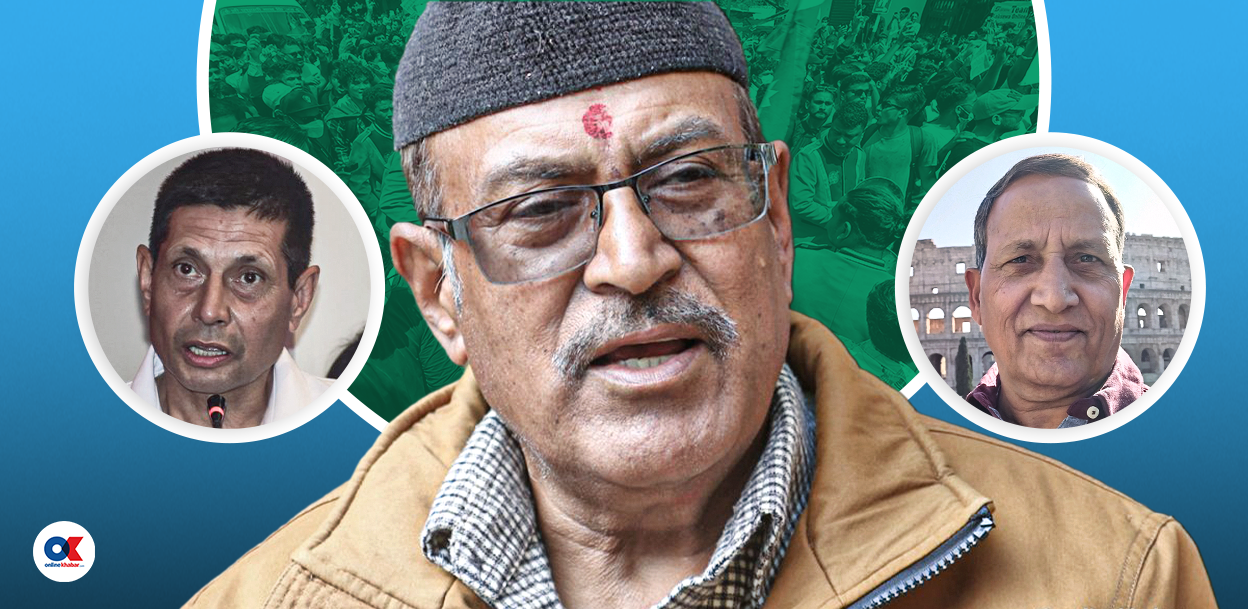
The main report documents the full sequence of events, security forces’ mistakes, youth activities, and cultural damage – information I believe everyone should know. While the Commission cannot publish everything due to jurisdictional limits, we have named individuals recommended for further investigation, including the Prime Minister and other responsible leaders.
Has there been pressure to not release the report given the political and administrative leaders implicated?
I am unaware of any such pressure. Commission members are carefully studying the testimonies, especially those of the Nepal Army. Other reasons might explain the delay.
Many of those identified as involved in excessive force and inciting vandalism are currently Prime Minister, Home Minister, government leaders, and MPs. In that scenario, could political pressure be preventing implementation of the report?
I do not have direct knowledge of political pressure. However, most of the individuals we recommended for investigation and action hold positions in government now, which raises personal doubts about why these matters have not progressed. Similarly, members of martyr families in government and parliament have been unable to raise demands for justice and accountability, which is unfortunate. Some former leaders active before the protests remain silent as well, which is troubling.
Though the Karki-led Commission’s report appeared somewhat one-sided regarding criminal matters, the NHRC reviewed both sides and recommended further investigation beyond its jurisdiction. The government also conducted three separate studies on security forces but unfortunately has not leveraged these for discussion or policy formulation.
Lack of accountability does not mean impunity. For example, Cambodia imposed death sentences on elderly persons for crimes decades old. It is wrong to think such incidents will be forgotten; history demands accountability.
The investigation into the Rautahat incident from 20 years ago has recently concluded with perpetrators identified for action. History proves justice is possible even after many years.
These issues have also surfaced internationally. Even if the government neglects them, reports and complaints have reached the United Nations Human Rights Office in Geneva.
Since the law requires the government to report on implementation within three months, what actions will the Commission take in the absence of such information?
Unfortunately, many previous NHRC recommendations remain unimplemented. The Commission compiles a watchlist of alleged violators, which currently includes approximately 100–150 security personnel, Chief District Officers, and other senior officials. Those listed face restrictions on traveling abroad, appointment to posts, or decision-making responsibilities. Some former CDOs have requested removal of their names.
While this may not pose major national challenges, it carries significant international implications. For example, Colonel Kumar Lama of the Nepal Army was arrested by the United Kingdom on human rights allegations.
What preparations is the Commission making given the government’s failure to implement the report?
Among those recommended for action, 3 to 4 individuals have filed requests for reconsideration; these are typically reviewed within three months. We initially named 34 individuals; some from the security apparatus have sought reviews, and the process is ongoing.
In the absence of updates from the government on implementation, the Commission may formally seek information. Based on the government’s response, the Commission will decide on subsequent steps.
There are suggestions that some human rights violations could not be prosecuted due to absence of relevant laws. Why is enacting laws to address these issues important?
I prefer not to elaborate extensively on this topic and suggest contacting other Commission officials. We did recommend action against former members of the security council; however, the name of army chief Ashoka Raj Sigdel was later removed from the list amid reports of political pressure. Further investigation will clarify the situation.
The Commission recommended a formal warning to the Chief of Army Staff—a significant moral sanction never before imposed—highlighting his ethical responsibility.
Does singling out only the army chief for warning raise questions about the Commission’s impartiality among other security council members?
I reiterate that a formal warning represents a major moral penalty. The initial report noted lack of cooperation from the Army, and after refusing summons, it was deemed uncooperative. Once testimonies were submitted, conditions improved. This moral accountability carries considerable weight.
How might international bodies react if the government fails to act on these matters, and what can the UN Human Rights Office do?
Commission reports and recommendations have reached international human rights bodies, including the UN High Commissioner. The issue remains under international scrutiny. While no formal action may have been taken, individuals named as potential violators—such as members of the TOB group, current Home Minister Sudhan Gurung, other activists, artists, and former Prime Minister Sushila Karki—face reputational consequences and further investigation recommendations. The international community is unlikely to remain unaware of these allegations.
Do the families of victims, injured, and society have reason to hope for justice regarding the events of Bhadra 23 and 24? What message do you have for them?
Many family members of the martyrs are now MPs or ministers but have not exerted pressure on the government for investigation or accountability, which is a great injustice. The inability to demand justice, human rights, and accountability is a grave mistake. No perpetrators have faced consequences, though many innocent people remain imprisoned.
After a year, there has been no impartial investigation into these youths, and the government remains silent. The lack of efforts to locate detained Gen Z activists is a violation of human rights. It is disappointing that even a year later, no action has been taken and no voices have been raised, reflecting a lack of respect for human rights.
How confident are you that victims will ultimately receive justice?
Justice is not only about punishment but also about moral and character accountability. The Commission’s act of naming suspects initiates a justice process. While justice has not yet been served, history will deliver it. Many nations have faced such events; eventually, history investigates and demands answers.


