Author: space4knews

Historic Clash Between France and Senegal: Spotlight on Mbappe and Sadio Mane

June 16, Kathmandu – In one of the most anticipated and historically significant matches of Group ‘I’ in the FIFA World Cup 2026, title contenders France will face African powerhouse Senegal at the New York New Jersey Stadium. With this being head coach Didier Deschamps’ final World Cup campaign, France is eager to start on a positive note. Meanwhile, Senegal, despite a recent 3-2 friendly defeat to the United States, is strategizing to once again stun the world.

The head-to-head rivalry recalls one of the World Cup’s most famous and thrilling upsets. Twenty-four years ago, in the opening match of the 2002 World Cup, then-defending champions France were stunned 1-0 by Senegal, courtesy of a historic goal by Papa Bouba Diop. That match remains the only official encounter between these two teams in international football history. Now, after 24 years, this second meeting presents France with the opportunity to avenge that historic loss and assert their dominance, while Senegal aims to replicate that momentous victory.

Players to Watch
France – Kylian Mbappe (Striker): France’s captain and one of the most lethal forwards in world football, 27-year-old Kylian Mbappe currently plays professionally for Real Madrid, where he has scored 42 goals this season. With 56 international goals, he is just one shy of Olivier Giroud’s national record of 57 goals. Mbappe’s exceptional speed and finishing ability will pose the greatest challenge for Senegal throughout the match.
Michael Olise (Midfielder): The 25-year-old midfielder from German giants Bayern Munich is currently France’s most in-form player, having provided 26 assists this season for his club. He demonstrated his explosive capabilities recently with a stunning hat-trick in the final warm-up match against Northern Ireland. The responsibility to supply attacking opportunities to Mbappe will primarily rest on his shoulders from midfield.

Senegal – Sadio Mane (Forward): The 34-year-old legendary star of Senegal, Sadio Mane, currently plays for Saudi Pro League club Al Nassr. Though advancing in age, Mane remains capable of delivering magical performances in crucial matches and under pressure. His experience and leadership will be vital for Senegal as they navigate counterattacks and seek to breach France’s solid defense.

Match Date and Time: June 16 at 12:45 AM.

Foreign Minister Shishir Khanal Calls on Chinese Investors to Boost Investment in Nepal

June 16, Kathmandu – Foreign Minister Shishir Khanal has called on Chinese investors to increase their investments in Nepal, urging them to contribute to the prosperity of the trans-Himalayan region. Speaking at an investment conference organized by the Nepalese Embassy in Beijing during his four-day official visit to China, Minister Khanal emphasized the potential economic opportunities and demographic strengths of Nepal.

He highlighted the Nepalese government’s commitment to creating a more capable and business-friendly environment to attract investors. During the conference aimed at promoting Chinese investment in Nepal, Minister Khanal also engaged with Chinese businesspeople, entrepreneurs, and investors. Representatives from the Nepal Investment Board presented various investment opportunities available in Nepal.

On Tuesday in Beijing, Minister Khanal also held talks with Wang Huning, Chairman of the National Committee of the Chinese People’s Political Consultative Conference. –RSS

Dr. Sangita Kaushal Acquitted, Six Found Guilty in 3D Mammography Machine Procurement Corruption Case

June 16, Kathmandu – In a corruption case involving the purchase of a 3D mammography machine, a special court has convicted six individuals, sentencing them to imprisonment and fines. The court concluded that there was significant collusion, irregularities, and fabrication of false documents, revealing serious malfeasance in the public procurement process. On Monday, the bench comprising Special Court members Narayan Prasad Paudel and Umesh Koirala sentenced six individuals, including then-Director of the Management Division Dr. Shravan Kumar Thapa, to four months of imprisonment each.

The convicted include former Procurement Branch Chief Surendra Prasad Chaurasia, biomedical engineers Ashish Chauhan and Padma Mishra, Sanjay Kumar Sah, and Sundar Bhusal, the proprietor of Maxim Traders Incorporation Pvt. Ltd. The court found these defendants had engaged in planned collusion between departmental staff and the contracting company, and accordingly imposed penalties under the Corruption Control Act, 2059.

As per Section 8(1) of the Act, the employees received four months’ imprisonment along with compensation and fines. Due to delays in delivery, predetermined compensation amounting to NPR 3,834,723 was imposed; the court distributed this among the defendants, charging each a fine of NPR 547,817. They were also ordered to recover an equivalent amount and deposit it as revenue. Additionally, on charges of fabricating false documents under Section 19(2), each defendant received a further four months’ imprisonment and fines of NPR 20,000.

Similarly, Sundar Bhusal, found guilty as a ringleader, was sentenced to the same punishment with imprisonment and fines. Meanwhile, the court ordered all convicted parties to pay NPR 21,912 each as compensation to the Victim Relief Fund under the Crime Victim Protection Act, 2075.

On the other hand, eight individuals, including then-Director General of the Health Services Department Dr. Sangita Kaushal Mishra, were acquitted by the court. Others acquitted include former Director Dr. Vivek Kumar Lal, Chief Accounting Controller Bhuvan Prasad Kafle, Deepak Adhikari, Yadav Prasad Sapkota, Accounts Officer Shambhu Prasad Dhakal, Legal Officer Sita Ghimire, and Accountant Tilak Ram Dhakal. The court ruled that Dr. Mishra had only approved the specifications and payment orders based on documents and comments received from technical and procurement units, and there was insufficient evidence to prove malicious intent, leading to her acquittal.

Bhuvan Nagarkoti Leads After First Day of Surya Nepal Premier Golf Championship

Kathmandu, 16 June — In the opening round of the final event of the Surya Nepal Golf Tour 2025-26 season, the Surya Nepal Premier Golf Championship, Bhuvan Nagarkoti secured the top position with an outstanding score of 9-under 63. At the close of the first round, Bhuvan held a four-stroke lead over three amateur golfers: Sadbhaw Acharya, Tenzing Chiring, and Norbu Chiring Sherpa. Sadbhaw, Tenzing, and Norbu, all scoring 5-under 67, are tied for second place. Shukra Bahadur Rai and Toran Bikram Shahi, each with 4-under 68, share fifth place. Amateur Wangchen Dhondup along with professional players Niraj Tamang, Bhuvan Kumar Rokka, Subash Tamang, and Dinesh Prajapati are tied for seventh after posting 3-under 69. Defending champion, amateur Rahul Bishwakarma, is positioned 12th with 2-under 70, and Dhan Bahadur Thapa stands 13th at 1-under 71.

Bhuvan delivered an impeccable performance, recording a bogey-free card. He birdied the 1st, 3rd, and 7th holes to finish the front nine at 3-under 33. On the back nine, he added birdies on holes 11, 13, 14, and 15 and capped off the round with an eagle on the par-4 18th hole, completing the back nine at 6-under 30.

Sadbhaw started the day with a bogey but rescued pars on the 3rd, 7th, and 9th holes to finish the front nine at 2-under 34. Although he bogeyed the 11th, he responded with an eagle on the 12th hole and birdies on the 15th and 18th to close the back nine at 3-under 33.

Tenzing faced challenges with a bogey on the first hole and a double bogey on the 8th but balanced his round with birdies on the 2nd, 3rd, 7th, 9th, 12th, 15th, 17th, and 18th holes. He recorded two eagles on the 9th and 11th holes despite another double bogey on the 10th, finishing the front nine at 2-under 34 and the back nine at 3-under 33.

Noirbu delivered a bogey-free front nine with birdies on the 1st, 3rd, and 7th holes, scoring 3-under 33. His back nine included a bogey on the 10th but was offset by birdies on the 11th, 15th, and 16th, finishing 2-under 34 on the back nine.

This season’s championship carries the highest total cash prize of NPR 1.8 million, featuring 46 professional and 22 amateur golfers, totaling 68 participants. A cut will be implemented at the end of the second day, with the top 18 professionals and amateurs who make the cut advancing to the final two rounds. The champion will earn NPR 320,000 in prize money. The second, third, and fourth place finishers will receive NPR 206,000, NPR 162,000, and NPR 145,000 respectively. A Pro-Am event is scheduled for Saturday.

Irregularities in Gandaki Budget: Industry and Tourism Allocated 200 Million Instead of Expected 920 Million

2 Asar, Pokhara — After Gandaki Province government presented the budget statement in the parliament on Monday, discrepancies noticed sparked disputes among members of parliament and ministers.

Finance Minister of Gandaki Province, Jeet Sherchan, presented the budget for fiscal year 2083/084, revealing inconsistencies between the ceiling and the actual budget statement allocated for the industry and tourism sector.

Minister Sherchan announced a total budget of NPR 3.2999 billion, stating NPR 200 million was allocated specifically for the industry and tourism sector.

The Ministry of Finance’s website also reflected the NPR 200 million budget allocated to industry and tourism.

However, a committee led by the Vice-chairman of the Policy and Planning Commission initially set a ceiling of NPR 647.642 million for the Industry and Tourism Ministry, which was later revised to NPR 924.9 million in the finalized budget.

Minister Sherchan emphasized the importance given to industry and tourism by allocating NPR 200 million, matching the budget of the Ministry of Agriculture, Land Management, and Cooperatives. Even Tourism Minister Yashoda Rimal appeared surprised when the NPR 200 million allocation was mentioned.

When ministries sent the budget and programs, only NPR 924.5 million had been submitted. Other ministers were also unaware of how this figure was increased to NPR 2 billion. As MPs started questioning the issue, the controversy deepened, with some even calling for clarifications.

The question remains: How did the NPR 924.5 million budget grow to NPR 2 billion? This confusion caused misunderstandings and unrest among government ministers and parliamentary members. On Monday evening, the finance minister, tourism minister, and secretaries held discussions.

Even though a ceiling of NPR 2 billion was designated for tourism, the schedule listed only NPR 924.5 million. The inclusion of NPR 2 billion in the budget statement led to disagreement between ministers and secretaries over how to reconcile these numbers.

What is the actual situation? Staff members became active to reconcile this by preparing a list that included programs from other ministries related to industry and tourism, aiming to reach the NPR 2 billion figure.

This included seventeen budget titles such as rural agricultural tourism promotion programs, grants for agricultural entrepreneurs, agricultural development enterprise programs, infrastructure projects like Tilche, Tachai, Bagarchap, Ghailanchok, Odar, Merkudanda, Gherang, trail construction projects including Tal Padmarg and Dhaulagiri institutions and companies’ share investments, Film-Larke Pass trail, Chief Minister’s Innovation Partnership Program, alternative tourism routes, and various programs related to culture, language, and archaeology.

Accordingly, Minister Sherchan prepared to respond by affirming the NPR 2 billion allocation for industry and tourism, with ministers and staff planning to present the explanation.

Displaying programs from one ministry under another’s ceiling has the potential to cause fluctuations in the budget ceiling, leading to increased confusion. On Tuesday morning, Tourism Minister Rimal met with Finance Minister Sherchan but no resolution was reached during their discussion.

Finance Minister Sherchan stated that NPR 2 billion had been allocated for industry and tourism, but some programs would be implemented through other ministries. Attempts were made to count the Chief Minister’s Innovation Program within industry and tourism to reach the figure, but the accounts did not tally. Staff ultimately acknowledged this process as a mistake.

As concerns about the tourism budget discrepancies escalated, officials from the Ministry of Finance, including the secretary and under-secretaries, met with the Chief Minister. Later, the Chief Minister, Surendra Raj Pandey, and other ministers held a discussion. The consensus was to correct the budget statement rather than justifying it by adding other ministries’ programs, as doing so might lead to further errors during parliamentary proceedings.

Since the schedule lists NPR 924.5 million, it was deemed appropriate to acknowledge the mistake and inform the parliament accordingly.

“We, including the Chief Minister, were part of the team. The ministry’s budget is as per the schedule (NPR 924.5 million). However, during the process of addition, other items appeared,” Finance Minister Sherchan explained. “We have decided to rectify this and report the technical error in the upcoming parliamentary session.”

The provincial government has continuously supported programs like “Pahila Ghar Desh: Ani Pardesh” and “Lake to Lake” under the industry and tourism sector. These include projects such as the Selfie Bridge at Phewa Lake and the Glass Bridge in Rupa.

Pokhara is planned to be developed as a hub for MICE (Meetings, Incentives, Conferencing, Exhibitions), health, sports, and adventure tourism. Included are the “Round Phewa: View Phewa” project, religious tourism circuits, upgrading of Manaslu–Annapurna–Dhaulagiri–Dhorpatan trails, and an information technology park.

The province’s budget prioritizes infrastructure development, tourism promotion, agricultural modernization, health service expansion, education reform, and good governance.

The largest allocation of NPR 1.196 billion targets physical infrastructure and transportation. Strategic roads, bridges under the Korala–Tribeni project, the Seven Lakes ring road, Shaligram corridor, rural roads across districts, and multi-year plans will be pursued as priorities.

Energy, water resources, and drinking water receive NPR 477 million. The target is to extend electricity access to all households within the fiscal year and allocate NPR 331 million for health sector improvements.

Investments continue in city scanning machines for Gorkha and Nawalpur, construction of regional general and communicable disease hospital buildings, maternal and neonatal health, health insurance, cancer treatment support, and air rescue programs for at-risk pregnant women.

Social development, youth, and sports sectors have NPR 216 million allocated. The agriculture, land management, and cooperative sector also receives NPR 200 million focusing on agricultural modernization, production-based grants, protection of indigenous crops, agricultural ambulance service, digital marketplace operation via an agricultural app, and the “Return to Village” campaign. NPR 30 million is designated to expand fruit and nut farming on 2,500 hectares in hilly areas.

Forestry and environmental conservation are allocated NPR 121 million. The provincial government aims to make the revenue system more digital and taxpayer-friendly.

Federal government grants, revenue sharing, royalties, and internal revenue will be the main sources of budget implementation, alongside a goal to mobilize NPR 175 million in internal loans.

Gandaki Province has allocated NPR 1.272 billion (38.56%) for recurrent expenditures, NPR 2.002 billion (60.68%) for capital expenditures, and NPR 25 million (0.76%) for financial management in fiscal year 2083/84.

Prakashchandra Pariyar: Previous Budgets Exploited Dalit Communities; Current Budget Aims at Reform

2 Ashad, Kathmandu – Prakashchandra Pariyar, Secretary of the ruling National Independent Party (Rastriya Swatantra Party, RASWAPA), highlighted that past governments exploited the Dalit community through budget allocations, whereas the current budget is oriented toward reform. Speaking during the discussions on the Appropriation Bill 2083 in the House of Representatives, Pariyar revealed how previous budgets allocated funds under the name of the Dalit Development Authority without enacting the necessary legislation, effectively deceiving the community.

He stated, “Previous governments often merely talked about budget allocations for marginalized regions and communities but engaged in deceptive practices. For instance, in the fiscal years 2081/82 and 2082/83, amounts of NPR 20 crore and NPR 50 crore were reportedly allocated. However, the necessary law to establish the Dalit Development Authority was never enacted. Consequently, not a single penny was spent. This was purely an attempt to cheat the Dalit community.”

Emphasizing that inclusive distribution alongside continuous economic growth is the main criterion, Pariyar asserted that the current budget addresses the needs of the middle class and youth. He praised the budget as reform-oriented, middle-class friendly, and youth-targeted, reflecting the sentiments of the Gen-Z generation. Among the historic and welcomed measures for the middle class, he cited doubling the tax exemption limit to NPR 1 million and reducing the highest tax rate from 39 percent to 29 percent.

Furthermore, Pariyar highlighted policy decisions such as the reduction in the number of ministries, a private sector-friendly approach, finalizing capital gains tax on the stock market, and digital AI and startup packages that have ignited enthusiasm among the younger generation. He noted that the budget incorporates many initiatives addressing poverty reduction and social security, including a provision to grant NPR 1,000 nutrition allowance to 313,000 Dalit children, serving as a key example.

Additionally, he commended programs aimed at preserving traditional skills of the Dalit community, managing landless squatters, and implementing model homestays in Dalit settlements across Madhesh, Karnali, and Sudurpashchim provinces.

Minister Pokharel Announces Date for 10th National Games to Be Determined Soon

June 16, Kathmandu – Education and Sports Minister Sasmit Pokharel conducted an inspection of the Karnali Stadium, currently under preparation for the 10th National Sports Competition. During the visit, Minister Pokharel announced plans to finalize the date for the national games shortly. Ravindra Chand, Member Secretary of the Karnali Provincial Sports Development Council, briefed the minister on the current status of the stadium. During the inspection, Minister Pokharel emphasized that the government will address the lack of physical infrastructure in Karnali’s sports facilities.

The Best Way to Walk Backward: 5 Key Benefits

Walking is considered one of the most effective forms of exercise, with various styles available. But have you ever walked backward or seen someone do it? This practice is somewhat rare and less commonly heard of. A few years ago, a young man from Dang gained attention for walking backward from Mechi to Mahakali, covering hundreds of kilometers under the slogan ‘Let’s walk, stay healthy.’ In fact, walking backward offers numerous benefits for the body. How exactly does backward walking benefit your body?

1. Strengthens Leg Muscles
Walking backward activates different muscle groups in the legs more intensively. This helps strengthen the muscles in the thighs, knees, and buttocks.

2. Improves Balance and Coordination
The body has to work harder to maintain balance when walking backward. This strengthens overall balance and coordination abilities.

3. Burns More Calories
Although walking forward is easier, walking backward demands more energy expenditure. This increased calorie burn helps prevent unwanted weight gain.

4. Strengthens the Knees
Backward walking changes the pressure exerted on the knees, promoting joint health and strength. In some cases, backward walking exercises are included in physiotherapy for rehabilitation purposes.

5. Activates the Brain
While forward walking allows for distraction, walking backward requires full concentration, which stimulates brain activity and improves focus on the task at hand.

How to Walk Backward Correctly?
For safety reasons, backward walking should be practiced for short durations initially. Start with just a few minutes. It is best to walk backward in open spaces or courtyards. Before starting, ensure the area is free of obstacles or hazards. Extra caution is necessary if practicing on rooftops or elevated places. Maintain a straight posture and neck alignment, walking slowly and carefully. If you experience any discomfort or pain, particularly in the neck or body, stop immediately.

Iran Warns Israel of Breaching Agreement if Attacks on Lebanon Continue

June 16, Kathmandu – Iran has issued a warning that if Israel continues its attacks on Lebanon, it will constitute a violation of the ceasefire agreement made with the United States. Iranian Foreign Minister Abbas Araghchi conveyed this warning on Tuesday, according to reports. “This agreement involves two parties,” Foreign Minister Araghchi stated, “on one side Iran and Hezbollah, and on the other side the United States and Israel. To fully cease hostilities, fighting in Lebanon must stop.”

He further clarified that any attack by Israel on Lebanon or attempts to occupy land there would be considered a breach of the agreement. Although a deal exists between Iran and the US, Israeli leaders have refused to acknowledge it. Meanwhile, Israeli forces continue their operations against extremist groups in southern Lebanon.

Former Minister Rekha Sharma Emphasizes the Need for Comprehensive Review Before Constitution Amendment

June 16, Kathmandu – Former Minister and leader of the Nepal Communist Party (NCP), Rekha Sharma, has highlighted the necessity of conducting a comprehensive review of the constitution prior to any amendments. Speaking at an event held in the capital on Tuesday, she stressed that a full review of the entire constitution is essential before setting the agenda for constitutional amendment. She noted that although all political parties have formed working groups to study constitutional amendments, there has been little focus on a broader constitutional review.

Reflecting on her party’s earlier opposition during the Constituent Assembly to issues such as the electoral system, form of governance, and gender discrimination, Sharma remarked that the current political situation further underscores the need for a constitutional review. She added that the government must engage in additional dialogue with political parties before moving forward with amendments.

Sharma also recalled that in the recently concluded House of Representatives elections, parties included constitutional review and amendment in their manifestos, and that the constitution amendment agenda remained a priority when the Congress-UML coalition government was formed. She noted that the constitution amendment working group established by the NCP is currently studying possible amendments and providing necessary recommendations to the government.

She stated, “Before deciding which aspects of the constitution need amendment, it is imperative to conduct a comprehensive review of the constitution, which is not currently happening. Our party has now consolidated many smaller parties. Having been a member of the previous Constituent Assembly, I can say that we have consistently opposed provisions related to the electoral system, governance structure, and gender discrimination, both then and now. The circumstances today differ somewhat from those times.”

She continued, “We have formed a constitutional amendment working group under the leadership of senior party leader Dev Gurung. This group is studying which parts of the constitution can be amended and is providing the government with necessary suggestions. Our party’s stance is that amendments are needed on aspects of the constitution that can and should be changed.”

Key Players to Watch in the Argentina vs. Algeria Match at FIFA World Cup 2026

In Group ‘J’ of the FIFA World Cup 2026, three-time world champion Argentina will face North African powerhouse Algeria at the prestigious Dallas Stadium in Texas. Argentina, on a historic quest to defend their title and secure a fourth major international trophy consecutively (World Cup 2022, Copa America 2024, and Copa America 2026), aims to start their campaign with a strong performance. On the other hand, Algeria, led by coach Vladimir Petkovic following their failure to qualify for the Qatar World Cup 2022, has made an impressive comeback, planning to surprise the South American giants with their strategy on the pitch.

Looking at their head-to-head history, Argentina and Algeria have rarely faced each other in football. These two teams have met only once previously in an international friendly match in 2007, where Argentina won a thrilling and competitive encounter 4-3, with Lionel Messi scoring two goals. This World Cup encounter will be their first meeting on the grand stage of the FIFA World Cup. Based on historical experience and FIFA rankings, Argentina is considered the stronger contender, but Algeria’s physical strength and counter-attacking style could pose a serious challenge to Argentina’s defense.

Players to Watch
Argentina
Lautaro Martinez (Striker): The main attacking spearhead for Argentina, Lautaro Martinez, captain and star forward of Italian champions Inter Milan, is in exceptional form. Having been the hero behind Argentina’s triumph in Copa America 2026 with outstanding performances, the 28-year-old will shoulder the primary responsibility of scoring goals and breaking through Algeria’s tough defense, especially as Lionel Messi adopts more of a playmaking role in the latter part of his international career.

Enzo Fernandez (Midfielder): The central midfield engine for Argentina is Enzo Fernandez of the English Premier League club Chelsea. As the chief strategist in the midfield, Fernandez controls the tempo and pace of the game from the center of the park. His world-class ability to stop opponent attacks close to the defense and provide precise through passes to Lautaro Martinez will be decisive in containing Algeria’s offense.

Christian Romero (Defender): The reliable center-back for Argentina, Christian Romero, playing for English club Tottenham Hotspur, is a formidable rock in defense. Known for his tough tackles, exceptional physical strength, and one-on-one prowess, the 28-year-old’s crucial task will be to prevent Algeria’s speedy wingers from penetrating close to the penalty area.

Algeria
Riyad Mahrez (Winger): Algeria’s captain and biggest superstar, Riyad Mahrez, is the key attacking threat from Saudi Pro League club Al-Ahli. A former Manchester City star with vast experience in big matches and high-pressure situations, Mahrez will continually challenge Argentina’s left-back by cutting inside from the right wing to deliver precise crosses or shoot directly on goal.

Ryan Aït-Nouri (Defender): Also a Manchester City player, Ryan Aït-Nouri is Algeria’s most talented left-back. His style involves swift overlapping runs along the left wing to create space for captain Mahrez, making him a dangerous player. His defensive duties in containing Argentina’s explosive wingers will be critical for Algeria’s success.

Google Chrome’s New Update Weakens Ad Blockers by Changing Extension Framework

June 16, Kathmandu – Google Chrome, the world’s most widely used internet browser, has implemented a significant change in its extension framework. With this new update, ad-blocking software used in Chrome is becoming less effective. Popular ad blockers like ‘uBlock Origin’ have ceased to function fully within Chrome. According to Google, this change involves retiring the older extension API, ‘Manifest V2,’ and introducing ‘Manifest V3.’ As of July 2025, Chrome has permanently disabled all legacy MV2 extensions, which led to the removal of ‘uBlock Origin’ from the Chrome Web Store.

Following the update, ad blockers can no longer perform ‘dynamic filtering,’ that is, blocking ads in real time before the website fully loads. Google states that this move aims to enhance user security and improve browser performance. The company argues that recent incidents of malware propagation and data theft through various Chrome extensions have necessitated these new rules. However, cybersecurity experts and technologists have criticized Google’s decision. They contend that because Google’s primary revenue stems from digital advertising, the company is motivated to weaken ad blockers in favor of its commercial interests.

Cybersecurity specialists emphasize that ad blockers do more than just block ads; they protect users from harmful online redirects, tracking, and malicious advertisements. Weakening ad blockers increases cyber risks for users, they warn. Despite these changes, a version called ‘uBlock Origin Lite’ remains available for Chrome users. For complete ad-blocking needs, browsers like Firefox or Brave still support the full functionality of ‘uBlock Origin’ effectively.

Over 10,000 Illegal Workers Arrested in Saudi Arabia, Including Nepalis

Recently, the Nepali Embassy in Riyadh revealed that at least 84 Nepali workers have been arrested during a major crackdown on illegal laborers working unlawfully in Saudi Arabia. These individuals are currently held in various centers awaiting repatriation to Nepal, including 37 in the Eastern Province’s Dammam and Jubail areas and 47 in the Riyadh region, according to Nepali Labor Counselor Kabiraj Upreti. He explained, “Typically, the Saudi government frequently arrests workers engaged in illegal activities, such as those whose employers report them, those working outside their designated job roles, or those whose residency permits (Iqama) are invalid.”
Counselor Upreti further noted that obtaining an exit visa is essential for Nepalis wishing to return home from Saudi Arabia, but some have been arrested for failing to complete the required documentation. The Saudi Ministry of Interior reported that from June 4 to 10, over 10,000 undocumented migrant workers were apprehended nationwide with the involvement of security forces. Nearly 8,000 of those detained were deported during the same period, according to official data.
Saudi authorities have stated that most detainees were arrested for violations related to residency laws, border security, and labor regulations. Upreti highlighted that many Nepali workers have been repeatedly detained because they did not update their residency identification cards. Thousands of Nepali workers fall into this category, with the Saudi government regularly informing them about renewal procedures through public notices and SMS alerts.
“The Saudi government has instructed all workers, in both English and Arabic, via SMS to update their residency IDs by June 30. Failure to comply may result in being classified as illegal and subsequent deportation,” Upreti explained. Residency card renewals in Saudi Arabia can be processed for durations of three months, six months, or one year. This move comes as Saudi Arabia prepares to host the 2034 FIFA World Cup and pursues its Vision 2030 initiative aimed at diversifying its economy away from oil and gas to improve living standards.

Applications for Four-Year Bachelor’s Degree Transcripts Now Accepted Online

June 16, Kathmandu – The Office of the Controller of Examinations at Tribhuvan University has introduced an online application system for transcripts of four-year bachelor’s programs, including BA, B.Ed, B.Sc, and BBS. The office has announced that starting from July 17, 2026, physical applications will no longer be accepted. Students are therefore urged to submit their transcript applications exclusively through the online platform. See the notice below:

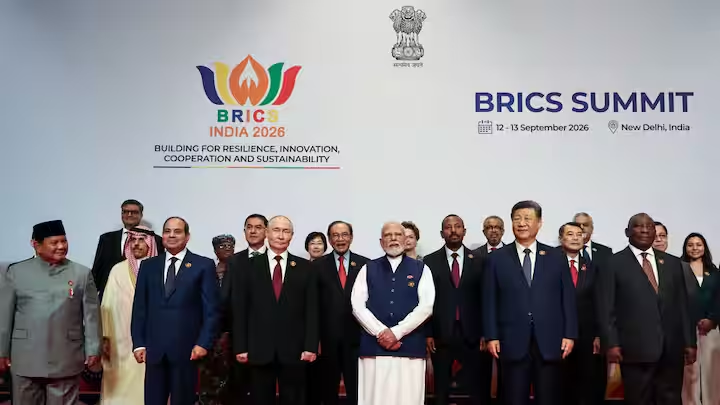
Macron’s Plan to Curb Chinese Trade Dominance Sparks Division Between Europe and the US

French President Emmanuel Macron devised a strategy at the G7 summit to take stringent action against China’s subsidized exports, which have significantly influenced global markets. However, the plan appears poised to fail as no concrete consensus emerged on curbing Chinese trade dominance even before the summit began. Although discussions on worldwide economic imbalances took place on the first day of the G7 meeting, which started Monday in Avian, France, they failed to yield any resolution. There are serious disagreements between European countries and the United States on how to manage China’s $1.2 trillion trade surplus. Meanwhile, China has largely ignored the G7 initiative.

President Macron chaired the ‘Global Economic Transition Summit’ aimed at reducing economic imbalances between G7 nations and Beijing. However, this event was solely a video conference rather than an in-person meeting, with only a limited number of G7 leaders participating, including German Chancellor Olaf Scholz and Canadian Prime Minister Justin Trudeau. China’s response showed a lack of seriousness toward the summit, sending only Vice Premier Zhang Guoqing, who holds no direct responsibility for trade policy, to engage. Zhang refrained from discussing economic imbalances and instead reiterated China’s established political agenda of “multilateralism.”

While the French presidential office (Élysée) claimed the virtual dialogue was a success, experts argue it was largely ceremonial. Agathe Demarest, an economist at the think tank T7, stated that China is unlikely to overhaul its entire economic model simply to appease France, and the G7 is not an appropriate platform to pressure China effectively. As G7 chair, France has deliberately avoided directly naming China, instead opting for neutral terms like “global economic imbalances.” Nonetheless, France remains the strongest voice within the European Union against the trade deficits caused by China.

Last year, Europe’s trade deficit with China reached €360 billion, a figure that has grown in the first quarter of 2026. Earlier this week, while addressing tire factory workers in his hometown of Amiens, President Macron emphasized the need for tariffs and Europe-first measures to combat Chinese competition. He framed these actions not as protectionism but as “fair security.” Even Germany’s Chancellor Olaf Scholz, who previously favored a softer approach due to concerns over impacting China’s economic transformation, has indicated willingness to take tougher measures this time. The European Commission has committed to addressing the unbalanced trade deficit with China, and this issue will be discussed by European leaders during a meeting in Brussels on Thursday immediately following the G7 summit. However, cooperation between Europe and the United States remains elusive on this matter. U.S. Trade Representative Katherine Tai welcomed European participation in America’s hardline stance against China but clarified that the U.S. is not willing to slow its own initiatives to harmonize diplomatic coordination with Europe.

The lack of mutual coordination between Europe and the United States threatens to reduce France’s ambitious agenda to restrict Chinese exports at the G7 summit to mere rhetoric.