A passenger ship, Bhargo Transport 8, carrying 240 people has been missing in Indonesia’s Java Sea since Sunday. According to the Search and Rescue Office in Banjarmasin, the ship encountered communication system issues which prompted an immediate search operation. Rescue officials stated that the ship’s last known location was approximately 148 kilometers from Banjarmasin port, and so far, no reports of casualties have been received.
The vessel was en route from Surabaya in East Java to Banjarmasin, the capital of South Kalimantan province on the island of Borneo. Authorities launched a rapid search effort immediately after the ship was reported missing. The Banjarmasin Search and Rescue Office confirmed that the ship’s communication system experienced problems during the journey, and no contact has been established since.
Rescue teams are conducting an extensive search operation in the area. Until now, no information has been reported regarding any injuries or fatalities among the passengers. Indonesia has experienced numerous ship accidents in the past, primarily due to adverse weather conditions, maritime storms, overcrowding beyond capacity, and lax enforcement of safety regulations.
Indonesia has more than 17,000 islands, with a significant portion of its population residing across these islands. Consequently, passenger ships remain a key mode of transportation. The region frequently experiences heavy rainfall, strong winds, and high sea waves, making travel particularly challenging for small and medium-sized vessels.
By June 2026, the number of individuals holding multiple jobs in Australia has reached one million, marking the highest level recorded so far. In July 2026, Australia welcomed 710,080 foreign tourists, although this figure remains 10 percent below the number recorded in July 2019. Meanwhile, over 1.25 million Australian residents traveled abroad and returned within July, representing an 11.4 percent increase compared to 2019. (Kathmandu, September 14)
The population engaged in multiple employment is growing steadily, setting new records, while foreign tourist arrivals are gradually returning to normal levels. According to the latest official data released by the Australian Bureau of Statistics, the total number of multiple job holders had reached one million by June 2026. Additionally, more than 710,000 foreign tourists visited Australia in July. Women and young people are primarily active in holding multiple jobs. The data indicates that 6.9 percent of those employed hold more than one job, the highest proportion recorded to date.
In March, this number was 984,200. Among multiple job holders, 6.2 percent are men, while 7.7 percent are women. Young adults aged 20 to 24 have the highest engagement in multiple employment, with a rate of 11.2 percent. In contrast, those aged 65 and above have a rate of only 3.1 percent. Multiple job holders work an average of 39.3 hours per week across all jobs, compared to an average of 34.8 hours for those with a single job. Currently, 14.1 million Australians hold a single job.
Comparing metropolitan regions to others, the rate of multiple jobholding is higher in regional and rural areas. From 1994 to 2019, this rate ranged between 5 and 6 percent. It declined during the COVID-19 pandemic but has since been rising again. July’s figures showing 710,080 foreign arrivals reflect short-term visits, which remain 10 percent lower than pre-pandemic levels in July 2019.
Among foreign tourists visiting Australia, the largest share comes from New Zealand citizens (18.9 percent), followed by visitors from China and the United States. By state, New South Wales received the most tourists (247,410), while Tasmania recorded the fewest (84,320). More than 1.25 million Australians traveled abroad and returned in July, a figure 11.4 percent higher than in 2019. Indonesia was the most popular destination among Australian travelers, attracting 15.1 percent of those traveling overseas, followed by New Zealand and the United Kingdom as preferred choices.
Tensions between Russia and the Western world escalated after Germany accused Russia of a drone attack at the Leipzig airport last month. Alexander Dobrindt, Germany’s Minister of the Interior, described this drone strike—which targeted both combatants and civilians without direct open conflict—as “emulating the style of hybrid operations conducted by Russia in Europe.” In response, Germany and Russia have shut down each other’s cultural centers, and the Russian commercial consulate in Bonn has also been closed.
Matthew Whitaker, the US Ambassador to NATO, referred to the Leipzig airport attack as one of the “most alarming hybrid operations” occurring in Europe. “Such actions are unacceptable and must be met with an immediate and strong response,” he said. Since Russia launched a full-scale invasion of Ukraine in February 2022, experts have noted Moscow’s wide use of hybrid warfare tactics. Russia denies involvement in the Leipzig incident, labeling Germany’s accusations as baseless and rejecting previous claims as well.
Earlier this year, the Bratislava-based think tank GLOBSEC reported uncovering 151 separate Russian operations against Europe from 2022 through February 2026. They suggested the actual number of such activities could be even higher. These operations have included assassination attempts, arson, vandalism, and disruptions in public spaces. GLOBSEC noted that the primary motivation behind attacks in countries such as Poland, France, Germany, Lithuania, Estonia, and the United Kingdom has been these nations’ support for Ukraine.
An initial government report suggests that over seven billion Nepali rupees will be required for reconstruction following the floods in Rasuwa, illustrating the scale of the destruction.
The floods in Rasuwa, Nuwakot, Dhading, Gorkha, and Chitwan districts have washed away or buried approximately 7,570 private homes under sediment.
Officials have reported recovering around 1,400 bodies, often found in fragmented condition, while more than 5,000 people remain missing. They caution that a complete understanding of human losses may take months.
Over a dozen operational and ongoing hydroelectric projects within a 100-kilometer radius have been affected, signaling devastating physical damage and numerous fatalities or missing persons among local and international workers.
Shambhu Prasad Regmi, Chief District Officer of Nuwakot, noted that the border area between Nuwakot and Rasuwa was a bustling hub for pilgrims, trekkers, and traders.
“Battar and Bidur serve as administrative centers, while Betrawati, Dhunge, and Trishuli are economic hubs that attract people from various sectors,” described CDO Regmi.
“People also come from the upper parts of the district for shopping and travel. Visitors arrive from other parts of the country as well as from abroad.”
Mohana Acharya, member of parliament representing Rasuwa, said the corridor had been brought to life by hydroelectricity, tourism, and cross-border trade and warned that restoration to its former state would take a long time.
“The biggest issue is the human loss. In Rasuwa and Nuwakot, it is difficult to find anyone who has not been affected by the flood,” Acharya stated.
Pilgrims and Trekkers
Image Source, Reuters
Tour guide Navaraj Ghimire shared that he has frequently transported tourists to Tibet via the Rasuwagadhi border.
“This route combines religious and natural attractions,” Ghimire remarked. “Many Indian and non-resident Indian pilgrims travel on the same religious journey arriving from Kathmandu or Muktinath heading towards Kailash.”
He described the route as “easy, affordable, and beautiful,” noting that both high spenders and budget travelers frequently used it.
“This path created an active corridor for hotels, restaurants, tour operators, and transportation businesses. Compared to Nepal’s Hilsa-Simikot route, the Trishuli Corridor was more suitable for the Kailash Mansarovar pilgrimage,” Ghimire added.
From this corridor, treks to Langtang and Gosainkunda originated. Approximately 600 foreign nationals who had come for Kailash and Langtang treks are currently missing.
“We have lost many guides, vehicle operators, and local hotel owners who worked along this route, which is a heavy blow to tourism there,” Ghimire lamented.
“A significant number of workers employed on this route were caught in the flood, and there is no one to report their status.”
Traders and Drivers
Image Source, Reuters
During the fiscal year 2078/79, Nepal imported over 2 trillion Nepali rupees worth of goods, with nearly a quarter coming from China.
Rasuwagadhi Border served as a key gateway for China, Nepal’s second-largest trading partner.
Following the closure of Tatopani border post after the earthquake, Rasuwagadhi was considered as an alternative, although it frequently experienced disturbances during the rainy season.
Ram Hari Karki, president of the Nepal Himalayan Cross-Border Commerce Association, noted that the exact number of human casualties related to international trade remains to be confirmed.
“We have recorded a list of approximately 76 missing individuals identified as traders or commercial staff — mostly those preparing packing lists and conducting inspections,” Karki said. “Truck drivers and their assistants are not included in that list.”
The National Federation of Nepalese Transport Entrepreneurs reported 233 missing drivers and co-drivers, along with destruction of 900 vehicles.
Nepal Truck Container Transport Pvt. Ltd. stated that more than 400 containers were swept away, and Arniko Transport reported losing about 15 buses and 29 workers.
Hydroelectric Workers, Students, and Teachers
Image Source, Pradeep Bashyal/BBC
Image Caption, Trishuli Corridor was an active economic center before the Rasuwa disaster
Thirteen hydroelectric and five solar power projects of 24 megawatts capacity have been impacted, affecting power centers with a total capacity of 759 megawatts.
Around 900 people associated with these projects are missing, but details remain unclear about those trapped inside tunnels or otherwise unreachable.
Damage has been reported to 48 public buildings, 18 schools, seven health institutions, and 30 cultural heritage sites.
According to preliminary information from the Ministry of Education, 503 students and 28 teachers went missing following the floods in Rasuwa.
Government data indicates damage in 15 local bodies across five districts, with only Vidur Municipality in Nuwakot having 3,026 affected houses.
The police have stated that with the water levels receding, search efforts are intensifying to locate houses buried under sediment and extensive areas along both banks of the river connecting China and India.
Government reports estimate that 9.475 billion rupees will be needed for disaster risk reduction and river management, with an additional 515 million rupees required for sediment and debris management.
Using Indicators to Collect Details
Image Source, Reuters
Nuwakot Chief District Officer Shambhu Prasad Regmi stated that in a few days, data collection using facilities in the affected wards will begin, which will provide clearer insights.
“The form prepared at the center will be uniform across all districts,” Regmi explained.
“Generally, ward chairpersons or executive members know how many people lived in each household, and it is expected that the data will be updated accordingly.”
Access to Rasuwa remains difficult, so some of the information collected in Nuwakot includes residents from Rasuwa.
“In Nuwakot, approximately 2,500 people have been reported missing due to flooding,” Regmi said. “In many cases, it is unclear where the individuals were at the time of the incident.”
MP Mohan Acharya from Rasuwa expressed confidence that “the real numbers will be known only after analyzing indicator data.”
“Currently, over 1,800 local residents remain missing in Rasuwa. Ward no. 2 of Gosainkunda Rural Municipality seems to be completely deserted,” Acharya disclosed.
“There is no accounting for how many vehicles heading from Dhunge towards Timure and Gosainkunda were washed away.”
Subscribe to our YouTube channel and watch published videos here. You can also follow us on Facebook, Instagram, and Twitter. Additionally, BBC Nepali Service programs air on radio at 8:45 PM from Monday to Friday.
September 13, Kathmandu – The BRICS Summit has issued a strong condemnation against the unilateral tariffs imposed by US President Donald Trump on other nations. The declaration from the BRICS Summit expressed serious concern over unilateral tariffs that violate World Trade Organization (WTO) rules, non-tariff measures, and protectionism. The summit warned that such actions could negatively impact global trade and supply chains, as well as exacerbate economic inequality.
BRICS also criticized unilateral economic sanctions and other coercive measures that contravene international law. Leaders from BRICS countries voiced deep concern that these sanctions disproportionately affect the poor and vulnerable populations. In the context of global peace, BRICS emphasized the need to prioritize conflict prevention, dialogue, diplomacy, and mediation.
Highlighting concerns about rising military expenditures, nuclear risks, and arms races, the group underscored the necessity of strengthening disarmament, arms control, and non-proliferation regimes. Special emphasis was placed on the importance of nuclear-weapon-free zones. BRICS further expressed profound concern over the unilateral sanctions and strict blockade imposed on Cuba, firmly demanding the immediate lifting of all economic, trade, and financial restrictions against Cuba.
Uranbayar of Annapurna Spiker Kings was honored as the best player in the inaugural edition of the Nepal Volleyball League (NVL). He received a cash prize of NPR 100,000. In the final, Annapurna claimed the title by defeating Karnali Shivraj.
Also from Annapurna, Turmandakh Gankhuyag was awarded best server and best setter, while Inkheden earned the best opposite hitter award. Each winner in the seven individual categories received NPR 60,000 as prize money.
Vinod Chand of Karnali Shivraj was declared best libero, Rabin Nagarkoti of Madhesh Warriors won best middle blocker, and Ahmad Mustafa of Kathmandu Reds was named best outside hitter. The final held on Saturday saw Annapurna overcome Karnali Shivraj to secure the championship title.
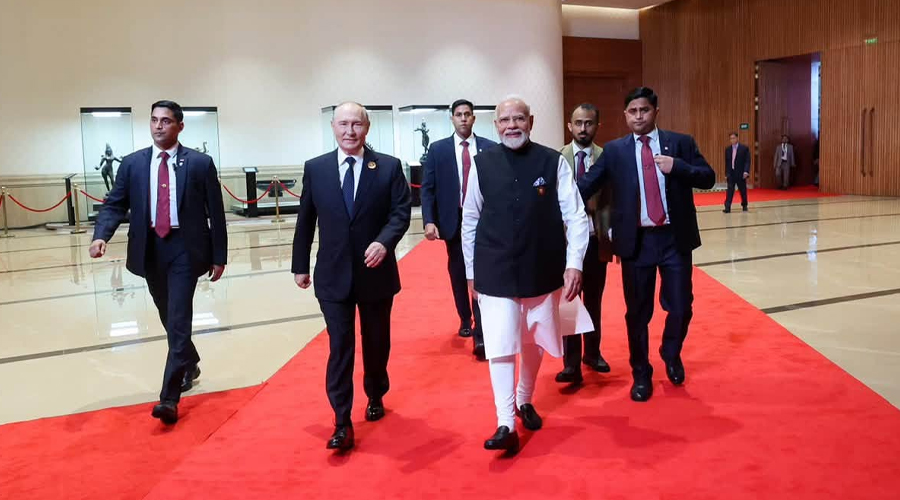
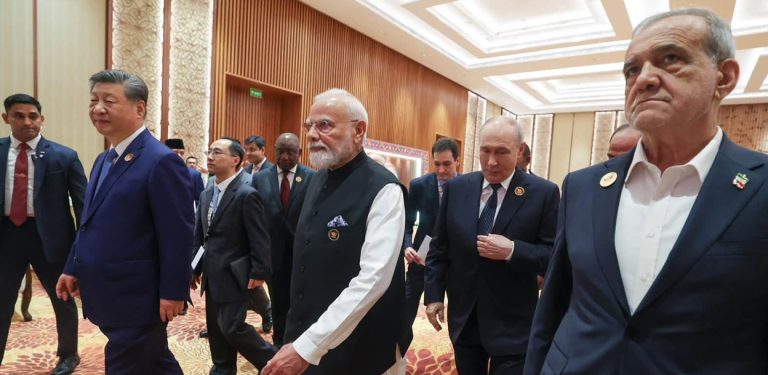
September 13, Kathmandu – The BRICS summit commenced on Saturday in New Delhi, India. Indian Prime Minister Narendra Modi officially inaugurated the event during a grand ceremony attended by leaders of the alternative global power bloc.
Earlier on Saturday afternoon, BRICS nations jointly issued the New Delhi Declaration, outlining their common stance. The declaration included opposition to ongoing conflicts in the Middle East and criticism of unilateral tariffs imposed by then US President Donald Trump.
Throughout the day, Prime Minister Modi held meetings with dignitaries including Russian President Vladimir Putin and Chinese President Xi Jinping.
Following the first day sessions of the two-day summit, Prime Minister Modi hosted a dinner for the BRICS leaders at India Pavilion, and the menu for this special dinner has been made public, showcasing a variety of Indian delicacies.
From Russian President Vladimir Putin to Chinese President Xi Jinping, a special selection of Indian dishes was meticulously prepared for all the distinguished guests.
According to the menu, starters included Khandvi Mille-Feuille, a steamed roll made of chickpea flour garnished with mustard seeds, coconut, and curry leaves.
This was presented alongside saffron mango, microgreens, and yogurt dressing.
Additionally, a starter called Khumb Galouti was served. It featured tender grilled mushroom kebabs with pearl mint, accompanied by Sirmaal rotis.
Main Course Highlights
The main course featured dishes such as Paneer Lababdar and Himachali Gucchi. The Himachali Gucchi mushroom was cooked with saffron, raisins, and Mamra almonds.
Also included were Basmati rice and Millet Pilaf prepared using bajra (millet), alongside beetroot raita.
Desserts Served
For dessert, Shahatoot Phirni was offered. This sweet pudding made from milk and rice was adorned with delicious mulberries and edible gold leaf.
Furthermore, the dinner featured Fruit Cream Jhari, crafted in the popular Old Delhi style.
– With contributions from ABP Live
BRICS Summit BRICS Leaders
How did this news make you feel?
Happy
Sad
Surprised
Excited
Angry
Comments
NewestOldestPopular
Login to comment
Remember me
Forgot password?
Don’t have an account? Sign up
Or login via email/social media
GoogleTwitter
Forgot Password?
Back
+
Comments 4
Comments
Hot Properties
Bhaisepati
House for Sale at Bhaisepati
Rs. 4.25 Cr Total Amount
Siddhipur
House for Sale at Siddhipur
Rs. 3.4 Cr Total Amount
Imadol
House for Sale at Cozy Homes, Imadol
Rs. 3.4 Cr Total Amount
Balkot
Residential Land for Sale at Balkot
Rs. 45 Lac Per Aana
Bhandari Marg
Bungalow House for Sale at Bhandari Marg
Rs. 9.5 Cr Total Amount
Ganesh Chowk
House for Sale at Ganesh Chowk
Rs. 4.89 Cr Total Amount
Tikathali
House for Sale at Tikathali
Rs. 3.95 Cr Total Amount
Imadol
House for Sale at Imadol
Rs. 2.25 Cr Total Amount
Sanothimi
Residential Land for Sale at Sanothimi
Rs. 50 Lac Per Aana
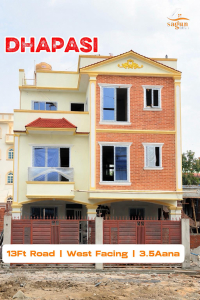
Dhapasi
House for Sale at Dhapasi
Rs. 4 Cr Total Amount
Lubhu
House for Sale at Lubhu
Rs. 1.55 Cr Total Amount
Dholahiti
Bungalow House for Sale at Dholahiti
Rs. 4.5 Cr Total Amount
Tikathali
House for Sale at Tikathali
Rs. 2.75 Cr Total Amount
Tikathali
House for Sale at Tikathali
Rs. 3.2 Cr Total Amount
Hattiban
House for Sale at Hattiban
Rs. 6.9 Cr Total Amount
Bansbari
Bungalow House for Rent at Bansbari
Rs. 2.5 Lac Per Month
Shital Height
House for Sale at Shital Height
Rs. 3.25 Cr Total Amount
Budhanilkantha
Bungalow House for Rent at Budhanilkantha
Rs. 2 Lac Per Month
Jalpa Chowk
House for Sale at Jalpa Chowk
Rs. 4 Cr Total Amount
Related News
‘Nuclear Threat Increases, Multilateral Approach Needed on Global Issues’
In the English Premier League, Liverpool played to a goalless draw against Fulham at home. Chelsea rescued a point by drawing 2–2 with Hull City at Stamford Bridge. In other Saturday matches, Ipswich Town defeated Crystal Palace 3–2, and Nottingham Forest edged Aston Villa 2–1. 27th September, Kathmandu.
At Anfield, Liverpool dominated possession for most of the match but struggled to break down Fulham’s organized defense. Both teams created scoring opportunities, yet the game ended 0–0. Meanwhile, Chelsea took an early lead through Morgan Rogers in the seventh minute at Stamford Bridge. However, Hull City’s Mohammed Bahloumi scored twice in quick succession in the 28th and 34th minutes, giving the visitors a 2–1 lead at halftime. In the second half, Chelsea increased pressure and João Pedro equalized in the 66th minute, securing a valuable point for the home side.
Elsewhere on Saturday, Ipswich Town defeated Crystal Palace 3–2, while Nottingham Forest overcame Aston Villa 2–1. Bournemouth and Brentford played out a 2–2 draw.
The 9th Annual General Meeting of the Nepal Triathlon Association was held on Saturday. The association’s president, Nilendra Raj Shrestha, expressed regret over the exclusion of triathlon from the 10th National Sports Games, while informing that efforts are underway to include the sport through ‘late entry’ in the competition to be held in Surkhet. He stated, “It is unfortunate that triathlon, which had been included in all previous National Sports Games, is excluded this time due to technical reasons.”
Honorary President Ganeshman Pun participated as the chief guest and founding president Bishwashankar Palikhe attended as a special guest at the meeting. President Shrestha also informed that no Nepali athletes will be participating in the upcoming Asian Games in Aichi-Nagoya, Japan; only technical officers, Chahana Shah and Pushparatna Bajracharya, will represent Nepal.
Antonio Erimani, President of the World Triathlon Federation, conveyed condolences via video message regarding the recent floods and landslides in Nepal and expressed commitment to provide assistance. According to President Shrestha, the World Triathlon Federation has pledged support to the flood victims. General Secretary Yubaraj Sunar presented the annual programs and upcoming plans, while Treasurer Niraj Shrestha submitted the financial year’s income and expenditure report.
Kathmandu, September 13 – The BRICS summit has expressed support for Palestine in the Middle East. The declaration issued at the summit held in New Delhi stated that a just and lasting solution to the Israel-Palestine conflict can only be achieved through peaceful means. BRICS countries reaffirmed their backing for the two-state solution, advocating the establishment of a sovereign and independent Palestinian state within the internationally recognized borders of 1967, with East Jerusalem as its capital.
The BRICS nations strongly oppose any unilateral actions that alter the legal and historical status of Jerusalem under Israeli occupation. They appealed to respect the sanctity of all religious and sacred sites within the city and urged that every individual be guaranteed unhindered access to these locations to observe their religious traditions and practices. The summit also expressed grave concern over the humanitarian situation in Gaza, condemning attacks on civilians, health facilities, and other civil infrastructure, as well as the obstruction of humanitarian aid.
BRICS called for an immediate ceasefire in Gaza and the unimpeded delivery of humanitarian assistance. The group opposed any forced displacement of Palestinians or changes to the geographic or demographic makeup of Gaza. Welcoming the ceasefire in Lebanon, BRICS urged all parties to adhere strictly to its terms and to fully implement United Nations Security Council Resolution 1701. Expressing serious concern about rising tensions in the Middle East and West Asia, they urged all stakeholders to exercise maximum restraint and avoid activities that could further escalate the situation. BRICS also voiced concern over the worsening humanitarian crisis in Sudan, calling for an immediate and lasting ceasefire and resolution through dialogue. The declaration reiterated support for Syria’s sovereignty and an inclusive political process involving all parties.
The Bangladesh Cricket Board (BCB) has announced plans to organize a bilateral cricket series with Nepal by 2027. The BCB has responded positively to the proposal from the Cricket Association of Nepal (CAN) and is working to schedule the series within the Future Tours Programme (FTP). Shahriaar Nafis, head of cricket operations at BCB, stated that an official announcement will be made once progress is confirmed and noted that Nepal and Bangladesh have not yet played any bilateral series.
On September 12, Kathmandu – The Bangladesh Cricket Board confirmed that it is preparing to host a bilateral cricket series against Nepal before 2027. The board acknowledged the positive reception of the proposal submitted by the Cricket Association of Nepal and confirmed that formal discussions are ongoing between the two cricket boards. Shahriaar Nafis spoke to reporters on Saturday, revealing that Nepal had formally proposed the bilateral series some time ago.
“CAN expressed its interest in playing a bilateral series with Bangladesh and sent us a proposal. We have taken this request very positively,” said Nafis. He explained that although the International Cricket Council’s (ICC) Future Tours Programme remains busy, efforts are underway to schedule the series at an appropriate time within the current cycle.
“The current FTP cycle runs until 2027. Our goal is to hold this series with Nepal within this cycle. If the timings align, the series will definitely be held,” he added. Until now, Nepal and Bangladesh have not engaged in any bilateral international series. Previously, Nepal’s ambassador to Dhaka, Ghanshyam Bhandari, had met with Bangladesh’s State Minister for Youth and Sports, Aminul Haque, to advocate for a T20 series.
Nafis indicated that a formal announcement will follow once further progress is made regarding the series. He also mentioned that Bangladesh is simultaneously preparing for the upcoming Asian Games and the series against Afghanistan.
September 13, Kathmandu — Chinese President Xi Jinping and Indian Prime Minister Narendra Modi held a bilateral meeting on Saturday evening in New Delhi, coinciding with the BRICS summit. The leaders engaged in an extensive dialogue on recent advancements in the relationship between their two nations. According to Indian media reports, the discussion focused on the continuous improvement in India-China relations following the talks held in Tianjin, China, in August 2025.
Both leaders shared a consensus that their relationship should be viewed through a strategic and long-term lens. The Indian Ministry of External Affairs stated that both sides expressed a mutual view that differences should not escalate into disputes. Modi emphasized the need to advance bilateral relations based on three key ‘mutualities’—mutual respect, sensitivity, and interests.
Furthermore, Modi reiterated the importance of maintaining peace and stability in border areas, stressing that both parties must adhere to existing border agreements and understandings. Citing the Indian Ministry of External Affairs, it was noted that both leaders reaffirmed their commitment to seeking a just, reasonable, and mutually acceptable solution to the border dispute through political consensus.
President Xi expressed that he regards the India-China relationship from a strategic and long-term perspective, emphasizing the need to advance ties for the enduring benefit of both nations. He also highlighted the necessity of joint efforts between India and China to strengthen cooperation among BRICS member countries.
Xi shared his belief with Modi that both countries can achieve shared development by learning from each other’s strengths. Both leaders underscored the importance of leveraging their capabilities and advancing toward common development goals through cooperation.
The Annapurna Spiker Kings clinched the inaugural title of the Extreme Energy Drink Nepal Volleyball League (NVL) by defeating Karnali Shivraj 3–0 in straight sets. Annapurna secured victory with scores of 25–15, 25–20, and 25–17, earning a prize of NPR 2 million, the largest sum awarded in Nepal’s domestic volleyball history. The final’s second set witnessed a dispute over a referee’s decision, leading Karnali players and officials to leave the court temporarily, but the team returned after mediation by Nepal Volleyball Association officials.
On September 13, Kathmandu – The Annapurna Spiker Kings avenged their league-stage loss to Karnali Shivraj by winning the NVL’s first edition championship. The final, held on Friday at the covered hall of Dashrath Rangashala in Tripureshwor, saw Annapurna emerge as the first champions with a straight-set 3–0 victory over Karnali. Mongolian players Uranbayar Munkhbayer, Enkh Erden Jargalsoto, and Turmandakh Gankhuyag delivered outstanding performances, while captain Himal Sunar led Annapurna to maintain consistent pressure on Karnali throughout the match.
A controversy erupted in the second set of the final regarding a referee’s decision. With Annapurna leading 5–2, first referee Vijay KC awarded a point to Annapurna, which Karnali captain Pehal Ghartaraj and other players contested. Subsequently, players, coaches, and team officials of Karnali left the court, resulting in a brief protest. However, Nepal Volleyball Association Vice President Bharat Bahadur Shah and league integrity officer Shravan Kumar reconciled the parties, prompting Karnali to return to the court.
Annapurna’s title triumph was marked by a remarkable comeback. After losing to Karnali Shivraj in the opening match, their fortunes changed with the recruitment of three Mongolian national team players. The team went on to win five consecutive matches, ultimately lifting the trophy. Following a straight-set win over Kathmandu Reds that restored their momentum, Annapurna defeated Madhesh Warriors 3–1, Khaptad Falcons Sudurpashim 3–0, and in a decisive league match, Sagarmatha Smashers 3–1 to qualify directly for the final. Key contributors in the championship run included Himal Sunar, Surendra KC, Jitbahadur Sharki, Dev Rana, and Japan’s Ravi KC.
Indian Prime Minister Narendra Modi stated at the opening session of the BRICS summit in New Delhi that the BRICS group is not against anyone. He emphasized that over the past 20 years, BRICS has secured a significant position on the global stage and that it is time to transform unity and consensus into tangible results.
Modi presented a 10-point roadmap for reforming the global governance system and stressed that reforms in the United Nations Security Council can no longer be delayed. He said, “We respect each other’s perspectives and move forward with consensus. Now it is time to convert our unity and agreement into concrete outcomes on the world stage.”
The inauguration ceremony was attended by Russian President Vladimir Putin, Chinese President Xi Jinping, Iranian President Ebrahim Raisi, South African President Cyril Ramaphosa, Malaysian Prime Minister Anwar Ibrahim, and Indonesian President Joko Widodo.
Modi underscored the necessity for the Global South to not only comply with rules but also have a role in creating them. He stated, “Today, the Global South is at the forefront of global crises, yet its position in decision-making processes remains secondary.”
Australian cricket star David Warner is reportedly coming to Nepal to play in the Nepal Premier League (NPL), as widely discussed on social media.
Sources indicate that Warner’s participation in the NPL is nearly confirmed, though the official announcement regarding the team he will represent is still pending.
There are social media rumors suggesting he will play for Kathmandu Gorkhas, and Australian cricket agency Sim Strike has also posted a confirmation on Facebook, which Warner has liked.
September 13, Kathmandu – Talks have been intensifying on social media about Australia’s renowned cricketer David Warner coming to Nepal to participate in the third edition of the Nepal Premier League (NPL).
Information from an Australian source confirms that Warner’s involvement in the NPL is almost certain. However, the official announcement regarding which team he will play for has not yet been made.
On social media, there is speculation that he will represent Kathmandu Gorkhas. Australian cricket organization Sim Strike has also confirmed Warner’s participation in the NPL through a Facebook post, which Warner himself has liked.
The 39-year-old Warner has won two ODI World Cups, one T20 World Cup, and the ICC World Test Championship for Australia.
His major victories include the ODI World Cups in 2015 and 2023, the T20 World Cup in 2021, and the World Test Championship in 2023.
Warner is also the first Australian player to score centuries in all three fast-paced formats of international cricket. In T20 internationals, he has appeared in 110 matches, scoring over 3,200 runs including one century.
Across all T20 cricket formats, Warner has played 439 matches, registering 14,000 runs with 10 centuries and 118 half-centuries.
He has showcased his cricketing skills in various leagues worldwide, including India’s IPL, Australia’s Big Bash League (BBL), Pakistan Super League (PSL), England’s The Hundred, Major League Cricket in the USA, Bangladesh Premier League (BPL), Caribbean Premier League (CPL), and the Vitality Blast.











%20-%20Copy.jpg "House for Sale at Siddhipur")
%20-%20Copy.jpg "House for Sale at Cozy Homes, Imadol")
.jpg "Bungalow House for Sale at Bhandari Marg")

.jpg "House for Sale at Imadol")
.jpg "Bungalow House for Sale at Dholahiti")



Comments 4