Today, Annapurna Spiker Kings and Karnali Shivraj will compete for the title of the inaugural Nepal Volleyball League. Annapurna secured the top position in the league stage, advancing directly to the final, while Karnali earned their spot by defeating Kathmandu Reds in the playoffs. In their first encounter during the league phase, Karnali defeated Annapurna 3-1.
The final match will take place at the National Sports Council’s covered hall in Tripureshwor, starting at 4 PM. Annapurna topped the league stage with 12 points, winning 4 out of 5 matches. Karnali finished second with 11 points from 4 matches, having lost only to Kathmandu Reds in the league stage.
In the final, Annapurna has the chance to seek revenge against Karnali, while Karnali aims to maintain the strong momentum from their earlier victory over Annapurna. The winner of the NVL will receive the trophy along with a cash prize of 2 million Nepalese Rupees.
On the 25th anniversary of the September 11 attacks, current and former U.S. presidents gathered to honor the memory of those who lost their lives when hijacked planes crashed into the World Trade Center, the Pentagon, and a Pennsylvania field.
President Donald Trump led the ceremony at the Pentagon, while U.S. Vice President J.D. Vance participated in the World Trade Center memorial in New York City. All four living former presidents and their spouses were in attendance at the event.
A moment of silence was observed to recall the moment of the attacks, followed by the reading of approximately three thousand names of the victims.
On Friday evening, two beams of light illuminated the Manhattan skyline in a ‘Tribute in Light’ honoring the victims of 9/11.
Various other prominent sites across New York State were also lit up in blue.
Image Source, Pool/Getty Images
The ceremony at the World Trade Center featured former President George W. Bush, who was president during the attacks, alongside former presidents Joe Biden, Barack Obama, and Bill Clinton.
“Today, we renew the sacred vow we made 25 years ago in memory of those we lost. We will never, ever forget. This is why we continue to fight today,” Trump said.
He also linked the post-9/11 ‘war on terror’ to his current conflict with Iran, a war that significantly increased U.S. involvement in prolonged Middle East conflicts.
Addressing the inclusive crowd, Trump vowed that the Islamic Republic “will never acquire nuclear weapons.”
A memorial was also held in Shanksville, Pennsylvania, the site where Flight 93 crashed after passengers courageously resisted the hijackers.
Image Source, AFP via Getty Images
Every September 11, bells ring at the precise moments when the four planes crashed and the Twin Towers collapsed.
After each of the six bells is rung, a short moment of silence is observed.
This year, a seventh bell was rung to honor the thousands who have since died from cancer and other illnesses related to the attacks.
According to U.S. health officials, the number of deaths caused by illnesses from dust and smoke inhaled during the towers’ collapse now exceeds three times the nearly 3,000 who perished in the initial attacks.
Image Source, Reuters
Caption, This year, a seventh bell was also rung to commemorate thousands who have died from cancer and other illnesses related to 9/11
During the nearly four-hour-long reading of victims’ names at the Manhattan ceremony, a woman who lost her husband criticized Saudi Arabia sharply. She expressed frustration over the unfulfilled attempts by U.S. officials to hold Saudi Arabia accountable.
“Each year that passes, the memory of you grows stronger,” said Terry Strada, who lost her husband Tom Strada, during the globally broadcast event.
“But even after 25 years, we have not obtained justice for Saudi Arabia’s role in your murder. How is this possible?”
Image Source, Pool/Getty Images
The national president of 9/11 Families United, Strada’s remarks were met with sustained applause from the audience.
Most of the 9/11 attackers were Saudi nationals, and the plot was orchestrated by al-Qaeda founder Osama bin Laden, who was a scion of an influential Saudi family.
However, Saudi officials have consistently denied any involvement in the attacks. The 2004 commission report found no evidence that the Saudi government or senior officials provided institutional or financial support to al-Qaeda.
Image Source, Getty Images
Caption, A formal ceremony was held at Buckingham Palace in London
Tributes were held worldwide, with various events commemorating the victims.
A formal ceremony took place at Buckingham Palace in London, attended by Foreign Secretary Ed Miliband and U.S. Ambassador Warren Stephenson.
In Toronto, Canada, the stock exchange held a memorial event honoring colleagues who died in the attacks.
Image Source, Getty Images
Caption, A group of firefighters from Italy and the U.S. formally climbed the stairs in tribute
In Milan, firefighters from Italy and the United States participated in a formal stair-climbing ceremony up the 110 floors of the Galfa Tower to honor emergency responders who lost their lives in the line of duty during the attacks.
They wore their gear and carried necessary equipment while ascending the stairs, symbolically matching the number of floors of each Twin Tower.
Our Nepali YouTube channel also features this coverage. To subscribe and watch videos, click here. You can also follow our content on Facebook, Facebook, Instagram, and Twitter. Additionally, the Nepali service broadcasts programs on the radio Monday through Friday at 8:45 PM.
Asif Sheikh achieved his second One-Day International century in the final of the ACC Premier Cup held in Kuala Lumpur, Malaysia, against the UAE. He scored 102 runs off 106 balls, including 8 fours and 4 sixes. After reaching his century, he was dismissed at 102 runs. Asif also shared a crucial 97-run partnership for the first wicket with Arjun Kumal.
Asif became the fourth Nepali player to score two centuries in One-Day International cricket. Prior to him, Rohit Paudel, Kushal Bhurtel, and Dipendra Singh Airee had all scored two centuries each. Over the course of 76 ODI matches, Asif has accumulated 2,174 runs, including 2 centuries and 15 half-centuries. He is the second-highest run-scorer for Nepal in ODI cricket, trailing only Rohit Paudel, who leads with 2,344 runs.
Following the Bhote Koshi-Trishuli floods, the Nepal Police have reported that DNA testing is required for over three thousand unidentified bodies recovered from various locations as well as for missing persons’ families. According to police statistics, 1,286 DNA samples have been collected from the deceased so far, while 1,715 samples have been obtained from family members seeking identification. These samples are currently being tested at the Central Forensic Science Laboratory of the police and the National Forensic Science Laboratory located in Khumaltar. Alongside the police health workers and forensic specialists, teams of foreign DNA experts from South Korea, Singapore, India, and China are also involved in the testing process. According to police, four teams in total—two at each laboratory—are actively conducting the tests.
For DNA testing, samples such as teeth, bones, or bamboo from the recovered bodies have been securely preserved, while blood samples have been taken from family members, Police Spokesperson Abhi Narayan Kafle informed. “The DNA testing of the bodies takes more than four days to complete, whereas the tests of DNA samples submitted by living family members for identification are completed within two days,” he explained. “Therefore, the teams are making efforts to expedite the process by increasing machinery and manpower.” Since the testing began, approximately 300 DNA tests have been completed, according to police sources.
Once tests are complete on both sides, a software-based matching process will be conducted, and the handover of bodies will commence simultaneously. “The DNA reports from the bodies and from family members are entered into the software. After a match is found, it is determined which body belongs to which family, and the family is informed accordingly,” he said. “All materials are stored securely underground, so bodies cannot be handed over one by one. Once all tests are finalized, legal procedures will be completed and the bodies will be released to families all at once.” The police spokesperson added that since many people remain missing, bodies are expected to continue to be found and DNA testing will remain necessary.
What are the complexities involved in testing? Genetic scientist Sameer Mani Dixit explained that compared to DNA testing conducted under normal circumstances, the process in this case is more complex and requires specialized testing due to the flood conditions. “Testing at the government’s two laboratories for at least 3,000 samples could take several months,” he said. “Since the testing adheres to international standards, it assures accurate identification. However, because the bodies were swept away with soil and stones, questions arise about how effectively the technology can identify the samples.” The police are also collecting DNA samples from body parts such as hands and feet found separately. Experts confirm that this leads to longer testing times than usual.
“Extracting DNA from body parts is very challenging. The extracted DNA is often contaminated with bacteria and pathogens from animals, plants, and soil, and it is uncertain how finely the technology can identify such samples,” he added. However, Pushkar Raj Bhatt, an expert at the National Forensic Science Laboratory, stated that since samples are taken from the teeth and bone marrow inside the bones, the tests yield accurate results. “Cells are taken from within the teeth and bone marrow, reducing the chance of external contamination,” he explained. He noted that although Nepal’s annual capacity is approximately 300 DNA tests for bodies, the recent import of foreign equipment has made it possible to accelerate the process. “With assistance from experts who arrived from India at the government’s request, efforts are underway to speed up testing using two machines. Our team is also working with four small rapid kits brought from South Korea,” Bhatt said. “Additionally, equipment imported from China is also being utilized at the National Forensic Science Laboratory.”
“There have been many great figures, but only one teacher.”
Chinese youth are increasingly portraying the late Mao Zedong online these days as their continual ‘teacher.’
On the video platform Bilibili, searching for “Mao Zedong” or “Teacher” yields dozens of compilations featuring clips from movies and dramas.
These videos highlight moments from Mao’s youth, his role as a military commander, and leadership during the Cold War tensions between China, the United States, and the Soviet Union.
Many have been viewed by millions, with thousands of comments praising him with messages like “Long live the great man.”
Most Bilibili users are young people, with about 60% aged between 18 and 24.
A Different Mao
As one of the most influential political figures of 20th-century China, Mao led the Communist Party and the nation from the founding of the People’s Republic in 1949 until his death in 1976.
He launched campaigns like the ‘Great Leap Forward’ and the Cultural Revolution, reshaping China’s economy and society at the cost of millions of lives.
Among the youths influenced by Mao is Dong, a student preparing to start at Nanjing University. A recently viral video showing two young women singing patriotic songs in front of a massive statue of Mao in Orange Isle, Changsha, moved him deeply.
“They sang wholeheartedly. The statue was huge, and he looked young. Watching it moved me,” Dong recalled.
Dong’s classmates actively participate in online communities called the ‘Keyboard Political Circle’ that discuss contemporary issues.
Another sign of this trend is the surge since 2019 in the reading of Mao’s selected works at Tsinghua University’s library, which is expected to continue through 2025.
Photo credit, Mytruestory Photography via Getty Images
The youth’s interest in Mao differs significantly from that of their parents’ generation, who grew up hearing official narratives.
In 1981, under Deng Xiaoping’s leadership, the Chinese Communist Party officially adopted a balanced appraisal of Mao: recognizing both his accomplishments and mistakes, attributing “70% achievements, 30% mistakes.”
During Deng and Jiang Zemin’s terms, Mao’s images were gradually removed from rail stations, public spaces, and classrooms.
Mao began to be viewed not as a deity but as a historical figure with human limitations.
Deng symbolized the new economic era, driving market reforms and opening China to the world.
Yet for many Chinese youth today, Mao resonates anew. While some, like Dong, might rarely mention Mao’s name, they address him respectfully as ‘Teacher.’
Photo credit, History/Universal Images Group via Getty Images
This title traces back to Mao’s reported remark during a 1970 meeting with American journalist Edgar Snow. Disliking grandiose labels like ‘the Four Greats’ bestowed upon him, Mao said, “Now only one remains… Teacher. Because I am always a teacher.”
Dong and his peers openly discuss Mao but feel constrained when it comes to the current Chinese leader, Xi Jinping. Dong notes, “That’s not a subject for open discussion.”
A study by the China Studies Marketer Institute explains that while some public debate appears on Chinese online platforms, topics related to top leadership are often removed.
The research attributes this ‘weak public discourse environment’ to both censorship and self-censorship.
“Not Just Remembrance of the Past”
Some experts suggest that young people’s interest in Mao reflects concerns about social issues such as wealth inequality and limited social mobility.
Florian Schneider, a professor at Leiden University who studies the political culture of Chinese youth, notes today’s young generation faces a reality vastly different from that of their elders.
While their parents witnessed economic growth improving living standards for all, today’s youth feel distant from the promises of reforms by Deng.
According to China’s National Bureau of Statistics, by July 2026, urban unemployment among unskilled youths aged 16 to 24 had hit 17.9%, the highest in three years.
New terms have entered youth vocabulary, like “996,” which denotes working six days a week from 9 a.m. to 9 p.m.
Many young people have become disillusioned and desire to avoid the brutal competition called ‘involution,’ where one must exert extraordinary effort just to maintain their position.
Photo credit, MAGWIN/Moment via Getty Images
Against this backdrop, Mao’s critiques of capitalism have regained relevance among some young people.
Schneider explains that some use Mao’s ideas to express dissatisfaction with ‘state capture by capital,’ while others view him as a guide for navigating life’s contradictions.
Dong remarked, “Our generation was told from childhood that hard work leads to success, but when I grew up, I realized jobs are hard to get and owning a home is out of reach.”
He appreciates Mao’s straightforward language, which clearly divides society into oppressors and the oppressed.
“He made it clear who the oppressors and the oppressed are. This simple framework is easier to understand than complex economic jargon.”
Schneider notes, “Mao’s revival isn’t simply about recalling the past; it reflects youths’ attempts to articulate their experiences of inequality and insecurity in historical terms.”
Political Energy
The Chinese Communist Party’s official evaluation of Mao remains anchored in the 1981 resolution, emphasizing his primary achievements and secondary mistakes.
The Party’s third historical resolution passed in 2021 places the “great rejuvenation of the Chinese nation” at its core.
It frames Mao’s revolution as the phase in which China rose, established the People’s Republic, defended national sovereignty, and laid the foundations for national rejuvenation.
Thus, Mao is depicted not only as a historical figure but as one of the foundational sources of China’s contemporary national power.
Photo credit, AFP via Getty Images
“The revival of Maoism today can be partly attributed to the Party’s educational policies. Many young people imagine Mao’s China as one where the great leader is an undisputed hero,” Schneider explains.
He also points out that many youths are unfamiliar with the devastating sides of the Great Leap Forward and Cultural Revolution or do not fully understand Mao’s real role, which contributes to their admiration.
Schneider remarks, “Such reverence for Mao carries far more political weight than it might immediately appear.”
Follow us on YouTube by clicking here. You can also view our content via Facebook, Instagram, and Twitter accounts. Additionally, BBC Nepali Service programs are broadcast on the radio Monday through Friday at 8:45 PM.
The government has enforced a new regulation requiring cooperative institutions to maintain mandatory identification details of their senior officials, alongside customer identification. The national risk assessment report indicates that the risk of money laundering in the cooperative sector ranges from medium to high. Following guidance from banks, the National Cooperative Authority has implemented necessary measures to prevent money laundering and terrorist financing through cooperatives.
September 11, Kathmandu – In response to the high risk of money laundering within cooperative institutions, the government has mandated the recording of senior officials’ details along with customer identification. According to the national risk assessment report, the risk level of money laundering in the cooperative sector is assessed as medium to high.
Since Nepal was placed on the Financial Action Task Force (FATF) grey list, the government has developed various action plans to exit this status. The recently prepared national risk assessment report is part of these efforts, focusing on reducing risks in the cooperative sector. During the recent ‘face-to-face’ discussions held in Malaysia, targeted measures to mitigate risks within the cooperative sector were also presented.
The report expresses concerns that proceeds from corruption and other illegal activities could be accumulated in many cooperative institutions. Consequently, in addition to banks and financial institutions, strict controls to prevent money laundering have been enforced within cooperatives. The National Cooperative Authority is rigorously issuing guidelines to control potential money laundering and terrorist financial activities through cooperatives.
According to the Authority’s guidance, cooperatives engaging with members conducting cash-based transactions are considered at high risk. Such transactions elevate money laundering risks, making it essential for cooperatives to enhance control measures, provide employee training, employ technological solutions, and improve capabilities to identify risks.
The Authority notes that many cooperatives still operate under the influence of legal and institutional entities, maintaining ongoing risks of money laundering. Therefore, guidelines have been issued directing cooperatives to address widespread financial activities, ensure transparency of politically exposed senior officials, prevent misuse of funds through legal violations, and strengthen the implementation and supervision of anti-money laundering measures.
The guidelines require cooperatives to adopt member due diligence procedures. Identification of members is mandatory when opening new accounts. Due diligence is also obligatory in transactions that are suspected to involve money laundering or terrorist financing, especially when dealing with high-risk transactions or members. For members listed on prohibited lists, cooperatives must freeze assets within 24 hours according to the United Nations website, without prior notice to the member, and report the freezing to the Authority or Cooperative Department within three days.
Cooperatives are also required to immediately report any suspicious transactions to the Financial Information Unit. Reporting is mandatory in cases of account opening attempts under false names, submission of false information, or transactions exceeding one crore Nepali rupees occurring at one time or repeatedly, as they are deemed suspicious.
Additional reporting obligations include instances of unjustified account openings, unusual changes in financial profiles or transaction patterns, suspected use of personal accounts for business purposes, complex transfers obscuring the source or purpose of funds, repeated deposits from asset sales, large cash withdrawals from inactive accounts, bounced checks, excessive activity in savings accounts, and suspicious transfers to personal accounts of management committee members.
Infractions such as irregularities in loan repayments and use of accounts for property transactions without proper registration are also considered suspicious money laundering activities that must be reported. Cooperatives failing to implement these guidelines may face sanctions ranging from suspension to deregistration imposed by the authority.
The Parliamentary Finance Committee has instructed the Ministry of Finance to amend the Bank and Financial Institutions Act (BAFIA) to ensure that bank directors and CEOs are not disqualified on the basis of minor disciplinary actions or warnings. On Friday, the committee completed clause-by-clause discussions on the Nepal Rastra Bank Act Bill and decided to establish provisions that would allow the Government of Nepal to issue directives to the Nepal Rastra Bank.
Following the Supreme Court’s ruling, banks had expressed disagreement with provisions declaring directors, employees, and CEOs ineligible due to minor disciplinary offenses. On September 11 in Kathmandu, the committee’s Friday meeting directed the Ministry of Finance to initiate amendments to the Bank and Financial Institutions Act, 2073. The committee also decided to instruct the Finance Minister to promptly proceed with amending Section 18 of BAFIA to modify the provision under Subsection (2)(a) of Section 100 of the Nepal Rastra Bank Act, which currently causes directors, employees, and CEOs to become disqualified due to penalties involving warnings or minor reprimands.
During their detailed deliberations on the bill, the committee resolved to reinstate the Government of Nepal’s authority to issue directives to the Nepal Rastra Bank, a provision that had been removed from the bill. “The provision allowing the Government of Nepal to direct the Nepal Rastra Bank has been reinstated, as it was previously omitted from the bill,” said committee secretary Laxman Aryal. The Supreme Court had ruled that CEOs and directors are disqualified even for minor reprimands.
The court based its ruling on the Nepal Rastra Bank Act and BAFIA. After several directors and CEOs in the financial sector were declared ineligible due to this ruling, banks voiced their opposition. To address this concern, the finance committee has now issued directives to the Finance Minister. Section 100 of the Nepal Rastra Bank Act, 2058, outlines disciplinary actions applicable to banks, financial institutions, their officers, and employees. The finance committee has instructed amendments to eliminate the regulation that imposes a five-year disqualification following disciplinary actions imposed contrary to BAFIA rules.
Prime Minister Balendra Shah held a special discussion with industrialists regarding private sector investment in major infrastructure projects such as the Nijgadh International Airport. The Prime Minister expressed interest in how the state can facilitate investment and assured that if necessary, laws would be strictly amended to provide support. According to IME Group Chairman Chandra Dhakal, the discussion lasted almost one and a half hours, during which the Prime Minister emphasized private sector investment for large projects and job creation. (26 Bhadra, Kathmandu)
Today, Prime Minister Balendra Shah engaged in serious talks with Nepalese industrialists on ways to attract private sector investment in large and strategic infrastructure like the Nijgadh Airport. IME Group Chairman Chandra Dhakal noted that the dialogue between the Prime Minister and business leaders was very positive. The Prime Minister showed deep concern over how the state could facilitate investment and committed to amending complex laws if required to support such efforts.
Pawan Golyan, founder of Golyan Group, mentioned that the Prime Minister directly inquired about the private sector’s capability to construct the Nijgadh International Airport. He asked whether the private sector was able to realize the construction of the airport. According to Golyan, the Prime Minister listened continuously for nearly one and a half hours and actively engaged in a Q&A session during the discussion. The event was attended by industrialist Vinod Chaudhary, IME Group Chairman Chandra Dhakal, former State Minister and businessman Umesh Shrestha, and senior industrialist Pawan Golyan. MP and entrepreneur Bidushi Rana facilitated the program. Businessman Min Bahadur Gurung was also invited but could not attend due to health issues.
After the Bhotekoshi flood, 916 workers are missing from operational hydropower projects in Rasuwa, Nuwakot, and Dhading, with 13 hydropower projects and five solar plants affected.
According to an RDNA report, restoring energy and grid systems requires NPR 390.62 billion.
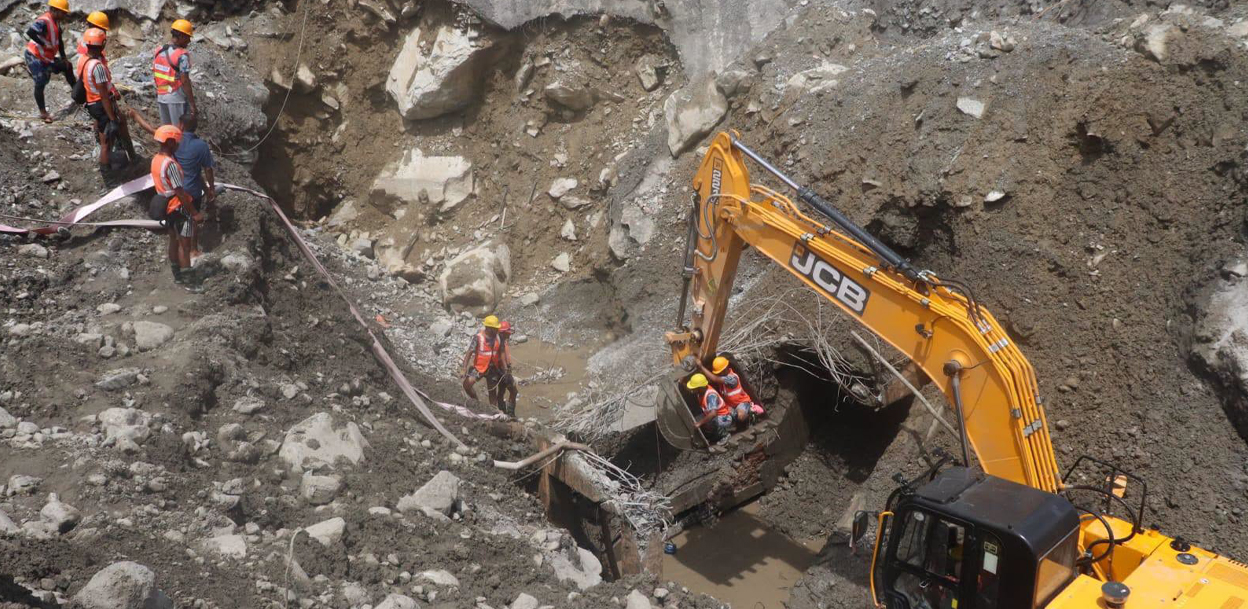
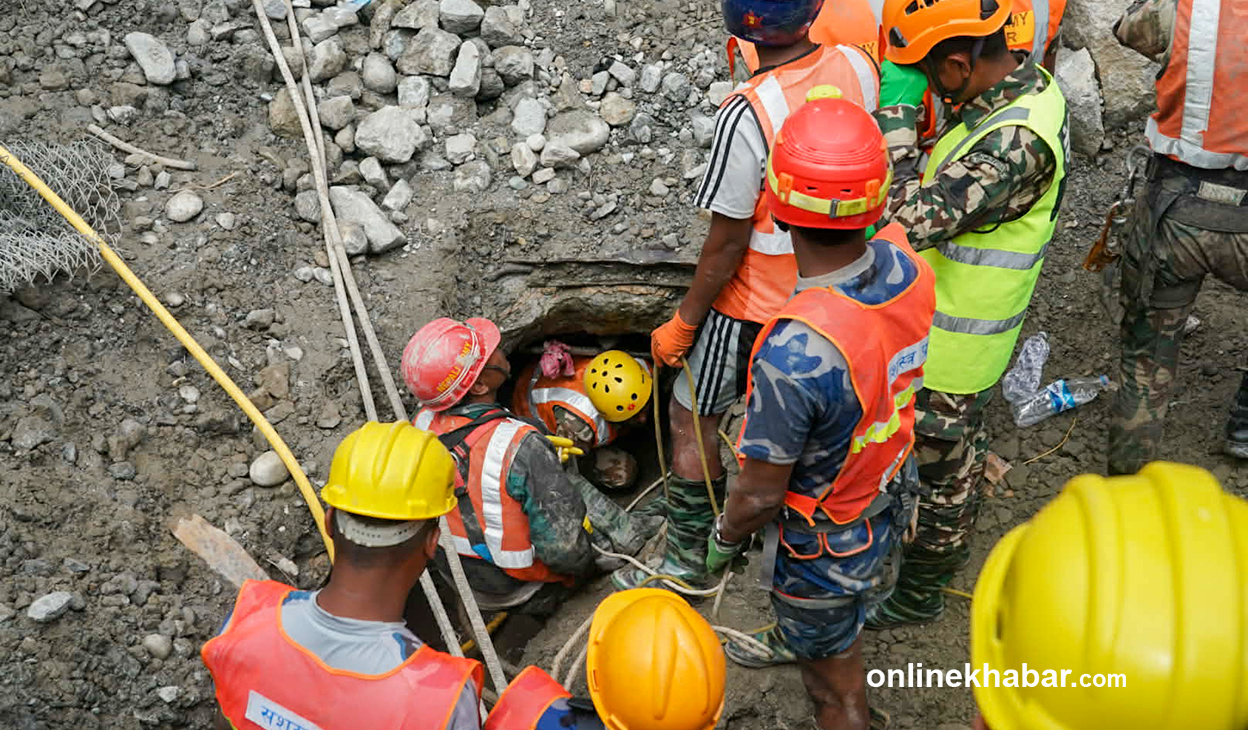
Search and rescue efforts for those trapped in tunnels and underground powerhouses involve the Nepal Army, police, project teams, and foreign technicians working jointly.
The Ministry of Energy plans to improve design guidelines and safety protocols following the Bhotekoshi incident.
September 11, Kathmandu – The devastating flood that occurred in the Bhotekoshi River on August 26 caused extensive damage to hydropower facilities in Rasuwa, Nuwakot, and Dhading districts. Beyond structural destruction, hundreds of workers remain missing and out of contact.
Data collected by the Independent Power Producers Association Nepal (IPAN) indicates that 916 workers at various hydropower projects have been unreachable since the flood. Even after 17 days, search and rescue operations for missing individuals, including those trapped inside tunnels, have not been completed.
A rapid damage and needs assessment (RDNA) report prepared by the National Planning Commission in coordination with the National Disaster Risk Reduction and Management Authority reveals significant losses in the energy sector.
The report states that 13 hydropower plants with a combined capacity of 759 MW and five solar plants totaling 24 MW have been affected. It estimates that NPR 390.62 billion is required to restore energy production and grid infrastructure.
While physical damages are extensive, the current critical concern is the search and rescue of those trapped in tunnels and underground powerhouses.
Access Issues Hampering Delivery of Equipment
Sunil Paudel, Joint Secretary at the Ministry of Energy, Water Resources, and Irrigation, said that the biggest challenge in the rescue effort has been reaching the tunnels and transporting necessary equipment to the sites.
Damage to roads and access infrastructure caused by the floods has made it difficult to bring large and complex machinery to the locations. Limited helicopter capacity has also slowed rescue operations.
Paudel said, “With no roads and helicopters unable to deliver all equipment, the rescue faces significant challenges.” Currently, efforts are ongoing to transport required machinery to the project sites. The Nepal Army leads the rescue operations, with support from the Nepal Police, Armed Police Forces, project technicians, foreign experts, and volunteers.
Technical equipment issues have also caused delays. For example, work halted for about one and a half hours when an excavator’s tooth broke but was quickly resolved.
“Because these are complex machines, some parts must be imported while others can be sourced locally. We are coordinating and managing this,” he added.
Giriraj Adhikari, director of the Upper Trishuli-1 project—where the highest number of people remain out of contact—said that heavy machinery has yet to reach the site to aid rescue. A mini excavator was only delivered recently.
He said, “The rescue is extremely difficult. Roads are completely destroyed, bridges are missing, there is no internet, and the rescue tunnel area has no electricity. The rescue teams return to the Rasuwa district headquarters at Dhunche every day.”
Conditions Inside the Tunnels Pose the Greatest Challenges
Geotechnical engineer Uday Raj Nyaupane explained that tunnel rescue cannot proceed with a single method. Conditions inside the tunnels—water, mud, rocks, wood, and other obstacles—require changing strategies repeatedly.
He shared that rescuers have had to modify plans multiple times while attempting to save two technicians trapped in the underground structure of Upper Trishuli-3 ‘A’.
“If one technical approach fails, another must be tried. Altering techniques and equipment usage is necessary whenever conditions shift,” Nyaupane said.
Having equipment alone is not sufficient; effectively combining the available technology with the actual conditions is equally critical.
The geological probing radar (GPR) technology used by foreign experts is only effective at limited depths and cannot locate structures or individuals buried more than 100 meters deep.
He noted, “Rather than lacking technology, a combination of appropriate tools, approaches, and mindset suited to the situation is crucial.”
During rescue at Upper Trishuli-3 ‘A,’ drilling had to reach 112 meters, requiring specialized equipment. A large-capacity helicopter’s availability would ease transporting heavy machinery, he added.
Current Locations of Search Operations
The Nepal Army reports ongoing search and rescue activities in different project tunnels. At the Rasuwagadhi Hydropower Project, a joint team including the Composite Quick Reaction Team and project representatives is searching the powerhouse, transformer room, and control points.
A 25-member Nepal Army team is engaged in tunnel searches at Langtang Hydro. At Chilime Hydro, a team with foreign technicians is removing debris inside the tunnel. Blasting to create access routes is underway, with about 35 meters still remaining to reach the tunnel.
Searches are also ongoing in a tunnel at Hakubenshee in Upper Trishuli-1 by the Nepal Army. A joint team is operational at the powerhouse and tunnel areas of Trishuli-3 ‘B’, with continued search efforts at Trishuli-3 ‘A’ as well.
These efforts demonstrate joint cooperation among government security forces, project authorities, and private and foreign technical experts, although challenging geography and uncertain tunnel conditions are slowing progress.
‘Trained Personnel and Practice are Essential for Rescue’
According to Uday Raj Nyaupane, Nepal’s incident underscores the need for specially trained, organized personnel for tunnel rescues. Alongside technical knowledge, mental preparedness to work in adverse conditions, teamwork, and focus are indispensable.
“Many people trained in rescue operations are necessary. Going into such places requires mental readiness,” he said. “Compassion, teamwork, and a united goal are critical.”
He warned that seeking equipment and manpower only after disasters will delay rescues. Therefore, Nepal must identify available tools, their capacities, and deployment methods in advance.
Kulman Ghising: Regular Flood Designs Cannot Address Such Catastrophes
Former Energy Minister and ex-Executive Director of the Nepal Electricity Authority, Kulman Ghising, described the Bhotekoshi flood as an extraordinary event far exceeding a typical flood.
He explained that underground powerhouses at hydropower projects are normally designed above river level, considering potential flood heights.
However, on this occasion, the floodwater reached 50 to 100 meters above the tunnel entrances in certain locations—far beyond expected levels.
“Designs meant for ordinary floods cannot accommodate this event,” Ghising said, “This was a flood exceeding normal parameters.”
He noted that water, mud, and debris entered underground structures through tunnel passages due to the unprecedented flood levels.
Are Those Trapped Inside the Tunnels Still Alive?
Ghising said, “If the tunnels are not completely filled with water and debris, some pockets may still have air and oxygen.” Therefore, concluding that trapped individuals are no longer alive before the search is finished would be premature.
“Even if the tunnel is half filled, there remains a chance for survival,” he said. However, the extent of water and mud, precise locations of people, and the amount of air remaining are key factors determining their fate.
Single Tunnel Access Closes Off Alternatives
The Bhotekoshi disaster also raised a serious question regarding underground hydropower infrastructures — how many emergency exits exist?
Ghising explained that many projects currently rely on a single main tunnel for powerhouse access. If that route becomes blocked, those inside cannot escape.
He emphasized that the design of powerhouses and access tunnels must include alternative emergency exits.
“There should be a small separate path or an alternate tunnel at upper sections for emergency exit,” he suggested.
Nyaupane also recommended identifying secure locations and alternative routes at project sites in advance. He noted that, at Upper Trishuli-3 ‘A’, although a large empty space existed above the powerhouse, reaching it was narrow, steep, and challenging.
This case underscores that project designs must consider not only machinery and production capacity but also how to ensure human safety and evacuation in extreme disaster scenarios from the outset.
Need to Revise Safety Designs of Hydropower Projects
Ghising stated that both existing and under-construction projects require risk reassessment following the Bhotekoshi event.
He highlighted the need to include factors like extreme seasonal events, glacial changes, and possible threat from high-altitude lakes due to climate change in risk evaluations.
Given multiple projects within the same river basin, assessment must cover comprehensive basin-wide risks rather than focusing on individual projects alone.
“Designs should prioritize not only the structures but also safe evacuation plans for workers in case of major disasters,” Ghising stressed.
He also proposed progressively transitioning powerhouses to remote operations allowing external monitoring and reducing the time workers spend underground.
However, since maintenance will still require personnel underground, emergency exits, oxygen supplies, communication systems, and safe zones must be integral parts of design.
Ministry Moves Toward Improvements
The Ministry of Energy has acknowledged the need to enhance rescue procedures and safety standards for hydropower projects after the Bhotekoshi disaster.
According to Joint Secretary Paudel, the ministry is preparing to revise design guidelines and safety protocols incorporating lessons learned from this tragedy.
“This is not reform but a correction,” he said.
He noted that government bodies, universities, and organizations like ICIMOD are collaborating to study the weaknesses of project designs and the shortcomings observed during the rescue, along with international researchers examining these aspects.
The purpose is not only to understand why and how the Bhotekoshi disaster occurred but also to develop scientific methods to mitigate future damages from similar events.
“Knowing what happened and how to prevent it next time allows for better preparedness,” Paudel stated.
The government has instructed the Department of Foreign Employment to investigate the decision allowing only 25 manpower companies to send workers to Malaysia. The ministry has ordered a probe into these companies’ establishment history, business operations, and the basis for their authorization to send workers to Malaysia. The department is preparing to seek explanations from an additional 250 manpower companies on why they should be included on the list, and plans to correspond with the embassy to halt prior approvals and certification processes. (Sept 12, Kathmandu)
The controversy arose after Malaysia released a list of 25 manpower companies permitted to recruit workers from Nepal. The Ministry of Youth, Labour, and Employment has directed the Foreign Employment Department to investigate the business records of these companies since their establishment and the grounds for their authorization to send workers to Malaysia. Previously, Malaysia had authorized only these 25 companies to send workers.
According to Dik Bahadur Khatri, President of the Nepal Foreign Employment Entrepreneurs Association, during enforcement actions, an additional 250 companies were designated as sub-agents under the 25 principal companies. Following the ministry’s directive, the department plans to request explanations from these 250 companies about their inclusion on the list. Department Director General Navaraj Dhakal confirmed that the enforcement procedure is underway and that all steps are being taken in accordance with Nepal’s constitution and legal frameworks.
Business representatives have voiced concerns that limiting the number of companies authorized to send workers to Malaysia could lead to syndication within the foreign employment sector. President Khatri noted that, although Nepal has nearly 1,100 registered manpower companies, granting such limited rights is inappropriate. He stated, “If such a system is implemented, 25-30% of the total workers will be fully affected.” The government, however, intends to focus its investigation on these 25 companies authorized for Malaysia.
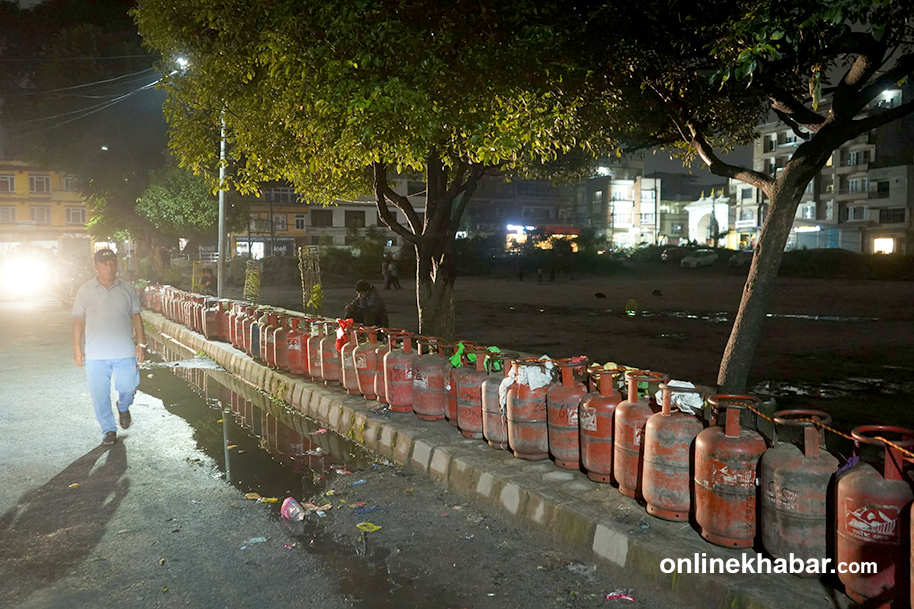
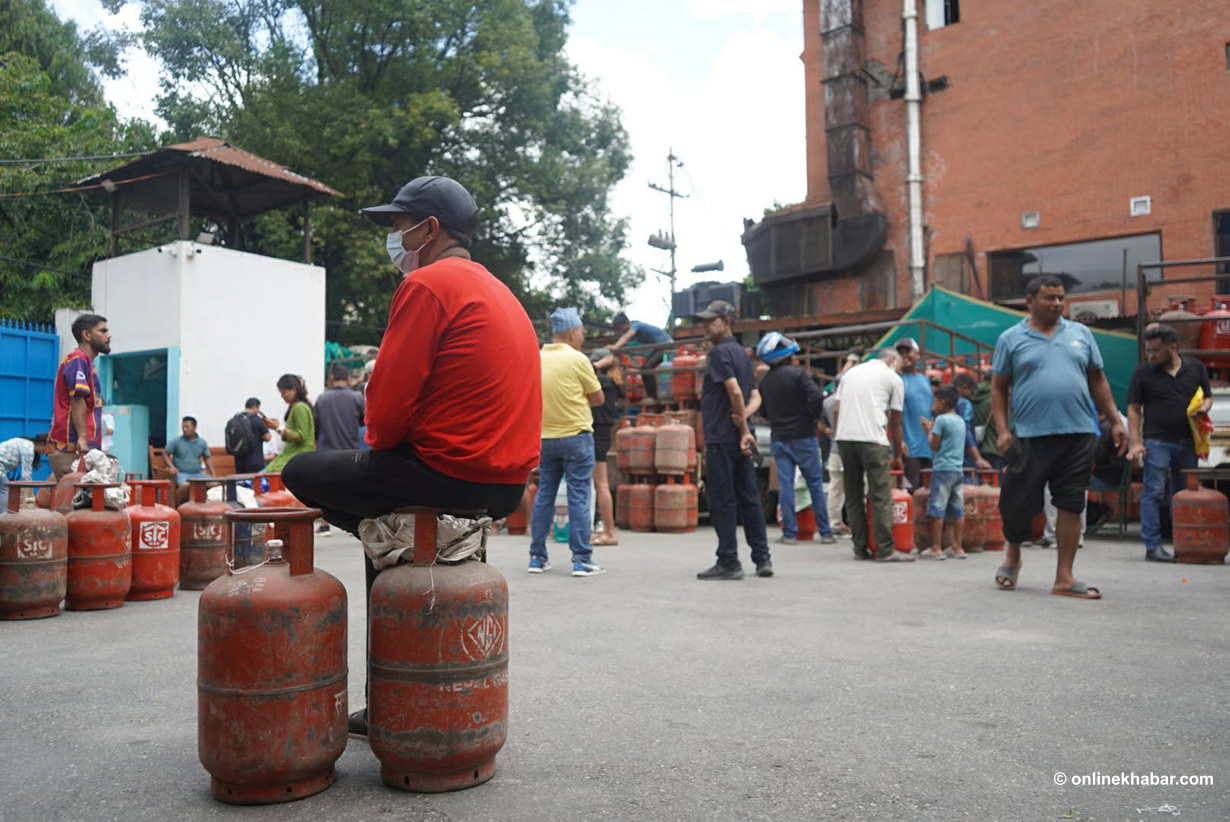
Amid a nationwide shortage of LPG gas, Minister for Industry, Commerce and Supplies Gauri Kumari Yadav has resigned, with Deepak Kumar Sah appointed as her successor.
In the House of Representatives, MPs sharply criticized the government for its failure to address the gas shortage, demanding ‘Gas, not ministers.’
Former secretaries and experts attribute the gas shortage primarily to disorganized distribution systems, weak monitoring, and lack of storage facilities.
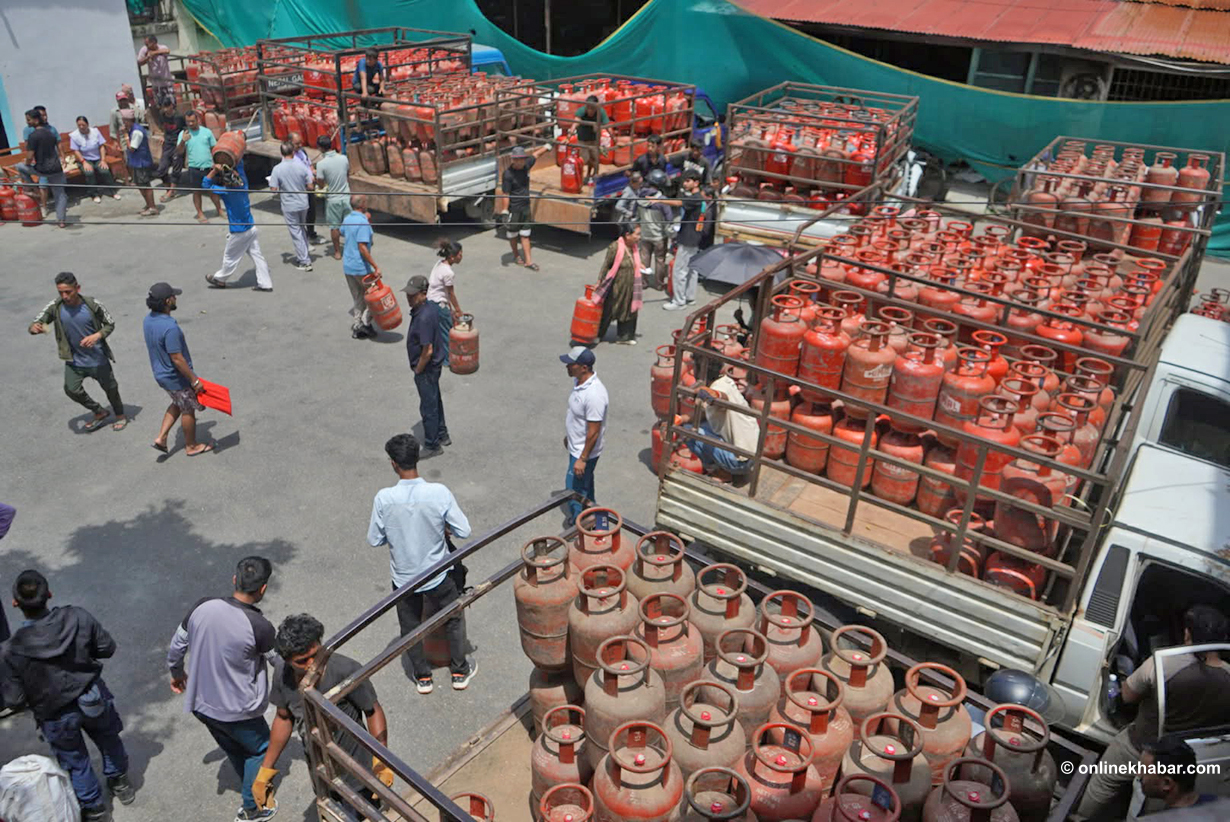
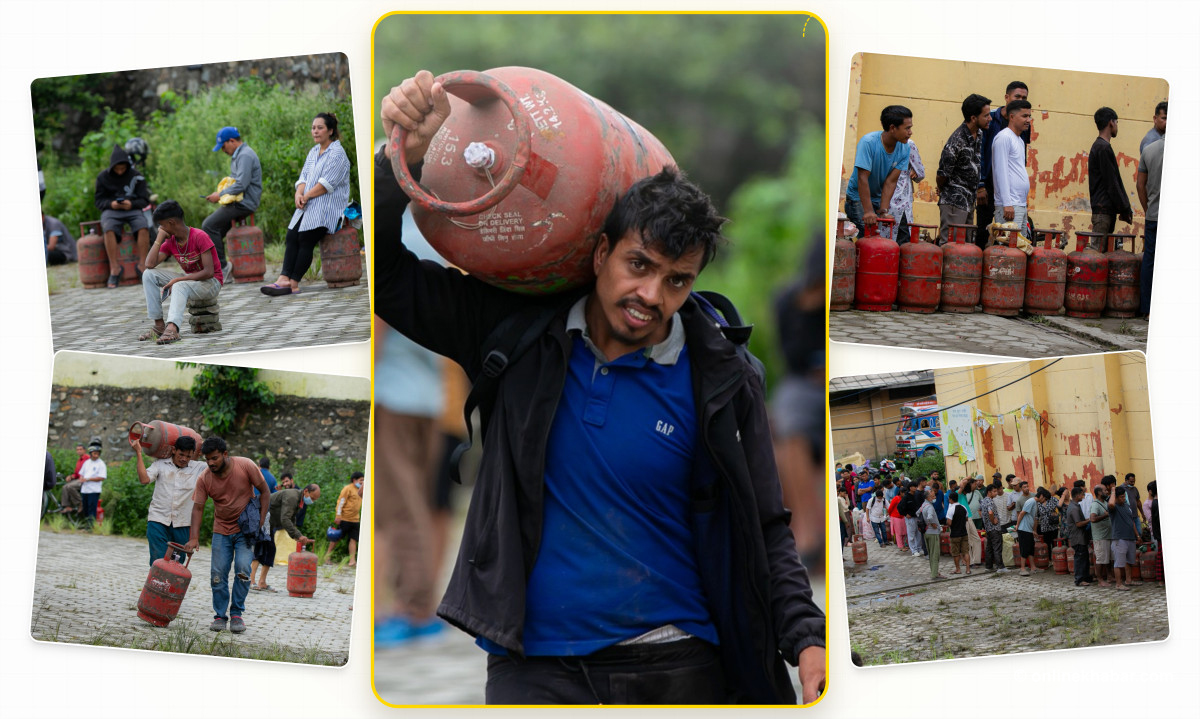
September 11, Kathmandu – A severe shortage of cooking LPG gas persists across Kathmandu Valley and various districts of Nepal. Citizens are seen roaming streets carrying empty cylinders; some have cooked rice on the roadside, while others have staged protests demanding the government provide gas.
Faced with widespread criticism and mounting pressure as consumers’ stoves remain unlit, Industry, Commerce and Supplies Minister Gauri Kumari Yadav tendered her resignation.
More than two and a half months have passed since Balendra Shah (Balen Shah) formed his government, yet for the ordinary people enduring the acute gas shortage, the ministerial resignation and new appointment remain a major talking point. Still, a prevailing question lingers: ‘Will the empty cylinders at home finally be refilled with the change in ministers?’
Citizens had hoped the new government would ensure smooth supply, good governance, and end black market activities, but they are now left disappointed.
The situation is so dire that consumers are forced to pay up to NPR 3,000 per gas cylinder, despite the official price being set at NPR 2,060. Authorities have thus far failed to curb black marketeering and price gouging effectively.
Instead, accusations are being directed at activists of traditional political parties for deliberately hoarding gas, shifting blame onto consumers and the public.
Acknowledging the lack of support from his own ministry’s staff, poor cooperation from Nepal Oil Corporation, and failure to break the cartel of gas traders, Gauri Kumari Yadav stepped down from her ministerial role.
Outgoing Industry Minister Gauri Kumari Yadav
On Thursday, Prime Minister Balen Shah appointed Deepak Kumar Sah, elected from Sunsari-4, as the new minister. Sah took office immediately and started working on resolving the gas problem.
However, the new minister faces formidable challenges in quickly making gas supply easier, as Nepal’s gas crisis stems not from individual leadership alone, but from structural flaws, policy weaknesses, cartel practices among traders, and insufficient infrastructure.
The shortage began as early as December 2025 (Poush 2082 in Nepali calendar). The war in West Asia disrupted supply chains, with the problem remaining unresolved. Although the government has taken various measures, they have not yielded success.
Public Outcry in Parliament: ‘Not Ministers, We Want Gas’
The gas shortage issue has escalated from the streets to the parliament. In today’s House session, MPs strongly criticized the government.
Ashika Tamang, a lawmaker from the ruling Rastriya Swatantra Party (Raswapa), expressed dissatisfaction that the government has failed to ensure even minimum gas supplies.
‘I receive daily calls reporting that stores have gas but shopkeepers refuse to sell it. It’s like gold is available but I have broken ears. Is there a mafia bigger than the government in this country?’ she said.
Raswapa MP Ashika Tamang
MP Tamang warned the two-thirds government that the public cannot be left hungry due to lack of gas in shops.
‘If there really is no gas, then declare it immediately and tell people to find alternate cooking methods. Changing ministers every month without addressing the issue will only make things worse,’ she added.
Similarly, Nepali Congress lawmaker Geeta Gurung reminded the parliament that the public needs gas, not a new minister. ‘Though the industry minister has changed, let the empty cylinders at homes be refilled,’ she stated.
Lack of Storage Capacity and Dependence on Imports
Obstructions such as landslides on the Prithvi Highway or maintenance at Indian refineries continue to disrupt Nepal’s gas supply, largely due to the absence of a national storage infrastructure.
Nepal lacks any official government-operated LPG storage facilities. There are only 58 private industrial gas bullets providing approximately 10,000 tonnes of national storage capacity. Nepal Oil Corporation does not have the capability to operate gas bullets, bottling plants, or storage units.
The entire gas supply chain is controlled by the private sector. During crises, industrialists, dealers, and middlemen create artificial shortages that drive up prices. Until the government asserts its control, these problems will persist.
Building gas storage facilities is not a new concept. Whenever gas shortages arise, such projects have been proposed but remain unimplemented.
After the devastating 2015 earthquake and the Indian blockade, Nepal experienced a severe gas crisis. At that time, Nepal Oil Corporation planned to build a storage with a capacity of 35,000 tonnes, but the plan never materialized.
In 2019, the cabinet considered proposals for storage facilities in Jhapa and Chitwan, but these were scrapped citing government policy to reduce gas consumption and promote electricity use.
During the COVID-19 pandemic, storage and bottling plants were initiated in Jhapa, Janakpur, and Chitwan, but these have yet to have a significant impact.
Due to storage and pipeline issues, Nepal is compelled to use Indian gas bullets for transport, costing approximately NPR 600 million annually in transit fees to India.
There is a plan to build a storage facility and pipeline with a capacity of approximately 45,000 to 50,000 tonnes in Netra Ganj, Sarlahi. Government officials claim completion within three years is expected, though financing arrangements remain undecided, raising concerns the plan may remain just on paper.
Need for Policy-Level Improvements
Consumer rights activist Madhav Timalsina stated that changing ministers will not bring immediate improvements in gas supply. According to him, the root causes lie in a long-standing weak distribution system and policy failures.
‘Our distribution system, rules, procedures, and mindset are outdated, so ministerial changes alone won’t quickly solve the problem,’ Timalsina explained.
He added that poor leadership and lack of strategic vision hamper gas supply efforts. Ministers should have focused on diplomatic coordination between gas stations and policy formulation but instead got entangled in distribution issues themselves.
Distrust of government staff and unnecessary interference have rendered Nepal Oil Corporation inactive, he said.
He suggested that the new minister should be prepared to bring gas even by helicopter during natural disasters and work to build public trust.
Calls to Increase Imports and Strengthen Monitoring
Former Commerce Secretary Purushottam Ojha emphasized the need to increase LPG imports and implement effective monitoring to resolve the gas crisis.
He advised the new minister to prioritize removing road blockades and tracking all 58 industrialists immediately.
Ojha identified two primary causes of the gas shortage: inadequate imports and issues within the distribution network.
‘First, the amount of gas imported must be increased. Second, transportation issues must be resolved swiftly. Road closures have increased costs for trucks transporting gas from the Terai,’ Ojha said.
He recommended strict monitoring using data on the 58 industrialists to prevent gas leakage and black marketing.
While the former minister blamed staff, Ojha cautioned against blaming employees and stressed the importance of leadership gaining their trust to work effectively.
Industry Perspective: Market Has Enough Gas; ‘Panic Buying’ Drives Shortage
Shiv Prasad Ghimire, former president of Nepal LPG Industry Association, claimed that gas supply in the market exceeds normal levels and that ‘panic buying’ due to highway blockades has created an illusion of shortage.
Presenting statistics, he noted that Kathmandu Valley’s daily gas consumption ranges from 35,000 to 40,000 cylinders, and recently even more gas has been sent to meet demand.
‘On September 4, 34,134 cylinders were supplied; on the 5th, 29,239; on the 6th, 42,142; on the 7th, 48,109; on the 8th, 46,218; on the 9th, 53,469; and on the 10th, 45,324 cylinders,’ Ghimire said.
He acknowledged that when highways are blocked, smaller vehicles handle transport, leading to uncontrolled price hikes.
He explained that large vehicles now handle long-haul transport, while smaller vehicles distribute gas within Kathmandu, and also mentioned that imports from India have increased.
‘While normally 40,000 to 45,000 tons are imported monthly, over 60,200 tons have been brought in so far in September,’ he added.
Ghimire considered government accusations against industrialists for the shortage as unfair and unfortunate amidst current circumstances.
Sufficient Supply but Weak Distribution
Sushil Bhattarai, former acting executive director of Nepal Oil Corporation and petroleum expert, stated that Nepal has enough gas in the market, but distribution weaknesses and poor monitoring cause the problems.
‘We require 45,000 to 46,000 tons monthly, but India supplies up to 60,000 tons. However, lack of distribution coordination worsens the problem,’ he noted.
He pointed out that psychological fear leads to simultaneous demand spikes, escalating the shortage.
‘Previously, large gas bullets carrying 1,250 cylinders were sent directly to Kathmandu Valley, but now, distribution is handled by four smaller vehicles,’ Bhattarai explained.
Due to weak monitoring, he said there is practically a ‘vacuum’ in the market, and highlighted that Nepal Oil Corporation lacks legal authority to penalize gas sellers for malpractice.
The data and expert analyses clearly show that the gas shortage cannot be resolved solely by political decisions.
The new minister faces significant challenges in streamlining gas supply since the government lacks accurate data on total consumption and how much gas individual industrialists import.
Dealer certification and a fair distribution process have not been effectively implemented in the public sector.
The new leadership must engage in diplomatic coordination with the Indian government and Indian Oil Corporation to facilitate gas imports from nearby stations.
Ministerial resignations will not solve the supply problem immediately, nor will roads be rebuilt overnight.
Until the private sector cartel is dismantled, state control reinforced, and a national gas storage facility built, there will be no tangible change for consumers.
Thus, ministerial changes are a political event, but the public will only gain accessible gas supply after a sustained, long-term state effort.
The devastating flood in the Bhote Koshi River has not only destroyed homes but also claimed lives across Rasuwa, Nuwakot, and Dhading districts. Many are still searching for their loved ones. Psychiatrist Dr. Sagun Ballabh Pant explains that fear, insomnia, and anxiety after such disasters are common reactions, but timely psychosocial support is essential. He suggests applying the principle of ‘Look, Listen, and Link’ to hear the affected individuals, understand their needs, and connect them with available services.
The catastrophic flood in the Bhote Koshi has swept away houses and lives in Rasuwa, Nuwakot, Dhading, and other affected districts. Many witnessed their spouses or children being carried away before their eyes. Numerous people continue to search anxiously for missing relatives. Survivors remain haunted by the trauma of the flood — suffering from sleeplessness, easily startled by minor sounds, with vivid flashbacks and dreams of lost loved ones. Such distress is not necessarily a sign of mental illness; rather, it is the mind’s natural abnormal response to an extraordinary situation. However, without timely listening, understanding, and support, these responses can develop into depression, anxiety, and severe mental health issues in the future.
In an interview with Pushparaj Chaulagain, psychiatrist Dr. Sagun Ballabh Pant discussed mental health and counseling needs following the disaster. Symptoms such as fear, insomnia, and anxiety have emerged among flood survivors. How should mental health be approached after major disasters? Those affected can be broadly categorized into two groups: first, individuals directly impacted who are recovering; second, those who have lost family members or themselves endured hardships. Additionally, police, military personnel, social workers, journalists, health professionals, and rescue teams may exhibit various psychological symptoms. Nevertheless, not all these symptoms should be classified as mental illnesses; many are normal emotional reactions given the exceptional circumstances.
Those who were directly involved, lost loved ones, or narrowly survived often experience grief. Losing family, home, and future prospects can induce feelings of despair, fear, and insecurity. These signs are not mental disorders and generally diminish over time. How should one communicate with those in grief after major incidents? People may enter an emotional shutdown called ‘denial’, wherein they may resist talking spontaneously. Many might not wish to share their pain with others. In such situations, forcing conversation is harmful. Patience and reassurance such as, “I understand you don’t want to talk now, but whenever you feel ready, I am here to listen,” can encourage them to open up when ready.
Psychological first aid principles involve ‘Look, Listen, and Link’. What does this mean? ‘Look’ refers to assessing the affected person’s immediate needs — food, shelter, family status. ‘Listen’ means patiently hearing what they express. ‘Link’ involves connecting them to necessary services and support, such as regular medication, clothing, and psychosocial assistance. The flood has also impacted children and persons with disabilities who require support like wheelchairs or other aids. How can children who lost their parents be assisted? They should be given factual, age-appropriate information. If all family members are safe, they must be told accordingly; if some have died, the truthful situation should be explained without false hope, as this can have long-term consequences. Children should be maintained within routines and provided immediate necessities. Since young children may not express feelings verbally, an environment that encourages expression through writing, drawing, coloring, or role play should be fostered.
Mental health issues in children are not always evident. Sudden behavior changes, startling during sleep, loss of appetite, or withdrawal may indicate distress. Forcing children to speak is counterproductive; they should be provided with a natural environment to share feelings. How to create such an environment? Regular routines, songs, dance, play, and entertainment opportunities are essential. If schools cannot operate, volunteers can conduct classes in tents or camps. What is the likelihood of long-term psychological issues? Current symptoms are not illnesses and might abate over time. However, persistent symptoms such as prolonged fear, hypervigilance, nightmares, hopelessness, and detachment might develop into serious mental health conditions. Therefore, immediate emotional and psychosocial support is crucial.
How can community, society, and government coordinate to reduce mental health problems? Those affected must feel supported by mutual aid. Communities should ensure no individual feels isolated. Local governments should activate structures to provide counseling, necessary assistance, and rehabilitation planning for affected families. Victims should be encouraged to adopt a positive outlook and actively participate in recovery. Festivals and holidays can amplify loneliness for survivors; hence, communities must sensitively engage them in social activities. Moreover, harmful content that aggravates trauma must be avoided on social media.
Some bereaved individuals have attempted suicide. How can we support people at risk? Previous experiences show that unified community support reduces suicide risk. Currently, relief and assistance have mitigated this problem. However, as relief diminishes after a few months and villages may become deserted, needs increase. Those who lost homes and families may question, “Why should I live?” increasing suicide risk. Hence, victims must share their suffering and openly discuss it with experts or counselors.
How to extend mental health services to the community? It is important to acknowledge that stress, fear, and insomnia experienced after disasters are normal reactions and to provide appropriate care and promotion within communities. Providing basic information to children as well as opportunities for play and recreation is vital. The message, “If you encounter problems, seek help; speak openly; you are not alone; we are here,” should be widely disseminated. Not only psychiatrists but also health workers, police, military, and volunteers can offer initial assistance. Confidential and well-organized counseling services at camps, community centers, and other public venues will be beneficial.
What is the first step in starting counseling? Recognizing that emotional responses are normal is essential. One can share feelings not only with psychiatrists but also with trusted confidants. Encouraging neighbors to ‘listen a little’ can be supportive. Crying is a valid emotional expression. Listeners should avoid prejudice or comparing pain as this can worsen distress. The key principle of current psychosocial support is ‘Look, Listen, and Link’ — carefully observe the person, patiently listen without rushing, and connect them with services.
How can survivors protect their own mental health? Self-care is critical for disaster survivors. Develop regular sleeping and waking routines. Keep the body active through walking and light exercise. Remaining idle and dwelling on sorrow can intensify psychological distress. Eat balanced, nutritious food. Practices such as meditation, yoga, or religious activities may calm the mind. Avoid negative content on social media; instead, engage with positive and hopeful material. Participating in group activities or camps helps foster comfort. However, if persistent sleep difficulties, loss of interest, or lethargy occur, confide in a trusted person and seek professional help as needed.
A 15-year-old teenager was the sole survivor rescued from a capsized boat near the Bering Strait in Alaska, United States. The fishing boat’s crew, finding no other survivors, threw a rope to the teenager to assist in the rescue. The teenager survived the ordeal by hanging onto the boat throughout the night.
The tragic accident resulted in the loss of several of his relatives.
Karnali Shivraj has secured a spot in the final of the first Nepal Volleyball League (NVL) by defeating Kathmandu Reds 3-1 in sets. The playoff match took place at the Dashrath Rangashala Covered Hall in Tripureshwor, where Karnali won the first, third, and fourth sets. On Saturday at 4 PM, Karnali will compete against Annapurna Spiker Kings for the championship title.
26 Bhadra, Kathmandu – Karnali earned its place in the inaugural NVL final by overcoming Kathmandu Reds. In the playoff held on Friday at the Dashrath Rangashala Covered Hall, Karnali triumphed over Kathmandu with a 3-1 set victory.
Karnali took the lead by winning the first set 25-21. Kathmandu responded by claiming the second set 25-20, leveling the match. The third set was narrowly won by Karnali 25-23, followed by a 25-22 victory in the fourth set, securing the overall win. This victory also avenged a previous loss to Kathmandu during the league phase.
Karnali will now face Annapurna Spiker Kings in the final. Annapurna earned a direct entry by topping the league standings. The final is scheduled for Saturday at 4 PM. Organized by the Kedia Group, the inaugural NVL featured six franchise teams. The champion will receive a cash prize of 2 million Nepali Rupees.
Just yesterday, the village was whole,
The settlement was intact,
Children played in courtyards as vast as the sky,
Livestock were tied in the sheds,
In the hurry to reach school,
Little children waited eagerly for the school bus,
Mothers were busy in the kitchen.
Suddenly—
A mountain of earth came crashing down from above,
It overturned homes, swept away vehicles and people,
In an instant, the village was buried in soil.
What happened to that soil?
It seems still scattered here and there—
Drawers, beds, and cooking utensils,
Bags, books, and lunchboxes.
Now,
Bridges have collapsed—
The very structures that connected relationships.
Now,
Roads have vanished—
The routes that once linked lost travelers.
Right now,
Deep inside the mountain’s belly,
Workers are trapped in dark tunnels,
Corpses lie breathless beneath rubble,
The memory of the people has disappeared.
I am pondering—
Can homes be rebuilt again?
Will bridges rise once more?
Can roads open up again?
Will schools become vibrant once again?
I wonder—
When will the children who flowed from their mother’s embrace return?
Which brick will awaken the dreams fallen from a father’s shoulder?
Which morning will call out the names buried beneath the earth again?
I want to ask time—
Will the laughing country grow greater,
Or the empty village that weeps?
Village Flood Time
How did reading this story make you feel?
Happy
Sad
Surprised
Excited
Angry
Comments
NewestOldestPopular
Login to comment
Remember me
Forgot password?
Don’t have an account? Sign up
Or login with email/social media
GoogleTwitter
Forgot Password?
Back
+
Comments 4
Comment
Hot Properties
Bhaisepati
House for Sale at Bhaisepati
Rs. 4.25 Cr Total Amount
Siddhipur
House for Sale at Siddhipur
Rs. 3.4 Cr Total Amount
Imadol
House for Sale at Cozy Homes, Imadol
Rs. 3.4 Cr Total Amount
Balkot
Residential Land for Sale at Balkot
Rs. 45 Lac Per Aana
Bhandari Marg
Bungalow House for Sale at Bhandari Marg
Rs. 9.5 Cr Total Amount
Ganesh Chowk
House for Sale at Ganesh Chowk
Rs. 4.89 Cr Total Amount
Tikathali
House for Sale at Tikathali
Rs. 3.95 Cr Total Amount
Imadol
House for Sale at Imadol
Rs. 2.25 Cr Total Amount
Sanothimi
Residential Land for Sale at Sanothimi
Rs. 50 Lac Per Aana
Dhapasi
House for Sale at Dhapasi
Rs. 4 Cr Total Amount
Lubhu
House for Sale at Lubhu
Rs. 1.55 Cr Total Amount
Dholahiti
Bungalow House for Sale at Dholahiti
Rs. 4.5 Cr Total Amount
Tikathali
House for Sale at Tikathali
Rs. 2.75 Cr Total Amount
Tikathali
House for Sale at Tikathali
Rs. 3.2 Cr Total Amount
Hattiban
House for Sale at Hattiban
Rs. 6.9 Cr Total Amount
Bansbari
Bungalow House for Rent at Bansbari
Rs. 2.5 Lac Per Month
Shital Height
House for Sale at Shital Height
Rs. 3.25 Cr Total Amount
Budhanilkantha
Bungalow House for Rent at Budhanilkantha
Rs. 2 Lac Per Month
Jalpa Chowk
House for Sale at Jalpa Chowk
Rs. 4 Cr Total Amount
Related News
Empty Village, Settlement Shrinking into Memory
Roots of Memory Grow in the Heart, Not the Brain
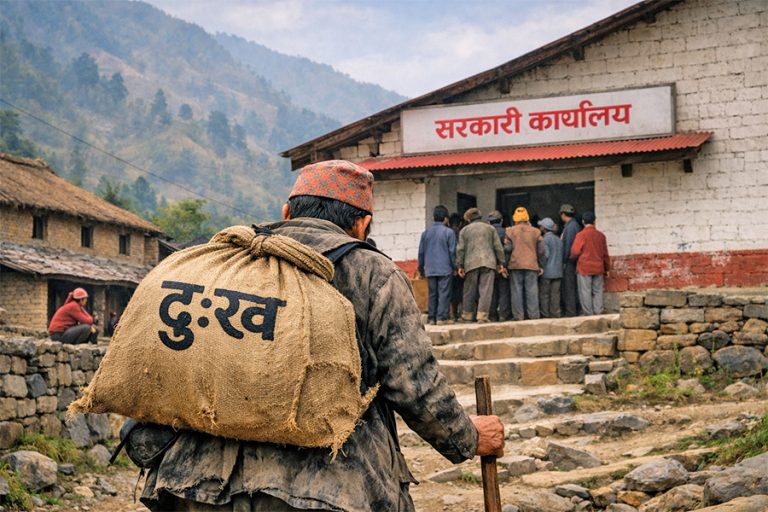
Poem: The Village Carrying Sorrow in Government Office
Migration Empties the Village, Farming Tools Replace Oxen


















%20-%20Copy.jpg "House for Sale at Siddhipur")
%20-%20Copy.jpg "House for Sale at Cozy Homes, Imadol")
.jpg "Bungalow House for Sale at Bhandari Marg")


.jpg "House for Sale at Imadol")


.jpg "Bungalow House for Sale at Dholahiti")









Comments 4