Author: space4knews

Sahibzada Farhan Named ICC Player of the Month for February 2026

News Summary

  • Pakistan’s Sahibzada Farhan has been named ICC Player of the Month for February 2026.
  • Farhan scored 383 runs in 7 matches during the ICC T20 World Cup, including two centuries and two half-centuries.
  • He became the first player to score two centuries in a single T20 World Cup and rose to second place in the ICC T20 batting rankings.

March 22, Kathmandu – Pakistan’s Sahibzada Farhan has been declared the ICC Player of the Month for February 2026 following his outstanding performance in the ICC T20 World Cup.

Farhan scored an impressive 383 runs across 7 matches at an average of 76.60. During the tournament, he achieved two centuries and two half-centuries. He also broke Virat Kohli’s record for the highest runs scored in a single edition of the tournament.

He became the first cricketer to score two centuries in a single T20 World Cup. Additionally, Farhan shared a record partnership of 176 runs with Fakhar Zaman.

Following his excellent form, Farhan rose to second place in the ICC T20 batting rankings. However, despite his efforts, Pakistan failed to reach the semifinals.

This is Farhan’s first ICC monthly award. Previously, Haris Rauf was the only other Pakistani player to win this accolade.


गगनले समाते कांग्रेस ‘स्टेयरिङ’, भने- अब अलमलिन्नौँ

Gagan Takes Charge of Congress Leadership, Declares ‘We Will No Longer Bow Down’

March 23, Kathmandu – Nepali Congress President Gagan Kumar Thapa has unveiled a comprehensive plan called the ‘Grand Reform’ aimed at internal cleansing and structural transformation of the party. This announcement came after the party’s central working committee rejected his resignation, which he had tendered taking moral responsibility for the party’s defeat in the House of Representatives election. Addressing the Tuesday central committee meeting in the presence of the media, Thapa emphasized that the party’s future focus will be on the upcoming general convention and party revitalization.

On the topic of the party’s ‘Grand Reform’ involving purification and revival, President Thapa stressed that minor improvements are no longer sufficient. He asserted that it is time to eliminate the ‘dirt and stains’ such as opportunistic principle-less alliances and abuse of state power. Highlighting that the party’s weak structure has suppressed its originality, he urged that the diversity spanning four generations should be harnessed as the party’s strength. He envisions the party not just as an ‘election machine’ but a vibrant social movement once again.

Taking responsibility for the election defeat, Thapa affirmed, “As team captain, I will not evade accountability.” He clarified that his resignation was not a result of pressure or fatigue but a matter of political accountability. He denied rumors that confusion over the special general convention had influenced his decision and stated that he was not impacted by any external pressure.

Gagan Kumar Thapa proposed a detailed schedule to conduct the 15th general convention in Bhadra 2083 (September 2026). According to the plan, party membership will be distributed and updated at the ward level in Baishakh 2083 (April 2026). He warned that any tendencies to obstruct the official candidates during election periods have been seriously noted.

He also expressed the party’s commitment to fully support a fair investigation by the new government. Regarding constitutional amendments and initiatives for national consensus, Thapa announced plans to form a committee comprising experts headed by a senior party leader.

Demanding the immediate release of the report from the Janajati (indigenous peoples) movement inquiry commission, Gagan Kumar Thapa asserted, “That report must be published and implemented immediately. Those who have erred must be held accountable and punished.”

Festive Celebrations of Chaiti Chhath with Religious Rituals in Janakpurdham (Photos)

March 23, Janakpurdham – The Chaiti Chhath festival is being celebrated with great enthusiasm today across Janakpurdham and the wider Madhesh region. This evening, devotees will offer arghya (water offerings) to Surya Dev (the Sun God). The festival will officially conclude tomorrow morning after offering arghya to the rising Sun, also known as Dinanath.

Large gatherings of devotees are currently assembling at sacred water bodies such as Gangasagar and Argaja Sagar in Janakpurdham to witness and take part in the Chaiti Chhath rituals.

Following the tradition of Chaiti Chhath is believed to fulfill all wishes and protect devotees from skin diseases and other ailments.

Observed with deep devotion over four days, the festival begins with rituals of cleansing and purification on the first day. The second day involves a day-long fast during which only kheer (rice pudding) sweetened with sugar is consumed at night. On the third day, corresponding to Shashthi tithi (the sixth lunar day), devotees fast without food or water and, at sunset, stand in water bodies to offer arghya to the setting Sun.

Today, devotees enter the water bodies an hour before sunset, focusing their attention toward Kashtimat and begin offering arghya to Dinanath. Offerings include traditional items such as thakuwa (a type of cake), bhuswa (gherkins), radish, sugarcane, bananas, coconuts, and other sacred fruits presented as prasad.

Devotees will observe a night vigil and conclude the festival tomorrow by offering arghya to the rising Sun on Chaitra Shukla Saptami tithi (the seventh lunar day of the bright fortnight).

Photographs: Shailendra Mahto

Kathmandu Metropolitan Education Committee Reviews Implementation of Its Decisions

News Summary

Editorial review completed.

  • Kathmandu Metropolitan City has begun reviewing the implementation of decisions made by its Education Committee since 2017 BS (2010 AD).
  • The committee decided to grant education officers the authority to certify the statutes of public and private trusts (guthis).
  • In 2021 BS (1964 AD), the committee set school fees for institutional schools based on the Fee Determination Committee’s report.

Chaitra 10, Kathmandu – Kathmandu Metropolitan City has initiated a review of the implementation of decisions made by the Education Committee after the year 2074 BS (2017 AD).

At a meeting chaired by Committee Chairperson and Acting Metropolitan Chief Sunita Dangol today, Education Officer Keshav Gyawali presented the major decisions taken by the committee over the past eight years along with the status of their implementation.

The meeting reviewed several decisions, including the declaration of the metropolitan area as a literate city, granting education officers the authority to certify the statutes of public and private guthis, assigning the responsibility of managing grade-level principals to the Education Department, prohibiting initiation of first-grade classes without permission, and instructing the Education Department to ensure school name signs are written in Nepali, English, and Nepal Bhasa.

Additionally, the permission for operating classes in childcare, Montessori, and pre-primary levels has been implemented along with assigning the responsibility for school records maintenance to the Education Department, according to Education Officer Gyawali.

In 2021 BS, the committee determined school fees for institutional schools based on the report from the Fee Determination Committee. Of the 107 schools that were registered but not operating, 42 responded to the public notice for deregistration.

Among them, the Education Department confirmed that seven schools are currently operating and 35 are preparing to commence operation.

Alongside this review, nine proposals were presented during the meeting. During discussion, Chairperson Dangol instructed the department to complete the social mapping of schools within 10 days.

She stated, ‘Please complete all preparations before the academic session begins. Prioritize programs aimed at reducing school dropout rates and enhancing teachers’ skills in technology and technical fields.’

Chief Administrative Officer Saroj Guragai emphasized the need for the department to develop innovative educational programs to achieve measurable educational outcomes, highlighting the importance of prioritizing technological and technical education.

Coordinator of the Health Education Committee, Chinikaaji Maharjan, stressed the urgency of seriously addressing the problem of students dropping out of school, saying, ‘As the student enrollment period approaches, it is crucial to investigate the social reasons behind children leaving school during enrollment campaigns. Only then will the programs be sustainable.’

Mohammad Baqer Zol-ghadr Appointed as Iran’s New National Security Chief

Following the death of Ali Larijani, Iran has appointed Mohammad Baqer Zol-ghadr as the new Secretary of the Supreme National Security Council. Seyyed Mohammad Mehdi Tabatabai, Deputy Head of Communications at the President’s Office, confirmed the appointment, stating it was made with the approval and consent of Iran’s Supreme Leader. Zol-ghadr will replace Larijani, who was killed in an Israeli strike on March 16. He is a former Deputy Commander-in-Chief of the Islamic Revolutionary Guard Corps (IRGC).

In the wake of Ali Larijani’s death, Iran appointed a new security chief to lead its Supreme National Security Council. Mohammad Baqer Zol-ghadr has been officially named to the position. Seyyed Mohammad Mehdi Tabatabai, Deputy Head of Communications and Information at the President’s Office, publicly confirmed the appointment via social media, stating, “This decision was made with the consultation and approval of Iran’s Supreme Leader.”

Zol-ghadr will succeed Larijani, who died during an Israeli attack on March 16. Brigadier General Zol-ghadr was one of the senior commanders within the Revolutionary Guards. He was among the founders of the Ramazan Oversees Base, which later became the foundation for the Quds Force, the IRGC’s foreign operations unit. Zol-ghadr served for eight years as the head of IRGC joint staff and for another eight years as the IRGC’s Deputy Commander-in-Chief.

JJ Smith to Captain Namibia in ICC World Cricket League 2 Series Against Oman and Scotland

News Summary

Reviewed content.

  • JJ Smith will captain Namibia in the upcoming ICC World Cricket League 2 series.
  • The Namibian squad features a strong mix of experienced and young players.

March 22, Kathmandu – JJ Smith will lead Namibia as captain in the upcoming ODI series against Oman and Scotland as part of the ICC World Cricket League 2.

Regular captain Gerhard Erasmus has taken a break from captaincy, resulting in Smith’s appointment as captain. In a video announcement, both Smith and Erasmus introduced the squad, with Erasmus officially handing the captaincy role to Smith.

After his recent visit to Nepal, Smith played for Lumbini Lions in the Nepal Premier League (NPL) last season, helping them secure the title.

Namibia Cricket has described the squad as a blend of seasoned veterans and young talent. The team includes new players William Lottering and Jacio Jensen van Vuuren.

Due to Erasmus taking a rest, JJ Smith will captain the team throughout this series.

The Namibian squad consists of: JJ Smith (captain), Gerhard Erasmus, Malan Kruger, Bernard Scholtz, William Myburgh, Jan Frylinck, Ben Shikongo, Ruben Trumpelmann, Max Heynigo, Jack Brassel, Jean Green, Dylan Lieder, William Lottering, Jacio van Vuuren.

निर्वाचनमा प्रयोग नभएका ४० प्रतिशत मतपत्र धुल्याइने

40% of Ballots Unused in Election to Be Destroyed

Summary

  • Approximately 40 percent of ballots remained unused and are set to be destroyed following the House of Representatives election held on Falgun 21.
  • The Election Commission printed 7 percent more ballots than the number of registered voters, sending 41,143,000 ballots to the election districts.
  • According to the Government Document Destruction Regulation, 2027, unused ballots are to be destroyed and sold at auction.

Chaitra 10, Kathmandu – Nearly 40 percent of the ballots that were not used in the House of Representatives election held on Falgun 21 are set to be destroyed. Although 59 percent voter turnout was recorded, 40 percent of the ballots printed for both the first-past-the-post and proportional representation systems remained unused.

A total of 18,903,669 registered voters were eligible to participate in the election, yet the Election Commission printed ballots exceeding the voter count by seven percent and distributed them to the election districts through the Janak Education Material Center.

The Commission printed and delivered 20,323,000 ballots for the first-past-the-post system and 20,843,000 for the proportional representation system, totaling 41,143,000 ballots.

According to the Election Commission, 11,168,032 voters cast ballots in the first-past-the-post system, of which 10,590,917 (94.55 percent) votes were valid. In the proportional representation system, 11,280,617 voted with 10,835,025 (96.05 percent) valid votes.

Election Commission spokesperson Narayan Prasad Bhattarai stated that following the practice of printing more ballots than voters, 41,143,000 ballots were printed this time and that the unused ballots will be destroyed in accordance with established regulations.

Addressing concerns about potential misuse or questions over the election’s integrity due to surplus ballots, Bhattarai said, “Suspicion is understandable, but there is no doubt about the election’s fairness. We have already submitted reports to the President, and no formal inquiries have been raised by any party or faction. Therefore, doubts based solely on ballot wastage are not appropriate.”

Janak Education Material Center Limited’s Managing Director Yadunath Paudel reported that, along with textbook printing and other routine tasks, 1.3 million ballots were printed daily under the Commission’s directives and safely delivered to election areas on time. He added that ballot printing has also helped the center offset losses.

“According to the Government Document Destruction Regulation, 2027 (First Amendment, 2070), document destruction refers to canceling official documents to a point where they can no longer be read, understood, or used, including incineration.”

Under these rules, once documents have served their purpose and pose no harm to the government, office chiefs may order their destruction at any time. Destroyed government documents can also be sold at auction.

According to the regulation, documents are categorized three months after their completion. Except for maps and design data, construction plans, feasibility studies, contracts, leases, and grant documents can only be destroyed after audit completion. Archival documents of national importance are never to be destroyed.

The Commission also reported that during the fiscal year 2079, about 40 million ballots were printed each for the House and Provincial Assembly elections, with around 62 percent voter turnout, leaving the rest of the ballots unused.

Five Provincial Chairs of Congress Attend New Central Committee Meeting; Balayar and Shahi Absent

March 23, Kathmandu – Following the House of Representatives election on March 4, the Nepali Congress central committee meeting is currently underway at the central office in Sanepa. Many officials and members from the outgoing central committee led by Sher Bahadur Deuba have not recognized the new central committee, chosen under Gagan Thapa’s leadership during the special convention.

At that time, a majority of district and provincial committee chairs had not accepted the special convention. However, after the Election Commission granted official recognition to the committee selected by the convention, Thapa led the Congress into the election under that leadership. A petition challenging the Election Commission’s decision is currently under consideration by the Supreme Court.

In this context, tensions within the Congress party are expected to intensify after the election. While the new committee elected at the special convention is holding central committee meetings, news has emerged that supporters of the old leadership, including Dr. Shekhar Koirala’s faction, are preparing to convene a meeting of the previous committee.

Amid this backdrop, most provincial chairs previously aligned with the old leadership have openly supported the new central committee. To date, five of the seven provincial chairs have openly backed the new committee by participating in the central committee meeting and expressing their views.

What Did Each Provincial Chair Say?

Bagmati Province Chair Indra Bahadur Baniya, who is also the chief minister of Bagmati Province and known for his ties to the old leadership, attended the new central committee meeting.

“We were probably in opposition during the special convention,” he stated during the meeting. “But in the March 4 election, the new leadership did not hesitate to give tickets to leaders who had opposed the special convention, such as Dr. Shekhar Koirala, Bimalendra Nidhi, Prakashsharan Mahat, Minendra Rijal, and Kishor Singh Rathore.” He emphasized that it is no longer necessary to prolong disputes post-election.

He also urged Chair Thapa to engage in dialogue with the opposing faction. “Chairperson should communicate with the other side and create an environment to withdraw the court case. Everyone should unite and move forward toward the 15th general convention,” Baniya said.

According to Baniya, the responsibility of uniting everyone now lies with the new chairperson Thapa.

Similarly, Madhesh Province Chair Krishna Prasad Yadav, who is also seen as close to the old leadership, stated that the entire Madhesh stands behind the new chairperson Thapa. During the central committee meeting, he said, “I hope the enthusiasm with which the special convention was held will continue as the chairperson moves forward. I will stand firmly with you. Everyone must unite for the 15th general convention to lead the party into a new phase.”

Koshi Province Chair Uddhav Thapa recently expressed that it is not appropriate for Chair Gagan Thapa to resign at this time. During a meeting chaired by Vice Chair Bishwoprakash Sharma a few days ago, he noted that moving forward under the new committee’s leadership is the only viable option.

“Internal party disputes are not unusual, but wasting time by disputing the new leadership is not right,” Koshi Chair Uddhav Thapa said.

Likewise, Gandaki Province Chair Sukraraj Sharma and Lumbini Province Chair Amarsingh Pun have consistently supported Chair Thapa since the special convention.

While five provincial chairs have participated and expressed their positions at the new central committee meeting, Karnali Province Chair Lalit Jung Shahi and Sudurpaschim Province Chair Bir Bahadur Balayar were both absent from the meeting.

AIG Karki Directs Citizen-Friendly Service Delivery

News Summary

Prepared after editorial review.

  • Additional Inspector General (AIG) Ishwar Karki, head of the Kathmandu Valley Police Office at Ranipokhari, has issued directives for citizen-friendly service delivery.
  • AIG Karki instructed chiefs of the District Police Office, Kathmandu, to strictly bring illegal activities under the legal framework.
  • He emphasized strengthening technology use and effective police deployment to improve information collection and ensure the safety of the Kathmandu Valley.

March 24, Kathmandu – To ensure citizen-friendly service delivery, Additional Inspector General (AIG) Ishwar Karki, head of the Kathmandu Valley Police Office at Ranipokhari, has issued clear directives.

AIG Karki conveyed these instructions to the chiefs of the Kathmandu District Police Office and their subordinate divisions, precincts, and units. He emphasized delivering police services that are friendly to citizens while firmly bringing illegal activities into compliance with the law.

During an inspection visit to the Bhadrakali police station on Tuesday, AIG Karki highlighted that the Kathmandu district houses VIPs and VVIPs and contains vital installations, urging staff to perform their duties with competence.

Considering future challenges, he also directed enhancing the effectiveness of information gathering and utilizing technology and police resources efficiently to maintain the security of the Kathmandu Valley.

India’s Supreme Court Rules Religious Conversion Disqualifies Scheduled Caste Reservation Benefits


March 23, Kathmandu – India’s Supreme Court has ruled that individuals belonging to Scheduled Castes and Scheduled Tribes who convert to another religion will no longer be eligible for government-provided benefits and reservation privileges.

The Supreme Court’s verdict issued on Tuesday stated that any Scheduled Caste individual who converts to Christianity will not be entitled to any benefits or protections under the Scheduled Castes and Scheduled Tribes (Prevention of Atrocities) Act.

This decision upholds a similar ruling previously made by the Andhra Pradesh High Court. The Supreme Court’s endorsement of this ruling was reported by multiple sources.

According to the verdict, “If a person adopts and practices Christianity, they cannot be considered a member of the Scheduled Caste community,” further clarifying, “Only adherents of Hinduism, Buddhism, and Sikhism can be classified under Scheduled Castes. Anyone who converts from these religions loses the protections and benefits provided to Scheduled Castes.”

A constitutional order from 1950 already states that individuals outside Hinduism cannot be categorized as Scheduled Castes. However, the full implications of this recent decision will become clearer once the complete text of the ruling is published.

It remains unclear how this decision will affect those who had already converted to Islam and Christianity prior to the ruling.

Nepal Kicks Off SAFF U-20 Championship with Victory

Nepal began its campaign in the SAFF U-20 Championship held in the Maldives with a strong performance, defeating Bhutan 2-1. Sujan Dangol and Subash Bam each scored a goal for Nepal, while Bhutan’s Dendup Gyalsen netted a consolation goal. Sujan opened the scoring in the fifth minute, giving Nepal an early lead. In the 52nd minute of the second half, Subash extended the lead with a second goal. Although Dendup pulled one back for Bhutan in the 83rd minute, Nepal maintained their advantage and secured the win. Nepal will face Sri Lanka in their second match on Wednesday.

बादशाहले गरे पञ्जाबी अभिनेत्रीसँग दोस्रो विवाह (तस्वीर)

Badshah Marries Punjabi Actress Isha Rikhi in Second Wedding Ceremony (With Photos)

News Summary

  • Singer and rapper Badshah has married Punjabi actress Isha Rikhi after a relationship spanning nearly four years.
  • The wedding between Badshah and Isha was held very privately, with pictures shared by Isha’s mother, Poonam Rikhi, on social media.
  • Badshah has a daughter from his first marriage, which ended in 2020; he has mentioned having limited opportunities to meet his daughter.

Mumbai – The news of singer and rapper Badshah’s second marriage has become a trending topic on the internet. According to Bollywood media, he has tied the knot with Punjabi actress and model Isha Rikhi.

Their relationship has reportedly lasted for nearly four years. Some pictures of the couple have gone viral on social media, shared by Isha’s mother, Poonam Rikhi.

Currently, Badshah is involved in a controversy related to a song. Prior to this, no information about the marriage had surfaced. However, the matter came to light after Poonam posted several pictures of the couple on Instagram. The photos show them dressed as bride and groom.

One video posted reveals that the wedding was conducted in an intimate setting. There is no large crowd or grand ceremony; only close family members appear to have been present.

Poonam shared around ten glimpses from the wedding, capturing candid moments from the ceremony and some memories afterwards. In one video, Badshah and Isha are seen exchanging garlands.

In another clip, after the bride puts the garland on him, Badshah playfully tightens it around his neck, making the bride laugh and creating a joyful atmosphere.

In the caption, Poonam wrote, ‘May God bless you both.’ Aside from this, neither Badshah nor Isha have commented on their marriage, keeping the matter somewhat mysterious.

Badshah and Isha have been in a relationship for almost four years. Punjabi actress Isha Rikhi began her acting career in 2013 with the film ‘Jatt Boys Putt Jattan De.’

They reportedly met through a mutual friend. Isha made her Bollywood debut in 2018 with the film ‘Nawabzaade,’ which starred Varun Dhawan, Raghav Juyal, and Puneet Pathak.

Badshah was previously married to Jasmin Musih, and they have a daughter together. The couple separated in 2020.

In an interview, Badshah mentioned that his first marriage was not ideal for their daughter. On the ‘Prakhar ke Pravachan’ podcast, he said, ‘We tried everything to save our relationship and gave our all. But ultimately, separation was the best for our child.’

He also added, ‘I get to meet my daughter but not very often because she lives in London.’

Congress to Form Committee on Constitutional Amendment Led by Vice Chair Bhusal


10 Chaitra, Kathmandu – The Nepali Congress is preparing to establish an expert committee to study constitutional amendments. The party plans to form this study committee under the coordination of Vice Chair Pushpa Bhusal.

According to an official, the Central Committee meeting held at the party’s headquarters in Sanepa on Tuesday is expected to approve the formation of this committee. The meeting decided to appoint only the coordinator for now, with other members to be selected swiftly, with the aim of thoroughly studying constitutional amendments.

Senior Havildar Ghisain Named Best Police Officer for Fagun Month

News Summary

Prepared by AI. Editorial review completed.

  • Senior Havildar Navaraj Ghisain of the Narcotics Control Bureau, Koteshwor, has been declared the best police officer for the month of Fagun.
  • He had also arrested prisoners who escaped during the Genji Movement.
  • Office Chief SSP Krishna Koirala honored him with cash prize of 1,000 rupees and a certificate.

March 23, Kathmandu: Senior Havildar Navaraj Ghisain, working at the Narcotics Control Bureau in Koteshwor, has been named the best police officer for the month of Fagun.

He was recognized for arresting seven individuals found with various types of narcotics and pistols, including prisoners who had fled jail during the Genji Movement. This notable achievement earned him the title of best police officer for the month.

Office Chief SSP Krishna Koirala awarded him a cash prize of 1,000 rupees along with a certificate in recognition of his efforts.

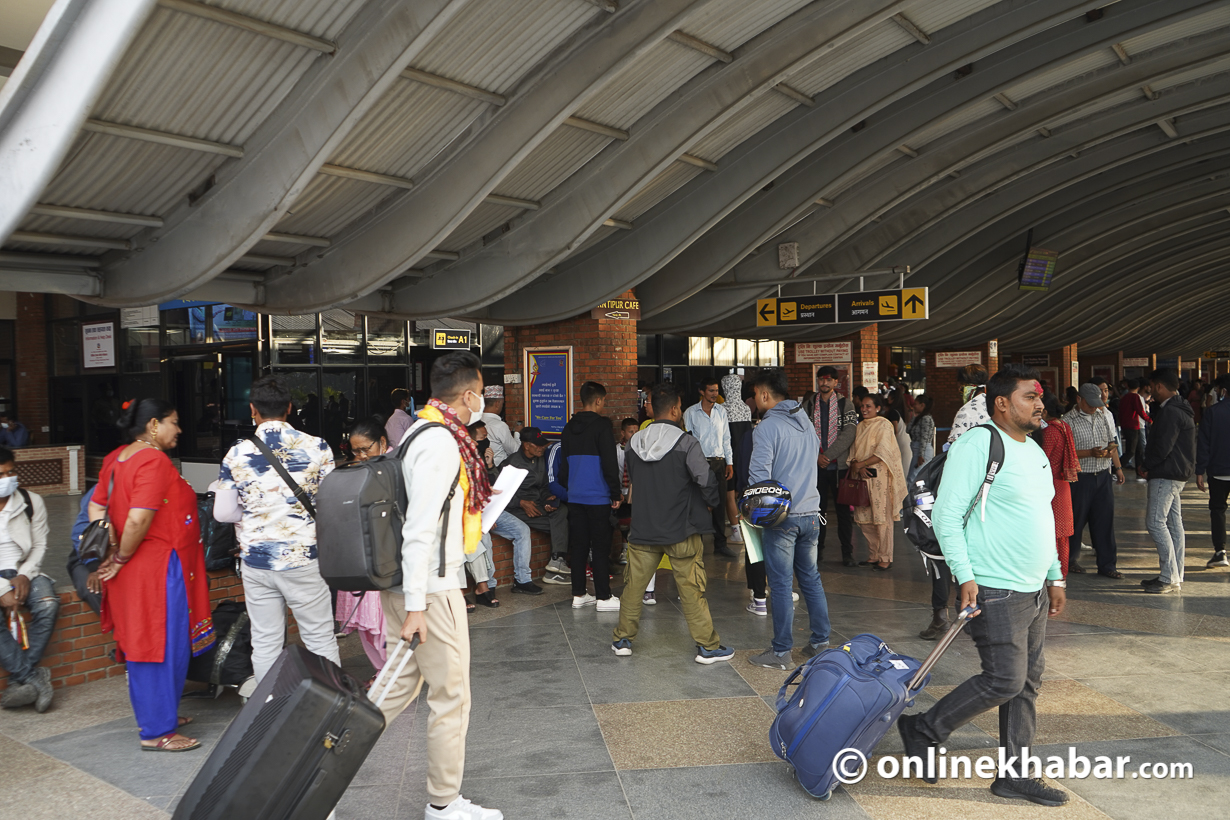
Nepal Considers Implementing Odd-Even Traffic System and Increasing Weekly Holidays Amid Supply Disruptions

As the ongoing war in the Middle East disrupts the global supply of petroleum products and gas, Nepal is preparing to adopt measures similar to those of countries like Sri Lanka, including increasing weekly holidays and implementing an odd-even vehicle system. The spokesperson for the Ministry of Industry, Commerce, and Supplies has provided information regarding these steps. These measures are aimed at protecting Nepal from the adverse effects of the supply disruptions.

According to Chandikaprasad Bhatt, Executive Director of the Nepal Oil Corporation, the corporation has already recommended to the government ways to reduce petroleum consumption. However, as these measures involve political and policy decisions, the Oil Corporation alone cannot make final decisions. Ministry spokesperson Netraprasad Subedi stated, “Discussions are ongoing regarding measures to reduce traffic congestion.”

Vijay Swar, President of the Nepal National Transport Entrepreneurs Federation, emphasized that while these measures could reduce fuel consumption, the right of citizens to commute must be respected. He stated, “This is a crisis management issue, and efforts can be made to facilitate the situation after thorough discussions.”

Evaluating the crisis, spokesperson Subedi highlighted that the concern extends beyond locally produced rice to lentils, edible oils, and other imported goods from countries other than India. He also noted an increased demand for cooking LPG gas and a rise in cooking oil prices.