
Author: space4knews

एनसेलले जित्यो कर्पोरेट टी-१० लिग – Online Khabar

Ncell Wins the Corporate T-10 League Title

Ncell clinched the title of the Texpire Corporate T-10 League by defeating Subisu by 38 runs using the DLS method. Ncell scored 131 runs for the loss of 2 wickets in the allotted 10 overs. Anil Bhandari scored 74 runs off 33 balls. Anil Bhandari of Ncell was named Player of the Match, while Suraj Timilsina received the Best Player award. April 29, Kathmandu.

In the final held on Wednesday at the Lower Mulpani ground in Kathmandu, Ncell defeated Subisu by 38 runs to secure the championship. After losing the toss, Ncell batted first and posted a strong total of 131 runs. Anil Bhandari played an explosive innings, scoring 74 runs off 33 balls, while Samaj Paudel added 48 runs off 20 balls, helping the team achieve a high score.

Chasing a target of 132 runs, Subisu got off to a poor start. The team lost wickets at regular intervals and could manage only 63 runs for 6 wickets in 8 overs. Vivek Kumar Yadav made 17 runs and Daman Chand scored 23 runs, but other batsmen could not make significant contributions. In bowling, Ncell’s Nirajan Pariyar conceded 17 runs in 2 overs and took 1 wicket. Himal Chand gave away 17 runs in 2 overs and claimed 1 wicket, while Vivek Kumar Yadav conceded 24 runs in 2 overs. Sachindra Thakur conceded 18 runs in 1 over. Anil Bhandari was declared Player of the Match, and Suraj Timilsina, captain of ICFC Finance, was awarded the Best Player of the tournament.

‘The Central Government Violated the Spirit of the Constitution and Tried to Weaken Public Schools’

News Summary

  • The federal government decided to open school enrollment from Baishakh 15 and classes from Baishakh 21, while Aabukhaireni Rural Municipality began school operations from Baishakh 2.
  • Aabukhaireni Rural Municipality exercised the constitutional authority granted to local governments in operating schools and stated that the federal government’s decision would have both temporary and long-term impacts.
  • The municipality has improved community schools through mergers, bus services, and hostel construction, making 90 percent of schools tuition-free.

Baishakh 16, Pokhara – The federal government had directed local governments to start school enrollment from Baishakh 15 and classes from Baishakh 21. However, Aabukhaireni Rural Municipality in Tanahun disregarded this directive and issued notices to its subordinate schools to begin enrollment and school operations from Baishakh 2.

Following the notice, all schools under Aabukhaireni Rural Municipality opened from Baishakh 2. Subsequently, other municipalities also opened enrollments and schools in contradiction to the federal government’s decision.

The Constitution assigns the responsibility of managing education up to secondary level to local governments. Local bodies, feeling that the federal government’s intervention encroached on their jurisdiction, have been running schools per their own decisions.

“The center has attempted to encroach on the authority of local governments,” says Shukra Chuman, Chairperson of Aabukhaireni Rural Municipality. He asserts that the federal government’s decision undermines the spirit of the Constitution and aims to weaken the government and community schools.

Chuman highlights that local governments are undertaking diverse and creative initiatives to improve community education step by step. These efforts include merging schools, adjusting staffing, reducing physical distances by providing bus services, and building hostels with schools in remote areas. He warns that the federal government’s temporary decisions could have long-term negative effects.

We spoke with Chairperson Chuman regarding the impact of government decisions on education, including the recent decision to grant Sundays off, and the education initiatives being undertaken in Aabukhaireni.

The federal government issued circulars deciding to open schools from Baishakh 21 this academic year. You, however, started schools in Aabukhaireni on Baishakh 2. Why?

Three main points influenced this decision. First, constitutionally, the entire authority to manage schools up to class 12 is vested in local governments. The federal government could have coordinated with local bodies under current conditions to manage education without undermining constitutional rights.

Second, considering last academic year when countrywide teacher strikes delayed enrollment and result publication by nearly a month, public trust in community schools dropped, affecting their sustainability.

Third, all local governments had already prepared the academic calendar for this session, determining school operation days based on required credit hours. Starting classes late in Baishakh and closing schools on Sundays demand curriculum revision, which harms both teachers and students. Hence, exercising our constitutional rights, we decided to act in the best interest of students. Although it might appear as disobedience to the federal government, we remain willing to cooperate overall.

Local governments have sole authority over education management up to class 12. How have local governments responded to the federal government’s unilateral decisions?

Until now, associations of municipalities and rural municipalities have coordinated to work uniformly. It is ironic that the country’s executive chief is also a local government head, aware of federalism and local government principles, yet such decisions raise constitutional concerns. Nonetheless, it is encouraging that all local governments have united in opposition.

There are two types of education systems: private and government/community. What impact would the federal government’s decision have on this system?

A calendar mandating a minimum of 180 school days and 1045 credit hours was established. Most schools in Aabukhaireni lie in hilly areas — out of 24 schools, 6-7 are on main roads; two-thirds are in hills. Due to rain and geography, classes cannot begin in Baishakh timely, complicating on-time operations.

If the academic session did not start promptly, students might perceive no future in community or rural schools, leading to declining enrollment and closures. Private schools’ enrollment competition would further weaken government and community schools.

Our strategy includes school mergers to reduce distances and providing bus services. We operate not only school-specific buses but also shared bus services. Even if one bus runs in a ward, it facilitates students and other citizens.

We urge the federal government to reconsider Sunday holidays and calendar changes, as these temporary decisions can cause long-term harm. The decision to grant holidays due to rising petroleum prices also appears temporary.

There has been debate about Sunday holidays in local governments. What positive and negative effects might this decision have?

We are holding meetings with school principals and education committees. Since Sunday holidays affect fulfillment of credit hours, we are discussing mitigation strategies. Closure of government offices causes limited impact; it seems well planned for service users. However, closing schools on Sundays might prevent completing academic obligations. Uniform closure of all offices and schools on Sunday does not seem equitable.

You earlier collaborated with private schools on enrollment, fees, and calendar management. Now private schools are collecting fees under new titles. What is your perspective?

We have strictly implemented two positive measures: mandating at least 10% scholarships and multiple enrollments within a year. Although schools can charge annual fees even if not charging admission fees, a practice of charging fees under different labels once a year emerged. Last year, according to agreement, no admission or annual fees were charged. Current ambiguity in the Education Act and lack of new legislation complicate local regulation. With new directives, local governments face greater challenges in fee determination.

Local governments hold authority over education up to class 12, including local curriculum development and school management. How can government and community schools be improved, and what has Aabukhaireni done?

Improving community schools is truly challenging. Local governments have a dual role in enhancing quality: institutional regulation and assuming responsibility for community schools. We have made major improvements in physical infrastructure. Schools previously with rudimentary buildings and poor infrastructure now appear much improved.

Second, managing staffing; although the federal government allocates teachers based on student ratio, classes must run even in low-enrollment hilly areas. We manage staffing through municipal-level adjustments to ensure adequacy.

Third, fees must be collected from students at community schools despite the constitutional guarantee of free education. We have made 22 of 24 schools tuition-free up to class 10, one school up to class 5, and one school collects fees from playgroup to class 12. Approximately 90% of schools are tuition-free. We have also ensured private school fee and enrollment regulation and scholarship guarantees. We are preparing to launch local curricula and textbooks.

Though Prithvi Highway cuts through Aabukhaireni market, most areas remain rural with sparse student populations and incomplete settlements and schools. How have school mergers and rural school quality improvements been addressed?

We have adopted strategies of merging schools and reducing physical distance by providing bus services, including shared buses. Even if only one school bus runs in a ward, it also serves local residents. We plan to add more buses this year.

Due to lack of all-season roads in hilly areas, school buses cannot operate year-round. For such locations, we are progressing to establish schools with hostels to attract students. We provide midday meals and lodging for those who travel early, easing access and facilitating education.

Federation of Nepali Journalists Demands Strict Action Against Attackers of Kamal Prasain

April 29, Kathmandu – The Federation of Nepali Journalists has strongly demanded legal action against those who attacked online journalist Kamal Prasain. In a statement issued by the federation’s General Secretary Ram Prasad Dahal, it was stated, “The federation urgently calls on relevant authorities to identify and bring the individuals involved in this criminal act to justice.”

During reporting from the Sukumbasi settlement in Manohara, Kathmandu Valley, on April 24, Prasain was assaulted with the intent to kill. Prasain sustained injuries and underwent surgery on his nose. Additionally, the assailants took his camera’s memory card during the attack.

91.76% Voter Turnout in Second Phase of West Bengal Assembly Elections

April 29, Kathmandu – The second phase of voting in the West Bengal legislative assembly elections in India recorded a voter turnout of 91.76 percent. Voting was conducted today for 142 seats. According to the Election Commission of India, a total of 32.1 million voters were eligible for these 142 seats, including 16.4 million men, 15.7 million women, and 792 third-gender voters. The first phase of voting took place on April 23.

Nepal Police Club Advances to Finals with Four Consecutive Wins in Women’s Volleyball

Nepal Police Club defeated Nepal APF Club 3-1 to secure a place in the final of the Red Bull Dashain PM Cup NVVA Women’s Volleyball League 2083. Police Club has accumulated 12 points from four matches, while New Diamond has also reached the final by winning four games.

On April 29, Kathmandu – In the departmental derby held at Dashrath Rangshala Covered Hall on Wednesday, Police clinched a comeback victory over APF with scores of 21-25, 25-19, 29-27, and 25-21, advancing to the finals.

Police Club has earned 12 points from four matches, and New Diamond, having won four matches as well, had already secured their place in the final. Both teams will face each other in the final league match on Thursday, with the championship decider set for Saturday. In another women’s match, Everest Volleyball Club achieved their third win by defeating Tribhuvan Army Club 3-1, securing third place.

वैदेशिक रोजगारीमा श्रीलंका पुगेका ५ नेपालीको बिचल्ली

Five Nepali Workers Stranded in Sri Lanka for Four Months Demand Rescue

Five Nepali workers from Rautahat have been stranded for four months in Warigoda, Sri Lanka, and are requesting rescue and repatriation to Nepal. The workers complain that they have not received their monthly salary of 300 US dollars or proper meal provisions, have been confined like hostages in the middle of a forest, and have not been provided with safety equipment. The Foreign Employment Department has blocked the ID of Peace Nepal Overseas and stated that it is preparing to take action if a complaint is filed, according to spokesperson Shivakoti. April 29, Kathmandu.

Attracted by the promise of rewarding foreign employment and salary, five young Nepali workers from Rautahat traveled to Sri Lanka and have been stranded for four months in Warigoda, located in the Northwestern Province’s Kuliapitiya area. They were employed as general workers at the manufacturing company ‘Consark.’ Though their contracts specified a monthly salary of 300 US dollars, an 8-hour workday, and 6 working days per week, they have not received their salaries or promised benefits.

Despite repeatedly requesting rescue and repatriation, the embassy and manpower agencies have reportedly paid no attention to their plight. The workers have contacted Kathmandu, urging for their rescue and safe return home. They had paid NPR 185,000 to Peace Nepal Manpower before departing for Sri Lanka on January 12, 2026. Among those stranded are MD Asraf Ali, Mohammad Ikramul, Mohammad Akhtar, Mohammad Asif, and Bishwanath Sah from Rautahat.

According to one affected worker, they were sent to work on ‘coco pits’ (coconut husk packing) and machine operation but have been kept in an unsafe location in the midst of forest. “The company is not as shown to us; we are confined in a room in the jungle and have not been allowed outside the gate for three months,” he said. “We are not permitted to buy food, not even to bring biscuits; we are held like hostages.” Although their contract promised 300 dollars monthly, they have only received half the salary so far.

Arriving with loans from home, the workers are now under pressure to repay bank loans and moneylenders. “We took loans to come here but are now unable to make installments,” the victim said. They allege they were sent through agents and manpower operators who promised to transfer them to better companies within 10–15 days, but four months have passed without change. While videos shown in Nepal portrayed good working conditions, after arrival they found themselves working in dusty, hazardous environments without safety gear.

“The manpower agency in Nepal promised good conditions, but here we face risk without protective gear like dress or goggles,” they complained. Since arriving in Sri Lanka on January 12, they have only worked 17 days and received half salary for February. They also alleged that the company manager manipulated attendance records, showing fewer actual working days than they truly worked.

The families of the stranded workers have come to Kathmandu to file a complaint with the Foreign Employment Department. They are demanding pressure on the manpower agency to ensure the safe rescue and return of their loved ones with their families. The department has blocked the ID of Peace Nepal Overseas and said it will take action if complaints are received. According to spokesperson Chandrabhadur Shivakoti, no complaints have been filed yet but action will be taken if they arise. “No complaint has come so far, but once received, even with the manpower block, we will take necessary steps to bring them back to Nepal,” Shivakoti stated.

Meanwhile, Suresh Shahi, manager of Peace Nepal Overseas, claims that monthly salaries have been paid regularly and accused the workers of creating problems. “It is incorrect that salaries have not been paid; there are just some minor disputes. Food and accommodation are well arranged, but workers complain about small issues,” he said. The Nepali Embassy in Sri Lanka has also expressed concern, summoned company representatives, and is working on resolving the issues.

Forest Technicians Demand Administrative Reforms from Minister and Secretary

April 29, Butwal—Forest technicians have expressed dissatisfaction, claiming that the provincial government has shown reluctance to establish good governance, efficiency, and outcome-oriented management in forest administration. At an event organized by the Nepal Forest Technicians Association, Lumbini, technicians from 12 districts of the province openly voiced their frustration over policy delays and government apathy to Minister for Forest and Environment Devkaran Kalwar.

Speaking at the program, Association President Keshav Khadka said many essential policy and legal matters necessary for forest sector reforms remain stalled within the provincial government. He raised concerns about the suspension of procedural guidelines with e-tender provisions for timber and firewood auctions, the lack of progress in legislation related to auctioning standing trees, and government neglect of issues such as the cutting of Shorea robusta species in private forests. “Technicians in the field are actively pushing for forest administration reforms and good governance, but such urgency has not been reflected within the government,” Khadka stated.

Vijay Subedi, Chief of the Bardiya Forest Office, highlighted that delays in decisions related to online tendering, auctioning of standing trees, and management improvements have impacted operational efficiency. Forest Director General Ishwari Paudel emphasized that ongoing efforts to reform forest administration require timely legal arrangements.

Forest Secretary Pramod Bhattarai acknowledged that some issues remain stuck due to inter-ministerial coordination challenges and insufficient understanding of their seriousness, which has hindered decision-making processes. He assured that efforts will be made to reach conclusions on such matters promptly. Minister Devkaran Kalwar described it as unnatural for laws initiated by the ministry to be stalled and committed to prioritizing forest sector reforms moving forward.

Yarsagumba Collection Process Begins in Manang

April 29, Manang – The collection of the medicinal herb Yarsagumba has commenced in Manang. The harvesting began on Wednesday. Yad Ghale, chairman of the Conservation Area Management Committee and ward chairperson of Nason-8, stated that although Yarsagumba is found in many highland pastures (kharks) across the region, the collection has officially started from Namgya Lake located in Tachi of Nason Rural Municipality-8. “Harvesting has started from the nearest pasture where Yarsa grows. Collectors have reported a decline in production compared to previous years,” he said, “which appears to be an emerging concern.”

According to the Conservation Area Management Regulations of 1996 (2053 BS) and the Conservation Management Directives of 1999 (2056 BS), only after obtaining collection permission from the Annapurna Conservation Area Project (ACAP) Area Conservation Office in line with the Yarsagumba and other medicinal herbs collection and trade directives of 2023 (2080 BS) and related laws, does the Conservation Management Committee issue collection passes to harvesters within its jurisdiction.

The ACAP Area Conservation Office in Manang, led by Dhakbahadur Bhujel, noted that all local levels within the district managing conservation forest areas are authorized to issue Yarsagumba collection permits. Harvesters from outside the district who are Nepali citizens must coordinate with the local Conservation Management Committee for permission. Entry to the pastures for collection is only allowed after official approval from the office. Harvesters from Lamjung, Gorkha, and Dhading districts also come to the pastures near Manang for collecting Yarsagumba.

Harvesting at Narpabhumi pasture is restricted exclusively to local residents of the district; no permissions are granted to individuals from outside districts. “Due to the geographically remote location and security challenges, collection permits at Narpabhumi pasture are not issued,” Bhujel explained. “However, permits have been provided for all pastures in other local levels such as Khangsar, Hulaki Odar, Pisang, and others.” It is expected that limiting harvesting permits to locals will enhance security at these sites. Only after the Conservation Area Management Committee, coordinated by the ACAP Area Office Manang, grants collection permissions can harvesters enter the pastures.

At Namgya pasture, collection permits are available to both locals and individuals coming from other districts. Deputy Chief District Officer Krishna Prasad Paudel reported that as the Yarsagumba season has started in the district, security arrangements have been tightened accordingly. – RASAS

Changunarayan National Trail Run Scheduled for April 19

News Summary

  • The Nepal Adventure Running Federation will organize the Changunarayan National Trail Run on April 19.
  • The competition will include an open 36 km race and a 7 km race for Under-20 athletes, with more than 250 participants expected.
  • The winner of the open 36 km race will receive a prize of NPR 100,000, and the event budget is NPR 2,811,000.

April 29, Kathmandu – The Nepal Adventure Running Federation (NARF) has scheduled the Changunarayan National Trail Run for Saturday, April 19.

At a press conference held in Kathmandu on Wednesday, Senior Vice President Rajan Khatri stated that, in compliance with the National Sports Act requiring an annual national competition, this year’s event will be the Changunarayan National Trail Run.

The federation aims to develop adventure running as a popular national and international sport, foster athletic talent, and promote adventure and tourism sports through this competition.

The event features an open category 36-kilometer race and a 7-kilometer race for athletes under 20 years old. Both men and women will compete in the 36 km open race, while U-20 males and females will run the 7 km distance. Initially planned as a 38 km course, technical assessment has adjusted the route to 36 kilometers, Khatri explained.

The trail run course includes a mix of paved and unpaved roads, uphill and downhill paths, and hiking tracks through forests. The 36 km race starts at Changunarayan Temple and passes through Trishul Hill, Telkot, Shri Panch Mahalaxmi Temple, Kartike Viewpoint, Nagarkot View Tower, Muhan Pokhari, Pani Muhan, and Pipeline Road, finishing at Changunarayan Municipality. The 7 km race also starts from Changunarayan Temple and follows the path through Trishul Hill, ending at Changunarayan Municipality.

More than 250 athletes are expected to participate in the event.

Prize money for the open 36 km category awards NPR 100,000 to the winner, NPR 75,000 to second place, and NPR 50,000 to third. Fourth place receives NPR 25,000, fifth NPR 10,000, and athletes placing sixth to tenth receive NPR 3,000 each.

In the U-20 7 km race, the first-place winner will receive NPR 30,000, second place NPR 20,000, and third NPR 10,000. Fourth place is awarded NPR 5,000, fifth NPR 3,000, and places sixth through tenth receive NPR 1,000 each. The organizers noted that all prize money is subject to a 15 percent tax deduction as per prevailing law.

This inaugural event is supported by the Ministry of Tourism and Culture of Bagmati Province, the National Sports Council, Provincial Sports Development Council Bagmati, Changunarayan Municipality, Bhaktapur District Sports Development Committee, Toyota company, and 14 Pix Outdoor, among others. The estimated budget for the competition is NPR 2,811,000.

The federation highlighted the significant potential of trail running in Nepal and revealed plans to organize regular national competitions and international events in the future.

“The new government has also prioritized ultra and trail running along with adventure sports. Our federation plans to conduct fixed national competitions annually. Although this sport holds much potential, a lot of work remains,” said Senior Vice President Khatri.

“We are planning to host international ultra races every year. Meanwhile, around 25-30 races occur annually in Nepal. Some of these events collaborate with us. The Nepal Tourism Board is also in talks with three race organizers to discuss upcoming plans,” Khatri added.

भन्सारमा एमआरपी अनिवार्य गरिएपछि जाँचपास ठप्प, नाकामा रोकिए १ हजार कन्टेनर

Customs Clearance Halted As MRP Labeling Becomes Mandatory; Over 1,000 Containers Held at Border Points

April 29, Kathmandu — Since the government mandated maximum retail price (MRP) labeling on imported goods beginning April 28, customs clearance for most imported products has come to a standstill.

On April 12, the Department of Commerce issued a notice informing that MRP labels would be compulsory on both domestically produced and imported goods from April 28 onward.

According to this timeline, customs offices report that they are not processing clearance for any goods lacking an MRP label starting Tuesday.

Under Section 6, Subsection 3 of the Consumer Protection Act 2018, producers for products made in Nepal and importers for foreign goods are required to label items in Nepali or English with the MRP.

The law prohibits the distribution and sale of goods in the market without a clear price label understandable to the general public. It mandates that MRP must include all taxes when setting prices.

Labels must also clearly indicate the product’s weight, manufacturing date, batch number, expiry date, and any potential adverse effects.
Hardware, electrical devices, and machinery must include warranty or guarantee periods, while products that pose health risks must feature warning messages or images.

Penalties of up to NPR 300,000 have been stipulated for illegal business activities or non-compliance, although implementing these provisions poses significant challenges.

The government prioritized effective market regulation and mandatory MRP implementation as part of its 100-point public sector reform agenda.

On April 12, 2026, the Department of Commerce issued the directive that enforcement of mandatory MRP labeling would begin on April 28, 2026. The rule applies to food and processed goods, requiring brand and MRP labeling.

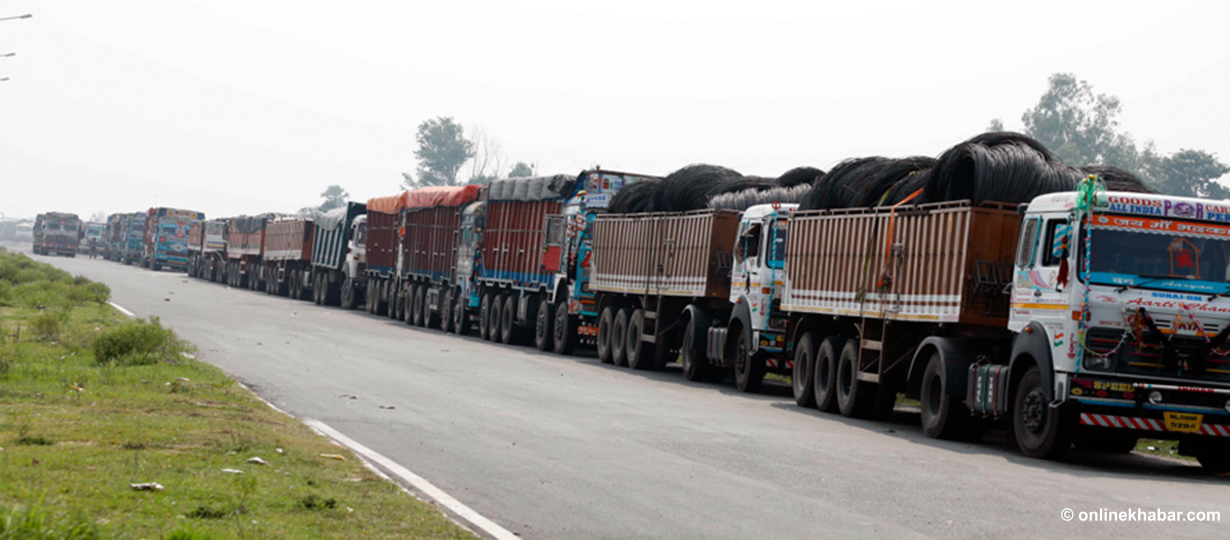
At major customs points across the country, including Birgunj, Bhairahwa, Biratnagar, Rasuwa, Nepalgunj, and Kakarbhitta, customs clearance has been completely halted for goods without MRP labels.

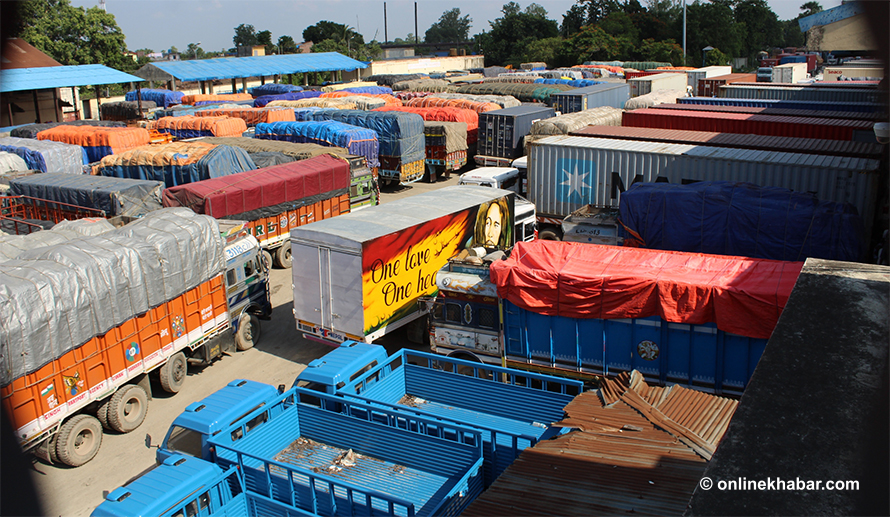
More than 1,000 containers have been held up due to the customs clearance halt, with 600 containers alone stuck at Birgunj.

Customs offices have noted that essential and industrial materials continue to be cleared without interruption.

Four customs office chiefs confirmed regular clearance of fresh vegetables, fruits, and industrial materials currently under laboratory testing.

According to Uday Singh Bista, customs officer at Birgunj, goods failing to meet labeling standards are not cleared, while importers remain uncertain about the MRP labeling process.

Harihar Paudel, head of Bhairahwa customs, stated only items with properly assigned MRPs are being cleared.

Rasuwa customs information officer Thakur Gautam reported that 20 containers have been held due to absent MRPs, and some business operators have refused to complete customs declaration forms.

Biratnagar customs chief Umesh Shrestha insisted that goods without MRPs cannot be released through customs if traders do not comply with the law.
Despite the government’s intent to protect consumers by enforcing mandatory MRP labels at customs points, traders have expressed resistance citing lack of preparation and unclear procedures.

Although industry minister and commerce department heads met with business representatives delivering appeal letters, the government remains firm on enforcing MRP regulations.

The Nepal Overseas Exporters Association has criticized the sudden implementation without adequate preparation or infrastructure, describing the situation as stressful for traders due to blocked goods.

Association secretary general Jayant Agrawal said the government introduced MRP enforcement without obtaining consensus from the business community.

“We submitted formal letters to the commerce department stating that the rule is technically and practically unfeasible, yet goods were stopped without our agreement,” Agrawal said.

“Foreign companies do not produce separate packaging for Nepal”

Agrawal lamented that as Nepal is a small market, foreign companies do not prepare special packaging including Nepal-specific MRPs, a factor he says the government has failed to understand.

He noted, “Foreign manufacturers do not send goods with distinct labels for our market, and prices often differ by the time goods reach customs.”

Business operators stated they lack the infrastructure to affix MRPs at customs points, and demurrage and delay fees contribute to increasing costs, which will lead to higher prices.

This has caused mental stress among traders, especially for goods currently en route by ship or those under letters of credit that have already been opened.

While businesses support the rule in principle, they emphasize that implementation must be practical.

Agrawal requested, “Let’s first classify the goods and then allow MRP labeling after products reach warehouses.”

“Goods cannot be released from customs by paying fines”

Hariprasad Gautam, president of Birgunj Industry and Commerce Association, called the policy of affixing MRPs at customs points “completely impractical.”

“How can containers be opened to label individual units? Foreign manufacturers do not produce special packaging for our small market,” he explained.
Gautam emphasized that MRP ignores geographic distance and transport costs, creating problems in pricing goods originating from Birgunj, where transport expenses are higher.

He also cited daily fluctuations in dollar exchange rates and changing agricultural product prices as further complications in setting MRPs.

He warned that paying fines at customs will not facilitate the release of goods.

They suggested that MRP regulations should apply only to everyday consumer products.

Morang Trade Association Requests Labeling at Own Warehouses

The Morang Industry Trade Association demanded that MRP labels be allowed only after goods arrive at warehouses.

Association president Anupam Rathi elaborated, “Setting MRPs at customs points causes complications in cost and price determination.”

He explained that 28% customs duties, domestic transport costs, and retailer margins make fixing MRP difficult.

While supporting the consumer protection goal, Rathi stressed that implementation must be realistic.

Lack of Coordination Among Government Agencies

The Nepal National Entrepreneurs Federation declared that poor coordination among government bodies has caused confusion among business operators.

Chairman Manoj Babu Shrestha noted conflicting approaches between the Department of Commerce, Customs Department, and Ministry of Finance have resulted in customs clearance standstills.

He further explained that while the Commerce Department has reduced consumer benefits, the Customs Department has taken a strict stance that goods without MRPs cannot be cleared.
Customs officials plan to replace the reference price book with MRP-based valuation methods.

Shrestha warned that goods accrue transport and margin costs before reaching retailers, making customs duty assessment based on MRP impractical.

He expressed concerns that high customs rates could reduce customs revenue and encourage smuggling.

The federation accused the government of attempting to apply MRP rules contrary to the Consumer Protection Act 2018 by mandating the regulation on all goods rather than limited categories.

Shrestha said the law restricts MRP to essential goods and medicines, but that authorities are trying to enforce it on all products.

Eight Years of Neglect, Now Sudden Enforcement Causes Issues

Netra Acharya, president of Siddhartha Industry and Commerce Association, noted that the law had remained unenforced for eight years before sudden enforcement led to current difficulties.

Acharya lamented that customs agents and importers now find themselves unable to operate, partly due to a lack of prior notice.

He argued that requiring MRP on goods once the letter of credit is opened and cargo is en route is unjustified.

According to Acharya, small traders often import mixed product consignments in single containers from different suppliers, making affixing MRPs impossible.

He acknowledged the government’s good intentions but criticized flawed implementation.

No Tolerance for Violating State Law: Officials

Director Narhari Tiwari of the Department of Commerce affirmed the government’s firm commitment to the mandatory implementation of MRP labeling.

He emphasized that all importers must comply with the law and that no exemptions will be granted to violators.
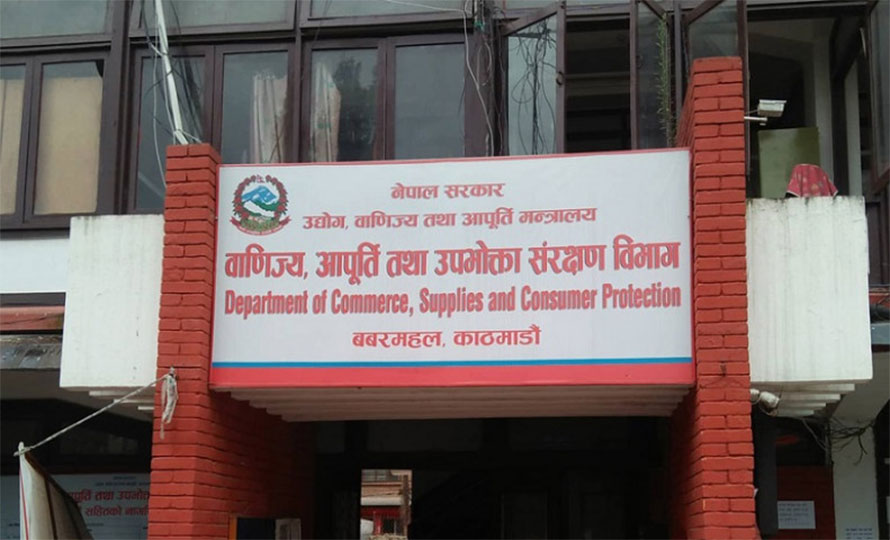
Tiwari stated the law will be strictly enforced and no goods may be offered in the market without an MRP label.

He confirmed discussions from the Prime Minister’s Office to the Ministry of Commerce and reiterated the government’s unwavering stance on this issue.

While acknowledging that traders may encounter initial challenges with the new regulations, he underlined the necessity of compliance.

MRP stickers or tags are mandatory for imported goods to be cleared through customs, a move the department believes will help regulate arbitrary pricing.

How Dangerous Is Seizing Iran’s Uranium for the US?

US President Donald Trump has reportedly made a military operation to seize Iran’s enriched uranium a key strategic objective. Iran possesses approximately 440 kilograms of uranium enriched to 60 percent, which could potentially be further enriched to 90 percent to manufacture nuclear weapons. The idea of US forces raiding a secret underground nuclear facility in Iran to capture this enriched uranium may initially seem improbable. However, recent reports indicate that President Trump has prioritized this mission as a central strategic goal.

To prevent Iran from developing nuclear weapons, Trump is said to be considering the option of seizing its nuclear stockpile. Military experts and former US defense officials warn that such an operation would not only be extremely difficult but also highly risky for the United States. The mission would require deploying a large ground force and could take weeks, not just days, to complete. In pursuit of strategic objectives and various options, the Trump administration appears to be keeping multiple military alternatives open to apply pressure on Iran.

According to senior US officials, at the onset of any potential conflict, Iran holds around 440 kilograms of uranium enriched to 60 percent, which could be rapidly refined to 90 percent and converted into weapons-grade material. Additionally, Iran is estimated to have about 1,000 kilograms of uranium enriched to 20 percent and 8,500 kilograms enriched to 3.6 percent. Nevertheless, the White House has stated that no decisions have been made regarding this issue.

Analysts suggest that the US could deploy its 82nd Airborne Division to secure areas around Isfahan and Natanz. Following this, specially trained forces would attempt to enter underground tunnels to extract the uranium. Typically, uranium is stored in large metal containers in gaseous form. However, accessing these tunnels may require heavy equipment to clear accumulated debris. Throughout this operation, US troops would be exposed to continuous and significant risks.

Prime Minister Balendra Shah to Skip Lumbini Buddha Jayanti Celebration

Prime Minister Balendra Shah has informed the Lumbini Development Trust via telephone that he will not attend the 2570th Buddha Jayanti celebration. The event is scheduled to take place in Butwal on Baisakh 18. Speaker Dol Prasad Aryal will be the chief guest, and Minister Ganesh Paudel will attend as the distinguished guest, according to Shyam Rokka, Executive Member of the Lumbini Development Trust.

Initially, it was announced by the Lumbini Development Trust that Prime Minister Shah would participate in the 2570th Buddha Jayanti celebration. However, today the Prime Minister’s Office contacted the development trust officials and conveyed that the Prime Minister will not be attending. The program is now set with Speaker Dol Prasad Aryal as the chief guest and Culture, Tourism and Civil Aviation Minister Ganesh Paudel as the distinguished guest, Rokka stated.

Impact of UAE’s Exit from OPEC on the Petroleum Market

A person dressed in a white Arabic thobe walking in front of green drums labeled 'INOC'

Image source, Getty Images

The United Arab Emirates’ (UAE) sudden departure from the Organization of Petroleum Exporting Countries (OPEC) is a significant development. Emiratis had been part of OPEC even before the formation of the United Arab Emirates in 1971.

OPEC mainly comprises Gulf countries that export oil. For decades, the organization has influenced crude oil prices by adjusting production levels and setting quotas for member states. During the oil crisis of the 1970s, OPEC played a major role in shaping global energy policies.

While Saudi Arabia holds dominance over OPEC production, the UAE possesses the second-largest additional oil production capacity. This made the UAE the second most important “swing producer,” capable of increasing output to lower prices.

For this reason, the UAE reconsidered its position, aiming to utilize its production capacity in line with its investment.

According to OPEC quotas, the UAE’s daily oil production was limited between 3 million to 3.5 million barrels. Compared to other members, the UAE faced more significant revenue losses.

Continued Poor Performance of Nepal’s Top-Order Batsmen in ODIs

Nepal suffered a heavy defeat against Oman by 102 runs based on the DLS method in an ICC Cricket World Cup League 2 match held at home. Chasing a target of 306 runs, Nepal managed only 155 runs for the loss of 7 wickets in 36.5 overs. With 6 wins and 14 points from 22 matches, Nepal currently holds the seventh position, making it increasingly difficult to secure a top four spot. Kathmandu, 16 Baisakh.

The poor form of Nepal continued in the ICC Cricket World Cup League 2 series. In the home series, Nepal was defeated by Oman by 102 runs on Wednesday. The main reason for the loss was the batting performance. Chasing a target of 306 set by Oman, Nepal was dismissed for 155 runs in 36.5 overs with 7 wickets down. Captain Rohit Paudel along with openers Asif Sheikh and Kushal Bhurtel all delivered disappointing outings. Rohit scored 10 runs, Asif 19, and Kushal was dismissed for just 1 run.

In the last 10 ODI matches, these three players have struggled with their batting. Captain Rohit has scored only one century in these 10 games, failing to reach 40 runs in the other 9 matches. Openers Kushal and Asif have similarly underperformed. Kushal has recorded only a single half-century in his last 10 ODI innings, while Asif has yet to score a fifty in any match during this period.

Nepal will play an additional 6 home matches and 8 matches overseas as part of this league. So far, Nepal has played 22 matches and won only 6. This time, with poor results at home, the chances of reaching the top 4 in League 2 have become more challenging.

खानेपानी डिभिजनका तत्कालीन प्रमुखविरुद्ध डेढ करोडको भ्रष्टाचार मुद्दा

Corruption Case Filed Against Former Head of Water Supply Department Kishori Prasad Yadav Involving NPR 15 Million

The Commission for the Investigation of Abuse of Authority (CIAA) has filed a corruption case against Kishori Prasad Yadav, the former head of the Water Supply Department, accusing him of misappropriating NPR 15 million. According to the commission, from Asar 31, 2047 to Poush 9, 2080 BS, an excess of NPR 14.6 million in income and expenditure was found without proper source verification. The commission has also demanded the confiscation of properties registered in the name of Yadav’s wife, Nirmala Kumari, along with imprisonment.

The CIAA filed the case against Kishori Prasad Yadav, who served as the acting chief of the Water Supply and Sanitation Division Office in Kalaiya. The investigation covering his tenure from Asar 31, 2047 to Poush 9, 2080 BS revealed that Yadav possesses assets with no verifiable sources.

As per the CIAA, Yadav’s lawful income totals NPR 34,621,000. During the investigation period, expenditures by him and his family members were observed on land purchases, house construction, share acquisitions, vehicle purchases, educational expenses, and other areas. The total expenditures exceeded the declared income by NPR 14,681,225.90, figures which were publicized by the commission.

The commission further stated that the illegally acquired assets are also registered under the name of Yadav’s wife, Nirmala Kumari. Consequently, they have sought property confiscation, fines, and imprisonment. It has also been noted that additional investigations related to other matters against him are ongoing.