Author: space4knews

चर्चामा छ गीत, गुमनाम छन् गायक – Online Khabar

The Famous Song by an Anonymous Singer: ‘Seto Phool’

The news portrays a man’s emotions and his love for flowers. Rakesh is preparing to release more of his songs soon. “Ultimately, I don’t particularly like to come out into the public. There are personal reasons too. I want to emerge later,” Rakesh Luwagun expressed in a WhatsApp conversation last Monday evening, speaking in the Darjeeling/Sikkim accent. He was speaking from Namchi in Sikkim, and the topic was the song ‘Seto Phool’ (White Flower).

‘Seto Phool’ is a song that was released about a month ago but has since become a sensitive story. The question arises: who sang this song? Who is the singer? What is he like? There is absolutely no information available. The same ambiguity can be seen in the reactions on social media. But who decides this? This song moved some listeners to tears and made others more emotional. Because this poignant song, even though it touches on subtle matters, has the power to lift one’s spirits and take them elsewhere. It has the ability to evoke sweet pain by submerging the listener in memories. Rakesh did not expect to receive such widespread popularity. A source from the UK even called him to congratulate him. Messages of congratulations poured in on social media as well. Until a few months ago, he would merely hum tunes in solitude. He disliked the artificiality of the city and preferred to spend time alone, enjoying music.

He used to spend days immersed in playing the harmonium, enjoying the tunes alone. It was an experience of silent delight with his own voice. Prakash Basnet had the opportunity to observe this self-enthusiasm up close. Prakash is known for his sarcasm on social media but he is a profound individual. ‘Seto Phool’ is his creation. Prakash wrote the lyrics and the storyline for the music video. That is why Rakesh stayed in the background, which was his personal wish. Rakesh and Prakash have been friends for a long time. Rakesh calls Prakash his ‘brother’. They met during an artist search about 8-10 years ago. Rakesh used to run an event company and organize various programs while Prakash was skilled in acting and event management. They even worked together as far as Delhi, India. Prakash had often heard Rakesh sing. Despite having a good voice, Rakesh hesitated to be in the spotlight, something Prakash did not like. Prakash wanted Rakesh to come forward and repeatedly encouraged him to release his songs. One day, he said, “I will raise you up; until then, you cannot go ahead of me.” But Rakesh kept avoiding it, making excuses about running a café or studying. Still, he couldn’t escape Prakash’s persistent urging.

Rakesh sang for the first time in Prakash’s one-year-old short film ‘Nasunine Aawaz’ in the song ‘Timibatai’. But that song was not widely known. Later, Prakash brought the initial lyrics of ‘Seto Phool’ wanting to create a good song. His desire was so strong that Rakesh couldn’t refuse. Then Rakesh started composing the tune. Weeks passed: one week, two weeks, a month. When the day to record a demo came, Prakash was not satisfied with the tunes. Taking a partial tune, he went to DN Studio, where he met Dinesh Dahal, the studio owner and an excellent composer. Prakash played the tune for him, and Dinesh worked hard on it. Together, they collaborated to finalize ‘Seto Phool’, which became Rakesh’s second Nepali song registered officially. According to Prakash, the song expresses a man’s feelings for flowers. This can be seen in the video as well. Must a boy choose death to receive flowers? This question was raised at the initial stage of writing the story, followed by the song’s lyrics.

They wanted to convey that boys also love flowers and can immerse themselves in their beauty. ‘Seto Phool’ is Rakesh’s favorite flower. The song narrates a story of flowers, love, and memories, and its music video is extremely impactful. The white flower is always peaceful and pure. It carries deep sensitivity, strength, and tenderness. The song expresses profound emotions; listening to it pierces the heart and breaks it. Even after so much discussion, will Rakesh remain silent? He is gradually opening up and plans to release several songs he has already prepared, one by one. Yet he will always keep humming:

“Flowers of memories, I gather your memories
Even if my love is far, carrying memories
As a drizzle of clouds, I will wet you
When you walk alone, flowers will return my memories again
The moments we cut together, those tears will fall again
These flowers bloom again
Pick these flowers to decorate in poetry
If my memories come, offer me white flowers
There is still love to share
You come, and I will return there
Flowers of memories to you, and white flowers to me.”

After Prime Minister’s Assurance, Squatters Say: Our Goal Is Solution, Not Conflict

The government has started preparations to clear four squatter settlements in the Kathmandu Valley from April 25. Prime Minister Balen Shah has assured that the current administration will work to resolve the squatter issue. Pawan Gurung, vice president of the United National Squatter Front, emphasized the need for legal solutions through dialogue and proper identification of genuine squatters. April 24, Kathmandu.

The government is preparing to evacuate four squatter settlements in the Kathmandu Valley starting tomorrow morning (Saturday). Following directives from Prime Minister Balen Shah, security agencies have begun the clearance operation. This sudden decision by the government has sparked varied reactions. Meanwhile, from early this morning, squatters in these settlements have been protesting, and some residents have been hurriedly relocating their belongings. The Kathmandu District Administration Office issued a special notice stating that the clearing process must be completed by 7 pm today.

Prime Minister Shah assured that the current government is committed to resolving the squatter problem and identifying genuine squatters. Following this assurance, we spoke with Pawan Gurung, vice president of the United National Squatter Front, who expressed hope for a long-term solution after dialogue. “We do not seek confrontation or conflict. Our stance is to find peaceful and legal solutions through dialogue,” he said.

Gurung stressed the necessity for the government to fully implement the assurances given by the Prime Minister. “The government has repeatedly entered agreements only to betray them. This time, that must not happen. Additionally, genuine squatters must be properly identified,” he added. He also appealed for the safe relocation of the current settlement residents.

ड्रोन भ्यूमा हेर्नुहोस् काठमाडौंका तीन ठूला सुकुमवासी बस्ती

Preparations Begin to Remove Three Major Informal Settlements in Kathmandu

The government is preparing to remove unregulated and encroached settlements along the riverbanks in the Kathmandu Valley on the 24th and 25th of April. Amnesty International and various political parties have expressed concerns over the forced eviction decision. Prime Minister Balen Shah has stated that this action is part of a long-term solution undertaken with alternatives provided. April 24, Kathmandu.

The government plans to clear the unregulated and encroached riverbank settlements in the valley over two days, Saturday and Sunday. Amnesty International, multiple political parties, and human rights organizations have raised serious doubts about the government’s move to forcibly remove communities, citing concerns about the lack of humane treatment and the risk of relocation without alternatives.

However, Prime Minister Balen Shah has emphasized that the settlements are being managed with alternatives in place. He noted that this step aims to reduce risks during the rainy season and addresses a long-term problem. After police announcements, some residents are moving their belongings to safer locations, while others appear prepared to resist.

The list of settlements scheduled for clearance starting Saturday includes areas in Thapathali, Sinamangal, and Manohara. How disorganized are these riverbank settlements? Drone footage reveals their condition. More images:

Rising Heat Disrupts Daily Life in Siraha

Summary

Created by AI. Editorial review completed.

  • Excessive heat and hot winds in Siraha are impacting daily life, prompting the district administration to urge heightened vigilance.
  • Students and teachers report difficulties in attending classes due to the intense heat.
  • Merchants, drivers, and parents complain that high temperatures are affecting daily commerce and income.

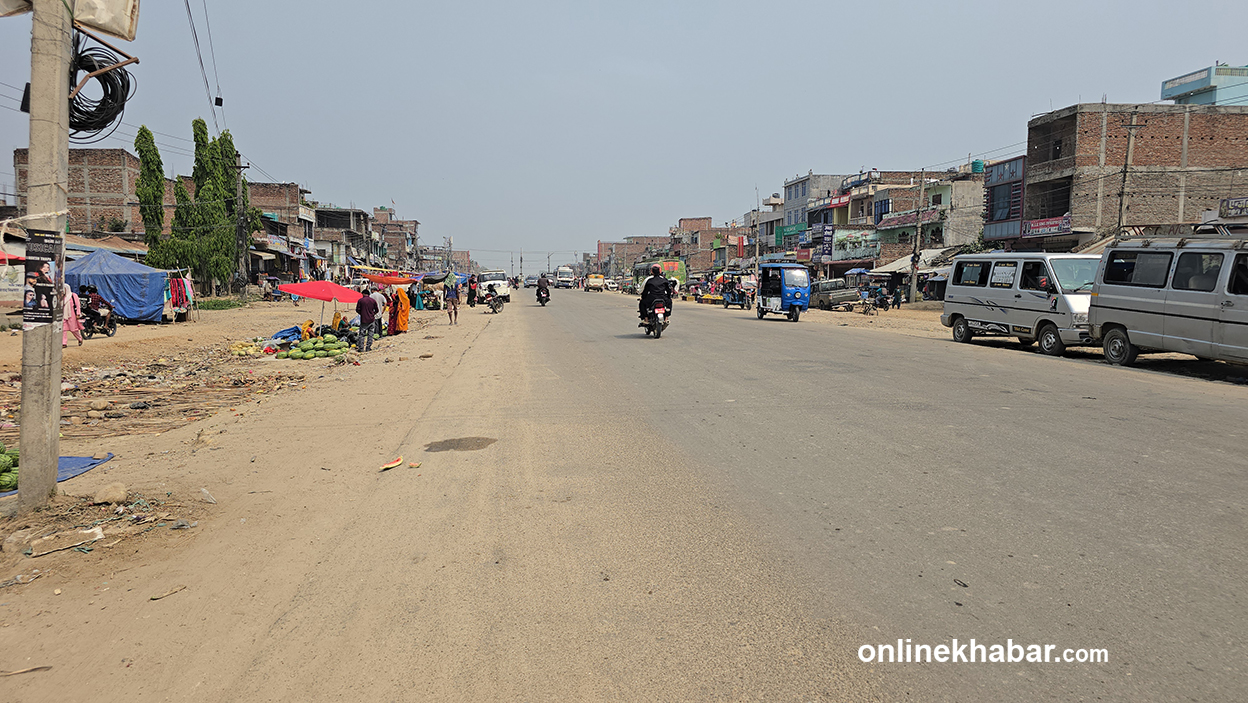
April 24, Siraha – In recent days, Siraha has experienced a sharp increase in intense heat and hot winds. The rising temperature has led to deserted streets, and daily life is being increasingly disrupted, prompting the District Administration Office to urge the public to remain highly alert.

The administration specifically warned that children, elderly people, and chronically ill individuals are most vulnerable and advised them to avoid going outside except for essential tasks.

Local students Nitesh Kumar Thakur and Himani Singh from Mount Everest Secondary Boarding School in Golbazar shared that the extreme heat makes it very difficult to attend school. They explained that excessive sweating dampens their notebooks, hindering concentration during lessons.

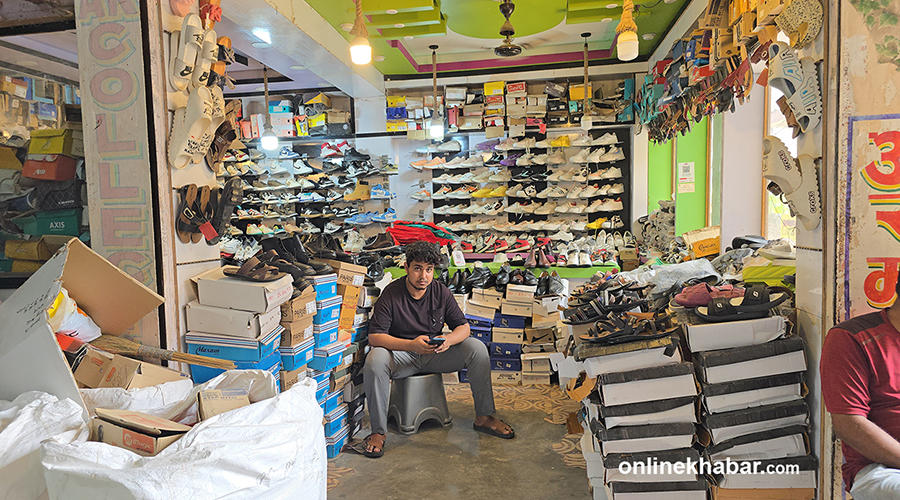
Similarly, businessmen Shekhar Yadav, Naresh Yadav, and Chandradev Raut from Golbazar Municipality Ward 8 reported that despite opening their shops in the morning, business comes to a near standstill by afternoon due to the absence of customers. They attributed this directly to people avoiding outdoor activities in extreme heat, which is negatively impacting daily earnings. They also mentioned difficulties in meeting daily bank installment payments as a result.

Teachers Rameshwar Kamati and Manojkumar Yadav from Mount Everest Secondary Boarding School also confirmed that the heat is affecting teaching and learning. Classrooms are uncomfortable due to perspiration; students struggle to write, and attendance has declined.

Parents Devnarayan Sah and Deepak Nayak expressed concern about sending children to school under such extreme heat. They suggested that schools should conduct classes only in the morning hours to reduce health risks.

Moreover, excessive heat is affecting the income of vehicle drivers. Jagdish Yadav, a driver from Golbazar Municipality Ward 6, reported that while earnings were good before, a lack of passengers now makes it difficult to earn even NPR 200 to 400 daily.

They lament that because passengers tend to stay indoors except for essential travel, earning a livelihood has become increasingly difficult.
Saroj Kumar Karn, head of the Health Section in Golbazar Municipality, urged the public to avoid going outside unnecessarily, to wear umbrellas or hats when outdoors, consume plenty of water and liquid foods, wear light and breathable clothing, and stay in cool, ventilated areas as much as possible.

He explained that if symptoms such as headache, dizziness, excessive sweating, or fainting occur, immediate medical attention at the nearest health facility is essential.

वास्तविक सुकुमवासीलाई तीन ठाउँमा अस्थायी वासस्थान, १५ दिनपछि स्थायी बन्दोबस्त

Government Plans Temporary and Permanent Housing for Homeless Residents

The government has decided to arrange permanent housing within 15 days for homeless residents removed from Thapathali, Gairigaun, and Manohara areas in Kathmandu. According to sources from the Prime Minister’s Office, preparations are underway to relocate the homeless to three new locations this Saturday and Sunday. The process of distinguishing between genuine and non-genuine homeless individuals is expected to be completed within 15 days, with permanent housing allocated to the genuine ones. Kathmandu, April 23.

The government has resolved to provide permanent housing within 15 days for the “genuine homeless” displaced from three areas in Kathmandu. Preparations are in place to temporarily house these homeless residents, currently living in Thapathali, Gairigaun, and Manohara, at three different locations over the upcoming weekend. According to sources from the Office of the Prime Minister and Council of Ministers, the government has devised this relocation plan with prior arrangements.

The Prime Minister’s Office source stated, “There have been reports suggesting the homeless are being relocated without prior preparation, which is not true. A systematic relocation process is underway.” Until Friday evening, security personnel were urging residents to vacate their settlements through loudspeaker announcements. Following the government’s announcement to remove homeless people from these three areas, some began vacating their spots as early as Friday morning.

“This issue concerns the genuine homeless. Some have been living under the pretext of being homeless but actually own houses and land,” the source added. “We will provide appropriate arrangements for the genuine homeless and remove those who are residing under false claims.” Those relocated this Saturday and Sunday will be settled in three different locations within Kathmandu. The Prime Minister’s Office has assured that the new locations will offer better housing and food arrangements compared to their current situations.

Government to Reallocate Funds and Arrange Additional Budget to Settle Last Fiscal Year’s Liabilities in Development Projects

The government has decided to reallocate funds and arrange additional budget allocations to clear payment liabilities from the previous fiscal year for 162 under-construction bridges on national highways and 303 bridges on local roads. This measure falls under the Ministry of Urban Development’s oversight to settle outstanding payments related to projects completed by fiscal year 2081/82 or earlier by incorporating extra activities into the 2082/83 budget and program.

In a cabinet meeting held on 2 Baishakh, the government resolved to ensure mandatory payment of liabilities for the 162 bridges on national highways currently under construction, as well as for 303 bridges contracted by fiscal year 2079/80 for local road construction, by reallocating funds and allocating additional budget. Contractors have persistently pressured the government for payment of liabilities accumulated in previous years.

Since outstanding payments remain for projects completed under the Ministry of Urban Development by 2081/82 or earlier, the government has also decided to add new activities in the ongoing 2082/83 budget and program to clear these liabilities through reallocation. Projects initiated in prior fiscal years and still under construction but not yet included in the ministry-level budget information system for 2082/83 will be incorporated into the current fiscal budget and paid from reallocated funds.

For multi-year projects operated under contract agreements made without source consent from the Ministry of Finance, the government will manage budget shortfalls for the current fiscal year via reallocation. Government spokesperson Sasmita Pokharel has publicly shared these cabinet decisions.

Government Releases Draft of Federal Civil Service Bill for Public Feedback

April 24, Kathmandu – The Ministry of Federal Affairs and General Administration has prepared the draft of the Federal Civil Service Bill and made it public for suggestions. Minister for Federal Affairs and General Administration, Pratibha Rawal, announced that the draft bill has been released to gather feedback and recommendations from stakeholders. “The draft bill will be revised by incorporating the suggestions and comments received before being presented to the Council of Ministers,” she stated. “Following this, the bill is planned to be submitted to the Federal Parliament Secretariat.” You can view the full text of the bill here – 

वास्तविक सुकुमवासीको यसरी हुनेछ व्यवस्थापन – Online Khabar

Government Advances Plan to Manage Squatter Settlements in Kathmandu Valley

Summary: The government has initiated a plan to systematically manage squatters living along the riverbanks in the Kathmandu Valley through official certification. Prime Minister Balendra Shah has announced that certified squatters will soon begin the land allocation process. The Land Problem Solving Commission has arranged to grant certified squatters land parcels ranging from four aana to six and a half kathha.

Kathmandu, 11 Baisakh: The government is moving forward with a plan to organize squatters residing along riverbanks within the Kathmandu Valley. The detailed action plan includes establishing certification camps, issuing photo ID cards to recognized squatters, and gradually evicting those who fail certification.

Regarding arrangements for certified genuine squatters, Prime Minister Balendra (Balen) Shah stated on Facebook, “We will expedite the process of land distribution to genuine squatters throughout the country as soon as possible.” Land laws provide for the distribution of land once to landless Dalits and landless squatters and aim to organize unplanned settlements. To this end, the government has formed the Land Problem Solving Commission.

Under the law, individuals who do not own land in their own or family members’ names and cannot afford land from their income are recognized as ‘landless squatters.’ Similarly, the National Dalit Commission classifies landless squatters from scheduled castes as ‘landless Dalits.’ Persons and families who have settled in government, public, or forest areas for at least 18 years, but without legal permission, are defined as ‘unplanned settlers.’

According to Kathmandu Metropolitan spokesperson Navin Manandhar, the land allocation process for certified squatters is being conducted through the Land Problem Solving Commission. He emphasized, “We are proceeding with land distribution as per legal provisions to ensure that genuine squatters do not face injustice.”

The government is collaborating with local levels to collect, record, verify, and certify data. Based on certified data, cadastral maps will be prepared, followed by verification and report generation. After thorough examination, public notifications, fees, local government endorsements, public disclosures, and claim processes, the district-level Land Problem Solving Commission will finalize decisions and forward them to the central commission.

According to procedural guidelines of 2081 BS, the district committee formally informs the commission of certified landowners, who are subsequently allocated land accordingly. Landless Dalits, landless squatters, and unplanned settlers will be given land based on this certification.

Land Problem Solving Commission Chairman Hariprasad Rizal explained that certified squatters will be provided up to four aana of land within the city for residential use and up to six and a half kathha for housing and farming purposes. When managing unplanned settlers, classification and ownership transfer will consider economic status, settlement conditions, land type, size, valuation, and duration of land rights, with applicable fees.

Rizal added that ownership transfer will not exceed 29 and a half ropani of land, even if fees are paid. Legal provisions stipulate that, whenever possible, settlements should be regularized at their current location. However, settlements on riverbanks, forested areas, hazard-prone zones, or private/public lands registered under someone else’s name will not receive land at the same site.

For such individuals, land will be jointly allocated by local, provincial, and federal governments. If unavailable locally, land within the respective province must be provided. Additionally, the acquired land cannot be sold for a minimum of ten years.

Strategy Released to Generate 24,500 Megawatts of Electricity in the Next 10 Years

The Ministry of Energy, Water Resources, and Irrigation has unveiled the ‘Electricity Consumption Growth and Energy Export Strategy 2083,’ aiming to produce 24,500 megawatts of electricity within the next decade. The strategy not only focuses on electrifying every household but also includes long-term plans to improve transmission and distribution systems and promote electricity exports. The government has set goals to prioritize electric vehicles in public transportation, reduce the use of LPG gas, and replace coal- and petroleum-based boilers with electric systems.

Kathmandu, 11 Baisakh — The Ministry of Energy, Water Resources, and Irrigation has officially released the ‘Electricity Consumption Growth and Energy Export Strategy 2083.’ This strategy was developed with the objective of making the energy sector a key driver of economic transformation. The strategy, prepared by a committee led by Ministry’s Joint Secretary Sandeep Kumar Dev, was endorsed and announced by Energy Minister Birajbhakta Shrestha.

The strategy emphasizes a significant increase in domestic electricity consumption and presents a long-term roadmap to promote the export of surplus electricity. It also highlights the goal to achieve 100 percent household electrification and to implement comprehensive improvements in transmission and distribution infrastructure. According to the plan, the goal is to generate 24,500 megawatts of electricity over the next ten years.

The government has adopted policies to make the use of electric household appliances more attractive by enhancing meter and transformer capacity, while gradually reducing LPG consumption. The current per capita energy consumption stands at approximately 450 kilowatt-hours, with a target to increase this to 1,500 kilowatt-hours within ten years, according to the strategy.

Rain Expected to Begin Next Week, Heatwave to Persist Until Then

April 24, Kathmandu – Relief from the current intense heat is still a few days away. According to the Department of Hydrology and Meteorology, rainfall activities are expected to commence only from next week. Until then, hot air waves will continue, prompting meteorologists from the department to advise caution. In response to increasing temperatures across various regions, the department issued a special bulletin this evening.

Over the past few days, high temperatures have been recorded in the Terai regions and valleys of Madhesh, Bagmati, Gandaki, Lumbini, Karnali, and Sudurpashchim provinces. A heatwave condition has been observed specifically in the Terai areas of Lumbini and Sudurpashchim provinces.

The department has warned that maximum temperatures in most Terai areas of Lumbini and Sudurpashchim provinces could reach or exceed 40 degrees Celsius over the next three days. Since the risk of a moderate heatwave remains, the public is urged to exercise necessary precautions. Accordingly, Kanchanpur, Kailali, Doti, Bardiya, Banke, and Surkhet districts are categorized as areas requiring alertness. Additionally, Dadeldhura, Achham, Dailekh, Salyan, Rolpa, Pyuthan, Dang, Kapilvastu, Rupandehi, Arghakhanchi, Palpa, and Parasi districts are also included in the list of regions to remain vigilant.

The department advises that excessive heat can impact health, so people should avoid unnecessary outdoor activities during daytime, stay well hydrated, wear light clothing, and pay special attention to vulnerable groups such as children, the elderly, and the ill. However, as rainfall begins in some Terai areas of Madhesh, Bagmati, and Gandaki provinces at the start of next week, temperatures are expected to drop slightly and cooler conditions will be felt. Meteorologist Binu Maharjan stated, “There is a possibility of moderate rainfall next week, which will alleviate some of the heat.”

कोहली र पडिक्कलको शानदार ब्याटिङमा बेंगलुरुको जित

Kohli and Padikkal’s Stellar Performances Lead Bangalore to Victory

Royal Challengers Bangalore defeated Gujarat Titans by 5 wickets in IPL 2026. Virat Kohli played a crucial role with 81 runs, while Devdutt Padikkal contributed 55 runs, guiding RCB to victory. With this win, RCB has accumulated 10 points from 7 matches, climbing to second place, whereas Gujarat sits in seventh position.

On April 24, Kathmandu – Powered by excellent batting performances from Virat Kohli and Devdutt Padikkal, Royal Challengers Bangalore secured their fifth win in IPL 2026. In the match held at their home ground, M. Chinnaswamy Stadium, RCB defeated the Gujarat Titans by 5 wickets. Bangalore chased down the target of 206 runs with 7 balls remaining, losing 5 wickets in the process.

Kohli scored 81 runs off 44 balls, hitting 8 fours and 4 sixes before getting out. Padikkal contributed 55 runs off 27 balls, including 2 fours and 6 sixes. After opener Jacob Bethell was dismissed for 14 runs and the score was 24-1, Kohli and Padikkal forged a partnership of 117 runs for the second wicket. Despite slipping from 141-1 to 173-5, Krunal Pandya remained unbeaten with 23 runs, steering RCB to victory.

Earlier, winning the toss and electing to bat first, Gujarat posted 205 runs for the loss of 3 wickets in their 20 overs, largely thanks to Sai Sudharsan’s century. Sudharsan scored 100 runs off 58 balls, including 11 fours and 5 sixes. Captain Shubman Gill made 32 runs, and Jos Buttler scored 25 runs. For RCB, Bhuvneshwar Kumar, Josh Hazelwood, and Suyash Sharma claimed one wicket each.

Honda Opens State-of-the-Art ‘Three S Showroom’ in Nepal

Honda Nepal has launched its first state-of-the-art Three S showroom in Tripureshwor, Kathmandu. Syaakar Trading’s Service General Manager, Sitaram Nyaupane, stated that customers will have access to sales, service, and spare parts all under one roof. The showroom has the capacity to service 150 motorcycles daily and is designed to provide transparent service to customers. April 24, Kathmandu.

As the official distributor of Honda in Nepal, Syaakar Trading began operating the new Three S (Sales, Service, Spare Parts) showroom in Tripureshwor starting Friday. The showroom aims to provide customers with convenient access to sales, service, and genuine spare parts, according to Sitaram Nyaupane, Service General Manager of Syaakar Trading.

“Honda does not focus solely on sales; it prioritizes after-sales service. Globally, Honda has developed a concept to enhance the quality of service provided to its customers,” he explained. A key feature of the showroom is its transparent and clean service center, which is easily visible to customers and designed to be efficient and reliable.

The inauguration ceremony was attended by Tosio Kuwahara, Vice President of Honda Motor Company and Head of Asia and Oceania Regional Unit and Associated Region Operations; Yoshiki Kamio, Department Manager of the Sales Division under Honda Motorcycle Business Unit; and Kojiro Kamiya, a representative from the Sales Division of the Motorcycle Business Unit. They jointly inaugurated the showroom during their visit to Nepal.

NRN Citizenship: A Perpetually Unfulfilled Commitment

The policy regarding Non-Resident Nepali (NRN) citizenship in Nepal remains vague, and its implementation has been delayed. The government needs to legally clarify the concept of ‘Once a Nepali, Always a Nepali.’ Non-resident Nepalis can play a significant role in Nepal’s development through investment and skill contributions. Decades ago, Nepal was merely a dream of foreign lands, but today there is hardly any corner of the world where Nepalis have not reached. Spread through studies, research, employment, industry, and tourism, Nepalis continue to be dispersed globally. They have continuously integrated their skills, technology, and capital accumulated abroad and are eager to invest in their homeland Nepal. Consequently, NRNs around the world have become key partners in Nepal’s economic, social, and intellectual development.

Although the Nepalese government has made some positive initiatives concerning NRN citizenship, clarity and decisiveness are still lacking. The Constitution of Nepal 2072 (2015) has provisions relating to NRN citizenship and attempts to redefine the formal relationship between the state and the NRN community. Following this, there have been implementation efforts through the Citizenship Act and regulations, but the process remains complicated and obscure. The current government, led by the National Independent Party with senior leader Balendra Shah as Prime Minister, campaigned vigorously with the commitment slogan ‘Once a Nepali, Always a Nepali’ before the February 21 elections.

The slogan ‘Once a Nepali, Always a Nepali’ has revived the attachment of Nepalis worldwide to their homeland and sparked new affection. It is true that this slogan has deeply inspired hope and enthusiasm within the NRN community. However, many still harbor doubts about how effectively this pledge will be put into practice. Repeated assurances from past governments, followed by ineffectiveness, have fostered disappointment. Therefore, the government has so far failed to transform the slogan into clear and concrete policy.

Despite some constructive steps from the government on NRN citizenship, the expected clarity and firmness are missing. Because of this, the slogan has not taken practical shape, and non-resident Nepalis continue to be deprived of clear rights and benefits. NRNs are a dependable source of investment in Nepal, and their emotional connection suggests potential for long-term and reliable investment.

The government must focus not only on declarations but also on concrete implementation regarding NRN policy. Specifically, it must legally clarify the ‘Once a Nepali, Always a Nepali’ concept, simplify and make the citizenship process transparent, create an investment-friendly environment, and effectively implement a one-door service system. Non-resident Nepalis are not just remittance senders but development partners for Nepal.

Author: Lokprasad Dahal (Vice President of Dahal Non-Resident Nepali Association – NRNA).

लिग टु को दुई महत्वपूर्ण सिरिज खेल्दै नेपाल, घरेलु मैदानमा नतिजा ल्याउने चुनौती

Nepal to Host Two Crucial League Two Series at Home, Faces Challenge to Replicate Outstanding Results

Nepal secured its One Day International (ODI) status by winning 11 out of 11 matches in the previous phase of the ICC Cricket World Cup League Two. Scheduled from April 25 to May 5 at the TU Ground, Nepal will play two matches each against the UAE and Oman in the upcoming League Two series. Currently positioned seventh with 5 wins and 12 points from 20 games, Nepal aims to improve its performance in these home fixtures.

In the earlier stage of ICC Cricket World Cup League Two, Nepal delivered a remarkable performance by winning 11 out of 12 matches, thereby securing a place in the final qualification round for the ODI World Cup and maintaining its ODI status. Nepal played two of the last three series on home soil, clinching victories in all eight matches of those series. Under the guidance of new coach Monty Desai and the leadership of young captain Rohit Paudel, the Nepalese team demonstrated exceptional coordination.

Currently, Nepal’s situation in League Two is more challenging compared to before. However, there have been significant developments in Nepalese cricket. Nepal qualified for the ICC T20 World Cup for the third time, and the TU International Cricket Ground has undergone upgrades, including the installation of floodlights. Nepal has also adopted separate captains and squads for ODI and T20 formats.

Through these upcoming two home League Two series, Nepal aims to retain its ODI status, reach the final qualifiers for the ODI World Cup, and ultimately compete in the World Cup. Starting from Saturday at their home ground, Nepal aspires to replicate the exceptional performances they achieved two years ago, embracing the challenge ahead.

‘Savings Passbook Exists, But No Cooperative Institution’

According to reports, depositors from Hamro Pacific, Sandhya, and Prosper Savings and Credit Cooperative Societies have submitted requests to the National Cooperative Regulatory Authority (NCRA) for the refund of their savings. The authority stated that it has been unable to find any information about the addresses or management of these cooperatives and is unable to estimate the possibility of refunding the savings. Depositors from these three institutions have demanded refunds exceeding NPR 80 million, while the authority has recommended that the Ministry declare these institutions as problematic. (April 24, Kathmandu)

Depositors from Hamro Pacific, Sandhya, and Prosper Savings and Credit Cooperatives filed refund requests with the NCRA. Upon receiving the applications, the authority attempted to locate the cooperatives’ addresses and contact persons but could not find any precise address or clear information about their management, according to a senior official. “No clear information regarding the institutions or their management was available,” the official said.

The misuse of depositors’ savings by cooperative management and default in loans, leading to failure to refund deposits, has been a long-standing issue. However, in these three cases, a new form of fraud seems apparent. Former Secretary Gopinath Mainali commented, “There must be some records or details about these institutions that could be used as a basis for strict action to recover the depositors’ funds.” He added, “If the institutions are abandoned, simply leaving former executives or officials unaccountable will not resolve these problems.”

Mainali emphasized that passing directives alone will not suffice. Some of these cooperatives are not even registered, and it is unrealistic to expect deposits to be refunded by untraceable institutions. A few months ago, the NCRA recommended the Ministry of Land Management, Cooperatives and Poverty Alleviation declare 16 cooperatives as problematic. However, the ministry returned the recommendation, citing incomplete procedures and refusal to declare them as problematic.

According to the details sent by the authority to the ministry, four depositors of Hamro Pacific Savings and Credit Cooperative have requested refunds amounting to approximately NPR 4.98 million. Similarly, 48 depositors of Sandhya Savings and Credit Cooperative have requested NPR 29.86 million, while 130 depositors of Prosper Savings and Credit Cooperative have filed for refunds totaling NPR 51.45 million.