
Author: space4knews

कान्समा पुग्न ‘एलिफेन्ट्स इन द फग’ ले हिँडेको अथक यात्रा

The Unbroken Journey of ‘Elephants in the Fog’ at the Cannes Film Festival

News Summary

Prepared by AI, editorially reviewed.

  • The Nepali narrative film ‘Elephants in the Fog’ has been selected for the first time in the ‘Un Certain Regard’ section of the 79th Cannes Film Festival.
  • The film tells the story of ‘Pirati,’ a leader of the Kinnar community, who faces a painful choice between love and responsibility while searching for her missing daughter.
  • Director Avinashvikram Shah expressed that the film was made with honesty and is eager to see audience reactions.

Producer Anup Paudel of the film ‘Elephants in the Fog,’ selected in the ‘Un Certain Regard’ section of the 79th Cannes Film Festival, shares, “It feels like a dream come true.”

This marks the first time any Nepali narrative film has been chosen for Cannes.

Written and directed by Avinashvikram Shah, the film unfolds in a small Nepali village nestled deep in the forest, home to wild elephants. It portrays the story of ‘Pirati,’ a leader of the Kinnar community, who dreams of a simple life. However, when her daughter goes missing, she is compelled to embark on a search. Along the way, she confronts a heart-wrenching decision between love and duty.

Honesty and Giving Voice

This selection represents a new milestone for Nepali cinema. In recent years, Nepali films have also been showcased at other prestigious international festivals such as Venice, Berlin, and Busan.

Director Shah is also enthusiastic about this achievement. He states, “This is the result of many years of hard work. The film centers on the story of a transgender mother. I am eager to see how audiences receive the character and the community she represents.”
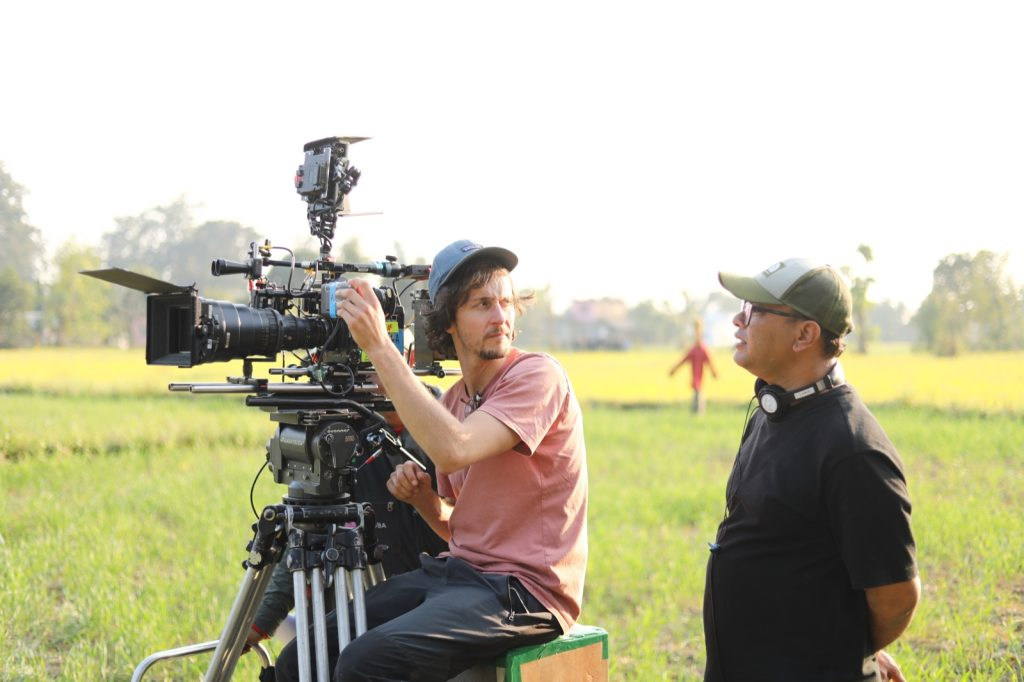
“I made this film with complete honesty,” Shah adds. “Now I am eager to observe how the audience will respond.”

In 2022, Shah and Paudel had previously brought their short film ‘Lori’ to Cannes, which won a ‘Special Mention.’ They credit that experience with paving the way for ‘Elephants in the Fog.’

At that time, the new film was in development and was part of the Cannes ‘La Fabrique’ project market, where they met a French producer. The success of ‘Lori’ lent momentum and confidence for international investment and collaboration in the new project.

During its development, the film was also selected for the US ‘Global Media Makers’ program and the ‘Asian Project Market’ at the Busan International Film Festival. Shah began writing it in 2021.

As a writer, his films have been screened at international festivals, but this represents his biggest achievement as a writer-director to date.

His films often focus on characters from marginalized communities, and this film continues that trend. The mother-daughter relationship is another significant theme. While ‘Lori’ portrayed a biological bond, this work explores chosen family ties.

Beyond Traditional Casting
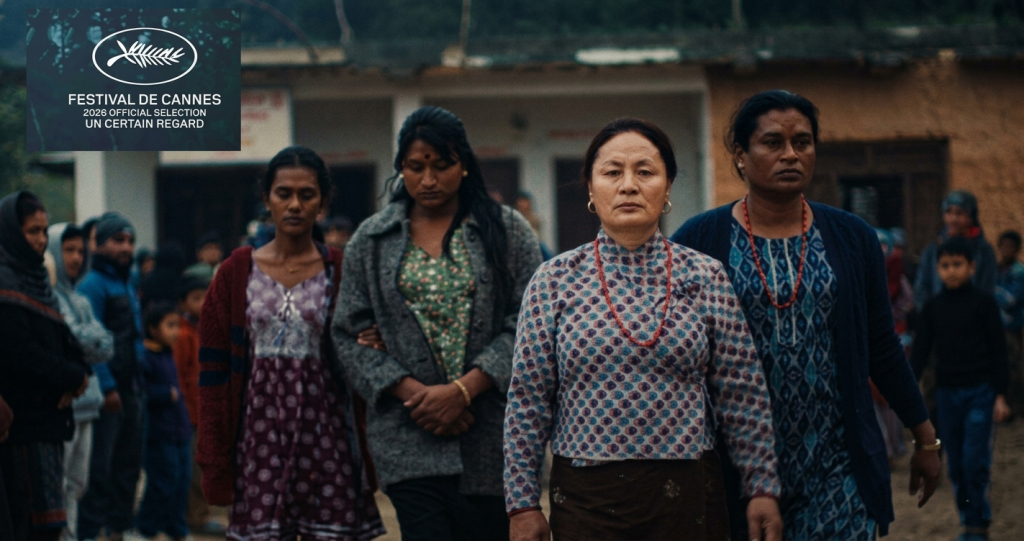
Working with characters from marginalized communities provided fresh perspectives but also posed challenges. The biggest was casting—the search for transgender actors took nearly two years.

The producers connected with individuals and organizations within Nepal’s LGBTQ community nationwide.

“I wanted to work with non-professional actors,” Shah explains. “We avoided casting a cisgender male actor for the transgender female role, as it would undermine the character’s authenticity.”

A workshop involving 30 participants was conducted, followed by a multi-stage selection process. Theatre artist Sudam CK provided training during the five phases of the workshop.

The lead role of ‘Pirati’ remained uncertain until the final stages, but gradually the chosen actress deeply understood the character and delivered a strong performance. According to Shah, the transgender actors not only acted but also offered guidance during production.

Cannes and Expectations

This year’s Cannes Festival will run from May 12 to 23. The Nepali film community is excited about having a feature film screened there for the first time. Shah says the film is not only entertainment but also a voice.

“Perhaps the film’s voices touched the selection committee,” he reflects. “Technically, the film meets international standards.” Producer Paudel describes the story as both local and universal. “The film offers a fresh perspective,” he adds.

The selection at Cannes is a proud moment for the nation and signals that Nepali cinema has a voice that the world must recognize. However, films showcased at such festivals from Nepal often face commercial challenges at home.

Both Shah and Paudel are well aware of this reality and have worked to ensure the film remains engaging. “While writing, I considered a broad audience,” Shah remarks. “The film is somewhat briskly paced and crafted with genre elements.”

The movie is primarily a family drama but also includes thriller elements expected to attract viewers.

In recent years, family dramas have done well at Nepalese box offices, as films like ‘Purnabahadur ko Sarangi’ and ‘Paran’ demonstrate. After its world premiere, the film is set to release in Nepal, with plans also to take it to other international festivals.

Nepalese distributor T-Focus is aiming for a release date around November, although the final decision is pending. In closing, Shah and Paudel also offer a message to emerging filmmakers.

“Keep working,” says Shah. “Challenges will come but they are temporary. Be honest. Don’t make films trying to imitate Cannes or Venice. Watch many films.” Paudel adds, “Patience and dedication are essential. Most importantly, find your own voice.”

Haribahadur Tamang’s Journey to Happiness Through Sweet Shop Business

April 23, Ilam — When Haribahadur Tamang opened his shop in 1993 (2050 BS), the Fikkal market in Ilam was nothing like the bustling area it is today. The narrow roads, small settlements, and modest houses set a very different scene. He recalls, “There were no roads in the village and very few snack shops in the market. People who came on foot used to eat their snacks and meals right at my shop.”

For over three decades, he has been running his sweet shop in Fikkal market, located in ward number 10 of Suryaodaya Municipality. He shares proudly that through hard work in Nepal, selling sweets has brought him happiness and livelihood. His business flourished from the morning right up to 2001 BS (1954 AD). During that time, he purchased a house in the Terai region and acquired three plots of land near Fikkal’s New Chowk area.

He also succeeded in educating two daughters abroad in the United States and Australia. His youngest daughter is currently studying Chartered Accountancy and a BBIS degree in Kathmandu, funded by the income from this shop. “The house in Birtamod, Jhapa, and the lands at New Chowk were all possible because of the business back then,” he explained. “I started the shop in 1993 with an investment of 22,000 rupees, paying 200 rupees monthly rent. Even when selling snacks that filled the stomach for just five rupees, I was able to earn money. I have provided stability for my daughters and earned happiness by selling sweets.”

His shop, Janata Misthan Bhandar, is still operating today, though the profit margin is not what it once was. Tamang says, “Prices have risen. I am in the process of buying supplies now. Customers still come, but competition is fierce, as there are many shops now. Nevertheless, I manage to save 60-70 thousand rupees.” He attributes his daughters’ bright futures to his honest mindset and continuous hard work.

“I sent my eldest daughter to the U.S. after nursing studies in Kathmandu. My middle daughter is in Australia, and the youngest is studying Chartered Accountancy and BBIS here in Kathmandu. I feel very satisfied,” he shared emotionally. To support his daughters’ education, he even sold the house he had built in Birtamod.

The nature of business has changed over time. About 20 years ago, his shop moved from the Pashupatinagar area of Fikkal to beneath the Ilam STEN in the market. Items that once cost five rupees are now priced at 150 rupees. The shop offers an array of snacks including samosas, sel roti, puri, laddus, khurma, rasbari, jeri, and bhujia, and currently employs two staff members.

He adds, “Competition has grown and customer preferences have shifted. Many sell alcohol now, but I have never sold liquor, tobacco, or cigarettes.” Around 1985 (2042 BS), he ran a rickshaw in Kankadbhitta, Jhapa, gaining the trust of 600 workers to become the treasurer of the Rickshaw Union. After working in a hotel for a period, he started the sweet shop and remains dedicated to it today. Despite aging, his passion for work remains strong. “You can’t live without working, but nowadays, young people don’t want to work this hard,” he observes.

The historic Gorkhe market was the commercial hub back then, where people had to carry heavy loads to shop for goods. “We used to carry heavy loads early in the morning to Fikkal. We would go to Hari’s sweet shop to have snacks. These people are from an earlier time and still do business the same way,” recounts 76-year-old Veerbahadur Rai from Gorkhe. “Even today, when I visit Fikkal, I don’t leave without eating samosas at Hari’s shop.”

Seven-Member Task Force Formed to Resolve Disputes in Sports Associations

The National Sports Council has established a seven-member task force led by Bhan Bahadur Chand to address disputes arising within national sports associations. The task force includes RSP members Kamal Bhattarai, Subarna Shrestha, Ranjana Pradhan, a representative from the Ministry of Youth and Sports, Saroj Kumar Pokharel, and Sanuraj KC. According to Section 42 of the National Sports Development Act, 2077, the task force has been instructed to submit recommendations for resolving the issues within 45 days.

10 Baisakh, Kathmandu – The National Sports Council (NSC) has formed a seven-member committee chaired by Bhan Bahadur Chand to resolve conflicts affecting various national sports associations across Nepal. The NSC’s executive committee announced the formation of this group during its meeting on Tuesday, with member secretary Ram Charitra Mehta confirming the decision.

Recently, the Nepalese sports sector has witnessed several challenges, including internal conflicts within both nationally and internationally recognized sports associations. To address these, the task force includes NSC executive committee members Kamal Bhattarai, Subarna Shrestha, and Ranjana Pradhan, along with a representative from the Ministry of Youth and Sports, Saroj Kumar Pokharel, and Sanuraj KC.

The committee, established under Section 42 of the National Sports Development Act, 2077, has been granted a 45-day timeframe to propose solutions to the problems faced by sports associations. Issues such as periodic elections, organizational structure development, financial management, transparency, and institutional governance have negatively affected sports development, good governance, and Nepal’s international reputation. The task force has been tasked with identifying these disputes and recommending necessary measures for the long-term improvement and progress of the sports sector.

काठमाडौंको वायु प्रदूषणले ‘निकै अस्वस्थ’को तह पार गर्‍यो

Air Pollution in Kathmandu Reaches ‘Very Unhealthy’ Levels

Air pollution in Kathmandu has reached an extremely unhealthy level today, with the Air Quality Index (AQI) hitting 247. Currently, Nepal ranks as the second most polluted country in the world, following Pakistan in the first position. According to the Nepal government’s AQI classification, values between 201 and 300 are considered very unhealthy, while those above 301 are deemed hazardous.

On April 23, Kathmandu’s air quality has severely deteriorated. This morning, real-time measurements from the Swiss platform IQAir recorded an AQI of 247, which dropped slightly to 216 by the time this report was prepared. An AQI between 201 and 300 falls under the very unhealthy category.

Nepal now stands second on the list of the world’s most polluted countries, with Pakistan leading. In the Kathmandu Valley, dense smog was visible today. According to the Nepal government’s AQI scale, 0–50 is considered good, 51–100 moderate, 101–150 unhealthy for sensitive groups, 151–200 unhealthy, 201–300 very unhealthy, and above 301 hazardous.

Wholesale Prices of Vegetables and Fruits Set for Today

10 Vaishakh, Kathmandu – The Kalimati Fruit and Vegetable Market Development Committee has announced the wholesale prices of agricultural produce for today. According to the committee, the prices per kilogram are as follows: Large tomatoes (Indian) 80 NPR, small tomatoes (local) 50 NPR, small tomatoes (Indian) 55 NPR, small tomatoes (Terai) 65 NPR, red potatoes 26 NPR, red potatoes (Indian) 25 NPR, dried onions (Indian) 37 NPR.

Similarly, carrots (local) are priced at 60 NPR per kilogram, carrots (Terai) 30 NPR, cabbage (local) 45 NPR, cabbage (Terai) 30 NPR, cauliflower (local) 30 NPR, cauliflower (local, Jyapu variety) 40 NPR, white radish 30 NPR, white radish (hybrid) 30 NPR, long eggplant 50 NPR, and round eggplant 60 NPR.

Additionally, cluster beans (whole) cost 50 NPR per kilogram, peas (pod) 60 NPR, winged beans (local) 30 NPR, winged beans (hybrid) 30 NPR, kidney beans 110 NPR, soybeans 180 NPR, bitter gourd 90 NPR, bottle gourd 30 NPR, ridge gourd 80 NPR, ridge gourd (Terai) 80 NPR, sponge gourd 50 NPR. Sponge gourd (small type) is 30 NPR, pumpkins (ripe) 60 NPR, long green pumpkin 30 NPR, short green pumpkin 25 NPR, okra 60 NPR, bitter melon 60 NPR, chayote 75 NPR, taro 50 NPR, and ivy gourd 60 NPR per kilogram.

Other prices include spinach 60 NPR, palungo (spinach type) 100 NPR, chamchure 80 NPR, mustard greens 40 NPR, fenugreek 80 NPR, green onions 80 NPR, buckwheat leaves 60 NPR, mushrooms (button) 2,280 NPR, mushrooms (oyster) 350 NPR, king oyster mushrooms 300 NPR, and shiitake mushrooms 1,000 NPR per kilogram. Additionally, yam bean 450 NPR, winged bean 80 NPR, broccoli 80 NPR, beetroot 50 NPR, coriander 300 NPR, red cabbage 50 NPR, cumin leaves 80 NPR, gathkopi (shoulder cabbage) 50 NPR, parsley 190 NPR, celery 180 NPR, fennel leaves 80 NPR, mint 100 NPR, gante mula 50 NPR, tamarind 180 NPR, copper leaves 150 NPR, tofu 150 NPR, and dried leafy greens 250 NPR per kilogram.

Apple (Jhole variety) is priced at 250 NPR per kilogram, Fuji apple 300 NPR, lemon 390 NPR, bananas (per dozen) 250 NPR, pomegranate 400 NPR, green grapes 240 NPR, black grapes 380 NPR, green watermelon 45 NPR, and wild pumpkin 250 NPR per piece. Cucumbers (local) are 40 NPR per kilogram, cucumbers (hybrid) 15 NPR, cucumber (local cross) 40 NPR, kaki fruit 80 NPR, Chinese pears 250 NPR, Nepali walnuts 80 NPR, Indian walnuts 90 NPR, kiwi 450 NPR, and avocado 800 NPR per kilogram.

Ginger is priced at 100 NPR per kilogram, dried chili 450 NPR, green chili 100 NPR, bullet green chili 80 NPR, mached chili 80 NPR, Akbare chili 500 NPR, black goat chili 80 NPR, green garlic 80 NPR. Green coriander costs 80 NPR, dried garlic (Chinese) 200 NPR, dried garlic (Nepali) 130 NPR, dried fish 1,000 NPR, fresh fish (Rahu) 340 NPR, fresh fish (Bachuwa) 310 NPR, and fresh fish (Chhadi) 300 NPR per kilogram.

How Is Daily Life Unfolding Amid the US-Iran Conflict?

Daily life in Iran is gradually returning to a degree of normalcy, yet internet restrictions, economic pressures, and the anxiety stemming from ongoing conflict persist. Users are engaging in debates about ‘Internet Pro,’ a tiered internet access system that reflects social inequalities and widens societal gaps. The mental strain from war, financial stress, and social disparities continue to fuel feelings of unease and insecurity among the population.

On April 23, from Kathmandu—In Tehran and other cities across Iran, everyday life appears to be partially normalizing. However, varied personal experiences of Iranian social media users continue to surface. This narrative illustrates a dual reality where, on one hand, people strive to maintain normal routines, while on the other, discussions around mental fatigue, economic hardship, and unequal internet access remain prevalent.

These shared experiences represent individual perspectives and may not reflect the entirety of Iranian society, but they clearly reveal that the anxieties caused by recent internet restrictions, economic stress, and the ongoing conflict remain unresolved. Amid these messages, differences emerge on how people cope: some criticize those who write about ordinary daily topics—such as shopping for clothes or visiting cafés—during such trying times, viewing it as neglectful of current realities.

Despite the ongoing struggle to maintain life amid war, some voices advocate for the right to continue living normally. One user expressed that although they have cried many times since last night, they still choose to wear their nicest clothes and go out with friends, insisting such choices should not be subject to criticism. Another, focusing on football, remarked, “Our minds need to be occupied sometimes with other things,” urging not to blame holders of ‘white SIM cards’—a group that enjoys better internet access and can reach websites unavailable to the general public in Iran.

Yet another user wrote, “It’s normal… our minds need to be engaged elsewhere for a while so that we don’t break down. Perhaps our life will remain like this for a prolonged period.”

मार्तडी-कोल्टी सडक कालोपत्रको काम अलपत्र, ठेकेदारले काम नगर्दा बर्सेनि करोडौं फ्रिज

Martadi–Kolti Road Blacktopping Work Stalled; Contractor’s Negligence Leads to Annual Budget Refunds of Millions

The blacktopping work on the Martadi–Kolti road segment has been left unfinished because the contractor, PS Baniya Construction Services, failed to complete the job on time. The Infrastructure Development Office in Achham has reported that this has left the project in limbo. Due to the failure to complete the work within the allocated NPR 150 million budget in the previous fiscal year, NPR 135 million had to be returned. For the current fiscal year, although NPR 200 million has been budgeted, work has yet to commence, said the office chief, Jangbahadur Thapa.

The Martadi–Kolti road spans 41 kilometers and has undergone tendering in three packages amounting to NPR 1.57 billion. However, even after 26 years, the construction remains incomplete. On 10th Baisakh in Bajura, it was reported that the blacktopping work between Dhamkane and Kolti on this road segment is currently stalled. Thapa emphasized that the construction company failed to meet deadlines.

The Infrastructure Development Office has indicated that PS Baniya Construction Services did not complete the work on schedule, which has resulted in annual budget refunds. Last fiscal year, as the project could not be completed despite a NPR 150 million allocation, NPR 135 million had to be returned. This fiscal year, even though NPR 200 million has been allocated, the contractor has yet to commence operations, clarified office chief Thapa.

PS Baniya Construction Services is registered under the name of Indra Bahadur Baniya, a leader of the Nepali Congress. He is a member of the Bagmati Provincial Assembly and the president of Nepali Congress Bagmati Province. Saroj Rai, the representative and engineer of PS Baniya Construction Services, acknowledged that various factors delayed the work, noted that machinery had been withdrawn from the site, and assured that work would resume within a few days.

The Need for Clear Policy and Effective Implementation in Internship Programs

News Summary

Generated by OK AI. Editorially reviewed.

  • In Nepal, students are increasingly migrating abroad as theoretical knowledge alone does not suffice for entering the professional market.
  • Internship programs provide students with real-world experience and boost their confidence.
  • The government must establish clear policies and collaborate with the private sector to sustain and scale internship programs.

Every year in Nepal, thousands of students graduate with higher education and enter the labor market. However, the predominance of theoretical knowledge from educational institutions limits their smooth entry into professional fields, leading to increased frustration among youth. Consequently, many young people tend to seek opportunities abroad.

Key reasons for this trend include a lack of opportunities within the country, the demand for prior experience when seeking employment, and a lack of confidence among the young workforce to engage in professional work without prior experience. Internship programs can be an effective and practical solution to these issues. They allow students to apply their knowledge in real work environments, which not only helps in skills development but also builds their confidence. Thus, internships serve as a critical bridge between theoretical learning and professional practice.

Through internships, students gain firsthand insight into the challenges and opportunities within their fields. They gain exposure to workplace environments, team collaboration, time management, and professional responsibilities, all of which prepare them to be more capable and competitive in future job markets.

An example of this approach’s success is evident in Innovative Engineering Services Pvt. Ltd., which recently offered internship opportunities to four newly graduated civil engineers. Under the direct guidance of experienced engineers, these interns were engaged in real projects and made remarkable progress within a short period, performing at the level of seasoned engineers. This demonstrates that given the right opportunities and mentorship, new engineers can deliver excellent results quickly.

Role of the Government

Although some private companies have voluntarily initiated such programs, their impact remains limited without broader institutional support. Therefore, the government must actively participate in institutionalizing and sustaining internships by formulating clear policies and implementation frameworks.

If a government ministry, through its affiliated departments, conducts approximately 100 such programs annually, each including an average of five interns, about 500 interns would gain direct professional experience yearly.

Past shortcomings in government-run internship programs stem mainly from distrust that leads to excluding interns from meaningful work and from weak program management. To overcome these challenges, the government should partner with the private sector to operate internship programs through professional companies.

Ministries can issue tenders for real consultancy services and other projects to be carried out by interns, allowing only interested companies to participate. By involving experienced professionals to supervise interns in these projects, the interns can earn genuine work experience.

If a single ministry annually implements roughly 100 such initiatives with five interns each, nearly 500 students would gain hands-on professional exposure. Expanding this model across various ministries could benefit thousands of young graduates each year.

In the long term, these programs will substantially contribute to producing a skilled, confident, and experienced workforce. They are also expected to reduce the outflow of educated youth by creating more opportunities domestically.

Ultimately, internships should be recognized not just as supplementary educational activities but as vital tools for national development. Only through collaboration among the government, private sector, and educational institutions can such initiatives be effective and sustainable.

With the right policies, clear frameworks, and committed implementation, internships can empower Nepal’s new generation to be competent, self-reliant, and optimistic about the future, thereby mitigating the issue of youth migration abroad.

(The author, Anup Khanal, is the Executive Chairperson of Innovative Engineering Services Pvt. Ltd. He is also a recipient of the 2081 Bikram Sambat “40 Under 40 Youth” award.)

US Navy Secretary John Fallon Removed from Position Immediately

John Fallon with President Trump.

Image source, Reuters

Reading time: 3 minutes

The Pentagon has announced that John Fallon, US Navy Secretary, has separated from the Trump administration.

No reason has been provided for his departure, but a Pentagon spokesperson communicated via social media that the change is effective immediately.

Under Secretary of the Navy, Hong Cao, will serve as acting Navy Secretary, according to spokesperson Sean Parnell.

Before his appointment to the Navy Secretary role, Fallon had never served in the military and was a major donor to President Trump’s electoral campaign.

In recent months, numerous senior military officials leading the military within the Trump administration have resigned.

बढ्दै गर्मीको पारो, तराईमा तातो लहरको चेतावनी

Heatwave Alert in Terai Region: Maximum Temperatures Expected to Reach Up to 40 Degrees Celsius

The Department of Hydrology and Meteorology has forecasted that maximum temperatures may reach up to 40 degrees Celsius in five cities of the Terai region this afternoon. The department specifically highlighted the possibility of extreme heat in Bhairahawa and Nepalgunj.

Viktalal Chaudhary: Creating Light by Dispelling Darkness

April 23, Ghodaghodi (Kailali) – It is not always necessary to have sight to see the light in life; sometimes confidence, hard work, and strong determination can also illuminate the path. Viktalal Chaudhary, a 42-year-old resident of Bardagoriya Rural Municipality-3, Ranikunda, exemplifies this truth. Blind from birth, he has wiped away the darkness of a bleak future from his life and stepped firmly toward the light. Viktalal has dedicated himself not only to his own progress but also to brightening the futures of thousands of students.

Since 2008 BS, Chaudhary has been involved in teaching at Jagdambike Bhagwati Secondary School and has spent over 15 years in the classroom. For him, school is not just a job but a life mission. Though he cannot see with his eyes while standing in the classroom, he perceives the abilities, potential, and future of his students through inner vision.

The students he has taught have established themselves in various fields today. Seeing these students—who studied in the village—succeed has made his struggles worthwhile. “If my modest knowledge has changed someone’s life, what greater happiness could there be?” he says. However, his life journey has not been easy. He lost both parents at a young age, causing his family’s circumstances to weaken. Living with blindness made daily life even more challenging. His older brothers are also visually impaired, and he has lived with his sisters and sisters-in-law.

The humiliation and pain he endured as a child remain fresh in his memory. Many in the village would insult him by calling him ‘blind’ and were afraid to walk alongside him. Simply moving around, attending school, and managing daily life were all formidable challenges. Instead of weakening him, these hardships strengthened his resolve. Initially, he doubted his ability to study, but the support and encouragement of a teacher changed his perspective. When the teacher came to his home to help him study, his confidence grew. He realized that although physically challenged, a desire to learn and hard work open limitless possibilities.

After passing the SLC exams, he embarked on a teaching career. This was more than just starting a job; it was a turning point that gave new direction to his life. Teaching while being blind was not easy, yet he never considered himself weak. He converted his weaknesses into strength and moved forward. Alongside teaching, he also completed higher secondary education. In the classroom, he does not only discuss textbooks but also shares life experiences.

His family life has also been a struggle. His wife is visually impaired, and together they care for their 13-year-old daughter and 2-year-old son. His daughter carries significant responsibilities from a young age, actively involved in managing household chores and caring for her parents. Music and literature hold a special place in Chaudhary’s life; he occasionally sings and writes poetry. A poem he wrote as a child still reflects his mindset: ‘Though the eyes are closed, the mind never shuts down.’ This belief continuously fuels his forward momentum.

Society’s attitude toward people with disabilities is gradually becoming positive. “Those who once looked down on me now speak with respect and seek advice,” he says. He is specially invited to village events and has become not just an individual but a source of experience and inspiration. In his view, people with disabilities need opportunities, not pity. “We should not be deemed weak and left behind; if given a chance, we can work too,” he asserts.

New Parliamentary Rule May Shield MP Ravi Lamichhane from Suspension

A newly proposed rule in the draft of the House of Representatives’ procedural guidelines has sparked criticism for potentially protecting MPs facing corruption and money laundering charges from suspension. The draft, prepared by a committee led by Ganesh Parajuli of the Rastriya Swatantra Party and submitted to the Speaker, reportedly includes phrasing that places these guidelines above existing laws concerning MPs.

Rule 259 of the proposed guidelines states, “Regardless of any provisions in existing laws, this guideline shall operate as federal law concerning the House committees and members, applying as special legislation.” The guideline further clarifies that it will serve as a “special privilege of House members.” This provision has raised concerns, linking it to ongoing issues involving Rastriya Swatantra Party Chairperson Ravi Lamichhane, who is currently suspended.

Ganesh Parajuli, chair of the Procedural Committee, has clarified that the rule is not targeted at any individual. He commented, “Each of the state’s three branches has its jurisdiction. Article 104 of the Constitution grants the House the authority to formulate its own rules.” Legal experts, however, argue that this provision conflicts with laws related to money laundering, corruption prevention, and the Commission for the Investigation of Abuse of Authority, potentially undermining their effectiveness in addressing Lamichhane’s case.

According to Section 27 of the Money Laundering Prevention Act, 2064 (2007), public officials and employees charged with money laundering cases are subject to automatic suspension. Based on this provision, the Federal Parliament Secretariat issued a suspension notice for Rastriya Swatantra Party Chairperson Lamichhane on Poush 8, 2081 BS (December 23, 2024). Meanwhile, Rule 247 of the yet-to-be-approved draft guidelines specifies that any MP charged with a criminal offense punishable by three years or more in prison or involving moral turpitude and who is in custody for prosecution shall be suspended during that period.

यमालको गोलमा बार्सिलोनाको जित – Online Khabar

Yamal’s Goal Secures Victory for Barcelona

Barcelona extended their lead to nine points in La Liga by defeating Celta Vigo 1-0 at home. Lamin Yamal scored the only goal from a penalty in the 40th minute. With this win, Barcelona has accumulated 82 points from 32 matches, while second-placed Real Madrid has 73 points. April 23, Kathmandu.

Lamin Yamal’s solitary goal helped league leaders Barcelona strengthen their top position by beating Celta Vigo 1-0 in last night’s match at the Camp Nou. The home side earned three points with a narrow victory, further extending their lead over second-placed Real Madrid to nine points. Yamal advanced Barcelona in the 40th minute by converting a penalty. Although Ferran Torres scored in the 55th minute, the goal was disallowed after VAR review.

Sudhan Gurung’s Purchase of 20 Ropani Land in Bhedetar at NPR 700,000 Sparks Controversy

Interior Minister Sudhan Gurung purchased 19 ropani 15 aana of land in Sangurigadhi Rural Municipality-6, Dhankuta, on Chaitra 11. The Land Revenue Office assessed the land value at NPR 690,000 and the corresponding revenue was paid accordingly. However, the Sangurigadhi Rural Municipality claims the market price of land in the area is NPR 500,000 per ropani.

Dhankuta, 9 Baishakh – The recently resigned Minister Sudhan Gurung has drawn criticism over an apparent undervaluation of the land he bought in Dhankuta. Having been appointed minister on Chaitra 13, Gurung acquired nearly 20 ropani of land on Chaitra 11 near Bhedetar, the prime tourist location in Dhankuta, specifically in Sangurigadhi Rural Municipality-6 (formerly Karkichhap-5), plot number 167.

According to the Dhankuta Land Revenue Office, Gurung purchased the land from Junu Limbu. Junu’s father-in-law, Karn Bahadur Magar, who holds the land in his daughter’s name, confirmed the sale but declined to disclose the transaction price, citing a confidential agreement. Kamal Bahadur Thapa, head of the Dhankuta Land Revenue Office, explained that the land was registered with an assessed value of NPR 690,000, and the corresponding revenue was paid as per that valuation.

Jitendra Rai, chairperson of Sangurigadhi Rural Municipality, noted that the land is in an area not yet serviced by roads but stated that the market price is NPR 500,000 per ropani. By that standard, the actual value of the acquired land could amount to approximately NPR 10 million. Deepak Magar, ward chairperson of Sangurigadhi-6, confirmed that transactions in the area generally occur around NPR 500,000 per ropani and that the municipality has declared the land suitable for commercial use.

Ward Chairperson Magar asserted that acquiring 19 ropani 15 aana at NPR 690,000 is virtually impossible at current rates but mentioned the exact acquisition location has not been clearly identified yet. The land purchased by Gurung lies about 3 kilometers east of Bhedetar. The Land Revenue Office said that because the village administration recommended the land as lacking road access, they used minimum government valuation standards to approve the transaction.

Sangurigadhi Rural Municipality’s valuation confirms the price at NPR 500,000 per ropani and that transactions are conducted accordingly. Kamal Bahadur Thapa clarified that the difference between government assessment and actual market price explains the apparent discrepancy. Although former Minister Gurung listed the land purchase in his asset declaration, he has not publicly disclosed the actual purchase price or funding sources.

What Is Enriched Uranium, How Much Does Iran Possess, and Is It Developing Nuclear Weapons?

The recent claim by the US President that Tehran has agreed to transfer its stockpile of enriched uranium as part of a deal to end the war has once again drawn significant attention. However, on Monday, Iran’s Deputy Foreign Minister Saeed Khatibzadeh denied this allegation in an interview with the Associated Press, stating it is impossible. As both sides continue peace talks, this issue is certain to remain a key agenda item.

But what exactly is enriched uranium and why is it important? Uranium is a naturally occurring element found on the Earth’s surface. It has two isotopes: U-238 and U-235. Natural uranium consists of about 99% U-238, which cannot initiate a chain reaction. Only about 0.7% is U-235, which fissions easily and is useful in the process of nuclear fission — the splitting of atoms to release energy.

The level of uranium enrichment determines its purpose. Low-enriched uranium contains between 3 to 5% U-235 and is commonly used as fuel in commercial nuclear power plants. It can sustain controlled chain reactions but is not suitable for weaponization. Uranium enriched to 20% or higher U-235 is considered highly enriched and is used in research reactors. To make nuclear weapons, uranium enrichment levels must reach approximately 90% U-235.

The 2015 agreement between Iran and six world powers — China, France, Germany, Russia, the United States, and the United Kingdom — limited Iran to enriching uranium only up to 3.67% and restricted its stockpiles to no more than 300 kilograms.

Currently, the talks focus on the future of Iran’s enriched uranium reserves. Senior US officials have revealed that Iran possesses nearly 440 kilograms of uranium enriched to a high level.

Iran continues to assert that its nuclear facilities are used solely for peaceful purposes. The International Atomic Energy Agency (IAEA) has reported no evidence of an active nuclear weapons program in Iran.