Author: space4knews

जेमिनी फर होममा ‘कन्टिन्यूड कन्भर्सेसन’ सुरु, अब बारम्बार भन्नुपर्दैन ‘Hey Google’

Gemini for Home Adds ‘Continued Conversation’ Feature, Eliminating the Need to Say ‘Hey Google’ Repeatedly

Kathmandu – Google has introduced a new feature called ‘Continued Conversation’ in its smart home devices, addressing a key user demand. This update allows users to interact with the Gemini device in a more natural and seamless way. Upon first saying “Hey Google,” the device will respond and keep the microphone active for a few seconds, indicated by pulsing lights on the device, eliminating the need to say “Hey Google” again for follow-up questions.

The update brings four main improvements:

  • Contextual Conversation: Unlike previous versions of Google Assistant, Gemini now remembers the context of the conversation, reducing the need to repeat questions and fostering a more natural interaction.
  • Multilingual Support: The feature is not limited to English but is available in all supported languages and regions worldwide.
  • Household Conversation Differentiation: The smart AI can distinguish between general conversations among family members and commands directed at Gemini, minimizing unnecessary responses.
  • Easy Accessibility for Everyone: Once enabled, all family members and guests at home can use this feature.

To activate Continued Conversation, users need to go to the settings on their Google Home app and select the ‘Continued Conversation’ option under ‘Gemini for Home Voice Assistant’. This enhancement is expected to make interactions with smart home devices more efficient and faster.

Structural Crises and Policy Weaknesses Cast Uncertainty Over Nepalese Sports

Youth and Sports Minister Sasmit Pokharel’s priorities appear predominantly education-centric. His decisions mainly concern the education ministry, resulting in the neglect of the sports sector. The National Sports Council (Rakhap) has been operating under interim leadership for five months, and the participation of Nepalese athletes in the upcoming 20th Asian Games remains uncertain. Until the sports ministry is independent, the lack of clear policies and leadership continues to pose challenges to long-term planning, budget management, and international preparations.

The ongoing disputes between Rakhap and the All Nepal Football Association (ANFA) have increased instability across various sports federations, including football, and athletes have yet to receive announced awards. Following the formation of the Balen government, athletes remain disappointed, having hoped past shortcomings would be addressed and awards distributed. These examples highlight the current discouraging state of Nepal’s sports sector. Even under Prime Minister Prachanda’s strong government, Nepalese sports have not emerged from this state of uncertainty.

While instability is evident in the sports sector, the government remains in its early stages, and sports stakeholders maintain expectations that the Balen-led administration will take decisive actions to improve the sector. At present, Nepalese sports lack clear policies, and inadequate leadership is weakening the overall sports infrastructure.

With weak leadership at Rakhap, the entire sports system shows signs of disarray. The Youth and Sports Ministry and Rakhap leadership are pushing Nepalese sports’ future toward an uncertain direction. The 10th National Games, which were scheduled to be held in Karnali Province in 2024 (2081 BS), have repeatedly been postponed, negatively impacting athletes’ futures. For Nepal to compete well and win medals internationally, hosting large national competitions regularly, such as the National Games, is essential.

Sports in Nepal are weakening off the field rather than flourishing on it, which has hindered international performance. To overcome this crisis, concrete and effective measures are urgently required. Transparent and decisive leadership is needed in the ministry and Rakhap. Appointments of member secretaries and federation leaders must be transparent. It is also necessary to establish athlete-centered policies covering awards, insurance, employment, and career security.

अमेरिकी नौसेना सचिव इरानसँगको तनावका बीच हटाइएका

अमेरिकी नौसेना सचिव जॉन सी. फेलानलाई इरानसँगको जारी तनावका कारण तुरुन्तै आफ्नो जिम्मेवारीबाट हटाइएका छन्। फेलानको स्थानमा २५ वर्षको नौसेना अनुभव भएका कार्यवाहक सचिव हंग काओले जिम्मेवारी सम्हालेका छन्। ट्रम्प प्रशासनको समयमा वरिष्ठ सैनिक नेताहरूको हटाइँ इरानी नाकाबन्दी र होर्मुजको जलडमरूमध्यमा भएको झडपसँग जोडिएको छ।

अप्रिल २३, काठमाडौं – अमेरिकी नौसेना सचिव फेलानलाई आफ्नो जिम्मेवारीबाट हटाइएको छ। पेन्टागनका अनुसार, इरानसँगको जारी संघर्ष र होर्मुजको जलडमरूमध्यमा भएको नाकाबन्दीका कारण फेलानलाई तुरुन्तै हटाइएको हो। पेन्टागनका सचिव शिन पार्नेलले भने, “हामी फेलानले विभाग र अमेरिकी नौसेनामा गरेका योगदानका लागि आभारी छौं। हामी उनलाई भविष्यका प्रयासहरूमा शुभकामना दिन्छौं।”

फेलानको हटाइँपछि हंग काओलाई कार्यवाहक नौसेना सचिवको रूपमा नियुक्त गरिएको छ। काओले २५ वर्षको नौसेना अनुभव ल्याएका छन्। फेलान ट्रम्प प्रशासनको समयमा हटाइएका केही वरिष्ठ सैनिक नेताहरूमा एक हुन्। नौसेनाले फेलानको हटाइँको कारण खुलाएको छैन। यो घटनाक्रम अमेरिकी रक्षा सचिव पीट हेगसेथले नौसेना प्रमुख र्यान्डी जर्जको राजीनामा मागेको केही हप्तापछि आएको हो।

फेलानलाई २०२४ मा राष्ट्रपति डोनाल्ड ट्रम्पले नौसेना सचिवको रूपमा नियुक्त गरेका थिए। उनले मार्च २०२५ मा पदभार ग्रहण गरेका थिए। कार्यवाहक नौसेना सचिव काओले २०२४ मा भर्जिनियाबाट अमेरिकी सिनेटको लागि उम्मेदवारी दिएका थिए। उनले ट्रम्पको समर्थन पाएका थिए तर डेमोक्र्याट उम्मेदवार टिम काइनसँग पराजित भएका थिए। नौसेनामा नेतृत्व परिवर्तन इरानी बन्दरगाहहरूको नाकाबन्दी जारी रहँदा भएको हो। होर्मुजको जलडमरूमध्यमा झडपहरू जारी छन्, जहाँ इरानले दुईवटा जहाज कब्जा गरेको रिपोर्ट गरिएको छ।

10th PM Cup NVBA Volleyball League Kicks Off Today with Foreign Players in Four Teams

The 10th PM Cup NVBA Women’s and Men’s Volleyball League, organized by the Nepal Volleyball Association, will commence today at the Dashrath Rangashala Covered Hall in Tripureshwor and run for ten days. Eight men’s teams and six women’s teams will compete, with the top two teams from each category advancing to the finals to contest the title. The champions will receive NPR 1 million in cash along with a trophy, the runners-up will be awarded NPR 500,000, and the third-placed team will earn NPR 250,000. (10 Baisakh, Kathmandu)

In the men’s category, teams competing include Help Nepal Sports Club, Tribhuvan Army Club, Nepal Police Club, Nepal APF Club, Khiljee Youth Club (Lumbini), Rukum West Volleyball Club, Koshi Province Volleyball Club, and Budhanilkantha Volleyball Club. The women’s category features New Diamond Youth Sports Club, Nepal Police Club, Nepal APF Club, Tribhuvan Army Club, Everest Club, and Sudurpaschim Province.

The league matches will follow a single round-robin format. A total of 45 matches will be conducted across men’s and women’s competitions: 28 games for men and 15 for women. After the league stage, the top two teams from each category will qualify for the finals to compete for the championship.

Among the 14 teams participating in the 10th PM Cup NVBA Volleyball League, only four teams have included foreign players. On the men’s side, Help Nepal Sports Club, Rukum West Volleyball Club, and Khiljee Youth Club have signed foreign athletes, while in the women’s category, the Everest Volleyball Club from Butwal has also recruited foreign players. The winning team of this NVBA league will be awarded NPR 1 million in prize money.

आज यस्तो छ विदेशी मुद्राको विनिमयदर – Online Khabar

Today’s Foreign Currency Exchange Rates

April 23, Kathmandu – Nepal Rastra Bank has set the foreign currency exchange rates for today. According to the fixed rates, the buying rate for the US Dollar is NPR 149.78 and the selling rate is NPR 150.38. Similarly, the buying rate for the European Euro is NPR 175.91 and the selling rate is NPR 176.61; the British Pound Sterling’s buying rate is NPR 202.35 and the selling rate NPR 203.16; and the Swiss Franc’s buying rate is NPR 191.67 with a selling rate of NPR 192.44.

The Australian Dollar’s buying rate is NPR 107.20 and selling rate NPR 107.63; the Canadian Dollar’s buying rate is NPR 109.67 and selling rate NPR 110.11; Singapore Dollar buying rate is NPR 117.63 and selling rate NPR 118.10. The Japanese Yen (per 10 units) has a buying rate of NPR 9.41 and selling rate of NPR 9.44, while the Chinese Yuan’s buying rate is NPR 21.95 and selling rate NPR 22.04. The Saudi Arabian Riyal’s buying rate is NPR 39.94 and selling rate NPR 40.10; the Qatari Riyal shows a buying rate of NPR 41.09 and selling rate of NPR 41.26.

According to the central bank, the Thai Baht’s buying rate is NPR 4.65 with a selling rate of NPR 4.67; UAE Dirham buying rate NPR 40.78, selling rate NPR 40.94; Malaysian Ringgit buying rate NPR 37.90, selling rate NPR 37.05. The South Korean Won (per 100 units) has a buying rate of NPR 10.13 and selling rate NPR 10.17; Swedish Krona’s buying rate is NPR 16.33 and selling rate NPR 16.40; Danish Krone’s buying rate is NPR 23.54 and selling rate NPR 23.63.

Likewise, the Hong Kong Dollar’s buying rate is NPR 19.12 and selling rate NPR 19.20; Kuwaiti Dinar has a buying rate of NPR 488.76 and selling rate NPR 490.72; Bahraini Dinar’s buying rate is NPR 397.29 and selling rate NPR 398.89; and Omani Riyal’s buying rate is NPR 389.03 and selling rate NPR 390.59. The Indian Rupee (per 100 notes) is set at a buying rate of NPR 160 and a selling rate of NPR 160.15.

The central bank has noted that these exchange rates may be revised at any time based on demand. Commercial banks may apply different exchange rates, and the latest rates are available on the central bank’s official website.

President Ramchandra Paudel Calls Federal Parliament Session

President Ramchandra Paudel has announced a session of the Federal Parliament to be held on Thursday, April 27, at 2 PM. This call follows the recommendation made during the council of ministers meeting held on Tuesday, endorsing the convocation of both houses for this session. The upcoming session will also serve as the budget session. The government is required to present the budget for the upcoming fiscal year to Parliament by May 29. A schedule for pre-budget discussions has also been arranged ahead of the budget presentation.

माइतीघरबाट महतो दम्पतीको आर्तनाद – Online Khabar

Emotional Protest by the Mahto Couple at Maiti Ghar

April 22, Kathmandu – Begnarayan Mahto and his wife Umakumari Devi from Barhathwa, Sarlahi, have endured a challenging life working in Bahrain, cleaning cars in parking lots. Their daily wage was only 78 Bahraini dinars (approximately 31,000 Nepalese rupees). Occasionally, satisfied customers tipped extra, especially during Eid and Ramadan, when tips could reach up to 150 dinars. They used the money to support their family and sent some funds to Umakumari residing in Saptari.

The story dates back to 2015 (2072 BS) when Umakumari took a loan of NPR 150,000 with interest from the mother of their neighbor Nishan Mainali due to financial needs. This loan drew them into a financial trap. They realized the interest was extortionate, leading to growing problems. From 2017 to 2022, Nishan Mainali’s family pressured them further, insisting on loan repayments with meter interest and maneuvered to transfer the land’s ownership under the pretext of placing a ‘visionary lien.’ The land, approximately 10 katthas, originally registered under Umakumari’s brother’s name, had been purchased after years of hard work by Begnarayan.

However, the lending family placed a ‘visionary lien’ on the land and within four days, the ownership document was legally passed to Nishan’s mother. Illiterate Umakumari was unaware of these proceedings. Eventually, when the debt ballooned to NPR 1 million, their troubles increased. The Mahto family has paid over NPR 6.5 million to Mainali’s family through selling other land and borrowing from villagers but have yet to receive justice. Despite lodging complaints, local administration issued clearance certificates to Nishan’s mother.

In 2022 (2079 BS), just before their daughter’s wedding, Begnarayan discovered the land had been registered in Nishan’s mother’s name. When they attempted to secure a bank loan, the land was listed under another name, bringing their case to light. The police neglected their complaint while Nishan’s family filed a countercase. Begnarayan recalls that the community had fully supported them by helping with farming activities. However, the court has prohibited both parties from using the land. The Mahto couple has now come to Kathmandu seeking justice and staged a protest at Maiti Ghar on Wednesday. Previously, they participated in protests against high-interest loans and even met the Prime Minister but obtained no relief. Although the Home Minister promised action after meeting them, they remain without justice.

Begnarayan Mahto, protesting at Maiti Ghar, said, “Our assets earned from Bahrain, Saudi Arabia, and Malaysia have been lost. It is now difficult to support our family. The government should investigate Nishan’s family’s property thoroughly and uncover the truth.”

Nishan Mainali’s response: Dismissing the allegations as baseless and stating the court has already ruled in their favor, Nishan Mainali said, “No land is in my name, nor have I taken millions from anyone. If that were the case, the police would have arrested me long ago.” He rejected the Mahto family’s accusations, claiming they are deceiving others by filing false claims. He confirmed that the land dispute has been legally resolved in their family’s favor and expressed willingness to withdraw any charges against him with evidence.

Student Enrollment Begins April 24, Regular Classes to Start April 28, Mayor’s Forum Decides

The Kathmandu Valley Mayors Forum has decided to request all municipalities to launch the new student enrollment campaign starting April 24, with regular classes commencing from April 28. The Forum made this decision considering local government authority and rulings from the Supreme Court regarding school operations.

In light of the ongoing fuel crisis, the Mayors Forum has also suggested prioritizing the use of electric vehicles and preparing alternative methods such as online classes. The decision was made in the Forum meeting held on April 11 in Kathmandu, drawing upon the rights of local bodies and Supreme Court directives.

“Taking into account the recent directives from the Government of Nepal and according to the academic calendar specified in the education regulations, it has been decided in the Kathmandu Valley Mayors Forum meeting on April 11, 2026, to request all municipalities within the valley to start the new student enrollment campaign from April 24 and to conduct regular classes from April 28,” stated a press release issued by the Mayors Forum.

Furthermore, given the current fuel crisis in the country, the Forum recommended prioritizing electric vehicle use and preparing alternative solutions such as online classes to ensure uninterrupted school operations and avoid class disruptions if the fuel shortage worsens. The Council of Ministers meeting on April 5 had earlier decided to begin the enrollment campaign for the 2026 academic session from April 28 and classes from May 12. The Mayors Forum expressed serious concern as this decision created uncertainty in school operations and impacted regular educational activities.

नेतृत्व न वित्तीय व्यवस्थापन – Online Khabar

Lack of Leadership and Financial Challenges Plunge Health Insurance Board into Crisis

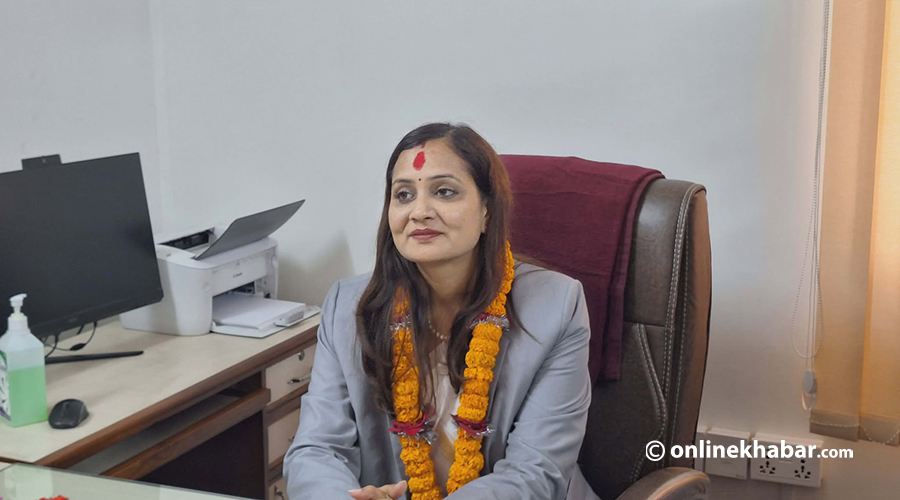
April 22, Kathmandu – The Health Insurance Board, already burdened by financial turmoil, is now facing a leadership vacuum. Following a ministerial decision by Health and Population Minister Nisha Mehta to transfer acting Executive Director Dr. Krishna Paudel back to Gajendranarayan Singh Hospital, the board has been left without leadership.

With no clear indication about who will take charge immediately, the board is currently in disarray. Due to the absence of explicit directives, Dr. Paudel is preparing to return to Gajendranarayan Hospital.

Earlier, on January 18, the former Executive Director Dr. Raghuraj Kafle resigned, citing his inability to continue in the post. Then Health Minister Dr. Sudha Sharma Gautam had appointed Dr. Paudel, Chief of the Ministry’s Policy, Planning and Monitoring Division, as acting executive director.

For the past three months, the board has remained without formal leadership. The government has yet to initiate the necessary procedures for appointing a new director. According to officials from the Ministry of Health, the executive director position must be filled through an open competition conducted by the Public Service Commission, which would take approximately two months after advertisement.

Responding to the transfer letter, Dr. Paudel stated that he has not received clear instructions to continue the health insurance operations.

“I am being transferred as an administrative deployment; I will leave once relieved,” Dr. Paudel said. “My transfer letter only mentions the transfer. As a government employee, I must go wherever assigned.”

Health and Population Minister Nisha Mehta

After taking over the ministry, Minister Mehta had engaged in discussions with representatives of the insurance board. During the talks, board officials reported that delays in claim payments to service provider hospitals have forced some hospitals to suspend insurance services.

Minister Mehta had also assured that the insurance program’s crisis would be resolved. However, with the board now leaderless, the situation has worsened.

With service provider hospitals awaiting billions in unpaid claims, the program is becoming ineffective. Some major hospitals have already discontinued services. The insurance program, which covers nearly 10 million citizens in Nepal, is on the brink of collapse due to failure to disburse billions to hospitals.

According to the latest Health Insurance Board report, the amount owed to service provider health institutions has exceeded 1.6 billion Nepalese rupees.

Daily insurance claims amount to roughly 80 million rupees. The board is under an additional financial burden averaging about 250 million rupees per month. To operate the program regularly, an annual budget of 2.5 to 2.6 billion rupees is required.

However, the gap between income and expenditure is stark. Annual premium collections from insured citizens stand at approximately 400 million rupees only. Even when combined with an annual government subsidy of 1 billion rupees, the total falls short of half the required expenditure.

According to Vivek Malla, the Information Officer of the insurance board, claims worth around 600 million rupees have been reviewed and payment approval documents forwarded from the Ministry of Health to the Ministry of Finance.

Claims worth about 1 billion rupees are still pending review. Malla stated that payments exceeding 1.6 billion rupees to service providers remain withheld.

He also disclosed that the funds in the board’s account have already been exhausted on prior payments.

“Currently, the board has no additional payment source,” Malla said. “It is difficult to provide a reliable timeline for when payments will be made.”

In the nearly ten years since the program began, interest in health insurance has grown. However, the number of those not renewing their insurance has risen sharply. To date, 9,874,415 citizens are enrolled, but only about 5,970,000 remain active. Out of all insured individuals, only roughly 60 percent remain active. Nearly 40 percent not renewing raises concerns about the program’s sustainability.

The insurance board warns that failure to address the financial crisis immediately could create more complex challenges. Due to non-payment, services are affected, leading to increased public dissatisfaction and declining renewal rates.

“Previously, the renewal rates ranged from 60 to 80 percent, but with services impacted, there is concern it could fall below 50 percent,” an official from the board said.

Across the country, over 505 health institutions provide services daily to 50,000 insured members. The rapid increase in claim submissions and the shortage of staff for claim reviews have created management challenges, according to the board.

Service usage rates are high. Approximately 93 percent of insured individuals have utilized some form of health service. In the fiscal year 2022/23, 89.1 percent utilized services, increasing to 92.4 percent in 2023/24 and 92.8 percent in 2024/25, according to the data.

A weak revenue base combined with rising claims has caused severe financial imbalance in the program, raising concerns over the long-term viability of health insurance.

One board employee described the current situation as extremely sensitive.

“Health insurance is in a critical condition. The board’s directors have not completed their tenure,” the employee said. “Without financial support from the government, the insurance program risks shutting down.”

On January 4, former Health Minister Dr. Sudha Sharma had complained to Prime Minister Sushila Karki about the Ministry of Finance’s lack of support.

Dr. Sharma expressed frustration about not receiving necessary assistance from the Finance Ministry despite her dedicated efforts.

“I earnestly request again before everyone: if financial grants are not provided, the insurance program will shut down,” Dr. Sharma warned. “In such a case, allow hospitals under the Health Ministry to close as well.”

Disputes had also arisen between Finance Secretary Ghanshyam Upadhyay and Minister Sharma. Upadhyay stated that the ongoing insurance program is not based on an ideal model and that the Finance Ministry cannot allocate additional budget. With the board’s leadership positions empty amid financial crisis, the insurance program faces increasing uncertainty.

Sudhan Gurung Resigns to Uphold Ministry’s Dignity, Thanks Supporters

Sudhan Gurung has resigned from his position as Home Minister to preserve the dignity of the ministry. Upon resigning, he stated, “For me, ethics outweigh the importance of any position.” He has taken seriously the questions raised by the public regarding shares and has called for a fair and impartial investigation. 9 Baisakh, Kathmandu.

Following controversies surrounding property and share transactions, Sudhan Gurung announced that his resignation was aimed at protecting the ministry’s reputation. Addressing ministry staff on Wednesday, he said, “I am very pleased with your capabilities. I was only able to bring them out. I want to thank everyone who supported me during this period. The dedication and hard work invested belong entirely to you.”

Gurung’s resignation has been welcomed by many. Resigning in the face of allegations as a demonstration of ethics and opening the door for investigation has been seen as a positive step. He wrote, “In recent days, I have taken seriously the questions, comments, and concerns raised by the public regarding my shares and other related matters. For me, ethics are far more important than any position. There is no power greater than public trust. I urge that the matters concerning me be investigated impartially.”

सांसदहरूलाई अब छुने छैन भ्रष्टाचार मुद्दाले – Online Khabar

Corruption Charges Will No Longer Affect Parliament Members Under New Rules

Summary

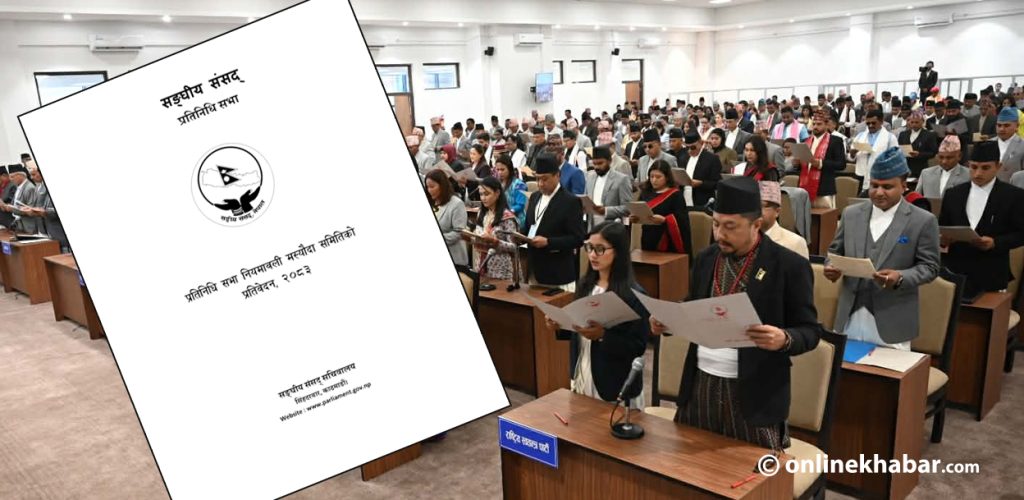
  • The draft of the House of Representatives Rules 2083 includes provisions that prevent suspension of MPs accused of corruption and money laundering.
  • According to Rule 247(3), MPs facing criminal charges carrying three years or more imprisonment will be suspended only if they are actually imprisoned.
  • The Rules establish their supremacy over existing laws, declaring themselves federal law and parliamentary privilege in case of any conflicts.

April 22, Kathmandu – The public uprising that began under the slogan of good governance initially led to the emergence of the Janakal movement. Subsequent general elections were also contested on the promise of good governance. Nearly two-thirds of the lawmakers from the Rastriya Swatantra Party (RSP), now members of the House of Representatives, had pledged to make ending corruption and malpractice their primary objective.

These lawmakers had accused traditional political parties of perpetuating malpractice and abusing parliamentary privileges. Many RSP leaders currently serving as MPs have accused Congress, UML, Maoist parties, and their leaders of enacting laws favoring themselves and exploiting coalition practices for policy-level corruption.

However, as soon as they secured a commanding majority in the House of Representatives, they took measures contrary to their earlier commitments. The Rastriya Swatantra Party drafted rules of procedure favoring their chairman, which contradict the country’s existing legal standards, as their first legislative act in parliament.

The draft rules include provisions exempting MPs accused of corruption and money laundering from suspension.

If these rules are enacted by the House, MPs facing or potentially facing corruption and money laundering charges will continue to perform their duties without suspension.

Among those benefiting most immediately from this arrangement will be RSP Chairperson Ravi Lamichhane.

Lamichhane, who is currently facing a money laundering case in the Kaski District Court, will be able to participate in parliamentary activities based on this new rules draft. In the future, MPs charged with corruption or money laundering will not be barred from performing their parliamentary roles.

Two Controversial Provisions

The draft rules prepared by the House of Representatives Rules Committee contain two significant provisions that legally facilitate MPs accused of abuses of power or economic crimes to remain in convenient positions.

Rule 247(3) of the draft differs from existing laws regarding suspension. It states that MPs will be suspended only if they are imprisoned in criminal cases punishable by three years or more, or where there is moral deterioration. The suspension lasts only during the period the MP is in prison.

This imposes two conditions: first, that the criminal offense carries a prison sentence of at least three years, and second, that the MP must actually be imprisoned. Suspension is limited to the imprisonment period only.
This provision contradicts several existing laws. Moreover, the draft declares that, in case of conflicts, these rules will take precedence as federal law and parliamentary privilege.

Rule 259 states, “Notwithstanding any provisions in existing law, these rules shall apply as federal law and remain as parliamentary privileges of the members.”

The rules also specify that MPs issued arrest warrants but who evade arrest and are absconding will be considered suspended. However, the judicial interpretation included in the draft covers cases from district courts up to the Supreme Court but excludes Special Courts.

Since Special Courts handle corruption and irregularity cases, excluding them potentially allows MPs convicted by Special Courts to evade suspension.

Conflicts With Three Existing Laws

If passed by the House, the rules draft is set to clash with at least three existing laws. Two of these have very similar provisions, while the third differs slightly.

The Anti-Corruption Act, 2059 (2002) Section 33(1) stipulates automatic suspension of persons accused of corruption, including public servants and MPs, either while imprisoned or until the case is resolved.

Similarly, Section 17 of the Commission for the Investigation of Abuse of Authority Act, 2048 (1991) provides for automatic suspension of public officials facing corruption charges, lasting the duration of imprisonment or until the case is adjudicated.
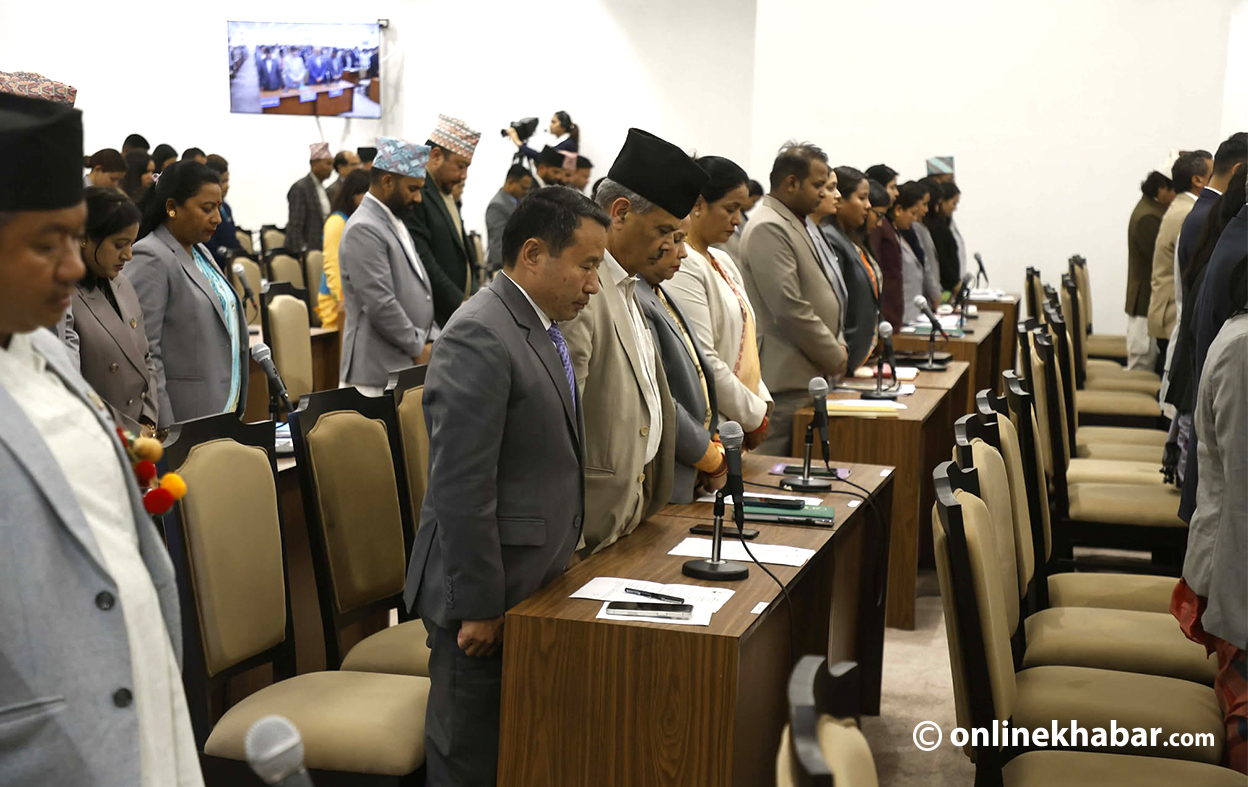
The Money Laundering (Offense and Punishment) Act also includes provisions for automatic suspension of public servants, including MPs, when cases are filed, as stated in Section 27.

These laws mean that public officials under prosecution or serving prison time should automatically be suspended.

Senior Advocate Tikaram Bhattarai argues that laws and rules contradicting the Constitution should not be made. All legal instruments must follow the principle of supremacy of the Constitution and legal hierarchy.

He explains, “If federal laws mandate automatic suspension of public officials, parliamentary rules cannot nullify that. Such provisions are constitutionally invalid.”

Impact of the Rules

Under the new draft rules, MPs who are not imprisoned will not be suspended, and even if convicted by Special Courts, suspension will not occur until the sentence is imprisonment.

This arrangement particularly benefits Rastriya Swatantra Party Chairperson Ravi Lamichhane, who is currently facing a money laundering case in Kaski District Court. The rules protect him from suspension.

Advocate Bhattarai comments that all citizens should be treated equally under the law, but these rules give special privileges to MPs, violating the principle of equality.

Law lecturer and Advocate Apoorva Khatri observes that MPs aim to portray themselves as persons of special status through these rules.

He adds, “If MPs want to avoid suspension, then relevant laws should be amended instead. The rules draft attempts to weaken existing laws.”

Given RSP’s large majority, these provisions are likely to pass easily, granting significant protection to MPs accused of corruption and money laundering in the future.

Two years ago, the Supreme Court ruled that Tek Bahadur Gurung, a Manang MP found guilty of corruption, would not be suspended, a decision met with widespread criticism.
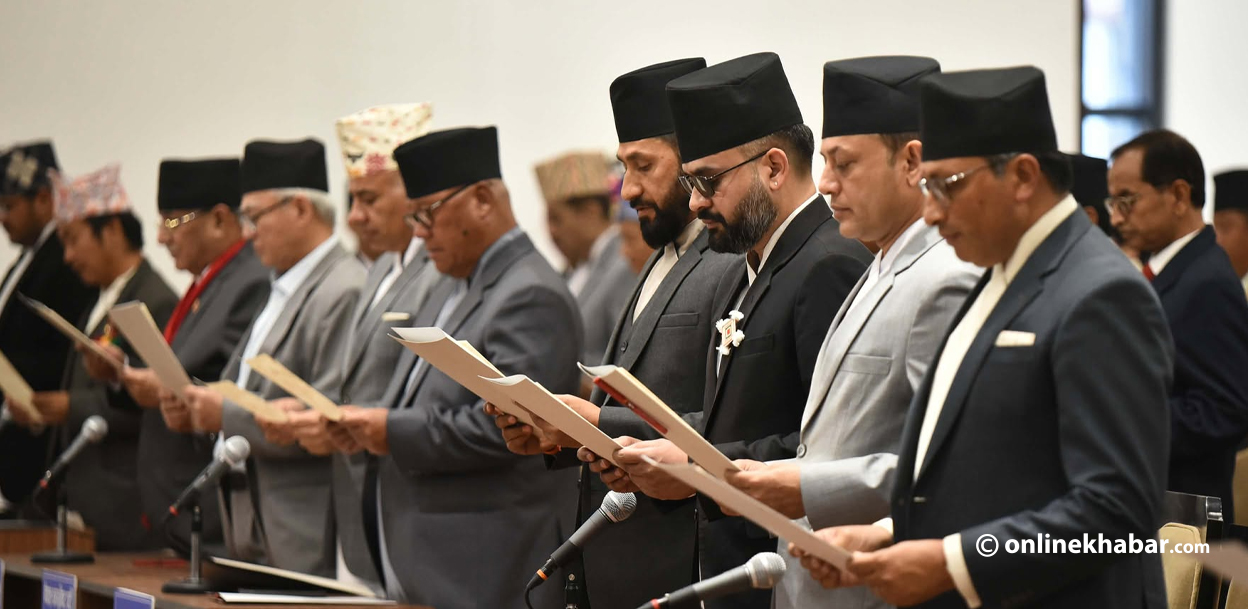
The Anti-Corruption Commission has filed a review petition to reverse that decision, which remains under consideration in the Supreme Court.

Even before the Commission’s request, the draft rules have institutionalized protections preventing suspension of MPs facing corruption and money laundering charges, easing their engagement with anti-corruption laws and the Commission’s oversight.

Senior Advocate Dr. Bhimarjun Acharya emphasizes that the Constitution, laws, rules, and directives must maintain supremacy collectively.

He notes, “In parliament, representatives exercise the people’s rights. The rules were designed to limit the MPs’ rights as per the people’s will.”

However, he adds that the people should not grant any party carte blanche to act without limits. Such rule provisions are inconsistent with the Constitution and laws.

Dr. Acharya insists, “Democracy requires extensive debate and discussion on such matters. Attempts to restrict these through courts should be avoided.”

Transactions of Property Valued Over NPR 30 Million Must Now Be Conducted Through Licensed Companies

Summary

Prepared by AI, editorially reviewed.

  • The government has mandated that property transactions valued above NPR 30 million must be conducted exclusively through authorized companies.
  • The Department of Land Management and Archives has instructed that transactions take place only via licensed companies.
  • With companies now mandatory, the removal of intermediaries at Land Revenue Offices is expected to simplify services for citizens.

April 22, Kathmandu – The government has decided to require all property transactions exceeding NPR 30 million to be conducted exclusively through licensed companies. This provision will be effective from Tuesday, mandating that all such deals be processed only through companies authorized to operate property transactions.

Following the election of a majority government after the democratic movement, the government has adopted a zero-tolerance policy toward corruption. In line with this policy, intermediary involvement in real estate transactions has been eliminated by making company-mediated transactions mandatory.

Shortly after the new government took office, police detained intermediaries operating within multiple Land Revenue Offices across the country. Due to unnecessary fees and various delays experienced at Land Revenue and Survey Offices, the policy now requires transactions to be conducted exclusively through licensed companies to improve services and transparency.

The Department of Land Management and Archives has issued instructions that property transactions be conducted only through companies or associations holding official permits, publishing a list of these approved entities. According to the department, six companies have permission to operate land services. While 69 companies have licenses for property transactions, only six are currently capable of conducting the required work.

The department has directed Land Revenue Offices in Kathmandu’s Kalanki and Chabahil, Dharan in Sunsari, Simara in Bara, Hetauda in Makwanpur, Bharatpur and Chanouli in Chitwan, Pokhara and Lekhnath in Kaski, Tulsipur in Dang, and Butwal in Rupandehi to implement this system.

Since the past Falgun (February-March), the regulations have stipulated that all property transactions valued over NPR 30 million within metropolitan and sub-metropolitan municipalities must be carried out only through permitted companies or associations.

According to Rule 23(Th.) of the Land Revenue Regulations, 2036 (8th amendment 2082), licensed individuals must operate land service centers and conduct transactions through a geospatial information system. Without permission to operate these centers, the directive could not be effectively implemented.

There had been a prevalent practice at Land Revenue Offices where employees worked under intermediaries and did not engage directly with clients, often charging extra fees. With the requirement for companies to conduct transactions, services are expected to become more accessible and transparent for consumers.

The Nepal Association of Chartered Accountants and Legal Professionals, Patan Branch, protested disciplinary actions taken against some Land Revenue Office staff. However, with intermediaries removed, direct service at the offices, which had been difficult, is expected to improve.

The involvement of licensed companies is believed to bring administrative improvements within Land Revenue Offices. Currently, clients must visit multiple accounting firms near the Land Revenue Office to complete tasks such as property purchase, sale, and surveying. Clients have complained that employees often refuse service without assistance from these firms.

All work at the Land Revenue Office is processed using the “Dolma” system, an online platform not readily accessible or user-friendly for the general public due to its complexity, making accounting assistance practically mandatory.

While employees have access to the system, and it is installed in Land Revenue Offices nationwide, staff members acknowledge it remains difficult for ordinary citizens to navigate.

Gagan Thapa Urges Dissatisfied Leaders: We Must Reconcile or There’s No Future

April 22, Kathmandu – Nepali Congress President Gagan Thapa has called for putting aside past disputes to strengthen unity within the party and move forward. Speaking at the Koshi Province-level election review program held in Biratnagar on Wednesday, President Thapa emphasized his commitment to uniting the party and progressing together. “Other leaders must also support me. We all need to move forward together. Issues of reconciliation must be resolved,” he said. “Where would we go if we remain divided? Even unity among ourselves is not sufficient.”

He stressed the necessity to collectively win back the 1 million voters who were disillusioned with the Congress and stayed away in the last election. “We must reach out to those 1 million voters, assure them that we will fulfill the expectations they have from Nepali Congress, and restore their trust,” he stated. Furthermore, President Thapa underlined the importance of special efforts to attract youth to the Congress. To this end, he announced that a campaign will be launched to engage supporters under 30 years of age with the party.

प्रश्न उठेपछि बहिर्गमन – Online Khabar

Home Minister Sudhan Gurung Resigns Amidst Emerging Questions

News Summary

Prepared after review.

  • Prime Minister Balendra Shah and Rastriya Swatantra Samajwadi Party (RSWP) Chairman Ravi Lamichhane have instructed Home Minister Sudhan Gurung to resign.
  • Gurung was removed after suspicious investments surfaced regarding two micro-insurance companies.
  • Upon submitting his resignation, Gurung called for a fair and impartial investigation into matters concerning him.

April 22, Kathmandu – Following instructions from Prime Minister Balendra Shah and RSWP Chairman Ravi Lamichhane to step down, Home Minister Sudhan Gurung has tendered his resignation. Gurung had been publicly clarifying questions raised against him, but suspicion over his investments in two micro-insurance companies led to a consensus between the Prime Minister and Chairman Lamichhane to remove him.

Initially, Gurung sought to retain his Home Minister position by offering clarifications solely within the party. However, when doubts arose regarding the government and RSWP’s commitment to good governance, his departure became inevitable. When preparations to remove him without resignation were underway, Gurung submitted his resignation at the Prime Minister’s Office Wednesday afternoon.

Gurung denied allegations regarding not disclosing micro-insurance shares in his asset declaration and claims about his relations with controversial businessman Deepak Bhatt.

“Purchasing shares does not equate to partnership. If that is the basis for fault, then everyone investing in those companies would be guilty, which is unjust,” he stated.

Though initially attempting to defend his position, Gurung chose to resign when he realized the party would not protect him. He said, “I will fully abide by the party’s decisions on this matter and stand ready to cooperate with investigations.”

Since Sunday, media outlets have reported on Gurung’s ties with controversial individuals and opaque financial sources, prompting questions about governance directed at both the minister and the RSWP from civil society.

Though the issue was not formally discussed in Monday’s central committee meeting, Chairman Lamichhane said the party engaged in serious debate on the matter.

After the meeting, Lamichhane remarked, “He provided clarifications. The matter is under study and the party will decide accordingly. Whatever happens, it will be lawful—we will not allow wrongdoings.”

Questions also surfaced concerning the dismissal of former Minister Deepak Kumar Sah during the study of Gurung’s case.

Amid growing pressure on the party, the Home Ministry, and the government over these cases, Gurung reportedly met repeatedly with Chairman Lamichhane. According to party leaders, Lamichhane was inclined towards securing Gurung’s resignation from the start.

Sources within the RSWP indicate that Prime Minister Balendra Shah was initially opposed to Gurung’s resignation but ultimately agreed to his removal to safeguard good governance.

“Yesterday, Labour Minister Deepak Sah was removed, and today the same should apply to Gurung; this is another example,” a senior leader said.

Former Labour Minister Sah was swiftly dismissed without being given a chance to explain himself.

Sah fell into controversy after appointing his wife to the Health Insurance Board member post, which led to his removal and a warning to Health Minister Nisha Mehtal.

Though Gurung held the powerful Home Ministry for 26 days, he too eventually had to step down, compared to Sah’s tenure of just 13 days.

While swift action was taken against former Minister Sah, both Prime Minister Shah and Chairman Lamichhane directed Gurung to resign. Sources confirm Lamichhane’s strong insistence on this course.

Chairman Lamichhane had recommended former Labour Minister’s dismissal to the Prime Minister based on a letter from the Disciplinary Commission. However, the party has not publicly disclosed whether the Disciplinary Committee has sought explanations from Gurung following his resignation.

After recurring meetings between Chairman Lamichhane and Gurung at Budhanilkantha, and a meeting between the Prime Minister and Chairman, Gurung decided to submit his resignation.

A party leader shared, “No other leaders were consulted. Sudhan resigned following dialogue between the Chairman and the Prime Minister.”

Ordered by Prime Minister Shah and Chairman Lamichhane to resign Wednesday morning, Gurung was compelled to relinquish his post. In his resignation letter, he wrote, “I am resigning to ensure a fair investigation concerning matters related to me and to avoid any conflict of interest during my tenure.”

In accordance with the party constitution’s “Right to Recall” clause, Chairman Lamichhane approved the reinstatement of former Labour Minister Sah.

This time, even without a formal letter to the Prime Minister, Lamichhane vowed equal treatment for all. After the party meeting, he said, “The right to recall is not for one individual but for all.”

A RSWP secretariat member added, “Citizens voted for us to ensure good governance, and we are committed to that. We expressed that studies were ongoing, but the public was unwilling to wait a single day. We have fulfilled their expectations.”

Farmers Demand Pension and Land Management Bank Amid Calls for Organic Agriculture Transition

The Agriculture Campaign for Food Security has proposed a transitional plan to shift from chemical to organic farming and urged the government to adopt it. The campaign demands social security measures for farmers, including pension schemes, farmer credit cards, agricultural insurance, and concessional loan facilities. To implement the food sovereignty guaranteed by the constitution, the campaign has called for immediate national consensus and the formulation of a federal agricultural act. Kathmandu, 23 April – Criticizing the recently released “National Commitment Document” for its inability to comprehensively develop agriculture, the Agriculture Campaign for Food Security has submitted a detailed policy and structural reform proposal to the government.

The campaign warns that the current agriculture system reliant on chemical fertilizers and pesticides severely harms soil fertility and human health. It has urged the government to immediately shift to “organic, environmental-friendly agriculture.” Coordinator Uddhav Adhikari emphasized the need for agricultural self-reliance by learning lessons from the instability caused by the COVID-19 pandemic and global geopolitical conflicts. To this end, the campaign highlights the importance of strengthening local production, indigenous crops, price regulation, and a cyclical supply system with an import substitution objective.

The proposal suggests a gradual, carefully planned transition from chemical to organic farming, rather than an abrupt ban, under a clearly defined “transitional work plan.” It advocates establishing local industries for organic fertilizers, compost, and green manure domestically as alternatives to artificial fertilizers and providing subsidies to farmers for their use. Further, it recommends incentives such as tax exemptions and customs reliefs for agriculture enterprises focusing on environmentally friendly production.

Regarding the rapid destruction of arable land amid concerns about land subdivision, the campaign demands strict land-use policies. It proposes forming a “Land Management Bank” in coordination with local authorities to conserve farmland and effectively utilize fallow land. The campaign calls for halting fragmentation, prioritizing consolidation and zoning, and strictly prohibiting the conversion of cultivable land for non-agricultural purposes under any circumstances.

To promote sustainable livelihoods based on land productivity, the campaign advises defining the minimum farm size required to maintain a living. It also suggests that farmers cultivating less than this size voluntarily should not be given priority under preferential schemes. The proposal calls for developing a positive social perception of agriculture by establishing plans that connect farmers, including youth, not just as a livelihood but as a “respected social enterprise.”

To realize this, the campaign stresses the need for proper identification and classification of genuine farmers and the implementation of “Farmer Pension,” “Farmer Credit Card,” agricultural insurance, and concessional loan arrangements. It also emphasizes prioritizing smallholder, landless, marginalized, and women farmers in state subsidies and market access.

For ensuring sovereignty over organic mapping and seeds, the campaign recommends using scientific and digital technologies, including GIS, to map agricultural biodiversity, indigenous seeds and crops, and soil status nationwide. This data should help prioritize agricultural sectors and target subsidies effectively. It proposes establishing a “Community Seed Bank” in every local government to secure farmers’ seed rights and promote the preservation and genetic improvement of indigenous seeds.

The campaign further advocates incorporating food production and agriculture as compulsory subjects from primary school onward through an integrated system to connect students with soil and labor. It calls for higher education to focus on organic and indigenous agricultural research.

In addition, it urges the abolition or adjustment of ineffective existing agricultural structures to create more powerful institutions and retraining unproductive manpower for deployment at the ward level. To eliminate duplication in government, non-governmental, and donor-funded agricultural programs, the campaign emphasizes utilizing resources effectively through a “single-window system.”

Alongside the demand for a federal agricultural act, the campaign highlights the importance of climate change risk reduction by promoting small-scale irrigation, rainwater harvesting, and perennial crops. It calls for developing geographic and biological region-specific production indicators and establishing agricultural value chains accordingly.

Having promoted sustainable agriculture and food systems for 15 years, the campaign outlines a phased plan emphasizing short-term production increases, medium-term sustainable infrastructure development, and long-term promotion of cyclical industries. To implement the constitutionally guaranteed food sovereignty, it urges the government and relevant stakeholders to urgently establish national consensus and enact the federal agricultural act.