Author: space4knews

Transactions of Property Valued Over NPR 30 Million Must Now Be Conducted Through Licensed Companies

Summary

Prepared by AI, editorially reviewed.

  • The government has mandated that property transactions valued above NPR 30 million must be conducted exclusively through authorized companies.
  • The Department of Land Management and Archives has instructed that transactions take place only via licensed companies.
  • With companies now mandatory, the removal of intermediaries at Land Revenue Offices is expected to simplify services for citizens.

April 22, Kathmandu – The government has decided to require all property transactions exceeding NPR 30 million to be conducted exclusively through licensed companies. This provision will be effective from Tuesday, mandating that all such deals be processed only through companies authorized to operate property transactions.

Following the election of a majority government after the democratic movement, the government has adopted a zero-tolerance policy toward corruption. In line with this policy, intermediary involvement in real estate transactions has been eliminated by making company-mediated transactions mandatory.

Shortly after the new government took office, police detained intermediaries operating within multiple Land Revenue Offices across the country. Due to unnecessary fees and various delays experienced at Land Revenue and Survey Offices, the policy now requires transactions to be conducted exclusively through licensed companies to improve services and transparency.

The Department of Land Management and Archives has issued instructions that property transactions be conducted only through companies or associations holding official permits, publishing a list of these approved entities. According to the department, six companies have permission to operate land services. While 69 companies have licenses for property transactions, only six are currently capable of conducting the required work.

The department has directed Land Revenue Offices in Kathmandu’s Kalanki and Chabahil, Dharan in Sunsari, Simara in Bara, Hetauda in Makwanpur, Bharatpur and Chanouli in Chitwan, Pokhara and Lekhnath in Kaski, Tulsipur in Dang, and Butwal in Rupandehi to implement this system.

Since the past Falgun (February-March), the regulations have stipulated that all property transactions valued over NPR 30 million within metropolitan and sub-metropolitan municipalities must be carried out only through permitted companies or associations.

According to Rule 23(Th.) of the Land Revenue Regulations, 2036 (8th amendment 2082), licensed individuals must operate land service centers and conduct transactions through a geospatial information system. Without permission to operate these centers, the directive could not be effectively implemented.

There had been a prevalent practice at Land Revenue Offices where employees worked under intermediaries and did not engage directly with clients, often charging extra fees. With the requirement for companies to conduct transactions, services are expected to become more accessible and transparent for consumers.

The Nepal Association of Chartered Accountants and Legal Professionals, Patan Branch, protested disciplinary actions taken against some Land Revenue Office staff. However, with intermediaries removed, direct service at the offices, which had been difficult, is expected to improve.

The involvement of licensed companies is believed to bring administrative improvements within Land Revenue Offices. Currently, clients must visit multiple accounting firms near the Land Revenue Office to complete tasks such as property purchase, sale, and surveying. Clients have complained that employees often refuse service without assistance from these firms.

All work at the Land Revenue Office is processed using the “Dolma” system, an online platform not readily accessible or user-friendly for the general public due to its complexity, making accounting assistance practically mandatory.

While employees have access to the system, and it is installed in Land Revenue Offices nationwide, staff members acknowledge it remains difficult for ordinary citizens to navigate.

Gagan Thapa Urges Dissatisfied Leaders: We Must Reconcile or There’s No Future

April 22, Kathmandu – Nepali Congress President Gagan Thapa has called for putting aside past disputes to strengthen unity within the party and move forward. Speaking at the Koshi Province-level election review program held in Biratnagar on Wednesday, President Thapa emphasized his commitment to uniting the party and progressing together. “Other leaders must also support me. We all need to move forward together. Issues of reconciliation must be resolved,” he said. “Where would we go if we remain divided? Even unity among ourselves is not sufficient.”

He stressed the necessity to collectively win back the 1 million voters who were disillusioned with the Congress and stayed away in the last election. “We must reach out to those 1 million voters, assure them that we will fulfill the expectations they have from Nepali Congress, and restore their trust,” he stated. Furthermore, President Thapa underlined the importance of special efforts to attract youth to the Congress. To this end, he announced that a campaign will be launched to engage supporters under 30 years of age with the party.

प्रश्न उठेपछि बहिर्गमन – Online Khabar

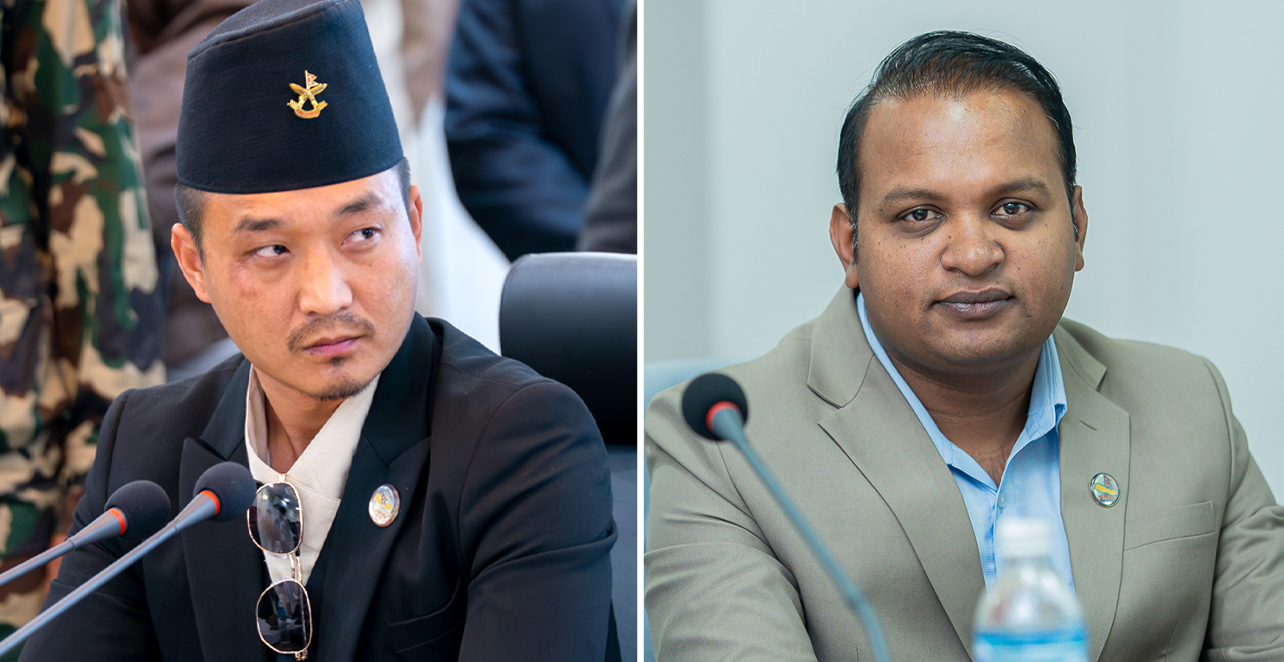
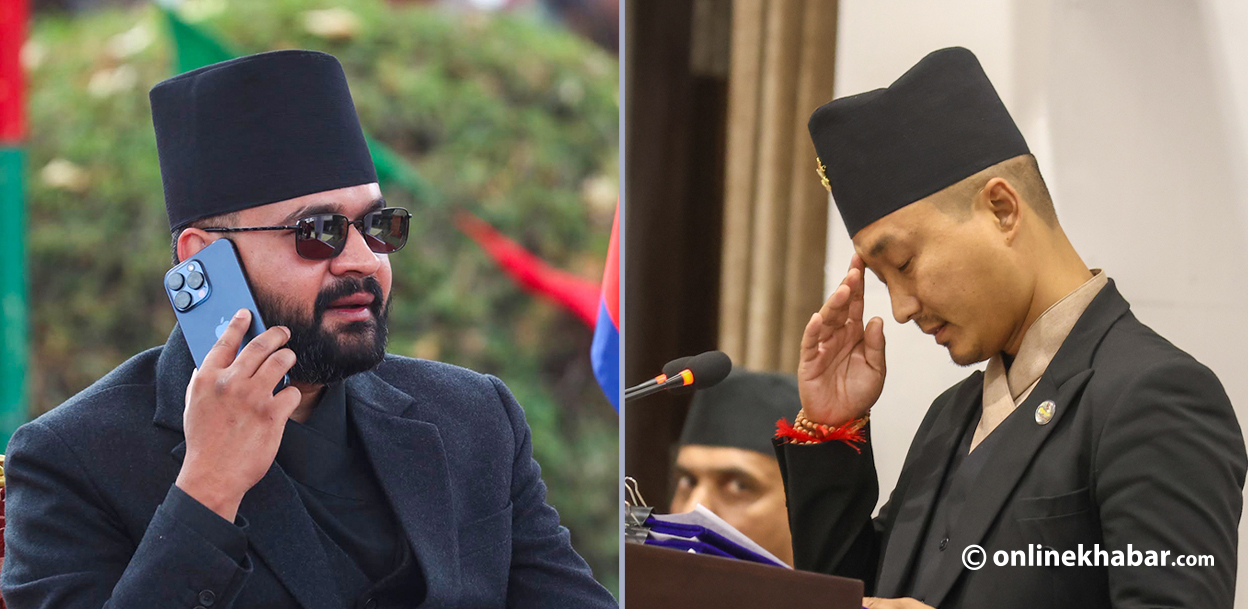
Home Minister Sudhan Gurung Resigns Amidst Emerging Questions

News Summary

Prepared after review.

  • Prime Minister Balendra Shah and Rastriya Swatantra Samajwadi Party (RSWP) Chairman Ravi Lamichhane have instructed Home Minister Sudhan Gurung to resign.
  • Gurung was removed after suspicious investments surfaced regarding two micro-insurance companies.
  • Upon submitting his resignation, Gurung called for a fair and impartial investigation into matters concerning him.

April 22, Kathmandu – Following instructions from Prime Minister Balendra Shah and RSWP Chairman Ravi Lamichhane to step down, Home Minister Sudhan Gurung has tendered his resignation. Gurung had been publicly clarifying questions raised against him, but suspicion over his investments in two micro-insurance companies led to a consensus between the Prime Minister and Chairman Lamichhane to remove him.

Initially, Gurung sought to retain his Home Minister position by offering clarifications solely within the party. However, when doubts arose regarding the government and RSWP’s commitment to good governance, his departure became inevitable. When preparations to remove him without resignation were underway, Gurung submitted his resignation at the Prime Minister’s Office Wednesday afternoon.

Gurung denied allegations regarding not disclosing micro-insurance shares in his asset declaration and claims about his relations with controversial businessman Deepak Bhatt.

“Purchasing shares does not equate to partnership. If that is the basis for fault, then everyone investing in those companies would be guilty, which is unjust,” he stated.

Though initially attempting to defend his position, Gurung chose to resign when he realized the party would not protect him. He said, “I will fully abide by the party’s decisions on this matter and stand ready to cooperate with investigations.”

Since Sunday, media outlets have reported on Gurung’s ties with controversial individuals and opaque financial sources, prompting questions about governance directed at both the minister and the RSWP from civil society.

Though the issue was not formally discussed in Monday’s central committee meeting, Chairman Lamichhane said the party engaged in serious debate on the matter.

After the meeting, Lamichhane remarked, “He provided clarifications. The matter is under study and the party will decide accordingly. Whatever happens, it will be lawful—we will not allow wrongdoings.”

Questions also surfaced concerning the dismissal of former Minister Deepak Kumar Sah during the study of Gurung’s case.

Amid growing pressure on the party, the Home Ministry, and the government over these cases, Gurung reportedly met repeatedly with Chairman Lamichhane. According to party leaders, Lamichhane was inclined towards securing Gurung’s resignation from the start.

Sources within the RSWP indicate that Prime Minister Balendra Shah was initially opposed to Gurung’s resignation but ultimately agreed to his removal to safeguard good governance.

“Yesterday, Labour Minister Deepak Sah was removed, and today the same should apply to Gurung; this is another example,” a senior leader said.

Former Labour Minister Sah was swiftly dismissed without being given a chance to explain himself.

Sah fell into controversy after appointing his wife to the Health Insurance Board member post, which led to his removal and a warning to Health Minister Nisha Mehtal.

Though Gurung held the powerful Home Ministry for 26 days, he too eventually had to step down, compared to Sah’s tenure of just 13 days.

While swift action was taken against former Minister Sah, both Prime Minister Shah and Chairman Lamichhane directed Gurung to resign. Sources confirm Lamichhane’s strong insistence on this course.

Chairman Lamichhane had recommended former Labour Minister’s dismissal to the Prime Minister based on a letter from the Disciplinary Commission. However, the party has not publicly disclosed whether the Disciplinary Committee has sought explanations from Gurung following his resignation.

After recurring meetings between Chairman Lamichhane and Gurung at Budhanilkantha, and a meeting between the Prime Minister and Chairman, Gurung decided to submit his resignation.

A party leader shared, “No other leaders were consulted. Sudhan resigned following dialogue between the Chairman and the Prime Minister.”

Ordered by Prime Minister Shah and Chairman Lamichhane to resign Wednesday morning, Gurung was compelled to relinquish his post. In his resignation letter, he wrote, “I am resigning to ensure a fair investigation concerning matters related to me and to avoid any conflict of interest during my tenure.”

In accordance with the party constitution’s “Right to Recall” clause, Chairman Lamichhane approved the reinstatement of former Labour Minister Sah.

This time, even without a formal letter to the Prime Minister, Lamichhane vowed equal treatment for all. After the party meeting, he said, “The right to recall is not for one individual but for all.”

A RSWP secretariat member added, “Citizens voted for us to ensure good governance, and we are committed to that. We expressed that studies were ongoing, but the public was unwilling to wait a single day. We have fulfilled their expectations.”

Farmers Demand Pension and Land Management Bank Amid Calls for Organic Agriculture Transition

The Agriculture Campaign for Food Security has proposed a transitional plan to shift from chemical to organic farming and urged the government to adopt it. The campaign demands social security measures for farmers, including pension schemes, farmer credit cards, agricultural insurance, and concessional loan facilities. To implement the food sovereignty guaranteed by the constitution, the campaign has called for immediate national consensus and the formulation of a federal agricultural act. Kathmandu, 23 April – Criticizing the recently released “National Commitment Document” for its inability to comprehensively develop agriculture, the Agriculture Campaign for Food Security has submitted a detailed policy and structural reform proposal to the government.

The campaign warns that the current agriculture system reliant on chemical fertilizers and pesticides severely harms soil fertility and human health. It has urged the government to immediately shift to “organic, environmental-friendly agriculture.” Coordinator Uddhav Adhikari emphasized the need for agricultural self-reliance by learning lessons from the instability caused by the COVID-19 pandemic and global geopolitical conflicts. To this end, the campaign highlights the importance of strengthening local production, indigenous crops, price regulation, and a cyclical supply system with an import substitution objective.

The proposal suggests a gradual, carefully planned transition from chemical to organic farming, rather than an abrupt ban, under a clearly defined “transitional work plan.” It advocates establishing local industries for organic fertilizers, compost, and green manure domestically as alternatives to artificial fertilizers and providing subsidies to farmers for their use. Further, it recommends incentives such as tax exemptions and customs reliefs for agriculture enterprises focusing on environmentally friendly production.

Regarding the rapid destruction of arable land amid concerns about land subdivision, the campaign demands strict land-use policies. It proposes forming a “Land Management Bank” in coordination with local authorities to conserve farmland and effectively utilize fallow land. The campaign calls for halting fragmentation, prioritizing consolidation and zoning, and strictly prohibiting the conversion of cultivable land for non-agricultural purposes under any circumstances.

To promote sustainable livelihoods based on land productivity, the campaign advises defining the minimum farm size required to maintain a living. It also suggests that farmers cultivating less than this size voluntarily should not be given priority under preferential schemes. The proposal calls for developing a positive social perception of agriculture by establishing plans that connect farmers, including youth, not just as a livelihood but as a “respected social enterprise.”

To realize this, the campaign stresses the need for proper identification and classification of genuine farmers and the implementation of “Farmer Pension,” “Farmer Credit Card,” agricultural insurance, and concessional loan arrangements. It also emphasizes prioritizing smallholder, landless, marginalized, and women farmers in state subsidies and market access.

For ensuring sovereignty over organic mapping and seeds, the campaign recommends using scientific and digital technologies, including GIS, to map agricultural biodiversity, indigenous seeds and crops, and soil status nationwide. This data should help prioritize agricultural sectors and target subsidies effectively. It proposes establishing a “Community Seed Bank” in every local government to secure farmers’ seed rights and promote the preservation and genetic improvement of indigenous seeds.

The campaign further advocates incorporating food production and agriculture as compulsory subjects from primary school onward through an integrated system to connect students with soil and labor. It calls for higher education to focus on organic and indigenous agricultural research.

In addition, it urges the abolition or adjustment of ineffective existing agricultural structures to create more powerful institutions and retraining unproductive manpower for deployment at the ward level. To eliminate duplication in government, non-governmental, and donor-funded agricultural programs, the campaign emphasizes utilizing resources effectively through a “single-window system.”

Alongside the demand for a federal agricultural act, the campaign highlights the importance of climate change risk reduction by promoting small-scale irrigation, rainwater harvesting, and perennial crops. It calls for developing geographic and biological region-specific production indicators and establishing agricultural value chains accordingly.

Having promoted sustainable agriculture and food systems for 15 years, the campaign outlines a phased plan emphasizing short-term production increases, medium-term sustainable infrastructure development, and long-term promotion of cyclical industries. To implement the constitutionally guaranteed food sovereignty, it urges the government and relevant stakeholders to urgently establish national consensus and enact the federal agricultural act.

Nepal Communist Party Celebrates 77th Establishment Day at UML Headquarters in Chyasal

The Nepal Communist Party UML commemorated the 77th establishment day of the Nepal Communist Party on 23 April in Kathmandu. The UML organized a special ceremony at the party headquarters in Chyasal.

Chairman KP Sharma Oli, along with top leaders, participated in the event. Vice Presidents Ram Bahadur Thapa, Bishnu Paudel, and General Secretary Shankar Pokharel delivered speeches during the ceremony.

They emphasized the need for unity and collective effort to breathe new life into the party. Numerous other party leaders were also present at the event held on 23 April in Kathmandu.

रातो पासपोर्ट प्रयोगमा सांसदहरूको ‘अतिरिक्त मोह’

Special Interest Among MPs in Diplomatic Passports

April 22, Kathmandu – A discussion held on Wednesday involving the Speaker of the House of Representatives, chief whips, whips, and members of various parties concluded with the decision to strictly enforce current laws regarding diplomatic passport recommendations and usage in the short term, while initiating necessary amendments in the long term.

According to Khushbu Oli, Chief Whip of the Rastriya Prajatantra Party (RPP), Speaker Dol Prasad Aryal convened the meeting due to increasing demands for diplomatic passports from members of the House of Representatives across all parties.

Following the election held in Falgun, newly elected MPs have submitted applications for diplomatic passports to the Federal Parliament Secretariat. Ekram Giri, spokesperson for the Secretariat, stated, “Three or four MPs have applied for diplomatic passports.” Diplomatic passports are issued to the President, Vice President, Prime Minister, Chief Justice, Ministers, federal and provincial MPs, Vice-Chairs of the National Planning Commission, Supreme Court Justices, Mayors and Deputy Mayors of metropolitan cities, among others. Based on recommendations from the Secretariat, the Ministry of Foreign Affairs issues diplomatic notes for diplomatic passports, after which visa processing proceeds.

Possession of a diplomatic passport (red passport) does not guarantee visa issuance. However, officials from the Ministry of Foreign Affairs have noted unnecessary interest among some MPs in obtaining diplomatic passports. “According to the Passport Act and regulations, only designated officials assigned special government tasks are eligible for diplomatic passports,” Chief Whip Oli told reporters after the discussion. “But since many honorable members need to travel abroad for various reasons and current provisions do not accommodate this, representatives from various parties were invited to discuss how facilitation can be improved in the future.”

Legal provisions restrict diplomatic passport usage strictly to official government travel. The Passport Act permits issuance of diplomatic passports when the concerned ministry, constitutional body, or secretariat provides decisions or recommendations for officials traveling abroad for official or special tasks. Nevertheless, some MPs have reportedly sought recommendations from the Federal Parliament Secretariat even for personal travel purposes. A senior official from the Secretariat, speaking under anonymity, said, “We have informed them that such requests do not comply with existing laws, and discussions on amendments are underway.”

According to Henley & Partners, an international company offering immigration consultancy, Nepal’s passport ranks 96th with 35 visa-free or visa-on-arrival destinations as of July 2025, slightly improved from 95th place with 38 points previously. This time, federal MPs are demanding pathways that would allow use of diplomatic passports even for personal trips. Experts say that misuse of passports and impunity have contributed to the weakening of Nepal’s passport strength.

As mentioned, diplomatic passports are issued to the President, Vice President, Prime Minister, Chief Justice, Ministers, federal and provincial MPs, Vice-Chairs of the National Planning Commission, Supreme Court Justices, Mayors, and Deputy Mayors of metropolitan cities. Misuse is especially prevalent among federal MPs, including failure to return diplomatic passports and using them for personal matters. Former parliamentarians Shivpujan Rai, Gayatri Sah, and Vishwanath Yadav were found by the courts to be involved in selling such passports. Sources confirm that federal MPs have again requested the option to use diplomatic passports for personal travel.

At the discussion attended by the Speaker, chief whips, and whips, Foreign Secretary Amrit Rai emphasized that according to the Passport Act 2019 and Passport Rules 2020, diplomatic passports should be used strictly for official or special purposes. He highlighted the need to find solutions to practical issues encountered during visa procedures. Padma Prasad Pandey, Secretary-General of the Federal Parliament, stressed that passports should not be used for purposes beyond what is authorized. He suggested that diplomatic passports be used for government work and ordinary passports for private travel, as stated in a press release issued by the Speaker’s Secretariat. Currently, legal provisions mandate penalties if passports are used outside the designated purpose.

Until 1992 BS, the Ministry of Foreign Affairs stationed staff at Tribhuvan International Airport to retrieve diplomatic passports used illegally. However, officials say the Ministry no longer deploys personnel for this task, and returns of diplomatic passports have become rare. Except in unusual cases, most passport holders do not seem aware that diplomatic passports must be returned upon completion of their designated purpose. Former Foreign Minister Pradip Gyawali stresses that diplomatic passports are tied to the country’s prestige and should be carefully regulated by the Parliament. He states, “This is not a luxury; it is issued based on the dignity of the country and Parliament. It is appropriate to use an ordinary passport for personal travel.”

Google Wallet Now Displays Live Flight Information Directly on Lock Screen

Google Wallet has introduced a new ‘Live Updates’ feature for air travelers, providing real-time flight information. Users running Android 16 or later will be able to view flight departure times and estimated arrivals directly on their phone’s lock screen. This feature eliminates the need to repeatedly check emails or apps for updates on flight delays, gate changes, or cancellations.

April 21, Kathmandu – Enhancing its services, Google Wallet has added a ‘Live Updates’ feature specifically designed for air travelers. Previously used mainly for storing credit cards, government IDs, and event tickets, the wallet now offers real-time updates on flight statuses.

This new feature is especially useful for those with Android 16 or newer operating systems. It allows users to conveniently see departure times, flight duration, and estimated arrival times on their phone’s lock screen or always-on display. During travel, unexpected changes such as delays, gate switches, or cancellations will be communicated promptly without requiring users to constantly check emails or various apps.

Once users book a flight, all essential details—including a QR code and live flight information—will be available in Google Wallet. This makes it easier and faster to access crucial travel information during busy schedules. To fully benefit from this feature, Android 16 users must update their Google Wallet and related services.

High Court Upholds Imprisonment Sentence for Ward Chairperson

April 21, Pokhara – The High Court in Pokhara has upheld the prison sentence previously handed down by the Kaski District Court against Bharat Bahadur Adhikari, the ward chairperson of Ward No. 24 in Pokhara Metropolitan City, on charges of caste-based discrimination. Ward member Maiya Nepali had filed the case on January 19, 2023, accusing Chairperson Adhikari of caste discrimination and mistreatment.

The bench of Judge Avani Mainali Bhattarai at the District Court convicted Adhikari on December 21, 2023, sentencing him to four months in prison and ordering him to pay NPR 10,000 in compensation to the complainant. Adhikari had appealed this verdict to the High Court.

Subsequently, the High Court, led by Judges Anju Upreti Dhakal and Merina Shrestha, confirmed the district court’s verdict. Under the Caste-Based Discrimination and Untouchability Act, 2011 (2068), offenders face imprisonment of up to three months and fines of up to NPR 50,000. For individuals holding public office, penalties may increase by 50 percent. Accordingly, Adhikari was sentenced to four and a half months of imprisonment, fined NPR 75,000, and ordered to pay NPR 10,000 in compensation to the complainant.

The controversy arose after Chairperson Adhikari diverted budget funds designated for the Dalit community for other purposes, which Nepali protested. Following this, she faced caste-based verbal abuse and derogatory language from Adhikari. After Nepali filed a police complaint seeking justice, Adhikari was arrested and held for 15 days during police investigation before the case was brought to the district court. He was released on NPR 150,000 bail by the bail bench.

Ward member Nepali expressed that although delayed, justice has been served. She stated, “The mistreatment stemmed from my being Dalit and was an insult to the entire community. The court’s ruling has provided relief. I feared what others might do if I remained silent. This is the experience I and my community have endured for years without significant change. Now, I have raised my voice, refusing to remain silent any longer.”

लखनउलाई हराउँदै राजस्थान दोस्रो स्थानमा उक्लियो – Online Khabar

Rajasthan Royals Rise to Second Place with Fifth Win, Defeat Lucknow Super Giants

Rajasthan Royals secured their fifth victory in the IPL by defeating Lucknow Super Giants by 40 runs. Rajasthan scored 159 runs for the loss of 6 wickets in their 20 overs, while Lucknow were bowled out for 119 runs in 18 overs. Jofra Archer took 3 wickets conceding just 20 runs in 4 overs, and Ravindra Jadeja remained unbeaten on 43 runs.

On April 22, in Kathmandu, Rajasthan Royals climbed to second place in the Indian Premier League (IPL) points table with 10 points after defeating Lucknow Super Giants by 40 runs on Wednesday. Chasing a target of 160 runs set by Rajasthan, Lucknow were dismissed for 119 runs in 18 overs. Mitchell Marsh scored a half-century but it was insufficient for a win. He made the highest score of 55 runs off 41 balls.

Nicholas Pooran contributed 22 runs, and Himmat Singh scored 15. The rest of the Lucknow players failed to reach double figures. For Rajasthan, Jofra Archer picked up 3 wickets for 20 runs in his 4 overs. Nandre Burger and Brijesh Sharma each took 2 wickets, while Ravindra Jadeja and Ravi Bishnoi took 1 wicket apiece. After losing the toss, Rajasthan batted first and posted 159 runs for 6 wickets in 20 overs.

Despite a poor start, Rajasthan managed to post a competitive total. Yashasvi Jaiswal scored 22, Vaibhav Suryawanshi made 8, and Dhruv Jurel was dismissed without scoring, leaving Rajasthan at 32 for 3. Captain Riyan Parag scored 20, and Shimron Hetmyer got out for 22 runs. Ravindra Jadeja scored a crucial unbeaten 43 runs, including 20 runs in the final over. Donovan Ferreira and Shubham Dube added 20 and 19 runs respectively. For Lucknow, Mohammad Shami, Prince Yadav, and Mohsin Khan took 2 wickets each. Rajasthan now have 10 points from 7 matches, securing their position in second place. Punjab leads the table with 11 points from 8 matches. The defeated Lucknow Super Giants remain at ninth place with 4 points from 7 games.

Labour Assistance Desk Established at Tribhuvan International Airport for Migrant Workers

The Ministry of Labour, Employment and Social Security has established a ‘Labour Assistance Desk’ at Tribhuvan International Airport to assist workers departing for foreign employment. Staff at this desk provide essential information on visas, tickets, fees, and legal procedures. The desk also offers free support and necessary contacts for handling the repatriation of deceased Nepali workers from abroad. Kathmandu, 9 Baishakh.

The Labour Assistance Desk was set up at Tribhuvan International Airport to facilitate migrant workers going abroad for employment. According to the Ministry of Labour, Employment and Social Security, the desk operates through cooperation among the Ministry, Department of Foreign Employment, Foreign Employment Board, and related agencies. The desk has been established following a ministerial decision to promote the welfare and rights of migrant workers.

Employees from the Ministry, Department, and Board stationed at the desk provide information regarding visa procedures, free visas, free tickets, fees paid through manpower agencies, and issues concerning workers’ employment status. Bhim Bahadur Basnet, Branch Officer of the Department of Foreign Employment at the assistance desk, stated, “The purpose of establishing this desk is to ensure that workers complete the necessary legal processes and travel smoothly when going for foreign employment.”

Since its launch on Tuesday, the assistance desk has attracted significant interest, particularly from returning workers and those planning to re-deploy abroad. Ministry spokesperson Pitambar Ghimire said, “This assistance desk was created to prevent migrant workers from falling victim to fraud under any pretext.” While the desk was built with funding from the Social Security Fund, its effectiveness has been limited due to challenges in further organizing the facility.

Linguist Gopal Thakur’s Perspective: Need for Language Reforms through Constitutional Amendments

Dr. Gopal Thakur has stated that although Nepal’s languages are recognized under fundamental rights in the constitution, the state has not shown adequate sensitivity on this issue. According to Article 7 (1) of the constitution, only the Nepali language is designated as the official language for government affairs, which he believes requires revision. He informed that the Language Commission recommended to the government on October 24, 2023, for constitutional amendments and the formulation of language-related laws.

April 22, Kathmandu – Thakur said, “Even though the constitution includes the languages spoken in Nepal under fundamental rights, the state has not demonstrated sufficient sensitivity on this issue since its inception.” He has been serving as the Chairperson of the Language Commission since March 2023 and is set to retire this coming Thursday due to age limits.

Having also been a member of the Constituent Assembly, Thakur pointed out that the provision in Article 7 (1) of the constitution stating, ‘The Nepali language written in Devanagari script shall be the official language of Nepal,’ establishes a single language as official and requires amendment. Although Nepal is a multilingual nation as per the preamble and Article 3 of the constitution, Article 7 contradicts this stance, he explained.

Thakur added, “The Commission has recommended amending sub-article 1 of Article 7 of the constitution and enacting and implementing federal laws on language in accordance with the preamble, Article 3, and Article 51 (g) (7), recognizing the national languages recommended for provincial official use apart from Nepali.” Despite the government appointing the chairperson and members to the commission, Thakur expressed dissatisfaction over the lack of adequate budget allocation for program implementation.

प्रधानमन्त्रीलाई प्रश्न– अब गृहमन्त्रीमा ‘सुधन गुरुङ-२’ ल्याउने हो ?

Question for the Prime Minister: Will ‘Sudhan Gurung-2’ Be Appointed as Home Minister Next?


April 22, Kathmandu. As the government was being formed, there was widespread attention on who would be assigned the key ministries of Home, Finance, and Foreign Affairs, considered the most powerful posts after the Prime Minister.

On the basis of expertise, Swarnim Wagley was appointed Finance Minister, and Shishir Khanal was named Foreign Minister. Within the Rashtriya Sangh (Raj Sangh), no major claims were made for these ministries.

However, the question of who would take the most powerful position of Home Minister saw differing priorities among the top leaders of the Rashtriya Sangh: Ravi Lamichhane and senior leader and Prime Minister Balendra Shah. Lamichhane gave first priority to DP Aryal, who has now become the Speaker of the House.

In Prime Minister Shah’s list, trusted names ranged from Sunil Lamsal to Sudhan Gurung. Shah allocated Lamsal the Ministry of Physical Planning, while Sudhan Gurung was appointed Home Minister.

The announcement of Gurung as Home Minister surprised many, especially as he was placed third in ministerial seniority after Finance Minister Wagley. Former ministers and MPs, Foreign Minister Shishir Khanal and Virajbhakta Shrestha, were ranked lower than Sudhan.

This indicated he held a powerful position within the cabinet. However, within a few days, questions about his ranking led the Prime Minister to demote him to fifth.

Sudhan Gurung, entering the cabinet as a key minister in a one-party two-thirds government, resigned on Wednesday, just 26 days after taking office.

His resignation came after issues concerning the opacity of his personal assets and controversial financial partnerships with certain individuals surfaced.

He claims that following repeated discussions with party chairman Ravi Lamichhane and Prime Minister Balendra Shah, he resigned to assist in the investigation of these matters raised against him.

The Rastriya Swatantra Party (RSP) has positioned itself as a force advocating good governance, transparency, and a new political culture. The party committed to reforms and adopting a style distinct from old party practices.

From this perspective, Gurung’s resignation supports the commitments of both the Prime Minister and the RSP. Madan Sharma, chairperson of Transparency International Nepal, stated, “Removing an individual once questions arise aids progress toward good governance.”

However, another question remains: how do such controversial figures become ministers in the first place?

Former Home Secretary Khemraj Regmi commented, “It is essential to review the suitability of individuals embroiled in controversy during the movement holding the sensitive post of Home Minister. Questions about asset transparency must be satisfactorily resolved.”

He explained that ministers becoming entangled in controversies, especially while holding such sensitive positions, undermines public trust in good governance.

Reviewing Sudhan Gurung’s tenure from his ministerial service through the Janajati Jatiya Gandaki (JNG) movement, it appears he attempted to accelerate work. However, initial missteps occurred. Trying to portray boldness, he lost balance, claiming “It is sinful to be poor and die,” aiming to look hardworking. Yet, after undisclosed asset facts emerged, he was compelled to resign.

Sudhan Gurung’s rise was unusual. During the JNG movement days, he was present at Maiti Ghar distributing water on behalf of the “Our Nepal” organization.

However, his role shifted there, and he is linked to the destructive incident on Bhadra 24 (September 9), although the Gaurav Bahadur Karki commission did not conduct the investigation. Calls for reform remain unanswered.

Initially joining the movement for humanitarian purposes, Gurung eventually emerged as one of its leaders, involved in negotiations with the military and even threatening the President.

The government led by Sushila Karki saw Gurung and his supporters visiting offices in Singha Durbar and threatening then Home Minister Om Prakash Aryal.

At first, he opposed elections under the current system, while all other political parties prepared for polls. Later, he joined the Rashtriya Sangh (RSP) and contested from Gorkha-1.

With a background spanning the movement to elections, once Home Minister, Gurung initiated swift crackdowns, launched sudden arrests, and took strict measures against individuals with high criminal records.

He allegedly had then Prime Minister KP Sharma Oli and Home Minister Ramesh Lekhak arrested within 24 hours. Initially, his style earned praise.

However, courts raised legal and procedural issues regarding these actions, leading to the release of many detainees. He failed to act based on evidence and procedures rather than political zeal.

Positive aspects include his attempts to activate the Home Ministry. His concern for disaster management and direct communication style with security personnel demonstrated his enthusiasm to work.

However, his departure was due to controversies surrounding his assets and conflicts of interest. It emerged that he held shares in a company connected to a controversial businessman, which he failed to disclose in his asset statements.

As facts of his opaque dealings surfaced in media, questions about the cleanliness of his financial status came to the forefront.

Although he stepped down, the main question is why individuals with such backgrounds are appointed Home Minister in the first place.

A government promoting the slogan of good governance faltering at the basic transparency test for its own ministers sends a concerning message. Now Prime Minister Shah faces the challenge of answering this question.

Sharma of Transparency Nepal remarked, “After his removal amid questions, investigations into the related issues and involved individuals will indicate the direction of the government’s good governance.”

In Nepal’s past governments, Home Ministers too have been embroiled in controversy, with questions arising both during and after their tenure.

Examples from Ramesh Lekhak to Bal Krishna Khand show the Home Ministry used as a means to display power and expand influence. Lekhak faced controversy over the visit visa case, and currently the JNG movement suppression case is under investigation.

When Ravi Lamichhane was Home Minister, citizenship controversies led to his dismissal and loss of parliamentary seat, while Bal Krishna Khand is implicated and facing legal proceedings in a fake Bhutanese refugee case.

Therefore, further investigation into Minister Gurung is necessary. Even amid controversy, his resignation reflects a break from the old pattern of refusing to relinquish the post, which is positive. Yet, resignation alone does not resolve all questions.

Gurung has pledged to assist government investigations, but how the government will conduct inquiries into him and his associated partners remains to be seen.

Now, the most important responsibility lies with the Prime Minister. Will the new Home Minister be an honest, transparent, and institutionally mature individual, or will a ‘Sudhan Gurung-2’ be appointed? That is the pressing question.

The Home Ministry is the gateway for citizens seeking justice. The police, administration, and peace and security structures are all guided by it. Hence, the conduct and decisions of the person heading this ministry directly affect public trust.

If the Home Minister himself is controversial, how can citizens trust the system the ministry aims to operate? The RSP and the Prime Minister certainly must have learned lessons from Sudhan Gurung’s 26-day tenure.

Maximum Vehicle Age for Ride-Sharing Services Set at 15 Years

The government has set the maximum allowed age for vehicles used in ride-sharing and ride-hailing services at 15 years. Drivers involved in digital mobility services must be at least 18 years old and have held a valid driving license for at least one year. Service providers are permitted to charge a maximum commission of 10 percent on fares, and drivers must pay a minimum base fare for two kilometers.

On April 22, in Kathmandu, the government announced its preparations to limit the age of vehicles providing transportation through ride-sharing and ride-hailing platforms. The Ministry of Physical Infrastructure and Transport has drafted standards for operating digital mobility services in 2082 BS (2025/26 AD). According to the draft, authorized vehicles used in ride-hailing services must not exceed 15 years from their manufacturing date. This rule applies to both two-wheelers and four-wheelers.

The ministry stated that these regulations are aimed at ensuring legal uniformity across the federal, provincial, and local governments. The move is also in response to the Supreme Court’s directives to regulate ride-sharing services more effectively.

The draft emphasizes that safe and reliable services must be provided through electric platforms like ride-sharing, which are directly linked to entrepreneurship and economic prosperity in the transport sector. It sets regulations for service providers and vehicle management to improve service quality.

For two-wheelers, petrol-engine vehicles must comply with pollution standards, while electric vehicles require a minimum peak power capacity of 1.5 kilowatts and a maximum speed exceeding 40 kilometers per hour. For four-wheelers, a cargo space of at least 200 liters is mandated. After these standards are implemented, service providers will only be allowed to enroll drivers with vehicles that meet these digital mobility standards.

Property Investigation Commission Office Established and Officially Commences Operations

The government has established a five-member Property Investigation Commission, chaired by former Supreme Court Justice Rajendra Kumar Bhandari, to control corruption and impunity. From today, the commission will formally begin its work, collecting detailed property information of public officials and their families for thorough investigation. The commission is required to submit its investigation reports to the Office of the Prime Minister and Council of Ministers, which must implement the recommendations within 45 days.

Kathmandu, 23 April – The Property Investigation Commission, formed by the government with the aim of reducing corruption and impunity, has officially started its operations today. The commission was created following a cabinet meeting on 9 April, which appointed a five-member panel chaired by former Supreme Court Justice Rajendra Kumar Bhandari. The commission’s office is established in Kesharmahal. Newly appointed Chair Bhandari took his oath of office and secrecy today before Chief Justice Sapana Pradhan Malla.

Other members include former Chief Justice of the Appellate Court Purushottam Parajuli, former High Court Justice Chandiraj Dhakal, former Deputy Inspector General of Police Ganesh KC, and Chartered Accountant Prakash Lamsal. Chair Bhandari also administered their oath. The commission will function under the mandate of the Investigation Act 1969, with approved terms of reference (TOR).

With a one-year term, the commission will compile detailed information on domestic and foreign assets held by current, retired, or removed public officials and their families and conduct meticulous investigations. Upon completion of investigations, the commission must submit reports to the Office of the Prime Minister and Council of Ministers, who are obligated to implement the findings within 45 days. The commission commits to working independently, impartially, and professionally without succumbing to external pressures or influence.

The commission will collect complaints through written, verbal, electronic means, social media, and any other channels. It has the authority to consult experts from various fields as needed, though experts with conflicts of interest are strictly prohibited from participating. This commission’s formation aligns with item 43 of the “100 Governance Reform Agendas” approved in the cabinet meeting held on 27 March 2026, reflecting a commitment to combat corruption. Currently, the Office of the Prime Minister and Council of Ministers is in the process of selecting 32 essential staff members for the commission. To ensure transparency, all commission employees must publicly disclose their asset details within one week.

सुधन चाहन्थे छानबिन समिति, बालेनले मागे राजीनामा – Online Khabar

Sudhan Resigns as Home Minister Following Demand for Investigation Committee Formation

Sudhan Gurung has resigned from his position as Home Minister. He had met twice with Prime Minister Balen Shah and Rastriya Swatantra Party (RSP) Chairperson Ravi Lamichhane, proposing the formation of an investigation committee.

On 9th Baisakh in Kathmandu, RSP Chairperson Ravi Lamichhane’s sole agenda during two meetings with Home Minister Sudhan Gurung on Tuesday was securing his own position. There was significant pressure to hastily remove Minister of Labor Deepak Sah from his post. Following allegations that Sah appointed his wife as a member of the Health Insurance Board, questions arose, and the team supporting Prime Minister Balen removed Sah within 13 days without allowing detailed clarification beyond initial inquiries.

As public questions intensified regarding opaque assets unreported in Gurung’s property disclosures, the Home Minister grew increasingly uneasy. On Tuesday, Sudhan met twice each with Prime Minister Balen and party Chair Lamichhane to present his stance — that a formal investigation committee should be formed to examine his assets and the background of their acquisition. Subsequently, necessary actions would be taken based on the committee’s findings. A member of the Prime Minister’s team noted, “Within the party, there was sentiment to give Sudhan another chance, but the Prime Minister deemed resignation as the appropriate path at this time.”

Instead of Sudhan, DP Aryal was initially proposed as Home Minister, but Lamichhane felt that, given the recent political shifts influenced by Sudhan’s actions, he should be given some time to continue working. However, party leaders warned that Sudhan’s approach could soon trigger political instability. The revelation that the shares Gurung purchased in two microinsurance companies did not appear in his asset declaration, combined with his association with controversial individuals, raised questions about governance under Balen’s administration.

In the assets he publicly declared, Home Minister Gurung listed hundreds of ropani of land and 89 tolas of gold; however, their sources were not transparently presented. He initially failed to disclose founder shares valued at NPR 5 million in two microinsurance firms, which led to legal scrutiny. On Monday, Gurung claimed the funds used to purchase these shares were loans, yet his asset statement only indicated ancestral property, business, and investments as sources. Since Gurung, a public official, did not report his 25,000 shares each in Liberty Microlife Insurance and Star Microinsurance companies within his asset declaration, questions of both legal and ethical nature have been raised against him.

Following the public disclosure of his opaque assets, Sudhan Gurung promptly submitted his resignation. Although he cited ethical reasons for stepping down, the government retains the option to conduct further necessary investigations.