Author: space4knews

Student Organizations Should Be Properly Regulated, Not Banned

Summary: Before deciding to dissolve student organizations, the government should engage in dialogue with six national political parties. It is emphasized that student groups must be allowed open discussions on political and social issues, viewing these as ideological debates. A plan has surfaced to remove student organizations by deploying security units in universities, which is seen as contrary to Panchayat-era policies and a violation of institutional autonomy.

The conversation about dissolving student organizations is ongoing. However, I don’t fully understand the implications of such a move. There are reports that displaying flags in universities will be prohibited. But what difference would it make if flags aren’t displayed? Some groups, like the Nepal Student Union (Nevisangh), might welcome this, while others such as the All Nepal National Independent Students’ Union (Akhil) would oppose it. This debate will continue, but most other groups will likely remain passive. Even during the Panchayat regime, there were no signboards, yet organizations operated. A similar situation might arise again. Instead of making unilateral decisions, the government should hold discussions with the six national parties and others.

Student organizations are demanding the right to engage in political dialogue. Politics involves ideological debates. Questions such as whether there are leftists in Nepal or not; whether people are democratic or not; whether the Rastriya Swatantra Party (Raswapa) is leftist or democratic; whether they lean centrist-right or centrist-left; what political stance Balen holds; what the prime minister’s ideological views are; and whether authority will be extended to the people or restricted—all must be openly discussed. This is what ideological debate means.

This is the core issue. In my view, the proposed ‘Student Council’ or ‘Student Voice’ initiatives are insufficient because they focus only on academic matters and exclude political and social subjects. International practices also reflect this. Therefore, these forums can be strengthened further. Currently, 14 student organizations have expressed opposition, and teachers have also voiced disagreement. If forced, where does the spirit of democracy reside?

However, during the Panchayat era, this situation did not exist. Universities are autonomous institutions, and since the Panchayat period, there has been a policy against deploying police within campuses. The idea of using force is inappropriate. Another point is that student organizations have become excessively politicized. Proper regulation is necessary, not prohibition. It is important to guide students towards creative and productive activities.

Therefore, let us avoid confrontation. The solution lies not in bans but in dialogue on regulation.

लछारपछार पारियो, बुट बजार्दै ह्विलचियर मिल्काइयो – Online Khabar

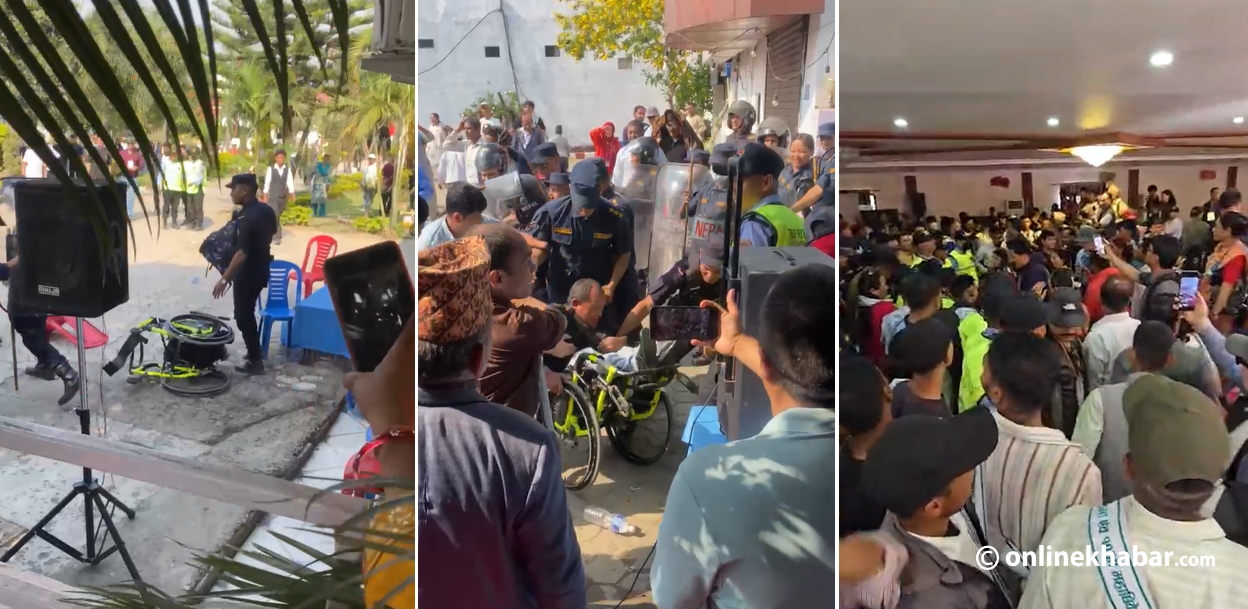
Wheelchair Destroyed and Attacked with Boots Following Rough Handling at Disability Federation Convention

News Summary

Reviewed by editorial team.

  • In the 10th General Convention of the Federation of the Disabled Nepal, wheelchair users faced inhumane treatment.
  • Controversies over leadership selection, including allegations of use of force during the election, were reported.
  • Representatives are preparing to file complaints with the Human Rights Commission, alleging suppression of their voices using state mechanisms.

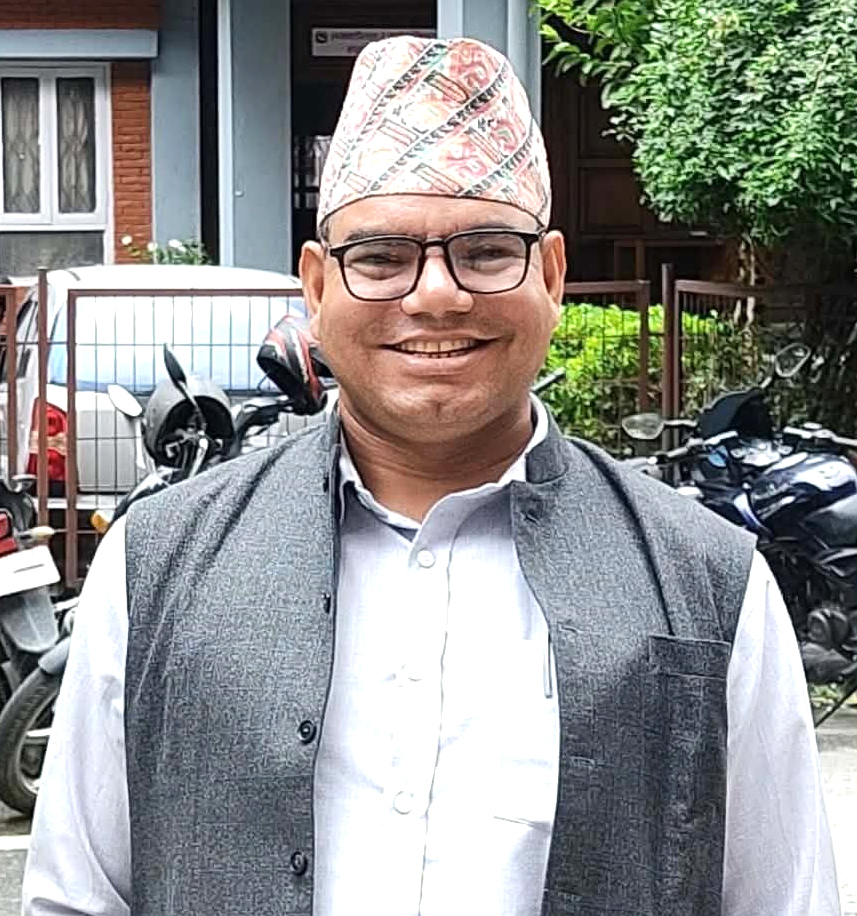
April 20, Pokhara – Hem Bahadur Gurung, who lost the use of both legs due to polio at 18 months old, spent 25 years on a wheelchair. Over these years, he has been actively working in the disability sector, advocating for rights and inclusion.

Until now, Hem Bahadur had never experienced mistreatment, but recently endured unprecedented inhumane behavior. Despite his physical discomfort and pain, the emotional distress caused by oppression from the leadership of a disability organization has deeply affected him.

He recounts being roughly handled, his wheelchair attacked with boots, and even denied permission to use the restroom. “The inhumanity crossed all limits. Brutal attacks on people with disabilities happened. I faced an insult in my 50th year of life that I had never suffered before. It deeply moves me and brings tears,” Hem Bahadur said emotionally.

This incident occurred on March 12 during the 10th General Convention and the 23rd Ordinary Session of the National Federation of the Disabled Nepal, held at Darbar Lawn Party Palace in Butwal, where 425 representatives from associated organizations participated.

Hem Bahadur, also the Gandaki Province President of the Federation, went to the convention to engage in policy debate, highlight rights and participation issues for disabled individuals, and advocate for institutional reform and capable leadership. Instead, he became a witness and victim of the most inhumane treatment in the institution’s 23-year history.

A viral video on social media shows security personnel roughly handling Hem Bahadur on his wheelchair and damaging it. Hem Bahadur is the person sitting in that wheelchair. The majority of disabled individuals attending the convention felt the leadership acted inhumanely, and that there was state-created intimidation. They allege that security personnel forcibly removed wheelchair users, using ‘bouncers.’

They reported that even blind women faced inhumane treatment, with abuses coming from security guards, volunteers, and police officers. Federation members such as visually impaired Birodh Khatri, Neun Drishti Virukamal Shrestha of Saksham Nepal, Bhojraj Shrestha, and Vimala Sadashankar criticized the use of state mechanisms to suppress voices when legal procedures were violated within the organization.

Despite complaints of leadership being unlawfully taken by force, their primary grievance is the state’s neglect. Since police and administration deny receiving complaints or repressing dissent, they are preparing to file complaints at the Human Rights Commission.

Details about how this situation arose in the Federation’s convention were gathered from Hem Bahadur, who is also the Gandaki Province president.

The opening session of the convention began on March 11 at the Darbar Lawn Party Palace in Butwal, with Gandaki Province Assembly Member Sunita Thapa as the chief guest. The Federation’s President, Devidatta Acharya, chaired the session.

“The venue and timing for the convention were not discussed within the executive committee; everything was unilaterally decided, leading to dissatisfaction from the start among representatives,” Hem Bahadur explained. “Devidatta wanted to retain his presidency.”

After the opening session, the closed session began. The reports were read from audio recordings. The General Secretary had been suspended a month earlier from presenting reports. Treasurer Kumar Regmi, who has a hearing disability, delivered the financial report via audio, according to Shrestha.

Representative Birodh Khatri protested, declaring the convention illegal due to procedural violations. He objected that the election officer was appointed unilaterally by the committee rather than through an alternative selection process.

Shrestha alleged that fake associations were registered with the Federation, hiding documents, and demanded corrections. There were claims that the leadership used votes from such fraudulent groups to plan the election.

When many began shouting slogans against the leadership, security personnel (bouncers), volunteers with hearing impairments, and police were deployed. Attendees were not allowed to speak and even had their microphones taken away. Viral videos show bouncers and police officers engaging in inhumane behavior.

There was shoving and pushing. Police detained Bhojraj, Virukamal, and others until they signed attendance in the evening before releasing them. The program was halted throughout March 13 due to fears the election might be disrupted, which caused further protests.

At 7pm on March 11, the election coordinator Shalikram Banjade and some officials resigned. The next day, a new election committee under Jok Bahadur Khatri was formed, but debates arose over the committee’s legitimacy. Committee officials responded to the controversy on-site.

“Claims that the new committee formed because the old one resigned have not been discussed in the hall and are incorrect,” Hem Bahadur said. “We were not allowed to discuss any agenda, so there was no legitimacy to the elected committee.”

Banjade stated, “There was a court case; I resigned because the committee was controversial, but then I learned that another committee was formed and leadership elected.”

Representatives began staging sit-ins in protest of the leadership amid heavy security. The venue had only one wheelchair-accessible restroom, but wheelchair users were denied access to it.

“Despite people claiming to help us move, when we said we’d wait at the gate to relieve ourselves, we weren’t allowed inside, citing higher orders,” Hem Bahadur recounted. “Our appeals to consider disability sensitivities were ignored, after which brutal attacks began.”

Wheelchair users were pushed and shoved; security personnel attacked wheelchairs with boots and caused damage.

Videos show security officers lifting and pushing wheelchairs near the security gate, dragging a chair close to the reception, and moving it to another area.

Hem Bahadur said, “This inhumane treatment left me in shock. I struggled to breathe and remained dazed for a while. Later, when I asked for another wheelchair, I wasn’t given one and had to crawl on it.”

With staff assistance, he reached the restroom, but felt pain in his head, body, and arms afterward.

“Seeing my unusual discomfort, a large security official ordered me to be placed in front of CCTV cameras. However, cameras were not nearby. They pushed my wheelchair to the entrance door of the hall where cameras were present,” Hem Bahadur tearfully recalled. “It felt as if the hall was closing on me under intense sunlight.”

A new executive committee was selected under Devidatta’s leadership at the Federation, but a majority boycotted it, claiming the leadership was seized by force. Many doubted the fairness of the leadership election, especially since complaints about violence and inhuman behavior were ignored.

“If the state has law, process, and justice, the incident must be investigated, and the guilty severely punished. The forcefully dissolved committee should be annulled, and a temporary committee formed to hold a clean election,” Hem Bahadur demanded. “Even the existing electoral committee would face consequences.”

Many delegates boycotted the convention, citing arbitrary leadership. Among 126 delegates from Gandaki, 84 signed the boycott with 8 absent. According to Hem Bahadur, only 44 votes were cast, and those were allegedly forged.

Meghnath Padhya, the Deputy Chief District Officer of Rupandehi, said no complaints had been filed regarding the incidents. Since the Federation is registered in Kathmandu, complaints should be lodged there, and police should collect evidence accordingly.

“We were only informed about permission and security for the convention. If injustice occurred, legal remedies can be sought,” Padhya said.

Legal Proceedings Will Determine Outcome: President Devidatta

Reelected Federation President Devidatta Acharya stated that this dispute should not be considered just a problem of this convention. After the 9th Convention in Nepalgunj, over 193 complaints were filed with administration, commission, and courts within 22 days, escalating the conflict.

He explained that the 10th convention was originally planned for December 12-13 but was postponed to March 11-12 due to the Genji movement and loss of district administration documents.

Many registered associations failed to renew in time, leading to complaints; membership increased from 24 to 424. Later, controversy arose over registration of fake organizations. Security was tightened due to destruction and crowding during the general assembly.

“Volunteers and bouncers were deployed to maintain safety,” he added.

Despite protests from 30-40 delegates, the convention continued, arguing that possession of delegate cards invalidated the boycott.

“There are still three writ cases in court. They advise attendees to seek justice at the judiciary. The legal process will examine whether it was lawful or not,” he said.

A Delightful Encounter with ‘Ram,’ the One-Horned Rhino of Sauraha, Chitwan

April 20, Chitwan – Visitors to Sauraha in Chitwan come not only for jungle safaris but also to meet a unique one-horned rhino that has become almost like a pet. This rhino’s name is ‘Ram.’ Rescued nearly a month after being separated from his mother and injured in a tiger attack in the Baghmara Community Forest, Ram is now three years old. Initially weak and fearful, Ram has grown accustomed to human interaction, playing and enjoying the company of tourists.

Ram roams freely around the National Nature Conservation Fund premises throughout the day and is let out early each morning around 5:30 a.m. He returns to his enclosure by approximately 6:30 p.m. Ram enjoys grazing on green grass and surrounding vegetation during the day, while in the evenings he prefers maize porridge, according to Lalbahadur Mahtar, who cares for him. Ram once had a companion named ‘Dev,’ but after Dev passed away last December, Ram has been alone. Since then, Lalbahadur Mahtar has taken full responsibility for his care and well-being.

Mahtar notes that Ram still suffers from injuries sustained during the tiger attack, causing his leg to limp slightly. As Ram matures, there is concern that this condition could worsen. Despite this, Ram has become a major attraction for tourists, offering them the unique opportunity to get close, take photographs, observe his behavior, and experience a sense of connection with the jungle’s wildlife. The rhino is one of Chitwan’s main tourist draws; for many, glimpsing a rhino up close during a jungle safari is an unforgettable experience. Thus, maintaining a balance between rhino conservation and tourism remains a crucial challenge today.

Government Firm on Dissolution of Student Organizations in Universities

News Summary
The government is implementing a policy to remove partisan student and staff organizations from universities, with Prime Minister Balen directing vice-chancellors to enforce this. Prime Minister Balen emphasized that political activities have no place in educational institutions and stated there are no legal obstacles to dissolving partisan groups. Vice-chancellors advised the Prime Minister to inform the relevant ministry of any security issues encountered during the removal of political organizations.
April 20, Kathmandu – The government has reinforced its stance to abolish partisan student and employee organizations in universities. According to Item 86 of the government-approved administrative reform agenda, structures of partisan student organizations in universities will be dismantled within 60 days, and new student councils or voice-of-student mechanisms will be developed within 90 days. Prime Minister Balen has once again issued directives to ensure this implementation on Monday.
At Singha Durbar, the Prime Minister held discussions with university vice-chancellors, issuing strict instructions to immediately dissolve partisan student and staff organizations. He told the vice-chancellors, “Political activities are prohibited in educational institutions, and no law prevents the removal of partisan organizations. Flags, influence, or organizational presence of any political party will not be allowed in hospitals, campuses, or schools as these are sanctified places. Anyone who wishes to engage in politics must fully commit to it and separate themselves from their professional responsibilities.”
During the three-hour discussion, vice-chancellors raised various challenges from their own universities with the Prime Minister. Issues ranged from student political leadership to problems in health insurance at hospitals. Professor Dr. Dhaneshwar Nepal, Vice Chancellor of Nepal Sanskrit University, reported facing threats and attacks while attempting to abolish student organizations.
Prime Minister Balen requested that any difficulties encountered in dissolving these groups be immediately reported to the relevant ministry or secretariat for security reasons. “The government is committed to providing security arrangements and other necessary support,” he emphasized. He also encouraged vice-chancellors to confidently perform their duties with the support of police administration.
Education, Science and Technology Minister and university vice chancellor Sasmit Pokhrel confirmed that instructions have already been issued to remove organizations affiliated with political parties. Tribhuvan University Vice Chancellor Professor Dr. Deepak Aryal noted that following the Gen Z movement and recent elections, student and staff organizations have gradually become inactive, aligning university operations with government policy. He stated, “With many universities, the government needs to make policy decisions on how best to advance and manage each.”
Vice Chancellors Dr. Dhruvakumar Gautam (Mid-Western University), Dr. Bijukumar Thaplia (Purbanchal University), and Dr. Hemraj Pant (Far-Western University) mentioned that some campuses still experience political tension among students. They emphasized that reducing political activities and strict administration are the ways to end politics within educational institutions. Additionally, issues have arisen due to unpaid health insurance funds at hospital facilities.
“The current situation at NAMS, problems with insurance, and withheld funds are causing difficulties, which I am trying to resolve,” informed Vice Chancellor Bhupendra Kumar Basnet, who also raised concerns regarding a newly constructed building in Duwakot.
Prime Minister Shah has directed that the academic calendar be completed on time and exam results published within one month. The government has reaffirmed its commitment to support universities regardless of challenges faced. A vice chancellor participating in the discussion noted, “The Prime Minister has promised to assist with any problems that arise.”

पाल्पामा ट्याक्टर दुर्घटना हुँदा एक जनाको मृत्यु – Online Khabar

One Fatality in Tractor Accident in Palpa

April 20, Palpa – A tractor accident in Palpa has resulted in the death of one individual. The incident occurred in Rainadevi Chhahara Rural Municipality-3, Bhuvanpokhari. According to district police, Vishal Rana from Amalabas-4, Rainadevi Chhahara, succumbed to injuries sustained in the accident. The tractor with registration number Lu 5 Ta 1035 was traveling from Bhuvanpokhari Jhirwas towards Chhahara when the accident happened. Vishal Rana was injured and later died while receiving treatment at United Mission Hospital in Tansen.

The tractor driver, Chandra Bahadur Bagale from Amalabas, sustained minor injuries. District police have stated that further investigation into the incident is underway.

Over 34 Billion in Mobile Imports in Nine Months

In the first nine months of the current fiscal year, smartphone imports increased by 89,293 units compared to last year, reaching a total of 1,674,249 units. During this period, 1,410,935 smartphones were imported from China and 255,820 from India. The government collected revenue of NPR 630.87 million from mobile imports in these nine months. Kathmandu, April 19.

There has been a significant rise in demand and usage of smartphones in the Nepali market recently. According to data released by the Department of Customs on Monday, smartphone imports in the current fiscal year increased notably compared to the previous year. This period saw an import of 89,293 more smartphones than the same period last year. Department figures indicate that smartphones worth NPR 3.382 billion were imported, totaling 1,674,249 units in these nine months.

In the month of Chaitra alone, smartphones worth NPR 388.66 million were imported, totaling 145,754 units. Among the imported smartphones, the largest share came from China. In the current fiscal year, smartphones worth NPR 2.565 billion were imported from China, amounting to 1,410,935 units.

Following China, a significant number of smartphones were imported from India. During this period, imports from India accounted for 255,820 units valued at NPR 759.48 million. This growth in smartphone imports has positively impacted government revenue collection. In just nine months of this fiscal year, the government successfully collected NPR 630.87 million in revenue from mobile imports alone.

Final Notice Issued by Roads Department to Remove Encroachments on Pathlaiya–Churiyamai Road Section

7 Vaisakh, Hetauda – Following the commencement of the expansion work on the Birgunj main highway in Parsa, the Roads Department in Hetauda is preparing to remove encroached structures along the Pathlaiya–Churiyamai road section. From the morning of Sunday, 6 Ashoj, the department began widening the road under the Tribhuvan Rajpath, stretching from Gandak Chowk in Birgunj to Miteri Bridge, expanding the width to 25 meters on both sides.

As part of this initiative, there is also a plan to extend the road from Pathlaiya in Bara district up to Churiyamai in Hetauda Sub-Metropolitan City-15, located near the Makwanpur border. This widening project has been nearly completed on the stretch from Gandak Chowk in Birgunj to Pathlaiya.

Roads Department Chief Guruprasad Adhikari informed on Monday that a notice has been issued instructing all households within 25 meters along the Pathlaiya–Churiyamai section to be vacated by 10 Vaisakh. Despite repeated notifications, encroachments have not been removed. Therefore, if the area is not cleared within the stipulated time, the department has warned of initiating legal action under the Public Roads Act, 2031, and other applicable Nepalese laws.

The Roads Department had previously issued notices on 18 Poush 2073 and 9 Asar 2080, requesting the removal of houses and settlements located within 25 meters on both sides of the road center, from Pathlaiya along the Mahendra Highway to the Churiyamai Number 3 bridge and the Churiyamai temple area. However, encroachments reportedly still persist in these areas.

कारबाही रोकिँदैन, डगमगाइँदैन : गृहमन्त्री गुरुङ

No Halt to Action, No Wavering: Home Minister Gurung

7 Baishakh, Kathmandu – Home Minister Sudhan Gurung stated that those who have long laid claim to the nation’s treasury, earned through years of hard work and sacrifice, are now frightened. Responding extensively to questions raised against him on social media, Gurung posted another status on Monday night. He described the rumors and allegations circulating against him as signs of desperation. “Those who have for years tried to seize money earned through the nation’s hard work and sacrifice are now scared,” he said.

Reconstruction of Bagmati Province Buildings Damaged in Jenjya Movement: Four Ministries to Operate from One Building

April 20, Hetauda – The ministry building of Bagmati Province, which was damaged by arson and vandalism during the Jenjya movement, has been reconstructed. The five-story building located in Hetauda Sub-Metropolitan City–1 has been restored to a usable condition after repairs. The building was set on fire and vandalized by protesters on September 9 during the Jenjya movement. On Monday, Chief Minister Indra Bahadur Baniya and Minister for Physical Infrastructure Development Dr. Dineshchandra Devkota jointly inaugurated the renovated building. Minister Dr. Devkota informed that the reconstruction was carried out using scientific and modern technologies. According to him, after structural engineers from Pulchowk Engineering Campus tested its load-bearing capacity, the building was strengthened using ‘retrofitting’ techniques.

Bhupendra Kumar Yadav, head of the Housing, Building, and Urban Development Division of the ministry, provided technical details regarding the reconstruction. He stated that the building was rebuilt through a tender process on November 26 with a contract amount of NPR 12.8 million, which was less than the estimated NPR 18.4 million. The ministry also repaired and reinstated the building’s elevator and transformer. Following reconstruction, this building will house the offices of four ministries: Labor, Employment and Transport; Agriculture and Livestock Development; Drinking Water, Energy and Irrigation; and Cooperatives and Poverty Alleviation.

Prior to the movement, the building accommodated the Ministry of Physical Infrastructure Development, along with the Ministries of Transport, Agriculture, and Drinking Water. Currently, the Physical Infrastructure Ministry operates from a new building near the Chief Minister and Council of Ministers’ Office. Secretary Ishwar Chandra Marhatta informed that the Physical Infrastructure Ministry operates from a building constructed for the Urban Development and Building Office in Makwanpur. During the inauguration, Chief Minister Baniya highlighted that the lack of suitable physical infrastructure had forced ministries to operate temporarily until now. He added that the process to acquire land for permanent buildings for provincial ministries and agencies has been completed, and tenders for construction will be initiated during this fiscal year.

Secretary Marhatta confirmed that physical infrastructure damage in the province exceeded NPR 100 million during the movement, with losses to buildings alone estimated at NPR 58 million. To ensure transparency in repair works, all procedures followed public procurement regulations. The ministry reported that under the repair plan for five buildings damaged during the Jenjya movement, repairs for four buildings have been completed, while restoration work on the Provincial Assembly Secretariat building is in its final phase.

For repair and making the building usable, the Ministry of Finance allocated a budget of NPR 62.4 million, and contracts worth NPR 39.5 million had been signed. Discussions with the Ministry of Finance are ongoing regarding the reconstruction of the completely destroyed Provincial Assembly’s new building and the old Urban Development and Building Office building. Preliminary reports from the Ministry of Economic Affairs and Planning indicated that 27 offices and 61 buildings under the provincial government in Kathmandu, Chitwan, Lalitpur, Bhaktapur, and Makwanpur were damaged. Specifically, in Kathmandu there were three buildings across two offices; in Chitwan, 10 buildings at three offices; Bhaktapur had two buildings in one office; Makwanpur suffered damage to 41 buildings across 18 offices; and Lalitpur had five buildings in three offices affected. In terms of vehicles, 143 two-wheelers and 56 four-wheelers were burned and destroyed.

A technical evaluation team led by the Ministry of Physical Infrastructure Development, including two experts brought from Kathmandu, assessed the various ministry offices, provincial assembly hall, offices, and agency buildings in Hetauda. Damaged buildings were categorized into three groups based on their technical condition: those immediately usable, those repairable for use after maintenance, and those completely unsafe requiring reconstruction.

New Feature Enables Document Editing and Signing Directly Within Google Chrome Browser

With the release of Google Chrome version 145, users can now view, highlight, and sign PDF documents directly within the browser. This new feature allows users to open PDF files by dragging them into Chrome, and then use the draw icon to access tools such as pen, highlighter, and eraser without needing any third-party software. After editing, files can be downloaded or saved directly to Google Drive, eliminating the need to install heavy applications like Adobe Acrobat. April 20, Kathmandu.

Google Chrome has a powerful PDF tool that many users might not be aware of. From version 145 onward, users no longer require third-party software to view, highlight, and sign PDF documents within the browser itself. Here’s how to use this feature: Open a PDF file by dragging any PDF from your computer directly into the Chrome browser. Chrome will open the document in a new tab.

Select the draw icon: Once the PDF is open, click the ‘Draw’ icon (which looks like a pencil) located on the taskbar at the top. This action will open a sidebar on the right side of the browser offering various options. Choose your tools: From the sidebar, you can select the pen, highlighter, or eraser tool. You can also customize the pen’s color and size according to your needs.

Sign and add notes: Use the pen tool to add signatures or notes to the document, and employ the highlighter to emphasize key text. If you make a mistake, you can correct it using the eraser or the undo button. Save your changes: After completing your edits, click the ‘Download’ icon at the top. You will be given options to save the file either with or without the changes. Additionally, you can save the document directly to your Google Drive. This new update removes the hassle of downloading complex apps like Adobe for routine tasks. If you do not see these options on your Chrome browser, check and update your browser settings accordingly.

ओपीडीमा थेगिनसक्नु बिरामी, सेवा झनै भद्रगोल – Online Khabar

Rising Patient Crowds Worsen Service Chaos at Bir Hospital OPD

News Summary

  • Following a two-day closure, Monday saw an overwhelming surge of patients at Bir Hospital OPD, resulting in long lines just to obtain tickets.
  • Doctors warn that the closure has disrupted patient treatment and increased the risk of delays in surgical procedures.
  • Healthcare workers not receiving staggered days off has contributed to the disorganized service system according to medical professionals.

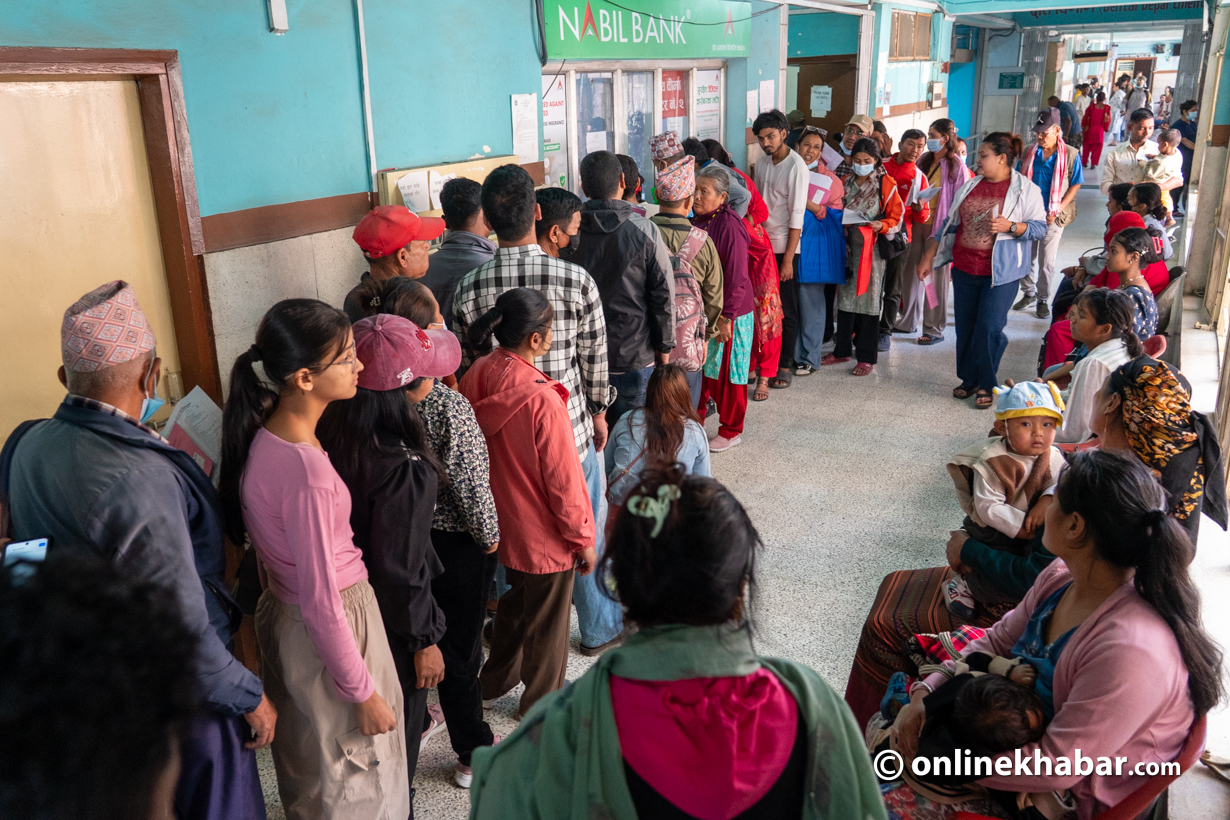
April 21, Kathmandu – Even before 6 a.m., crowds gathered around the main entrance of Bir Hospital. Many patients arrived clutching old prescriptions, while others carried medical reports. Patient relatives steadily advanced through lines, supporting those seeking care.

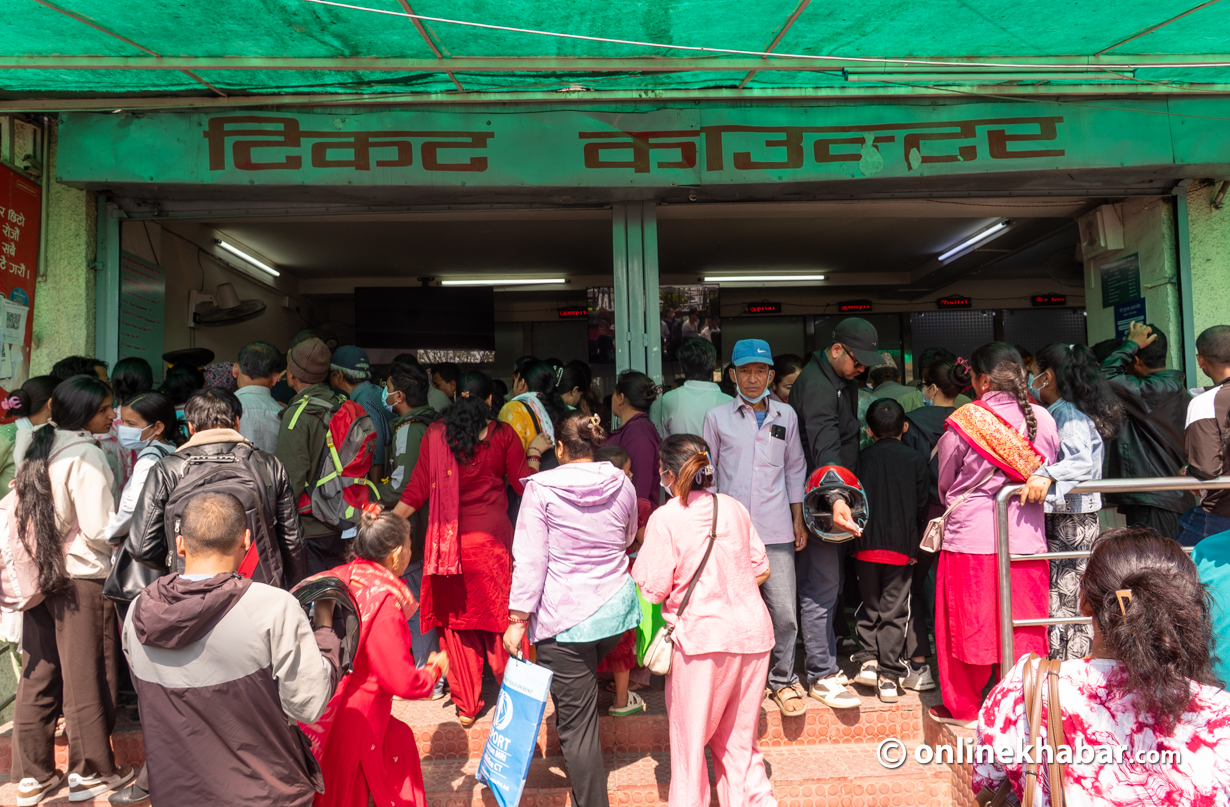
Everyone was united by a single goal – to reach the OPD ticket counter. The area near the ticket booths was heavily congested, with long queues stretching throughout the hospital premises.

This scene followed a two-day closure of the hospital on Saturday and Sunday, resulting in an overwhelming influx of patients on Monday.

The hospital closure led to a backlog of patients requiring treatment all at once. Lines had already grown long before ticket counters opened, with many arriving early in the morning.

Pramod Mukhiya, 37, who traveled from Janakpur, showed his old medical file and said, “My body aches, and I feel like I might faint. The hospital was closed on Sunday, so I could not get treatment. Now I have to wait for hours again today.”
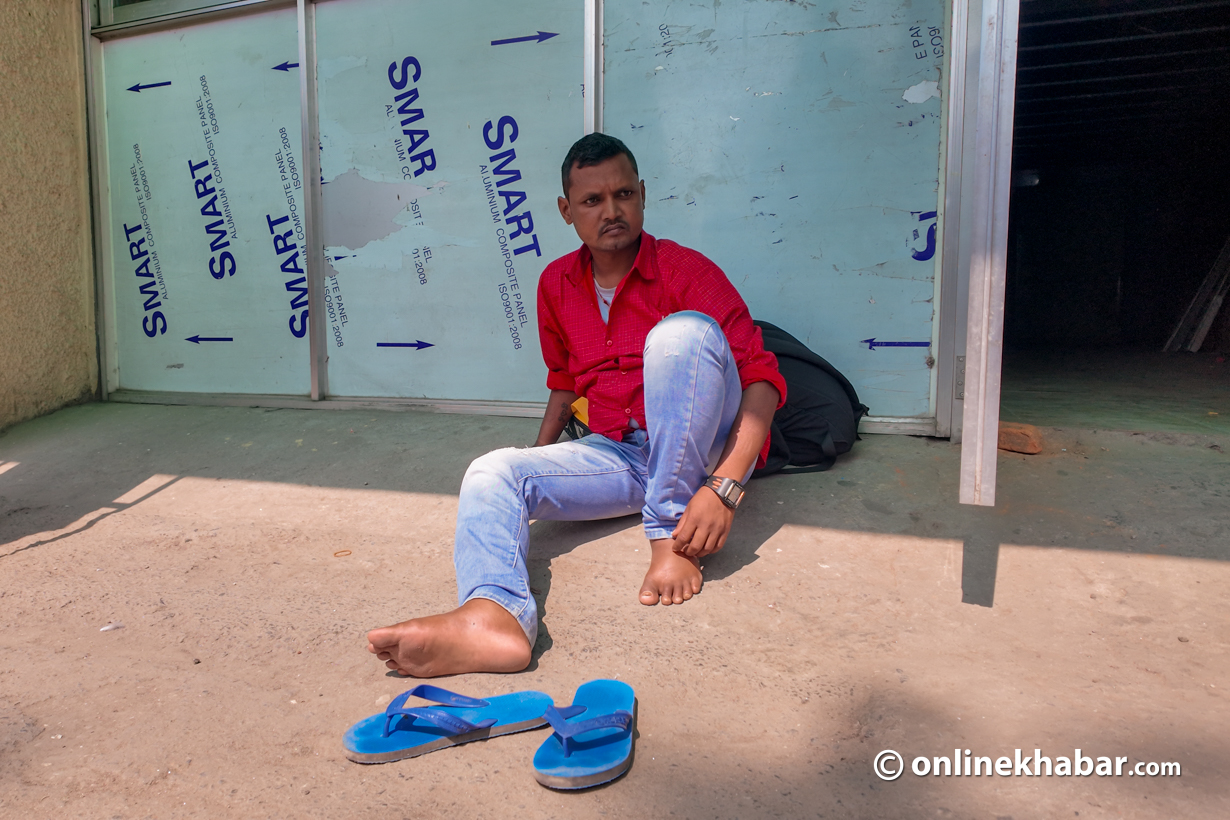
Pramod’s hands and feet were numb as he sat on the ground, speaking softly. He was accompanied by his elder brother Surendra Kumar Mukhiya and his wife.

He developed sudden health problems three weeks ago, including vomiting blood and numbness. He received initial treatment at a private hospital in Janakpur, where doctors identified liver issues and advised further treatment in Kathmandu. As a farmer and laborer, the medical expenses totaling 120,000 NPR were a significant burden.

With loans from relatives and villagers, Pramod arrived in Kathmandu on Thursday night.

On Friday, he visited the emergency department at Tribhuvan University Teaching Hospital but was denied admission as a general patient. Without connections, he stayed at a hotel near Gaushala.

All hospitals ceased operations on Saturday. On Sunday morning, he took a vehicle from Ratnapark to Bir Hospital, only to find the OPD ticket counter closed. A security guard told him, “The OPD is closed today, please come tomorrow.”

Confused, Surendra accompanied Pramod to the emergency ward, but he was not accepted.

With no other options, Pramod went to a private hospital. On Sunday afternoon at Kathmandu Medical College, his various tests and medicines cost over 20,000 NPR. Doctors advised additional liver tests at Bir Hospital and Teaching Hospital.

Waiting in line at Bir Hospital OPD on Monday, Surendra expressed frustration, “We arrived at 7 a.m., but only after 795 patients will we get tickets. There was no service like this on Sunday.”

Inside the OPD, confusion reigned. One line was for tickets, another for testing, and yet another for doctor consultations. Some patients sat on the floor, while the elderly and children stood due to a lack of seating; relatives took turns standing in long queues.

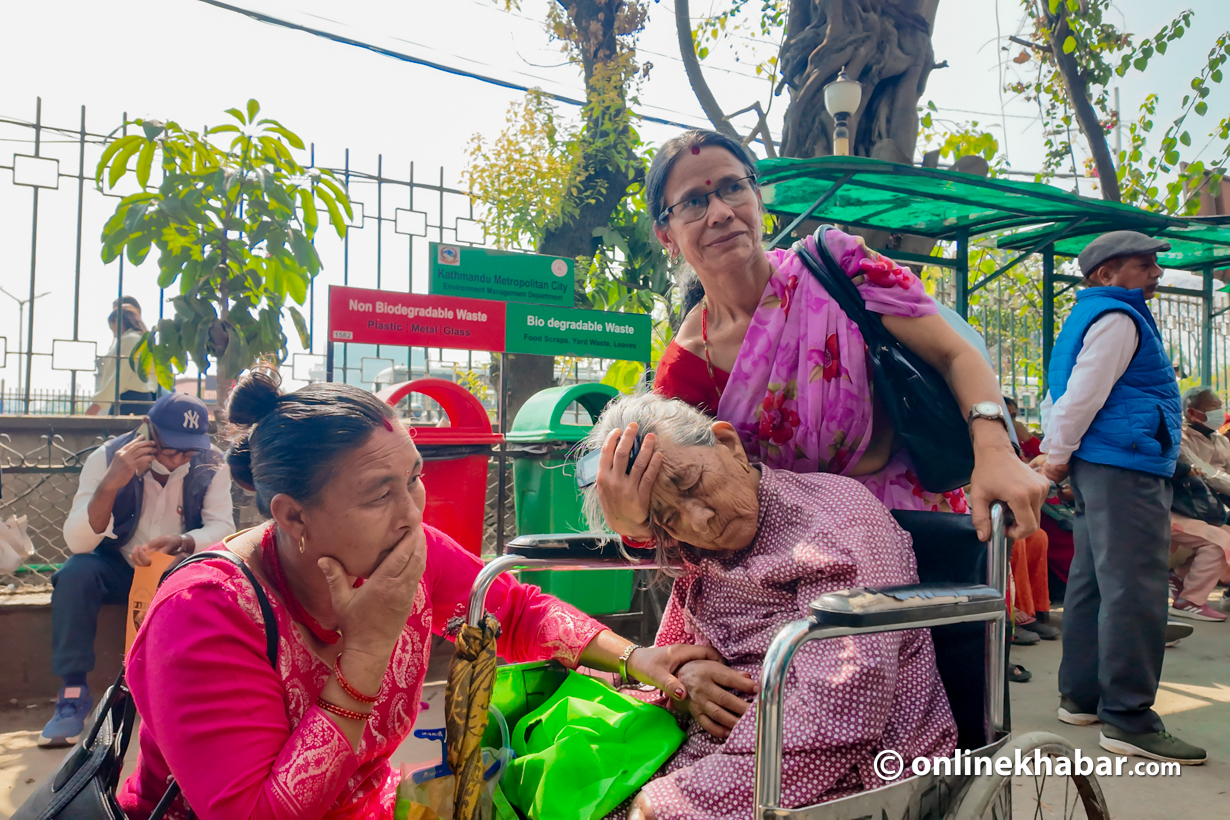
Meanwhile, an elderly woman in a wheelchair was seen being assisted by two women in the hospital courtyard. The 80-year-old suffered from hypertension.

These elderly visitors came again from Sattungal on Sunday but could not see a doctor and returned disappointed. “We came yesterday for a follow-up, but the doctor was unavailable. I am here again because my mother’s condition worsened,” said the caretaker.
Bir Hospital is one of the oldest government hospitals in the country and attracts large numbers of patients from outside the capital. For many poor and marginalized individuals, it serves as a vital hub of affordable, accessible care.

Many patients standing in line expressed a common grievance, “Even when we are ill, we must wait for hours. Will we even get to see a doctor today?”

Krishna Prasad Tiwari from Gorkha said, “We arrived early this morning, but the crowd means we may have to stay in the hospital for two or three days to receive care.”

Tiwari suggested that the hospital operate seven days a week with additional staff to cope with demand.

Patient admissions have also increased alongside the OPD crowd following the two-day closure decision. This has elevated the risk of surgical delays.

Tiwari explained the lengthy wait times throughout hospital departments. “We have to wait hours to see a doctor, and similar congestion exists at laboratories. Hospital management is sluggish, and the two-day closure has worsened the situation.”

Eighteen-year-old Bhesma Khatri, who had appendix surgery last November, came early with old medical files for recurring health issues. “I came yesterday but couldn’t see a doctor and left. The two-day closure has caused me more pain,” she said.
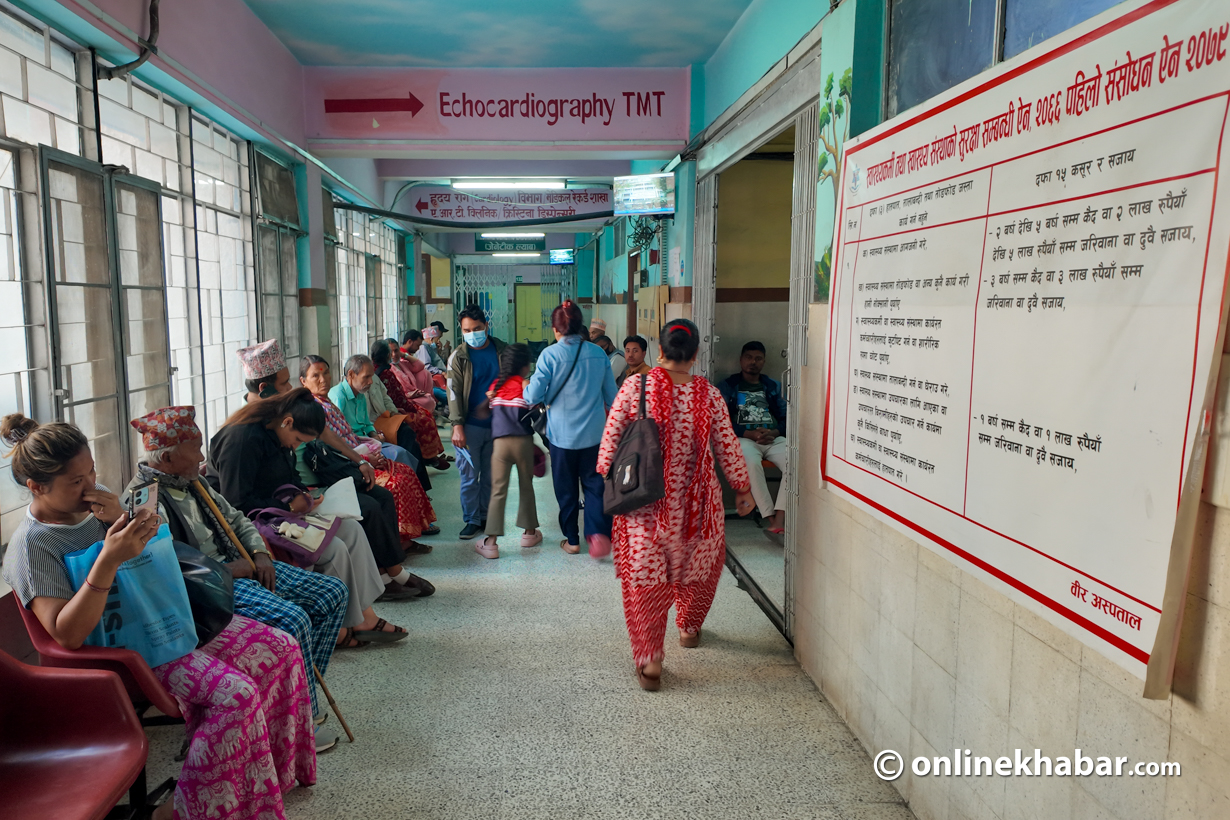
Bir Hospital handles over 3,000 patients daily and represents a beacon of hope for the impoverished. However, patients from remote and hard-to-reach areas often face persistent hardships accessing care.

The hospital has more than 28 departments, with crowds equally dense throughout labs and pharmacies.

Some patients wait in line at ticket counters, others at cash counters, and many stand in queues to see doctors. Basic seating is inadequate for general patients waiting outside the OPD.

The chaotic congestion makes swift service delivery difficult, resulting in widespread dissatisfaction among service users.

Rupn Prasad Patel from Rautahat complained that despite arriving by 7 a.m., he did not get a chance to discuss his problems with a doctor by midday. “You have to queue everywhere. Ordinary people are left confused about where to seek services. Hospital management is weak.”
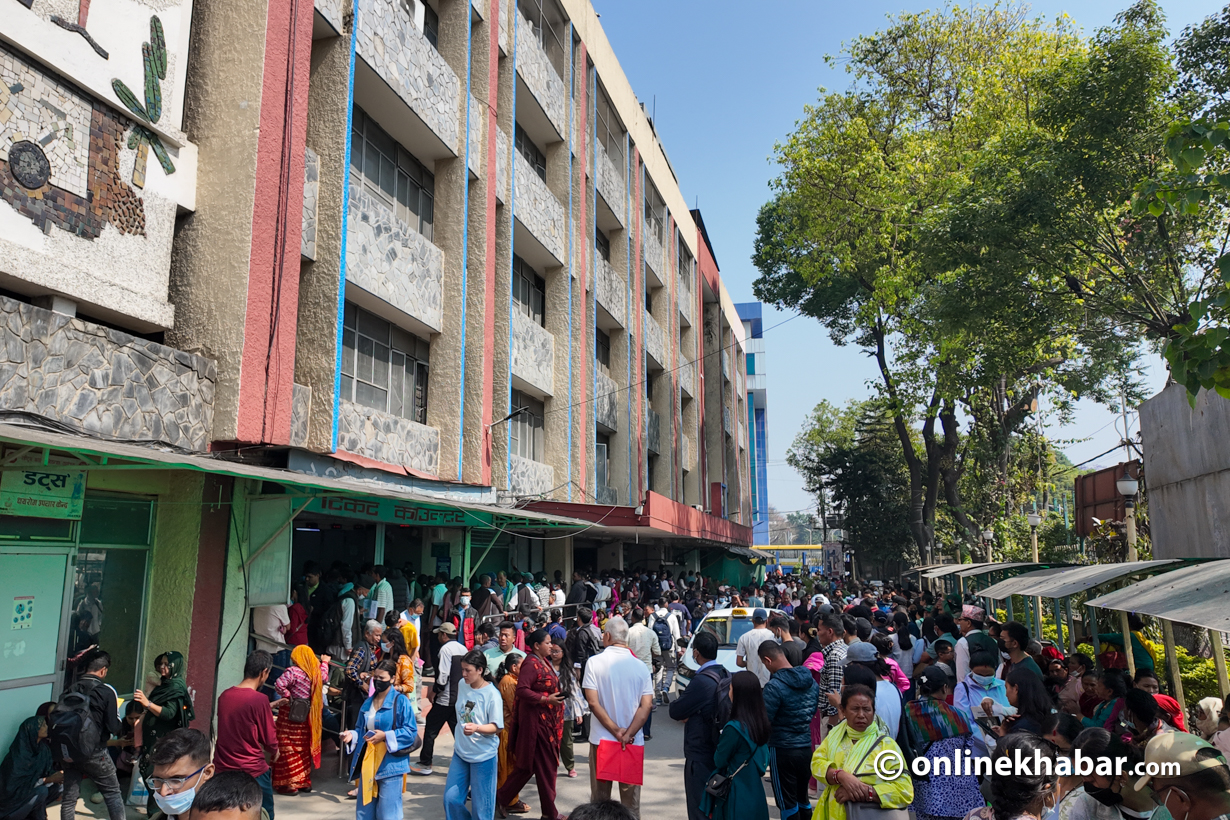
Patel, who has kidney issues, was accompanied by relative Bires Kumar Chourasiya. Chourasiya said the two-day closure worsened the patient’s condition. “Since Friday, he hasn’t been able to see a doctor and is suffering. The government closure decision has created major difficulties for citizens seeking treatment.”

While the break provided rest for healthcare workers, it posed significant challenges for patients.

Overall, the two-day closure at Bir Hospital has exacerbated the suffering of patients.

Doctors Warn: Healthcare Services Growing More Chaotic

Doctors report a marked increase in patient loads at Bir Hospital following the government’s policy to close services two days per week.

One physician noted that closing the OPD for two consecutive days disrupts treatment for both patients and staff.

“When services are closed on Saturdays and Sundays, the Monday crowd becomes overwhelming, forcing patients from districts to stay in Kathmandu, increasing their hardship,” said the doctor.

Previously scheduled surgeries have also been affected. Patients who booked appointments for Sundays now face uncertainty due to the closure.

Hospital schedules have been disrupted by these closures, causing further complications according to medical staff.
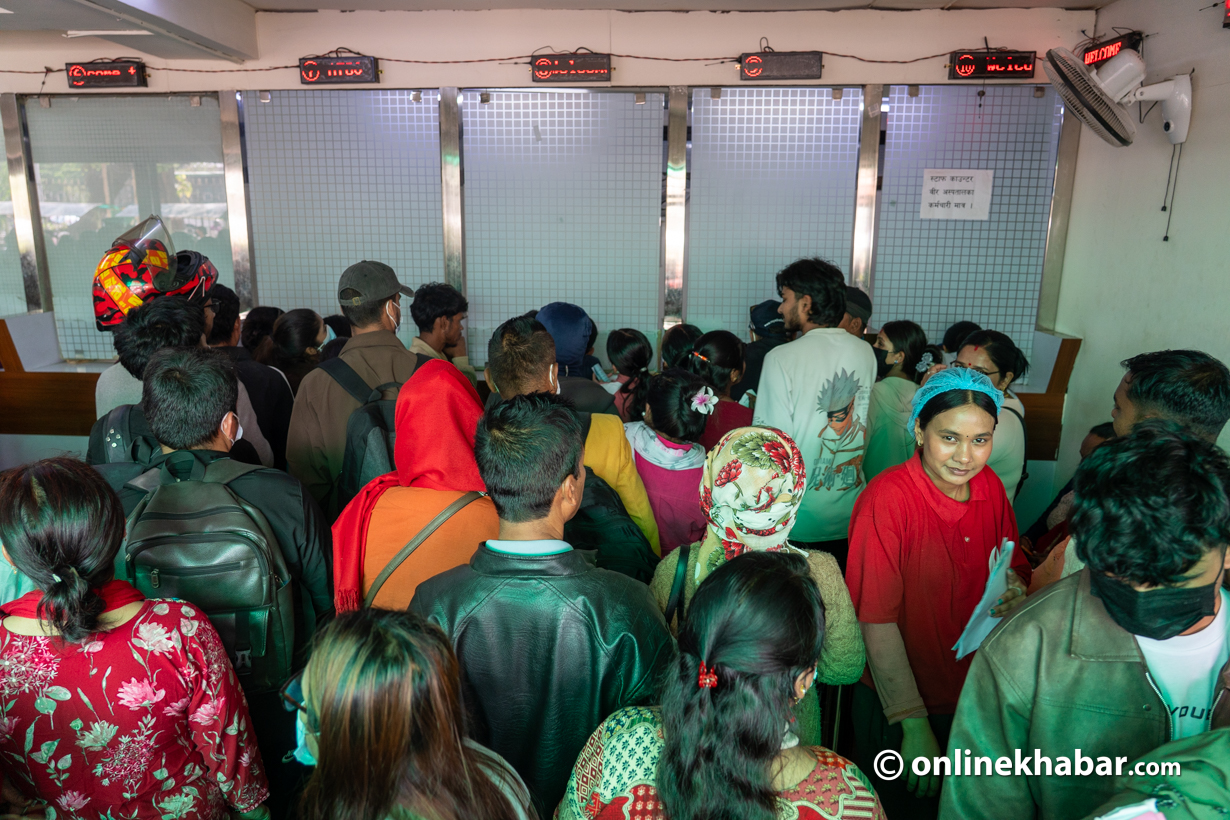
Doctors emphasize that it is impractical to shut down major hospitals like Bir, Teaching, or Civil for two consecutive days and advocate for continuous seven-day operation.

They suggest staggered staff holidays so services can continue uninterrupted six days per week. This approach would maintain OPD, surgery, and other services regularly and reduce long patient lines.

Another physician explained that the two-day closure has increased both outpatient visits and hospital admissions, potentially lengthening surgery waitlists.

“I used to see around 60 patients; now I have to attend to more than 80 daily. Surgery wait times are lengthening across all departments,” the doctor noted.

They also remarked that shorter patient consultation times have become common due to the heavy patient volume. “Previously, doctors spent four to five minutes per patient; now even two minutes is difficult.”

Doctors report that continuous work causes mental stress among healthcare workers, necessitating leaves. However, without effective organizational planning, both patients and staff suffer.

Statistics from Bir Hospital indicate that on regular days, around 2,700 OPD tickets are issued monthly, but on the recent Monday, over 3,400 tickets were sold.

The Ministry of Health’s decision to close public hospitals two days a week lacks a clear plan for managing large hospitals’ service delivery, leading to uncertainty.

“Employees should have equal benefits, but when the hospital closes for two days, distant patients and those scheduled for surgery face difficult problems,” stated another Bir Hospital physician. “If continuous closure is unavoidable, the government should provide incentive bonuses for staff working on off days.”
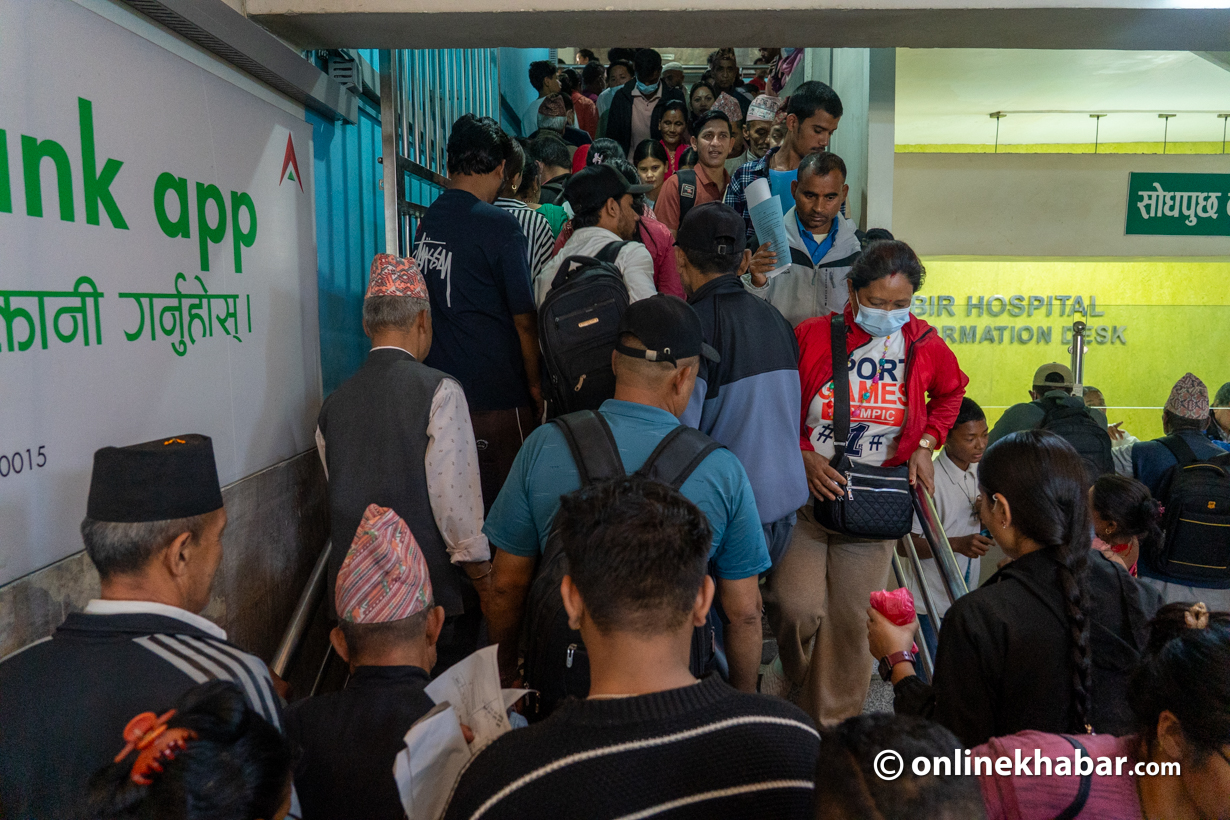
They explained that with this system, OPD, surgeries, and other services would remain regular, preventing patients from facing long wait times.

The inability to allocate adequate time per patient due to crowding remains a significant issue.

Doctors mentioned that ongoing work pressures contribute to staff mental stress and the need for leaves, but lack of management causes problems for both patients and staff.
Discussions on the House of Representatives Rules Continue: No Consensus Reached on Impeachment Issue

Discussions regarding the Rules of Procedure in the House of Representatives remain unresolved today, with no consensus reached on matters related to impeachment. The Drafting Committee on the rules is scheduled to hold a meeting on Tuesday at 12 noon, and plans to submit the draft to the Speaker by 3 pm. The committee comprises 13 members and aims to finalize the draft by focusing on select limited issues. Kathmandu, 7 Baishakh.

The House of Representatives formed the Drafting Committee on 23 Chaitra, led by Rastriya Swatantra Party MP Ganesh Parajuli. Committee members include Ojaswi Sherchan, Khagendra Sunar, Khusbu Oli, Gajala Samim Mikrani, Tapeshwar Yadav, Dhurvraj Rai, Nisha Dangi, Nishkal Rai, Balawati Sharma, Madhu Chaulagain, Yagnmani Nyaupane, Rekha Kumari Yadav, and Sulabh Kharel.

Committee member Yagnmani Nyaupane has stated that by focusing on a limited number of topics, the committee intends to finalize the draft of the rules by tomorrow.

Government Decides to Remove Student Organizations: Actions Taken and Voices of Opposition

The government has decided to remove party-affiliated student organizations from schools and universities within 60 days and establish independent student councils. Student organizations have protested this decision, calling it unconstitutional and against democratic values. Kedarbhakta Mathema, former Vice-Chancellor of Tribhuvan University, stated that while partisan organizations are not necessary in universities, student governance is essential. April 20, Kathmandu.

The government is moving forward with the removal of party-affiliated student organizations from universities. As part of its 100-day action plan, the government announced it would eliminate these organizations from schools and universities within 60 days. Among the 100 reform programs, the government stated: “To address issues of partisan interference in education, lack of genuine student representation, and decline in educational quality, the structures of party-based student organizations will be removed within 60 days and independent mechanisms such as ‘Student Council’ or ‘Voice of Student’ will be developed within 90 days.” Taking a firm stance against partisan student bodies, the government has decided to vacate the facilities provided to student organizations inside university campuses within two months.

Minister of Education, Science and Technology, Sasmit Pokhrel, has directed vice-chancellors to vacate infrastructure allotted to student organizations within 60 days. This indicates the government’s preparation to establish independent bodies like a student council or voice of student by amending necessary rules regulating autonomous student unions within universities. Should any security challenges arise during the removal of party-affiliated organizations, the government has also decided to manage temporary or permanent security units within university campuses. However, debates for and against this decision have already begun.

The topic has sparked discussion on social media. Fourteen student organizations affiliated with various political parties have issued statements criticizing the government’s decision. While welcoming government prioritization of restructuring student movements, these groups argue that any decision imposing restrictions on freedom of thought, expression, and organization in the name of reform is immature, apolitical, unnatural, unconstitutional, and undemocratic.

Research Shows Moringa Effective in Removing Microplastics from Drinking Water

Scientists at São Paulo State University in Brazil have developed a new technique using seeds of Moringa oleifera to remove microplastics from water. A saline extract derived from moringa seeds causes plastic particles suspended in water to clump together, making them easy to filter out. This method has proven more effective than aluminum sulfate. According to the researchers, the technique is sustainable, cost-effective, and safe for health. Kathmandu, 20 April.

The scientists discovered that a common plant could be employed to eliminate harmful microplastics in drinking water. Researchers at São Paulo State University found that seeds from Moringa oleifera perform water purification functions comparable to modern chemical agents. A study published in the ACS Omega journal revealed that the saline extract from moringa seeds causes plastic particles to aggregate, facilitating their removal through filtration.

Researcher Gabriel Batista explained that in certain cases, this natural moringa method even outperforms the currently used ‘aluminum sulfate’ treatment. It has shown particular effectiveness in alkaline water. Microplastics and other contaminants in water typically carry negative electrical charges, which repel each other and make filtration difficult. Natural compounds in moringa seeds help neutralize these charges, enabling small particles to bind together into larger clusters that can be filtered out easily.

During testing, the researchers successfully removed particularly harmful microplastics such as PVC from water. Current water purification chemicals based on aluminum or iron compounds are often non-biodegradable and pose health concerns. In this context, moringa represents a safe and sustainable alternative. Professor Adriano Gonçalves dos Reis, who leads the research, noted that this technique could be highly affordable and effective, especially for rural areas and small communities. Trials are currently ongoing with natural river water, showing promising preliminary results.

‘अम्पायरबाट मानवीय त्रुटि हुन्छ, सच्याउने प्रयास हुनुपर्छ’

‘Human Errors Are Inevitable in Umpiring; Efforts for Improvement Are Essential’

It is unacceptable to dismiss continual errors made by umpires as merely human mistakes. Controversial umpiring decisions during the Prime Minister’s Cup cricket tournament have drawn criticism from players and fans alike. International umpire Sanjay Gurung emphasized the need for practice, evaluation, and dialogue to improve Nepali umpiring standards. The Cricket Association of Nepal has also suggested developing a grading and disciplinary system for umpires.

On April 20, in Kathmandu, the recently concluded Prime Minister’s (PM) Cup one-day cricket matches in Bagmati and Madhesh provinces sparked criticism over umpiring decisions. Both social media users and players protested the erroneous calls made during the games. Bagmati Province captain Sandeep Lamichhane and Lumbini captain Dev Khanal openly contested umpiring decisions on the field. Meanwhile, Nepal Police Club player Karan KC posted on social media, “What is the punishment if an umpire gets assaulted?” Many concluded that the standard of umpiring in the PM Cup was weak.

In a conversation with international umpire Sanjay Gurung, he stated, “Umpiring itself is a highly challenging profession. It comes with equal challenges. An umpire makes around 20 decisions in a single day, and one of those might be a mistake. However, the 19 correct decisions usually go unnoticed.” He added, “Minor errors by umpires occur everywhere, whether in Nepal or other countries.” According to him, adequate preparation is essential to improve umpiring, which is currently lacking.

Gurung further explained, “Another crucial aspect of umpiring is communication. Players seek answers from umpires regarding every ball and decision.” He continued, “It is a misconception to label all umpiring mistakes solely as human errors, but it is the umpires themselves who must strive to reduce such errors.” He added, “Even if Nepal has not played in the World Cup, it participates in international-level matches. Therefore, the standard of umpiring must certainly improve.”