
Author: space4knews

Continuous Vigilance Essential for Protecting Children’s Rights

April 21, Kathmandu – Stakeholders have emphasized the need for continuous vigilance by the government, media, and civil society to protect and promote children’s rights. Participants at an event organized on Monday by the Child Rights Peace Zone National Campaign (CJP) highlighted the importance of consistently raising voices against violations of children’s rights. They stressed the necessity to remain alert on issues such as child marriage, child labor, education, healthcare, and nutrition.

Professor Dr. Kundan Aryal, head of the Department of Journalism and Mass Communication at Tribhuvan University, presented a paper on children’s rights. He noted that global advocacy for children’s rights began gaining momentum in 1990. “Due to continuous efforts, some positive practices have emerged in this area; however, promoting children’s rights cannot be achieved through one-off or decade-long initiatives alone,” he stated. Aryal emphasized the ongoing need to advocate, write, and pressure the government to work systematically and effectively on these issues.

According to Aryal, although Nepal has set a policy to end child marriage by 2030, the country is currently still in the stage of reducing child marriage. He expressed skepticism that child marriage will be completely eradicated within the next four years. Furthermore, he revealed that there is a lack of programs and budgets to ensure that every child receives their rights to education, healthcare, nutrition, and birth registration.

Tilotam Paudel, chairperson of the Child Rights Peace Zone Campaign, stressed that all stakeholders must work together to guarantee children the right to live fearlessly in a safe environment where they can study, play, and grow. He shared his views on the roles of civil society, media, local governments, and the central government in securing children’s health, education, and nutritional rights.

Paudel highlighted the necessity to integrate various child-related laws. He pointed out that inconsistencies between laws pertaining to child rights, child labor, and other regulations result in implementation challenges and injustice towards children. He also strongly advocated for the establishment of a separate commission or a high-level mechanism dedicated to protecting children from gender and sexual minorities, intersex children, and others requiring special protection.

Paudel further urged the media to monitor efforts to strengthen the National Child Rights Council by providing it with adequate resources and to push for the establishment of dedicated mechanisms and separate budgets for children at the local government level.

The program also featured statements from Krishna Gautam, Information Officer of INSEC Nepal; journalists Prakash Silwal and Pushpa Adhikari; activists Safalta Bhandari and Santosh Paudel; Devi Sapkota; and Policy Advocacy Manager Irsad Ansari from Plan International Nepal, who each shared their perspectives on the matter.

Bandipur Emerging as a Captivating Destination for Village Tourism

According to news summaries, Bandipur is transitioning from an ancient trade route to a popular tourist destination and is set to host a Village Tourism Fair on the 18th and 19th of Baisakh. The Nepal Tourism Board, Gandaki Province Office, and Bandipur Rural Municipality are jointly preparing to organize the first provincial-level Village Tourism Fair. In 2085 BS, Bandipur welcomed 625,000 tourists, with a target of attracting 700,000 tourists in 2086 BS. (8 Baisakh, Gandaki) Once known as an ancient trading pass, Bandipur is now developing as a prominent tourist hotspot.

Historically, Bandipur lacked motorable roads and served as a major commercial gateway where goods from the western hill districts of Tanahun, Kaski, Lamjung, Gorkha, and Manang were brought to be traded. Being the headquarters of Tanahun, Bandipur’s identity shifted after the district center moved to Damauli in 2025 BS, transforming it from a trading hub to a tourist destination. Its cultural heritage and natural beauty have further enhanced its touristic appeal.

The landscape of Bandipur even captivated King Mahendra, who famously referred to it as the ‘Queen of the Hills.’ The ancient-style houses, scenic surroundings, and landmarks such as Khadgadewi Mai and Tundikhel add to Bandipur’s charm. The uphill path leading to Bandipur, crossing the Marsyangdi River, is immortalized in Mabi B. Shah’s writings and the popular song by Taradevi, ‘Bandipure Ukali Laamo, Marsyangdi Dungale Tarek…,’ which remains well-known to this day.

In recent times, various initiatives have been launched to promote Bandipur’s prestige and allure. Reflecting its status as a model village tourism destination, the Nepal Tourism Board, Gandaki Province Office, and Bandipur Rural Municipality, co-organized with the Village Tourism Promotion Forum Nepal (VITOF) Gandaki, are set to hold the first provincial-level ‘Village Tourism Fair 2083’ in Bandipur on Baisakh 18 and 19. Maniraj Lamichhane, head of the Nepal Tourism Board’s Gandaki Province office, provided this information.

The fair is also organized in conjunction with Bandipur Rural Municipality’s declaration of the ‘Bandipur Village Tourism Year.’ Lamichhane explained, ‘The main objective of the fair is to develop a platform connecting small tourism enterprises and community homestays directly to urban markets and major agencies.’ Through this event, the aim is to link homestays and their services with broader markets, boosting both private and public investment in rural tourism.

Representatives from 11 districts across the province will participate in the fair. Lamichhane noted that tourism-focused programs will extend beyond Pokhara to other parts of the province as well. Surendra Bahadur Thapa, Chairperson of Bandipur Rural Municipality, shared that collective discussions on tourism in Bandipur will take place during the event. He stated, ‘The fair will showcase the journey towards prosperity through village tourism, cultural presentations from various ethnic groups, and promotional sessions for community homestays and tourism entrepreneurs.’ Additionally, local tourism literature and promotional materials will be distributed, highlighting the diverse attractions of Bandipur.

Efforts are underway to develop a ‘Homestay Circuit’ linking Bandipur and Byas municipalities. Chairperson Thapa outlined that this circuit will include Mohoria and Ramkot in Bandipur-2; Kulung, Keshwatar, and Rumsi in Byas-14; Dharampani in Bandipur-6; Kamalabari in Byas-12; Korikha in Bandipur-5; Bandipur Community Homestay; Dharampani Homestay; the historic Huslangkot Fort; Kamalabari; Korikha; along with other community homestays.

Chairperson Thapa highlighted that over NPR 800 million has been invested in Bandipur’s tourism sector. In the year 2085 BS, Bandipur attracted a total of 625,000 domestic and international tourists. The target for the Rural Tourism Bandipur Year 2086 BS is set at 700,000 visitors. Plans are in place to develop the Ramkot, Dharampani, and Korikha homestays as exemplary tourist villages.

Currently, seven commercial homestays operate within Bandipur. Locals express confidence that alongside the fair, promotion and preservation efforts will focus on organic food, indigenous crops, and traditional arts and culture. Shobha Sapkota, Chairperson of the Village Tourism Promotion Forum (VITOF) Gandaki Province, stated that the fair aims to promote and develop village tourism across Gandaki Province. More than 50 homestays are operational in the province, and such events are expected to foster beneficial tourism partnerships among them.

‘The event facilitates the exchange of experiences and supports important professional partnerships among homestays,’ she said, ‘With the government’s provision of two days off per week, there is optimism that it will further support village tourism.’ Tarunath Pahari, founding chair of VITOF Gandaki and Chairperson of Pokhara Tourism Council, noted that the forum has long been promoting the potential homestays in the area. He emphasized the need to develop every village in Gandaki Province as a tourism destination.

Alcaraz and Sabalenka Win Laureus Awards

Spanish tennis star Carlos Alcaraz was named the World Laureus Sportsman of the Year after winning the French Open and the US Open. Belarusian tennis player Aryna Sabalenka secured the Sportswoman of the Year Award for 2025 by defending her US Open title. Paris Saint-Germain was honored as the Team of the Year, while Lando Norris and Rory McIlroy received special awards. The announcement was made on April 21 in Kathmandu.

At the prestigious Laureus World Sports Awards, Carlos Alcaraz and Aryna Sabalenka were recognized as the world’s top athletes. The 22-year-old Alcaraz claimed the award following his victories at the French Open and US Open and his return to the world No. 1 ranking. He described this achievement as a great honor for him.

Similarly, Sabalenka earned the award after an outstanding 2025 season, successfully defending her US Open title. She remarked that this victory represented not only success but also the result of hard work, pressure, and daily struggles. Meanwhile, Paris Saint-Germain was named Team of the Year, Lando Norris received the ‘Breakthrough of the Year,’ and golfer Rory McIlroy was awarded ‘Comeback of the Year.’ Emerging athletes, including Lamin Yamal, were also honored during the ceremony.

हर्क साम्पाङ – Online Khabar

Hark Sampang: President Rai Announces He Will Not Appoint a Personal Secretary

Harkraj Rai, president of the Shram Sanskriti Party, has announced that he will not appoint a personal secretary for himself. Rai has also advised other parliamentarians to forego the provision of a personal secretary. He expressed confidence that other MPs will follow suit and decide against availing of the personal secretary facility. April 21, Kathmandu.

Speaking to journalists at Singha Durbar on Tuesday, Rai stated, ‘I will not take a personal secretary. I have announced this and advised against it.’ He expressed his belief that this decision would positively impact the working style of parliamentarians.

9 Fascinating Facts About Giraffes: The World’s Tallest Animal

Giraffes inhabit the savanna regions of Africa and are not naturally found in Nepal. They are the tallest animals on Earth, with necks reaching up to 2 meters in length. Giraffes are considered some of the most unique, beautiful, and captivating creatures due to their long necks, tall bodies, distinctive coat patterns, and gentle nature, which always attract human attention. While giraffes do not live naturally in Nepal, they are primarily found in the savannas of Africa. Their true beauty can be observed in the open plains of Africa. Giraffes are not only visually stunning but also play a crucial role in maintaining ecological balance. They feed on leaves from tall trees, helping control plant growth, and alert other animals to danger from afar.

1. Habitat in African Savannas: Giraffes typically reside in the dry savannas, open plains, and lightly wooded areas of Africa. These areas are rich in acacia trees and bushes, which form their primary source of food and shelter. Giraffes are not naturally found in Nepal or other Asian countries. They are mostly seen in eastern and southern Africa, such as Kenya, Tanzania, Botswana, and South Africa. The open landscape allows them to spot predators from a distance and avoid danger. Depending on the season, giraffes may also migrate to different habitats.

2. The Tallest Animals on Earth: Giraffes are the tallest terrestrial animals. Male giraffes can reach heights of up to 5.5 meters (18 feet), with their necks alone measuring about 2 meters long. Interestingly, they have seven neck vertebrae, the same number as humans, but each bone is greatly elongated and robust. This height allows them to easily feed on leaves at the top of trees. Their height is also a key defense mechanism, as they can spot lions, hyenas, and other predators from far away. With excellent eyesight, giraffes can run at speeds of up to 50 kilometers per hour to escape threats. Their strong legs can deliver powerful kicks to fend off predators.

3. Large Appetite: Giraffes are strict herbivores, primarily feeding on leaves and shoots of acacia trees. Their tongues, which can be up to 50 centimeters long, help them pick leaves from high branches easily. They spend more than half of their day eating and can consume up to 45 kilograms of foliage daily. Despite the large quantity of food, their specialized digestive system efficiently processes it, supplying them with the energy needed to maintain their large bodies. Their tongues often appear dark black or purplish due to a high concentration of melanin, which protects the tongue from sun damage during prolonged feeding in intense sunlight.

4. Ability to Survive with Minimal Water: Giraffes do not need to drink much water regularly. They obtain much of their moisture from the leaves they consume and can survive for several days without drinking. This adaptation is crucial for living in the dry savanna regions.

5. Social Animals Living in Groups: Giraffes are social animals, living in groups called ‘towers.’ Typically, a tower consists of 10 to 20 members, mostly females and young calves. Living in groups helps them warn each other about approaching dangers.

6. The Unique ‘Necking’ Battle: Male giraffes engage in a behavior known as ‘necking’ to establish dominance and breeding rights. They use their long necks and heads to deliver strong blows to each other. Although these battles are generally not fatal, the loser usually retreats. The dominant male then maintains control over the females and forms a breeding harem.

7. Mating and Reproduction: Giraffe reproduction is fascinating and unique. They do not have a specific mating season and can mate throughout the year. To detect if a female is ready to mate, the male approaches and encourages her to urinate by tapping her knees. He then tastes the urine with his tongue and performs the ‘Flehmen response,’ which involves raising his head and curling his upper lip to detect chemical signals or hormones indicating the female’s fertility. This behavior is one of the most unusual mating rituals among animals. While the Flehmen response is seen in other species such as horses, lions, and elephants, giraffes uniquely incorporate urine tasting into this process.

8. Unique Birth Process: Female giraffes give birth standing up. A newborn calf measures about 1.5 to 2 meters tall and weighs around 100 kilograms at birth. The calf drops approximately 1.5 meters to the ground during birth. Within a few hours, the newborn can stand, walk, and nurse, which is vital for swift escape from predators.

9. Lifespan, Longevity, and Conservation: In the wild, giraffes generally live up to 25 years, while in captivity they can live up to 40 years. Recent years have seen a decline in giraffe populations due to habitat destruction, poaching, and climate change. Currently, there are about 140,000 giraffes left worldwide, with some subspecies considered threatened. Conservation efforts have helped increase their numbers in certain regions.

Student Enrollment Campaign Begins in Two Municipalities of Dhankuta

Mahalaxmi Municipality in Dhankuta has decided to conduct classes on Sundays starting from 15 Baisakh, disregarding the federal government’s decision to declare two days of public holiday. Meanwhile, Pakhribas Municipality commenced its student enrollment campaign from 4 Baisakh and will start regular classes from 15 Baisakh. The federal government had previously announced on 22 Chaitra that the academic session 2083 would begin enrollment from 15 Baisakh, with classes starting from 21 Baisakh, and two weekly holidays would be observed.

Mahalaxmi Municipality has chosen to initiate the new academic session from 15 Baisakh and is operating classes on Sundays, contrary to the federal government’s plan for two weekly holidays. The municipality stated that this adjustment was made to better organize the academic calendar. Dhruvaraj Rai, the chief of Mahalaxmi Municipality, has requested schools to start the enrollment campaign from 7 Baisakh and to commence regular teaching from 15 Baisakh.

In Pakhribas Municipality, the student enrollment campaign began on 4 Baisakh, with regular classes scheduled to start from 15 Baisakh. According to Gyan Bahadur Gurung, chief of Pakhribas Municipality, this decision was made following recommendations from a joint meeting involving the Municipality’s Education Committee, School Management Committees, and headmasters. Although the federal government directed that classes begin only from 21 Baisakh, the municipality chose to start earlier to avoid compromising the quality of education and to ensure sufficient instructional days.

Nepali Football Faces Crisis, Participation in SAFF Championship Uncertain

Will Nepali football always remain in such a state of uncertainty? Who will save and advance Nepali football? These questions have become the most discussed topics concerning the future of Nepali football. Currently, Nepali football is in a serious crisis due to the suspension imposed by the National Sports Council (RAC) and internal disputes within the All Nepal Football Association (ANFA). If FIFA does not lift the suspension, Nepal will be unable to participate in the upcoming SAFF Women’s Championship. The postponed National League and Shaheed Smarak Women’s League have uncertain futures, leaving players in a state of confusion. Kathmandu, 7th Baisakh.

What lies ahead for Nepali football? Will FIFA uphold its decision to suspend Nepal? Or will RAC revoke the suspension on ANFA, allowing ANFA’s elections to proceed? Will the postponed National League restart? What is the future of the Shaheed Smarak Women’s League, which was halted after just four matches? Will Nepal be able to participate in the upcoming SAFF Women’s Championship? Is Nepali football destined to remain trapped in uncertainty indefinitely?

To be honest, Nepali football is currently in an extremely uncertain and ambiguous state. All parties share the blame—from ANFA’s leadership to the member district football associations and all stakeholders involved in the sport. Players are left confused and helpless. Their role is limited to scoring goals and defending on the field; beyond that, they have no influence. The internal disputes that erupted soon after ANFA announced its election schedule, RAC’s suspension, and the warning issued by FIFA have only deepened the crisis.

While RAC’s suspension remains in place, ANFA has defended itself by labeling the suspension as unlawful, but RAC has taken no initiative in preparing for the SAFF Championship, impacting player participation. FIFA has rejected any third-party interference and warned of strict sanctions if the suspension is not lifted. As long as FIFA’s suspension continues, Nepal will not be allowed to participate in any international competitions.

Nepali Football in Crisis: Uncertainty Surrounds Participation in SAFF Championship

Will Nepali football continue to languish in such uncertainty? Who will step in to save Nepali football, and who is capable of leading it forward? These questions are currently the center of intense discussion regarding the future of football in Nepal.

News Summary

With editorial review.

  • Nepali football is in deep crisis due to the suspension by RAKEP and internal disputes within ANFA.
  • FIFA has warned that if the suspension is not lifted, Nepal will not be allowed to participate in the SAFF Women’s Championship.
  • The postponed National League and the Shahid Smarak Women’s League’s futures are uncertain, leaving players in limbo.

April 20, Kathmandu – What is currently happening in Nepali football? What does the future hold? Will FIFA suspend Nepal? Or will RAKEP retract the suspension imposed on ANFA and agree to proceed with fresh elections?

Will the postponed National League resume? And what will be the fate of the Shahid Smarak Women’s League, which was halted after only four games? Will Nepal participate in the upcoming SAFF Women’s Championship?

These are the pressing questions dominating discussions right now.

In truth, Nepali football is currently marked by profound uncertainty and crisis. Various parties bear some responsibility—from ANFA leadership to district club associations and other football stakeholders. Ultimately, it is the players who are caught in the crossfire.

These are the athletes who bear the nation’s flag with pride and continuously prepare themselves to represent Nepal with distinction. They strive to perform excellently and bring honor to the country.

Unfortunately, due to the current leadership and the state of affairs, the players have become helpless. Their role on the field has been reduced to scoring goals and defending, with little else they can do.

Situation Remains Uncertain

Nepali football stands on the edge of great uncertainty and deep crisis. Internal disputes began after ANFA announced early elections, compounded by RAKEP’s suspension and FIFA’s warnings of suspension, all of which have intensified the turmoil.

While various provincial-level Gold Cup tournaments continue despite RAKEP’s suspension, football at the national and international levels has been severely impacted.

Nepal’s participation in forthcoming international competitions is uncertain, and the future of national tournaments is also unclear. The upcoming South Asian SAFF Senior Championship and age-group tournaments, including the Women’s SAFF Championship, are approaching, yet Nepal’s involvement is undecided.

At a time when the women’s team should be preparing rigorously, the players remain idle.

Junior SAFF tournaments are scheduled for August, and the Men’s SAFF Championship will take place in Bangladesh in September, but due to the uncertainty in Nepali football, it is still unknown whether Nepal will participate.

One month has passed since RAKEP’s three-month suspension began, yet ANFA has not worked in accordance with RAKEP’s directives. Meanwhile, RAKEP has not taken any active steps to promote football activities, and joint meetings with FIFA and AFC have yielded no decisions.

Despite discussions involving government sports authorities, football governing bodies, and international organizations, no clear solutions have emerged.

Following RAKEP’s suspension, while ANFA acts outspokenly, RAKEP claims it has made significant efforts. FIFA and AFC, on the other hand, are waiting to align their decisions favorably, maintaining the suspension warning.

To save Nepali football, all stakeholders must set aside their interests and engage in serious discussion and collaboration that supports football’s development.

No Decision on SAFF, Players Busy in Gold Cup

Had Nepali football been in good condition, the national team would be deep into preparations for the SAFF Women’s Championship in India right now.

With ambitions to win the title for the first time, the coaching staff should have been strategizing and readying the team, but the current situation is quite the opposite.

No decision has been made on Nepal’s participation in the SAFF Women’s Championship, while female players remain occupied with the Chandragadhi Women’s Gold Cup in Jhapa.

The 8th SAFF Women’s Championship is scheduled to be held in Margao, Goa, India, from May 25 to June 7.

At minimum, an initial squad should have been submitted by now, but no official information has been released. According to sources within ANFA, internal preparations are ongoing, but the participation decision lies with RAKEP.

RAKEP Member Secretary Ram Charitra Mehta confirmed that ANFA has not discussed the matter with them, stating, ‘We are monitoring all aspects, but ANFA has said nothing. If the men’s team can be sent, why not the women’s? Some officials planning to go abroad are not allowing players to participate.’

Former national women’s team captain and goalkeeper Anjila Subba expressed on Facebook that politics and administrative disputes now overshadow football in Nepal, causing distress to players.
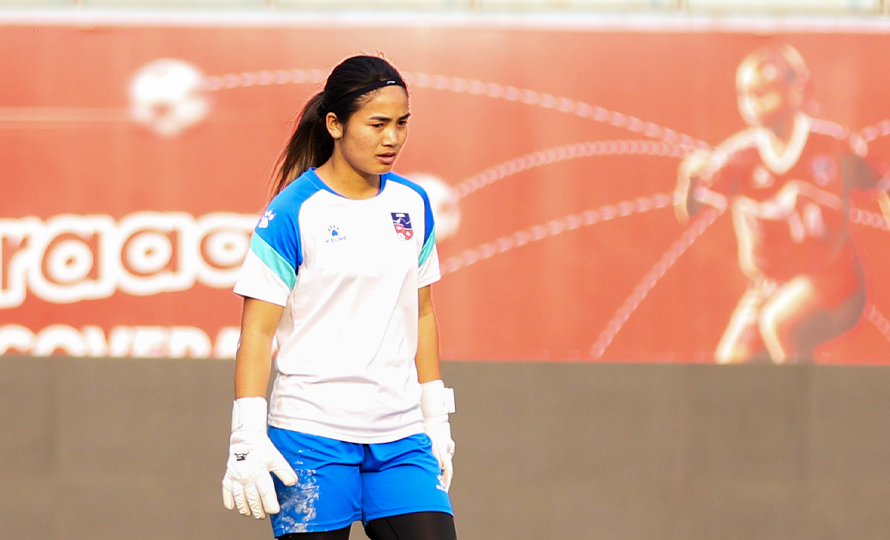
‘Nepali football stands at a crossroads dominated by politics and administrative conflicts. As a player, it is heartbreaking to witness this,’ she wrote. ‘The dispute between RAKEP and ANFA threatens Nepal’s participation in the SAFF Women’s Championship, showing a disregard for sports. It jeopardizes the dreams and years of hard work of thousands of players.’

She added, ‘The players’ future is uncertain. Without training, technical preparation, or clear plans, how can we step onto the field?’ She appealed humbly for support from the government and ANFA.

Following the SAFF Women’s Championship, the SAFF U-17 Championship will be held in August, but Nepal’s participation remains uncertain.

With RAKEP’s suspension still in place, ANFA defends itself as the ‘suspended association,’ and RAKEP’s lack of initiative in preparing for the SAFF Championship has impacted player participation.

FIFA has declared it will not accept third-party interference and has warned of strict sanctions if the suspension is not lifted.

Until FIFA removes the suspension, Nepal will be barred from participating in any international competition.
Since April 18, the Chandragadhi Gold Cup has been underway, featuring three departmental teams from Nepal as well as a team from Bhutan. Women players are actively engaged in this tournament. The Tribhuvan Army Club won their opening game, while the champion APF team arrived in Jhapa on Sunday, preparing for their matches.

The winners of this tournament will receive a prize of NPR 1.1 million, with NPR 500,000 for the runners-up. Despite the prize money, this does not bring joy to the players.

Not only the women players, but the men’s players and clubs are also busy competing in various Gold Cup tournaments across the districts. On Sunday, the Birat Gold Cup concluded in Morang, with Jhapa 11 winning the title. The Khajur Gold Cup has also concluded in Nepalgunj, and the Ilam Gold Cup is currently underway. Other Gold Cup competitions are planned, including a women’s knockout tournament scheduled in Pokhara.

Despite the suspension by RAKEP affecting central and international football, football activities in the districts remain active.

Impact of ANFA Suspension

Since RAKEP imposed the suspension, national and international football activities in Nepal have largely come to a halt.

Before the suspension, the men’s national team played their final AFC Asian Cup qualifier against Laos—a match for which RAKEP reportedly gave prior approval to ANFA.

But afterward, the women’s team was unable to participate in the FIFA International Series 2026 held in Thailand. ANFA cited RAKEP’s suspension as the reason for the lack of preparation.

The suspension and ongoing dispute over early elections between RAKEP and ANFA led to the cancellation of the friendly match against Hong Kong at Dashrath Rangshala Stadium, with RAKEP accused of denying access to the venue.

Prior to this, the National League and Shahid Smarak Women’s League, both organized by ANFA, had been suspended, primarily due to these internal conflicts.
After allegations surfaced that foreign players with tourist visas participated in the league without proper work permits, the immigration department instructed ANFA not to allow these players. ANFA not only barred their participation but also suspended the entire league, which has prevented the league from resuming since then.

The women’s league had played only four matches, and the APF women’s team had not competed in any game before the halt.

ANFA also failed to fulfill the agreement with the union regarding the opening match of the Shahid Smarak A Division League. Its future has since become uncertain following the suspension.

Nepali football has now almost come to a standstill. To resolve this crisis and restore football to its former state, extensive dialogue and solutions are needed on how to protect ANFA from FIFA suspension.

However, none of the concerned parties have prioritized this issue as all are engrossed in electoral strategies.

Meanwhile, with just over a month remaining until the SAFF Women’s Championship, Nepal’s participation remains unresolved.

नेपाल लाइफ इन्स्योरेन्सले विलम्ब शुल्कमा दियो विशेष छुट

Nepal Life Insurance Announces Special Waiver on Late Fees to Mark 25th Anniversary

Nepal Life Insurance has announced a plan to offer up to a 100 percent waiver on late fees to reactivate overdue insurance policies in celebration of its 25th anniversary. This initiative, effective from Baishakh 7 to Jestha 5, aims to strengthen the financial security of policyholders. The company noted this is the first time it has introduced such a substantial waiver. Currently, Nepal Life holds about 30 percent of the market share.

Kathmandu, Baishakh 8 – On the occasion of its 25th anniversary, Nepal Life Insurance has unveiled a special discount plan on late fees to revive dormant insurance policies. In light of the current economic challenges causing delays in policy renewals, the company has introduced an easy renewal payment mechanism to provide financial protection to policyholders reactivating their policies.

This scheme, effective from Baishakh 7 and continuing until Jestha 5, allows up to a 100 percent waiver on late payment charges when overdue policies are reactivated under the 2082/83 renewal program. According to the company, “This is the first time such a significant special discount has been introduced on the silver jubilee occasion.” It added, “The 30-day facility is available to all policyholders with overdue policies.” Nepal Life, being the country’s leading life insurance company, currently commands approximately 30 percent of the market share.

3,501 Drivers Penalized for Traffic Violations in Kathmandu Valley in 24 Hours

In the past 24 hours, traffic police in Kathmandu Valley have taken action against 3,501 drivers for various traffic violations. Among those penalized, 77 were caught driving under the influence of intoxicants, 158 for running red lights, and 89 for speeding. Nareshraj Suvedi, spokesperson for the Valley Traffic Police Office, reported that these actions generated a total revenue of NPR 2,515,501.

As of this morning, the breakdown of offenses includes 77 for intoxicated driving, 69 for being in unfit condition, 158 for red light violations, 89 for speeding, 172 for improper lane usage, 57 for keeping vehicle doors open while in motion, 77 for unauthorized use of horns, 55 for driving on slopes while picking up passengers, and 2,747 for other violations. Deputy Superintendent of Police and spokesperson Nareshraj Suvedi said, “A total of 3,501 drivers were penalized over the last 24 hours for various breaches of traffic rules, resulting in a collected revenue of NPR 2,515,501.”

Nepal Kempo Team Departs for 22nd World Kempo Championship in Turkey

The Nepal Kempo team, consisting of 16 members, departed on April 21 to participate in the 22nd World Kempo Championship held in Antalya, Turkey, starting on April 21. Four female athletes—Anjana Shahi, Prisha Rajyalaxmi Shah, Ira Gautam, and Monalisha Dhami—will compete in semi-kempo events, while six male athletes will participate in various categories. Pavel Shah, President of the Nepal Kempo Kukri Federation, expressed confidence that the athletes will deliver outstanding performances and win medals. (Kathmandu, April 21)

The Nepalese Kempo team has departed for the 22nd World Kempo Championship, which will be held in Antalya, Turkey. The championship will run until April 26. The 16-member delegation is led by Pavel Shah, President of the Nepal Kempo Kukri Federation. The team includes six male and four female athletes, with additional officials and guardians accompanying them.

In the women’s division, Anjana Shahi (50 kg), Prisha Rajyalaxmi Shah (22 kg), Ira Gautam (25 kg), and Monalisha Dhami (60 kg) will compete in semi-kempo events. Anjana Shahi will also challenge in kata and self-defense, while Ira Gautam will compete in kata as well. On the men’s side, Suresh Parajuli (65 kg), Sulabh Shrestha (30 kg), and Kriddik Bikram Kunwar (25 kg) will participate in semi-kempo competitions. Dilman Lama will compete in full kempo, kata, and self-defense events. Yaman Pandey will challenge himself in five events: full kempo, semi-kempo, submission, self-defense, and kata. Shivahari Rai will take part in both semi and full kempo, including kata and submission categories.

During the team’s departure, President Pavel Shah expressed his belief that the athletes will perform superbly and bring home medals. The players also committed to upholding the nation’s honor through their participation.

‘पहाड’ को विशेष शोमा सेलिब्रेटी प्रतिक्रिया कस्तो छ ?

Celebrities React to Special Screening of Film ‘Pahad’

Directed by Tulsi Ghimire, the film ‘Pahad’ highlights the current situation in the country and inspires young people to return home. Dinesh DC, Chairman of the Film Development Board, praised the film for clearly portraying the overall conditions of the nation and its commendable message. The movie addresses issues such as unemployment, depopulated hills, and water scarcity, with audience feedback encouraging the entire team.
At the special screening event held Monday evening in Kathmandu, celebrities noted how the film reveals the broader challenges facing the country. Musician Shambhujit Baskota emphasized the national importance of the film’s message, stating, “The hills are becoming empty. There are no jobs, and lush green mountains are turning barren. The message the film raises must be taken seriously by the nation. It motivates youth to return home and work collectively to solve these problems. The film is excellently made.”
Dinesh DC recalled that Tulsi Ghimire’s previous films combined entertainment with profound messages and said, “Tulsi Dai’s contribution through this film is commendable. Alongside the acting, it effectively presents the overall state of the country. Though the story is set in the hills, it paints a picture of the nation. This film inspires young people to return to their country, villages, and hills.” Director Tulsi Ghimire, actors Bipin Karki, Ravindrasingh Baniya, Renunath Yogi, Panchami Ghimire, and others shared insights about the audience’s response to the film.
Returning to directing after nine years, Ghimire expressed great enthusiasm about the viewers’ reactions. He said, “The message we wanted to convey through the film has been well understood by the audience. Many have felt it to be their own story. The message I aimed to deliver has been successfully depicted. The viewers have left the theaters satisfied.” The film vividly presents contemporary issues such as unemployment, depopulated hills, and water scarcity.
Actor Karki commented, “The audience’s response has motivated the team. This film depicts a genuine story rooted in Nepali soil. I am optimistic that the number of viewers will increase in the future. Those who have watched the film will surely recommend it to others as well.” Actor Baniya expressed pride in working with director Ghimire. The film also stars Madan Krishna Shrestha, Uma Giri, and Arun Kshetri. It portrays the socio-economic problems arising from youth migration that has left the hill regions depopulated.
Director Ghimire also introduced Madan Krishna Shrestha, who previously worked on ‘Balidan,’ and cinematographers Shiva Shrestha and Sunil Thapa, known for their work on ‘Chino.’ The cinematography is handled by Pramod Pradhan. Produced under the banner of Bhagyratna Films Pvt. Ltd., this film marks the acting debut of Tulsi Ghimire’s youngest daughter Panchami, while his eldest daughter Bhavana took charge of production design.

Youth Stabbed to Death at Wedding Ceremony in Kanchanpur; Two Arrested

April 20, Dhangadhi – An 18-year-old youth, Ujwal Sayar, attending a wedding ceremony in Kanchanpur was fatally stabbed with a sharp weapon. The incident occurred at Punarbash Municipality-5, Bhanubasti, according to official reports from the police.

Police spokesperson, Deputy Superintendent of Police (DSP) Hem Bahadur Shahi, stated that the stabbing took place around 1:30 a.m. during a dispute at the wedding event. Ujwal sustained injuries to his chest from the sharp weapon.

He was immediately taken to Maya Metro Hospital in Dhangadhi for medical treatment, but unfortunately died during treatment, DSP Shahi confirmed.

Authorities have arrested two individuals suspected to be involved in the incident and have launched an investigation. The identities of the suspects have not been disclosed.

Second T20 International Cricket Match Between Nepal and UAE Scheduled Today

The second T20 International cricket match between Nepal and the United Arab Emirates (UAE) is set to take place today at the Tribhuvan Cricket Ground. In the first match, Nepal suffered a 6-wicket defeat under the Duckworth-Lewis (DL) method. This match also marked the T20I debut of Nepalese pace bowler Hemant Dhami. Kathmandu, 8 Baishakh.

The historic ‘Under Lights’ T20I series between Nepal’s national team and UAE continues this evening at 5 PM at the Tribhuvan Cricket Ground with the second match.

In Monday’s opening game, Nepal was defeated by UAE by 6 wickets according to India’s DL method application. This was also Nepal’s first international cricket match played during night conditions. The game was interrupted by rain near the end of the first innings. Subsequently, the match was reduced to 10 overs, setting a target of 78 runs for UAE. UAE achieved the target with 7 balls remaining.

Hemant Dhami made his T20I debut as a pace bowler for Nepal in the first match, and Santosh Yadav is also expected to debut in today’s second match. Due to the exclusion of the captain and some experienced regular players from the T20I squad, the newly formed team could not secure a win in the opening game.

Additionally, the UAE squad includes some new players from India, who present fresh opportunities and possibilities.

The players in Nepal’s T20I team are: Dipendra Singh Airee (captain), Kushal Bhurtel, Kushal Malla, Sandeep Jora, Arif Sheikh, Basir Ahmad, Gulshan Jha, Lokesh Bam, Sandeep Lamichhane, Nandan Yadav, Santosh Yadav, Arjun Saud, Hemant Dhami, Sahab Alam, and Sher Malla.

उदयपुरमा बसको ठक्करबाट एकजनाको मृत्यु – Online Khabar

One Person Dies After Bus Hits Motorcycle in Udayapur

In Udayapur’s Belka Municipality-3, Satpatre, a bus carrying a wedding procession collided with a motorcycle, resulting in the death of 27-year-old Roman Basnet. The bus, registration number Province 1–002 Kha 0158, was returning from Manibas in Chaudandigadhi Municipality towards Belka when it struck Basnet, who was riding the motorcycle with registration Province 1–02–045 Pa 8446, last night. Police confirmed that Basnet died at the scene due to the impact.

In another incident from Udayapur, two people died this morning in a fire at Beltar Shanti Chowk, Chaudandigadhi Municipality-7.