Author: space4knews

Rules Introduced Prohibiting Phone Conversations and Disrespect towards Speaker during Assembly Sessions

A draft of the House of Representatives Rules of Procedure 2083 has been prepared, outlining the regulations to be followed during assembly meetings. According to the rules, all members must stand to show respect when the Speaker enters the meeting hall, and the Speaker will take their seat with due honor. Phones must be kept on silent mode during meetings, and strict prohibitions are imposed on taking photographs, as well as audio or video recording. The Speaker holds the authority to take action against any violations.

On 8 Baishakh, Kathmandu – With the draft of the House of Representatives Rules of Procedure 2083 now public, the key provisions are clear. When the Speaker enters the session hall, all members are required to stand to show respect, and the Speaker will assume their position with honor. The Speaker will only leave the hall when the session is adjourned, after which members may also exit. No member is allowed to speak without the Speaker’s permission. When speaking, members must address the Speaker respectfully and only from designated places. Members are prohibited from leaving their seats while the Speaker is speaking and must listen attentively.

The rules mandate that members refrain from passing between the Speaker’s seat and a speaking member. Turning one’s back to the Speaker while seated or standing is strictly forbidden. Any behavior that disrupts the session, causes disturbance, or creates disorder is not allowed. Reading irrelevant material during meetings is prohibited. Phone conversations are completely banned; phones must be set to on silent or vibrate mode. Communication via phone, photography, and audio or video recording during sessions are strictly prohibited. Participants must adhere strictly to these rules.

Members must stand to draw the Speaker’s attention and may speak only after being acknowledged by name or signal. Discussion about the Speaker’s conduct is allowed only when related to official duties; personal criticism is not permitted at other times. Use of obscene, insulting, or morally offensive language is banned. Speech that insults or impacts any individual, caste, religion, language, or gender is also prohibited. The right to speak should not be abused to obstruct the assembly’s work.

Speeches must relate to the matter under discussion in the assembly. Repetition of unrelated points or failure to maintain focus may lead the Speaker to stop the member from speaking or to question them. After being ordered, the member must cease speaking and take their seat. If needed, members may request permission through the Speaker to provide clarifications or convey related information but may not raise controversial issues. The Speaker retains the authority to take appropriate disciplinary actions against any rule violations.

आईजीपी र सीडीओसँग गृहमन्त्रीको ५ घण्टा छलफल, राति गृहमन्त्रालय किन पुगे रास्वपा महामन्त्री ?

Five-Hour Meeting with Home Minister: Why Did Rashwap’s General Secretary Visit the Ministry Late at Night?

Home Minister Sudhan Gurung held an extensive five-hour discussion with Home Secretary Rajkumar Shrestha, Nepal Police Inspector General Dan Bahadur Karki, and Chief District Officers from Kathmandu, along with senior security officials. The meeting started at 6 PM and continued until around 11 PM. The topics discussed during this session have not been disclosed.

When exiting the ministry around 11 PM, reporters questioned the Home Minister about rumors concerning the targeting of major figures. In response, the minister replied, “I will explain later.” During the same time, Rashwap’s General Secretary Kavindra Buralkot made a call to the Chief District Officer of Kathmandu to discuss issues related to Gorkha and then visited the Home Ministry. He stated that since the Home Minister was occupied, he met with administrative staff before leaving.

“The Home Minister was in discussion with the IGP and Kathmandu’s CDO. I did not get a chance to meet him in the meeting,” Buralkot said. “The Home Ministry is not a place to remain silent, so the minister is working in his own way.” He added that the Home Secretary was also present and had visited the minister’s office.

Debentures Bought Cheaply Were Sold at Higher Prices to Public Companies

According to a report by the Securities Board, Deepak Bhatt purchased various debentures at low prices and then sold them to public companies after inflating their value. Bhatt bought 100,000 Nabil Debenture-85 units for NPR 108 million and sold them to his affiliated companies for NPR 118.121 million. Others cooperating in the investigation include Sandeep Chachan, Shubhi Agrawal, Rishiraj Mor, and Raj Bahadur Shah. (April 21, Kathmandu)

The Securities Board’s investigation report reveals that the controversial businessman Deepak Bhatt acquired different debentures in his name at low prices and subsequently sold them to public companies at higher prices. The report, prepared by the Securities Board’s Supervision Department, states that Bhatt bought not only Nepal Reinsurance shares but also Nabil Bank’s debentures (NBLD-85), Nepal Investment Mega Bank’s debentures (NIMBD-90), SBI Bank’s debentures (SBID-83), and Siddhartha Bank’s debentures (SBLD-89) in his name.

According to the report, Bhatt purchased NBLD-85 bonds from Himalayan Reinsurance on November 9, 2025, at NPR 1,080 per unit. Infinity Holdings Pvt. Ltd., which is wholly owned by Bhatt, holds 4.5% ownership in Himalayan Reinsurance. These shares were sold on November 16 to Guardian MicroLife Insurance Company at prices ranging between NPR 1,100 and NPR 1,160 per unit, as stated in the report.

The report also indicates that Bhatt holds a 15% stake in the same company. The debentures were then sold to Crest MicroLife Insurance at prices between NPR 1,160 and NPR 1,182 per unit, and to Protective MicroInsurance at NPR 1,185 per unit. The Securities Board’s report notes that Himalayan Reinsurance owns 15% and 21.43% stakes in these two microinsurance companies, respectively.

Rato Machhindranath Chariot Pulling Begins Today (With Photos)

News Summary

  • The chariot pulling of Rato Machhindranath began today, Tuesday, starting from Pulchowk and moving to Gahbahal.
  • According to tradition, Machhindranath is kept six months at the T:bahal temple and six months in Bungamati.
  • The chariot parade passes through various locations in Lalitpur, concluding with the Bhoto ceremony, followed by the relocation of Machhindranath to Bungamati.

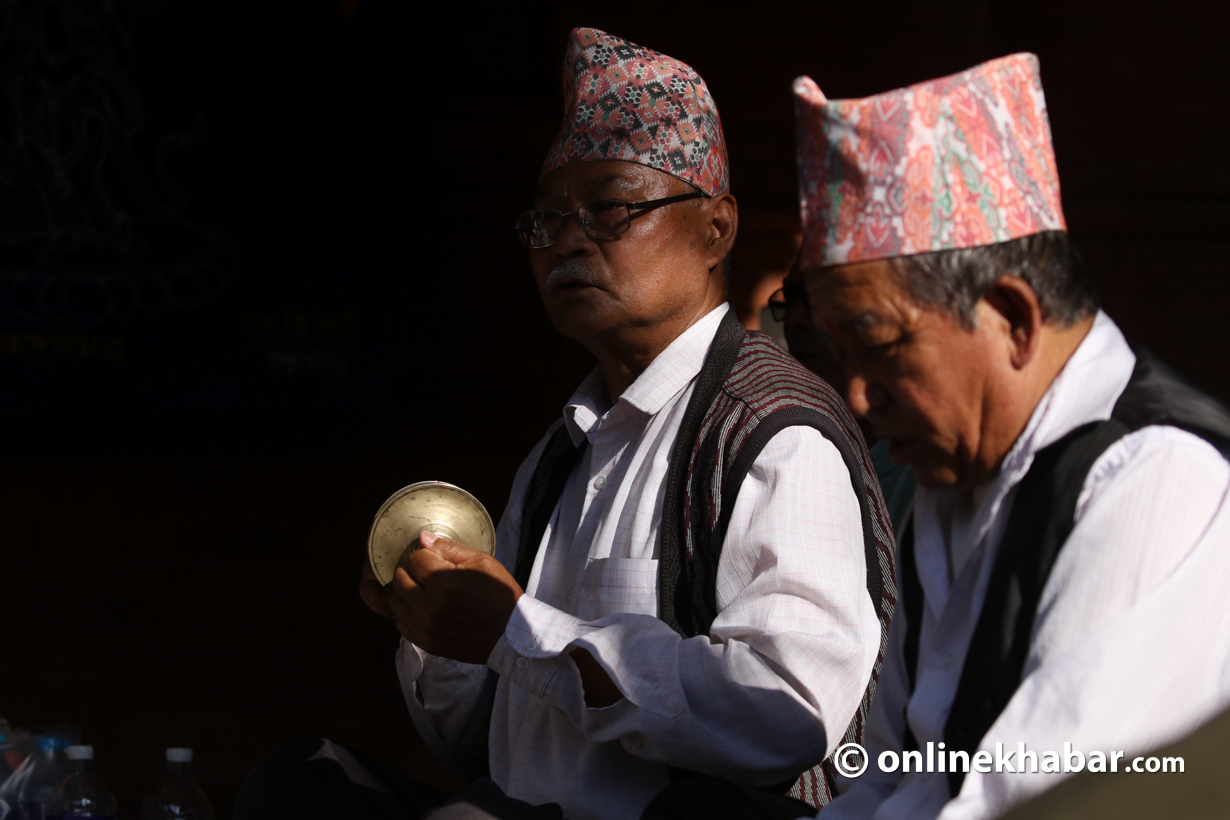
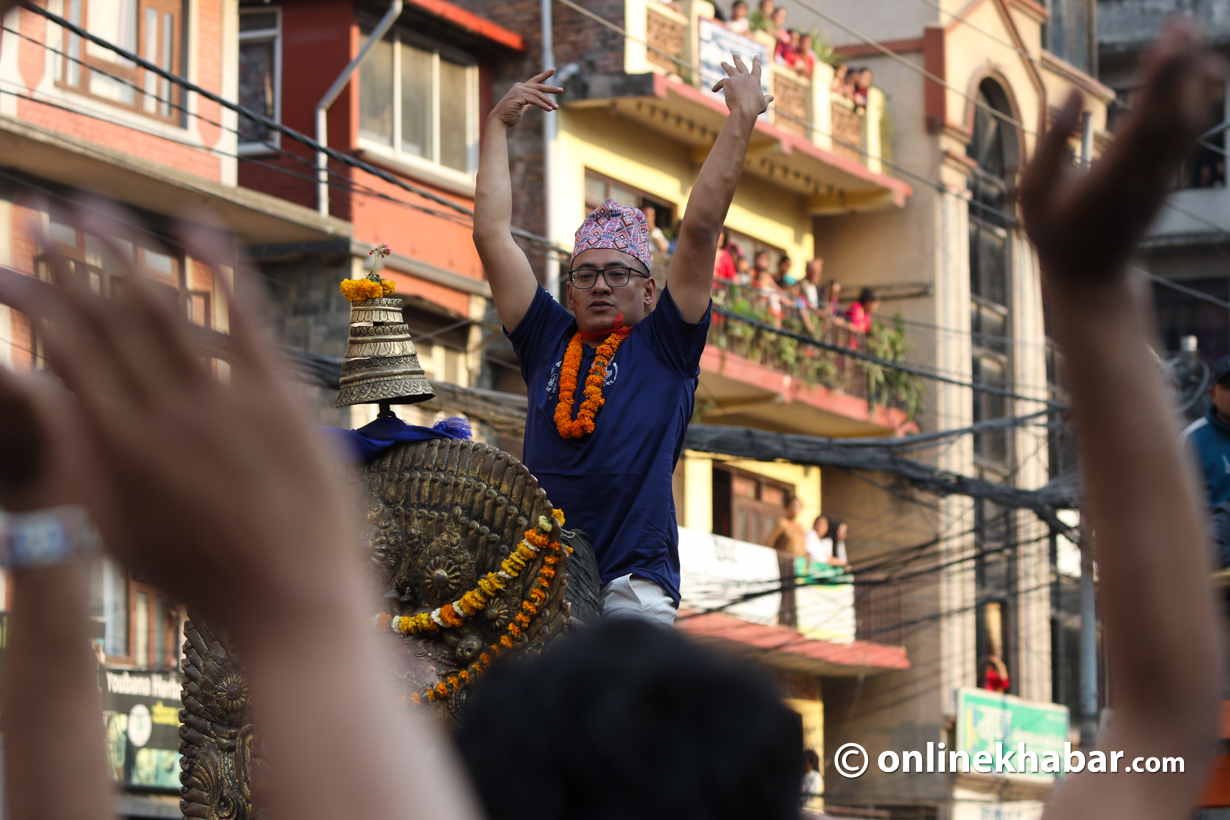
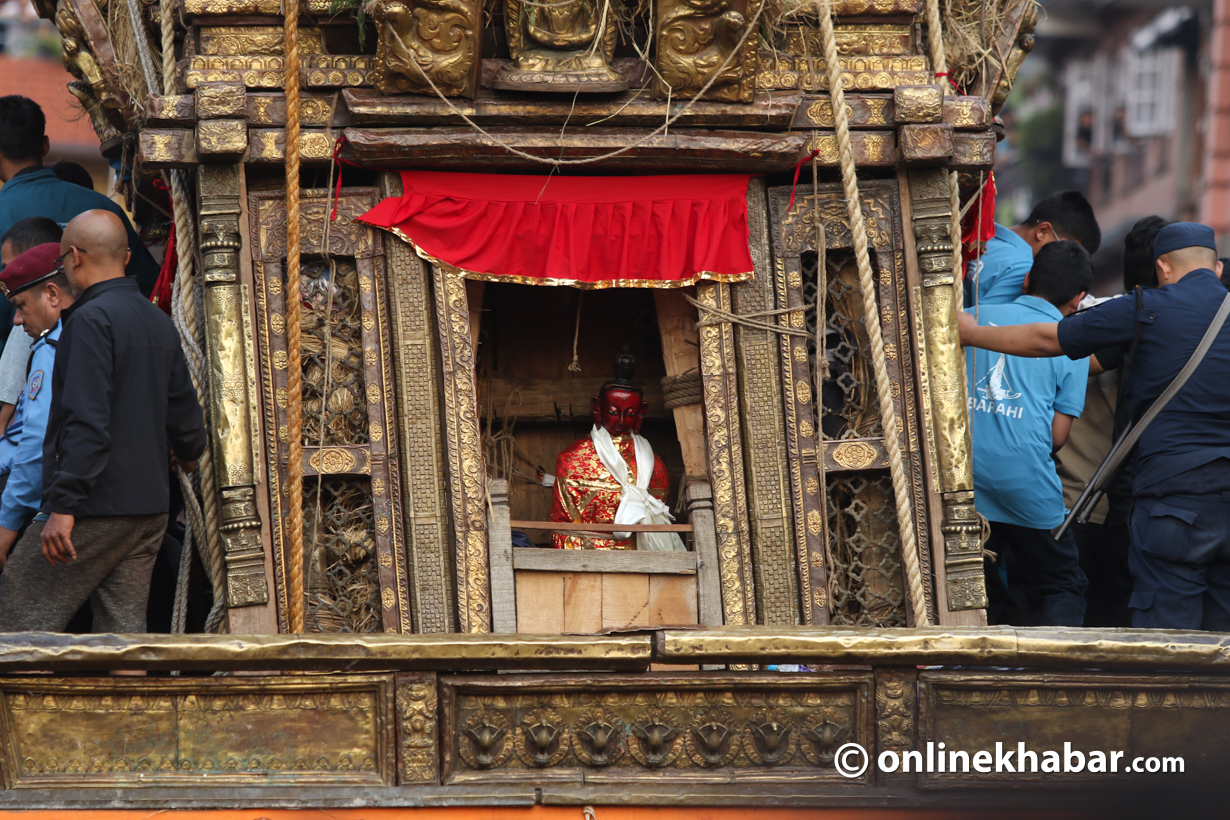
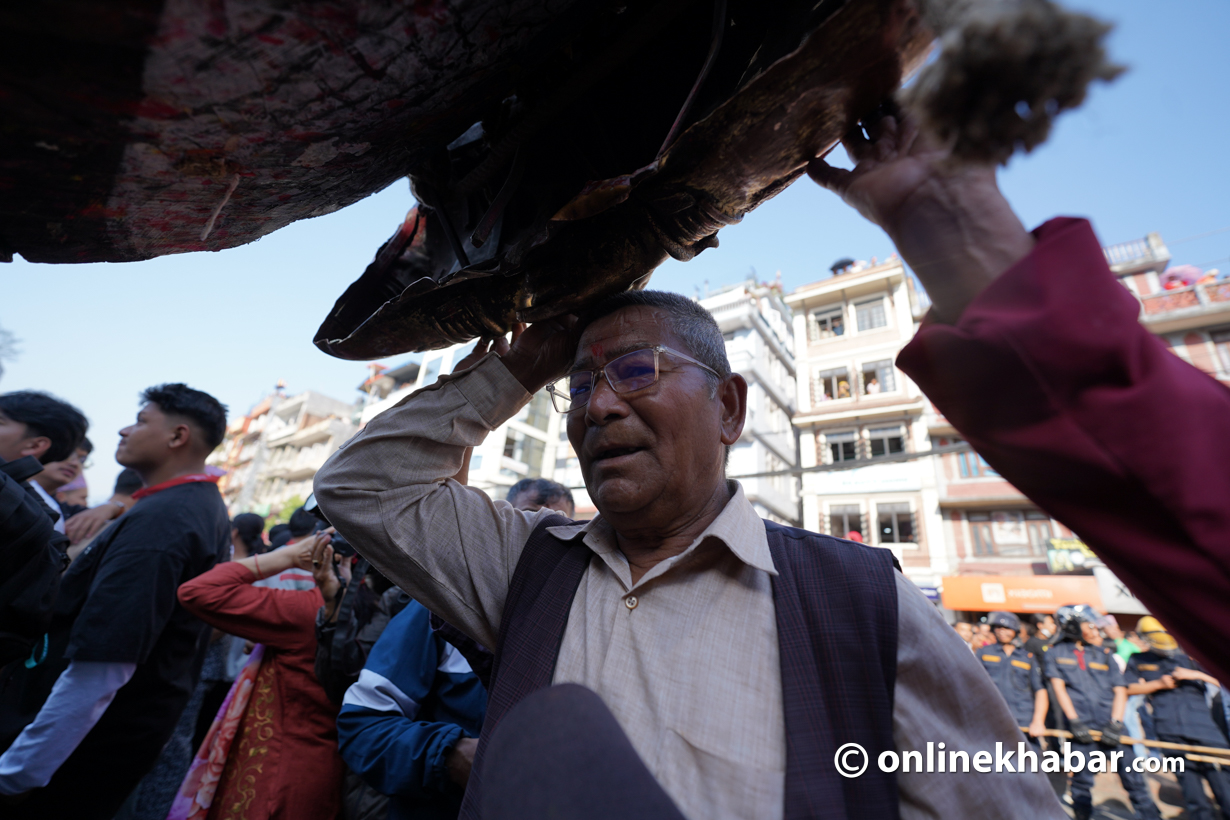
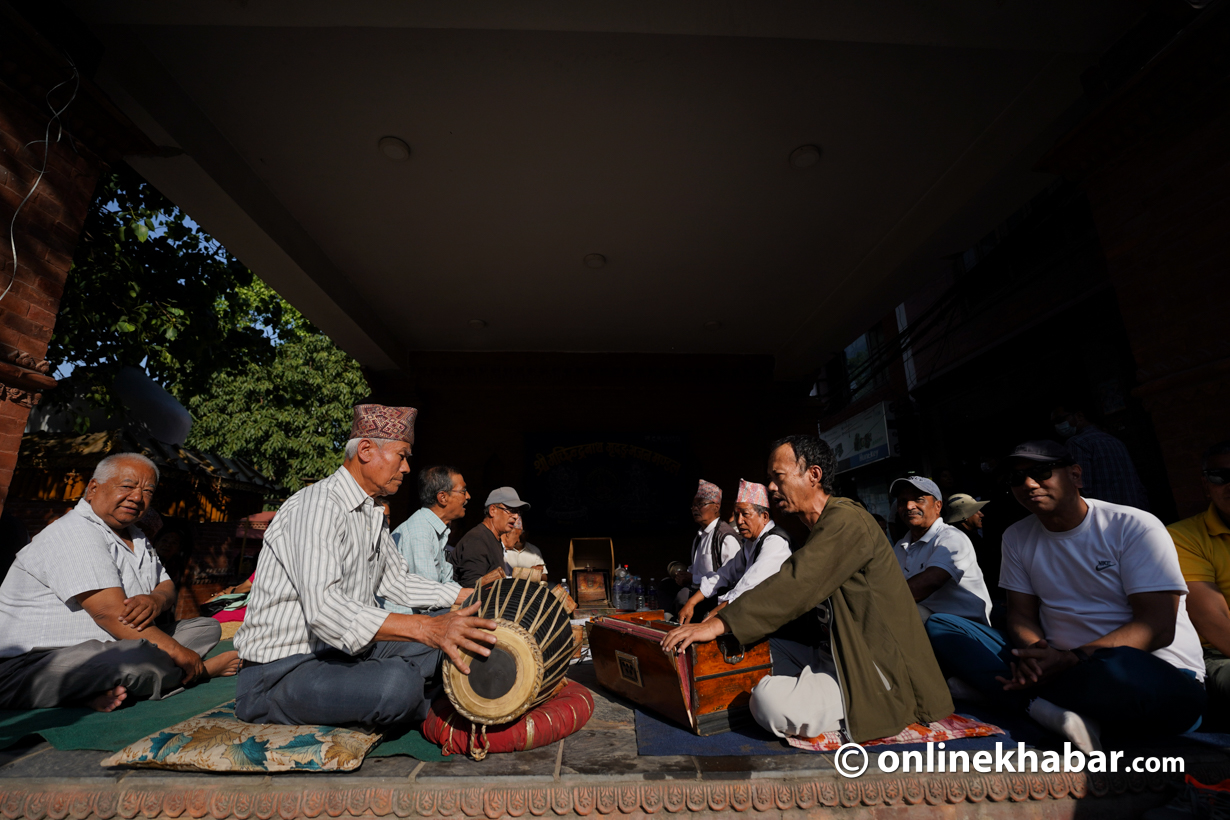
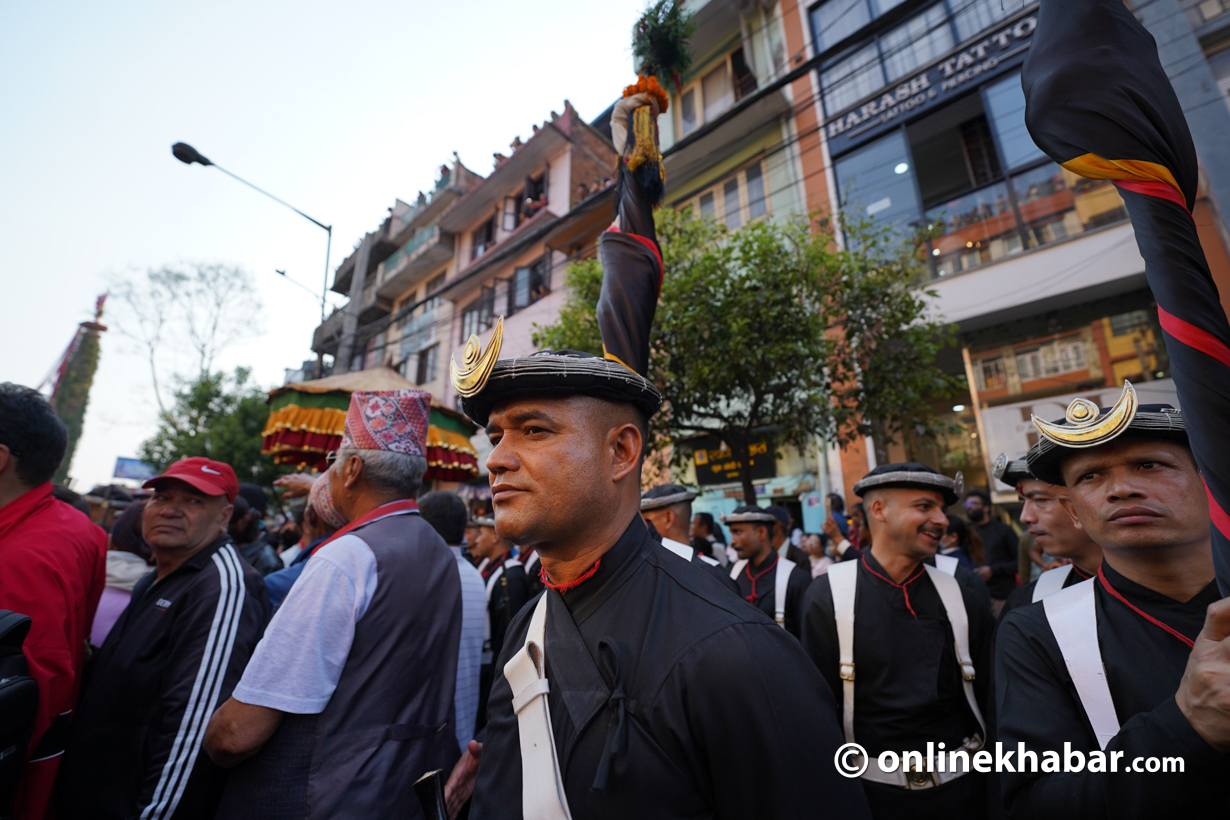
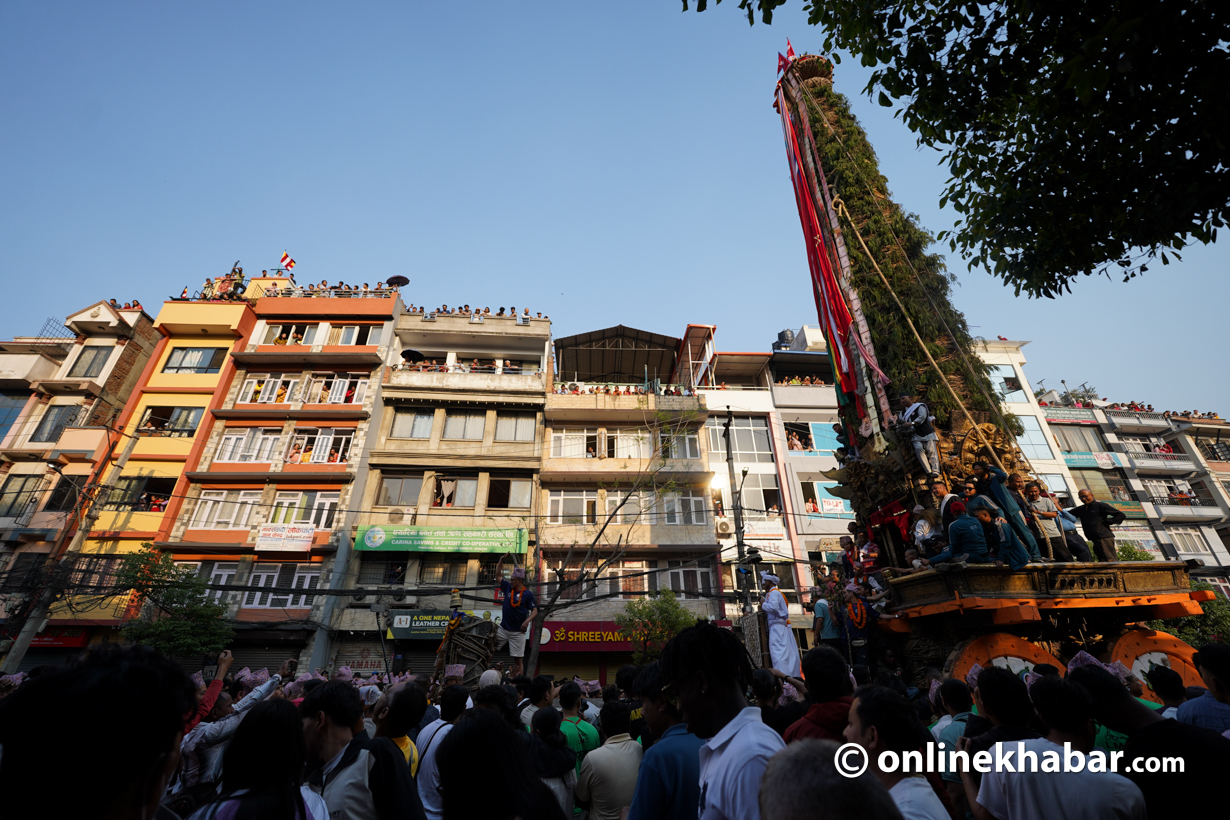
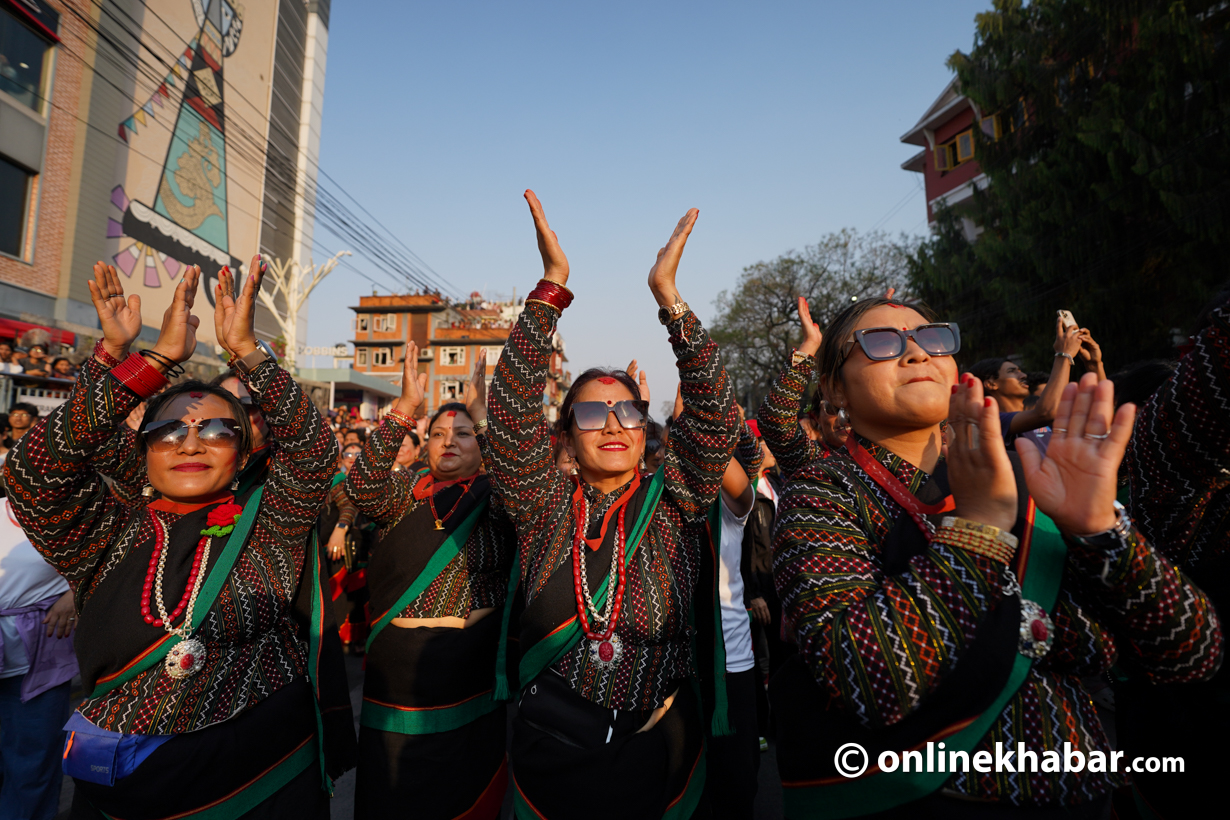
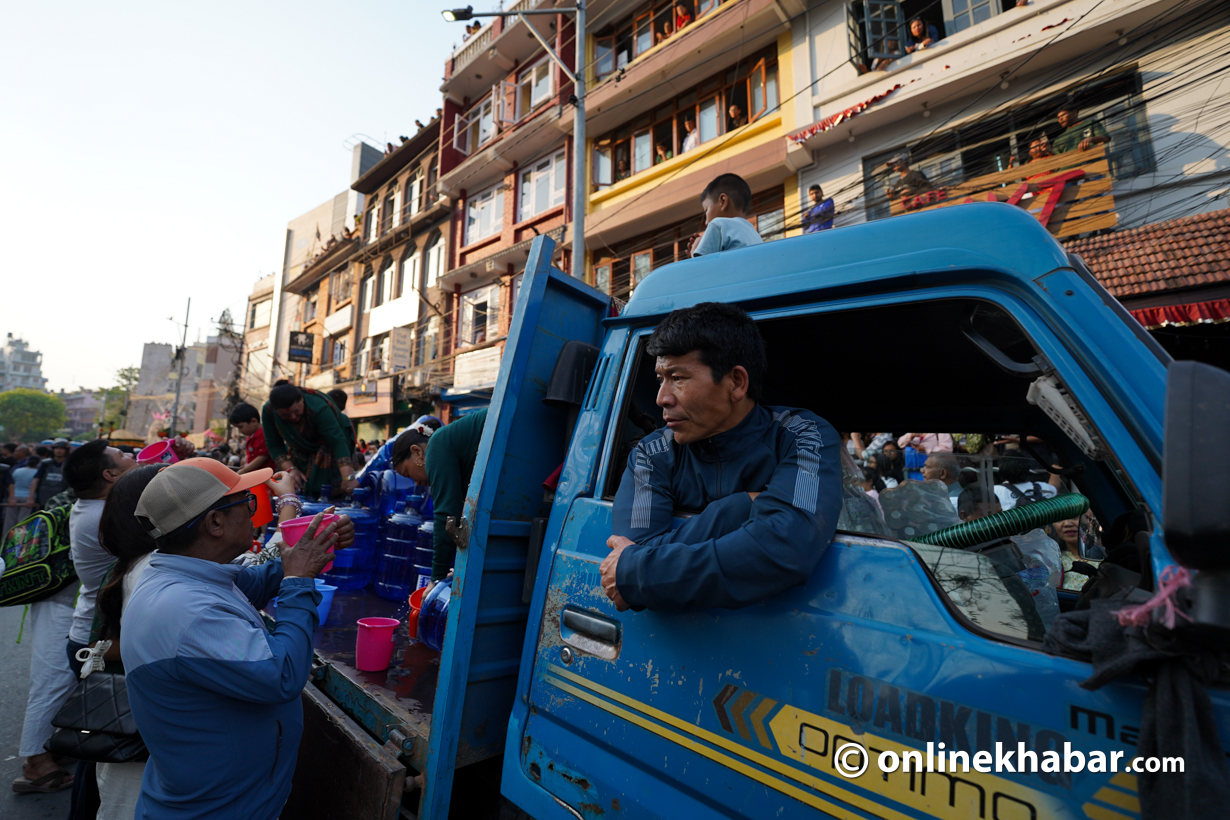
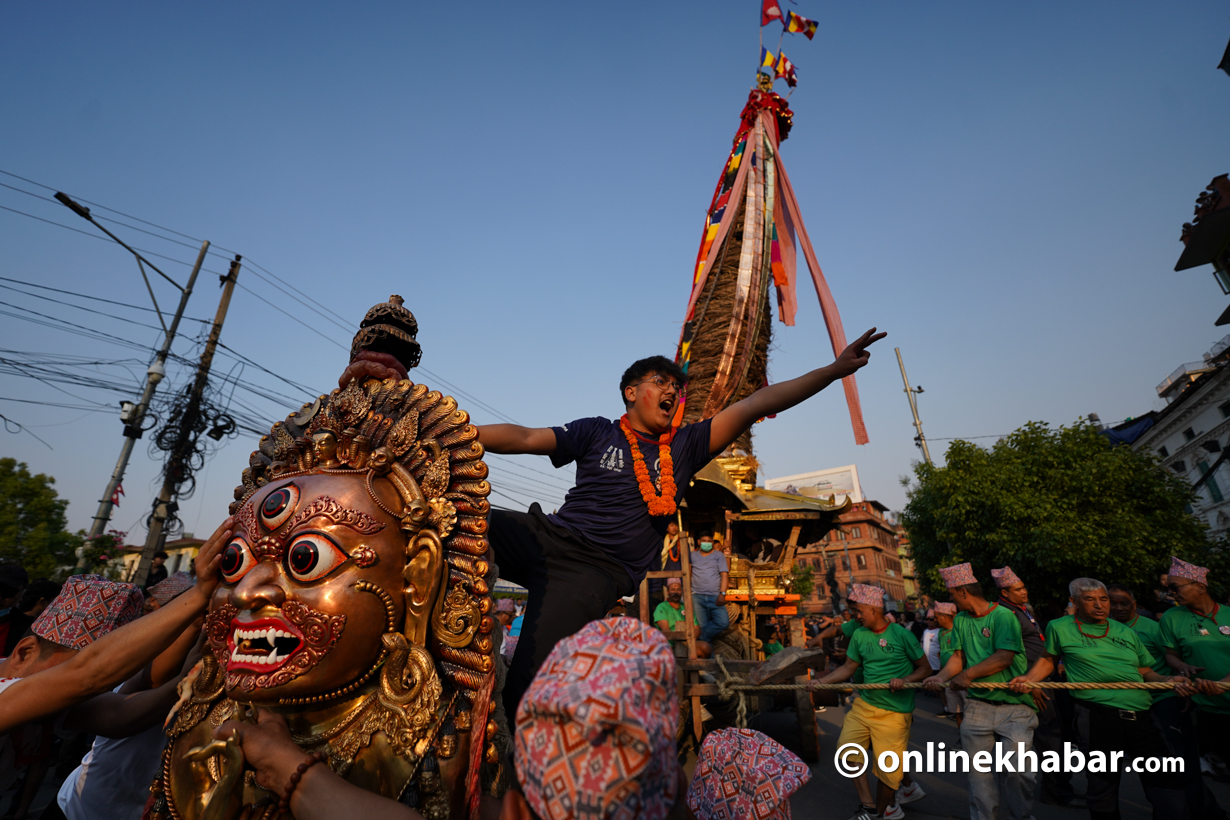
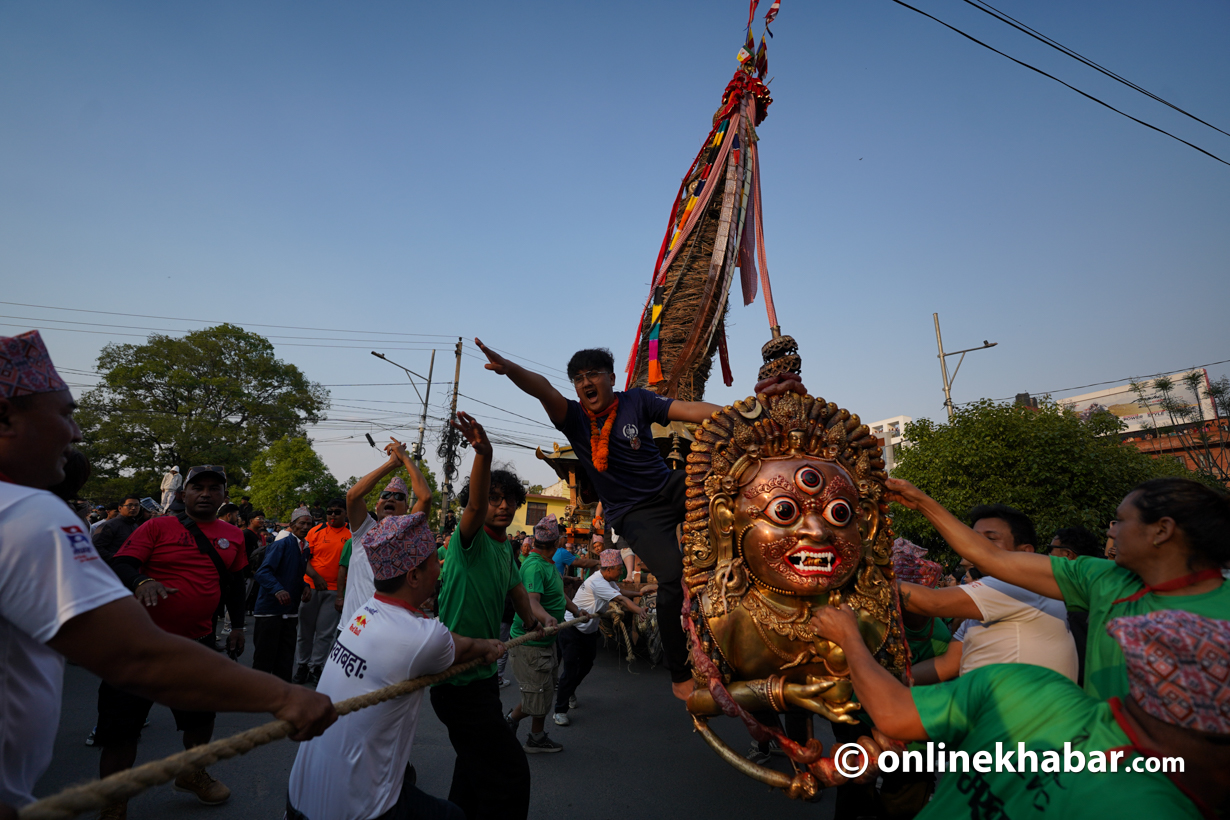
April 21, Kathmandu – The pulling of the chariot of Rato Machhindranath, the deity worshiped as the god of rain and cooperation, commenced today, Tuesday. The chariot was pulled from Pulchowk and brought to Gahbahal.

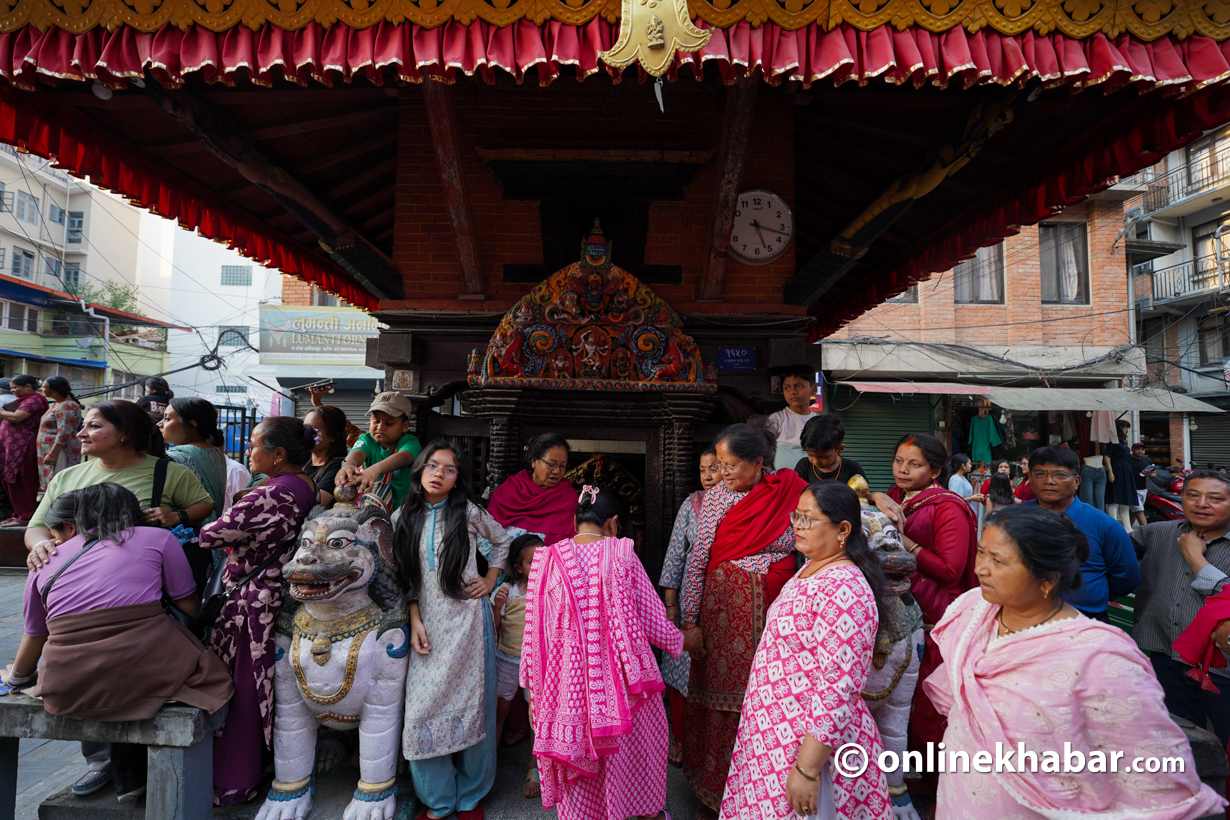
As per custom, Machhindranath is housed at the T:bahal temple for six months and at Bungamati for the remaining six months.

The chariot procession begins to take Rato Machhindranath around the urban areas of Lalitpur.

The chariot traverses multiple locations in the city, including Pulchowk, Gwahal, Sundhara, Lagankhel, and finishes at Jawalakhel with the Bhoto showing ceremony. Afterward, Machhindranath is taken to Bungamati for the remainder of the year.

अभिषेकको शानदार शतकमा हैदराबादले दिल्लीलाई हरायो

Abhishek Sharma’s Brilliant Century Leads Hyderabad to Victory Over Delhi

Sunrisers Hyderabad defeated Delhi Capitals by 47 runs in the IPL 2026. Abhishek Sharma played a magnificent unbeaten century, scoring 135 runs off 68 balls to help Hyderabad post a commanding total of 242 runs. Hyderabad currently stands third with 8 points from 7 matches, while Delhi is placed fifth with 6 points from 6 games. April 21, Kathmandu.

Thanks to Abhishek Sharma’s exceptional century, Sunrisers Hyderabad overcame Delhi Capitals in their IPL 2026 encounter. In the match held on Tuesday night, Hyderabad defeated Delhi by 47 runs. Chasing a target of 243, Delhi managed only 195 runs for 9 wickets in their 20 overs. Nitish Rana was Delhi’s top scorer with 57 runs, followed by Shahbaz Ahmed contributing 41 runs.

For Hyderabad, Ishan Malinga was the pick of the bowlers, delivering 4 overs for 32 runs and taking 4 wickets. Harsh Dubey took 3 wickets, while Dilshan Madushanka and Sakib Hossain grabbed 1 wicket each. After losing the toss and opting to bat first, Hyderabad posted 242 runs for 2 wickets in 20 overs, buoyed by Abhishek Sharma’s unbeaten century. Sharma struck 10 fours and 10 sixes in his 68-ball innings, finishing on 135 not out. Heinrich Klaasen also contributed an unbeaten 37 runs off 13 balls, while Travis Head scored 37 runs from 26 balls and captain Ishan Kishan added 25 runs off 13 balls. Delhi’s captain Axar Patel claimed 1 wicket and another wicket fell via run-out. Following this victory, Hyderabad moved up to third place with 8 points from 7 matches, while the defeated Delhi side remains fifth with 6 points from 6 games.

Significant Increase in Fuel and Daily Consumer Goods Prices in Nepal

The geopolitical tensions in West Asia have led to rising petroleum prices in the international market, causing a notable increase in fuel and daily consumer goods prices in Nepal. Nepal Oil Corporation has repeatedly adjusted fuel prices from Chaitra 1 to Baisakh 2, raising petrol prices by NPR 62 and diesel prices by NPR 95. In the Kathmandu Valley, public transport fares have increased by 25.96 percent, with the minimum fare now reaching NPR 25. Additionally, prices of vegetables, fruits, and drinking water have also risen.

The geopolitical tensions in West Asia (Middle East) have directly impacted Nepal’s economy due to the increase in petroleum prices in the international market. Alongside fuel price hikes, there has been an increase in prices of daily essential food items, vegetables, drinking water, fruits, and transportation fares, adversely affecting the household budgets of average consumers. Nepal Oil Corporation has repeatedly adjusted fuel prices in line with international market conditions.

The rise in fuel prices has also directly affected transportation costs. The Department of Transport Management has adjusted fare rates for public vehicles and freight trucks. The increased transportation costs add extra burden to the production and distribution expenses of all goods, thereby exerting additional pressure on consumer prices. Since farmers are not receiving adequate prices for their produce, consumers are forced to pay higher prices, leading to doubts about the effectiveness of government market monitoring.

According to data from the Nepal Retail Trade Association, the price of Taichin rice flakes, which was NPR 160 per kilogram last year, has increased by NPR 30 this year to NPR 190. In the edible oil sector, sunflower oil rose by NPR 40 from NPR 255 per liter last year to NPR 295 this year, while crude mustard oil increased by NPR 50 from NPR 325 per liter last year to NPR 375 this year.

There has also been a significant increase in transportation fares. Effective from Chaitra 28, 2082 BS, public transportation fares within the Kathmandu Valley have increased by 25.96 percent. According to the Department of Transport Management, this increase applies not only to urban areas but also to long-distance and freight transport services.

15-Day Notice Issued for Loan Repayment by Troubled Cooperatives; Properties to Be Auctioned if Defaults Persist

The Ministry of Land Management, Cooperatives, and Poverty Alleviation has issued a notice requiring repayment of loans from troubled cooperatives within 15 days. The notice states that if the loans are not fully repaid, the assets of borrowers and guarantors will be frozen and the collateral properties auctioned. The government has officially mandated the management committee for troubled cooperatives and has initiated processes to reimburse members’ savings. (April 21, Kathmandu)

The Ministry released the notice following the official formation of the Troubled Cooperative Management Committee. On Tuesday, the committee issued a 15-day ultimatum to directors, borrowing members, managers, employees, and guarantors associated with these cooperatives. The notice emphasized that failure to repay will result in freezing and auctioning of their properties and collateral.

The notification reads, “As per Section 104 of the Cooperative Act, 2017, the listed cooperatives have been declared troubled by the Government of Nepal (Ministry of Land Management, Cooperatives, and Poverty Alleviation) and brought under the management and liability settlement committee. Despite repeated notifications via the office website, national daily newspapers, SMS, and phone calls, the borrowers have not repaid principal, interest, and damages owed. Therefore, this notice calls upon these individuals to contact the committee office in Budhanagar, Kathmandu within 15 days from the publication date to reconcile accounts and settle outstanding dues.”

Moreover, if loans remain unsettled within the 15-day period, details including the names of borrowers, their families, and guarantors will be published publicly. Their assets and bank accounts will be frozen, public services suspended, and collateral pledged during loan acquisition auctioned. The notice further states, “If repayment is still not completed within the stipulated period, details of borrowers and guarantors, including their family members, will be made public; their assets, accounts, and public service facilities will be blocked by coordinating with relevant authorities. Collateral pledged at the time of borrowing will be auctioned or disposed of as per the Cooperative Act, 2017 and Cooperative Regulations, 2018, to recover the full outstanding dues of the cooperatives.”

Today, the government officially empowered the Troubled Cooperative Management Committee. The cabinet meeting on Tuesday appointed Dilliraj Acharya from Pyuthan as chairman, and Nawraj Simkhada from Dhading and Roshan Bahadur Shakya from Lalitpur as members. The ministry is advancing the phased process to reimburse savings to cooperative members. With the loan recovery process underway, the ministry is prepared to accelerate savings reimbursement.

US and Iran Both Prepare for War as Peace Talks Face Uncertainty

Iran has announced its withdrawal from the second phase of peace talks scheduled to take place in Islamabad. While a delegation led by US Vice President J.D. Vance was prepared to travel to Islamabad for the talks, Iran has retreated from negotiations. The closure of the Strait of Hormuz amid escalating tensions between Iran and the United States has caused a global oil price surge of 40 percent. Iran’s withdrawal from the peace talks in Pakistan’s capital has heightened the risk of renewed conflict in the Middle East.

As a current ceasefire period nears expiration, both Washington and Tehran have issued strong warnings to each other, signaling readiness to resume hostilities. The decision by Iran to pull out of the talks came as a US delegation led by Vice President J.D. Vance, including Steve Whitkoff and Jared Kushner, was preparing to fly to Islamabad. Tehran reacted angrily after the US Navy detained an Iranian-flagged cargo ship last Sunday. The US claims the vessel attempted to violate its blockade, justifying the seizure.

Since the outbreak of war on February 28, Iran closed the Strait of Hormuz, leading the United States to impose a strict naval blockade on Iranian ports. President Donald Trump has made it clear via his platform ‘Truth Social’ that the blockade will remain in place until Iran unconditionally reopens the Strait of Hormuz. According to Trump, the blockade is costing Iran $50 million daily, a loss that signals severe economic distress.

Iranian Parliament Speaker Mohammad Bagher Ghalibaf accused Trump of trying to force Iran into surrender through threats and encirclement. He stated that under these conditions, Iran would not engage in any talks and has been preparing new strategies on the battlefield over the last two weeks. Additionally, Iran’s Revolutionary Guards have warned that any ship entering the Strait of Hormuz without their permission will be targeted. This escalation has had a direct impact on global oil and gas markets.

The Strait of Hormuz, responsible for nearly 20 percent of the world’s oil and fertilizer supply, remains blocked, prompting a 40 percent fuel price increase since February. On Tuesday, Brent crude was trading at $95 per barrel, somewhat lower than the pre-ceasefire peak of $120 but still substantially above normal prices. With diplomatic efforts faltering, the risk of a major military confrontation in the Middle East continues to grow.

Kushal Bhurtel’s Half-Century Helps Nepal Draw T20 Series

With this result, the two-match T20I series has ended in a 1-1 draw. On April 8 in Kathmandu, Nepal defeated the UAE by 8 wickets in the second T20I match. Chasing a target of 129 set by the UAE at the Tribhuvan University Cricket Ground, Nepal reached the target in 15.5 overs for the loss of 2 wickets. This leveled the two-match T20I series. Earlier on Monday, the UAE had defeated Nepal by 6 wickets in the first match.

Nepal’s opener Kushal Bhurtel played an outstanding innings, scoring an unbeaten 84 runs off 57 balls, including 12 fours and 2 sixes. Captain Dipendra Singh Airee also remained unbeaten, scoring 23 runs off 17 balls. Opener Kushal Malla was dismissed after scoring 19 runs off 19 balls, and Santosh Yadav managed 1 run before getting out.

In bowling, UAE’s Mohammad Arfan and Neelansh Keswani took one wicket each. After losing the toss, UAE batted first, scoring 128 runs for the loss of 8 wickets in their allotted 20 overs. Akshdeep Nath played a half-century for the UAE. At 48 runs, UAE was in trouble at 6 wickets down, but the partnership between Nath and Arfan revived the innings. They put on 64 runs for the seventh wicket. Nath was unbeaten on 53 runs, while Arfan was dismissed for 32. Other UAE batsmen included captain Mohammad Wasim (0), Adib Usmani (30), Alishan Sharafu (1), Harpreet Singh Bhatia (1), Shoaib Khan (0), Neelansh Keswani (0), and Tanzir Naqash (0).

For Nepal, Sandeep Lamichhane took 3 wickets, Hemant Dhami picked up 2, and Nandan Yadav and Shahab Alam claimed one wicket each.

बक्सिङको विवादका विषयमा छानविन गर्न राखेपले बनायो छानविन उपसमिति

National Sports Council Forms Investigation Subcommittee to Resolve Boxing Disputes

The National Sports Council has established a three-member investigation subcommittee, led by Bhojananda Rai, to address disputes arising in the boxing sector. The subcommittee is tasked with investigating complaints and petitions concerning officials of the Boxing Federation and submitting a report within seven days. The investigation will be conducted based on regulations, laws, and the federation’s statutes, with arrangements to review necessary documents and coordinate with relevant stakeholders. Kathmandu, April 21.

The National Sports Council (NSC) formed this subcommittee to resolve various conflicts and issues within Nepal’s boxing federation and related areas. The decision was made at the NSC Executive Committee meeting held on Tuesday. The committee comprises three members: Bhojananda Rai, the head of the NSC’s Administrative Department, as chairperson; Narayanraj Aryal, head of the NSC Legal Division; and Sanuraj KC, Administrative Officer of the NSC Sports Development Department.

The subcommittee has been given a deadline of seven working days to study complaints and petitions related to boxing disputes, engage with concerned parties, conduct necessary investigations, and prepare a report with appropriate recommendations. “Among the cases under review are complaints alleging that Boxing Federation officials unlawfully dismissed the federation’s secretary, Pushkar Raj Pant, and that previous Council leadership covered irregularities by purchasing vehicles; a petition filed by Pushkar Raj Pant on January 22, 2026 (2082 Poush 8), requesting action against those responsible; complaints submitted to the Commission for Investigation of Abuse of Authority against Boxing Federation President Kiran Bahadur Shrestha, Vice President, and other officials for actions that allegedly harmed national pride; and requests by the NSC’s chief boxing coach, Prakash Thapa Magar, who accused assistant coach Deepak Maharjan of verbally abusing players and filed disciplinary requests twice with the Council,” the NSC stated.

The committee’s duties include examining all relevant documents related to the complaints, coordinating with stakeholders to gather facts, preparing the report based on existing laws, regulations, and federation statutes, and submitting the findings within the specified timeframe. The subcommittee is also authorized to determine its own procedural rules during the investigation.

‘Nepal’s Communist Parties Lack Genuine Leftist Character’

Following the recent elections, Nepal’s communist parties have significantly diminished in size, prompting extensive discussions on party reorganization, leadership review, and potential reforms. Dr. Khagendra Prasain emphasized that the electoral defeat of the communists should not be interpreted as the demise of the socialist movement. He pointed out that internal democracy within these parties has weakened due to personal gains and neoliberal tendencies.

After the House of Representatives election, Nepal’s communist parties have become considerably smaller. Currently, in-depth dialogues are underway about party reconstruction, leadership assessments, and reforms. Marking the 77th anniversary of the communist party’s founding, unity has also surfaced as a key issue. In this context, Dr. Prasain stated, “In the last 10 to 15 years, the major communist parties in Nepal have not genuinely led a socialist campaign or movement.”

He further explained, “Following the recent elections, Nepal’s communist parties have become very small.” Expressing concern over the parliamentary status of the communist parties and the condition of the leftist movement, he remarked, “Our constitution explicitly mentions ‘socialism,’ and every political party’s documents, whether winners or losers, include references to socialism.”

Dr. Prasain also noted, “Capitalism and neoliberalism place the individual at the center and treat groups or society as secondary.” He discussed the primary problems and weaknesses observed in the operation of communist parties. Adding to this, he said, “The root cause of party mergers or splits is personal benefit.”

Supreme Court Rejects Petition Filed Against Ravi Lamichhane

The Supreme Court has refused to register a petition filed against Ravi Lamichhane. The court administration issued a “Darpith” order, meaning a refusal to register, regarding the petition submitted by Ayush Badal. Badal is allowed to file a fresh petition against the administration’s decision in the Supreme Court. Kathmandu, 8 Baisakh.

The Supreme Court administration declined to register the petition submitted against Ravi Lamichhane by issuing a darpith order. This order effectively rejected Badal’s petition. However, he can still file another petition in the Supreme Court challenging the administration’s decision. If a single-judge bench of the Supreme Court hears this new petition and revokes the darpith order, the court administration will then be required to register the petition. The petition sought to prohibit Rashtriya Swatantra Party Chairman Ravi Lamichhane, who is facing money laundering allegations, from performing his duties as a Member of Parliament.

Hybrid California Bees Develop Natural Resistance Against Varroa Mites

A hybrid bee in Southern California has developed a natural ability to combat ‘Varroa mites.’ According to a study conducted between 2019 and 2022, these hybrid bees exhibited 68 percent fewer parasites compared to commercial bee populations. The Varroa mite infestations during their larval phase were significantly reduced, and the need for chemical treatments dropped fivefold. April 21, Kathmandu.

While beekeepers worldwide continue to lose hives due to this deadly parasite, a particular hybrid bee in Southern California offers new hope. Scientists at the University of California, Riverside report that this bee has naturally developed resistance against the Varroa mite, deemed the most dangerous enemy in the global beekeeping community. In 2025 alone, approximately 62 percent of commercial hives across the United States were destroyed due to these mites.

Study Findings: 68 Percent Fewer Parasites
Published in the journal Scientific Reports, the research involved detailed microscopic examination of 236 hives from 2019 to 2022. It revealed that these hybrid bees in California harbored on average 68 percent fewer parasites than commercial bees. Moreover, the requirement for chemical treatments was reduced by a factor of five.

Lead researcher Genesis Chong-Echavez explained that these bees were not developed through commercial breeding programs but arose naturally from a mix of wild bees of diverse lineages, including African, Eastern European, Middle Eastern, and Western European genes. The resistance observed from the larval stage is among the study’s most remarkable findings. Laboratory tests showed that Varroa mites are less attracted to the larvae of these hybrids.

Future Opportunities:
Bees play an essential role in pollination, critical for agricultural production worldwide, with an economic value measured in billions of dollars. The discovery of this natural resistance could significantly benefit global apiculture and food security. According to entomology professor Boris Berka, the next challenge lies in identifying the specific genetic traits responsible for this resistance and spreading them to other bee species, thereby reducing reliance on chemical pesticides.

National Sports Council Forms Committee to Investigate ANFA Financial Issues

News Summary

Prepared by AI. Editorial review completed.

  • The National Sports Council has formed a three-member subcommittee to investigate the financial affairs of the All Nepal Football Association (ANFA).
  • Kamal Bhattarai, an executive member of the council, is the chairperson of the subcommittee, which has been given a seven-day deadline to submit its report.
  • Following the early election dispute within ANFA, the council suspended ANFA for three months, and the subcommittee will prepare an impartial investigation report.

April 21, Kathmandu: The National Sports Council (Rakhap) formed an investigation committee on Tuesday to probe the financial matters of the All Nepal Football Association (ANFA).

During its executive committee meeting held on Tuesday, the council established a three-member inquiry subcommittee chaired by Kamal Bhattarai, an executive member of Rakhap.

Rakhap member secretary Ramcharitra Mehta stated that the subcommittee was formed based on a letter from the Commission for the Investigation of Abuse of Authority and a letter from the Ministry of Youth and Sports dated April 20, requesting a report on the matter.

The inquiry committee includes Rakhap’s accounts officer Tanknath Kandel and Gopikrishna Niraula from the supplies and stores branch. The committee has been tasked with completing the investigation and submitting its report within seven days.

Complaints were filed with the Commission for the Investigation of Abuse of Authority alleging irregularities and lack of transparency in ANFA’s procurement process, which violates its financial regulations, procedures, and statutes.

The subcommittee is responsible for reviewing relevant documents related to the complaint, coordinating with concerned parties to prepare the report, and basing its findings on applicable laws, prevailing rules, and ANFA’s statutes. It is also authorized to set its own meeting procedures.

Recently, disputes between Rakhap and ANFA over ANFA’s early elections have pushed Nepali football into a crisis.

Rakhap suspended ANFA for three months on March 24 after ANFA attempted to conduct early elections in violation of the National Sports Development Act.

Subcommittee chair Kamal Bhattarai has assured that the investigation will be conducted impartially and a report will be submitted accordingly.

पेट्रोलियम पदार्थको मूल्यवृद्धि विरुद्ध काठमाडौंमा प्रदर्शन

Protest in Kathmandu Against Increase in Petroleum Prices

The United Student Organization held a protest with a rally along Exhibition Road in Kathmandu against the hike in petroleum product prices. The students demanded the resignation of Education, Science and Technology Minister Sashmit Pokharel. They accused the government of interfering politically in universities. April 20, Kathmandu.

The United Student Organization organized the rally and protest in Kathmandu’s Exhibition Road against the increase in petroleum product prices. Various student groups affiliated with different political parties called for a reduction in petroleum prices during the demonstration. They also demanded the resignation of Education, Science and Technology Minister Sashmit Pokharel.

The protesters alleged that the government has politically interfered in universities. They carried placards demanding the rollback of the petroleum price hike, an end to political interference in universities, and opposing the dissolution of student organizations.