Author: space4knews

Are People Becoming Less Intelligent Due to AI?

Chatbot on mobile phone

Image source, Getty Images

As large language models (LLMs) of artificial intelligence (AI) rapidly take over cognitive tasks, researchers warn of potential negative impacts as humans engage less in intellectual labor requiring thinking and effort.

Researcher Natalia Cosmina discovered that job applications she reviewed all appeared similar in style—sophisticated yet unrelated—especially the summaries, which did not align with the subject matter.

She later realized the applicants had used AI chatbots like ChatGPT, Google Gemini, and Claude to draft their documents.

Cosmina, who works at the Massachusetts Institute of Technology (MIT) in human-computer interaction, noted an increasing trend among students to forget course material over recent years.

She is concerned that growing dependence on LLMs may impair students’ cognitive abilities and intends to conduct further research on this subject.

कांग्रेसको निर्वाचन समीक्षा कार्यक्रम आज विराटनगरमा, सभापति गगन थापा सहभागी हुने

Congress Holds Election Review Program Today in Biratnagar, Chairman Gagan Thapa to Participate

April 22, Kathmandu – The Nepali Congress is organizing an election review program today in Biratnagar, Koshi Province. Party Chairman Gagan Kumar Thapa, along with other leaders, will attend the event. According to the party’s joint general secretary Dr. Dila Sangraula, Chairman Thapa is scheduled to arrive at Biratnagar airport at 9:50 a.m., with the review program set to begin at 10:30 a.m.

Dr. Sangraula stated that the program aims to strengthen the party’s provincial-level organization, review election results, and formulate future strategies. The meeting will also prioritize discussions on leadership management and organizational reinforcement within Koshi Province’s Congress leadership.

The program will be attended by central officials from Koshi Province, central committee members, provincial working committee members, federal and provincial parliamentarians, district chairpersons, regional chairpersons, as well as direct and proportional candidates from the previous election. The Congress has recently conducted similar election review programs across several provinces, with prior meetings held in Gandaki, Lumbini, Bagmati, and Madhesh provinces.

Through this review process, the party leadership intends to gather direct feedback on the state of the organization at the local and provincial levels, election outcomes, weaknesses, and opportunities for improvement. Discussions will also focus on upcoming political strategies, organizational expansion, active membership drives, preparations for the 15th general convention, and increasing activist engagement. The Congress has emphasized that the provincial-level review programs are not just about analyzing electoral wins and losses but are being advanced as part of a broader organizational revitalization campaign.

हतारमा श्रममन्त्री हटाएथे प्रधानमन्त्रीले, गृहमन्त्रीमाथि गम्भीर प्रश्न उठ्दा चुप

Prime Minister Removes Labor Minister Amid Allegations, Remains Silent on Questions Surrounding Home Minister

News Summary
Prime Minister Balendra Shah has removed former Labor Minister Deepak Kumar Sah from his ministerial position following allegations that he appointed his wife to the Health Insurance Board. Meanwhile, Home Minister Sudhan Gurung faces legal scrutiny for failing to disclose founder shares worth Rs 50 lakh in two microinsurance companies in his asset declaration. The Central Committee of the Rastriya Samajbadi Party (Raswapa) did not discuss the matter concerning Home Minister Gurung and has not issued an official response. Kathmandu, 8 Baisakh.

Questions arose against then Labor Minister Deepak Kumar Sah after accusations surfaced that he had appointed his wife as a member of the Health Insurance Board. Prime Minister Balendra Shah conducted an internal inquiry on the issue but provided Sah with only informal questioning and did not offer any formal opportunity to clarify. Instead, he quickly decided to recall Sah, removing him from his ministerial post. Sah’s tenure ended within just 13 days. Many viewed the Prime Minister’s decisive action as a courageous move toward good governance.

However, the controversy surrounding Home Minister Sudhan Gurung is considered more serious and has elicited silence from both the Prime Minister and his party, Raswapa. Meanwhile, there have been meetings between party chairman Ravi Lamichhane and Prime Minister Balendra Shah. Home Minister Gurung also met with chairman Lamichhane on Tuesday. Despite this, neither the government nor the party has publicly released any formal stance on the matter. A Raswapa meeting held on Monday, during which widespread questions about Gurung gained attention, reportedly did not address the issue.

Home Minister Gurung failed to disclose shares he acquired in two microinsurance companies in his asset report. Questions have been raised about the source of his share purchases and his connection to controversial individuals. Although he issued clarifications via social media, the party has yet to hold discussions regarding the matter. While some Raswapa leaders spoke openly about the issue in previous days, they have since maintained silence, and press inquiries have gone unanswered.

Congress to Launch Leadership Academy; Completion Required for Public Representatives

April 20, Kathmandu – The Nepali Congress has decided to establish the ‘Congress Leadership Academy’ aimed at strengthening leadership development within the party and in the public sphere. Formed under the party’s Central Policy Research and Training Institute, this academy is defined as a ‘training institute’ by the Congress party. It will provide training to active party members on the history, ideals, ideology, economic policy, development policy, and social policy of the Congress.

The party plans to provide regular refresher training to members renewing their active membership, covering the party’s policies, programs, priorities, and the latest policy issues. The academy will also run training programs for elected local, provincial, and federal representatives from the party. For party workers aspiring to become representatives in upcoming elections, specialized classes on fundamental and subject-specific knowledge, skills, and leadership development will be organized. “Our goal is to equip aspiring leaders with knowledge, skills, managerial capability, and overall competence,” stated Congress spokesperson Devaraj Chalise.

General Secretary Pradeep Paudel described the academy as a significant step to empower party workers regarding the state’s system. He noted, “This training institution is being launched to provide information about the state system, constitutional arrangements, the responsibilities of governments at various levels, and administrative capacity.” According to Paudel, anyone intending to take on public responsibility must complete a mandatory “Public Policy” course at least three months prior to elections. Completion of the prescribed course at the academy will directly influence candidate selection and assignment of other responsibilities within the party.

Spokesperson Chalise referred to the academy as a ‘school.’ He explained, “The academy has its own curriculum and the course lasts three months.” He emphasized that party workers who do not fully complete the course will not be considered valid candidates. “Candidates who have not completed the course will not be recognized,” he said, “Our aim is to establish political transparency and meritocracy.” The Congress regards the academy as a crucial foundation for the party’s long-term capacity development.

कहाँ पुग्यो देउवा दम्पतीविरुद्ध रेड नोटिस प्रक्रिया ?

Status of the Red Notice Process Against Deuba Couple

Arrest warrants were issued on March 7 against former Prime Minister Sher Bahadur Deuba and his wife Dr. Arju Rana Deuba. However, despite the issuance of the warrants, an Interpol red notice has not yet been issued against them. The Deuba couple is currently abroad and has yet to return to Nepal. Reported from Kathmandu, April 21.

Though the arrest warrants have been released, preparations are underway to initiate the process of bringing the Deuba couple back to Nepal. However, even two weeks after the warrants were issued, a red notice has not been issued. The Police Headquarters has not made any formal statement regarding this matter. Avin Narayan Kafle, Central Spokesperson and DIG of Nepal Police, has declined to comment, stating the issue is under investigation.

According to informed sources, until now, the National Central Bureau (NCB) in Kathmandu has not formally communicated with Interpol to request a red notice against the Deuba couple. “An arrest warrant alone is not sufficient to initiate correspondence for a red notice. Concrete grounds and proper documentation are necessary, and since this process is still pending, no correspondence has been made,” the source explained.

At the time the arrest warrants were issued, the Deuba couple was abroad. They had traveled to Singapore for medical treatment on February 27 before the elections and subsequently arrived in Hong Kong on March 20. The National Central Bureau at Police Headquarters will proceed with the process to issue a red notice through Interpol. Once issued, the red notice will enable Interpol’s 196 member countries to detain the Deuba couple if found within their jurisdictions.

Final 15-Day Notice to Problematic Cooperatives’ Borrowers to Repay Loans, Assets to Be Auctioned if Defaulted

The Ministry of Land Management, Cooperatives and Poverty Alleviation has issued a final notice for borrowers of problematic cooperatives to repay their loans within 15 days. The Problematic Cooperative Management Committee has warned that the properties of borrowers and guarantors will be frozen and auctioned as collateral if payments are not made. The government has fully empowered the Problematic Cooperative Management Committee and appointed a new chairperson and members. Kathmandu, 8 Baisakh.

The Ministry of Land Management, Cooperatives and Poverty Alleviation has issued a final 15-day notice to borrowers of problematic cooperatives to clear their loans. After being empowered, the Problematic Cooperative Management Committee issued the notice on Tuesday, warning borrowers, guarantors, managers, employees, and administrators to repay loans within the period. If loans remain unpaid, the properties of borrowers and guarantors will be frozen and pledged collateral auctioned.

“According to Section 104 of the Cooperative Act 2074 under the Government of Nepal (Ministry of Land Management, Cooperatives and Poverty Alleviation), cooperatives declared problematic and placed under this committee for asset management and liability payments, including their directors, borrowing members, managers, employees, and guarantors, have been repeatedly informed via the office website, national newspapers, SMS, and phone calls. Despite this, those who have failed to repay loans are hereby notified to contact the office in Budhanagar, Kathmandu within 15 days to clear their outstanding principal, interest, and fines,” the notice states.

Additionally, the notice specifies that the names of borrowers, their families, and guarantors who do not repay within 15 days will be publicized, and their properties and accounts will be frozen. Furthermore, public service facilities will be suspended and collateral pledged during loan acquisition will be auctioned. The notice adds, “If the loan is not repaid within the stipulated time, details of the borrowers will be made public, and the assets and accounts of the borrowers, their families, and guarantors will be frozen and reported to relevant authorities; likewise, collateral taken under the Cooperative Act 2074 and Cooperative Regulations 2075 will be liquidated to recover the dues.”

Today, the government fully empowered the Problematic Cooperative Management Committee. The Cabinet meeting appointed Dilliraj Acharya from Pyuthan as chairperson, and Navaraj Singhda from Dhading and Roshan Bahadur Shakya from Lalitpur as members. The ministry is advancing a phased process to return cooperative savers’ funds. Alongside loan recovery, preparations are underway to accelerate the refund process for savings.

Man Rescued from Sindhuli Police Custody Dies During Treatment

A 22-year-old man, Shreekrishna Bik, who was rescued from the detention cell of the Khurkot Area Police Office in Sindhuli, has died during medical treatment. Bik was found hanging inside the detention cell and was immediately taken to the hospital, where doctors declared him dead. The deceased’s family has demanded a fair investigation and formed a committee. His body has been sent for a post-mortem examination. (April 20, Kavrepalanchok)

Shreekrishna Bik from Jumledanda, Sunkoshi Rural Municipality-3, Sindhuli, was found hanging in the ventilation of the Khurkot police detention cell. He was rescued from the cell with a noose made from his own shirt and taken to Sunkoshi Community Hospital for initial treatment. Later, he was transferred to Sindhuli Hospital for further care, but doctors confirmed his death.

According to Lal Dhwaj Suvedi, Chief of Sindhuli District Police, Bik was alone in the detention cell when the incident occurred. Bik worked as a vehicle driver in Kathmandu. He had married a 16-year-old girl from Khotang on April 11. Following their marriage, the girl’s family filed a complaint at Satdobato Police Station in Lalitpur, accusing Bik of forcibly marrying a minor. Based on this, Satdobato Police sent Bik to Khurkot Area Police Office on April 16 for further investigation.

After the death, Bik’s relatives and local residents gathered at the Khurkot police office demanding a transparent and impartial investigation. Responding to these demands, a committee was formed under the coordination of Dipendra Paudel, Deputy Chief District Officer and Information Officer of Sindhuli, including police spokespersons and local ward chairpersons, as confirmed by District Police Chief Suvedi. The deceased’s body remains at Sindhuli Hospital for post-mortem examination.

जेनजी विद्रोहको स्वरमा ‘बफिन्स ९८’ ले ल्यायो ‘हाम्रो आवाज, नयाँ नेपाल’

‘Baffins 98’ Amplifies Gen-Z’s Voice of Rebellion Through the Song ‘Our Voice, New Nepal’

The Pokhara-based musical group ‘Baffins 98’ has released a new song titled ‘Our Voice: New Nepal,’ capturing the movement and rebellion of the Gen-Z generation. The song vividly portrays the street protests and suppression of youth on Bhadra 23, 2082 BS (September 8, 2025). It focuses on core issues such as corruption, freedom of expression, and youth voices opposing censorship on social media.

This music video attempts to bring to life the powerful voices and street struggles raised by youth across the country on Bhadra 23, 2082 BS, demanding change. After the government ignored citizens’ grievances, the spontaneous uprising of Gen-Z was met with authoritarian repression, indiscriminate firing, and tragic consequences with dozens of youth killed or injured — a poignant reality reflected throughout the song.

Sung and penned by Sanjiv Gurung, this song urges the youth to return to their homeland and dedicate themselves to nation-building. The group has previously released dozens of timeless patriotic and socially conscious songs such as ‘Hamro Desh Nepal,’ ‘Ma Mare Pani,’ ‘Rundai Cha Karnali Bhumi,’ ‘Jaba Ghamko Pahilo Jhulka,’ and ‘Barbari Aansu.’ Once again, through musical expression, the band clearly emphasizes the inevitability of national transformation.

The music video showcases the youthful energy of the Gen-Z movement, the spirit of unity articulated by the artists, and compelling depictions of the labor and lifestyles of common Nepalis from the Himalayas, hills, and Terai regions. The band’s bassist, Jeevan Bhai, composed the visuals featuring scenes from across Nepal. ‘Our Voice: New Nepal’ is more than a musical presentation; the band states it is a heartfelt tribute to the immortal martyrs, wounded youth, and their families from the Gen-Z movement.

Finance Minister Labels Progress of Investment Projects as Shameful in Investment Board Meeting

Finance Minister Dr. Swarnim Wagle expressed strong concerns after reviewing a report showing that out of 55 projects approved by the Investment Board, only 2 have reached the construction phase. He emphasized the need for a rigorous review process. Dr. Wagle highlighted the necessity to identify reasons for inactivity in foreign investment-approved projects and indicated that changes in relevant laws may be required.

On April 21 in Kathmandu, Dr. Wagle remarked that it is embarrassing that only two out of 55 approved investment projects have commenced construction, according to data released by his secretariat.

During the 13th meeting of the Investment Board’s Monitoring and Facilitation Committee, he said, “Given the length of time since foreign investments were approved, the lack of progress in these projects calls for a strict evaluation.” He added that it is essential to hold accountable those responsible for delays despite the acceptance of foreign investment. If any individuals are at fault or if legal inconsistencies exist, these must be identified and necessary amendments to the law made.

“The root causes of these problems must be revealed immediately,” Minister Wagle stressed. He also warned that if issues remain unresolved by the 14th committee meeting, more severe scrutiny would follow. The minister criticized the weak appearance and misinformation coming from the powerful body overseeing investment facilitation as a serious issue. He insisted that at least ten projects should show immediate progress. “There are some promising projects that require thorough investigation,” he stated.

At the event, Sudip Dhakal, the Prime Minister’s advisor on policy, administration, and good governance, described the condition of projects vital to the country’s future development as extremely deplorable. “We need to promptly address the obstacles hindering project advancement. Identify the agencies and individuals involved and clarify why coordination failed. Going forward, these matters will be monitored and rectified,” he said.

On the same occasion, Sushil Gyawali, CEO of the Investment Board, detailed the responsibilities and authorities of the board, office, and committee, and provided information on the projects approved and facilitated by the board.

Vice President Dahal Praises Diaspora Bond Plan to Boost Homeland Development

Lokprasad Dahal, Vice President of the Non-Resident Nepali Association (NRNA), stated that the government’s proposed annual diaspora bond worth one hundred billion Nepalese rupees is laying a vital foundation for contributing significantly to the development of the homeland. Dahal emphasized, “Strong collaboration between the government, NRNA, and the private sector will be the key factor in channeling diaspora capital into nation-building.” April 21, Kathmandu.

Through social media, Vice President Dahal said, “Specifically, the government’s plan to introduce an annual diaspora bond worth one hundred billion rupees establishes a fundamental basis to connect the capital of 8 million Nepalis residing abroad with the development of their motherland.” He noted that due to low participation in previous foreign employment savings bonds, a trustworthy and attractive investment model is required this time.

Dahal further added, “Experts have proposed a collective investment fund concept that includes investors ranging from small to large, as well as Nepalis holding foreign passports.” He highlighted the strong potential to transform over one trillion rupees of economic resources abroad into Nepal’s prosperity by investing in sectors like hydropower, infrastructure, agriculture, and tourism.

The Vice President observed that the recent unity within the NRNA has injected renewed hope and enthusiasm for diaspora investment. After the recent general convention held in Kathmandu, where new leadership was selected, past internal disputes have been resolved, and the association is moving forward with positive energy.

जसले विदेशबाट आफैं उपकरण किन्दै नेपालमा न्युरो सर्जरी सुरु गरे

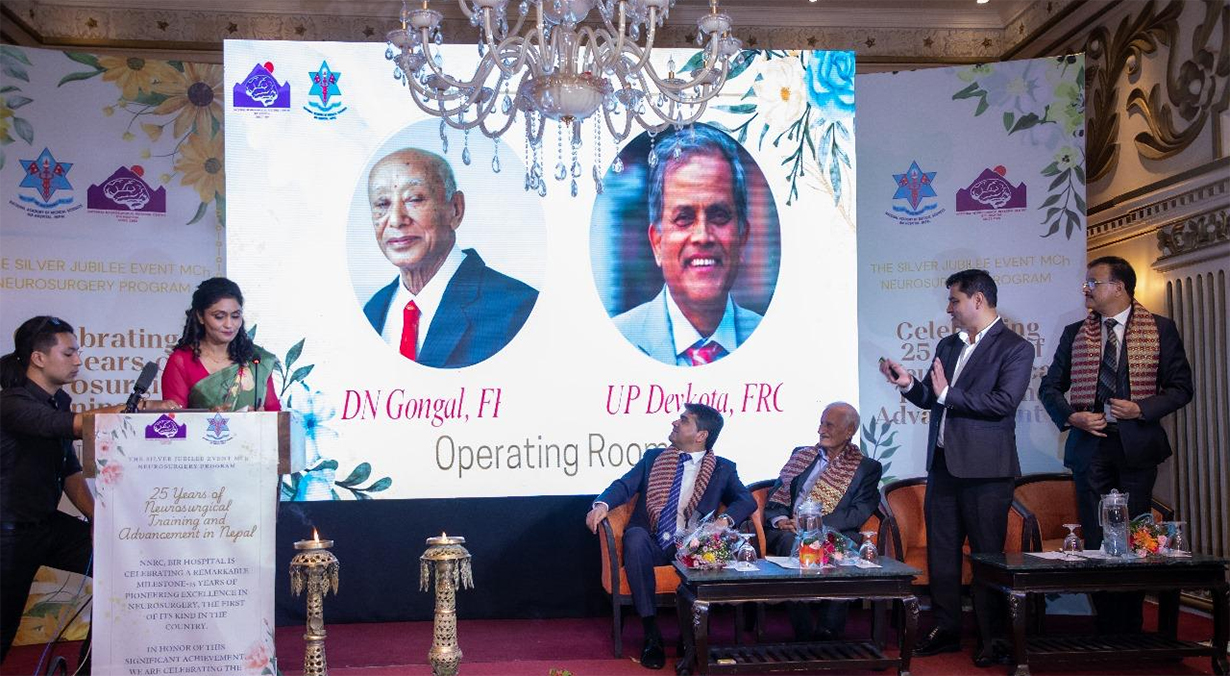
The Doctor Who Imported Equipment to Launch Neurosurgery in Nepal

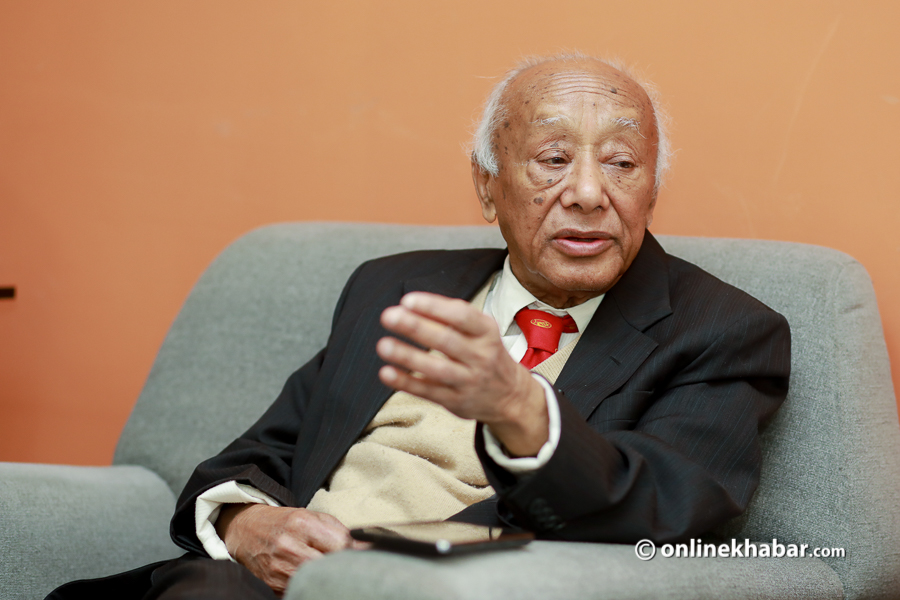
Though he is no longer with us today, the courage, struggle, and dedication of Dr. Dineshnath Gongal, who laid the foundation of modern surgical practice in Nepal, will forever shine brightly in the country’s medical history.

News Summary

Reviewed content.

  • Dr. Dineshnath Gongal pioneered neurosurgery in Nepal and laid the foundation for modern surgical medicine.
  • He performed over 40,000 surgeries and played a significant role in establishing the neurosurgery department at Bir Hospital.
  • He facilitated training of skilled neurosurgeons by sending Dr. Upendra Devkota to the UK for advanced education.

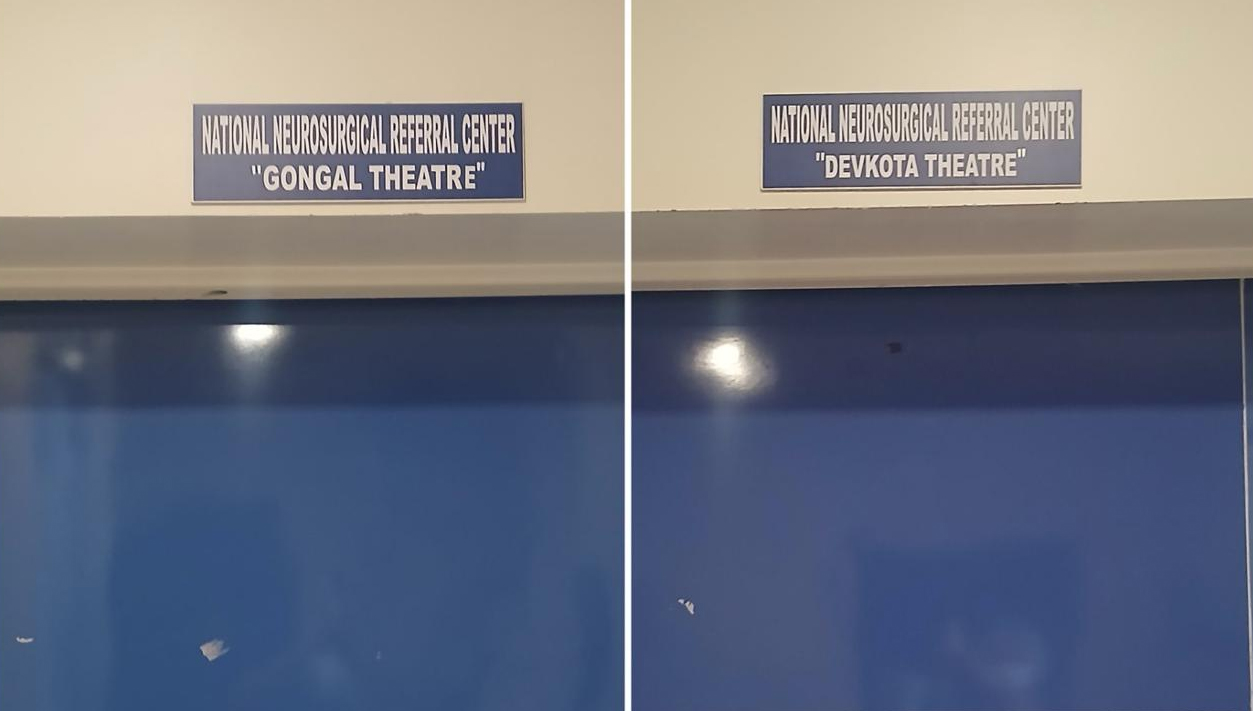
On the fifth floor of Bir Hospital is an operating theater named the Gongal Theater.

Why was the neurosurgery theater named after an individual?

This question leads us to explore the history of neurosurgery in Nepal and also the life story of a dedicated surgeon.

Named two years ago, the theater’s significance has grown as Dr. Dineshnath Gongal, known as the father of neurosurgery in Nepal, is no longer with us.

Dr. Rajiv Jha, head of neurosurgery at Bir Hospital, reflects, ‘Every morning when we enter the operating theater, his name on the door reminds us that the knowledge we have in neurosurgery is rooted in his legacy.’

The First Surgeon to Open a Patient’s Skull in Nepal

At a time when Nepal lacked CT scans and modern equipment, Dr. Gongal took the risk to open patients’ skulls and began performing complex surgeries despite challenging conditions.

This bold decision laid the foundational groundwork for neurosurgery in Nepal.

In 1961 (2018 BS), Dr. Gongal performed Nepal’s first neurosurgery on a patient injured in a road accident by opening the skull. Unfortunately, the patient did not survive.

Despite the initial failure, he did not lose heart. A year later, in 1962 (2019 BS), he successfully operated on a brain tumor. The risk was so high that he personally cared for the patient’s treatment for 48 hours due to the lack of reliable equipment, ICU facilities, and adequate nursing support.

The surgeries done based on simple X-rays astonish even today’s doctors.

According to Dr. Jha, Dr. Gongal was the first in Nepal to operate on a pituitary gland tumor. ‘There was no modern technology at the time,’ Jha recalled, ‘but his courage and skill make those operations incredible even today.’

Importing Equipment Himself

Surgical equipment was not readily available in Nepal. Often, Dr. Gongal traveled abroad to personally purchase necessary instruments. He also arranged for production of some items locally in Kathmandu.

This resourcefulness has led many physicians to remember him as the founder of modern surgical medicine in Nepal.

During his lifetime, Dr. Gongal performed over 40,000 surgeries. Alongside neurosurgery, he was the first in Nepal to conduct operations such as pituitary tumor surgery, laminectomy for spinal injuries, pneumonectomy for lung surgery, mitral valvotomy for the heart, and complex abdominal surgeries.

A Life Dedicated to Bir Hospital

Born in 1932 (1989 BS) in Kathmandu, Dr. Gongal’s ancestral home was in Palpa Tansen.

He completed his BSc from Tri-Chandra College, earned his MBBS from Darbhanga Medical College in India, and his MS from Grant Medical College, Mumbai.

After his studies in India, he joined government service in 1956 (2013 BS).

He spent most of his medical career at Bir Hospital, where he began his surgical practice and trained a new generation of physicians. Later, he also served as the founding vice chancellor of the National Academy of Medical Sciences (NAMS). He is survived by three sons and a daughter.

Facilitating Advanced Training Abroad

Dr. Gongal actively facilitated sending young doctors abroad for training to develop skilled specialists in Nepal.

Though he held administrative roles, he remained close to both doctors and students.

Dr. Jha recalls, ‘I was a medical officer in the neurosurgery department when Dr. Upendra Devkota was the head. Dr. Gongal regularly attended the weekly interdisciplinary meetings. He didn’t speak much but listened attentively and made corrections only when necessary.’

‘He was a teacher who spoke little and listened more,’ said Jha, ‘and that style taught us a lot.’

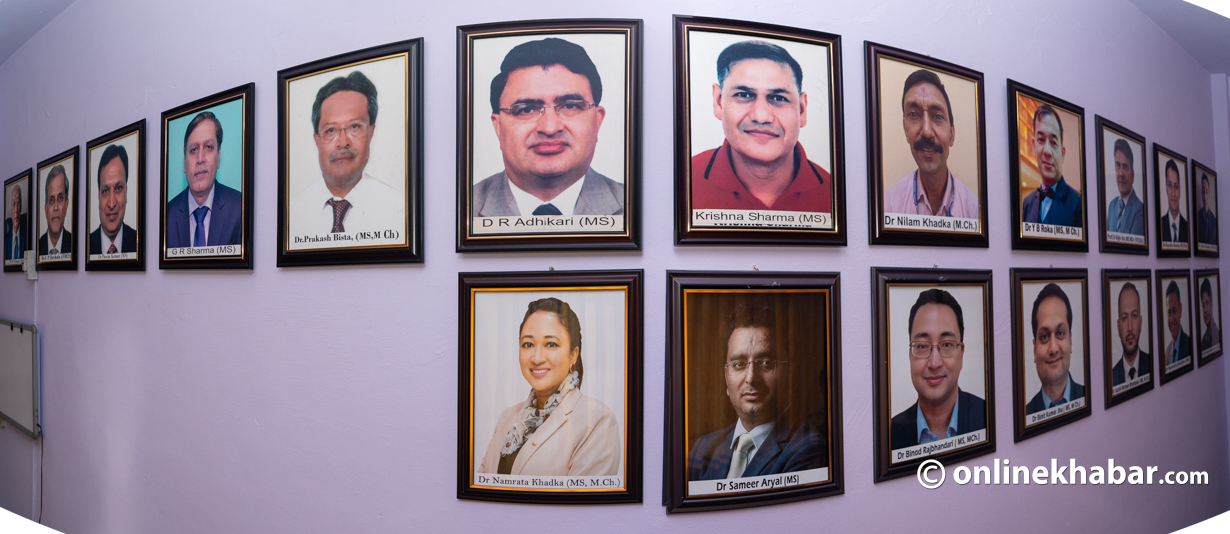
Under his guidance, Nepal’s neurosurgery emerged strong with pioneers like senior neurosurgeon Dr. Prakash Vist and the late Dr. Devkota gaining crucial experience working alongside Dr. Gongal. Dr. Gongal played a major role in supporting Devkota’s development.

The mentor-disciple relationship was vital in establishing neurosurgery in Nepal. By sending internationally renowned Dr. Devkota abroad, Dr. Gongal opened pathways for professional neurosurgery.

Formal neurosurgical services had not yet started at Bir Hospital then, but the number of patients with serious neurological problems was increasing. Many had to travel abroad at great expense for operations unavailable in Nepal, which deeply concerned Dr. Gongal.

He realized neurosurgery had to start in Nepal, but skilled manpower was lacking.

So he planned to send some hospital doctors abroad for training despite initial hesitation from others, who worried about insufficient cases for practice.

At that moment, a young doctor named Upendra stepped forward.

For Dr. Gongal, this was a pivotal moment. With a talented doctor from his own hospital willing to go abroad, he was optimistic about neurosurgery’s future.

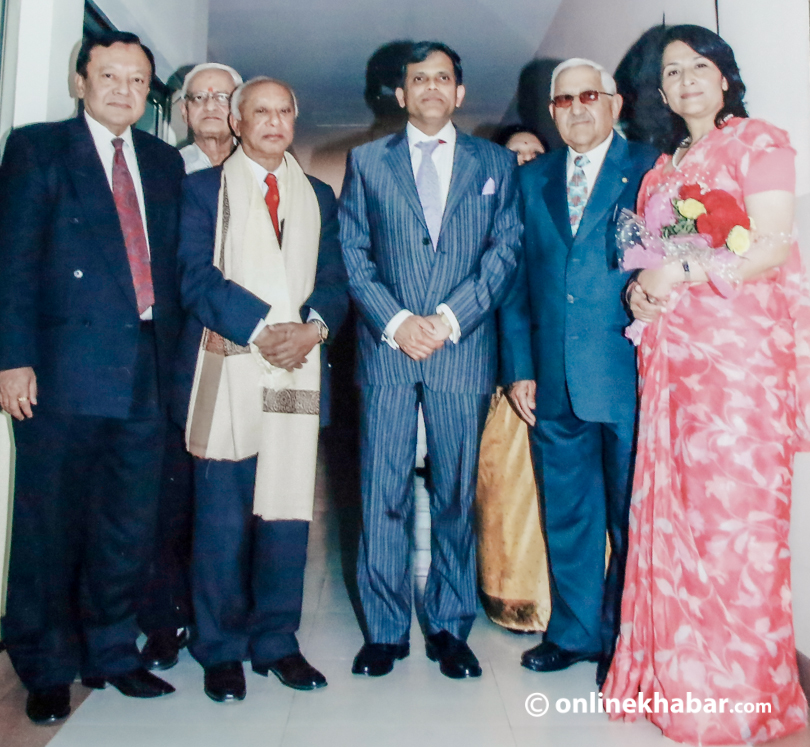
In 1982, Dr. Gongal visited the UK on a two-week invitation from the British government, forging connections with British physicians, including renowned neurosurgeon Dr. Graham Teasdale at the University of Glasgow.

He clearly requested, ‘Nepal needs a trained neurosurgeon. Please assist in training one.’

At the time, the University of Glasgow was a global leader in neurosurgery and research. Professor Teasdale accepted the proposal. A formal letter soon arrived, and in 1983, with coordination from the British Council, Dr. Devkota was sent to the UK.

The initial six-month training at Glasgow extended into a three-year scholarship. While abroad, Dr. Devkota demonstrated exceptional capability by passing the rigorous FRCS examination, which only 15 to 20 percent of candidates passed.

After extensive training, he returned to Nepal in 1989 to resume his work at Bir Hospital.

At that time, the hospital was still in its old condition. Devkota’s return marked a turning point that greatly relieved Dr. Gongal, who felt the heavy burden he had carried was finally lightened.

From then on, neurosurgery at Bir Hospital advanced toward a modern form. The government assisted in acquiring new equipment, sanctioned necessary positions, and established a dedicated neurosurgery department.

Bir Hospital now has two neurosurgery operating theaters, one named after Dr. Gongal and the other after Dr. Devkota.

Dr. Jha says, ‘Although both are no longer with us, when we enter the operating theaters, their names remind us of their indelible legacy.’

Senior physician Dhundiraj Paudel refers to Dr. Gongal as ‘a living history of Nepalese surgery.’

‘A history of Nepalese surgery who astounded the world by successfully performing complex brain surgeries without even having CT scans,’ Dr. Paudel said, ‘who assisted doctors in difficult surgeries from head to toe.’

Paudel remembers Dr. Gongal as a surgical craftsman with a stern voice but extraordinary kindness in his heart, avoiding flattery and sycophancy.

In recognition of his contributions to Nepalese medicine, Dr. Gongal was honored with numerous medals and awards including the prestigious Suprabal Jyotirmaya Trishakti Patta, multiple Gorkha Dakshina Bahu awards (from first to fourth class), and the Mahendra Bidhya Bhushan.

He often likened his life to ‘the sun on the mountain.’

Even as his life waned like a setting sun, he never ceased dreaming. “It’s not just my personal dream,” Dr. Gongal said six years ago, “I wish to see Nepal prosperous during my lifetime.”

Today, though he is no longer on this earth, his bravery, struggle, and devotion that created the foundation of modern surgery in Nepal will always remain bright in the annals of medical history.

Gas Traders Reject Government Policy, Will Sell Full 14.2-Kilogram Cylinders Starting Monday

In response to rising diesel prices, gas traders have resolved to sell full 14.2-kilogram gas cylinders starting Monday, openly defying the government’s ‘half-cylinder’ policy designed to prevent gas shortages. The traders assert that without diesel transportation subsidies, continuing business is unfeasible. Meanwhile, Nepal Oil Corporation has stated that there is no immediate gas shortage but cautioned that potential future crises require vigilance.

Kathmandu, 8 Baisakh – In an effort to avert the gas shortage visible in the market, the government had introduced a policy allowing the sale of only half-filled cylinders. However, gas traders have announced they will not adhere to this mandate and, without waiting for formal government approval, will begin selling full 14.2-kilogram cylinders to consumers from Monday.

This decision was reached during a joint meeting between the Gas Sellers Federation and the Nepal LPG Gas Industry Association, according to Gyaneshwar Aryal, President of the Gas Sellers Federation. Aryal explained that the unexpected diesel price surge has rendered transportation costs unsustainable for the traders, compelling this move. Although the government had earlier decreed filling only half cylinders (7.1 kilograms), this policy has negatively impacted both traders and consumers.

“We have unanimously decided to sell full 14.2-kilogram gas cylinders from Monday,” Aryal stated. “If the government fails to provide diesel transportation subsidies, making continued business impossible, we will formally notify the government tomorrow.”

Aryal also warned that due to ineffective policies from Nepal Oil Corporation, a serious gas shortage could occur within the next two months. According to the Nepal LPG Gas Industry Association, all gas bullets at industries are currently fully loaded and there are no issues sending cylinders to the market at full capacity. The industry officials share that the restriction to sell only half cylinders has made it difficult to sell the existing gas stock.

Further, with many half-weight cylinders accumulating in customers’ homes, gas bullets arriving from India remain unloaded at industries, creating a backlog. The current practice of dispatching only 7.1-kilogram cylinders and delays in unloading gas bullets have resulted in all bullets being stuck.

“All gas bullets are now stalled. If Nepal Oil Corporation does not pay attention, we may face a gas shortage within two months,” Aryal added.

The traders have repeatedly engaged the relevant government stakeholders, but allege a lack of positive response. They have suggested to government affiliates not to raise diesel prices, but these recommendations have not been heeded. To safeguard their commercial viability and ensure supply continuity, the traders found it necessary to take this decision independently.

Aryal cited examples from neighboring South Asian countries—including India, Bhutan, and the Maldives—that have refrained from raising diesel prices in efforts to maintain economic stability. “While neighboring countries have worked to preserve economic conditions by not increasing diesel prices, Nepal’s government has made no substantial efforts,” he remarked.

With rising diesel and associated transportation costs, traders insist they cannot continue selling gas at a loss. Although Nepal Oil Corporation maintains there is currently no gas shortage, it emphasizes the importance of caution in light of possible future crises.

Purna Bahadur Khadka Issues First Statement as Outgoing Acting President

April 21, Kathmandu – Following the Supreme Court’s hearing on the Nepali Congress dispute, Purna Bahadur Khadka has issued his first press statement as the outgoing acting president. In the statement released Tuesday, Khadka expressed his objection to the government’s decision to dissolve student organizations and the Free Student Union. He described student organizations as the backbone of Nepal’s proud political history. Khadka also noted that through the Free Student Union, the country attained a federal democratic republican system, enabling the Nepalese people to enjoy the highest level of civil liberties.

“During the dark era of the party-less autocratic Panchayat system, when political parties were banned,” the release stated, “student unions organized on ideological grounds courageously led the campaign that kindled the flame of democracy, raised public awareness, and initiated rebellion against dictatorship.” The statement interprets the recent decision by the government led by Balendra Shah to dissolve student unions and the Free Student Union—once considered the nursery of democracy—as an authoritarian move. Khadka’s full press release reads as follows:

सिनियर सम्हालिए, नयाँ धर्मराए – Online Khabar

Impact of New Players Under Senior Leadership in Nepal’s T20 Series Against UAE

Nepal, under the new captaincy of Dipendra Singh Airee, played two T20 International matches against the UAE. New players Hemant Dhami and Santosh Yadav made their debuts in the T20 squad. Sandeep Lamichhane took 3 wickets in each match, while Kushal Bhurtel contributed with an unbeaten 84 runs in the second game to help Nepal secure a victory. April 21, Kathmandu.

The Nepalese cricket team, featuring changes including the captain, faced the UAE in two home T20 internationals. Matches held at the Tribeni Cricket Ground on Monday and Tuesday saw Nepal and UAE each claim one win. These closely contested matches were expected to be competitive; however, neither contest fully delivered on competitiveness. The UAE dominated the first game, while Nepal triumphed in the second, resulting in a 1-1 series draw.

The series provided opportunities for several emerging players as many seasoned players were rested. Hemant Dhami and Santosh Yadav made their T20 international debuts. Hemant, who was expensive in the first match, bowled more economically in the second. A solid performance was delivered by captain Dipendra Singh Airee, along with Sandeep Lamichhane and Kushal Bhurtel, with Dipendra remaining not out in both innings.

Sandeep Lamichhane excelled with consistent performances across both matches. Opener Kushal Bhurtel played a crucial role in the second game, scoring an unbeaten 84 runs off 57 balls, aiding Nepal’s victory. After a long absence from T20 internationals, Kushal Malla returned but was unable to post a significant score. Other players who received chances this series—Arjun Saud, Sandeep Jora, Basir Ahmad, Gulshan Jha, and Nandan Yadav—were unable to make a considerable impact.

New Directive Mandates CCTV and GPS Installation in Public Transport Vehicles

The government has drafted a new directive requiring public transport vehicles to be equipped with GPS devices and at least two CCTV cameras. Mobile apps and digital systems will be mandatory for online ticket purchase and payment. Additionally, there are plans to issue directives mandating the installation of fire extinguishers, first aid kits, and emergency assistance buttons. Kathmandu, 8 Baishakh – From now on, GPS (Global Positioning System) must be compulsorily installed in all public transport vehicles. The Ministry of Physical Infrastructure and Transport has prepared a draft directive for 2082 focused on making vehicles technologically advanced, healthy, safe, dignified, and passenger-friendly. Through this directive, the government aims to enforce mandatory GPS installation on vehicles. The Department of Transport Management is proposed to provide technical support for this initiative.

It will be the responsibility of drivers, conductors, and vehicle owners to ensure proper operation and monitoring of these devices. The installed equipment must include mandatory geographic tracking, overspeed warning systems, ignition on/off alerts, and route information. The ministry has scheduled discussions with stakeholders next week to finalize the directive. This new directive is intended to replace the amendments made under Clause 11 of the Transport Management Procedural Directive 2060 and repeal the Public Transport Code 2067.

The responsibility to install CCTV cameras will lie with the respective vehicle owners. While taxis are exempt from mandatory CCTV installation, the department will provide technical assistance if requested by the owner. CCTV footage must be securely stored for a minimum of three months. The installed devices must fulfill the condition of recording all activities occurring inside the vehicle.

Systems enabling online ticketing and payments via mobile app or other platforms must be developed. Payment for transport services must be processed through government-approved payment gateways or Quick Response (QR) codes. Furthermore, public transport vehicles are required to be equipped with fire extinguishers and first aid kits, and drivers and conductors must receive minimum necessary training on their use.