
Author: space4knews

Life-Sentenced Prisoner Who Escaped from Sundhara Jail Apprehended

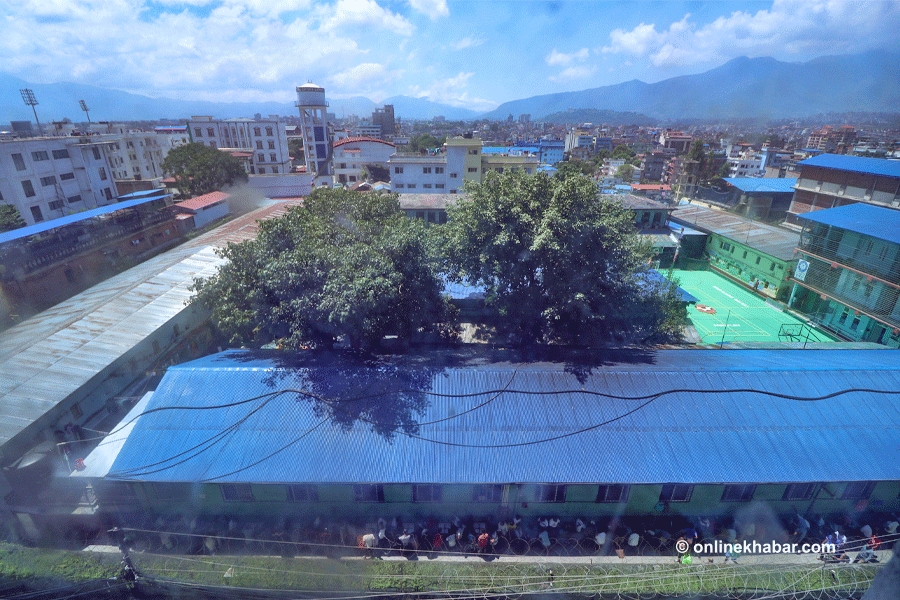
April 17, Kathmandu – A prisoner sentenced to life imprisonment who had escaped from Sundhara Jail (Jaggannath Deval) has been apprehended. The individual, 35-year-old Hombahadur Rai from Sotang Rural Municipality-3, Solukhumbu, was arrested by a team from the Kathmandu Valley Crime Investigation Office. On November 5, 2020, he fatally stabbed 28-year-old Somrani Lama Tamang of Solukhumbu. On July 7, 2021, the Solukhumbu District Court sentenced him to life imprisonment for the murder. He had escaped the Sundhara Jail during the GENJI movement. Following his recapture, he has been sent back to jail to continue serving his sentence.

Dipak Adhikari Arrested for Extorting Money Claiming to Settle Banking Fraud Case

Dipak Adhikari, also known as Bishwaram, was arrested in Kathmandu for allegedly extorting NPR 130,000 on the pretext of settling a banking fraud case. He was apprehended by the Balaju Police Circle and is currently under investigation following a seven-day judicial remand granted by the Kathmandu District Court. The case in question involves defendant Dhruva Vikram Malla, with whom Adhikari claimed to negotiate the settlement in exchange for the money. (April 17, Kathmandu)

According to Sub-Inspector Pawan Kumar Bhattarai of the Kathmandu District Police Office, Dipak Adhikari, a 52-year-old resident of Banasthali, Kathmandu, was caught while receiving money to resolve a registered banking fraud case at the police. He allegedly took NPR 130,000 from the defendant Dhruva Vikram Malla, promising to settle the case on his behalf. Following his arrest, the Kathmandu District Court authorized a 7-day remand to facilitate further investigation on charges of fraud.

What Is the Purpose of the Deployment of Pakistani Troops in Saudi Arabia?

A few days ago, Pakistani fighter jets and military forces arrived in Saudi Arabia. This deployment is part of a defense agreement signed between the two countries last year. According to this pact, if either country is attacked, the other will provide support. This development comes at a time when Pakistan is mediating talks between Iran and the United States. The objective of these negotiations is to find a path to end the conflict involving Iran, although no resolution has yet been reached. The Saudi Ministry of Defense has clarified that the deployment of Pakistani forces aims to strengthen joint defense cooperation and contribute to regional and international security.

A Pakistani official has stated that the troops sent to Saudi Arabia are not intended to “attack anyone.” However, this move has raised many questions, particularly about its implications for the future of U.S. security guarantees in the Gulf region. Iran has launched drone and ballistic missile attacks on key oil fields and civilian infrastructure in the Gulf, intensifying anger over the costly consequences imposed by U.S.-led military actions.

According to Hassan Al-Shahri, a Saudi security and strategic expert, the deployment of Pakistan’s air force in Saudi Arabia signals Riyadh’s desire to diversify its security guarantees. He interprets this as a smart strategy that maintains partnership with the United States while creating a separate parallel security shield in cooperation with Pakistan. In 2015, during the Yemen conflict, Saudi Arabia requested military cooperation from Pakistan, but at that time, the Pakistani parliament rejected the request.

Al-Shahri notes that the current situation differs because there is now a formal defense agreement between the two countries. Meanwhile, Dr. Mustafa Shalash has described the Pakistani military presence in Saudi Arabia as largely symbolic. It serves as a message of Pakistan’s defense commitment and loyalty to its allies. This military presence demonstrates Saudi Arabia’s capability to engage other partners as well.

Why Prime Minister Balendra Shah’s Meeting with Opposition Chief Ministers Feels Different

Prime Minister Balendra Shah 'Balen'

Image Source, PMO

In an informal discussion held on Thursday, Prime Minister Balendra Shah ‘Balen’ engaged with five chief ministers from the Nepali Congress and CPN-UML parties, who hold provincial power but are in opposition at the central level. Why did this dialogue feel distinct from traditional political meetings?

Yamalal Kandel, Chief Minister of Karnali Province, noted that although the meeting was informal, the focus on the provinces’ current conditions and experiences made the political dialogue unique.

“We discussed constitutional and legal circumstances, administrative reforms, institutional changes, and ways to promote development and infrastructure within provinces,” said Kandel, who also serves as the secretary of the CPN-UML.

The CPN-UML has publicly accused the government of biased treatment following the arrest of its chairman, KP Sharma Oli.

However, Kandel clarified that disagreements between parties were not part of the discussions. The first meeting allowed an open conversation, putting aside party differences and election results, with the Prime Minister actively participating.

हजारौं शाक्यहरूको हत्या गरिएको स्थलमा २५७० वर्षपछि पितृपूजा

Ancestor Worship Held at Site of Massacre of Thousands of Shakyas After 2,570 Years

Kapilvastu district, rich in heritage, contains 136 archaeological sites, most of which are connected to the life of Siddhartha Gautama Buddha.

Gautama Buddha spent his childhood and youth in Tilaurakot, Kapilvastu, where the court of his father, King Suddhodana, was also located.

About 3 kilometers north lies the historic site of Sagarhawa, locally known as Lambusagar, which holds great significance in Buddhist history.

Birudddhaka, son of King Prasenajit of the Kosala kingdom, brutally massacred thousands of Shakyas, destroying the Shakya clan.

Why did Birudddhaka carry out such a large-scale massacre of the Shakyas?

At that time, the Shakya community was highly esteemed, and neighboring kings and monarchs sought to establish relations with the Shakya family.

When King Prasenajit of Kosala expressed his desire to marry a Shakya daughter, the Shakyas faced a religious dilemma. Prasenajit was highly powerful, and rejecting the proposal risked an attack on the Kapilvastu kingdom. This fear led the Shakyas to give their servant daughter Vasava Khattiya in marriage to King Prasenajit.
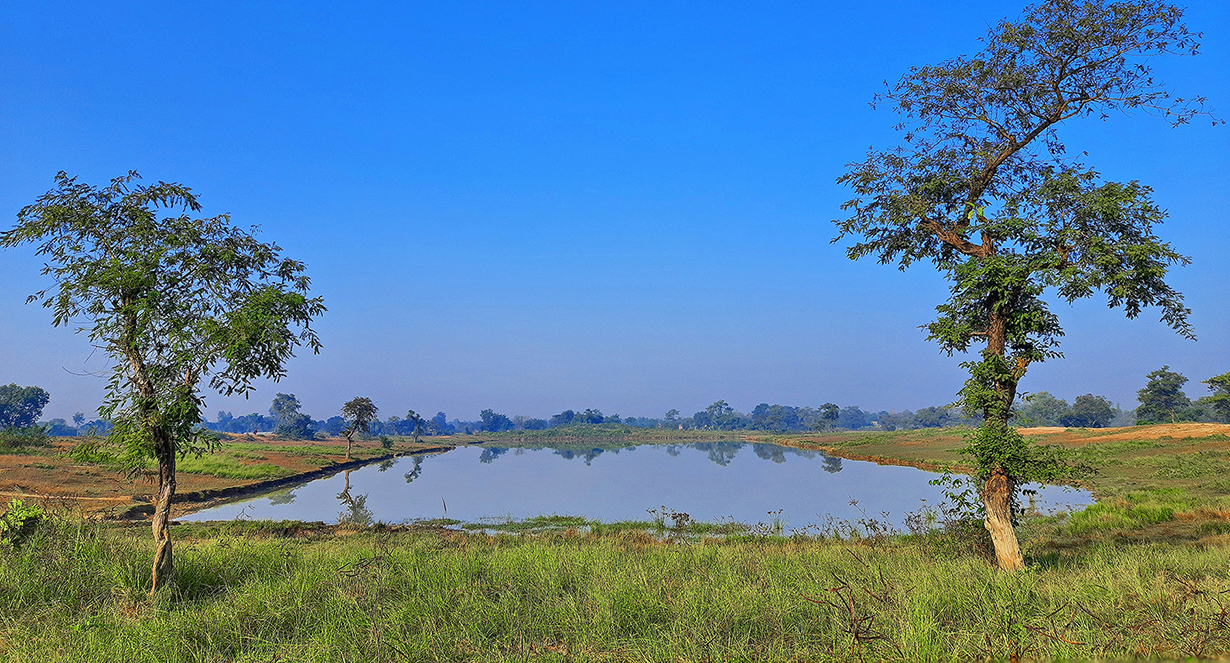
From King Prasenajit and Queen Vasava Khattiya, Birudddhaka was born. In his youth, Birudddhaka visited his maternal home in Kapilvastu.

When returning a few days later, Birudddhaka left his sword behind. He sent soldiers to retrieve it. The servants questioned the soldiers about the sword’s location, which was wrapped in milk and cow dung.

The servants did not realize these were Birudddhaka’s soldiers. When told that the place had been purified by Birudddhaka, since the daughter of a servant was involved, the soldiers informed Birudddhaka of this.

Feeling deeply insulted, Birudddhaka vowed, “The place washed by milk will one day be washed by the blood of the Shakyas.”

After the death of his father, King Prasenajit, Birudddhaka became king of Kosala. He attempted to attack Kapilvastu three times but failed due to Gautama Buddha’s mediation.
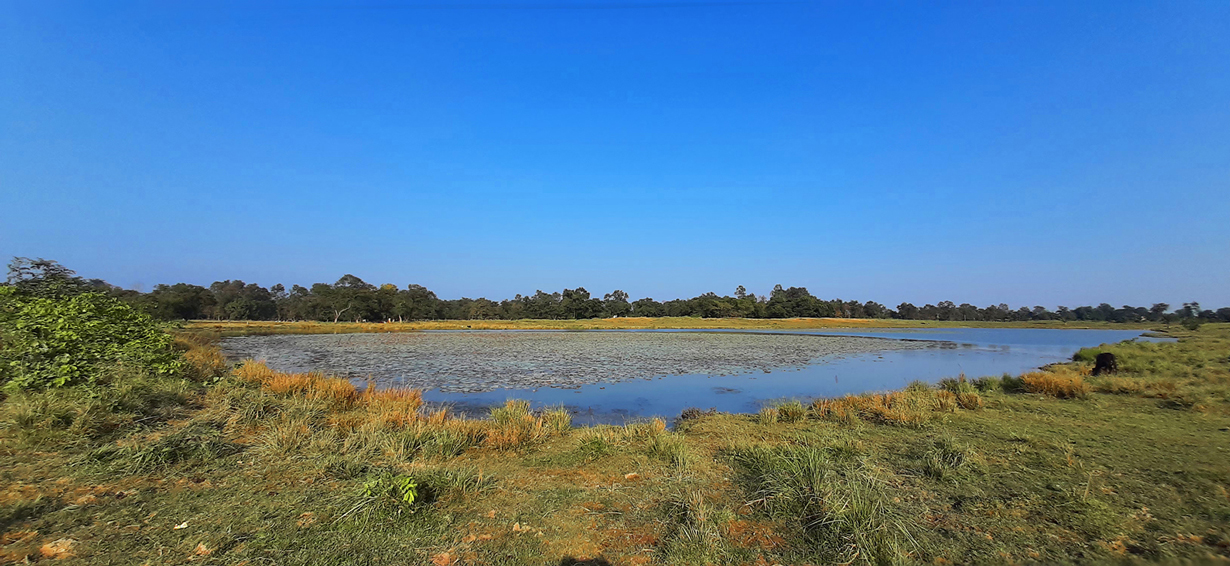
On his fourth attempt, Birudddhaka launched a ferocious attack, massacring thousands of Shakyas, as recorded in Pali historical texts.

Many Shakyas were scattered in battle; after Kosala forces entered the city, the remaining Shakyas were also killed. Birudddhaka fulfilled his vow by turning the place washed with milk into one soaked in Shakya blood.

The bodies of the Shakyas were buried at Sagarhawa, marking this ancient site as profoundly sacred in Buddhism.

The Sagarhawa site was discovered in 1897 by Dr. Fuhrer and Khad Gashmesher. Seventeen stupas were uncovered there. An ancient lake measuring 1,059 feet in length and 225 feet in width was also found in the Sagarhawa area.

Since excavations have not continued, the exact location of all stupas remains uncertain. These 17 stupas are believed to be in memory of the Shakyas killed in the massacre, and the Shakya community regards the area as their ancestral land.

Chinese traveler Dr. A.K. Fuhrer performed the first excavation at Sagarhawa from December 1897 to March 1898, documented in historical records.

Following Fuhrer, Indian archaeologist P.C. Mukherjee conducted further studies and, in 1899, depicted a brick stupa in paintings from the site. Excavations yielded relics, gold, silver pieces, and precious stones.

In 1962, Indian archaeologist Devla Mishra conducted additional studies in the area, noting that earlier research by Fuhrer and Mukherjee was incomplete.

Beyond the main stupa, hundreds of small stupas are believed to exist northwest of the Sagarhawa pond, possibly constructed later in remembrance of the Shakyas.
Fuhrer referred to the site as the “massacre site,” a term also mentioned by Chinese traveler Yüan Chao during his 7th-century visit. A 2016 geological survey identified large clay and brick structures beneath the ground.

The survey confirmed the presence of numerous buildings, platforms, and stupas, demonstrating the site’s historic religious significance.

Another survey in 2018 revealed many historical structures surrounding the pond. No excavations have taken place since 1899.

Further development of this historical site is imperative, as it is tied to the Shakya clan and the birthplace of Gautama Buddha.

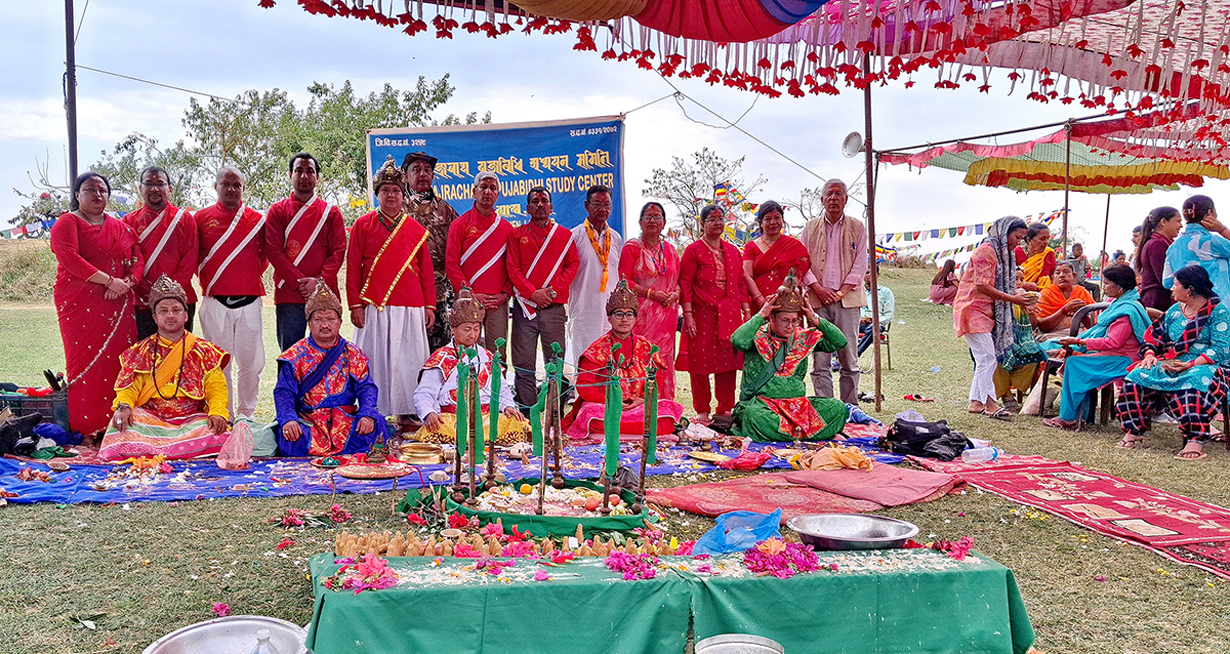
In memory of the Shakyas massacred here, the first-ever ancestor worship ceremony was held at Sagarhawa on Chaitra 1 (mid-March) this year.
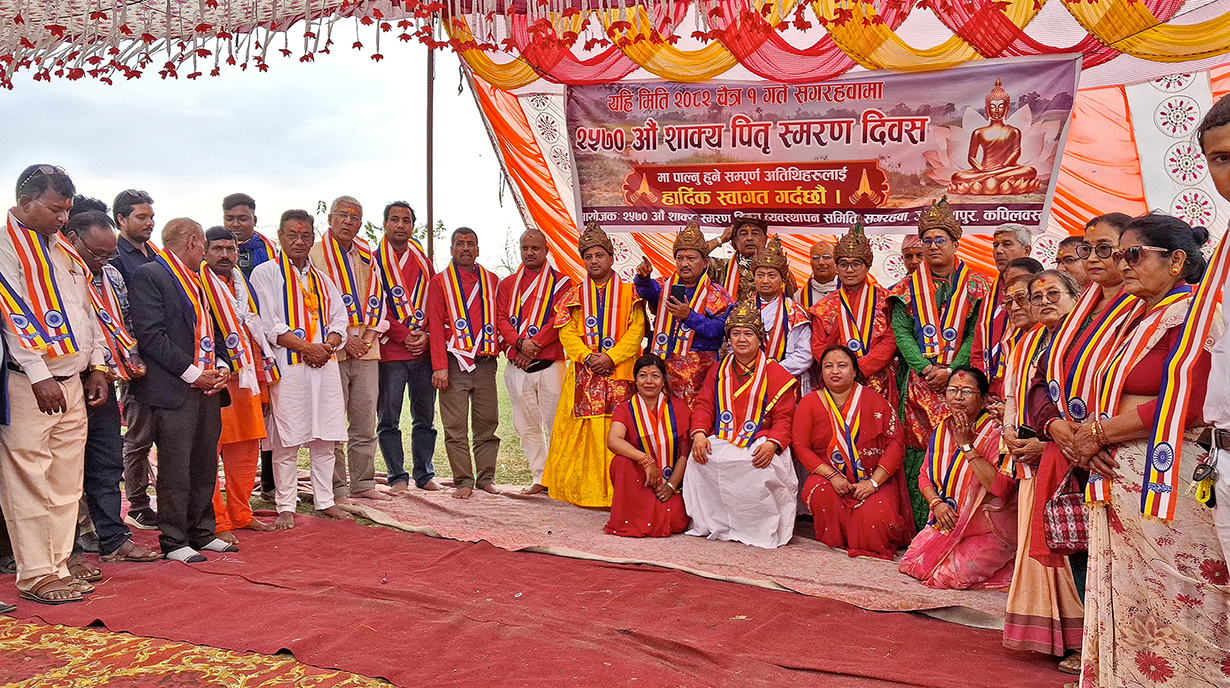
The 10 Shakya Memorial Ancestor Management Committee was formed under the leadership of Lalil Gurud, chairman of the Jagadishpur Management Multistakeholder Forum. Priests from Patan Golden Bihar were invited to conduct approximately four hours of ancestor worship.

Shakyas residing in Kathmandu, Pokhara, Palpa, Butwal, Bhairahawa, Nepalgunj, and Taulihawa participated in the ceremony.

This marks the first ancestor worship held at the site where the Shakya clan was massacred, after 2,570 years. Going forward, March 15 each year (Chaitra 1) will be observed as Shakya Ancestor Remembrance Day at Sagarhawa.
One Dead and Five Injured in Motorcycle Collision in Baitadi

Summary: Janak Luhar died during treatment after a collision between two motorcycles in Baitadi. Five people were injured in the accident, with two referred to Dadeldhura Hospital. The crash occurred at 1:30 pm on Friday in Dholyamod, Surnaya Rural Municipality–8.

In Baitadi, a collision between two motorcycles resulted in one fatality. According to Suraj Singh, Information Officer at Baitadi District Police Office, 34-year-old Janak Luhar from Surnaya Rural Municipality–8, who was driving the motorcycle numbered Se 5 Pa 4717 coming from Purchaudi toward Dholyamod, died during treatment. Severely injured Luhar was taken to the nearby Deulek Hospital, where doctors declared his death at 3:45 pm.

The accident occurred around 1:30 pm on Friday at Dholyamod, Surnaya Rural Municipality–8, when a motorcycle driven by 24-year-old Amir Kathayat from Purchaudi Municipality–5 heading from Shreebhawar toward Purchaudi, bearing license number Sudurpaschim Province 01 013 Pa 4246, collided with the motorcycle driven by 34-year-old Janak Luhar from Surnaya Rural Municipality–8 going from Purchaudi to Dholyamod.

Five people, including the two riders, were injured in the crash. Janak Luhar sustained critical injuries and later died. Among the injured were Hikmat Kunwar, a passenger on the motorcycle coming from Purchaudi to Dholyamod, and Jai Bahadur Chand (34) and Keshav Bahadur Chand (26), both passengers on the motorcycle traveling from Shreebhawar to Purchaudi—both residents of Sigas Rural Municipality–9. Suraj Singh confirmed these details. The severely injured Janak Luhar was initially taken to the Deulek Primary Health Center. The other motorcycle driver, Amir Kathayat, along with passenger Hikmat Kunwar, was referred to Dadeldhura Hospital. The other injured individuals are receiving treatment at local health facilities.

98 Men File Complaints of Domestic Violence with Kathmandu Police Amid Rising Reports

In the past six months, 98 men in Kathmandu have filed complaints alleging domestic violence. Superintendent of Police (SP) Pawan Kumar Bhattarai of Kathmandu District Police Office has reported an increase in domestic violence complaints from male victims. During the same period, 629 women also lodged complaints related to domestic violence, with some receiving psychosocial counseling services.

According to police sources, the number of men reporting domestic violence is on the rise. SP Bhattarai stated that in the last six months alone, 98 men in Kathmandu have officially complained that they have suffered domestic violence. He added that such complaints from men are becoming increasingly frequent.

“Previously, only women would file complaints regarding domestic violence. However, now men are also coming forward to report abuse,” SP Bhattarai explained. Among the 98 complaints lodged by men, 13 were formal petitions.

During the same timeframe, 629 women filed complaints alleging domestic violence, with 299 formal petitions submitted. The police have provided psychosocial counseling services to some complainants and arranged placements in safe shelters for others.

Google Introduces New ‘Personal Intelligence’ Feature in Gemini App

Google has launched a new ‘Personal Intelligence’ feature in its Gemini app that enables the creation of images based on individual interests and preferences. This latest update integrates ‘Imagen 2’ with ‘Google Photos’ to offer a more personalized and seamless image generation experience for users. The key features of this new functionality include:

Elimination of lengthy prompts: Previously, creating personalized images required writing detailed descriptions and manually uploading photos. Now, Gemini understands your interests and lifestyle from your Google apps, allowing you to generate tailored results using simple commands such as “Design my dream home.”

Ability to include family and loved ones as image subjects: Users can link their Google Photos library with Gemini to use pictures of themselves or family members as characters in generated images. For example, when prompted with “Create a Clemson-themed image showing my family enjoying their favorite activity,” Gemini will utilize labeled photos from the library to produce the image.

Privacy and security assurances: Google has clarified that Gemini will not train its models using users’ private photos. This feature operates on an opt-in basis, allowing users to disable it anytime via settings. Currently, it is available only to Google AI Plus, Pro, and Ultra customers in the United States, with plans for expansion to Chrome Desktop and wider audiences soon.

‘लालीबजार मेरो हृदयको नजिक’

‘Lalibazar Holds a Special Place in My Heart and Mind,’ Says Actress Swastima Khadka

Kathmandu – Actress Swastima Khadka has described her upcoming film ‘Lalibazar’ as a highly significant milestone in her career. Speaking at a press conference held on Friday, she shared that this film has become an unforgettable experience for her. She said, ‘This movie is extremely special to me. Even after many years, whenever I recall it, it will always remain close to my heart. Whatever the outcome, for me…’

Nepal Medical Council Warns Doctors Against Giving Medication Advice on Social Media

The Nepal Medical Council has issued a warning to doctors who provide medication and treatment advice through social media platforms. The Council highlighted that offering advice about medication use and treatment on social media poses serious health risks. Medical practitioners who violate the established guidelines will face legal action, the Council warned.

On March 18, in an official statement, the Nepal Medical Council noted an increasing trend of doctors sharing treatment methods, medication usage, and health-related content under the name of ‘online consultation’ on social media platforms such as Facebook, TikTok, and Instagram. The Council cautioned that such content could lead patients to self-medicate, adopt incorrect treatments, and consequently suffer serious health complications.

“Healthcare is an extremely sensitive sector, and advising medication use or treatment without direct examination and necessary tests via social media is risky,” the statement emphasized. Such practices may seriously endanger patients’ health. The Council urged doctors and health workers to exercise particular caution when using social media and mandated compliance with specific guidelines. When sharing videos or information involving patients, obtaining consent and ensuring the confidentiality of patient identities is required. Furthermore, direct medication advice to patients through social media is strongly discouraged.

The Council stressed that health information and consultations must be based on scientific evidence, verified facts, and professional ethical standards. Medical decisions should be made following direct examination and certified treatment procedures, rather than relying solely on social media information. Dr. Satish Kumar Dev, Registrar of the Council, issued this notice and warned that failure to adhere to these guidelines will result in penalties under existing laws for the responsible doctors or health workers.

Seven Unidentified Bodies from Janjhi Protest Still Await Identification

Out of the 49 deaths during the Janjhi protest on Bhadra 23 and 24, the identities of seven bodies remain unknown. Superintendent of Police (SP) Pawan Kumar Bhattarai from Kathmandu District Police Office stated that 42 bodies have been identified and handed over to their families, while DNA processes are ongoing for the remaining seven. These seven bodies were found severely burned and skeletonized, making identification difficult. Kathmandu, April 4.

During the Janjhi protest alone, 49 people lost their lives in Kathmandu. Among them, seven bodies have yet to be identified. SP and spokesperson Pawan Kumar Bhattarai confirmed that 42 bodies have been identified and returned to their respective families, with seven still pending identification. “We are currently undergoing DNA testing procedures,” he said. The seven bodies were so severely burned that they were reduced to skeletons, complicating identification efforts.

Shashi Tharoor Strongly Criticizes Government’s Plan Linking Women’s Reservation to Delimitation

During the special session of the Indian Parliament, Congress MP Shashi Tharoor vehemently criticized the government’s plan to link women’s reservation with delimitation. Tharoor described delimitation as a ‘political demonetization’ and warned that it could jeopardize the federal structure. He argued that tying women’s reservation to a complex administrative process hinders the aspirations of Indian women. April 17, Kathmandu.

Speaking on the second day of the three-day special session in the Lok Sabha, Shashi Tharoor sharply condemned the government’s attempt to associate women’s reservation with delimitation. He cautioned that rushing the delimitation process poses risks to the federal framework and identified it as a form of ‘political demonetization.’ Furthermore, he raised awareness about the potential harm this could cause to the country.

Participating in the debate, Tharoor remarked that the government has turned women’s reservation into a “gift wrapped in barbed wire” by entangling it in the complicated census and delimitation process. He stated that women’s reservation could be implemented immediately but has been blocked by linking it to a highly contentious and complex administrative procedure, thereby thwarting Indian women’s demands.

Prior to Tharoor’s speech, DMK MP Kanimozhi expressed concerns about the negative impact delimitation could have on the federal structure. Tharoor highlighted that delimitation would politically disadvantage South Indian states, where population control has already been achieved, while states with higher population growth would gain greater political significance. Questioning this, he asked, “Are we about to regard the outcomes of good governance as politically insignificant?” He also pointed out constitutional and economic issues, such as states contributing more to the national income receiving a smaller share, and the increasing size of the Lok Sabha disrupting balance with the Rajya Sabha. However, on the debate’s first day, the Prime Minister assured that delimitation would continue as before, with no changes, addressing concerns raised by opposition parties.

काठमाडौंबाट ३०९ बिचौलिया पक्राउ – Online Khabar

309 Middlemen Arrested Around Kathmandu Government Offices

The police have taken 309 middlemen into custody from various government office areas in Kathmandu district. A total of 61 cases have been filed against them, including charges of harassment, hooliganism, and sexual offenses. The police are conducting a special campaign to make office areas free from such intermediaries.

April 17, Kathmandu – To control the harassment faced by service seekers in government and public offices, the police have arrested 309 middlemen from different locations across Kathmandu. This information was provided by Superintendent of Police and spokesperson for the Kathmandu District Police Office, Pawan Kumar Bhattarai. According to police sources, during the ongoing campaign against middlemen, these 309 individuals were apprehended at various times and are currently facing a total of 61 criminal cases. These cases involve harassment caused by middlemen, hooliganism, and sexual activities among others. The police have announced that the campaign to make Kathmandu’s public offices free of middlemen will be strengthened further in the coming days.

Mountainmag Coffee Opens New Outlet in Pokhara

April 17, Pokhara – Premium coffee brand Mountainmag Coffee has officially entered the Pokhara market. The company inaugurated a new outlet at the Foamy Pokhara Experience Center, located in Bindhyabasini, in partnership with iconic wall covering brand Foamy Nepal. This collaboration aims to offer customers not only the exquisite taste of coffee but also a modern design and innovative space for a unique experience, the company stated.

Mountainmag Coffee claims to have established its identity as a premium coffee brand in a short period. Currently, the brand operates four outlets across Nepal. The new outlet in the tourist city of Pokhara is expected to boost the popularity of Nepali coffee and contribute to the promotion of the local coffee culture, the company added.

Speaker Pledges to Facilitate Journalists’ Access to Parliament

April 17, Kathmandu – Speaker Dol Prasad (DP) Aryal has expressed his commitment to making it easier for journalists to access the Parliament and parliamentary committees for their reporting. He conveyed this commitment during a meeting with the Parliamentary Affairs Journalists’ Society and journalists involved in parliamentary reporting. Recently, journalists have faced difficulties entering the Parliament building. The different entry gates for the House of Representatives and the National Assembly chambers, along with technical hurdles and strictness during photography, have impeded newsgathering efforts.

Journalists brought the matter to the Speaker’s attention, emphasizing that international standards and the spirit of press freedom demand a more accessible and dignified working environment within the parliamentary premises. In response, Speaker Aryal explained that the current Parliament building is a temporary structure, which has presented practical challenges. He expressed confidence that once the new permanent Parliament building is completed, these physical barriers will be resolved. Highlighting the importance of a strong relationship between Parliament and the press for strengthening democracy, he affirmed his commitment to facilitating journalists’ access and providing the necessary support for transparent and effective reporting of parliamentary activities.