Author: space4knews

Nepal Women’s Cricket Team Eliminated from Asia Cup Qualifiers

May 10, Kathmandu – The Nepal women’s cricket team has failed to qualify for the Asia Cup cricket tournament. After recently missing out in the Asian Games qualifiers, the team was once again unable to secure a spot for the Asia Cup. Nepal was eliminated from the Asia Cup qualifiers following their quarterfinal loss to Thailand at the ACC Women’s Premier Cup held in Malaysia.

In the quarterfinal match played on Wednesday morning, Nepal was defeated by Thailand by 56 runs. Chasing a target of 131 runs set by Thailand, Nepal managed only 74 runs for the loss of 7 wickets in their allotted 20 overs. Rubina Chhetri was the highest scorer for Nepal, contributing an unbeaten 20 runs. Soni Pakhrin scored 15, Sita Ranamagar made 12, and Samjhana Khadka added 11 runs. Other batswomen failed to reach double figures.

For Thailand, Thipatcha Puthavang took 2 wickets conceding just 7 runs in 4 overs, while Sunida Chutworngratana and Suliporn Laomi claimed 2 wickets each. Fanita Mai also took 1 wicket. Thailand batted first and posted 130 runs for 4 wickets in their 20 overs. Nanapat Koncharonka played a half-century, remaining unbeaten on 63 runs off 51 balls. Fanita Mai contributed 26 runs and Chanida Suthirang added 16. Nepal’s Kavita Kunwar, Riya Sharma, and Rubina Chhetri took 1 wicket apiece.

Last week, the Nepal women’s team had also failed to qualify for the Asian Games after losing the crucial qualifying match against China.

Residents of Damak Protest by Planting Rice on Dilapidated Road

Locals in the border area of Ward 9 and 10 of Damak Municipality in Jhapa staged a protest by planting rice directly on the severely damaged road, demanding its upgrade. For years, the road has been riddled with mud, waterlogging, and potholes, prompting local women, men, and farmers to carry rice seedlings and participate on site. By turning the road into a symbolic rice field, they aimed to draw the attention of relevant authorities. Despite repeated appeals for road repairs, no agency has shown serious concern, forcing locals to resort to this symbolic demonstration, according to residents. With the onset of the rainy season, the road has become unusually muddy, making daily travel difficult for the general public.

Farmer participant Nagendramani Nyaupane expressed frustration that elected representatives only visit voters during elections but forget their problems once elected. “We have urged multiple times for the road to be constructed,” he said. “We informed representatives at the ward, municipal, provincial, and federal levels. Yet, after years, the road remains the same.” Nyaupane explained that it’s now difficult to distinguish the road from a field, hence the rice planting protest. “It’s hard to take patients to hospitals, students are forced to walk through mud and often fall. We have heard many speeches about development but all we see on the ground is mud and dust,” he added.

Resident Suresh Dhimal stated the road problem is not new; locals have suffered for years. “During the rainy season it’s muddy, and in winter, it’s dusty. The road is so poor that at times it’s even impossible to ride motorcycles,” Dhimal explained. He described situations where children fall while going to school and elderly people are unable to walk safely. “We don’t care who builds the road, we just want it built,” he said. He criticized the constant blaming among responsible parties.

Padam Bhandari highlighted how the poor road conditions have made daily life extremely difficult. “We have been using this road for years. When it rains, it’s frightening to even step outside,” he explained. “Ambulances cannot arrive promptly during emergencies, and students risk falling in the mud while going to school.” Kedar Khatiwada emphasized that the problem with this road isn’t new or recent. “We have received repeated assurances, but nothing has changed,” he said. “We are citizens when it comes to paying taxes, but when it comes to receiving services, no one remembers us.” Veshraj Thapa called for elected officials to understand the pain of the people. “Our simple demand is a road that’s usable for walking,” he said. “Planting rice on the road today is not just our anger; it’s a serious question raised to the state. How long will people continue to suffer like this?”

The local community has warned that if immediate upgrading and paving of the road does not begin, they will launch a stronger protest movement.

Congress Announces That 457,366 Members Have Obtained NCID So Far

27 Jestha, Kathmandu – The Nepali Congress announced on Wednesday evening that 457,366 individuals have updated their active membership and obtained the NCID. Congress General Secretary and Membership Management Committee Coordinator Pradip Paudel issued a press release on Wednesday evening providing this information. “Out of a total of 782,209 members eligible to update their active membership with Nepali Congress, 457,366 members have obtained the NCID as of today,” the statement said. “An additional 124,748 members have personally submitted their update forms and are currently undergoing the updating process.”

General Secretary Paudel appealed to those who have not yet updated their active membership to complete the process within the designated deadline. The press release also noted that only one day remains to update membership, with the process ending at midnight on Thursday.

Spain Seeks New Glory Through Midfield Maestro Pedri’s Excellence

Midfielder Pedri’s outstanding performances have established Spain as a top contender for the 2026 FIFA World Cup. Since debuting with Barcelona in 2020, Pedri has played a key role for Spain at Euro 2020 and the Qatar 2022 World Cup. Spanish coach Luis de la Fuente describes Pedri as a complete player who brings balance and fluidity to the pitch. On May 26, Kathmandu—leading Spain’s attack, Pedri’s impressive form has shaped La Roja into a confident team ahead of the upcoming World Cup.

At just 23 years old, Pedri has accumulated significant experience for both Barcelona and Spain, playing nearly 250 matches for the club and 40 for the national team, including 31 starts. Yet his importance extends beyond statistics; his real magic is visible on the field. Technically gifted and hailing from the Canary Islands, Pedri continues the legacy of Spanish midfield greats like David Silva and Juan Carlos Valerón. Having initially impressed at second-division club Las Palmas, he now proves his caliber on football’s biggest stages.

Pedri made his Barcelona debut on September 27, 2020, and nearly six years later remains an integral part of the club’s famed tiki-taka style. After a standout first season in the top division, he played a vital role in Spain’s run to the Euro 2020 semifinals. Within 18 months, he was also a key player in Qatar 2022, starting all four matches until Spain’s exit in the round of 16 after a penalty shootout loss to Morocco.

Although injuries posed challenges in 2024, Pedri played a decisive role in Spain capturing the European Championship. If he maintains his form, Spain stands as a strong contender to reach the World Cup final on July 19 at the New York–New Jersey Stadium.

Coach Luis de la Fuente praises Pedri as a “complete player” who maintains professionalism and rarely makes mistakes. “He brings calmness, balance, and flow to the game and inspires his teammates to elevate their performances. He is a special player,” de la Fuente said. Similarly, Spanish legend Andrés Iniesta describes Pedri as an extraordinary talent, especially for someone so young. “His play is natural; he doesn’t overthink, he just plays. His passion and love for the game shine on the field. I am confident he will become a leading figure for both Barcelona and Spain,” Iniesta remarked.

Pedri made his professional debut for Las Palmas at age 16 on August 18, 2019, and scored his first senior goal a month later, becoming the club’s youngest scorer. He debuted in La Liga for Barcelona on September 27, 2020, earning a starting spot within a month. On October 20, 2020, against Ferencváros, he scored his first UEFA Champions League goal for Barcelona under coach Ronald Koeman. He also represented Spain’s U-17 team at the 2019 FIFA U-17 World Cup, reaching the quarterfinals.

At Euro 2020, Pedri became Spain’s youngest player ever to participate in a European Championship or World Cup match at 18 years, 6 months, and 18 days during the Sweden game. He continued as a mainstay for Spain at Qatar 2022, and four years on under Luis de la Fuente, remains central to Spain’s plans. He will once again be a key player in Spain’s pursuit of football’s highest honor.

Historically, Spain’s successful teams have been built around strong midfield units. The generation of Xavi, Iniesta, Xabi Alonso, and Cesc Fàbregas established this tradition, which today rests on the shoulders of Rodri, Pedri, Fabián Ruiz, Mikel Merino, and Martín Zubimendi. The addition of Lamine Yamal’s unpredictable talent further cements Spain’s status as one of the leading contenders for the 2026 FIFA World Cup.

Relief Teachers Present Six-Point Demand Letter to Education Minister

May 10, Kathmandu – The Nepal Relief Teachers Central Committee has submitted a six-point demand letter to Education Minister Sasmita Pokharel. On Wednesday, the committee’s president, Naveen Singh Dhami, formally presented the demands through an official letter addressed to Minister Pokharel.

The letter, titled “Ensuring Job Security and Fair Management of Relief Teachers,” highlights that since 2003 BS (1960 AD), relief teachers working under the relief grant quota in Nepal’s community schools have been serving continuously. It states that government policies and programs have already recognized relief teachers as an integral part of school education.

However, relief teachers who have served for a long time face unnecessary fear, insecurity, and psychological pressure during the recurring six-month contract extensions or renewal processes. The key demands outlined in the letter are as follows:

  1. Relief teachers should be regarded like regular contractual teachers under Rule 97 (8) of the Education Regulations, and the repetitive contract extension or renewal process should be discontinued.
  2. Special consideration, respect for experience, contributions, and guaranteed job security should be ensured for relief teachers who have served continuously in community schools since 2060 BS.
  3. The Nepal government should provide a uniform policy clarity on relief teacher management instead of leaving interpretations to varying local levels.
  4. The rights, professional dignity, and fair management of relief teachers should be governed by laws, methods, and procedures based on legal principles.
  5. During the development of new school education legislation, the long-term, respectful, and fair management of relief teachers must be guaranteed.
  6. Relevant authorities should be promptly instructed to halt any decisions or directives that generate insecurity, uncertainty, or fear among relief teachers.

Tiger Track Eco Lodge in Bardiya Wins Prestigious International Architecture Award

May 10, Kathmandu – The Tiger Track Eco Lodge located in Bardiya has won the renowned international architectural accolade, the Architizer A+ Award 2026. In this competition, Tiger Track Eco Lodge was honored as the Popular Choice Winner under the Sustainable Hospitality Building category. Designed by the non-profit organization Building Bureau, this eco-friendly tourism structure integrates local Tharu architecture, environmentally friendly materials, and community benefits, capturing significant international attention.

Completed in 2026, this lodge is situated near the corridor that connects Bardiya National Park with India’s Katarniaghat Wildlife Sanctuary. Spanning approximately 4,250 square feet, the lodge draws inspiration from traditional Tharu design. It features rammed earth walls instead of modern concrete, earthquake-resistant steel rebar structures, and terracotta tiles recycled from old houses.

The Tharu community, displaced when the park was established in the 1970s, currently resides in the buffer zone area. Nearly 100,000 people in this region depend on wildlife and forest resources for their livelihood. Against this backdrop, the Tiger Track Eco Lodge was established to reduce human-wildlife conflict and economically empower the local community.

Driven by Hemant Acharya, who lost his father to a wildlife attack, this initiative is a notable social contribution. A portion of the lodge’s revenue is allocated to a fund supporting single women affected by wildlife incidents, providing assistance for self-employment and entrepreneurship. Additionally, the lodge financially supports the community-based anti-poaching unit (CBAPU), which currently comprises 3,336 young volunteers from 119 villages, including 55% women and 45% men.

As an exemplary model of sustainable architecture, the lodge offers facilities including tourist accommodation, a community center, offices, reception, dining areas, and staff housing. Its low energy consumption, use of local materials, and climate-responsive design make it a leading example of sustainable building practices. Tiger Track Eco Lodge presents a new model for promoting traditional Nepali skills on the global stage, encouraging sustainable tourism, conserving biodiversity, and improving local livelihoods.

From ‘Waka Waka’ to ‘Dai Dai’: Shakira’s Return to the Football Festival

May 27, Kathmandu – The grand football festival is set to return. The 2026 FIFA World Cup, kicking off on June 11 at Mexico’s Estadio Azteca, will gather billions of viewers worldwide in one place. For the first time in history, the tournament is being jointly hosted by three nations—the United States, Canada, and Mexico. At the heart of this football extravaganza is a familiar face, Colombian singer Shakira. She first gained global recognition 16 years ago with her song ‘Waka Waka (This Time for Africa).’ Now, in 2026, she is once again stepping onto the world stage, performing a new song titled ‘Dai Dai’ alongside Nigerian superstar Burna Boy.

The 2010 World Cup was held in South Africa. FIFA desired a song that could unite audiences from every corner of the world in a single thread. At that time, Shakira was spending a vacation at her farm in Uruguay, overseas from South Africa. While returning home from the farm, she envisioned a new tune and began humming it with English lyrics. She then excitedly called Sony Music, saying, ‘I have just written the most amazing World Cup song ever.’

Despite the success of ‘Waka Waka,’ controversy followed. During South Africa’s hosting, many South Africans expressed discontent that the official song was performed by a Colombian artist rather than African musicians. However, the interesting fact is that Freshlyground did not feel insulted. Including Burna Boy as a collaborator this time seems to be a conscious and strategic decision. For the first time, FIFA is organizing a halftime show at the World Cup final and has selected three of the world’s biggest pop stars for this event.

Nepal International Airports: Regular International Flights Begin in Pokhara Amidst Lack of Development at Bhairahawa

Pokhara Airport

Photo Credit, Pradeep Bashyal/BBC

From September 23rd onwards, Fly Dubai will commence daily international flights from Pokhara International Airport, significantly enhancing this tourist city’s direct global connectivity.

“Fly Dubai will use Dubai as a transit hub to operate flights to over 300 destinations worldwide, including Europe, the US, and Canada, which is highly significant,” stated Jagannath Niraula, Director General of Pokhara International Airport.

Previously, Himalaya Airlines had operated a weekly Pokhara-Lhasa flight, but it did not continue for long. Other international flights from Pokhara were limited mostly to occasional chartered services.

Sichuan Airlines also ran several charter flights from Chengdu, China, while there were similar flights from Bhutan.

Although considered the ‘Tourism Capital’ of Nepal, the Pokhara International Airport, inaugurated in mid-January 2023, had long lacked international flights, leaving stakeholders and local businesses disappointed.

DAV Secures Back-to-Back Titles in U-16 Cricket Tournament

May 10, Kathmandu – Under the leadership of Sushil Kedia, Vishwabharti School (DAV) clinched the title of the Asian E-Learning ‘Jaykumar Nath Shah Memorial’ Interschool U-16 Cricket Tournament for the second consecutive time. In a rain-affected final at the Mulpani Cricket Ground, DAV defeated Nepal Police School by 7 wickets under the DLS method to claim the championship. Along with the trophy, DAV received a cash prize of NPR 150,000, while the runners-up Nepal Police School earned NPR 75,000.

DAV had also won the title in the tournament’s inaugural edition. Chasing a target of 102 runs set by Police School, DAV had reached 17 runs for 2 wickets in 4.1 overs when rain interrupted the play. The match was later reduced to 12 overs on Wednesday, with DAV’s revised DLS target set at 70 runs. DAV successfully achieved the target in 10.5 overs, losing 3 wickets, securing the championship for the second straight year.

In DAV’s victory, Arush Zhale scored an unbeaten 26 runs off 30 balls with 3 fours. Virat Jaiswal contributed 22 runs off 23 balls, while Prasiddha Jaisi added 6 runs. Satyam Basnet was dismissed for 2, and Kamal Shahi remained not out with 3 runs. Shahi was named ‘Pick Point Player of the Match.’ For the Police School, Priyanshu Kishor Raut and Sunil Thakur each took one wicket. Nepal Police School batted first after winning the toss on Tuesday, posting 101 runs for 8 wickets in their allotted 20 overs.

Police’s Mohammad Abbas Safi made an unbeaten 33 runs, with contributions from Shyam Babu Thakur (12) and Ashutosh Mishra (10). DAV’s Kamal Shahi bowled 4 overs for just 11 runs, taking 4 wickets. Kunjun Acharya and Prasiddha Jaisi each took 2 wickets. Organized by the Kathmandu District Cricket Association, the tournament commenced on May 2 and featured a total of 24 teams.

James School’s Swaraj Chaulagain was declared the Emerging Player of the Tournament, having scored 103 runs and taken 12 wickets. He received a cash prize of NPR 5,000 and a special gift sponsored by Locker Room. Rajdeep Acharya of the Military Residential College was awarded Best Batsman after scoring 239 runs in 4 matches. He also received a cash prize of NPR 5,000, a bat from Locker Room, and a special gift from Dark Fantasy.

Kunjun Acharya of DAV was named Best Bowler with 13 wickets, while Prasiddha Jaisi, also of DAV, was selected as the overall Best Player, having scored 273 runs and taken 7 wickets, playing a vital role in securing the title. Jaisi received a cash prize of NPR 10,000 and a cricket kit bag from Locker Room. Attractive awards were also presented to players excelling in other categories.

The closing ceremony was graced by Meena Limbu Tripathi, Director of Asian E-Learning Pvt Ltd, who was the chief guest. Special guests included Paras Khadka, Secretary of the Nepal Cricket Association (CAN), and Bimom Dangol, Brand Officer of eSewa, among others. The event was chaired by Divakar Ghale, President of the Kathmandu District Cricket Association.

In her address, Chief Guest Tripathi expressed gratitude to the successful organizers and committed to continuing sponsorship in the future. She extended congratulations and thanks to all participating teams, players, coaches, and guardians. Divakar Ghale, President of the Kathmandu District Cricket Association, thanked the principal sponsor, co-organizers, officials, and all guests for their support in making the tournament successful and pledged to sustain school-level cricket development through such competitions in the coming years.

Fugitive Accused in Homicide Case Arrested

May 10, Kathmandu – A fugitive accused in a federal case involving murder and robbery has been arrested. The individual apprehended is 39-year-old Krishna Magar from Panchkhal Municipality-4, Kavre district. He was taken into custody by a team from the Kathmandu Valley Crime Investigation Office.

Krishna Magar had escaped from the Central Jail Sundhara during the Janjagi movement. He was accused of killing Netra Prasad Dahal by striking him with a shovel on September 22, 2021, in Simle Phant, Melamchi Municipality-10, Sindhupalchok district. For this crime, he was sentenced to 25 years in prison on January 1, 2023. Additionally, he received a 7-year sentence and a fine of NPR 70,000 on charges related to robbery. Following his arrest, police have reportedly sent him back to Sundhara Jail.

Sudhan Gurung: Why Did the Home Minister Raise the Palace Massacre Investigation?

A woman praying before the picture of King Birendra and Queen Aishwarya outside the main gate of Narayanhiti Royal Palace

Image source, AFP via Getty Images

Caption, Nepal ended its monarchy seven years after the assassination of King Birendra and Queen Aishwarya

The reappointment of Sudhan Gurung as Home Minister and his announcement to investigate the 25-year-old Palace massacre has increased public interest in the feasibility and relevance of this inquiry.

Gyanendra Shahi, leader of the parliamentary party of the Royalist National Democratic Party in Nepal, welcomed Home Minister Gurung’s decision.

However, some argue that although the investigation committee at that time revealed the ‘facts of the incident,’ the current inquiry could be merely a political controversy.

What Is the Palace Massacre?

From a political perspective in Nepal, the Palace Massacre during the Maoist-led conflict in 2001, which wiped out King Birendra and his family, remains shrouded in mystery for many.

On Friday, May 4, the tragedy occurred at night within the Narayanhiti Royal Palace where King Birendra and Queen Aishwarya were shot. Other family members were also shot with modern rifles, and Crown Prince Dipendra was seriously injured.

18-Year-Old Arrested in Parbat for Murdering Woman and Robbing Gold Jewelry

May 27, Kathmandu – Police have arrested 28-year-old Kushal Puri from Falevas Municipality-5 on charges of murder and theft. Kushal resides in Khanigaun, Falevas Municipality-5, while the victim, 52-year-old Santu Nepali, originally from Binamareghar, Jaimini Municipality-5, Baglung, was found dead in her own room on May 22.

During the investigation, a team from the District Police Office of Parbat apprehended Kushal at Hotel Prince located in Pati-choar, Modi Rural Municipality-5. Preliminary inquiries have confirmed that Kushal fatally attacked Santu Nepali with a sickle. It was also discovered that gold earrings and necklaces worn by the victim were stolen after the murder. Police recovered eight gold earrings from Kushal’s possession.

Further investigation revealed that the looted gold jewelry was sold to Ramesh Kumar Shrestha, owner of Smriti Jewelry Industry in Darshantol, Kushma Municipality-5. A search conducted at Ramesh’s jewelry shop recovered one gold necklace and two earrings worn by the deceased. Ramesh has also been arrested. Both suspects have been detained with the district court of Parbat’s permission, and comprehensive investigations are ongoing.

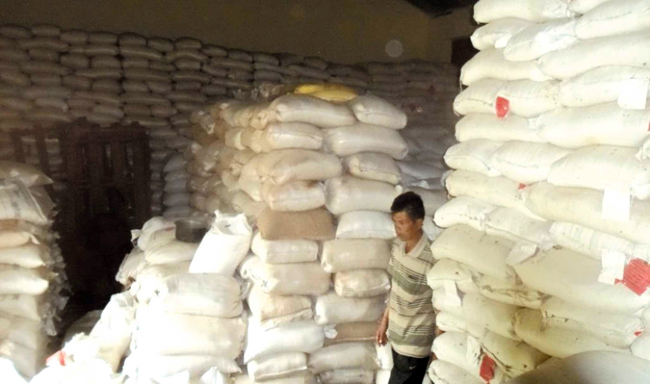
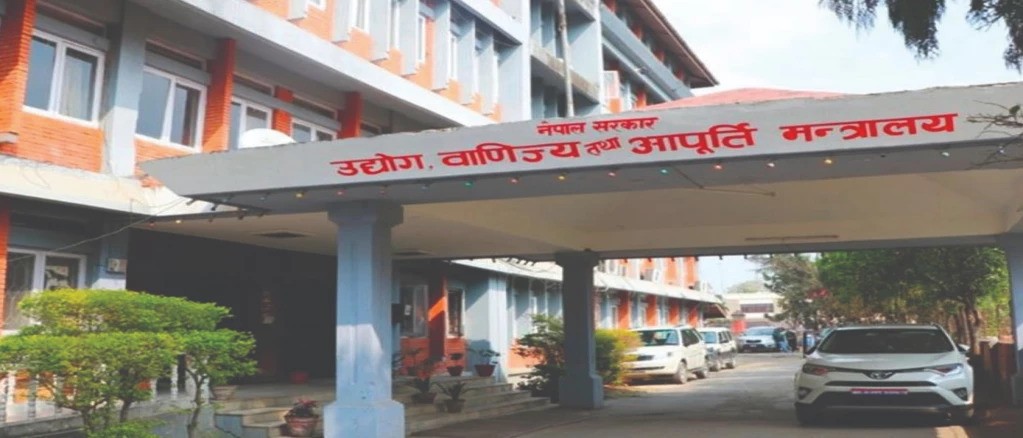
What is the Overdue Amount of Over One Billion Rupees Demanded by the Government from Industries in Industrial Zones Within 7 Days?

Minister Gaurikumar and government officials inspecting an industrial zone

Image source, IZML

Published

Reading time: 4 minutes

After the government issued a notice on June 8 demanding payment within 7 days to clear years of outstanding dues for land, buildings, electricity, and water used by industries established in industrial zones, industrialists have expressed strong opposition.

The Industrial Estate Management Limited has released details of arrears amounting to NPR 884.5 million from 635 industries and entities across 10 industrial zones nationwide.

The government has warned that failure to settle the dues will lead to strict actions including electricity cut-offs.

Who Owes How Much?

Among the ten industrial zones, Balaju Industrial Area has the highest arrears with 151 industries and establishments owing NPR 439 million, according to government records.

Similarly, 131 industries in Hetauda Industrial Zone owe NPR 209 million, while 94 industries in Patan Industrial Zone have arrears amounting to NPR 101 million.

FIFA World Cup 2026: Top Teams as Group Winners Likely to Meet Only in Quarterfinals

This time, FIFA has carefully designed the knockout stage bracket. The schedule is set so that top-seeded teams, if they become group winners, are likely to face each other later in the knockout rounds. Kathmandu, 10 June – The World Cup is returning to North America. Three North American nations are jointly hosting the 21st century’s first FIFA World Cup 2026. With just one day remaining before the 23rd edition of the globe’s premier football event kicks off, fans worldwide are focusing their attention on the United States, Mexico, and Canada. Mexico is hosting the World Cup after 42 years, the US after 32 years, and Canada is hosting for the very first time. A record 48 teams will compete for the first time in the tournament’s history, with the three hosts organizing a staggering 104 matches. The 48 teams will compete starting 11 June with the aim of lifting the FIFA World Cup trophy. Everyone’s dream is to win that trophy. Hence, a burning question remains – who will win the FIFA World Cup 2026? Although it seems simple, the answer is complicated since predicting the winner remains difficult. Many make predictions while supporters lay claim to their favorites. Experts analyze player performances to indicate possible winners. Even AI has begun forecasting potential champions. With so much speculation and debate, the definitive answer will only come when the final is played on 19 July.

With the expansion from 32 to 48 teams, the World Cup format has changed, requiring teams to play an additional match in the knockout phase. The 48 teams are divided into 12 groups. Apart from the winners and runners-up of each group, the eight best third-placed teams will also advance to the knockout stage, making the knockout phase intensely competitive from the start. FIFA has carefully planned the knockout bracket to ensure that top-seeded teams, if group winners, face each other only later in the competition. This reduces the chance of early exits for big teams and avoids early clashes between them, experts say. Out of the 48 teams, 32 will progress to the knockout round, while 12 finishing last in their group and only 4 of the third-placed teams will be eliminated after the group stage. The advancement of eight third-placed teams raises questions about the competitiveness and performance of both major and minor teams in the group matches, possibly reducing competitiveness. Many teams will try to avoid defeat—it’s possible for a team that draws all three games 0-0 to still earn 3 points and advance. This could risk lowering the excitement of the matches.

When will the big teams face each other? With three host teams, FIFA has placed the top nine seeded teams and three hosts into separate groups. The top nine seeded and title contenders are spread across different groups. For example, defending champion Argentina is in Group G, runner-up France in Group I, Spain in Group H, Brazil in Group C, Portugal in Group E, and England in Group L. The knockout bracket is arranged differently this time. If these top teams become group winners, they are likely to meet only in the quarterfinals or beyond. For instance, if Argentina and Portugal both win their groups, they will meet only in the quarterfinals. If Argentina, England, and Portugal all top their groups, only two of these will reach the semifinals. If Argentina, Brazil, England, and Portugal all top their groups, then one of these four will reach the final, or a weaker team may reach the final by defeating one of these powerhouses.

If these teams do not finish as group winners, the knockout bracket will change considerably. Teams such as France (the previous runner-up), former champion Spain, Germany, Belgium, and the Netherlands are also placed so that if they win their groups, one of these will reach the final. If France and Spain win their groups, they will likely face each other in the semifinals. If France, the Netherlands, and Germany win their groups, there will be a quarterfinal clash between two of these teams. Similarly, if Spain and Belgium top their groups, they will meet in the quarterfinals.

Another exciting possibility is if France and Spain both advance continuously by winning knockout games, and England and Portugal also win their groups and knockout matches, all four semifinalists could be European. In that case, one team from France or Spain and one from England or Portugal will reach the final. Another intriguing scenario is if Argentina and Brazil win their groups and progress through knockout matches; these two South American teams will meet in the semifinals, from which only one will reach the final.

There could also be an interesting situation in which one of Argentina or Brazil finishes as group winner and the other as runner-up, both winning all knockout matches – leading to a potential final showdown between them.

Video of Indian Woman Performing Difficult Yoga Poses in Late Pregnancy Goes Viral on Social Media

An Indian woman performing challenging yoga poses during the final stage of her pregnancy has gone viral on social media. The safety of such rigorous yoga practices during pregnancy has sparked controversy. The woman, from Bangalore, is 40 weeks pregnant. Just two days ago, she posted a video of herself practicing yoga. She regularly shares photos and videos of her yoga sessions throughout her pregnancy.

The attention began last week when she shared pictures and videos of herself doing yoga in a saree, including difficult poses. Entering her 39th week, she also spoke about her experiences. Since then, debates have emerged on whether it is appropriate to undertake such strenuous yoga in the advanced stages of pregnancy. The woman, named Shashi Prabha Dwivedi, is a professional yoga instructor and entrepreneur.

Her photos and videos have garnered millions of views and thousands of responses. Many have cautioned that advanced yoga poses at this stage might pose risks and advised exercising caution to protect the baby. Others have praised her as a courageous woman. While physical exercise is important during pregnancy, experts note that not all women can safely perform advanced yoga poses.

During late pregnancy, changes in the body’s balance occur. Experts warn that poses involving excessive bending, balancing, or putting pressure on the abdomen can increase risk. Therefore, specialists advise pregnant women to engage in light exercise and to practice yoga only under the guidance of an instructor and doctor, taking health conditions into account. They also caution against blindly following routines seen on social media. Consulting professionals before adopting new fitness methods or routines during pregnancy is strongly recommended.