Author: space4knews

Italy Advances to European Playoff Final for FIFA World Cup

Italy secured a 2-0 victory over Northern Ireland to advance to the FIFA World Cup playoff Path ‘A’ final. Sandro Tonali scored in the 56th minute and Moise Kean added a goal in the 80th minute to secure Italy’s win. Italy will now face Bosnia and Herzegovina in the final, with the winner earning a spot in Group B of the World Cup. Kathmandu, April 26.

The four-time World Cup champions have taken a crucial step forward in their quest to qualify for the tournament. In the semifinal of playoff Path ‘A’ held last night, Italy claimed an important win over Northern Ireland. The match played in Bergamo was highly competitive, with a goalless draw at halftime. However, Italy delivered an impressive second-half performance to secure a comfortable victory.

Midfielder Sandro Tonali broke the deadlock in the 56th minute with a powerful shot from outside the box to give Italy the lead. Later, in the 80th minute, Moise Kean added another goal to confirm the win. Northern Ireland applied some pressure during the first half and posed a strong challenge with their youthful squad, but failed to capitalize on scoring opportunities. Italy will now compete against Bosnia and Herzegovina in the final, with the winner earning a place in Group B alongside Canada, Switzerland, and Qatar. This victory is particularly significant for Italy as they faced the risk of missing the World Cup for a third consecutive time. Bosnia secured their final spot by defeating Wales 4-2 in a penalty shootout during their semifinal match.

ग्योकेरेसको ह्‍याट्रिकमा स्वीडेन विश्‍वकपको नजिक, पोल्यान्डसँग निर्णायक खेल

Gyoekeres Hat-Trick Propels Sweden Closer to World Cup, Decisive Match Against Poland Ahead

News Summary

  • In the UEFA World Cup European Playoff Path ‘B’ semifinal, Sweden defeated Ukraine 3–1 to secure a spot in the final.
  • Sweden’s Viktor Gyokeres scored a hat-trick with goals in the 6th, 51st, and 73rd minutes.
  • In the other Path ‘B’ semifinal, Poland beat Albania 2–1 to advance to the final.

March 26, Kathmandu – In the UEFA World Cup European Playoff Path ‘B’ semifinal, Sweden secured their place in the final by defeating Ukraine 3–1.

The match, held at Estadi Ciutat de València in Valencia, saw Viktor Gyokeres emerge as the hero for Sweden, scoring three goals in the 6th, 51st, and 73rd minutes to complete his hat-trick.

The first goal came from an excellent assist by Benjamin Nygren, while the second benefited from a long pass by goalkeeper Kristoffer Nordfeldt.

Gyokeres converted the third goal from the penalty spot after a save by Ukraine’s goalkeeper Anatoliy Trubin led to the penalty opportunity, which Viktor confidently converted.

Ukraine’s Matviy Ponomarenko scored a consolation goal late in the game, but it was not enough to change the outcome.

Meanwhile, in the other semifinal of the same Path, Poland defeated Albania 2–1 to reach the final.

Although Albania’s Hoxha scored first to give his team the lead, Poland’s Robert Lewandowski and Piotr Zieliński netted goals to secure the victory for their team.

The winner between Sweden and Poland in the upcoming final will earn a berth to the World Cup.

From Path ‘C’, Kosovo and Turkey have already secured places in their final, while from Path ‘D’, the Czech Republic and Denmark have advanced to their final.

US-Israel and Iran Conflict: Iran’s Rejection of US Talks Reflects Deep Distrust

Iranians holding a photo of the new Supreme Leader and the national flag

Image source, EPA/Shutterstock

This week, US President Donald Trump claimed there was a “very good and productive dialogue” aimed at ending the war between the US and Iran. However, Iran’s immediate response was a clear rejection of this claim.

Iranian officials have denied any such talks took place. A military spokesperson sarcastically remarked that the US is negotiating not with Iran but among themselves.

The gap is evident. Washington speaks of progress; Tehran promptly rejects it. This is not merely a disagreement but a reflection of profound distrust.

This mistrust stems from recent events.

Throughout the past year, conversations between the two sides had kindled hope for reducing tensions. In their final phase, mediators from Oman announced that the US’s main concerns regarding Iran’s nuclear program had been addressed.

Growing Popularity of Court Marriages in Nepal

News Summary

Prepared after Editorial Review.

  • On Chaitra 11, two couples from Bajura and Tanahun registered their marriages at Kathmandu District Court.
  • The court charges a fee of NPR 500 for marriage registration and issues certificates within two hours through a fast-track service.
  • Due to the absence of a dedicated building and premises for court marriages, couples celebrating often find the environment unsuitable.

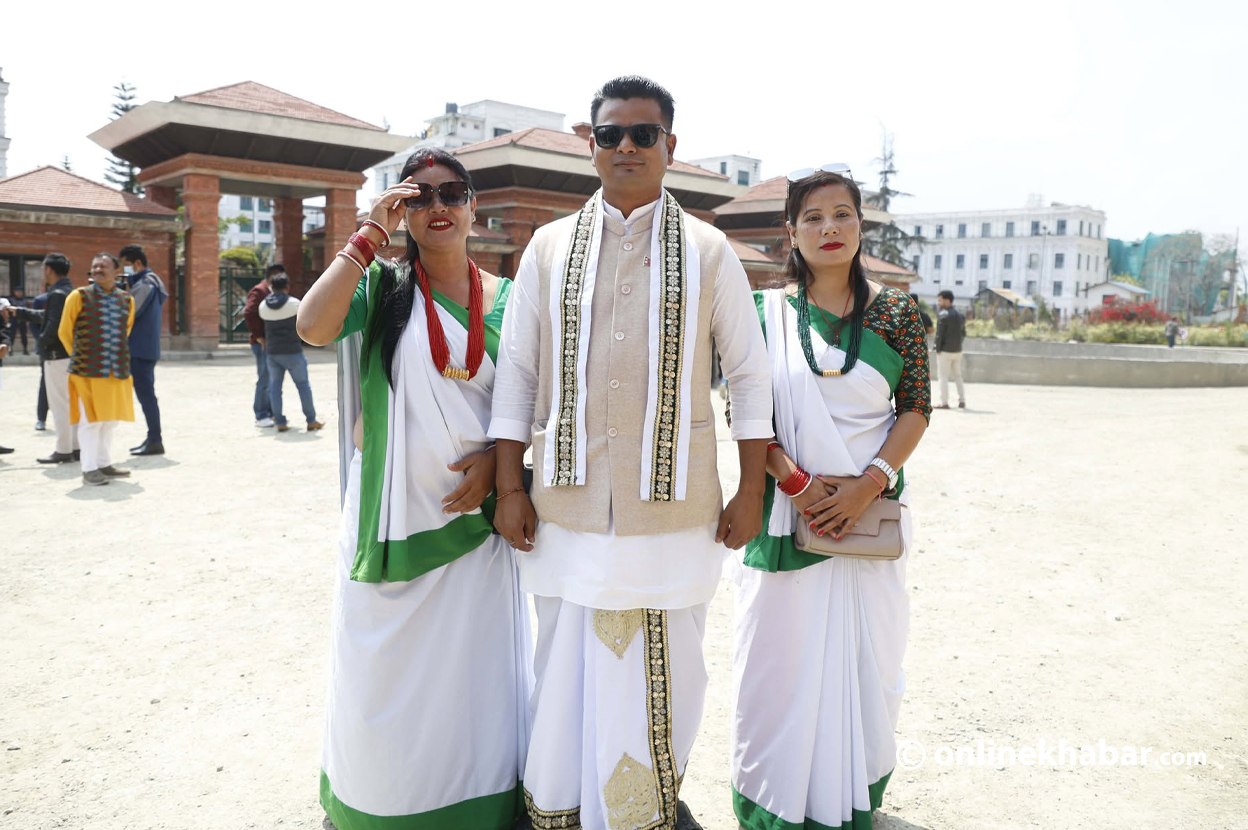
13 Chaitra, Kathmandu — On Chaitra 11, Lokeshkumar Ayadi from Triveni Municipality-7, Bajura, dressed in a black jeans jacket and pants, was seen hurrying within the Kathmandu District Court premises. Following him was Punam Kunwar from Gaumul-4 of the same district, wearing a green kurta suruwal.

They had not come for any legal dispute or administrative issue but to get married through a court marriage, also known as registered marriage. After completing the necessary procedures, the groom Ayadi and bride Kunwar received their marriage registration certificate that very day.

Ayadi, who is on a short leave from his job in Japan, arranged the court marriage with the consent of his family. He said, ‘As it was the month of Chaitra, I was unable to find a suitable traditional date, so with my family’s approval, I chose to have a court marriage. It was less costly and faster than a traditional ceremony, and I couldn’t return home for a conventional wedding.’

Traditionally, weddings are associated with elaborate outfits, jewelry, and decorations. However, the growing number of court marriages is bringing more diversity to these conventional perceptions.

Ayadi and Kunwar are not alone; on Chaitra 10, Kasam Pant from Bhanumunipality-12, Tanahun, and Bhawana Giri from Tripura Sundari Rural Municipality-1, Dhading, also registered their marriage at the same court.

The couple, wearing simple attire and carrying schoolbags, were seen taking pictures with their newly obtained marriage certificate in front of the court signboard. Groom Pant stated, ‘I learned through self-study that court marriage is reliable and trustworthy. This legal marriage option, when both parties and their families agree, is quicker, less expensive, easier, and reduces the financial burden on families.’

Factors such as increasing urbanization, foreign employment, busy lifestyles, and changing social customs have fueled public interest in court marriages. These marriages are also proving effective in combating social evils such as child marriage, polygamy, and false marriages, and have helped reduce dowry practices, leading to positive social responses.

27 Couples Registered Court Marriage in Kathmandu This Falgun

According to data from Kathmandu District Court, 27 couples registered their marriages on a single day last Falgun. Public Information Officer Deepak Kumar Shrestha stated that while the maximum number of registrations on auspicious days can reach 27, the daily average on other days is about 10. In the current fiscal year, as of Chaitra 11, a total of 1,755 court marriages have been registered there.

Last fiscal year, the court received 2,843 marriage registration applications, but the overall record of court marriages is unavailable as it was destroyed during the Jana Andolan movement.

In Nepali tradition, certain months are considered auspicious for marriage. However, many court marriages have been registered in months traditionally considered less favorable, including 67 until Chaitra 9, 226 in Poush, 159 in Kartik, and 194 in Saun.

Legal Encouragement for Court Marriages

Sociologist Tikaram Gautam described court marriage as a hallmark of modern society and an indicator of social change. He said, ‘All cultural practices in society are interpreted according to social structures and needs. Due to significant changes in Nepal’s religious, political, cultural, and social structures compared to the past, the number of court marriages has also increased.’

The state has consistently promoted court marriages since they are legally validated.

Couples opting for court marriage often reside in Kathmandu due to study, business, or employment and may not be able to return to their permanent residences.

Senior Advocate Sunita Regmi Pokharel explained that earlier, court marriages were registered through the Chief District Officer’s office, but now they are conducted at the district courts.

She added, ‘With the increasing trend of youth going abroad for foreign employment, the number of court marriages has risen. Registered marriages are considered official. Many young people are favoring court marriage after recognizing flaws in the traditional marriage process.’

She clarified the difference between marriage registration and court marriage: marriage registration is handled by the government registrar’s office, whereas court marriage is conducted by the court.

Marriage Registration Fees Set at NPR 500

To register a court marriage, couples must submit an application with photocopies of their citizenship certificates and educational credentials along with photos. The court charges a fee of NPR 500 for marriage registration.

Vinod Bisht from Lamki, Kailali, who planned to go to Serbia for employment, actively chose the court marriage route to complete the process quickly. He said, ‘It is a privilege to have a legal marriage through an official body; it is not only less expensive but also essential for obtaining necessary documents for foreign travel.’ He married Rashmi Budhwal from Kailali on Chaitra 10.

According to Information Officer Shrestha, the court can issue the marriage certificate on the same day if all required documents are submitted, even before the legally mandated seven-day waiting period.

However, the lack of a dedicated building or premises for court marriages causes inconvenience to couples who come to celebrate their union.

Since residents from all 77 districts of Nepal come to Kathmandu District Court for marriages, and some have urgent needs like traveling abroad, the court provides a ‘fast-track service’ to issue certificates within two hours.

Dalit rights activists have noted that court marriages have helped reduce caste discrimination as well.

Occasionally, couples dressed up and accompanied by family celebrate joyfully while collecting their marriage certificates.

Nepali law requires both parties to be unmarried and provides that a recommendation from the ward office of the permanent residence is mandatory. For foreign nationals, a minimum of 15 days’ residence proof in Nepal is required.

Foreign nationals must also provide a ‘No Objection Letter’ and certification of marriage eligibility from their respective embassies. The minimum age criteria are determined by the foreign national’s home country, and the documents must be translated into Nepali. If an embassy is not present in Nepal, recommendations from the embassy in India are accepted.

Astrological Arrangements Before Court Marriages

Recently, more couples have been consulting astrologers to select auspicious timings for court marriages. The court also prepares in advance and manages manpower accordingly for marriages planned for the following day.

Inside the court premises, many couples exchange flower garlands, rings, apply vermilion, and celebrate their unions daily. Busy lifestyles have contributed to the increasing appeal of court marriages. Some couples still perform traditional rites and ceremonies even after marrying in court.

Need for Separate Facilities for Court Marriages

Since the court lacks a dedicated building and space for court marriages, couples coming to celebrate often find the environment unsuitable. Coexistence of traditional plaintiffs and family members in the same area also creates discomfort. Hence, a demand for separate venues for marriages has been raised. A legally recognized marriage is fundamental for organizing social and family life.

Although marriages are registered at district courts nationwide, the frequency is comparatively higher in Lalitpur, Bhaktapur, Kaski, Rupandehi, Sunsari, Parsa, Chitwan, and Makwanpur. The courts consistently encourage these marriages, conducted under legal frameworks and witnessed by relatives.

Bird Flu Outbreak in Nepal: Impact of Spread in Jhapa, Morang, and Sunsari Districts

Following confirmed cases of bird flu infection at more than a dozen poultry farms across three districts in eastern Nepal, these areas have been declared crisis zones. Government officials have announced restrictions on the movement of birds and bird-related products. In total, over 65,000 chickens and more than 122,000 eggs have been destroyed across 16 poultry farms in Morang, Sunsari, and Jhapa districts.

Dr. Deepa Diwali, Senior Veterinary Officer at the Koshi Province Ministry of Industry, Agriculture, and Cooperatives, stated that technical teams have been deployed to the infected areas to implement measures to prevent further spread of the infection. Bird flu cases were initially confirmed in the first week of Chaitra at six farms in Morang, five in Sunsari, and one in Jhapa. The recent detection of bird flu at four additional sites in Sunsari and Jhapa has increased the challenge of controlling the outbreak, officials reported.

Acting Chief District Officer of Morang, Pawanraj Koirala, explained that since the disease has the potential to infect humans, all transport of poultry, eggs, feed, and related bird products from the affected areas has been halted. The government has urged farmers to exercise heightened vigilance. Farmers are encouraged to limit entry of outsiders into poultry farms, maintain regular cleaning and disinfection routines, promptly report sick or dead birds, and use protective equipment such as masks and gloves for safety.

The districts of Morang, Sunsari, and Jhapa are key centers for commercial poultry farming. With the emergence of bird flu, poultry farmers have expressed concern. According to Om Banskota, president of the Nepal Egg Producers Association chapters in Sunsari and Morang, the estimated losses due to the bird flu outbreak amount to approximately two billion Nepalese rupees in these districts. Given the open border with India, which may have facilitated the introduction of the infection, stakeholders emphasize the need for the government to pay special attention to controlling the outbreak.

Ram Navami Observed Nationwide with Public Holiday

News Summary

Reviewed and prepared.

  • On Chaitra Shukla Navami, the festival of Ram Navami is observed across the nation with reverence in memory of Lord Ramachandra, the epitome of dignity and righteousness.
  • The government has declared a public holiday nationwide on the occasion of Ram Navami.
  • There is a large gathering at the Ram Janaki Temple in Janakpur, where it is believed that observing a fast and worship on this day brings peace and happiness.

Chaitra 13, Kathmandu – Today on Chaitra Shukla Navami, the festival of Ram Navami is being celebrated across the country with solemn worship and devotion in remembrance of Lord Ramachandra, the epitome of honor and virtue.

On this occasion, the government has declared a public holiday throughout the nation.

Worship ceremonies are held at Ram temples across the country, including the Ram Janaki Temple in Janakpur, which is crowded with devotees.

It is a religious belief that observing a fast and performing worship on Ram Navami brings happiness and peace.

Religious scriptures mention that in the Treta Yuga, on this very day, Lord Ram was born in Ayodhya as the eldest son of King Dasharath and Queen Kaushalyavati, taking incarnation as Lord Vishnu.

According to the Valmiki Ramayana, Ram married Sita, the daughter of King Janak of Mithila, and vanquished evil forces.

New Prime Minister Balen Shah to Take Oath Today

News Summary

Editorial review completed.

  • President Ramchandra Paudel has scheduled the oath-taking ceremony of senior leader Balen Shah as Prime Minister this afternoon.
  • Shah will assume office at the Prime Minister and Council of Ministers’ Office in Singha Durbar at 2:15 PM.
  • The Rastriya Swatantra Party appointed Shah as parliamentary party leader on Thursday.

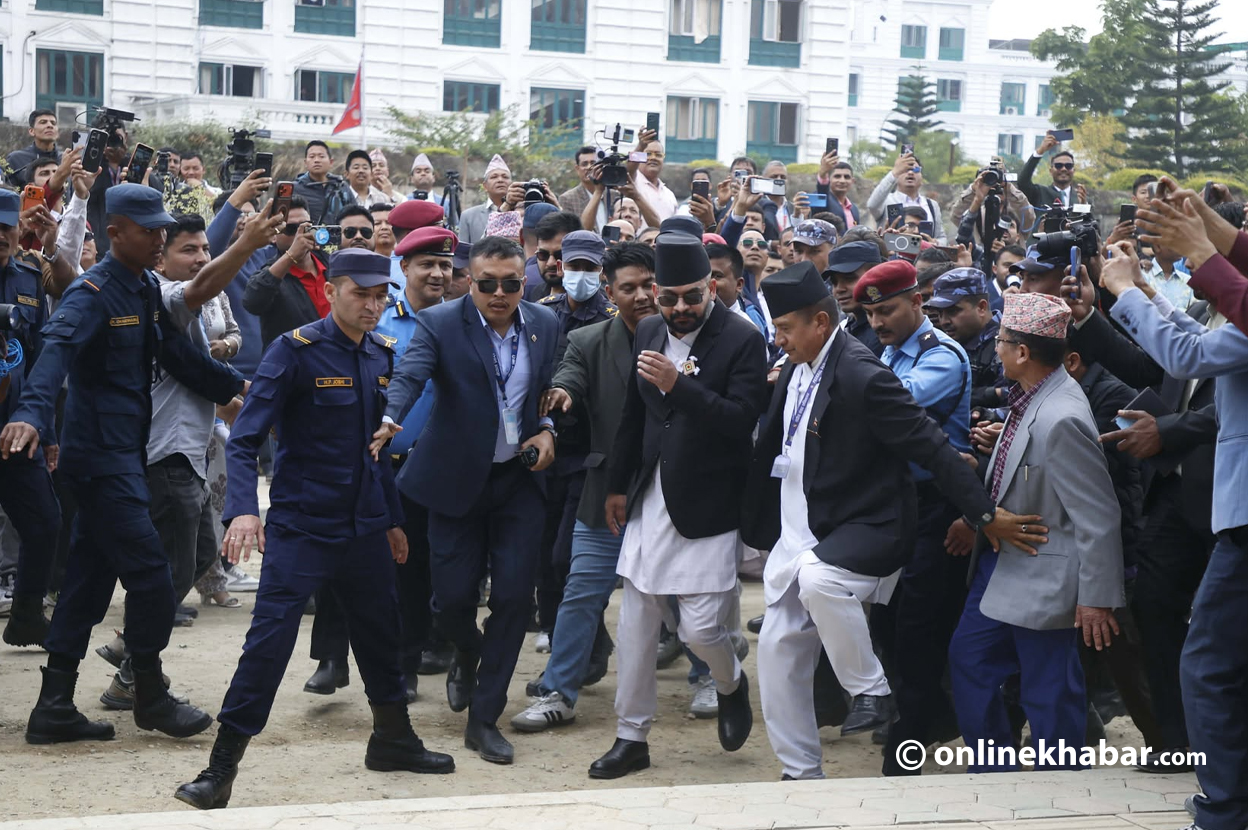
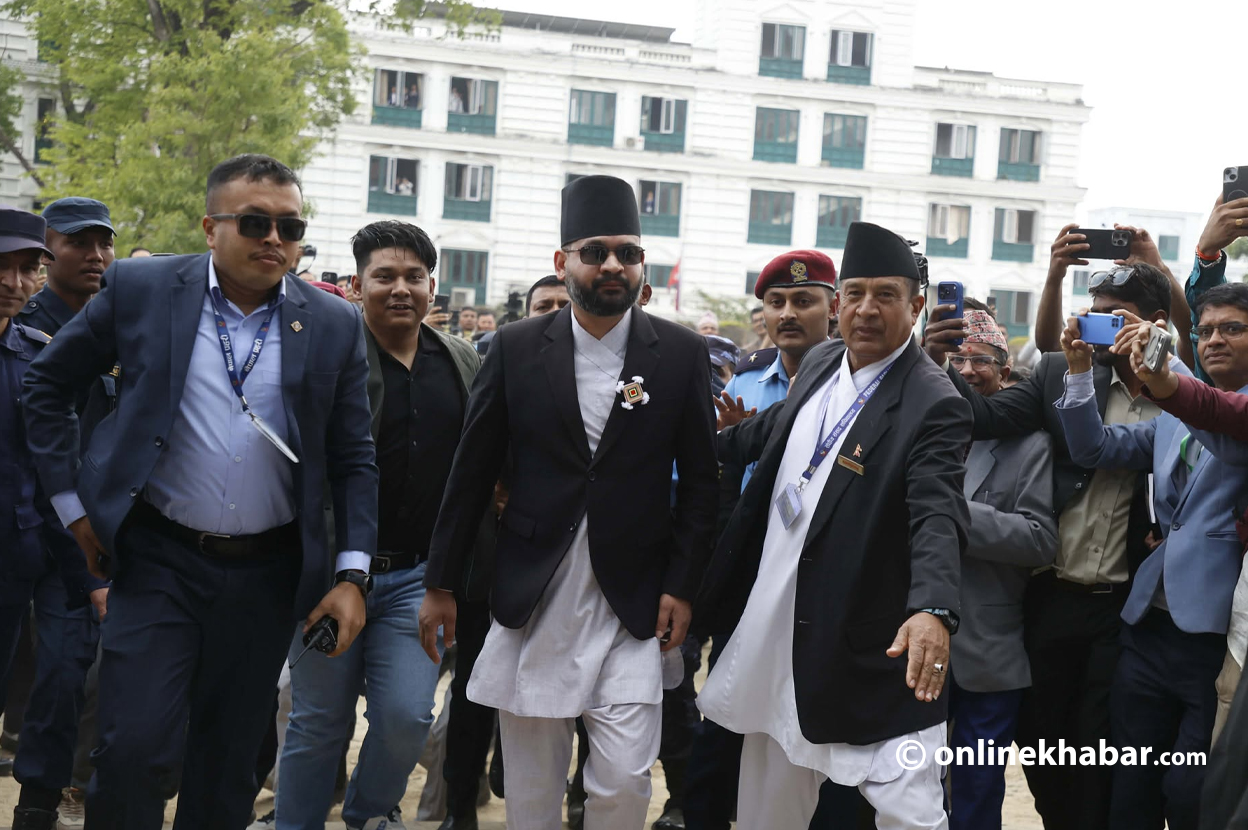
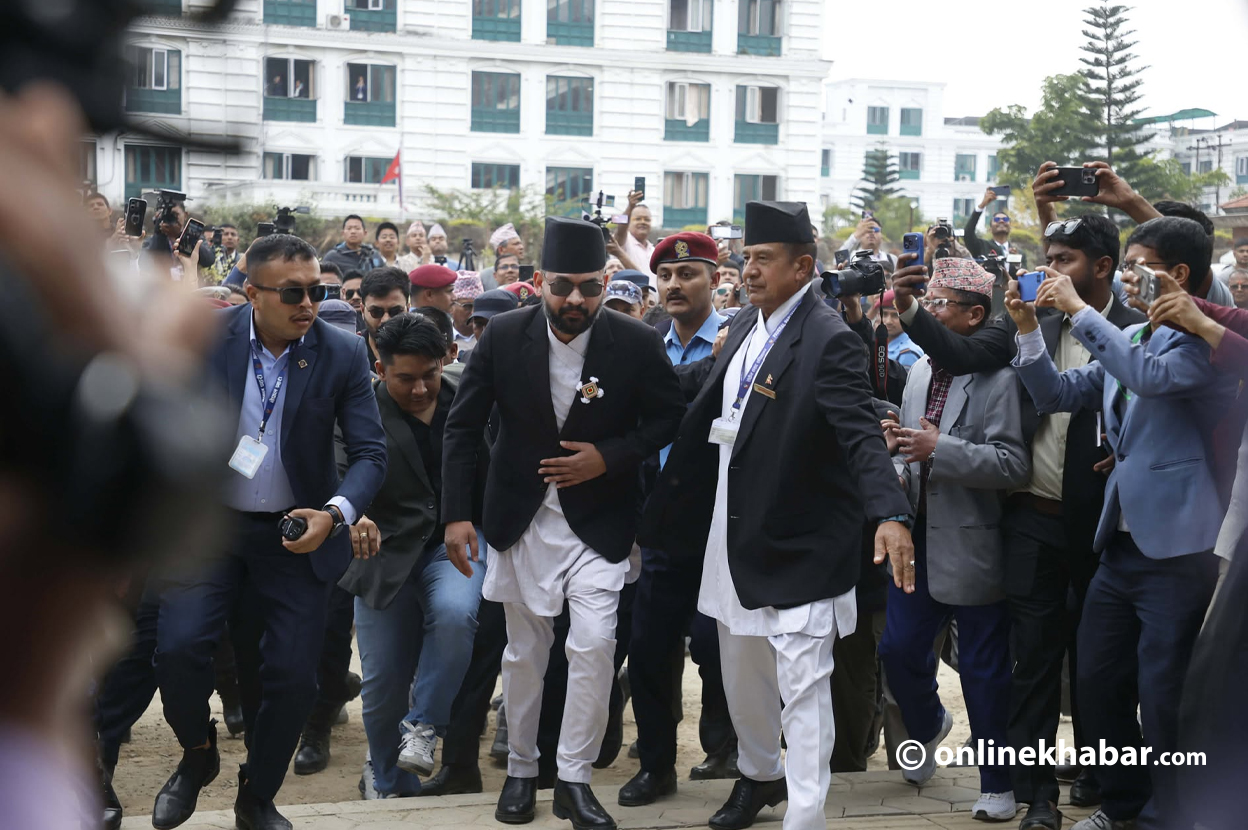
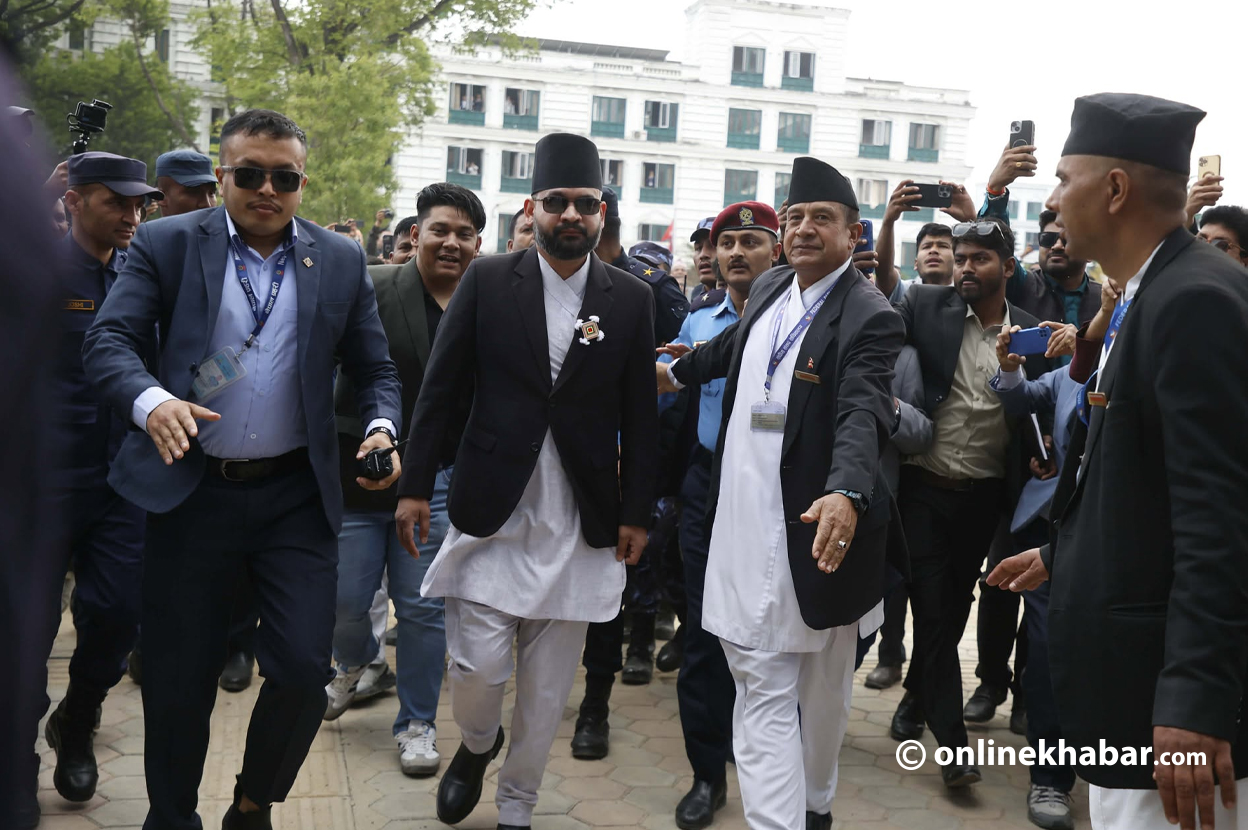
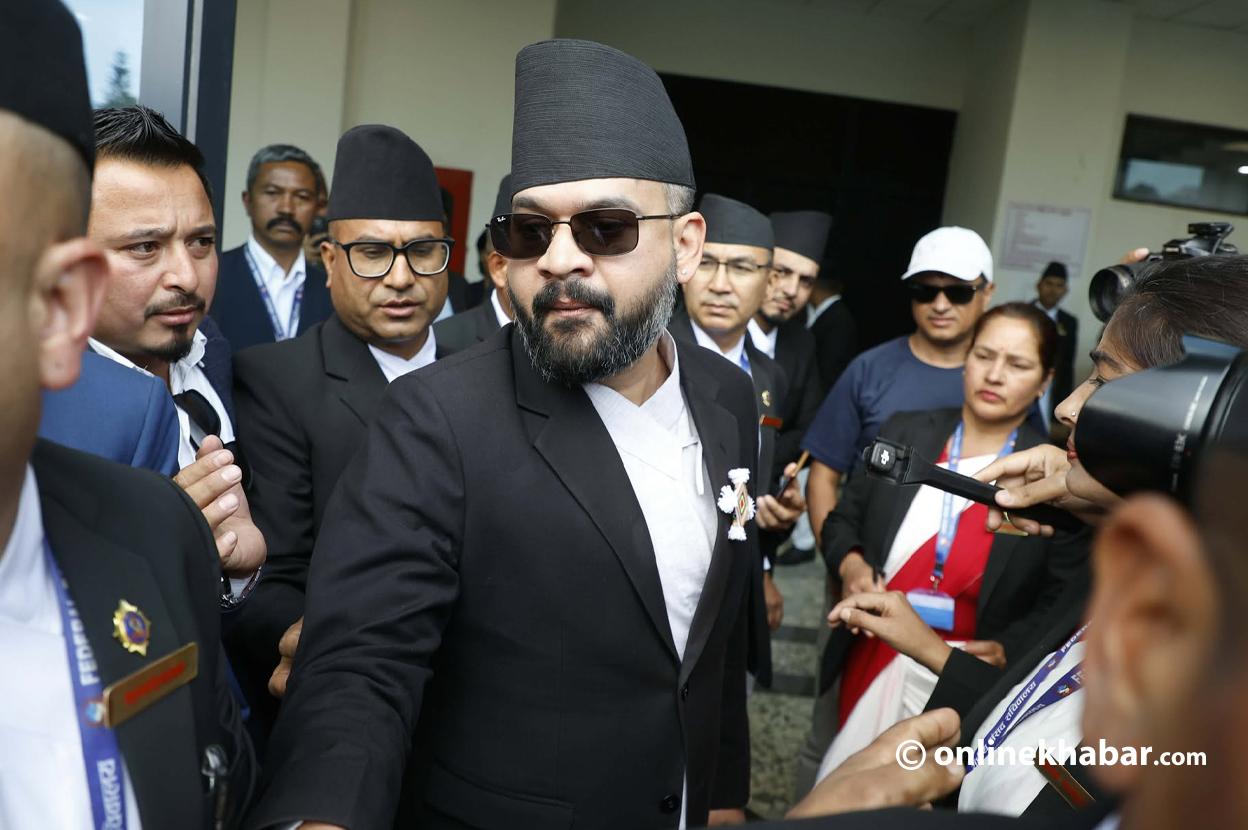
Chaitra 13, Kathmandu – The country is set to welcome a new Prime Minister today. At the President’s Office in Sheetal Niwas this afternoon, President Ramchandra Paudel is scheduled to administer the oath of office to senior leader Balendra Shah (Balen) of the Rastriya Swatantra Party (RSP).

The oath-taking ceremony is set for 12:34 PM. The program will include the blowing of conch shells by seven players, auspicious readings by 108 youths, and the recitation of Ashtamangala by sixteen Buddhist monks.

Following the oath ceremony, Balen will formally assume his position at the Prime Minister and Council of Ministers’ Office at Singha Durbar at 2:15 PM.

Prior to the oath, it will be officially announced that Leader Shah has been appointed as Prime Minister. According to Article 76, Clause 1 of the Nepalese Constitution, a single-party government is being formed.

The President’s Office has invited representatives from various political parties, diplomatic missions, civil society, and senior government officials to attend the ceremony.

Alongside the Prime Minister’s oath, ministers will also be sworn in. In the recent House of Representatives election held on Falgun 21, the Rastriya Swatantra Party won 182 seats. On Thursday, the party appointed Leader Shah as the parliamentary party leader.

In the election, Leader Shah won from Jhapa Constituency No. 5 with 68,348 votes. Also on Thursday, senior member Arjun Narasingh KC administered the oath of office and secrecy to the members of parliament.

Most Foreign Currency Exchange Rates Decline


13 Chaitra, Kathmandu – Today, the exchange rates of most foreign currencies have decreased. According to the foreign exchange rates set by Nepal Rastra Bank for today, the value of most currencies has declined compared to the previous day.

The buying rate of the US Dollar is fixed at NPR 150.07 and the selling rate at NPR 150.67.

Similarly, the European Euro’s buying rate is NPR 173.24 and selling rate NPR 173.93, while the UK Pound Sterling’s buying rate is NPR 200.30 with a selling rate of NPR 201.10.

The Swiss Franc’s buying rate is NPR 189.30 and selling rate NPR 190.06.

The Australian Dollar’s buying rate is NPR 103.93 and selling rate NPR 104.35, whereas the Canadian Dollar’s buying rate is NPR 108.40 and selling rate NPR 108.83.

The Singapore Dollar’s buying rate is set at NPR 116.86 and selling rate at NPR 117.33.

The Japanese Yen (per 10 units) has a buying rate of NPR 9.41 and a selling rate of NPR 9.44, the Chinese Yuan buying rate is NPR 21.72 and selling rate NPR 21.81, the Saudi Arabian Riyal’s buying rate is NPR 40.00 and selling rate NPR 40.16, and the Qatari Riyal is priced at NPR 41.06 for buying and NPR 41.22 for selling.

According to the central bank, the Thai Baht’s buying rate is NPR 4.57 and selling rate NPR 4.59, UAE Dirham’s buying rate is NPR 40.86 and selling rate NPR 41.03, Malaysian Ringgit’s buying rate is NPR 37.57 and selling rate NPR 37.72, South Korean Won (per 100 units) buying rate is NPR 9.96 and selling rate NPR 10.00. Additionally, the Swedish Krona buying rate is NPR 15.99 and selling rate NPR 16.06, while Danish Krona’s buying and selling rates are NPR 23.19 and NPR 23.28 respectively.

The Rastra Bank has fixed the Hong Kong Dollar’s buying rate at NPR 19.18 and selling rate at NPR 19.26, Kuwaiti Dinar at NPR 489.39 for buying and NPR 491.34 for selling, Bahraini Dinar at NPR 397.48 buying and NPR 399.07 selling, and Omani Rial at NPR 389.84 buying and NPR 391.40 selling. The Indian Rupee (per 100 units) buying rate is NPR 160 and selling rate NPR 160.15.

Nepal Rastra Bank has stated that these exchange rates may be revised at any time as per necessity. Commercial banks’ exchange rates may differ and the updated rates will be available on the central bank’s official website.

How Strong Are the Military Capabilities of GCC Nations?

News Summary

  • Israel and the United States’ initiation of ‘Operation Epic Fury’ against Iran has ignited a fierce conflict in West Asia.
  • In retaliation, Iran has launched hundreds of missile and drone attacks targeting Gulf Cooperation Council (GCC) nations.
  • Gulf countries have successfully intercepted over 90% of these attacks using advanced air defense systems.

March 25, Kathmandu – The full-scale military operation launched against Iran by Israel and the United States on February 28, 2026, dubbed ‘Operation Epic Fury,’ has plunged the lands of West Asia into a brutal war.

Iran has adopted a ‘Horizontal Escalation’ strategy in retaliation, targeting Gulf Cooperation Council (GCC) member states – Saudi Arabia, the United Arab Emirates, Qatar, Kuwait, Bahrain, and Oman.

From Riyadh to Dubai and Doha to Muscat, sirens blare loudly across the skies. Hundreds of ballistic missiles and drones sent by Iran are aimed at oil facilities, airports, and civilian areas in the Gulf.

The bilateral war among these three nations has inevitably drawn others into the conflict. With no signs of the war easing, indications suggest not only GCC countries but other nations may become involved.
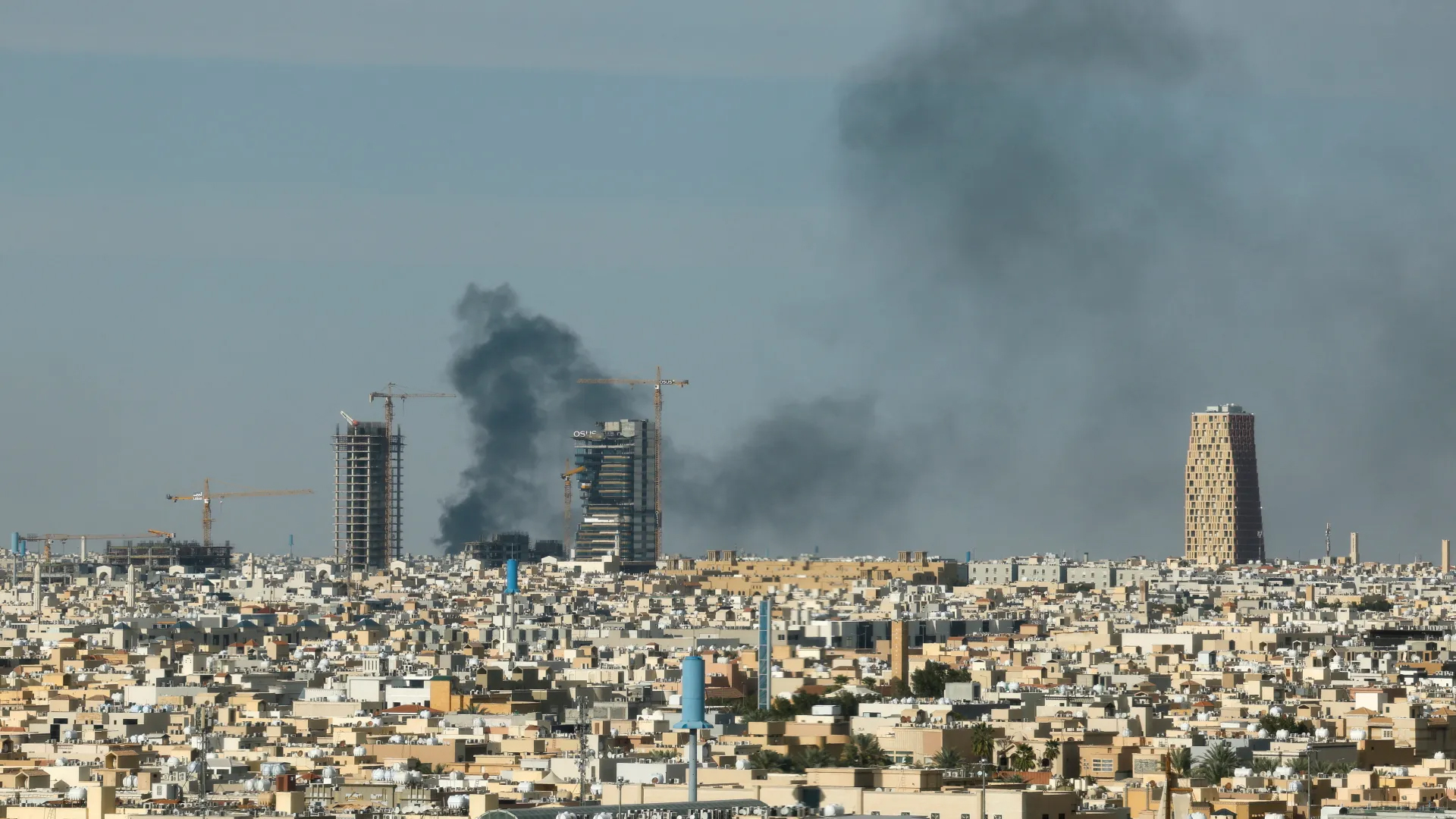
 

However, an unusual and significant aspect of this conflict is that although GCC nations are involved, they have not engaged directly in offensive actions. Their focus remains entirely on ‘self-defense.’

Recent military data reveals that the integrated air defense systems of the Gulf countries have achieved an interception rate exceeding 90%, limiting the damage caused by Iran’s large-scale assaults.

Context of the War and Rising Risks

Following strikes targeting Iran’s Supreme Leader Ayatollah Ali Khamenei and high-ranking military commanders by the U.S. and Israel, Iran began attacks on Gulf nations using its proxy forces as well as its own military. Thousands of missiles and drones have been launched so far.

The most severe assault has been on the United Arab Emirates (UAE), yet its defense system successfully destroyed 94% of incoming drones and 92% of ballistic and cruise missiles mid-air.
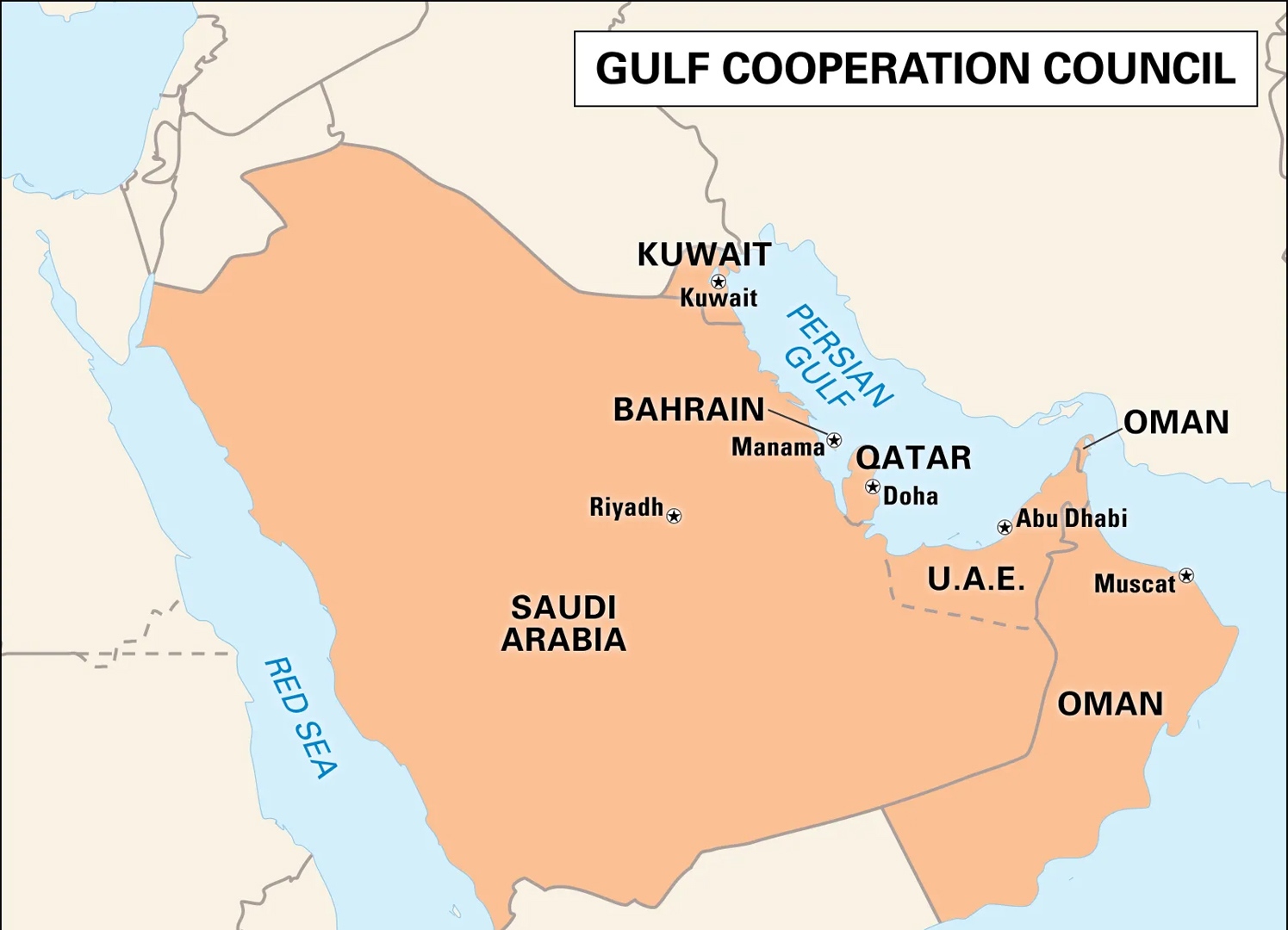
Missiles targeting Saudi Arabia’s Ras Tanura oil refinery have mostly been intercepted. Although Qatar’s Al Udeid Air Base, hosting an American military presence, has suffered some attacks, damage remains minimal. Civilian areas in Bahrain and Kuwait have been affected, but layered defense systems have limited human casualties.

In this crisis, GCC leadership has condemned Iranian aggression as a treacherous act. The military exercise ‘Gulf Shield 2026’ held in January has proven vital in preparedness for the ongoing war.

Experts warn that the stock of expensive Patriot and THAAD missiles is rapidly depleting. If the conflict endures, Gulf states may be forced not only to defend but also to conduct counterstrikes.

Saudi Arabia: The Military Powerhouse of the Gulf

Saudi Arabia stands as a dominant military and air defense force in West Asia. According to Global Firepower 2026 rankings, it holds 5th place regionally and 25th worldwide.

With a defense budget allocation of approximately $78 billion for 2025–26, Saudi Arabia is among the top seven military spenders globally. Boasting over 230,000 active troops, the country currently channels significant resources into air defense.

The Saudi Air Force operates 917 aircraft, with 596 on constant readiness. Its core strength lies in 283 modern fighter jets, including 84 F-15SA Eagles, 68 F-15SRs, and 72 Eurofighter Typhoons.

Saudi Arabia has equipped its F-15 fleet with the Harpoon Block II anti-ship missile system, successfully tested at the end of 2025.

The most formidable element of Saudi defense is its air defense system, which combines THAAD (Terminal High Altitude Area Defense) batteries with powerful Patriot PAC-3 MSE missiles. In January 2026 alone, the U.S. approved the sale of 730 PAC-3 MSE missiles to Saudi Arabia worth $900 million.

This system effectively neutralizes Iranian ballistic missiles at upper atmospheric levels. For smaller drones, Saudi Arabia relies on point-defense systems like the Russian Pantsir-S1.

Saudi Arabia fields 1,085 tanks, primarily American M1A2 Abrams, alongside 22,370 armed vehicles and modern artillery, making its ground forces robust. Under ‘Vision 2030,’ through Saudi Arabian Military Industries, the kingdom aims to domestically produce 50% of its weaponry.

United Arab Emirates: Advanced Technology and ‘Rafale-Patriot’ Integration

UAE’s military strategy emphasizes quality over quantity. With a defense budget nearing $27 billion in 2026, it sources military equipment from the United States, France, and South Korea.

UAE’s air force operates unique aircraft such as the F-16E/F Block 60. Recently acquired 80 Rafale F4 jets from France have significantly enhanced UAE’s strike capabilities. However, the UAE’s most notable achievement remains its high missile interception rate.

Combining South Korean Chungung-2 medium-range systems with American THAAD missiles, the UAE has prevented Iranian missiles from reaching Dubai and Abu Dhabi airports. While minor damage occurred at Jebel Ali port, their layered defense strategy has been highly effective.

In March 2026, the U.S. authorized an additional $560 million in Patriot missile systems and CH-47F Chinook helicopters for the UAE. Advanced drones produced by local company AGS Group also play a vital role in border security.

Qatar: Three-Dimensional Air Power

Though a small nation, Qatar’s military is highly modernized. Recently, Qatar has added Rafale, Eurofighter Typhoon, and F-15 fighters to its arsenal.

Qatar’s air defenses rely mainly on Patriot PAC-3 missile systems and Norwegian NASAMS-3. In early March, Qatar claimed to have successfully intercepted 63 missiles and 11 drones.

According to Qatar’s Ministry of Defense, they have downed two unauthorized Iranian Su-24 jets near their border. At the Doha-held ‘DIMDEX 2026’ defense exhibition, Qatar unveiled new ‘Skywarden’ anti-drone systems and ‘Acron’ missiles.

Kuwait and Bahrain: American Strategic Strongholds

Kuwait has upgraded its Patriot missile systems with an $800 million investment, adding new sensors.

During the heavy missile attack on March 24, Kuwaiti forces intercepted 17 missiles and 13 drones, successfully protecting oil refineries. Their new M1A2K Abrams tanks provide solid ground security.

Bahrain, home to the U.S. Fifth Fleet’s headquarters, was Iran’s initial target. Despite its smaller budget, Bahrain’s recently acquired Patriot PAC-3 MSE system saved the capital Manama from extensive destruction. Though Bahrain’s airspace is limited, its strategic importance is considerable.

Oman: Balanced Defense Policy

Oman pursues a neutral, balanced defense approach. Having good relations with Iran, it has experienced fewer direct attacks than other Gulf countries. Nevertheless, Oman keeps its Eurofighter Typhoon and F-16 jets on high alert.

The Omani navy plays a decisive role in securing the Strait of Hormuz. In this war, Oman has kept diplomatic channels open, using its defense systems mostly as a backup.

Integrated Defense and the Future Path

One key achievement revealed by the ‘Gulf Shield 2026’ exercise is intelligence sharing among GCC nations. As soon as a missile is launched from Iran, all six states and the U.S. command receive simultaneous alerts. This system is known as the ‘Gulf Missile Defense Shield.’

Yet, the conflict also exposes challenges, primarily economic. An Iranian drone costs only a few thousand dollars, but intercepting it requires a Patriot missile costing millions. This economic asymmetry could prove costly for Gulf nations. Additionally, continual attacks are depleting the number of interceptors.

The 2026 West Asia conflict has transformed Gulf countries from oil-rich states into highly technologically advanced military powers. Their cutting-edge weaponry and strategic restraint have prevented Middle Eastern cities from becoming ruins.

However, if diplomatic efforts fail and Iran intensifies its saturated attacks, the Gulf’s defensive shield could soon be forced into offensive action. For global economic and energy security, the military strength of the Gulf remains the last beacon of hope. –With agency inputs

प्रधानमन्त्री कार्की (पूर्णपाठ) – Online Khabar

Prime Minister Sushila Karki Commits to Fulfilling Janajati Movement Demands Under New Government

Prime Minister Sushila Karki emphasized that the demands of the Janajati movement must be fulfilled by the new government. She highlighted that her six-month election government successfully conducted the elections and laid the groundwork for addressing these demands. She noted that the government granted autonomy to bodies investigating corruption and expressed confidence that the new government would advance the remaining tasks outlined in the movement’s agreement.
Kathmandu, 12 Chaitra – Prime Minister Sushila Karki underscored the necessity for the new government to meet the demands of the Janajati movement. She stated that her six-month tenure steering the government had successfully completed elections and established foundational work to address the movement’s issues.
“The six-month election government we were entrusted with was not positioned to accomplish all the tasks expressed during the Janajati movement. However, we definitely laid some groundwork. We encouraged the creation of an environment where agencies investigating complex crimes and corruption could operate with full professional independence,” she said during her address to the nation on Thursday night. “As a result, the Commission for the Investigation of Abuse of Authority and the Central Investigation Bureau under the Nepal Police have begun to act on long-pending cases. The government has also taken historically strict measures against irregularities such as contract work avoidance and electricity theft involving non-payment of bills.”
She also affirmed that the government, formed in the context of the Janajati movement, signed an agreement with the protesters on Mangsir 24 (early December), and she expressed confidence that the new government would prioritize advancing the remaining commitments of that agreement.
In her address, Prime Minister Karki extended wishes for the swift recovery of children and injured combatants who lost their lives during the events of Bhadra 23 and 24, 2082 BS (September 2005). She pledged support for the families who have lost their loved ones, assuring they will not be left alone. “I urge everyone to unite and advance with the belief that we will rise again,” she stated.

Share Market Rises by 14.21 Points Despite Decline in Trading Volume

News Summary

Editorial Review.

  • The NEPSE index rose by 14.21 points to reach 2,950 on Thursday.
  • Despite the market gain, the total trading volume dropped to NPR 1.316 billion.
  • The hydropower sector led gains with a 1.56% increase, while five companies saw their prices surge by 10%.

Chaitra 12, Kathmandu – On the final trading day of the week, Thursday, the stock market rose by 14.21 points. Following this increase, the NEPSE index stood at 2,950 points.

Although the market index advanced, the trading volume declined, falling from over NPR 1.509 billion the previous day to NPR 1.316 billion today. Share prices of 178 companies increased, 80 declined, and 8 remained unchanged.

The hydropower sector experienced the highest gain, rising by 1.56%. Other sectors also showed increases: banking by 0.37%, finance 0.17%, hotel and tourism 0.81%, production and processing 1.50%, microfinance 0.20%, non-life insurance 0.43%, and other groups by 0.65%.

Meanwhile, the trading sector decreased by 2.84%, life insurance dropped 0.04%, and development banks declined by 0.05%.

Five companies recorded a significant 10% increase in their share prices. These include Reliance Spinning Mills, Solu Hydropower, Super Khudi Hydropower, Bhujung Hydropower, and Hotel Forest Inn. Additionally, National Hydropower’s shares rose 6.24%, Ridi Power 6.19%, and Shubham Power 5.80%.

Panchakanya Mai Hydropower saw the largest single-company decline, dropping 7.48%. Sindhu Development Bank’s shares fell by 3.58%, Corporate Development by 3.24%, and Vishal Bazar by 3.4%. Among the most actively traded stocks today were NRN Infrastructure, SY Panel, National Hydropower, Ridi Power, and Ngadi Group.

Newly Elected MPs Take Oath of Office and Secrecy (With Photos)

News Summary

Generated by AI. Editorial review completed.

  • Following the election held on 21st Falgun, newly elected MPs took the oath of office and secrecy during the first meeting of the House of Representatives.
  • Senior member of the House of Representatives, Arjun Narasingh KC, administered the oath to the parliamentarians at the Federal Parliament’s provisional multi-purpose hall.
  • After the oath-taking, the Federal Parliament Secretariat provided each MP with a bag containing the Constitution and relevant procedural documents.

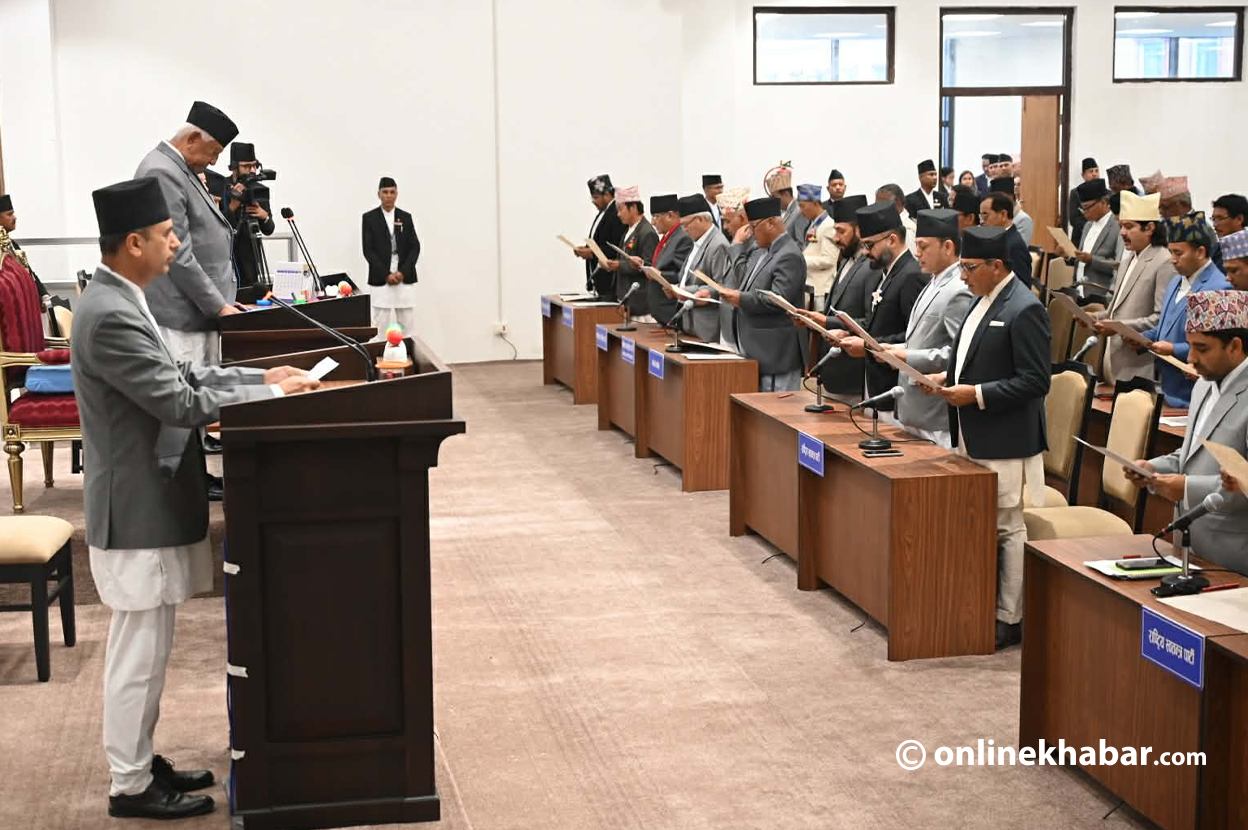
March 25, Kathmandu – During the first meeting of the House of Representatives following the elections held on February 21, newly elected members took the oath of office and secrecy.

Senior member of the House of Representatives, Arjun Narasingh KC, administered the oath to the members.

The oath-taking ceremony was held at the newly constructed provisional multi-purpose hall of the Federal Parliament located at Singha Durbar. According to the Federal Parliament Secretariat, some initial meetings will also be held at this hall.

Since the new House of Representatives hall is not yet completed, a temporary hall was built to facilitate the oath-taking and preliminary meetings.

Seating arrangements were designated in the hall according to party seat allocations.

Following the oath ceremony, the Federal Parliament Secretariat provided each member of parliament with a bag containing the Constitution, the House of Representatives’ procedural rules, and joint meeting conduct guidelines.

Parliamentarians participated in the oath-taking event dressed in various traditional attires. According to the secretariat, 63 MPs took the oath in their mother tongues.


साढे तीन वर्षमा २१ बाट १८२ – Online Khabar

Remarkable Journey from 21 Seats to 182 Seats in Three and a Half Years

Summary: The Rastriya Swatantra Party (RSP) entered the parliament in 2082 BS by winning 182 seats. By centering its election campaign on digital platforms, the party achieved an unprecedented number of votes. The collaboration between Chairman Ravi Lamichhane and Balendra Shah played a significant role in increasing the party’s popularity and expanding its organization. Kathmandu, 12 Chaitra. On 22 Magh 2079 BS, Rastriya Swatantra Party (RSP) Chairman Ravi Lamichhane clearly stated, ‘We will run this party without taking anyone’s leftovers. In the next election, we will work with the goal of becoming Prime Minister, not just Deputy Prime Minister or Home Minister.’ Lamichhane had previously served twice in the government as Deputy Prime Minister and Home Minister in the then Prime Minister Pushpa Kamal Dahal (Prachanda)-led government, after winning 21 seats in the 2079 BS House of Representatives including by-elections. However, he lost all his posts due to citizenship issues. Afterward, he stepped away from the government and announced his intention to become Prime Minister in the subsequent elections. The RSP had declared the ‘Mission 84’ plan, but due to the Janajati movement, the elections were held on 21 Falgun, 2082 BS. Without waiting for the 84 seats targeted, RSP won 182 seats and took their oath in parliament on Thursday. Chairman Lamichhane is not contesting for Prime Minister himself. However, as he mentioned, the RSP has reached parliament to lead a government close to a two-thirds majority.

Established in Ashad 2079 BS, the RSP conducted a campaign in just over three and a half years that secured an unprecedented number of votes, surpassing established parties like Congress, UML, and NCP. First, let’s revisit the RSP’s background. Founded in 2079 BS, the party faced legal challenges over its name and election symbol (the bell) right from the start. Chairman Lamichhane recounted at an orientation that the party and its members were protected despite various attacks. ‘This party was targeted from its inception. Legal cases were filed against the party’s name. People tried to crush it at birth, but we safeguarded it. Attempts were even made to destroy the party’s election symbol. We protected it from established parties, vested interests, and power groups,’ Lamichhane said.

Initially, the party had limited financial and human resources. Conducting an international-level campaign by physically reaching all 77 districts would have cost billions, which was not feasible in the 2079 BS elections. As a result, the party could not contest everywhere, fielding candidates in only 111 constituencies. ‘This was beyond our capacity. So, we saw the emerging digital age as an opportunity and decided to focus our entire campaign on the digital domain,’ recalled Co-General Secretary Bipin Acharya.

The RSP opened accounts on all social media platforms including Facebook, X (formerly Twitter), Instagram, and a website. The party concluded that forging a close relationship with the electorate via digital platforms was essential. ‘Hashtags like #RastriyaSwatantraParty linked all our content digitally on a single thread. Even ordinary reactions from tea shop patrons were turned into content. People considered the campaign as their own,’ Acharya explained. The RSP adopted a policy of not boosting content through paid promotion and focused on producing organic content, which made the party appear trustworthy to voters. ‘While older parties treated digital media lightly, we made it the center of our campaign,’ he added.

Another key factor was Chairman Lamichhane’s popularity. ‘We transported the chairman to various parts of the country and connected activities there with citizens through visual content. We employed impactful tools such as drone footage and mobile flashlight videos to enhance the visual message,’ Acharya said. Lamichhane was known to record and promote videos of his candidates even at 1 a.m., which helped secure 21 seats both in direct and proportional elections. ‘In the previous elections, we could have won not 21 seats but a two-thirds majority. The people gave a chance to the new entrants and an opportunity for the old parties to reform. The voters exercised their wisdom,’ said Lamichhane.

Even after 2079 BS, RSP maintained digital activism. Issues raised in parliament were promptly presented via video. The leaders made their social media pages reliable sources of information. ‘A mobile app was launched to conduct a ‘Primary Election,’ initiating the practice of digital democracy,’ Acharya added. The digital election campaign that began in 2079 BS had spread throughout the political landscape by 2082 BS, helping the party expand from 21 seats to 182 seats.

Moreover, many candidates lost tickets this time. Multiple factors contributed to the victory.

Unity and Popularity of Ravi-Balen
The partnership between RSP Chairman Ravi Lamichhane and then Kathmandu Metropolitan City Mayor Balendra Shah added new vigor to the 2082 elections campaign. ‘This sent a message to rise above personal prestige and unite for the country, which the people enthusiastically embraced,’ Acharya said. ‘Both decided to come together under one umbrella beyond individual reputation and a political magic number.’ Although Lamichhane had the possibility of becoming Prime Minister, he prioritized country and citizen-centric politics. The popular Balendra Shah’s involvement energized the party further. ‘The people accepted the combination of these two influential personalities. It showed that politics is not for personal benefit, but for nation-building. The trusted individuals standing on the same platform was the strongest aspect of 2082,’ Acharya stated. The party also gained momentum in the Madhesh region, according to leaders.

The People Became the Message Bearers
In the 2082 elections, alongside Ravi-Balen, citizens became chief carriers of the campaign. ‘Nepalis living home and abroad spread the party’s messages via social media to the grassroots. In some places, our message arrived even before we did,’ Acharya said. ‘Nepalis abroad called, saying, ‘‘Vote for the bell symbol.’’’ This time the campaign slogan was “Chupchap Ghantima Chaap” (Silently Vote for the Bell), which reached door-to-door, with dissatisfied voters from Congress, UML, Maoist, Rastriya Prajatantra Party, and Madhesi parties also voting for the Bell symbol. RSP operated a targeted 24-hour ‘war room’ for campaign purposes. The organizational structure was strengthened down to the ward level. The messages reached local levels through technology and family networks. The central team used AI technology to produce digital content. The ‘war room’ also provided technical support to candidates. Videos, profiles, and AI-generated election songs were made for 163 candidates. Even though the party did not provide direct financial support, it assisted with content development. ‘The structure that started with five to seven people in 2079 BS has now grown to a team of 50-60 experts,’ said Organization Department Secretary Shankar Shrestha. The team also included former security officials and specialists. Different strategies were adopted for remote areas with less internet and electricity access. ‘We engaged in honest dialogue about the system change. One candidate’s innovative approach was easily adopted by others,’ Acharya remarked. According to election commission guidelines, no vote canvassing was done before the official period. ‘We collected public suggestions and prepared a fact-based manifesto that made citizens feel directly connected to the campaign,’ he added. Morning walks and Facebook Live direct interactions also created a positive impact. ‘These cost-effective but efficient campaigns offered a distinct political culture, different from traditional noise. The RSP wanted action, not just speeches,’ Acharya said.

Manifesto and Citizen Contract
The manifesto was prepared with citizen input. ‘It was not only in black and white but presented via videos and attractive designs by some candidates,’ Acharya mentioned. The concept of a citizen contract clearly outlined plans to the public, which contributed to the party’s rise. Though digital media was important, candidates’ fieldwork was decisive. ‘Door-to-door outreach, face-to-face dialogue, and active local levels played a crucial role,’ said General Secretary Kabindra Burlakoti. ‘While the central office provided materials and coordination, the efforts at the local level were the real deciders.’

Balendra Shah Declared Future Prime Minister
RSP fielded Balendra Shah as the prospective Prime Minister in the election. The joint campaign of Chairman Lamichhane and senior leader Shah won the hearts of voters from east to west. ‘The Chairman’s proposal to make Balendra Shah Prime Minister sent a positive signal,’ said General Secretary Burlakoti.

Candidate Selection and New Faces
Careful attention was paid to selecting candidates able to win 182 seats. ‘Integrity was demonstrated in candidate selection to strengthen public hope. Priority was given to youth, energetic, educated individuals with new ideas. Both long-time political actors and new capable faces were given opportunities,’ Burlakoti said. The party also gave tickets to prominent leaders from other parties including Congress, UML, Maoists, RSP, and Madhesi parties. ‘We aimed to include those dissatisfied with old parties and seeking change. We incorporated alternative political groups, activists, and youth to send a strong message,’ added Organization Secretary Shrestha. Leaders of the Tharuhat movement also joined the RSP.

Organizational Expansion to 76 Districts and 300,000 Members
Though no organizational expansion took place in 2079 BS, by 2082 BS the party had spread to 76 districts and had an active central committee of 91 members. ‘Organizations have been established in all seven provinces. Committees have been formed in approximately 460 local municipalities, with processes nearing completion in 100 more,’ General Secretary Burlakoti reported. At the ward level, organizations have expanded to nearly 2,500 wards, with preparations underway in an additional 1,500 wards. There are currently around 250,000 online members. Adding offline members, total party membership is close to 300,000. This organizational growth helped facilitate victory.

Constituency Classification and Strategy
The party analyzed constituencies before the election, grouping them into strong, moderate, and weak categories to develop tailored strategies. ‘Various committees were formed at central, provincial, district, and constituency levels,’ Organization Secretary Shrestha explained. Under Deputy Chairman D.P. Aryal, a 51-member committee managed the work. Special committees for security coordination, media management, and internal coordination were also active. ‘Tasks ranged from fact-checking to crisis management. Proportional candidates, central members, and departmental members served as election coordinators in various areas,’ he added.

Signature Campaign Garnered 4.2 Million Signatures
While Chairman Lamichhane was imprisoned over a cooperative case, the party ran a signature campaign denouncing political retaliation, collecting around 4.2 million signatures. ‘The signature campaign was the real preparation for the election. Without it, RSP wouldn’t have risen,’ said leader Pramod Nyaupane. The party secured about 1 million votes more than their proportional votes, totaling 5,146,681 votes. ‘Although not publicized, internal meetings discussed treating this as an electoral campaign,’ Nyaupane added. Lamichhane believed political retaliation increased votes; while imprisoned, he told close associates, ‘The more they retaliate against me, the more votes I get.’

Background of the Janajati Movement
The elections occurred against the backdrop of the Janajati movement on 23 Bhadra. Many leaders from this movement contested under RSP. The movement demanded good governance and an end to corruption, which RSP also highlighted in its election agenda. Post-movement, public dissatisfaction with old parties increased. ‘Disillusionment and frustration with old parties pushed voters toward new alternatives, resulting in votes for RSP,’ said General Secretary Burlakoti. The party won 125 direct and 57 proportional seats, totaling 182. However, votes were lower in areas with limited internet and weaker organization. ‘Especially in remote regions like Karnali with less internet access and weak structures, the impact was limited. Geographic difficulties and entrenched old structures posed challenges there,’ Burlakoti explained.

With such an unprecedented number of votes, RSP is committed to nation-building. ‘Old parties made Nepali people wait 34-35 years; you won’t have to wait even 36 months or 36 days. Have confidence in this,’ Chairman Lamichhane cautioned the newly elected members.

Nepse Approves Procedure to Commence Share Margin Trading; Brokers Ready

News Summary

Prepared following a review.

  • Nepal Stock Exchange (Nepse) has prepared and is set to implement the necessary procedures to start share margin trading within days.
  • The margin trading facility has been designed in accordance with the Securities Board’s 2082 guidelines, including investor identification, margin call methods, and share sale management.
  • Securities broker companies have completed their internal preparations and will commence operations once Nepse grants approval, said Nepse spokesperson Murahari Parajuli.

March 26, Kathmandu – Nepal Stock Exchange (Nepse) has approved the procedural framework necessary to launch share margin trading. The Nepse board of directors sanctioned the procedures on Wednesday, and the margin trading service is expected to be implemented within the next few days.

Nepse has prepared the operational procedures for margin trading, while securities broker companies have also completed their internal preparations. Following the setup of trading management systems and broker data backup storage, brokers will begin offering the service, stated Nepse spokesperson Murahari Parajuli. He added, “Although there won’t be major changes to Nepse’s trading system, some technical adjustments will be necessary on the brokers’ side, which may take some time.”

In line with the Securities Board’s Margin Trading Facility Directive of 2082, Nepse has formulated procedures covering investor identification and branch testing, margin call methods, duration, and share sale arrangements. The procedures clearly specify required documentation, sample agreements between securities brokers and investors, margin account clearing and rollover provisions. The process that investors must follow to repay amounts borrowed under margin trading is also included.

Parajuli explained that Nepse’s procedure includes policy arrangements to ensure investor diversification within the margin trading facility. As per regulations, brokers must obtain permission from Nepse to provide margin trading services, and the related approval decisions must be attached to the application.

Upon reviewing applications and documents received from trading members, Nepse will issue licenses to those authorized to provide margin trading services. The Securities Board will also be informed of this process. If applications or documentation are found unsuitable, the license will not be granted, and reasons will be communicated to the relevant member. Additionally, members must renew their licenses within three months after the end of each fiscal year, as stipulated in the procedures.

Only shares of companies designated by Nepse will be eligible for purchase and sale under brokers’ margin trading services. These companies must have a minimum of 2.5 million shares issued to the public and be listed on Nepse, have net worth equal to or exceeding paid-up capital, maintain profitability for two out of the last three years, and have been listed for at least two years.

Investors wishing to utilize margin trading services must apply to the trading member (broker) to open a margin trading account. In case of bonus shares issued by these shares within the margin account, brokers are allowed to assign separate margin obligations based on bonus share ratios.

The procedures allow brokers to execute margin calls through trading members, requiring investors to maintain adequate margin within seven trading days. If margin is not maintained within this period, brokers may sell shares in the margin account following the eighth trading day.

Should shares in margin accounts become delisted due to mergers, acquisitions, or other reasons, the trading member may request additional collateral following appropriate risk evaluations. The procedures also stipulate that after a margin call, if the market value rises above the initial margin when cash or shares are deposited, investors can reclaim or sell the lesser amount between cash or shares.

When maintaining margin, transferring shares from the investor’s regular beneficiary account to the margin trading beneficiary account will incur fees in accordance with regulations. After share sales, trading members must settle accounts with investors and report the details to Nepse.

Members must identify shares purchased on margin either during daily trading or throughout the clearing period. For clearing, margin trading accounts must be opened with the Central Depository System and Clearing Limited (CDSC).

The procedures require opening margin trading accounts linked with clearing members’ accounts. Annual accounts and audits must be submitted to the board and Nepse within three months after the fiscal year-end. Nepse will oversee the inspection and monitoring of margin trading activities.

Sagar Dhakal, Chairman of the Stock Broker Association, confirmed that securities broker companies are fully prepared to commence margin trading. Apart from some necessary technical arrangements, all preparations have been completed. He stated, “Once Nepse finalizes details, the necessary adjustments will be made and operations will begin.”


Nepali Congress President Gagan Thapa Announces Initiative to Connect Nepali-Origin Citizens Worldwide with Nepal

News Summary

Prepared by AI. Editorially reviewed.

  • Nepali Congress President Gagan Kumar Thapa stated that the Congress will take initiatives to connect Nepali-origin citizens living worldwide with Nepal.
  • Association of Nepali Origin (ANO) Chairperson Dilli Adhikari emphasized the need for Nepal to enact Nepali-origin-friendly laws to attract investment.
  • President Thapa mentioned that Congress is making efforts to include Nepali-origin citizens in its election manifesto.

March 26, Kathmandu – Nepali Congress President Gagan Kumar Thapa announced that the party will take the initiative to connect Nepali-origin citizens residing globally with Nepal.

He expressed this during a meeting on Thursday evening with a delegation led by Dilli Adhikari, Chairperson of the Association of Nepali Origin (ANO).

President Thapa highlighted that Congress is attempting to include Nepali-origin citizens in its upcoming election manifesto.

ANO Chairperson Adhikari stressed the importance of attracting investment from Nepali-origin citizens for Nepal’s development and prosperity. To facilitate this, he emphasized the need for Nepal to create laws favorable to Nepali-origin individuals.

He also informed that ANO is actively working on a campaign to connect Nepali communities worldwide through Nepalese culture.