Author: space4knews

ओलीको समीक्षा- अश्लील प्रचारबाट प्रहार भयो, यस्तासँग के बोल्ने भनेर चुप बस्यौँ

Oli’s Reflection: We Accepted Silence When Facing Vulgar Propaganda Assaults


March 25, Kathmandu – CPN-UML Chairman KP Sharma Oli has reflected on the party’s failure to respond to falsehoods and vulgar propaganda directed at UML. Speaking at the party headquarters in Chyasal on Thursday while addressing newly elected parliamentarians, Oli asserted that UML’s inability to counter such naked propaganda contributed to the party’s electoral defeat.

“We were targeted with false, rude, and obscene propaganda. Our civilized approach was unable to effectively counter it,” Oli stated. “Instead, a tendency grew within us to remain silent, unsure of what to say or how to respond. We failed to stand firm against this.”

He shared that he had previously conveyed this message to party lawmakers. “Years ago, I said something: When you see a naked ox, there is no need to feel embarrassed because that is how that species is. An ox never wears clothes,” Oli explained.

“Some people expose themselves according to their intent; we must also learn to confront that,” Oli added.

Oli claimed that the party cadre did not sufficiently pay attention to defending against attacks launched through social media. “We developed a mindset of expecting others to handle it for us,” he said.

He noted that the reluctance to speak out prevented the truth from reaching the public. “Only a few within the party spoke up, while most remained passive,” he remarked.

Oli emphasized that UML has not fallen due to wrongdoing. “We have been outpaced due to our good deeds; thus, there is no need to despair. We are on the path of truth,” he concluded.

The Silam Sakma Adorned by Balen: What Does It Signify?

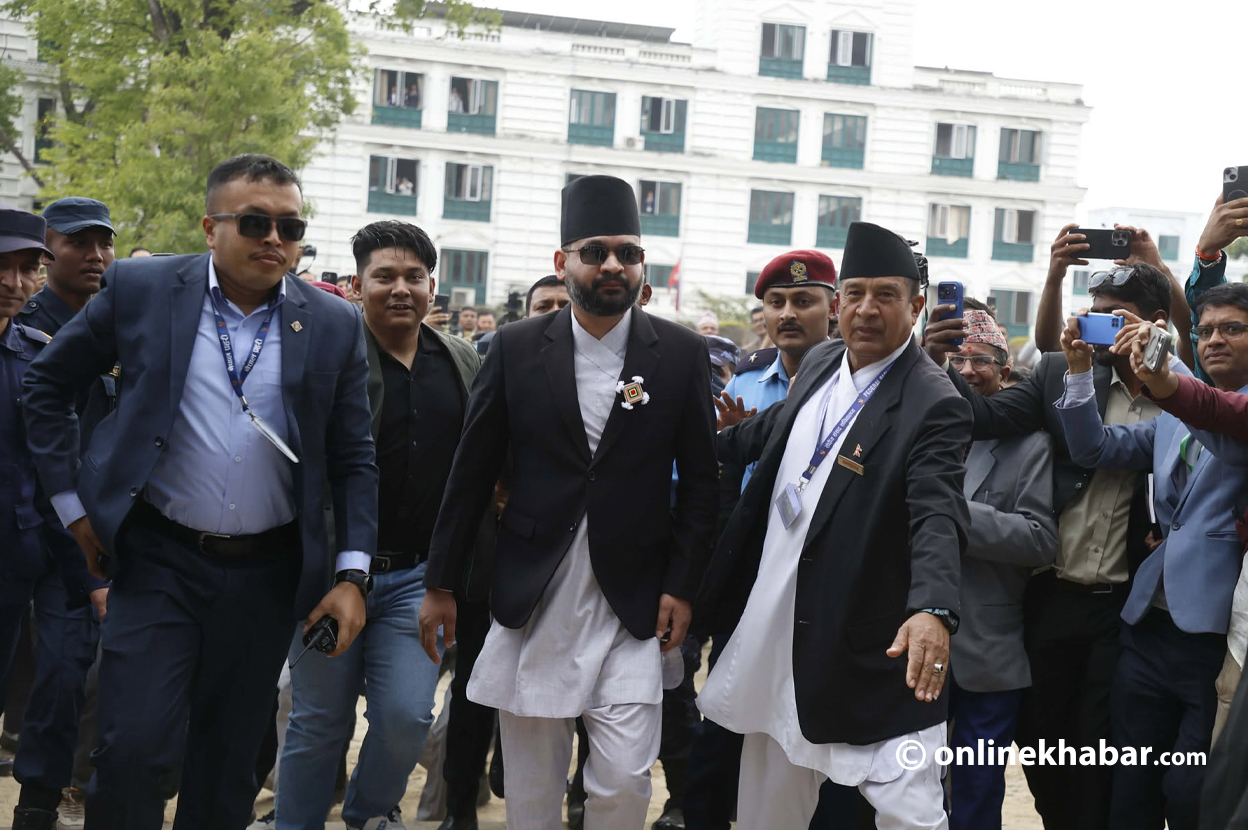
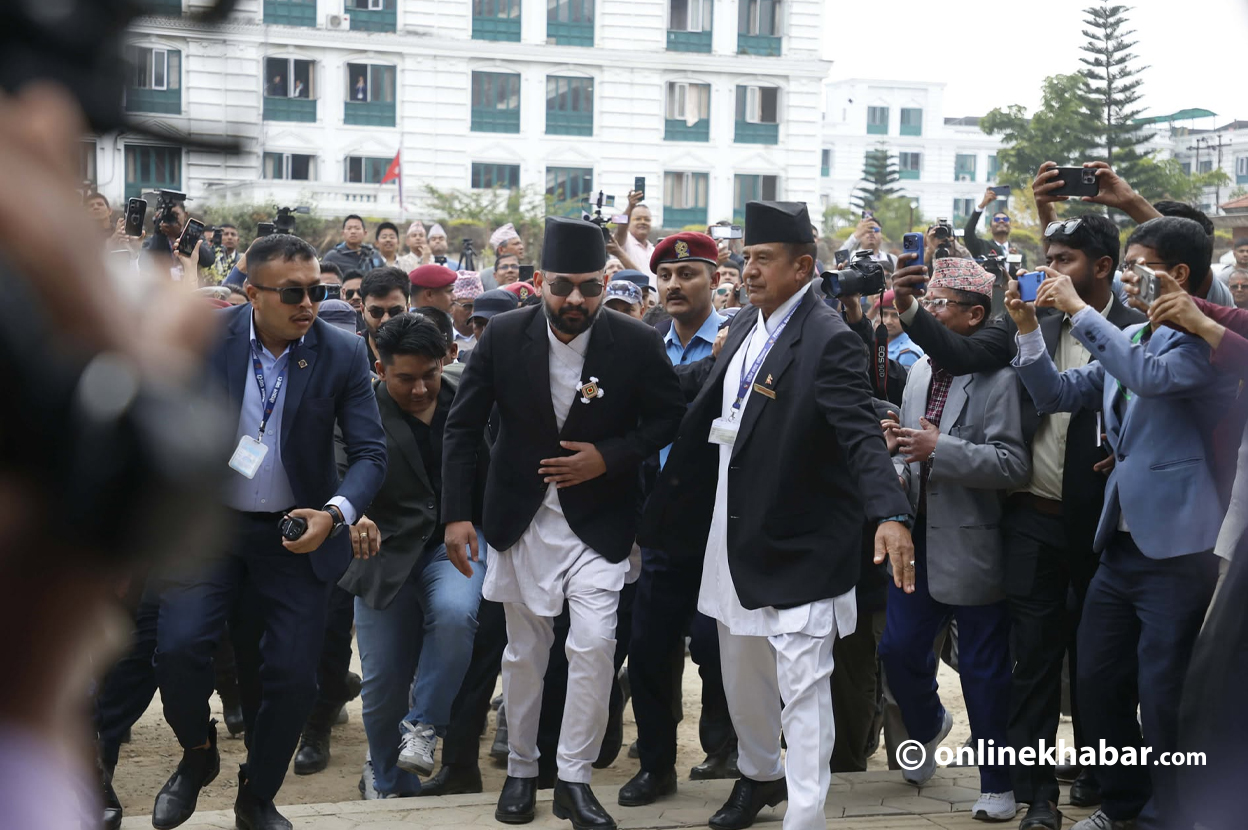
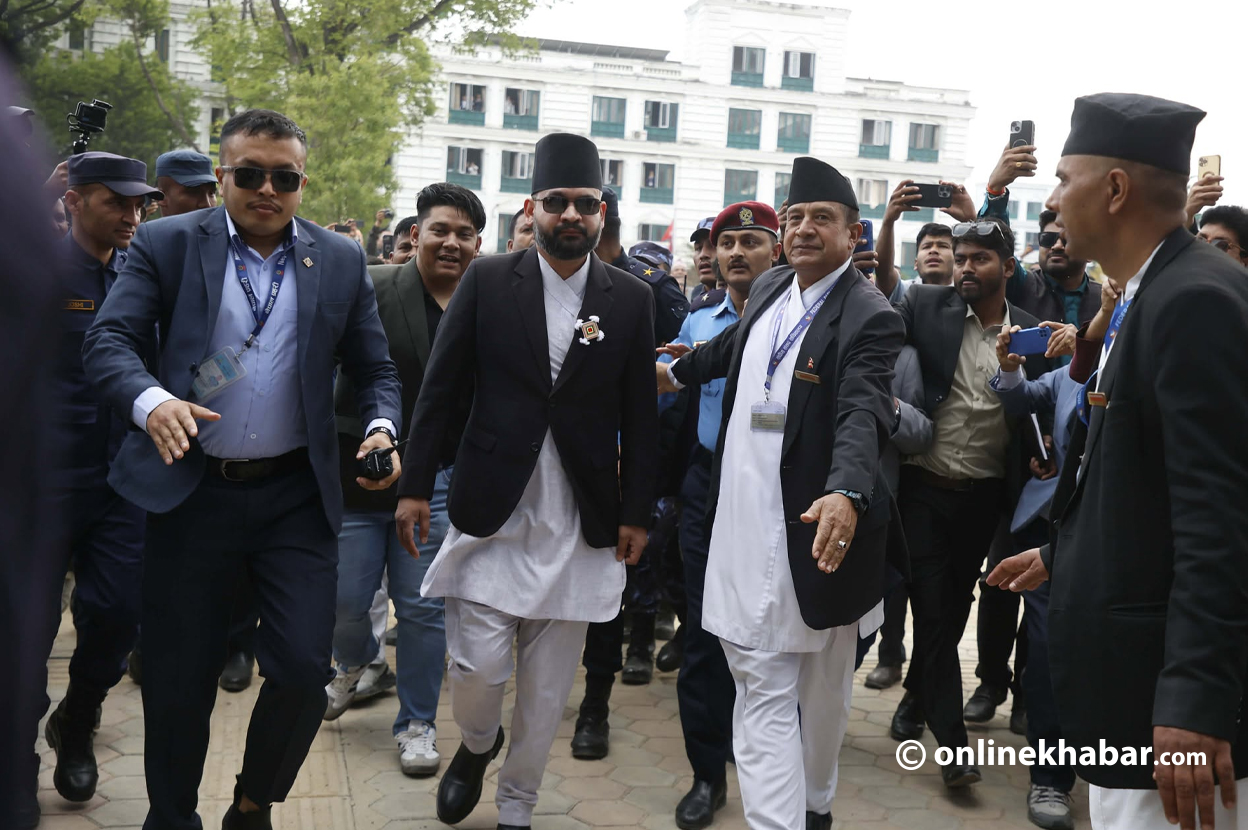
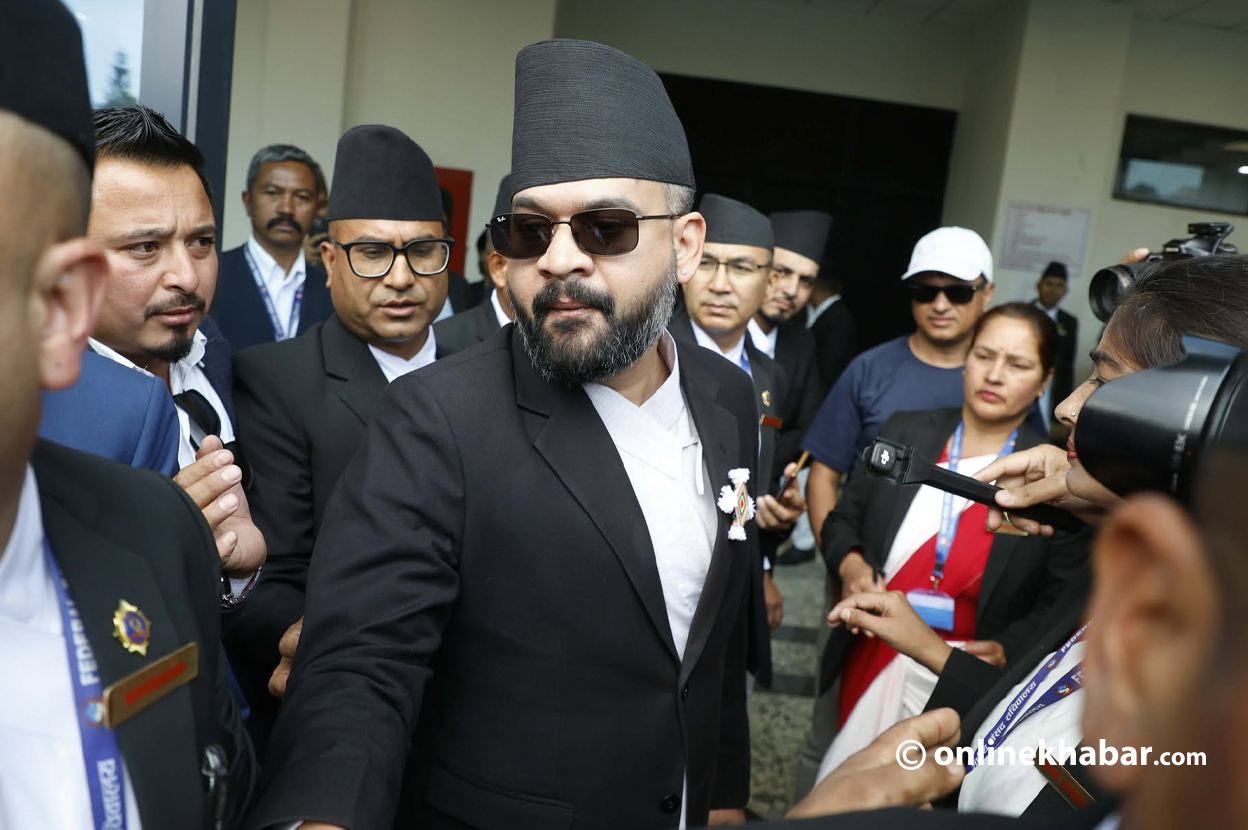
Senior leader Balendra Shah of the Rastriya Swatantra Party (RSWP) attended the oath-taking ceremony of the House of Representatives wearing a distinctive cultural attire.

By donning the traditional Silam Sakma associated with the Kirat community, his outfit drew significant attention during the event.

This attire, unlike ordinary clothing, carries not only aesthetic appeal but also deep cultural importance.

In Kirati culture, the Silam Sakma is considered an auspicious symbol. It is believed to be a sacred emblem that wards off death and bad omens. This is why it is typically worn on special occasions and in religious-cultural contexts.

At the oath-taking ceremony, the Silam Sakma displayed on Balen’s chest added meaningfulness and charm to his persona. Presenting traditional attire on a modern public stage conveys a message of respect for diversity, identity, and inclusiveness. It reflects a beautiful harmony between tradition and modernity within Nepalese society.

Balen’s appearance demonstrates that honoring cultural identity in Nepalese politics and public life is a powerful expression of unity and diversity.

Previously, Hark Sampang was the first to publicly wear the Silam Sakma, bringing it into the spotlight. Since then, its popularity has grown significantly, with Nepalese films like “Jaar” playing a key role in establishing it as a vital symbol of cultural identity.

What is Silam Sakma?

In the Limbu language, ‘Si’ means death, ‘Lam’ means path, and ‘Sakma’ means to block. Therefore, Silam Sakma translates to ‘blocking the path of death.’

It is not merely a piece of clothing but a deeply symbolic emblem connected to the Limbu community’s cultural identity, faith, and beliefs. Its increasing use reflects a growing cultural awareness and pride in their heritage.

Silam Sakma is commonly used to welcome guests and is also worn at public ceremonies and weddings, typically adorned on the chest.

How is it made?

Handwoven into a square shape, the Silam Sakma features edging called Furko. It is beautifully crafted using various colorful Dhaka fabrics stretched over two bamboo frames. It is made with the blessing of divine power, wishing for happiness, peace, and harmony. Silam Sakma is also regarded as a protective shield for life.

What’s Inside the Bags of Newly Elected Parliament Members?


March 25, Kathmandu – The newly elected members of the House of Representatives have taken their oath of office.

They were sworn in during a ceremony held at the temporary building of the Parliament at Singha Durbar.

The senior member of the House of Representatives, Arjun Narasingh KC, administered the oath of office and secrecy to the members.

Immediately after the oath-taking, each member was provided with a bag by the Federal Parliament Secretariat. The bag contains the Constitution, the Rules of Procedure of the House of Representatives, and the Rules of Procedure for conducting joint sessions.

Government Faces Pressure to Implement After Leak of Commission Report on Janajati Movement

Janajati Movement

Photo source, EPA

After the sudden leak of the report by the commission investigating the Janajati movement on Wednesday via the media, the government, feeling pressured, decided the same day to formally archive and make the report public through the Federal Parliament Secretariat’s library.

The sensitive report, originally believed to be exclusively in the government and commission’s possession, began to be disseminated in fragments, prompting meetings at the Prime Minister and Council of Ministers’ office throughout the day.

Hemraj Aryal, spokesperson for the Prime Minister and Council of Ministers’ office, stated: “An investigation will be conducted into how information marked confidential was leaked. It remains undecided who will lead this inquiry.”

A constitutional expert warns that the leak could make it difficult for the government to implement the report in a planned manner and risks creating pressure from public sentiment.

“Public perception does not always support the rule of law or the structure of our penal system when it comes to enforcement,” said Kathmandu University law professor Bipin Adhikari.

ANFA Presidential Candidate Dirgha KC Declares Non-Participation in Jhapa Election

Summary

Reviewed editorially.

  • Dirgha KC announced that following the suspension by the National Sports Council, he will not participate in the upcoming ANFA election.
  • KC claimed that candidates were not informed of the election venue and suggested the election was held only to satisfy FIFA and AFC.
  • Former ANFA President Karma Chiring Sherpa expressed his refusal to participate, citing respect for government decisions.

March 26, Kathmandu – Dirgha KC (Kumar), a candidate for the ANFA presidential post, has made it clear that he will not travel to Jhapa to participate in the ANFA election following the suspension issued by the National Sports Council.

Speaking at a press conference organized to express opinions about the general assembly and the upcoming election of the All Nepal Football Association after the National Sports Council’s suspension, KC declared his non-participation in the election.

“Given the suspension by the National Sports Council, we have decided not to take part in the election scheduled to be held in Jhapa,” he said during the press event.

KC revealed that even until the day before the election, neither he nor the other candidates had been informed about the election venue. “The candidates themselves did not know where the election would take place,” he added.

Representing his panel, KC shared this perspective. He also claimed that this election appeared to be conducted solely to satisfy FIFA and AFC.

“It seems this election is happening only to ensure that Nepal’s representative can participate in the upcoming FIFA and AFC elections. For this reason, we will not take part in this election,” he stated.

KC further noted that although he had urged the new committee to operate according to the constitution from its first meeting, failure to do so has prevented any development in Nepali football from the outset.

Other candidates for the positions of president, senior vice president, vice president, and members were also present at the press conference.

“We cannot oppose the government’s decision, and therefore we have decided not to participate in the election,” said Karma Chiring Sherpa, chairman of Himalayan Sherpa Club and former ANFA president.

कांग्रेसको १५ औं महाधिवेशन :  संस्थापन र देउवा पक्षको कसरी हुन्छ मिलन ?

Nepali Congress 15th General Convention: How Will the Establishment and Deuba Factions Reconcile?

News Summary

  • Disagreements persist within Nepali Congress as consensus on the 15th general convention between the establishment and Deuba factions remains elusive.
  • Efforts are underway to reach an agreement between leadership elected through the special convention and the outgoing leadership.
  • Leaders emphasize the need for joint cooperation and formation of a convention preparation committee to ensure party unity.

12 Chaitra, Kathmandu. Five days after the social media ban imposed by the KP Sharma Oli government, on 23 Bhadra, the Navayuva Group staged protests opposing the ban.

During the protests, on 24 Bhadra, demonstrators launched a violent attack on then Nepali Congress president Sher Bahadur Deuba and former Foreign Minister Dr. Arju Rana Deuba at their residence in Budhanilkantha.

The protesters also caused damage and set fire to Deuba’s residence. On the 36th day after the attack, 28 Asoj, former Prime Minister Deuba appeared publicly for the first time at a Central Working Committee meeting.

Addressing the meeting, he announced that Vice President Purna Bahadur Khadka would be assigned the responsibilities of acting president. Deuba also expressed his readiness to transfer party leadership.

He committed to formally handing over leadership through the 15th general convention. Deuba expressed confidence that the Central Working Committee would seriously deliberate and make necessary decisions to conduct the convention within the stipulated timeframe.

Under acting president Khadka’s chairmanship, the Congress held a Central Working Committee meeting for a historic 49 days. However, consensus over the 15th general convention remained unattained within the party.

After the election of the House of Representatives, the then establishment faction and the Gagan Thapa group, the former General Secretary, conflicted over whether a regular general convention should be held before the polls. Meanwhile, Deuba had returned from treatment in Singapore.

During the committee meeting, the Thapa faction accused Deuba of increasing activities within the party as chairman. When the possibility of a regular convention seemed unlikely, the faction organized a special general convention in the last week of Poush.

Held at Bhrikuti Mandap in Exhibition Road, the special general convention dissolved the Central Working Committee elected at the 14th general convention and selected a new committee under Thapa’s leadership.

Earlier, at a Central Working Committee meeting in Sanepa, the then committee had sanctioned General Secretaries Gagan Thapa and Bishwaprakash Sharma along with Co-General Secretary Farmullah Mansur by stripping them of all positions, including regular membership.

The Congress dispute escalated to the Election Commission. The Commission recognized the committee elected through the special convention. The dissatisfied Deuba faction took the matter to the Supreme Court.

While the official status issue remains under judicial consideration, Congress contended in the House of Representatives elections on 21 Falgun. The party failed to achieve the expected results.

Following the electoral defeat, Thapa, taking moral responsibility as president, resigned on 3 Chaitra. However, Congress convened a Central Working Committee meeting on 6 Chaitra and decided on 7 Chaitra to reject the resignation.

After the resignation was rejected, President Thapa convened another meeting on 10 Chaitra, which resolved to hold the 15th general convention from Magh 16–19 the next year.

Due to the faction that does not recognize the special general convention, questions have emerged regarding participation in the scheduled convention in Kathmandu. The outgoing president Deuba’s faction has rejected the legitimacy of the special convention.

Deuba Faction: A Unilateral Convention is Not Possible

While the establishment faction has released a timetable for the 15th general convention, other groups have responded that a unilateral convention is untenable. Leaders from other groups stress the necessity of party unity.

Leader Dr. Prakashsharan Mahat said, “Announcing separate conventions will not resolve the issue, so we must wait for the decision on the 22nd. That is essential to unite.”

He emphasized the need for collaborative preparation and shared participation in a regular convention, fostering trust among all members to unify the party.

Leader Min Bishwakarma similarly stated that a unilateral convention is implausible. “Without consensus, this cannot happen,” he asserted.

Indra Baniya, chairperson of Bagmati Province’s Central Working Committee elected in the 14th convention, stressed the importance of progressing with a convention that unites all factions. He suggested seeking a win-win resolution for the ongoing court case before advancing.

According to Baniya, a dialogue between the Central Working Committee elected by the special convention, recognized by the Election Commission, and the outgoing committee is crucial to resolving the dispute.

Krisna Yadav, chairperson of Madhesh Province’s committee from Deuba’s faction, also highlighted the necessity of consensus between both sides.

He stated, “Forming a convention organizing committee would foster ownership among leaders and cadres alike. The dissatisfied leadership must also consider this.”

Yadav expressed confidence that all leaders will unite and move forward. Both Baniya and Yadav currently serve as chief ministers in their provinces.

Outgoing Co-General Secretary Mahendra Yadav called for reconciliation between the leadership elected by the special convention and the existing leadership before moving to the 15th general convention.

He stated, “The party must proceed united. The two factions have to come together. It cannot happen separately. Both need to sit together and decide the way forward. That is my view.”

How Will the Establishment and Deuba Factions Reconcile?

Leaders from both factions have confirmed ongoing efforts to reach an agreement between the leadership recognized by the Election Commission and those who have sought recognition from the courts.

Outgoing Co-General Secretary Yadav said, “We are making initiatives. If Congress does not unite, the country might face the same disasters as in the past.”

Leader Mahat underscored the need to form an organizing committee to find common ground and successfully complete a regular general convention.

He explained, “If the main party factions — those associated and those not associated with the special convention — find common ground, form an organizing committee, and ensure common ownership, the leadership emerging from the regular convention will be universally accepted, paving the way forward.”

Leader Bishwakarma urged top leaders to convene and form a convention preparation committee, emphasizing that the current Central Working Committee need not be dissolved but can be designated as the convention organizing committee, enabling unity.

Outgoing spokesperson Mahat highlighted the necessity of roles at all levels to maintain party unity. “Party officials must contribute to uniting during these challenging times. Every level has a role to play,” he appealed. “Let us each perform our duties at our respective levels.”

He stressed that the party cannot be strong without mental and material unification. “Until we achieve both, the party cannot be strong, especially in today’s challenging environment,” he added.

General Secretary Pradeep Paudel said they are ready to proceed through discussions. “We do not intend to insult or harm senior leaders,” he stated.

Paudel said their sole concern is how to uplift the party, maintain unity, and improve the post-election scenario.

Who Will Take the Initiative for Agreement?

Leader Bishwakarma, in charge of the publicity department under the 14th general convention’s committee, emphasized the need to work for party unity regardless of which faction gains official recognition in court.

He said, “Who will take the initiative? Gagan sir and other senior leaders are in the party office. It would be most appropriate to carry it out there. Responsibility will be apparent if Gagan sir or Bishwaj sir undertake it.”

Leader Mahat said he is ready to contribute toward creating an environment of consensus and rallying around shared principles, but all parties must share the same sentiment.

General Secretary Paudel expressed openness to correcting any procedural reservations concerning progressing toward the convention.

He explained, “The operation of the party is governed by laws and regulations pertaining to political parties. We are advancing within the rules and procedures. If there are any issues with our approach, we are willing to rectify them.”

Leaders from the Deuba faction have suggested returning to the status quo of Poush 30 (mid-January) before the special convention elected new leadership to reach consensus. However, the establishment faction has made it clear that there is no going back.

General Secretary Paudel remarked, “This matter has progressed too far. There is no stopping it now. Let us accompany one another from where the process has reached and move forward jointly. Those leaders contributed to bringing the party this far, and we want to respect that. We seek broad unity within the party and want to conduct the 15th general convention including everyone.”

In a recent discussion, Leader Bishwakarma stated that if both factions return to the point of dispute on Poush 30, the party will unite. “If we revert to the disputed point, the party will be unified.”

Spring Season Mountaineering Permits Issued: 82 Climbers Approved by Wednesday

News Summary

Editorial Reviewed.

  • Permission for mountaineering in the spring season has begun, with 82 climbers from 10 groups receiving permits by Wednesday.
  • Annapurna I leads with 22 permits issued across 3 groups, while Ama Dablam has 20 climbers from 2 groups approved.
  • No permits have been issued for Everest by Wednesday, yet royalties amounting to NPR 18.4 million have already been collected.

March 25, Kathmandu – The process to issue permits for spring season mountaineering has commenced. According to the Department of Tourism, as of Wednesday, a total of 82 climbers from 10 groups have been granted permits.

The department reports that permits have been issued from March 1 through Wednesday. During this period, the majority of permits have been issued for ascents of Annapurna I, where 22 climbers from 3 groups have received approval.

At Ama Dablam, 20 climbers across 2 groups have obtained permits. This season, a significant number of climbers are expected to attempt Everest; however, as of Wednesday, no permits have yet been issued for Everest. According to the department, royalties amounting to NPR 18.4 million have been collected based on the permits issued so far.

Balendra Shah Attends Oath Ceremony Wearing Silam Sakma

News Summary

Editorial review completed.

  • Senior leader Balendra Shah of the Rastriya Swatantra Party attended the oath-taking ceremony wearing Silam Sakma.
  • In Kirati culture, Silam Sakma is considered a symbol of good fortune and a sacred sign that wards off death and evil omens.

March 26, Kathmandu – Senior leader Balendra Shah (Balen) of the Rastriya Swatantra Party participated in the oath-taking ceremony today.

He attended the event wearing Silam Sakma.

In Kirati tradition, this attire is regarded as a symbol of good luck and a sacred sign that prevents death and negative omens.

नवनिर्वाचित सांसदहरूले लिए शपथ – Online Khabar

Newly Elected Parliamentarians Take Oath of Office


March 25, Kathmandu – The newly elected members of the House of Representatives have taken their oath of office. The ceremony was held at the temporary parliamentary building located in Singha Durbar.

The oath was administered by the senior member of the House, Arjun Narasingh KC, who oversaw the taking of the oath of office and secrecy.

According to the Parliamentary Secretariat, 63 members took the oath in their native languages other than Nepali.

The parliamentarians arrived at Singha Durbar in their traditional attire to take their oath.

Rastriya Swatantra Party Requests Chief Secretary to Manage Prime Minister’s Oath Ceremony


March 26, Kathmandu – The Rastriya Swatantra Party (RSP) has formally requested the Chief Secretary to coordinate arrangements for the oath-taking ceremony of Prime Minister Balendra Shah.

In a letter addressed to the Chief Secretary, General Secretary Kavindra Burlakoti urged the office to handle all aspects of the oath-taking event efficiently.

The newly elected members of the House of Representatives are scheduled to take their oaths today, March 26, while RSP senior leader Balendra Shah will take the oath as Prime Minister tomorrow, March 27.

The oath-taking ceremony will be held at 12:34 PM at Sheetal Niwas. The event will feature auspicious conch blowing by seven conch blowers, Vedic peace prayers recited by 108 youth, and an Ashtamangala reading by 16 Buddhist monks.

Following the ceremony, Balendra Shah is expected to assume office at the Prime Minister and Council of Ministers’ Office in Singha Durbar at 2:15 PM.

Forest Case Filed Against Five Individuals in Illegal Dolomite Mining Incident

News Summary

  • A forest case has been filed against five individuals for illegal dolomite mining in Bakaiya Rural Municipality, Makwanpur district.
  • The Division Forest Office charged Sukulal Nesur and others under Section 49 (g) of the Forest Act 2076, confirming their involvement in the offense.
  • The investigation revealed collusion by the rural municipality in the illegal mining, resulting in compensation fees being assessed under the Victim Protection Act 2075.

March 25 (Chaitra 12), Hetauda – The Division Forest Office of Makwanpur has filed a forest case against five individuals found guilty in connection with illegal dolomite mining in Bakaiya Rural Municipality, Makwanpur.

The investigation by the Sub-Division Forest Office, Bakaiya confirmed that a national forest was cleared to build a road for dolomite excavation. The soil extracted from the road construction caused destruction of vegetation, prompting the filing of a case against the five individuals, four landowners and one businessman.

The accused landowners on plot number 132 – Sukulal Nesur, Dhan Bahadur Ghalan, and Prem Bahadur Muktan – were arrested, and the Division Forest Office filed charges against them following confirmation of violations under Section 49 (g) of the Forest Act, 2076.

The Division Forest Office reported that Nesur was released on a bail of NPR 100,000, while Dhan Bahadur and Prem Bahadur each posted bail of NPR 50,000. Another landowner, Birbahadur Ghalan, and businessman Prakash Gautam remain at large and are being actively searched for, according to Division Forest Chief Rakesh Prasad Chandravanshi.

The investigation report states that Nesur claimed to have obtained permission from other landowners of plots 131 and 132 to excavate dolomite and had constructed roads for the purpose. Dhan Bahadur and Prem Bahadur allegedly supported Nesur by granting permission for mining activities.

“Sukulal Nesur and Shri Om Atut Construction Pvt. Ltd., Hetauda-16, used an excavator on their own accord to widen the road further. The road, constructed over land owned by defendant Birbahadur Ghalan (plot 131) and passing through national forest land, extends approximately 191 meters with a width of 5-6 meters, encroaching upon the Kalikath hill and outside survey lines,” the report notes.

Based on statements and evidence, it was confirmed that defendants Nesur and Om Atut Construction Pvt. Ltd. carried out unauthorized forest clearing and mining of mineral substances in violation of the Forest Act 2076, Section 49 (g). Accordingly, a case was filed at Makwanpur District Court seeking penalties under Section 50 (3), as explained by District Attorney Devendra Raj Acharya.

Other accused individuals Dhan Bahadur, Prem Bahadur, and Birbahadur are alleged to have conspired with Nesur to incite and permit the illegal excavation and sale of dolomite from plots 131 and 132, facing charges under Section 54 of the same act.

The Division Forest Chief also stated that compensation fees have been assessed under Section 41 of the Victim Protection Act 2075 and deposited into the Victim Relief Fund as part of the case proceedings.

The Taswas Kolkhop Access Road, constructed by the rural municipality in 2078 BS, spans 3 meters wide and 2,011 meters long, funded by NPR 500,000. The Sub-division 12 Ward Office of Bakaiya Rural Municipality oversees this road. Division Forest authorities reported that Nesur and the construction company independently upgraded the road without municipal support as the municipality had not acted on road improvement for two years, during which he constructed the road to facilitate movement and dolomite transportation.

Details of the Illegal Dolomite Mining Incident

Illegal dolomite mining has taken place for months in the Chapki mining area along the border between Makwanpurgadhi and Bakaiya rural municipalities, primarily on private land in collusion with local authorities. Despite dolomite deposits being government property requiring approval from the Department of Mines and Geology for extraction, unlawful mining and sales have continued.

Following media coverage, the Division Forest Office dispatched an investigative team on Mangsir 19 led by Chief Forest Officer Saru Shrestha from Sub-Division Forest Office Bakaiya. Despite formally notifying the municipality on Kartik 20, 2080 BS that approval from the Mines Department was required for mining, the municipality ignored legal demands and remained complicit.

At the municipality’s executive meeting dated Ashoj 29, 2082 BS, permission was granted for mining and transportation of dolomite from land owned by Sukulal Nesur (plot no. 132, 11 ropani 6 aana 2 paisa 3 dam) under the incorrect classification of ‘stone and soil.’ However, Nesur reportedly engaged a construction company to illegally mine and sell dolomite.

The Mines and Minerals Act 2042, Section 3, states that all minerals beneath both private and government land in Nepal are the property of the government. The rules and regulations under the Mines and Minerals Regulation 2056 clarify who is authorized to extract such minerals.

While the municipality attempted to classify dolomite as ordinary stone and soil, applicable laws reject this; according to Rule 3, Schedule 1, of the Mines and Minerals Regulation 2056, dolomite is classified as a metallic mineral and considered valuable.

Makwanpur district contains abundant dolomite deposits across its hills, including infrastructure regions within the Mahabharat mountain range. Western areas like Raksirang, Bhimphedi, Makwanpurgadhi, Bagmati, and Bakaiya rural municipalities have substantial dolomite reserves. The district hosts several cement factories such as the government-owned Hetauda Cement Industry and private operations like Shivam Cement and Riddhi Siddhi Cement, all utilizing local mineral resources.

Bus and Truck Collision in Andhra Pradesh, India Claims 14 Lives

News Summary

Editorially Reviewed.

  • Fourteen people have died in a road accident near Rayavaram in Markapuram district of Andhra Pradesh, India.
  • The accident involved a private bus and a truck colliding and catching fire, injuring many passengers.
  • Prime Minister Modi announced compensation of 200,000 rupees for the families of the deceased and 50,000 rupees for the injured.

Kathmandu – A tragic road accident near Rayavaram in Markapuram district, Andhra Pradesh, India, has claimed the lives of 14 people.

The collision occurred on Thursday morning near a local tile factory, where a private bus and a truck collided, leading to both vehicles catching fire.

According to Harshavardhan Raju, DSP of Markapuram, all 14 fatalities were passengers aboard the bus.

Reports indicate that numerous other passengers sustained injuries in the accident. Both the bus and truck were severely damaged and burnt in the crash.

Expressing his condolences, Prime Minister Narendra Modi announced financial assistance of ₹200,000 to each bereaved family and ₹50,000 to those injured in the incident.

ज्ञानेन्द्र शाही – Online Khabar

MP Gyanendra Shahi Commits to Constructive Role Despite Reduced Opposition Numbers

News Summary

Created by AI. Editorially reviewed.

  • Rastriya Prajatantra Party (RPP) MP Gyanbahadur Shahi stated that a reduced opposition will not hinder playing a constructive role.
  • He affirmed his readiness to support the rule of law under the country’s new leadership.
  • Shahi emphasized, “We welcome good governance and remain vigilant against corruption.”

March 26, Kathmandu – Newly elected Rastriya Prajatantra Party (RPP) Member of Parliament Gyanbahadur Shahi expressed confidence that despite a reduced number of opposition members, it will not be a problem to play a constructive role.

He made these remarks while speaking to journalists at the Parliament building in Singha Durbar, following his oath-taking as an MP.

Shahi highlighted that the country has acquired new leadership and stated his willingness to support the rule of law accordingly.

“The country has been given new leadership. We will work in accordance with the role we must play to uphold the rule of law,” he said. “We welcome good governance and remain alert to combat corruption.”


How to Clean Tarnished Artificial Gold Jewelry at Home?

Over time, the demand for artificial jewelry, costume jewelry, or imitation jewelry has increased significantly. Its affordability and wide variety of attractive designs make it popular among many. People wear jewelry that matches their outfits to enhance their look. However, a major issue is that these pieces tend to tarnish and turn black over time, losing their shine and appearing old.

If your favorite jewelry has also dulled, there’s no need to worry because you can restore its shine and make it look new again using simple household materials. These methods are easy, inexpensive, and effective. Since artificial jewelry may contain plastic, paint, or glue, it should be cleaned carefully. Testing on a small area first is advisable.

1. Baking Soda and Water

Baking soda is commonly available in every household and is very effective at removing tarnish. Mix 1 tablespoon of baking soda with half a cup of water to make a thick paste. Apply this paste to the blackened areas of the jewelry.

Use a soft toothbrush or brush to gently scrub in circular motions; avoid scrubbing too hard to prevent damaging any paint or plating. After 2–3 minutes, rinse thoroughly with clean water. Dry completely with a cotton or microfiber cloth. This method effectively removes light tarnish and restores the jewelry’s shine.

2. Vinegar and Salt

Vinegar’s acidic properties help remove dirt and tarnish. Mix 1 tablespoon of white vinegar and half a tablespoon of salt in one cup of warm water. Soak the jewelry for 5–10 minutes, but do not soak longer. After soaking, gently scrub with a soft brush, rinse well with clean water, and dry with a cotton cloth. If your jewelry has colored paint or stones, use vinegar sparingly, as it can fade colors.

3. Lemon Juice

The natural acid in lemon juice revitalizes the shine of artificial jewelry. Extract fresh lemon juice and apply it directly onto the jewelry, or dilute equal parts lemon juice and water and soak the jewelry for 5–10 minutes. Then gently scrub with a soft brush, rinse with clean water, and dry thoroughly. This method instantly brightens the jewelry but should not be used for extended soaking due to its acidity.

4. Toothpaste

Apply a small amount of non-gel white toothpaste on the jewelry. Gently rub with a soft toothbrush, especially in crevices. After 1–2 minutes, rinse thoroughly and dry with a cotton cloth. This technique is suitable for regular cleaning.

Additional Effective Tips and Precautions

Safe Initial Step: Soak all jewelry for 5–10 minutes in warm water with a mild dishwashing liquid, then brush gently. This approach won’t harm any type of jewelry.

Aluminum Foil Trick: If tarnish is heavy, mix baking soda, salt, and warm water, place the jewelry on aluminum foil, and soak for 5 minutes. This speeds up tarnish removal.

Daily Care: Always apply perfume, lotion, or cream and let them dry before wearing jewelry. Wipe jewelry with a microfiber cloth after use. Avoid exposure to water or sweat.

Precautions:

Do not soak in acidic substances (like vinegar or lemon) for more than 10 minutes. Use fewer chemicals on jewelry with glued stones or plastic components. Always dry fully after cleaning to prevent re-tarnishing.

For expensive or special pieces, it’s best to consult a jeweler.

By regularly applying these household methods, such jewelry can remain bright and attractive for a long time. You can maintain your favorite pieces economically and if one method doesn’t work well, try another.

AIG Shah Recommended for Both Disciplinary Action and Award, Revealing Contradiction


12 Chaitra, Kathmandu – The report by the Gauribahadur Karki Commission, established to investigate the protest on 23rd and 24th Bhadra, reveals a contradictory recommendation of both disciplinary action and an award for the same individual.

During the protest, AIG Siddhivikram Shah, who was working in the Operations Department of the Police Headquarters (now the Police Academy), has been recommended for both punishment and recognition.

On page 689 of the commission’s report, it is stated that AIG Shah should be awarded.

The report states, “On 24th Bhadra, during the attack on the Police Headquarters near Bhattabhetni in Tongal and the Hilton Hotel in Nakla, AIG Shah, as the head of the Operations Department, played a leading role by preventing the attackers from entering the main gate, successfully securing the Police Headquarters. Therefore, the Police Headquarters should award him.”

However, the commission also recommended disciplinary action against AIG Shah. On page 725, under the disciplinary recommendations section, AIG Shah’s name appears as recommended for departmental disciplinary measures.

The report cites Article 9, clause (4) of the Police Act 2012 and Rule 109 of the Police Regulations, stating that disciplinary action is required due to shortcomings in duty performance.