Author: space4knews

Senior Advocate Khadka Appointed Coordinator of Congress Election Committee

News Summary

Presented with editorial review.

  • Nepali Congress has formed the Central Election Committee for its 15th General Convention under the coordination of Senior Advocate Prem Bahadur Khadka.
  • The decision to form the committee was made at the Central Working Committee meeting held on Wednesday, according to General Secretary Pradeep Paudel.
  • Khadka is a Central Committee member of Congress and a former president of the Nepal Bar Association.

March 24, Kathmandu – The Nepali Congress has established a Central Election Committee to oversee the party’s 15th General Convention.

The Central Working Committee meeting held on Wednesday decided to form the committee under the leadership of Senior Advocate Prem Bahadur Khadka.

General Secretary Pradeep Paudel announced that the Central Election Committee will be chaired by Senior Advocate Khadka.

Khadka is also a Central Committee member of the Nepali Congress and has previously served as president of the Nepal Bar Association.

Army Secures Seventh Victory in Himalayan Java National Basketball League

Tribhuvan Army Club secured its seventh win in the Himalayan Java National Basketball League 2026 by defeating Solo Basketball Club 88-70 on Wednesday. The tournament, organized by the Nepal Basketball Association, features eight competing teams, with the winner awarded a cash prize of Rs 400,000.

In the match held on 11 Chaitra in Kathmandu, Army gained 15 points to rise to the top of the standings. Although Times and Goldengate have equal points, Army leads on point difference. Goldengate holds second place while Times is third. Solo suffered its sixth defeat and managed to accumulate only 10 points.

Army took a 20-16 lead in the first quarter, but Solo surged ahead with a 33-18 advantage in the second quarter to lead 49-38 at halftime. In the third quarter, Army dominated 23-10, taking a 61-59 lead into the fourth quarter. Maintaining momentum, Army extended their lead 27-11 in the final quarter to secure the victory.

The second edition of the competition will feature a total of 56 games, with the top four teams advancing to the playoffs. The playoff champion will receive a cash prize of Rs 400,000, the runner-up will get Rs 200,000, and the third-place team will be awarded Rs 100,000. Additionally, the Most Valuable Player (MVP) of the tournament will also be honored with a special award.

‘नेपाली फुटबल यसै त समस्यामा छ, निलम्बनले थप अन्योलतामा लैजान्छ’

Nepali Football Faces Longstanding Issues; Suspension to Deepen Uncertainty, Experts Warn

The National Sports Council (NSC) has suspended the All Nepal Football Association (ANFA), yet the ANFA leadership remains determined to hold elections on Chaitra 13 (March 27). This situation is expected to escalate the ongoing dispute between ANFA and NSC.

March 24, Kathmandu – After a prolonged conflict, the NSC has officially suspended ANFA. The dispute arose when ANFA attempted to conduct pre-approval elections without securing the NSC’s consent. Ultimately, during a meeting on Wednesday, the NSC Executive Committee decided to suspend ANFA for three months.

According to Article 29, Subsection 2 of the Sports Development Regulations, the NSC took this action. That subsection states that if any association disregards the council’s directives, it can be suspended for up to three months. However, if ANFA complies with the nine-point directive and reports accordingly, the suspension can be lifted.

Under Subsection 3, ANFA may apply to the NSC for the suspension’s removal by following the given instructions. The NSC holds the authority to assess such requests and rescind the suspension if deemed appropriate. If the suspension is not lifted, per Subsection 4, the NSC may dissolve the current executive committee and form an interim committee to select a new one within three months.

Despite the suspension, ANFA leadership insists on proceeding with elections on Chaitra 13, a stance that could severely intensify tensions between ANFA and NSC. In such circumstances, there is a heightened risk that FIFA, the international football governing body, may impose restrictions on Nepal, pushing Nepali football into a critical crisis.

Former Youth and Sports Minister Purushottam Paudel expressed concerns that NSC’s suspension will further complicate the challenges facing Nepali football. “Nepali football has been troubled for some time. Even the distribution of titles has been paused. On top of that, the suspension will add more difficulties,” he stated.

Paudel criticized the dominance of personal interests over sports development, saying, “Self-interests are prevailing more than actual sports development. Therefore, sports should not be run based on selfish agendas. Sports is a sacred institution and must be advanced positively. In Nepal, political influences shape sports administration, which is inappropriate.”

Former NSC Member Secretary Ramesh Kumar Silwal also noted that the suspension has impacted everyone involved, from players to spectators. “The suspension is affecting players, clubs, coaches, and audiences alike,” he said. “While NSC has the authority to impose suspension, questions remain about who will manage the operations afterward.”

Silwal further highlighted potential repercussions with international bodies. “If disputes continue between NSC and the international football organizations FIFA and the Asian Football Confederation (AFC), Nepal risks being banned from international football,” he warned. “The NSC may form a new committee, but it is critical to see whether FIFA and AFC recognize it. Lack of recognition would exacerbate the conflict.”

“Increased conflicts put Nepali football at risk of facing sanctions from international football,” Silwal added.

Pilgrims Grocery Fined NPR 201,000 for Selling Expired Beverages

News Summary

Editorial review completed.

  • The Commerce Department fined Pilgrims Grocery NPR 201,000 for selling expired beverages such as Coke and Fanta at its establishment in Swayambhu, Kathmandu.
  • The Department of Commerce, Supply and Consumer Protection conducted monitoring of 19 firms, penalizing two and issuing general directives to 17 others.
  • RS Kirana and Gas Shop located in Bhainsepati, Lalitpur, was fined NPR 10,000 for violating labeling and pricing regulations.

March 24, Kathmandu – Pilgrims Grocery Pvt. Ltd. in Swayambhu, Kathmandu, has been fined NPR 201,000 for selling expired beverages, posing health risks to consumers.

The Department of Commerce, Supply and Consumer Protection imposed the fine immediately after confirming the sale of expired products during its market inspection on Wednesday.

Amit Kumar Jha, the department’s inspection officer, stated that expired cold drinks like Coke and Fanta were found being offered for sale at Pilgrims Grocery during the monitoring.

“Since Coca-Cola and Fanta products beyond their expiry dates were found being sold, we have fined the shop NPR 201,000 in accordance with the Consumer Protection Act, 2018,” he said.

The grocery was found guilty under Section 16(2) and Section 38(g) of the Act, and penalized under Section 39(1)(b), according to the department.

Likewise, RS Kirana and Gas Shop in Bhainsepati, Lalitpur, was fined NPR 10,000 for non-compliance with legal provisions related to labeling and pricing.

The department inspected 19 firms across Kathmandu, Lalitpur, and Bhaktapur on Wednesday. Apart from the two fined firms, the remaining 17 received general directives for compliance.

Adarsh Kumar Shrestha Appointed as Chairman of the National Nature Conservation Fund, Assumes Office

News Summary

  • Adarsh Kumar Shrestha has been appointed as Chairman of the National Nature Conservation Fund.
  • Shrestha assumed office on 25 March and was welcomed at the office by Member Secretary Dr. Naresh Subedi.
  • Prime Minister Sushila Karki exercised her authority as Patron to appoint Shrestha for a five-year term.

March 25, Kathmandu – Adarsh Kumar Shrestha, appointed as Chairman of the National Nature Conservation Fund, officially took charge of his duties on Wednesday. He arrived at the office to assume the role and was welcomed by the Fund’s Member Secretary Dr. Naresh Subedi.

Prime Minister and Patron of the Fund, Sushila Karki, was the one who appointed him to this position.

As the Fund’s patron, the Prime Minister holds the authority to appoint the chairman, and accordingly, Prime Minister Karki designated Shrestha as Chairman.

Previously, Shrestha served as the Chief Personal Secretary to Prime Minister Sushila Karki. The appointment of her own chief personal secretary to the Fund drew some criticism toward Prime Minister Karki.

Shrestha has been appointed for a term of five years in this role.

कार्की आयोगको प्रतिवेदनकै आधारमा मुद्दा चल्छ ? – Online Khabar

Will Legal Proceedings Progress Based on the Karki Commission Report?


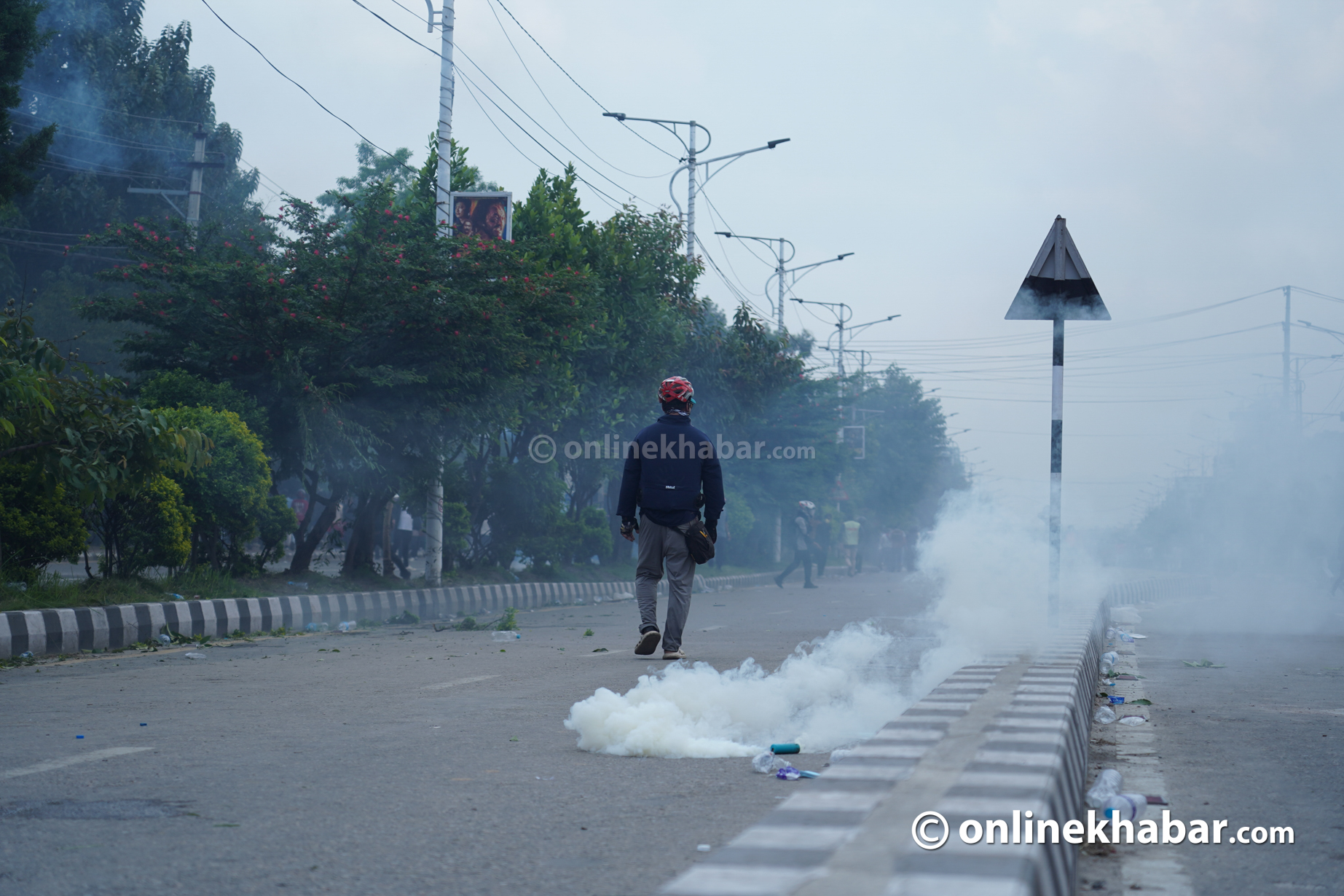
March 24, Kathmandu – Prime Minister Sushila Karki has decided to publicly release the investigative commission’s report concerning the events of September 8 and 9. Before the Prime Minister’s announcement on Wednesday evening, media outlets had already published the full text of the report.

The 907-page report, prepared by the commission led by former Special Court Chairperson Gauribahadur Karki, recommends initiating murder investigations against former Prime Minister KP Sharma Oli, Home Minister Ramesh Lekhak, and Inspector General of Police Chandrakuber Khapung, among others.

The Cabinet had resolved on March 14 to accept the Karki Commission’s report.

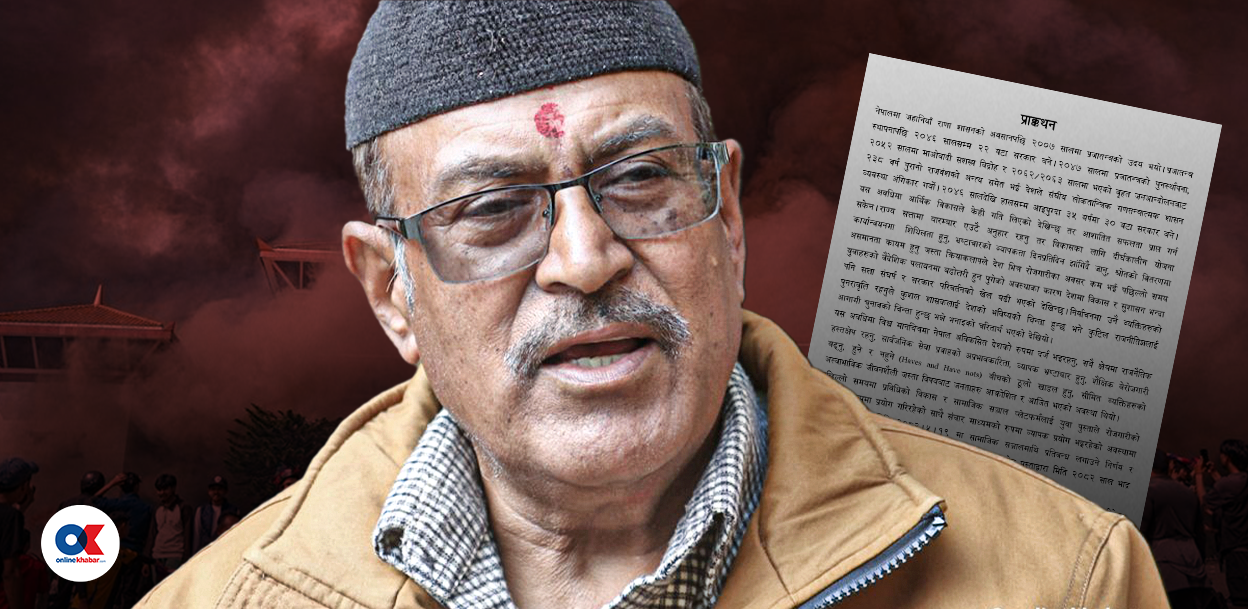
Will the report serve as a sufficient basis for legal action against individuals? “While the commission’s report is not equivalent to a court judgment, the government can rely on it for further study and investigation,” stated former Supreme Court Chief Justice Kalyan Shrestha.

Experts explain that although a fact-finding commission may not directly convict individuals involved, it can recommend further actions for legal proceedings. Former Chief Justice Shrestha emphasized that the commission’s report can indeed serve as a foundation for investigations.
The Karki-led commission was constituted under the Commission of Inquiry Act, 2026. Section 3(2) of the Act allows for forming a commission to investigate matters of public significance if deemed necessary.

Fact-finding commissions primarily collect facts and details related to events. While the commission can provide its viewpoint after investigation, ultimate decision-making authority rests with the government, according to experts.

Former Supreme Court Justice Girishchandra Lal stated, “The commission can express its opinion, but it is the government that decides whether to conduct further investigation or file charges as per the report.”
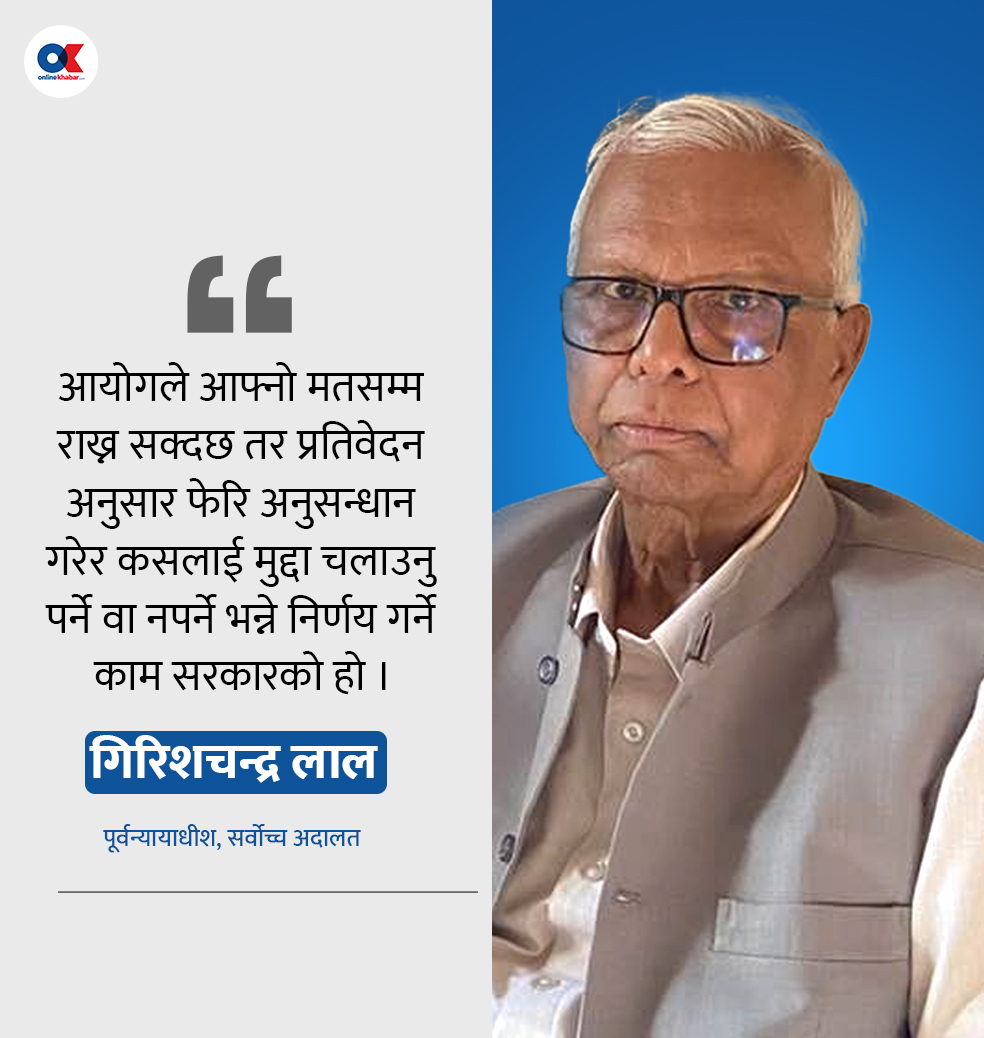
Justice Lal, who previously led commissions concerning the Tikapur incident and disputes over revenue from dedicated and truck lines, pointed out that investigatory commissions do not hold prosecutorial powers.

Once the commission completes its work and submits the report, the government acquires the authority to decide subsequent actions. Relevant agencies may conduct further investigations based on the commission’s recommendations.

The report recommends that the Government of Nepal investigate and prosecute former Prime Minister Oli, Minister Lekhak, and IGP Khapung under Sections 181(1) and 182 of the 2017 Criminal Code. Section 181 criminalizes negligent acts leading to death, punishable by three to ten years imprisonment and a fine between NPR 30,000 and NPR 100,000.

Similarly, Section 182 criminalizes reckless behavior causing death, with a penalty of up to three years imprisonment and a fine up to NPR 30,000. The commission also recommended prosecuting former Home Secretary Gokarn Mani Duwadi, Armed Police Force Inspector General Raju Aryal, National Investigation Department Chief Hutaraj Thapa, and Chief District Officer Shvilaal Rizal under Section 182.
Such prosecutions are typically conducted jointly by government lawyers and police. Former Justice Lal noted, “Cases of this nature must be conducted according to the Government Cases Act and related laws, with the prosecution led by the government.”

Senior Advocate Rajuprasad Chapagain suggests that some of the report’s recommendations may be implemented through policy, legal, institutional, and procedural reforms. “For that, the government and Parliament need to take necessary initiatives,” he emphasized.

Chapagain further explained that the commission’s investigation alone cannot be solely relied upon, but it provides crucial guidance. He clarified that implementing recommendations related to violations on September 8 and subsequent violent events on the 9th will not be straightforward or immediate.

“Criminal investigations and prosecutions must follow due process and be evidence-based,” Chapagain said. “Based on the commission’s recommendations, further investigation can be carried out to gather sufficient evidence to complete criminal proceedings and file cases.”

Regarding human rights violations, he noted that national and international human rights principles and criminal law jurisprudence may be applied.

Chapagain remarked, “Effective implementation of the recommendations requires breaking the cycle of impunity, which is contingent on the state’s political will. Whether the state demonstrates this will remain to be seen over time.”

Global IME Bank Unveils New 2083 Calendar Featuring Paubha Art

News Summary

Editorial Review Completed.

  • Global IME Bank has launched a new 2083 calendar featuring Paubha art.
  • The calendar was unveiled by the bank’s Chairman Chandraprasad Dhakal and Tilganga Eye Institute founder Prof. Dr. Sanduk Ruit.
  • For several years, the bank has been incorporating original artwork in its calendars to preserve Nepali art, literature, and culture.

March 24, Kathmandu – Global IME Bank has released its new 2083 calendar showcasing images highlighting Paubha art.

The unveiling ceremony was held at the bank’s corporate office in Kamaladi, where the calendar was jointly launched by Bank Chairman and Federation of Nepalese Chambers of Commerce and Industry (FNCCI) President Chandraprasad Dhakal along with Tilganga Eye Institute founder and Executive Director Prof. Dr. Sanduk Ruit.

Paubha art is an indigenous form of painting originating from the Newar community. The bank stated in a press release that the calendar features rare Paubha paintings due to the deep-rooted connection with the Newar community residing primarily in the Kathmandu Valley.

Though similar to Thangka paintings, Paubha art possesses its own distinct identity and profound philosophical depth. For several years, the bank has included original artwork in its calendars aimed at preserving and promoting Nepalese art, literature, culture, and civilization.

In 2079 BS, the bank published a calendar featuring traditional Mithila culture paintings, followed by one with Mandala paintings in 2080 BS, and in 2081 BS, showcased images of ancient artworks that were repatriated to Nepal at different times.

Global IME Bank has earned numerous prestigious awards including Bank of the Year 2014, Best Internet Bank 2016, Best Bank Nepal 2024 and 2025, Euromoney Award for Excellence 2022, 2024, and 2025, Best Bank ESG Nepal 2024, and Best Employer, among others. The bank operates branches in all 77 districts across Nepal.

Counterfeit 1000 Rupee Notes with Identical Serial Numbers Found in Baglung


Chaitra 11, Baglung – Counterfeit 1000 rupee notes have been discovered in Baglung. Multiple banks in Baglung market have reported finding fake 1000 rupee notes carrying the same serial numbers.

According to Nepal Bank Baglung, over 18 counterfeit 1000 rupee notes with identical serial numbers have been detected so far. Krishna Bahadur Kunwar, the chief of Nepal Bank Limited’s Baglung branch, stated that fake notes were found inside bundles of 1000 rupee notes brought for deposit at the bank.

Kunwar confirmed that counterfeit notes with the same serial numbers have been found in several banks across Baglung, including Nepal Bank, Prabhu Bank, Garima Development Bank, NMB Bank, and Siddhartha Bank. He mentioned that duplicate notes bearing the serial number Jh 79169033 have been repeatedly identified and urged everyone to remain vigilant.

The fake notes were noted to differ in paper quality, the depiction of the national flower, stickers, and security features, yet the serial numbers remained identical.

Shrijay Shrestha, president of the Bankers Club Baglung, informed that Nepal Rastra Bank has also been alerted about the counterfeit notes. He speculated that increased crowds during festivals like Chaite Dashain might facilitate the circulation of counterfeit currency. Shrestha urged the public to be cautious during transactions as counterfeit notes tend to become damaged quickly and are found in significant quantities.

अपूरो सूचना, समन्वय अभाव – Online Khabar

Lack of Adequate Information and Coordination Among Security Agencies

According to an editorial review summarizing the news, the investigation commission’s report highlights the inadequate information sharing among security agencies regarding the preparations for the Janajati movement. Statements from security personnel revealed discrepancies in the information about the movement’s preparations. The events on 7 and 8 September exposed significant coordination gaps between the agencies.

Kathmandu, 11 March — The investigation commission’s report clarifies that sufficient information was not shared among security agencies ahead of the Janajati movement held on 7 and 8 September. The report identifies a major shortfall in receiving necessary information across agencies, from the National Investigation Department (NID) to the Nepal Police, Armed Police Force, and the Nepal Army, each tasked with intelligence gathering.

The testimonies and details provided by security personnel revealed varied and often conflicting information about the movement’s preparation. Even among police officials, there was notable inconsistency in the intelligence received. Then Inspector General of Police (IGP) Chandrakuver Khapung stated that he was informed the protest would be peaceful. In contrast, then Additional IGP and current IGP Dan Bahadur Karki noted receiving intelligence about discussions on social media platforms like Reddit, Discord, and X (formerly Twitter).

According to Karki’s testimony, “By monitoring information on social media platforms utilized by Janajati, such as Reddit, Discord, and X, we approved a security plan in the District Security Committee meeting and deployed 4,396 police personnel.” Furthermore, then Additional IGP Siddhi Vikram Shah reported that he informed the IGP after rapid dissemination of information about the movement on TikTok, Facebook, Reels, and Discord.

Meanwhile, Om Rana, then Acting DIG of the Kathmandu Valley Police Office at Ranipokhari, remarked that the movement unfolded differently than anticipated. Former SSP Vishva Adhikari of Kathmandu admitted they were unable to predict the scale of the event. The Central Security Committee meeting on 7 September had estimated between 3,000 and 5,000 protesters. Officials acknowledged shortcomings in analyzing prior intelligence.

Anticipating a peaceful protest, arrangements were made for the President to address the National Assembly on 8 September. Police officials expected the Janajati movement to be manageable, with participation capped at around 5,000, whereas the Chief of Army Staff (COAS) expressed an opposing view. Referring to the 7 September meeting, COAS Ashok Raj Sigdel stated, “The National Investigation Department and other security agencies provided information indicating the potential for a widespread movement.” However, the National Security Council was not in session at that time.

While COAS Sigdel mentioned the likelihood of a large-scale protest, former NID Chief Hutaraj Thapa gave a different account, estimating the protester count between 3,500 and 5,000. These varying statements indicate serious flaws in intelligence gathering within the state security structure, resulting in fragmented and incomplete information among security forces about the Janajati movement. Consequently, they were unable to conduct thorough analyses, formulate strategic plans, or execute effective field operations.

During the incidents on 7 and 8 September, in the context of insufficient information, coordination among security agencies deteriorated to its lowest point. Testimonies of security personnel confirm this. Kathmandu’s then SSP Vishva Adhikari revealed, “There were occasionally time lags in tactical movements between Nepal Police and the Armed Police Force, and the command clearance process posed challenges to coordination.” The Army’s focus was not fully directed on crowd control since it was assigned to static duties.

Special Task Force then-SP Rishir Ram Kandel, deployed at the Parliament premises for protest control, clearly pointed out the lack of coordination among security agencies. He stated, “Although the Armed Police Force was nearby on 7 September, it was not as active as expected. On 8 September, a squad of 10–12 Army personnel moved away from the Inspector General of Police’s gate as the unrest intensified, becoming neutral. This exposed the weaknesses in the security mechanism’s coordination.” Another SP from Kathmandu, Apil Raj Bohara, questioned the role of both the Armed Police and the Army, highlighting that “both the Armed Police Force and Army only participated towards the final moments, and neither agency demonstrated the expected professional cooperation, institutional response, nor collective coordination.”

In light of the coordination gaps between security agencies, COAS Sigdel has directed that efforts should be coordinated moving forward. He stated, “When the security situation around the Parliament complex became complicated on 7 September, I instructed coordination with other security agencies and the necessary security preparations as per previous decisions.”

Petrol, Diesel, and Kerosene Prices Increased by Rs 15 per Liter


March 24, Kathmandu – Nepal Oil Corporation has announced an increase in the prices of petroleum products. On Wednesday evening, the corporation raised the prices of petrol, diesel, and kerosene by Rs 15 per liter.

Following the hike, the price of petrol for the first category has risen from Rs 169.50 to Rs 184 per liter. For the second category, the price is now Rs 186, and for the third category, Rs 187 per liter.

Similarly, the price of diesel/kerosene in the first category increased from Rs 149.50 to Rs 164.50 per liter, while the second category stands at Rs 166 and the third category at Rs 167 per liter.

The Oil Corporation has categorized areas into three price classes: the first category includes Barauli, Biratnagar, Janakpur, Amlekhganj, Balwari, Nepalgunj, Dhangadhi, and Birgunj; the second category includes Surkhet and Dang; and the third category covers Kathmandu, Pokhara, and Dipayal.

Prime Minister Decides to Release Three Key Documents Including the Janajati Movement Report


March 24, Kathmandu – Prime Minister Sushila Karki has decided to publicly release three significant documents.

Prime Minister Karki will release the report of the Inquiry Commission on the events of September 8 and 9, 2025 (Bhadra 23-24, 2082 BS), the report of the High-Level Inquiry Commission on Nepal Child Organization and Orphanage, 2020 (2077 BS), and the Good Governance Roadmap, 2025 (2082 BS), prepared by the Office of the Prime Minister and Council of Ministers.

Prime Minister Karki, as informed by her press advisor Ram Bahadur Rawal, has decided to archive and make public the report by the Inquiry Commission regarding the September 8-9 incidents in the library of the Federal Parliament Secretariat as of today (Wednesday).

Earlier, on Tuesday, she had decided to archive and release the report from the High-Level Inquiry Commission on Nepal Child Organization and Orphanage, prepared in 2020 (2077 BS), in the Federal Parliament Secretariat library.

Additionally, she has decided to advance the implementation process of the Good Governance Roadmap, 2025 (2082 BS), prepared by the Office of the Prime Minister and Council of Ministers on March 16, which will also be publicly released by the same office.

जाँचबुझ आयोगको सुझाव : नेपालका सुरक्षा निकायलाई भारत र चीनमा प्रशिक्षण दिनुपर्छ

Inquiry Commission Recommends Training Nepal’s Security Forces in India and China

March 24, Kathmandu – The Genji Movement Inquiry Commission has recommended conducting coordinated training programs between Nepal’s security forces and those of India and China to enhance capacity. According to the commission’s report, this approach also aims to improve diplomatic relations. It emphasizes that diplomatic initiatives are essential for training Nepal’s security agencies. The report states, ‘To enhance the capacity of security agencies, diplomatic efforts should be made to conduct coordinated training with the security forces of the two neighboring countries, India and China.’

The commission further suggested that to strengthen Nepal’s diplomatic relations, appointments in embassies and diplomatic missions should prioritize qualified, capable, and influential personalities over partisan considerations. ‘To achieve this, a collegium system or selection exclusively from foreign service experts should be implemented, following a policy where 80 percent of appointments come from the Ministry of Foreign Affairs and the remaining 20 percent are balanced accordingly,’ the report states. Among key reforms, the commission recommends establishing a think tank within the Ministry of Foreign Affairs to adopt strong diplomatic strategies and provide real-time solutions to diplomatic challenges through proper initiatives.

The longstanding dispute between Nepal and India over Kalapani, Lipulekh, and Limpiyadhura remains unresolved and requires resolution through robust government-to-government diplomacy. To strengthen Nepal-China relations and enhance national security effectiveness, the report urges advancing bilateral agreements focused on infrastructural connectivity like transportation, railways, and air routes and demonstrating readiness to implement existing agreements.

In the realm of economic diplomacy, the commission highlights the need to comprehensively inform the public about agreements such as the Millennium Challenge Corporation (MCC), Belt and Road Initiative (BRI), and the Bilateral Investment Promotion and Protection Agreement (BIPPA). These agreements should be undertaken while safeguarding national sovereignty, independence, and territorial integrity. The report reiterates that diplomatic initiatives must facilitate coordinated training with the security agencies of neighboring India and China to improve the effectiveness of Nepal’s security forces.

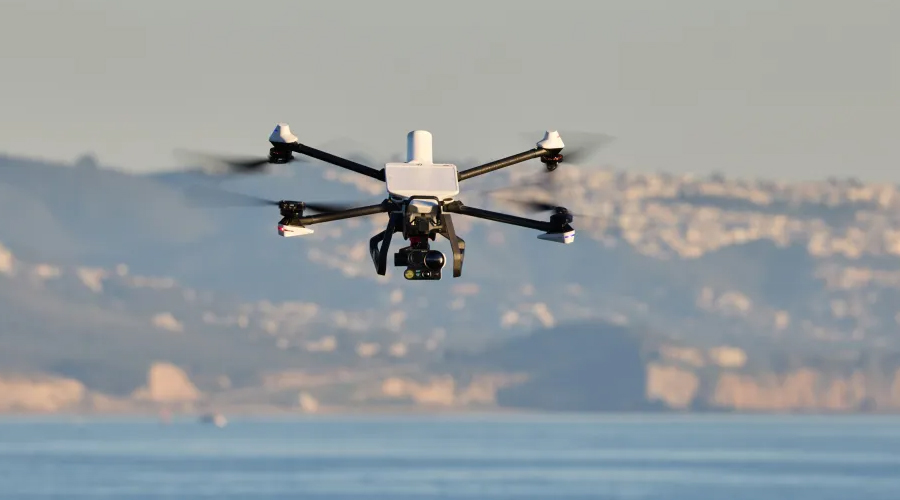
‘Guardian’ Drone Set to Replace US Police Helicopters as Brink Emerges in the Market

March 24, Kathmandu – Seattle-based startup company Brink has unveiled its new drone named ‘Guardian,’ aiming to bring innovation to public safety operations.

According to the company’s 23-year-old founder, Blake Resnick, this drone has the potential to replace the traditional helicopters currently used by US police forces.

Designed specifically for 911 emergency services, the drone is capable of flying at speeds up to 60 miles per hour, with a battery life of up to 62 minutes.

One of the most outstanding features of the drone is its integrated ‘Starlink’ panel, enabling it to connect to the internet from virtually anywhere worldwide.

Equipped with a 4K camera, thermal imaging, and a powerful loudspeaker system, the Guardian can clearly read vehicle license plates even from significant altitudes. Additionally, it features an automatic battery replacement system through its ‘charging nest’ and can carry emergency medical equipment such as defibrillators and lifesaving medications.

Backed by prominent investors including Sam Altman, Brink’s valuation has already reached half a billion dollars.

Following US government restrictions on Chinese drone manufacturer DJI, Resnick aims to position his company as the ‘Western DJI.’

Targeting approximately 20,000 police departments and 30,000 fire stations across the US, Resnick claims the market opportunity in this sector ranges between $600 million to $800 million.

165
Direct Seats

Parties Direct Seats

0 Seat

0 Seat

Proportional Total Seats

Teen Girl Assaulted After Boarding City Safari, Driver Arrested


March 24, Biratnagar — A driver has been arrested in Sunsari’s Ramdhuni on charges of raping a teenage girl who was traveling via City Safari. On the evening of March 19, the accused, 26-year-old Roshan Bishwakarma, allegedly took the 17-year-old girl to a forest near Dharan, assaulted her, and sexually assaulted her, police reported.

According to DSP Chandra Khadka of the Sunsari District Police Office, the victim was raped while returning to Morang from her home in Dharan. That evening, she was waiting for a vehicle at Bhotepul Chowk.

At that time, the safari driver assured her that other vehicles would not stop there and promised to drop her off at the bus stand she was waiting for. He then got her onto his safari vehicle. However, police stated that he took her to the forest near Sakela Park and committed the assault.

In the formal complaint filed by the victim, it is stated that the accused took her to the forest adjacent to Sakela Park, assaulted her, forcibly committed the rape, and also robbed her mobile phone. The police are preparing to file charges against Bishwakarma for abduction and rape.

राखेपको निलम्बनमा पर्‍यो एन्फा – Online Khabar

ANFA Suspended by National Sports Council Following Election Dispute

News Summary

Prepared after editorial review.

  • The National Sports Council has suspended the leadership of the All Nepal Football Association for three months.
  • ANFA was preparing to hold elections on March 26 in defiance of the council’s directives.
  • The Council issued a 24-hour ultimatum to ANFA to halt the elections.

March 25, Kathmandu – The National Sports Council (NSC) has officially suspended the leadership of the All Nepal Football Association (ANFA).

Following repeated non-compliance with directives, the NSC invoked Section 29 (2) of the Sports Development Regulations 2077 to enact the suspension.

This clause allows the council to suspend any federation for up to three months if it disregards council directives. Consequently, the ANFA leadership led by Pankaj Bikram Nembang has been suspended for this duration.

“Despite multiple written instructions from the regulatory authority to follow national laws in executing required matters as per the existing acts, laws, and the federation’s approved constitution, ANFA prioritized directives from its affiliated international body as mandatory, thereby undermining the supremacy of national law,” the NSC stated.

The council noted that while NSC-approved constitutions must be adhered to literally in terms of rights and responsibilities, ANFA claimed autonomy and failed to provide satisfactory responses as requested by the council.

“Our regulatory authority’s insistence that all federations comply with national laws and approved constitutions is non-negotiable and not subject to interference. The written response submitted by ANFA via email has not been considered adequate and does not meet the requirements under Rule 10(1)(6.1) of the Sports Development Regulations 2079 (Second Amendment). Thus, according to the Executive Committee’s decision based on Section 29(2) of the Sports Development Act, 2077, ANFA has been suspended for three months,” the letter explained.

The dispute arose after the current ANFA leadership attempted to conduct early elections, which are not stipulated in the constitution, three months before their term was due to expire.

When ANFA proceeded with preparations to hold elections on March 26 without NSC approval, the Council repeatedly instructed them not to move forward. However, ANFA ignored these warnings, prompting the NSC to initiate action.

On Tuesday, the NSC sent ANFA a letter with a 24-hour ultimatum demanding an explanation as to why disciplinary action should not be taken. ANFA responded that the elections would not be stopped, which led to the suspension.

With this suspension, Nepali football now faces increased uncertainty. There is a strong possibility that FIFA may also suspend ANFA, which could result in Nepal losing its access to international competitions and FIFA funding.

The NSC has also issued directives for several points of legal and constitutional compliance that ANFA must implement.

Key Directives

1. Federations must ensure uniformity in their constitutions by including a preamble and abbreviation aligned with Rule 7(झ) of the Sports Development Regulations 2079, and submit them for council approval before implementation.

2. The constitution’s definition section must explicitly define “Act” as the National Sports Development Act, 2077.

3. Similarly, “Regulations” must be defined as the National Sports Development Regulations, 2079.

4. The constitution must provide for democratic elections of federation officers and members every four years in accordance with Section 22(ग) of the Act.

5. Elections must be conducted according to subsections 4 and 5 of Section 22 of the Act.

6. Provincial and district associations formed under Section 22(3) must follow Sections 23 and 24 of the Act to establish sport associations and structures at the local level, conducting elections accordingly to ensure representative governance per the constitution.

7. Federations must hold annual general meetings within three months of the fiscal year-end, conduct periodic elections every four years, and obtain council approval for elections as per Rule 7(ग) of the Sports Development Regulations 2079.

8. Necessary amendments and revisions must be made to the constitution in accordance with current laws.

9. ANFA’s election process must align with the provisions of Articles 33 to 37 of its constitution, adhering to the approved constitution and prevailing regulations.