Author: space4knews

अमेरिकी डलर, सिंगापुर डलर र पाउन्डको भाउ बढ्यो – Online Khabar

Exchange Rates Rise for US Dollar, Singapore Dollar, and British Pound

Summary of Exchange Rates

Reviewed.

  • Nepal Rastra Bank has fixed the buying rate of the US Dollar at NPR 150.07 and the selling rate at NPR 150.67.
  • The British Pound Sterling’s buying rate is NPR 201.30 and the selling rate NPR 202.11.
  • The Canadian Dollar’s value has decreased, whereas the Singapore Dollar’s value has increased, according to the central bank.

March 25, Kathmandu – According to the foreign currency exchange rates set by Nepal Rastra Bank for today, the rates for the US Dollar and British Pound have increased.

Today, the buying rate of the US Dollar is set at NPR 150.07 and the selling rate at NPR 150.67. Yesterday, the buying rate was NPR 149.89 and the selling rate NPR 150.49.

The British Pound Sterling’s buying rate is fixed at NPR 201.30 and the selling rate at NPR 202.11. Yesterday, the buying rate was NPR 200.97 and the selling rate NPR 201.78.

The European Euro is priced at a buying rate of NPR 174.17 and a selling rate of NPR 174.87 today. Yesterday, these rates were NPR 173.77 and NPR 174.47 respectively.

The Swiss Franc’s buying rate is NPR 190.23 and the selling rate NPR 190.99 today. Yesterday, the buying rate was NPR 190.42 and the selling rate NPR 191.18.

The Australian Dollar’s buying rate is NPR 104.61 and selling rate NPR 105.02 today, compared to yesterday’s rates of NPR 104.49 and NPR 104.91.

Canadian Dollar Declines, Singapore Dollar Rises

The Canadian Dollar has depreciated today, with its buying rate at NPR 108.80 and selling rate at NPR 109.24. Yesterday, the rates were NPR 109.09 (buying) and NPR 109.52 (selling).

Conversely, the Singapore Dollar has appreciated, with today’s buying rate at NPR 117.36 and selling rate at NPR 117.83. Yesterday, these were NPR 117.19 and NPR 117.66 respectively.

The Japanese Yen (per 10 units) has a buying rate of NPR 9.45 and selling rate of NPR 9.48. The Chinese Yuan’s rates are NPR 21.76 (buying) and NPR 21.85 (selling). The Saudi Riyal stands at NPR 40 (buying) and NPR 40.16 (selling), while the Qatari Riyal is priced at NPR 41.16 (buying) and NPR 41.32 (selling).

The Thai Baht’s buying and selling rates are NPR 4.62 and NPR 4.64 respectively. The UAE Dirham stands at NPR 40.86 (buying) and NPR 41.02 (selling). The Malaysian Ringgit’s rates are NPR 37.85 (buying) and NPR 38 (selling). The South Korean Won (per 100 units) has a buying rate of NPR 10.02 and selling rate of NPR 10.06. The Swedish Krona and Danish Krona have buying/selling rates of NPR 16.15/16.22 and NPR 23.31/23.40 respectively.

Nepal Rastra Bank has also reported the Hong Kong Dollar’s buying rate at NPR 19.20 and selling rate at NPR 19.27, Kuwaiti Dinar at NPR 489.62 (buying) and NPR 491.58 (selling), Bahraini Dinar at NPR 397.48 (buying) and NPR 399.07 (selling), and Omani Riyal at NPR 389.79 (buying) and NPR 391.35 (selling).

The Indian Rupee (per 100 units) is fixed at NPR 160 (buying) and NPR 160.15 (selling).

Nepal Rastra Bank has stated that these exchange rates are subject to revision at any time as needed. Exchange rates set by commercial banks may vary, and updated rates are available on the official website of the central bank.

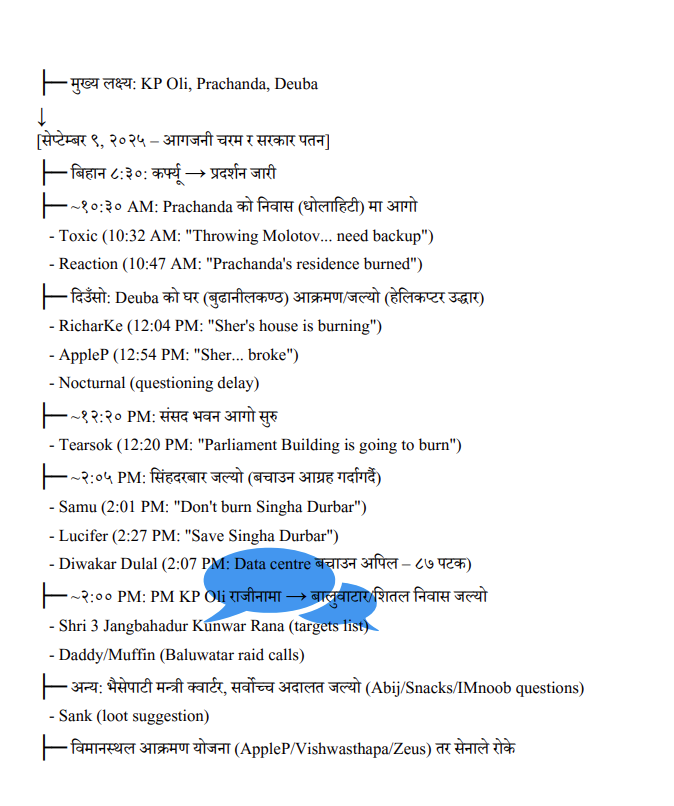
Discord Played a Decisive Role in Spreading False Information During the Protest, Dialogue Revealed


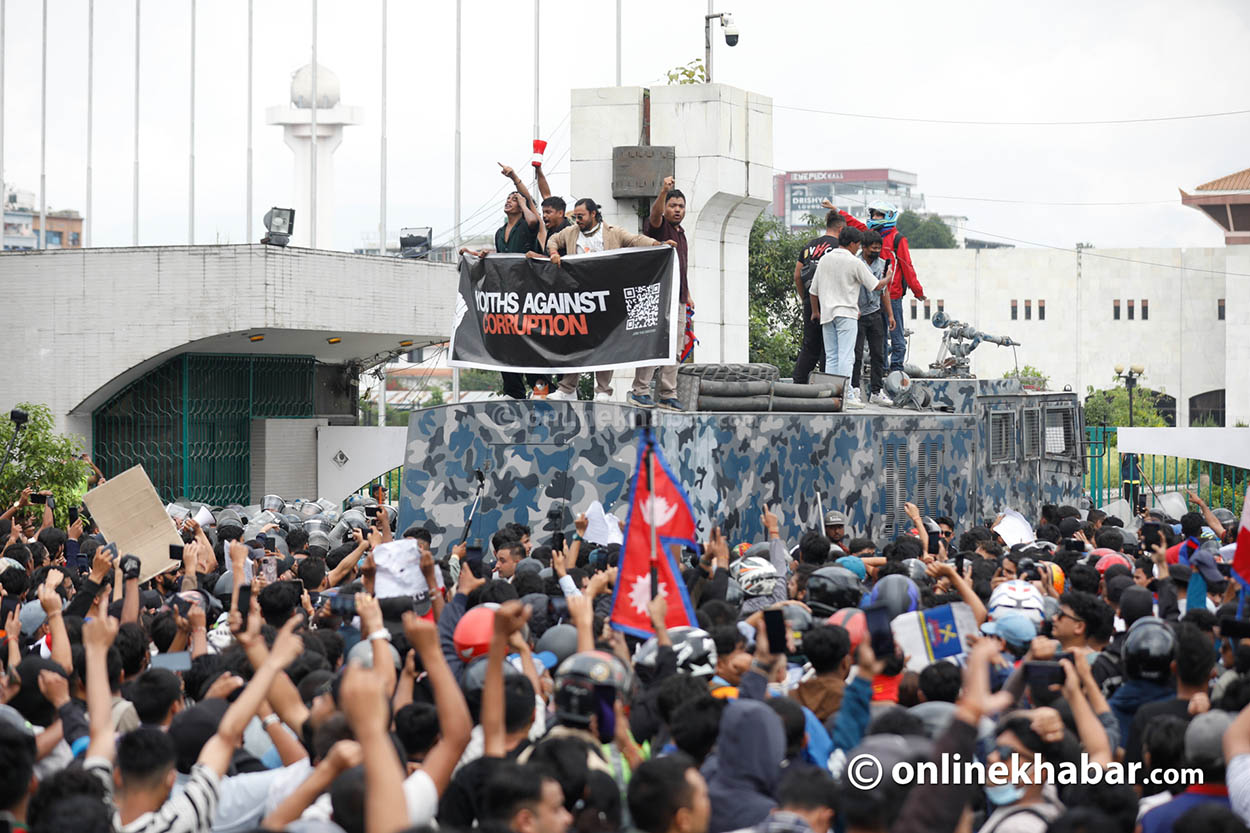
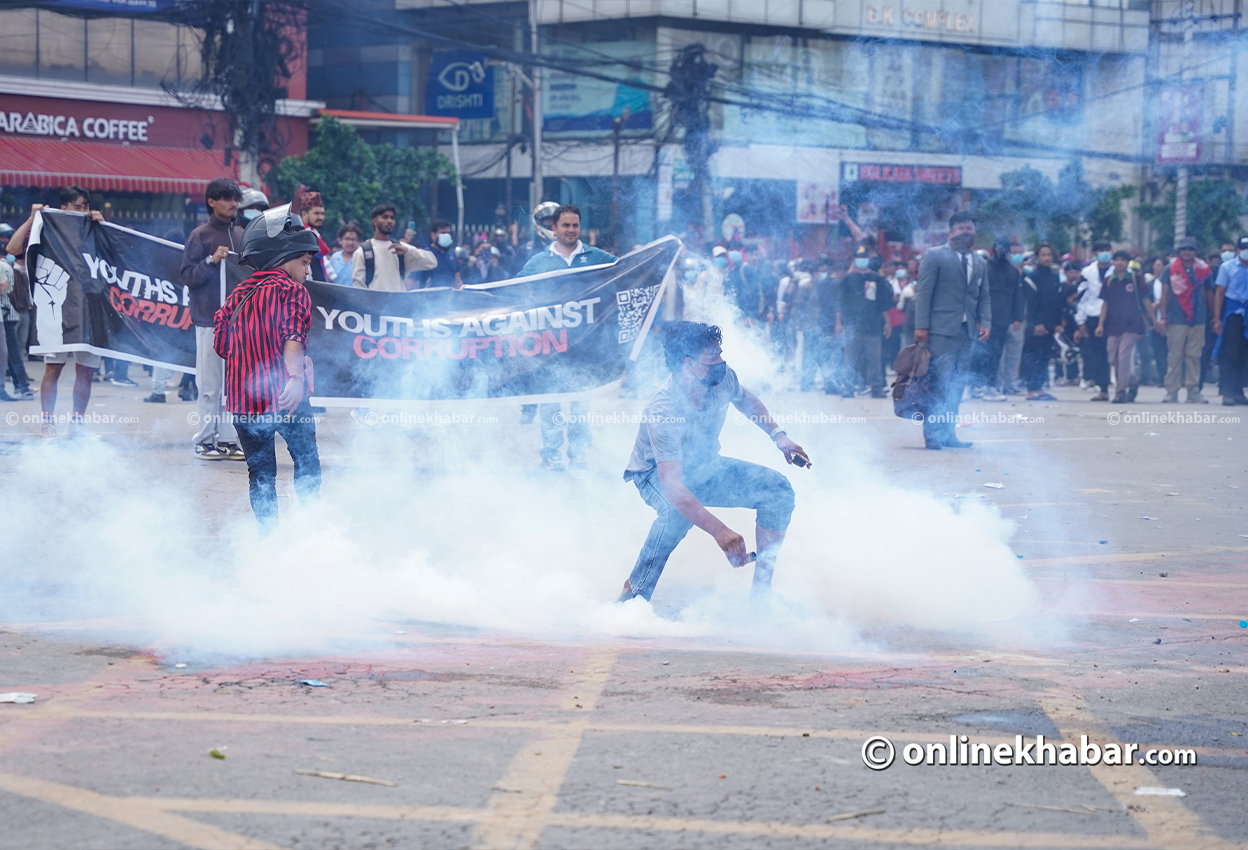
March 24, Kathmandu – The Inquiry Commission has highlighted that the Discord platform was instrumental in the preparation and coordination of the pro-democracy protest on September 8th and 9th (Bhadra 23 and 24 in the Nepali calendar).

The commission conducted a separate incident analysis titled “False Information and Risk of Infiltration,” revealing that during the protest, false rumors about sexual assaults in hostels and exaggerated death tolls were spread. These misinformation campaigns reportedly incited the crowd, as detailed in the report.

Protesters themselves had expressed concerns about potential infiltration by political workers and other vested interest groups.

The protest primarily used Discord servers named “Youth Hub” and “Youth Against Corruption.” The “Youth Hub” server had been active since September 7th (Bhadra 22) and was used to create various channels named after different locations and for multiple purposes.

Similarly, the “Youth Against Corruption” Discord server’s admin was identified as “We are Nepal.”

The Inquiry Commission has also presented the conversations that took place within these servers.

‘सुरक्षा स्थितिबारे जानकार हुँदा पनि प्रधानमन्त्रीले समयमै पहल गरेनन्’

Commission Finds Former Prime Minister Did Not Take Timely Action Despite Being Informed of Security Situation

Summary

  • The inquiry commission concluded that the then government failed to take necessary decisions or appropriate precautions against the Gen Z movement.
  • The commission noted that former Prime Minister KP Sharma Oli did not make proper decisions regarding the potential crisis related to the Gen Z protests.
  • The commission pointed out that the cabinet and security committee took no concrete decisions on events of September 8 and 9, resulting in significant damage.

March 24, Kathmandu – The inquiry commission has determined that the then government erred by failing to adopt necessary decisions or appropriate vigilance in response to the Gen Z movement.

According to the report submitted by the commission, former Prime Minister KP Sharma Oli did not take proper decisions regarding the demands of the Gen Z protesters, the possible nature of the protests, and the emerging crisis.

The report particularly analyzes events and government decisions around September 8, 9, and 10, highlighting the weaknesses of Oli’s administration.

“The security arrangements on September 9 were based on intelligence gathered by the National Investigation Department from various sources, estimating participation of around 3,000 to 5,000 people, which proved to be inaccurate,” the report states.

The commission found that the National Investigation Department failed to collect necessary information from the Ministry of Home Affairs and relay it to the Prime Minister’s Office.

The report details a series of missteps by the government that proceeded without clear knowledge of the number of participants in the Gen Z protests. “A letter from the Prime Minister and Cabinet Secretariat showed no recorded decisions regarding events on September 8 and 9,” it says.

In other words, all decisions concerning the Gen Z movement were verbal. “At the National Security Council meeting on the evening of September 9, following grim incidents earlier that day, there should have been a thorough assessment of potential risks and well-planned deployment of security forces starting September 10, along with formation of a high-level investigation committee. However, only mild and oral decisions were made, with no written records, indicating a lack of formal action,” the report explains.

The commission attempts to clarify the negligence of the government from the decisions made during the council and security committee meetings on September 9, when 17 young students were killed.

Former Minister of Communications Prithvi Subba Gurung had informed that decisions were made to lift the social media ban and to form a committee to investigate the Gen Z movement.

However, those decisions existed only verbally rather than in writing. Only the promotion of a joint secretary at the Ministry of Agriculture and the appointment of former AIG Dan Bahadur Karki were documented in writing. The security committee’s meeting decisions remain problematic; for instance, at the time when police suppressions occurred against young students, the committee instead decided to purchase weapons.

“The security committee’s September 9 decision was to recommend to the government to approve the acquisition of weapons, ammunition, and other military materials required by the Nepali Army for fiscal year 2082/83,” the report notes. Yet, no firm decisions were made regarding the evolving situation amid the Gen Z protests.

According to the commission, the security committee and cabinet were in a position to make necessary decisions for army deployment. “During the National Security Council meeting on the evening of September 9, the option existed to impose a state of emergency from September 10, to ensure peace and security and deploy the Nepali Army, but no concrete decision was made,” the report states, “This failure led to unprecedented events on September 9 and 10, causing significant damage to life and property.”

Security agency leaders had informed the Prime Minister in advance about the Gen Z protests. Despite a National Security Council meeting on September 8 and warnings about possible infiltration by organizers, no decisive action was taken. This fact is highlighted in the report.

“As of the evening of September 8 and 9 a.m. on September 9, peace and security were considered normal, but by noon on September 9, the situation was reportedly slipping beyond control, and army assistance was requested,” the report says. This indicates increasing errors due to insufficient attention to the Gen Z movement.

The report also notes that not only did the cabinet and security council fail to make timely decisions, but local administrative decisions were also delayed. “Outside Kathmandu, curfews were imposed from noon on September 9, but effective enforcement was lacking, and on September 10 most districts experienced large-scale property damage while security forces were unable to ensure their own safety,” the commission concluded.

The report attributes blame to the head of government for the failure to take necessary decisions despite multiple meetings. The Kathmandu administration convened five different meetings on September 9 but could not reach effective decisions.

Decisions from district security committee meetings reveal that warning signs of potential crisis were known to security agencies. For example, Lalitpur district administration, on September 9, decided to close schools for two days and to adopt necessary security precautions for party offices including Congress and UML, telecom facilities, and ministerial residences.

Bara and Kaski districts decided to increase security personnel at airports. Bara administration arranged for 12 additional security personnel at Simara Airport, while Kaski planned to upgrade security levels at Pokhara International Airport. Other district administrations also made decisions based on local assessments.

Nevertheless, the commission concluded that the former Prime Minister, leading the country at the time, failed to take timely and necessary actions to avert the potential crisis posed by the Gen Z movement. “Despite being informed about the security situation, there was no timely and appropriate initiative by the Prime Minister,” the report states.

Congress Demands Formation of High-Level Commission to Investigate Assets of Public Officials

News Summary

Created by AI. Editorially reviewed.

  • The Nepali Congress has called for the formation of a high-level empowered commission to investigate the assets of all individuals who have held public office since 1991 (2048 BS).
  • The Congress demands that the commission conduct lawful investigations and nationalize any illegally acquired assets.
  • The meeting also urged impartial inquiries into issues such as the fake Bhutanese refugee case, the Wide Body scandal, and damages from arson during the youth uprisings on September 8-9.

March 24, Kathmandu – The Nepali Congress has urged the immediate establishment of a high-level empowered commission to scrutinize the assets of all individuals who have served in public office.

The demand was made during the party’s second central working committee meeting held following the House of Representatives elections. The party insists that the commission investigate the assets of all public officials from 1991 (2048 BS) onwards.

The Congress further requested the commission to conduct investigations in accordance with the law and to nationalize assets identified as illegally acquired.

“This meeting urges the immediate formation of a high-level empowered commission to investigate the assets of all individuals who have occupied senior public office since 1991, and to conduct lawful investigations to nationalize any illegally acquired assets,” stated the first decision of the meeting.

The meeting also called for impartial investigations to uncover the truth behind several incidents, including the fake Bhutanese refugee issue, the Wide Body scandal, and the financial losses from arson attacks on homes during the youth uprisings on September 8 and 9.

Party General Secretary Pradeep Paudel, announcing the decisions, stated, “For example, issues such as the fake Bhutanese refugee case, the Wide Body scandal, and damages from arson attacks on homes during the youth uprisings on September 8 and 9 are being raised. We have demanded unbiased, fair, and lawful investigations into all these matters in order to reveal the truth.”

यस्तो छ जाँचबुझ आयोगको प्रतिवेदन (पूर्णपाठ) – Online Khabar

Investigation Commission’s Report Released (Full Text)


March 24, Kathmandu – The report prepared by the Investigation Commission on the incidents during the Janajati movement held on the 23rd and 24th of March has been made public.

The government has not officially published this report. We present here the full text of the report obtained from a source through Janastha Weekly.

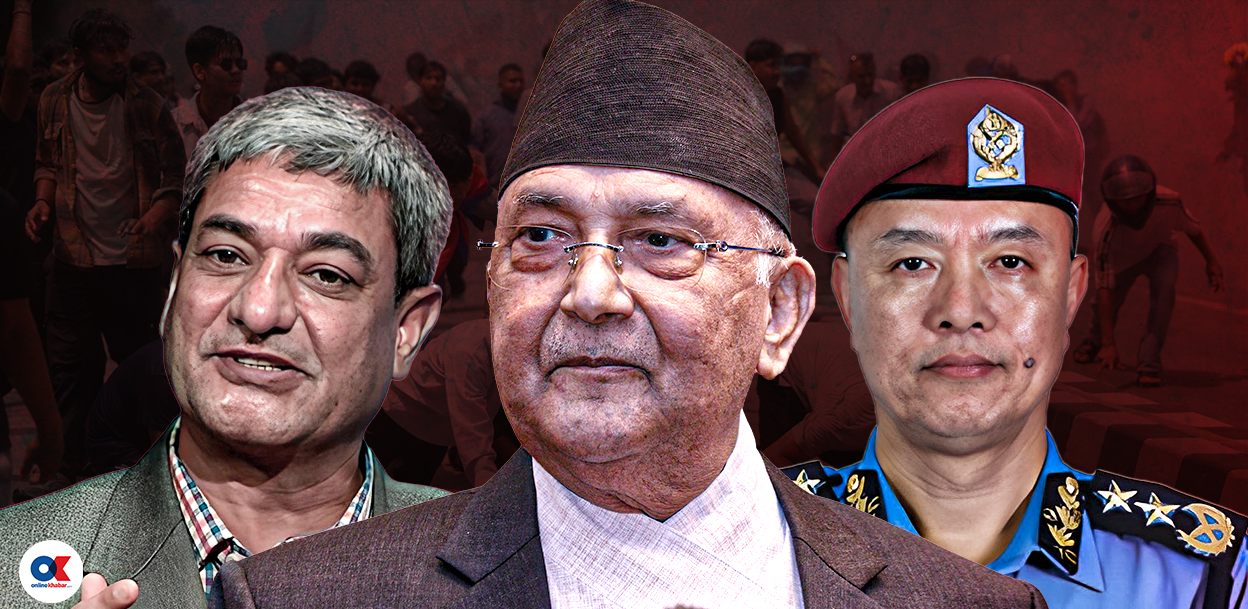
The report recommends proceeding with a criminal investigation against then Prime Minister KP Sharma Oli, then Home Minister Ramesh Lekhak, and Inspector General of Police Chandrakuber Khapung for alleged negligence in the line of duty.

The full text of the report is as follows:


TOB Accused of Inciting Crowd During Janjhi Movement Protest

News Summary

Prepared after review.

  • The commission’s report states that the TOB group incited the peaceful Janjhi protest on September 8.
  • The report notes that around 100 youths on motorcycles, some wearing black T-shirts labeled ‘TOB’, provoked the crowd on that day.
  • The crowd attempted to enter the parliament building by throwing stones, rods, and bricks at police, leading to the police using force, as revealed by the commission.

March 24, Kathmandu – It has been revealed that the TOB group played a role in escalating the peaceful Janjhi protest on September 8.

The commission formed to investigate incidents of the Janjhi movement has detailed this in its report.

“At around 12 noon on September 8, approximately 100 youths from Baneshwor and Bijulibazar areas arrived on motorcycles near Chabahil OM Hospital, Dhobikhola Corridor, and Gausala. Some wore black T-shirts with ‘TOB’ written on them. These youths were seen revving their motorcycles and creating noise, which further incited the crowd,” the report states.

Following this, the crowd became more aggressive, clashing with police and throwing water bottles, stones, rods, bricks, and slingshots in an attempt to enter the parliament building, according to the commission.

Police resorted to using force after their announcements and attempts to control the crowd via loudspeakers failed, the commission quoted Sundar Tiwari, Operation In-charge of the Kathmandu District Police Office, and other police officials.

राम मन्दिरको विषय राष्ट्रिय चर्चामा, किसानका मर्का सधैँ छायामा

Ram Temple Gains National Attention, While Farmers’ Issues Remain Overlooked

News Summary

  • Although the Ram temple established five years ago in Madi, Chitwan has become a national topic of discussion, locals suffer losses from wild animal damage.
  • Farmers in Madi face issues with wild animals destroying crops, receiving low compensation, and risking jail if animals are killed.
  • Budget cuts to the national park have hindered fence maintenance and animal control efforts; lack of a consumer committee has caused coordination challenges.

March 24, Chitwan – Roughly five years ago, a heated national debate arose over whether the characters of the Ramayana, specifically Lord Ram, originated from India or Nepal. Then Prime Minister KP Sharma Oli stirred controversy by asserting that Sita was not Indian but from Ayodhya. This sparked a nationwide discussion trying to confirm the true birthplace of Lord Ram.

Following this debate, a statue of Lord Ram was installed and a temple constructed. Statues of Lord Ram, Sita, Lakshman, and Hanuman were ceremoniously brought from Baluwatar and placed in Ayodhyapuri, Madi, Chitwan. The temple was built at Krishnanagar ward no. 9, Madi Municipality, on nearly 100 bighas of land with an investment of about 16 million Nepalese rupees.

However, the scene today, five years later, is quite different from the initial enthusiasm. The temple does not attract as many tourists, nor does it match the imagined grandeur. Along the way, stones imprinted with the names ‘Ram’ and ‘Sita’ bear environmental conservation messages, but the site lacks the expected vibrancy.

Despite the religious issue becoming nationalized, local problems in Madi have received little attention. While the Ram temple drew nationwide discussion, local residents have been suffering from attacks by wild animals. The impact of wild animal invasions on locals has barely been noticed.
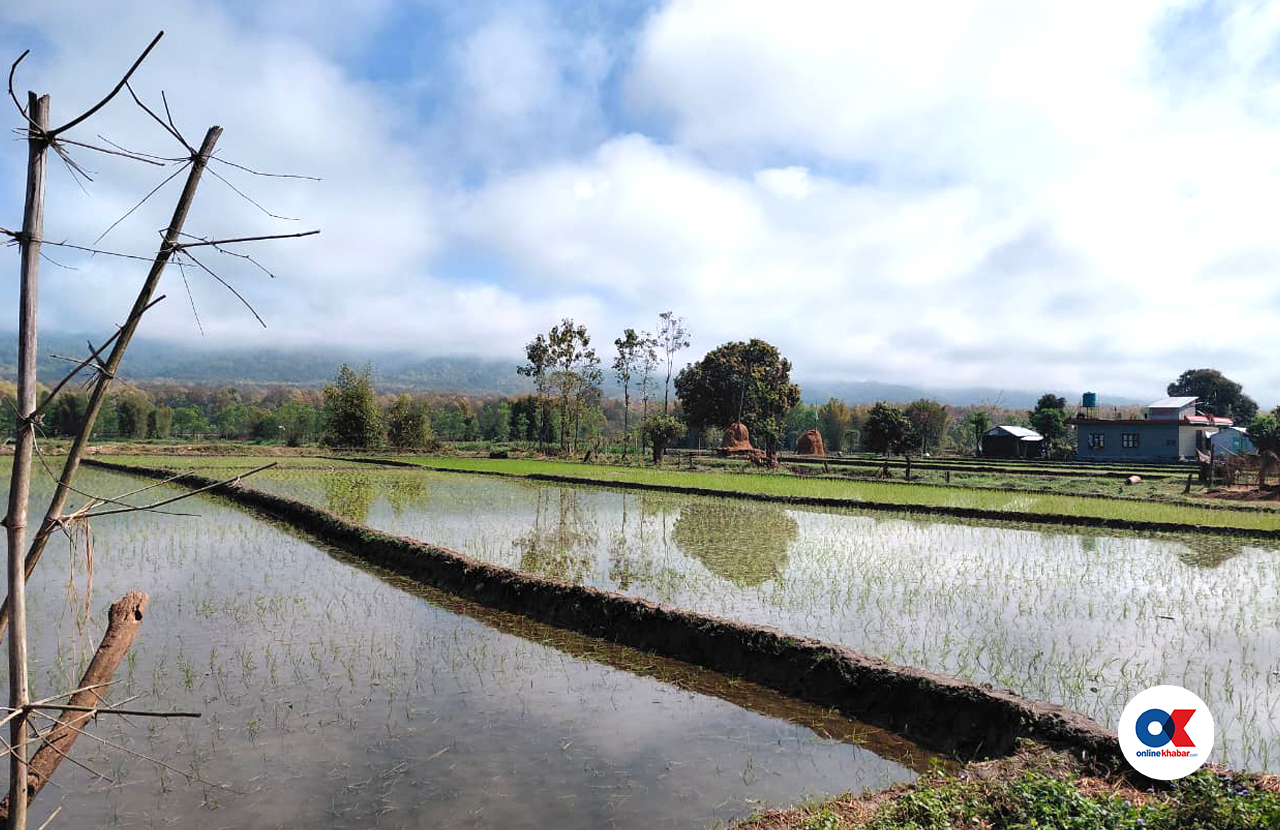
Locals do not feel that the central government has taken a special interest in addressing the Ram temple area, although the situation severely affects their daily lives.

Madi valley is surrounded by Chitwan National Park and the buffer zone from the east, west, and north, and by the Someshwar mountain range to the south. The farmers’ conditions here differ significantly from other regions. Each morning, farmers worry about how much damage wild animals caused overnight to their crops.

Rhinos, wild elephants, leopards, and monkeys venture from the national park into farmlands, feeding on crops. This destruction by wildlife has been ongoing in Madi for years.

Savitri Bhattarai, a 55-year-old local, continues to struggle with these issues. She shared, “Rhinos come behind our house at night. They can be found anywhere in the fields, eating the crops and moving on.”

Savitri is afraid to go to the fields at night. “Someone has to watch the crops to protect them. After the rice matures, our sons take turns staying overnight in the fields.”
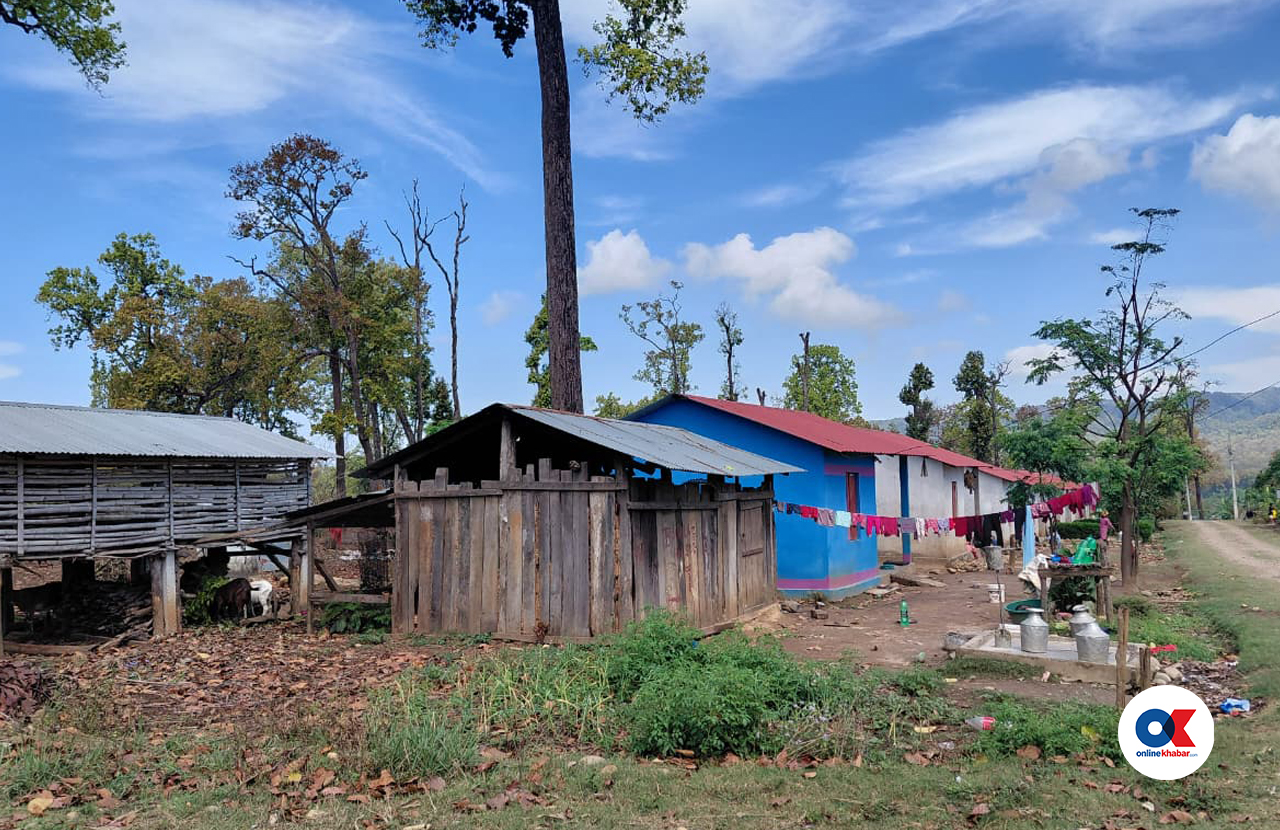
Her neighbor Debu Pahari Pandey reported similar problems: “Nobody is able to ward off the animals, and it’s impossible to do it every night. The animals come, devour the crops, and leave. There is no way to stop them; we just have to watch.”

The problems extend beyond the fields. Last March, Savitri lost two goats to a leopard attack. The national park authorities compensated her with 10,000 rupees, but this amount was far less than the goats’ value. She also shared that receiving compensation is a difficult process.

“You must photograph the dead or killed animal, visit the park, submit documents, and wait. It is a bit troublesome, but it’s the only remedy. You just have to accept it.”

“Low Compensation, Jail Sentence Even When Killing Animals”

According to Kulbahadur Ranabhat of Krishnanagar, Madi, a monkey that died in a neighbor’s field led to him being accused of killing a wild animal, resulting in a three-month jail sentence. He said, “When animals kill people, compensation is minimal, but when we kill animals, we go to jail. What can we do? If we try to protect crops, we get caught.”
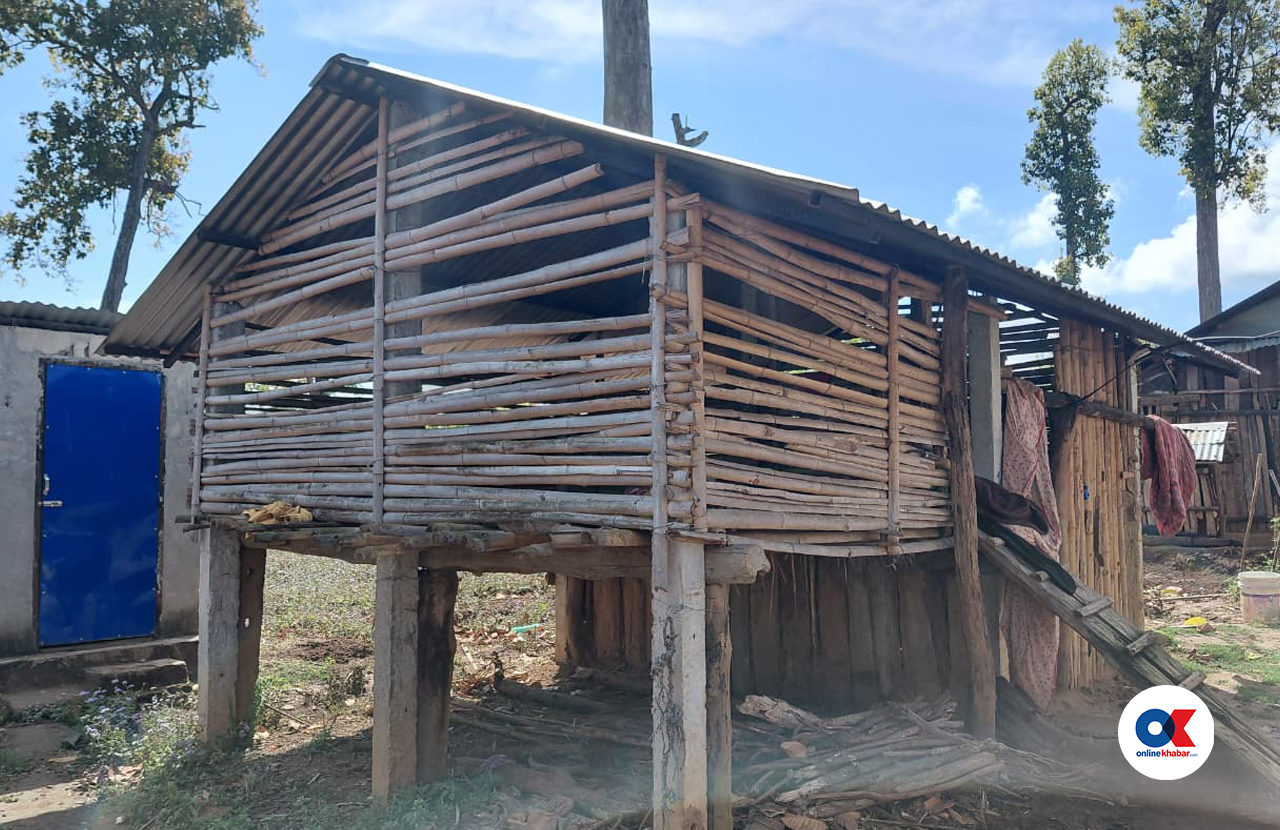
His neighbor’s house was recently destroyed by elephants. The house was damaged just 10 days ago, as elephants came into the village, damaged the home, and returned to the forest. It will take five months to rebuild. This kind of incident is neither the first nor the last in the village.

Ranabhat himself engages in fish and goat farming, but problems escalate when animals devour his fish feed. “Elephants eat the fish food and also destroy banana plants. I have around two bighas of ponds for fish farming. If successful, it generates an annual income of 1.5 to 2 million Nepalese rupees. But raising fish requires months of effort; one night with elephants can ruin everything. No compensation is provided.”

“Those Who Can Cry, Cry; We The Elderly Must Endure”

Dhanmaya Tamang, a 70-year-old resident of the Chepang community in Madi–9, pointed toward the fields, stating, “All the monkeys you see in front destroy the crops at night.”

She added, “The Chepang settlements are deeply impoverished and diverse. Those who can afford it build shelters and watch the fields through the night, but elderly people like us have no choice but to bear the losses. We don’t receive compensation. Our communities have not been highlighted.”
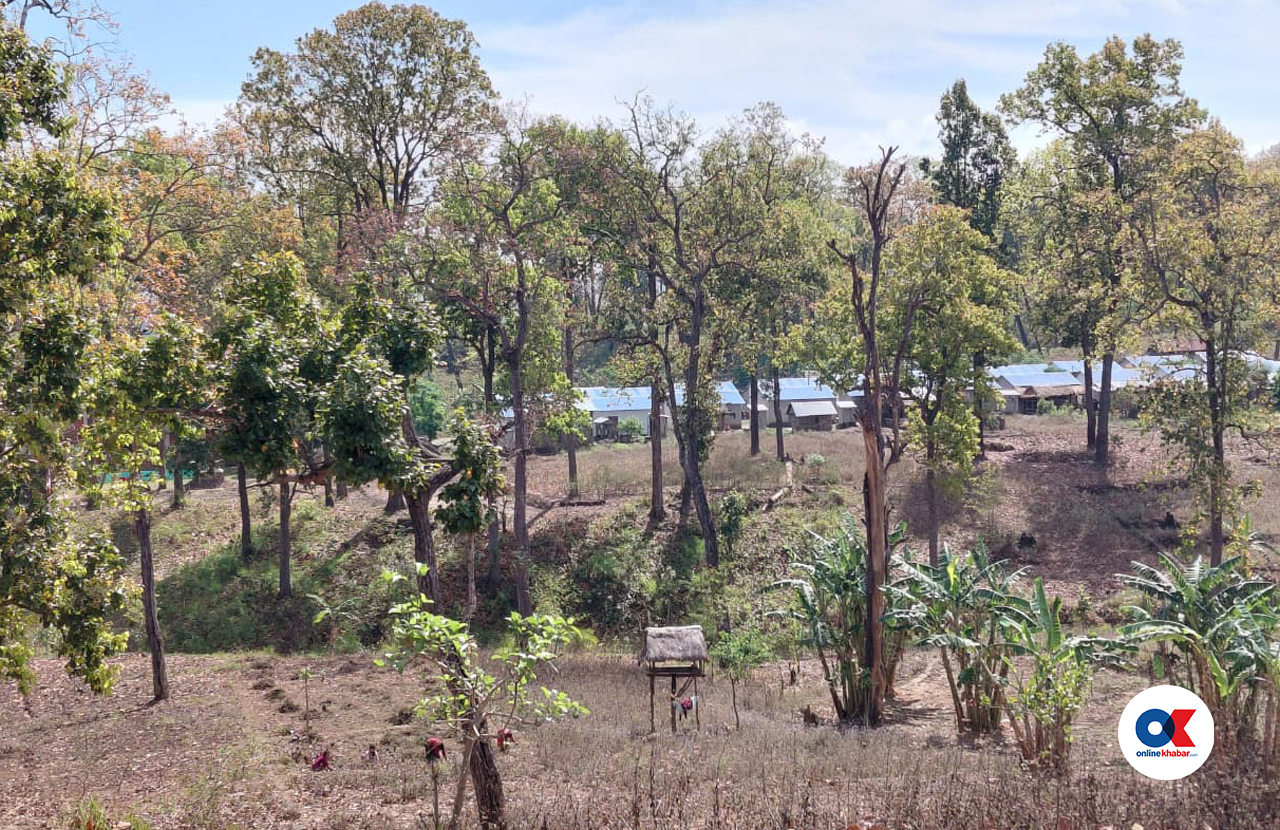
Dhanmaya’s family settled in this area eight years ago after being relocated by the government. Their original settlement was by Kusum River in Madi but was destroyed by fire under national park administration, forcing displacement. They have been living in the current location since then.

Though earlier elephants and rhinos caused trouble, currently, they mostly suffer losses due to monkeys. “Rhinos no longer come here, but monkeys damage the crops even if they aren’t our own. It’s distressing.”

Need for Modern Fencing and Timely Repairs

Locals, while describing their problems, also suggest non-harmful solutions to protect wildlife. Savitri Bhattarai urged erecting strong fences along Rewa River, between the national park and settlements, as a means to restrict wild animals.

“We repeatedly requested the buffer zone community forest management to install fencing but the work has been substandard,” said Debu Pahari.
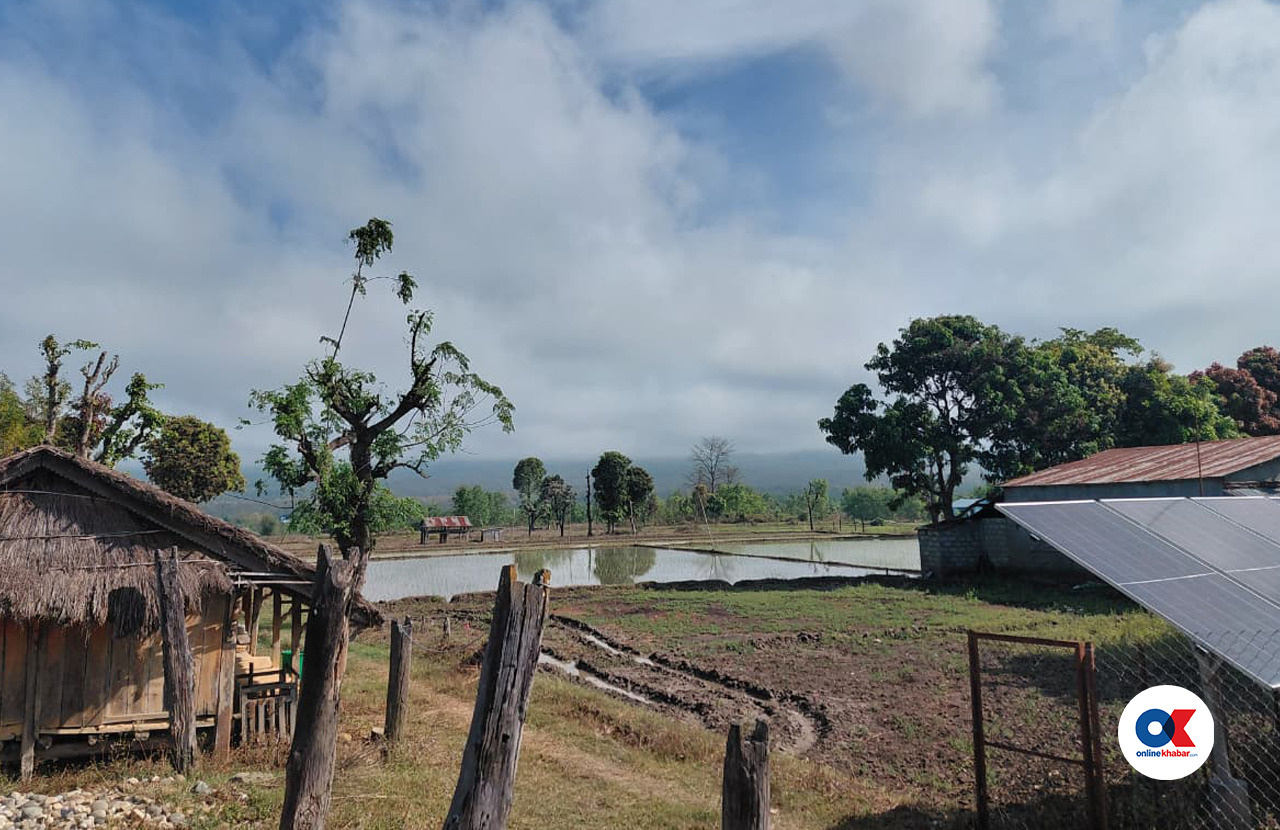
Kulbahadur Ranabhat added that while issues like the Ram temple attract large national budgets, local concerns such as effective fencing to prevent animal intrusion remain neglected.

“Budget Cuts Worsen the Problem”

According to Abhinash Thapa, Information Officer of Chitwan National Park, the budget allocation for the buffer zone area has been significantly reduced, creating challenges. He explained that insufficient funds limit work capacity.

Fence installations were carried out about three years ago in some buffer zones, but local lack of awareness has led to poor maintenance. Locals misuse the fences by drying clothes or damaging them, further adding to the issue.

“Strong fencing is necessary. The budget is decreasing, and without local protection, it’s difficult to maintain. Water streams also let animals in. Efforts for long-term solutions are underway.”
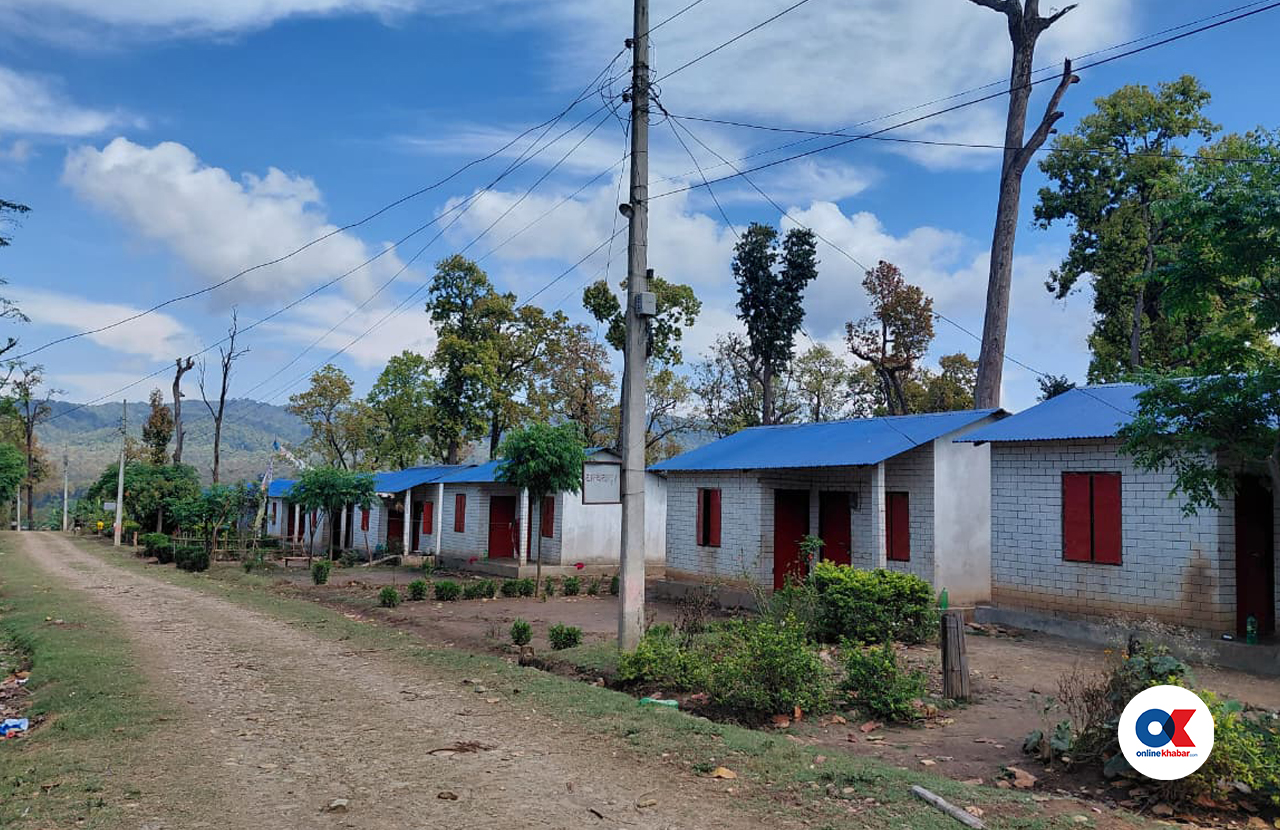
Rishiram Suvedi, ranger of Chitwan National Natural Resource Conservation Fund, noted that frequent streams in the area cause damages to the fences. Without prompt repair of damages, the problem worsens.

“We cannot install fences across streams; installed fences break during the rainy season. Without timely repairs, issues increase,” he said.

Nepali Congress to Hold 15th General Convention from October 2–5

Summary

Editorially reviewed.

  • The Nepali Congress has revised the schedule for its 15th General Convention, deciding to begin ward-level conventions from August 18.
  • Local municipality conventions are set for August 23, provincial assembly regional conventions on September 2, and district-level conventions on September 9.
  • The General Convention will now be held in Kathmandu from October 2 to 5.

March 24, Kathmandu – The Nepali Congress has amended the schedule for its 15th General Convention. The party’s Central Committee meeting held today decided to start ward conventions from August 18.

Previously, the schedule presented at Tuesday’s meeting had planned to start ward conventions from July 22, but this has now been revised according to a Central Committee member.

According to the committee member, local municipality conventions have been rescheduled to August 23 from the earlier date of August 27.
Similarly, the provincial assembly regional conventions will now be held on September 2 instead of August 8.

The district-level conventions, originally scheduled for August 16, will be held on September 9. Additionally, conventions in districts with more than one electoral constituency, initially planned for August 18 and 19, were proposed for August 18 and 19.

Provincial conventions are now slated for October 2 and 3, earlier than the earlier proposed dates of September 30 and October 1.

The 15th General Convention itself is scheduled to take place in Kathmandu from October 2 to 5. Initially, it had been proposed for September 10 to 12.

KVC Hounds Secure Convincing Victory in HJNB 2026 Basketball League

News Summary

Prepared by AI. Editorial review completed.

  • KVC Hounds recorded their fifth consecutive win in the Himalayan Java Basketball League 2026.
  • In Wednesday’s match against Playbox Arena, Hounds led in every quarter.
  • Eight teams compete in HJNB League with the top four advancing to the playoffs.

March 24, Kathmandu – KVC Hounds secured a commanding victory in the Himalayan Java National Basketball League (HJNB) 2026.

In the match played Wednesday at the Dashrath Rangashala Covered Hall, the Hounds defeated Playbox Arena 105–72, marking their fifth straight win.

Following eight games, the Hounds have accumulated 13 points and currently sit in fourth place.

The Hounds maintained the lead throughout all four quarters. They started strong with a 22–10 lead in the first quarter, extended it to 28–15 in the second quarter, and by halftime held a dominant 50–25 advantage. They continued to outperform their opponents with a 34–29 lead in the third quarter and 21–18 in the final quarter, resulting in a significant win.

Team captain Vijay Burja led all scorers with 28 points, while Prasang Dhwaj Maske was named Player of the Match.

On Tuesday night, GoldenGate also delivered a huge victory by defeating ROEL 108–46. That marked GoldenGate’s seventh win in the league.

GoldenGate currently holds 15 points after eight games.

The second edition of the HJNB League, organized by the Nepal Basketball Association (NEBA), features eight competing teams.

The league uses a double round-robin format, with a total of 56 matches scheduled. After the league stage, the top four teams will advance to the playoffs. The playoffs begin with a first qualifier match between the first and second-placed teams in the league, and an eliminator match between the third and fourth-placed teams. The loser of the first qualifier and the winner of the eliminator then face off in the second qualifier. The winners of the first and second qualifiers advance to the final.

The champions will receive a cash prize of NPR 400,000, while the runners-up and third-place teams earn NPR 200,000 and NPR 100,000 respectively. Additionally, the Most Valuable Player (MVP) of the tournament will be awarded an attractive prize, as announced by NEBA.

‘नेतृत्वले गलत गरे खबरदारी गर्छु’ – Online Khabar

Badan Bhandari Warns Party Leadership Against Mistakes

Summary: Badan Bhandari emphasized the need for strategic planning and clear goal-setting in future politics, asserting that his party will not compromise on good governance. He committed to raising internal warnings and engaging in struggle if party leadership takes the wrong path. According to Badan, the weakening of old parties has facilitated the rise of new forces, even though his own political training was received from those very old parties. Kathmandu, March 24 – Badan Bhandari of the Rastriya Swatantra Party (Raswapa) was elected as a member of the House of Representatives from Kavrepalanchok constituency no. 2, breaking the traditional dominance of CPN-UML in the area. This constituency had been represented by UML leader Gokul Baskota in 2017 and 2022. In the election held on February 21, Badan of Raswapa received 53,344 votes, pushing UML to third place. The Nepali Congress candidate Madhu Acharya took second place with 17,868 votes, while UML’s Ashok Kumar Byanju Shrestha obtained 13,940 votes, finishing third. Badan characterized his victory not as a mere election result but as the outcome of the Gen Z movement shaking the old political foundations. He attributed his success primarily to the decline in popularity of established parties and the growing attraction of the public toward Raswapa.

Bhandari stated, “I have experienced that the weakening of old parties has made the emergence of new forces easier, even though my political training came from those same parties.” He revealed that his political journey began in 2005 with the student wing of UML, ANNFSU. After KP Sharma Oli dissolved parliament, he chose to pursue party reformation. He felt the constitution was being ‘torn apart’ and joined the then-formed CPN (Unified Socialist) led by Madhav Kumar Nepal and Jhalanath Khanal, who had split from UML. However, seeing limited prospects for reform within these old parties, he joined Raswapa in April 2023.

Bhandari rejected the notion that those shifting from old parties to new ones are opportunistic. He argued that punishing old parties when they fail and opting for new alternatives is the beauty of democracy. He described Raswapa as a party grounded in constitutional socialism and participatory democracy. He expressed belief that socialism will prevail in the country once the fundamental rights guaranteed by the 2015 constitution are fully implemented. He added that Raswapa’s rise is aimed at promoting good governance, eradicating corruption, endorsing a welfare state structure, and supporting a liberal economy.

Detailing his election campaign, Bhandari said he often slept only three to four hours daily during his first election. Instead of focusing on large rallies or speeches, he visited over 600 local communities and households, calling the direct public engagement a key factor in his success. He emphasized that his communication avoided unnecessary promises, pledging that the public’s mandate after victory would be invested in good governance and development. He urged people to see him not as a contractor building roads and bridges but as a lawmaker engaged in policy-making.

Bhandari stressed that politics now requires vision and goal-setting. His party will not compromise on good governance. He committed to serving as a bridge between the government and the people in parliament and promised to raise voices against legal obstacles. Addressing concerns that many leaders adopt lavish lifestyles after getting elected, he assured the public that he would remain a grounded ‘man of the people’ and work for the oppressed classes.

He concluded, “This election heralds a new era of honesty in Nepali politics, which I will never allow to be broken.”

Stock Market Declines After Five Consecutive Days of Gains, Trading Volume Increases

News Summary

Editorial reviewed.

  • The NEPSE index dropped by 24.45 points on Wednesday, settling at 2935 points.
  • Despite the market decline, trading volume increased to NPR 1.509 billion compared to the previous day.
  • The trading sector rose by 3.45%, with the giant market company’s value increasing by 3.77%.

March 24, Kathmandu – After five consecutive days of gains, the stock market declined on Wednesday. The NEPSE index fell by 24.45 points compared to the previous day, bringing the index to 2935 points. On the previous day, NEPSE had increased by 23.83 points.

Despite the market drop, the total trading volume increased to NPR 1.509 billion from NPR 1.483 billion on the prior day. Share prices of 45 companies rose, while 213 declined and 7 remained unchanged.

The trading sector saw the highest increase of 3.45%. This sector had also recorded the largest gain of 9.9% the previous day. Among the two companies listed in this sector, the market leader Giant Market’s share price increased by 3.77%, contributing to the sector’s strong performance today.

Additionally, the production and processing sector rose by 0.48%. All other sectors experienced declines: banking by 1.40%, development banks by 2.32%, finance by 2.09%, hotel and tourism by 0.05%, hydropower by 0.16%, investment by 0.53%, life insurance by 1.39%, microfinance by 1.64%, non-life insurance by 1.15%, and others by 1.70%.

Shares of five companies surged by 10%. These companies include Reliance Spinning Mills, Solu Hydropower, Super Khudi Hydropower, Bhujung Hydropower, and Hotel Forest Inn. Panchakanya Micro Hydropower’s shares rose by 9.7%.

On the other hand, Abhiyan Laghubitta experienced the largest decline of 7.74%. Salpa Development Bank’s shares fell by 6.99%, Corporate Development by 6.71%, and Sindhu Development Bank by 6.09%. The most actively traded companies today included NGADI Group, API Power, Shivam Cement, Super Madi Hydropower, and SY Panel.

Secretary General Pandey Observed Security Personnel Appeared Helpless on 9 September Incident

Padma Prasad Pandey, Secretary General of the Federal Parliament Secretariat, experienced that security personnel appeared helpless on 9 September. Pandey acknowledged the absence of a pre-planned contingency plan to minimize damage to the parliament building. He also suggested the need to strengthen the security system following the relocation of the parliament building within the Singha Durbar complex. Kathmandu, 24 March.

Pandey shared that on 9 September, he felt security personnel seemed somewhat helpless. His statement has been included in the report of the investigative commission. While giving evidence to the commission, Pandey noted that due to curfews in Kathmandu and Lalitpur on that day, he stayed at home. However, he said, “I perceived that the security personnel appeared somewhat helpless that day.”

He stated that there had been no prior assessment indicating a high risk before the incident. He admitted, “I acknowledge that there was no pre-planned contingency plan to reduce damage to the parliament building.” Additionally, he pointed out problems arising from the lack of organized formal structures such as the Rules of Engagement (ROE) within security agencies.

Looking ahead to the future relocation of the parliament building within the Singha Durbar complex, Pandey recommended that the government include the parliamentary security system within the comprehensive Singha Durbar security plan. He emphasized that to raise the level of security, it is essential to have a forecasting system, adequate equipment, strong infrastructure, ROE, enhanced inter-agency coordination, and regular risk assessments.

Budhanilkantha-Shivapuri Trail Race Scheduled for Saturday to Promote Tourism

News Summary

Prepared after editorial review.

  • Organized by Ward No. 3 of Budhanilkantha Municipality, the Budhanilkantha/Shivapuri open trail race covering 15 kilometers will take place on Saturday.
  • According to Ward Member Vikas Tamang, around 150 players, including men and women, will participate in the race.
  • Ward Chairperson Akash Dhital said the event aims to promote domestic tourism and showcase the natural beauty of the region.

March 24, Kathmandu – With the objective of promoting domestic tourism, Ward No. 3 of Budhanilkantha Municipality is organizing the Budhanilkantha-Shivapuri open trail race scheduled for this Saturday, March 27.

Ward Member and race coordinator Vikas Tamang stated that approximately 150 participants, including both men and women, will compete in the event. The race distance is set at 15 kilometers.

The top three winners in both categories will receive cash prizes of NPR 40,000, NPR 25,000, and NPR 15,000 respectively. Fourth and fifth place finishers will each be awarded NPR 5,000 as a consolation prize.

Ward Chairperson Akash Dhital emphasized that the primary objective of this race is to promote tourism through sports. He said, “We aim to develop and promote domestic tourism through sports activities. Additionally, it is important to familiarize the general public with this area’s diversity, natural beauty, resources, facilities, and potential.”

The race will commence from Budhanilkantha Temple and pass through the national park gate, Ghum Katne, Chap Bhanjhyang, Mahadevthan, Shivapuri, Bagh Dwar, Deurali, Mulabari, Nagi Monastery, and finally return to the national park gate before concluding back at Budhanilkantha Temple.

‘ओली, लेखक र खापुङमाथि ज्यान मुद्दामै अनुसन्धान हुनुपर्ने देखिन्छ’

Investigation Recommended Against Oli, Lekhak, and Khapung for Homicide Charges

News Summary

Reviewed.

  • The commission investigating the suppression of the Jenajati movement has recommended pursuing homicide investigations against former Prime Minister KP Sharma Oli, Home Minister Ramesh Lekhak, and Inspector General of Police Chandrakuber Khapung.
  • The commission deemed Oli’s role irresponsible for failing to prevent human casualties.
  • The four-hour delay in stopping the gunfire has been classified as reckless conduct.
  • The commission has also recommended investigation and action against Home Secretary Gokarn Mani Duwadi, Armed Police Force Inspector General Raju Aryal, and two others for reckless killing.

March 24, Kathmandu – A commission established to investigate the crackdown during the Jenajati movement has recommended pursuing homicide investigations against former Prime Minister KP Sharma Oli, Home Minister Ramesh Lekhak, and four senior officials.

According to a leaked confidential report, these individuals have been suggested for investigation under Section 181 of the Muluki Ain, 2074 (National Code), which prohibits negligent actions leading to loss of life.

Those named include former Prime Minister KP Sharma Oli, Home Minister Ramesh Lekhak, and Inspector General of Police Chandrakuber Khapung. Section 181 states that negligence resulting in someone’s death is punishable by three to ten years imprisonment and a fine ranging from NPR 30,000 to NPR 100,000.

Section 182 of the same code prohibits reckless conduct causing death, with penalties including up to three years imprisonment and a fine up to NPR 30,000.

Regarding Oli’s role, the commission stated, ‘During the parliamentary system, despite gunfire lasting about four hours outside the parliament building resulting in deaths and injuries, the Prime Minister, as the guardian of all citizens, did not take steps to prevent further human loss, reflecting a significant failure.’

The commission further labeled Oli’s response to questions from SEE students and on-field police as irresponsible, citing his failure to take action to prevent additional casualties.

Why Was No Attempt Made to Stop the Gunfire?

The commission questioned why, after it was established that Oli did not order the shooting and that protesters were not killed out of premeditated intent, security forces continued firing without attempts to halt, resulting in deaths and injuries among demonstrators.

‘Because no efforts were made to stop the shooting, even minors lost their lives,’ the commission stated, adding that those responsible for negligence and recklessness in the incident dated September 8 are accountable.

The commission has recommended that Oli, Lekhak, and Khapung be criminally investigated for negligent and reckless conduct leading to death, and the four-hour period during which gunfire was not stopped has been identified as reckless behavior.

Further Investigations Recommended Against Four Officials

Besides these three officials, the commission has also recommended a secondary level of disciplinary action against Home Secretary Gokarn Mani Duwadi, Armed Police Force Inspector General Raju Aryal, National Investigation Department Chief Hutaraj Thapa, and former Kathmandu Chief District Officer Chhavi Rizal.

They have been recommended for investigation under Section 182 for reckless killing, which carries up to three years imprisonment and a fine up to NPR 30,000.

These officials have been cited for negligence in exercising their official powers and for facilitating reckless conduct.

Officials Recommended for Departmental Action

The commission has recommended disciplinary action against AIG Siddhibikram Shah, DIG Om Bahadur Rana, SSP Bishwo Adhikari, SSP Deepshamsher Jabara, and SP Rishiram Kandel.

Shah was not the operation chief, while Rana served as acting head of the Valley Police Office. Bishwo Adhikari was the Kathmandu District Police Chief. Jabara and Kandel were also in key police positions in the Valley and special units.

The commission found lapses in their performance of duties, leading to the recommendation for action.

In addition, recommendations for disciplinary measures include AIG Narayandatt Paudel of the Armed Police Headquarters, DIG Suresh Kumar Shrestha of Kathmandu Armed Police Battalion, SP Jeevan KC of the Disaster Rescue Unit in Sinamangal, Deputy Director Krishna Prasad Khanal of the National Investigation Department, and Reben Kumar Gachhadar, Kathmandu Chief and Deputy Investigation Director.

The commission also recommended administrative action against military officials such as Manoj Baidwar, head of the Presidential Residence protection team; Diwakar Khadka of the Baluwatar security team; Ganesh Khadka of the Singha Durbar Secretariat security; and Santosh Dhungel, parliamentary building security personnel.

Furthermore, the commission suggested investigation and action against members of the TOB who incited unrest near Baneshwor on motorcycles and encouraged peaceful demonstrators to advance towards the parliament.

Suzuki e-Vitara Booking Opens with Starting Price of NPR 4,999,000

News Summary

Editorially reviewed.

  • CG Motocorp officially opened bookings for the first premium battery electric vehicle, the e-Vitara, at the Wada Auto Show held in Pokhara.
  • The e-Vitara is priced at an attractive starting price of NPR 4,999,000, available for a limited period only.
  • Suzuki plans to launch six additional new electric vehicles by 2030.

March 24, Kathmandu – CG Motocorp, the official distributor of Suzuki vehicles in Nepal, has commenced bookings for its highly anticipated first premium battery electric vehicle, the e-Vitara.

The announcement was made on Wednesday at the Wada Auto Show held in Pokhara, where the company revealed an attractive starting price of NPR 4,999,000 for the vehicle.

The company emphasized that this special introductory price will be available only for a limited time. “This is the first premium battery electric vehicle introduced by a Japanese automaker, which aims to establish Japanese reliability and superior engineering within Nepal’s electric vehicle market,” the company stated.

“The vehicle offers two high-capacity battery options of 49 and 61 kilowatt-hours, delivering powerful outputs of 106 kilowatts and 128 kilowatts respectively,” the company added in a press release.

CG Motocorp claimed that the e-Vitara is the first Japanese brand electric vehicle offered within this price range. “It is equipped with the latest battery technology and meets high safety standards,” the company said. Suzuki has plans to launch six additional new electric vehicles by 2030.