Author: space4knews

सशस्त्रमा बनाइयो दंगा नियन्त्रण स्पेसल गण, भूमिका भने अस्पष्ट

Special Unit Formed Within Armed Police for Riot Control, Role Remains Unclear

News Summary

Reviewed.

  • Armed Police Inspector General Raju Aryal stated there is no clear role defined for Armed Police deployment in riot control.
  • The government has decided to designate the Neel Barahi Unit in Kirtipur as the Riot Control Unit.
  • The Home Ministry is preparing the Security Forces Deployment Policy, 2082 to eliminate overlap between Armed Police and Nepal Police in mob and riot management.

March 24, Kathmandu – According to Section (G) of the Armed Police Act 2058, Armed Police are supposed to be deployed for riot control, but there remains a lack of clarity on this matter. Clear roles and conditions for deploying Armed Police in riot situations have not been firmly established, raising concerns.

On Tuesday, during the 22nd anniversary ceremony of the Pashupatinath Battalion headquarters in New Baneshwor, Armed Police Inspector General (IGP) Raju Aryal raised questions about the ambiguous role of Armed Police deployment.

Although Armed Police are said to be deployed when riots occur or are likely, he indicated that Armed Police personnel are currently being deployed daily even in normal circumstances.

He also noted that there is still no clear policy on riot control and that decisions on this matter are awaited from the Home Ministry.

The ambiguity around Armed Police deployment, mandates, and roles has caused overlap and confusion between the Nepal Police and Armed Police.

During the protest on September 8 and 9, the entire security apparatus failed in riot control. When protestors entered prohibited areas and violence ensued, security forces fired shots, resulting in 19 deaths.

Similarly, during the royalist protest at Three Corners on March 28, security agencies were also unable to act effectively. These events highlighted the lack of coordination, resulting in overlap and uncertainties among security agencies.

Following these incidents, the Armed Police Force proposed forming a specialized unit for riot control to the Home Ministry. Accordingly, on December 18, the Cabinet decided to convert the Neel Barahi Unit in Kirtipur into a Riot Control Unit and to add posts for Senior Superintendents of Police (SSP).

This unit, commanded by an SSP, has now been placed under the Riot Control Regiment.
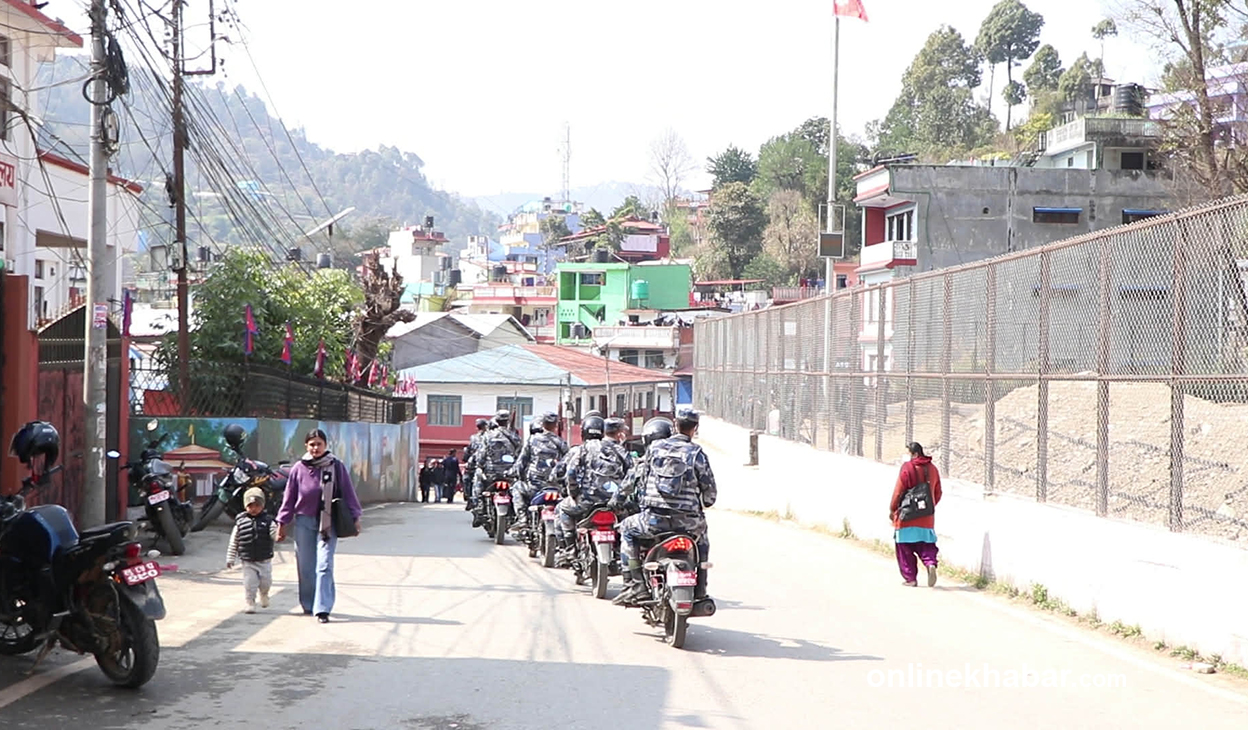
Preparations are underway to formally inaugurate and operationalize this unit soon. However, security officials express concerns that despite the unit’s formation, its deployment and role remain unclear.

A senior Armed Police official said, “Posts have been created, but questions about why, when, and how these teams will be deployed remain unanswered. The role of other security agencies in such scenarios and the delineation of authority need clarification. This could lead to incidents similar to the recent protests.”

There appears to be insufficient coordination between the two security forces — Nepal Police and Armed Police — in crowd control. During the September 8 protests, Police received no assistance from Armed Police while firing shots.

Deployment of Police and Armed Police separately in the field contributed to significant human losses.

To eliminate this overlap, the Home Ministry is preparing the Security Forces Deployment Policy, 2082, regarding mob and riot management.

The proposed policy defines how and when Armed Police should be deployed in normal situations, including their duties and powers.

According to the policy, Nepal Police and local police will have primary responsibility for security under normal circumstances, with Armed Police deployed only as necessary.

A phased approach to crowd control, ranging from baton charges to water cannons and aerial firing, has been devised.

If these measures fail to control riots and destructive activities escalate, a special situation can be declared to permit Armed Police deployment.

In such cases, Armed Police will lead field operations, and Nepal Police will be deployed under Armed Police command.

However, this policy has yet to be implemented. IGP Aryal has also demanded clarity on the role of Armed Police in this regard.

Former Deputy Inspector General of Armed Police Narayan Babu Thapa has also called for a clear delineation of roles to avoid overlap between the Nepal Police and Armed Police.

Although the Armed Police Force was established for riot control, District Chiefs (CDOs) have been deploying Armed Police even in routine situations.

Post-protest, there has been a recommendation to have a specialized unit for riot control, but unclear jurisdiction and deployment scope have hindered effectiveness.

Pashupatinath Battalion Relocated from Baneshwor

The Pashupatinath Battalion of the Armed Police Force has been responsible for security, crowd control, riot management, disaster relief, and VIP security covering the three districts of Kathmandu Valley.

Established 22 years ago, its office was until recently located in Satungal. Following recent protests, the office has been moved to New Baneshwor.

The new office is situated behind the Transport Department, and the valley’s command is now managed here by Armed Police DIGs.

Since New Baneshwor and Maitighar areas frequently witness protests, rallies, and sit-ins, relocating the battalion was meant to enhance coordination. The location also houses important government offices and establishments, making it strategically important for security.

Siddhartha Bank Conducts Diverse Programs on Global Money Week

News Summary

Prepared after editorial review.

  • Siddhartha Bank Limited conducted financial literacy programs targeting students across 38 locations in seven provinces on the occasion of Global Money Week 2079.
  • The Global Money Week was observed from March 16 to 22 with the theme ‘Smart Money Talks’, and 2,171 students participated in the programs.
  • The bank organized branch visits for 478 students to educate them about fundamental banking operations.

March 23, Kathmandu – Siddhartha Bank Limited has organized a variety of programs during Global Money Week to empower and sensitize students financially. Numerous events took place throughout the week from March 16 to 22.

This year’s Global Money Week was themed ‘Smart Money Talks’. The bank conducted financial literacy programs targeting students in schools and campuses across 38 locations in seven provinces.

The bank aimed to enhance financial knowledge, skills, attitudes, and behaviors among students by raising awareness about banking services, digital transactions, and necessary precautions.

According to the bank, a total of 2,171 students participated in these initiatives. Additionally, 478 students were taken on branch visits to provide practical information about basic banking procedures, the bank’s statement said.

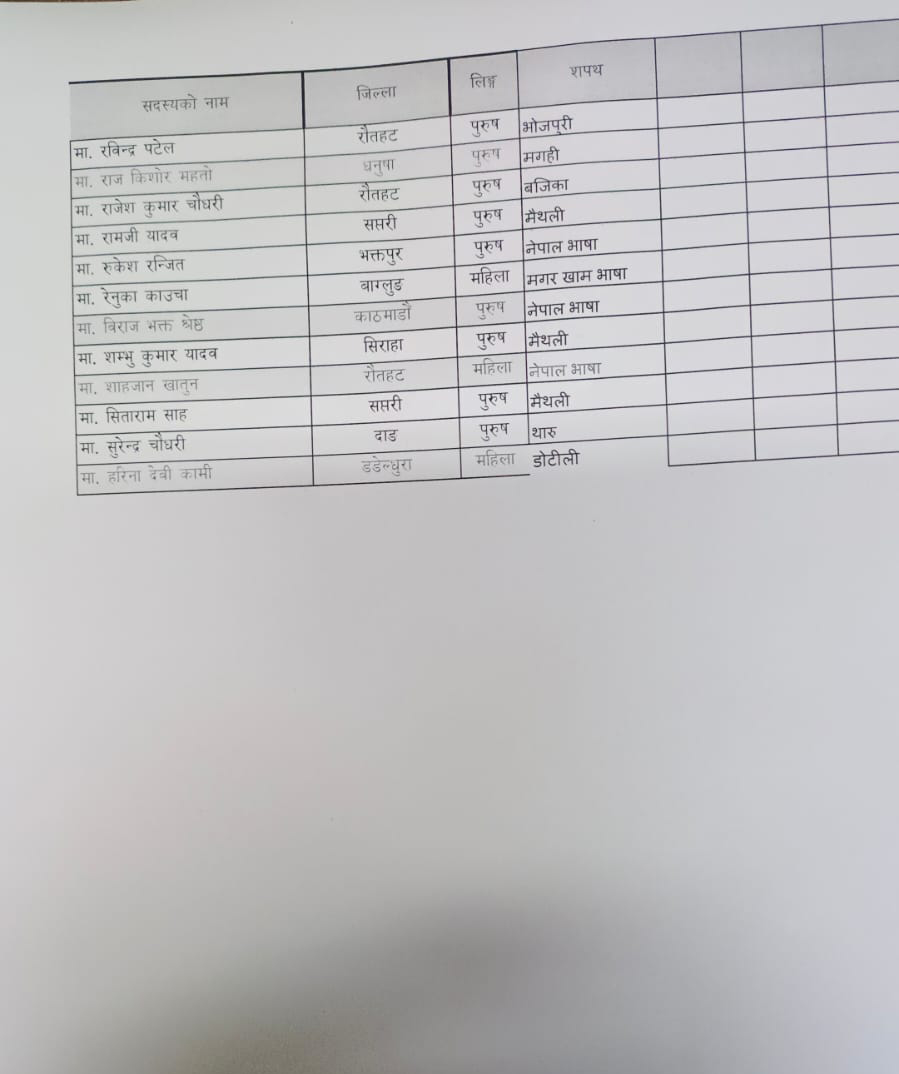
List Released of 47 MPs Taking Oath in Languages Other Than Nepali

News Summary

  • Forty-seven MPs have expressed the desire to take their oath in languages other than Nepali.
  • The oath-taking ceremony for members of the House of Representatives will be held on Chaitra 12.
  • MPs are preparing to take oaths in various languages, including Maithili, Tharu, and Nepal Bhasa.

Chaitra 10, Kathmandu – Forty-seven members of parliament have registered to take their oath in languages other than Nepali. Ekram Giri, Deputy Secretary and spokesperson of the Federal Parliament Secretariat, confirmed that 47 MPs have listed their names to take the oath in their mother tongues.

The oath-taking ceremony for the members elected in the Falgun 21 election will be held on Chaitra 12. Kusbu Oli, a proportional representation MP from the Rastriya Prajatantra Party (RPP), will take her oath in Sanskrit.

MPs Ujjwal Kumar Jha and Matrika Prasad Yadav plan to take the oath in Maithili. Kriparam Rana and Rana Tharu are preparing to take the oath in the Tharu language. MPs Geeta Chaudhary and Pramila Kumari Gachhadar have also registered to take the oath in Tharu.

MPs Birajbakta Shrestha and Kulbakta Shakya will take their oath in Nepal Bhasa. In previous years, 35 MPs in 2070, 46 MPs in 2074, and 28 MPs in 2079 took their oath in mother tongues other than Nepali.

During the 2064 Constituent Assembly, 264 members took the oath in their respective mother tongues. These languages included Maithili, Bhojpuri, Magar, Gurung, Western Tharu, Hindi, Newari, Limbu, Tamang, Rai, Eastern Tharu, Urdu, Rajbanshi, Thakali, Sherpa, Rana Tharu, Dhimal, Kumal, Darhichuwa Western dialect, Awadhi, Madwari, Jirel, Chepang, Bantar, Majhi, Sunuwar, Baram, and others.

The detailed list of 47 MPs who plan to take their oath in various languages other than Nepali is as follows:

लिपुलेक नाकाबाट व्यापार गर्ने भारत-चीनको तयारी, नेपालको के होला प्रतिक्रिया ?

India Prepares to Start Trade with China via Lipulekh Pass: What Will Nepal’s Response Be?

India is preparing to initiate trade with China through the Lipulekh pass. So far, the Nepalese government has not issued an official position on this matter. Nepal has consistently claimed the Lipulekh, Kalapani, and Limpiyadhura areas as its territory. Former Foreign Minister Pradeep Gyawali has emphasized the need for the government to clearly articulate its stance.
Date: March 24 | Location: Kathmandu

India’s plan to conduct trade with China via Lipulekh, a territory claimed by Nepal, has yet to elicit a formal response from the Nepalese government. On March 19, the Press Trust of India reported that India’s Foreign Secretary Vikram Misri wrote a letter to Uttarakhand’s Chief Secretary A.N. Vardhan urging the reopening of trade through the Lipulekh pass. Nepal claims the eastern region of the Mahakali River, including Kalapani, Lipulekh, and Limpiyadhura, as its own territory. According to the 1816 Treaty of Sugauli between Nepal and British India, the land east of the Kali (Mahakali) River belongs to Nepal. Reportedly, India plans to reopen trade through Lipulekh starting June. Diplomatic experts suggest that Nepal should issue a responsible official statement and seek resolution through dialogue.

Former Foreign Minister Pradeep Gyawali stresses that Nepal should clearly convey its firm position to both Beijing and New Delhi regarding Lipulekh. He states, “The government must clarify its perspective and recognition. Since 2015, we have maintained that this is Nepalese territory and that no decisions should be made without Nepal’s consent.” Likewise, former ambassador Dinesh Bhattarai highlights that the government should not delay responding on such sensitive border disputes. Bhattarai asserts, “This government has remained silent on many issues. We cannot afford to remain quiet when illegal activities occur on Nepalese land.” Both Nepal’s neighbors have appeared insensitive to these concerns.

Following Indian Prime Minister Narendra Modi’s visit to China in 2015, a 41-point joint communiqué included a clause related to the use of Nepalese territory at Lipulekh. Clause 28 of the joint statement referenced an agreement between Modi and Chinese Premier Li Keqiang to make Lipulekh Pass a center for trade and pilgrimage traffic. Nepal, however, did not consent to this usage of its land and has formally protested to both neighboring countries, according to Dinesh Bhattarai, foreign affairs advisor to former Prime Minister Sushil Koirala. He notes, “Unauthorized use of our territory without consultation is unacceptable. We have sent protest notes to both countries.”

‘International Women Entrepreneurs Trade Fair’ to be Held from March 3

News Summary

Editorially Reviewed.

  • The Nepal Women Entrepreneurs Federation is organizing the 9th International Women Entrepreneurs Trade Fair 2026 in Kathmandu from March 3 to 5.
  • Women entrepreneurs from rural and urban areas across 77 districts will showcase organic food products, handicrafts, and other items at 140 stalls.
  • Approximately 50,000 visitors are expected, with an economic transaction target of about NPR 20 million.

March 23, Kathmandu – With the aim of connecting women entrepreneurs’ products to the market and promoting their business identity, the ‘9th International Women Entrepreneurs Trade Fair 2026’ is set to be held in Kathmandu.

The Nepal Women Entrepreneurs Federation is preparing to host this fair from March 3 to 5. The event aims to encourage successful women entrepreneurs from rural and urban areas of all 77 districts. Besides Nepal, women entrepreneurs from various other countries will also participate.

Domestic, small and medium entrepreneurs, businesspersons, and exporters will showcase their original products at the fair.

140 Stalls and International Participation

According to Federation President Darshana Shrestha, the fair will feature a total of 140 stalls. These will primarily exhibit organic food items, traditional delicacies, agricultural products, medicinal herbs, handicrafts, sculptures, jewelry, and decorative items. Over 300 women entrepreneurs’ products will be displayed at the exhibition.

In addition to Nepali products, offerings from India such as fabrics and cosmetics, electrolyte drinks from China, cosmetics and noodles from Korea, and recycled products from Bhutan will also be displayed and sold. Particularly, women entrepreneurs from all seven provinces will bring their traditional products to the fair.

As part of social responsibility, free stalls have been arranged for women entrepreneurs with disabilities. Likewise, startup entrepreneurs, youth, and district-level entrepreneurs will be provided stalls at discounted rates, the Federation stated.

The fair will not only be an exhibition but also focused on enhancing women entrepreneurs’ capacities. Throughout the event, experts will conduct panel discussions and training sessions on topics such as digitalization, market expansion, and financial literacy.

Transaction Target of NPR 20 Million

The organizers estimate about 50,000 visitors this year. They have set a target of around NPR 20 million in economic transactions during the fair.

President Shrestha expressed confidence that this fair will prove to be a significant milestone in establishing women entrepreneurs’ skills and creativity in both national and international markets.

Organizers also noted that this platform will offer women entrepreneurs opportunities for networking and business collaboration.

Special Court Demands Rs 2.5 Million Bail from Undersecretary Held on Corruption Charges

News Summary

Editorially reviewed.

  • The Special Court has demanded a bail of Rs 2.5 million from Undersecretary Jhalakram Adhikari, who faces charges of corruption and money laundering.
  • The Commission for the Investigation of Abuse of Authority (CIAA) had filed a case against Adhikari, alleging he took a bribe of Rs 7 million.
  • Adhikari is currently suspended, having filed his case in the Special Court.

March 24, Kathmandu – The Special Court has ordered Undersecretary Jhalakram Adhikari, accused of corruption and money laundering, to provide a bail of Rs 2.5 million.

The panel comprising Special Court Chairperson Sudarshan Dev Bhatt and members Hemant Rawal and Umesh Koirala issued the bail demand to Adhikari.

The Commission for the Investigation of Abuse of Authority (CIAA) had filed a case against Adhikari, accusing him of taking a bribe amounting to Rs 7 million. He is presently suspended following the filing of the case in the Special Court.

कप्तान रोहित र उपकप्तान दीपेन्द्रसहित यी हुन् इयू टी-२० बेल्जियम खेल्ने नेपाली खेलाडी

Captain Rohit and Vice-Captain Dipendra Among Eight Nepalese Players to Participate in EU T20 League in Belgium

For the first time, the EU T20 League is set to debut, featuring participation from eight Nepalese players. Nepal’s cricket team captain, Rohit Paudel, has been signed in Category ‘B’ by the Gent Gladiators. Vice-captain Dipendra Lamichhane has already been pre-signed by JB Bruges, while Sandeep Lamichhane has been pre-signed by the Liège Red Lions.

Following today’s draft, Rohit and four other players secured contracts with various teams. Anil Sah and Gulshan Jha were selected through the optional round. Wicketkeeper Asif Sheikh was signed in Category ‘C’ by the Antwerp Anchors. Additionally, Lalit Rajbanshi and Ishan Pandey were drafted by JB Bruges.

A total of 22 Nepalese players registered for the league. Aside from those already pre-signed and drafted, players such as Kushal Bhurtel, Arif Sheikh, Karan KC, Sompal Kami, Aditya Mehta, Sher Malla, Lokesh Bam, Binod Bhandari, Sharad Bheshavkar, Adil Alam, Santosh Yadav, Kushal Malla, Bhim Sarki, Shahab Alam, Gulshan Jha, and Pawan Sarraf also remain in contention.

For Lalit, Asif, and Ishan, this will mark their first experience playing in a league outside Nepal. Meanwhile, captain Rohit, Dipendra, and Sandeep have previously played in franchise leagues abroad. The league mandates that each team must include at least four Belgian players, with a total of twelve Belgian players selected so far.

Risks in Overseas Employment: 2 Million Nepalis Affected

Increasing conflicts in West Asia have directly impacted the employment and safety of more than 1.7 million Nepali migrant workers. The government has halted sending new laborers to high-risk countries, and over 80,000 workers have already registered to return home. The conflict threatens to exacerbate domestic employment issues and invigorate the activities of labor brokers. 10 Chaitra, Kathmandu.

Rising military tensions in West Asia are seriously affecting Nepal’s overseas employment sector alongside the global economy. Millions of migrant workers are employed in Gulf countries, Israel, Jordan, Lebanon, Iran, and Palestine, including over two million Nepali workers. According to official data, the Ministry of Foreign Affairs reports around 1.7 million Nepalis in these countries, with even more residing informally, bringing the total to approximately two million.

The conflict is beginning to directly affect Nepali workers’ employment, income, and safety. According to the Department of Foreign Employment’s data for fiscal year 2081/82, 839,266 people obtained labor permits for overseas employment. This highlights how tensions in Nepal’s major labor destination countries clearly impact foreign employment opportunities.

Labor and migration expert Dr. Jeevan Baniya noted the conflict’s potential to directly affect overseas employment. He explained that if the war prolongs, the number of workers going abroad will naturally decrease, creating new risks. With the government’s ban on sending workers to risk-prone areas, outgoing labor flows from Nepal will decline, and many migrant workers abroad may be compelled to return home, he added.

Harish, the First Person Granted Passive Euthanasia in India, Passes Away After 13 Years in Coma

News Summary

Editorially Reviewed.

  • Harish Rana, the first person in India permitted for passive euthanasia, has died at AIIMS Delhi.
  • The Supreme Court granted Harish permission for passive euthanasia on March 11.
  • Harish had been in a coma since 2013 and was moved to the palliative care unit at AIIMS on March 14.

Kathmandu – Harish Rana, the first individual in India granted passive euthanasia, passed away on Tuesday at AIIMS in Delhi.

On March 11, the Supreme Court of India issued a verdict permitting Harish to undergo passive euthanasia.

According to PTI, 31-year-old Harish had been in a coma since 2013. On March 14, he was transferred from his home in Ghaziabad to the palliative care unit at Dr. B.R. Ambedkar Institute Rotary Cancer Hospital, AIIMS.

Harish was a B.Tech student at Punjab University. In 2013, he suffered a severe head injury after falling from a fourth-floor balcony.

He remained in a coma from that time onward, sustained by artificial nutrition and occasional oxygen support.

Harish’s father stated that the Supreme Court’s verdict marked the first time in India that permission for “voluntary death” was granted.

मोहमद सालाहले लिभरपुल छाड्ने – Online Khabar

Mohamed Salah Set to Leave Liverpool After 2025-26 Season

News Summary

Editorially reviewed.

  • Egyptian star Mohamed Salah has agreed to leave Liverpool after the 2025-26 season.
  • Salah has spent nine years at Liverpool, helping the club win two Premier League titles, the UEFA Champions League, and more.
  • His farewell from Anfield will take place near the end of his final season, with formal honors planned to celebrate his achievements.

March 24, Kathmandu – Egyptian forward Mohamed Salah has announced that he will leave Liverpool following the 2025-26 season. The club’s official statement referred to the conclusion of his “glorious journey”.

According to an agreement between Salah and the club, he will close a highly successful nine-year chapter at Anfield. Expressing respect and gratitude towards the fans, Salah wished to maintain transparency regarding his future by publicly confirming this decision early.

Since joining Liverpool from AS Roma in the summer of 2017, Salah has established himself among the all-time greats in the club’s history.

He has played a crucial role in Liverpool’s triumphs including two Premier League titles, the UEFA Champions League, the FIFA Club World Cup, the UEFA Super Cup, the FA Cup, two League Cups, and an FA Community Shield.

Having scored 255 goals in 435 appearances, Salah ranks as Liverpool’s third highest goal scorer. Individually, he has earned the Premier League Golden Boot on four occasions, underlining his outstanding accomplishments.

With several matches still remaining in the current season, Salah is focused on delivering his best performances for the team.

His farewell event at Anfield is expected towards the end of the season, where his contributions will be formally celebrated.

Banks Primarily Used for Loans, Payments Increasingly Made via Mobile – New Data

News Summary

  • According to Nepal Rastra Bank’s study, financial access has reached 67.3% of the population nationwide, with the number of deposit accounts nearly double the population.
  • By mid-February of the current fiscal year, the number of bank and financial institution branches reached 11,490, with population per branch decreasing to 2,538.
  • Digital transactions have reduced the work of bank branches, with customers primarily visiting branches for loans only.

March 24, Kathmandu – With increased use of digital technology in the banking sector, customers now primarily visit bank and financial institution branches only to apply for loans.

While branches still handle cheque and cash transactions, advancements in technology have widely reduced the need for branch visits for most banking operations.

When examining financial access from the branch perspective, every one of the country’s 753 local units has commercial bank branches available.

Nepal Rastra Bank conducted a study on financial access in 2019 (2076 BS), revealing that 67.3% of the country’s population had access to financial services.

Since then, technological advancements have brought banking services to every individual’s mobile device, with the number of deposit accounts now almost double the total population, according to the central bank.

Due to the extensive use of technology, the workload at bank branches has declined. Nepal Rastra Bank Governor Professor Dr. Bishwonath Paudel explains that daily average customers visiting financial institutions for services used to be around 150 per branch but have now decreased to between 20 and 30.

“Expanding branches alone will not suffice,” Paudel said. “Reducing the number of branches to cut costs will help lower the cost of funds and interest rates.”

Consequently, both banks and Nepal Rastra Bank are working in alignment with digitization plans. Efforts are underway to ensure people do not need to physically visit banks or the central bank, he added.

The 2019 study showed that Nepal’s banks and financial institutions had approximately 3,300 people per branch. At that time, the total number of deposit accounts was 27.8 million and loan accounts reached 1.44 million.

Similarly, mobile banking users numbered approximately 8.35 million, and there were about 6.79 million debit cards in circulation.

By mid-February 2026 (2082 BS), the central bank reported significant improvements. Deposit accounts at Class A, B, and C banks and financial institutions rose to 61.85 million, and loan accounts increased to 2.03 million.

By that time, the total number of bank and financial institution branches reached 11,490, while the population per branch dropped to 2,538.

Nepal Rastra Bank spokesperson Gurupasad Paudel confirmed the considerable achievements in digital transactions. He stated, “With at least one bank branch every 10 kilometers, digital transactions are expected to increase further.”

He added that branch closures are appropriate if multiple branches exist in the same location, yet branches remain necessary to maintain financial access and awareness.

The central bank noted that QR payment transactions increased from 855,000 in July 2020 (Ashad 2077) to 46.2 million by mid-February of the current fiscal year.

Mobile banking transactions also rose from 13.7 million five years ago to 67.3 million by mid-February of this fiscal year.

By mid-February, decisive payments via QR amounted to NPR 125 billion, while mobile banking payments totaled NPR 558 billion.

Despite recent central bank policies and growth in digital transactions, the number of branches has decreased. Branch numbers fell starting 2022/23 (2079/80 BS), partly due to mergers and acquisitions.

Three years prior, there were 11,580 branches; currently, they are limited to 11,490.

Financial access will now be reviewed based on payments, service centers, and savings and loan accounts. According to central bank director Sushil Paudel, access can be assessed through payments, savings, credit, and insurance coverage.

While financial access has expanded, quality remains a concern. Paudel stated, “Nearly 90% financial access is reflected by savings accounts, branches, and payment transactions, but borrowing activity is low. There is reluctance to take loans, and improvements in financial resource deployment are limited.”

Financial literacy levels are weak, and consumer protection standards remain inadequate. Since 2019, no comprehensive financial access survey has been conducted.

They have also noted an increase in fraud cases and the need to improve financial awareness. While financial transactions occur normally, easy access to credit is critical, with collateral and loan repayment methods playing major roles.

The QR system has successfully expanded the number of service centers without limitations. In the digital era, this access is not confined to specific locations. Payments can be conveniently made via mobile at shops, effectively turning each store into a financial service center.

“For loans, branch visits are still necessary, but in the future, digital delivery methods will make this possible,” he said. “The central bank is preparing the required policy framework for this.”

Fire Destroys Over 10 Bighas of Sugarcane Crop in Sarlahi

News Summary

  • In Mahadev Tol, Ward No. 1 of Ramnagar Rural Municipality in Sarlahi, about 10 bighas of sugarcane were destroyed by fire started while burning discarded sugarcane leaves.
  • Ward Chairman Brahmadev Chaudhary stated that the fire went out of control while burning the sugarcane leaves.
  • Previously, in Rohuwa of Godaita Municipality-4, over 50 bighas of sugarcane were destroyed due to a short circuit in an electric wire.

March 24, Sarlahi – A fire broke out this Tuesday afternoon in Ramnagar Rural Municipality of Sarlahi, resulting in the destruction of more than 10 bighas of sugarcane crops.

The fire ignited suddenly in a sugarcane field located east of Mahadev Tol in Ward No. 1 of Ramnagar Rural Municipality.

According to Ward Chairman Brahmadev Chaudhary, the fire started while burning sugarcane leaves discarded after harvesting sugarcane on five katthas of land owned by local resident Bacchhelal Rai, and it spread to the remaining sugarcane fields.

He said, “The fire went out of control while burning the sugarcane leaves, causing significant damage.”

Earlier, in Rohuwa of Ward No. 4, Godaita Municipality, a short circuit in an electric wire led to the destruction of more than 50 bighas of sugarcane fields due to fire.

UNICEF Raises Alarm Over Impact of Middle East Conflict on Children


March 23, Kathmandu – As the conflict in the Middle East enters its fourth week, over 118 children have died in Lebanon and more than 200 in Kuwait. According to UNICEF estimates, since the onset of the war, an average of approximately 87 children are being killed or injured daily.

UNICEF Deputy Executive Director Ted Chaiban has called on all parties involved to immediately halt hostilities, protect civilian infrastructure, and ensure that humanitarian aid is delivered without obstruction.

UNICEF has warned that the ongoing violence is triggering a severe crisis in the Middle East. The deaths of innocent children undermine public trust and cause long-term damage to scientific and social development, they stated.

Nearly a month into this devastating war, rising prices of oil, fuel, and gas have severely impacted the global economy, according to the United Nations.

With airspace, transportation, shipping routes, and major humanitarian corridors in the Middle East closed or blocked, access to essential supplies and medicines, as well as the delivery of human services and supply chains for businesses, have been disrupted.

Attacks on commercial ships in the Strait of Hormuz have increased risks to the supply of essential goods and contributed to rising food prices.

Due to threats to food security and market instability, developing nations across Asia and Africa are expected to be among the most severely affected. – Rastriya Samachar Samiti

दावा लामाको उम्मेदवारी स्थगन गर्ने अन्तरिम आदेशलाई निरन्तरता

High Court Upholds Interim Order Suspending Dawa Lama’s Candidacy for ANFA Senior Vice President

The Patan High Court has extended the interim order suspending the candidacy of Dawa Lama for the position of Senior Vice President of the All Nepal Football Association (ANFA). The court has directed that additional details regarding the narcotics case involving Dawa Lama be sought from the Supreme Court, with a further hearing scheduled for Chaitra 12 (March 26). As the interim order remains in effect, the issue will continue to impact the ongoing ANFA election process. (Chaitra 10, Kathmandu)

The Patan High Court’s joint bench, presided over by Justices Surya Prasad Parajuli and Basudev Nyaupane, heard a writ petition filed by Deepak Khatri challenging Lama’s eligibility. The court observed that further examination was necessary before making a final decision on the interim order and accordingly ordered the retrieval of detailed case information from the Supreme Court.

The petition alleged that Lama, a candidate for the ANFA executive committee, is ineligible due to a prior conviction in a narcotics-related case. However, Lama has filed a writ petition at the Supreme Court challenging that verdict. The High Court has requested related documents and current status updates from the Supreme Court to clarify the situation.

Upon receipt of these documents, a detailed discussion on the interim order will be held on Chaitra 12. Until then, the court has maintained the previously issued interim order, ensuring that the matter continues to influence the ANFA election proceedings.

Government Disputes Over Odd-Even System to Mitigate Fuel Crisis

News Summary

Prepared following editorial review.

  • The ongoing military tensions between Israel, the US, and Iran are disrupting international petroleum supplies, raising concerns about a deepening fuel crisis in Nepal.
  • Nepal’s LPG storage capacity only covers about one week’s supply, with petroleum products primarily imported via pipeline and tankers.
  • The Nepal Oil Corporation demands tax relief and price adjustments from the government to reduce losses, while discussions continue regarding the potential implementation of an odd-even vehicle system.

March 23, Kathmandu – There is no immediate sign that the military conflict between Israel, the United States, and Iran will end soon. As the nature of the war evolves, both sides have started targeting non-military areas beyond military centers, notably impacting petroleum extraction sites and refineries.

This prolonged conflict has caused disruptions in the global supply chain of petroleum products and gas, projecting a potentially severe fuel crisis for Nepal in the coming days.

Nepal consumes around 45,000 to 46,000 tons of LPG monthly. However, due to inadequate storage, the existing stock in the Nepal Oil Corporation lasts only about one week.

Similarly, the corporation has storage capacity for only 10 days of petrol, 12 to 13 days of diesel, and 15 days of aviation fuel.

Currently, LPG is transported via bullet trucks, while most petroleum products are imported through the Motihari-Amlekhgunj pipeline.

The Ministry of Industry, Commerce and Supplies is closely monitoring the supply issues caused by rising tensions in West Asia and has stated there is no immediate cause for panic in the market.

Netra Prasad Suvedi, the ministry’s spokesperson and joint secretary, explained that while fuel supply is not fully regular, it continues via pipeline, and there is no widespread crisis. The government is currently adopting a “wait and watch” strategy.

He further noted that Indian authorities have imposed some controls on fuel transport via tankers, which has mildly affected supply outside the pipeline.

“Fuel supply cannot be claimed as fully regular. Adequate fuel is not provided for transport through alternative modes beyond the pipeline. India has urged to avoid haste. The situation will depend on whether the Middle East conflict continues or ends,” Suvedi said.

In a previous meeting, the Oil Corporation informed that Indian Oil Corporation (IOC) has a three-month stock of crude oil. The issue appears to be with tanker supplies rather than the pipeline, according to Suvedi.

“Sufficient fuel has not been allotted for other transport means. Additionally, controlled supply in India’s distribution system has caused some impact,” he added.

The Nepal Oil Corporation is incurring significant losses due to rising international market prices. The prices in Nepal are set twice a month based on the IOC’s price list.

The latest price list from India showed a rise of 54 rupees per liter for diesel and 31 rupees for petrol. However, the corporation passed on only a 15-rupee increase for petrol and 10-rupee for diesel to consumers.

Following this, petrol prices rose from 157 to 172 rupees per liter, and diesel from 142 to 152 rupees. Despite a deficit of 216 rupees per LPG cylinder used for cooking, the corporation has not increased its price.

Manoj Thakur, corporation spokesperson, stated that despite comparatively small price hikes, the corporation faced a loss of about 393 crore rupees over the past 15 days.

“Historically, fuel prices were not raised during festivals like Dashain, Tihar, Chhath, and even recently during elections to lessen the burden on the public,” he explained.

Nepal Oil Corporation building

Thakur added, “Before festivals and elections, losses were about 10 crore rupees, then 48 crore in two weeks, but now after a single price hike, losses have reached roughly 400 crore rupees within 15 days.”

The ongoing conflict in the Middle East and impacts on refineries have caused prices of refined petroleum products to more than double compared to crude oil prices. Thakur anticipates the losses to increase with upcoming price lists.

Although the Oil Corporation continues regular payments to IOC, the corporation’s cash reserves of around 19.5 billion rupees could be depleted within one and a half to two months if the situation persists.

“If payments to IOC are delayed, India may restrict oil supplies, potentially impacting the market,” the spokesperson warned.

To avert the crisis, the corporation is pursuing a three-pronged strategy. For immediate relief, funds are withdrawn from the Price Stabilization Fund to pay the IOC. However, these funds will last only about one and a half months.

Recognizing the upcoming depletion of the fund, the corporation has requested a backup plan from the ministry regarding when and how to source funds for future oil purchases.

Thakur clarified that the corporation cannot absorb losses alone without profit-sharing.

He stated, “The government should provide tax relief on fuel, the corporation must reduce expenses to bear part of the losses, and consumers should accept some price adjustment.”
“Only through collaboration among these three stakeholders can the burden be fairly balanced, enabling the corporation to manage the crisis.”

The greater the fuel consumption in the market, the larger the corporation’s losses. Due to instability and rising prices in the international energy market, countries like Sri Lanka have taken initiatives to reduce fuel consumption.

Options such as implementing an odd-even system for vehicles to cut fuel use are under discussion in Nepal, but no decision has yet been made, according to the ministry.

Spokesperson Suvedi confirmed ongoing discussions between the Nepal government and the Oil Corporation on measures to reduce the fuel crisis.

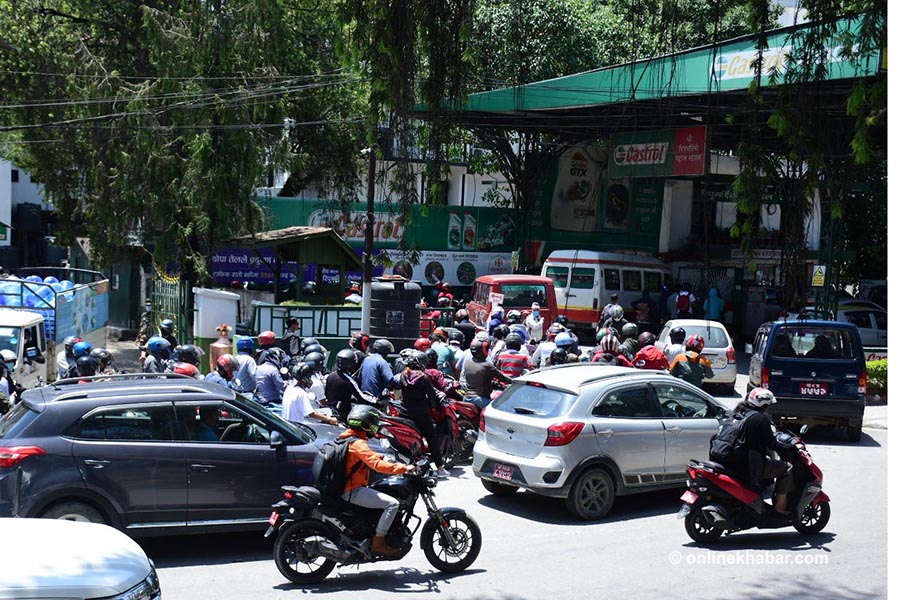
Long petrol queue at a petrol pump

Suvedi said, “Discussions have included focusing on domestic energy sources, introducing odd-even vehicle restrictions, and promoting induction stoves, but no decisions have been finalized.”

Currently, there are no long queues for fuel in the market, so the government prefers to monitor international developments before making necessary decisions.

“Though discussions continue, the situation does not yet warrant a final decision. People are a bit anxious, hence rumors have spread,” Suvedi clarified.

While there have been some minor disruptions in transporting food grains and other goods, business representatives state no serious problems have occurred.

In response to energy conservation, the Sri Lankan government has switched to a four-day workweek and replaced weekly public holidays, while implementing strict rationing of vehicles under a national fuel pass system.

Similarly, Asian countries including Pakistan, the Philippines, Thailand, South Korea, and China have adopted various measures to cope with the energy crisis.

Senior stakeholders in Nepal emphasize the need to adopt similar strategies.

Former Commerce Secretary Purushottam Ojha suggested both short- and long-term solutions based on prior experience.

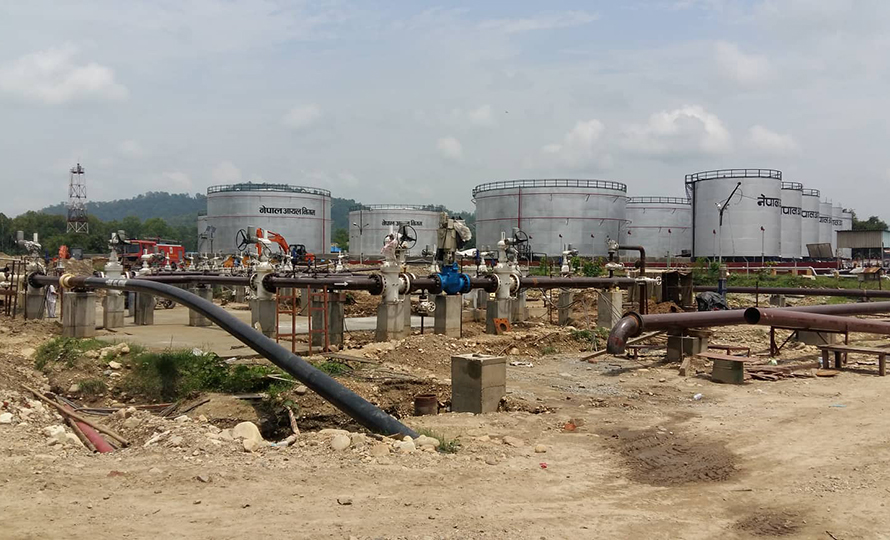
Petrol pipeline and tank

Ojha recalled the crisis during 2008 when oil prices reached $147 per barrel, noting that using the Price Stabilization Fund was appropriate for immediate loss management but did not provide a sustainable solution.

He suggested leveraging high-level political initiatives with India to secure credit oil supplies, as done previously, as a possible current option.

He also mentioned the practice of borrowing from the employees’ provident fund and citizen investment fund for fuel purchases, with repayments made when prices normalize.

Ojha advised the government to take firm steps to reduce fuel imports and consumption, institute odd-even vehicle usage regulations, promote electric vehicles, and expand public transportation usage.

Finally, while hoping for a swift resolution to the international conflict, he noted that damage to oil infrastructure would require time to stabilize supply and urged immediate discussions on alternatives to mitigate the crisis.