Author: space4knews

बिरामी कर्मचारीतन्त्रलाई दोषारोपण कि उपचार ? – Online Khabar

Civil Service: Blame or Reform?

The civil service is the backbone of public administration and the permanent government. Recently, various debates have emerged on social media and other communication platforms about it. Criticisms have been raised regarding the excessive politicization of the civil service. Arguments also point out that the system is overly procedural and slow. Furthermore, the civil service faces criticism for failing to keep pace with rapid technological developments and fulfill public expectations. Some advocates call for comprehensive reforms, while others suggest that mere reforms are insufficient and argue for a fundamental transformation of the civil service’s very ‘DNA.’

As societies evolve, change within the governance system and civil service becomes necessary and must be accepted as natural. The civil service itself has recognized the need for transformation. However, the question of whether the civil service is capable or incapable should not be viewed in an absolute sense but within a relative context. To address this, worldwide characteristics of civil services need to be analyzed. Only through focused debate on areas that require improvement can effective solutions be found.

According to Max Weber, the pioneer of the modern civil service, its fundamental features include merit-based selection, supremacy of rules and laws, neutrality, impartiality, hierarchical structures, and defined job descriptions. Scholars such as Karl Marx, Robert K. Merton, and Victor Thompson have emphasized the practical and psychological aspects of the civil service, highlighting its permanence, bureaucratic procedures, professionalism, supervision, and control mechanisms.

Overall, the civil service is a permanent apparatus working within legally defined jurisdiction. It bears the primary responsibility of implementing government policies professionally and maintaining political neutrality. It converts political will and programs into execution and upholds key accountability for implementation. The civil service maintains designated positions with corresponding job descriptions and systematic career development paths.

Change in governance and civil service is imperative in tune with societal transformation. It must be naturally accepted. The civil service itself acknowledges the need for transformation.

When discussing civil service transformation, its foundational character must not be forgotten. Assessing the extent to which the present civil service retains those characteristics provides the best basis for recommending improvements.

Two weeks ago (on Falgun 21), the House of Representatives elections were held. An 18-year-old girl voter questioned, “If voting procedures are so simple and well-organized, why do other government services involve so much hassle?”

Similarly, during an employee skill enhancement program, a notable discussion emerged where leadership-level civil servants expressed excellent views about policy-making and integrity. The facilitator asked, “Why do such capable employees fail to reflect these qualities in their workplaces?”

Reflecting on these questions leads to another: Is the civil service genuinely incompetent and ineffective? The answer is no. The recent elections were conducted in a changing political environment following the ‘Janajati’ movement. The election, announced six months prior, was peacefully and harmoniously completed nationwide. Like the young first-time voter, we all experienced the excellence of the election civil service. The factors contributing to this successful election include:

Clear Definition of Tasks, Outcomes, and Timelines: The responsibilities, expected results, and deadlines for election staff were clearly outlined. All focused on conducting a free and fair election. The fixed timeline made it a top priority. There was clarity on “what to do, why, and when.” Effective coordination determined who would do what. Guidance, codes of conduct, and authority prevented duplication and enabled timely completion.

Extensive Coordination and Collaboration: The entire country became election-focused during the period. The government’s priorities were shared by the civil service. Offices nationwide provided manpower support. Training and alternative arrangements were made for risk management. This created national synergy and the civil service upheld its historic responsibility.

Political Priority and Ownership: The civil service never hesitates to enact political priorities. With political leadership support, the civil service takes risks and creates an environment for smooth operation. Such an environment prevailed during the election.

Alternative arrangements for structures affected by the ‘Janajati’ movement were also made. Despite criticisms, the undeniable contribution of the civil service to the successful conduct of the election must be acknowledged.

Measurable accountability was ensured. Stakeholders clearly understood the election process, with regular monitoring, control, and reporting mechanisms in place. Authorities were empowered to resolve issues promptly. The assured disciplinary consequences fostered a sense of mandatory work among responsible officials.

Local elections could not be held for a long period after 2054 BS. Only in 2074 BS were elections conducted under federalism. During this interval, the civil service managed service delivery in the absence of active local bodies.

In numerous disasters and crises, employees have risked their lives, dedicating themselves to public service. The civil service also leads in managing transition periods following each political change.

The civil service’s role in managing alternative structures and records impacted by the ‘Janajati’ movement was crucial. Despite criticism, its significant contribution to the successful conduct of elections cannot be overlooked.

While expecting results from the civil service, it is essential to recognize its professional lapses and limitations. Although bound to operate within rules, laws, and procedures, professional shortcomings exist and reform is imperative:

1. Lack of Political Neutrality: Trade unions affiliated with specific political parties are active within the civil service. Their pressure on transfers, promotions, and disciplinary actions reveals professional lapses. This must be legally prohibited.

2. Absence of an Evaluation System: There is no objective performance evaluation system. Without clear distinctions between performing and non-performing employees, healthy competition is lacking. Morale has declined among deserving staff, while protected individuals’ confidence has risen. Laws should incorporate measurable indicators along with reward and punishment mechanisms.

3. Influence of Intermediaries: Professional monitoring is weak. The absence of depoliticization and the influence of intermediaries from procurement processes to large projects have weakened the civil service. Political and administrative leadership must demonstrate commitment to eliminating intermediary influence in all sectors.

Where the civil service has operated independently and resisted political pressure, significant improvements have occurred. Promoting such good practices and encouraging employees is essential to nurturing a culture of excellence.

The Nepalese civil service has experience managing the country prudently even amid political transitions. The recent elections confirm its continued capability. Going forward, it is necessary to streamline it further while boosting morale.

Only with correct political oversight and support can the civil service deliver effective results. With clear policies, laws, resources, and timelines supported by proper monitoring, the civil service can demonstrate transformative progress. Thus, blaming the civil service for inefficiencies is a leadership failure. The civil service’s capacity is relative to the capability of its leadership.

Despite the promulgation of the constitution, the absence of laws to systematize the civil service is challenging. Recognizing its deficiencies, the civil service is willing to reform. The current government and parliament hold significant opportunities to enact laws that will transform and enhance civil service effectiveness, and they must seize these opportunities.

– Niraula is the Joint Secretary of the Government of Nepal and Paudel is a Study Director at the Nepal Administrative Training Institute.

Read the Good Governance Series:

Rainfall Reported in Kathmandu and Various Districts Across the Country

Summary

  • Rainfall has occurred in Kathmandu and several other districts due to partial influence of western and local winds.
  • In the last hour, Jhapa recorded the highest rainfall with 9.4 millimeters.
  • The Meteorological Department has forecasted light rain accompanied by thunder and lightning, as well as possible snowfall, in Koshi, Bagmati, Gandaki, Karnali, and Sudurpashchim provinces.

March 23, Kathmandu: Due to the partial influence of western and local winds, rainfall has been observed today in Kathmandu and several other districts.

Kathmandu received 1.2 millimeters of rain in the last hour, with light rain also reported in other districts. According to the Department of Hydrology and Meteorology, some areas have experienced hail, snowfall, and strong winds.

Data from various rainfall measurement centers shows that in the recent hour, the highest rainfall of 9.4 millimeters was recorded in Jhapa. Additionally, light rain was reported in Taplejung, Bhojpur, Nuwakot, Lamjung, Gorkha, Kaski, and Kalikot. In the past three hours, Tanahun recorded 24.6 millimeters and Jhapa 12.2 millimeters of rainfall.

According to Dayankar Kayastha, Information Officer at the Meteorological Department, the hill and mountainous regions, including Koshi Province, generally have cloudy skies, while other areas are partly cloudy.

The department’s bulletin issued at 6:00 PM today states that some locations in Koshi, Bagmati, Gandaki, Karnali, and Sudurpashchim provinces are experiencing light rain or snowfall accompanied by thunder and lightning.

The department further expects mostly cloudy conditions on Wednesday in the hill and mountain regions of Koshi, Bagmati, Gandaki, and Lumbini provinces, whereas partly cloudy conditions will prevail in other hill and mountainous areas. The Terai region is expected to remain mostly clear.

There is a chance of light rain or snowfall accompanied by thunder and lightning in some hilly and mountainous areas of Koshi and Gandaki provinces and one or two locations in other provinces.

Eighteen Deaths from Tuberculosis in Bajura Over the Past Five Years


March 24, Bajura – Data released on World Tuberculosis Day revealed that 18 people have died from tuberculosis in Bajura over the past five years. The statistics were made public by the Bajura Health Office on Tuesday.

According to the Health Office, there was one death in the fiscal year 2077/78, three in 2078/79, two in 2079/80, six in 2080/81, four in 2081/82, and two deaths reported up to the end of Falgun in 2082/83 due to tuberculosis, stated Kumar Nyaupane, the Public Health Officer and Information Officer at the Bajura Health Office.

He also mentioned that in the last fiscal year 2081/82, 141 cases of tuberculosis were recorded in the district. Currently, 81 of these patients are regularly taking their medication. Among the nine local units in the district, Badimalika Municipality has the highest rate of tuberculosis, with 219 cases per 100,000 population, according to the figures.

Dr. Chandrashekhar Yadav, Chief of the District Hospital, emphasized that tuberculosis should not be addressed only on World Tuberculosis Day but requires consistent and serious efforts through effective programs across all sectors to eradicate the disease. He urged everyone to fulfill their responsibilities in their respective areas.

The Government of Nepal has set a goal to control tuberculosis by the year 2035 and to eliminate it entirely by 2050. – RASAS

Pakistan Proposes Mediation for Dialogue Between the United States and Iran


March 24, Kathmandu — Pakistan’s Prime Minister Shahbaz Sharif has offered to mediate dialogue between the United States and Iran, both currently engaged in conflict. On Tuesday evening, Sharif extended this proposal to both countries via X (formerly Twitter).

“Pakistan welcomes and appreciates the ongoing efforts toward dialogue to halt the conflict in the Middle East,” Prime Minister Sharif wrote. “This is essential not only for the region but also for external nations seeking peace and stability.”

Sharif further stated that Pakistan is prepared to host the talks if the United States and Iran agree. “If the U.S. and Iran consent, Pakistan is ready to serve as the host nation for these discussions and will consider this an honor, facilitating a comprehensive and sustainable resolution to the conflict,” he said.

Times International Clinches Victory Over Kirtipur with a Final Two-Point Shot

News Summary

Content generated and editorially reviewed.

  • Times International Club defeated Kirtipur 81-79 in the HJNBL.
  • Times’ Manish KC scored a game-high 31 points and was named Man of the Match.
  • The second edition of the league, organized by the Nepal Basketball Association, features eight teams with the top four advancing to the playoffs.

March 23, Kathmandu – In a thrilling encounter on Tuesday as part of the Himalayan Java National Basketball League (HJNBL) 2026, Times International Club secured a dramatic win over Kirtipur.

The match, held at the Dashrath Rangasala Covered Hall in Tripureshwor, saw Times snatch victory by 81-79 after scoring two crucial points on the final rebound.

Trailing for most of the game, Times managed to equalize in the closing moments. Times took the lead in the final seconds, and although Kirtipur managed to draw level, Times capitalized on their last opportunity by adding two points to seal the victory.

With just 12 seconds remaining, Times captain Sadish Pradhan missed a three-point attempt, but Kamal Thapa grabbed the rebound and scored two points, securing the win for Times.

Kirtipur dominated the first quarter 20-14 and extended their advantage by winning the second quarter 22-20, leading 42-34 at halftime. Times outperformed in the third quarter 20-16, but Kirtipur still held a 58-54 lead going into the final period.

In the decisive final quarter, Times delivered an impressive 27-21 surge to overcome the deficit. Their performance in this final quarter was instrumental in securing a two-point victory.

Manish KC led Times with a match-high 31 points and earned the Man of the Match honors. This win marked Times’ seventh consecutive victory. With seven wins and one loss from eight games, Times currently holds the top position on the leaderboard with 15 points.

The second edition of the HJNBL, organized by the Nepal Basketball Association (NEBA), features eight teams competing.

The league follows a double round-robin format comprising a total of 56 matches. After the league stage, the top four teams will advance to the playoffs. The first and second-placed teams will face off in the first qualifier, while the third and fourth-placed teams will compete in an eliminator match.

The loser of the first qualifier and the winner of the eliminator will then meet in the second qualifier. The winners of the first and second qualifiers will compete in the final.

The champion of the tournament will receive a cash prize of NPR 400,000, with the runner-up earning NPR 200,000 and the third-place team awarded NPR 100,000.

Additionally, the player exhibiting the best overall performance throughout the tournament will be named the Most Valuable Player (MVP) and receive attractive awards, NEBA stated.

कुलमानले भने- जनादेशविपरीत वैकल्पिक बाटोबाट मन्त्री बन्ने कल्पनासमेत गर्दिनँ

Kulman Ghising States He Will Not Become Minister Against the Mandate Through Alternative Means


March 23, Kathmandu – Kulman Ghising, chairman of the Ujhyalo Nepal Party, has clearly stated that he will not become a minister through any alternative means against the popular mandate amid ongoing discussions about his participation in the new government. On Tuesday evening, he also mentioned via Facebook that he will focus on strengthening his party.

“I cannot even imagine becoming a member of parliament and a minister through any alternative route contrary to the mandate received from the people,” Chairman Ghising wrote. “I want to clarify that I have not had any discussions with anyone regarding participation in the government so far.”

He expressed his intention to respect the election results and move forward by learning from them. “We are committed to further strengthening the Ujhyalo Nepal Party. Our dedication to building a prosperous and well-governed Ujhyalo Nepal remains unwavering,” Ghising said.

He also requested people not to be misled by false propaganda spread against him.

Israeli Defense Minister Announces Plan to Seize Large Area of Lebanon

March 23, Kathmandu – Israeli Defense Minister Israel Katz has announced that the Israeli military intends to take control of a large area of Lebanon. Katz stated that the plan to occupy significant Lebanese territory aims to simplify operations against Hezbollah. In this context, the Israeli forces will extend their security zone up to the Litani River in Lebanon, located approximately 30 kilometers from the Israeli border.

“Displaced civilians will not be allowed to return to their homes until northern Israel is secure,” Katz said. He also reported that five bridges used by Hezbollah for movement and arms transportation have been destroyed. Israel has had longstanding tensions with Hezbollah, the Iran-backed proxy group in Lebanon. Recently, following rocket attacks by Hezbollah from Iran, Israel has taken this new strategic step.

विराटनगरमा कल्भर्टमुनि कपडाले बेरेको अवस्थामा शव भेटियो

Body Wrapped in Cloth Found Under Culvert in Biratnagar


March 24, Biratnagar – A body has been discovered in the southern area of Biratnagar. On Tuesday evening, the body was found wrapped in cloth under a culvert near the ward office of Ward No. 17 and a leather factory in Biratnagar Metropolitan City.

According to Morang Police spokesperson DSP Leelraj Lamichhane, the body was seen wrapped in cloth and discarded beneath the culvert’s bridge in the evening. Efforts are underway to excavate the pit to retrieve the body.

“From the external appearance, it seems to be a woman,” DSP Lamichhane said, “but the identity has not yet been confirmed. Investigation is ongoing.”

Over 525,000 Nepalis Secured Foreign Employment in Eight Months

News Summary

Reviewed and edited.

  • From mid-July to mid-March of the current fiscal year 2082/83, 525,513 Nepalis secured foreign employment.
  • Among them, 462,217 were men and 63,296 were women.
  • In the month of March alone, 52,943 labor permits were issued, and 354 undocumented workers received legalization.

March 23, Kathmandu – In the first eight months of the current fiscal year, more than 525,000 Nepalis went abroad for employment.

During the fiscal year 2082/83, from mid-July (Shrawan) to the end of mid-March (Falgun), a total of 525,513 Nepalis went abroad for foreign employment. Among them, 462,217 were male and 63,296 were female workers. In the month of Falgun alone, 52,943 labor permits were issued for foreign employment.

Among these labor permits, 81,958 were individual permits, 185,220 were institutional (manpower agency) permits, and 251,983 were re-issued permits.

Additionally, 5,998 workers went to South Korea and Israel via the G2G (Government to Government) system, while 354 undocumented workers currently employed abroad were legalized.

Elderly Man Dies After Being Crushed by Falling Tree in Parbat

News Summary

Prepared with AI assistance. Editorial review completed.

  • A 75-year-old man, Purnabahadur Darji, died while cutting a tree in Bichha, Bihadi Rural Municipality-1, Parbat district.
  • Darji was declared dead by doctors at the Provincial Hospital in Parbat after being brought there for treatment.
  • The Parbat District Police Office reached the site to conduct further investigation.

March 23, Parbat – A 75-year-old man has died after being crushed by a falling tree while cutting it down in Bichha, Bihadi Rural Municipality-1, Parbat district.

The deceased, identified as Purnabahadur Darji, was severely injured when the tree he was cutting near his home came down on him. He was immediately taken to the Provincial Hospital in Parbat for treatment, where doctors declared him dead on arrival.

Upon receiving the report of the incident, a team from the Parbat District Police Office along with local police from Bichha Police Post arrived at the scene to investigate further.

According to Police Inspector Dinesh Paudel of the Parbat District Police Office, Darji was brought to the hospital at around 4:30 pm, where doctors pronounced him deceased.

The police have confirmed that further inquiries into the incident are ongoing.

Trump Calls Modi: Key Topics Discussed in Their Conversation


March 23, Kathmandu – Indian Prime Minister Narendra Modi revealed that he received a phone call from US President Donald Trump, during which they discussed the situation in West Asia. Modi shared details of the conversation on his Facebook page.

“I received a call from President Donald Trump, and we had a useful exchange of views on the situation in West Asia,” Modi stated. “India supports efforts to reduce tensions and restore peace quickly.”

Modi emphasized the vital global importance of keeping the Strait of Hormuz open, safe, and accessible to all. “We agreed to remain in continuous contact to maintain peace and stability,” he added.

Sahibzada Farhan Named ICC Player of the Month for February 2026

News Summary

  • Pakistan’s Sahibzada Farhan has been named ICC Player of the Month for February 2026.
  • Farhan scored 383 runs in 7 matches during the ICC T20 World Cup, including two centuries and two half-centuries.
  • He became the first player to score two centuries in a single T20 World Cup and rose to second place in the ICC T20 batting rankings.

March 22, Kathmandu – Pakistan’s Sahibzada Farhan has been declared the ICC Player of the Month for February 2026 following his outstanding performance in the ICC T20 World Cup.

Farhan scored an impressive 383 runs across 7 matches at an average of 76.60. During the tournament, he achieved two centuries and two half-centuries. He also broke Virat Kohli’s record for the highest runs scored in a single edition of the tournament.

He became the first cricketer to score two centuries in a single T20 World Cup. Additionally, Farhan shared a record partnership of 176 runs with Fakhar Zaman.

Following his excellent form, Farhan rose to second place in the ICC T20 batting rankings. However, despite his efforts, Pakistan failed to reach the semifinals.

This is Farhan’s first ICC monthly award. Previously, Haris Rauf was the only other Pakistani player to win this accolade.


गगनले समाते कांग्रेस ‘स्टेयरिङ’, भने- अब अलमलिन्नौँ

Gagan Takes Charge of Congress Leadership, Declares ‘We Will No Longer Bow Down’

March 23, Kathmandu – Nepali Congress President Gagan Kumar Thapa has unveiled a comprehensive plan called the ‘Grand Reform’ aimed at internal cleansing and structural transformation of the party. This announcement came after the party’s central working committee rejected his resignation, which he had tendered taking moral responsibility for the party’s defeat in the House of Representatives election. Addressing the Tuesday central committee meeting in the presence of the media, Thapa emphasized that the party’s future focus will be on the upcoming general convention and party revitalization.

On the topic of the party’s ‘Grand Reform’ involving purification and revival, President Thapa stressed that minor improvements are no longer sufficient. He asserted that it is time to eliminate the ‘dirt and stains’ such as opportunistic principle-less alliances and abuse of state power. Highlighting that the party’s weak structure has suppressed its originality, he urged that the diversity spanning four generations should be harnessed as the party’s strength. He envisions the party not just as an ‘election machine’ but a vibrant social movement once again.

Taking responsibility for the election defeat, Thapa affirmed, “As team captain, I will not evade accountability.” He clarified that his resignation was not a result of pressure or fatigue but a matter of political accountability. He denied rumors that confusion over the special general convention had influenced his decision and stated that he was not impacted by any external pressure.

Gagan Kumar Thapa proposed a detailed schedule to conduct the 15th general convention in Bhadra 2083 (September 2026). According to the plan, party membership will be distributed and updated at the ward level in Baishakh 2083 (April 2026). He warned that any tendencies to obstruct the official candidates during election periods have been seriously noted.

He also expressed the party’s commitment to fully support a fair investigation by the new government. Regarding constitutional amendments and initiatives for national consensus, Thapa announced plans to form a committee comprising experts headed by a senior party leader.

Demanding the immediate release of the report from the Janajati (indigenous peoples) movement inquiry commission, Gagan Kumar Thapa asserted, “That report must be published and implemented immediately. Those who have erred must be held accountable and punished.”

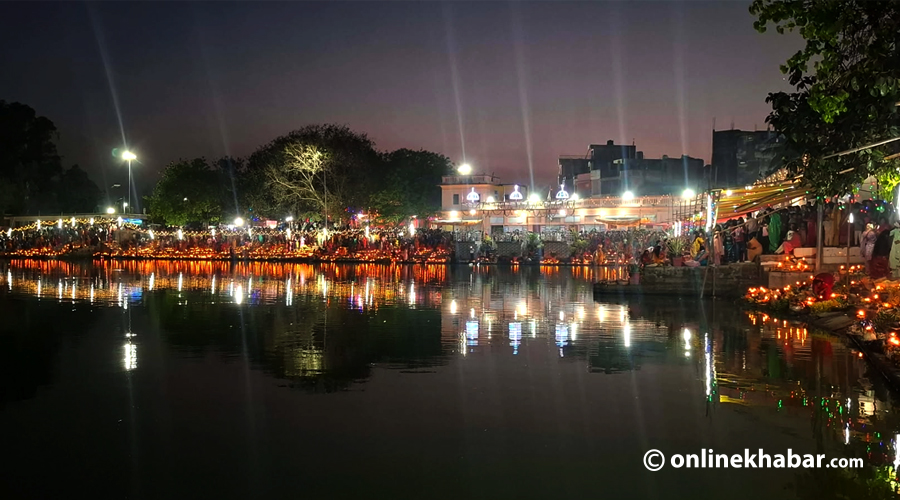
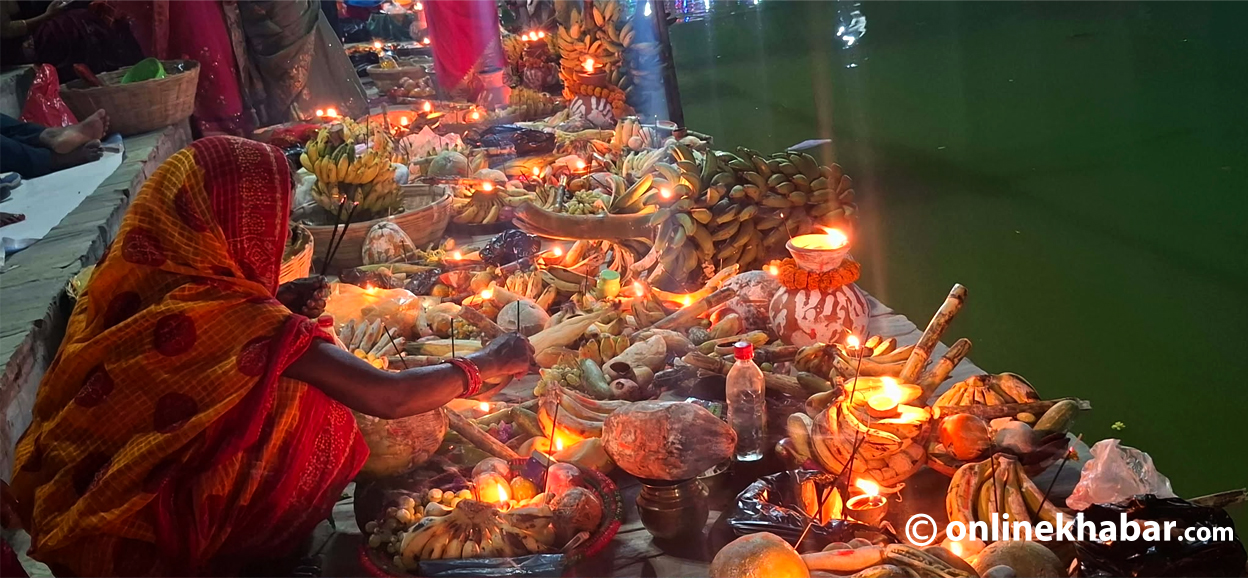
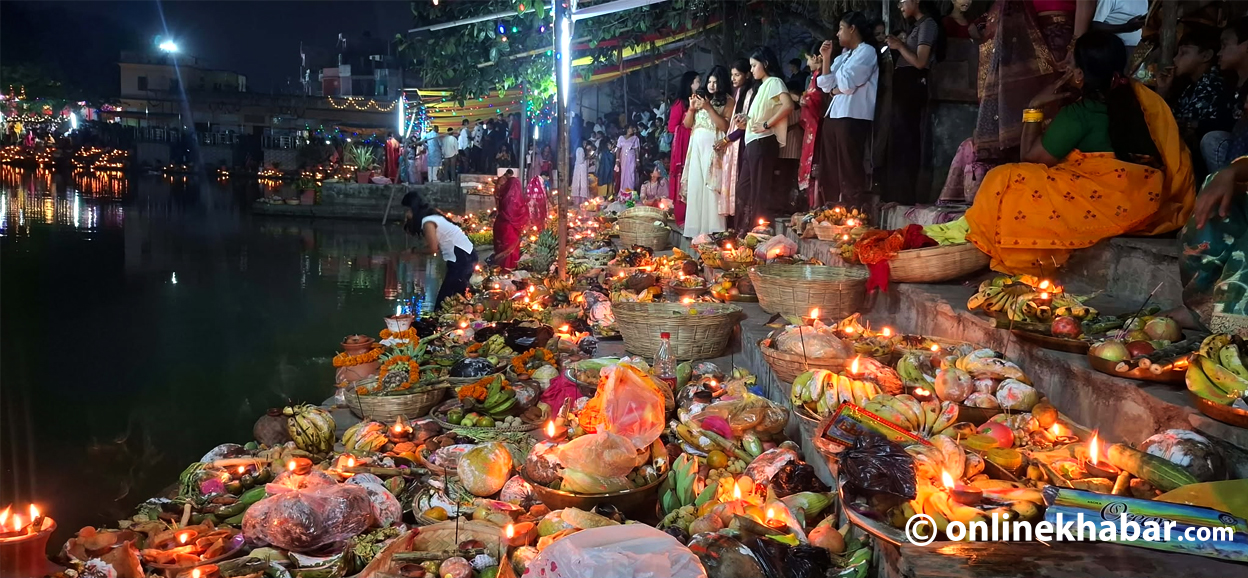
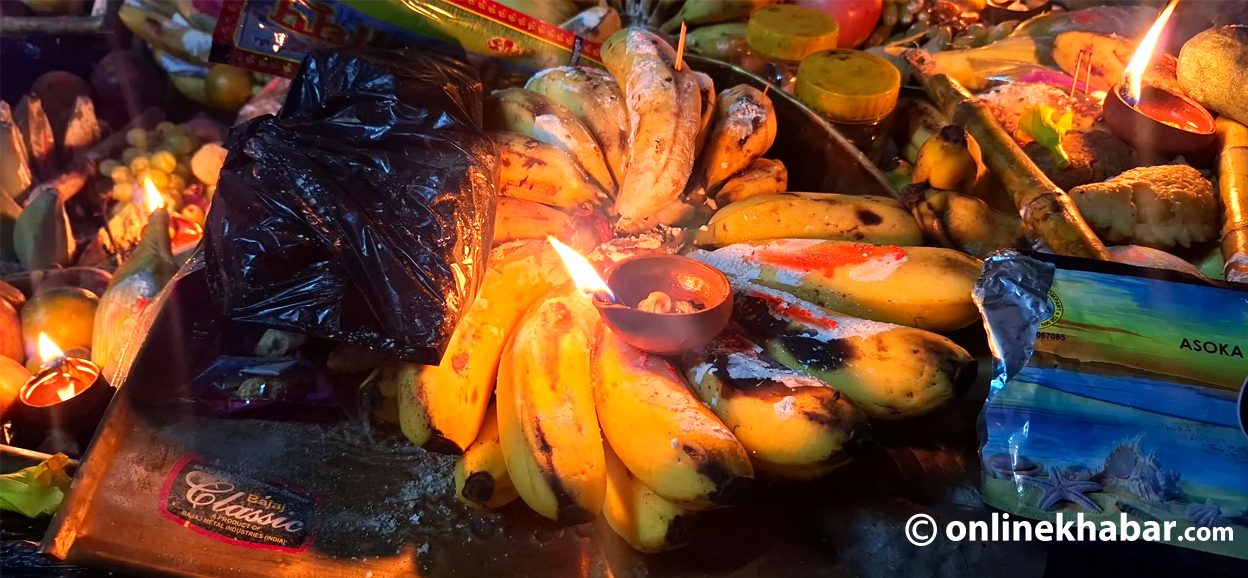
Festive Celebrations of Chaiti Chhath with Religious Rituals in Janakpurdham (Photos)

March 23, Janakpurdham – The Chaiti Chhath festival is being celebrated with great enthusiasm today across Janakpurdham and the wider Madhesh region. This evening, devotees will offer arghya (water offerings) to Surya Dev (the Sun God). The festival will officially conclude tomorrow morning after offering arghya to the rising Sun, also known as Dinanath.

Large gatherings of devotees are currently assembling at sacred water bodies such as Gangasagar and Argaja Sagar in Janakpurdham to witness and take part in the Chaiti Chhath rituals.

Following the tradition of Chaiti Chhath is believed to fulfill all wishes and protect devotees from skin diseases and other ailments.

Observed with deep devotion over four days, the festival begins with rituals of cleansing and purification on the first day. The second day involves a day-long fast during which only kheer (rice pudding) sweetened with sugar is consumed at night. On the third day, corresponding to Shashthi tithi (the sixth lunar day), devotees fast without food or water and, at sunset, stand in water bodies to offer arghya to the setting Sun.

Today, devotees enter the water bodies an hour before sunset, focusing their attention toward Kashtimat and begin offering arghya to Dinanath. Offerings include traditional items such as thakuwa (a type of cake), bhuswa (gherkins), radish, sugarcane, bananas, coconuts, and other sacred fruits presented as prasad.

Devotees will observe a night vigil and conclude the festival tomorrow by offering arghya to the rising Sun on Chaitra Shukla Saptami tithi (the seventh lunar day of the bright fortnight).

Photographs: Shailendra Mahto

Kathmandu Metropolitan Education Committee Reviews Implementation of Its Decisions

News Summary

Editorial review completed.

  • Kathmandu Metropolitan City has begun reviewing the implementation of decisions made by its Education Committee since 2017 BS (2010 AD).
  • The committee decided to grant education officers the authority to certify the statutes of public and private trusts (guthis).
  • In 2021 BS (1964 AD), the committee set school fees for institutional schools based on the Fee Determination Committee’s report.

Chaitra 10, Kathmandu – Kathmandu Metropolitan City has initiated a review of the implementation of decisions made by the Education Committee after the year 2074 BS (2017 AD).

At a meeting chaired by Committee Chairperson and Acting Metropolitan Chief Sunita Dangol today, Education Officer Keshav Gyawali presented the major decisions taken by the committee over the past eight years along with the status of their implementation.

The meeting reviewed several decisions, including the declaration of the metropolitan area as a literate city, granting education officers the authority to certify the statutes of public and private guthis, assigning the responsibility of managing grade-level principals to the Education Department, prohibiting initiation of first-grade classes without permission, and instructing the Education Department to ensure school name signs are written in Nepali, English, and Nepal Bhasa.

Additionally, the permission for operating classes in childcare, Montessori, and pre-primary levels has been implemented along with assigning the responsibility for school records maintenance to the Education Department, according to Education Officer Gyawali.

In 2021 BS, the committee determined school fees for institutional schools based on the report from the Fee Determination Committee. Of the 107 schools that were registered but not operating, 42 responded to the public notice for deregistration.

Among them, the Education Department confirmed that seven schools are currently operating and 35 are preparing to commence operation.

Alongside this review, nine proposals were presented during the meeting. During discussion, Chairperson Dangol instructed the department to complete the social mapping of schools within 10 days.

She stated, ‘Please complete all preparations before the academic session begins. Prioritize programs aimed at reducing school dropout rates and enhancing teachers’ skills in technology and technical fields.’

Chief Administrative Officer Saroj Guragai emphasized the need for the department to develop innovative educational programs to achieve measurable educational outcomes, highlighting the importance of prioritizing technological and technical education.

Coordinator of the Health Education Committee, Chinikaaji Maharjan, stressed the urgency of seriously addressing the problem of students dropping out of school, saying, ‘As the student enrollment period approaches, it is crucial to investigate the social reasons behind children leaving school during enrollment campaigns. Only then will the programs be sustainable.’