Former Acting Chairman of the Nepali Congress, Purna Bahadur Khadka, has stated that controversy has arisen within the Congress party over securing RASWPA’s election victory.
Khadka asserted that the officially recognized Nepali Congress is the one led by Sher Bahadur Deuba, elected through the 14th General Convention.
He emphasized the importance of Congress unity and expressed a commitment to leave no stones unturned in strengthening the party for its youth members.
March 31 (18 Chaitra), Kathmandu – Former Acting Chairman of the Nepali Congress, Purna Bahadur Khadka, has commented that internal disputes within Congress have emerged specifically to ensure RASWPA’s electoral success. Speaking at a meeting with party leaders aligned with his faction on Wednesday, Khadka acknowledged controversy within the party aimed at securing RASWPA’s victory.
“RASWPA would not have reached this stage without Congress first being in its current position,” Khadka stated during the meeting. He affirmed that the officially recognized Congress is the one led by Sher Bahadur Deuba, elected through the 14th General Convention’s committee. “We are the official Congress, and we are the ones who must resolve the current challenges,” he added.
Khadka clarified that regardless of any court rulings, the legitimate Nepali Congress remains under his faction’s leadership. He highlighted that the elected committees from the 14th General Convention remain active at all levels—from units to local municipalities, constituencies, districts, and provinces.
“We must move forward united without focusing on election-related issues, as it is essential for us to maintain Congress unity,” he said. “Congress must safeguard its core values and the people’s faith in democracy, which is currently under threat. It is the responsibility of Congress to restore these.” He thus underscored the critical need for broad unity within the party.
Emphasizing that his faction has secured its rightful place in the party, Khadka also expressed a firm commitment to do everything necessary to build a stronger Congress that supports and empowers its youth members.
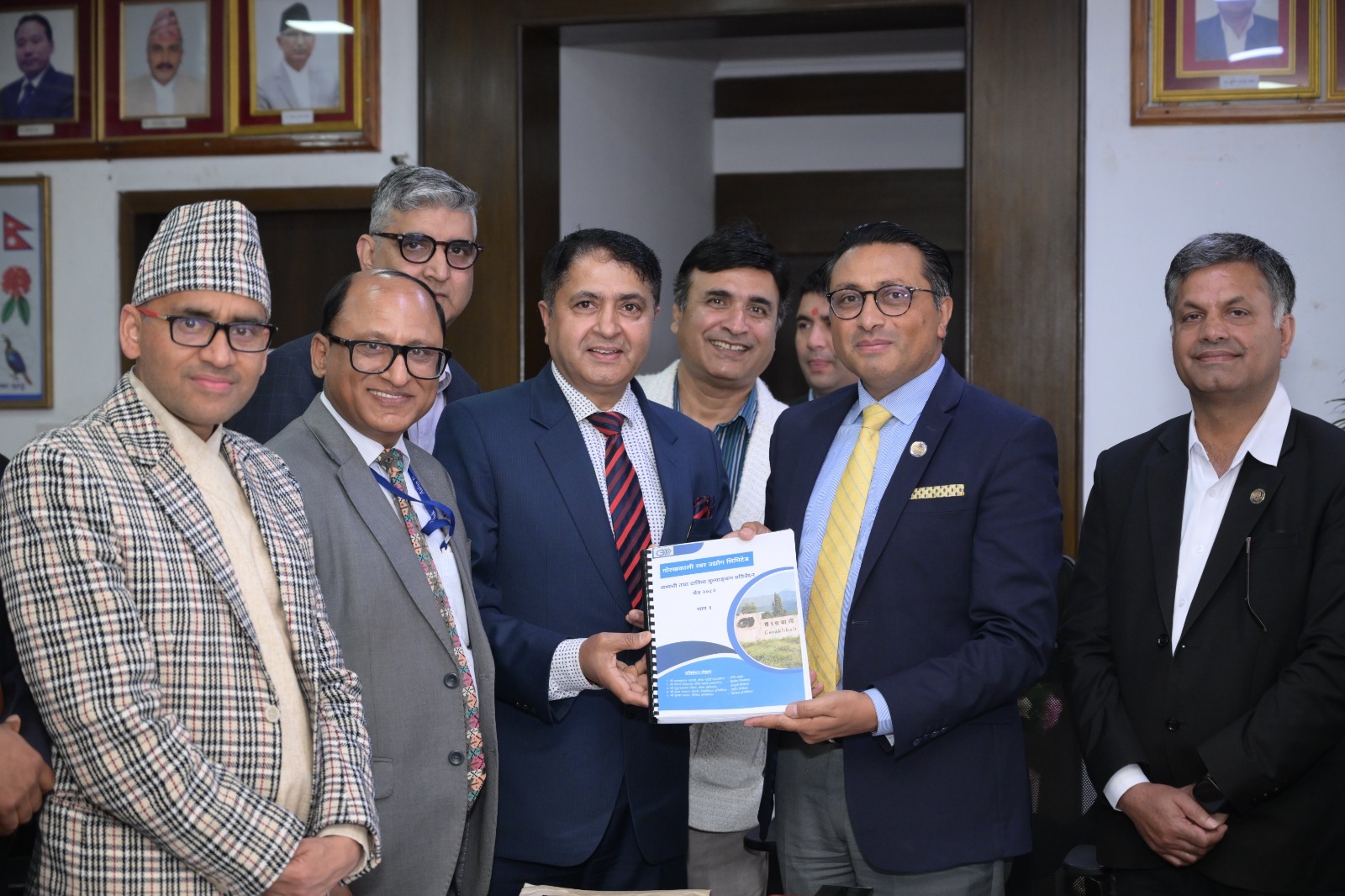
The Ministry of Finance has initiated asset and liability evaluation processes for seven public enterprises in critical condition, submitting the Due Diligence Assessment (DDA) report of Gorakhkali Rubber Industry to Finance Minister Dr. Swarnim Wagle.
The report proposes three options for restructuring and resuming operations at Gorakhkali Rubber Industry, prominently suggesting plant replacement and operation through new investors.
Gorakhkali Rubber Industry has an annual production capacity of 80,000 truck tires and 40,000 non-truck tires, with strong market potential for tires within Nepal, according to the report.
March 31, Kathmandu – There is renewed potential for reopening the long-closed public enterprise, Gorakhkali Rubber Industry.
Since last year, the Ministry of Finance has been conducting asset and liability assessments for seven ailing and non-operational public enterprises.
Within this framework, the Asian Development Bank (ADB) prepared the Due Diligence Assessment (DDA) report for Gorakhkali Rubber Industry and presented it to Finance Minister Dr. Swarnim Wagle.
The report indicates that it is feasible to resume tire production using the current plant facilities.
The Ministry of Finance spokesperson, Tanka Prasad Pandey, confirmed that ADB submitted the report to the minister on Tuesday. The industry has been closed for over a decade.
The report, led by Chartered Accountant Krishna Bhattarai, proposes three operational modalities. According to senior ministry sources, the recommendation favors restructuring the industry for renewed operation.
Report on Gorakhkali Tire Industry operation submitted to Finance Minister Dr. Swarnim Wagle by Study Committee Coordinator Krishna Bhattarai on Tuesday
The recommended options include repaying debts, restructuring or converting debt into shares, increasing capital through new investors (domestic, foreign, or strategic partners), and replacing the current plant with a modern radial technology plant for resuming operations.
The report’s primary suggestion is to immediately restart production with the existing plant while planning to replace the old plant and machinery with new technology, and operate the industry in partnership with private or strategic foreign investors.
The second option acknowledges the challenges of full modernization due to the large capital required and the obsolescence of plant and machinery. It suggests monetizing unused land and buildings under the company’s name through leasing to generate income.
Another alternative proposed is partial monetization of assets combined with restructuring and operating the industry under a contractual arrangement with investment.
As a third option, if restructuring and contractual operation with investment are not feasible, the report recommends asset liquidation and company dissolution.
In case of liquidation, all physical and intellectual assets of the company would be sold to settle liabilities, leading to company closure. Asset sales based on the DDA would clear all debts.
Gorakhkali Tire Industry is located in Gorkha District’s former Deurali Village Development Committee area (now Gorkha Municipality-13, Majuwa, Deurali). Established with investments from Salt Trading, Nepal Oil Corporation, and ADB, the industry was restructured in fiscal year 1998/99 when ADB’s shares were sold to foreign investors and the government of Nepal invested in equity.
Currently, the government holds the largest share, including preferential shares, while Salt Trading, Nepal Oil Corporation, Nepal Bank Limited, Rastriya Banijya Bank, Rastriya Beema Sansthan, and other public entities also hold shares.
The industry’s annual production capacity stands at 80,000 truck tires and 40,000 non-truck tires. Commercial production began in 1992, producing tires, tubes, flaps, and other rubber products to meet domestic demand.
Despite high demand, the factory has never operated at full capacity, incurring losses since inception, facing rising production costs and cash flow issues. It has been completely shut since June 2015.
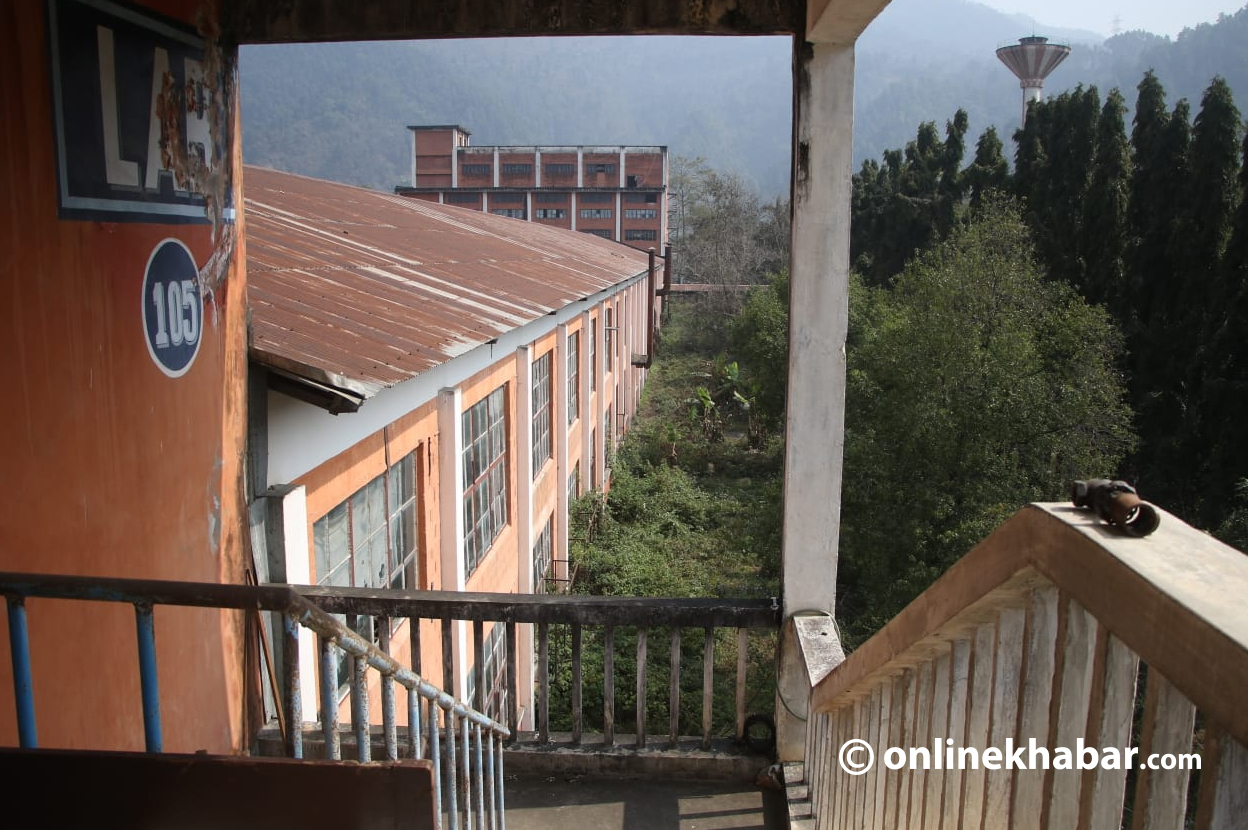
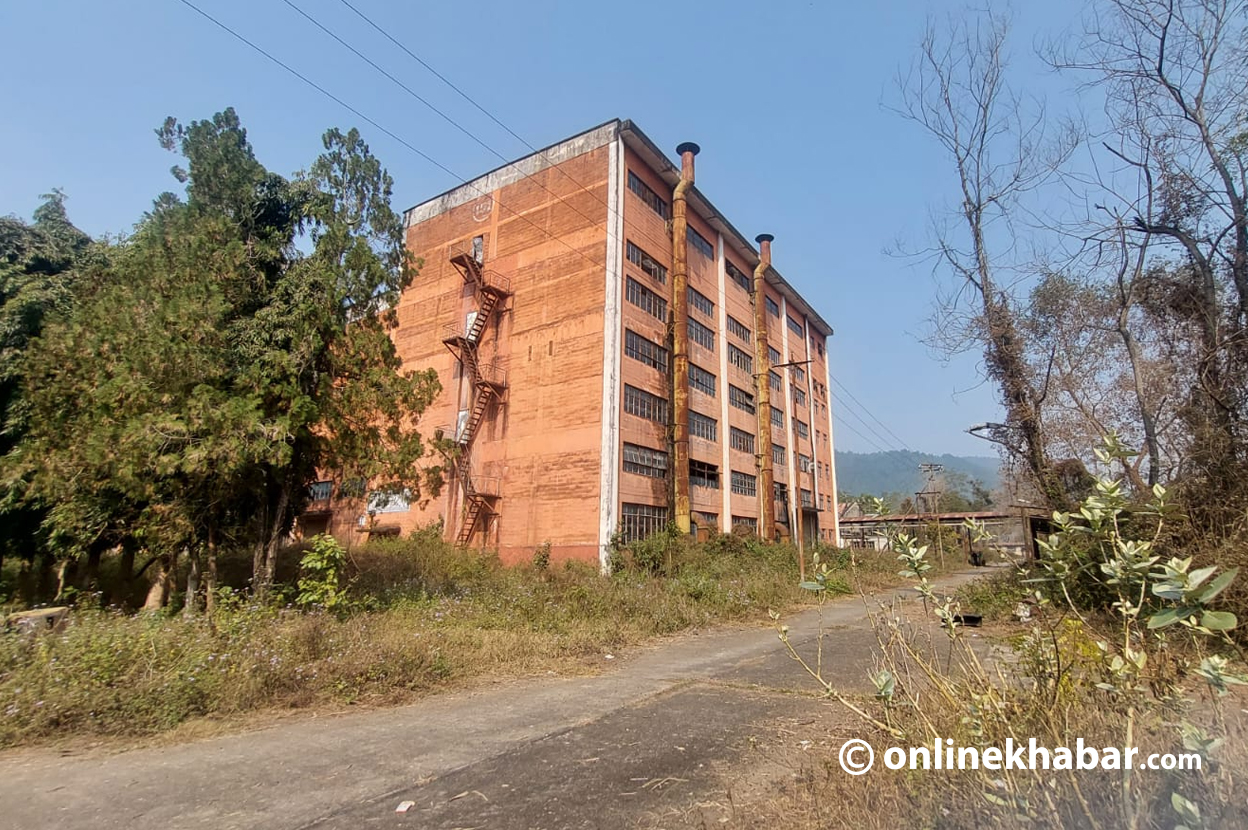
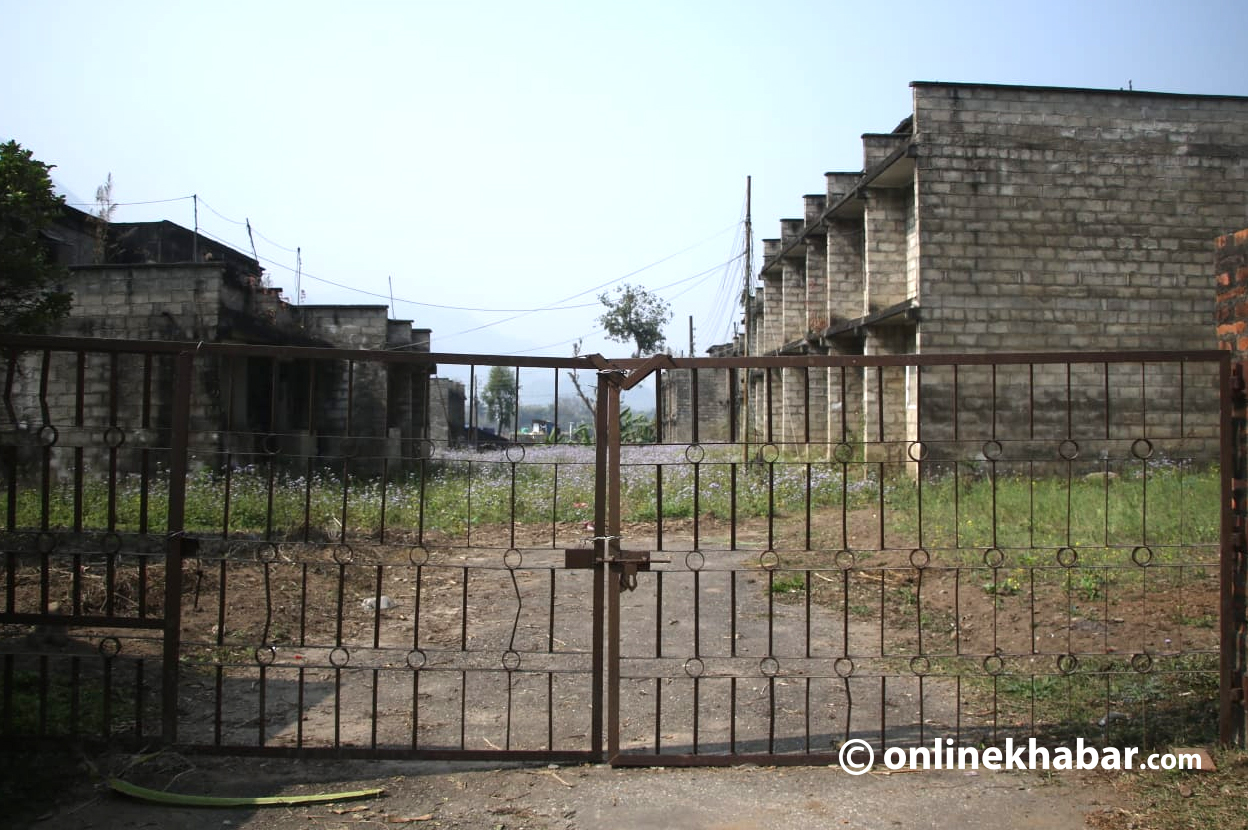
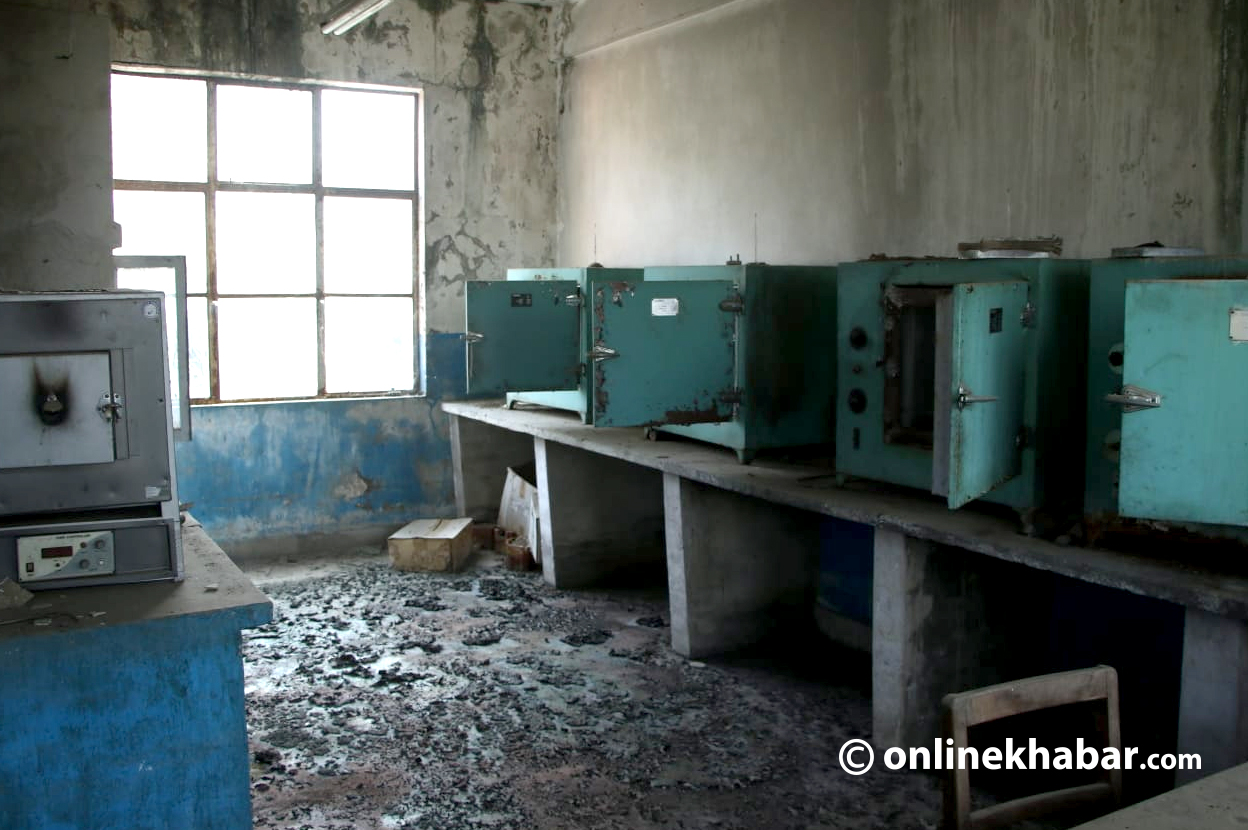
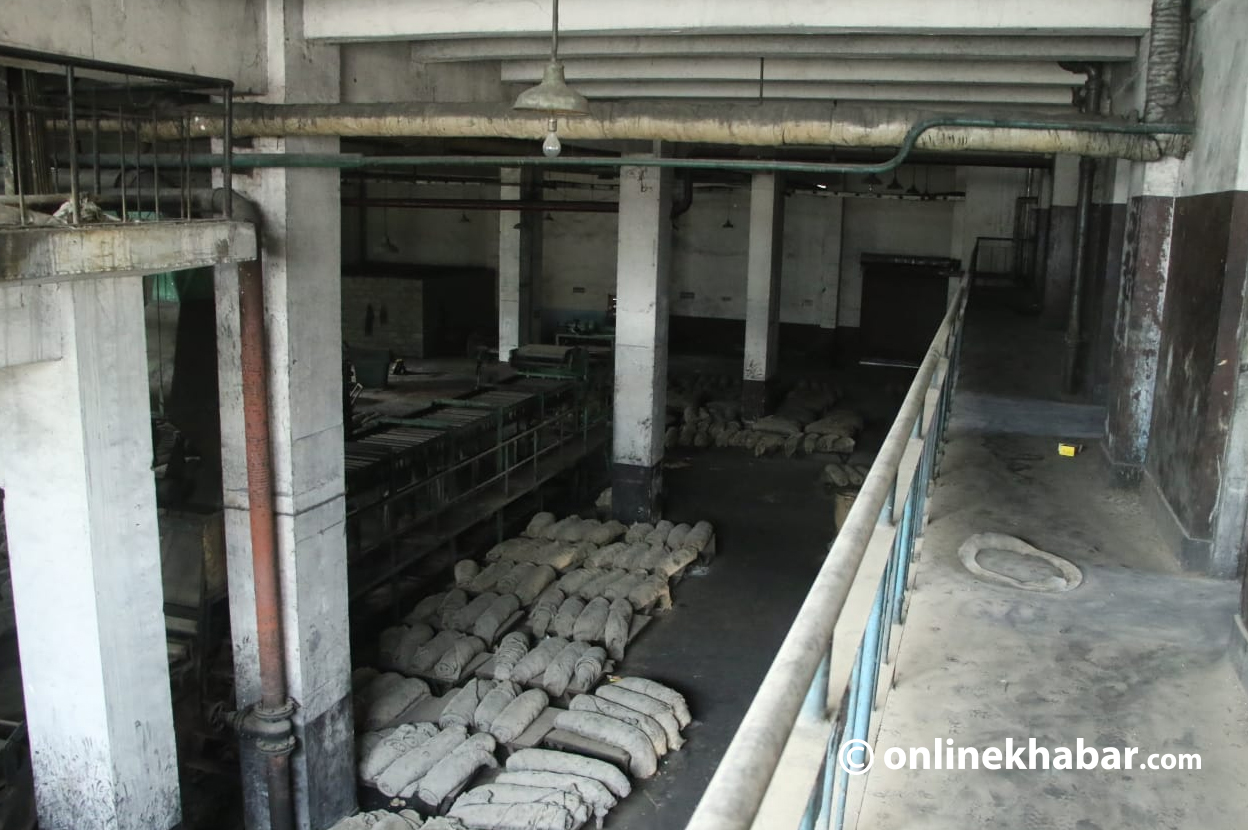
The factory currently lies in ruins
The DDA reveals that the industry faces severe financial distress and significant technical deterioration.
The study shows a net negative asset value of NPR 421 crore. Although the market value of fixed assets has risen somewhat, total liabilities including interest amount to a negative NPR 56 crore.
Most building structures remain solid, though some require laboratory testing. Buildings can be repaired and reinforced for use.
Adjusted value of fixed assets is estimated at NPR 377 crore. Current assets are in poor condition, with their sale value reduced by 47%.
Approximately 2,500 khair (Acacia catechu) trees on the industrial premises could generate estimated revenue of about NPR 62 crore.
Brand value, calculated based on replacement cost method, is recorded at NPR 22.26 million.
Total adjusted liabilities amount to NPR 443 crore, largely dominated by government and bank loans. Interest expenses have the most significant impact.
No employee liabilities, zero production and sales costs
The industry has been closed for ten years, resulting in zero production and sales costs. Employees were compulsorily retired, leaving only security staff salaries and minor administrative expenses.
Interest expenses are substantial due to short- and long-term loans from banks and government.
The industry possesses many fixed assets including buildings, plant, machinery, and land. However, equipment, vehicles, and furniture have low market value. Obsolete plant and machinery significantly increase operational and maintenance costs.
Products manufactured were left disorganized in warehouses for over ten years, causing their market value to depreciate.
The government holds a 38.63% direct ownership through common shares and a total ownership of 51.88% including indirect shares.
Partial ownership by institutions amounts to 26.69%, while public shareholders own 21.43%. Only the government holds preferential shares.
Market prospects
The report identifies sufficient market potential for the industry within Nepal. Growth in vehicle numbers, road construction, and agricultural modernization are driving strong demand for tires.
Export possibilities extend to neighboring countries such as India, China, Pakistan, Bangladesh, and Sri Lanka. Demand for radially manufactured tires is increasing in these markets.
Gorakhkali’s tires are produced using Bias technology, which now requires modernization with contemporary radially based production methods.
Raw material status
Natural rubber is the principal raw material for tire production. Nepal produces approximately 1,200 tons of natural rubber annually, covering only about 10% of market demand.
Annual rubber demand in Nepal is estimated to exceed 10,000 tons. To run at full capacity, the industry requires thousands of tons of natural rubber, which must largely be imported.
Nepal has substantial potential for rubber cultivation. Within five years, over 15,000 hectares in Jhapa district municipalities including Mechinagar, Birtamod, Bhadrapur, Arjundhara, Kankai, and Damak can be developed for rubber farming.
Several studies indicate that within ten years, 80,000 to 120,000 hectares of barren, riverbed, and forest-land areas in the Terai and mid-hill regions are suitable for rubber plantations.
Currently, Nepal has about 6 million registered vehicles, including 1.2 million four-wheelers, growing annually by approximately 15%.
In fiscal year 2024/25, around 900,000 tires were imported for buses, trucks, and other four-wheelers. Market growth is estimated at around 10% in value and 8% in volume annually.
These figures affirm a strong market opportunity for tire production within Nepal.
March 31, Kathmandu – At the 13th General Assembly of the Nepal Construction Entrepreneurs Federation, Sahadev Khadka from Lumbini Province was elected unopposed as the Central Vice President. Khadka, the director of Sagun Construction, is a member of Nicholas Pandey’s panel. During today’s candidacy filing event, Khadka was the sole candidate for the Central Vice President position from Lumbini. He campaigned with a primary agenda focused on safeguarding the rights of construction entrepreneurs, ensuring professional security, and fostering a business-friendly environment within the sector.
For the president’s position, directors Nicholas Pandey of Kalika Construction and Ang Dorjee, managing director of PS Construction (representing the AD Lama panel), are competing. The election for the new leadership is scheduled for March 31.
March 18, Kathmandu – The National Examination Board has issued a directive to conduct the answer script evaluation of the Secondary Education Examination (SEE) at the respective examination centers. Following the appointment of Education, Science and Technology Minister Sasmita Pokharel, she instructed that the SEE results be published within one month. After consulting with Prime Minister Balendra Shah, the board was directed to complete the result publication within the one-month timeframe. Accordingly, this directive has been issued.
Delhi Capitals secured a 6-wicket victory against Lucknow Super Giants, thanks to a century partnership between Samir Rizvi and Tristan Stokes. Chasing a target of 142 set by Lucknow, Delhi reached the target with 17 balls to spare. Samir scored 70 runs, while Stokes contributed 39 runs. With this win, Delhi added 2 points and moved up to third place in the standings.
In Wednesday’s match, Lucknow posted 141 runs. Abdul Samad scored 36 runs, and Mitchell Marsh added 35 runs. For Lucknow, Prince Yadav took 2 wickets, while Mohammed Shami and Mohsin Khan claimed 1 wicket each. Delhi’s T. Natarajan and Lungi Ngidi took 3 wickets apiece, and Kuldeep Yadav claimed 2 wickets.
Delhi’s innings started poorly as opener KL Rahul was dismissed on the very first ball. Patum Nisanka scored 1 run, Nitish Rana added 15 runs, and captain Axar Patel was out for a duck, leaving Delhi at 26 for 4. However, Samir and Stokes put together a vital 119-run partnership to guide the team to victory.
March 31, Kathmandu – Former General Secretary of the Nepali Congress, Prakashman Singh, has attributed the party’s current state primarily to the special general convention. Singh made these remarks during a discussion on Wednesday under the leadership of outgoing acting chairman Purna Bahadur Khadka. He stated, “We became somewhat complacent even after September 8 and 9. The main reason the Congress has reached this situation is the special general convention.”
After the committee elected through the special general convention was officially recognized, Singh clarified that it would have been better if leaders from his faction had refrained from contesting the elections. He remarked, “Following the Election Commission’s decision, I advised Chairman Sher Bahadur Deuba that one should not participate in elections where the Election Commission was deemed impartial. Since the Election Commission was not unbiased, it was a mistake to contest the polls.”
Singh pointed out the pitiable condition of the Congress at present. He remarked, “If the family of Ganeshman Singh, who brought democracy to the country, is in such impoverished circumstances, what must be the situation of our grassroots workers living in the districts?” He also requested Khadka to establish a tradition of making decisive decisions collectively through deliberations within his ideological group in the future.
March 31, Kathmandu – U.S. President Donald Trump has indicated his intention to personally attend the Supreme Court hearing concerning his executive order on birthright citizenship. If Trump appears in court on Wednesday, it would mark the first time in American history that a sitting president has directly participated in an oral argument before the Supreme Court. Speaking to reporters at the White House on Tuesday, Trump said, ‘I am planning to go, I believe I will.’ However, historians note that no incumbent president has ever engaged in such practice to date.
Trump had previously hinted at attending court sessions related to the “Liberation Day Tariff” case but withdrew at the last moment. In remarks from the Oval Office, Trump sharply criticized the 14th Amendment of the U.S. Constitution, stating that it was not intended for “birth tourism” or for the children of undocumented residents. ‘It was made to protect the children of slaves,’ he asserted, ‘not for millionaires or billionaires trying to secure citizenship for their children.’ Nevertheless, the majority of constitutional experts and legal scholars have rejected Trump’s narrow interpretation of the amendment.
The Nepal National and International Players Association (NNIPA) has completed preparations for the 20th NNIPA Sports Awards 2082. Athletes from 26 different sports will each be honored with a cash prize of NPR 15,000, while the Best Player awardees will receive NPR 100,000. For the first time, this awards program will be held outside the Kathmandu Valley, at the Chandeswori Temple premises in Banepa Municipality.
Kathmandu, 18 Chaitra – At a press conference held on Wednesday, NNIPA President Shivsundar Gothe announced that all arrangements for the event have been finalized. Shantiratna Shakya, Mayor of Banepa Municipality and local organizer, expressed a warm welcome to all participants and extended gratitude to the players’ association for choosing Banepa as the venue for the awards ceremony.
General Secretary Gothe stated that awards will be distributed to players from 26 different sports disciplines. Athletes from football, athletics, handball, golf, wushu, weightlifting, judo, badminton, archery, fencing, triathlon, swimming, wrestling, basketball, kabaddi, karate, volleyball, taekwondo, gymnastics, lawn tennis, hockey, table tennis, boxing, skiing, canoeing, and cycling will each receive a cash prize of NPR 15,000 along with recognition.
Additionally, the best male and female players will each be awarded NPR 100,000, and promising athletes will receive NPR 50,000. One senior sports personality will be honored with the Gajraj Joshi Ideal Sports Personality Award, and one sports journalist will be presented with the NNIPA Sports Journalism Award along with NPR 35,000 cash. Outstanding para-athletes will also be recognized with NPR 15,000 cash prizes. The awards ceremony will take place at the Chandeswori Temple premises in Banepa Municipality, marking the first time the event is held outside the Kathmandu Valley.
Nasir Nasiri, Vice President of the World Kickboxing Federation, has arrived in Nepal. Officials and players of the National Kickboxing Association of Nepal welcomed him at Tribhuvan International Airport. Approximately 200 coaches, players, and referees from seven provinces and three departmental teams are participating in the Kickboxing Development Course that began on Wednesday.
Nasir is in Nepal to participate in the Kickboxing Development Course organized by the National Kickboxing Association of Nepal. The association’s founder, Deepak Shrestha, along with other officials, players, coaches, and referees, received him warmly. The course will run until Saturday, with the formal inauguration scheduled for Thursday. The seminar will be held at the Kalimati Banquet located in Kalimati.
What is the primary role of children? The typical answer is to attend school, study, and complete homework, leaving time for play afterward. This routine is common for children in urban areas and some rural families. Many parents believe that children need not focus on anything beyond academics, fearing that other activities might interfere with their studies. However, this mindset and behavior are not always appropriate. Besides academic learning, children need to acquire various age-appropriate skills. From an early age, they should learn tasks they can perform independently. If children are not taught skills suited to their age group, they may fall behind their peers, which can adversely affect their proper growth and development.
What should children who have reached the age of 10 know?
Cleaning Skills: It is essential to teach children how to clean their home and room properly. They should develop the habit of disposing of trash in dustbins around them.
How to Find Their Way Home: Children must know their home address and understand how to return home if lost nearby. Particularly, they should be familiar with the route from school to home.
Preparing Food for Themselves: Children should learn simple cooking methods. Sometimes, they might need to stay home alone for a few hours and, if caregivers are unable to provide food immediately, they should be capable of preparing and heating their meals themselves.
Managing Money: By the age of 10, children should have basic knowledge of money management. They should learn to save some of their pocket money and spend it responsibly, considering their family’s financial situation.
Making Their Own Decisions: Ten-year-olds should be able to make certain decisions independently, such as when to do homework, when to play, or engage in other activities. They should also be able to choose appropriate clothes according to the weather and decide where to buy snacks.
Time Management: Children should learn how to organize their time. They need to create daily schedules that include waking up, study periods, and time for play and exercise.
Social Skills: It is important to teach children social skills so they can comfortably interact in new environments and with unfamiliar people without shyness. Their interpersonal skills must be developed.
Personal Hygiene Knowledge: Children should understand how to maintain personal cleanliness. Ten-year-olds should know how to bathe, eat cleanly, keep themselves tidy, tie their shoelaces, and clean their shoes.
Using Resources Wisely: Children should be taught the importance of reuse and recycling. They should be encouraged to conserve water, avoid excessive dependence on new items, and reuse old belongings.
Helping Parents: It is beneficial to involve children in safe and appropriate household tasks. They can be taught to assist with cleaning, peeling vegetables, light cooking tasks, rolling dough, washing clothes, or helping with light gardening work to contribute to family responsibilities.
Kathmandu, 18 Chaitra – Nepali Congress leader NP Saud has stated that the party has suffered significant setbacks because it failed to effectively operate in a joint government formed by the first and second largest parties. Speaking at a discussion held on Wednesday under the leadership of outgoing acting chairperson Purna Bahadur Khadka, Saud emphasized that insufficient attention to certain geopolitical matters also contributed to Congress’s losses.
“We were unable to work together despite forming a coalition between the first and second parties,” he said. “There was a lack of focus on geopolitical issues as well as internal affairs of the country.” He further mentioned that the Election Commission granted official recognition without verification of the special convention. “We had the numbers, the government, and the majority, but we made mistakes,” he added. Saud described the current situation not as parallel activities but as internal conflict within the party.
March 31, Kathmandu – US President Donald Trump has revealed serious plans for America to potentially exit the Western military alliance, the North Atlantic Treaty Organization (NATO). In an exclusive interview with the British magazine The Daily Telegraph, Trump issued a stern warning that such a drastic step could be taken after NATO member countries failed to support US military operations against Iran.
President Trump described NATO as a “paper tiger” and stated that the US has reconsidered its participation in previous defense agreements. He has long questioned NATO’s reliability and noted that Russian President Vladimir Putin is well aware of the alliance’s weaknesses. Analysts suggest that the neutral stance of European nations in disputes with Iran has prompted the White House to consider severing ties with NATO.
Summary: Youth leader of CPN-UML, Suhang Nembang, has urged leaders not to view his parliamentary party candidacy as an act of rebellion. He states that his candidacy is a response to the demand of the times and a duty towards the ongoing movement. Suhang claims to possess a thorough understanding of the party’s values, principles, and traditions. He argues that his candidacy is necessary to break the prevailing despair within the party and to revive the movement. Kathmandu, 18 Chaitra.
CPN-UML youth leader Suhang Nembang requested party leaders not to interpret his nomination to the parliamentary party as an act of defiance. While delivering a congratulatory address following Ram Bahadur Thapa’s election as the parliamentary party leader, Suhang expressed his continued respect for senior leaders. “I have full knowledge of my party’s glorious values, principles, and traditions. I always hold the senior leaders in the highest regard,” Nembang asserted.
“I wish to make it clear that my candidacy is not rebellious. It reflects the demand of the times and my sense of duty toward the movement. It is also my responsibility to the party and the movement,” he said. Suhang emphasized that his candidacy is crucial to breaking the widespread disillusionment among the youth inside the party and to revitalizing the movement. “I always appreciate the contributions of the seniors. However, to end the despair and frustration within the party, I had to demonstrate courage even if it meant taking extreme measures,” quoted a parliamentarian citing Suhang.
He urged that nominating a candidate for the party leader of the parliamentary faction even in the presence of senior leaders should not be taken as forgetting the party’s values, beliefs, and traditions. “I have deeply understood the party’s practices, values, and beliefs and hold profound respect for them,” Suhang stated. “But the paramount concern is the future of the party and the movement. This effort of mine is for that very purpose.”
March 31, Kathmandu – Dr. Prakash Sharan Mahat, a leader of the Nepali Congress, expressed his support for a special general convention, stating that senior leaders in favor of the move are eager to find a clear path forward. He shared this stance during a discussion organized on Wednesday by outgoing acting Chairperson Purna Bahadur Khadka and Dr. Shekhar Koirala’s supporters.
“Those advocating for a special general convention are all senior leaders who are prepared to move forward and wish for our path to be clear,” he said. “The upcoming regular convention must be held only with unanimous agreement; otherwise, consensus will not be achievable.”
He also highlighted that the current political situation is unfavorable for the Nepali Congress both nationally and internationally. Dr. Mahat pointed out certain weaknesses in the government and party operations. He further commented that during elections, the Congress created a misleading impression of being the primary choice among voters.
U.S. President Donald Trump has claimed that Iran’s newly appointed president has called for a ceasefire. Trump made this assertion on the social media platform Truth Social, stating, “Iran’s new president is less hardline and more reasonable than the previous administration. They have just called on America to end the war.”
However, Iran has consistently denied Trump’s claim that it is engaged in negotiations to end the conflict. Trump further stated, “We will only consider this when the Strait of Hormuz is reopened and becomes fully free and secure. Until then, we will totally destroy Iran or send them back to the ‘Stone Age.’” Although Trump mentioned that Iran’s new president requested a ceasefire, it remains unclear which individual he was referring to.
Following airstrikes in Iran initiated by the United States and Israel on February 28, Supreme Leader Ayatollah Ali Khamenei and several senior Iranian leaders were reportedly killed. On March 8, Khamenei’s son, Mojtaba Khamenei, was announced as his successor. Mojtaba Khamenei has issued many written statements but has appeared publicly infrequently. Trump has said he is uncertain whether Mojtaba Khamenei is alive.
Masoud Pezeshkian, elected president of Iran in 2024, is currently serving as president. According to Trump’s claim, there is no new president beyond Pezeshkian. Iranian media report that Pezeshkian made a public appearance just this Tuesday, where he emphasized Iran’s “necessary will” to end the war. Nevertheless, Iran continues to reject Trump’s allegations about engaging in ceasefire talks.