Kathmandu – Ford has once again asserted its dominance at Germany’s renowned Nürburgring track. In 2026, Ford’s new Mustang GTD Competition completed a lap in 6 minutes and 40.835 seconds, reclaiming the title of fastest American production car. This lap time surpasses Ford’s previous record by 11 seconds and outpaces its main rival, Chevrolet’s Corvette ZR1X, by 8 seconds. Ford CEO Jim Farley had challenged the Corvette team by saying, “The game has now begun,” and this result confirms that challenge.
The new model is equipped with a powerful 5.2-liter supercharged V8 engine, delivering more power than the standard model’s 815 horsepower. To enhance performance, Ford incorporated magnesium wheels, carbon bucket seats, and lightweight dampers, significantly reducing the vehicle’s weight. The standard Mustang GTD weighs approximately 1,998 kilograms.
Advanced aerodynamic features, including a new rear wing, front dive planes, and carbon fiber aero discs, were added to improve road balance and grip. Experienced driver Dirk Müller successfully piloted the car. Ford plans to produce the exclusive ‘Competition’ edition in limited numbers, with a price expected to exceed $327,000, higher than the standard GTD.
In the category of track-only vehicles, Ford also holds a record with its ‘GT Mk IV,’ which completed a lap in 6 minutes and 15.977 seconds, establishing the third fastest and quickest internal combustion engine car globally. Currently, Ford holds the title for the fastest American car, while Germany’s Mercedes-AMG One remains at the top worldwide with a record time of 6 minutes and 29 seconds.
This news summary has been reviewed from a professional perspective. Future politics are expected to be populist, focusing on short-term plans and popular leadership rather than long-term strategies. Generation Z, shaped by the internet and social media, has clearly rejected traditional political parties and their ideologies. Originating from technology, migration, and ‘unfulfilled aspirations,’ this generation’s conscious agency remains unrecognized by the state, increasing the possibility of uncontrollable street protests. This comprehensive analysis of the Generation Z movement’s global context and its relevance to Nepal has been divided into three parts for readers, authored by sociologist Chaitanya Mishra.
Professor Mishra belongs to the first generation of scholars formally teaching sociology in Nepal. His books include titles such as Capitalism and Nepal, Changing Nepali Society, Essays on the Sociology of Nepal, and Democracy and Contemporary Marxism. Mishra offers an academic analysis of societal transformation, emphasizing the protests driven by youth’s use of technology and their varied consequences. The main objective of this article is to explore the rise of Generation Z (Gen Z) in Nepal, its global influence, and the impact on the national political system.
The argument is made that generations like Gen Z do not simply emerge from biological aging but are products of specific social, economic, political, and cultural periods and historical currents. These generations should not be viewed uniformly worldwide but need to be understood within their regional and national contexts. Despite global integration in production and trade, inequalities and divisions remain profound, thus local particularities must be respected. Rapid shifts in social-historical generations have affected traditional ideological and structural political parties.
Future political systems are likely to adopt short-term populist styles, wherein key leaders and citizens exhibit relative flexibility and shorter political tenure. In edge countries like Nepal, populist politics may be heavily influenced both internally and externally, especially in cyber frontiers. Three key provisions related to constitutional amendments are crucial for future political stability.
The Gen Z movement protests in Kathmandu on September 8 and 9, 2025, have become landmark events in the country’s collective memory. Initially, only a small number of people were expected to protest, voicing dissent against social media restrictions and corruption. Instead, the demonstrations escalated dramatically, with crowds reaching around 20,000. Violence erupted after police attempted to break barricades, causing significant damage. Protestors breached the parliamentary compound and set fires; police responded with gunfire, baton charges, tear gas, and rubber bullets from nighttime onward, resulting in multiple fatalities. On the second day, government offices and private homes were set ablaze, and numerous people were killed or injured by gunfire.
Tandav, the violent turmoil, ceased on September 9, and political repercussions soon followed. The House of Representatives was dissolved. The Prime Minister did not resign but assumed control over security forces, preventing fire brigades from suppressing the protests. A commission of inquiry into the events remains silent. Within six months, a new interim government organized elections, weakening established parties. A new political party led by Kathmandu’s esteemed mayor, Prabhu, secured a heavy majority and took power, though the nation’s political future remains uncertain.
Generation Z is not merely a biological cohort; it is a social-historical generation born from globalization, technology, and rapid migration. This generation’s emergence is not due to biological progression but stems from specific social transformations. While biological generations typically renew every 20–30 years, social-historical generations like Gen Z arise from context-driven shifts. Social environment and history define generations; rapid economic and political changes produce new generational identities. In remote, agriculture-based societies, generational differences are minimal, but in commercial and industrialized societies, social changes are accelerated. Even siblings may belong to different generations if their life opportunities and social environments differ.
Human life is not directed solely by biological processes but largely shaped by social context. Birth and death rates are influenced by technology and social factors. Notably, in Nepal, both fertility and infant mortality rates have declined significantly, primarily due to social progress and improved health services. Traditional political parties are increasingly ineffective amid rapidly changing societies. Humanity is undergoing swift transformation, with new generations emerging rapidly. The anticipated political framework favors short-term populism. This marks the conclusion of the first part of the article. The second part will be published tomorrow.
6 Baisakh, Kathmandu: According to the foreign exchange rates set by Nepal Rastra Bank for today (Sunday), the value of the US dollar remains stable. The determined exchange rate sets the buying rate of the US dollar at NPR 148.39 and the selling rate at NPR 148.99. Similarly, the European Euro has a buying rate of NPR 175.06 and a selling rate of NPR 175.76, while the UK Pound Sterling’s buying rate is NPR 200.75 and the selling rate NPR 201.56. The Swiss Franc’s buying rate is NPR 189.65 with a selling rate of NPR 190.41.
The Australian Dollar’s buying and selling rates are NPR 106.40 and NPR 106.83, respectively; the Canadian Dollar’s are NPR 108.49 (buying) and NPR 108.93 (selling); and the Singapore Dollar is set at NPR 116.62 (buying) and NPR 117.09 (selling). The Japanese Yen (per 10 units) has a buying rate of NPR 9.32 and a selling rate of NPR 9.36. The Chinese Yuan’s buying and selling rates are NPR 21.75 and NPR 21.84, respectively. Saudi Arabian Riyal stands at NPR 39.56 (buying) and NPR 39.72 (selling), while the Qatari Riyal is at NPR 40.70 (buying) and NPR 40.86 (selling).
According to Nepal Rastra Bank, the Thai Baht has a buying rate of NPR 4.63 and a selling rate of NPR 4.65. The UAE Dirham’s buying rate is NPR 40.40 with a selling rate of NPR 40.56, and the Malaysian Ringgit’s rates are NPR 37.54 (buying) and NPR 37.70 (selling). The South Korean Won (per 100 units) is priced at NPR 10.03 (buying) and NPR 10.07 (selling). Swedish Krona’s buying and selling rates are NPR 16.18 and NPR 16.25, respectively, and the Danish Krone is set at NPR 23.42 (buying) and NPR 23.52 (selling).
Nepal Rastra Bank has set the Hong Kong Dollar’s buying rate at NPR 18.95 and selling rate at NPR 19.03. The Kuwaiti Dinar’s buying rate is NPR 484.62 and its selling rate is NPR 486.58. The Bahraini Dinar is set at NPR 393.53 (buying) and NPR 395.12 (selling), while the Omani Riyal’s rates are NPR 385.42 (buying) and NPR 386.98 (selling). Additionally, the Indian Rupees (per 100 units) have a buying rate of NPR 160 and a selling rate of NPR 160.15.
The central bank has stated that these exchange rates are subject to revision at any time as necessary. Commercial banks may apply different rates, and updated exchange rates will be available on the Nepal Rastra Bank’s official website.
April 18, Kathmandu – The government has prepared new standards to regulate the process of altering the number and boundaries of rural municipalities, municipalities, and wards. The Federal Affairs and General Administration Ministry has developed a preliminary draft titled ‘Standards for Revising the Number and Boundaries of Rural Municipalities, Municipalities, and Wards, Merging Them, and Reviewing Municipal Classifications, 2083’ which clearly outlines the procedures.
The draft proposes a four-step process for any change in the boundaries or numbers of local units or wards, or for merging two municipalities: 1. Formation of a district-level study committee and report preparation – Initially, a committee will be established at the district level to assess the necessity of boundary or number changes. Chaired by the head of the District Coordination Committee, this group will include deputy chiefs of the concerned municipalities, heads of the Survey and Land Revenue Offices, the assistant chief district officer from the District Administration Office, and administrative officers of the local units. The committee must complete its study based on population, geography, and available facilities and submit a report to the concerned local unit within three months.
2. Approval by two-thirds majority in the municipal assembly – After the committee submits its report, the proposal to modify boundaries or numbers will be presented to the respective rural or municipal assembly. Approval requires the support of two-thirds of the total current members in the assembly. Only after securing this two-thirds majority will the proposal be forwarded to the provincial government.
3. Recommendation by the provincial government – The provincial government will review the proposal that has passed the two-thirds threshold at the local level. If it meets the prescribed criteria and standards, the provincial government will recommend the decision to the Federal Affairs Ministry for onward transmission to the central government (Government of Nepal).
4. Final approval by the Cabinet – Upon receiving the provincial recommendation, the Federal Affairs Ministry will conduct a further review. Ultimately, the ministry will present the proposal to the Cabinet meeting of the Government of Nepal for final approval. The boundary or number changes will only be enacted once Cabinet approval is secured.
This multi-tiered process thus ensures that boundary and number revisions of local units are preceded by thorough expert studies, followed by a two-thirds majority approval at the local assembly, provincial government recommendation, and finally the federal government’s consent. The ministry has issued a circular on April 16, giving the chief ministers and cabinet offices of all seven provinces three days to provide feedback on the draft. The ministry plans to revise the draft based on suggestions received from provincial authorities.
May 18, Siraha – Golbazar in Siraha, situated along the East-West Highway, is a busy commercial hub where thousands of vehicles and pedestrians pass daily. A weekly market is held in this congested area, which local residents say has increased the risk of accidents due to its operation on the road itself. Every Tuesday and Saturday, this market features the sale of vegetables, fruits, household goods, and clothing. The market’s setup on both sides of the road affects traffic flow and poses risks to pedestrians. Stretching about 500 meters west from Golpark Chowk to in front of the Golbazar Area Police Office, locals complain that the market narrows the road significantly.
Ram Babu Yadav, a local, explains that although the municipality collects revenue from traders and farmers through stall fees, adequate attention has not been given to security and market organization. The Gudari market contract was awarded for three years from fiscal years 2082 to 2085 (Nepali calendar) at a price of NPR 12,430,000. Although the municipality collects NPR 4,114,000 annually, locals claim there are no visible improvements in market management. “Such a large amount is collected from the contract, yet people still have to shop amidst risk on the roads,” he lamented.
Local resident Pramod Kumar Singh points out that the market’s location near Magic, Winger, bus, and tempo stands to the east of Golpark Chowk, and the market itself to the west, compounds the risk. Shops, pushcart vendors, and vegetable sellers make it difficult even for pedestrians to walk. Despite the Industry and Trade Association submitting proposals for better market management a year ago, no action has been taken. Rakesh Gupta, the association’s vice president, said they have repeatedly notified the municipality both orally and in writing, but without any response.
While the municipality, Industry and Trade Association, and traffic police have previously spent millions trying to manage the market, there has been little effective implementation. The municipality has made two attempts so far and spent approximately NPR 1,000,000 on these efforts. Yet, the continued annual revenue collection through contracts worth millions remains contrasted by the market’s unorganized state, raising concerns. Sanjit Lama, spokesperson for the municipality and chairperson of Ward No. 6, acknowledged that a multi-party meeting was held to address market management issues but no resolution was reached. He added that efforts to find a solution through another such meeting are underway. Meanwhile, Shalikram Timilsina, chief Traffic Police Inspector at the District Traffic Police Office in Lahan, stated that traffic police are deployed on market days. However, locals accuse authorities of focusing more on revenue collection than on traffic management.
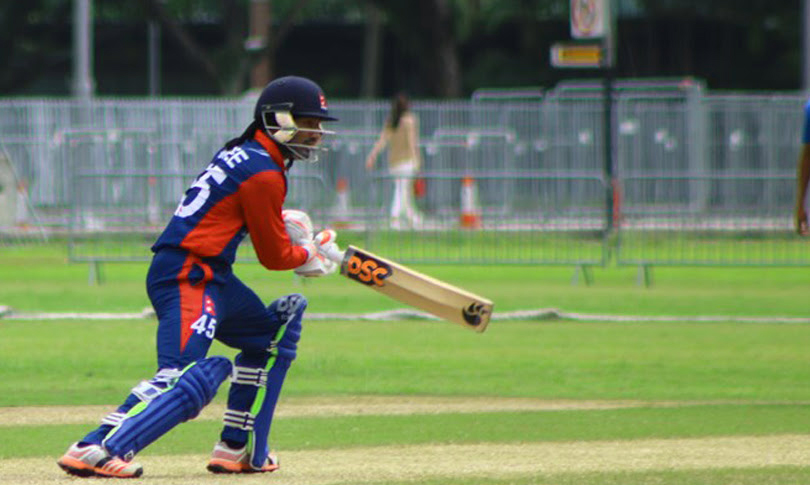
Having captained age-group teams, Dipendra has also led domestic and franchise cricket teams. He is set to become Nepal’s fifth captain in T20 International (T20I) cricket.
News Summary
The Cricket Association of Nepal has named Dipendra Singh Airee as captain for the historic ‘Under Lights’ T20 series against the UAE at home.
Separate squads and captains have been appointed for T20I and One Day International (ODI) formats.
Dipendra has prior captaincy experience from youth levels as well as domestic and franchise cricket.
April 18, Kathmandu – The Cricket Association of Nepal (CAN) announced the Nepali squad on Friday for the historic ‘Under Lights’ T20 series against UAE to be held at home, naming Dipendra Singh Airee as captain.
Previously, Rohit Paudel had captained Nepal in both One Day Internationals and T20I formats. Rohit led the team during the ICC T20 World Cup held in India last December-January.
However, this time CAN has designated two separate squads with different captains for the ODI and T20I formats. Dipendra has been appointed as the new T20I captain.
Dipendra, having captained at age-group levels, has also led teams in domestic and franchise cricket. He will be Nepal’s fifth T20I captain following Paras Khadka, Gyanendra Malla, Sandeep Lamichhane, and Rohit Paudel.
CAN announced the ODI squad under Rohit Paudel’s captaincy, while Dipendra will lead the squad for the prior T20I series as part of the ICC Cricket World Cup League 2 home matches.
According to CAN’s press release, “The Cricket Association of Nepal would like to inform that separate captains have been appointed for T20 and ODI teams. Dipendra Singh Airee will captain the Nepal T20 team, while Rohit Paudel will remain the captain of the Nepal ODI team.”
There is considerable difference between the two squads, with experienced players prioritized for ODIs and younger, newer players featuring in the T20I side. Only seven players are common to both formats.
Ahead of the League 2 series, Nepal will play two floodlit matches at home on April 20 and 21. These matches will mark Dipendra’s official debut as captain of Nepal’s senior team.
Dipendra has demonstrated leadership across various levels, from youth cricket through domestic and franchise competitions. Although sometimes regarded as a prospective captain for Nepal, circumstances delayed his appointment as senior team captain.
In 2019, former national captain Paras Khadka named Dipendra among the fastest progressing players during a conversation with this writer. From his international debut, Dipendra quickly made an impression with consistent strong performances.
Recently, Dipendra delivered outstanding performances in the ICC T20 World Cup held in India and Sri Lanka, excelling in batting, bowling, and fielding. He scored two successive half-centuries, leading Nepal to their first T20 World Cup victory after 12 years.
His half-century helped Nepal defeat Scotland by seven wickets at the T20 World Cup. Batting at number four, Dipendra proved his value in the senior team.
In four matches at the World Cup, he scored two half-centuries, making 58 runs against West Indies and an unbeaten 50 against Scotland. He also scored a personal best of 44 against England, with a lower score of 17 against Italy.
After his half-century against West Indies, Dipendra became the first Nepalese player in 12 years to score a half-century in a T20 World Cup. The previous such achievement was by Suwas Khakurel in 2014 against Afghanistan during Nepal’s T20 World Cup debut in Bangladesh.
Proven Leadership
Dipendra Singh Airee has captained the Nepal U-19 team, Nepal Police Club in domestic cricket, and various franchise teams. His successful leadership record assures that he is a suitable choice to lead the Nepali team.
Under Dipendra’s captaincy, Nepal’s U-19 team famously defeated India’s U-19 side. In the 2017 ACC U-19 Asia Cup held in Kuala Lumpur, Malaysia, Dipendra’s all-around performance helped Nepal beat India by 19 runs. He top-scored with 88 runs, helping Nepal post 185 for 8 in 50 overs.
In response, India was bowled out for 166 in 11 balls under the target, with Dipendra bowling 10 overs including 2 maidens, conceding just 38 runs and taking 4 wickets.
Dipendra captaining in U-19 cricket
Similarly, Dipendra captained Civic Attariya to the 2019 Dhangadhi Premier League (DPL) title. He has also led the Sudur Paschim Rolls in the Nepal Premier League (NPL), guiding them to finals in two consecutive seasons, although finishing as runners-up both times.
Long associated with Nepal Police Club, Dipendra captained the side in recent years before resigning from his police job this year. After the ICC U-19 World Cup in Bangladesh in 2016, several young players including Dipendra joined the Police Club.
Following his U-19 captaincy, Dipendra gained opportunities in franchise cricket. After representing Nepal at the U-19 World Cup, he debuted for Nepal’s senior team in 2017 during the World Cricket League against Kenya.
In 2018, during the Everest Premier League (EPL) held in Kathmandu, Dipendra was named marquee player for Chitwan Tigers, alongside senior players including national captain Paras Khadka and vice-captain Gyanendra Malla. Notably, Dipendra was the only junior player among the marquees, though the captaincy of Chitwan was held by Prithu Baskota.
Dipendra is widely recognized in Nepali cricket by the nickname ‘Tiger.’ He is a power-hitter capable of playing from the middle order to a finishing role, and bowls off-spin. His fielding is also exceptional, often forcing batsmen to think twice before taking runs, with skills including accurate direct hits and expert running between wickets.
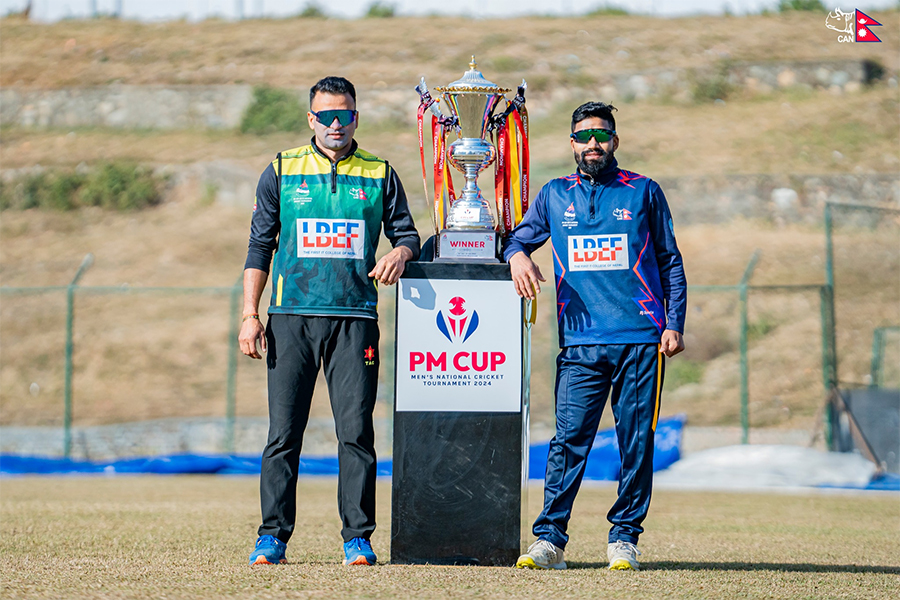
Dipendra during the PM Cup
From Six Sixes to the Fastest Fifty Record
Dipendra holds records not only in Nepal but also internationally, particularly in T20I cricket where he has achieved rare feats.
He equaled the record for hitting six sixes in one over and set a world record for scoring a T20I half-century in just 9 balls.
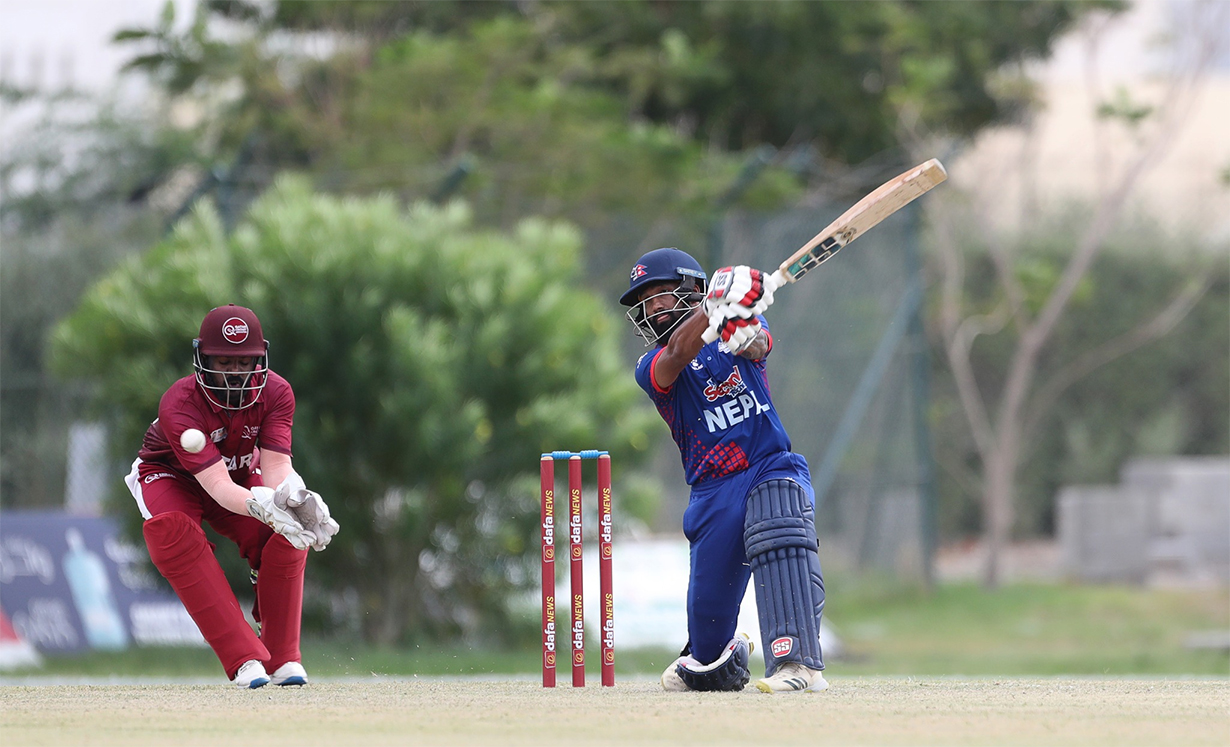
Dipendra twice hit six sixes in six consecutive balls across two different overs. At the 19th Asian Games in Hangzhou, China, he scored the fastest T20I half-century in 9 balls against Mongolia, hitting six sixes consecutively across overs. Later, in 2024 at the ACC Premier Cup in Oman, he struck six sixes in six balls in a single over against Qatar.
Dipendra made his T20I debut in 2018 against the Netherlands at Lord’s, but the match was abandoned due to rain with no result. He also debuted in ODIs the same year during Nepal’s historic series in August.
He has played 94 T20I matches for Nepal, scoring 2,125 runs including one century and 12 half-centuries, along with 60 wickets. In 68 ODIs, Dipendra has scored 1,241 runs with one century and five half-centuries and taken 42 wickets.
Internationally, Dipendra has also represented various franchise leagues. Currently, he plays for Islamabad United in the Pakistan Super League (PSL). He is affiliated with JB Bruges in the EU T20 Belgium league, and has played in Canada’s Global T20 league as well as the UAE’s IL T20 league for Gulf Giants.
May 18, Birgunj – The long-delayed expansion of Birgunj’s main road is set to begin tomorrow morning. According to the Road Division Office in Hetauda, the road stretching from Gandak Chowk to Miteri Bridge along Tribhuvan Rajpath will be widened by 25 meters on both the right and left sides.
Chief District Officer of Parsa, Bholaprasad Dahal, stated that the removal of houses, sheds, and other structures within a 25-meter radius from the center of the road will start early tomorrow morning.
In preparation for this, nine heavy equipment including dozers, JCBs, and excavators will be transported from Hetauda to Birgunj. To maximize efficiency, work will commence simultaneously at five different locations. Coordination efforts are underway with Birgunj Metropolitan City, the police, and other relevant agencies to facilitate the process.
The project received a crucial boost after the Supreme Court ruled in favor of the government on February 11, 2025 (Falgun 28, 2081 BS), dismissing the petition filed against the road expansion. Earlier, approximately 1,200 homeowners had filed petitions demanding compensation and alternative routes, which had stalled the project for nearly 13 years.
Following the court’s decision, the administration plans to proceed with the removal of structures and gradually advance the road expansion in phases.
May 18, Kathmandu – Tensions have escalated again in the Strait of Hormuz. On Saturday, reports emerged of gunfire targeting two Indian vessels. Following the attack, both ships were reportedly forced to alter their routes, according to information cited from BBC Hindi. The news outlet referenced data from ‘TankersTrackers,’ a website that monitors tanker movements, indicating that these ships changed course after being fired upon.
The Indian cargo ship Ship Jag Arnav and the oil tanker Sanmar Herald came under fire by Iran’s Islamic Revolutionary Guard Corps (IRGC), which allegedly ordered the ships to change their course. Subsequently, both vessels made a U-turn and retreated. The Sanmar Herald had reportedly loaded oil in Iraq prior to the incident. On the same day, the United Kingdom’s Maritime Trade Operations also confirmed that an IRGC attack on a tanker took place in the Strait of Hormuz, approximately 20 nautical miles northeast of Oman.
Just a day earlier, Iranian Foreign Minister Abbas Araghchi declared the Strait of Hormuz to be fully open. However, Iranian media later reported that the Strait had been closed due to military actions, citing renewed control by Iranian forces in the area. Following these developments, numerous ships altered their courses. Meanwhile, the ceasefire agreement between the United States and Iran still has four days remaining, with no final outcome reached in the ongoing peace talks. Earlier discussions held in Islamabad, Pakistan were reported to have been nearing a conclusion. On the same day, former U.S. President Donald Trump warned that if Iran failed to secure a major deal by Wednesday, April 22, bombing campaigns would resume.
The Asia Pacific Department Director of the IMF, Krishna Srinivasan, has announced that Nepal’s economic growth forecast has been revised down from 5.2% to 3%. The IMF projects the Asia Pacific region’s economic growth to be 4.4% in 2026. The report highlights rising chemical fertilizer costs in Nepal, Laos, and Myanmar, which is expected to reduce farmers’ incomes. Kathmandu, April 18 – The International Monetary Fund (IMF) has downgraded Nepal’s economic growth forecast for the current fiscal year by 2.2 percentage points. Previously, in October, the IMF had estimated a 5.2% economic growth rate, but now the projection has been revised to only 3% growth this year.
The IMF attributes the slowdown in Nepal’s growth to ongoing tensions in the Middle East and the youth movement that occurred in Nepal last September. The economic growth forecast for the upcoming fiscal year 2027 has also been lowered by 0.5 percentage points, now set at 4.6%. Thomae Helbling, IMF Deputy Director, has expressed the IMF’s readiness to assist Nepal amid these challenging circumstances.
The IMF warns that ongoing Middle East tensions will further increase inflationary pressures. Rising chemical fertilizer costs are expected to reduce farmers’ incomes and drive up food prices. Increases in petroleum product prices will raise transportation costs, which will ultimately affect food preparation costs as well. IMF Director Krishna Srinivasan emphasized that Asia will continue to lead the world in economic growth.
Inflation in Asia is projected to reach 2.6% in 2026, higher than last year’s 1.4%. The IMF cautions that the prolonged energy crisis could reduce this region’s total gross domestic product (GDP) by 1 to 2% by 2027. To control inflation, the IMF recommends implementing dynamic monetary policies and allowing foreign exchange rates to be determined by market forces.
April 18, Kathmandu – A former office bearers meeting was held at the residence of outgoing acting Nepali Congress chairman, Purna Bahadur Khadka, in Golphutar to decide on the resolution of party disputes. Following the meeting, leader Min Bahadur Bishwakarma from the Sher Bahadur Deuba faction informed reporters that although there are various disagreements regarding the Supreme Court verdict on the party dispute resolution, his faction has agreed to accept the decision.
“The Nepali Congress consistently respects the rule of law and, in accordance with the principle of separation of powers, upholds and accepts the orders and decisions of an independent judiciary,” Bishwakarma stated.
“Following this tradition, despite significant dissatisfaction from senior leaders and complainants within our party, who find the verdict contradictory and controversial, we discussed and agreed to accept the decision today,” he added. He clarified that the meeting today was an informal gathering and dialogue rather than a formal assembly. “The discussion focused on how to unite the party moving forward. Various meetings will continue to be held, gathering suggestions and advice from members and officials from different parts of the country until a conclusive outcome is reached,” he explained.
Bishwakarma noted that before the verdict, Purna Bahadur Khadka held the position of acting chairman, and that from yesterday, he became the outgoing acting chairman. “He attended the court as acting chairman. During the review of the case, he held the acting chairman position,” he clarified. He also affirmed that, following acceptance of the court’s decision, no parallel activities will take place under the acting chairman’s designation.
“We have accepted this decision. The legal and statutory matter is now settled. The political matter pertains to party unity,” he emphasized.
He expressed ongoing concerns about party unity. “Not just us, all factions must now focus on how to progress the party,” he said. Bishwakarma also mentioned that Bimalendra Nidhi has not refused to accept the verdict. “He acknowledges the need to respect the decision but has expressed that some flawed aspects of the decision are unacceptable,” Bishwakarma added.
Despite various disagreements with the court’s verdict, Bishwakarma affirmed his faction’s commitment to respecting the orders of the independent judiciary. He also mentioned that discussions at Khadka’s residence covered the essential responsibilities for party unity now resting with Chairman Gagan Thapa.
Stag Champions Table Tennis Academy honored the athletes who won medals at the ITTF ATTU South Asian Youth Table Tennis Championship. The academy recognized Nischal Thapa and Surmya Shakya with cash prizes, smartwatches, and certificates. The event took place on April 18 in Kathmandu.
On Saturday, Stag Champions Table Tennis Academy celebrated the achievements of Nischal and Surmya, who represented Nepal and secured medals at the championship. The awards were presented by former Vice President of the All Nepal Table Tennis Association Govardhan Shrestha, Suman Khadgi, and Shankar Gautam, Vice President of the Asian Table Tennis Union. Coach Rakesh Maharjan was also honored on this occasion.
The competition was held in Shimla, India, from April 8 to 11. Nepal participated in the U-15 boys’ and girls’ teams and the U-19 girls’ doubles events. Nepal secured a total of three silver and seven bronze medals. Nischal won a silver medal in the U-15 boys’ doubles and a bronze in the U-15 boys’ team event, while Surmya earned silver in the U-15 girls’ doubles and bronze in the U-15 girls’ team event.
The Nepal Water Industry Federation has urged its member industries to adjust prices following an approximate 40 percent increase in production costs. In a statement released on Saturday, the federation cited international conflict and rising petroleum prices as the primary reasons behind the surge in raw material costs.
5 Baisakh, Kathmandu – According to the federation, the prices of raw materials used in the water industry, including bottles, caps, wrapping rolls, jars, and jar caps, have increased by nearly 40 percent. Alongside this, the cost of petroleum products such as diesel has risen sharply, significantly increasing transportation expenses.
Dhruv Prasad Adhikari, General Secretary of the federation, stated, “This is not a profit-driven decision, but a mandatory response to increased production costs, transportation expenses, and raw material price hikes.” The federation has requested all member industries to adjust their selling prices proportionally to the rise in raw material and operational costs.
The federation has also appealed to the government to introduce industry-friendly policies, ensure the availability of raw materials through diplomatic efforts, and implement measures to control transportation costs. Furthermore, it called on consumers, distributors, and stakeholders to support this necessary price adjustment, highlighting its importance for protecting the industry, securing employment, and maintaining service continuity.
April 18, Kathmandu – The Rastriya Swatantra Party (RSP) has scheduled a secretariat meeting. Party Chairperson Ravi Lamichhane announced that the meeting will take place tomorrow, Sunday, at 3:30 PM at the party’s central office in Bansthali. This information was shared by spokesperson Manish. The meeting will focus on six main agenda items.
According to the spokesperson, the discussion will cover the district convention procedures, bank account management, central commissions, advisory council, appointments to the federal leadership forum and various departments, formation of a draft committee for the general convention procedures, calls for experts and plans, along with various other matters. Additionally, the agenda includes topics such as the organizational responsibilities of members of the House of Representatives, central committee meetings, technical support for the parliamentary party, and discussions related to lobbying efforts.
April 18, Kathmandu – Sunrisers Hyderabad registered their third victory in the Indian Premier League (IPL) cricket tournament. In the match played on Saturday night, Hyderabad defeated Chennai Super Kings by 10 runs. Chasing a target of 195 runs set by Hyderabad, Chennai managed only 184 runs for the loss of 8 wickets in their full 20 overs. Matthew Short was the top scorer with 34 runs.
May 18, Gulmi – Air flights from Resunga Airport in Gulmi will be operated four times a week starting today. Nepal Airlines Corporation has announced the flight schedule from Kathmandu to Gulmi on Sundays, Tuesdays, Thursdays, and Saturdays. Previously, flights were regularly operated only on Sundays, Tuesdays, and Thursdays. Station chief Suman Thapa of Resunga stated that the additional flight schedule was introduced following the maintenance of the Twin Otter aircraft used for domestic flights.
According to him, the introduction of the new schedule has also resulted in fare increases. The rise in petroleum product prices has led to a hike in airfares between Resunga and Kathmandu, Thapa explained. The new fares are set at NPR 10,902 from Kathmandu to Resunga and NPR 10,702 from Resunga to Kathmandu. Previously, the fares were NPR 7,500 from Kathmandu to Resunga and NPR 7,300 from Gulmi to Kathmandu.
The fare increase of NPR 3,402 is mainly due to higher passenger demand recently and petroleum price hikes, he added. Except for periods of rainy weather and adverse conditions, regular flights have been operating at Resunga Airport for the past five months. The Corporation operates Kathmandu–Resunga services using an 18-seat Twin Otter aircraft.
Since the commencement of air service in Gulmi, the number of both domestic and international tourists visiting the district has been increasing. Passengers have noted that the land route journey, which usually takes around 16 to 18 hours, has become largely free of cost. With the start of air services, travel time between Gulmi and the capital can now be covered in just 45 to 50 minutes. Nepal Airlines Corporation began commercial air operations in Gulmi starting from Bikram Sambat 2080, Vaishakh 29.