Author: space4knews

Labor Ministry Warns of Action Against Employers Denying Minimum Wage and Benefits to Trained Workers

The Ministry of Labor, Employment and Social Security has urged employers to provide minimum wage and social security benefits to trained workers as per the Labor Act 2074. Following complaints that trained workers in various hospitals, schools, and institutions are being denied these facilities, the ministry has issued a warning to employers. Strict action and penalties will be imposed if the law is violated, and all stakeholders are urged to fully comply with legal provisions. Kathmandu, 23 Chaitra.

The ministry’s statement notes that complaints have been received regarding trained workers in hospitals, health institutions, private and institutional schools, and other establishments not receiving minimum wage and other benefits. Employers have been cautioned accordingly. Section 18, Subsection (3) of the Labor Act 2074 clearly mandates that trained workers must be provided with minimum wage, sick leave, allowances, provident fund, insurance, and other social security benefits.

However, complaints continue to be registered with the ministry from trained workers such as healthcare professionals, nursing staff, teachers, and employees in various institutions, who report not receiving these benefits. The ministry has expressed serious concern over this issue. Employers have been warned to strictly adhere to minimum wage and social security provisions in accordance with the law. The ministry has also made it clear that penalties will be imposed if benefits are denied in violation of the law. All related institutions, organizations, and stakeholders are urged to fully comply with legal requirements.

Bagmati Chief Minister Baniya Says He Has No Information About Power-Sharing Deal with UML

March 6, Hetauda – Bagmati Province Chief Minister Indrabahadur Baniya has stated that he has no knowledge of any power-sharing arrangement previously made between the Nepali Congress and the Communist Party of Nepal (UML) regarding the alternating chief ministership. While the UML, a coalition partner, has recently raised the issue of leadership transfer based on an earlier agreement with Congress, Chief Minister Baniya expressed his unfamiliarity with the matter.

“I am not aware of any power-sharing deal. The party leadership is also unaware of such information,” Baniya stated during an interaction with journalists at the Chief Minister’s office on Monday. “Here we have ministers from both Congress and UML, but even they do not have knowledge of this.”

Last year in Shrawan (July-August), when the Congress and UML formed a joint government, an agreement was made to alternate the chief ministership every 20 months. At that time, Bahadur Singh Lama, a leader from Congress supported by UML, was appointed Chief Minister. According to Congress MPs aligned with Lama, there was an understanding that UML parliamentary party leader Jagannath Thapaliya would assume leadership after Lama. Thapaliya has been advocating for a leadership transfer after Falgun (February-March) in line with this prior agreement.

However, one year into Lama’s tenure, Indrabahadur Baniya, who had secured majority support within the Congress parliamentary party, filed a no-confidence motion to remove him. Following internal party disputes during the fiscal year 2081/82 budget, Baniya gained majority support among other MPs and with backing from then party chairman Sher Bahadur Deuba, displaced Lama and assumed the chief minister position himself. Baniya took office on Shrawan 20, 2082 (early August 2025).

On Shrawan 9, 2082, 21 MPs led by Baniya filed a no-confidence motion against Lama. On Shrawan 13, the vote resulted in 22 in favor and 15 against the motion, causing Lama to lose his position as parliamentary party leader. Subsequently, on Shrawan 14, Baniya won the party leadership election, paving the way for him to become chief minister. Previously, on Poush 13, 2079 (late December 2022), Baniya had been defeated by Lama by 5 votes in the party leader election.

दुई दिने सार्वजनिक बिदाको तेस्रो प्रयास कति प्रभावकारी होला ?

Evaluating the Effectiveness of the Third Attempt to Implement a Two-Day Public Holiday

March 23, Kathmandu – Due to the conflict between the United States and Iran and the resulting fuel crisis, the government has declared a two-day public holiday. As part of a strategy to extend office hours and reduce working days from six to five per week, the government announced a change in office hours starting today (Monday). According to government spokesperson and Education Minister Sasmita Pokharel, offices except educational institutions will operate from 9:00 AM to 5:00 PM. She stated, “Office hours except for educational institutions are set from 9 AM to 5 PM.”

In Nepal, the standard workweek in public and service sectors is 40 hours, previously allocated as 7 hours daily with 5 hours on Friday. The new policy mandates 8 hours per day for five days a week. Following the government’s decision, courts nationwide have also announced opening hours from 9:00 AM starting Monday. Security agencies and other official services will adjust their schedules accordingly. The private sector has committed to revising their schedules as well, though clear directives for educational institutions and informal sector workers remain pending.

This is the second time in three decades that such an initiative has been attempted. Historical records show that this is Nepal’s third attempt at instituting a two-day public holiday, with prior efforts being unsuccessful for various reasons. In 1991, the Administrative Reform Commission recommended adopting a five-day workweek to improve employee productivity and manage traffic. The government led by Congress leader Krishna Prasad Bhattarai introduced this system in 1999, initially limited to the Kathmandu Valley, and it lasted approximately two years to enhance service delivery and facilitate citizens.

Again, in 2022, under Prime Minister Sher Bahadur Deuba, the two-day holiday was reinstated with offices operating from 9:30 AM to 5:30 PM starting May 15. It was introduced amid trade deficits and foreign currency shortages, aiming primarily to reduce fuel consumption. However, this arrangement proved ineffective within a month. While many countries have maintained a two-day weekly holiday for years, Nepal typically adopts it as a crisis response measure.

The government’s current implementation of a two-day public holiday appears directly linked to ongoing fuel shortages and traffic congestion. Earlier in 2020, the Ministry of Tourism had studied the possibility of introducing two-day public holidays to revive the economy and boost domestic tourism post the COVID-19 pandemic. Led by Joint Secretary Kamal Prasad Bhattarai, the working group prepared a report revealing that out of 127 countries, 115 observe a two-day weekend, and 91% of these maintain a 40-hour or lower weekly work schedule.

Previously, Nepal’s centralized system forced citizens from remote areas to travel to administrative centers to access services, which has since decentralized, allowing most services to be available locally. The committee concluded that introducing a two-day public holiday would not disrupt service accessibility as it once might have.

Based on the 2020/21 budget, the committee estimated annual savings of approximately NPR 165 million from reduced expenditures due to two-day holidays. Their study also suggested that such holidays help reduce family stress, provide adequate rest and entertainment, increase productivity, and encourage domestic tourism. Approximately 500,000 public service, military, police, and private school employees and their dependent families, totaling about 2.5 million people, would benefit from increased family time. The report also forecasted that if around 800,000 people took short trips locally, it would positively impact internal tourism and the economy.

The committee claimed that two-day public holidays would have three main positive effects: enhanced productivity among employees and offices, cost savings, and support for domestic tourism. Furthermore, the study highlighted that two-day holidays could promote gender equality and facilitate balanced family life. It recommended that public sector organizations implement a two-day workweek and encouraged the private sector to adopt similar practices.

Nepali Workers in Saudi Arabia Face Wage Withholding and Denial of Repatriation

Summary

Prepared for review.

  • Over 50 Nepali workers employed at Hussein Bin Ali Ateef in Riyadh, Saudi Arabia, have reported not receiving wages for five to six months and are seeking rescue.
  • The victims have stated that the company has denied them food, accommodation, and even water, imposed irregular work schedules, and issued threats.
  • Complaints lodged with Nepal’s manpower agencies, local agents, and the embassy have not resolved the issues, prompting the workers to post videos on social media to raise awareness.

March 6, Kathmandu – Nepali workers employed at Hussein Bin Ali Ateef in Riyadh, Saudi Arabia, are currently facing severe difficulties. These workers, recruited through manpower companies including Nepal Life Recruitment based in Gaushala, Kathmandu, arrived in Saudi Arabia almost two years ago but are now encountering significant problems.

They have been demanding assistance due to the company’s consistent failure to provide wages, food, and accommodation. Over 50 Nepalis, engaged under two-year labor contracts to work in building construction, have been enduring these hardships.

Despite working in temperatures reaching 50 degrees Celsius, the contractor has withheld their wages, barred them from work, and failed to provide even basic necessities like food and water. The workers report not being paid for five to six months. Those affected told the media that both the manpower agencies and the contracting company, present in Nepal and Saudi Arabia, have exacerbated the issues.

One victim said the company has not paid wages for five to six months and has provided no food or lodging. “Some individuals are owed three months’ wages, others four, and some six months. Although we repeatedly pressured the company to pay, they only promised to do so but never delivered. They assign work but do not pay,” he explained.

The workers reported that the company often assigns work for only one month, then suspends them from work the following month, and deducts wages during such leave periods. “We are told not to report to work and are placed on leave, yet when on leave, our wages are cut,” they stated. While some workers receive 400 or 600 Riyals monthly, they are supposed to be paid 1500 Riyals per month. “How can one feed oneself or support family with only 600 Riyals?” they questioned.

The company claims to have provided free visas, but the workers have incurred expenses exceeding 200,000 Nepali Rupees. „We came with debts as high as NPR 225,000, yet the company claims the visas are free,” the victims disclosed.

Before departure, manpower agencies and local agents in Nepal promised a 10-hour workday, including 9 hours of work and 1 hour of rest. However, the workers revealed that on workdays they often work the full 10 hours without any overtime payment.

“No matter how much overtime we complete, no payment is made. The commute between living quarters and the worksite takes 2 to 3 hours, so on workdays, we often spend 12 to 16 hours including travel,” one worker reported.

The victims stated they have not received any response to their complaints filed with manpower companies in Nepal and Saudi Arabia, local agents, or the Nepali embassy. Frustrated, they posted videos on social media to expose their situation, after which the company allegedly increased pressure on them.

“Unable to get attention otherwise, we were forced to make a video and post it on social media. For over a month, not even breakfast has been provided,” they said.

They have not been assigned work for the past 15 days, and despite asking to be sent home, were threatened they could not leave before completing the full two years of their contract. “We are threatened with beatings or worse and forced to complete the two years at all costs,” the workers said. All Nepali employees in the company reportedly face similar problems and threats when they try to voice concerns.

“We have not been given breakfast for over a month. When work stopped, both breakfast and meals were discontinued,” they added.

Some victims have not been paid for five months, while others have gone four to six months without wages. “We are forced to use the mosque restroom because the company has locked the toilets with tablets,” they claimed.

Another victim from Itahari, who arrived through Mobira Overseas, said manpower and agents have ignored their pleas. Coming with debt and leaving family behind for work, they face threats and punishments when seeking fair wages and conditions.

“The idea was to send money back to support our children’s education and provide good food and clothes, but instead, we face penalties. After working two days, we get four days leave,” he stated.

Additionally, the workers reported that sick employees are denied treatment and that promises of health insurance have yet to be fulfilled.

Nepali Congress UML Instructs Committees to Actively Collect Voter Lists

Chaitra 23, Kathmandu – The Communist Party of Nepal (Unified Marxist-Leninist) has directed its subordinate committees to remain active in the collection and updating of voter lists as part of preparations for the upcoming local and provincial assembly elections. The Election Commission announced that the voter list collection process resumed from Chaitra 22. Additionally, the Election Office has issued official letters to all municipal and ward committees, instructing them to undertake the necessary actions regarding this matter.

Artemis II: Communication Blackout for Astronauts Orbiting the Moon

New image of Earth taken last week from the Orion capsule

Photo source, Nasa/Reid Wiseman

Photo caption, New photo of Earth taken last week from the Orion capsule

Astronauts on the Artemis mission will travel farther from Earth than ever before.

They are millions of miles away and see Earth as a small sphere. Although they have been in constant contact with the control center in Houston, Texas, the NASA team’s communication has not felt like the warmth of home to them.

However, this communication will soon be disrupted.

On Monday night at 23:47 BST (Tuesday 04:32 Nepal time), when the spacecraft orbits behind the Moon’s surface, communication between the spacecraft and Earth will be interrupted.

The Moon will block radio and laser signals for about 40 minutes. The four members of the Artemis crew will spend roughly 40 minutes alone in the darkness of space.

संसद्‌मा सभामुख र सांसदहरूलाई समान कुर्सी – Online Khabar

Equal Seating Arrangements for Speaker and MPs in Parliament

Summary prepared after an academic review. Following the suggestion of Speaker Dol Prasad Aryal, the House of Representatives has arranged identical chairs for the Speaker and members of parliament (MPs) in the assembly hall. During Monday’s session of the House of Representatives, a 21-member Parliamentary Procedure Advisory Committee was formed. Additionally, a 15-member House Rules Drafting Committee was established under the chairmanship of Rastriya Swatantra Party MP Ganesh Parajuli. Kathmandu, 23 Chaitra.

Previously, the Speaker was provided with a distinctive type of chair in the House of Representatives hall. Before the recent Speaker election, different types of chairs were again placed for the Speaker and MPs. However, with the arrival of Speaker Dol Prasad Aryal, identical chairs have been provided for both the Speaker and MPs. According to Ekram Giri, Deputy Secretary and spokesperson of the Federal Parliament Secretariat, “After the Speaker requested arrangements for uniform chairs, chairs of the same type but with different colors were arranged for the Speaker and the MPs.”

During the Monday session, the House of Representatives formed two separate committees. A 21-member Parliamentary Procedure Advisory Committee was constituted, including Achutam Lamichhane, Apsana Banu, Aren Rai, KP Khanal, Kamini Chaudhary, Krantishikha Dhital, Khushbu Oli, Ganesh Singh Thagunna, Guru Prasad Baral, Gangalaxmi Awal, Tapeshwar Yadav, Devaraj Pathak, Narendra Kumar Kerung, Prakash Chandra Pariyar, Nisha Dangi, Bodhnarayan Shrestha, Meena Kumari Yadav, Yuvraj Dulal, Rajan Gautam, Dr. Ram Lama, and Bipinkumar Acharya as members. Additionally, the House also formed the House Rules Drafting Committee consisting of 15 members under the chairmanship of Rastriya Swatantra Party MP Ganesh Parajuli. Committee members include Dr. Ojashwi Sherchan, Ain Mahar, Khushbu Oli, Khagendra Sunar, Gazala Samim Mishrani, Tapeshwar Yadav, Dhuruvraj Rai, Nisha Dangi, Nishkal Rai, Balawati Sharma, Madhu Chaulagain, Rekha Kumari Yadav, Yagnmani Nyaupane, and Sulabh Kharel. The committee’s term has been set at 14 days.

Foreign Hunters Actively Hunting 14 Naur and 10 Jharal at Dhorpatan Hunting Reserve

News Summary

  • During the second hunting season from Falgun to Baisakh at Dhorpatan Hunting Reserve, foreign hunters are actively hunting naur, jharal, and bandel.
  • This year, hunting permits have been granted for 14 naur, 10 jharal, and 13 bandel, awarded to foreign hunters through a competitive process.
  • Since 2016, the Nepal Army has been responsible for reserve security, with hunters typically spending between 3 to 3.5 million Nepali rupees.

Chaitra 23, Baglung – The second hunting season is currently underway in Dhorpatan, Baglung, with active participation from foreign tourists.

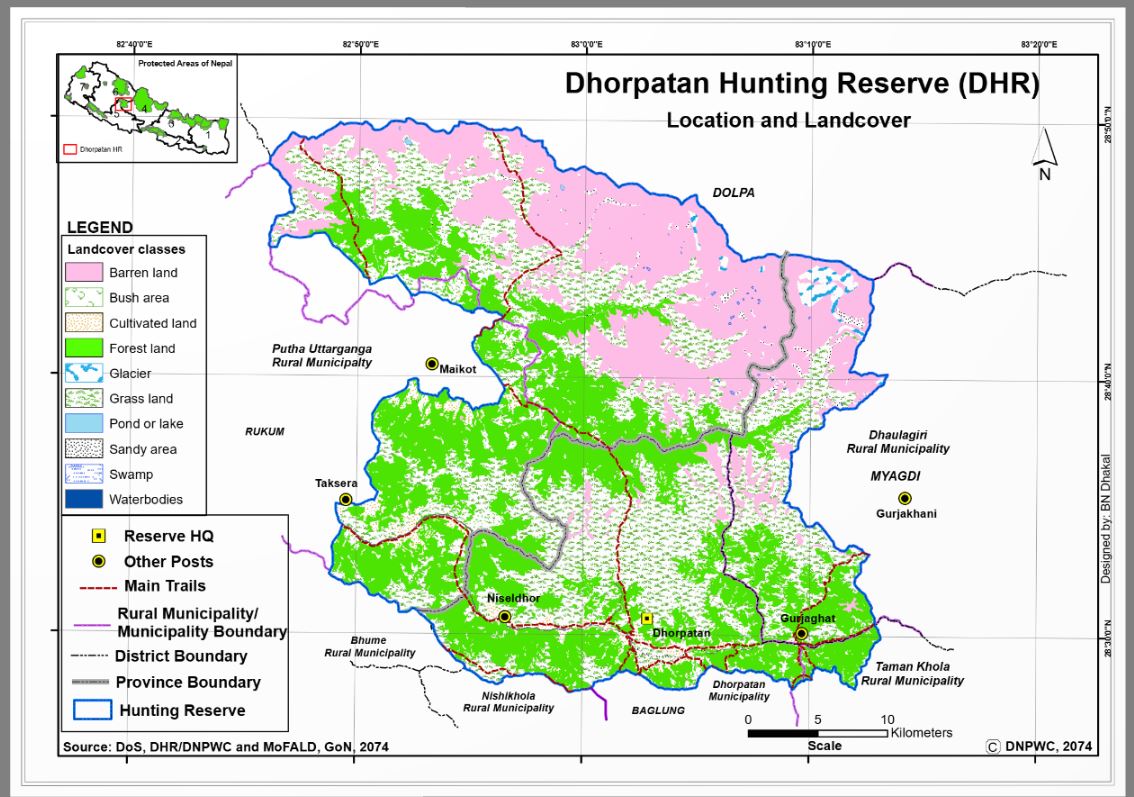
Dhorpatan is Nepal’s only hunting reserve, where foreigners focus on hunting in the high mountain blocks. This year, 14 naur and 10 jharal hunting permits have been issued, according to ranger Sagar Subedi of the Dhorpatan Hunting Reserve.

During the second hunting season from Falgun to Baisakh, many hunters are busy pursuing game in Dhorpatan, while some foreign hunters are preparing to arrive.

Ranger Subedi added that permissions have also been granted to hunt 13 bandel this season. The reserve issues permits for hunting in different blocks based on approval from the Department of Wildlife.

American citizens arriving through Global Safari Pvt. Ltd. have already hunted a naur and a jharal, and other American and Danish hunters through Himalayan Safari Nepal are currently active in the reserve, Subedi said.

Foreign hunters obtain their permits through a competitive bidding process, paying revenue to hunt naur and jharal. With the season ongoing, reserve staff and the Nepal Army are actively present alongside hunters in the hunting blocks.

During the current season, a Danish citizen arranged through Himalayan Wildlife Outfitter has received permission to hunt one naur, one jharal, and one bandel in the Fagune block.

Similarly, American, Belgian, and French nationals through Open Nepal Wildlife Safari and Trek Pvt. Ltd. have obtained permits for hunting three naur, two jharal, and one bandel in the Sundah and Seng blocks.

Likewise, Russian, African, and French hunters preparing to arrive via Nepal Travel Expedition Pvt. Ltd. have permits to hunt three naur, three jharal, and three bandel in the Ghustung block.

According to the Department of National Parks and Wildlife Conservation, organized hunting takes place in two phases annually: the first between Ashoj and Mangsir, and the second between Falgun and Baisakh. Groups including foreign hunters must complete their hunting within a specified 15-day period in their assigned blocks.

Hunters residing within the forest area are only allowed to hunt during the designated timeframe after entering the reserve. Dhorpatan has become a popular destination among foreign tourists for adventurous travel and thrilling hunting experiences.

The Department determines hunting quotas and revenue rates through electronic auctions each season.

Individuals through Global Safaris Pvt. Ltd. have received permits to hunt four naur, two jharal, and four bandel in the Sundah and Dogadi blocks for American and Danish hunters.

American hunters via Himalayan Safaris Nepal Pvt. Ltd. were permitted two naur, one jharal, and two bandel, of which one naur and one jharal have already been hunted. Additionally, a Spanish citizen through Trek and Dealers Pvt. Ltd. has permission for one jharal, one naur, and one bandel, Subedi added.
The first hunting season of the current year raised approximately 30.3 million Nepalese rupees in revenue, with revenue collection ongoing as the second season continues.

Hunters began arriving in Nepal with their equipment and supplies from the second week of Falgun. Most foreign hunters reach the hunting blocks directly by helicopter.

Established in 1987, the Dhorpatan Hunting Reserve spans the districts of Eastern Rukum, Baglung, and Myagdi, with its main office located in Dhorpatan Valley, Baglung.

During hunting expeditions, reserve staff work alongside foreign hunters, assisted by Nepalese guides. The department sets annual quotas for naur and jharal hunting.

The costs for hunting naur and jharal, block reservation, licenses, helicopter services, and accommodations amount to approximately 3 to 3.5 million Nepalese rupees per hunter.

Hunting opportunities are predominantly available to wealthy foreigners, with Nepalese citizens generally excluded from this privilege. Since 2016, the Nepal Army has been responsible for securing the reserve.

Foreign tourists often take photographs with naur after successful hunts in Dhorpatan. Photo: Dhorpatan Hunting Reserve

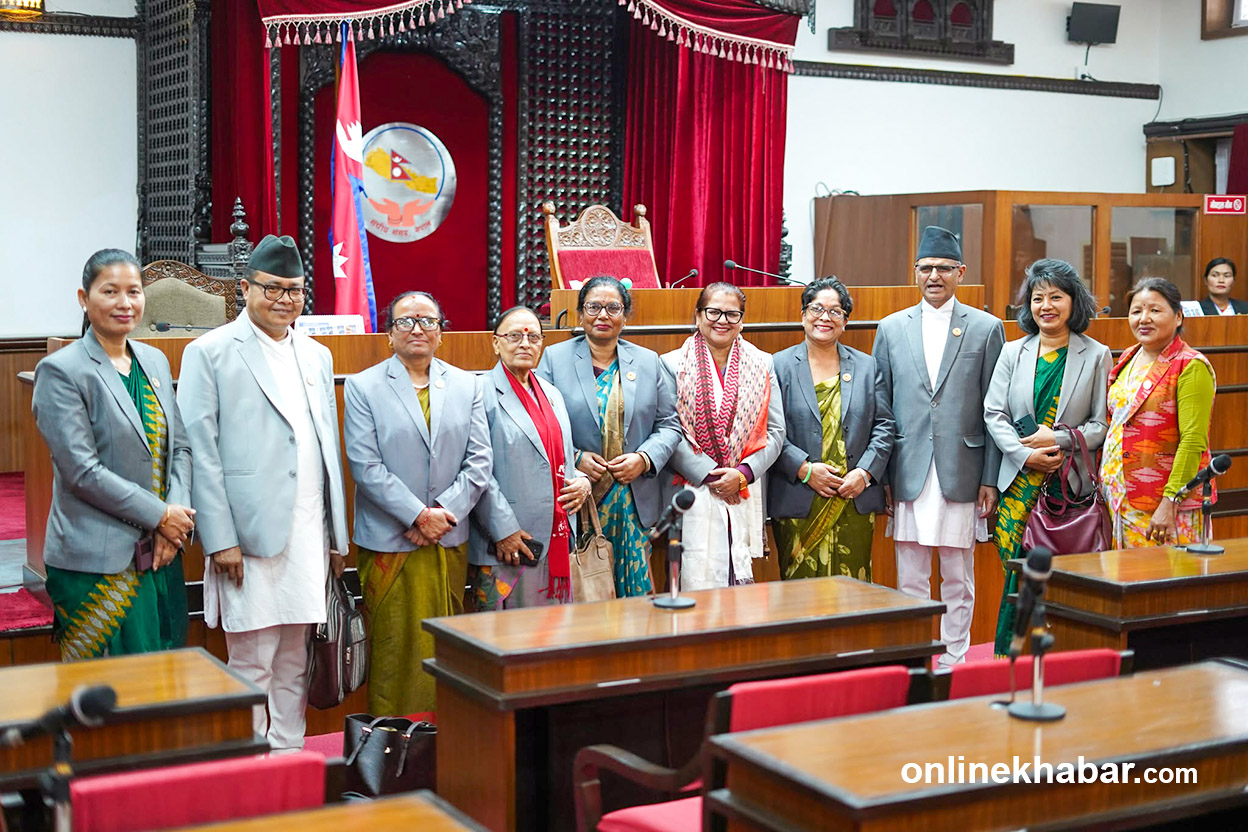
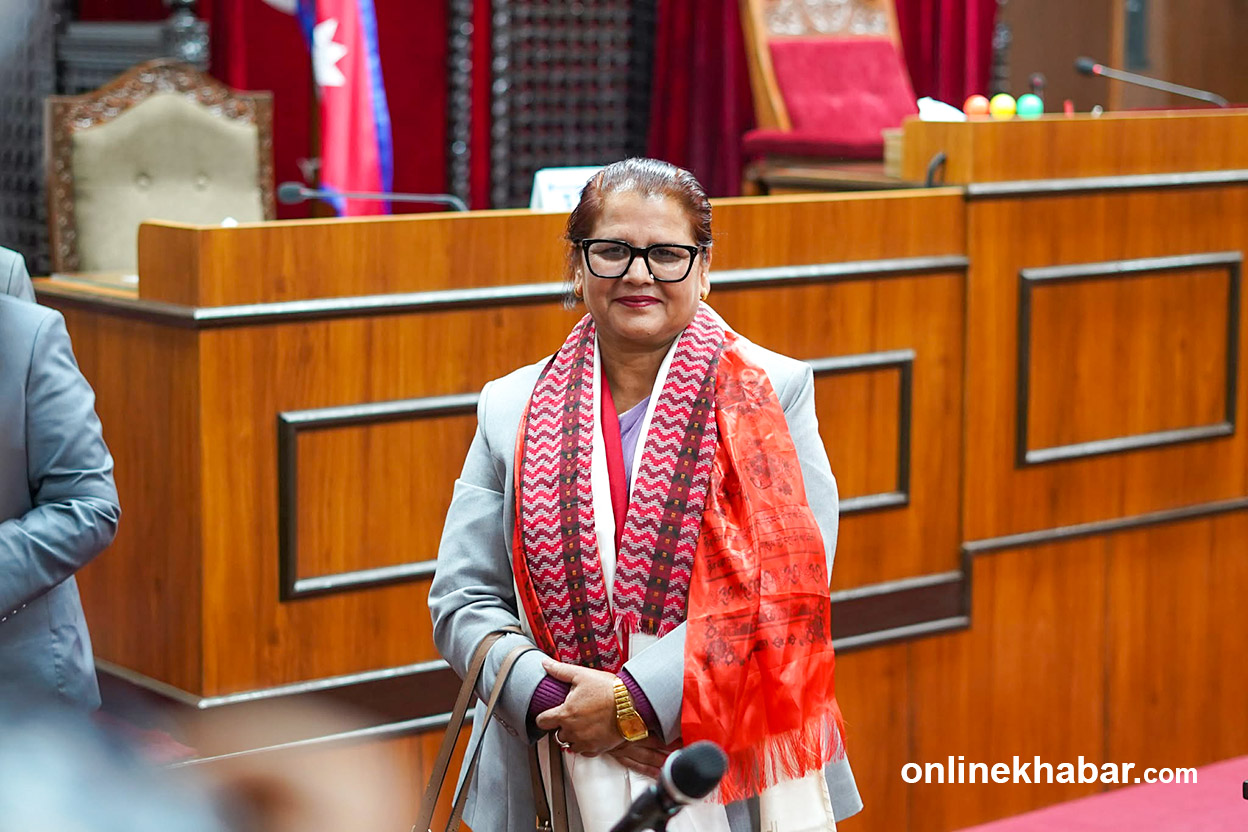
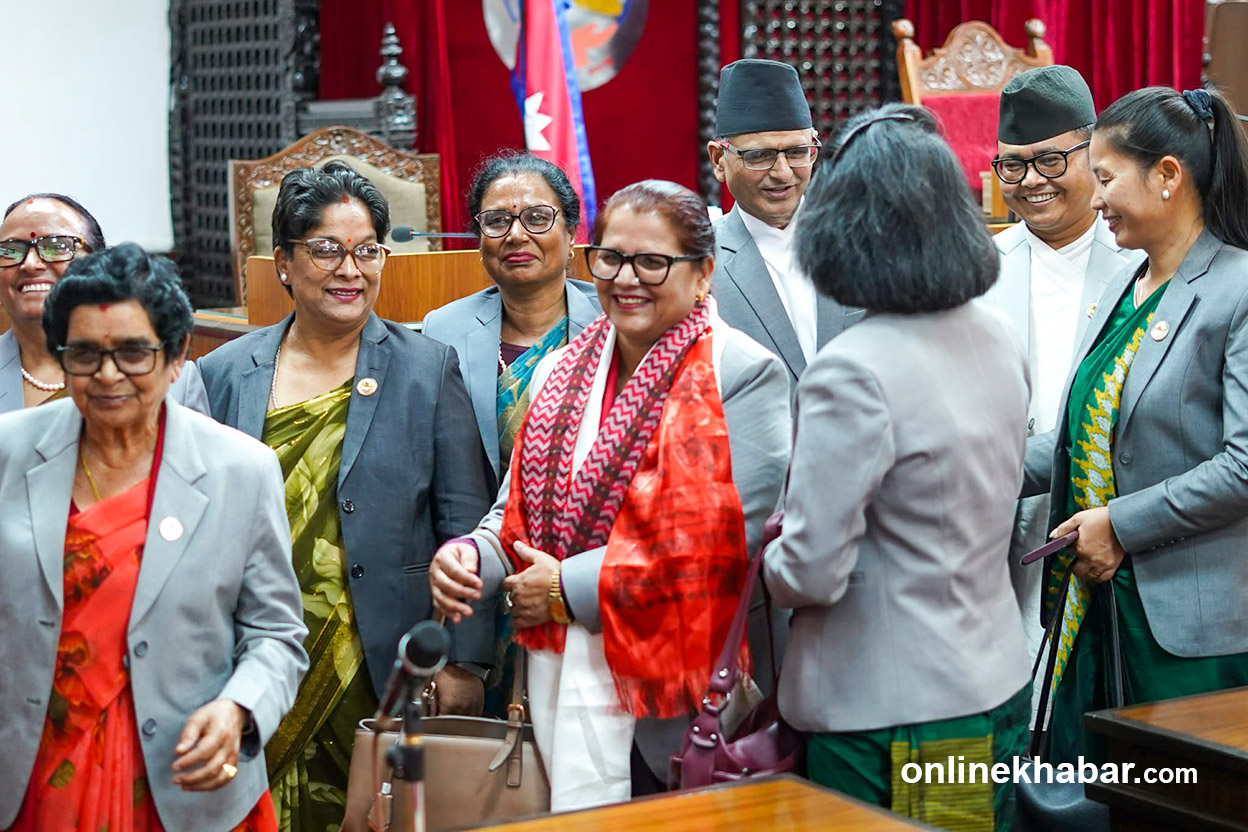
UML’s Lila Bhandari Elected Unopposed as Deputy Chairperson of the National Assembly (Photos)

News Summary

Prepared following editorial review.

  • UML parliamentarian Lilakumari Bhandari was elected unopposed as Deputy Chairperson of the National Assembly during Monday’s session.
  • She was elected from Sudurpashchim Province in the National Assembly elections held on Magh 11.
  • Members of the National Assembly have extended their congratulations to her.

March 23, Kathmandu – Lilakumari Bhandari, a parliamentarian from the Communist Party of Nepal (Unified Marxist–Leninist), has been elected Deputy Chairperson of the National Assembly. She was declared elected unopposed during the National Assembly meeting held on Monday.

Bhandari secured her seat representing Sudurpashchim Province in the National Assembly elections conducted on Magh 11. Fellow members of the National Assembly have extended their congratulations on her appointment.

Pakistan Proposes Immediate Ceasefire Plan Amid Iran-US Conflict

March 23, Kathmandu – Pakistan has proposed a unique plan aimed at ending the intense conflict between Iran and the United States, dubbed the ‘Islamabad Agreement.’ According to Reuters, if successful, an immediate ceasefire could be implemented as soon as Monday, allowing the reopening of the critically important global trade route, the Strait of Hormuz. This draft was prepared by Pakistan’s Army Chief, Field Marshal Asim Munir, following talks on Sunday night with US Vice President JD Vance, Special Envoy Steve Witkoff, and Iranian Foreign Minister Abbas Araghchi.

The proposed agreement specifies two phases. The first phase calls for an immediate ceasefire effective today alongside the reopening of the Strait of Hormuz. The second phase involves direct negotiations in Pakistan’s capital, Islamabad, within the next 15 to 20 days to finalize a long-term peace settlement. Under this comprehensive agreement, Iran would commit not to develop nuclear weapons, while the US would conditionally lift economic sanctions and release frozen Iranian assets.

Iranian officials emphasize their desire for a long-term ceasefire guaranteed to prevent future attacks from both the US and Israel. US President Donald Trump has exerted strong pressure in recent days to end the conflict, with Pakistan, China, and other regional mediators playing active roles in facilitating this process. Although neither Iran nor the United States has yet officially responded to the proposal, diplomatic sources indicate a high likelihood that a memorandum of understanding will be signed today. Given that this six-week conflict has seriously impacted global oil prices and security, this diplomatic effort has been accorded significant importance.

Standards Set for Converting Old Vehicles to Electric; Insights from Sajha Yatayat’s Experience

Shared Transport Bus

Photo source, SAJHA YATAYAT

Photo caption, Sajha Yatayat recently converted one of its old buses to electric vehicle (EV)

Following a Council of Ministers decision to legalize conversion of diesel- and petrol-powered vehicles to electric, the Ministry of Physical Infrastructure and Transport is preparing the necessary standards, according to a ministry spokesperson.

“While conversions will be allowed, specific standards detailing which vehicles qualify and what modifications are permitted are essential. We will instruct the Transport Management Office accordingly,” said Ramhari Pokharel, the ministry spokesperson.

He added that since this is a process that requires compliance, the standards are not yet finalized.

Earlier interim legal provisions had also attempted to facilitate conversion of petroleum-fueled vehicles to electric, but with limited progress.

Pokharel stated expectations that the new Transport Management Act will formally address this matter.

भैरहवा एयरपोर्टबारे भारतसँग हवाई रुटको कुरा गर्नुस् – Online Khabar

Former Finance Minister Yubaraj Pun Urges Dialogue with India on Air Routes to Operationalize Bhairahawa International Airport

News Summary

  • Former Finance Minister Yubaraj Pun urged Prime Minister Balen Shah to promptly operationalize Bhairahawa International Airport.
  • Pun called for budget allocation to accelerate construction of the Shaheed Highway connecting Koilabas in Dang to Dolpa via Rolpa and Rukum.
  • He also requested the government to advance the Madi Multipurpose Hydroelectric Project in Rolpa and to reactivate the Gandaki Economic Triangle project.

March 16 (Chaitra 3), Kathmandu – Leader of the Nepal Communist Party (NCP) and former Finance Minister Yubaraj Pun has made several suggestions to Prime Minister Balen Shah regarding the advancement of various development projects.

Prime Minister Shah held discussions on Monday with the members of the House of Representatives elected from Lumbini Province. During these talks, Pun, representing his constituencies Rolpa and Lumbini Province, urged the Prime Minister to prioritize ongoing development projects as well as initiate new ones in the region.

Pun emphasized the urgent need to operationalize the Bhairahawa Regional International Airport. He stressed that diplomatic talks with India regarding air routes should not be delayed to enable the commencement of international flights.

“It is time to establish a labor desk at Bhairahawa Airport and regularize international flights to boost tourism potential,” Pun stated. “I would like to draw the honorable Prime Minister’s attention to pursue diplomatic initiatives with India to open international air routes without further delay.”

He also urged the acceleration of construction work on the Shaheed Highway connecting Koilabas (Dang) through Rolpa and Rukum to Dolpa. He highlighted that this route provides access to China’s northern border and holds strategic significance. Pun requested budget provisions for blacktopping the Ghorahi–Holeri section of the Shaheed Highway and upgrading the road from Sulichaur to Uwa in Rolpa.

Further, Pun appealed to the government to push forward the Madi Multipurpose Hydroelectric Project in Rolpa. Although preparatory arrangements for this project—developed through a joint investment between the state-owned Hydro Electricity and Investment Development Company Limited and China Power Construction Corporation—have been completed, construction has been halted. The hydro project involves damming the Madi River in Rolpa Municipality wards 1 and 2.

He also underscored the need to revive the Gandaki Economic Triangle project, which he had included in the fiscal year 2024 (2081/082 BS) budget during his tenure as finance minister. This project envisions a model development campaign by connecting Bharatpur, Butwal, and Pokhara in a triangle and fostering partnerships with the private sector. Pun noted that such development could transform the economy and act as a ‘game changer’ for the nation’s overall economic progress.

The conceptual framework of the economic triangle designated the Narayangadh–Butwal segment as a center for construction materials and heavy industries; the Mugling–Pokhara route as a hub for agriculture and food processing industries; and the Pokhara–Butwal route as a center for electrical equipment, footwear, textiles, carpets, and consumer-related industries. However, following a power-sharing agreement on July 2, 2024 (Ashad 17, 2081 BS) between Congress and UML, the project was scrapped by the KP Oli-led government after revising the budget.

Additionally, Pun recommended an integrated development project in Lumbini Province to utilize fertile lands efficiently, incorporating irrigation, fertilizers, seeds, modern agricultural tools, and efficient market management to boost agricultural production. He urged allocation of some projects based on proportional distribution among the 165 electoral constituencies as per parliamentary recommendations, recalling that a similar equitable arrangement existed for former regimes.

Rise of RG Creations in Event Architecture

RG Creations has transformed Nepalese wedding and banquet venues into spaces that create an ‘experience’ by blending tradition with modernity. The company’s design philosophy is rooted in aesthetics, functionality, and cultural coherence, prioritizing banquet halls over five-star hotels. RG Creations has expanded its services across major cities in Nepal and has also entered the international market, revitalizing old party palaces through renovation.

Two decades ago in Kathmandu, the typical scene of a Nepalese wedding or banquet was often the same—guests seated in rows on an open field or school courtyard, dining arranged on simple plates. Over time, this scenario gradually evolved. Temporary structures adorned with tarpaulin roofs, colorful lights, and fabric decorations offered a fleeting sense of modernity. However, the transformation witnessed in the past five years has been substantial and qualitative. Today, weddings, parties, or special ceremonies are no longer just gatherings; they have been transformed into venues that create an immersive ‘experience.’

According to Ram Giri, Executive Chairman of RG Creations, this change began with a simple yet profound question: If our traditions are so rich, why should celebration venues be ordinary? Thus, the company’s focus shifted beyond ‘building structures’ to ‘creating experiences.’ Giri states, “Previously, a party palace was merely a large hall where people gathered, but we aimed to transform it into a harmonious amalgamation of beauty, grandeur, appeal, safety, and ease of management.”

The design philosophy of RG Creations rests on three main pillars—beauty, functionality, and cultural relevance. The venues constructed by the company exhibit a blend of classical grandeur and Nepali identity. Giri emphasizes that the success of any venue depends on the fresh concepts and content introduced. Consequently, RG Creations sends its engineers abroad for training to acquire the latest knowledge and skills.

RG Creations offers an integrated service covering the entire project cycle—from concept development to design, construction, and operations management. The company breathes new life into old and outdated party palaces by renovating them into modern spaces. This approach has paved the way for Nepalese celebrations to evolve from mere occasions into experiences to be cherished.

Land Survey Professionals in Parsa Launch Indefinite Strike Against Crackdown on Middlemen

Land survey professionals in Parsa have initiated an indefinite strike to protest against the crackdown on middlemen in government offices. The movement began following the arrest of three individuals from the Pokhariya Land Revenue Office, prompting dissatisfaction among the professionals. Currently, Parsa hosts 121 land service centers and over 400 land survey professionals, while the strike has disrupted public services and government operations.

March 23, Birgunj — In response to ongoing raids targeting middlemen within government offices, land survey professionals across Parsa district have commenced an indefinite strike. Under the call of the Nepal Land Survey Legal Professionals Association, surveyors providing services at the Land Revenue, Survey, Land Reform, Court, and District Administration Offices have completely halted their work.

According to Surendra Prasad Yadav, president of the Parsa chapter of the association, the strike was triggered by dissatisfaction with the arrests and actions taken against middlemen amid recent allegations. The arrest of three individuals at the Pokhariya Land Revenue Office particularly intensified the anger among professionals. They claim that fully licensed land service centers and survey professionals are being unjustly targeted and penalized.

The professionals have strongly objected to the actions taken by the government and police administration, demanding the immediate release of those arrested. The association reports that Parsa currently has 121 land service centers and more than 400 active land survey professionals. Due to the strike, both service recipients and government office functions have been adversely affected.

प्रतिनिधिसभाको नयाँ नियमावली बनाउन मस्यौदा समिति गठन, सभापतिमा गणेश पराजुली

Drafting Committee Formed for New House of Representatives Rules; Ganesh Parajuli Elected Chairperson

March 23, Kathmandu – A drafting committee has been formed to prepare the new rules of procedure for the House of Representatives. The proposal to establish the drafting committee was put forward by Rastriya Swatantra Party MP Kavindra Burlakoti during the House meeting held on Monday, and was approved by the assembly.

A 15-member committee has been constituted, including MPs from all parties represented in parliament. Ganesh Parajuli has been selected as the chairperson of the committee.

The committee members include Ojaswi Sherchan, Khagendra Sunar, Khusbu Oli, Gajala Samim Mikrani, Tapeshwar Yadav, Dhruvraj Rai, Nisha Dangi, Nishkal Rai, Walavati Sharma, Madhu Chaulagain, Yagyamani Nyaupane, Rekha Kumari Yadav, and Sulabh Kharel.