Author: space4knews

Will Sher Bahadur Deuba Return to Nepal Soon?

Former Nepali Congress President Sher Bahadur Deuba

Image source, NurPhoto via Getty Images

Reading time: 4 minutes

Close leader of former Nepali Congress President and former Prime Minister Sher Bahadur Deuba, Prakash Sharan Mahat, says there is no information about when Deuba will return to Nepal.

According to him, the last contact with Deuba was during the recent vote counting process.

However, Bhanu Deuba, who serves in the secretariat along with Deuba, has informed that Deuba is expected to return within one to one and a half weeks, leader Mahat said.

Deuba had gone to Singapore for medical treatment on Falgun 13, exactly one week before the election began.

With the new government pursuing investigations into various cases—in which Deuba may also be implicated—speculation has been rife about whether he will return or not.

आजको प्रतिनिधिसभा बैठकमा सम्भावित ३ कार्यसूची – Online Khabar

Three Potential Agendas for Today’s House of Representatives Meeting

Speaker D.P. Aryal
24 Chaitra, Kathmandu – The House of Representatives is scheduled to convene today at 1 PM. The meeting is expected to include three potential agenda items. According to the Federal Parliament Secretariat, the agendas for today’s meeting include the ‘National Forensic Laboratory (Establishment and Operation) Bill, 2081’, the ‘Tourism Bill, 2081’, and the ‘Film Bill, 2081’.

Analyzing the Potential Changes Gulf States May Face Due to the Iran-Israel Conflict

For a long time, Gulf states such as Saudi Arabia, the UAE, Kuwait, Qatar, Oman, and Bahrain have been centers of stability and ambition, attracting a large number of investors, major companies, and skilled workers. Their airports have developed into global hubs, while their cities have successfully become financial and tourist centers. However, the war initiated by Israel against Iran, which impacts the United States, has posed a significant challenge to this influence. Iranian missiles and drones are targeting US military bases in the region, as well as striking non-military and energy infrastructures.

Some countries are quickly attempting to restore normal life. For example, Qatar’s government has withdrawn its work-from-home permission and reopened university classes. Nevertheless, according to several analysts, although the Gulf states might endure some shocks from the conflict, it will compel them to reconsider their strategic positions. Alex Vatton of the Middle East Institute in Washington said, “You cannot stop attacks coming from Iran because this is a matter tied to geopolitics and proximity. Countries not directly involved in the war are on the front lines and are bearing significant economic costs.”

झिसमिसेमै डोजर चल्याे, तीन दिनमा उस्तै – Online Khabar

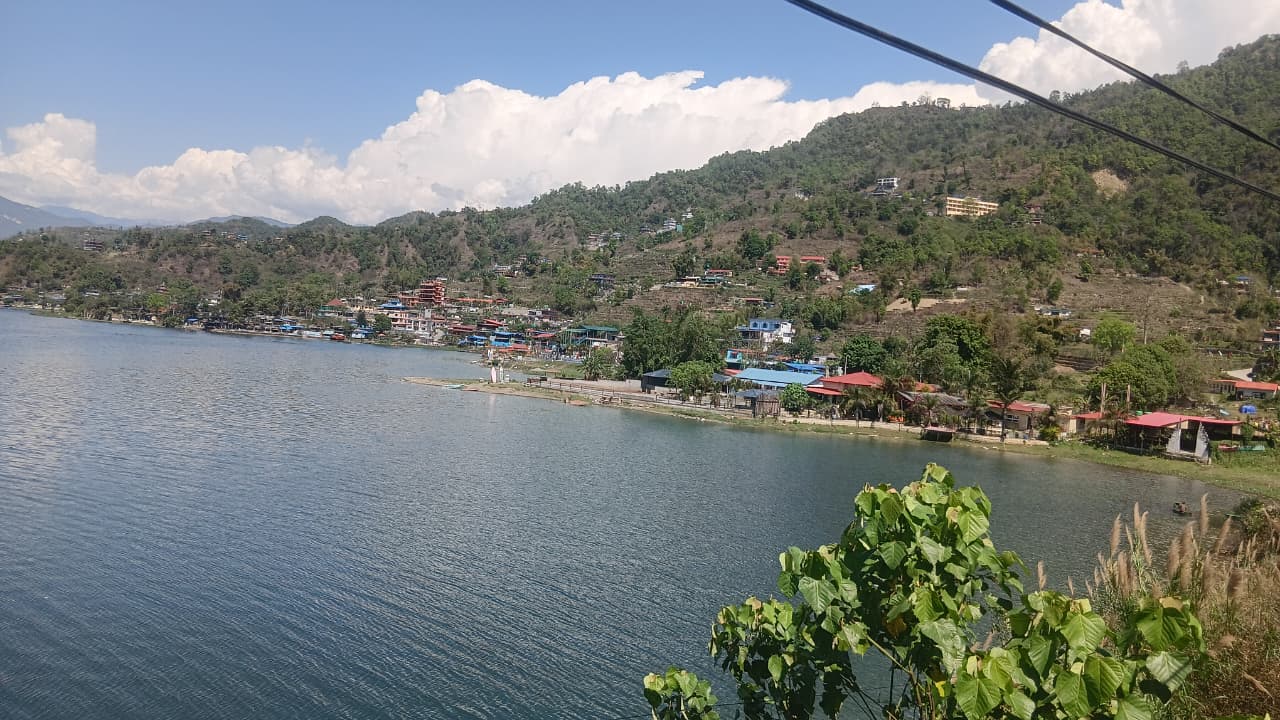
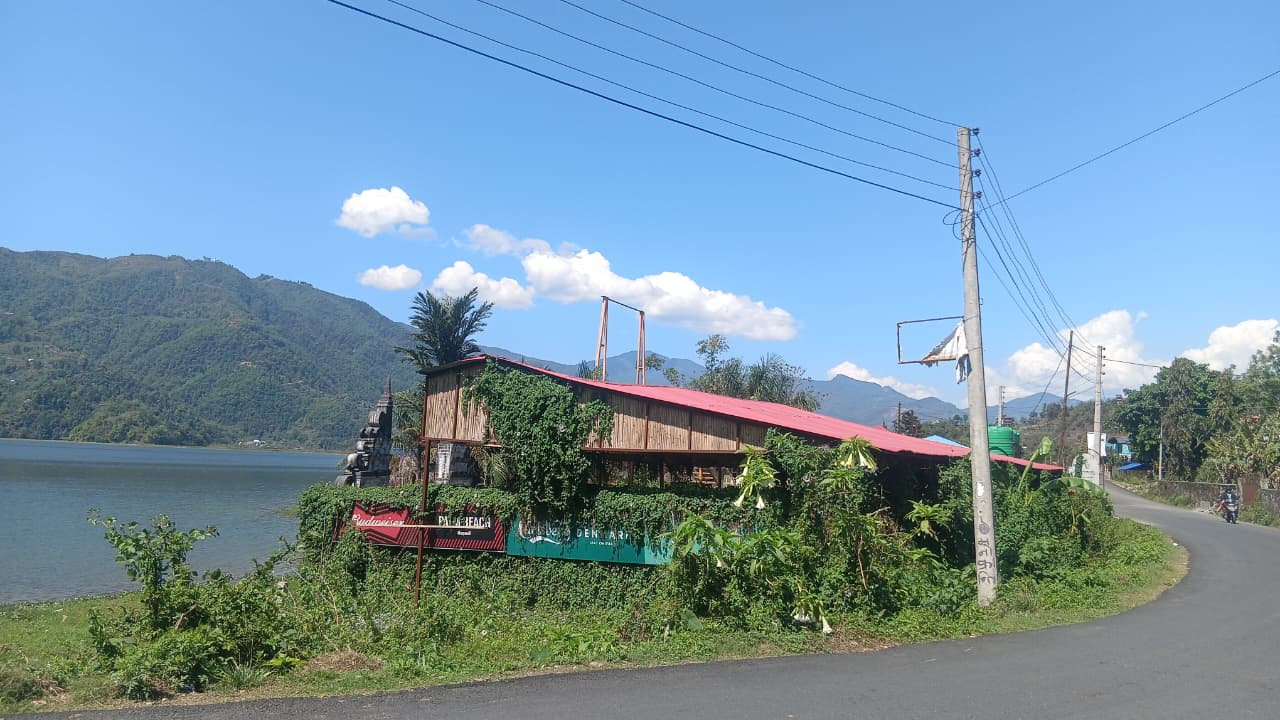
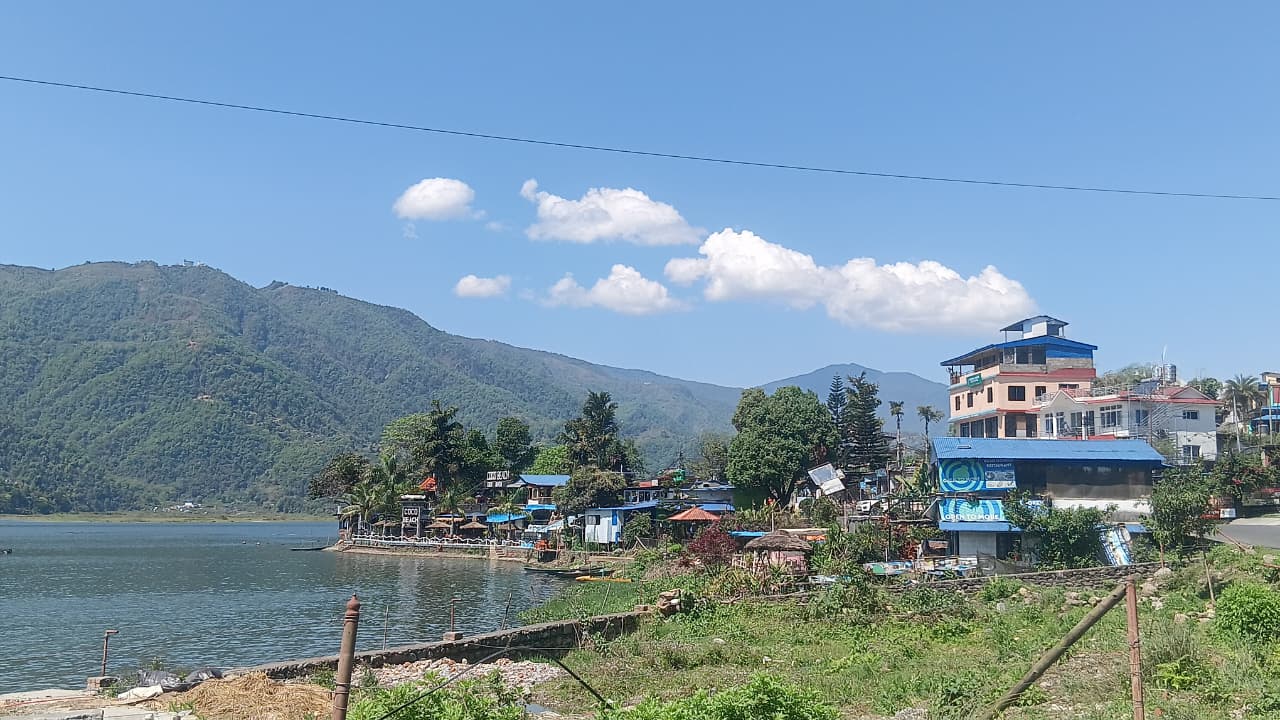
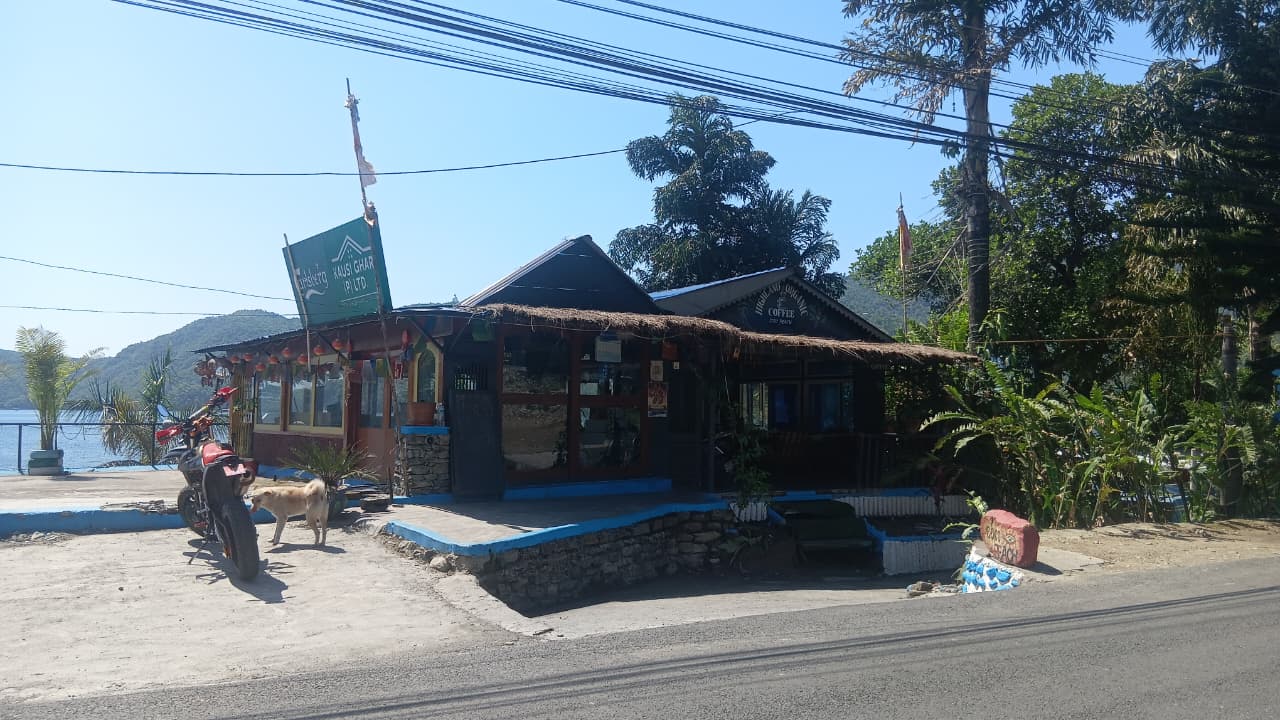
Dozer Operated on Fewa Lake Structures, Rebuilt Within Three Days Sparking Controversy

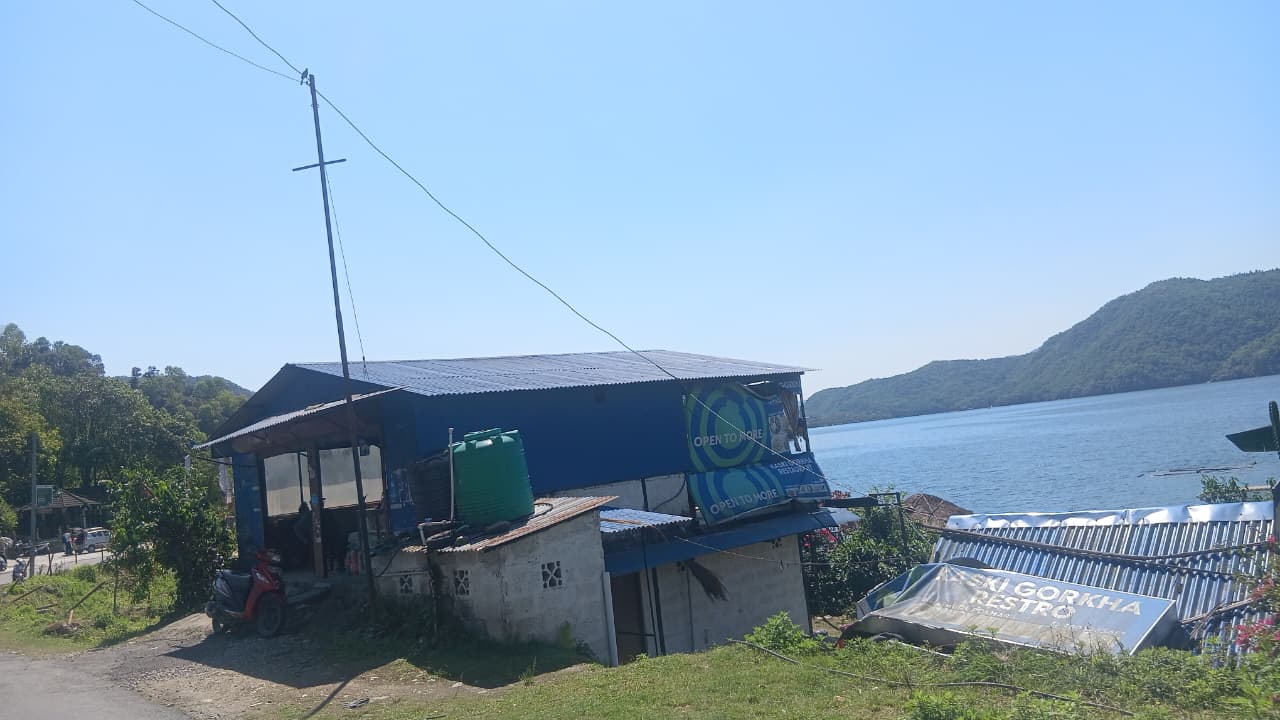
March 6, Pokhara — The operation of a dozer on structures along the shore of Fewa Lake, early Saturday morning, became a nationwide topic of discussion. Soon after incorporating the preservation of Fewa Lake into the government’s 100-point agenda led by Prime Minister Balendra Shah, the dozer operation was carried out under the directive of Home Minister Sudan Gurung. However, within three days, the demolished structures have been rebuilt to their original state, reigniting controversy.

In coordination with Prime Minister Shah, Home Minister Gurung, and Pokhara Mayor Dhanraj Acharya, dozers were deployed early Saturday morning to remove 32 structures located within the 65-meter mandated buffer zone around Khapaundi area of Fewa Lake. The operation targeted local landowners’ structures as well as parts of the Park Village Waterfront Resort premises and the swimming pool area. Tourists were even reportedly sleeping near the site amid the dozer activity, which drew significant public protest.

Following the widespread debate ignited by the dozer operation on RatoPati news platform, the demolished structures have since been restored to their previous condition. Local residents and business owners have criticized the metropolitan office for conducting the demolition without proper coordination, causing unrest among the community. These business owners have now reconstructed the structures and resumed their operations.

While numerous structures line the lake shore, the metropolitan authority only demolished parts of 32 structures. The demolition caused damage to walls, hoarding boards, the swimming pool at the waterfront, and the garden. Yet, within two days, the majority of the demolished structures were rebuilt, and businesses in those locations have resumed.

The rushed dozer operation, conducted under instructions from the Prime Minister and Home Minister, led to immediate controversy. On Sunday, local landowners and businesspersons submitted memorandums to the District Administration Office Kaski, Pokhara Metropolitan City offices, and staged demonstrations against Prime Minister Shah, Home Minister Gurung, and Mayor Acharya.

Local businesses and landowners have vowed to defy the metropolitan government’s order to demolish the structures within 15 days. By Monday, nearly all damaged structures were rebuilt to their original condition, signaling resistance from the community.

Mayor Dhanraj Acharya claimed that demolitions would be limited and temporary, asserting that the structures would not be restored to their previous condition again. However, Tarunath Pahari, chairperson of the Pokhara Tourism Council, criticized Mayor Acharya’s remarks, stating they were made without understanding local sentiments and the actual regulations, branding it a stunt.

Local resident Hari Bhujel expressed concerns that the conflict had arisen due to misunderstandings of local feelings and Fewa Lake’s regulations, improperly associating the controversy with the Prime Minister and Home Minister. Bhujel emphasized the need for long-term planning and community consultation instead of using dozers merely to gain attention.

Laxman Subedi, President of Pokhara Hotel Association, noted that while enforcement of the standard is desired by both business owners and locals, causing disruptions while tourists are present is counterproductive. He urged for dialogue instead of instilling fear in locals in the name of regulation enforcement.

In Khapaundi, Mayor Acharya has previously conducted dozer demolitions on one or two structures. Similarly, former Mayor Man Bahadur Jaisi faced controversy for operations around the Coco Beach area. The practice of demolishing structures only to allow reconstruction later has raised questions about compliance with legal regulations by elected officials.

Mayor Acharya claims the demolition this time was carefully prepared. However, locals reject this claim and insist on restoring the previous status quo. Many argue that the government’s operation without adequate preparation will inevitably exacerbate the dispute.

Despite repeated requests from the metropolitan city to refrain from building within the Fewa Lake buffer zone, construction continued. Although attempts are made each year to remove unauthorized structures, their numbers continue to rise along the lake’s edge.

The powerful administration led by Prime Minister Balendra Shah is expected to resolve this issue. Inclusion of Fewa Lake protection in the 100-point agenda and subsequent government action spurred public discussion.

Recently, Mayor Acharya claimed that the Waterfront Resort property lies within the regulation area, prompting Home Minister Gurung to assert that despite the loss of his own land, the standards must be enforced. This claim has also fueled tensions.

Home Minister Gurung has faced criticism after it came to light that he rented land within the regulation area and built structures. When locals revealed six years of unpaid rent, Gurung asserted he was deceived and vowed to pursue legal action. The controversy remains unresolved.

With the mayor and home minister both at the center of criticism, there is growing doubt about the success of regulation enforcement. Mayor Acharya has declared no further demolitions will occur if the structures are not removed within the allotted time. If the government once again fails to reach a decision, former study coordinator Bishwaprakash Lamichhane warned that the Fewa Lake issue will never be resolved.

Although the Supreme Court repeatedly ordered enforcement of the 65-meter buffer zone, previous governments had not succeeded.

According to Mayor Acharya, boundary demarcation around the waterfront is complete. Following Supreme Court directives, 1,055 pillars have been installed to mark the 65-meter buffer, measured from the highest water flow point. Efforts are ongoing to identify and demarcate contaminated lands.

The regulations have unsettled those constructing illegal structures under the cover of political influence within the zone, placing them under scrutiny.

The Supreme Court’s order issued on June 18, 2023, mandates maintaining a 65-meter buffer around Fewa Lake. However, on April 1, 2022, Pokhara Metropolitan had reduced this standard from 65 meters to 30 meters. Lawyer Khagendra Subedi and others filed a writ petition challenging this reduction.

In response to the writ, the court ordered the removal of structures within the 65-meter zone within six months and declared the intermediate buffer zone as a complete green area.

There is also ongoing conflict regarding compensation for land within the lake area recorded between 1961 and 1974. Only land outside the established lake and its delineated zone is eligible for compensation under law. The government has set procedures to prevent registering state land under the lake’s name.

The court-mandated 65-meter buffer zone, declared a green belt, has yet to be implemented, leading to contempt cases against the Gandaki Provincial Government, Pokhara Metropolitan, and federal government in the past.

Due to this litigation, a committee led by former Kaski District Development Committee chair Punya Prasad Paudel submitted a boundary demarcation report on February 14, 2021. The report, published on March 4 in the official gazette, delineated the Fewa Lake area as 5.726 square kilometers (11,255 ropani).

According to Paudel’s study, the high flood level is set at 754.9 meters above sea level, resulting in a total inundated area estimated at 6.343 square kilometers—approximately 1,213 ropani larger than the official figure.

Mayor Acharya states that the Supreme Court-defined 65-meter area equates to 7.616 square kilometers (14,570 ropani).

Work continues to identify contaminated lands and differentiate between compensated and uncompensated properties. Additionally, land registered post-2018 is undergoing taxation and ownership verification. The committee led by Paudel reports that 1,479 ropani of Fewa Lake area is illegally occupied.

Reports indicate 881 land plots fall within the lake area, with 518 plots covering 916 ropani registered to individuals. Besides tax-exempt land covering 477 ropani and 12 anna registered under private names, 83 ropani of land has also been officially registered to individuals per court decisions.

Furthermore, 133 ropani is reportedly in private use and undergoing registration, while 83 ropani across 75 plots were registered under royal authority in the past.

Overall, more than 1,610 ropani of land within Fewa Lake is registered under private ownership, while 907 ropani remains government property, planned to be officially registered under the lake’s name per committee reports. Of this government land, 503 ropani is registered under the Harpan River name.

Bishwaprakash Lamichhane first raised concerns in the Supreme Court on July 7, 2011, leading to the court’s directive in 2018 for all three government layers to enforce lake protection measures.

अमेरिकामा बलात्कार आरोप लागेका कलाकार ‘बले’माथि नेपालमा अनुसन्धान सम्भव छ ?

Is It Possible to Investigate ‘Bale’ in Nepal over Rape Allegations Made in the US?

March 23, Kathmandu – A team from the District Police Office, Kathmandu, arrested comedian Sagar Lamsal, popularly known as ‘Bale,’ on Friday night from Budhanilkantha. At the time of his arrest, Bale was facing serious allegations. A young woman residing in the United States had accused him on social media of rape. The woman, who claimed to know Bale personally, alleged that he forcibly assaulted her after coming to her room. Following these grave accusations and subsequent media coverage citing the victim, the Kathmandu police initiated an operation called Safety Kathmandu, which led to Bale’s arrest. That night, the Kathmandu police detained 195 individuals, including Bale. However, since Saturday was a public holiday, Bale’s custody was extended on Sunday. The police clarified that the extension was granted not for the rape allegations but on grounds of misbehavior, with the District Administration Office authorizing five days of police detention for investigation. Currently, Bale is held in the police custody facility at Bhadrapur, Kathmandu.

Despite the serious rape allegations made by the woman and Bale’s swift arrest, the police issued a statement denying the claims related to rape. According to SP and spokesperson Pawan Kumar Bhattarai of Kathmandu Police, the investigation ongoing pertains only to the charge of misbehavior. The statement urges the public to refrain from spreading misinformation regarding the case. The police have indicated that an investigation based on extraterritorial jurisdiction is possible. According to police sources, should the victim file an official complaint, the investigation would proceed accordingly. However, no formal complaint has yet been received from the victim or her family. “Once a complaint is lodged, the investigation will move forward,” a police source stated.

The police have further clarified that although the rape allegations involve an incident allegedly committed in the United States, an investigation can still be conducted from Kathmandu. The Criminal Code of Nepal, 2074 (2017), for the first time, includes provisions for extraterritorial jurisdiction. Article 1, Section 2 of the code stipulates that crimes committed outside Nepal are considered as if committed within Nepal, and legal action can be taken accordingly. Clause 3 of the same section explains that if a Nepali citizen commits crimes such as murder, conspiracy, maiming, abduction, unlawful detention, or rape against another Nepali citizen outside Nepal, it will be treated as if the crime took place within Nepal, allowing for prosecution there. Based on these provisions, the police in Kathmandu can progress with investigating Bale.

Former Deputy Attorney General Gopal Rizal agrees that the extraterritorial application of the Criminal Code, 2074 is possible for some offenses. However, he notes that this is only applicable if the country where the incident occurred has not already initiated legal proceedings against the individual. “An individual cannot be prosecuted twice for the same offense in two countries,” Rizal explains. “If the country where the crime took place has begun prosecution, then Nepal cannot pursue the case further under the principle of double jeopardy.” Thus, if Bale is investigated and prosecuted in Kathmandu, the case cannot be tried again in the United States. Rizal further explains that gathering evidence and factual data to be used in prosecutions outside Nepal generally must be done in that foreign country, often requiring mutual legal assistance or similar arrangements between the two countries. He adds, “If it is not feasible to travel to the crime site, investigation must proceed from where the suspect resides.” Article 2 of the Criminal Code, 2074 anticipates extraterritorial jurisdiction in rape cases. Since rape is legally recognized as a crime under US law as well, should the Nepali victim choose to pursue legal remedies in Nepal without advancing US legal processes, an investigation could proceed in Nepal. Authorities also recall a precedent where extraterritorial jurisdiction was used to investigate a murder case involving Nepalese workers in Malaysia.

In that case, 40-year-old Dhanbahadur Pradhan from Shivsatakshi Municipality-3, Jhapa, was murdered in Malaysia. The murder accused was Anil Kumar Sah, a 24-year-old Nepali also working there in the same company in Gaushala Municipality-5, Mahottari. Pradhan was Sah’s supervisor and they often had disputes over work matters, which resulted in Sah killing Pradhan on November 17, 2023 (2 Mangsir 2080 in Nepali calendar). Sah was arrested upon returning to Nepal on January 14, 2024 (30 Poush). SP Kumod Dhungel of the District Police Office Kathmandu, who investigated the case, explained that the investigation involved collecting evidence through various means including the Malaysian police’s forensic reports, Interpol cooperation, video conferencing eyewitness statements, and the accused ultimately confessing.

Given the global dispersion of the Nepali diaspora, with significant populations in Europe, the US, and the Gulf countries, challenges have arisen in investigating and resolving such cases, prompting repeated demands for the appointment of police liaison officers abroad. Establishing police attachés in countries with dense Nepali populations facilitates coordination with local law enforcement and other concerned entities to address legal and security issues Nepali nationals face overseas. So far, Nepal has only posted police attachés in India but none elsewhere. Experts note that having police liaison officers in the US would simplify direct communication with the victim in such cases, enable collaboration with US police, and streamline the transfer of investigative materials such as crime scene reports to Nepal. This enhances the feasibility and efficiency of legal proceedings and victim support.

Inspector General of Police Dhan Bahadur Karki also emphasized the need for police attachés in countries with large Nepali populations during his address at the Ministry of Home Affairs on November 13, 2023 (27 Kartik). He stated, “Given the vast contribution of Nepalis abroad to national economic development and the necessity of their security and emergency preparedness, the government is expected to prioritize and implement the deployment of police attachés in such countries.” The Nepal Police have repeatedly urged the establishment of police attachés in the Gulf countries, the United States, China, and several European nations, though implementation is pending.

अध्यक्ष भुसाल – Online Khabar

Remarks by Chairman Dharmaraj Bhusal

March 6, Kathmandu – Dharmaraj Bhusal, Chairman of OnlineKhabar.com (Pvt. Ltd.), stated that each story of the 50 influential women is like a university in itself, and that history will eternally remember these impactful contributions. Speaking at the event unveiling the 2082 BS list of influential women, Chairman Bhusal emphasized that attempts to portray women merely as ‘victims,’ ‘mute,’ or ‘supportive’ have failed. “Our society long tried to depict women only as ‘victims,’ ‘mute,’ or ‘supportive,’ but the 50 faces present here have successfully shattered that traditional mindset,” he said. “You have broken through conventional limits, deficiencies, and policy weaknesses to carve your own paths.”
Chairman Bhusal described the ‘OnlineKhabar 50 Influential Women’ campaign as a small effort to honor their contributions. He underscored the media’s duty not just to revolve around power but to bring the sweat and struggles of grassroots people into the mainstream. “Today’s media role is no longer confined to recording politicians’ speeches or making negative incidents headlines. The evolving state of journalism challenges us: Are we truly showing the real picture of our society? Media’s work is not just about power and authority; it is about telling the stories of the grassroots people’s sweat, struggle, and success,” said Chairman Bhusal.
He clarified that when compiling the list, official positions or titles were not the primary criteria. “We did not set specific positions or responsibilities as standards for this list. Our main criterion is the impactful work done in society,” he explained.
He extended greetings to the honorable Acting Chief Justice, distinguished guests, respected sisters from various geographic regions of the country, and all attendees. “Despite your busy schedules, thank you for supporting us in moving forward. On behalf of the OnlineKhabar family and personally, I sincerely welcome and thank everyone. I feel a special energy at today’s program. This energy is not merely formal but reflects dreams, struggles, and a transforming Nepal. Today, we are revealing the list of ’50 Influential Nepali Women.’ I congratulate and honor all these great women.
Dear guests, I would like to begin with a brief clarification and honest admission. OnlineKhabar has traditionally published this list annually on International Women’s Day. However, this year, we had a significant national responsibility to fulfill. Due to the general election held on Falgun 21 (March 5), our entire editorial team had to work diligently providing election updates and supporting democracy. Therefore, we could not release this list on March 8 but have done so a few months later.
Over the past four months, we rigorously discussed more than 460 names. Listening to the stories of women from the Himalayas to the Terai and abroad, it became clear that Nepal indeed stands on the shoulders of women. The media’s role is not limited to recording political speeches or highlighting negative news. Its responsibility is to bring the efforts, struggles, and aspirations of grassroots people into the mainstream. The ‘OnlineKhabar 50 Influential Women’ campaign is a significant step toward that responsibility.
Our society had long tried to portray women as ‘victims,’ ‘mute,’ or ‘supportive,’ but the 50 women represented here have broken that myth. These women have shattered narrow traditional confines, mountains of scarcity, and policy gaps to forge their own paths. When preparing this list, we did not measure by position or role but by exemplary deeds.
The story of a worker from Jajarkot who processed Ratnapathar and succeeded in reaching the international market is extraordinary. A woman who married at age ten but went on to empower thousands to become self-reliant; a courageous woman who cleaned hospital floors while fighting for Dalit women’s justice; all these are universities in themselves. A woman who lost her eyesight at three but became an Under Secretary in Braille script; a devoted woman giving artificial respiration to newborns; a teenage girl fighting abroad to save her brother’s life – all will be eternally remembered by history.
You are Nepal’s true influencers. Your impact is not measured by social media views but by the living standards of grassroots people. This year, we announce the formation of the ‘50 Influential Women Alumni’ network, which will connect these honored women, open paths for collaboration, and serve as mentors for future generations.
Finally, though only 50 women could be included due to our limitations, thousands more influential women exist, whose contributions are inscribed in golden letters in society. We will continue to share your stories in the days ahead. In this new post-election period, the energetic women present here clearly demonstrate Nepal’s promising future. You are the fireflies capable of bringing light to darkness. The recent Gen Z movement has brought Nepal its first female Prime Minister and increased the presence of young women and youth in parliament, a source of pride. Now, policy reforms for women and swift justice for those who have suffered violence are urgently needed.
On behalf of OnlineKhabar, I express our commitment not to silence the voices of courageous women like you and to always stand for hope, struggle, and success in journalism. We sincerely thank the adjudicating panel, colleagues, business partners, and readers who have supported this campaign. May your journeys continue forever. In this journey toward equality and coexistence, OnlineKhabar will always stand with you. Once again, welcome to all and heartfelt congratulations to the honored personalities. Thank you.

Formation of 21-Member Parliamentary Procedure Advisory Committee in the House of Representatives

The House of Representatives has formed a 21-member Parliamentary Procedure Advisory Committee. The committee includes 21 members of parliament such as Achyutam Lamichhane, Afsana Banu, Aryan Rai, among others. Kathmandu, 23 Chaitra. The House session held on Monday approved the formation of this committee. The following MPs represent the committee: 1. Achyutam Lamichhane 2. Afsana Banu 3. Aryan Rai 4. KP Khanal 5. Kamini Chaudhary 6. Krantishikha Dhital 7. Khuswu Oli 8. Ganesh Singh Thagunna 9. Guruprasad Baral 10. Ganga Laxmi Awal 11. Tapeshwar Yadav 12. Devaraj Pathak 13. Narendra Kumar Kerung 14. Prakash Chandra Pariyar 15. Nisha Dangi 16. Bodh Narayan Shrestha 17. Meena Kumari Yadav 18. Yubaraj Dulal 19. Rajan Gautam 20. Dr. Ram Lama 21. Bipin Kumar Acharya.

भारतीय संसद्‍मा बालेन सरकारको ‘माफी’ चर्चा – Online Khabar

Discussion in Indian Parliament on PM Balen Shah’s Proposal for Formal Apology to Dalit and Marginalized Communities

The Nepalese government, under the leadership of Prime Minister Balen Shah, has announced its intention to formally apologize to Dalit and marginalized communities. This historic move has garnered notable attention in Indian media as well. Indian MP Chandrashekhar Azad cited this initiative as an example and urged the Indian government to offer a formal apology to the Dalit community. Kathmandu, Chaitra 23.

For the first time in Nepal’s history, the state is preparing to formally apologize to Dalit and historically marginalized communities. The newly formed government led by Prime Minister Balen Shah passed a 100-point governance reform agenda during its first cabinet meeting, which includes issuing the apology within 15 days. Alongside the apology, special reform programs aimed at social justice, inclusive restoration, and historical reconciliation are planned for implementation.

Dalit activists have described this step as ‘historic,’ and it has sparked a new debate on caste-based discrimination in South Asian countries. The issue has also been vocalized within the Indian Lok Sabha. MP Chandrashekhar Azad referred to Nepal’s decision as an example and called on the Indian government and parliament to formally apologize to Dalit and marginalized communities, thereby taking moral responsibility for historical injustices.

Caste has existed in India for thousands of years and still profoundly influences social and political life. The Indian Constitution banned caste discrimination entirely in 1950. However, caste-based discrimination continues in various forms across the country, except in major cities, with Dalit communities frequently facing prejudice. Similarly, Nepalese society is also influenced by the Hindu caste system. Rashwapa Chairman Ravi Lamichhane has already apologized to the Dalit community. This development has highlighted a shared social and cultural issue between Nepal and India on an international platform.

OnlineKhabar Releases ’50 Influential Women of 2082′ List Today

News Summary

Editorially Reviewed.

  • OnlineKhabar will release the ‘50 Influential Women of 2082’ list of Nepal on 23 Chaitra.
  • The jury panel led by former Chief Justice Mira Khadka selected 50 influential women from over 700 nominations.
  • The list will be unveiled and awards presented by Acting Chief Justice Sapana Pradhan Malla at a special ceremony in Lalitpur this evening.

23 Chaitra, Kathmandu – OnlineKhabar.com is set to publish the list of Nepal’s ‘50 Influential Women of 2082’ today.

Traditionally released around International Women’s Day (March 8), this year’s list was delayed due to the general elections held on 21 Falgun. This marks the third edition of the ‘50 Influential Women’ initiative by OnlineKhabar.

In a special event at The Plaza in Lalitpur, Acting Chief Justice Sapana Pradhan Malla will unveil the list of 50 influential women and present awards to them.

The list includes 50 representative, dedicated, and hardworking women from various sectors such as Nepali politics, society, arts and literature, culture, youth and sports, knowledge and science, entrepreneurship, and the diaspora.

Before finalizing the list, OnlineKhabar publicly invited nominations. Over 700 names were collected from the Central News Room in Kathmandu, correspondents across all seven provinces, and relevant experts and sources. From these, a jury panel headed by former Chief Justice Mira Khadka selected the 50 women.

Dharma Raj Bhusal, Chairman of OnlineKhabar Pvt Ltd, explained that the primary objective of the ’50 Influential Women’ selection is to recognize and honor women’s contributions across diverse sectors and publicly document their exceptional leadership as a national achievement.

OnlineKhabar also annually publishes the ‘Forty Under Forty’ list, highlighting young achievers from various fields around International Youth Day.

अनलाइनखबर ‘५० प्रभावशाली महिला–२०८२’ को सूची सार्वजनिक हुँदै (लाइभ)

List of ’50 Influential Women 2082′ Released in Lalitpur (Live)

Summary

  • The list of ’50 Influential Women 2082′ was unveiled at an event in Lalitpur.
  • Editor-in-Chief Basant Basnet explained the delay in releasing the list was due to national responsibilities.
  • The list features 50 representative women from politics, society, arts, youth, science, entrepreneurship, and the diaspora.

The list of Nepal’s ‘50 Influential Women 2082’ is being released.

The announcement is taking place shortly at a special program held at a hotel in Lalitpur.

Traditionally published ahead of International Women’s Day (March 8) each year, this year’s list was delayed due to the busy schedule surrounding the recent general elections (held on Falgun 21) and national duties, Editor-in-Chief Basant Basnet informed.

This list highlights 50 dedicated and courageous women representing various fields including Nepali politics, society, arts and literature, culture, youth and sports, knowledge and science, entrepreneurship, and the diaspora.

Bird Flu Confirmed in 23 Locations During Chaitra Month

March 23, Kathmandu – Throughout the month of Chaitra, bird flu has been detected in 23 different locations. According to Dr. Umesh Dahal, Director General of the Department of Livestock Services, there were no confirmed cases of bird flu prior to Chaitra this year, but the disease was identified in 23 places during this month alone. The first cases of the year were reported simultaneously on March 19 (Chaitra 6) in two locations within Morang District—Sundarharaicha and Urlabari municipalities.

Dr. Dahal further informed that there have been 12 confirmed cases in Sunsari, 7 in Morang, 2 in Jhapa, 1 in Chitwan, and 1 in Kathmandu. He stated that efforts to control each affected area have successfully prevented further spread of the disease. According to him, a total of 104,000 poultry birds, including chickens and ducks, have been culled in the affected regions.

Bird flu was also confirmed among crows within the premises of Tribhuvan University in Kathmandu. Following the outbreak and spread of infections in Sunsari, Jhapa, and Morang districts, restrictions have been imposed on the transport of livestock and poultry in these areas. “We have officially declared the affected zones and our rapid response teams are carrying out the destruction of infected animals,” Dr. Dahal explained. “These measures have prevented further transmission of bird flu within these districts.”

The government has established a protocol to cull affected birds and provide compensation up to 75% of the loss to farmers impacted by bird flu outbreaks.

पिंगलास्थानमा चल्यो गोली, दुई भारतीय पक्राउ – Online Khabar

Two Indian Nationals Arrested After Firing Incident in Pingalashthan

In the Gausala-Pingalashthan area of Kathmandu, the Narcotics Control Bureau opened fire to apprehend two Indian nationals. The detainees are suspected of being involved in drug trafficking. The vehicle they were traveling in has also been seized. The incident occurred on 24 Chaitra in Kathmandu.

On suspicion of drug trafficking in the Gausala-Pingalashthan vicinity, two Indian nationals were arrested. The Narcotics Control Bureau team fired shots at midnight to detain the individuals. Authorities believe the arrested persons are engaged in drug-related activities. Their vehicle has been taken into custody as well. Further details about the case are yet to be disclosed.

18 Blackbucks Relocated from Kanchanpur and Bardiya to Chitwan

The Ministry of Forests and Environment has decided to relocate 18 blackbucks from Kanchanpur and Bardiya to the Tikouli area of Chitwan. The blackbuck is listed as an endangered species, and the ministry has informed that Nepal’s population exceeds 500. A secure environment will be created by erecting an enclosure and constructing infrastructure within an area of 20 hectares for the relocation.

The blackbucks will be moved from Shuklaphanta National Park in Kanchanpur and the Blackbuck Conservation Area in Bardiya to the Tikouli area in Chitwan. According to the ministry, six males and twelve females will be relocated. In 1976 (Bikram Sambat 2033), the blackbuck population in Khairapur, Bardiya was limited to just nine. The ministry noted that effective conservation measures have led to a significant increase in their numbers since then.

Over the past decade, a total of 42 blackbucks have been relocated from Sadar Zoo and Khairapur to the Hirapur Range of Shuklaphanta National Park to increase their population in Nepal. The ministry explained that limiting wildlife to specific areas poses risks of sudden extinction due to genetic, environmental, and unforeseen factors.

In line with this practice and necessity, a task force formed by the ministry prepared a feasibility and field study report, recommending relocation based on prior theoretical decisions and approved action plans. Accordingly, an enclosure and minimal infrastructure will be established on approximately 20 hectares to facilitate the blackbucks’ relocation.

एनपीएल २०२५ को आय-व्यय अनुमोदन, यस्ता छन् क्यान बोर्ड बैठकका निर्णय

Approval of NPL 2025 Income and Expenditure, Decisions Taken at CAN Board Meeting

The Central Executive Committee of the Cricket Association of Nepal (CAN) has approved the annual program and budget for 2026. CAN has also decided to hold its annual general meeting on Baisakh 27 and 28, 2083 BS, in Biratnagar. The second edition of the Nepal Premier League has generated an income of NPR 473.6 million.

Kathmandu, Chaitra 23 – The Central Executive Committee of CAN approved the annual program and budget for 2026 during its recent meeting. The committee also decided to extend the contract period for the Tribhuvan University Cricket Ground in Kirtipur and to request the Nepal Government to transfer ownership of the Lower Mulpani Cricket Ground, which is currently managed under the National Sports Council, to CAN.

According to a CAN press release, “As the contract period with Tribhuvan University for the cricket ground is nearing its end, the government has given high priority to completing the first phase of the international-standard cricket stadium, including the installation of floodlights. This ground is essential for the development of Nepali cricket, and hence the committee resolved to request an extension of the contract agreement for the Tribhuvan University Cricket Ground.”

Furthermore, the tenure of the executive committees of 20 districts, whose four-year terms have ended, has been extended until the end of Jestha. The committee also directed that mandatory elections be held immediately following the annual general meeting. The income and expenditure report of the second edition of the Nepal Premier League (NPL) was approved, showing total revenue exceeding NPR 473.6 million and expenses amounting to approximately NPR 219.6 million. After deducting expenses, approximately NPR 253.9 million remains. Fifty percent of this amount has been distributed among the eight franchise teams, while CAN will receive about NPR 92.1 million. Additionally, following ICC guidelines, CAN has decided to annually invest USD 50,000 towards the development of women’s cricket.