Author: space4knews

अपूरो सूचना, समन्वय अभाव – Online Khabar

Lack of Adequate Information and Coordination Among Security Agencies

According to an editorial review summarizing the news, the investigation commission’s report highlights the inadequate information sharing among security agencies regarding the preparations for the Janajati movement. Statements from security personnel revealed discrepancies in the information about the movement’s preparations. The events on 7 and 8 September exposed significant coordination gaps between the agencies.

Kathmandu, 11 March — The investigation commission’s report clarifies that sufficient information was not shared among security agencies ahead of the Janajati movement held on 7 and 8 September. The report identifies a major shortfall in receiving necessary information across agencies, from the National Investigation Department (NID) to the Nepal Police, Armed Police Force, and the Nepal Army, each tasked with intelligence gathering.

The testimonies and details provided by security personnel revealed varied and often conflicting information about the movement’s preparation. Even among police officials, there was notable inconsistency in the intelligence received. Then Inspector General of Police (IGP) Chandrakuver Khapung stated that he was informed the protest would be peaceful. In contrast, then Additional IGP and current IGP Dan Bahadur Karki noted receiving intelligence about discussions on social media platforms like Reddit, Discord, and X (formerly Twitter).

According to Karki’s testimony, “By monitoring information on social media platforms utilized by Janajati, such as Reddit, Discord, and X, we approved a security plan in the District Security Committee meeting and deployed 4,396 police personnel.” Furthermore, then Additional IGP Siddhi Vikram Shah reported that he informed the IGP after rapid dissemination of information about the movement on TikTok, Facebook, Reels, and Discord.

Meanwhile, Om Rana, then Acting DIG of the Kathmandu Valley Police Office at Ranipokhari, remarked that the movement unfolded differently than anticipated. Former SSP Vishva Adhikari of Kathmandu admitted they were unable to predict the scale of the event. The Central Security Committee meeting on 7 September had estimated between 3,000 and 5,000 protesters. Officials acknowledged shortcomings in analyzing prior intelligence.

Anticipating a peaceful protest, arrangements were made for the President to address the National Assembly on 8 September. Police officials expected the Janajati movement to be manageable, with participation capped at around 5,000, whereas the Chief of Army Staff (COAS) expressed an opposing view. Referring to the 7 September meeting, COAS Ashok Raj Sigdel stated, “The National Investigation Department and other security agencies provided information indicating the potential for a widespread movement.” However, the National Security Council was not in session at that time.

While COAS Sigdel mentioned the likelihood of a large-scale protest, former NID Chief Hutaraj Thapa gave a different account, estimating the protester count between 3,500 and 5,000. These varying statements indicate serious flaws in intelligence gathering within the state security structure, resulting in fragmented and incomplete information among security forces about the Janajati movement. Consequently, they were unable to conduct thorough analyses, formulate strategic plans, or execute effective field operations.

During the incidents on 7 and 8 September, in the context of insufficient information, coordination among security agencies deteriorated to its lowest point. Testimonies of security personnel confirm this. Kathmandu’s then SSP Vishva Adhikari revealed, “There were occasionally time lags in tactical movements between Nepal Police and the Armed Police Force, and the command clearance process posed challenges to coordination.” The Army’s focus was not fully directed on crowd control since it was assigned to static duties.

Special Task Force then-SP Rishir Ram Kandel, deployed at the Parliament premises for protest control, clearly pointed out the lack of coordination among security agencies. He stated, “Although the Armed Police Force was nearby on 7 September, it was not as active as expected. On 8 September, a squad of 10–12 Army personnel moved away from the Inspector General of Police’s gate as the unrest intensified, becoming neutral. This exposed the weaknesses in the security mechanism’s coordination.” Another SP from Kathmandu, Apil Raj Bohara, questioned the role of both the Armed Police and the Army, highlighting that “both the Armed Police Force and Army only participated towards the final moments, and neither agency demonstrated the expected professional cooperation, institutional response, nor collective coordination.”

In light of the coordination gaps between security agencies, COAS Sigdel has directed that efforts should be coordinated moving forward. He stated, “When the security situation around the Parliament complex became complicated on 7 September, I instructed coordination with other security agencies and the necessary security preparations as per previous decisions.”

Petrol, Diesel, and Kerosene Prices Increased by Rs 15 per Liter


March 24, Kathmandu – Nepal Oil Corporation has announced an increase in the prices of petroleum products. On Wednesday evening, the corporation raised the prices of petrol, diesel, and kerosene by Rs 15 per liter.

Following the hike, the price of petrol for the first category has risen from Rs 169.50 to Rs 184 per liter. For the second category, the price is now Rs 186, and for the third category, Rs 187 per liter.

Similarly, the price of diesel/kerosene in the first category increased from Rs 149.50 to Rs 164.50 per liter, while the second category stands at Rs 166 and the third category at Rs 167 per liter.

The Oil Corporation has categorized areas into three price classes: the first category includes Barauli, Biratnagar, Janakpur, Amlekhganj, Balwari, Nepalgunj, Dhangadhi, and Birgunj; the second category includes Surkhet and Dang; and the third category covers Kathmandu, Pokhara, and Dipayal.

Prime Minister Decides to Release Three Key Documents Including the Janajati Movement Report


March 24, Kathmandu – Prime Minister Sushila Karki has decided to publicly release three significant documents.

Prime Minister Karki will release the report of the Inquiry Commission on the events of September 8 and 9, 2025 (Bhadra 23-24, 2082 BS), the report of the High-Level Inquiry Commission on Nepal Child Organization and Orphanage, 2020 (2077 BS), and the Good Governance Roadmap, 2025 (2082 BS), prepared by the Office of the Prime Minister and Council of Ministers.

Prime Minister Karki, as informed by her press advisor Ram Bahadur Rawal, has decided to archive and make public the report by the Inquiry Commission regarding the September 8-9 incidents in the library of the Federal Parliament Secretariat as of today (Wednesday).

Earlier, on Tuesday, she had decided to archive and release the report from the High-Level Inquiry Commission on Nepal Child Organization and Orphanage, prepared in 2020 (2077 BS), in the Federal Parliament Secretariat library.

Additionally, she has decided to advance the implementation process of the Good Governance Roadmap, 2025 (2082 BS), prepared by the Office of the Prime Minister and Council of Ministers on March 16, which will also be publicly released by the same office.

जाँचबुझ आयोगको सुझाव : नेपालका सुरक्षा निकायलाई भारत र चीनमा प्रशिक्षण दिनुपर्छ

Inquiry Commission Recommends Training Nepal’s Security Forces in India and China

March 24, Kathmandu – The Genji Movement Inquiry Commission has recommended conducting coordinated training programs between Nepal’s security forces and those of India and China to enhance capacity. According to the commission’s report, this approach also aims to improve diplomatic relations. It emphasizes that diplomatic initiatives are essential for training Nepal’s security agencies. The report states, ‘To enhance the capacity of security agencies, diplomatic efforts should be made to conduct coordinated training with the security forces of the two neighboring countries, India and China.’

The commission further suggested that to strengthen Nepal’s diplomatic relations, appointments in embassies and diplomatic missions should prioritize qualified, capable, and influential personalities over partisan considerations. ‘To achieve this, a collegium system or selection exclusively from foreign service experts should be implemented, following a policy where 80 percent of appointments come from the Ministry of Foreign Affairs and the remaining 20 percent are balanced accordingly,’ the report states. Among key reforms, the commission recommends establishing a think tank within the Ministry of Foreign Affairs to adopt strong diplomatic strategies and provide real-time solutions to diplomatic challenges through proper initiatives.

The longstanding dispute between Nepal and India over Kalapani, Lipulekh, and Limpiyadhura remains unresolved and requires resolution through robust government-to-government diplomacy. To strengthen Nepal-China relations and enhance national security effectiveness, the report urges advancing bilateral agreements focused on infrastructural connectivity like transportation, railways, and air routes and demonstrating readiness to implement existing agreements.

In the realm of economic diplomacy, the commission highlights the need to comprehensively inform the public about agreements such as the Millennium Challenge Corporation (MCC), Belt and Road Initiative (BRI), and the Bilateral Investment Promotion and Protection Agreement (BIPPA). These agreements should be undertaken while safeguarding national sovereignty, independence, and territorial integrity. The report reiterates that diplomatic initiatives must facilitate coordinated training with the security agencies of neighboring India and China to improve the effectiveness of Nepal’s security forces.

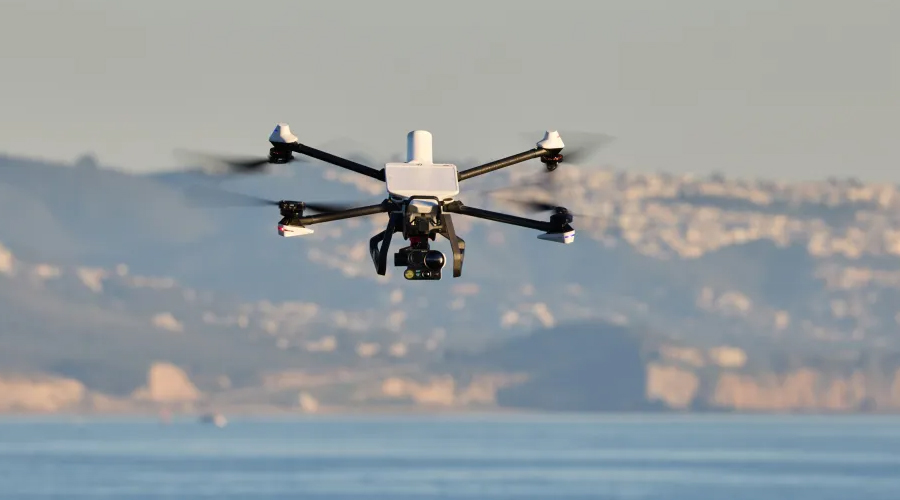
‘Guardian’ Drone Set to Replace US Police Helicopters as Brink Emerges in the Market

March 24, Kathmandu – Seattle-based startup company Brink has unveiled its new drone named ‘Guardian,’ aiming to bring innovation to public safety operations.

According to the company’s 23-year-old founder, Blake Resnick, this drone has the potential to replace the traditional helicopters currently used by US police forces.

Designed specifically for 911 emergency services, the drone is capable of flying at speeds up to 60 miles per hour, with a battery life of up to 62 minutes.

One of the most outstanding features of the drone is its integrated ‘Starlink’ panel, enabling it to connect to the internet from virtually anywhere worldwide.

Equipped with a 4K camera, thermal imaging, and a powerful loudspeaker system, the Guardian can clearly read vehicle license plates even from significant altitudes. Additionally, it features an automatic battery replacement system through its ‘charging nest’ and can carry emergency medical equipment such as defibrillators and lifesaving medications.

Backed by prominent investors including Sam Altman, Brink’s valuation has already reached half a billion dollars.

Following US government restrictions on Chinese drone manufacturer DJI, Resnick aims to position his company as the ‘Western DJI.’

Targeting approximately 20,000 police departments and 30,000 fire stations across the US, Resnick claims the market opportunity in this sector ranges between $600 million to $800 million.

165
Direct Seats

Parties Direct Seats

0 Seat

0 Seat

Proportional Total Seats

Teen Girl Assaulted After Boarding City Safari, Driver Arrested


March 24, Biratnagar — A driver has been arrested in Sunsari’s Ramdhuni on charges of raping a teenage girl who was traveling via City Safari. On the evening of March 19, the accused, 26-year-old Roshan Bishwakarma, allegedly took the 17-year-old girl to a forest near Dharan, assaulted her, and sexually assaulted her, police reported.

According to DSP Chandra Khadka of the Sunsari District Police Office, the victim was raped while returning to Morang from her home in Dharan. That evening, she was waiting for a vehicle at Bhotepul Chowk.

At that time, the safari driver assured her that other vehicles would not stop there and promised to drop her off at the bus stand she was waiting for. He then got her onto his safari vehicle. However, police stated that he took her to the forest near Sakela Park and committed the assault.

In the formal complaint filed by the victim, it is stated that the accused took her to the forest adjacent to Sakela Park, assaulted her, forcibly committed the rape, and also robbed her mobile phone. The police are preparing to file charges against Bishwakarma for abduction and rape.

राखेपको निलम्बनमा पर्‍यो एन्फा – Online Khabar

ANFA Suspended by National Sports Council Following Election Dispute

News Summary

Prepared after editorial review.

  • The National Sports Council has suspended the leadership of the All Nepal Football Association for three months.
  • ANFA was preparing to hold elections on March 26 in defiance of the council’s directives.
  • The Council issued a 24-hour ultimatum to ANFA to halt the elections.

March 25, Kathmandu – The National Sports Council (NSC) has officially suspended the leadership of the All Nepal Football Association (ANFA).

Following repeated non-compliance with directives, the NSC invoked Section 29 (2) of the Sports Development Regulations 2077 to enact the suspension.

This clause allows the council to suspend any federation for up to three months if it disregards council directives. Consequently, the ANFA leadership led by Pankaj Bikram Nembang has been suspended for this duration.

“Despite multiple written instructions from the regulatory authority to follow national laws in executing required matters as per the existing acts, laws, and the federation’s approved constitution, ANFA prioritized directives from its affiliated international body as mandatory, thereby undermining the supremacy of national law,” the NSC stated.

The council noted that while NSC-approved constitutions must be adhered to literally in terms of rights and responsibilities, ANFA claimed autonomy and failed to provide satisfactory responses as requested by the council.

“Our regulatory authority’s insistence that all federations comply with national laws and approved constitutions is non-negotiable and not subject to interference. The written response submitted by ANFA via email has not been considered adequate and does not meet the requirements under Rule 10(1)(6.1) of the Sports Development Regulations 2079 (Second Amendment). Thus, according to the Executive Committee’s decision based on Section 29(2) of the Sports Development Act, 2077, ANFA has been suspended for three months,” the letter explained.

The dispute arose after the current ANFA leadership attempted to conduct early elections, which are not stipulated in the constitution, three months before their term was due to expire.

When ANFA proceeded with preparations to hold elections on March 26 without NSC approval, the Council repeatedly instructed them not to move forward. However, ANFA ignored these warnings, prompting the NSC to initiate action.

On Tuesday, the NSC sent ANFA a letter with a 24-hour ultimatum demanding an explanation as to why disciplinary action should not be taken. ANFA responded that the elections would not be stopped, which led to the suspension.

With this suspension, Nepali football now faces increased uncertainty. There is a strong possibility that FIFA may also suspend ANFA, which could result in Nepal losing its access to international competitions and FIFA funding.

The NSC has also issued directives for several points of legal and constitutional compliance that ANFA must implement.

Key Directives

1. Federations must ensure uniformity in their constitutions by including a preamble and abbreviation aligned with Rule 7(झ) of the Sports Development Regulations 2079, and submit them for council approval before implementation.

2. The constitution’s definition section must explicitly define “Act” as the National Sports Development Act, 2077.

3. Similarly, “Regulations” must be defined as the National Sports Development Regulations, 2079.

4. The constitution must provide for democratic elections of federation officers and members every four years in accordance with Section 22(ग) of the Act.

5. Elections must be conducted according to subsections 4 and 5 of Section 22 of the Act.

6. Provincial and district associations formed under Section 22(3) must follow Sections 23 and 24 of the Act to establish sport associations and structures at the local level, conducting elections accordingly to ensure representative governance per the constitution.

7. Federations must hold annual general meetings within three months of the fiscal year-end, conduct periodic elections every four years, and obtain council approval for elections as per Rule 7(ग) of the Sports Development Regulations 2079.

8. Necessary amendments and revisions must be made to the constitution in accordance with current laws.

9. ANFA’s election process must align with the provisions of Articles 33 to 37 of its constitution, adhering to the approved constitution and prevailing regulations.

Excavator Operator Dies After Being Buried During Road Digging in Lamjung

News Summary

Including detailed updates.

  • An excavator operator named Vikki Mahato died after being buried during road digging work in Marsyangdi Rural Municipality-2, Lamjung.
  • He was trapped under a landslide including stones; despite rescue efforts and hospital transportation, doctors declared him dead.
  • The police are conducting further investigation and awaiting the victim’s relatives for the body autopsy.

Chaitra 11, Lamjung – An excavator operator died after being buried during road digging activities today in Marsyangdi Rural Municipality-2, Lamjung.

According to Deputy Superintendent of Police Dipendra Kumar Basnet of the District Police Office, the deceased was approximately 20 years old Vikki Mahato, a permanent resident of Kawasoti Municipality-12, Nawalpur (Bardaghat Susta East). He was buried along with the excavator while widening the Bhache-Bhadure road section.

A landslide including stones caused the burial. Though rescued and taken to the Province Hospital in Besishahar for treatment, doctors declared him dead.

The body of the deceased is currently kept at the hospital. The police have informed the family members and will conduct a post-mortem examination after their arrival, scheduled for Thursday. Meanwhile, the police continue with further investigations into the incident.

IGP Karki Assumes Command During Janajati Movement Amid Reluctance of Colleagues

Summary

Generated by AI. Editorially reviewed.

  • Former AIG Dan Bahadur Karki stated that during the Janajati movement, when his colleagues avoided their duties using illness as an excuse, he took command of the Kathmandu Valley Police Office by verbal order.
  • Karki reported that on 24 Bhadra, 4,396 police officers were deployed and that he advised the then Communication Minister to lift the social media ban.
  • Karki explained that instructions to release detainees were given only in limited and special cases, ensuring adherence to human rights standards when detainees’ lives were at risk.

11 Chaitra, Kathmandu – Former AIG (now IGP) Dan Bahadur Karki has stated that during the Janajati movement, when his colleagues abandoned their responsibilities citing illness, he took command of the Kathmandu Valley Police Office through verbal orders.

Karki made these remarks while giving a statement to the Gauribahadur Karki-led commission investigating the Janajati movement incidents on 23 and 24 Bhadra.

Until 23 Bhadra, Karki was serving in the Human Resource Department of the Police Headquarters. At that time, the Kathmandu Valley Police Office at Ranipokhari was without an AIG. On 24 Bhadra, no AIG was willing to assume command; some avoided responsibilities due to illness, and thus Karki took command by verbal instructions.

Karki said he reached the office at 9 am on 24 Bhadra, issued directives, and then proceeded to the Home Ministry. He disclosed that amidst simultaneous violence, vandalism, and assaults, decisions had to be made quickly under severe pressure and time constraints.

He noted that 4,396 police personnel had been deployed across the valley at the time. After the announcement of the social media ban, Karki suggested to the then Communication Minister, Prithvi Subba Gurung, that the ban be lifted.

Additionally, on 23 Bhadra, Karki suggested that resignation and other methods could be suitable measures to prevent potential damage.

Karki’s statement also mentioned the issue regarding National Socialist Party Chairman Ravi Lamichhane’s release from jail. “During that period, among competitors for the post of Police Inspector General, there were some who breached all norms of fair competition; evidence indicates one such competitor deliberately prepared and applied pressure through a complaint,” Karki said.

Regarding the release of detainees, Karki said, “Instructions to release detainees were issued only in limited and special cases when detainees’ lives were at risk, ensuring minimum human rights standards were observed, records were maintained, and detainees agreed to appear when summoned.”

प्रदेश र स्थानीय सरकारको थप प्रभावकारिताका लागि आवश्यक संयोजनको जिम्मा विश्वप्रकाशलाई

Bishwaprakash Assigned Responsibility to Enhance Coordination and Effectiveness of Provincial and Local Governments

News Summary

Reviewed and editorially verified.

  • The Nepali Congress has decided to assign the coordination responsibility to Vice-Chairman Bishwaprakash Sharma for reviewing, coordinating, and enhancing the effectiveness of provincial and local governments.
  • The Central Working Committee has tasked Sharma with overseeing the roles of party representatives in provincial parliamentary parties, provincial governments, and local levels for review and coordination.
  • Under Sharma’s coordination, a separate committee will be formed with participation from provincial speakers to conduct studies, consultations, and proposals.

March 24, Kathmandu: The Nepali Congress has decided to assign Vice-Chairman Bishwaprakash Sharma the responsibility to ensure necessary coordination for reviewing, coordinating, and further improving the effectiveness of provincial and local governments.

The Central Working Committee meeting held on Wednesday resolved to give Sharma the responsibility of coordination for reviewing, coordinating, and enhancing the effectiveness of provincial and local governments.

“This meeting decides to provide Vice-Chairman Bishwaprakash Sharma with the responsibility of necessary coordination to review, coordinate, and further improve the roles of party representatives in the provincial parliamentary parties, provincial governments, and local levels,” quoted from General Secretary Pradeep Paudel during the meeting, a central member informed.

According to party leaders, a separate committee will be formed under Sharma’s coordination with the participation of provincial speakers to conduct necessary studies, consultations, and formulate proposals regarding the continuance or discontinuance in provincial governments and the implementation of past alternating agreements.

Festival to Promote Mithila Culture to Be Held in Kathmandu

News Summary

Prepared by AI. Editorial review completed.

  • The Rang Mithila Heritage and Cultural Festival is scheduled for the 15th and 16th of Chaitra at Nepal Police Club in Kathmandu.
  • Festival coordinator Sangam Gupta stated the event aims to preserve and promote the art, culture, music, and traditions of the Mithila civilization.
  • During the two-day festival, artists, scholars, and cultural practitioners will showcase their talents with the goal of advancing Mithila culture on both national and international stages.

On 11th Chaitra, Kathmandu – The Rang Mithila Heritage and Cultural Festival will take place on the 15th and 16th of Chaitra in Kathmandu.

Organized by the Rang Mithila organization, the festival is planned to be held at Nepal Police Club in Kathmandu, according to the festival coordinator Sangam Gupta.

The event has been initiated to preserve and promote the rich art, culture, music, and traditions of the Mithila civilization.

During this two-day festival, artists, scholars, and cultural enthusiasts will be given a platform to present their talents, with the organizers aiming to elevate the recognition of Mithila culture nationally and internationally.

सभामुखले सुरक्षा निकायलाई गोली प्रहार रोक्न आदेश दिने व्यवस्था छैन – Online Khabar

Speaker Has No Legal Authority to Order Security Forces to Cease Firing

File Photo


News Summary

  • Former Speaker of the dissolved House of Representatives, Devraj Ghimire, stated there is no legal provision allowing the Speaker to directly order the Prime Minister, Home Minister, or security forces to stop firing.
  • Ghimire recommended deployment of the appropriate number of security personnel under a single command system based on a threat analysis with clear protocols to secure the Federal Parliament building.
  • He also noted that the risk of the September 8-9 (Bhadra 23-24) protests was unforeseen and security preparedness was insufficient.

March 24, Kathmandu – Devraj Ghimire, Speaker of the dissolved House of Representatives, has stated that there is no legal authority for the Speaker to issue direct orders to the Prime Minister, Home Minister, or security agencies to halt gunfire.

Ghimire’s statement is included in the investigation commission’s report. During his testimony to the commission, he suggested that security for the Federal Parliament building should be managed through a single command system with threat analysis and clear protocols, involving deployment of an adequate number of security personnel.

During the protests organized by the Janajati rights group, the International Convention Center in New Baneshwor where the Federal Parliament was in session suffered vandalism and arson.

In his testimony, Ghimire said that on September 8 (Bhadra 23), he was occupied at the Federal Parliament Secretariat in Singha Durbar with oath-taking for the Parliamentary Hearing Committee chairperson and bill certification.

He stated that on September 9 (Bhadra 24), he was at his residence in Baluwatar, emphasizing that security of the Federal Parliament building falls under the jurisdiction of security agencies under the Home Ministry and the Speaker holds no legal authority in this regard.

He further revealed that no one anticipated the risks involved in the protests of September 8 and 9.

In his statement, Ghimire said, “Although there were some preliminary discussions before the session started, no one had anticipated the level of risk posed by the Janajati protests, and I personally had no special information about this.”

He noted that on September 8, some protesters successfully entered the Parliament premises, and the occurrence of protesters in greater numbers and different forms than predicted meant security preparations were insufficient.

He also highlighted ineffective coordination among security forces as a contributing factor.

“The walls, gates, and structural weaknesses of the Parliament building appear to have increased security challenges,” he said. “However, responsibility for such structural improvements and security infrastructure lies with the executive branch and the Home Ministry, so I had not previously made any special initiatives in my capacity as Speaker.”

Ghimire stated that information about gunfire at the Parliament premises on September 8 reached him in the afternoon, after which he directed necessary coordination with security agencies through the Parliament Secretariat’s Secretary General.

He praised the security forces’ attempts to protect state property, the Parliament building, and public assets in risky situations despite questions regarding the principles and order of using force.

He added that evaluating the principles of force, necessity, and justification of firing fall within the remit of relevant experts and agencies based on security policies, laws, and contemporary circumstances.

In conclusion, he said, “This matter does not fall directly under the Speaker’s jurisdiction. There is no legal provision allowing the Speaker to directly order the Prime Minister, Home Minister, or security forces to stop firing. Moving forward, to prevent recurrence of such incidents, I suggest implementing a system where security for the Federal Parliament building is managed by deploying the appropriate number of security personnel under a single command system with clear protocols based on threat analysis.”

Transport Operators Warn: Will Collect Additional Fare If Government Fails to Increase Rates

Summary

  • The National Federation of Nepal Transport Entrepreneurs has warned that if the government does not increase fares, they will impose higher fares themselves.
  • The Department of Transport Management recommended an 11.33% fare increase for passenger vehicles, but the Ministry has not approved it.
  • Following Nepal Oil Corporation’s decision to raise diesel prices by 10 rupees per liter, operators are pressing for fare hikes.

March 24, Kathmandu – Transport entrepreneurs have threatened to increase fares unilaterally if the government does not raise them.

In a statement issued Wednesday, the National Federation of Nepal Transport Entrepreneurs warned that they will declare and collect higher fares on their own. Although the Department of Transport Management recommended raising passenger vehicle fares by 11.33%, the Ministry of Physical Infrastructure and Transport has yet to authorize the increase, prompting the federation’s warning.

“Despite repeated requests for fare adjustment, no response has been received so far. Transport operators are incurring losses of millions of rupees daily to provide services, forcing some to consider shutting down operations. Since the Department of Transport Management has recommended fare adjustments, we see no alternative but to announce increased fares,” said Devnath Gautam, general secretary of the federation, in the released statement.

Transport entrepreneurs have intensified calls to raise fares following the Nepal Oil Corporation’s increase of 10 rupees per liter in diesel prices, effective from March 16.

Prime Minister Karki Emphasizes Making the Election of Falgun 21 a Standard for Future Polls

News Summary

Selected News.

  • Prime Minister Sushila Karki stated that the standards set in the 2082 House of Representatives election should be maintained for upcoming elections.
  • She highlighted that the election enhanced Nepal’s international reputation and promoted democratic values.
  • Prime Minister Karki noted that nearly one million young voters enthusiastically registered and participated, ensuring a clean, free, fair, and fearless election.

March 24, Kathmandu – Prime Minister Sushila Karki has emphasized the necessity of upholding the standards established by the Election Commission during the 2082 House of Representatives election for future polls.

Speaking at a reception ceremony held today at the Election Commission’s office premises in Bahadur Bhawan, Kathmandu, on the occasion of the successful completion of the 2082 House of Representatives election, Prime Minister Karki stated that the peaceful conduct of the election without any re-voting at any polling station sets a standard that should be maintained in future elections.

“This election significantly improved Nepal’s international image, enhanced respect for the country, safeguarded constitutional and democratic values, and furthered the promotion of democracy,” the Prime Minister said.

Recalling the legal and political turmoil as well as security sensitivities when she was appointed Prime Minister at the end of the last week of Bhadra, she noted that successfully conducting the election under such circumstances advanced democratic values and principles.

Although the initial days of the election process were challenging, she added, the determination of the Election Commission and the support of the government enabled its successful completion.

According to an ordinance issued after the election announcement, nearly one million young voters enthusiastically registered and participated to elect their representatives, Prime Minister Karki informed the gathering. She extended her gratitude to the Election Commission for conducting an election that was clean, free, fair, and free from fear.

सुदूरपश्चिममा क्षयरोगको समस्या बढ्दै, चालु आर्थिक वर्षमा ६५ जनाको मृत्यु

Tuberculosis Cases Rising in Sudurpashchim, 65 Deaths Recorded in Current Fiscal Year


March 24, Sudurpashchim — Tuberculosis (TB), one of the major public health challenges, is increasingly becoming a problem in the Sudurpashchim Province.

Although the ‘DOTS’ program (Directly Observed Treatment, Short-course) under medical supervision has proven effective in treating tuberculosis, health workers report that the expected number of patients have yet to be identified within communities, contributing to a rise in the disease burden. Manoj Ojha, TB and Leprosy Inspector at the Health Directorate in Dipayal, stated that failing to identify patients as targeted is aggravating the situation.

“Our country has a good treatment protocol; however, deaths continue due to individuals not receiving treatment,” he noted. “Approximately 40 percent of patients across the province still do not come forward for treatment.”

Ojha highlighted several factors leading to an increased number of cases: symptomatic patients delaying visits to health facilities, limited access to PCR testing methods across all areas, inadequate field-level screening activities, and late treatment initiation despite visible symptoms.

Health professionals emphasize that population density, migration, open borders with India, poverty, and lack of public awareness present significant challenges to controlling tuberculosis in the region.

Among registered patients in the province, only 26 percent are over 65 years old. Kailali district reports the highest number of TB cases, while Kanchanpur has the greatest incidence per 100,000 population.

The annual number of TB patients in the province has been steadily increasing. According to data from the Health Directorate, there were 2,826 patients in the fiscal year 2077/78, 3,424 in 2078/79, 3,214 in 2079/80, 3,618 in 2079/81, and 3,648 in 2081/82.

As of mid-Magha (January) in the current fiscal year, 1,840 tuberculosis patients have been recorded in the province. Among them, Kailali accounts for 812 cases and Kanchanpur for 504. Other districts reported cases as follows: Doti – 78, Achham – 83, Baitadi – 83, Bajhang – 58, Bajura – 81, Dadeldhura – 72, and Darchula – 69.

The Health Directorate reported 65 deaths among TB patients in the province in the current fiscal year. Nationally, over 75 percent of TB cases involve pulmonary tuberculosis, but the disease can also affect the lymph nodes, throat, stomach, liver, kidneys, and brain.

The government provides TB treatment free of charge. It aims to eliminate tuberculosis by the year 2035, targeting a 95 percent reduction in deaths caused by the disease.

Health workers advise anyone experiencing prolonged cough, coughing up blood, difficulty breathing, chest heaviness, sudden weight loss, excessive sweating, or fatigue to visit the nearest health post for evaluation and testing.