Author: space4knews

Traffic Restricted to One Lane on Daunne Road, Causing Five-Kilometer Traffic Jam

March 21, East Nawalparasi — On the Daunne section of the East-West Highway, vehicle movement is currently restricted to one lane. Since Friday, heavy rains caused road blockages at Daunne in Vinayee Triveni Rural Municipality-2, East Nawalparasi, but since this morning traffic has been allowed to move in a one-way alternating pattern. According to Superintendent of Police (SP) Yubaraj Khadka from the District Police Office, East Nawalparasi, vehicles have been operating alternately on the road since this morning.

Presently, there is a traffic jam extending approximately five kilometers up to Jamire in Dumkibas. Passengers have been stranded for three days due to the road closure. The Daunne road section, currently under expansion, became slippery and muddy because of the rain, leading to a disruption in traffic. Police reported that vehicles are encountering difficulties ascending the Daunne slope due to the muddy conditions. Although most of the Narayangadh-Butwal roadway has been paved, about four kilometers of the Daunne segment remain incomplete, causing inconvenience for travelers.

Trump Issues New 48-Hour Ultimatum to Iran to Reopen the Strait of Hormuz

US President Donald Trump has given Iran a 48-hour deadline to reopen the Strait of Hormuz. Under normal circumstances, approximately 20 percent of the world’s oil and liquefied natural gas (LNG) shipments pass through this waterway, making it critically important for global energy supplies. Trump warned that if the waterway is not reopened within this timeframe, the United States will destroy Iranian energy facilities.

Trump posted this message on his “Truth Social” platform at 23:44 GMT on March 21, implying that Iran has until 23:44 GMT on March 23 (03:14 AM Tehran time on March 24) to comply. He stated, “If Iran does not fully and unconditionally open the Strait of Hormuz within 48 hours starting at exactly this time, the United States of America will strike and destroy their various energy centers, beginning with the largest facilities.”

According to Iranian state media, Tehran has warned that if an attack occurs, it will target American energy facilities across the Gulf region. The blockade imposed by Iran on the waterway and recent attacks on vessels have caused a significant surge in oil prices over the past weeks.

Formal Commencement of Chaiti Chhath Festival in Mithilanchal from Today

8 Chait, Jaleshwar – The Chaiti Chhath festival has officially begun today across the entire Mithilanchal region of Nepal and India, including Mahottari. Celebrated over four days with various rituals, this festival marks a significant religious occasion observed throughout Terai districts such as Mahottari, Dhanusha, Siraha, Saptari, Sunsari, Morang, Sarlahi, Rautahat, Bara, Parsa, and the wider Mithilanchal area.

In Mahottari, the festival is enthusiastically celebrated at ponds, lakes, and prominent local rivers—including Bighi, Rato Marha, Jangha, Ankusi—as well as canal banks in both remote rural and urban areas like Jaleshwar, Matihani, Suga, Gaushala, Pipra, Samsi, and Bardibas.

According to Kameshwar Pathak, priest of Baba Jaleshwarnath Mahadev in Jaleshwar Municipality–1, the central essence of this festival is to foster people’s interest in truth and non-violence and to inspire empathy towards all living beings. He explains, “Chaiti Chhath is a unique festival dedicated to sun worship, performed both at sunset and sunrise. It is the only celebration in the world that venerates the setting and rising sun.” The festival is observed with solemn devotion, praying for family happiness, peace, prosperity, physical well-being, liberation from illness, and fulfillment of various wishes. As a result, devotees flock to ponds, rivers, lakes, and water bodies during this time.

The first day of the four-day Chaiti Chhath festival (today, Sunday) involves devotees performing a cleansing ritual by bathing and eating, which symbolizes purification of the body. Tomorrow (Monday), the second day called ‘Kharna’ will be observed, where devotees fast throughout the day and perform a sacred communal worship honoring the ancestral deities while inviting the presiding deity of Chhath. They consume ‘Arwa Arabain’—a traditional meal without salt—in the evening.

On Shashthi (Tuesday), devotees grind wheat and rice using traditional tools such as a mortar and pestle (okhal, jhato, or dhiki) to prepare various sweets like Thakuwa, Bhuswa, Khajuriya, and Perukia, along with offerings of fruits, radish, carrot, turmeric stalks, ground ginger, sugarcane, coconut, orange, banana, Nango, Koniya, Sarwa, Dhakan, clay elephants, and larger clay pots. Family members then proceed in procession, singing devotional and folk songs, to the festival ghats located near the designated water bodies.

In the evening of Shashthi, devotees enter the water and worship the setting sun. They apply sandalwood paste and vermillion (sindoor) on their foreheads and palms, offer sacred flowers, and present offerings to the sun in a ritual sequence, establishing all the ritual materials for the arghya (offering). On Wednesday morning, devotees return to the Chhath ghat to repeat the worship in the water, offering tribute to the rising sun, thus concluding the Chaiti Chhath festival.

According to the Mahabharata, during their exile in incognito, the Pandavas, including Draupadi, worshipped Surya (the Sun God) to ensure success. At that time, the Pandavas were residing in the Kirat kingdom of Mithila. Folklore holds that the tradition of celebrating Chhath began from that period. The Surya Purana mentions that the wife of sage Anusuya was the first to undertake the Chhath fast, which resulted in her attaining unwavering fortune and deep love, marking the origin of this practice.

While the festival holds deep religious significance for Hindus, it also promotes social harmony and is observed by Muslims as well. It is believed that the offerings presented to the deity should total seventy items; however, even those who cannot afford the full number are considered to have pleased the deity by offering simply unhusked paddy rice (Gamhari dhan ko chawal).

Iran Launches Missile Attack on Israel; Netanyahu Declares ‘A Very Difficult Evening Ahead’

According to Israeli emergency services, an Iranian missile attack on the southern city of Arad has resulted in 88 people being injured. Prime Minister Benjamin Netanyahu described the situation on social media as “a very difficult evening.” In response, Israel has decided to suspend in-person classes and conduct remote learning nationwide on Sunday and Monday.

Following the attack, the emergency service ‘Magen David Adom’ reported that 88 individuals were wounded and admitted to hospitals. Among them, 10 are in serious condition, 19 have moderate injuries, and 55 sustained minor injuries. Netanyahu, speaking with the mayor of Arad, characterized the attacks as “a very difficult evening.”

On the social media platform X, Netanyahu wrote, “In this ongoing campaign for our future, tonight is very difficult. I have instructed the director-general of my office to coordinate with all government ministries to provide every necessary assistance.” He added, “I am boosting the morale of emergency and rescue teams working on the ground and urge all citizens to follow the instructions of the Home Front Command.”

Meanwhile, Israel’s Education Minister Yoav Kish announced that physical classes will be suspended on Sunday and Monday, with education conducted exclusively through remote learning nationwide. Kish noted that special educational exemptions will be canceled during this period and that sports and recreational activities for children will also be suspended. He stated that future decisions will be made after reassessing the situation on Tuesday.

Meteorologists Say No Heavy Rain Expected for a Few Days

News Summary

  • The active rainfall system since last Friday has weakened starting today, with meteorologists forecasting significant weather improvements.
  • The western low-pressure system has caused the rain system to move eastward, exiting Koshi province, with only light clouds observed in some areas.
  • Meteorologist Ujjal Upadhyay advises, “Feel free to do your laundry tomorrow; it will dry well,” recommending caution against thunderstorms and hail during the pre-monsoon period.

Kathmandu. The previously active rainfall system that began last Friday has weakened as of today. Meteorologists forecast notable weather improvement and sunshine from today onward.

Due to the influence of a western low-pressure system, the rainfall system that started in the Far-Western region has gradually moved eastward and has now exited Koshi province. Some areas still have light cloud cover, but meteorologists say there is no likelihood of heavy rainfall such as in previous days.

According to meteorologists at the Department of Hydrology and Meteorology, the weather has improved since Saturday night. The department’s bulletin at 6:20 AM today reported partial cloud cover over Lumbini Province and some hill and mountainous areas, while the rest of the country is mostly clear.

Meteorologist Ujjal Upadhyay explained that clouds will clear and sunshine will return starting Saturday. Pollution levels have also decreased due to the rain. He posted on Facebook Saturday evening: “Feel free to wash clothes tomorrow; they will dry nicely. Observe the picturesque Himalayan views and breathe in the fresh air. Enjoy such pleasant weather in the coming days.”

Meteorologists note that it is currently the pre-monsoon season. During this period, even if there is sunshine throughout the day, clouds often form in the evening, with occasional thunderstorms, lightning, and light rain, sometimes accompanied by hailstorms. Therefore, meteorologists advise vigilance to avoid the dangers of lightning and hailstorms.

Iran Launches Missile Attack on Israel; Netanyahu Calls This Evening Extremely Challenging

News Summary

  • According to Israeli emergency services, 88 people were injured in the missile attack in Arad.
  • Prime Minister Netanyahu stated on social media that “this evening is extremely challenging.”
  • Israel has decided to close all in-person classes on Sunday and Monday, shifting to remote learning nationwide.

March 21, Kathmandu – A missile attack launched by Iran struck the southern Israeli city of Arad, causing significant damage.

According to the emergency service Maguen David Adom, 88 individuals were hospitalized following the attack.

Among them, 10 are seriously injured, 19 have moderate injuries, and 55 sustained minor injuries.

Following the attack, Israeli Prime Minister Benjamin Netanyahu contacted the mayor of Arad and described the situation as a “very challenging evening.”

Netanyahu wrote on social media platform X, “This evening is extraordinarily difficult in this campaign for our future. I have instructed the Director General of my office to coordinate with all government ministries to provide necessary assistance.”

He added, “I want to boost the morale of the emergency and rescue teams currently working on the ground, and I urge all citizens to follow the instructions of the Home Front Command.”

Netanyahu emphasized that Israel would continue its attacks against enemies on all fronts.

Meanwhile, Israeli Education Minister Yoav Kish announced that physical classes will be suspended on Sunday and Monday, with remote education only during this period.

Minister Kish also stated that exemptions for special education would be revoked, and all sports and recreational activities for children across the country would be closed.

He mentioned that a reassessment before Tuesday would determine any further decisions.

कञ्चनपुरमा भारतीय गाडीको ठक्करबाट साइकलयात्रीको मृत्यु

Cyclist Dies after Collision with Indian Vehicle in Kanchanpur


March 21, Dhangadhi — A fatal traffic accident occurred on Saturday evening in Banigaun, Ward 5 of Bhimdatt Municipality, Kanchanpur, resulting in the death of one individual.

A 65-year-old cyclist, Mohan Shahi, was seriously injured after being struck by an Indian vehicle traveling westward from the east, bearing registration number UK 06 BN 2829. Police reported that Shahi succumbed to his injuries while undergoing treatment at Mahakali Provincial Hospital in Mahendranagar.

The car involved in the accident and its driver, 40-year-old Rajesh Kumar from Rudrapur, India, have been taken into police custody as the investigation proceeds.

ANFA Faces Controversy and Legal Battles After Decision to Hold Early Elections

ANFA President Pankaj Bikram Nembang (right) and General Secretary Kiran Rai

Image Source, ANFA

Three months ago, on Poush 16 (early January 2024), when the All Nepal Football Association (ANFA) announced plans to hold elections earlier than scheduled, a series of controversies began in Nepali football, which continues to this day.

Three groups have opposed ANFA’s decision to conduct this ‘early election.’

These include the National Sports Council (Rashtriya Khelkud Parishad or Rakhap), various clubs, and some officials within ANFA itself.

Statements from Various Stakeholders

Any national sports federation election requires approval from Rakhap. As ANFA attempted to hold elections without this consent, Rakhap has repeatedly directed the halt of the election process.

Division clubs and some ANFA officials argue that elections should follow the tradition of first conducting elections at district levels before holding central elections, and they oppose the immediate elections.

Economic Transformation Eludes Nepal After Seven Decades

News Summary

Editorial Review Completed.

  • Nepal began transitioning to a developing country from November 2026 after remaining classified as a least developed country for over 55 years.
  • Although Nepal adopted planned development in 1956, economic progress remains sluggish and export trade weak.
  • The high-level Economic Reform Recommendation Commission formed by the government proposed ‘Reform 2.0’, a plan that needs implementation to strengthen the economy.

Nepal is recognized among the least developed countries in the world and has been upgrading to the status of a developing country since November 2026. For nearly 55 years, Nepal remained classified as a least developed nation, making this elevation a significant achievement. The country has pursued planned development for seven decades. Several nations that began development at the same time as Nepal have today become prosperous and powerful, but Nepal’s economic progress remains insufficient. Despite numerous policies, practices, and experiments over the years, the level of development has yet to meet satisfactory standards.

Planned development commenced in 1956 (2013 BS), followed by economic liberalization after the 1980s (2040s BS). Various political changes also took place, transitioning from a monarchy to a federal republic, along with opening up to foreign investment, giving greater priority to the private sector, and efforts to establish robust policies.

Despite different political leaderships and commitments, Nepal’s development pace remains notably slow. Currently, Nepal’s export trade is weak, there is heavy dependency on imports, a large trade deficit, low productivity, fragile manufacturing industries, rapid outmigration of the youth workforce, weak institutional capacity, increasing corruption, poor quality of public services, limited foreign investment, declining private sector morale, policy instability, failure to modernize agriculture, policy inconsistency, and a lack of transparency. Political instability coupled with a shortage of honest and visionary leadership leaves Nepal still in a third-world economic situation.

East and Southeast Asian countries have doubled their per capita income within 10 to 15 years, but Nepal has not achieved this even after 30 years. In the last 25 years, Nepal’s average economic growth target was 5.7%, but the actual growth averaged only 3.4%. Nepal entered the lower-middle-income country category in 2019, marking a significant milestone in economic advancement.

Thirty years ago, Nepal had minimal indicators in poverty, health, and education, but has since shown remarkable improvements in these areas. Although Nepal has embraced concepts of inclusive and sustainable development, persistent structural challenges have hindered sustained economic growth.

Countries in East and Southeast Asia doubled their per capita income in 10 to 15 years, while Nepal took 30 years without achieving this milestone.

In Nepal’s economy, the contribution of productive industries remains minimal, while remittances account for about 25% of GDP. Heavy dependence on remittances, workforce outmigration, internal and external political risks, and slow transition from agriculture to non-agriculture sectors constitute major obstacles to economic development.

Singapore’s economic transformation took 30 years, South Korea 40 years, Malaysia 30 years, Japan 20 years, and China 40 years. These nations have achieved remarkable economic progress within relatively short periods, while Nepal’s progress has been unsatisfactory. Compared to these countries, which had similar economic standings 40 to 50 years ago, Nepal today relies heavily on foreign economic assistance rather than self-sufficient growth.

China has become the world’s second-largest economy and is considered the ‘world’s production powerhouse.’ South Korea ranks as the 11th largest global economy and fourth in Asia, achieving a remarkable economic miracle over 40 years by becoming a modern industrial power. Until 1963, South Korea was a developing country and is now a major contributor to the International Development Association since 1977.

Singapore has transformed into a highly developed country and is counted among the ‘Four Asian Tigers.’ Overcoming high unemployment, poor infrastructure, and an uncertain future, Singapore shifted from a third-world to a first-world nation within 30 years. Its development model is regarded as exemplary globally.

Facing internal conflict and economic challenges, Malaysia became a modern industrial economy in about 30 years. Malaysia’s visionary leadership and conflict management model serve as examples for other countries.

After the disruption caused by World War II, Japan’s economy became a global example, evolving as the first modern non-European power nation. Japan’s economic surge is known as the ‘Japanese Economic Miracle.’

Japan, Singapore, Malaysia, South Korea, and China advanced economically by implementing timely policy reforms and resolving structural challenges. Nepal, on the other hand, still struggles with its structural problems. The country has not been able to create pragmatic leadership and skilled workforce systems like Singapore, nor develop export-focused productive industries or adopt models to effectively utilize labor and technology as China and South Korea have.

Nepal has only witnessed China’s digital revolution, ‘dual-track reform strategy,’ and rapid infrastructure development from the sidelines. It has failed to invest adequately in research and development and human capital like South Korea. Nepal’s adoption of technological policy has lagged behind, failing to effectively implement five-year plans or pursue export-led industrialization as practiced by Korea.

Overall, Nepal has not learned from the ‘Miracle on the Han River.’ Ironically, thousands of Nepali workers migrate yearly to South Korea for employment. Nepal has also failed to resolve conflicts efficiently and foster national unity through policy frameworks like Malaysia’s.

While Malaysia ensured continuity of economic policies across different governments, Nepal experiences frequent shifts in political and economic policies with each change in administration. Public service reforms like those in Malaysia have not materialized in Nepal. Similarly, government roles in industrial expansion and technological development, exemplified by Japan, remain inadequately realized. Nepal struggles to control quality and maintain continuous improvement to enhance international competitiveness.

Japan effectively utilized foreign assistance, while Nepal has seen increasing misuse of aid. Japan’s rapid economic growth stemmed from appropriately applying Western scientific, philosophical, technical, and political ideas. Nepal, however, has failed in this area. Japan’s development is considered an ‘East Asian model’ in economics, whereas Nepal remains only an observer.

In 2024, the government-appointed High-Level Economic Reform Recommendation Commission developed a comprehensive roadmap, the ‘Reform 2.0’ plan, for Nepal’s economic and structural reforms. This plan outlines improvements in tax structures, trade and investment environments, private sector role enhancement, transparency and efficiency in public financial management, infrastructure and energy development, financial system strengthening, and public service improvements.

Timely implementation of this reform plan is crucial to transform Nepal’s economic, social, and administrative structures into a robust, modern, competitive, and professional framework to ensure sustainable economic growth. Nepal must formulate and implement its own reform strategy, with a primary focus on policy reforms, effective implementation, gradual improvements, and consistent regulatory frameworks.

A rigid zero-tolerance policy must be enforced against governance systems involved in corruption. Building a responsible and accountable workforce devoted to national development, who are honest, skilled, and impartial, is essential for Nepal’s structural reform. Without addressing these, expecting long-term economic and social progress would be like ‘building castles in the air.’

(The author, Kandel, is the Chief Manager of Nepal Bank Limited.)

दक्षिण कोरियामा नेपाली वैज्ञानिकलाई झण्डै साढे २ करोडको अनुसन्धान अनुदान

Nepali Scientist Professor Thakur Dhakal Receives Research Grant Equivalent to Over 24 Million NPR in South Korea

News Summary

Reviewed.

  • Professor Thakur Dhakal, working in South Korea, has secured a research grant worth approximately 24 million Nepalese Rupees for climate change studies from 2026 to 2029.
  • The project will be conducted under Yeungnam University Research Institute in South Korea with Dhakal serving as the principal investigator.
  • Dhakal expressed gratitude on social media and called for expanded international research collaboration and networking.

Kathmandu. Nepali scientist Professor Thakur Dhakal, currently based in South Korea, has been awarded an international research grant amounting to nearly 24.5 million Nepalese Rupees.

The National Research Foundation (NRF) of South Korea has decided to provide financial support for a three-year project from 2026 to 2029 focused on climate change, global warming, and eco-regime studies. The total project budget is approximately 24 million NPR.

This research will be conducted under the Yeungnam University Research Institute in South Korea, with Professor Dhakal leading the project as principal investigator. The project duration is from March 1, 2026, to February 28, 2029.

Receiving such a significant grant through an international competitive process is considered a major achievement for a Nepali scientist. It holds particular significance due to its focus on research in the globally critical area of climate change.

Dhakal publicly shared his success on social media, expressing gratitude to supporting colleagues, research partners, and institutions. He also urged for expanded international research cooperation and network building.

Having a Nepali scientist’s proposal selected in a research-driven country like South Korea is not only a personal milestone but also a matter of pride for the Nepali intellectual community. This project is expected to create new opportunities for research and development while boosting the international presence of Nepali researchers.

The project is anticipated to generate new knowledge in environmental protection, climate risk, and eco-regime studies, marking another critical step in enhancing the international recognition of Nepali scientists.

मिथिलाञ्चलमा आजदेखि चैती छठ सुरु – Online Khabar

Chaiti Chhath Festival Officially Begins Today in Mithila Region

8 Chaitra, Jaleshwar – From today, the Chaiti Chhath festival has officially commenced across the entire Mithila region, including Mahottari district in Nepal and parts of India.

Observed with various religious rituals over four days, the festival has begun in the Terai plains covering districts such as Mahottari, Dhanusha, Siraha, Saptari, Sunsari, Morang, Sarlahi, Rautahat, Bara, and Parsa, encompassing the whole Mithila region.

In Mahottari, Chaiti Chhath is celebrated with great enthusiasm around numerous ponds, lakes, and notable rivers like Bighi, Rato Marha, Jangaha, Ankusi rivers, and canals in both urban and rural areas including Jaleshwar, Matihani, Suga, Gaushala, Pipara, Samsi, Bardibas, among others.

Kameshwar Pathak, priest of Baba Jaleshwarnath Mahadev in Jaleshwar Municipality–1, explained that this festival particularly promotes interest in truth and non-violence while inspiring compassion towards all living beings. According to Pathak, the worship of the sun in this festival is unique as it venerates both the setting and rising sun, making it the only festival in the world with such a custom.

Chaiti Chhath is celebrated with reverence, invoking blessings for family happiness, peace, prosperity, good health, freedom from diseases, and fulfillment of various wishes. Devotees gather at ponds, rivers, lakes, and reservoirs during the festival.

The first day of the four-day festival (today) Sunday involves the devotees bathing to purify and strengthen their bodies. The second day (tomorrow), Monday, is observed as Kharna when devotees fast and during the night perform rituals inviting the Chhath deity’s arrival, worshipping the family deity, and consuming arwa arbhain, a preparation made without salt.

On the third day, Tuesday (Shashthi), in the evening, devotees carry offerings such as wheat and rice ground in mortar and pestle into various sweets like Thakuwa, Bhuswa, Khajuriya, Perukiya, along with fruits and seasonal vegetables while singing folk and devotional songs as they proceed to the Chhath ghats at designated water bodies.

During the Tuesday evening ritual, devotees enter the water to offer the evening arghya (offering) to the setting sun, applying sandalwood paste and vermilion on their foreheads and hands, presenting akshata flowers and other ceremonial items in turn. On the following Wednesday morning, the festival concludes when devotees return to the ghats to offer arghya to the rising sun.

According to the Mahabharata, Draupadi and the Pandavas worshipped Surya Dev during their period of exile, which coincides historically with their residence in the region of the Kirat king of Mithila. Folklore holds that this marks the inception of the Chhath festival. The Surya Purana mentions that the tradition of Chhath vrat was first observed by Anusuya, wife of the sage Atri, who attained steadfast fortune and true love, marking the beginning of this longstanding custom.

Chhath is not only a religious event but also a symbol of social harmony, celebrated by Hindu devotees and the Muslim community alike. Traditionally, 70 types of offerings are made during the festival; however, it is believed that even those who offer fewer items, such as a modest amount of rice, are favored by the deities.

22 Nations Strongly Condemn Attack on Fuel-Carrying Vessel in Strait of Hormuz

Thai company’s ship attacked while transporting fuel towards India through the Strait of Hormuz.


News Summary

Prepared by AI, editorially reviewed.

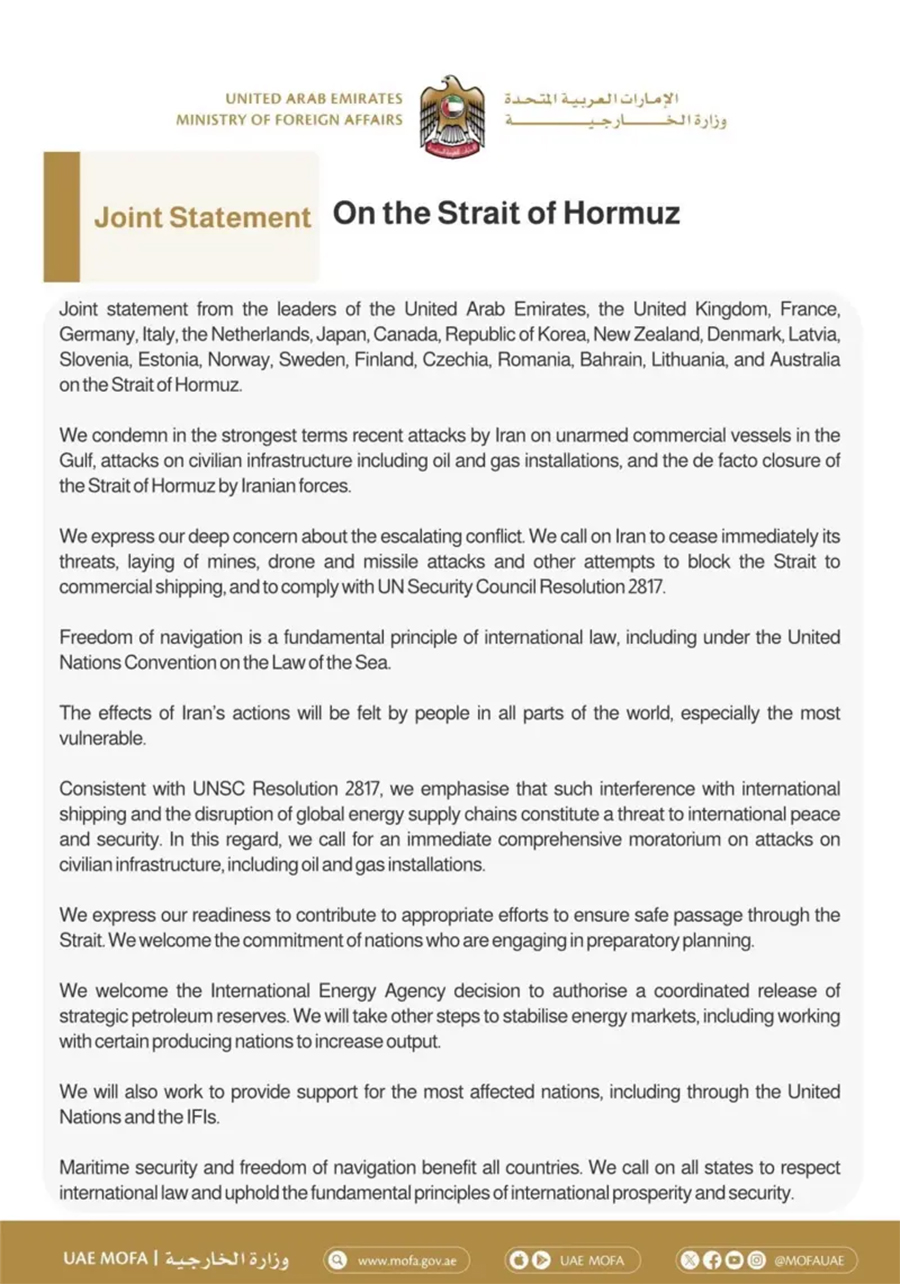
  • Twenty-two countries, including the United Arab Emirates, have strongly condemned the attack on a vessel in the Strait of Hormuz.
  • The joint statement highlights that Iran has nearly closed the Strait of Hormuz and attacked unarmed ships.
  • These countries expressed readiness to contribute to efforts to ensure secure maritime routes.

Kathmandu – A total of 22 countries, including the United Arab Emirates (UAE), have issued a joint declaration strongly condemning the recent attack on a ship in the Strait of Hormuz.

The joint statement was signed by leaders from the UAE, the United Kingdom, France, Germany, Italy, the Netherlands, Japan, Canada, South Korea, New Zealand, Denmark, Latvia, Slovenia, Estonia, Norway, Sweden, Finland, the Czech Republic, Romania, Bahrain, Lithuania, and Australia.

The statement reads, “We strongly condemn the recent severe attacks carried out by Iran. These attacks targeted unarmed commercial vessels and also struck civilian infrastructure such as oil and gas facilities. The Iranian military has effectively brought the Strait of Hormuz to a near-closed state.”

Furthermore, it recalls that freedom of navigation is a fundamental principle of international law and warns that Iran’s actions could have serious repercussions globally, especially for vulnerable communities.

The countries expressed their readiness to contribute to necessary initiatives to maintain secure maritime routes and welcomed the efforts of other nations planning to support this cause.

Following a joint attack by the United States and Israel on Iran in the last week of February, which resulted in the deaths of key figures including Supreme Leader Ali Khamenei, Iran has partially reopened the Strait of Hormuz, a vital maritime route for petroleum shipments. However, due to attacks on some vessels within the waterway, all transportation has been suspended citing security concerns, disrupting fuel supplies worldwide.

Earlier, former U.S. President Donald Trump had urged multiple countries to deploy warships to secure the Strait of Hormuz, which is controlled by Iran.

पाल्पा टिपर दुर्घटनामा ज्यान गुमाउनेको संख्या ४ पुग्यो 

Death Toll Rises to Four in Palpa Tipper Accident

News Summary

  • Four people have died in a tipper truck accident that occurred Saturday evening in Palpa.
  • The accident happened while traveling from Jhadewa to Chun Dhunga mine in Rahabas.
  • Among the injured, 33-year-old Rajan Chidi died during treatment at Bhairahawa Medical College.

Chaitra 8, Palpa – The number of fatalities in the tipper truck accident that occurred Saturday evening in Palpa has reached four.

According to DSP Home Prakash Chaudhary, Public Information Officer at the District Police Office Palpa, 33-year-old Rajan Chidi from Tansen Municipality-10, Patuwa, who was seriously injured in the accident at Rahabas, Ward 7 of Mathagadhi Rural Municipality, died during treatment, bringing the total death toll to four.

Previously, the drivers and individuals who died included 26-year-old Chinta Bahadur Sunar from Sheetganga 4, Arghakhanchi, 26-year-old Sunil Bik from the same locality, and 26-year-old Sunil Nepali from Khaireni, Devdaha 2, Rupandehi.

The empty tipper truck, registration number Lu 2 Kha 4525, was traveling from Jhadewa to the Chun Dhunga mine in Rahabas when it fell approximately 100 meters off the road on Saturday evening.

Four men, including the driver, were injured in the accident. The injured were immediately taken to Lumbini Medical College for treatment. Three of the men were declared dead on the spot by medical personnel.

Rajan Chidi, aged 33, was transferred to Bhairahawa Medical College in Rupandehi for further treatment where he also succumbed to his injuries, DSP Chaudhary confirmed.

The Moment a Norwegian Weather Rocket Nearly Triggered Nuclear War

NASA photo showing missile launch at night alongside aurora borealis

Image Source, Getty Images

On January 25, 1995, a Norwegian rocket launched for a study on the Northern Lights was mistaken by Russian forces for an incoming nuclear missile.

During a bitterly cold winter day, the world came dangerously close to a terrifying nightmare reminiscent of the Cold War, lasting nearly an hour. Military technicians manning radar stations in northern Russia spotted alarming signals on their screens on what appeared to be an ordinary Wednesday afternoon.

A rocket had been launched from the Norwegian coast, rapidly ascending into the sky. Where was it heading? Was it truly a grave threat?

Fear

This was a time when many believed such nuclear tensions had ended after the fall of the Berlin Wall.

For the officials monitoring the skies, the signs were alarming. They knew that a single missile launched from a U.S. submarine in that region’s waters could deliver eight nuclear warheads to Moscow in about 15 minutes. This information was immediately relayed to President Boris Yeltsin.

पाउण्ड स्ट्रलिङको मूल्य २०० नाघ्यो, अन्य विदेशी मुद्राको भाउ कति ?

Pound Sterling Surpasses NPR 200 Mark; Exchange Rates for Other Foreign Currencies Announced

March 21, Kathmandu – Nepal Rastra Bank has set the exchange rates for foreign currencies for today.

According to the central bank, the buying rate for the US Dollar is NPR 149.64 and the selling rate is NPR 150.24.

Similarly, the buying rate for the European Euro is NPR 173.12 and the selling rate is NPR 173.81.

The buying rate for the UK Pound Sterling has reached NPR 200.38 and the selling rate is NPR 201.19.

The Swiss Franc’s buying rate is NPR 190.01, with a selling rate of NPR 190.77.

The Australian Dollar’s buying rate is NPR 105.89 and its selling rate NPR 106.31, while the Canadian Dollar’s buying rate is NPR 109.04 and selling rate NPR 109.48.

Singapore Dollar has a buying rate of NPR 117.01 and selling rate of NPR 117.48.

Japanese Yen (per 10 units) has a buying rate of NPR 9.43 and a selling rate of NPR 9.47, while the Chinese Yuan’s buying rate is NPR 21.73 and selling rate NPR 21.82.

Saudi Arabian Riyal’s buying rate is NPR 39.85 and selling rate NPR 40.01.

Qatari Riyal is bought at NPR 40.94 and sold at NPR 41.11.

The central bank has set the Thai Baht’s buying rate at NPR 4.58 and selling rate at NPR 4.60.

UAE Dirham’s buying rate is NPR 40.74 and selling rate NPR 40.91, whereas the Malaysian Ringgit is bought at NPR 37.98 and sold at NPR 38.14.

South Korean Won (per 100 units) has a buying rate of NPR 9.99 and selling rate of NPR 10.03; Swiss Kroner’s buying rate is NPR 16.07 and selling rate NPR 16.14.
Danish Kroner is bought at NPR 23.17 and sold at NPR 23.26.

Hong Kong Dollar’s buying rate is NPR 19.10 and selling rate NPR 19.17 per unit, as per the central bank.

Kuwaiti Dinar has a buying rate of NPR 488.06 and selling rate of NPR 490.02; Bahraini Dinar’s buying rate is NPR 396.34 and selling rate NPR 397.93.

Omani Riyal is bought at NPR 388.68 and sold at NPR 390.23.

Indian Rupee 100 notes are valued at NPR 160 for buying and NPR 160.15 for selling.

The central bank has noted that it can revise exchange rates at any time as necessary.

Exchange rates set by commercial banks may differ, and updated rates will be available on the Nepal Rastra Bank website.