March 30, Kathmandu – A youth has been arrested on charges of assaulting a senior citizen while on the road. The arrested individual has been identified as Ram Sharan Sharma Bajgain, also known as R.B. Sharma, a resident of Godawari Municipality-10, Takhel, Lalitpur. The incident occurred during protests by UML (Communist Party of Nepal, Unified Marxist–Leninist) activists opposing the arrest of UML Chairman and former Prime Minister KP Sharma Oli. The senior citizen was assaulted near the vehicle parking area at Patan Hospital on March 29. Bajgain is currently held in custody at the District Police Office in Lalitpur, where investigations are ongoing.
Chief Justice Prakash Man Singh Raut is set to retire on 31 March 2023 upon reaching the mandatory retirement age of 65.
During his one and a half year tenure, there were no allegations of economic interest or undue influence affecting the judiciary.
However, weaknesses were observed in controlling judicial irregularities and leading the constitutional bench effectively.
March 31, Kathmandu — Chief Justice Prakash Man Singh Raut is retiring on Tuesday after reaching the age limit of 65. He was appointed as Chief Justice on October 17, 2024 and led the Supreme Court for one and a half years.
At the start of his tenure, the Supreme Court building was set on fire amid the Janajati movement protests. Despite challenging circumstances, he led the judiciary for seven months during this tumultuous period.
Raut’s approximately 18-month tenure has received a mixed evaluation. While weaknesses in judicial leadership and irregularities maintained through silent consensus were curtailed during this period, significant challenges remain.
There were no allegations against him regarding the distortion of justice for economic gains or bias in adjudication during his tenure. Analysts, however, point out that he showed limited progress in keeping the judiciary independent from executive influence and in advancing long-term constitutional verdicts and judicial interpretations.
Raut served as a Supreme Court judge since August 2, 2016 and was actively involved in committees studying judicial distortions and discrepancies. He also contributed to committees formed by the Bar Association.
Throughout his career, he was seen as someone who earnestly sought judicial reforms and was known for responding firmly to protect his reputation at critical moments.
‘Integrity Unquestioned’
He was never accused of engaging in economic interests or favoritism. This reputation is considered his strongest asset and has earned him the firm acceptance of his supporters. He continued the tradition established by his predecessors, Vishwambhar Prasad Shrestha and Hari Krishna Karki, of safeguarding justice from economic influence.
In matters of influencing cases or favoritism, he is generally regarded as more impartial than Vishwambhar Prasad Shrestha and comparatively close to Hari Krishna Karki.
Apart from Sushila Karki and Hari Krishna Karki, recent Chief Justices have mostly been appointed from judges who rose through the lower courts. Since Raut’s tenure, judges from legal practitioner backgrounds have led the Supreme Court for around 11 years.
According to a senior former Supreme Court judge, among Chief Justices who have stayed clear of economic controversies over the last decade, notable names are Sushila Karki, Vishwambhar Prasad Shrestha, and Prakash Man Singh Raut. Others have not been able to avoid disputes and allegations.
Senior lawyer Tikaram Bhattarai said, “There has never been any doubt that he entered the court with a clean record. Not raising questions about integrity and honesty in financial matters is a major accomplishment.”
However, he did not succeed in controlling distortions and problems within the judiciary. Issues involving questionable cases extending to lower courts remained unaddressed during his tenure.
Former Attorney General Dr. Dinmani Pokharel said, “There was no visible strong step taken by him to stop irregularities inside the judiciary. The public expected more proactive action.”
‘More Active in Expression than in Judgments’
One Supreme Court justice observed that Raut was more active on social platforms and public forums than in judicial rulings. His statements on Facebook, public assemblies, and media failed to significantly influence judicial decisions or legal opinions.
“He was energetic in advocating freedom of expression, rule of law, judicial independence, and separation of powers, yet this energy was not equally reflected in his judgments,” the justice noted.
During his tenure, his perspectives and opinions were less visible in many key Constitutional bench cases. In controversial matters such as the appointment of 52 constitutional office holders, he was often in the minority.
Bar Association President Vijay Prasad Mishra likened Raut’s tenure to “an attempt to sing a sweet song amid chaos.”
He said, “It is difficult to sing a good song amid turmoil; even if the melody is sweet, the surrounding people may not hear it clearly.”
Raut did not respond firmly to executive interference and pressures on the judiciary. In some cases, government influence was reportedly visible even within the judiciary itself.
Though he made statements and engaged in dialogues, critics say his initiative and follow-up in action were weak.
Dr. Pokharel notes that while criticism about insufficient focus on the quality of judicial appointments is valid, it is positive that Raut avoided unnecessary controversies with the executive in a difficult environment.
Reflecting on his achievements, Bar President Mishra added, “Raut indirectly led the 109-day movement against the malpractice of Chandra Shamsher Jabara and resolved the Bar-Bench dispute.”
However, following the events of September 8 and 9 (Bhadra 23 and 24), the judiciary’s morale has been unsettled and public support has diminished, Mishra says. He believes it will take more time for the judiciary to return to normalcy.
“It is satisfying for us that he was appointed Chief Justice from the Bar without any economic controversy and was unquestionably selected,” Mishra emphasized.
The government’s 100-point reform agenda approved on March 26 does not prioritize improvements in public transportation.
The Rastriya Swatantra Party (RSP) has committed only to initiatives such as operating electric blue buses and preventing gender-based violence.
Experts emphasize the need to dismantle transport cartels, introduce nighttime services, and enforce stricter regulations in public transportation.
March 30, Kathmandu — One of the most complex issues faced by the general public is public transportation. This is believed to be one of the key reasons why the Rastriya Swatantra Party (RSP) secured a significant number of votes.
However, the 100-point administrative reform agenda approved by the cabinet led by Balendra Shah on March 26 does not give priority to substantial reforms in public transportation.
The cabinet-approved agenda largely reflects only the blue bus service initiative that RSP had included in its manifesto, which many consider insufficient. The manifesto sets a primary goal of operating 25 electric blue buses within the first 100 days.
Additionally, there is a pledge to provide free bus service for women’s safe travel across all seven provinces. Apart from this, the manifesto includes just two measures: installing CCTV cameras in vehicles to prevent gender-based violence in public transport.
The quality and safety of public transportation in Nepal are highly complex issues. According to Nepal Police data, seven people die daily in road accidents. While two-wheeler vehicles cause more accidents overall, the fatality rate in public transport accidents is higher. Using public transportation in urban areas remains particularly challenging.
Experts point out that until a well-organized urban transport system is established, public suffering will not be alleviated. Enforcing strict rules such as boarding and disembarking only at designated stops, limiting passengers to the number of seats available, and prohibiting vehicles from stopping outside scheduled times could bring improvements.
Consumer rights activist Madhav Timalsina says significant change cannot be expected from the current public transport structure. Adding school children to buses primarily used by office workers results in severe overcrowding during midday and evening hours.
This overcrowding makes traveling highly uncomfortable for passengers who cannot find seats.
He suggests that schools should operate their own vehicles and that strict regulations should bar students from using public transport.
Currently, public transport is heavily controlled by entire organizations through informal agreements, forcing buses to pick up passengers only at fixed locations and making other vehicles wait, which wastes passengers’ time.
According to Timalsina, removing these organizations would allow drivers to operate more vehicles at essential stops, reducing seat shortages. He stressed that the government must take a strong role in implementing these reforms.
Public transportation in Nepal generally ceases operations after 8 p.m. “The absence of nighttime public transport is one of the biggest injustices by the state,” he said. “Not everyone can afford private vehicles, and taxis or private transportation at night are expensive.”
He emphasized that the government must make nighttime public transportation safe and reliable. Moreover, unprofessional and unpleasant behavior by drivers and conductors often deteriorates the travel experience for passengers.
Ignoring these issues could lead to reduced public trust and lowered expectations from the government, he warned.
Both short- and long-distance public transportation sectors face problems. Drivers tend to focus more on fare hikes than on improving service quality.
They attempt to conceal problems by blaming poor infrastructure, roads, and police inspections. The private sector monopoly and lack of government regulatory power are primary reasons for the dire state of public transportation.
What Does RSP’s Manifesto Include?
RSP’s manifesto pledges to completely eliminate transportation cartels and monopolies in long-distance bus services and promote healthy competition with safe services. It commits to making city bus services in major urban centers effective, safe, comfortable, and reliable.
The plan proposes developing a centralized ticketing and fare distribution system under integrated management.
It also includes customs exemptions to promote electric bus use and preparing sustainable master plans for public transportation development on key routes in Kathmandu Valley and the Terai region.
To improve road safety, the manifesto promises GPS tracking on all public vehicles, AI-based traffic cameras, digital fine systems, and strict enforcement of speed and lane discipline. There is a commitment to reduce accidents within the first year and to develop infrastructure ensuring pedestrian safety.
Wrestler Bhagwati Khadka has been arrested from Shantinagar on charges of character assassination of a woman. According to Cyber Bureau SP Dilip Kumar Giri, she has been remanded by the Kathmandu District Court for four days for further investigation.
Bhagwati Khadka was arrested following a complaint filed by the victim woman at the Cyber Bureau. SP Giri stated that Khadka had defamed the woman through social media.
The government has set a deadline to prepare three bills within 30 days and established specific time limits for the lawmaking process. Minister for Law, Justice, and Parliamentary Affairs, Sobita Gautam, is working with ministries involved in the governance reform agenda. The government plans to draft the Federal Civil Service Bill within 45 days and the Information Technology and Electronic Governance Bill within 60 days. Kathmandu, 17 Chaitra — The government has now initiated a process to enact and amend laws within defined timeframes. The governance reform agenda, consisting of 100 key points, prioritizes the establishment of deadlines for legislative tasks. Minister Gautam stated that she has coordinated progress with ministries included in the governance reform’s 100-point agenda.
To expedite the bills and related work submitted by various ministries, a fast-track desk has been established within the Ministry of Law, Justice, and Parliamentary Affairs. Additionally, the respective ministries have taken the initiative to advance their own legislative work. Every draft law proposed by ministries is only registered with the Cabinet after receiving legal advice from the Ministry of Law, Justice, and Parliamentary Affairs. Despite the constitution being promulgated 10 years ago, many laws related to its implementation have yet to be enacted. Minister Gautam emphasized that special attention is being given to this issue. Since taking office on 13 Chaitra, she remarked, “This time, we must work with utmost speed. In the past, the necessary laws were not enacted sufficiently. Our ministry will now work through continuous coordination.”
She expressed confidence that Parliament will also advance legislation swiftly alongside the government. “Members of Parliament are eager to work on legislation. They too must operate at a fast pace. Both Parliament and the government must therefore move quickly,” Minister Gautam said. The government is also preparing to issue the National Integrity Policy within 30 days. The policy, aimed at promoting integrity, protecting whistleblowers, and managing conflicts of interest, will be published within 30 days, after which related legislation drafting and amendment processes will proceed.
The government plans to draft three bills within 30 days and has set deadlines for the legislative process.
Minister for Law, Justice and Parliamentary Affairs Sobita Gautam has advanced work with ministries under the governance reform agenda.
Aiming to prepare the Federal Civil Service Bill within 45 days and the Information Technology and Electronic Governance Bill within 60 days.
March 30, Kathmandu – The government has initiated a process to draft and amend laws within specified deadlines. According to the 100-point governance reform agenda, legislation priorities have been assigned corresponding time frames.
Minister for Law, Justice and Parliamentary Affairs Sobita Gautam has disclosed that progress has been made regarding ministry-related tasks outlined in the 100-point governance reform plan.
A fast-track desk has been established within the Ministry of Law, Justice and Parliamentary Affairs to expedite bills and related work submitted by various ministries.
Additionally, the concerned ministries are advancing their legislative initiatives on their own accord.
Draft laws proposed by each ministry are submitted to the Ministry of Law, Justice and Parliamentary Affairs for legal advice prior to being registered in the cabinet.
Even after ten years since the promulgation of the constitution, many laws required for implementation remain unestablished. Minister Gautam emphasized special attention to this matter. After assuming office on March 27, she stated, ‘This time, we must work with great urgency. In the past, necessary legislation was not adequately developed. Our ministry will ensure continuous coordination moving forward.’
She expressed confidence that Parliament will also move promptly alongside the government, adding, ‘Parliament members are equally eager to develop laws. They too must expedite their work. Both Parliament and government must advance swiftly.’
Three Bills Within 30 Days
The government has planned to draft three bills within 30 days.
Redundancy, complexity, and unnecessary procedures across all public bodies have caused delays and increased costs in service delivery. To address this, related organizations will conduct comprehensive reviews to eliminate redundant and repetitive processes.
The government is committed to limiting decision-making approvals to no more than three levels and streamlining service delivery through business process reengineering.
Necessary procedures, standards, and monitoring mechanisms will be developed and enforced within 30 days. Draft amendments to laws will also be prepared within the same timeframe if necessary.
The government is preparing to issue a National Ethics Policy within 30 days.
The reform agenda includes the commitment to promote ethics, protect whistleblowers, manage conflicts of interest, and advance related law formulation or amendments within 30 days through the National Ethics Policy.
Aim is also set to enact laws within 30 days to prevent delays in national and priority infrastructure projects.
To prevent repeated failures in contracting, policies are proposed for direct implementation of projects failing more than twice through a government infrastructure construction company.
Necessary resources, tools, personnel, and equipment for the company will be arranged alongside the legislation drafted within 30 days.
Civil Service Bill Within 45 Days
The government plans to prepare the Federal Civil Service Bill within 45 days.
The goal is to free public administration from political interference, making it impartial, neutral, and citizen-focused. Civil servants, including employees, teachers, and professors, will be required to remain free from any direct or indirect association with political parties, groups, or vested interests.
The bill will include provisions for strict departmental action if civil servants violate rules.
Minister for Federal Affairs, Administration, Land Management, Cooperatives and Poverty Alleviation Pratibha Rawal
The government aims to abolish party-based trade unions in public administration, eliminate undesirable interference and informal pressure, thereby enhancing decision-making and service delivery efficiency.
The Federal Civil Service Bill will be legally enacted to facilitate these reforms within 45 days.
The constitution mandated staffing at all three levels of government in 2015, yet the Federal Civil Service Bill has not been enacted until now. Earlier parliamentary attempts failed to pass the legislation.
Six Bills Within 60 Days
The government plans to draft the Information Technology and Electronic Governance Bill within 60 days.
Details of the bill’s content have not been fully disclosed, but it is included in the governance reform agenda.
According to the plan, all digital infrastructure will be consolidated under the Prime Minister’s Office. The existing Information Technology Department will be dissolved and replaced with an ‘Information Technology and Electronic Governance Office’ under the Prime Minister’s Office.
This initiative is listed as item number 39 in the reform agenda.
In brief, it mandates establishment of the new office within three months and consolidation of all public IT bodies under this office.
The new structure aims to address fragmentation, poor interconnectivity, lack of standards, and weak institutional coordination in Nepal’s IT and electronic governance systems.
It also targets overcoming limitations such as shortage of skilled personnel, technical capacity deficits, and inefficiencies in service delivery, establishing integrated, secure, proficient, and results-oriented digital governance.
The government is preparing to draft five additional bills within 60 days.
Among these, bills related to urban development and waste management are slated to be tabled in the federal parliament after cabinet approval.
Policies and laws related to digital governance and personal data protection are also planned to be drafted within 60 days.
This will facilitate citizens’ access to services through a single digital platform, aiming to reduce redundancies, inefficiencies, and costs in service delivery.
A legal and institutional framework to establish an independent regulatory body for information technology and digital governance is also scheduled to be legislated within the 60-day timeline.
Additionally, to eliminate delays caused by various legal and procedural obstacles in projects, a draft umbrella law on project facilitation is to be prepared within 60 days.
The government also aims to introduce a Corporate Social Responsibility Bill within 90 days.
Based on the 100-point governance reform agenda, this bill will be presented to parliament within three months.
It plans to centralize the social responsibility funds of industrial establishments into government-designated funds for investment in priority sectors and complete necessary legal reforms and drafting within the same timeframe.
The government aims to implement the ‘Government Courier Service’ within 100 days, delivering passports, citizenship certificates, and licenses directly to citizens’ homes.
The Nepal Postal Services Department has prepared the necessary framework for implementation and submitted it to the ministry for discussion.
Experts emphasize that online system upgrades, postal service modernization, and inter-agency coordination are essential for the plan’s success.
March 30, Kathmandu – Even for a simple recommendation letter, one must wander corridor to corridor within ward offices. Afterwards, to acquire citizenship, passports, or licenses, citizens often have no choice but to queue in the district headquarters or the respective government offices.
Although the slogan ‘Singha Durbar (the central government) in every village’ was chanted years ago, practically, only complicated processes and circulars from Singha Durbar have trickled down to rural areas.
Even in today’s digital age, moving files from one government office room to another requires intermediaries and ‘extra fees’. Without paying bribes, services remain inaccessible, and citizens frequently return home empty-handed after waiting in long lines all day.
Despite tremendous technological advancements, citizens continue facing hardships to access basic government services. IT experts attribute these problems to the lack of essential infrastructure for online services in most government offices.
Against this backdrop of age-old inefficiencies, the government led by senior CPN-RSP leader Balendra Sah has announced an ambitious plan.
The government’s 100-day agenda states, “Citizens will no longer have to chase government desks; passports, citizenship certificates, and licenses will be delivered to their homes.”
Point 27 of this agenda states: “Postal services will be modernized and developed into a ‘Government Courier Service’ to provide government services at citizens’ doorsteps.”
This means you will no longer need to rush to offices or stand in queues to receive your passport, citizenship certificate, or driving license; these documents will be delivered directly to your home through government postal services.
The government aims to roll out this plan within 100 days, reviving the sluggish postal service and transforming it into a state-of-the-art Government Courier Service.
While the plan to turn the outdated postal service into a ‘smart delivery center’ appears revolutionary amid technological progress, its implementation remains challenging.
For many Nepalese accustomed to standing in passport department queues from early morning, the promise of home delivery within 100 days may seem hard to believe, yet it also raises hopes of easing their burdens.
Will the government truly overcome technological shortcomings, the absence of a structured addressing system, and inter-ministerial coordination challenges to realize this plan within 100 days?
The idea of home delivery for government services is attractive and citizen-centric, potentially saving time and costs. However, there is public skepticism regarding the postal service’s capacity to deliver on this promise – “Is our postal service ready?”
Currently, the growing reach of private courier companies and technological developments have overshadowed the government postal service, which suffers from inefficiency and a lack of professionalism due to its inability to keep pace with the times.
Experts say the postal service has failed to compete with private couriers due to extreme delays, lost parcels, and reliability issues. Decades-old laws, limited access in rural areas, and weak customer service have further deteriorated its structure.
IT specialist Manohar Bhattarai notes that while this objective is possible and practiced globally, fully implementing it within 100 days in Nepal presents a formidable challenge.
He emphasizes that both the online document issuance system and the postal service itself need improvement for the plan to succeed.
Although the government has demonstrated political will with this declaration, clear policies and implementation strategies have yet to be publicly communicated, Bhattarai adds.
Rapid Preparations Underway for Implementation
Following the government announcement, the Postal Services Department has accelerated preparations for implementation. The department is optimistic that leveraging its extensive network and experience reaching remote areas inaccessible to private couriers will ensure the plan’s success.
The department has already submitted the required operational framework to the ministry for discussions.
According to Director Lilaraj Paudel, key challenges include manpower shortages, insufficient vehicles, and the lack of reliable address identification systems.
Currently, the department faces a significant shortage of vehicles, hindering its ability to deliver documents door-to-door nationwide.
“We have adequate manpower, but lack sufficient resources and means to provide the service,” he said. “The scarcity of motorcycles or four-wheeled vehicles remains the main problem.”
Another major issue is the management of accurate addresses for recipients. There is no clear system to verify the addresses provided in online forms.
For example, if a person applies for a passport at the District Administration Office or passport department from Chabahil, there needs to be a verified system to identify the exact home delivery address, he explains.
At present, the department delivers passports to 33 district administration offices, from where citizens pick them up themselves.
Paudel dismisses complaints about missing parcels as “rumors.” No official report of lost mail has been filed, and compensation arrangements exist for services like EMS.
He also claims that some private courier companies even utilize government postal services for sending parcels abroad.
The department currently has a tracking system from office to office and suggests developing it further to enable tracking up to the citizen’s home.
Positive Plan Requires Outsourcing and Clear Procedures for Success
Administration expert and former chair of the Public Administration Reform Commission, Kashiraj Dahal, describes the plan to deliver passports, citizenship certificates, and licenses at home as positive and democratic. However, he stresses the need for solid preparations and clear administrative mechanisms for effective implementation.
According to him, this plan embodies the democratic principle that “the government reaches the people’s homes” and needs to be enforced effectively.
“This is a positive arrangement that will end the hassles citizens have faced in the past,” he said.
Given that IT development has diminished the traditional role of postal services, elevating it to a modern courier service is a timely and appropriate step.
While the 100-day timeframe is ambitious, Dahal believes it is not impossible. He recommends initiating a campaign immediately and then institutionalizing the plan.
“There might not be sufficient manpower to simultaneously cover all 77 districts, but where access is easier, the campaign can start and later be expanded,” he added.
To address resource and manpower shortages, Dahal suggests collaboration with the private sector (outsourcing) as an optimal solution.
“If needed, existing courier companies can be contracted to handle responsibilities,” he explained.
Since sensitive documents like passports, citizenship certificates, and licenses will be delivered at home, security and accountability are equally critical. Thus, a clear administrative framework is vital.
“The terms for entrusting institutions must be explicit, including provisions for compensation in case of loss,” he stressed.
Successful implementation requires strong coordination between the passport department, Department of Transport Management, the Ministry of Home Affairs agencies, and the Postal Services Department.
“Only through inter-agency coordination and a unified procedure can the plan succeed,” he concluded.
Local Technology the Best Solution
Richan Shrestha, founder chairman of NAS IT, states that though technically challenging, the government’s plan to deliver documents door-to-door is achievable. Nepali startups have developed effective solutions that outmatch foreign technologies.
He notes that the biggest challenge is Nepal’s lack of a structured addressing system, but domestic solutions can address this.
“Local startups like Galli Maps and Bato Kata Ho have already developed address management solutions; they require encouragement and support,” he said.
To make the delivery process transparent, a ‘real-time tracking system’ is essential and not difficult to implement.
“Services like Pathao have demonstrated successful models; technology exists here but needs adaptation for postal services,” he added.
He argues that challenges in extending services to rural areas can be addressed gradually in phases.
Starting in densely populated urban areas to test the technology and then expanding to rural regions is a feasible approach.
“We may not complete everything within 100 days, but we can certainly start,” he affirmed.
He believes if the government collaborates with local startups, the plan will succeed and provide significant relief to citizens.
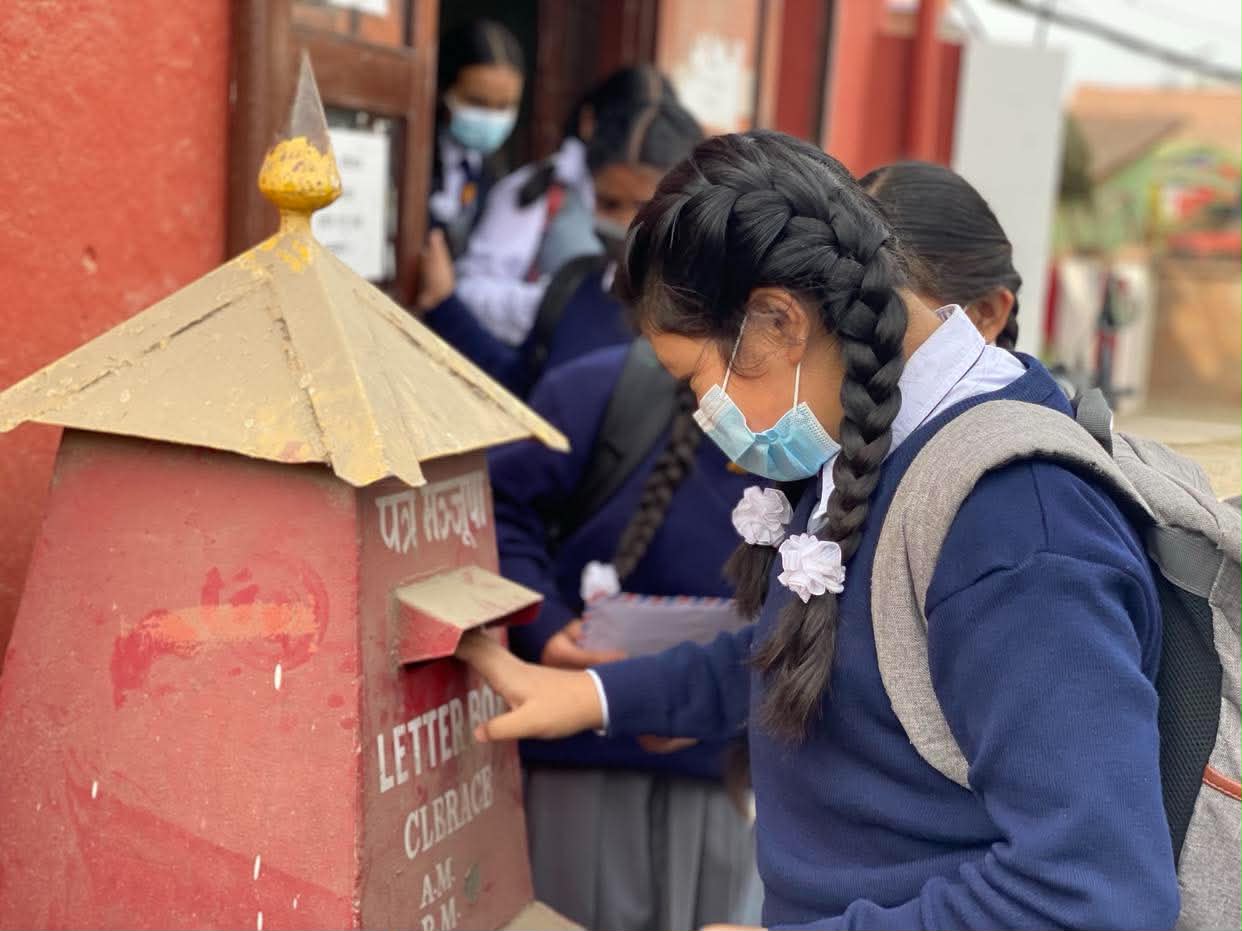
A student examines official documents at Lalitpur District Postal Office. Photo: Sant Gaha Magar
March 30, Hetauda – The Nepali Congress, currently leading the government in Bagmati Province, has decided to limit the number of ministries from 14 to just seven. The decision was made during a meeting of the Congress parliamentary party in Bagmati Province on Tuesday, which agreed to establish only seven ministries aside from the Chief Minister’s office and the Council of Ministers.
The meeting, chaired by party leader and Chief Minister Indra Bahadur Baniya in Kathmandu, also resolved to consolidate the existing seven directorates into two and to abolish five directorates entirely.
Furthermore, a draft proposal suggesting a reduction of 701 staff positions in the provincial government has been prepared and submitted for approval after consultation among coalition partners. Currently, Bagmati Province is governed by a coalition of the Nepali Congress and the Communist Party of Nepal (Unified Marxist-Leninist) (CPN-UML). The CPN-UML had previously proposed the reduction of the number of ministries during their party meetings.
On February 10, a provincial administrative restructuring review committee submitted a report to the government recommending that only eight ministries, including the Chief Minister’s office, are necessary. This committee was headed by former government secretary Bimal Wagley, with members Reshmi Raj Pandey, Gopikrishna Khanal, Jeevprabha Lama, and provincial secretary Purna Bahadur Darji serving as member secretary.
The expert panel advised that directorates, boards, and similar structures are unnecessary and proposed cutting 701 staff posts from the provincial government. The committee recommended maintaining the Chief Minister and Council of Ministers’ office along with the Ministries of Finance and Planning; Industry, Culture, Tourism and Transportation; Agriculture, Livestock, Land Management and Cooperatives; Physical Infrastructure Development; Forest and Environment; Urban and Local Development; and Health and Social Development.
Presently, Bagmati Province’s government consists of 14 ministries including: the Chief Minister’s Office; Internal Affairs and Law; Finance and Planning; Agriculture and Livestock; Drinking Water, Energy and Irrigation; Physical Infrastructure; Forest and Environment; Labor, Employment and Transportation; Industry, Commerce, Land and Administration; Culture, Tourism, Cooperatives and Poverty Alleviation; Social Development; Health; and Youth and Sports.
Additionally, the Congress parliamentary party decided to urge the provincial government to convene a provincial assembly meeting within a week and resolved to stake their claim to the position of Speaker of the Bagmati Provincial Assembly.
The Non-establishment faction of Nepali Congress has started a meeting of the Central Committee elected from the 14th General Convention at Dhumbarahi.
Allegations of rule violations during the proportional representation MP selection have surfaced in the meeting.
General Secretary Pradeep Paudel called for party unity, emphasizing that strength lies in unity.
March 31, Kathmandu – The internal conflict within Nepali Congress, which has been ongoing for six months, has intensified following the recent elections. After the Election Commission recognized the Central Committee elected in the special general convention, dissatisfied groups within the party have escalated parallel activities.
The Non-establishment faction started a meeting of the Central Working Committee elected at the 14th General Convention from Tuesday. Before the special convention, Acting Chairperson Purna Bahadur Khadka, citing the existence of the old committee, convened this meeting.
While Chairperson Gagan Thapa’s establishment faction warned of disciplinary action for breaching party statutes, Vice Chairperson Khadka held the meeting.
In his capacity as Acting Chairperson, Khadka convened the meeting at Hotel Smart in Dhumbarahi, which is scheduled to run until Wednesday. On the first day, 82 office bearers and central members elected at the 14th General Convention, along with two provincial chairpersons, participated.
Khadka conducted the meeting seating former Minister Dr. Shashank Koirala and outgoing central member Shekhar Koirala on either side. Shekhar Koirala arrived at the venue at the last moment.
Upon his arrival, Khadka requested all leaders to take their seats and proceeded with the meeting. Notably, there was no Nepali Congress banner displayed during the meeting and no minutes were prepared.
Former Deputy General Secretary Badri Pandey described the two-day meeting as an informal gathering.
“This is not a formal meeting but an informal gathering,” he said, “Such gatherings help unify the party rather than polarize it.”
However, outside the meeting, leader Umesh Jung Rayamajhi offered a different interpretation. When asked by journalists if it was a central committee meeting or a gathering, he said, “It is both a gathering and a meeting. Discussions continue regularly in democratic processes, but they must serve the interests of the nation, party, and people.”
More than 15 leaders expressed their views during the meeting, according to participants, but no formal announcement has been made. Top leaders elected from Sher Bahadur Deuba and Shekhar Koirala’s panels reportedly withheld comments.
Former Chief Minister of Karnali Province, Jeevan Bahadur Shahi, emphasized the need for unity and mentioned the option of forming a new party if dialogue fails.
“Instead of pursuing parallel activities, we should come together and move forward through dialogue,” he said. “If you don’t want dialogue, then open a new party; parallel activities are not the way.”
Leader Shankar Bhandari expressed concern over increased foreign intervention and said Congress should work to establish a constitutional monarchy and a Hindu state.
“The country is in crisis. Congress must move forward to establish both a constitutional monarchy and a Hindu state,” he emphasized.
Outgoing Central Member Saraswati Tiwari voiced objections regarding nominations in the election held on February 21. She questioned why candidates who support the regular convention sought tickets, specifically criticizing those who left Gagan Thapa’s faction.
“Why did you take a ticket from Gagan Thapa’s hand and contest?” she asked angrily. Another leader added, “They could have chosen not to run or declined tickets.”
Leader Man Bahadur Nepali complained of unfairness in the allocation of proportional representation seats.
“There has been a great injustice within the party. Wrong individuals have advanced, I have said this,” he stated. “The party must be reformed, but I also said your hands won’t succeed.”
Outgoing Central Member Ishwari Nyaupane protested the removal of Man Bahadur Nepali’s name from first position in the Dalit quota and Bidya Timilsina’s from the first position in a marginalized area.
“Removing Man Bahadur Nepali from the Dalit quota and Bidya Timilsina from the marginalized region is wrong,” she said. “This is against party rules and the Election Commission is also at fault.”
Nyaupane held both the Election Commission and party leadership responsible for violating candidate selection procedures.
Khadka revealed that the establishment faction violated rules during the proportional MP selection.
“The special general convention acted against regular rules. They removed Bidya Timilsina’s name from the marginalized region and replaced it with someone unknown to the party,” he said. “Our candidates were not chosen impartially.”
Leader Man Bahadur Bishwakarma expressed concern that the country and party are heading toward disaster.
“We are heading for a catastrophe. I have been warning for a long time,” he said at the meeting.
Leader Mohan Basnet described Nepali Congress’s geopolitical situation as difficult, citing that its alliance with the Communist Party disrupted geopolitical balance.
“We are caught in geopolitical issues. Leaders saw only their own schemes and didn’t listen to us,” he stated.
Sudurpashchim Province Speaker Birbahadur Balayar urged not to misinterpret the Dhumbarahi meeting and appealed to the establishment side. He said it was improper to respond with anger when the party’s well-being is at stake.
When asked by journalists if there were plans to take disciplinary action against those conducting parallel activities, he replied, “There is nothing like that. This is an old situation happening across the board. Don’t make it bigger than it is.”
According to Balayar, efforts toward party unity and understanding are ongoing. He appealed to all factions to adopt a middle ground without arrogance.
After the meeting, leader Umesh Jung Rayamajhi claimed that Gagan Thapa’s nomination in Sarlahi was executed following a “grand design.”
He cited the late former Prime Minister Girija Prasad Koirala’s “grand design” as currently applied in the country.
“This is the grand design Girija Prasad Koirala mentioned,” he said. “Who sent Gagan ji to Sarlahi? That is the design.”
Rayamajhi also asserted that the present election situation followed this design.
“Singha Durbar is on fire amid elections, the government is inside the military headquarters, and the army is surrounding everywhere, forming the first ring,” he said.
He stressed that all parties need to be ready to rescue the nation from its current state. “All friends in Congress must engage in dialogue and attend the general convention,” he urged.
He expressed confidence that Nepali Congress would be the party to lead the country.
While the Non-establishment faction’s meeting was underway, spokesperson Devraj Chalise stated on social media that he would not endorse the Dhumbarahi meeting.
“Differences of opinion and dissent are natural within a democratic party and serve to mature and strengthen it,” he wrote. “But when dissent escalates beyond respectful dialogue into parallel activity, it is detrimental to the party.”
He stressed the need to win party members’ hearts with clear plans as the convention approaches and reminded everyone to observe party discipline.
“The general convention is nearing. It is commendable for all to win members’ support with clear plans, solid arguments and positive energy,” he said. “The leadership path is open as per the party statute, and there will be no compromise on discipline.”
Earlier, after parallel activities escalated, General Secretary Pradeep Paudel appealed to leaders and workers to move forward in party unity.
Before the Dhumbarahi meeting began, he posted on Facebook, “Even in adversity, let us not be divided. I speak not just as general secretary but as an honest party worker – let us be united.”
Paudel expressed confidence that Congress’s unity has historically been its strength, enabling it to emerge stronger from all crises, and that this power of unity will shine again.
“I urge all Nepali Congress leaders and workers – there is strength in unity; thus, a bright future awaits us,” said General Secretary Paudel.
Summary: The government led by the Rastriya Swatantra Party (Raswapa) has stirred unease among older political parties by advancing asset cleansing initiatives, which has led to a significant decline in the stock market. The arrest of the CPN-UML chairman and former Home Minister and the political uncertainty triggered by UML’s street protests have raised investor concerns. Although the Nepal Stock Exchange’s NEPSE Index remains in a bullish trend, experts suggest that a market correction is necessary following recent government decisions.
Kathmandu, 17 Chaitra – Despite the stock market showing signs of a bullish trend after the Janaji movement brought prospects of political stability, the market experienced an unusual downturn this week. After the House of Representatives election on 21 Falgun, where the Raswapa-led government secured nearly a two-thirds majority of votes, the market saw a sharp drop due to the government’s stance that unsettled old political parties, neglected the stock market’s concerns, and prioritized asset cleansing.
The new government promptly arrested CPN-UML chairman and former Prime Minister KP Sharma Oli on Saturday, followed by the detention of Nepali Congress leader and former Home Minister Ramesh Kumar Lekhak. As corruption investigations commenced into several senior leaders, negative sentiment deeply affected the stock market. The NEPSE index dipped by 119 points on Sunday and Monday alone.
Stakeholders widely interpret that the street protests by the CPN-UML have added to political instability, which has caused investors to react with fear and triggered the market’s steep decline. Nevertheless, experts emphasize that since the NEPSE index is still in a bullish trend, the current correction is a necessary adjustment for sustainable growth.
Following election certainty, stock market indices generally turn positive, but historically, markets have often declined after vote counting. This time, with one party winning nearly two-thirds of the mandate, investors had anticipated greater political stability. However, the government’s approach toward established political parties has elicted market resistance, according to an investor.
“The market is on a path toward long-term improvement,” the investor said. “The recent NEPSE drop reflects the impact of the government’s latest decisions, which may have a temporary effect, but the market growth in the coming days is certain.”
March 30, Surkhet – The Surkhet District Court has ordered the detention of all four individuals accused in the Inisa Bik death case. Judge Deepak Dhakal, presiding over the juvenile bench, directed on Tuesday that the four accused be sent to a juvenile correctional facility during the investigation period.
The accused four minors face charges of rape and intentional homicide following allegations that Inisa was sexually assaulted and murdered. Although currently detained at the juvenile correctional home for the duration of the preliminary investigation, the final verdict on the case is yet to be delivered, according to court information officer Ujwal Rawal.
“All four individuals have been ordered to remain in the juvenile correctional home during the investigation,” Rawal stated. “Given the gravity of the incident and the preliminary evidence, the court has ruled that they remain in custody until the investigation is completed and the case proceeds.”
The police submitted their investigative report to the Public Prosecutor’s Office on March 24, concluding that Inisa was not gang-raped but assaulted by a single perpetrator. The 16-year-old minor considered to be Inisa’s boyfriend stated that their sexual encounter was consensual and that she suddenly fainted. He further mentioned calling his friends for assistance in taking her to the hospital. However, on Sunday, the Public Prosecutor’s Office registered charges against all four individuals, asserting that a planned group rape had taken place. Following this, the court ordered all four minors to be sent to the juvenile correction facility on Tuesday.
On February 5 morning, 16-year-old Inisa left her home in Birendranagar–1, stating she was going to attend tuition classes, but was later found unconscious in the Janjagaran Community Forest in Birendranagar–4. She was immediately taken to Karnali Provincial Hospital, where doctors declared her dead. On the same day, the police detained a 16-year-old male believed to be her boyfriend and commenced an investigation. Based on his statement, three additional juveniles were also taken into custody for further inquiry.
The judicial inquiry into Inisa’s death has already started; however, the victim’s family continues to press for justice through protests. They have demanded that the accused not be released and have refused to permit the funeral rites until the perpetrators are punished. Inisa’s body has remained in the morgue of Karnali Provincial Hospital for 24 days.
March 31, Kathmandu – Cooper Connelly marked a remarkable debut by scoring a half-century, leading Punjab Kings to a victorious start in the Indian Premier League (IPL) 2026. On Tuesday at Mullanpur, Punjab defeated Gujarat Titans by 3 wickets, earning 2 points in the tournament. Chasing Gujarat’s target of 163 runs, Punjab reached the mark with 5 balls remaining and the loss of 7 wickets.
The 22-year-old Australian all-rounder Connelly did not bowl but played an impressive innings with the bat, scoring an unbeaten 72 runs off 44 balls, including 5 fours and 5 sixes. Opener Prabhsimran Singh contributed 37 runs, while captain Shreyas Iyer added 18 runs. Gujarat’s Impact Subba made his bowling debut in the second innings after 10 overs, taking 3 wickets conceding only 3 runs in his first 10 deliveries, applying pressure on Punjab. However, Connelly’s steady batting ultimately led Punjab to victory.
Gujarat, having lost the toss, batted first and posted 162 runs for the loss of 6 wickets in their 20 overs. Despite a strong start, Gujarat was unable to accelerate towards the end. Captain Shubman Gill scored 39 runs and Jos Buttler made 38 runs. At the halfway mark, Gujarat was in a commanding position at 84 for 2, but could only add 78 runs in the remaining 10 overs. Punjab’s Vijaykumar Vaishak took 3 wickets for 34 runs in 4 overs, while Yuzvendra Chahal claimed 2 wickets for 28 runs in his 4 overs. The IPL action continues on Wednesday with a clash between Delhi Capitals and Lucknow Super Giants.
17 Chaitra, Kathmandu – Home Minister Sudhan Gurung met with senior citizens who were abused by cadres of the Communist Party of Nepal (Unified Marxist–Leninist) during protests following the arrest of party chairman and former Prime Minister KP Sharma Oli. Gurung visited these senior citizens at his residence in Lalitpur on Tuesday.
The senior citizens were reportedly attacked by UML activists who had taken to the streets to demonstrate against Oli’s detention. An individual named RB Sharma, also known as Ram Sharan Sharma Bajgain, residing in Godawari Municipality-10, Takhel, Lalitpur, has been arrested in connection with the assault on these elders.
After meeting the victims, Home Minister Gurung received gratitude from the senior citizens for his support during their difficult time. According to his secretariat, the minister happened to meet them on his way back home after completing official duties.
March 21, Kathmandu – Foreign ministers of Pakistan and China have jointly presented a five-point proposal concerning the ongoing conflict in West Asia. Pakistan’s Foreign Minister Ishaq Dar met with Chinese Foreign Minister Wang Yi in Beijing on Tuesday. During the meeting, both ministers reviewed the current situation in West Asia and put forward a shared five-point stance aimed at resolving the crisis.
Immediate cessation of war: Both foreign ministers appealed for an immediate halt to hostilities and emphasized the importance of preventing further escalation. They stressed the need to allow humanitarian assistance to reach affected regions without obstruction.
Prompt initiation of peace talks: The ministers called for the swift commencement of peace negotiations. According to their joint understanding, the sovereignty, regional integrity, national independence, and security of Iran and Gulf countries must be ensured.
They agreed that dialogue and diplomatic means remain the only effective options for resolving disputes. Protection of civilians and non-military zones: Both leaders underscored the importance of safeguarding civilians during military conflicts. They urged all parties to immediately cease attacks on civilian and non-military areas and to fully comply with international humanitarian law.
Additionally, they requested no attacks on energy infrastructure, water purification plants, power stations, and peaceful nuclear facilities.
Security of maritime routes: Noting that the Strait of Hormuz and surrounding areas serve as critical maritime routes for global goods and energy supplies, both foreign ministers emphasized the need to ensure the safety of ships and crews stranded in the region.
They also concurred on the importance of guaranteeing the safe and prompt movement of civilian and commercial vessels. Furthermore, they agreed to maintain regular, normal passage through the Strait of Hormuz.
Role of the United Nations: China and Pakistan expressed a shared commitment to promoting a multipolar world order, strengthening the role of the United Nations, and supporting comprehensive agreements aimed at lasting peace based on the UN Charter and principles of international law.
Gianni Infantino, President of the International Federation of Association Football (FIFA), has confirmed that Iran will participate in the World Cup and that their matches will take place in the United States as originally scheduled. Iran is set to play against New Zealand and Belgium in Los Angeles on June 15 and 21, respectively, and against Egypt in Seattle on June 26.
Speaking to AFP, Infantino stated, “Iran will be at the World Cup. They are a very strong team, and I am very pleased. The matches will take place at the venues as drawn.” Mahdi Mohammadanabi, Vice President of the Iran Football Federation, emphasized that FIFA’s rules are paramount and that they respect all decisions made by FIFA.
Uncertainty about Iran’s participation had arisen due to ongoing tensions between the United States, Israel, and Iran. Previously, the Iran Football Federation had been in discussions with FIFA about relocating their matches from the United States to Mexico.
Infantino recently observed Iran’s 5–0 friendly victory against Costa Rica in Turkey. He remarked, “I have spoken with the team, players, and coaching staff, and everything is in order.” Mahdi Mohammadanabi also noted that Infantino’s support has energized the players further.